Tag: PTSD

  • The Truth About My Inner Critic: It Was Trauma Talking

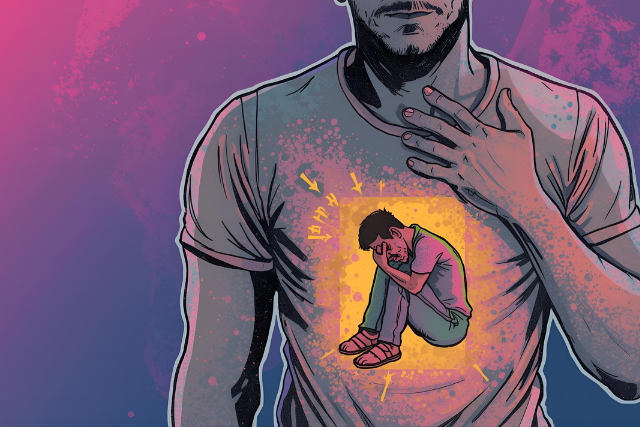
    The Truth About My Inner Critic: It Was Trauma Talking

    “I will not let the bullies and critics of my early life win by joining and agreeing with them.” ~Pete Walker

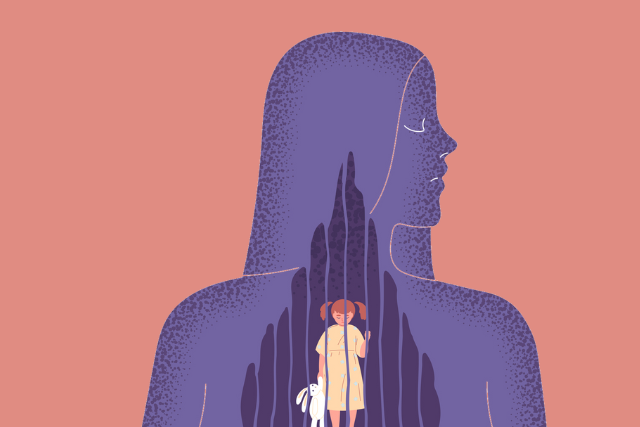
    For most of my life, there was a voice in my head that narrated everything I did, and it was kind of an a**hole.

    You know the one. That voice that jumps in before you even finish a thought:

    “Don’t say that. You’ll sound stupid.”

    “Why would anyone care what you think?”

     “You’re too much. You’re not enough. You’re a mess.”

    No matter what I did, the critic had notes. Brutal ones. And the worst part? I believed every word. I didn’t know it was a critic. I thought I just had “realistic self-awareness.” Like everyone else had a little tape playing in their head on repeat, telling them how flawed they were. Turns out, that voice was trauma talking, and it never seemed to stop.

    My Inner Critic Wasn’t Born, It Was Built

    CPTSD doesn’t just mess with your sense of safety. It hijacks your internal dialogue. When your early life feels unsafe or unpredictable, criticism becomes your compass. You learn to scan for danger, to anticipate what might trigger rejection or anger. You start blaming yourself for things that weren’t your fault, just to keep the peace.

    Over time, you don’t need anyone else to tear you down; you’ve got that covered all on your own. The critic lives inside. It’s relentless. It’s like a hyper-alert security guard that’s been working overtime for decades. One who has a bone to pick.

    My inner critic wasn’t trying to be cruel. It was trying to protect me. Twisted, but true. It believed if it shamed me first, I’d beat everyone else to it. If I kept myself small, or perfect, or invisible, I wouldn’t become a target. If I could control myself enough, maybe the chaos would leave me alone.

    That voice became familiar. And familiarity, even when it’s toxic, can feel like home.

    The Turning Point: When I Realized That Voice Was Lying

    Healing began the day I noticed a strange disconnect. The people I cared about didn’t talk to me the way my inner critic did. They weren’t disgusted when I made mistakes. They didn’t roll their eyes when I showed up with all my messy feelings. They didn’t act like I was a problem to be solved or a disappointment to be managed. In fact, they were… pretty warm. Even when I wasn’t “on.”

    This realization felt like looking in a funhouse mirror and suddenly seeing my true reflection. If they weren’t seeing me through the lens of judgment and shame, who was I really listening to? That voice in my head, or the people who cared?

    That was the moment I started to doubt the inner critic’s authority. Because that voice? It wasn’t truth. It was trauma. A protective but outdated part of me that no longer needed to run the show.

    How I Actually Started Healing (the real first steps)

    The very first real step wasn’t dramatic. I noticed the mismatch, my head yelling “you’re a mess” while everyone around me treated me like a person, not a problem. Once I noticed that disconnect, things shifted from “this is just how I am” to “oh, maybe this is something I can change.”

    So my early moves were small and boring, but they mattered.

    I booked a therapist who knew trauma work and stayed long enough to stop the band-aid fixes. I learned one therapy that actually landed for me, Internal Family Systems, which helped me stop fighting the critic and start talking with it. I started writing, not to fix myself, but to give that voice a page to vomit onto so I could see how ridiculous and repetitive it sounded in black and white.

    I also leaned on a few safe people, friends and a therapist who would call me out when the critic lied and remind me I wasn’t actually the person I believed I was, over clouded with shame.

    The harder work, though, was going underneath the critic. The voice was just a symptom. What sat beneath it was grief, anger, and fear I’d carried since childhood. For the first time in therapy, I wasn’t just trying to outsmart the critic, I was learning to sit with those younger parts of me who never felt safe. That’s when healing really started to shift: not by silencing the critic, but by finally listening to the trauma underneath it.

    I Didn’t “Silence” My Inner Critic, But I Did Start Questioning It

    Some days, that voice still shows up, loud and obnoxious. Healing didn’t make it disappear. It’s still there, popping up like an annoying pop-up ad you can’t quite close.

    For years, the critic zeroed in on my appearance. I carried so much shame and self-hatred that I didn’t need anyone else to tear me down, I was already doing the job for them. Trauma and CPTSD made sure of it. Even when no one said a word, the critic filled in the silence with insults.

    But I learned to give it a pause button. Instead of obeying it automatically, I started getting curious.

    One morning, I caught my reflection and the critic immediately sneered: ‘You look disgusting.’ Normally, I’d believe it and spiral. But that time, I paused and asked: Whose voice is this really? It felt like my child abusers. What’s it trying to protect me from? Probably the fear and shame rooted in that abuse. Is it true, or just familiar? Familiar. That shift didn’t erase the shame instantly, but it gave me a crack of daylight. Instead of hating myself all day, I was able to shrug and think, yeah, that’s the critic, not the truth. That tiny pause was progress

    Sometimes I imagine my inner critic as a grumpy, overworked security guard who’s stuck in the past. He’s cranky and exhausted, working overtime to keep me “safe,” but he’s also out of touch with the present. I don’t hate him. I just don’t hand him the mic anymore. These days, I keep him behind the glass with metaphorical noise-canceling headphones on. He can rant all he wants, but I’ve got Otis Redding and boundaries turned all the way up.

    What Actually Helped Me Push Back

    Therapy: Internal Family Systems (IFS) therapy helped me see the critic as just one part of me, not my whole self. It gave me tools to speak with that part, instead of battling it.

    Writing: Putting the critic’s voice on paper was a game changer. Seeing those harsh words in black and white helped me realize how cruel they really were.

    Safe People: Talking openly with trusted friends and therapists helped shatter the illusion that I was unlovable or broken.

    New Scripts: Instead of empty affirmations, I practiced gentle reality checks: “It’s okay that part of me feels that way. That doesn’t mean it’s true.”

    Compassion: Learning to treat myself like a friend rather than an enemy—clumsy, imperfect, but worthy.

    Why This Matters: The Cost of Believing the Critic

    Believing that inner voice isn’t just uncomfortable, it’s dangerous. It shapes how you show up in the world. It keeps you stuck in self-doubt. It makes you shrink when you want to grow. It convinces you to stay silent when your voice needs to be heard.

    For years, I hid behind that critic’s fog. I avoided risks, pushed down feelings, and avoided intimacy because I thought I wasn’t enough. That voice stole years of my life. I lost people I cared about because I couldn’t believe I was good enough or deserving of love, and that does a number on you.

    Healing isn’t about erasing the critic, it’s about learning when to listen, when to question, and when to change the channel.

    I’m thankful that, with therapy and the work I’ve put into my healing, I’ve been able to reclaim some of that space for myself. It’s by no means easy and there are a lot of starts and stops, but it is worth it. I am here today testament to that.

    If You’re Living With That Voice Right Now

    If your inner critic sounds convincing, like it has a PhD in your failures, I get it. I lived there. But here’s the truth:

    You are not the sum of your worst thoughts. You are not the voice that calls you a burden.You are not unworthy just because you’ve been told that.

    That critic might be loud, but it’s not honest. It’s scared. And scared doesn’t get the final say.

    You get to question it. You get to rewrite the script. You get to take up space, even if your voice shakes. Even if it whispers, “Who do you think you are?”

    Because the answer is: Someone healing. Someone trying. Someone finally learning that voice isn’t the truth anymore.
  • How to Ease Anxiety and PTSD: 3 Somatic Exercises to Try

    How to Ease Anxiety and PTSD: 3 Somatic Exercises to Try

    “The body knows how to heal. It just needs the proper conditions.” ~Peter Levine

    After ten major reconstructive hip surgeries and almost six cumulative years in a full body cast, I emerged from childhood into my teenage years. My start in life was quite different from those around me. My body would never be like everyone else’s, and I was living in the aftermath of trauma.

    I not only had a slew of trauma symptoms but was also deeply wrestling with my identity and had massive amounts of shame, depression, and social anxiety. As you can imagine, I had a hard time fitting in and connecting with others. Feeling comfortable in my own skin was something I never knew.

    The discomfort I felt was unbearable, and I knew the only way to feel better in life was to try to figure out how to heal and get to the other side. I held on strongly to the belief that healing was possible, so naturally I started with talk therapy.

    Therapy is great, don’t get me wrong, but it wasn’t providing the relief I was searching for. I quickly realized that talking about my experiences helped to broaden and balance my perspective on things, but it wasn’t changing how I felt in my day-to-day life. So I went on a journey exploring and studying many forms of healing. I delved into energy healing, breathwork, art therapy, tantra, and Yamuna body rolling and finally found somatic experiencing.

    With much trial and error, I found my way. Some things worked and others didn’t. I learned that there isn’t a ‘one size fits all’ when it comes to healing.

    Anxiety and PTSD symptoms are never fun, and they show up in very specific and different ways for each person. I’ve learned that anxiety is energy that is deeply held in the body, and the way most people try and manage it is to brace their body to try and stop it from happening. This pushes it deeper into the body.

    It’s important to slowly allow this energy to move. To do so, we need to soften the body and open the energy channels.

    I have found these three somatic tools to be quite effective. Maybe they will be for you as well.

    Before starting each exercise, I highly recommend you ask yourself, “On a scale of one to ten, how anxious am I?” Give yourself a number, and then at the end of the exercise see if the number has decreased.

    1. Slowly articulating the joint

    Starting with one foot, slowly move your foot in a circle ten times in one direction. Really focus your mind on the feeling of the ankle joint moving. Then switch directions.

    Do this for the other foot and ankle.

    If you are lying down on your back, you can do this again for the knee as you hold your thigh, slowly moving your lower leg in a circle ten times before switching directions. Then repeat on the other leg.

    If you are standing, you can place your hands on your knees and together slowly move your knees in circles.

    Again, remember to give your mind the job of focusing on the knee joints and feeling them move. This helps give the mind something to do while the body can move the energy that has been trapped inside of it.

    If standing, you will do this again, making hip circles ten times in both directions.

    After this, pause and notice how the lower body feels in comparison to the upper body. It’s crazy the difference you will feel.

    Next, you will do this with your wrists, making circles with your hands. You can do this one at a time or both hands—whatever you prefer.

    Then your elbows.

    And then your shoulders, continuing to do ten circles in one direction and then ten in the other.

    Lastly, you will do head circles in both directions.

    2. Deep breathing with a voo exhale

    A voo exhale? What is that?

    That is exactly what I would be asking.

    Deep breathing is sometimes helpful, and sometimes it isn’t. But if you try making a voo sound for the entirety of the exhale, it can smooth the chest and abdomen, where most of the anxiety is felt.

    So, for this exercise, you will place one hand over your heart and one hand over your belly and take a deep breath. On the exhale you will make a voo sound, all the way to the end of the exhale, similar to saying om in a yoga class. As you do this, think about making the voo sound from your abdomen, not from your throat.

    This is an indigenous practice that actually has scientific effects in calming the vagus nerve and the sympathetic nervous system. It moves people into their parasympathetic nervous system, which is the rest and digest part of your nervous system. Making different sounds has different effects on the nervous system, and for anxiety and PTSD, the voo sound is the most effective.

    Go ahead and try this for five cycles and see how this is for you. It can be really calming.

    3. Visual resourcing

    Resourcing is anything that is calming, supportive, or comforting for a person, and it can be done through many avenues. This includes things like talking to a caring, supportive friend, taking a hot bath, or using a weighted blanket.

    Visual resourcing is focusing on something visually pleasant. For some people this can be a sparkly or shiny object, and for others it can be watching the leaves gently blow in the breeze.

    Note that for some people, if they look off in the distance, it has an even greater calming effect, and that others might prefer looking at objects that are closer to them.

    Go ahead and look around you and find the most pleasant and pleasing thing to look at. Then hold  your gaze here and notice the effects this has for you.

    This somatic tool can easily be combined with the prior tool listed above.

    In Conclusion

    When we experience trauma and are wrestling in the aftermath of symptoms, life can feel daunting. Many people feel very discouraged and overwhelmed with where and how to start healing. But try and find the courage to get to the other side. Healing is possible, and it could be one of the most beautiful and sacred journeys you choose to go down.

    Trauma symptoms always have psychological and physiological components that happen simultaneously. So, if some of the mindfulness practices don’t work, see if you can find some relief and stabilization with somatic body-based tools.

    Wishing you so much love and grace on your journey to recovery.

  • How Trauma Affects the Brain and How I’m Healing from PTSD

    How Trauma Affects the Brain and How I’m Healing from PTSD

    “Owning our story and loving ourselves through that process is the bravest thing that we’ll ever do.” ~Brené Brown 

    Several months ago, I was stoked about writing a piece on the living legacy of trauma, sharing how much we think we know about these so-called injuries of the mind, body, and spirit when, in reality, we know diddly squat.

    I thought that a piece on this topic would inform and help folks like me. I’d suffered long and hard from PTSD, triggered initially by the sudden death of my brother and, simultaneously, the unfortunate finding of an email that confirmed that my husband of twenty-five years was having an affair with a girl half his age who lived in Germany.

    Little did I know that after broaching this idea in an article that explored how trauma manifests itself in intense physical, perceptual, and emotional reactions to everyday things, I would experience the absolute worst trauma imaginable since that fateful day when my world turned into a nightmare that didn’t end when I woke up.

    You see, after three years of working virtually with a therapist who specialized in drug and alcohol addiction and trauma—a woman with a gentle English accent and passion for all four-legged creatures (her “family” consisted of a husband, cat, horse, and donkey)—I got a text that rocked my world like a magnitude 10 earthquake. An energy force that, to me, far surpassed what 32 Hiroshima atomic bombs would feel like.

    In tiny bold font, I was informed on a Wednesday morning at 10 a.m. that my beloved therapist, Vanessa, had died peacefully at home, surrounded by those who loved her dearly.

    Although I should’ve found some sort of comfort in hearing that, I curled up in a fetal position on my deck, letting the warm summer breeze wash over my badly shaking body.

    I grabbed the folds in my oversized Life Is Good T-shirt, using them to wipe away tears that didn’t stop. Not even when I realized that my two Chihuahua rescues were whimpering next to me, confused as to why the sad, high-pitched noises coming out of me sounded a lot like theirs when I left the house.

    And although it shouldn’t have come as such a huge surprise after she went into remission after her first bout of ovarian cancer several months ago, Vanessa’s death came fast and furious within a span of just two weeks of her terminal diagnosis.

    Without the ability to correspond with her in the days leading up to her death (due to her illness becoming so severe it rendered her 99% incapacitated), I literally stopped, dropped, and rolled on the floor upon receiving this news. I felt as if I was lit on fire, with the pain from this communication leaving me excruciatingly traumatized and broken.

    Not knowing what was happening during these many weeks of radio silence, I was texting her number over and over and over again, not realizing that all of this communication was being read by her husband. He was caring for her in their Vermont farmhouse, assisted by family who flew in from England a few weeks prior to spend whatever little time they had with this very special and beloved daughter, sister-in-law, and cousin.

    There are no road maps to trauma. No GPS or Waze apps can get us from point A to B. What I did discover during my three-plus years of work with my incredibly wise, informed, compassionate, insightful, and funny therapist in the trauma work we did each week was that there are alarms in our bodies that go off, signaling that we have to find a safe place to get out of danger, away from the darkness lurking within.

    Using a workbook that was beyond helpful, Transforming the Living Legacy of Trauma: A Workbook for Survivors and Therapists, by Janina Fisher, PhD (2021), a huge epiphany for me was connecting the dots of trauma.

    I learned that “the living legacy of trauma manifests itself in intense physical, perceptual, and emotional reactions to everyday things—rarely recognizable as past experience. These emotional and physical responses, called ‘implicit memories,’ keep bringing the trauma alive in our bodies and emotions again and again, often many times a day” (Fisher, 13).

    Doing weekly homework was an integral part of my journey to wellness, although, as anyone knows, you don’t ever really rid yourself of a lifetime of events, symptoms, and difficulties common to individuals who are traumatized.

    Worksheets were incredibly helpful in guiding my work with Vanessa, holding me accountable to “naming” the symptoms and difficulties I recognized in myself. Those include a feeling of emotional overwhelm, loss of interest in most things, numbing, decreased concentration, irritability, depression, few or no memories, shame and worthlessness, nightmares and flashbacks, anxiety and panic attacks, chronic pain and headaches, substance abuse and eating disorders, feeling unreal or out of body, and a loss of sense of “who I am.”

    I had to examine how these symptoms helped me to survive. For example, if I suffered from depression, how did that help me get through my PTSD? How did losing interest in things help me? How did not sleeping help? How did using alcohol help me survive? (I unfortunately combined prescription meds with alcohol, putting my life in jeopardy for years).

    One of the most important pieces of my trauma work was recognizing just how integral understanding the brain was in experiencing trauma. Certain areas of the brain are specialized in helping us survive danger (van der Kolk, 2014).

    “A set of related structures in the limbic system hold our capacity for emotional, sensory, and relational experience, as well as the nonverbal memories connected to traumatic events. The limbic system includes the thalamus (a relay station for sensory information), the hippocampus (an area specialized to process memory), and the amygdala (the brain’s fire alarm and smoke detector). When our senses pick up the signs of imminent danger, that information is automatically transmitted to the thalamus, where, in a matter of nanoseconds, it is evaluated by threat receptors in the amygdala and in the prefrontal cortex to determine if it is a true or false alarm.” (Fisher, 15)

    One of the most interesting parts of studying the relational pieces of trauma with the brain is that the prefrontal cortex is designed to hold the “veto power” (Fisher, 15). Depending on how a stimulus is recognized, such as being benign or threatening, I discovered that when I construed a stimulus as threatening (which I did many, many times), my adrenaline stress response prepared my body to fight or flee.

    Adrenaline causes our heart rate and respiration to increase, turning off non-essential systems, including the prefrontal cortex, putting us in survival mode. Pausing to think might put me in danger, simultaneously losing the ability for conscious decision-making, acting, and reacting by crying for help and “bear witness to the entirety of the experience” (Fisher, 16). I often found myself freezing in fear, fleeing, fighting, or giving in when there was no way out.

    My understanding of triggers and triggering was instrumental to my understanding of my post-traumatic stress, which forced me to look at the behaviors of our forebears—cavemen and cave women. They lived in a very dangerous world, where they were vulnerable to diseases, harsh climates, the challenges of providing food for their tribe, and potential attacks by animal and human predators.

    Folks back then had to strike preemptively, something that their environment helped with (using stones, tree branches, etc. as weapons to fight off enemies or craft bows and arrows). Their survival was enhanced by this ability to sense danger and to keep on going, no matter how they felt or what was in their way. They innately had the ability to sense danger before the fact rather than analyze the level of threat once it was in front of them.

    Centuries later, human beings still have heightened stress and survival responses. The brain and body have become “biased to cues” indicating potential threat. Cues connected even indirectly to specific traumatic events are called “triggers.”

    These triggers have caused me to shake in my boots (or Converse sneakers) simply by smelling certain smells or experiencing certain weather conditions. These strong physical and emotional responses are known as triggering, and I struggled with this for many years before I was lucky enough to find a therapist who really “got it.”

    I can literally hear my ex cursing and screaming if I am in somebody’s basement because that is where our fights often took place in our family home years and years ago.

    I can start shaking when I drive through my old neighborhood in upstate New York because I start to “see” all of the evidence I found in our family home that confirmed my ex was having an extramarital affair.

    Just driving down a street a few miles from our family home, I can reactivate the sensors in the limbic system and amygdala and see a flashing “danger” sign. I then feel that lightning bolt of obsessive anger that I felt when I found pictures, letters, and other paraphernalia confirming that I was “dumb and clueless” when my ex made up stories about where he had been or where he was going.

    Vanessa would be extremely upset with me if she were here, knowing that I’m “time traveling” with the writing of this piece and shaming myself in the process by calling myself names.

    Her points are valid, and because of the incredible growth and insight I gained through my work with her, I own both of those things and know that time traveling is incredibly triggering for me, causing me to stir up very upsetting and traumatizing feelings.

    As for the self-shaming I have gotten to be very good at, I can recognize (now) that it is extremely counterintuitive to call myself names or demean myself. All it does is give life to the negative, punitive, cruel, abhorrent words that my ex articulated to make me feel as if “I” was the crazy one in the relationship and that “I” deserved to suffer from his extramarital affair because I was a crazy, terrible wife.

    To all of that I say, bah, humbug, knowing that I have worked way too hard to travel down that dark and dank road of the past, growing by leaps and bounds through weeks of tears, laughter, more tears, and hard-earned self-actualization and growth from sessions with an amazingly good clinician.

    I know that Vanessa always gave me the credit for getting where I am today. I always argued that I never would have arrived at this destination without her patience, expertise, and extraordinary empathy, which I never experienced with the twenty other therapists I had over the years. I tell those closest to me that Vanessa saved my life, and I don’t say that lightly.

    What folks who don’t have PTSD need to understand is that it is virtually impossible for anyone who has experienced severe trauma to truly believe that they “deserve” the good and positive things that come from the extremely hard work they put in.

    They’re convinced that they are not deserving of those good and positive things and that being “messed up” will be a lifelong, integral part of them. As such, positive things are for other folks, and change for the good is something that might be attainable but rarely is, due to the falls and flaws that define the lives of those with trauma.

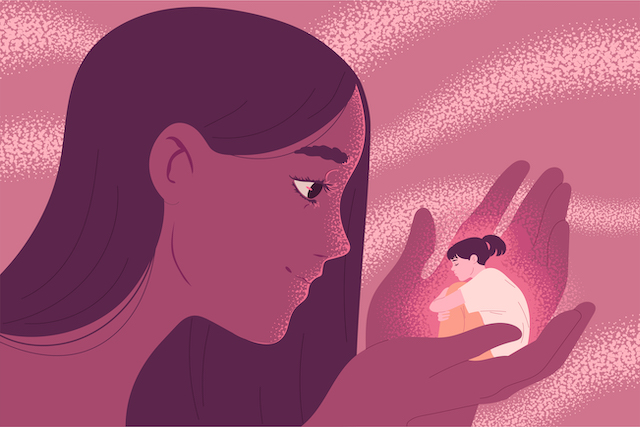
    Healing and forgiveness begin to happen the moment we accept and forgive ourselves—the moment we see that small child who we once were through the eyes of the compassionate adult we have become.

    For me, I was convinced that the little girl of yesteryear would never be anything but wounded and broken, despite the pep talks and logical arguments presented by very intelligent, intuitive clinicians. But that was then and this is now.

    And if Vanessa is looking down at me (and I’m pretty sure she is), she would imitate Mary Poppins and say, “Pish, posh” with a smile on her face and remind me every time I achieved a new level of insight, understanding, and self-care with a “well done,” putting her right thumb up as an exclamation mark.

    Well done, indeed.

  • How I Claimed My Right to Belong While Dealing with Imposter Syndrome

    How I Claimed My Right to Belong While Dealing with Imposter Syndrome

    TRIGGER WARNING: This post briefly references sexual abuse.

    “Never hold yourself back from trying something new just because you’re afraid you won’t be good enough. You’ll never get the opportunity to do your best work if you’re not willing to first do your worst and then let yourself learn and grow.” ~Lori Deschene

    The year 2022 was the hardest of my life. And I survived a brain tumor before that.

    My thirtieth year started off innocently enough. I was living with my then-boyfriend in Long Beach and had a nice ring on my finger. The relationship had developed quickly, but it seemed like kismet. Unfortunately, we broke up around June. And that’s when the madness began.

    I believe it to be the extreme heat of the summer that somehow wrought this buried pain from underneath my pores to come up. Except the pain didn’t evaporate. It stayed stagnant, and I felt suffocated.

    There were excruciating memories of being sexually abused as a child. Feelings of intense helplessness came along. I had nightmares every night, and worse, a feeling of horrendous shame when I woke up. All of this made me suicidal.

    Before I knew it, every two weeks I was being hospitalized for powerful bouts of depression, PTSD, and the most severe anxiety that riddled my bones.

    This intense, almost trance-like experience of going in and out of hospitals seemed like the only way to cope with life. I felt broken, beyond repair. I gained a lot of weight and shaved my head and then regretted it. My self-esteem plummeted.

    I felt like I didn’t belong to society anymore. I’d had superficial thoughts like this before, growing up in the punk scene, but the experience of constantly being in and out of mental hospitals was beyond being “fringe.” I felt extremely alienated.

    With many hospitalizations in 2022, I was losing myself. Conservatorship was now on the table. I was terrified and angry at the circumstances fate had bestowed upon me.

    In my final hospitalization in December, I suffered tortuously. I was taken off most of the benzos I was on, and I was withdrawing terribly, alone in a room at the psych ward. My hands and feet were constantly glazed in a cold sweat.

    I was so on-edge that every sound outside my door jerked my head up. The girl next door would sob super loud, in real “boo-hoos,” and do so for hours on end. It eroded me. I would scream at her to stop, but she would then cry louder.

    If there was a hell on earth, this was it. I told myself, with gritted teeth, staring out the window, that this would be my last time in a psych ward. No matter how miserable I was, I would just cope with it. I didn’t want to deal with this anymore.

    So I made a commitment to myself to really try to get better. Hope was hatched by that intense amount of pain. I knew I had a long journey ahead to heal, but that there was no other way but up.

    After that final hospitalization, I joined a residential program that helped me form new habits. There was a sense of healing and community there. I felt a mentorship connection with one of the workers, who was a recovered drug addict.

    I was glad I was finally doing a little better. I realized I shouldn’t have gone to the hospital so much and perhaps should have plugged into one of the residential places first.

    This year has been easier as a result of sticking to treatment and addressing some of the issues that were plaguing me. I now have better coping mechanisms to deal with symptoms of PTSD, as well as some better grounding techniques.

    As a result, I’ve been able to go back to work, despite still dealing with intense anxiety. For the first time in a while, I feel hopeful for my life. But I can’t help but getting hit with a barrage of thoughts before I go to work.

    This whole thing I’m going through is commonly known as “imposter syndrome.” Basically, it feels like I don’t belong where I’m going in order to make the quality of my life better. I feel like a fake or a phony, afraid my coworkers will understand who I really am—someone who has struggled with PTSD and depression.

    As a result, some days are more difficult than others when it comes to showing up at work. I’ll have mini panic attacks in the restroom. There’s an overwhelming feeling of surrealness.

    Although I’m glad to have gotten out of the merry-go-round of doom, putting on a happy face and attempting to appear as a healthy, well-adjusted person is too much sometimes.

    And I know it’s not just in my situation that people experience imposter syndrome. Some people that were once extremely overweight feel out of place once they’ve lost their extra pounds. Others who are the minority in race or gender where they work can also feel like they don’t belong.

    I’ve come to realize this is a universal experience, the feeling of “not belonging.” It’s also a syndrome of lack of self-worth. I try to tackle this in baby steps every day.

    Here are some things I try to live by to feel more secure where I’m trying to thrive.

    I ask myself, “Why NOT me?”

    There’s a Buddhist quote that suggests, when you’re suffering, instead of asking, “Why me?”, you’re supposed to humble yourself by asking, “Why NOT me?” But I think this is also relevant to feelings of belonging.

    When you feel like you don’t belong, ask yourself, “Why NOT me?” Why wouldn’t you deserve to belong, when everyone else does, despite their varied challenges? This sort of thinking levels the playing field.

    I remind myself of my worth.

    I could spend hours thinking about why I’m not adequate or deserving. But I try to think about why I do have a right to be there. I deserve to get a paycheck like everyone else. I deserve to work, no matter what I’ve been through, and to value the sense of belonging offered through my coworkers.

    I try to power through my inner resistance.

    Many days this is more difficult than others, but I know if my greater goal is improving my life and feeling like I belong to society again, its worth challenging all the mental resistance I feel. I also know that my feelings will change over time if I keep pushing through them.

    Cherish the times of connection.

    There are times at work where I feel really connected to my coworkers, even though I doubt we have the same psychiatric history. I try to savor those times of connection because they keep me going. Since we are social beings, it is important to us to feel connected.

    Take comfort in knowing this will fade.

    Already, having just worked a few weeks at this job, my feelings of imposter syndrome are starting to fade. If I had known this would happen in the beginning, I wouldn’t have put so much anxiety on myself. If you’re going through this too in any capacity, just remember that the feelings are only temporary and will pass as you find your footing.

    Make peace with your past.

    Everyone has a past, some that may feel more shameful than others. But don’t conflate that with your right to belong and be a contributing member of society. Sure, some things are harder to rebound from than others, but that doesn’t mean that you can’t get past them. And that doesn’t mean you need to be defined or limited by your past challenges.

    Validate your feelings of struggle.

    Although it would be nice to just use denial to move forward, that’s not possible since you know the truth. You know what you’ve been through and how it’s affected you. I validate my experience in the struggle by going to support groups after work. That way I’m not gaslighting myself, pretending I’m fine. It’s just about knowing there’s a time and place for that unheard, marginalized part of yourself.

    We all put on a brave face to be accepted, but we all deserve to belong, regardless of how we’ve struggled.

    Don’t let your struggles define you. Instead, validate the fact that they have given you the strength to get where you are now.

  • Two Things Not to Do After a Traumatic Event (Lessons from Being Robbed)

    Two Things Not to Do After a Traumatic Event (Lessons from Being Robbed)

    “True emotional healing happens by feeling. The only way out is through.” ~Jessica Moore

    Have you ever loved someone so much that you could no longer see who they really were? Or have you ever been young and naive to the danger that surrounds you?

    I’m the first to raise my hand and say I did that! I’m a person who trusts people until they give me a reason not to.

    Trust

    Trust can be broken in so many ways by those you least expect it from; those you love and thought loved you. In some cases, it may not be that they don’t love you, but just that they have had a temporary moment of madness that has hindered their ability to think clearly—who knows?

    But whatever the reason for their betrayal, it can cause so much pain that you feel it in every part of your body. You know the kind of pain I’m talking about, which is so intense that it feels like you’re being pricked with needles. It’s not a nice place to be.

    Story Time

    For me, that moment came on a quiet night in June 2009, which was the calm before the storm that shook my young life. The month before, I had just turned twenty and was looking forward to the summer holidays after finishing my first year at university.

    At the time, I was with someone, and we had been together for just over a year. I had told him about certain areas of my life that I didn’t like to talk about because I didn’t think anyone would be able to understand or relate to them.

    That’s how much I trusted this person, so when he asked me for my house key, I agreed, although I was hesitant to give it initially. I thought we were cool. I know, before you look at me askance, I was young and stupid. I had been living on my own for about a year and ten months at that point, after moving out of foster care.

    On that horrible day, I remember my friend coming to see me during the day and leaving in the early evening. I then remember that shortly after she left, the guy I was with came into the house and stared at me for quite a while. I asked him why he was staring at me like that. He said it was nothing, I just looked different. I said yes, my hair was straight (I usually wore my hair with a natural afro).

    But I could tell something was wrong, so I asked him if he was okay. He said yes and walked out. I thought it would be like any other night and just lazed around the flat.

    Around 10 p.m. I was lying on my sofa playing my favorite game on the Nintendo DS (Ace Attorney) with my legs up and no trousers on. I heard the key unlock my door, but thinking it was my boyfriend, I didn’t flinch… until the door to my living room opened and I saw a boy with a bandana on his face.

    I jumped up quickly to cover myself, and while one of the boys held me at knifepoint, I watched as several other boys with hoods and covered faces took my things. The last thing they took was my wallet, but one of the boys had to ask me where it was.

    Due to the shock of what was happening, my brain couldn’t think, so I answered with “I don’t know,” which of course the boys didn’t like at all, as you can imagine. I ended up getting smacked in the face to jog my memory.

    It Was Not Over

    When they were gone, I quickly got up and ran to the door to put the chain on so they wouldn’t come back in. Lo and behold, one of them came back to get the remote control for the TV. To his surprise, of course, he couldn’t get in, and that made him angry. So he ordered me through the crack to get him the remote and threatened that he’d break down the door and kill me if I didn’t.

    Can you imagine being killed over a remote control?

    I got the remote and pushed it through the crack. Then he asked me for the password to my laptop, and I didn’t hesitate to tell him. Then he said, “If it’s wrong, I’ll come back.”

    During this exchange, I had the police on the phone in the bathroom. When the boys had left, I checked and found that they had taken my house phone, but I still had a spare phone in the cupboard, which I used to call 999.

    Just a few minutes after I finished talking to the suspect, the police knocked on my door. He had been arrested not far from my door and the police were able to recover some of my belongings (which were now evidence), including my front door key. The other boys managed to escape, but the arrested boy was later charged and convicted.

    That was a tough night for me, but the toughest pill I had to swallow was the realization that those boys wouldn’t have gotten my key without my ex-boyfriend’s consent.

    It seemed too premeditated because only he knew how much some of the stolen things cost.

    It was the biggest betrayal I’d ever experienced. I thought hearts could only be ripped out in vampire shows until it happened to me in real life that night (at least that’s how it felt).

    After the incident, I stayed with friends for the summer, which helped me cope better with the aftermath because I was out of the area for a while. But I also think it took me longer to heal because I was in denial for the first few months.

    I couldn’t fully process what had happened. I was finding it hard to get my head around it, and I didn’t talk about it because I couldn’t formulate the right words to express how I felt. I also felt embarrassed that it was partly my own fault for giving him my key.

    After the summer I moved to another area in time for my second year of university, and I never saw or spoke to my ex again.

    A Little Encouragement

    I’d like to say to all those who experience betrayal or survive traumatic crimes that the memory may never completely go away, but the healing will come with time and effort.

    This means feeling, processing, and accepting your emotions, reflecting on the situation and thinking about lessons learned, and forgiving and letting go so you can continue living.

    The two things I’d advise you not to do:

    1. Don’t suffer in silence.

    2. Don’t suppress your feelings and pretend nothing has happened.

    I did both for many years. It was only when I started talking about what had happened and allowed myself to feel all the different emotions that came with it that my healing journey really began.

    My emotions ranged from confusion, disgust, fear, shame, anger, and rage to sadness. They would be up and down on any given day. Sometimes it could be because something had triggered me, and other times just because I was thinking about what happened.

    Sometimes the event replays in your mind repeatedly like a broken record. Let it, because you’ll eventually come to a place of acceptance and slowly begin to let go of the pain.

    I also found it very hard to trust people after that, especially men. But I realized that the more pain I clung to, the more it prevented me from moving forward.

    Not trusting meant I would keep people at arm’s length. I wouldn’t allow them to get too close to me. I appeared cold and detached and thus had very few friends and no romantic relationship for over five years. So I started to forgive.

    I learned that forgiveness was more for me than for the other person, so I forgave myself first for not listening to my intuition when I was resistant to give him my key in the first place.

    Forgiving my ex without ever getting an explanation or apology wasn’t easy, but it allowed me to trust again. I chose to forgive him firstly for my own inner peace and secondly because I refused to believe that he was that coldhearted; instead, I reasoned that something must have happened to trigger the incident.

    Whatever you’re going through, it’ll get better, I promise. Hang in there and remember that this is just part of your story, not your whole story. If you do the work to heal and allow yourself to grow through the experience, it can only serve to make you better, not bitter.

  • After the Assault: What I Now Know About Repressed Trauma

    After the Assault: What I Now Know About Repressed Trauma

    TRIGGER WARNING: This article details an account of sexual assault and may be triggering to some people.

    The small park down the street from my childhood home: friends and I spent many evenings there as teenagers. We’d watch movies on each other’s MP3 players and eat from a bag of microwave popcorn while owls hooted from the trees above.

    Twigs lightly poked against our backs. Fallen leaves graced skin. Crickets hummed in the darkness. The stars shone bright through the branches of the redwoods.

    Eight years later at a park in Montevideo, Uruguay, darkness again surrounded me. Leaves and twigs once more made contact with my skin. This time, though, I couldn’t hear the crickets or notice the stars. Details of nature were dimmed out, replaced by the internal clamor of a rapidly beating heart and shock flooding through me.

    By day, Parque Rodo bustled with life. Later that year I would ride paddle boats there with my girlfriend of the time. I would feed crumbles of tortas fritas to the ducks alongside my Uruguayan housemate, while he shared with me his dream to become a dancer in New York City. I would do yoga on the grass with fellow English teacher friends. It would become a place of positive memories.

    That night, though, it was anything but.

    ~~~

    One week earlier, I’d moved to Montevideo to teach English and become fluent in Spanish.

    My first week passed by in a whir of exploratory activity. I traversed cobblestone streets past colorful houses resembling Turkish delights; past pick-up soccer games in the middle of some roads; past teenagers walking large groups of varied species of dogs.

    I learned Spanish tongue-twisters from native Uruguayans while drinking mate on the shores of the Rio de la Plata. I sand-boarded for the first time and became accustomed to answering the question “De donde sos?” (“Where are you from?”) in nearly every taxi I took and confiteria (pastry shop) I set foot in.

    Now that it was the weekend, I wanted to experience the LGBTQ+ night life (which I’d heard positive things about). Located on the periphery of the expansive Parque Rodo, Il Tempo was one of Montevideo’s three gay clubs, catering mostly to lesbians.

    I hadn’t eaten dinner yet, so my plan before heading in was to grab a chivito sandwich (one of Uruguay’s staple foods). Chiviterias abounded across Montevideo, present on nearly every corner, so I imagined I wouldn’t have to walk far to find one.

    After taxi-ing from my hostel, I asked the bouncer if he could direct me to the closest chiviteria. Pointing down the street, he told me to walk for half a block. I’d then make a right and continue down 21de septiembre until reaching Bulevar General Artigas.

    ” Y alli encontrarás una” (“And there you will find one”), he said.

    A few blocks didn’t sound like a lot, so off I went.

    I walked for what felt like a while, without crossing paths with any other pedestrians.

    Isnt this supposed to be a major street? I wondered. Also, shouldn’t there be some streetlamps?

    It was then that another pedestrian—a young man wearing a backward baseball cap—came into view.

    He was walking briskly toward me from the opposite direction. Pretty much the minute I saw him, I knew my evening wouldn’t be playing out as I’d envisioned. A chivito was no longer on the table. I wouldn’t be dancing with a cute Spanish-speaking lesbian at Il Tempo.

    “Adonde vas?” (“Where are you going?”) the man asked me as he got closer. Tension immediately took hold of my body, which I did my best to hide while quickly responding that I was on my way to a chivito spot.

    Yo sé donde comprar un chivito” (“I know where to get a chivito”), he said, gesturing toward the park. “Te muestro” (“Ill show you”).

    My heart hammered, but I again tried to obscure any signs of fear. Maybe if I exuded only niceness and naivety, it would buy me more time—because the grim truth (that there was nowhere within eyesight to run to) was quickly becoming apparent. The foggy pull of disassociation came for me, wrapping its wispy arms around my heart and mind.

    Similar to how Laurie Halse Anderson wrote in Shout: “The exits were blocked, so you wisely fled your skin when you smelled his intent.”

    I chose not to run—because who knew how long it would be before I found a more populated road, or even a passing car? And how far could I flee before the man caught up? He’d likely become angry and violent if and when he did. Also, flip-flops make for pretty dismal running shoes…

    Maybe if I kept walking with him, we’d cross paths with another person, went my reasoning at the time. No one else was present on that dimly lit street, but maybe in the park someone would be—a couple taking a late-night stroll, or a cluster of teenagers cutting through on their way to the next bar; or someone, anyone who could step in and become a buffer. Parque Rodo’s website had, after all, mentioned that many young people hang out there at night.

    ~~~

    I don’t remember what the man and I talked about as we walked. I do remember a half-eaten chivito lying atop a trash can off to the side of the path; the sound of my flip-flops crunching against the gravel; that we continued to be the only pedestrians on our path; and that after a minute or two, the man announced, “Weve almost made it to the chivito place.” I nodded in response, my appetite now completely nonexistent.

    Part of me still hoped I could buy time. That I could pretend I didn’t know what was about to happen, for long enough so that someone, or something, could intervene—so that maybe it wouldn’t.

    Nothing and no one did though. When the man finally grabbed me and pushed me against a tree, my feigned composure broke. Noticing the shift, he used both his hands to cover my mouth while whispering that he would kill me if I raised my voice (“Te mataré,” he repeated three times in a low hiss).

    Over those next few minutes, I kept trying to hold eye contact in attempt to get through to his humanity. I desperately and naively hoped that at any moment he would awaken to what he was doing and feel ashamed enough to stop.

    He didn’t though.

    When he tried to take my shorts off, a disorienting sequence of imagined future scenarios swiped through my mind like sinister serpants.

    They showed me dealing with an STD.

    Taking a pregnancy test.

    Getting an abortion.

    Doing all of these things on my own in a country 6,000 miles from home and from everyone who knew me.

    My fear of those imagined outcomes pushed me to speak up.

    ”You don’t want to go down there,” I warned, feigning concern for his well-being.

    He reached for my shorts anyways.

    And so I tried again, this time while looking him in the eye. Though I wouldn’t know the Spanish word for STD until years later when taking a medical interpreter certification course, I did have others at my disposal. Enough to explain that I’d once had “a bad experience” that left me with algo contagioso (something contagious).

    If this man cared at all about his health, he’d stop what he was doing, I explained.

    Maybe I was imagining it, but I thought I saw the slightest bit of uncertainty begin to share space with the vacancy in his eyes.

    Whether or not he believed me, he stopped reaching down and settled on a non-penetrative compromise.

    Afterwards he snatched up my shorts and emptied their pockets of the crumpled pesos inside them (the equivalent of about fifty U.S. dollars). Then after tossing them into a nearby bush, he ran off into the night.

    ~~~~

    As I stood up a dizziness overtook me, my soul quavering and disoriented in its return from the air above to back inside my skin.

    Still shaking, I found my way to the closest lighted path, walking quickly until I reached Il Tempo—the club I’d started at.

    I asked the bouncer if I could use the bathroom.

    Once inside I washed my mouth with soap—one time, two times, five then six. No number of times felt like enough.

    After returning to my hostel, I fell asleep, telling not a single soul. I wouldn’t for another six months.

    ~~~

    Part of it was that I didn’t want to bother anyone. What had happened was heavy, but it was over now. I was fine—and what was there to say about it? Telling people, this soon into the start of my year abroad, would just be needlessly burdening them. Not to mention disrupting the momentum of what I’d wanted to be a chapter of growth and new beginnings.

    Another aspect of it was that I feared the questions people might ask, even if just in their own heads:

    Why were you walking on your own at night? Why didnt you take a taxi? Why were you wearing shorts? Why didnt you run? Scream? Why did you follow him into the park? Why werent you carrying mace? Why didnt you…?

    I too had asked myself these questions. And I had answers to them.

    I was walking on my own because Id just moved here and didnt know anyone; I didnt take a taxi because I thought the walk would be quick, and taking one every time you need to walk even just a block or two gets expensive; I wore shorts because it was a hot summer night; I followed him into the park for the reasons outlined in my thought process above, and perhaps because fear was clouding and constricting my rational thinking.

    Still, I couldn’t shake free from the shame.

    The people I confessed to months later turned out to be wonderfully supportive. Looking back, I can see that though I’d worried about them judging me, I was the one judging myself—then projecting that self-judgment onto them.

    Still, even though my support group didn’t, I was also aware that society does lean toward placing accountability on victims—even more so in the years before the Me Too movement. Often, even now, the knee-jerk reaction is to question victims.

    After determining that the best way forward was to put the incident behind me, I then locked it away into a mental casket and began the burial process. I covered over it with mate and dulce-de-leche; with invigorating swims through the Rio de la Plata; with meeting lively souls in the months that followed.

    Though unaddressed, at least safely buried the memory couldn’t harm me. Or so went my thinking at the time.

    ~~~

    Following the assault, I began my teaching job at the English academy. I assimilated to Uruguayan culture as best as I could, all while providing positive updates to friends and family back home.

    The pushed-down trauma manifested in other ways though—in stress, depression, and near constant irritation. As Tara Brach put it, “The pain and fear don’t go away. Rather, they lurk in the background and from time to time suddenly take over.”

    I drank unhealthy amounts of alcohol (not just in groups, but also when alone). Many things overwhelmed me. Countless triggers seemed to set me off.

    The Uruguayan girl I’d been dating even said to me once, “Te enojas por todo” (“You get irritated by everything”). I ended up getting banned from that lesbian club I’d gone to the night of the assault, after arguing with the bouncer one night.

    Nightmares plagued me. I’d learned in my college psych class that one of the functions of sleep is to escape from predators. I wondered why, then, I came face to face with my predator every night in my dreams.

    ~~~

    I’d had other traumatic experiences prior to this one—many of which I’d stuffed away.

    The pain pile-up will level off, if only you just stop looking at it, I often tried to tell myself.

    It didn’t level off though. I’d flown down to Uruguay with the pile still smoldering, my conscious mind numbed to the fumes (having been trained to forget they were there). Following the assault, the pile grew—and continued to grow well into my return to the U.S.

    When we avoid processing, the traumas form a backlog in our hearts and minds, queuing up to be felt eventually. Numerous studies have found avoidance to be “the most significant factor that creates, prolongs, and intensifies trauma-reaction or PTSD symptoms.”

    It was only when I began inching closer toward my pain that I began to slowly heal the parts I’d stuffed down for so long.

    Healing took place when I began opening up to people. It took place in therapy and through getting a handle on my drinking. It took place when restructuring my network, prioritizing the friendships that were better for my soul, while trimming the ones that had served more of a distracting and numbing purpose.

    It took place in redirecting care to my relationship with myself—spending more gentle one-on-one time with her, out in nature or in a quiet room.

    Every time I run barefoot on a beach, my heart heals a little.

    Every time I leave a meaningful interaction (with either a human or the planet), my soul inches closer toward realignment.

    I practiced turning toward my truer self in all these ways—until eventually, as phrased beautifully by Carmen Maria Machado, “Time and space, creatures of infinite girth and tenderness, [had] stepped between the two of [the traumatic incident and me], and [were] keeping [me] safe as they were once unable to.”

    Though I want this for everyone who’s survived an assault, or any other serious trauma, it’s only within judgment-free space that true healing is possible. This means letting go of self-judgment, and surrounding yourself with people who can validate you.

    May the idea be wiped from our collective consciousness: that the choice to wear a particular item of clothing, or to consume a few drinks, or to seek out a snack late at night—basic things men can do without fearing for their safety—are responsible for what happened to survivors.

    May the prevailing understanding become that what is responsible—100%—is a person’s decision to assault. Full stop.

    May all of these things become true—because no survivor should have to experience shame alongside the pain that’s already so difficult to bear on its own. Because every survivor deserves a space to heal and reclaim what was taken from them: the ineffable sense of emotional safety that should be our birthright. We deserve a viscerally felt “you are okay” coursing through our veins. We deserve to feel completely at home inside our skin.

    May we arrive there some day.

  • You Can Be the Cycle Breaker: 9 Ways to Heal After Childhood Trauma

    You Can Be the Cycle Breaker: 9 Ways to Heal After Childhood Trauma

    “It’s up to us to break generational curses. When they say, ‘It runs in the family,’ you tell them, ‘This is where it runs out.’” ~Unknown

    I never even knew what I experienced was trauma. It was my normal. I was born into a world where I had to walk on eggshells, always on high alert for danger.

    I held my breath and always did my best to be good and to not cause an eruption of my dad’s temper. He literally controlled my every move through fear. I agreed to anything just to feel safe and to please him.

    I grew up with the example from my mum and my grandmothers that women were submissive to men. That men could do whatever; get drunk, not pay bills, blame, shame, and abuse their wives, and they would stay no matter what.

    They would allow their children to be hurt, as men were on this pedestal. I didn’t grow up in a violent home, but there was always the threat of it.

    It was the words that really haunted me for decades. They diminished my self-worth and self-esteem.

    I was terrified of men as a result. I unconsciously stayed single as an adult because the belief I had deep within my unconscious mind was that men were not safe.

    Any men I met reconfirmed that belief. I was determined that I wouldn’t bring children into a home like the one I grew up in. But I was not attracted to healthy men, so staying single kept me safe.

    This belief and my need for safety kept me very lonely. I just didn’t trust myself to not repeat the cycle I grew up watching. Especially since any men I was drawn to had some subtle abusive tendencies or emotional unavailability like my dad.

    I so wanted to be loved, but I was scared. So I began to take baby steps to become the cycle breaker in my family. My dream was to have a family, but I wanted a home that was safe and nourishing, with no tolerance for abuse.

    But I had no idea what that was. It was normal for me to experience the silent treatment or verbal abuse if I didn’t do as Dad wanted. He would be loving at times, giving me a crumb of love if I performed as he wanted.

    A crumb of love was normal for me. Having no boundaries and getting walked all over and treated badly was normal for me. I had to go on a healing journey to heal the wounds of the past and discover what normal and healthy actually was, as I had no idea.

    Here are my top tips for becoming a cycle breaker.

    1. Understand the generational trauma in your story.

    As small children we blame ourselves for how we are treated, but there are many reasons why our parents behave the way they do. It’s not our fault.

    Look at each parent and grandparent and review what traumas, big and small, they experienced. Look at the country your family is from to understand the bigger traumas your grandparents experienced like wars, poverty, political issues, etc. What happened in each person’s life to make them feel unsafe?

    It’s likely that your parents and grandparents didn’t seek help and therefore remained stuck in survival mode. This is the place in which you were born and brought up.

    This exercise helps you to understand their story. You don’t have to forgive them if you don’t want to because you deserved way better. But they brought you up the only way they knew how. They didn’t know how to regulate their nervous systems and take care of themselves, and that is what they taught you.

    2. Reparent your inner child.

    Take a close look at what you experienced as a child from birth to age seven. These are the years when your brain and nervous system were being developed. Your brain was taking in information on what was a perceived ‘threat’ and what felt unsafe.

    For example, I grew up around a lot of arguing, so raised voices overwhelm my body with fear. This is a childhood wound.

    Rather than being frozen by that fear in my adult life, I now reparent my inner child. I visualize going back in time to the memory where I felt unsafe or afraid and giving my inner child what she needed. Maybe some reassurance, validation, or love. I just let her know she is safe.

    This calms down the nervous system and helps heal wounds of the past.

    3. Review the family survival plan.

    We all have a survival program, as do our parents. For example, my dad learned to shout and control when he felt unsafe or his nervous system was dysregulated; I learned to be frozen and please in attempt to feel safe. We didn’t have any choice but to use these survival programs as children. We needed them.

    But as adults they could be causing us issues with loving ourselves, having healthy relationships, and maintaining our overall well-being.

    Take a moment and reflect on each family member’s survival programs. What is each person doing or what did they do during your childhood when emotions were triggered or that feeling of unsafety was intense?

    These behaviors are learned, not genetic! The first step is becoming aware of the behaviors that are not actually helping you to survive but are keeping you stuck.

    Examples of behaviors that are a nervous system response are:

    • Fight – control to connect and rage to feel safe e.g., narcissistic, explosive, controlling, entitled; a bully, a sociopath; demands perfection
    • Flight – perfect to connect and be safe e.g., OCD; adrenaline junkie, busy-aholic, workaholic; rushing, worrying, overachieving; compelled by perfectionism
    • Freeze – avoids connection and hides to be safe e.g., dissociative, hiding; hermit, couch potato; achievement-phobic, relationship avoidant
    • Fawn – merge with others to connect and grovel to be safe e.g., codependent, slave, doormat, domestic violence victim, parentified child, little adult, people-pleaser, relationship addict

    4. Work on behavior change.

    Once we’re aware of our unconscious toxic behaviors we can begin to take baby steps to change them. As we take small steps every day, over time, we’ll create new positive habits.

    First, we need to look at the behavior we are trying to change. For example, people-pleasing, which is a fawn nervous system response. We could introduce a new habit to pause for a half-hour before saying yes to someone. In this pause we can do something that makes us feel good and then make a decision if we authentically want to say yes instead of doing it just to please others.

    5. Get support.

    When we stop using old behaviors to numb feelings, pain from the past can rise up. When we sit and feel our feelings, they can pass in ninety seconds. But at the beginning this can feel scary and overwhelming.

    Create a support system to help you. This might include therapy, coaching, support groups, or working with a mentor. It doesn’t matter how you get support, just that it makes you feel safe. Working with people who are healing on the same journey can be helpful, as they can share tools with you.

    6. Cultivate daily practices to heal nervous system.

    This is one of the most important steps. A daily practice provides a moment in your day when your nervous system feels calm. Pick activities that make you feel safe and at ease. We are all different, so what works for one person may not work for another.

    Start small with just fifteen minutes and build as you need. You could try breathing, meditating, dancing, listening to your favorite music, journaling, repeating affirmations, or lying on the grass as examples.

    When you introduce a daily practice, you will notice what is triggering you to move you out of your calm state. Is it overworking? Or a particular relationship? When we are unconsciously moving through life we can’t tell!

    You can then start to bring in tools to help you calm your emotions when you get triggered. Maybe breathing or reparenting your inner child to get you back into balance rather than falling into old behaviors.

    7. Practice self-compassion.

    The transition from old toxic behaviors to new healthier behaviors is imperfect and bumpy. You may regress. You may get frustrated with yourself. Be kind to yourself through it all. You’re trying to unlearn generations of behaviors. Your subconscious mind does a lot of behavior automatically; it takes time to reprogram it, but slowly, you will notice you are getting there.

    Celebrate every tiny win, like “I did my breathing today,” and notice how these new behaviors make you feel.

    8. Learn to love yourself.

    When we grow up in dysfunctional families, we are desperate for external validation, as we may not have received this growing up. But all that love we want from others, we can give it to ourselves. By speaking to ourselves with kindness and love. By validating ourselves. By taking care of ourselves, mind, body, and soul.

    If you are great at loving others but not yourself, imagine your inner child and visualize yourself taking care of them. Nurture them, hold them, and show them love.

    9. Clear away beliefs that are not yours.

    We hold a lot of beliefs from our families. For example, a belief that I got from my childhood was “failure is not an option” because it was quite literally unsafe to fail! When I noticed that voice in my head a few times, I realized this was not my own but my dad’s.

    My belief is different. Failure is a part of growth and healing. This belief feels much better in my body, so I repeat this often with my hand on my heart to embed it.

    What beliefs do you hold that are not yours? What is a more empowering belief to support you and your journey? Repeat it as often as you can so it gets embedded in your subconscious mind.

    No matter what you experienced in the past, you can create a different future.

    Join me and become a cycle breaker. It’s where the happiness is at.

  • How I’m Healing from Abuse After Going in Circles for Years

    How I’m Healing from Abuse After Going in Circles for Years

    TRIGGER WARNING: This post deals with an account of sexual abuse and may be triggering to some people.

    “Recovery is a process. It takes time. It takes patience. It takes everything you’ve got.” ~Unknown

    We are often told in therapy that we need to dig deep and explore our feelings until we find the root of our problem, as though we’ll finally have peace and relief just because we’ve found the “Nugget of Trauma.”

    The problem with long-term childhood trauma is that there was not just one Nugget, or one moment that we were left reeling from. For many of us abused as children, trauma encompassed our entire childhood and adolescent life.

    When I was in my early twenties my memories became a deluge, flooding into my mind all at once. I started with talk therapy, and it seemed like the one recurring question being asked of me was, “What’s the issue or event that you are struggling with?”

    So, thinking that they must know more than me about how to deal with the chaos in my mind, I would focus on one aspect of my childhood to try an work through it with them.

    I had a lot to pick from: beatings, torture, rape, sodomy, abduction, neglect, and the big pulsing mass of guilt and shame.

    I was ashamed that I could not protect my brothers and that, each time I was raped, it was because of something I had done that required punishment, like not wringing out a wash rag tightly enough. All of my abuse and the abuse of my brothers was, according to my father, my fault because I wasn’t good enough.

    Sound familiar? For many of us, the manipulation of how we think about the abuse and ourselves is the most painful and long-lasting trauma, but going into detail about this in therapy is exhausting, mentally and physically, and can cause a spiral into deeper depression.

    I didn’t know all this when I was in my twenties, and I barely understood the concept of talk therapy, which was: You talk about something that happened to you, and then the therapist tells you about the side effects of that experience to help you understand your feelings and behavior.

    It took me a long time to learn that having a realization about a certain event and learning how it’s affecting me in the present doesn’t mean the problems associated with it go away. And, unfortunately, the clinical view that I was making progress with those realizations, or “breakthroughs,” was false.

    For many of us, having a “breakthrough” doesn’t even mean that in two years we’ll remember it, and we may go through the same cycles of dealing with the abuse all over again. Like a big Wheel of Trauma.

    It took me years to recognize I was cycling through the Wheel of Trauma:

    • A deep dive into depression
    • Leading to anger at being depressed and feeling “sick of living with this”
    • Then the realization of how a specific past experience was affecting me
    • Cue the tsunami of relief and giddy hopefulness and a false belief that I was getting better
    • The relief soon wears off
    • A deep dive back into depression where the realization is forgotten

    I may never have recognized it if a friend hadn’t pointed it out to me. To find out I’d been going in circles was devastating.

    After doing some independent research on the neurological damage caused by early childhood trauma, I have begun to wonder if my brain was cycling just so I could have those moments of relief as a way to feel something positive and hopeful. That might be wishful thinking, but this is one example of why it is so important to write things down and keep track of what is going on in your head, especially in dark times.

    Trust me, I know so well how scary it can be to put things down on paper and suddenly find yourself looking at something that your brain put away a long time ago to protect you.

    I’m not going to say it’s easy or fun. I’m not going to say that I haven’t been triggered by writing. I have been, but I also came through it, and the memories I was so afraid of, while painful, aren’t as scary now.

    If you’re like me, your mind protected you when you were too young to process what was happening to you. But you aren’t that child anymore; you’re older, your mind is more mature, and you’re better equipped to deal with those experiences now.

    Be gentle with yourself, but also have faith that you will come out the other side if you have to come face to face with a horrible memory, or what I have dubbed a Nugget of Trauma.

    I’ve also learned that you can grab a Nugget of Trauma and pull it into the light, metaphorically. I don’t mean to take it out and analyze every detail. The goal isn’t to hurt yourself with old trauma; the goal is to learn how to move forward with it, and figure out some basic reactions you may have to that memory Nugget.

    Do you recognize the feelings that memory, or Nugget, has entwined with it?

    Do you behave in a certain way every day based on those feelings?

    Do you avoid certain people or places because they trigger that feeling?

    Do you feel this every day or just in certain situations or around certain people?

    How does it affect how you react to other people?

    How does it get triggered, and does it send you spiraling into depression?

    How do you feel about yourself?

    The goal isn’t to make it go away because it may never go away completely. But you can learn how to take care of yourself with this knowledge in hand and create new habits to counter the poison of the trauma.

    If something happens and you begin to feel a certain way, you will more likely recognize that feeling as something that is not associated with the present, and you can make a plan to take care of yourself in that situation.

    For example, I have come to recognize a sensation I sometimes feel when I’m with one or more people in an enclosed space, like a conference room or office. It is a physical, slimy, crawly feeling that I have to focus on and consciously control until I can make an excuse and leave.

    I’ve learned to recognize it so I can take care of myself in those situations. I leave, usually to a bathroom, and allow time for it to go away so I can feel safe again. If I can’t leave, I will hold a notepad or something in front of my chest as a barrier.

    Other things that may work for you are saying some soothing mantras, making a cup of tea, or taking a break and just writing it out. Smells can be a great way to break through a triggered response. Maybe keep some lotion or something else scented to help calm yourself and bring you back to the present. I love VapoRub for this.

    Your knowledge of yourself is the key to taking care of yourself, lessening past’s hold on you, and breaking the cycles.

    This means being completely honest with yourself and observing things you say and do without judging.

    When you can really see yourself without all the rationalizations, defenses, and excuses you cover your psyche with, you can better recognize your triggers, behavior patterns, and reactions.

    In my case, I am badly triggered by any cinama-graphic representation of rape. I will get up and walk out of the room, usually in a state of high agitation, and get really catty with anyone who tries to touch me or invade my personal space, which at that moment is about 1000 meters wide.

    It’s not a surprising trigger, and it doesn’t require a lot of analysis to figure out why it’s upsetting to me, but that isn’t really the point. The point is to truly be with myself in those moments to keep myself from spiraling down to the depths or physically harming myself.

    I’ve had to learn how to deal with my brain being doused in visual memories of rape and all the skin-crawling feelings that come with them. For me, this is where self-comfort and care has become vital.

    It’s almost like I have to be two people at the same time; while a huge part of me is freaking out, I have to be able to step outside of that, see myself in pain, and comfort myself back to safety and calm. And considering that I perceive most other people as threats when I’m triggered, I really only have myself.

    This was originally a hard lesson because I could listen to advice from friends or doctors or people on TV, but it was hard for me to take those ideas from “yeah, that sounds logical and smart” to actually living with those tools at my disposal and using them when I needed them.

    The first step was learning how to get myself to a mental state where I could use them. When you’re in the dark in your own mind and you can’t see the reality in front of you there is no logic that can break through.

    The damage isn’t logical, so it’s not an issue of logic or understanding; it’s a matter of taking care when your mind is in that painful moment and getting yourself back to the point where you have more control and are able to use those tools.

    It takes a lot of practice, patience, and honesty to develop self-care routines based on self-love and understanding. That understanding can’t always come from other people telling you what’s going on or why you’re reacting in a certain way. It’s best when understanding comes from caring enough about yourself to get your hands dirty and learn what’s really going on in your head.

    Admittedly, I have had long runs of not knowing what to make of the chaos in my mind, sometimes not even knowing what I was feeling, or what was real, or what was an attack from my past. In some moments of terror, not even knowing how old I was. It can be really bad at times, and I totally get that.

    The best course of action is to write as much as you possibly can every day about everything that is going through your mind. This gives you some idea of what your brain is fighting with.

    When you’re done writing, get some sleep or cry or go for a walk or talk to yourself on a voice recorder, or do something that will help calm your thoughts a bit. Later, you can look at what you’ve written and really see what you’re going through.

    This can be harsh at times, so be prepared for what comes out of your head. One of my dark writing sessions showed a seething self-hatred that was quite frightening.

    A lot of people take this journey with a therapist, and that can be a safe way to venture into the sometimes-ugly reality of our thoughts and being, like having someone with a life preserver waiting to pull us out of the muck if we get too deep and can’t get back out. I’ve had hit-or-miss experiences with therapists, but as mental health knowledge around early childhood trauma expands and improves, it is becoming a more viable option for some people.

    If you haven’t tried it yet, do some research and make an appointment. It takes time to build trust with someone, so be patient and remember to be kind to yourself.

    When I went to my last therapist I made a list of boundaries. I had been placed with a male against my noted preference, but I wanted to give it a shot, so I made a list letting him know things that would make sessions more difficult for me, like having him stand between me and the door. Little things to some people, but triggers for me.

    Don’t be ashamed of letting people know how best to help you. And know what helps you might change over time.

    After doing this for so many years I have learned that a method of self-care that worked for me in the past may not work for me today. Or a method that never sounded quite right for me before might now make sense. Allow yourself time and space to learn and grow and regress and progress.

    First priority: be good to yourself.

  • How My Narcissist Ex Was a Catalyst to My Healing and Self-Love

    How My Narcissist Ex Was a Catalyst to My Healing and Self-Love

    “It’s okay to let go of those who couldn’t love you. Those who didn’t know how to. Those who failed to even try. It’s okay to outgrow them, because that means you filled the empty space in you with self-love instead. You’re outgrowing them because you’re growing into you. And that’s more than okay, that’s something to celebrate.” ~Angelica Moone

    I thought I had married the love of my life. I had never felt a connection so strong before. I was sure he was my soul mate, and I thoroughly believed he was my twin flame—my one and only.

    I can’t even begin to tell you the horror that started to unfold after we got married. The accusations that my beloved other started to hurtle at me. That I didn’t care about him and I didn’t love him enough. He was convinced I was having affairs behind his back, and conspiring against him, and was clearly out to take his money.

    I was not just perplexed by this, I was shattered. How could he not see that I loved him unwaveringly, without question, and that I never even considered having eyes for anyone else? And trying to take his money? That was incredibly bizarre because I discovered, contrary to his initial proclamations, that he hardly had any.

    Yet I didn’t care. I loved him. I tried to love him, and I was convinced that my love would be enough—that he would know that I loved him, and we would soon return to the comfort and the knowing that our love for each other was real, safe, and forever.

    No matter how much I tried to love him, things were spiraling out of control. I couldn’t be five minutes late from the supermarket without suffering his wrath. Life outside of “us” was getting smaller and smaller.

    If I looked out the window, I was thinking the wrong thing or looking at something the wrong way. If I didn’t take his hand when we were together, I was advertising that I was single. Visiting friends or family or working outside of the property became as possible as flying to the moon.

    Eventually it happened: I stopped trying to love us back to unity and fought back. Initially to try to stop the despair that he didn’t trust me, then for my literal sanity, freedom, and autonomy. Without these things I was losing my soul.

    None of it worked. As my attachment to him became more panicked and devastated and I was losing control of my reactions, his abuse accelerated, and then I realized I was coming close to losing my life.

    I had complicated post-traumatic stress disorder. I shook. I sweat. I couldn’t eat. I could barely sleep. Everything and everyone I cared about was turning away from me.

    I had married a narcissist. I didn’t realize it at first, because back then, fifteen years ago, not many people were talking about narcissism.

    I had always believed that narcissists were arrogant people who were “up on themselves.” I had no idea that they were people who presented in our lives offering the love, total acceptance, validation, and “life” that we thought we had wanted our entire life. I had no idea that someone like this could enter my life and they would feel so right to fall in love with.

    The day that the word “narcissist” popped into my head, and I googled it, I nearly fell off my chair. I was ticking every point that was so “him” off a list of traits and behaviors. I was in shock.

    Entitled—tick. Can’t take personal responsibility for wrongdoings—tick. Has hair-trigger reactions to things that most adults don’t get bent out of shape about—tick. Argues in circles in ways that make your head spin—tick. Pathologically lies while looking you straight in the eye—tick … and on and on the list went. I needed to get to the punch line: Could a person like this be fixed? Could they get well from this disease?

    I searched high and low; I turned over every possibility and read all the research I could find. The answer was a flat “no.” Then, believing there is always a solution, I was determined to heal him, to fix our marriage, to return to the dream of the “one and only” that I just knew he must have been.

    It didn’t turn out well. In fact, it turned out terribly. Now I was experiencing things I never believed I could or would: Mental and emotional abuse that had me curled up in a corner. Physical abuse that had me fearing for my life. Financial abuse that was ripping my life to shreds. At times, for self-preservation, I had to escape. Eventually, I left him and relocated.

    But I wasn’t getting better away from him. I was totally unprepared for feeling so haunted. By the fact that he was in the home I had bought, seeing other women and seemingly having a great life while I was so empty, devastated, and traumatized that it hurt to breathe, it hurt to live, and I thought that I was going to die.

    I returned to him countless times. Either because he would contact me and promise to change, or I missed him so much I couldn’t function.

    Every time I returned, it got worse. The makeup periods were briefer, and the explosions more damaging and horrifying. Then, I broke. I had a complete psychotic and adrenal breakdown. I was told I would never heal from it and would need three anti-psychotics to be able to function, but I would never be the same again. I was told I now had permanent brain and nervous system damage.

    Of course, he didn’t care. He did what he had always done when I needed him—he discarded me. It was then that I decided to die. So, I started trying to formulate how to do this in the kindest way for my family and son.

    However, my soul had a different idea for me. A voice in my head kept insisting, “No, there is another way.” I thought it was just my madness speaking. I argued with it, but it wouldn’t let up. In desperation I walked into my bathroom, fell on the mat, put my hands in the air, and shrieked, “Help me, I can’t do this anymore!”

    In that moment the most incredible thing happened. It was like my head parted and the blinding truth entered me. I had never known such clarity in my entire life. Maybe you have to be “out of your mind” to really know the truth?

    The voice in my head told me that my husband was a catalyst. He was never meant to grant me my “self” and my “life”; rather he had come into my life to show me the parts of myself that were unhealed, that I hadn’t healed yet, to generate my true self and true life.

    A whirl of incidents and truths flashed into my mind. The ways I was so hard on myself and was always needing more, saying to myself, “Melanie, I can’t even like you (let alone love you) if you don’t get your to-do list all done, if you don’t lose ten pounds, if you don’t look like this or that … “ and how he had treated me the same—as not good enough, right, or acceptable.

    How I had always kept busy rather than “be” with myself, care, validate, and love myself. How I had terminally self-avoided and self-abandoned my inner being, and how I had yelled at him, “You don’t even know who I really am!” yet had never taken the time to have a real relationship with myself.

    On and on, the realizations came hard and fast. And I knew, he hadn’t treated me how I had treated him; he had treated me how I had really felt about and treated myself.

    I knew that if I let go of him, healed, and came home to my inner self, I would recover. I would save my sanity, life, and soul. I knew I could heal, get better, and do better. I knew that finally my life and love could be real and work.

    I knew this because in this divine intervention experience, I had been thrust into a vision in the future where I was healed and whole, and I had felt it for real. I saw who I was. I saw what I had and most importantly, I felt who I had become.

    He wasn’t the healer of my wounds; he was the messenger of them instead.

    I let go. I turned inward. I healed.

    This I now know at the highest level of truth: A twin flame, as the nemesis who reflects back to us our unhealed parts in intensely painful ways, offers the greatest love of all—the returning home to ourselves. From there my life has blossomed, from this true relationship with myself, life, and others in ways that I could never have previously imagined.

    I am love. I am self-acceptance. I am free.

  • 3 Ways to Help Someone Who’s Recovering from Trauma

    3 Ways to Help Someone Who’s Recovering from Trauma

    “Feeling safe in someone’s energy is a different kind of intimacy. That feeling of peace and protection is really underrated.” ~Vanessa Klas

    I’m now fourteen months into my recovery from complex post-traumatic stress syndrome (c-PTSD aka complex trauma). I’d been in therapy for a number of years before I was diagnosed. I’d been struggling with interpersonal relationships and suffered from severe anxiety and depression, although you wouldn’t have guessed it from looking at me.

    There are so many misconceptions about trauma, and before my diagnosis in 2020 I wasn’t very trauma aware.

    I was your typical millennial thirty-something woman, juggling a successful corporate career with a jet-setting lifestyle. My Instagram feed was filled with carefully curated photos of me adventuring through Europe, eating flashy dinners at Edinburgh Castle or entertaining friends with cocktails in my flat just off the Water of Leith.

    Then 2020 hit. The world was thrust into a global pandemic that saw me lose my job and livelihood, and with it my visa and right to live and work in a place that I had fallen in love with. I went from having a thousand distractions at my fingertips to being confined in a house with nowhere to go and no one to distract me.

    I was facing deportation since I no longer had the right to live in the UK, but wasn’t able to leave, as all flights back to Australia were stopped. I was in purgatory, stuck between where I wanted to be and where I had to go, with no way out

    Everything unraveled. It’s the only way I can describe the slow, torturous unpicking of my carefully pieced together life. Illusions of control disappeared. Choice and freedom were stripped away, and in the prison of isolation I was facing all the shadows I had so carefully avoided.

    In solitary confinement you are forced to face the parts of yourself you can ignore when you have a packed social calendar. We often think of trauma as something that happens if you’ve experienced a sudden violent incident, like a car crash, or if you’ve been assaulted, or if you’ve been in a warzone. Those are all true.

    Trauma can also occur over time with prolonged exposure to incidents and events that dysregulate your nervous system.

    The conflict in my parents’ relationship created the perfect breeding ground for c-PTSD, as my formative years (before I turned seven) were very volatile with a lot of upheaval, travel, and change.

    The stress and anxiety my parents were experiencing, first trying to migrate to Australia from India for five years and eventually going to Canada, resulted in an unfriendly divorce and custody battle. The result: neither parent was available to meet my emotional needs.

    What is Trauma?

    The American Psychological Association describes trauma as an “emotional response to a terrible event such as accident, rape, or natural disaster.” Dr Gabor Mate goes further, describing trauma as “…the invisible force that shapes our lives. It shapes the way we live, the way we love and the way we make sense of the world. It is the root of our deepest wounds.”

    Not everyone who experiences a violent or terrible event will develop PTSD. In fact, only a small portion of the population will develop trauma, even though the majority of people will be exposed to at least one traumatic event during their lifetime.

    What is PTSD?

    Post-traumatic stress disorder is considered to be a “severe reaction to an extreme or frightening traumatic event” and can include flashbacks of the event, intrusive memories and nightmares, avoidance of activities, situations or people that trigger these memories, and hypervigilance and hypersensitivity.

    What is complex-PTSD

    Complex trauma, or complex post-traumatic stress disorder, occurs after repeated and prolonged incidents that disrupt the nervous system’s ability to regulate itself. Complex trauma occurs from events experienced early in childhood development, and it causes problems with memory and the development of a person’s identity and interpersonal relationships.

    Symptoms of complex trauma include negative self-belief, problems maintaining healthy relationships, difficulties expressing emotions, people-pleasing, substance abuse, and ongoing feelings of emptiness.

    My diagnosis of complex trauma in early 2021 felt like coming up for air after being held underwater. It was painful; my lungs burned. But there was also relief.

    At first it felt like I would never be able to fill my lungs with enough oxygen, and then slowly, incrementally, my body started to trust that the oxygen was there, and I could stop gulping, grasping, floundering.

    For years I had been wrapped up in a toxic relationship with a man who was battling his own demons from childhood. For years I never felt like I was doing enough. I was never good enough or smart enough or pretty enough to deserve the relationship, the career, or the life I desired.

    I dipped my toes in the shallows of life; I yearned for community and at the same time I pushed it away. I wanted closeness, but it felt suffocating. I wanted success, but it felt terrifying. Every time life would get good, something would unbalance and everything would crumble, so I would have to pick up the pieces and rebuild.

    I was stuck in a spiral of going one step forward and five steps back in every area of my life. The pandemic only highlighted this as I was forced to move back to Australia, jobless and in debt.

    I didn’t realize it at the time, but this constant spiral of stress and loss was a subconscious play that I kept re-enacting. Subtle, insidious self-sabotaging mechanisms from childhood that had kept me safe now tripped me up and kept me trapped. I kept repeating cycles that triggered familiar responses within my nervous system—ones of unsafety, loneliness, and abandonment.

    Working on my trauma over the last fourteen months with a trauma-informed therapist, rebuilding safety within my nervous system, learning to self-regulate, to reconnect with my body, with myself, has been at times a harrowing process.

    Through it all, it was interesting to see how different people reacted to my pain and loss and grief.

    We’re not taught how to sit with our own uncomfortable feelings, let alone someone else’s. We live in a culture that thinks “positive vibes only” qualifies as a spiritual practice, when in reality, we need to be able to witness and love our shadows in order to fully heal.

    If someone you love is going through a hard time, if you know someone who is struggling, here’s some advice on how to hold space for them, from someone who has been on the receiving end of well-meaning but unhelpful suggestions throughout my recovery.

    Holding space for someone is essentially about being fully present for someone else. This means no agenda, and a judgment-free zone.

    Be Present

    Check in with yourself first. Are you ready, willing, and open to being fully present with this person right now? Are you able to leave your opinions, suggestions, and personal experiences at the door?

    If not, that’s okay. Self-care starts with you, and forcing yourself to be present with someone when you aren’t in the right head space will not help the other person.

    Let them know that you aren’t in the right head space right now and refer them to a helpline or specialist. Check back in with them to make sure they have followed through and have someone to talk to.

    You will be doing both of you a favor. This comes down to co-regulation.

    When you are grounded and fully present with someone who is going through a hard time, you are allowing them to “borrow” your nervous system to down regulate when they are in a heightened state of arousal and activation. If your own nervous system is activated, this will just exacerbate what they are feeling, causing more sensations of dysregulation and unsafety.

    When you are able to sit with someone and be fully present for them, without judging their thoughts or trying to fix things, this can be a profoundly healing experience for the other person.

    Being witnessed in our grief without judgment, pity, or awkwardness removes some of the shame we’re experiencing as we’re processing our difficult emotions.

    Often, those with complex trauma did not have their needs met and didn’t have their feelings validated as children. It’s a deeply healing experience to be with someone who cares about you and to feel seen and validated at your most vulnerable moment.

    Practice Conscious and Reflective Listening

    When we are listening to someone, we’re only half paying attention to what they are saying. Half of our attention is already formulating our response, so we’re rarely ever focused on their words.

    Holding space for someone means being fully present and listening, not only with our ears but with our full attention to what they are saying and how they are saying it. Pay attention to their words, but also observe their body language.

    Allow for pauses. Silence can feel uncomfortable, but when we’re processing difficult emotions, sometimes we need a little silence to gather our thoughts or sit with what we’ve just said. Don’t try to fill the pauses in the conversation straight away.

    Reflect and mirror back what the person has said. This doesn’t have to be verbatim. It could be as simple as “I can see that this situation has really hurt you. I hear that you’re feeling overwhelmed and stressed out because you’ve lost your job. I can image that’s really scary. Can you share more?”

    This allows them to expand and clarify if they want to, or to just feel like they’ve been heard if that’s all they wanted to share.

    Observe Without Judgment

    Be willing to listen without judging what the other person is saying or how they’re interpreting their experience. Those of us with complex trauma grew up being hypervigilant and aware of the emotions of the people around us. This was integral to our survival in childhood.

    This means you need to be aware of your responses, both verbal and non-verbal, to what we are expressing. Listen with empathy and compassion, and stay open to what we are sharing, even if you disagree.

    Even if you think other people have it worse.

    Even if you have a solution.

    You may feel like we are overreacting, but often trauma triggers reactions to something we experienced in the past. When we’re triggered, we’re not only reacting to the situation we are currently facing, but also the unprocessed emotions from the previous situations. We’re dealing with the past and the present simultaneously, and it can feel overwhelming.

    Being witnessed by someone who cares about us without judgment when we’re triggered is a deeply healing experience. Often, those of us with trauma, depression, and anxiety already feel ashamed about our emotions and reactions, so having someone witness us without judgment can be liberating.

  • The Enduring Pain of Losing Someone You Love to Suicide

    The Enduring Pain of Losing Someone You Love to Suicide

    “The reality is that you will grieve forever.” ~Elizabeth Kubler-Ross and David Kessler

    March is always hard for me. Has been since March 21, 2017. That’s the day my eldest son, then twenty-seven, found his father hanging in our basement. I apologize for being so brutal.  But it was.

    What no one tells you about grief, what catches you by surprise, is the fact that you can be five years out and still, when March comes around, you can find yourself in a fetal position on the ceramic floor of your kitchen—howling like a wounded dog because a memory slashed unbidden across your brain and cut you so deep that your legs couldn’t hold your heavy, heavy weight. And you wonder—no, you know—that this will go on for the rest. Of. Your. Life.

    How to describe what it’s like when your heart breaks… It’s something I’ve been trying to do for five years. Not out loud anymore because others tire of it. More so, I try to describe it to myself. Hoping that by describing it I can move forward, categorize it, and store it; put it away, out of sight, out of mind.

    Sure, I’ll go on. Most of us do. Muscle memory accounts for 90% of how you go on, trust me. In those first days I would say the percentage is even higher. Sleep, get up, make food, eat, feed the dog, put clothes in washer, clean the dirty dishes, put out the garbage, sleep, get up, make food…

    Suicide loss, I’ve found, is unlike any other loss. Oh, this is not a contest of feelings. No, every loss of a loved one is felt deeply, profoundly. No contest. Suicide loss, however, results in countless unending ripples of devastation for the survivors every single day of the rest of their lives.

    I think of my sons. Always. The oldest is forever altered. His father was his best friend. Their relationship had just achieved that rewarding maturity of mutual respect. They enjoyed each other’s company. The youngest, twenty-three, was still working out childhood resentments, but I could see the potential for closeness. He was spared seeing his father’s lifeless body.

    We all now live with the special baggage of suicide survivors: guilt (why weren’t we there? I could have prevented it.), shame, anger (how could he?!), rage, trauma, fear (will my sons, will my mother, will my brother…), regret and deep sorrow for yesterday, today, and what will never be. Every anniversary, every milestone, every holiday, every celebration will rip the Band-Aid off again and again.

    Sometimes, the full impact of a loss takes time. For me, the first year was a “roller-coaster of emotions”—a common, but completely accurate phrase.

    To the outside world, I was pretty darn normal: keeping house, inviting people over, laughing, going about my business. Few, if any, noticed the cracks: gradual isolation, bathing only twice a week, forgetting things more than usual, horrible financial decisions, sudden breakdowns, crying in the grocery store, in traffic, in the shower, on the phone, in the middle of a conversation. Five years out and many of those symptoms remain.

    By year two the full weight of not just the loss, but the way of the loss, the reasons for the loss, the eternity of the loss hit me—a full body slam of something too heavy to survive. Or so it seemed.

    I found a therapist. She let me talk and weep. I was prescribed antidepressants. Nothing helped. I moved through days, functioned at a primal level showing the outside world only the version of myself that made them comfortable.

    No one, I don’t care how well-meaning they are, can understand this loss other than another suicide survivor. It’s true. Just as the surviving parents of a lost child know a uniquely singular, searing pain, so, too, does the suicide survivor.

    It’s important to seek out those who understand our pain. I recommend it. And grief counselors. And therapists who are especially trained in PTSD. Seek them out.

    I found a group of suicide survivors that met monthly. Hearing about their losses, especially the loss of sons and daughters, allowed me to appreciate the importance of finding a community of people who understand. In the hollowness of these survivors’ eyes, however, even as we embraced, I could see the singularity of their respective journeys. We may share, but we are alone in our pain.

    Memories do sustain me, as others so helpfully say. Sunny days at the beach are calming (unless the crashing waves remind me of past vacations with my husband and sons years ago).  Drinks and drugs provide a temporary escape (when I can resist the deadly seduction of blissful nothingness). The company of others can keep my mind from the endless cycles of black thoughts. Music can be helpful. Or dangerous.

    “Stay active! Meet new people! Get out and do something! Time to move on! Get over it!” I can hear the words of concerned family and friends.

    People mostly mean well. Time will pass. Things happen. Kids grow. Other cherished loved ones will die. I have come to understand that death is relentless, and that I must bear other cruel deaths as well as this one. 

    My sons are my reasons for living. Period. In my most desperate times the thought of their pain has been the only thing between me and oblivion. I will never do that to them. And they, in turn, know that either one of their deaths would mean my end. I have no doubt that I could not survive that. I need for them to be okay.

    I will, as they say, put one foot in front of the other every single day, if not for myself, for my sons. Even though they are grown. Even though they have their own lives of which I am but an infinitesimally small part. I have to stay alive because they have already suffered enough.  Suicide survivors understand that.

    And so, I hate March. I begin to dread it in January. By February I am coming up with excuses to stay home. And, on any given night in March, I am balled-up on the ceramic tile of my kitchen floor howling like the wounded animal that I am. But I get up the next day and I try again.

  • From Bombs to Bliss: Peeling Off the Layers of Childhood Trauma

    From Bombs to Bliss: Peeling Off the Layers of Childhood Trauma

    TRIGGER WARNING: This post mentions bombs and executions and may be triggering to some people.

    “Into your darkest corner, you are safe in my love, you are protected. I am the openness you seek, I am your doorway. Come sit in the circular temple of my heart, and let yourself be calm.” ~Agapi Stassinopoulos

    I was six years old. My mother and I entered the bus to head home from downtown. Suddenly the sirens went off.

    I felt a knot in my stomach. People started running around. A cloud of dust formed in the air. I could taste the panic. Sirens meant that it was time to seek shelter. They were the very loud sound of the thin veil between life and death. A moment in time where our brief existence on earth felt palatable.

    My father and twelve other family members had been in one of the worst political prisons for almost five years. Ever since his arrest and as far as I can remember, the bitter taste of fear and distrust has never left my side.

    I caught a breath when my mother squeezed my hand. I could feel my little heart racing in my chest. When we finally got home, I saw my grandmother running through the yard. Tears were rolling down her face.

    “I was worried sick,” she said.

    We weren’t sure they had made it either. We all felt temporary relief. We had survived.

    It’s hard to think about life without smartphones in the eighties. You never knew if someone was going to make it back home alive. Not until they physically walked through the door.

    For the years to come, the government ordered the execution of all political prisoners. My father miraculously survived while his family was executed. The war ended when I was eight years old. The sound of the sirens and terrifying moments passed. As a young girl, I witnessed a lot of physical beatings, oppression, and abuse of young people by the religious guard in my country.

    Experiencing war and turmoil in Iran as a child shaped my adult life in so many ways. The feeling of not being safe never left my body, and I continued to live in survival mode as my body carried years of trauma like a heavy weight.

    Living in survival mode meant that I was in a constant state of fight, flight, or fawn. I was angry. I lashed out at people very easily. When things got tough, I either fought or froze.

    For years, I had a tough time getting out of bed in the morning. I also had a tough time with my identity. I didn’t know who I was. I was a people-pleaser. I did anything to keep the peace around me, and when it got chaotic, I got angry and threw whatever I could get my hands on at the wall.

    Suffering was the only thing that made me feel alive. It was the only thing that made sense.

    We immigrated to Germany when I was fourteen years old. A whole lot had happened to me up until that point, but now there also was the added pressure of surviving in a new culture. Two worlds collided. German kids weren’t very nice to the foreign girl from Iran. Once again, I was in complete survival mode.

    Years passed. My family immigrated to the United States, and I met my American husband (a male wounded version of myself) as a twenty-five-year-old exchange student in Arizona. We instantly connected over our childhood traumas.

    Six years into the marriage I got pregnant. I didn’t know it back then, but becoming a mother was the best thing that ever happened to me.

    The birth of my daughters became the turning point in my life. Symbolically speaking, I gave birth to a new me. The process was physically and mentally difficult, and when my first birth didn’t go as planned, I struggled with my post-partum recovery and suffered from depression.

    Experiencing a difficult time meant that I was feeling all my emotions including the anger that already lived within me. And as my anger got louder, I realized that I had given birth to a child who now was depending on me to survive. I saw love for myself through the eyes of that child, and for the first time I saw the possibility of a new life.

    The possibility of a life where I would find the real me underneath all the layers of trauma. The possibility of a life where I could see my childhood in a new light: A light of appreciation. A light of love for who I had become. A celebration of my strength and perseverance.

    I didn’t have to hate myself anymore. “It is safe for me to be me,” I declared to myself.

    Becoming a mother gave me the strength to push through everything from my past that was holding me hostage for so many years. I was determined to break free the cycle of suffering for my daughter. It wasn’t just about me anymore. Healing doesn’t happen overnight, but life conspired to make it happen for me.

    While I was pregnant with my second child, tired from many sleepless nights with my first baby, and stuck in a stressful job in finance, the climate at my corporate job took a turn for the worst. I got rejected from a promotion I was more than qualified for because I was pregnant (or at least that was my perception at the time).

    At the same time, my husband received an incredible out-of-town job opportunity. It was an easy decision. I quit my job, and we packed up and moved.

    Not knowing what I wanted to do with my life, I got my real estate license in hopes for a new career that would allow me to have a more flexible work schedule. This was the beginning of my healing journey.

    Although real estate and healing have nothing seemingly obvious in common, what led to my new journey was the fact that for the first time ever, I was depending fully on myself. 

    I wasn’t going to have a consistent paycheck, PTO, and personal days. I was the only one in charge of what my days looked like. I was in charge of my own mind. If I didn’t wake myself up in the morning, aside from my children, no one else would.

    On the day of my orientation at my new real estate office, the company owner played a motivational video for the class. I remember thinking, wow, this makes me feel good on the inside.

    I felt a fire burning in me that I had never felt before.

    YouTube became my best friend after that. I consumed every motivational video compilation that I could find. I felt alive. Possibly for the first time ever. What came after this time, aside from my childhood, turned out to be some of the hardest but most rewarding times of my life.

    As I learned about how my thoughts and emotions create my reality, I became more self-aware. I was able to distinguish between what was my trauma and what was truly me by observing how certain situations and people made me feel

    I understood that what triggers me comes from a subconscious part of me that needs to be heard and seen. I started to take radical responsibility for my own feelings and emotions.

    For example, if my daughter did something that triggered anger in me, I would explore what within me was unhealed to cause such a reaction. Was it because I wasn’t heard or seen as a child? Was it because I didn’t feel safe to process my anger in a healthy way?

    I would sit with these thoughts and give myself permission to feel my anger, my fears, and my sadness. It was all going to be okay. I am safe. I am loved. I am supported. These became my new daily mantras.

    Underneath the weight of anger, there was that little six-year-old. I could finally see her with new eyes and wrap her in a soft blanket of pure love. I started to appreciate my childhood for making me the person that I am today. Brave. Strong. And worthy of a happy life!

    This work isn’t over yet. It probably never will be. If you have experienced trauma like I did and you have embarked on a healing journey, know that it takes time to become whole again. And that is okay.

    This work is ongoing because the subconscious mind has many layers, and there are always opportunities to explore what is deep within them.

    Just as the layers start peeling off, just as you hear, see, and hold your wounded inner child, you will start to see yourself and your life more clearly and feel safe in your body. By bringing those dark aspects of yourself to the light, you’ll start recognizing and addressing your triggers so you won’t feel so emotionally charged all the time.

    As you try to visualize a different life for yourself—one less limited and defined by your trauma—you will see what emotions pop up to the surface. You will need you to sit with those emotions so you can identify the harmful self-beliefs that aren’t yours. Beliefs about your worth, your capabilities, your potential. Ideas that are hidden deeply in your subconscious mind that you only adopted as your own because of what you endured in the past.

    The more you up level your life and the bigger your dreams get, the more you will unpack. You will unpack all the lies that were fed to you to hold you small, and you will start finding the strength and confidence required to become the person you want to be.

    Healing is a journey, don’t rush it. Trust the process and take time to sit with your emotions to feel them fully. And if things get tough just keep going. One foot in front of the other. One moment at a time. The past is behind you, and it made you who you are today. Love yourself and honor your journey. You can overcome the darkness and see the light. If I did it, so can you!

  • Choose Joy and You’ll See the World with a Brighter Perspective

    Choose Joy and You’ll See the World with a Brighter Perspective

    “We cannot cure the world of sorrows, but we can choose to live in joy.” ~Joseph Campbell

    It’s been just under five years now since I had a head injury that changed my life forever.

    Unfortunately, I spent more than two years going to multiple kinds of therapy and doctors several days a week and ultimately had to stop working. I was devastated.

    I loved my career as a special educator and school administrator. I’d been in classrooms since I was twenty years old, and here I was at fifty-seven, suddenly unable to return to a school in any capacity because of a head injury.

    The first two years, when I wasn’t being transported to therapies and doctors, I was mostly in bed or on the sofa.

    To be honest, it wasn’t just because I was physically hurting so bad—it was because I was emotionally hurting, too.

    I have had a headache every day since that horrible day almost five years ago when the head injury occurred. I have problems with dizziness, vertigo, fatigue, and sleep.

    A neuropsychologist diagnosed me with executive functioning, processing, memory, and recall delays.

    But even these problems were not as bad as the emotional anguish, and the hurt in my soul, once I realized I would never be able to go into a classroom again.

    And sadly, I learned the hard way.

    It was the first Grandparents’ Day at my grandson’s school after my head injury. My husband took off work and picked me up from home, dropped me off at the school doors, parked the car, and then escorted me to our grandson’s classroom.

    I always loved Grandparents’ Day at schools where I worked, as well as at our grandchildren’s schools. I loved greeting the grandparents when they arrived at my schools; some of my most treasured moments were when students would introduce me to their grandparents.

    We always made a big deal out of Grandparent’s Day with our own grandchildren, and I was thrilled to be attending this year because it was one of my first ventures out of the house for anything other than medical appointments.

    I continued to have balance problems, anxiety, panic attacks, vision issues, headaches, and other symptoms from post concussive syndrome and post traumatic stress disorder.

    But my husband was my best support person, so I thought I’d be okay for this outing.

    Until I found myself backed into the corner of a crowded classroom with dozens of grandparents and students, and no way to get out.  And I had a full-blown panic attack.

    Difficulty breathing, sweating, shaking—and near syncope.

    My husband excused us quickly and escorted me through the crowd and out of the classroom immediately.

    I was unable to stay.

    I was devastated.

    The next time it happened, I was attending a basketball game at our granddaughters’ school where they were cheerleading and dancing.

    I thought I could handle the crowds until suddenly the stands started filling up around me and another panic attack left me sweating, shaking, and having trouble breathing.

    Again, my husband escorted me through the crowd and out the building—unable to stay.

    As the appointments became fewer and farther between over time, and the doctors claimed I was improving, I continued my counseling appointments for PTSD.

    I was becoming much better at using coping skills we had practiced weekly for more than two years. But I still struggled.

    I was now doing my physical therapy and vision therapy at home, so I didn’t go to those appointments anymore. I wasn’t seeing the specialists or doctors as often as before.

    I was seeing my counselor remotely because of the pandemic, so I didn’t even get out of the house for that weekly appointment.

    Around the two-year mark, I knew something had to change. The joy in my heart and soul had suffered long enough. In fact, it was probably lost for a while. I needed to find it again.

    I was living half of a life. My career was over because of the head injury, and I was going to retire. My social life was stagnant because I couldn’t drive or be in large crowds.

    But I knew my life was not over and I had much to live for.

    I made the conscious decision to crawl out from under my rock! I was done living a life of seclusion and self-pity without joy in my heart and soul.

    I knew I had to find, and choose joy, from here forward. I was going to work hard on changing my mindset and not allowing what happened to me to control my life.

    As I was coming out from under my rock, friends and family noticed a change. I would explain that I was taking back my life and choosing joy again. People were super proud of me. In fact, I was proud of me.

    But I sometimes discovered that the concept of choosing joy didn’t always resonate with people. They didn’t seem to have the spiritual foundation necessary to understand what I meant.

    So, I started explaining exactly what I was doing—choosing joy as a lifestyle. I shifted my attention and mindset from what had happened to me to all the wonderful things around me—flowers, animals, music, sunshine, and smiles.

    I practiced compartmentalizing like I had done as a school administrator. I used strategies from my counselor to help me put what happened behind me. I had to focus on positive things rather than negative things.

    I made it a point to laugh more—watching more comedies and scheduling time with fun people. It took a lot for me to ask friends or family to drive because I was always the driver—but I did it.

    I even laughed about the mess my house had become during my down time and decided to just pronounce “Bless this mess!”

    Little by little, I worked on cleaning the house and getting organized again. Fortunately, my husband was very patient and understanding during those difficult times. Clothes piled up, bills piled up, and mess piled up.

    I focused on an attitude of gratitude and controlling what I could control—my attitude, my words, my behavior, and my responses to life. I also accepted my imperfections rather than beat myself up for not being perfect (or being able to work anymore).

    The more I talked about choosing joy, the more empowered I felt to take back my life. And I could see and feel more joy around me every day.

    I spent time outside and spent quality time with my family (and my cats). I planned family get-togethers again and learned to live with my headaches and panic attacks.

    I accepted that IT’S OKAY TO NOT BE OKAY.  If I had to cancel something because I was having a bad day, the world would not fall apart. I accepted this fact. And so did my family and friends.

    My whole life shifted.

    My mindset shifted.

    And I felt the joy return to my heart and soul.

    I have now been able to see the value of being retired and love it! I have started making jewelry again. My house is cleaner and more organized than it’s been in twenty years. And I am more functional than I’ve been since the head injury.

    Not because I’m all better but because I have a better mindset. I am choosing joy and it changes everything!

    Some days are better than others.

    It’s still like that.

    Almost five years later.

    But I no longer live under a rock—or in bed under my covers!

    I’ve learned through it all that choosing joy is a lifestyle concept. And I’ve been living it as I recover from my head injury and take back my life.

    I’ve become empowered and confident again because I control how I see the world.

    Joy is a lens through which you see the world. Choose joy and you will see the world from a new perspective.

  • How a Simple Morning Routine Helped Me Heal from PTSD and Grief

    How a Simple Morning Routine Helped Me Heal from PTSD and Grief

    “If there is no struggle, there is no progress.” ~Frederick Douglass

    In an eighteen-month window, I had a landslide of firsts that I would not wish on my worst enemy.

    I ended my first long-term relationship with someone I deeply cared for but did not love. She had borderline personality disorder, and I was not mentally strong enough nor mature enough to be what she needed in a partner. Within five minutes of me saying our relationship was over, she slit her wrist as we sat there in bed. This was the beginning of it all.

    Drug overdoses, online personal attacks, physically beating me, calling and texting sixty-plus times a day, coming to my work, breaking into my home to steal and trash the place, and general emotional abuse followed over the next ten months.

    Day after day, week after week, month after month.

    My heart started racing, and my breathing spiked every time my phone went off, and I mean EVERY time. I woke each morning to multiple alerts that someone had tried to hack my social media and bank accounts and people I barely knew messaging me saying, “Hey, don’t know if you saw this, but your ex is…”

    In the midst of this, my parents called a family meeting, and that’s when they told us that dad’s doctor thought he might be showing the first signs of Parkinson’s disease.

    I didn’t know at the time what this news would mean long-term for him and us as a family, but I soon found out.

    Dad slowly started deteriorating mentally and physically. Within a year, he had aged twenty years and wasn’t able to be left alone. The man I had once known to be the picture of health and courage was gone.

    I, too, was changing for the worse.

    Happiness was a feeling I couldn’t relate to anymore. I was constantly in a state of duress, from twitching fingers to a tightness in my chest. The most notable change in my life was the constant breaking down as I would shower in the morning.

    After I woke, I would kneel, resting my head on my shoulders and cry, in fear for what the day ahead had in store and disbelief that my life had come to this.

    Even as I huddled there under the warm stream of water, I would feel my eyes shifting back and forth, a mile a minute, it seemed. The effects of my anxiety, depression, and PTSD were touching all areas of my body.

    I did not know what to do.

    I couldn’t believe my life had turned out like this.

    How could this be happening to me?

    But the scariest thought that came to mind, as I knelt in the shower each morning, was how do I stop this? No one had taught this in school.

    I remember staring at my ceiling one afternoon (as I often did, not having any desire to do anything that I once loved or cared about) and saying to myself, “If I don’t take action, I’ll be like this till I’m fifty.” And this was the truth; I knew it wasn’t going to go away without consistent work to better myself.

    Over the following weeks to months, I started working on my morning routine, something that had never been part of my life before this. Most mornings had me showering and getting dressed as I scrolled through the gram, looking at negative posts, adding more unhealthy thoughts to my already full mind.

    It was a slow process.

    Most days I only lasted five minutes before I gave up and went back to bed, but slowly, over time, with two steps forward then five steps back, I created a routine that felt comfortable and achievable each day.

    The routine went like this:

    • Wake up at the same time each day, no matter weekday or weekend.
    • Hop into the shower right away and finish off the last thirty seconds with a full blast of cold water.
    • Make my bed after I get changed.
    • Make a glass of hot lemon water.
    • Sit and drink the lemon water in silence as I look out the window.
    • Finish the time on the chair by saying five things that I am grateful for, no matter how small—”I am grateful for this tree outside my window.”
    • Put on a pot of coffee.
    • Write in my journal as the coffee brews, exploring how I am feeling at the moment or how I felt yesterday and why.

    Not until I had my coffee in my hand, around forty-five minutes after waking up, would I get my phone and flick it open to see what I had missed overnight.

    I had created a morning routine that put me ahead of everything else going on in life. There were no sudden jolts of unease or stress from outside sources like a text message, email, or social media post. 

    I was in control of my life for at least forty-five minutes every morning.

    I would use that confidence to extend those positive vibes further and further into my days. At first, they didn’t last very long, but over time I was able to look at the clock and see mid-day was here, and I hadn’t given up on being productive.

    My morning routine saved me. It gave me the confidence to add other tools to my mental health toolbox. I started eating healthier foods, working out more often, reading in bed instead of watching TV, and going to therapy. All of these things aided me in battling my mental health struggles.

    I’ve learned that sometimes, when our challenges feel daunting and unbeatable, we need to think big and act small, taking it one day at a time, or one morning at a time, or one breath at a time.

    Sometimes one small positive choice can have a massive ripple effect and change everything—especially when it enables us to tune out the noise of the world and reconnect with ourselves. Life will always be chaotic; if we want calm in our lives we have to consciously choose to create it.

    I write this to you three years after creating this morning routine, still doing it every damn day.

    It has evolved and adapted as I have grown as a human from these life experiences that shook me to the core.

    But I still make sure of one thing. I keep my phone out of my hands until my morning routine is done.

    This is my time.

  • Healing PTSD One Breath and One Day at a Time

    Healing PTSD One Breath and One Day at a Time

    “Recovering from PTSD is being fragile and strong at the same time. It’s a beautiful medley of constantly being broken down and pieced together. I am a painting almost done to completion, beautiful but not quite complete.” ~Kate J. Tate

    I never considered myself as a trauma survivor.

    I didn’t think I had something as severe as PTSD. I reserved that diagnosis to those who suffered from things far worse than me.

    It felt dramatic and attention-seeking to label myself as a “trauma survivor.”

    First of all, what is trauma? The term tends to be loosely thrown around, and the meaning can be hard to identify. Essentially, trauma is an event that overwhelms the central nervous system and exceeds our ability to cope or integrate the emotions involved with that experience. The more frightened and helpless we feel, the more likely we are to be traumatised.

    PTSD is a mental health condition that can develop after a person has been through a traumatic event or has experienced repeated exposure to trauma. But not every traumatic event will result in PTSD.

    It’s natural to feel afraid during and after a traumatic situation. Our inner “fight-or-flight” response is our body’s way of protecting us from harm. While virtually everyone will experience a range of reactions after a traumatic event, it’s those who are unable to integrate the experience properly, and when it starts to interfere with daily life that it develops into PTSD.

    Symptoms like flashbacks, bad dreams, or frightening thoughts that last for more than a month and are severe enough to interfere with relationships or work are considered to be PTSD.

    I know this area very well because I’ve experienced it, but also because I’ve studied it. I’ve recently graduated as an art therapist and have asked myself whether it’s ‘professional’ to write so openly about something as intense and vulnerable as my own journey through PTSD.

    As a student, it was perfectly fine to write about the pain of my past. I was still learning, developing, healing. But as a graduate, it feels like something I’m meant to have already resolved by now. Unfortunately, though, I’ve come to realize that healing from psychological trauma can be a lifelong journey.

    Those who know me well are aware that my sister died of suicide. While I rarely ever speak of the subject, I have written about my grief and pain extensively. It’s been seven years since she died, and I still feel the trauma from those years leading up to and following her death.

    Anyone who has lost someone they love to suicide can understand the guilt, shame, and isolation that pile on top of the unbearable grief of their loss. We are often plagued with guilt. “Wasn’t there more I could have done?” Suicide is still so misunderstood and stigmatized.

    For years I was oblivious to the accumulation of trauma on my body until I moved to the other side of the world, met the man I am with today, and created a life where I finally felt safe and secure in my home environment.

    Without any actual threats anymore, my mind was bewildered by the stability of my life. For over ten years, I was coping with actual life or death situations, and now there was none. It was just calm and quiet.

    It didn’t last before I was pulled up in another type of storm, a toxic workplace. What made matters worse is that I could not quit or go on stress leave unless I was prepared to leave the country. Essentially, my visa to remain in Australia was tied to that job.

    I saw a lawyer and was told that if I wanted to stay in the country then I would have to stick it out for the next two and half years. Only then could I quit. It felt like I’d been sentenced to prison.

    The feeling of being trapped and helpless triggered memories of my past, when I was fighting to save my sister’s life. After having a panic attack at work and being prescribed three different types of medication, I became seriously concerned about my health.

    It scared me because I was doing everything I was ‘supposed’ to do. I was eating well, exercising, seeing a psychotherapist, and meditating almost daily. I was functioning relatively well on the outside. Yet I had terrible stomach aches, regular nightmares, and severe chest pain.

    Eventually those painful two and half years passed, and the day came where I could finally quit. When I walked out of that office for the very last time, I almost kissed the ground in euphoria. I felt so free and alive. Magically, all of my physical symptoms subsided. I could finally breathe and cherished every single unstrained breath.

    Sadly, it didn’t last. Slowly but surely, all the familiar physical symptoms of anxiety slowly came back. This made it clear to me that all this unprocessed pain is still in my body. I finally understood what Eckhart Tolle was referring to when he talked about “the pain body.” I knew I needed heal myself by gaining more of an understanding of my unconscious triggers.

    Of course, I had no idea how to go about that because, well, they are not conscious. This led me to where I am now; undergoing something called Eye Movement Desensitisation and Reprocessing (EMDR).

    The goal of EMDR is to process and integrate traumatic memories into standard, less emotionally charged memories. I expected the first session would ‘cure’ me and I’d leave a new person, just in time for graduating as an art therapist! But of course, life rarely follows the expectations we have for it.

    My psychologist also explained that EMDR tends to work best for a one-time traumatic event like a car accident. For those like me who have complex PTSD, a few more sessions are usually required. In addition to monthly EMDR sessions, my psychologist recommended that I read The Body Keeps the Score and try out trauma-sensitive yoga. I’m also taking a meditation practitioner course where I meditate daily, and am learning from wise teachers like Tara Brach, Eckhart Tolle and Deepak Chopra.

    While the process has been excruciatingly slow, I can feel a bit more space in my heart. The pace of it still infuriates me at times, if I’m being honest. But I know that hurrying and rushing does not help the healing process. In fact, it seems to have the opposite effect. So now I’m doing what I’ve never done: slowing down. Creating time for deliberate quietness through meditation and connecting to my body to learn its language through yoga.

    I have moments now when I feel overwhelmed by my to-do list and feel my whole-body tense. I can usually pinpoint when I have dropped outside of my window of tolerance because I suddenly have the urge to act immediately on every single thing. Not a moment to waste! Get out of my way!

    In those moments, I stop. I relax my shoulders and take a deep breath. If I’m swarmed with fear-inducing thoughts about all the worst-case scenarios, I then reflect on the opposite of those thoughts. This pause might last for less than a second and then the rush of thinking swarms me again. When it does, I try my best to be compassionate and forgiving to myself for falling back into my old ways.

    We are who we are because of years of repetition, which resulted in habits. I can create a new one. Every single day I’m changing. These moments of stillness and peace throughout the day add up. They are the building blocks for a new way of being. They are the daisies and sunflowers on the road to healing.

    There are no shortcuts or accelerator programs to get ‘healed.’ At least none that I’m aware of. It takes time to break through the fog of the past and settle into the stillness of being. To unravel ourselves from the pain we once endured and return to the life that’s in front of us now. It takes continuous daily effort and requires inordinate amounts of self-forgiveness and compassion.

    I don’t know if I’ll ever be completely healed, and maybe that’s not the point. Maybe the point is to expand my tolerance of all that it is to be human. Maybe the path of being a healer of any kind is not show people the way, but to just be with them. We all experience things so differently, anyway. There is no one size fits all.

    In the meantime, I’ll continue doing what I’m doing. Or, continuing what I’m ‘being.’ Taking each day as it comes. One breath at a time.

  • The Most Powerful Tool for Healing: Tell the Right Stories

    The Most Powerful Tool for Healing: Tell the Right Stories

    TRIGGER WARNING: This post deals with an account of sexual abuse and may be triggering to some people.

    “Our wounds are often the openings into the best and most beautiful parts of ourselves.” ~David Richo

    In my mid-thirties, I had what I experienced as a breakdown.

    If you had asked me ten or even twenty years earlier whether I had been sexually abused, I would have said no. But in my mid-thirties, strange and scary memories started surfacing in my body—along with pieces of story and language.

    These pieces of memory and my responses to them seemed to glue together many of the disconnected, unincorporated experiences of my life; it was as if I were connecting the dots and seeing a shape that had been there all along but that I had never perceived before.

    In part, my reading had taken me to recognizing the trauma that I was unearthing. I found myself reading again and again about violence: violence in war, in families, in almost every facet of society. And almost every book I read about violence referenced Judith Herman’s Trauma and Recovery. So finally I took the book out from the library.

    Reading the book, I felt as if I were looking in a mirror.

    I thought I’d had an easy, carefree childhood. Now I needed to reconfront that story and reimagine who I was.

    Herman’s book, published more than twenty-five years ago, is still the bible of trauma studies: it maps out, step by step, how trauma and PTSD affect people; it draws the link between public and private traumas, between PTSD in war veterans and survivors of domestic and sexual abuse.

    It put into language so many of the experiences that I had never been able to name: feelings of dissociation, disconnection between the mind and the body, fear, self-blame.

    At first the experience of reading the book was empowering, and then, as the memories became stronger, I began to have panic attacks. I felt as if I were in the grips of something so much more powerful than myself that I didn’t know if I’d make it through.

    It was as if enormous waves of pain and horror were sweeping over me, and I would lose all sense of myself, all grounding. I felt somersaulted, upside down. I felt as if I was losing the person I had been, slipping away from my old, composed, presentable self into a new identity dominated by this early wounding, scared by the world around me, horrified at what humans do to one another, unable to even imagine feeling safe.

    I felt as if the ground were falling out beneath me.

    Over time, I came to piece together the trauma story: a babysitter had sexually assaulted me when I was very young. Because I was so young and because there were no other witnesses, fear, horror, and shame were lodged in my body without having clear language around them.

    But at first, as the memories started to come, my memories were more physical than verbal: I experienced physical sensations and flashbacks of being pinned down, of not being able to breathe, and piercing sensations of both physical pain and psychological and existential terror.

    It took all of my energy to keep my life from falling apart. I was a mom of two young kids and had a relatively successful professional life as a writer and academic. But now I didn’t have any energy for anything other than raising my kids and taking care of myself.

    I tried to concentrate my energy on bringing my best self forward to get through the day for my kids and to keep up with the daily demands and to be the kind of mom I wanted to be—present, listening, compassionate, even fun. I was able (mostly) to remember how to do this in their company, and the routine of being with them kept me on track and reminded me of the good in the world and, despite my pain, of hope and love.

    But once they went to sleep at night, I was immersed in a dark world of struggle.

    I didn’t know who I was anymore. And my basic trust in my body and in the world felt eroded. Along with the physical memories of the sexual assault and my fear and horror was a deep physical sensation of shame.

    For complex reasons, shame seems to arise as one of the symptoms of sexual abuse, more than in other forms of trauma, especially when the abuse occurs in children. The violation of the body often brings up feelings of self-blame, of separation from the self, and of disgust that gets turned on the self.

    In children especially, it is often easier to blame themselves than to blame the adults who should be taking care of them—it’s a way, subconsciously, to create an image of a safer world, where the adults are reliable, and a sense of control.

    So when these feelings came flooding back with the memories of what had happened, even though intellectually I understood I had not in any way been to blame, I was nevertheless overcome by a physical sensation of shame, spreading from my stomach up into the rest of my body.

    Because the wounding had affected me so deeply, I (irrationally) felt that it had colored every part of me, as if I were covered in filth. I felt as if the very fact that I had been violated as a child spread contamination in my own house as an adult.

    When I wrote, the stories I found myself telling were stories of trauma and horror, violence and violation. And I wasn’t comfortable sharing these stories. These weren’t the stories I wanted to be putting into the world. I largely put my writing career on hold, unsure of whether I’d ever get back to it.

    It was 2009. Sexual abuse was still largely a taboo topic. I felt that I would be judged poorly if I shared my experience.

    I didn’t personally know anyone who was public about childhood sexual abuse. Or if I did, it was something long in the past that seemed no longer to affect them. I certainly didn’t know anyone who was public about being affected by PTSD. And it was clear that what I was suffering from was PTSD.

    I didn’t know anyone who had healed from PTSD. Was this a life sentence?

    At first, I had thought I would get through this breakdown relatively quickly, but I found myself plunging farther and farther.

    Ashamed and scared that I would never heal, my crisis was something I mostly kept to myself. For a long time, I didn’t tell anyone what I was going through other than my husband, my very best friends, and the professionals I reached out to for support.

    I had friends who got sick with other illnesses, and mutual friends looked after their kids, brought home-cooked meals, and the whole community came out in support. But I had no such support, and so in its own way the secrecy around my struggle with PTSD perpetuated the cycle of shame and the silence that I had experienced as a young child.

    One year turned into two and then three. The future that I imagined for myself as a writer and professional seemed forever out of reach.

    Gradually, though, and very slowly, I worked my way out of the crisis. I began to put myself back together, but with a less rigid story of myself.

    I went to therapy. I joined groups of women also suffering from PTSD and practiced speaking about what was happening to me. I developed a strong meditation and yoga practice.

    I began to break the silence and reformulate my own story, and I wrote and wrote in my journal at night, a safe place where no one could see what I was struggling with, but where I could learn to witness all the many different parts of myself.

    Putting into language what had happened and listening to my body with compassion helped me begin to turn the tide.

    As I began to tell just the few people I felt most safe with, many people who I never knew had suffered from trauma began to tell their trauma and healing stories to me, or friends would put me in touch with other friends who had also suffered from sexual abuse and healed. There was a whole underground network of people sharing stories and sharing techniques about how they had healed.

    I was so moved by the stories I was hearing haphazardly that I began to interview people who had suffered any number of different kinds of trauma to understand how they had gotten through their crises. I wanted to learn more for myself if and how people got through the healing crisis and came out on the other side.

    I talked to people who had lost their children and people who had been incarcerated, people who had suffered serious cancers and people who had healed from sexual abuse. I learned from their strength and their ability to make sense of and learn and grow from their own stories—a capacity that I saw made many draw on a deep spiritual sense of self and connection.

    In the people I interviewed, I saw not people broken by trauma, but strong people with great vivacity and much to teach. And I saw that the people who could tell compelling narratives about their life experiences, that is, those people who had really faced head-on, explored, and healed, had a kind of luminosity to them.

    Many had suffered a great deal, but in the face of that suffering, many of them had also found an internal and spiritual richness to meet their challenges.

    Listening to others, I came to have more distance from my own suffering and came to be able to witness my story from the more compassionate space of a witness.

    As I saw how others had grown and deepened in response to their life experiences, I also began to reframe what I was experiencing. I came to develop my own spiritual life more fully. I deepened my meditation practice and was trained as a kundalini yoga teacher.

    Though I had been eager to get on with my life and had perceived the pain and turmoil I was in as harmful and keeping me from all that I wasn’t doing (getting on with my career, etc.), over time, I came to see that that period was not a breakdown, but a time of healing, transformation, and growth.

    And I came to see that I was only able to go through that period of healing and transformation because I was strong enough to bear to look at and process what I had not been able to bear as a child or even as a younger woman. I needed a certain amount of stability in my life and inner strength to face the challenges of my past and allow myself to remember my horror and confusion.

    And as I did this, I began to develop new strength and appreciation within myself.

    What can feel like weakness, confusion, and failure very often is the doorway to courage and resilience.

    Today, I am happy to say that not only have I healed my PTSD, but I also feel much better physically and emotionally than I did before my crisis. I’m able to listen with more openness, compassion, and understanding not only to myself but also to the suffering of others’ around me. And I’m more able to let go of my fear of joy, what Brené Brown calls foreboding joy, and be fully present for the pleasures and beauty of the world.

    I was able to heal because others shared stories that let me know that healing was possible. These stories gave me faith in the ability to heal and were the foundation for allowing me to do the work necessary to get through the crisis. They allowed me to see the disruption in my life and psyche not only as a descent into darkness but also as a path to more light.

    Because I knew to trust the process, even when a part of me found it hard to believe there was ever going to be a light at the end of the tunnel, I kept going.

    From Judith Herman’s Trauma and Recovery to the friends who shared their stories to the therapists who offered trauma support groups to the yoga and meditation teachers who offered their wisdom, I was supported by others who knew about and believed in the possibility of healing from PTSD.

    There were any number of times when I might have turned away from healing in despair, when I might have looked outside myself to solve my problems, turning to substances or throwing myself back into work or even looking to move or change my marriage, instead of staying with the pain inside of myself.

    But I was supported because I knew that the pain and even the shame were part of the process—that they were not unique to me, that there was no way around, but only through, and that when I felt I had hit a wall, it was not time to stop, but instead time to look for extra support and more tools.

    If we believe a narrative that tells us that we need to be moving forward all the time and that feeling pain and shame is a sign of weakness, we will almost certainly miss out on opportunities to heal and grow.

    Like Brené Brown, who calls her breakdown a spiritual awakening, I believe that we can only grow if we allow ourselves to go to those difficult, hurting places, if we don’t expect our lives to unfold in a straight line, and if we share stories not only of the way trauma happens but also of the ways healing happens.

    We need to talk about how healing takes time and energy; the way it often seems to take us down before it can bring us up; the way we sometimes need to go back before we can go forward; and the way, ultimately, it can make us much happier, healthier, more connected to ourselves and others, and more resilient, if we stay with it.

    And we need to make safe places available for healing so that it can run its course. We need to give people time and safety and understanding.

    In the past, cancer was a word that was only whispered, as if the disease itself were somehow secret and shameful. Today, we are public about cancer, but we still often whisper about abuse and PTSD.

    The #metoo movement is starting to change this; more and more people are coming forward to publicly share their stories of abuse.

    And just as our trauma stories are powerful, our healing stories are equally powerful and important. We can and must break the silence and taboo not only around the trauma itself but also around the complicated, messy, long, but ultimately rewarding process of healing from trauma.

    Though PTSD is not often spoken of, it is estimated that 10% of women will develop PTSD in their lifetime and that at any time more than 5 million people in the US are suffering from PTSD. But it’s likely that those numbers are much too low.

    We live in a largely traumatized world, and we can’t heal that trauma if we don’t have the tools to recognize it, name it, witness it, and patiently offer supports for the healing process.

    Denial and shame are natural but immature coping mechanisms and ultimately prevent healing. It can be difficult to break these patterns and look directly at the truth; facing what is difficult can lead to what seems like a crisis and breakdown, but if we stay with our experiences, trusting in the power of healing, we can transform, both as individuals and as a society.