Tag: projection

  • The Hidden Lesson in Projection: It’s Never Really About Us

    The Hidden Lesson in Projection: It’s Never Really About Us

    “What others say and do is a projection of their own reality, their own dream. When you are immune to the opinions and actions of others, you won’t be the victim of needless suffering.” ~Don Miguel Ruiz

    For most of my life, I didn’t fully understand what projection was. I just knew I kept becoming the problem.

    I was “too much.” Too intense. Too emotional. Thought too deeply. Spoke too plainly.

    Again and again, I was blamed, misunderstood, and cast out for holding up a mirror to things no one wanted to see.

    But in my forties, I began doing shadow work in and out of therapy. At first, I thought the shadow was the broken part. The mess to fix. The thing to hide.

    But I slowly realized: the shadow is where the gold lives. It’s the part of us we disown—but it’s also the most authentic expression of who we really are.

    As a little girl, I was naive and blunt in the way that children often are. I remember saying I didn’t want to share the toys I’d just received for my birthday. My stepmother called me spoiled. But I wasn’t being selfish—I was just being honest. The toys were mine.

    What I didn’t understand then was that my words touched a nerve that had nothing to do with me.

    I think, deep down, my stepmother felt she was always sharing my father—with his past, with his pot-smoking, drug-dealing friends—and there wasn’t much left over for anyone else. Adding me into the equation was one more person who might “take” him from her. And when I voiced a desire to keep something all to myself, it reflected something she couldn’t have: all of him.

    Rather than face that pain, she projected it onto me. I became the one who was “too much,” “too selfish,” “too entitled.”

    My father didn’t know—he was always gone. And I was punished, not for being bad but for mirroring what she couldn’t name in herself.

    And so I learned to shrink. To share when I didn’t want to. To give more than I had. To stop being “the problem.”

    But I wasn’t the problem. I was just being real. And being real in a family built on denial was dangerous.

    Eventually, the truth would always find its way out—on my tongue, in my eyes, in the questions that slipped past my filter. And when it did, I paid for it. With silence. With exclusion. With shame.

    Again and again, I internalized it: I talk too much. I am too much.

    But the truth is—I was never the problem. I was the mirror.

    I reflected what others didn’t want to see in themselves. And people hiding from themselves don’t want mirrors near them.

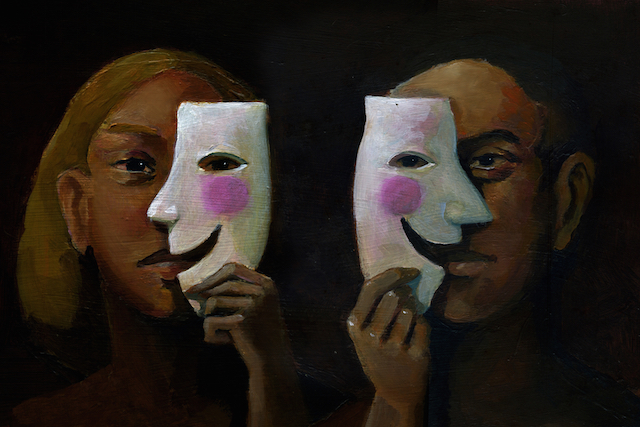
    When someone’s identity depends on a carefully constructed mask, truth feels like a threat. And most people? They’re wearing masks.

    Therapy helped me see it differently. I stopped asking, “What’s wrong with me?” And I started asking, “What if this isn’t about me at all?”

    That question changed everything.

    When someone’s reaction to me was intense or filled with judgment, I learned to pause. To listen more closely.

    And most of the time, I realized they weren’t telling me about me. They were narrating their own wounds. Their history. Their fear. I just happened to be standing close enough to reflect it back.

    Because that’s what mirrors do. They don’t distort. They reveal.

    Eventually, I stopped defending myself. Stopped over-explaining. Stopped pleading to be understood by people who had already cast me in a role I didn’t choose.

    I just stood still. Reflected what I saw. Sometimes I might say, “You seem really bothered by what I just said—what’s that about?” Not because I’m better. Not because I’m more evolved. But because my gift is clarity. I see and name what’s real.

    I still ask for clarity—and that’s the reason for the question. But the question itself often raises awareness of that person’s own motivations, their own inner truth or knowing. Some people pause and reflect. Most don’t—or at least I don’t get to see it. And that’s okay with me.

    I don’t chase belonging anymore. I don’t shrink myself to fit.

    Because now I understand: this is my gift. I see clearly. I speak clearly.

    My clarity doesn’t always make people comfortable. But it’s mine. And I won’t abandon it anymore.

    Because I now know that when someone reacts strongly to me, it’s rarely about me at all. It’s about what my presence reflects. And I don’t need to defend against that—I just need to stay clear, stay kind, and stay me.
  • Why Judging People Hurt Me and 5 Things That Helped Me Stop

    Why Judging People Hurt Me and 5 Things That Helped Me Stop

    “It’s very easy to judge. It’s much more difficult to understand. Understanding requires compassion, patience and a willingness to believe that good hearts sometimes choose poor methods.” ~Doe Zantamata

    In the past, judgments kept me safe. They reassured me that I had worth. That I was right. That I was good. I believed I knew the “right” way to live.

    I felt I could clearly see the truth of matters. I didn’t understand why others weren’t always able to grasp the truth that I saw. However, the real truth was that my inner world was full of turmoil.

    Since adolescence, I went about my day with a certain level of tension in my chest. It was almost imperceptible, but always there. I felt I was constantly fighting the world, the universe. I tried to control it, to mold it to the way I saw things. I judged anyone who didn’t follow my vision of right and wrong.

    I spent a lot of time arguing and judging. Politics, religion, even school board meetings—they all elicited strong judgments from me. Judging others felt OH SO GOOD for a minute. That’s the kicker. Inevitably, though, the negative energy of the judgments left me feeling irritated or angry.

    Why was I judging so much? Because I believed that missteps should be punished. My judgments were just that. I thought punishments were critical to learning. To growing.

    The reality was that the person I was judging was mostly unaware of my judgy thoughts. My judgments weren’t resulting in positive change. When I sat down and actually thought about what punishments accomplish, I realized that no one needs to be punished in order to change. I saw that I was operating from a false “truth.”

    What I hadn’t understood was that the only person I was punishing when I judged was myself. I was poisoning my body, my mind, even my soul, with anger.

    What is clear to me now is that when I judge, I create division. When I judge someone, I am saying “I’m here and you’re over there.” I’m thinking, “I’m right and you’re wrong.” The problem is—they are thinking the same thing!

    I experienced the wisdom of the introductory quote in what turned out to be a pivotal moment in my spiritual journey.

    I was a witness to an unpleasant argument about vaccines between two friends. I started to feel the tension in my chest increase. I began to judge and felt the need to jump in and share my “right view” with them.

    Then I centered. I became still. And I saw two moms who were scared. Two moms who loved their children. Two moms who were just trying to do their best. The tension fell away. I stopped judging and felt compassion for my two friends instead.

    My inner world changed. The tension was replaced with expansion. I felt peaceful. I felt love.

    There is a concept in Buddhism called “the right view.” The “right view” is often described as the perspective that doesn’t cause suffering. I’ve also heard it described as “all views, or none at all.”

    I’ve learned that we filter all external information through our own personal experiences, knowledge, and traumas before coming to a conclusion. Our inner world and patterns determine our reactions. This is why we can all receive the same information and still come to different conclusions. None are right, and none are wrong. They are just different paths.

    In the past, I would have tried to convince you that my path was right. I wouldn’t allow you to be who you were. I wanted you to be who I wished you to be. I would have judged you.

    I don’t know about you, but when someone judges or shames me, I don’t change. I dig my feet in. It’s not a very effective communication technique.

    Instead of judging, if we try to understand each other and allow each other to be who we are, we foster acceptance rather than division. We have compassion rather than judgment and our inner world changes. We feel an inner peace within.

    It’s important to note that not judging someone doesn’t mean you condone what they’re doing. It also doesn’t change the consequences of their actions. It just allows you to keep your inner world peaceful.

    So, how did I get here?

    First, I learned to meditate and find that place of stillness within me.

    Second, I learned how to find that place of stillness with my eyes open. These first two steps allowed me to create a space between an event and my emotions. This moment (or space) allowed me to respond rather than react. In this moment, the truth will often become clear.

    Third, I practiced catching myself judging. I would take a moment and hold the person in compassion instead. I would try to understand them. I would allow them to be who they are rather than who I wished.

    Fourth, I saw that punishments don’t work. Judging others or ourselves doesn’t facilitate growth. It creates tension and division.

    Finally, I discovered that judging ties you to the past. To past patterns, reactions, and impressions. I’m judging based on my personal past experiences. I learned to let go and to forgive things in my past. I knew if I didn’t, nothing would change.

    The result was inner peace. My chest doesn’t feel tight anymore. In fact, it feels like there is an open, shiny jewel in place of the tension. Love flows through me daily. I see the bliss of the present moment. I spend less and less time in the past.

    When someone says something hurtful to me now, I try to pause and center. I bless them. I know when people are suffering that suffering often spills out onto others. I hold them in compassion. I understand that they are doing the best they can.

    I’m also not perfect. I do still catch myself judging. I am also doing the best that I can.

    I challenge you to try leading with compassion. First, compassion for yourself. We are all learning and growing. Then compassion for each other. See what happens to your inner world.

    It is easy to judge; it’s much harder to try and understand.

  • Why We Don’t See Other People Clearly and How to Start

    Why We Don’t See Other People Clearly and How to Start

    “If I had the chance I’d ask the world to dance, but I’d be dancing with myself.” ~Billy idol

    Spending long periods of time alone—as I’ve done while traveling solo over the past year—is an eye-opening experience.

    Without the distractions of my normal routine and relationships, I’ve been able to take a good look around inside my very own head. And the more I do this, the more I realize that what I experience as my world is just a reflection of my own psyche. In reality, I’m dancing with myself all the time.

    This crucial awareness is usually hidden by the fact that other people seem to be the cause of my experience.

    Most of us think that we’re dancing with others: friends, lovers, colleagues, family. But watching myself now I see that—all on my own—my emotions and moods still wax and wane.

    I still have long conversations in my head about the past, present, and future, what should and shouldn’t be happening, and how I should and shouldn’t be feeling about it. Even without a cast of supporting characters, my dance card is full.

    The truth is, whether we know it or not, we’re always dancing with ourselves.

    Even if you’re physically in the presence of others all day long, your real dance partners are your own projections: memories of past hurts, worries about the future, thoughts and guesses about what is happening (and what other people are thinking) right now.

    It’s impossible to see the other person clearly, let alone have a real relationship with them, when all these other projections are crowding the dance floor.

    What’s more, everyone around you is doing the same. Many of the seemingly inexplicable things that happen in relationships are caused by one or both people reacting to a projection.

    You treat the other person as if that projection were true, even though they have no idea that the real reason you’re upset is because of something your last girlfriend said three years ago.

    Remember the old expression “he was beside himself with anger?” Even when we sincerely believe that our relationships are open and honest, how can they be if we don’t actually know the cast of characters we’re relating to?

    The only thing we can do about this is to remember that it’s happening.

    The more aware we are of our own projections, the more we learn to acknowledge them, the more we are able to look past them and begin to see the reality of the other person (or the reality of ourselves that lives behind the projections of the mind).

    It’s harder to do this when we’re always busy. It’s scary, too—life seems simpler when we can just look outside of ourselves for the causes of our emotions, and blame others, or change something “out there” instead of inside of ourselves.

    This is what has been happening to me as I spend so much time on my own. Though I often feel the urge to escape into busy-ness, or company simply for the sake of company, I try to hold myself here instead, in this place that vacillates from bliss to panic, and just get to know myself as my own true dance partner.

    I’m learning that the vacillations are just a part of life, not something that requires a reaction.

    With other people, it’s all too easy to miss this lesson in the rush to react. I’m learning how much the way I perceive other people is dictated by my own expectations and prior experience. How little clarity I actually have when I view them through this unacknowledged veil. How little I actually know myself when I constantly substitute exterior perception for my own interior reality.

    I’m learning that reality can always (and only) be found on the inside.

    Dancing with myself is a skill that I’m slowly and purposefully developing. I want to know myself intimately, so that I can automatically adjust my rhythm and steps when the music or mood shifts.

    I want to stay open and balanced even when my emotions are turbulent, letting them move through me as part of the dance without sweeping me away.

    I want to become so familiar with my own projections that I never mistake them for someone else’s reality again. And I think that learning this first will also let me dance more skillfully, more kindly, more lovingly with life, and with others too.

    Although spending a long time alone can be a great crash course in these skills, not everyone has the opportunity (or desire) to try it.

    Learning to dance with yourself while in the midst of daily life will require more vigilance and attention, because the dance floor is so crowded. You will bump into more things—other people’s projections as well as your own. The trick is to keep coming back to your own experience:

    • When do you feel calm and centered?
    • When do you feel “beside” yourself, being pushed or pulled by circumstances and reactions rather than directing your own steps?
    • If your emotions feel out of control, can you step back and watch without being sucked under?
    • When it’s someone else’s emotion, can you let them have it without needing to rush in and fix everything?

    It’s beautifully simplifying to do this. Instead of keeping track of everyone else in the dance and trying to direct their steps, you only have to listen for your own interior rhythm and balance.

    When you lose the thread—and you will—just go back to listening inwardly. It doesn’t go away, we just lose track of it when we don’t pay attention. Gradually (I think) we’ll know it so well that we can track it even when the dance gets hectic.

    Though dancing alone can feel strange and lonely at first, the loneliness comes with a peace I rarely felt when I was constantly trying to fit myself into someone else’s steps.

    When other people join me now, I try to remember that they are in their own dances too, interacting with their own projections. If we’re really lucky we’ll find people (or teach the people we love) to dance with themselves alongside of us. The ones who can’t will find other partners, and that’s all right too.

    Your first, last, and most important dance partner will always be yourself.

  • Hurt by Negative People? How to Stop Taking Things Personally

    Hurt by Negative People? How to Stop Taking Things Personally

    “Some people are in such utter darkness that they will burn you just to see a light. Try not to take it personally.” ~Kamand Kojouri

    The saying goes that money makes the world go round, but of course that’s not true.

    It’s our relationships.

    How we relate to other people and how they relate to us keeps our world turning. When things go well, all’s right with our world. When things go badly, it can feel as though our world has ground to a halt.

    This is exactly how I felt whenever I had a difficult experience with a loved one or friend.

    Whenever they lashed out at me for no real reason, it felt as if I couldn’t move on again until their negativity or bad temper had blown over. Until that happened, I replayed the scenarios in my mind, trying to work out where I was to blame for their behavior, and feeling awful in the meantime.

    That’s why our relationships will always be the most important thing in our lives—they have such a strong impact on us, both good and bad.

    That is also why it serves us well to try to have the best possible relationship with others, as well as ourselves. That includes improving the connections we have with the difficult and less-than-positive people in our lives and strengthening our boundaries in the process.

    We probably all have several negative people in our lives—those who criticize, complain, belittle us and other people, and say or do cruel things. They can be the closest to us, people we have known all our lives, and that makes their negativity harder to escape and endure.

    I had a family member who was very negative about pretty much everything. Spending time in their company was usually a draining and disheartening experience due to their complaining and sniping comments.

    This person made it very clear whenever I met them that they had little time or affection for me, which of course made family get-togethers less than enjoyable.

    I was also puzzled as to why they were like that: we’d never argued, and I had never, to my knowledge, done or said anything mean to them. Yet, they still acted in a negative way toward me, especially if I mentioned affirmative life experiences such as a great holiday or a new exciting project.

    Unsurprisingly, I responded to their negativity with a sense of apprehension, frustration, and confusion, which stopped me from enjoying the company of my other relatives. It also made me wary about fully expressing myself or talking about my life. And my uneasiness undoubtedly made the atmosphere between my family member and me even more negative.

    We all Have Emotional Scars from the Past

    I eventually recognized that I was hurt by my relative’s treatment in large part because I took it personally and allowed it to affect my self-image and self-esteem—as if I somehow deserved it. Then I realized something that changed everything for me.

    We all have a self-image shaped in large part by other people. Family, friends, and partners, who’ve likely scarred us through anger, resentment, jealousy, judgment, neglect, or even outright abuse. And this affects how we show up in the world.

    Everyone, including the people who have wronged you or been negative toward you in some way, has scars from their past too.

    Maybe your critical mother doesn’t know any better because her mother was critical. Maybe your absent father never knew his father either. Maybe your backstabbing friend was jealous of you for reasons only known to them. Perhaps your cheating partner had abusive parents, and your partner sabotages relationships because they don’t believe anyone can love them.

    Each and every one of us carries around our scars, going out into the world to meet other people who have scars, and when we connect, these combined scars can sometimes tear open.

    We all See Ourselves Through Others’ Eyes

    We all tend to see ourselves through our loved ones’ eyes—starting with our parents when we’re young—because we assume their perceptions of us are accurate and blame ourselves if they’re not flattering. Our self-image can alter based on their comments, emotions, and actions—positive and negative.

    This is a classic case of our relationships shaping our sense of self, an ongoing shaping that begins even before we can fully understand the meanings of what other people say or do to us.

    We are each the result of our experiences within our multiple relationships and interactions. How other people relate to us affects our image of ourselves, but that doesn’t mean we are helpless in the face of other people’s behavior toward us.

    We may not have had much of a choice as a child, but it’s a different matter once we’re adults. With awareness, we’re now able to protect ourselves far better from others’ negativity toward us and set necessary boundaries.

    Learning to Connect in a Different Way

    If you’re dealing with a negative or painful relationship that leaves you feeling bad about yourself, you can of course choose to distance yourself from the person and limit contact. Sometimes, however, this isn’t possible, so you have to learn how to connect in a different way while safeguarding yourself from their negative impact on you.

    I decided I had to respond differently to my family member and their negativity for the sake of my well-being. I began to look beyond their behavior and actions, and in doing so I started to piece together an idea of what might be the real cause of their pain and unhappiness.

    I recalled they had often moaned about how much they hated their job, how they disliked the town they lived in and their neighbors, and they also often complained of tiredness and physical aches and pains.

    I began to see that this person’s negativity—even if it was aimed at me, maybe due to their feelings of envy—wasn’t really about me. They were unhappy with their life in general. Negative people are often unhappy on many levels.

    It also helped me to remember we all have emotional scars, as mentioned before. When you approach people from a place of understanding, compassion, and empathy, you no longer see them as cheats, liars, betrayers, or “bad” people out to get you—even though they might cheat, lie, or betray you. You instead begin to see beyond their behavior and recognize that they’re in pain.

    When you do that a lot of their power over you starts to fade. You begin to see them as vulnerable, like everyone else. You start to realize that their negative actions toward you reflect far more on them than they do on you.

    People often hurt each other because of their own deep pain and because they don’t know any other way to act. This is often a painful lesson to learn.

    But when you finally grasp this difficult truth, you become more accepting of what happened, more forgiving, and ready to let go and move on. You realize you do not need to take on their negativity, brood about it, or feel you are the cause of it.

    That doesn’t mean you have to condone or accept mistreatment. And that’s not to say people’s negativity toward you won’t bother or hurt you ever again, but the effect won’t be so intense. You’ll realize that the situation isn’t really about you at all. Any pain they try to inflict on you is simply a reflection of what they feel inside; it no longer feels so personal.

    When I stopped taking my relative’s negativity personally, I was able to interact with them in a different way. I was much more relaxed in their company and able to enjoy family gatherings much more.

    When you stop taking other people’s negativity personally, you cease to be so susceptible to creating your self-image through their eyes. In fact, you start to focus far more on how you view them.

    Then you’re also free to focus less on their negativity and bad behavior and more on how you respond to it. That might mean setting boundaries and limiting your contact with them, and that’s okay. Sometimes you have to understand and empathize from afar to take good care of yourself.

    We’re All in the Same “Life” Boat

    Essentially, we’re all in the same “life” boat, bobbing up and down on the vast ocean of existence.

    We are all fallible. We all inflict hurt on others, intentionally and unintentionally.

    We all experience negative situations and inevitable suffering, and we simply have to accept this. Without pain and suffering we might not value joy or experience spiritual growth. If we never experienced adversity, we might not appreciate our strength.

    And without negative people we might not be truly grateful for or cherish the loving, supportive people we have in our lives.

  • That Person Who Irritates You Could Be Your Greatest Teacher

    That Person Who Irritates You Could Be Your Greatest Teacher

    Couple Arguing Image via Shutterstock

    “The teacher you need is the person you’re living with.” ~Byron Katie 

    On the bus home from Disney World, my best friend sputtered, “Angela, you are such a huge control freak!”

    First, I went into an angry rage. I accused her, “How dare you call me a control freak! I planned this whole trip.”

    Next, I resorted to pouting and pointing my finger at her, listing every possible way she was the control freak.

    I was in complete victim mode. Classic, right? Little did I know that this incident would be an important self-growth tool for me.

    She returned to her seat and I started to reflect on her comment in silence. I realized that I was indeed a massive control freak. I planned everything. For example, in group projects, I volunteered to do all the work so I would get a good grade instead of trusting my teammates.

    I’ve come to realize that constantly trying to control people is very harmful. They stop believing that you trust them and let you do all the work. I am not superman and people are capable of stepping up. 

    The same goes with life situations. I’ve had a lot of success living in the life I want, because I’m very assertive and control situations. But honestly, it makes me miserable and I would much rather sit and back and let the universe take care of it.

    My mother always told me that what you resist or dislike in someone else can usually be found in yourself. I realized the qualities that I found annoying in other people, especially my father, were his controlling qualities. Then I realized that those qualities were very prominent in myself.

    I know now it had to take someone as close as my best friend to wake me up and realize how much I tried to control situations. She’s a friend who knows everything about me and, therefore, I hold her opinion very highly in mind.

    I could have been a victim and blamed her for being cruel or picking out my greatest faults. Instead, I sincerely appreciate her for opening my eyes into how much self-work I still needed to do. 

    When I look back on my life, I can see how all of my relationships have taught me so many lessons. My ex-boyfriend and I got together like most young couples, looking for someone to fix the other and fill up an empty hole that we could only fill.

    Instead, we ended up being extremely codependent and very unhappy. I did not treat myself well during that period of time, and he reflected that perfectly to me by treating me exactly how I treated myself.

    Now, I try and love myself to the fullest and am more confident than I’ve been in a long time. I am so thankful that he came into my life and demonstrated to me how I treated myself. He was a mirror and the perfect partner I needed at that time in my life.

    I went back even further and examined the difficult relationship I have with my father. We have never been close and since childhood I’ve always been resentful of his, in my opinion, mean-spirited nature and how distant he seemed to me.

    Now, I realize that he has been such a gift in my life. If I had never felt that pain, I probably would have never gone to see my life coach and found my inner light and source. I am so thankful that he brought me to her! What a different way to look at it.

    I’m not saying you should stay in an unhealthy relationship. There are certainly relationships and friendships that are worth avoiding.

    I do believe, though, that people come and go into our lives for certain reasons. And instead of perceiving their existence in our lives as negative, we should learn to see the positive differences they have made.

    I can assure you that holding onto resentment for someone in your past or present really only ends up hurting up you in the long run.

    So what do you do now? You forgive. You forgive yourself. You forgive the people who you believe caused transgressions against you in your life.

    When I realized that I am indeed a control freak; I forgave myself; I didn’t beat myself up. I look forward to letting that quality go in my life, but it served me a great purpose in my past. When I was weaker, it served as a great defense mechanism and made me feel important and in charge.

    Now I know that I am not in charge and can move on and eagerly wait for the next the relationships and friendships in my life to continue to teach me how to constantly improve myself.

    Couple arguing image via Shutterstock

  • When People See the Worst in You: Perceptions Aren’t Always Accurate

    When People See the Worst in You: Perceptions Aren’t Always Accurate

    “If you do not tell the truth about yourself you cannot tell it about other people.” ~Virginia Woolf

    If you’ve ever listened to someone’s description or opinion of you and it sounded completely alien, you probably found yourself wondering where on earth they were coming from.

    We are told that on a universal, spiritual level, the way you perceive someone is more than just an opinion; it’s actually a reflection of you being projected onto that person.

    So if someone tells you that you’re beautiful, kind, or have a good heart, they can only do so because those qualities are present within them. Conversely, if you see someone as dishonest, unkind, or manipulative, that’s because you, yourself, are projecting those parts of you onto the other person.

    When I was going through the depths of healing from adultery and my marriage breakup, I recalled a lot of things my ex-husband told me about myself—some of which I accepted, a lot of which I did not.

    It was very important to me to use forgiveness, self-love, and a sense of perspective as my tools to move on. I worked hard on my own issues, and accepted responsibility for the things within me that had brought me that harsh experience.

    But I have always struggled with this concept that “you can only see in others what you have within you.”

    It’s not because I only want to believe the good things people say about me, or because I think I have no bad traits.

    It’s because when dealing with unacceptable or in some cases abusive behavior in life, it is very difficult to hear and accept that the negative conduct you have received from someone else is simply your own darkness being brought into the open, and nothing to do with the other person.

    This was how I had always interpreted such teachings, and doing so made me feel worse about myself instead of better.

    I now understand that it is possible to witness or observe a behavior objectively, for what it is, without necessarily being that yourself.

    This is true of both positive and negative interactions. For example, I can acknowledge and deeply admire those who can speak publicly with great confidence, but I don’t possess this ability.

    This is not a defeatist attitude or low self-esteem talking; it’s simply an observation. Likewise, I can see someone’s behavior toward me as negative or destructive, but know I’m not like that. I no longer feel the guilt of believing that in order to have observed it, I must be like that too.

    What I believe is that we all have is the potential for the behaviors we are being shown.

    I know that I have the potential for great public speaking, and I know I have the potential for manipulative or intolerant behavior. But though can I recognize these traits in others, it’s not who I choose to be right now.

    This is not intended as way to avoid responsibility for your own behavior, or an opportunity to judge others while saying “but I’m not like that.” But it is important to know, especially when we are feeling emotionally vulnerable, that sometimes it isn’t about us; it’s about them.

    Here are three ways of working out whether what a person says about you is really a reflection of themselves. It’s also useful and healthy to use this exercise from the opposite perspective to see if you are ever projecting your own issues onto another:

    1. Is their opinion about me something I’ve felt about myself?

    We have a deep knowledge of our own psyche—our fears, our dreams, our abilities, and our strengths and faults.

    Does what the other person is saying ring true on any level? If they are saying great things but the words sound hollow to you, it won’t really be about you. But if your heart lifts when someone calls you generous, it’s because you know you are, and they have struck a lovely chord.

    2. Is their opinion about me something I’ve been shown by other people?

    Although trusting your own inner knowing is vital, we are interactive creatures with varied experiences of each other.

    Unless you have a real Jekyll and Hyde personality, other people’s perceptions of you will be largely similar. So, if one person is telling you that you are arrogant and stubborn, while everyone else sees you as kind, patient, and tolerant, then it’s most likely that this one person is bringing their own issues into what they are saying about you.

    3. Do they have another agenda?

    Does the person telling you about yourself want something from you emotionally or physically? Are they speaking to you, or about you, from a place of love, or fear?

    If they have an agenda, then what you are being told about yourself, whether good or bad, is likely to be manipulation on their part and no reflection on you.

    So why are we being told and shown things by others’ behavior if it’s not actually about us?

    I believe that the actual message, whether it’s “you are selfish” or “you should be a professional dancer,” is not the end purpose of the exchange.

    It’s what we learn about ourselves from our response that really matters. Is the comment something we need to pursue or let go of? Does it require a reply or acknowledgement? What does it say about us if we accept what they say, or don’t?

    The things being presented to us through other people’s actions or words simply show us what we are capable of, not necessarily what we are.

    For me, encounters and interactions with others are ripe learning opportunities for growth. We learn to use discernment, tolerance, compassion, and gratitude. We are shown the potential to be strong inspiring and happy; we are also shown the potential to be fearful, negative and unloving.

    What we choose to be is up to us.