Tag: productivity

  • Why We Need to Be Present to Enjoy Our Lives, Not Just Productive

    Why We Need to Be Present to Enjoy Our Lives, Not Just Productive

    “Presence is far more intricate and rewarding an art than productivity. Ours is a culture that measures our worth as human beings by our efficiency, our earnings, our ability to perform this or that. The cult of productivity has its place, but worshipping at its altar daily robs us of the very capacity for joy and wonder that makes life worth living.” ~Maria Popova

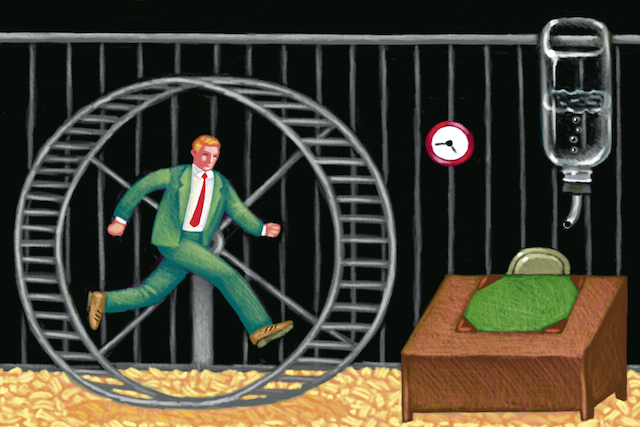
    I was high on productivity. I had one full-time job, two part-time jobs, and a side hustle. I was getting everything done. Sounds perfect, right?

    Then I started hating my life.

    I had read enough books and articles to tell me how I was not doing enough. Enough self-help gurus had told me that what I needed to do was max out every single hour I had to be minutely close to being “successful.”

    My co-workers often got intimidated by my jam-packed calendar. I don’t exaggerate when I say that every minute of my life was scheduled. Sheldon-level scheduled, with dedicated “bathroom breaks” and everything.

    I ran three to-do lists: daily, weekly, monthly. This was my way of setting out for maximum efficiency. I said “yes” to my boss so often I had become his favorite. Work-life balance, what’s that?

    Tasks were flying off my list like never before—so many horizontal breakthroughs! I wore this as my badge of honor for a while, this art of getting it all done. And why not? I was rewarded for it in money, praise, promotions, awe.

    But then it didn’t feel so great. Instead, I became downright miserable.

    Why Busyness-Productivity Is A Mirage

    I don’t claim that productivity is bad. Doing fulfilling work by minimizing distractions and getting deep focus is truly rewarding.

    But it is crucial to stop and question why you’re doing what you’re doing. It is necessary to pause and reflect on the value of your tasks and actions. Otherwise, productivity translates to useless busyness.

    When I became this productivity freak, I never stopped to ask if any of the things I was doing were giving my life meaning. I was doing a demanding full-time job that didn’t provide me any purpose. My days became a blur of mindless task completions. My mind, heart, and soul were absent from my work. Any given Monday didn’t look so different from a Tuesday three weeks prior.

    And it wasn’t even like I was happy.

    I was meeting all my deadlines, but I was spending no time with my family. There were enough accolades to prove all my achievements but not enough art to fulfill my soul. I answered every email I received within twenty-four hours, but I hardly focused on long-term self-growth.

    On the outside, my life never looked better. But on the inside, I was worse than I had ever been. Distraction, schedules, irritability, and deadlines were the monsters that ruled my life.

    After a month-long burnout, I hit the problem nail in the head. I knew I needed to move on. But how? I resolved to take a calculated leap of faith. I found a client willing to pay me for my freelancing services for at least two to three months and made a thick emergency fund by cutting out on expenses. Then, I quit the unfulfilling full-time job and gave my heart to work that I truly found meaning in. I stopped making productivity my goal. I opted to choose presence instead.

    Presence > Productivity

    I read Annie Dillard’s, The Writing Life, in which she memorably wrote, “how we spend our days, is of course, how we spend our lives.”

    After reading this book, I realized that productivity would only be fruitful when coupled with presence. I knew then that presence was what would make my rewards meaningful.

    What is presence? Presence is the art of being in the moment, the luxury of pausing, the virtue of stillness. It is being alert, aware, and alive to this moment.

    There’s a reason why our culture runs for productivity instead of presence. Productivity helps us shut away from reality. It keeps us “busy” into a future that is yet to manifest.

    It is so much easier and convenient to take the shield of productivity against the beautiful, buoyant, and sometimes disruptively painful present.

    Performing one task after next gives us an excuse to not fully live, not completely concentrate, not unbiasedly accept.

    I used to be that way—trying to avoid the truth that I was not finding my work meaningful. I wouldn’t accept that this job was emptying me slowly, living in denial of a reality I was living. Was I not getting things done? I was, more than ever before. But was I happy? I had never been more unhappy with my own choices.

    Being productive every minute of every day meant I could avoid the fact that many of my friendships were depleting, toxic, and unhealthy. I was lying to myself that it was all to have a good social life. In reality, I would go out of my way to avoid being alone, to avoid answering the big questions pertaining to my life that can only be answered in solitude.

    But coupling our actions with productivity and presence can have an astounding effect on our lives. It can make every task we do driven with intention, purpose, and meaning. Presence is what helps us reap the internal rewards that come with doing fulfilling work.

    Choosing Presence

    If you are anything like me, choosing presence over productivity can take some practice. Productivity was my normal mode of operation. It was easy; it came naturally. But opting for presence in my actions wasn’t so simple.

    The art of being present and intentional in all my tasks was like writing with my non-dominant left hand. I searched for help and stumbled upon Tim Ferris. He often says to think of your epitaph to cut through all the noise and maze of productivity. It is a way to find out what truly matters to you by getting a super-zoomed out version of your life.

    As morbid as it sounds, that is what I did. I imagined what I would like to carve on my epitaph, and the important stuff came into a laser-sharp focus:

    I needed to write. I needed to make time for solitude, for serendipity, for hobbies. I wanted to create more memories with my family. I wanted to let go of draining friendships and put all my energy into relationships that filled me with fulfillment, meaning, and growth. Taking it one step at a time, I decided to hand in my resignation. I landed my first writing gig in under two weeks.

    And hey, it’s not like I don’t struggle to write with my left hand anymore. But I am growing each day. It takes some practice and effort to make room in your calendar to “be present.” I am learning to be uncomfortable by turning the volume down of “getting things done.”

    I have noticed that it is the minor changes that count. It is taking a little more time to craft that email mindfully. It is that courageous “no” to a project that can help you surpass your quarterly KPIs but take away from your family time. It is choosing to take a soothing fifteen-minute walk break over checking off another mindless to-do list task.

    Presence is a process. It requires the discipline to focus on the present moment when productivity pushes you to see a non-existent future. Presence is your un-busy existence of utterly unadulterated joy. It is your creativity’s cradle. It is your time to just be.

    So do it. Make the hard choice. Live your life with presence to help you find joy in the now instead of pushing toward some destination in the future. None of us really know where the future will bring us, but we can all choose to enjoy the scenery along the way.
  • How to Stop Procrastinating When Things Feel Hard or Scary

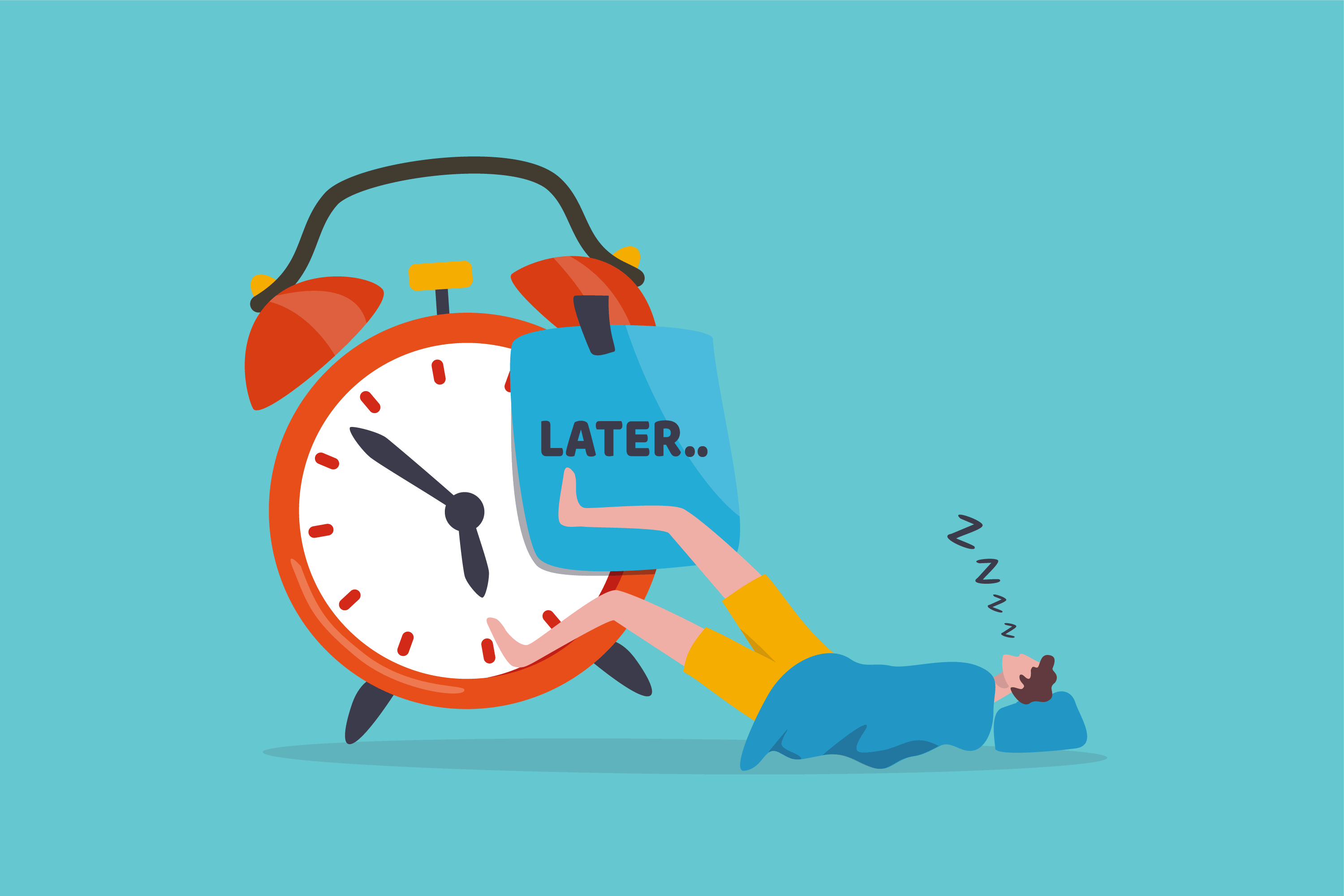
    How to Stop Procrastinating When Things Feel Hard or Scary

    “You’ve been criticizing yourself for years and it hasn’t worked. Try approving of yourself and see what happens.” ~Louise L. Hay

    I dreamed of starting my own business for years. Ten years, exactly.

    While there are a few reasons it took so long to take the plunge, procrastination is at the top of the list.

    It’s hard work to change careers, uncomfortable to leave a steady paycheck, and nerve-wracking to think of failure.

    Even after spending months and years learning, studying, and getting certified, when it was no longer a matter of having the skills, the uncertainty of success was enough for me to keep kicking the can down the road to start marketing myself.

    I was afraid of failing. I was afraid of not being perfect. I was afraid that people would think I was a joke. And I was afraid that I wasn’t going to be capable of all the work it entailed.

    So I dragged my feet and kept passing my work off to “Future Me.”

    I did this for everything, though.

    “Tomorrow Sandy” can do the dishes. She’ll take care of scheduling that doctor’s appointment. Oh, and sign her up for that tough conversation I need to have with my mom too.

    At one point I recognized that I often procrastinated because I needed everything to be perfect.

    • I wouldn’t work on a craft project or cook a new recipe unless I knew it would come out flawless.
    • Or I would keep tweaking projects at work up to the last second and beyond, at the sacrifice of getting more work done.
    • Or I would agonize over every text and email I sent, often opting not to send any message unless I knew exactly what to say.

    But, as you can see, I’ve come a long way from that version of me.

    I’ve since started my own business (and I’m loving it!), and I’ve pulled my best tools together on paper for how to stop procrastinating—even though I actually procrastinated on writing this post (ironic, I know!).

    Today, I didn’t let my fear of “good enough” hold me back from sharing actual, helpful advice and mindset shifts to get moving and stop staying stuck.

    Because when we’re stuck, we start telling ourselves stories. So that’s where we’ll start, with this story we tell ourselves about why we procrastinate.

    What We Think Procrastination Is

    We have this misconception that procrastination is laziness.

    But procrastination is an active process. You choose to do something else instead of the task that you know you should be doing.

    In contrast, laziness is not caring. It’s apathy, inactivity, and an unwillingness to act. It’s an “I could, I just don’t wanna” kind of attitude.

    But when you’re procrastinating, you feel even more stressed because you do care about getting the task done. You’re just avoiding stress and having difficulty with motivation.

    Because that is why we procrastinate.

    What Procrastination Really Is and Why We Do It

    Procrastination is a stress-avoidance technique. It is an active process to temporarily avoid discomfort.

    We subconsciously are saying, “Present Me is not willing to experience this discomfort, so I will pass it on to Future Me.”

    (We do this as though we’re asking a stranger to do the work for us. Researchers have seen on fMRI that when we think about our future selves, it lights up the same part of the brain as when we think about strangers.)

    The really cool news is that by working toward overcoming your procrastination habit, you’re building your overall resilience to distress.

    That is how I define resilience: a willingness to experience discomfort.

    Examples of Procrastination

    Procrastination is tricky. Sometimes it’s obvious that we’re doing it. Sometimes we don’t quite realize it (like when I had to water the plants right then and there instead of writing this blog post).

    So here are some examples:

    • Scrolling through Instagram instead of getting started on important tasks
    • Putting off work assignments until the last minute
    • Wanting to start a new positive habit (dieting, exercising, or saving money), but repeatedly delaying it while telling yourself that “I’ll start soon
    • Wanting to start a business but wasting time in “research mode” instead of taking action
    • Doing an easy, less important task that “needs to be done” before getting started
    • Waiting until you’re “in the mood” to do the task

    5 Steps to Stop Procrastinating

    Now that we know what it is and why we do it, let’s look at how to stop.

    1. Motivate yourself with kindness instead of criticism.

    What really holds us back from moving forward is the language we use when talking to ourselves.

    Thoughts like:

    • I don’t want to.
    • It will be hard.
    • I don’t know how to do it.
    • It might not come out as good as I want it to.
    • I’ll probably fail.
    • This will be so boring.

    This is what we think that drives us to procrastinate. I mean, really, when you read those thoughts, they just feel so demotivating, right?

    This negative self-talk has a good intent. It is trying to save us from discomfort.

    Unfortunately, it’s achieving the opposite because it adds to the stress by making us feel bad.

    If you speak to yourself with kindness, just as you would a friend, it will feel so much more motivating.

    So think about what you would say to that friend. It might sound like:

    • I get it, it will be uncomfortable, but you’ll be done soon and then you can relax.
    • Once you get started, it will be easier.
    • You can do it!!
    • If it doesn’t come out perfect, at least you’ll have practiced more.
    • If you fail, you’ll have learned so much.

    2. Create a pattern interrupter.

    That negative self-talk has simply become part of your procrastination habit.

    Because that is what procrastination becomes—a habit—and habits are comprised of a cue, a routine, and a reward.

    • The cue is thinking about a task that needs to be done.
    • The routine is to speak that negative self-talk that leads to procrastination.
    • The reward is less stress. (Not no stress, because avoiding the task is still somewhat stressful because we know it eventually needs to be done.)

    In order to break the habit and create a new one, you need to introduce a pattern interrupter.

    Mel Robbins has a great one she calls the 5 Second Rule. When you think “I should do this,” before the negative self-talk starts in, count backwards, “5-4-3-2-1-GO” and move.

    I find this helpful when I’m having a hard time getting out of bed in the morning.

    If I’m having trouble getting motivated to do something difficult like write a post about procrastination, my pattern interrupter is “I can do hard things.” Not only am I interrupting the pattern, I’m motivating myself positively as well.

    If I’m having trouble doing a boring and tedious task like my taxes, I use something like “I’m willing to be uncomfortable now so that Future Me can be at peace.”

    3. Break down the task.

    One of the big drivers of procrastination is overwhelm. Overwhelm happens when we’re looking at a project in full scope, either not knowing where to start or feeling like all the work involved will be too much.

    If the next task at hand is too big, or if you don’t know where to start, your first task really is to either 1) make a list, or 2) figure out the smallest thing you can do first.

    The whole house is a mess? I bet you know where that one sock goes!

    Another example, I had social anxiety and going to the gym was overwhelming to me.

    So I broke it down into:

    • I just need to put gym clothes in my car, that’s it.
    • I just need to drive to the gym. I can turn around if I want once I get there.
    • I just need to walk in the door. I can always leave.
    • I just need to get changed in the locker room I can do that.

    Honestly, I never turned around and went home. Because once I’d taken the small, easy step, the next small easy step was doable.

    Which leads me to the next step…

    4. Just commit to five minutes.

    Studies show that if we commit to five minutes only, 80% of us are likely to continue with the task.

    Five minutes is nothing. You can do anything for five minutes.

    There is an 80% chance you’ll continue working once you put in those five minutes, but even if you don’t, you’re still five minutes closer to your goal.

    And, you’ve taken one more step to breaking the old habit of not starting.

    It’s a big win-win!

    5. Reward yourself or make the task more enjoyable.

    Another problem with looking at a big task in scope instead of the next five minutes is that the reward is too far away or not satisfying enough.

    When you’re trying to lose weight, twenty pounds is weeks and months away.

    Or, when you’re putting off your taxes, if you aren’t expecting a return then the reward is “not going to jail.”

    So bringing in more rewards sooner will fast track creating the new habit of getting started.

    But also, making the task itself more pleasant will make it a less monotonous task.

    • To write this post, I put on my softest bathrobe and grabbed my baby’s tub from when he was an infant to make an Epsom salt foot bath under my desk while I write.
    • I’ll be starting my taxes in the next few weeks, and I already plan to have a glass of wine and super fancy cheese and crackers while I sit down to do them.
    • I save listening to super nostalgic nineties music for when I’m exercising just so that it makes that time extra special and fun.

    What Would Open Up for You If You Stopped Procrastinating?

    We spend so much more time avoiding the discomfort of a task than we do stepping into what it will be like once the task is complete.

    If you were to stop procrastinating, what would open up in your life?

    • Would you start your business because you’re no longer afraid of experiencing any discomfort if you “fail”?
    • Would you simply enjoy life more if you weren’t in a perpetual state of stress because there is a list of things you’re putting off?
    • Would you finally lose weight or get in shape and feel good once you push through being able to get started?

    The Bottom Line

    Procrastination is an active process to temporarily avoid discomfort (it is not laziness!)

    By overcoming your procrastination habit, you are building your emotional resilience.

    Notice the negative, demotivating self-talk and motivate yourself with kindness over criticism.

    Create a pattern interrupter before the negative self-talk starts weighing you down.

    Commit to just five minutes and you’ll either keep going to do more, or you’ll at least be five minutes closer to done.

    Reward yourself or make the task more enjoyable so there is less discomfort to avoid.

  • When Efficiency Isn’t Efficient: The Shortest Path Isn’t Always Best

    When Efficiency Isn’t Efficient: The Shortest Path Isn’t Always Best

    Taking time to think

    “There is more to life than increasing its speed.” ~Mahatma Gandhi

    “The shortest path between two points is a straight line.” That comes straight out of my eighth grade geometry textbook and if you can’t trust math, what can you trust?

    That pronouncement rang my chime. It put words to an unspoken feeling I had had for a long time. What could be better, truer, or more perfect than the shortest path?

    Kids Do the Darnedest Things

    As a teenager, I started putting in place “straight lines” in my life everywhere I could impose them. I got out of bed at the exact moment that would allow me to get cleaned up, dressed, fed, and off to class in the least amount of time necessary. It annoyed me to be even a few minutes early and terrified me to be late.

    I scheduled every moment of every day. I couldn’t stand an unplanned minute; I had to predetermine it all in advance.

    Now you might be thinking that I must have been one of those overly serious, driven, humorless kids. Not so. I partied with the best of them. But even that partying was all on schedule.

    I started going to college when I was just sixteen years old and still in high school. I had college in the morning and high school in the afternoon. No problem, I had it all mapped out.

    Of course that was just school. I worked too. I had a job after school part-time as a computer programmer. After that, I worked at a McDonald’s, closing five nights a week.

    Then I went out with my friends, then I came home and studied, then I slept for three or four hours. And then I did it all over again the next day.

    You probably see where this is headed. I thought I was being efficient and mature. After all, I worked hard and studied hard. I was reliable and diligent. I was the life of the party and seemed to have boundless energy.

    But one day, I just couldn’t muster the will go to work after school. I asked my mom to call in sick for me and I went to bed at 3:00 in the afternoon. I woke up 26 hours later, the next day at 5:00 in the afternoon. (more…)

  • Letting Go of Fears and Worries About Getting Things Done

    Letting Go of Fears and Worries About Getting Things Done

    “Each time we face our fear, we gain strength, courage, and confidence in the doing.” ~Unknown

    As the days have continued on past the beginning of the New Year, my discontent has been growing as I’ve been thinking (or worrying) about how unmotivated I feel.

    The holidays have come to a close, the New Year began, we made wonderful goals for ourselves, and yet, I’ve begun nothing. I wanted to write another article, keep up with my blog(s), organize my house, work on my finances and my fitness, and start new projects.

    The holidays were rough to get through this year, but they are over now, and though I know it’s early in the year so I shouldn’t be too hard on myself, I still feel a sense of urgency and disappointment that I’m having trouble getting started.

    This created more discontent and frustration. What could I possibly share with anyone with my head in this state? So, I did the only thing I thought I could—I let it go.

    Sometimes realizations hit you like a ton of bricks, and this one did. Once I let that urgency go, I was able to approach the situation more calmly.

    I was then able to realize that I was forgetting one of the most important lessons I’ve learned on my journey to better living: everything is happening as it should be.

    This does not mean to live life with complete inaction.

    You can’t, for example, bring in your mail, toss the bills on the table, and “let it go.”

    The universe isn’t going to pay your bills for you. But letting the fear that you “don’t have enough” to pay your bills keep you from opening them, so as to avoid the scary situation inside, will only help you dig a deeper hole for yourself.

    The “letting go” that I am referring to here pertains to the fear and worry.

    No matter what the situation is, try to let go of the fear of what’s going to happen. Know that you really do have the power to take care of it. There is always a solution. You are not powerless. (more…)

  • How Doing Nothing Helps You Get More Done

    How Doing Nothing Helps You Get More Done

    “The time to relax is when you don’t have time for it.” ~Sydney J. Harris

    Have you ever been “insanely busy”?

    That’s been my world for the last two weeks. Not only have I been writing posts for my websites and creating meditation products for my subscribers, I’ve also been busy planning the end of year music events at the school where I work.

    During this time I discovered something that helped me stay on top of things and keep my productivity high: I started making appointments to do nothing. Sometimes I scheduled this time at work, sometimes at home. 

    If I’m struggling to write posts, articles, or plan music workshops, I find that allowing myself time to do nothing and let my mind unravel brings many benefits. The main ones are creating new ideas and finding solutions to problems that have been unsolved for a while.

    Doing nothing feels like the complete opposite of being productive, but after you’ve tried it you will see how effective it can be. Why do you think Google adopts a company policy that has an emphasis on allowing their staff so much free time?

    A lot of people say that they are too busy to do nothing. Yet those same people will happily invest hours in front of the television, or spend plenty of time fretting and worrying about something without allowing themselves the pleasure to just be.

    I’ve noticed that an hour slumped in front of the TV feels very different than one hour sitting in the park.

    Actually, doing nothing can be a great investment into your personal well-being and something worth making time for.

    It doesn’t take a huge change in your lifestyle—perhaps just a change in your thinking—and once you experience the benefits you will be more likely to make it a regular part of your schedule.

    I have two preferred methods for doing nothing, and they can both be of great benefit.

    The first way is to forget feeling guilty and to just take the time to zone out. Unplug from the internet for a while, stare out of the window, or just into space, and luxuriate in a special time of doing nothing. (more…)

  • Who Owns Your Time?

    Who Owns Your Time?

    “What you do today is important, because you are exchanging a day of your life for it.” ~Unknown

    When you take cash out of your wallet to give to someone, you surely expect something of equal or greater value in return. Do you treat your time the same way?

    At one of my first jobs, I found myself spending a massive amount of time on tasks that didn’t really add value to me or my purpose.

    “Ah well, at least I got something done today,” I would often mutter to rationalize wasting time on just busy work. Or even better: “Well, that took a lot of my time, but at least I’ll have tomorrow to take care of what I really need to do.”

    I found that I didn’t truly own my time. I would arrive home from work exhausted, unwilling to do anything, and dreading that I only had an hour to sleep before waking up to do the whole thing over again.

    Why did all of this happen? Because I let my boss, my friends, and poor decisions take ownership of my time.

    Do you find yourself saying yes to too many requests, including those of your boss? Do you give away your time? I understand that you’re at a job and are getting paid for your time, but we all need to take ownership of how you spend your time.

    I found out this the hard way when I began getting sick from working too hard and depressed from a lack of balance in life.

    I realized something had to change and made it a point to respect my time, because time is the only thing I’m given for free in this life, every day that I live.

    I started by promising to myself that I would do just one activity per day that added value to my life, or planted a seed for me to have more time in my life.

    For one day, adding value meant challenging myself with a new piano piece to experience the joy of music and refresh my creative side. For another day, this meant completing an action item on my list for the startup I had been forming on the side to achieve financial freedom.

    Ultimately, what is important to you in life?

    All the time management strategies in the world won’t help you a bit if you don’t know what you really want. These need not necessarily be aspirational things, such as career achievements. They could be small things that you enjoy, but are really important to you. (more…)