Tag: procrastinate

  • How to Stop Procrastinating When Things Feel Hard or Scary

    How to Stop Procrastinating When Things Feel Hard or Scary

    “You’ve been criticizing yourself for years and it hasn’t worked. Try approving of yourself and see what happens.” ~Louise L. Hay

    I dreamed of starting my own business for years. Ten years, exactly.

    While there are a few reasons it took so long to take the plunge, procrastination is at the top of the list.

    It’s hard work to change careers, uncomfortable to leave a steady paycheck, and nerve-wracking to think of failure.

    Even after spending months and years learning, studying, and getting certified, when it was no longer a matter of having the skills, the uncertainty of success was enough for me to keep kicking the can down the road to start marketing myself.

    I was afraid of failing. I was afraid of not being perfect. I was afraid that people would think I was a joke. And I was afraid that I wasn’t going to be capable of all the work it entailed.

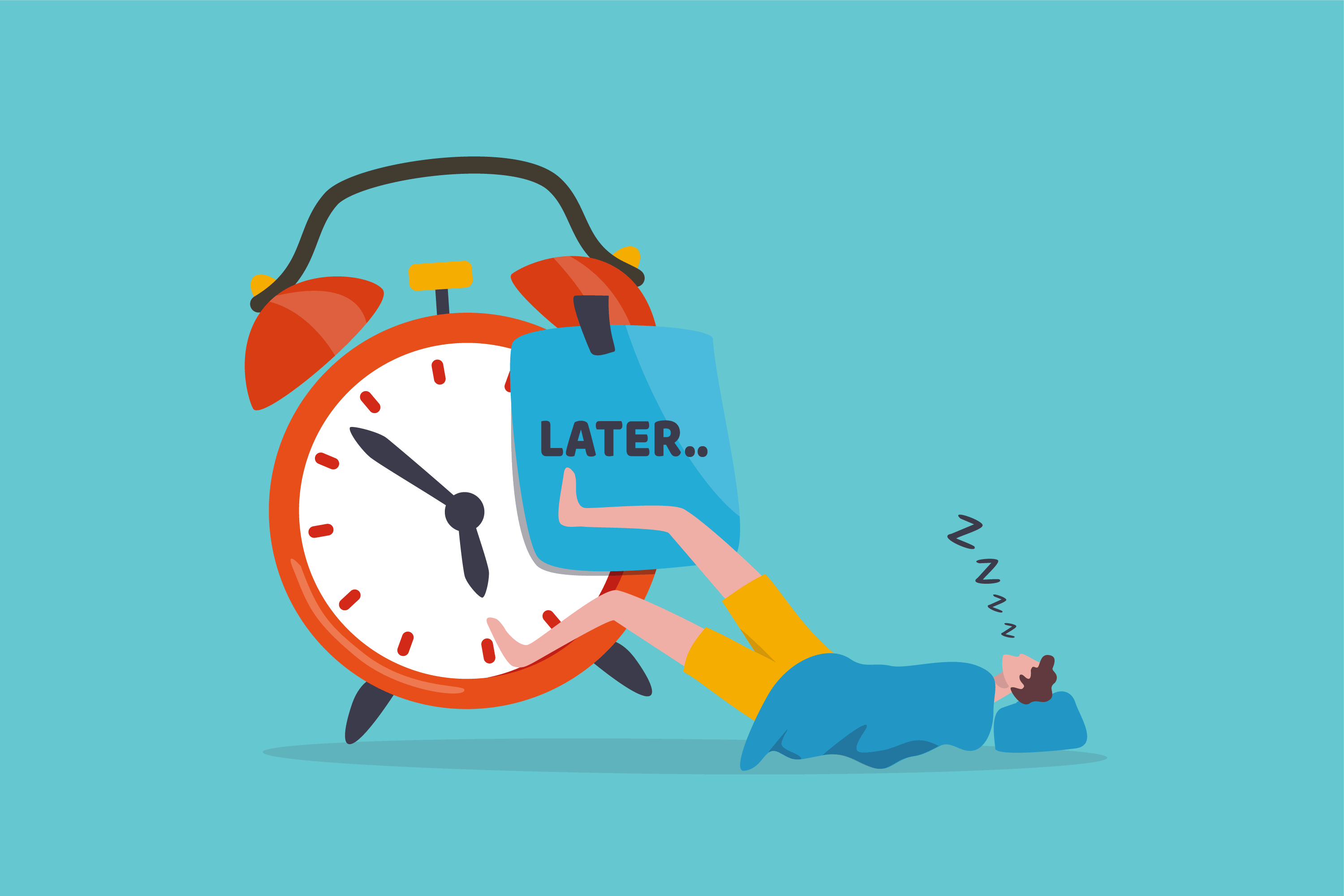
    So I dragged my feet and kept passing my work off to “Future Me.”

    I did this for everything, though.

    “Tomorrow Sandy” can do the dishes. She’ll take care of scheduling that doctor’s appointment. Oh, and sign her up for that tough conversation I need to have with my mom too.

    At one point I recognized that I often procrastinated because I needed everything to be perfect.

    • I wouldn’t work on a craft project or cook a new recipe unless I knew it would come out flawless.
    • Or I would keep tweaking projects at work up to the last second and beyond, at the sacrifice of getting more work done.
    • Or I would agonize over every text and email I sent, often opting not to send any message unless I knew exactly what to say.

    But, as you can see, I’ve come a long way from that version of me.

    I’ve since started my own business (and I’m loving it!), and I’ve pulled my best tools together on paper for how to stop procrastinating—even though I actually procrastinated on writing this post (ironic, I know!).

    Today, I didn’t let my fear of “good enough” hold me back from sharing actual, helpful advice and mindset shifts to get moving and stop staying stuck.

    Because when we’re stuck, we start telling ourselves stories. So that’s where we’ll start, with this story we tell ourselves about why we procrastinate.

    What We Think Procrastination Is

    We have this misconception that procrastination is laziness.

    But procrastination is an active process. You choose to do something else instead of the task that you know you should be doing.

    In contrast, laziness is not caring. It’s apathy, inactivity, and an unwillingness to act. It’s an “I could, I just don’t wanna” kind of attitude.

    But when you’re procrastinating, you feel even more stressed because you do care about getting the task done. You’re just avoiding stress and having difficulty with motivation.

    Because that is why we procrastinate.

    What Procrastination Really Is and Why We Do It

    Procrastination is a stress-avoidance technique. It is an active process to temporarily avoid discomfort.

    We subconsciously are saying, “Present Me is not willing to experience this discomfort, so I will pass it on to Future Me.”

    (We do this as though we’re asking a stranger to do the work for us. Researchers have seen on fMRI that when we think about our future selves, it lights up the same part of the brain as when we think about strangers.)

    The really cool news is that by working toward overcoming your procrastination habit, you’re building your overall resilience to distress.

    That is how I define resilience: a willingness to experience discomfort.

    Examples of Procrastination

    Procrastination is tricky. Sometimes it’s obvious that we’re doing it. Sometimes we don’t quite realize it (like when I had to water the plants right then and there instead of writing this blog post).

    So here are some examples:

    • Scrolling through Instagram instead of getting started on important tasks
    • Putting off work assignments until the last minute
    • Wanting to start a new positive habit (dieting, exercising, or saving money), but repeatedly delaying it while telling yourself that “I’ll start soon
    • Wanting to start a business but wasting time in “research mode” instead of taking action
    • Doing an easy, less important task that “needs to be done” before getting started
    • Waiting until you’re “in the mood” to do the task

    5 Steps to Stop Procrastinating

    Now that we know what it is and why we do it, let’s look at how to stop.

    1. Motivate yourself with kindness instead of criticism.

    What really holds us back from moving forward is the language we use when talking to ourselves.

    Thoughts like:

    • I don’t want to.
    • It will be hard.
    • I don’t know how to do it.
    • It might not come out as good as I want it to.
    • I’ll probably fail.
    • This will be so boring.

    This is what we think that drives us to procrastinate. I mean, really, when you read those thoughts, they just feel so demotivating, right?

    This negative self-talk has a good intent. It is trying to save us from discomfort.

    Unfortunately, it’s achieving the opposite because it adds to the stress by making us feel bad.

    If you speak to yourself with kindness, just as you would a friend, it will feel so much more motivating.

    So think about what you would say to that friend. It might sound like:

    • I get it, it will be uncomfortable, but you’ll be done soon and then you can relax.
    • Once you get started, it will be easier.
    • You can do it!!
    • If it doesn’t come out perfect, at least you’ll have practiced more.
    • If you fail, you’ll have learned so much.

    2. Create a pattern interrupter.

    That negative self-talk has simply become part of your procrastination habit.

    Because that is what procrastination becomes—a habit—and habits are comprised of a cue, a routine, and a reward.

    • The cue is thinking about a task that needs to be done.
    • The routine is to speak that negative self-talk that leads to procrastination.
    • The reward is less stress. (Not no stress, because avoiding the task is still somewhat stressful because we know it eventually needs to be done.)

    In order to break the habit and create a new one, you need to introduce a pattern interrupter.

    Mel Robbins has a great one she calls the 5 Second Rule. When you think “I should do this,” before the negative self-talk starts in, count backwards, “5-4-3-2-1-GO” and move.

    I find this helpful when I’m having a hard time getting out of bed in the morning.

    If I’m having trouble getting motivated to do something difficult like write a post about procrastination, my pattern interrupter is “I can do hard things.” Not only am I interrupting the pattern, I’m motivating myself positively as well.

    If I’m having trouble doing a boring and tedious task like my taxes, I use something like “I’m willing to be uncomfortable now so that Future Me can be at peace.”

    3. Break down the task.

    One of the big drivers of procrastination is overwhelm. Overwhelm happens when we’re looking at a project in full scope, either not knowing where to start or feeling like all the work involved will be too much.

    If the next task at hand is too big, or if you don’t know where to start, your first task really is to either 1) make a list, or 2) figure out the smallest thing you can do first.

    The whole house is a mess? I bet you know where that one sock goes!

    Another example, I had social anxiety and going to the gym was overwhelming to me.

    So I broke it down into:

    • I just need to put gym clothes in my car, that’s it.
    • I just need to drive to the gym. I can turn around if I want once I get there.
    • I just need to walk in the door. I can always leave.
    • I just need to get changed in the locker room I can do that.

    Honestly, I never turned around and went home. Because once I’d taken the small, easy step, the next small easy step was doable.

    Which leads me to the next step…

    4. Just commit to five minutes.

    Studies show that if we commit to five minutes only, 80% of us are likely to continue with the task.

    Five minutes is nothing. You can do anything for five minutes.

    There is an 80% chance you’ll continue working once you put in those five minutes, but even if you don’t, you’re still five minutes closer to your goal.

    And, you’ve taken one more step to breaking the old habit of not starting.

    It’s a big win-win!

    5. Reward yourself or make the task more enjoyable.

    Another problem with looking at a big task in scope instead of the next five minutes is that the reward is too far away or not satisfying enough.

    When you’re trying to lose weight, twenty pounds is weeks and months away.

    Or, when you’re putting off your taxes, if you aren’t expecting a return then the reward is “not going to jail.”

    So bringing in more rewards sooner will fast track creating the new habit of getting started.

    But also, making the task itself more pleasant will make it a less monotonous task.

    • To write this post, I put on my softest bathrobe and grabbed my baby’s tub from when he was an infant to make an Epsom salt foot bath under my desk while I write.
    • I’ll be starting my taxes in the next few weeks, and I already plan to have a glass of wine and super fancy cheese and crackers while I sit down to do them.
    • I save listening to super nostalgic nineties music for when I’m exercising just so that it makes that time extra special and fun.

    What Would Open Up for You If You Stopped Procrastinating?

    We spend so much more time avoiding the discomfort of a task than we do stepping into what it will be like once the task is complete.

    If you were to stop procrastinating, what would open up in your life?

    • Would you start your business because you’re no longer afraid of experiencing any discomfort if you “fail”?
    • Would you simply enjoy life more if you weren’t in a perpetual state of stress because there is a list of things you’re putting off?
    • Would you finally lose weight or get in shape and feel good once you push through being able to get started?

    The Bottom Line

    Procrastination is an active process to temporarily avoid discomfort (it is not laziness!)

    By overcoming your procrastination habit, you are building your emotional resilience.

    Notice the negative, demotivating self-talk and motivate yourself with kindness over criticism.

    Create a pattern interrupter before the negative self-talk starts weighing you down.

    Commit to just five minutes and you’ll either keep going to do more, or you’ll at least be five minutes closer to done.

    Reward yourself or make the task more enjoyable so there is less discomfort to avoid.

  • Life Goes by Too Quickly to Postpone Our Dreams

    Life Goes by Too Quickly to Postpone Our Dreams

    Reach for the stars

    “The best way to make your dreams come true is to wake up.” ~Paul Valery

    As I am sitting at my desk, looking out the window, I am contemplating if I should fly to Germany or not.

    My father has been very sick for the past three years. I spent three months in Germany last year to have some time with him and help him get better. He finally recovered and I flew back home to Miami.

    When I talked to my stepmom the other day, she gave me the news though that my father had a relapse and seems to be worse than ever.

    My first instinct was to get on the next plane to go see him. My father refuses. He doesn’t want me to come. He doesn’t want me to see him suffer, so he prefers I stay home while he is waiting for a place in the clinic.

    Situations like these make you realize how precious life is. Everything we take for granted can be gone in a heartbeat. Knowing that, why do we keep procrastinating? Why do we keep postponing our dreams?

    We always think the time is not right, we don’t have the resources we need, we don’t have enough knowledge, we don’t have any support; the list is endless.

    I was just like that. I always dreamed of going full-time with my personal training business. But even though I felt depressed, kind of empty inside, and even useless once in a while, and I had a day job I wasn’t passionate about that seemed meaningless to me, I kept making excuses.

    I kept telling myself, there are too many trainers out there, I won’t be able to make a living, it’s going to be too hard, I am not skilled enough, I am not fit enough, I am not outgoing enough, and—my all-time favorite—right now is just not the right time to take the leap.

    You know what though? The time is never right! We will never feel ready and the conditions will never be perfect.

    My father’s illness made me realize that I don’t want to continue living this way. When my time comes I want to be able to say “I tried.” No ifs and buts.

    Last year I took a deep breath, closed my eyes, and promised myself that I would make it happen. I wouldn’t let doubt, fear, or excuses stop me. I quit my dreaded job at the hotel and jumped head first into my entrepreneurial journey.

    It hasn’t been easy; I keep making mistakes, and I keep learning. Believe me when I say, you can’t come up with anything the tiny little voice in my head hasn’t already thrown at me.

    You might think you don’t have the resources to make your dreams a reality, but believe me, you do, and if you don’t, you can get them. You know enough to get started, and the rest you will learn while you’re on your way.

    Your family and friends don’t support you? Find other support systems! Go online, check out groups, go to seminars, events, meet knew likeminded people. If you don’t have a support system, create one!

    We think we have all the time in the world to pursue our dreams, but the reality is we don’t know how much time is left. You might have fifty years, twenty years, or you could be gone tomorrow. Do you really want to look back at the end of your life and ask “what if”?

    Now is the time to make your dreams a reality.

    You want to build your own company? Make a plan, start networking, and check out financing options.

    You want to travel the world? Start selling the stuff you don’t need, make a list of countries you want to visit, start figuring out ways to earn money while you are on the road.

    Okay, okay, I know what you’re about to say: This sounds great but it’s not that easy. And you are right. We all have responsibilities; we have monthly bills we have to pay, maybe a mortgage, and some of us have children to care for.

    I’m not telling you to drop everything you worked for and throw all security measures out the window. My point is that we need to follow our passions; we need to remember what makes us smile, what makes us laugh, what makes us happy.

    Sometimes even small steps in the direction of our dreams are enough to bring us back to the present moment and allow us to enjoy life again.

    Maybe on the way you realize that having your own company or traveling the world won’t actually make you fulfilled. Or you come to realize that you are indeed on the right path and that you do want to make drastic changes in your life, and then you accept the sacrifices you have to make.

    But in order to find out what it really is that gives you joy, you need to start shooting for the stars.

    But people will think I’m crazy! It’s too risky! I’m scared!

    This is your life. It doesn’t matter what other people think. You deserve to create a life you don’t need a vacation from. You deserve to be able to look back on your life with a smile on your face instead of regret in your heart.

    Yes, it is scary, and yes, it might be risky, but if you don’t try you will never find out what could have been. Take every opportunity you get. You might fall once in a while. That’s okay.

    I still struggle. I still get anxious because I have months where I try to figure out how to pay my bills. And sometimes I have this awesome idea for a new program and invest all my time into making it happen, just to find out that I was the only one who thought it was a great idea.

    It happens. Let’s take things like this as a lesson learned, get back up, and do it again. Just don’t let these challenges convince you that you should give up.

    I pray every single day that my father will recover and I will be able to spend a lot more time with him. But even if he doesn’t, I know he won’t go with a lot of regret. He always enjoyed his life, did what he wanted, said what he wanted, and didn’t care about the opinions of others.

    Let’s take that as an example, and let’s keep pushing our dreams forward and make them a reality. We deserve it!

    Reaching for the stars image via Shutterstock

  • 4 Toxic Habits That Can Control Our Lives and Keep Us Unhappy

    4 Toxic Habits That Can Control Our Lives and Keep Us Unhappy

    “We first make our habits, then our habits make us.” ~Charles C. Noble

    Until recently, I firmly believed that a classic set of toxic habits consisted of nail biting, smoking cigarettes, and abusing alcohol and drugs.

    I completely forgot that there are some behavior patterns that can do equally bad damage to our vital and creative energy, claiming control over our lives and holding us back.

    Ignorance is bliss, someone once said. I overstayed my welcome in that state of mind more than once. I thought my bad habits were actually making my life easier, and following the path to personal growth always seemed so cumbersome.

    Eventually, my desire to improve became stronger than my fear of getting out of my comfort zone. I realized that the patterns of my behavior were too destructive and the feeling of comfort and familiarity was just an illusion.

    So I decided to look long and hard at everything that had to be changed. The first step would be to break a set of toxic habits and take back control.

    1. A thirst for approval.

    I spent a large part of my life doing things in the hope of getting others’ approval.

    I did things I didn’t want to do and not things I felt passionate about. I would sit and learn math to fulfill my parents’ dream of me becoming an economist, while all I wanted to do was to paint, write, and read books about nature, biology, and psychology.

    I even stopped writing, which I feel is my purpose, because certain people saw it as a hobby. In chasing their approval, I completely gave up control of my life.

    But the ugliest truth is that I valued their opinion of me more than my own. No matter how great I did, no matter how much positive feedback I received, it never seemed to be enough.

    When we make approval-seeking a habit, we lose touch with who we are and what we really want, meaning we’ll never be able to truly approve of ourselves.

    2. Sit. Wait. Hope.

    I used to sit and wait and hope that somehow a complicated situation would magically resolve itself. I thought that if I waited long enough, I would suddenly understand my purpose, write a book in one sitting, and my body would get in shape without doing anything.

    I would spend countless hours sitting and procrastinating, believing that “good things come to those who wait,” whereas, in reality, “better things come to those who work hard for it and have patience to wait for the results.”

    There is a huge difference between procrastinating and mindfully waiting for something good to happen. When you work toward a goal and you have patience to see it through, you mindfully wait for the fruits of your work to bring you closer to your goal. And there sure isn’t anything mindful about aimlessly procrastinating and not doing anything productive.

    I finally understood that waiting and hoping for something good to happen in my life would never bring me any satisfaction. Notice that the word “satisfaction” ends with “action.”

    Action is that formula that brings us happiness, as we need to take action to see results.

    3. Super competitive-comparative mode.

    From childhood, it was somehow wired in my mind that I had to prove that I was better than everyone else in whatever I did. This state of constant competitiveness and stress about being taken over by someone else kept me going for years.

    I cared so much about being better, stronger, and about reaching excellence before everyone else that I completely forgot how to breathe normally, how to connect with people, and how not to alienate everyone.

    I didn’t have many friends back then. And it’s really lonely up there on the top when you have no one to share even the smallest of your achievements.

    Excessive competitiveness brought out the aggressive, rootless, and a little bit obsessive-compulsive part of me.

    When I saw my true colors, I simply didn’t like that person in the mirror. I decided mindfully to release the desire to be better than everyone (which isn’t even possible) and only compare myself with myself of all the yesterdays.

    After all, it’s not about being better than everyone in this world (that’s a lot of competition); it’s about being better than ourselves compared to who we were before and reflecting on our progress from that point.

    4. Relying too much on other people.

    When I wasn’t feeling like doing something, I would pass it over to someone else. And then I would rely on that person to do things for me instead of learning how to solve challenges myself.

    I relied completely on other people when I moved to London from Saint-Petersburg. I was hiding behind my fear of having to meet new people, learn new culture, and speak a different language.

    My partner was extremely supportive, but even he would get annoyed with me sometimes when I would be afraid to go to a shop, call my bank, or try to plan a weekend getaway. He kept insisting that I took more responsibility, because this was the only way to learn how to solve problems.

    I didn’t see that the more others did things I didn’t feel like doing, the more opportunities for growth I missed.

    When you look at a sequoia tree up close, it is so enormous, you feel like an ant before it. But when you step back and see it from a mountaintop, it looks like a tiny match from a matchbox.

    The same goes to our daily challenges in life. Up close, they seem so formidable and unsolvable, but that’s only true if we refuse to try.

    And no matter how many challenges we pass on to someone else, life will always have more in store. After all, we receive one lesson that repeats itself until we learn it. And the fastest way to learn it is to tackle it head on. Then, and only then we are ready to move on.

    We all have unhealthy habits. Identifying them and working to eliminate them can dramatically improve the quality of our life. It may take time to introduce changes, but if you do it mindfully and focus on the benefits, you’ll feel less resistance and a readiness to change for the better.

  • Eliminate These 5 Words to Create the Life of Your Dreams

    Eliminate These 5 Words to Create the Life of Your Dreams

    “Don’t be pushed by your problems; be led by your dreams.” ~Unknown

    For years I felt nothing.

    Nothing, that is, except bored at work, trapped in my marriage, uninspired in my educational pursuits, misunderstood by friends and family, and stuck in my hometown. I’d lay awake at night wondering what was wrong with me.

    How did I manage to manifest the exact scenario I’d been trying so desperately to avoid?

    As I reflected upon all the major decisions I’d made up until that point, it didn’t take long to realize what had happened: I’d spent so much time focusing on what I didn’t want that I’d neglected to figure out what I actually did want.

    I’d been pushed by my problems rather than led by my dreams.

    This realization was both unacceptable and intolerable, and sent me on a quest to uncover who I was and what I actually wanted in life. Once I had a clear vision, I began taking action.

    That was more than three years ago. My life today is much, much different.

    For the last six months I’ve been driving around the United States, living out of my car, and couch surfing with friends and strangers. This adventure was just the icing on the cake of a three-year stint living out of a suitcase and traveling around the world.

    Long gone are the restless nights, self-defeating thoughts, and dull emotions. The words “play” and “work” have become synonymous; my interpersonal relationships are now fruitful and plentiful; I’m inspired and motivated to learn as much as possible; and I happily refer to the world as my newfound hometown.

    Believe it or not, the process of how I re-created my life started with a few simple changes. One of the biggest changes I made right from the beginning was with the way I speak.

    Words are powerful and they carry energy. While they can be used to manifest massive growth and positive change, when used unconsciously, they can just as easily aid in creating a life we never wanted.

    So, rather than having a “breakdown,” I’d talk about having a “breakthrough.” Rather than discuss the pieces of my life that were falling apart, I’d talk about the pieces that were falling into place. There was no longer space for things I didn’t want in life; instead, I placed all my energy and focus on the things I did want.

    To start creating the life of your dreams, eliminate these five words from your vocabulary:

    1. Should

    As I started to explore all the reasons I wasn’t taking action in my life, I quickly came up with a laundry list of “should” statements.

    “I should be happy in my marriage.”

    “I should stay in this high paying job.”

    “I should feel understood by my friends.”

    The word “should” gives you an easy way to avoid going inward; it’s often used in statements that are based in fear.

    For example, if there was no “should” regarding my marriage, that meant I suddenly had no excuse for why I wasn’t taking action; it also meant that I had the freedom to make changes, which was both liberating and terrifying.

    Ask yourself why you aren’t taking action in your life, and for every “should” you come up with, explore what would happen if you actually did make the change. Once you maneuver through any guilt and shame, you’ll find a little seed of fear.

    Nurture that seed because when you overcome the fear that planted it there, you’ll start moving forward in the direction of your dreams.

    2. But

    Many years ago, I was told that every time you hear someone say the word “but,” you can erase everything they said leading up to that point, because none of it is true.

    “My family’s great, but…”

    “I would quit my job, but…”

    “I’m relatively happy, but…”

    No, your family’s not great. That doesn’t mean you don’t love them. That doesn’t mean you’re a bad person. It simply means that you’re unhappy with them, and that’s okay.

    Just be honest with how you really feel; there’s no need to sugarcoat things. If you don’t have any intention of quitting your job, stop saying why you “would if you could, but you can’t,” because the minute you really want something, “I would” becomes “I will,” without the “but.”

    Being honest is a critical step toward manifesting the life of your dreams.

    3. Maybe

    The clearer I became about what I wanted in life, the easier it was to make decisions in alignment with my dreams. I suddenly went from saying, “Maybe I’ll go on a road trip,” to “I’m going on a road trip,” and “Maybe I’ll leave my job,” to “I’m leaving my job.”

    The word maybe indicates a lack of clarity and fear of commitment.

    “Maybe I’ll start my own business.”

    “Maybe I’ll start looking for a new friends.”

    “Maybe I’ll start sending my resume to headhunters.”

    No, you won’t, and if you do, the energy behind your decisions still isn’t firm enough to manifest your dreams. Figure out what you want and start making clear and succinct statements about it. Declare your intentions to the world without an ounce of wavering in your voice. 

    4. Don’t

    What I really mean here is, “I don’t know.”

    When people used to ask what I wanted in life, I used to respond with “I don’t know,” and at the time, I thought that was the truth. Then one day, a friend challenged me and said, “Yes you do. Try again.”

    The truth is, he was right; I knew exactly what I wanted. I wanted to volunteer in Brazil. I wanted to take a road trip around the United States. I wanted to leave my job.

    We all have an idea of what we want in life. Saying “I don’t know” is just an easy way to avoid the hard work of clarifying our vision. It becomes a statement that enables us to stay “stuck” in our lives.

    So whenever you catch yourself saying, “I don’t know,” go deeper. Even if you don’t have all the answers, somewhere inside of you there is a little pearl of wisdom just dying to propel you in the direction of your dreams.

    5. Can’t

    When I began telling people about the changes I wanted to make, I started to hear about all the things people “can’t” do in their lives.

    “You can’t quit your job!”

    “You can’t leave your PhD program!”

    “You can’t spend your life traveling!”

    What I quickly realized was that I was telling myself those same stories. There seemed to be a constant stream of “I can’t” running parallel to all the things I wanted in my life.

    But then one day, I decided to look the word “can’t” right in the eye and call him out with a simple question: “Oh really? Why not?”

    For the first time, I started to challenge all the things people were telling me I “can’t” do—all the things I was telling myself I “can’t” do. What I uncovered was that the only difference between what we can and can’t do is our belief in what’s possible.

    So whenever you hear the word “can’t,” take a step back and affirm, “Yes, I can!” Then create a list of all the reasons that you will.

    These shifts in the way you speak can serve as a huge catalyst toward manifesting the life you want. Dare to use words that solidify your dreams rather than those that perpetuate your fears.

    Then watch the magic unfold.

    I made these shifts over three years ago, and my life has been one big adventure ever since. Won’t you come join me?

  • 8 Limiting Beliefs That  Keep Us Stuck (and How to Overcome Them)

    8 Limiting Beliefs That Keep Us Stuck (and How to Overcome Them)

    “Smile, breathe, and go slowly.” ~Thich Nhat Hanh

    For almost three years, I’d been living out of a suitcase, relocating every three to six months. To some people, this lifestyle sounds adventurous and exciting. But anyone who’s ever lived like this understands how exhausting and scary it can be: I felt unsettled in my career, unhappy in my relationships, and completely alone in the world.

    While I knew I was unhappy and that I wanted to make a change, the truth is that I felt completely stuck in the lifestyle I’d chosen for myself. When I brainstormed about what was preventing me from taking action, this is the list I came up with:

    • I lack motivation.
    • I procrastinate too much.
    • I don’t have time.
    • I don’t have enough resources.
    • It’s too late to change.
    • I have too many responsibilities.
    • I have no clue who I am.
    • I have no clue where to start.

    It was then that I realized the only thing preventing me from making a change was a long list of limiting beliefs.

    So let’s explore how these eight limiting beliefs keep you (and me!) stuck:

    1. I lack motivation.

    Do you really, or are you burned out? This type of burnout usually indicates that you are in an environment that leaves you feeling drained and unsupported. When this happens, you may even start to call yourself “lazy.”

    In my case, it took so much energy to get through the day and to figure out where I was going next that the thought of making changes was exhausting.

    Examine your external environment: What situations and people are draining you? Do you feel supported? Do you really lack motivation, or are you just burned out?

    2. I procrastinate too much.

    Procrastination is a symptom, much like a fever, stomachache, or headache, and it usually boils down to one thing: fear.

    For me, it was the fear of stepping away from the freedom I thought I had in a lifestyle with minimal attachments. It was also the fear of failing, of not having all the answers, and of making the wrong decision.

    What is your procrastination a symptom of? What are you afraid of?

    3. I don’t have time.

    A quote by Lao Tzu says, “Time is a created thing. To say ‘I don’t have time,’ is like saying, ‘I don’t want to.’” Perhaps the real issue is that you don’t really want to change.

    There was certainly a part of me that didn’t want to change; there is something very freeing about having so little stuff. I also liked traveling and seeing the world. But once I clarified what I did and didn’t like about my situation, I was clearer about why I’d actually take the time to make changes.

    What parts of your current situation do you like, and how are they affecting your desire to move forward?

    4. I don’t have enough resources.

    Focusing on external resources, like money, credentials, and skills, is another tactic we use to give ourselves permission to remain stuck. But lasting change starts internally, with things like energy, willpower, clarity, and passion; and as your internal resources start to grow, your external resources will naturally start to grow as well.

    At the time, all of my internal resources were completely depleted, and as a result, I wasn’t using my external resources effectively or efficiently. As I watched my external resources slowly drain, I became more internally drained. So it became a vicious cycle.

    What in your external environment leaves your internal environment feeling uninspired, unsupported, and lifeless? Are you using your external resources effectively?

    5. It’s too late to change.

    Focusing on some arbitrary time and date by which you’re supposed to have accomplished X, Y, and Z means neglecting to enjoy the amazing journey unfolding right in front of your eyes. After all, who created this timeline by which you’re supposed to live your life anyway?

    In my situation, seeing friends getting married, having children, and buying homes left me feeling more and more trapped by my current situation. Eventually I realized that the real frustration was that I was spinning my wheels in directions that didn’t even make sense. I didn’t want what my friends had, but I didn’t want what I had either, so I felt like I was just wasting time.

    Do you hold yourself to an arbitrary timeline by which you’re supposed to have accomplished X, Y, and Z? Do you compare yourself to others? What do you really want to change in your life, and what baby steps can you take in that direction?

    6. I have too many responsibilities.

    If you feel like you have so many responsibilities that you can’t manage to carve out time to start changing your life, then chances are your “responsibilities” have become an excuse for not taking care of yourself.

    At the time, I was taking on way too much emotional responsibility for the people around me, and it was leaving me feeling empty and lost. I was neglecting my own needs, and I was neglecting to take responsibility for my own life.

    Who and what are consuming your time and energy? Are these people and situations really your responsibility? How can you start to take responsibility for your own life?

    7. I have no clue who I am.

    If you feel like you don’t know who you are, then chances are you’ve been neglecting yourself for a very long time.

    When I finally stopped long enough to ask myself why I felt stuck, I quickly realized I’d never taken the time to really figure out who I am or what I wanted in life; instead, I was just bouncing from thing to thing, hoping something would stick.

    What do you want in life? Where do you want to see yourself in 6 months? A year? What are your values and goals?

    8. I have no clue where to start.

    Depending on how you chose to look at it, not knowing where to start can either be liberating or completely overwhelming. But it’s usually just an excuse. If there is no clear place to start, then there is no wrong place to start!

    I developed a daily practice and started spending time alone each day exploring and rediscovering who I am. I tried new things until I uncovered what I wanted, and from this awareness I created an action plan for change.

    Start somewhere—anywhere. Will you commit to spending time alone, each and every day, to explore these limiting beliefs? Because when it comes to making changes in your life, all you need to do is “Smile, breathe, and go slowly.”