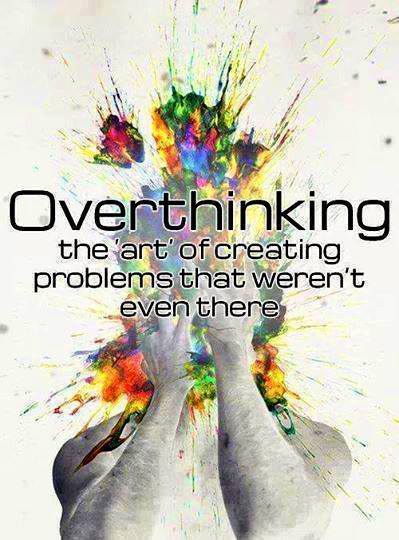
Tag: problems
-
5 Helpful Things to Do When You Think Life Sucks
“It isn’t what happens to us that causes us to suffer; it’s what we say to ourselves about what happens.” ~Pema Chodron
You know that foreboding fear we all have—that something will go terribly wrong and life will never be the same again?
Mine is that something will happen to our daughter. She is our only child. We battled infertility for years before conceiving her. I keep telling myself that it’s just an irrational fear and that every parent probably has it to some extent, but it’s a constant companion that stealthily follows me around everywhere I go.
So, on a Saturday evening, when we returned from an evening out to pick her up from the playcare and were greeted by the sight of blood on her face and the sound of inconsolable weeping, my heart just stopped.
She had fallen off a playscape headfirst. It had happened minutes before we arrived. All the caretakers could tell us was that a tooth was knocked off. We rushed her to the emergency room.
After what seemed like hours, they gave the all-clear—no head trauma or fractures—and sent us home with a prescription of painkillers and instructions to rest.
She spent the next twenty-four hours in pain and throwing up. She couldn’t even hold water down.
I tortured myself with fears that it must be a devastating head injury that the emergency room staff had failed to catch. She felt better the next day, so I brushed my fears away.
The next week was a whirlwind of visits to the dentist to extract fragmented and loose teeth. During one of the visits, the dentist noticed that her jaw was misaligned. We rushed to an oral surgeon.
The emergency room staff had failed to catch it—her jaw had broken. And now it was too late. The bone had already started to set in a crooked manner.
She’d need major surgery to reverse it. She was too young to do the surgery yet, but by the time she turns eighteen the misaligned jaw will likely bother her so much that surgery will be unavoidable.
A couple of weeks later, as the dust started to settle, I took her to the park to let some steam off. As luck would have it, she had another fall, and this time she broke her arm.
We hadn’t had any major trauma in her entire life. And now we had two sets of broken bones in as many weeks.
Waiting for the orthopedic to put the cast on, I couldn’t help but think, “Right now, our life sucks.”
And this wasn’t the first time I’d thought that.
A few years back, I’d felt much worse when my husband was in the emergency room, I waited outside with her, and the doctors had no answers for us.
And before that at work when a colleague was bent on making my life a living hell.
And when my best friend was lost to depression and wouldn’t take my calls.
And when I broke up with my first boyfriend.
And a million other times.
Every single one of us has these moments. It’s just the way life is. It’s what we do in those moments that matters.
For the better part of my life, I’ve felt flustered and incapable of handling these moments. Over time, I feel like I’ve figured out a few things that I can start doing to bounce back.
I’m sharing these with the hopes that some of you will find them as useful as I do.
1. Replace “Why me?” with “What next?”
It’s natural; when things go wrong, one of our first thoughts is likely to be “Why me?”
Here’s the thing though: “Why me?” is a weakening phrase. It only serves to increase our feeling of victimhood and makes us feel incapable of dealing with the situation.
By intentionally catching ourselves thinking “Why me?” and replacing it with “What next?” we not only gain back a feeling of control, but also figure out what we can actually do.
Anytime my daughter had a mini accident after that, she would panic. I’d put on my calmest voice, even when I felt like screaming “Why us? Can we please catch a break?” and say, “Aww, poor baby. Are you hurt? Accidents happen. Do you think a boo-boo pad might help?” And yes, a boo-boo pad always helped.
Ever so slowly, we were back to being resilient in the face of mini accidents again.
2. Force yourself to practice gratitude.
It is hard to feel grateful when you are dealt a blow, no matter how big or small it is.
I was devastated by my daughter’s jaw fracture verdict. I had to practically force myself to practice gratitude.
Every time I talked to someone, I’d say, “Well, we’re lucky it wasn’t a head injury.” After repeating it a few times, I actually started to believe it and started to feel the gratitude. And that eventually helped deal with the news of the misaligned jaw.
No matter what you are dealing with, there is always, always something to be grateful for. Force yourself to say it out loud a few times. Your heart and your mind will soon catch up.
3. Quit blaming.
When you’re hurt, it is equally natural to look for someone to blame.
In my case, I was tempted to blame myself, the caregivers at the playcare, the doctors at the emergency room, and so on.
But blame only serves to prolong the hurt. It makes it harder to let things go. It makes us angry and corrodes us from the inside. It brings negativity into our life.
So just stop.
If something is meant to be, it will happen. That’s it. Deal with it and move on.
4. Don’t give in to fear and despair.
This is a tough one. It’s so much easier to just give in and surrender to the fear and grief. But we need to stand tall, even when we feel two feet too short.
It was very hard for me to mask my worries from my daughter and project confidence. But I’m so glad I did.
Back then, for a while, I’d actually started to wonder if something was wrong. The foreboding fear that was my constant companion kept telling me that something bad was going on.
But slowly, she gained from my projected confidence and grew more confident herself. And got back to her monkey business. And didn’t having any more accidents.
And my worries started to fizzle.
When it comes to fear and despair, you have to fake it till you make it. And, sooner or later, you will make it.
5. Never give up.
We didn’t like the jaw surgery verdict. We sought out another opinion even though it seemed pointless.
The new oral surgeon was old school. She suggested physical therapy. We set alarms on the phone, and my daughter diligently did her exercises (bless her soul, she’s just a wee little kid, but such a sport).
After a month, the jaw was starting to get aligned again. Things are beginning to look good. Maybe we won’t need that surgery after all. We can only hope for the best.
No matter where you’re at or what you’re going through, don’t give up. Try just one more thing; maybe it’s just the thing that will resolve it for you.
It ain’t over, until it’s over.
—
As I type this article, I hear my daughter biking around the house.
And then I hear a loud thud. I catch my breath and wait. And there it comes: “I’m okay,” she calls out.
Yes. I think we’re indeed okay.
-

5 Practices to Help You Let Go and Embrace Change
“Letting go isn’t the end of the world; it’s the beginning of a new life.” ~Unknown
The summer I turned twenty, I worked as a camp counselor at an educational camp with strict rules. As one of my responsibilities, I escorted groups of fifteen to twenty students, ranging in age from middle school to high school, to and from their classes and activities across a large urban campus.
I was in charge of a group of spoiled, rebellious sixteen and seventeen-year-olds who would rather be spending their summer anywhere but at an academic camp.
Because I was only a few years older than them, I had some difficulty controlling their behavior—camp rules required that I confiscate cell phones, discourage talking during class, and deal with a shoplifting incident at the campus store.
After a few weeks on the job, I was feeling overwhelmed. The older students would sabotage us by making us late for every class. They’d goof around, stall by pretending to tie their shoes, or stand in traffic.
My tactics—telling them repeatedly to hurry up, calling out to them that we’d be late as they lagged far behind crossing streets, and listing the reasons we had to walk faster—weren’t doing me any good. I was sick of repeating myself, I was losing my voice, and my approach wasn’t getting the results I wanted.
So one day, out of desperation, I tried the opposite of what I had been doing. Instead of putting so much energy into trying to control them and be on time, I let go.
I continued walking with the younger kids and let the older ones walk behind us at whatever pace they wanted. I pretended to ignore them (while still keeping an eye on them since I was solely responsible for their safety). By letting go, something strange happened: we all arrived at the class faster than ever.
Giving them a little space and taking my attention off them probably made them feel more mature and independent, like they were walking on their own. Instead of leading by micromanaging, I stepped back and tried to care less in order to get the results I wanted.
If you find yourself up against a wall, maybe you’re trying to force things. Paradoxically, letting go and loosening your control can pave the way for you to achieve what you desire.
It’s not about un-attaching yourself from the outcome you want. I still wanted compliance and respect from the campers, but I decided to go about achieving that in a different way. This shifting mindset is like a tiny gear changing, but it can make a profound difference.
When was the last time you hit a wall and tried shifting your perspective to reach a solution? How can you cultivate and encourage such a mindset in your daily life to think differently? Here are five small practices to help you learn to embrace change and harness your creativity.
1. Mix up your routines.
You may be stuck in ruts you don’t even realize. Brush your teeth with your non-dominant hand. (It’s surprisingly difficult, and it enhances creativity by building new neural pathways in the brain.) If you’re right-handed, try using your left hand to move your mouse cursor for an afternoon.
Shift the arrangement of the apps on your phone, or change up the order and organization of the files on your computer desktop. It can be very disorienting at first, but just try something new and getting over your initial resistance is the hardest part.
2. Experiment with new tastes.
At the start of each month, make a list of foods (guava, figs, buffalo jerky) that you’ve never tasted. It can be as simple as sampling a new kind of cheese.
It’s reassuring and comforting to hold on to our old, trusted standbys, but you never know what could become your new favorite food. I didn’t try mango or pomegranate seeds until last year, but now they’re two of my all-time favorite fruits.
3. Add playfulness to your day.
The next time you’re at a coffee shop or restaurant, why not order with a British or Indian accent (if you’re not British or Indian)? Stick to your accent the whole time, or switch it up in mid conversation and try to keep a straight face.
Or, if you’re shopping for clothes, pick one item to try on that’s something you’d never wear. You’ll (hopefully) at least get a laugh, but being playful can also open you up to considering new ways of doing routine tasks, helping to gently expand your perspective as you see more possibilities than the obvious, logical ones.
4. Reach out to others.
Let go of any inclination to be too inwardly focused by observing and commenting on your surroundings. Compliment a stranger on a piece of jewelry he or she is wearing, or ask a stranger for directions somewhere.
If you seek out interactions each day or each week that you wouldn’t otherwise have had, you may be surprised by the cumulative effect they can have on your creativity. It can also open you up to more opportunities that you otherwise would have missed if you hadn’t stepped out of your own headspace.
5. Clear out old stuff.
For twelve years, I had an alarm clock that was a comforting presence since it was the first thing I saw each morning. I realized I no longer needed it, but I didn’t want to abruptly let go of it.
So, I took baby steps by first just unplugging the alarm clock. Then, I moved it down on the floor. After a few days, I put it in a brown bag so it was out of sight. A few days after that, I put the bag by the door, and then the next day I donated the alarm clock.
If we resist the little changes in our lives, we have a much harder time dealing with the big changes. When a certain method isn’t working for you, take a step back, clarify what you want to accomplish, and open yourself up to approaching the problem in a different way. Letting go can feel scary, but it can also bring you to something better.
Man with arms outstretched image via Shutterstock
-

Solve Your Problems and Set Yourself Free with Perceptual Language
“Use what language you will, you can never say anything but what you are.” ~Ralph Waldo Emerson
Imagine using a new language that prevents you from blaming others, being reactive, manipulating, fearing anything in the outside world, needing social approval, being offended by others, and being controlled or controlling others.
Imagine that these problems were simply eliminated from your life because your new language makes them impossible. Welcome to Perceptual Language.
Refined by Jake and Hannah Eagle of Reology, Perceptual Language represents a major development in psychology, perhaps the greatest breakthrough since the days of Freud.
When you learn Perceptual Language, you engage your tongue and your brain toward a new level of enlightenment. Here is a brief overview of how it works.
Principle #1: There is no out there out there.
Perceptual Language honors the principle that we don’t respond to “the world out there.” We respond to our perception of the world. Perception is formed by beliefs, cultural norms, religious affiliation, genetic factors, life experience, sense of right and wrong, and so much more.
All of these factors combine to filter the information that passes through our senses, allowing us to figure out what things mean. In other words, we don’t ever directly experience anything outside of ourselves. We only experience ourselves.
When I listen to my wife talk, I am actually hearing my perception of her words, gestures and so forth. I am making meaning out of what she communicates based on that. This may or not match the meaning she intends to convey.
If I am offended by her, it is important to understand that I am actually offended by what I did with her words based on how I made meaning out of them. In essence, I am offended by her-in-me. Not by her, the real person. I can never experience her, the real person, directly.
In essence, I am offended by this person that I have made a part of me by the way I perceive her. In the end, I am offended by none other than myself. (more…)
-
3 Tiny Phrases That Can Help You Solve Big Problems
“At any given moment, you have the power to say: This is not how the story is going to end.” ~Chris Mason Miller
I was faced with an impossible problem, so like all the great thinkers throughout history, I shut myself in the bathroom and vowed not to come out until I had solved the problem.
It had plagued me for two-and-a-half years, and for seven years—the length of time during I’d lost my voice for and had suffered from chronic tendonitis respectively.
Such was the consequence of an obsessive guitar habit, one that saw me practicing up to fourteen hours in a single day as I worked my way through three years of my Bachelor of Jazz Performance Degree.
I never made it to year four, the year I would have graduated. Year three had seen my pain increase to the point that I only played my instrument at performances and in classes requiring it.
On my own, I practiced in my head, imagining both my instrument and the sounds it would produce.
I developed a strong imagination alongside a strong case of tendonitis.
But at the end of that year, my body quit. Shut down. It got so bad that I ended up unable to drive or hold a knife and fork. I even ended up having a friend push me around the Chicago Museum of Science in a wheelchair because the muscular dysfunction had become a whole-body issue.
So there I was, several years later, with no voice and no use of my arms.
I’d seen doctors, physiotherapists, massage therapists, and all manner of other people who poked and prodded and tried to figure out what was wrong with me. I’d tried all the treatments, taken all the advice, and done plenty of my own research.
None of it had worked.
So that sunny afternoon in June, I turned to the only resource I had left…
How To Run Your Mind
There are only two ways to change the quality of our lives: change the quality of the events, or change our perception of the events. Most of us opt for the former. I’d been doing this for the last seven years.
Now, it was time to try out the other option. We can all change the way we perceive events by changing the words we use when we talk to ourselves. There were three phrases in particular that gave me my life back; they have untold power to have a positive impact in yours.
1. I am here.
This phrase saved my life. When we fight long and hard, trying to escape our pasts or reach our futures, we inhibit our ability to find joy, contentment, and inner peace in the present.
And this is the only place where we can ever have it.
When we ground ourselves in the here and now with a phrase like “I am here,” and put all our intent and focus into the words, we become accepting of where we are. We cease to judge ourselves as good or bad, as a success or failure. We are simply where we are. And that’s okay.
The seriousness of what we’ve gone through and the gravity of whatever we’re trying to achieve diminishes, and we’re able to safely and securely assess our current situation and take one step in the direction we want. A step taken without fear, stress, or tension—without anything except the joy of taking that step and seeing what will come of it.
2. I don’t know.
We are conditioned from an early age to rationalize, justify, and explain things, whether we’re studying for a biology exam, writing an essay, or trying to get out of detention.
This attitude can have serious consequences later in life as we become set in our patterns of thinking and behaving. We understand the world—we have the answers—so new information gets filtered out before it has any opportunity to impact us.
By adopting the stance “I don’t know,” we open ourselves to the possibility that there are different ways of seeing the world. We give ourselves new opportunities to learn, grow, and evolve—to become okay with the uncertainty and humility of not always having the answer.
3. Life is easy.
When we suffer, and particularly if we’ve been suffering for a long time—whether that’s through health problems, workplace issues, relationship troubles, or anything else—it is easy to feel as if life is simply one prolonged struggle, and that getting by is the best we can hope for.
But all this changes when we adopt the idea that life is easy!
For instance, I had my laptop stolen when I was traveling in Malaysia. I lost several months of writing I had saved up, fairly significant for someone whose income relies upon his portfolio. Not only that, but with no computer I had no way of doing any freelancing work to help support myself.
This was incredibly stressful until I decided to see this as an opportunity; with my old work gone, I had the chance to write something even better than I had created before.
I had an interesting experience—a challenge and adventure—recovering from the setback that I could use in my future work. That was an amazing realization that made it simple to move on from the setback and enjoy the ride.
When we turn obstacles and barriers into opportunities and adventures, stress and discomfort disappear, we need less motivation to act, procrastination affects us less, and the creative part of our minds responsible for lateral thinking and problem solving stay active.
As a result, solutions start to appear as if from nowhere, simply because we put our minds in a position to find the answers. And life does become easier.
—
These phrases, with enough time, were major reasons why I can talk and write today. They are the reasons I was able to solve the impossible problems that dumbfounded medical professionals, and they can be the reason that your life changes for the better in the coming weeks and months.
Photo by Davide Restivo
-

6 Secrets to Moving On From Serious Struggles
“Never be ashamed of a scar. It simply means you were stronger than whatever tried to hurt you.” ~Unknown
People who knew me ten years ago would probably expect me to be dead now. They wouldn’t expect me to have escaped my problems. They wouldn’t expect me to have stopped drinking, drugging, taking overdoses, and cutting my arms.
People who knew me ten years ago saw a scared shell of a girl, terrified of her own shadow and on a mission to self-destruct. They wouldn’t expect me to have turned my life around completely. They certainly wouldn’t expect me to be sharing my story and helping others to let go of their struggles, too.
But then those people who knew me ten years ago didn’t know that I would find the secret to moving on from my struggles. I didn’t know it back then either; I thought that there was no hope for me, and that I would never be over my woes.
The secrets to moving on came to me slowly. It took years of suffering from anxiety and alcoholism before I found my solution, but it was worth the wait. Whatever your problems, and no matter how inescapable you think they are, the answers are always universal.
Here are six secrets to moving on from your struggles:
1. Draw a line.
When you’ve decided that you’ve had enough of suffering, of tying yourself up in the same old knots and landing up in the same dead ends, draw yourself a nice mental line to mark your decision. Everything up until now was the part of the problem, and everything from now on is a learning experience.
Use that mental page break to give yourself new courage and enthusiasm for the healing process. Leave any guilt and shame firmly in the past. Decide that no matter what happens, from now on you will do your best to break away from your negative patterns and never give up on trying.
It’s okay to screw up, to cry sometimes, or to find it hard, as long as you never move back into that space where you’re not willing to try. Let your attitude be part of the solution to your problems; focus on living, learning, and breaking free. Take at least one extra step forward every time you stumble.
2. Learn from others.
When an emotional or mental problem is holding you back, don’t try to cope with it all on your own. If you’ve ended up in a sticky place or a cycle of self-sabotage, your own thought processes and feelings will have aided and abetted you. In order to get out of the hole, you must be willing to learn from other people.
I have always found that those who have previously been down the same rabbit hole are the best people to give you advice and a helping hand. Hang onto the hope they present, learn their lessons, and see how the decisions they made have helped them to succeed in moving on.
See the patterns in others’ successes, and look for people who live the solutions. If people appear bound by bitterness and negativity, they’re probably not the ones to help you. Look for those who are truly free of their issues—the ones who you aspire to be. There is no need to struggle alone, when others can help you through.
3. Try everything.
When it comes to particular problems, you may need to get specialist help to deal with them. You may feel you have tried so much, without success, to find the solutions to your issues that you will never find an answer. I know that trap; I nearly gave up, myself, on the quest to beat my anxiety disorder.
Counseling, books, courses, pills, potions, and therapy had not provided any solutions. I had almost given up hope. I am so glad I didn’t.
The last thing I tried was something I had never considered, and it happened to be the one method that gave me back my life. Try everything; think outside the box. The answer is only irretrievable if you stop looking for it.
4. Let go.
To truly move on, you must let go of blame, resentment, and anger. Realize that negative feelings are counter-productive. However justified you feel they are, it is only hurting you to hold onto them. Forgive others so that you can be free to follow a new positive path.
Forgiving yourself is possibly the hardest part of letting go, but it’s also one of the most beneficial things you can do. Accept that you are only human, and humans make mistakes; it’s how we learn, after all. You did the best you knew how to at the time, and now you’re willing to admit it didn’t work out so well.
Stop criticizing and chiding yourself. Talk to yourself kindly, like a patient teacher, rather than a harsh taskmaster. Unkind words will only make you feel frustrated and sad, dragging you back into that negative cycle. A warm, encouraging tone will help you get the best out of yourself.
5. Do what works.
It sounds so simple, but people do what doesn’t work all the time. They wish things were different, bury their heads in the sand, or use sticking plasters that will come unstuck later on. I used alcohol to numb my anxiety disorder, not taking into account the alcohol dependence, the plummeting self-esteem, and the pancreatitis that would punish me for my choice later on.
Deal with reality to make sensible choices. Don’t allow anger, self-justification, or feelings of unfairness to stop you from doing the right thing. Sometimes the way we have to constantly battle and the things we have to do to solve our problems may feel unfair, but the alternative is staying stuck in pain and self-loathing.
Keep your end goals in mind when making decisions. Do what works on a consistent basis and you will eventually escape from your problems, making it worth the fight. The longer you keep doing what doesn’t work, the deeper the hole you will have to dig yourself out of.
6. Change your mind.
The only permanent solution to our struggles is to change the mind that creates or perpetuates them. While your problems might not be of your own making, the endless suffering that comes as a result of them is down to the way you use your mind.
It may not be your fault, but it is your responsibility to work on the way you think if you want to be free.
My own mind-set kept me stuck for many years. It refused to acknowledge the good and was responsible for a lot of negative emotions and responses. It was only by practicing over and over to refocus my mind that my feelings, and responses to life, became more positive.
Watch what you’re feeding your mind, as well. If you’re feeding it a diet of dross and negativity, don’t be surprised if it’s not all that helpful. Educate yourself, and surround yourself with good, supportive people.
Your mind and attitude are ultimately the things that can keep you stuck—or end your struggles. Learn to use them wisely, and you can overcome any problem, no matter how serious it seems. Having a supportive mind makes it much easier for you to see clearly, and to be happy and content, even in a life where challenges crop up.
-

Why Your Problems Are Not Nearly as Permanent as They Seem
“When we…go back into the past and rake up all the troubles we’ve had, we end up reeling and staggering through life. Stability and peace of mind come by living in the moment.” ~Pam Vredevelt
There is a way in which we tend to view issues in our lives that makes it seem like the issue is a big, scary monster that chases us around everywhere we go.
We have commitment issues. Or we are bad with money. Or we have an eating disorder, we drink too much, or we follow-through too seldom.
We view ourselves and our lives as if they are stable, consistent entities that probably can change, but rarely do. We surely never change without considerable time, money, or effort.
At one point in my own life, I definitely felt like I had weaknesses and issues, particularly around food. It felt as if they were mine, like I had ownership of them. They were part of who I was.
It felt as if my “disorder” was a living, breathing monster that I would never fully shake.
And that’s the way it goes. It begins to feel like the issue is always there, following you around.
The monster might be right on your heels some days and further away other days, but it’s always there in some capacity. The monster might take naps or even hibernate, but there is the sense that it could wake up at any moment.
If you’re too loud or not careful enough, the monster will wake up and be right at your back again. So there’s no resting, really. You never get too comfortable. I know I certainly never got too comfortable; always looking over my shoulder for the next time the monster would catch up with me.
(It’s easy to see how we came to view it this way, between traditional, past-focused psychotherapy and popular addiction recovery movements that say things like “You’re an addict for life” and “One more drink and you’ll be exactly where you left off.”)
So, guess what happens when it feels like fully resting is out of the question?
You guessed it—you don’t rest. You’re on guard.
You hold in the back of your mind the image of that monster waking up and beginning to run after you again.
You never quite manage to let that thought go because you believe—you’ve been led to believe by well-meaning but misinformed professionals—that the issue is a part of you. Of course it would never occur to you to let go of something you believe you can never let go of.
Each time the thought of your monster passes through your head, it feels ominous and meaningful. When something feels ominous and meaningful, you naturally pay it some attention.
If you believe you are bad with money and you go a little overboard at Nordstrom one day, it’s very serious.
If you believe you have commitment issues and the thought occurs to you to run from your relationship, you might actually act on that thought because it seems real. That thought appears as your reality, not as the fleeting, habitual but arbitrary thought it truly is.
For me, because I was told I “had” a diagnosis and that diagnosis signified a real and stable thing, anything I ate became a very big deal in my mind. The very common and meaningless act of eating a meal began to mean a whole lot about who I was as a person and it said something—in my biased thinking—about my future.
You Can Only Feel What You Think
Aside from the fact that monsters are scary, the other problem with the monster-chasing-you metaphor is that it is completely, factually inaccurate. It is quite far from the truth of how your “issues” and experiences of life work.
Your actual issues are nothing like a monster chasing you.
A closer approximation of how it works is something like this:
Your moment-to-moment experience is a reflection of your moment-to-moment thinking. Said another way, what you feel is only and always what you happen to be (consciously and unconsciously) thinking.
Sometimes you think a lot about your issue. When you’re thinking about it— especially to the extent that your thinking seems real and true, as if it directly reflects reality—it appears as if you have the problem you are holding in your mind.
When the thoughts you are experiencing seem like stable truth, you’re naturally locked into them. You elaborate on them, take them seriously, and inevitably act on them.
But here’s the cool part: Your thinking changes. Often. It’s always changing in obvious and subtle ways. When your thinking changes, your experience changes.
And, the thoughts in your head are not an accurate snapshot of outside reality. They are quite subjective and personal, actually. No two people see the same thing in the same way, so what you think is only what you think, much more than the way it is.
The points above work together because the more you see that your thinking is very subjective and personally biased, the less you rely on and respect it as truth. The less you rely on and respect it as truth, the more frequently and naturally your thoughts change because you’re not holding them in place, identifying with them, and owning them as “yours.”
There Is No Monster
Since your experience in any given moment is exactly equal to what you are thinking in that very moment, that means that when you’re thinking about your monster, you feel your monster.
And when you’re not thinking about your monster, your monster does not exist.
When you’re thinking about your commitment phobia, how your parents damaged you for life, how you’re an incurable alcoholic, or how horrible you’ve always been with money, those issues (monsters) are alive for you in that moment.
My eating issues were alive for me most of the time in those years solely because I was always thinking about them.
But when you’re thinking about your cat, or pondering hard wood versus tile in your kitchen, those issues are not alive for you.
It’s not that the monster is asleep, waiting to strike. It’s that the monster literally does not exist.
You see, each moment of your life, you start anew. The inner slate of your mind is wiped clear.
Because we tend to give some thoughts a lot of respect, and because we believe they reflect outside truth, those thoughts tend to come back often.
In that way, it doesn’t always feel like the slate wipes clear. It feels like the monster is right on your heels.
But actually, we have infinite potential for brand new thought, which equals infinite potential for brand new experience. We tend to get more new thought when we know that.
In other words, when you think of your issue as the monster on your heels, that’s what you get. But only because that’s the way you’re thinking about it.
When you see it more accurately, understanding that you’re only feeling what you’re thinking in any moment and that when your thoughts shift—as they inevitably will—you get limitless new thought which brings limitless new experience, it all changes.
You see that you’re creating your life anew in each moment. There is no monster, unless you create him right now by thinking about him right now.
Nothing is actually carried over from the past. Rather you might think right now about the past, but that’s just where your thoughts wandered.
I’m happy to report that I have had no issues with food for many years. Eating when I’m hungry is a complete non-issue. This is not what my therapists told me would be the case. I was told that because I “had” the issue at one time, I would most likely always have it in varying degrees.
I was told that I could learn to manage it, and that it may lie dormant if I was lucky, but that in times of stress it would most likely flare up again.
Nothing could be further from the truth today.
There is no monster. There never was. There’s only what we think, now. And then now. And then now.
Of course, thoughts of our “problems” will drift into our mind. We’re only human.
But because we see that they will also drift right out, there’s no reason to keep constantly looking over our shoulder.
Photo by Jesus Solana
-

A Simple Technique to Solve Problems Before They Get Bigger
“As he thinks, so he is; as he continues to think, so he remains.” ~James Allen
It was a beautiful day as we drove down the Desert Road two days after Christmas. The Desert Road is a stretch of highway in the North Island of New Zealand.
On one side of the highway, three magnificent volcanoes provide the only break to the bleak, stark landscape. Otherwise, the ground is covered in dry grasses, rocks, and a straight highway to the horizon.
During the drive, my husband and I were discussing the New Year and what would be the next adventure.
As Edith Piaf began to sing “Je ne regret rein” on the mp3, our conversation swung to my mother’s death the past year and how she and I could never see eye to eye.
My mother was a wonderful woman, but I was never the daughter she wanted and she was not the mother I wanted. As a child I wanted to be a nurse, but she convinced me that I was too smart to be just a nurse and needed to become a doctor.
I did try hard and when I failed out of medicine, my mother was disappointed.
She wanted me to marry someone well educated and from a good background. You can imagine her disappointment when I married someone raised in the Gorbals in Scotland who had failed to graduate an Honors BSC in Higher Mathematics.
And she wanted me to take care of her, be at her beck and call, as we lived two doors away from her. Imagine her total frustration when we moved with our sons half way around the world to New Zealand.
I pulled over as regret and guilt overwhelmed me. My eyes filled with tears and my head throbbed. I thought her death ended all the recriminations. I thought I was at peace with our differences, but at that moment there definitely was regret and grief.
And as Peter held me, he reminded me of the way to solve problems and a way to move beyond the immediate pain of guilt and regret.
Yes, guilt because I had failed to resolve the breach and the disappointment; guilt because I refused to choose my mother’s wishes over my personal desires and my immediate family. That guilt and remorse were thieves stealing my personal power.
As we drove back onto the highway, we discussed how to use ICE to deal with the feelings of guilt and regret. ICE is an acronym for a technique to solve problems.
First, you Identify your feeling, the problem, or the situation.
This stems from the belief that when you can name something, you then can deal with it. The naming needs to be precise and identify the “issue.” In this case, the “issue” was my feeling of regret and guilt.
Next, you Control or corral the “issue.”
To control or corral an issue, first you have to take the emotion out of it.
Start by taking several deep breaths to clear your mind. Then talk to someone, even yourself, about how the issue affects you, and if you want it to affect you in that way. Your choice: continued pain or more pleasure.
Peter and I discussed how my guilt and regret were still holding me back from being what I could be. I needed to make a choice to move on and accept the fact that it was impossible to undo what was done.
Then, you Execute or eliminate the “issue.”
By identifying it and corralling it, you can choose how you will move forward. You can choose how you will deal with the “issue” in the present and the future. You can choose how you will act the next time the “issue” arises.
When I accepted and acknowledged what had happened, I could even laugh at the fact that I no longer had to account to my mother for my present or my future. I could put my mother issues where they belonged, in the “what I learned” box, and move to live in today.
Using ICE to keep success thieves away is like keeping thieves out of your home. You identify where they can break in. You control the points of entry by using locks or security to keep them out.
You make it more difficult for the thieves and so eliminate or reduce the possibility that they will steal your treasures.
As we drove on, we looked for other emotions and situations that steal my ability to function.
And so my quest began—a quest to identify other reactions that steal my success or cause regret.
The journey has been exciting and extremely challenging.
The first step was getting clear that success was made up of hundreds of steps; identifying success and finding my own definitions, not my mother’s father’s or anyone else’s.
My personal success is just that, personal. I remember when my mother would scold me for failing to meet her standards and expectations. I remember my father shaking his head about the decisions I made, decisions that he was certain would lead to my demise.
I remember other key figures in my life expecting me to be one thing and their disappointment when I made a different choice than the one they wanted me to make.
Once Identified, I needed to learn how to corral the emotions and other issues. As I controlled or corralled the “issues,” I removed their power to make me doubt my success. I compartmentalized the issues so that I could decide when to deal with them.
Now I can eradicate those habits when I choose or decide not deal with the “issues,” but they no longer have any power to stop me from enjoying my success and magnificence.
Yes, there are still times when my self-doubt and personal recriminations about what I do and how I do it make me curl into a fetal position and pull the covers over my head.
On the Desert Road that morning, I realized that I could ICE any thief that threatens to steal my success.
Life is too short for grief, guilt, and regret. Yes, the tears still come when I think of my mother, but I no longer fall apart and pull off life’s highway overcome with the regret.
What problems or emotions can you overcome by ICE-ing them?
Photo by Wesley Nitsckie
-

Life Isn’t Always Fair: 5 Steps to Accept Tough Situations
“Accept what is, let go of what was, and have faith in what will be.” ~Sonia Ricotti
I hate my life! It’s a phrase that’s used by teenagers and adults alike. Sometimes we use it for dramatic effect and sometimes we mean this literally.
When I was diagnosed with bipolar disorder two years ago and said “I hate my life!” I meant every word. I hated it so much that there were times I didn’t think it was worth living.
The depression was incapacitating. The hypomania disguised itself as extreme anxiety and irrational fears.
In order to stay alive, I had to accept my illness, let go of what I wanted my life to be, and have faith that the future would take care of itself.
Here are five things I’ve learned so far on my journey of accepting a life that isn’t fair and never will be.
1. Recognize the problem.
Right before I was diagnosed with bipolar disorder, I tried to be everything to everyone. I gave 100% at work, I gave 100% to my family, and I gave 100% to whatever else needed me.
I came to find out that giving 300% is impossible. Something had to give. That something was me.
I had a breakdown. Several of them, actually, because right after I recovered from one, before long I found myself going back to giving 300%. I lost count of the number of times I was admitted to an acute treatment facility for days at a time.
At last I realized that living life this way was going to kill me. I couldn’t accept that I had an illness. I couldn’t accept that I had to slow down. I couldn’t accept that I wasn’t perfect.
Because of that I didn’t want to be alive. The pain of living with a mental illness can result in that type of thinking.
Sometimes we have to make a choice: pretend that nothing is wrong and then continually deal with the consequences, or acknowledge the problem and face it head-on.
2. Do something about it.
Once I accepted the fact that I wasn’t like many people who can handle work stress, be a part-time single parent, and do whatever else is needed, I grudgingly started making changes. I resigned from my job as a newspaper reporter, left co-workers who had become good friends, and started working at home.
I spent more time taking care of myself. I started meeting with a meditation teacher who taught me how to accept what is. She showed me ways to calm anxiety and ride the wave of depression, knowing that it would eventually pass.
When life changes, we need to become aware that there are always more choices. They might not be the choices we want, but there are always choices. Open your mind, look around, and you’ll find many more courses of action than the obvious ones in front of you.
3. Let others help.
When I was going through depression and was unable to do everyday tasks or even take care of my children, it was hard for me to ask for help.
“I should be able to do this on my own.” “I don’t want to bother anyone or be a bother.” These were my thoughts as I beat myself up after I had to ask for help.
It occurred to me after awhile that most people enjoy helping others. It makes them feel good. I know whenever someone comes to me asking for help, and if I’m able to, I feel good about myself afterwards.
In fact, altruism is one of the main factors in achieving happiness, according to a book I read called What Happy People Know by Dan Baker.
Just think, by asking for help you may actually be helping the other person.
4. Take ownership.
After I sought out psychiatric help for my illness/behavior, I expected my therapist and doctor to make it change. I insisted they make it change. I got angry because they couldn’t change it.
“They weren’t trying hard enough.” “They didn’t understand me.” “If they would just listen!” These were the thoughts that I had as I struggled during the roughest times of my illness.
Finally I was able to grasp the fact that they couldn’t change it. At first it frightened me. These were professionals. They studied, worked, and knew more than I did and they couldn’t fix it.
Wait a minute. Then why even bother dealing with them? It was useless, hopeless. I wasn’t strong enough to handle this.
These were all lies I told myself. Because after eight years of therapy I actually knew quite a bit. I learned skills that had helped me through the darkest moments of my life.
Just like a teacher can’t follow a student around for the rest of his or her life reading books to them and watching over them as they write a paper, my therapist couldn’t come home with me and hold my hand through every problem I faced. She is the most supportive person in my life, but she couldn’t do it for me.
Eventually it was up to me to use the skills I had been taught.
When my anxiety rose to excruciating levels, I remembered to go to a quiet place (usually my bathroom) and breathe through the panic until it subsided. I learned that it wasn’t going to last forever, eventually it would pass and I just had to ride it out.
It’s important to learn skills from people who have more experience with your problem, but it’s up to you to put them into action. It will be scary at first doing them on your own, but the more you do it the more confident you will become.
5. Change what you can and accept the rest.
I was forced to make changes to my lifestyle in order to achieve and remain stabilized. I may have lost my job, but I gained a life.
I accepted that I have an illness that isn’t going away. There is treatment but no cure for bipolar disorder. I have faced the fact that I will have to deal with depression, hypomania, and anxiety throughout the rest of my life.
I learned coping skills and take prescribed medication to minimize my symptoms, and it’s made living with the illness bearable.
Acceptance didn’t make my illness go away, but it relieved a big part of my suffering as I became aware of the steps I had to take. I have faith that I will be able to live with the unpredictability of my illness.
These are five steps to accept you are not where (or who) you want to be.
Acknowledge the fact that you might have to come up with another plan. Before you know it, you may find yourself thinking about the past and wondering why you didn’t want it to change, because your present definitely works better.
-

Facing Life’s Big Challenges and Coming out on Top
“Life always waits for some crisis to occur before revealing itself at its most brilliant.” ~Paul Coelho
I will never forget that day.
It is still as clear in my mind as if it were yesterday.
My son was just a little over three. He was going to a mainstream kindergarten and, well, his teacher had very gently suggested we seek a professional’s help.
You see, he didn’t understand what the teachers were saying to him. He was restless and fidgety. He also bounced form activity to activity.
This was our first ever visit to a speech pathologist, and she suspected autism. The possibility that our child has a life-long disability seemed like a death sentence.
So we did what any normal, self-respecting parent would do: we dismissed her concerns.
We were outraged. How dare she say this? What right did she have? Our son is not autistic. He just has a language delay; he’s just tad over active.
Then we did the next best thing: we put him in an early intervention center.
Although we were sure that it wasn’t this thing that was wrong, we knew something was. And we had to do something. We had to be responsible parents. Now he was getting help with his sensory issues (something I understood much later), fine motor, play, and language skills.
In retrospect, I wonder how I could have missed those early signs. I guess that was the greatest form of a denial—only a mother could find a justification for every symptom of what could be wrong.
It’s quite ironic, actually. We had an appointment with the developmental pediatrician and been waiting for this day for over two months. And then we had to cancel
My husband called in to let them know, and the receptionist asked, “Are you sure you can’t make it today? It will take a long time to reschedule.”
My husband said, “Yes, my wife has just given birth to our second son.”
And so amidst all the chaos of having a newborn, my first born got diagnosed and I felt as if my life was completely shattered.
I felt cheated—for me, my son, and my family.
He did not deserve this.
We did not deserve this.
How could it happen to us? What did we do wrong?
There was time for grief and acceptance. (Don’t know how many days I cried for.) Then it was time to get to work.
And so I did.
I decided to leave my job in academia. I did not care about any of that any more. All I cared about was my son. I wanted to make everything right.
And the only way I knew was to become an expert myself. This is something I excel it— researching, synthesizing, and becoming a self-proclaimed know-it-all on a topic of my choice.
Only this time, the stakes were high. And the goal was to save my son’s present and his future.
I bought 30+ books on Autism spectrum disorders and therapies, and memoirs of parents living with these special children. I got informal training in speech, occupational, and ABA therapies and hired my own therapists to do the work.
And my son made progress by leaps and bounds. He went through two years worth of therapies in six months, shocking his therapists and consultants alike. How could he do this, they wondered. They had never seen any child do this before. Ever. They called him gifted.
We were so grateful for his learning ability.
This was the kid who “might never catch up,” communicated to us by a helpful early intervention staff member.
Two years of tears and sweat, a big chunk of our joint savings, and lack of any social activities went into this story.
He surpassed all their expectations. He outperformed all his fellow classmates in math and reading. He is a kid who is eccentric—the emotional age of kids half his age, loud, always happy, always fun. And he is going to a mainstream school.
His diagnosis was formally changed to Asperger’s, which has a better prognosis in terms of social and emotional well-being.
Because I ended up staying at home for over five years (my second child also started speaking late), I had time to re-evaluate my life.
I decided to let go of all that I was expected to do—a job that didn’t feed my soul, a social circle that started to disappear, and flashy stuff that we simply couldn’t afford anymore.
My son’s diagnosis turned our lives upside down. But it also taught us to appreciate both of our sons for who they are and to be grateful for each and every blessing in our lives.
At the end, I came out on top because I adopted the following beliefs:
Awful things might happen to you; take all the time you need to face the reality.
You need to grieve; do it.
Need to cry, not come out of your house, stay in bed all day? You can do that.
What you can’t do is keep it all bottled up inside, pretending it never happened. That your life is the same as it was a day before.
You need to face your emotions and deal with them. But don’t rush. Take your time. Healing takes time. It will happen when you come to terms with it.
It is not your fault.
I am sure you are thinking that it’s your fault—that whatever you’re going through, you caused it somehow.
We all feel that way. We scrutinize our life. We go over every inch to try and see if we did anything wrong.
It’s not your fault—and it’s also not going to do you any good thinking like that and torturing yourself in the process.
If you need to hear it, ask somebody you trust. And then really listen. Say it with me: It is not your fault.
Let go of what you don’t need anymore.
You have faced a setback. Your life is different, so you have to do things differently.
What is it that you don’t need in your life anymore? Is there a job that isn’t working for you? Any commitments you made? How many things do you say yes to that you could just pull back from?
Bow out gracefully.
Your husband loses his job. Your teenager has been in an accident. Your mom’s tumor is malignant. Your brother lost his house so his family has to move in temporarily.
Whatever it is, it needs your attention, which means the unimportant must go. Now.
Start believing and discover possibilities.
Your life is different now but that doesn’t mean it has to be worse. It can be better. Don’t listen to the naysayers and anyone else who tells you otherwise.
Don’t listen to the experts who tell you that your chances are not good. Listen to your gut. Do the work.
You might feel like you are all alone in this, or that you don’t have all the resources. You might feel trapped or feel like you don’t have many choices. Become resourceful. Do the best you can.
Amidst that chaos, can you discover any truths about your life and your dreams?
Now that you have let go of stuff that doesn’t matter, stuff that didn’t work, what could you do to bring normalcy to your life? What can you do to stay sane?
You don’t have to go through a major life change to appreciate what you have. All it takes is a wake up call. Mine was major; yours doesn’t have to be.
It took a diagnosis for my oldest son and give years of rethinking my life to find my priorities.
What will it take for you?
Photo by Tristan
-

Why Empathy Can Sometimes Help More Than Advice
“I have just three things to teach simplicity patience compassion these three are your greatest treasures.” ~Lao Tzu
I have two teenagers. Anyone with children knows these years can bring their challenges. One minute they behave like a four year old and the next they are as mature as an adult. These fluctuations can pose difficult times.
One day, after a particularly emotional and tough interaction with my son, I called my mother for advice. She had by all accounts raised three successful sons.
After a long and detailed discussion of what had happened, she said, “Oh honey, I’m so sorry. It’s so hard.”
That was it, not a single word of advice—just some empathy. I pictured her on her old fashioned phone with the rotary dial and the wires just making a simple statement. I was frustrated. I wanted advice; I wanted some magical activity or action plan that I could use to make it better.
In my opinion this interaction with my mom was useless.
Feeling frustrated, I called a very dear friend who has two teenage children and whose mother is a PHD psychiatrist. With children the same age, we had been sharing child-rearing stories for many years.
I figured with that level of education his mother must have some advice. I gave him a short synopsis of the story and asked if he thought his mother could provide some any advice. “Oh yeah…” he responded, in a way that I knew there was a story to follow.
He told me that a couple of weeks earlier he had been working on a project in London that required working sixteen hour days. Exhausted from both the hard work and plane ride home, he landed in the US after a long flight home.
When he landed he turned on his phone and saw an email from his mother. Delighted to hear from her, since he had not corresponded with in a while, he read the email immediately.
The email was very a long description of her concern for him. While the email was articulate and detailed, it was full of detailed changes of he “should” make for both his children and his family.
He interpreted the message from his mom as criticism that he was not doing what he should, and his own mother was telling him he needed to change. Before deleting the email he responded to his mother, “Please don’t send any more emails like this.”
Even as he retold the story I could hear how much the email had hurt his feelings.
My dear friend is thoughtful, articulate, kind, hardworking, good looking, and brilliant. My own wife often says that she wishes I were more like him. In short, he’s a great dad and a wonderful husband.
Advice Is Not Always What We Need
After hearing this story, I realized there wasn’t anything my mother could say that was going to help me in my situation with my son. Advice from her about what I “should” do differently was going to feel like criticism or be impossible to act on.
I had created my own problems and could create my own solutions like most of us can. Often times we simply lack the confidence or the self-respect to make the necessary changes.
Even though I did not know it at the time my mother’s simple empathy and acknowledgement of the difficult situation was the thing I needed.
I wanted a magical solution, but it didn’t exist. Her empathy and acknowledgement of the challenge was all I needed. Like most advice, we seldom know we need it when we receive it. If it’s truly useful we absorb it and use it without thinking about it.
Today when I have problems with my teenagers, I hear her voice telling me, “Oh honey. It’s so hard.” Sometimes it is, and that’s okay.
How to Remember
Remember, when someone calls for personal advice the most valuable thing we can do is acknowledge the situation without judgment and remind them that we care deeply. My mother does it with a Bostonian’s paucity of words. Most of us need to say more.
In an effort to remind myself of this lesson, I have created a simple picture of the old fashion telephone my mother used until very recently. I post the picture in my workspace where I receive the majority of my calls.
It’s there to remind me that most people do not want the instructions on “what to” or “how to” fix their problems, but rather to be reminded we care, are willing to listen and understand that sometimes life’s problems are not easy to solve.
Photo by Anant Rohankar
-

A 4-Step Plan to Deal with Even the Toughest Challenge
“Change the way you look at things and the things you look at will change.” ~Wayne Dyer
Everything in life is perception. How you perceive life depends on the things and people that have influenced you: school, society, friends, family, TV. So, you may think something is bad or good, but in reality it is neither. You were taught to perceive it the way you do.
One person might see money as the root of all evil, while another might see it as something wonderful that can be used to help others and create opportunities. Two different perceptions of the same thing that are only based on what they have been taught to believe.
What does this have to do with dealing with problems, you may wonder? Well, the way you react to problems has also been taught to you. And by changing the way you perceive them, you will be able to deal much more efficiently with any problem that comes on your path.
A New Way of Dealing with Challenges
This “new” way of looking at challenges is actually thousands of years old and was taught by great masters such as Lao Tzu and the Buddha himself. By learning this technique you’ll be able to deal with the most difficult challenges, while at the same time not letting them affect your inner peace.
This technique will also increase your level of happiness and confidence, allowing you to live a good and joyful life, regardless of your circumstances.
The 4 Steps for Dealing with a Difficult Challenge
1. Accept and let go.
Accept your life as it is now. It doesn’t matter how many or what kind of challenges you are facing. See them as opportunities for growth. This way there is no point in feeling bad about them anymore. They are here to help you.
Accept yourself as you are now. You may have flaws, you may have made mistakes that have contributed to the situation you are in now, but that is not important. Let go of your past and forgive yourself. All that counts is what you do in this moment!
Let go of your fears, stress, and frustrations toward this situation and the people involved, even if you think someone else is to blame for your situation. Feeling anger or hatred toward this person will only (negatively) affect yourself.
How do you accept and let go of things? With a simple exercise called meditation. After four years of daily meditation I can vouch for the fact that it is a very effective tool for getting rid of stress, negativity, frustration, and anything else that is not serving you. Learning to meditate is the biggest gift you can give yourself.
2. Observe and decide.
Observe the situation without letting your emotions take over. You are now able to analyze the situation by just looking at the facts. (This is a lot easier than it sounds when you have a regular meditation practice.)
Decide what the best approach is for this situation and create a plan of action.
3. Face your fears and take action.
Tackling your challenges usually includes facing one or more fears. You can try to avoid facing your fears, but at some point they will circle back into your life and you’ll have to face them again. You can ignore fear, but you can’t escape it.
Learn to be courageous and deal with it once and for all. Being courageous doesn’t mean you become fearless. Everybody experiences fear. It’s just that courageous people are the ones who are brave enough to constantly face their fears.
On YouTube there is a Will Smith interview in which he states: “If something frightens me, I have to do it. I will not let it control me!”
Taking action is the most important step in this whole process. It is also the step where most people get stuck. But by creating the right mindset this becomes a lot easier. Because the emotions that usually frighten you and maybe even paralyze you will no longer have any effect on you, or the effect will be greatly reduced.
4. Practice gratitude.
You may label problems as such because dealing with them takes you out of your comfort zone. Dealing with them in the correct manner means you are growing as a person. So, learn to be grateful for the challenges in your life, because they make you stronger.
How I Used This Mindset to Get Out of Debt
About five years ago I was a recovering drug addict with a ton of debt. As an addict I continuously spent more money than I made. I thought quitting drugs would solve this problem, but it didn’t. I actually kept getting into more debt. At one point it finally got so bad that I had to do something about it.
This was around the time I met my mentor, and with his help I learned to let go of the frustration and other negative emotions surrounding this whole situation. He helped me see things from a different perspective.
I realized that I had stopped using drugs, but that I had not dealt with the cause of my drug abuse. Because of that I had replaced my addiction with a bunch of new ones: fast food, alcohol, and other stuff that would make me forget about my worries.
He helped me see that a lot my problems were related to my relationship with myself. I blamed myself for all the misery in my life and I had such little faith in myself that I did not believe I could succeed at anything. After all, I had failed at so many things already.
Seeing myself slide down a downward spiral and not believing that I had the power to turn this around triggered a lot of anxiety inside of me. And that was why I had all these addictions. They helped me escape from the real world and gave me “instant joy.”
So, to get control over my finances (and my life) again, I had to let go of the anger, blame, and frustration toward myself. Daily meditation exercises are what helped me with this. Meditation helped me replace these feelings with love, confidence, and inner peace.
Once I started to love myself again, I was able to be grateful for all these issues I had been faced with. They had contributed to the person I was at that time and I liked that person. I was stronger and more confident than ever, and these things I first perceived as problems helped me get there.
In the next few months, I made a lot of progress and was able to quit drinking and overeating. I learned to manage my budget responsibly; I automated my monthly payments; and from then on, didn’t even give my financial situation a single thought. I just focused on my abundance and my inner peace instead. It took me years to pay off this debt, but it didn’t keep me from enjoying my life!
This is a process that takes some time to learn. I didn’t get it right the first time either. Some things are easier to deal with than others. But if you take the time to get in the right mindset and learn to let go of the negative things in your life, you will be able to live a life of happiness and joy, regardless of your circumstances.
Photo by -merce-
-

When Everything Goes Wrong: Getting Through One of Those Days
“You may not control all the events that happen to you, but you can decide not to be reduced by them.” ~Maya Angelou
Sometimes you just have one of those days, where things happen to you over and over again, as if someone up above is testing to see if you really want to have a good day. Unfortunately, 95% of us give in and decide that it’s just going to be one of those days.
What if one of those days really meant the happiest day of your life, despite the fact unfortunate events temporarily plague your existence?
A few weeks ago, a highway patrolman took pity on me because I was having one of those days.
It all started with a trip to the accountant. After spending a decent amount of time procrastinating on finding an accountant to dive into my complex taxes (freelancer, two businesses, consultant, full-time job, multi-state), I was finally behind the wheel hopeful for a decent return as I drove myself to a small town an hour away because of a terrific referral from a friend.
Rushed as normal due to an extended, discipline-extinct session on Facebook, I didn’t notice that the address I entered into GPS was not actually where I wanted to go.
(Note: Whenever dealing with directional streets, make sure your GPS doesn’t drop the actual name of the street and decide to take you to 109 West Street instead of 109 West Main.)
Because I was listening to a business podcast, trying to multitask instead of wasting precious time in my day, I didn’t notice my final destination was a dirt road in the middle of a ranch until I actually arrived there. Now I was lost and very late.
I called the accountant’s office for directions, mad at myself for not realizing earlier that something was not right. Because I had no idea where I was, the accountant’s office couldn’t tell me where to go. I begrudgingly re-trusted my GPS, extra careful to double-check that the directions were taking me to the real address.
Operating with a faint trace of panic in the pit of my stomach, I pulled back out onto the highway from the dirt road, only to find myself in between an oversized truck and his escort car.
The truck driver was not pleased that I broke his chain, and passed me a little too zealously. While I don’t think he intended to run me off the road, he did lack a basic understanding of how oversized his load actually was and off the road I went to save my car (and my life) from damage.
Slightly annoyed, I pulled back onto the road, knowing I would now be a little later than I already was—except this time I was in between the oversized truck and his exterior escort. Not wanting to be a part of this relationship any longer, I decided to pass all of them. At 85 mph…on a 75mph highway.
Enter the state patrol. At this point, I laughed. I really just wanted to get my taxes prepared; I wasn’t expecting getting lost on a dirt road in the middle of a ranch, getting run off the road by a wide-load truck, and getting pulled over by the highway patrol. It gets better.
Obviously unhappy, the highway patrolman brusquely let me know that I was breaking the law and he would have none of that on his watch.
He requested my driver’s license as standard procedure. As I rummaged through my oversized purse, I tried to explain that I was lost, late, and had just been run off the road by that wide-load truck in front of us, and I was just trying to get out of the way. My wallet was missing.
With a smile, I politely informed the patrolmen that I didn’t have my driver’s license. It was at this point that he chalked up the events of the previous hour to one of those days.
I nodded and proceeded to produce every form of document I had to help him find me in their “system.”
We eventually found it, though it took a good ten minutes (hint: provide your full name, including middle initial if you’re ever in a situation where a police officer needs to find you in his “system”).
I luckily got off with a warning, and went on my way. Miraculously, I arrived at the accountant’s office only thirty minutes late for my appointment.
The meeting was easy because my rudimentary organization for filing my income and expenses was apparently all that the accountant needed. In less than fifteen minutes I was headed home.
It was at this point that I realized how nutty the past hour and a half had been. It was only 11:00am. I had a full day ahead of me. It’s also at this moment when 95% of the population would have chosen to let these events define their day. I had too much to accomplish to let that happen.
The secret to making it out of those days with a sense of peace and calm? A sense of humor, deep breaths, and an appreciation for the story.
The thing is, I was able to understand that I am not my stories. I have good ones, but they don’t define me. They make others laugh and they make great blog posts and Facebook fodder, but they do not define me. I am more than my stories, my body, and my mind. I am better than that.
Give yourself more power than your stories. Rewrite them, edit them, trash them, and rearrange the plot. Allow what comes to come as it may, and then take what works and let go of the rest.
My story is a battle scar, but I cleansed my mind to allow the wound to heal quickly. I didn’t hold on, hold grudges, or hold back. I experienced it all—the panic, the fear, the laughter, the despair. And I moved on.
The rest of my day was not bad at all, but it was funny to watch the reactions on Facebook. To the commenter who observed, “What a day,” I simply replied, “That was only the morning.”
Don’t be so quick to bundle your unfortunate moments with your entire day. Think of all the moments you’re missing out on if you pre-assign them to the same fortune that found you in the past.
P.S. It was worth it. My tax return will pay for a plane ticket to Europe!
Photo by andronicusmax
-

The World’s Top 7 Life-Changing Gurus
“Your mind will answer most questions if you learn to relax and wait for the answer.” ~William S. Burroughs
Where do you turn when life gets you down? Who’s your hero, your mentor, your pillar of strength amidst the turmoil?
Haven’t we all had those days when life just seems to be a battle? I know I certainly have. And then there are times when there’s an ongoing challenge that grabs hold of us and just won’t let go.
What can you do? Where do you get your strength—your answers?
For a lot of us, we look to inspirational figures, leaders, experts, gurus, and even celebrities. Those larger than life figures that are out there living life, experiencing things we only dream of, and dispensing the wisdom we don’t think we possess.
In my younger years, I wanted a mentor. I thought surely that would solve all my problems. It would give me the hope, encouragement, and maybe even strategies to live the life I was destined to live. I could finally overcome my personal challenges or lack of experience and knowledge.
This notion went on for years. Oh sure, I had plenty of good jobs and made decent money. I lived the life so many of us do. I just wanted more. I felt I had potential that just wasn’t surfacing.
Eventually my yearnings led me to discover experts and gurus willing to sell their advice.
I won’t list their names here, but you know who they are. They offered seminars, created master-mind groups, put together home-study courses. I thought, hey, maybe this is the answer. I can buy my mentors!
From the big names to the lesser-knowns, I started buying nearly every self-development and business strategy course they peddled.
It became an addiction that nearly led me to bankruptcy.
I was buying so many programs and courses and retreats and “solutions” that I had no time to implement any of them. The buying itself became my solution. Ugh.
I was hooked on glitter, celebrity, and everything external. I was chasing success, happiness, and purpose as if they were “out there” somewhere.
I had no idea who I really was. I gave no credence to the experiences that life had blessed me with. I didn’t value the inner wisdom that resided within. (more…)
-

Does Your Day Start Out Perfect and Then Fall Apart?
“He is able who thinks he is able.” ~Buddha
I really needed to finish up a task. I’d already spent five more days than the one I’d estimated it would take. My boss was getting edgy; my co-workers were looking at me funny.
Every day I’d come in, have my plan-of-attack all thought out. It should have progressed well—quickly even. And then something would happen.
One day, the computer hardware I was using for months suddenly stopped and wouldn’t turn on. (Motherboard bad—two days.)
Another day, the software I installed, which runs flawlessly on several other systems, randomly crashed with no strong indication of why. Google revealed that others had encountered this same problem, but with no resolution. (Rebuild entire server from scratch and pray that somehow fixes things—two days and counting.)
And that’s ignoring the myriad interruptions from co-workers needing help, the meetings, the doctor appointments, the sick kids—it just goes on and on.
And, seriously, it always seems like none of my co-workers encounter these kinds of issues (as many, as thorny, as perfect-storm-like as me). It must be that if I were a better employee/parent/human being, I wouldn’t encounter them either.
Seriously. That’s what it feels like. I am somehow flawed in this cosmic way. I am somehow causing, or at least not preventing, this stuff from happening.
I’m in a weekly men’s group. One guy there is the poster child for this issue, even more than me. He seems to encounter this type of “opposition” (from circumstances and co-workers) so much that it can actually make him unwilling to get out of bed in the morning to face the onslaught.
He’s been this way ever since he entered the group a couple years ago. Until three weeks ago. (more…)
-

Your Happiness Can Make a Difference in the World
“Don’t worry about what the world needs. Ask what makes you come alive and do that, because what the world needs is people who have come alive.” ~Howard Thurman
When I was eight years old I saw a news report on a war. A wounded woman was crying on a stretcher, and soldiers were carrying guns running around her. Up until that point I had thought war was like dragons or knights in armor. It was fictional or happened a long, long time ago. I couldn’t believe it was real.
At that realization, my experience of life changed. It felt like it was no longer okay to just be; I had to do something. There was something wrong with the world, and I had to do something to fix it.
This stayed with me into adulthood and, while it gave me a sense of purpose, it also gave me a constant feeling of hopelessness. The problems seemed huge and insurmountable, and everything I did seemed so inconsequential.
Coming Alive
I have learned that one of the best indicators of a good path is feeling good, and hopelessness wasn’t feeling good. I felt burned out and unsure of myself. I didn’t feel alive.
I felt this battle in me. I wanted to be free to make my choices based on inspiration rather than fear, but how can I feel that everything is okay when children are starving, water is poisoned, and we are killing each other and the planet? Clearly that is not okay, right?
I didn’t want to rise up out of the realities of our world and pretend for the sake of my peace of mind that this wasn’t happening. I wanted to be present and meet our world’s problems, as well as my fear and pain, with compassion, and then to make a choice that feels good—because the last thing the world needs is another hopeless human.
What brought me to life was allowing myself to feel connected to the rest of the world. Letting myself feel the suffering without trying to fix it and letting myself feel the joy and love without feeling guilty. (more…)
-

The Power of Focus: Directing Your Life with Intention
“Turn your face toward the sun and the shadows will fall behind you.” ~Māori Proverb
Life is about lessons, would you not agree? If we’re not learning every day, all the time, then what on earth are we doing? Often, the universe speaks to us in gentle metaphor, and if we’re completely present in the moment, we can recognize lessons, delivered in poetic images.
One of the clearest lessons of my life was a number of years ago, when I was living in a crumbling house in the White Mountains of New Hampshire. At the time, I was a single mother, raising my two children by working as a bartender at the Eastern Slope Inn. During my time there, I met and became friends with a wonderful woman, named Katy.
Katy is one of the best people on earth. She’s smart, funny, generous, and extremely kind. She also has an evil streak, which delights me. During my time in New Hampshire, one of my favorite ways to spend a summer day off was to kayak with her down the Saco River.
I’m not an outdoorsy type, but somehow or other Katy managed to talk me into kayaking. After my first experience, I was hooked. There’s something magical about observing life from the middle of a river.
One of the best things about kayaking for me was that very little effort or skill was required. It was a truly relaxing experience. The most difficult part was loading the kayaks onto the top of Katy’s car!
The plan for the day was always simple: We would take sandwiches, drinks, and towels, and pack them into “dry bags” to protect them from the water. We’d wade into the river and each one of us would climb into a kayak and set off downstream.
For the most part, the current would carry our kayaks along.
Sometimes, if things slowed down, we’d paddle a little. I’d angle my paddle this way and that, experimenting with different depths and strokes, practicing turning, and slowing down. I quickly developed a measure of confidence, piloting my little boat.
We’d navigate downriver for an hour or two and, when we got hungry, start scanning the shore for places to picnic. When we agreed on a spot, we’d hop out of our kayaks and wade onto the beach, drawing our boats high up on the sand, to make sure we didn’t lose them. (more…)
-

Simplify Your Life by Eliminating These 7 Problems
Life has a tendency to become overly complicated and stressful, particularly because things change so quickly. I’ve identified seven problems that you can eliminate to make your life a whole lot simpler (which doesn’t mean boring or less interesting).
Problem #1 – Too Much Responsibility
Think back to a year or two ago. How much extra responsibility has come into your life since then? You may have too much stuff, too many possessions, too many projects, and too many commitments.
Spreading yourself too thin reduces focus, increases stress, and lowers overall performance.
Too much stuff could include anything from a new cell phone to a new swimming pool to a bigger house. It might be nice to have more possessions and new gadgets, but they often come with responsibilities and maintenance. Ask yourself if you’re being owned by the things you own.
It’s also exciting to get caught up in many new hobbies or projects. I did this when I got into building websites. Before I knew it I was working on twenty projects at the same time and seeing minimal results across the board. It took me a while to realize that I was working like a maniac, yet none of my projects were anywhere near completion.
These days I’m only working on two to three projects in total. Not only do I feel more relaxed because it’s easier to keep track of what I have to do, but I can also see significant progress in my work month after month since I am doing less.
Try to simplify your life. Cut down your possessions, projects, and hobbies to relieve some of the responsibilities that you don’t really need to have. (more…)
-

Freedom in a Life Full of Problems
“Freedom is what you do with what’s been done to you.” ~Jean-Paul Sartre
Sometimes it seems like life is conspiring against you.
This often happens just after a moment of pure joy. You’re walking down the street thinking, “Wow, I am so unbelievably lucky to be alive.” A few hours later, you get an email saying you’ve lost your job. Or you’re in danger of getting deported. Or your cat’s been run over.
For many people, these situations seem to be completely out of their hands.
The thing is, every problem has a solution, and usually more than one. We can spend so much time despairing over an issue that we forget that each challenge can be addressed in a thousand different ways—some good, some bad.
I recently left my home country to study abroad in the United Kingdom. I didn’t think that it would be difficult before I left, but have since found that my imagination was severely lacking.
The language is the same, but that’s about the extent of it. Since I’ve been here, I’ve had to question everything about myself. Can I do well in my classes? Am I brave enough to be here? Can I handle this?
In the last week, I’ve had to drop courses, I’ve been unable to open a bank account, and I discovered that I am in danger of being deported. All of these things are terrifying, numbing even. (more…)
-

Identifying Real Problems & Letting Go of Imagined Ones

“We all have problems. The way we solve them is what makes us different.” ~Unknown
We all have problems, don’t we? There isn’t a single person on this planet who doesn’t have one, even if they’re the Buddhist monk living their life peacefully. Everyone has something to overcome.
There’s nothing wrong with having a problem. Life would be pretty dull if they weren’t around, and we’d never learn anything new or grow from our mistakes.
Sometimes, though, we create problems that have no real foundations. These are the ones that can cause us the most suffering because it seems like they’re unsolvable.
I’m thinking a lot about problems at the moment because having one is integral to writing a good plot in a story. If my main character doesn’t have an obstacle, then what is she going to overcome? What will she achieve despite it? What’s going to make her act? Nothing. She’ll wander about aimlessly on the page and there won’t be any story.
However, I can’t just throw any old problem at her because it has to be tangible, plausible, and something that can be realized and tackled. Having abstract problems in this novel will lead to the story being incoherent and useless.
But isn’t this the same type of thing we face in our own lives? Aren’t the problems that seem unsolvable, the ones that make life seem senseless, the problems that mean that our own stories lead nowhere? (more…)