Tag: prison

  • The Invisible Prison Shyness Builds and What Helped Me Walk Free

    The Invisible Prison Shyness Builds and What Helped Me Walk Free

    “Life shrinks or expands in proportion to one’s courage.” ~Anaïs Nin

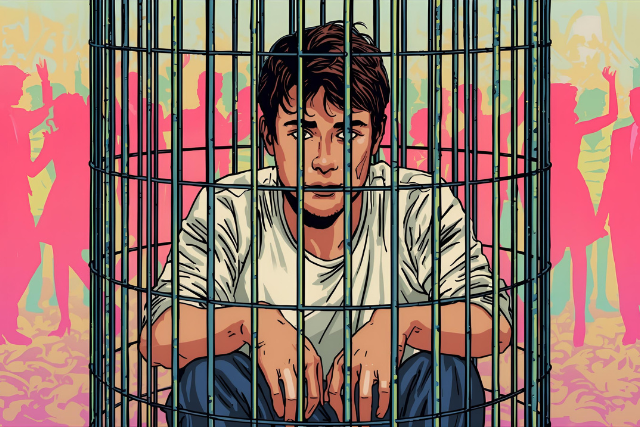
    When I think back on my life, shyness feels like an inner prison I carried with me for years. Not a prison with bars and guards, but a quieter kind—made of hesitation, fear, and silence. It kept me standing still while life moved forward around me.

    One memory stays with me: my eighth-grade dance. The gym was alive with music, kids moving awkwardly but freely on the floor, laughing, bumping into one another, having fun. And there I was in the corner, figuratively stomping paper cups.

    That’s how I remember it—like I was crushing cardboard instead of stepping into life. I can even smile at the image now, but at the time it wasn’t funny. I noticed another girl across the room, also standing alone. She was beautiful. Maybe she was waiting for someone to walk over. But in my mind, she was “out of reach.” My shyness locked me in place, and I never moved.

    It wasn’t a dramatic heartbreak—just another reminder of how many moments slipped by.

    The Pattern of Missed Chances

    That night was only one of many. Over the years I missed far more opportunities than I embraced: the conversations I didn’t start, the invitations I quietly avoided, the women I admired from a distance but never approached.

    Shyness never really served me. I hated it, but it was powerful. I carried it into my adult years, and though I fought hard to loosen its grip, it shaped how I lived and related. Over time I changed; I’d call myself “reserved” now rather than painfully shy. But the shadow is still there.

    Shyness as a Prison

    Shyness isn’t just being quiet. It’s a whole system of fear and self-consciousness: fear in the body, doubt in the mind, and inaction in the world. It feels like safety, but it’s really confinement. It builds walls between you and the very connections you long for.

    I’ve come to see shyness as a kind of “social yips.” Just as an athlete suddenly freezes when overthinking the simplest movement, I froze in moments of connection. I knew what I wanted to do, but my body wouldn’t follow. And like the yips, the more I thought about it, the worse it became. Buddhism later helped me see that the way through wasn’t forcing myself harder but loosening my grip—letting go of self-judgment and stepping into presence.

    Zorba and the Choice to Say Yes

    As I look back, I know not every missed chance would have been good for me. Sometimes the lure of conquest was more about ego than true connection, and saying no spared me mistakes.

    But there’s another kind of moment that still stings. In Zorba the Greek, Kazantzakis has Zorba say, “The worst sin a man can commit is to reject a woman who is beckoning.”

    The point isn’t about conquest—it’s about clinging. If you say yes when life beckons, you can walk away later without wondering forever. You’ve lived it, and it’s complete. But if you turn away, you carry the ghost of what might have been. That ghost clings to you.

    I know that ghost well—the ache of silence, the memory of walking away when I might have stepped forward. Those are the regrets that linger.

    A Buddhist Lens on Shyness

    Buddhism has helped me understand this prison in a new way. The Buddha taught that suffering arises not from life itself but from how we cling to it. My shyness was stitched together from craving, aversion, and delusion.

    The walls of my prison looked solid, but they weren’t. They were only habits of thought.

    Buddhism also teaches dependent origination: everything arises from causes and conditions. My shyness wasn’t my identity. It was the product of temperament, upbringing, culture, and adolescence. If it arose from conditions, it could also fade as conditions changed. It was never “me”—just a pattern I carried.

    And at the heart of it all was attachment to self-image. I was afraid of being judged, of looking foolish, of failing. But meditation taught me that the “self” I was defending was never solid. Thoughts pass, feelings change, identity shifts. When there’s no fixed self to protect, the fear loses its grip.

    Regret Without Clinging

    The memories of shyness still emerge from time to time. They’re not paralyzing anymore—I don’t live locked in that cell—but when they rise, they sting. They make me feel foolish, like a prisoner might feel when looking back on wasted years, replaying choices that can’t be undone.

    What I try to do now is not cling to them. I can see them for what they are: moderately unresolved regrets. They will probably always flicker in my memory. But instead of treating them like permanent failures, I let them pass through. They remind me I am human, that I once hesitated when I longed to act, and that I don’t have to make the same choice now.

    Regret, I’ve learned, can also be a teacher. It shows me what I value most: presence, intimacy, connection. It reminds me not to keep living behind walls of hesitation.

    Buddhism teaches that memory—whether sweet or painful—is something the mind clings to. But the door of the prison has always been unlocked. Freedom comes when we stop pacing the cell and step into the present.

    Saying Yes

    One memory from later in life stands out. I was in my twenties, still shy but trying to push past it. Someone I admired invited me to join a small group heading out after class. Everything in me wanted to retreat, to say no. But that time, I said yes.

    It wasn’t a great romance or life-changing event. We just shared coffee, talked, laughed a little. But what mattered was that I had stepped forward. For once, I wasn’t left haunted by what if. I walked away lighter, without clinging. That small yes gave me a glimpse of freedom.

    I’m still not outgoing. But I am no longer the boy in the corner, stomping cups while everyone else dances. I can step forward, even when my voice shakes. I can risk connection without assuming others are out of reach.

    Shyness may still whisper in my ear, but it no longer holds the keys.

    What I’ve Learned

    • Shyness was my inner prison, but the bars were made of thought, not stone.
    • Not every conquest would have served me—but turning away from true openness creates the sharpest regret.
    • Regret is painful, but it can teach us what matters most.
    • Memories of missed chances still surface, but I don’t have to cling to them.
    • Freedom doesn’t come from rewriting the past, but from choosing differently now.

    I still carry the memory of that eighth-grade dance, the girl across the room, the echo of other missed chances. But I don’t cling to them anymore. They remind me that presence is always possible—because freedom isn’t found in “what if.”

    It’s found in saying yes when life beckons and in stepping out of the prison of hesitation, here and now.

    To anyone reading this who has ever stood in the corner of their own life: the prison you feel around you was never locked. You can step forward, however awkwardly, and find freedom in the present moment.

  • Trapped in Shame: How I Found Mental Freedom After Prison

    Trapped in Shame: How I Found Mental Freedom After Prison

    “If you put shame in a petri dish, it needs three ingredients to grow exponentially: secrecy, silence, and judgment. If you put the same amount of shame in the petri dish and douse it with empathy, it can’t survive.” ~Brené Brown

    I was in two prisons.

    One physical. One mental.

    The physical version was Otisville Federal Prison.

    I was living so out of alignment with who I was and who I wanted to become and self-sabotaged in a colossal way, defrauding one of the largest tech companies in the world.

    My mental prison, my personal hell, was the all-consuming power of shame. Hurting the one I love, disappointing my family, and letting myself down. Ignoring the voice inside that told me not to commit the fraud.

    I believed with all my soul that I destroyed the most extraordinary gift life has to offer us: love.

    I was trapped in my head and couldn’t see a way out or even a reason to try.

    With every ounce of my being, I believed, “I am undeserving of love, happiness, forgiveness, and peace. I destroyed love and will never be worthy of it again. I deserve a lifetime of punishment.”

    This was my prison. This is where I lived, falling further into darkness every day with no end in sight.

    Shame is an insidious disease that lives, breathes, and grows in the darkness. Shame thrives in isolation, separation, and disconnection.

    Shame wants to be alone.

    Unless we do something about it, it will eat us alive from the inside out.

    What do we do with something that lives in the dark? Something that craves isolation, separation, and disconnection?

    We shine a light on it. We shine a light on it by speaking about it. By being open, by having the conversations we’re afraid to have.

    Shame withers and dies in the face of vulnerability.

    When we are vulnerable, not only do we shine a light on our shame, but we also give others permission to do the same.

    When we shine a light on shame, when we are vulnerable and open up, we take the first step out of the darkness.

    And we realize that we are not alone.

    I couldn’t jump headfirst into vulnerability; I was too afraid. But I knew that if I allowed shame to consume me, it would never release its grip on my life.

    How did I get to where I could be vulnerable, open, and share?

    Here are the first three steps I took.

    Accepting Reality

    I spent my days in prison wishing I wasn’t in prison.

    I spent my days wishing I hadn’t made the choices I made that landed me in prison.

    I wished and dreamed for life to be anything other than it was. I was fighting against a past and circumstance that couldn’t be changed.

    I would never have freedom from shame if I continued to fight for what couldn’t be changed. I had to do what I was so afraid to do.

    I had to accept reality.

    I didn’t want to. It felt like giving up; it felt passive. Fighting equals progress. But does it? What was I fighting against? As much as I wish there were, there is no such thing as a time machine Delorean.

    Accepting reality isn’t giving up; it isn’t passive. It was an act of courage for me to say, “I accept that I betrayed myself and chose to commit a crime. I hit the ‘enter’ button, the single keystroke that started it all. I accept I made the choice to continue in the face of the universe screaming at me to stop. I accept that I am in prison. I accept that I hurt the woman I love, my family, my friends….”

    A weight lifted off of me when I wrote that. I wasn’t trapped in the past. I felt something I thought was impossible in prison: freedom.

    Self-Trust

    I lost trust in myself. How could I possibly trust myself when I am the one who did this to himself?

    There is an emptiness that is all-consuming when you don’t trust yourself.

    It’s a horrible feeling.

    One day, scrolling through Twitter, my friend posted, “Surest path to self-confidence I know: making and keeping commitments to ourselves.”

    That struck a chord. My friend walks the walk; this wasn’t just lip service.

    From that one tweet, I committed to facing my biggest fear: public speaking. It took five years, but I eventually delivered a TEDx.

    The TEDx was incredible, no doubt, but there was so much more than that. It created a way of life for me.

    When you make and keep commitments, you change your inner narrative to one that’s empowering.

    You change your story to being a person who TAKES ACTION.

    You build trust because you kept your word to yourself. When we trust ourselves, we have confidence in ourselves.

    When we have confidence in ourselves, we believe in ourselves. We trust ourselves.

    Forgiveness

    Forgiveness is hard. It’s one of the hardest things I’ve done as I’ve rebuilt and reinvented my life.

    I had to forgive myself for the choices that resulted in my arrest by the FBI and my sentence to two years in federal prison and cost me everything: my marriage, my homes, my cars, my sense of self-worth, and my identity.

    I had to forgive myself for planning on killing myself.

    I didn’t think I was worthy of forgiveness. Who was I to let myself off the hook with all the damage I had caused?

    I had to take the first two steps of acccepting reality and cultivating self-trust.

    When I took those first two steps, I understood that forgiving ourselves is one of the biggest acts of love and compassion we can do for ourselves.

    When we forgive ourselves, we demonstrate that we are worthy of love and compassion.

    Forgiveness cultivates our self-trust as well.

    Forgiveness liberates you from a past that cannot be changed. You learn to let go of that baggage weighing you down.

    There’s great freedom when we let go.

    From these three steps, I reached a place where I could be vulnerable and, in turn, walk out of the prison of shame.

    When we own our story, we own our life. When our story owns us, it owns our life.

    Huge difference.

  • When Your Mind Feels Like a Prison and You Zone Out to Escape

    When Your Mind Feels Like a Prison and You Zone Out to Escape

    Mental Prison

    “All the suffering, stress, and addiction comes from not realizing you already are what you are looking for.” ~Jon Kabat-Zinn

    I’m currently obsessed with Orange is the New Black. As a binge TV watcher, I find dramas at least three seasons long and watch them like a prisoner eating a box of contraband donuts. I’m glued to the iPad in every spare moment, while I cook, exercise, or eat.

    Then it’s over. And all I have left are wasted hours and a tidal wave of guilt. I always make the same promise to myself—no more binge watching.

    I punish myself. I cook and eat in silence, avoiding the TV. I put myself into the mental equivalent of solitary confinement, criticizing and shaming myself.

    But always after the punishment, I’m overwhelmed with the most powerful desire to rebel. I inevitably find myself again lost in the beautiful bliss of screen time, obsessed with yet another show.

    I watched the entire 144 episodes of Buffy the Vampire Slayer in a month and a half during one of my worst rebellions.

    Whether it’s TV, alcohol, drugs, or food, most of us use something to escape. We take the edge off, relax, and zone out.

    But at some point, all of this zoning out can start to become hazardous to our mental and physical health.

    I’m addicted to zoning out. Zoning out has trapped me in my own personal mental prison.

    And I want out.

    My Iron Mind

    We get addicted to escaping and zoning out because we create minds worth escaping from. My mental prison is a foggy and grey place.

    The leader of my mind runs a very tight ship, full of strict and unrealistic rules. When I inevitably fail, I punish myself.

    In my former life as a lawyer I remember not letting myself pee until I finished an email, in punishment for surfing the Internet and wasting 0.2 of a billable hour.

    All of this constant punishment and self-criticism then puts me in such a bad place emotionally that the only way out is an escape route. I binge-watch TV, have too many glasses of wine, pot, or an entire German chocolate cake.

    The War on Binge TV

    The war on drugs tried to teach us that the drugs are the problem. We were told that drugs hijack our brain and force addiction.

    But research now proves that it’s actually not the drug’s fault at all. Two different people exposed to the same drug don’t get addicted the same way.

    In other words, your propensity to addiction to anything is directly related to the circumstances you are in—your life.

    When you live in a mental prison full of punishment and internal criticism, for example, you escape to survive. You escape to not go crazy.

    So if you want to stop escaping with food, drugs, alcohol, or OITNB, you must work to make your mind a happier place.

    I must find a way to dissolve my internal prison.

    Your Inner Bubble Wrap

    Now I’m no expert here, obviously. But I have to think that if I created this mental prison, I can let myself out of it.

    First, I have to stop doing what I’m doing—stop this never-ending pattern of punish-rebel-punish-rebel.

    Whatever your pattern is, try this:

    Stop engaging in it. Just accept what has already happened and then cover the whole thing in compassion.

    So when I watch too much TV, for example, engaging with my pattern is to punish myself with a crap ton of guilt and shame, and then escape that criticism by watching more TV.

    Another way to engage with your pattern is to fight with it. Like for me, arguing with my inner critic to plead my case actually gives it more power.

    Inner criticism is particularly mean and tricky. Try too hard to stop criticizing yourself and you will start criticizing yourself for criticizing yourself.

    Instead of fleeing or fighting, just accept what happened and accept yourself in spite of what happened. Like, if you drew a circle around all of the behavior that you accept for yourself, draw a bigger one.

    I like to look right at my inner critic (in my head) and say, “Yea, so what? So what if I watched too much TV?”

    This opens you up to self-compassion. When you accept yourself no matter what you did, you can start to dissolve even the most powerful mental prison-y pattern.

    Next, you need to replace the negative pattern with a positive one. Plant a garden of positive feelings in your mind, like gratitude and joy.

    I like a “grow” analogy because new thoughts and patterns are like little seeds. At first they may seem small, but if we continue to water them and feed them with our attention, they will grow.

    So start finding ways to create a feeling of gratitude and joy.

    Every time you can remember to do it, find something you love about your life and acknowledge it. Most of us think of gratitude as “I’m thankful for mommy and the dog.”

    But gratitude is so much bigger and more powerful than that. Your mission is to cultivate the ability to find gratitude in any given situation.

    Even if the only gratitude you can find is in your breath, find it. Gratitude is about the feeling state that it creates. Gratitude is inextricably tied to joy.

    This process won’t necessarily free you overnight. But it will start to wrap you in mental bubble wrap, protecting you from the guilt, punishment, and shame that lead to your pattern.

    Strive to become the softest place for you to land. Dream of becoming your own most supportive and accepting friend.

    When you can let go of the way you think you must run your mind, you can embrace what is already a perfect system.

    Mental prison image via Shutterstock