Tag: priorities

  • How to Prioritize, Pursue Goals, and Focus When You Have Many Interests

    How to Prioritize, Pursue Goals, and Focus When You Have Many Interests

    Focus

    “A man who limits his interests, limits his life.” ~Vincent Price

    I can’t stay still.

    As a kid, I ran around, misbehaving, climbing everywhere—I was a nightmare for my parents, teachers, and anyone who had to take care of me. One year, my behavior assessment report at school stated: “Leaves a lot to be desired.”

    Through my teenage years, I suddenly quieted down. But my mind didn’t go silent; it still boils inside.

    I crave stimuli. Any time I have a couple of minutes on my own, while waiting in the car or in a queue, for example, I take my phone out and start reading. Or I take notes, whatever keeps my mind busy.

    I have many interests. If I let myself fully indulge in them, I would be all over the place, spread thin like a French pancake.

    Fortunately, I’ve learned to keep them under wraps, like presents that I can open at will. (Although sometimes the wrapping might not hold… I’m only human.)

    I know I’m not alone in my situation. Have you ever asked yourself any of these questions?

    • How can I keep my mind quiet to focus on the one thing that I have to do?
    • How can I stay motivated to pursue one goal and follow through with my plan when I want to do a hundred things?
    • How can I satisfy my many interests with the limited time I have?

    Over time, I’ve learned to deal with these challenges, and fortunately, I’ve found a solution.

    Here is the six-step method I refined over the years. With it, I can indulge in many interests and still stay focused to get things done. It gives me quick results and is highly flexible.

    1. Your must-haves.

    The first step is to define which activities are the most important in your life at this time—activities that stand at the core of the life you want. Examples include: spending time with your family and friends, exercising, reading, listening to music, and traveling.

    Undertakings that are part of your personal growth plan are also important, as they will make you the person you want to become. Examples include: learning new skills, improving your existing ones, starting a side business, and advancing your career.

    All these activities are your must-haves; they are highly important to you and they can have a considerable impact on your life. This is where you will put your full focus.

    Write them all down in a list.

    2. Nice-to-haves.

    Then, decide which other activities you are going to indulge in. What is important for your entertainment or your craving for knowledge? These activities are typically your hobbies, things you love doing like watching movies, playing games, and reading fiction books.

    Write down your nice-to-have activities on a second list.

    3. Clear the clutter.

    Our brain is constantly looking for stimulation. And conveniently, our modern society provides it. It will happily bombard our brain with stimuli through app notifications, endless news, emails, and texts.

    All these stimuli and our relentless quest for instant gratification inevitably bring us to procrastination.

    To get our head out of the water, we have to get rid of the clutter. We need to free time for our must-haves and nice-to-haves. Ask yourself the following questions:

    • What are the activities that you do purely out of habit even though you don’t enjoy them much?
    • What are the things you end up doing because you feel you “should,” even though they are not important to you? (Maybe you’ve been brought up to do them, or peer pressure “compels” you do these things.)
    • What are your typical procrastination activities?

    Here are examples of activities that might typically fall into this category: watching the news, checking Facebook or your email, and watching TV generally.

    Take your time to dig out all these activities and write them down on a third list. This is the list of activities that you should stop doing or do less frequently.

    Keep the list as a reminder in case you catch yourself “wasting” time on these activities.

    4. Get your one-page plan.

    Now that you have your three lists, write down your must-have and nice-to-have activities in a weekly plan.

    Put down the amount of time you will allocate to each of these activities every day or every week; for example: read for thirty minutes every day or exercise for thirty minutes on Tuesday and Thursday.

    Your time allocation for your must-have activities should naturally be more substantial. If you realize this is not the case, you should got back to step 1 and 2 and clarify what is a must-have and what is a nice-to-have.

    5. Track and adjust.

    Now that you have your weekly plan, follow it during a typical week. Try to stick to the time you have allocated for each activity. Then, every day, write down how much time you’ve really spent on all your activities.

    At the weekend, review your week and analyze the data.

    • Did you stick to your plan?
    • Did you spend a lot more time than planned on a couple of activities?
    • Did you manage to clear the clutter, or did you spend time on activities that were not part of the plan?

    Based on your answers to the questions above, make adjustments to your plan for the following week. Allocate more or less time to specific activities where it makes sense.

    Remove activities if you must. Refocus and commit to clearing out the clutter once again.

    6. Experiment, explore, shuffle.

    Your plan is not static. The whole point of the method is to indulge in the activities and topics you’re interested in. So feel free to shuffle your activities around and add new ones at will.

    Explore, try out whatever you fancy, even indulging in cluttering activities to see where it leads you.

    By exploring and experimenting, your will learn more about yourself and what brings you fulfilment.

    You might discover that one activity that you’ve wanted to do for a long time isn’t that exciting and fulfilling once you indulge in it. So you might end up dropping it, with the satisfaction of having tried it out.

    Over time, our interests and goals change; this is why your plan of typical activities will and should be updated on a regular basis, typically once a month.

    Have Fun

    This six-step process might seem pretty regulated, but it doesn’t have to be. Once you’re comfortable with your plan and devoting time to what is important and fulfilling to you, you won’t need to worry about the plan every week. You can then keep your planning to a minimum.

    I am actually not a very keen planner. But the benefits of tracking my daily activities and keeping my mind and life within the bounds I have set for myself overcome the pain of planning.

    A plan keeps you focused and prevents you from feeling overwhelmed by too many activities.

    So I follow a clear weekly plan for my must-haves. In contrast, my nice-to-have activities are more driven by the daily habits I put in place than a strict plan.

    Take ownership of the process and shape it to make it fit within your life. As long as you’re clear on what you want and committed to discovering yourself while trying new activities, feel free to do whatever you please.

    Do what keeps you excited and fulfilled. Have fun!

    Following this six-step system means that I had to drop, at least momentarily, activities that I love in favor of others that are more important to me right now.

    I listen to podcasts in the car for my personal growth, which means I don’t listen to music during my daily commute. I read more non-fiction than fiction books, even though I love fantasy and science fiction. I have reduced the time I spend playing video games, but they are still in my nice-to-have list—I’m a gamer at the core after all!

    In short, I had to make choices. I am happy with the outcome.

    I feel excitement knowing that my activities will keep changing over time. I can enjoy the journey, indulge in my interests, and feed my mind. I don’t feel like I’m missing out.

    The main difference from before is that I’m now in control. I learned to regulate my life to feel more relaxed and focused.

    My mind thanks me. My wife does, too.

    Focus image via Shutterstock

  • How to Start Setting Boundaries and Prioritizing Your Needs

    How to Start Setting Boundaries and Prioritizing Your Needs

    Woman at the Beach

    “You teach people how to treat you by what you allow, what you stop, and what you reinforce.” ~Tony Gaskins

    I highly value being loyal, honest, empathetic, and supportive. I am also partial to advocating for the underdog. As a result, I have historically attempted to be a ‘hero’ in situations of difficulty, tension, conflict, or stress.

    I take pride in being the person who others can turn to for support, guidance, and empathy after an upsetting experience.

    When a friend was going through a troublesome period, I literally dropped everything to race to her and give her a hand. I drove her everywhere when her car was destroyed in an accident. I sat with her in the car for hours each day and listened to her troubles in the driveway when dropping her home.

    I often answered the phone late at night when this friend was having a crisis. I barely spent time with my husband as I tended to her needs, even when our marriage began to show cracks as a result.

    I would fall prey to her criticism and insults when she was distressed and seemingly needed a ‘punching bag,’ or when I didn’t respond as quickly or as perfectly as she desired. I regularly defended her behavior and tried to cheer her up when she questioned her value as a friend, in an attempt to help her feel better.

    I convinced myself that it was a stage that she was going through and that she needed my support—that despite the emotional manipulation and unreasonable expectations—a good friend would stick by her, no matter what. Besides, she was a beautiful person and a wonderful friend in many respects.

    When another friend wanted to provide a quote on a personal project, despite my intuition warning me against mixing friendship with business, I proceeded out of concern that I’d offend him if I did otherwise.

    When he made a number of errors and contradictions, was significantly late with his submission, and quoted a much higher figure than initially indicated, I continued to reinterpret his behavior and make excuses for him.

    Even upon first hearing that he had then proceeded to lie about conversations and events to others, my initial reaction was to defend him and make excuses for how he might have been misled by other influences (when this was very unlikely to be the case).

    When a single friend who liked to frequently sleep with different women who he met at a bar each weekend suddenly got upset by the fact that he hadn’t met his soul mate, I’d regularly open the door to him at three in the morning if he wanted to have a drunk DMC about his life and situation.

    When a man came at my friends and I with a baseball bat in a Melbourne train station, I tried to reason with him and determine why he was so worked up and how I could help deflate that— before my friends dragged me away to safety in disbelief.

    I could provide many more examples of where I have put the needs of others before my own, to the point where I have been hurt or experienced significant difficulty. I bet that if you’re still reading this article, that you can do the same.

    I thought I was being a loyal, giving, and kind person who continuously chose to see the good in people. I took pride in this, and identified with it being a core part of who I was. But then I started to notice a painful pattern.

    My own health, happiness, needs, and desires were continuously neglected. I was so busy helping others that prioritizing my own needs wasn’t possible.

    I implicitly told people that I didn’t have boundaries, so it was understandably a shock to the system when I tried to put them in place at a later date.

    I also demonstrated that I held an impossible expectation for myself to be perfect in a relationship, and people started to hold me to that level of perfection and expect it from me 100% of the time (even when they did not hold their own behavior to anywhere near the same level or quality that they expected from me).

    And what hurt most of all is that I started to notice that people often didn’t do the same for me. They didn’t risk putting their neck out on the chopping board and they certainly didn’t hang around to fight for our relationship when even the slightest bit of difficulty appeared. When I started to better manage my own energy and space, they would ‘dump’ me in a flash.

    I suddenly realized that I needed to change.

    I needed to respect and value myself and my needs more. I needed to make me a priority. I needed to stop being a martyr. I needed to introduce and maintain boundaries.

    I needed to find a way to balance being big-hearted, loyal, and generous with taking care of myself and protecting my own energy and interests.

    It was a difficult period—a period of adjustments and lessons, that are still continuing to a lesser degree. But at the end of the day, my increased emphasis on taking care of myself was not only good for me, but also for the people that truly loved and valued me.

    But how could it be a good thing, you might ask? You lost friends, you suffered, you learned that many people you loved wouldn’t be there to back you up when you needed them. How is that a good thing?

    Please, let me explain. When I ‘lost’ or better managed those who drained energy from me and disregarded perfectly reasonable personal boundaries it:

    • Freed up more time for me to support and enjoy the company of those who did respect, value and cherish me—those who were uplifting and supportive
    • Led to me respecting, valuing, and honoring myself and my own needs more, which allowed me to feel more energized, vibrant, happy, healthy, and ‘on purpose’ than ever before
    • Allowed me to learn more about myself and what I valued in a relationship and to be more cautious about spending time with people who didn’t align with these values
    • Helped me further fine-tune the art of boundary setting, a skill that I believe can impact on your life in so many ways
    • Encouraged others to start treating me with more respect
    • Inspired others to start taking better care of themselves and their needs too
    • Helped me learn how to say no and to ask for help—two valuable skills to have in your internal wellness toolkit

    The above are only examples, of which I am sure there are many more, of the benefits I have experienced from setting boundaries and learning to prioritize myself and my own needs.

    Now this might sound great in theory, but I know from personal experience how difficult it can be to start setting boundaries and to prioritize your own needs, desires, and dreams. Some suggestions to help you get started include:

    1. Begin to take notice of who you spend your time with and how they make you feel.

    Do you enjoy their company? Do they make you feel supported and uplifted? Do they bring you joy? Or do they deflate you? Make you feel bad about yourself and your character? Suck the energy from you? Perhaps it is time to consider how you manage your time with these people in the future.

    2. Take time out to reflect on and identify your own needs, desires, and dreams.

    Do you have a self-care and me-time practice? Do you make time for activities that you enjoy? Do you feel satisfied with your work, home life, health, or other areas that you value? Commit to making a conscious effort to start prioritizing these areas more in your life.

    3. Actively look for ways to make time for you.

    What can you organize or change in your schedule to make this happen? Where can you find efficiencies or introduce systems that will make time for you? Where could you ask for help or delegate work or tasks to free up time? What items can you cull from your to-do list in order to drop some balls and pick up the self-care ball?

    4. Practice saying no.

    Putting a stop to the automatic “yes machine” and learning to say no are vital steps for setting boundaries and learning to place more value on yourself, your time, and your desires.

    Learning to say no can take practice. I suggest that you start with a ‘buying time’ script, where instead of responding with a clear “yes” or “no” straight away, you tell people that you are busy and that you’ll check and get back to them. This buys you time to formulate a more considered response in line with your own needs and desires.

    At the end of the day, please remember that you matter. Your life matters. Your needs and desires matter. And when you take care of yourself, you are in a much better position to be of service to others and the world.

    In finishing, I’d love to leave you with a quote from Dodinsky that sums up one of the main points of this article: “Be there for others, but never leave yourself behind.”

    Woman at the beach image via Shutterstock

  • 5 Questions That Will Help You Focus On What Matters

    5 Questions That Will Help You Focus On What Matters

    Focus on What Matters

    “Tell me, what is it you plan to do with your one wild and precious life?” ~Mary Oliver

    Let’s get things done.

    If you’ve ever read any books or articles about productivity, you’ve heard this phrase. It’s one I used and made a part of my life for a long time. More recently, I’ve discovered there’s a better and more disciplined way to work and to live.

    It’s called essentialism, and it means getting more of the right things done.

    According to Greg McKeown, author of Essentialism: The Disciplined Pursuit of Less, an essentialist removes the trivial and focuses on what adds value.

    They make smart decisions about how to spend their time, energy, and resources because they understand this is the best way of contributing more to the people in their lives, to their families, and to society.

    I’ve discovered five important questions that are helping me make progress toward getting more of the right things done.

    And I want to share them with you.

    1. Is this activity adding value to my life?

    Since I was a child, I played and loved video games. When I was in my mid-twenties, I even reviewed them for a popular entertainment website. The website didn’t pay me, but I didn’t care. I enjoyed gaming, and I was able to keep the games after I wrote my reviews.

    After a year or two of this, I felt a shift in how I approached games. Instead of looking forward to playing the next AAA title or blockbuster release, I began to dread the tedious missions, the walkthroughs, and inevitable write-ups.

    To my great shame, I wrote negative reviews of games I’d only played for an hour or two before selling them.

    One morning, after staying up late gaming the night before, I woke up and realized I was wasting my time and energy on something I didn’t enjoy. I emailed my editor and told him I was done. Then, I sold my games and gave my console to my son.

    I’m not making a case against gaming; instead, I share this story as an example of how we value our time differently as we grow older.

    2. How am I going to fill my glass?

    Consider your entire day a glass:

    You can fill this glass first with important activities, or big rocks, such as spending time with family or working on projects you’re passionate about. Then, you can fill the glass with non-essential activities like answering email or watching television—these are like grains of sand, and they will settle around the big rocks in your day.

    However, if you fill your glass with non-essential activities first, there will be no room left for the big rocks in your day.

    Every night, before I go to bed, I ask myself what I want to fill my glass with?

    My answer is almost always the same: to write.

    Unless I act, these grains of sand will fill my day and leave no room for writing. However, if I make a conscious decision to write, these grains of sand settle around the big rocks in my day.

    I’m not going to lie and say I fit writing into every day, but when I do I feel lighter. And if I write first thing—even if it’s just a journal entry—I don’t have the inevitable moment when I sit on the couch after an exhausting and demanding day and think, “Oh no, I still have to write.”

    If you’re not a writer, you still have big rocks in your life. They could be spending time with a loved one, meditating, or exercising. Your grains of sand could be commitments you’ve made to others that aren’t adding value to your life or passive activities like watching the news or reading social media feeds.

    Decide on your big rocks before you got to bed, and you will wake up and fill your day with what matters.

    3. What clutter can I eliminate?

    Two years ago, I lost a dream job. I was unemployed for six months, and spent a lot of this free time figuring out what matters most to me and reading about minimalism.

    It felt like something I could get into, and when you’re unemployed, you need something to get into.

    Minimalism is another name for essentialism, and the quickest way to get started is to eliminate material goods you don’t use, need, love, or depend on.

    I sold my laptop because I prefer writing using my desktop computer. I donated every book to charity that I promised myself I’d read but had no intention of doing so.

    I got rid of every item of clothing that I hadn’t worn during the past twelve months. And, I deleted almost all of the unwatched films and TV shows on my hard-drive and cancelled subscriptions to various online services.

    Did I do this because I had free time on my hands?

    Perhaps.

    Later on, when I found a job, I thought of buying a new laptop and replacing the clothes I’d given away. But I found I didn’t miss any of these things.

    Eliminating clutter gave me more space, more time, and more room for the big rocks in my life.

    If you want to eliminate some of the clutter in your life, McKeown offers this advice:

    “If I didn’t already own this, how much would I spend to buy it?”

    4. How do I protect myself?

    To be an essentialist is to protect your physical, mental, and spiritual health. Each of these three areas represents one side of a triangle, and if one is under stress, the other two will suffer.

    Here’s how I protect myself:

    To look after my mental health, I expose myself to new ideas through challenging books and record ten ideas every day based on these books. This practice keeps my brain active.

    To look after my physical health, I run up to twenty miles a week. This practice helps me work through stressful problems, and it gives me more energy for other areas of my life.

    To look after my spiritual health, I try to meditate for an hour a week, and I write regular journal entries about what I’m struggling with and things I feel grateful for.

    I find this practice exceptionally difficult, but taking a step back from the trenches of the working week helps me quiet my monkey mind. It helps me sleep better at night. And then I can return to whatever I’m doing with a renewed vigor.

    5. How often do I disconnect?

    Several years ago, I went on vacation to a campsite in Italy. There was no immediately available Internet access at the campsite, and I wasn’t able to check my phone and my feeds or read the news whenever I wanted.

    On the first day of this trip, I felt disconnected and behind. My hands kept reaching for the email app on my phone even though I knew I didn’t have access to the Internet.

    After a day or two this habit died, and I began to enjoy these disconnected few days away from home. I took one lesson home from this holiday.

    Being constantly connected kills my opportunity to escape, to enjoy a vacation, to spend time with the people I’m with and even to focus on my work.

    It’s been a while since I’ve gone a week without email, but I’ve removed the email app from my phone and only check it at predefined periods during the day. I’ve also disabled as many notifications as possible on the devices that I use. And I regularly work without being connected to the Internet.

    If you take regular time out to take care of yourself, you will be better able to focus on what matters

    Live Your Wild and Precious Life

    An essentialist avoids spending their time on tasks they can say no to, on people they should say no to, and on compromises that aren’t worth making.

    They are committed working on what inspires them, on what they’re talented at, and pursuing their contributions to the world.

    I’m still working on becoming an essentialist and eliminating the trivial from my life. It’s a difficult practice and one I fall way from often, but the five questions I’ve shared with you help.

    I know now that anyone can choose to live their wild and precious life the way they want.

    We just have to decide what matters.

  • Finding a Job You Love: 5 Things You Need to Do

    Finding a Job You Love: 5 Things You Need to Do

    “Choose a job you love, and you will never have to work a day in your life.” ~Confucius

    I once worked for a big international consultancy firm (okay, it’s McKinsey, don’t tell anyone) and hated it.

    Everyone told me how lucky I was to have that job. They went on and on about how prestigious it was, how I got to travel the world, work with executives on the big topics, and hang out with brilliant colleagues.

    As much as all of that is true, I still hated the job. Not because of McKinsey, but because of me.

    It might be a dream job for a lot of people, but it surely wasn’t for me. It was a nightmare, and in the end I couldn’t sleep anymore (at which point a nightmare in the literal meaning of the word started to seem very attractive to me).

    Have you ever gone without sleep for days? If you have, then you know that it’s not sustainable for very long. After four days I was a zombie, and a miserable one at that.

    I was on the verge of a breakdown, and I knew that something needed to change. In hindsight, it was so obvious what that “something” was—but back then, twelve years ago, I had totally lost my way.

    Fortunately, I finally gathered up enough courage (or desperation) to pick up the phone and call my HR manager. I quit, and then I went to bed and slept like a baby for twenty hours straight.

    Two months later I had landed a job that I genuinely could love, and two years later I was running my own company.

    Since then my co-founders and I have grown our company to 200 employees, with offices in London, Berlin, and Copenhagen. More importantly, I am able to have fun, learn at a fast pace, and maintain a great work/life balance even from day one.

    From these two contrasting experiences I have learned five lessons that I use to keep myself on the right track, and that might be useful for you too:

    1. Don’t settle.

    It’s so easy to fall victim to the idea that we should be grateful just to have a job, especially in times where the economy is bad. As much as I am a fan of gratitude, if your job is not making you happy then it’s not the right thing for you to be spending 50% or more of your waking hours doing. Period.

    Of course, we can all have moments of doubt and bad days—congratulations for being human! But if you dread going to work more often than not, then it’s time to connect to your inner strength and creativity to move on to a new mission.

    2. Be courageous.

    I recently came across a happiness study that showed a positive correlation between courage and happiness.

    At first that seemed a bit odd to me. But then I understood: brave people get more out of their lives because they dare to break out, let go of their past, and embrace the unknown. They grow more, learn more, and live more intensely. Thus, they are happier.

    Since this realization, every time I get fearful, I ask myself, is this a happiness enhancer in disguise?

    Of course, sometimes courage comes in the form of non-action. Staying where you are even if it is difficult is also courageous. Only you can distinguish the difference between growing and fleeing.

    Statistically, most of us are biased toward the non-action end of the spectrum, so it makes sense to contemplate if we are staying put (in a job, in a relationship, in a city) because we are brave or because we are afraid.

    3. Follow the “One-Year Rule.”

    Let’s say that you have realized that you need to move on in your life, and that you are courageous enough to act on it. Good for you! However, sometimes you will find that you are actually stuck.

    Maybe you really need your paycheck at the end of each month. You may even have children to provide for. What do you do then?

    The One-Year Rule goes like this: make a plan and a firm commitment to yourself that one year from now, you will have sorted out your problems and be in a much better place. With planning, creativity, and patience, most things are possible.

    4. Live your priorities.

    More than once, you have probably listened to someone go on about how their children are their number one priority, or how they value good health. Then you wondered if their actions were really in line with these beliefs. Worse yet, sometimes we have been that person.

    When we say that our daughter or son means everything to us, then that statement needs to be backed by recognizable action. This could mean picking up your child early from kindergarten and being present while you play with Legos together.

    Maybe your priorities are very different from mine, and that’s fine too. The point is that we each need to be clear on what’s important to us and then live according to that blueprint. Otherwise, we end up with regret and low self-respect.

    For me, working at McKinsey wasn’t the right thing to do because that required me to be an always-on type of guy. I needed a job where I had much more freedom—that was my priority.

    5. Don’t believe the naysayers.

    It’s amazing how many well-intended friends, family members, and colleagues are more than willing to tell us when our ideas, visions, or plans are unrealistic. They tell us that we should rather be grateful for what we have, whether it’s a job, a spouse, or something else.

    Our parents can especially be a strong source of our self-doubt; parents are inherently risk-averse on behalf of their children. That’s fine, but we, their children, shouldn’t pay too much attention to that.

    My dad thought it was the silliest thing that I wanted to write a book. “There are so many books out there already,” he said. “Shouldn’t you rather focus on your business?” I didn’t listen and I am happy about that. What advice from your friends and family should you make sure to avoid?

    Here’s a tip: the next time someone is projecting their own fears and limitations on you, imagine a huge trash bin between you—and visualize all their words slipping into that bin, before they even reach you.

    Don’t be upset with other people; they are allowed to have their own beliefs and opinions. Just remember it has nothing to do with you, even when they claim it does.

    If you follow these five simple rules, I believe that work can become much more of a gift in your life rather than an obligation.

    It certainly worked for me, and I am by no means unique (or we all are). You deserve a job you truly love—and if you haven’t found it already, it’s probably out there looking for you.

  • 4 Tips to Live a Balanced, Happy Life with Fewer Regrets

    4 Tips to Live a Balanced, Happy Life with Fewer Regrets

    Life Balance

    “Happiness is not a matter of intensity but of balance and order and rhythm and harmony.” ~Thomas Merton

    Balance has become an ever-elusive thing these days. The onslaught of technological breakthroughs, aimed at making life easier, has given way to a societal expectation that we are available around the clock.

    This has bled into our careers, where our employers have ever increasing expectations that we can do more in less time. We have 168 hours in our week to sleep, work, rest, be with our loved ones, and pursue personal interests.

    Unfortunately, the majority of people in the world today complain that they aren’t able to keep up with the competing commitments that steal much of their precious time.

    It’s no longer enough to contemplate how this happened and talk about the “good ole days” when life was easier and the days were longer.

    We need to identify what balance looks like for us (as it differs from person to person), work on regaining some of our time, and find more balance so we can truly show up and be present in all the different areas of our lives.

    My wake-up call about my imbalanced life came when I lost my best friend to suicide a few years ago.

    When you experience a sudden loss of this magnitude, you most certainly find yourself in a place of deep contemplation and restructuring. I recognized my own mortality in a way I hadn’t before.

    As a result, I had to do some housekeeping in order to get my life “up to snuff,” so I took an honest and meaningful inventory of all the different parts of my life.

    I looked at the people I was spending my time with, the activities I engaged in, and the places I dwelled. I asked myself if these people, activities, and places were feeding my soul, supporting my journey, and providing love and support.

    It was through this inventory I realized how out of balance my life was. It’s also how I came up with the action plan I am sharing with you now

    1. Start with a values inventory.

    You want to sit down, grab a pen and a piece of paper, and list all of the values that are important to you. You’ll also want to put them in order of importance.

    Some of my top life values include happiness, love, fellowship, integrity, and spirituality. It’s important to note that your top values are defined only by you and carry their own power and placement in your life.

    For example, I define spirituality as my connection to, and relationship with, the source of all things. I honor that value through daily meditation, prayer, and my efforts to make the world a better place through my work and my charity fund. I also honor that value by ensuring I live a life full of generosity, gratitude, respect, and compassion.

    2. Look at your life domains and identify the imbalances present in each area.

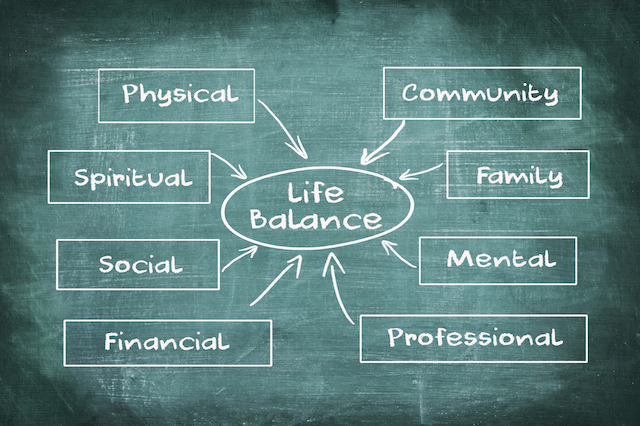
    When I speak about life domains, I’m talking about self, career, relationships, and community.

    Self: This domain includes you, your time, your interests, and your self-care.

    Career: This domain speaks to your current job and your employer.

    Relationships: This domain speaks to your loved ones, both friends and family.

    Community: This domain speaks to your participation in your local community (volunteer work, belonging to a religious or spiritual institution, coaching your child’s little league team, etc.)

    Again, you want to grab a pen and a piece of paper. For each of your four life domains, identify what the ideal balance would be. Be detailed in your description of each life domain.

    For example, in the relationships domain, identify those people you would want to see on a regular basis. What frequency would you like to see them and under what circumstances? What would you need to do in order to make that happen?

    You should also weave in your top values to better understand how they should support your efforts in each life domain.

    For example, I would talk about the importance of my value around love and how it plays out in the relationship domain. I would write about my choice to surround myself only with kind, loving people who support me and I support in return.

    The goal here is to create an ideal vision of balance in each domain.

    3. Write about the current status of each life domain.

    If your life domains are imbalanced, write down the details surrounding the imbalances and what you’ll need to do to get them in alignment.

    For example, if your career domain is imbalanced because you’re working too many hours for a demanding supervisor, think about the steps you’ll need to take to regain your balance.

    Maybe it’s talking to your boss about getting you some help or working fewer hours. If your work environment isn’t conducive with this type of dialogue, maybe looking for a better job is a consideration.

    If some of your life domains are in balance, write about the steps you are committing to in order to prevent them from being compromised. It’s important to be clear on your approach to living, and maintaining, a balanced life.

    4. Begin implementing the changes you want to see in a realistic and bite size manner.

    You want to focus on one domain at a time, and tackle one change at time. Pick a domain and implement your first change.

    Once you have grown comfortable with this change and it is now part of your “new normal,” you can move on to the next change.

    When you have implemented all of the changes in your first domain, and reached the balance you desire, you can move to the next domain. I would suggest starting with the easiest changes first.

    Start to build momentum with the changes that will help you create more balance right away. Maybe that’s turning off your work computer at 8:00 every night so you can be with your family, eating healthier, or committing to visiting your parents every Sunday morning.

    These are small changes that can have a big impact on your life!

    At the end of the day, this is all about you living a regret-free existence. Later in life, you don’t want to look back and feel regret for neglecting certain parts of your life (children, health, career aspirations, etc.) because you didn’t take the steps necessary to make things better.

    Balance isn’t easy to achieve, but it is well worth the effort. Make a commitment to find your balance today!

    Life balance image via Shutterstock
  • Knowing What Matters to You Instead of Living by Default

    Knowing What Matters to You Instead of Living by Default

    Happy Family

    “It’s not enough to be busy; so are the ants. The question is: what are we busy about?” ~Henry David Thoreau

    If you are like most people reading this, I bet that you are very busy. We are all very busy. In fact, some of us even like to brag about just how busy we are. But are you busy doing the things that really matter to you?

    There was a time when my life when I was busy. I was focused on my career, spending a lot of time at work, and enjoying the fruits of my labor.

    This was okay for a while, but after months and months of working seventy hour weeks, it became a struggle for me to just make it through the day. I began to wish that things would slow down enough for me to be able to enjoy life.

    Maybe you have been there too. Maybe you are experiencing this right now. You wish that your life would slow down so that you can enjoy the things that really matter to you.

    In my case, I forced myself to keep going, and everything was fine for a while. Then one day I woke up with a sore throat.

    I felt a stabbing pain every time that I tried to swallow, and I decided to take the day off and visit the doctor. The doctor told me that I had an abscess in one of my tonsils, and he had me immediately admitted to the hospital.

    Later that day the abscess broke and the infection surrounded my heart. I was so sick that my doctors didn’t think that I would make it through the day.

    Have you ever been told that you might not make it through the day? It is not a good place to be in life, but it does make you think about what really matters.

    When you are lying in a hospital bed, and you don’t know if you are going to live or die, you spend a lot of time thinking about what is really important in life.

    If you are like me, you will discover that it is not your job, or your money, or the things in your life. It is your health, and your relationships with the people who matter the most to you.

    I am sharing my story with you today because I don’t want you to experience what happened to me. I want you to spend your time on the things that matter most to you before it is too late. I want you to decide what is important to you, and create a plan to get there.

    Here are four tips that helped me, and they can also help you to begin to focus on what matter most:

    Determine your priorities.

    Think about what you want most out of life. What were you created for? What is your mission in life? What is your passion? You were put on this earth for a reason, and knowing that reason will help you determine your priorities.

    I spent a total of four months in the hospital healing from my sickness. During that time I spent a lot of time thinking about my purpose in life. I discovered that my purpose is to help you change your lives by learning to focus on what matters most to you.

    Create a plan.

    Create a plan to get from where you are today to where you want to be. Maybe you need a new job. Maybe you need to go back to school. Maybe you need to deal with some relationship issues. Whatever it is, create a plan that will get you to where you want to be.

    While I was in the hospital, I began to draft my life plan. My plan guides all of my actions, helps me focus on my relationships with my wife and daughter, and helps me keep working toward my life purpose. A life plan will help you focus your life too.

    Focus on now.

    Stop multitasking and focus on one thing at a time. It may be a project at work. It may be a conversation with your best friend. It may just be the book that you have wanted to read for months. The key is to focus on one thing at a time.

    I plan each day the night before by picking the three most important tasks from my to-do list. In the morning I focus on each one of these task individually until they are completed. Once I complete these three tasks I move on to checking email, returning phone calls, etc.

    Just say no.

    We all have too much to do and too little time. The only way that you are going to find the time for the things that really matter is to say no to the things that don’t.

    I use my purpose and life plan to make decisions about the projects and tasks that I say yes to. If a project or task is not aligned with my purpose, a good fit with my life plan, and something that I have time to accomplish, I say no to the project. Saying no to good opportunities gives you time to focus on the best opportunities.

    Research tells us that 97% of people are living their life by default and not by design. They don’t know where their life is headed, and don’t have a plan for what they want to accomplish in life.

    These steps will help you too decide what matters most to you. They will help you to begin living your life by design and not by default. Most importantly, they will help you to create a life focused on what really matters to you.

    Let me end by asking, “What really matters most to you?”

    Happy family image via Shutterstock

  • Today Can Be the Day You Turn Things Around

    Today Can Be the Day You Turn Things Around

    Sad Man

    “In chaos, there is fertility.” ~Anais Nin

    How did I get to this point?

    This question pulsed through my brain repeatedly as I drove to my parents’ house in a state of complete exhaustion. My young daughter was strapped in the back seat, my pregnant belly pushing against the steering wheel, hot tears streaming down my face.

    I was done. I had nothing left to give. How did I get here?

    Gradually, then suddenly.

    With eternal gratitude to Hemingway, three simple words so elegantly summarize how I ended up in a situation I didn’t want or expect.

    “How did you go bankrupt?”

    “Gradually, then suddenly.”

    ~Ernest Hemingway (The Sun Also Rises)

    It happened so gradually, almost imperceptibly. And then suddenly, unequivocally, shockingly, I had suffered an emotional breakdown.

    Looking back, I can see that I had willingly immersed myself in anxiety, perfectionism, comparisons, sleep-deprivation, a lack of mindfulness, poor health, and the idea that I deserved more from life.

    Gradually, these things took their toll. Until suddenly I found myself in a dark and frightening place.

    This gradual, then sudden decline is not reserved for dramatic breakdowns. It’s not reserved for high-achievers, or emotionally sensitive people.

    We each face sudden declines. Moments where we realize what we’ve been neglecting, treating poorly, or taking for granted. It could be our:

    Health – the moment we step on the scales, try to walk three flights of stairs, or look at a recent photo.

    Addictions – the moment we realize we cannot cut ties to a substance, an emotion, or a person.

    Debt – the moment we are brave enough to look at our credit card statement, answer the debt collector’s phone call, or realize we’re living beyond our means.

    Clutter – the moment we realize how materialistic we’ve become, how much money has been spent on stuff, or how entitled our children are.

    Time – the moment we realize we’ve watched more than sixty days worth of television in a year, the months are passing with little to show for it, or the reflection in the mirror is ten years older than we remember.

    Relationships – the moment we realize we haven’t spoken to our best friend in months, seen our grandmother since Christmas, or played CandyLand with our kids.

    Either we’ve stopped paying attention to what’s important, or we’ve decided that not knowing the truth of our situation is preferable to seeing the reality.

    Unfortunately for us, there will come a moment when things snap back into focus. And that moment will build gradually and arrive suddenly, leaving us reeling.

    Turn It Around by Embracing What Matters

    Just like the decline, the ascent will be gradual.

    When my husband picked me up from my parents’ house that evening three years ago, we drove home in silence. Our daughter was sleeping peacefully in the back seat and I felt relief. That night’s rest was the first uninterrupted sleep I’d had in years.

    Over the years, I have turned things around. I am happier, healthier, more engaged, and more content than I have ever been.

    As I realized my life had been one big, precarious balancing act, I began to see what was and was not important.

    Establish Priorities

    I took the time to work out what truly mattered. Once I removed the expectations, the comparisons and the thought that I “deserved more from life” it was quite simple to see what my priorities were.

    My husband and children, love, creativity, health, spirituality, joy and beauty. And importantly, making the time, space, and energy to experience each of these fully.

    Your priorities are likely very different to mine. But ask yourself, “If I took away the expectations, comparisons, and entitlement, what would be most important to me? Where do my priorities lie?”

    Embrace Mindfulness

    Initially, embracing mindfulness and really engaging with my family, friends, and work was terrifying. What if I was lacking? What if I didn’t like what I saw? What if they didn’t like what they saw?

    Over time I discovered there is so much more to experience in life by practicing mindfulness. Taking the time to engage in fierce and real conversations, to notice the exact shade of lavender in a sunset, to be completely in the moment. There is depth and joy right there.

    Care for Your Self

    I long neglected my own health—both physical and mental. But as I started my ascent I began to see huge benefits to time spent on myself.

    Counselling, time spent alone, eating clean foods, drinking less alcohol, sleeping more, exercising regularly, rising early—these changes all assisted my ascent.

    When you are unwell or in poor health, you can’t fully engage with those people and things that matter .Too much of your energy will go towards simply getting through the day. So ask yourself, “What is one thing I can change today that will help improve my health?”

    Find Contentment

    Learning to be content with my circumstance has helped me live a far more meaningful life since my breakdown. Finding contentment has brought peace and gratitude and happiness, where for years there had been none.

    I no longer feel like I deserve more from life. I know I can work towards goals and dreams—and I do, every day—but I no longer feel entitled to them. It’s incredibly liberating.

    If you can find contentment in life where you are right now, the pressure, the anxiety, and the stress of needing to be more simply disappears, leaving you free to actually pursue your goals and dreams from a place of peace and acceptance.

    Is Today the Day?

    Is today the day you turn things around? Or will you wait for the sudden realization that you have arrived at a place you didn’t want or expect to be?

    The beauty of it is, you don’t have to wait—you can choose to turn it around today.

    Photo here

  • A 6-Step Daily Ritual to Create the Future and Enjoy the Present

    A 6-Step Daily Ritual to Create the Future and Enjoy the Present

    Happy

    “What you do today is important, because you are exchanging a day of your life for it.” ~Unknown

    I have always loved to-do lists. It gives me joy to plan my day in advance. Lists give me an overview, focus, and I simply love crossing things off.

    Things changed when I became self-employed. My to-do list behavior turned from a supportive tool into an instrument of self-imposed pressure.

    I felt that being self-employed meant that I had to work very hard to make things happen. The lists became longer and longer, at least fifteen big items per day.

    As a result, it became nearly impossible to finish all the tasks on my list in one day. And as a result of that, I was not happy with my daily progress.

    Even doing half the things on my list was not good enough. All I could think of were the things I had not managed to do.

    My focus shifted from the positive to the negative, from where I was to where I desperately wanted to be. I was not in the now. I was always one impossible to-do list away from being happy with where I was.

    I felt grumpy, did not want to speak frankly of how things were really going, and was constantly putting myself under pressure. I felt that I had to prove myself. Prove to the world that I could be successful.

    So I tried a bunch of different things.

    Among them, I tried living without to-do lists altogether and just going with the flow. I know people who are able to do that and I really admire them.

    This did not work out for me. Instead, I shifted the to-do lists from paper into my head, which is a much messier place. So rather than just coping with an impossible list, I was also trying to memorize all the items. Not a good idea.

    Then I tried working with weekly to-do lists because this would allow me to spread things out and give me more freedom to allocate tasks, according to how my day was going and how I felt.

    Doing this eased things up a bit, but the lists just became even longer so I was still feeling that sense of pressure. I hardly granted myself time off, and all my focus was in the future.

    I never got out of bed motivated to do the things on my list, because the sheer bulk brought me down. I was actually stressed before the day had even started.

    I did not realize that the one who had to believe in myself was me, not everybody else. My to-do list was full of things that I felt I had to have in order to be successful: A running blog, a great website, a list of followers, paying clients.

    This was a reflection of my forward focus, the notion that “things will be great in the mysterious land of tomorrow.” It all came from a sense of not being good enough now.

    I was dedicating my focus to a place I was not even ready for yet. I was confusing growth and improvement with what it looks like when you are successful, and I was not doing the work that mattered: the internal work.

    Once I started doing the internal work I realized that the best way to get forward is to be happy in the now.

    So, I developed my own little ritual. I now do this consistently and make it a point not to check my phone or turn on my computer before doing this morning ritual.

    It has changed the way I perceive work. I am more excited and in tune with myself, moving at a comfortable pace.

    Here it is. Maybe it serves you too:

    1. Be grateful.

    I start my day by giving thanks to where I am now, for all the wonderful things that have happened that transported me to this beautiful time and place called the present.

    2. Take your time.

    I make myself a big pot of tea, sit down in my favorite spot, and snuggle up with my dog. I just give myself time to greet the day, to breathe, and to feel.

    3. Connect with your vision.

    Before, thinking about the future meant thinking about all the things I do not yet have or do. Connecting with my vision is different.

    It means envisioning a world much bigger than myself. My vision guides what I do today. If today is a step, my vision is the direction in which I take that step.

    4. Choose a theme.

    Each day, I choose a theme that feels right. It reflects how I want to feel and what I want to accomplish. It can be anything, long or short, specific or general. “Today is all about…”

    5. Find your three priorities.

    Research shows that you can only do three to five meaningful things per day. I feel comfortable picking three and leaving enough space for magic to happen.

    6. Assign celebrations.

    Since I tend to gloss over my accomplishments after five happy minutes and move on to the next thing to do, I now assign a celebration to each of my three priorities. A celebration can be anything you love, big or small. It can be a walk in nature, a drink with a friend, a manicure, or reading a chapter in an inspiring book.

    I hope this ritual inspires you. If you try it out and like it, I’d love to hear how it goes!

    Photo by IchSapphire

  • Live a Life You Love: 5 Steps to Set Your Priorities Straight

    Live a Life You Love: 5 Steps to Set Your Priorities Straight

    Happy

    “It’s not enough to be busy; so are the ants. The question is: what are we busy about?” ~Henry David Thoreau

    About a month ago I decided to add more at-home exercise to my schedule.

    Since I found out that sitting for multiple hours a day can increase our heart attack risk by fifty-four percent, I have figured out that the more movement I add to my life, the better for my longevity.

    Being vital and living a long life are important to me, so making the decision to add more exercise was easy.

    Yet, my plan did not work out quite well. Even though I aimed to add twenty minutes of home exercise a few days a week, I am not doing it more than once a week.

    I could not help it but ask myself why I am not following through.

    If there is an area in your life where you have not been following through and you are like me, then you have probably made the same mistake. You have confused the important stuff with the urgent stuff. 

    You are being busy.

    Countless things demand your attention, now.

    • Your phone just buzzed because you were tagged in a photo on Facebook.
    • You have a deadline at work tomorrow.
    • You must prepare lunches for your kids.
    • You must pay that bill because it’s due today.

    The stuff that you devote most of your time to on a daily basis is urgent. It must be done today. You cannot postpone them for tomorrow, or at least, it feels like that.

    The result? You clear out the important stuff to make time for the urgent. But you didn’t do that consciously. It just…happened.

    You let the urgent stuff take control of your time and your life.

    • And you get fat.
    • Your parents complain that you are not as close.
    • Your kids are growing up—without you.

    You are sensing something is wrong, but you are not sure what it is. (more…)

  • 3 Tips to Be Happier in Work and in Life

    3 Tips to Be Happier in Work and in Life

    “It isn’t our position but our disposition that makes us happy” ~Unknown

    I am just winding down from a business trip that has been both trying and inspiring at the same time. I’ve recently been put into a role to manage a department in a functionality I know nothing about, working with people I’ve barely met, and changing a formerly toxic environment.

    To say the least, I have a challenge ahead of me. Now six months into the position, I took my direct reports to breakfast and told them the sole purpose was for them to give feedback on how things have been going since the reorganization.

    During coffee, the responses were a flat “Everything’s fine”; by the last bite of my pancake, I had learned that both employees were frustrated—one feeling underutilized and the other having trouble balancing the “working manager” role.

    I had a lot of feedback to absorb, and it was very clear that there were items that needed to be addressed right away in order to ease frustration and point them in the right direction. At the same time, some of the comments and feedback needed to be dealt with some very honest directives.

    I spent the rest of the day and three hours in the middle of the night dwelling on what and how to address the main points that needed resolution.

    During those three mid-night hours, I finally worked through what to address and how to address it.  Then I had an epiphany.

    Having struggled to be truly happy most of my life, specifically with the pressure and expectations of my new professional role, I realized that the three items I would be preaching to my employees could be directly applied to my own personal life for the same purpose of easing frustration and moving in the right direction—being happy.

    How could I set these expectations for my own employees and hold them accountable and not do the same for myself? I knew the three points I would emphasize with them should also be emphasized in my own life. If I was going to hold them accountable, I was going to hold myself accountable too. (more…)

  • Determine What Will Make You Happy by Identifying Your Values

    Determine What Will Make You Happy by Identifying Your Values

    Happy

    Happiness is that state of consciousness which proceeds from the achievement of one’s values.” ~Ayn Rand

    For too many years, I played the part of the perfect little southern girl: I kept my mouth shut and my opinions to myself. I dressed properly, including panty hose, slips, and girdles. I didn’t laugh too loudly in public. I did what I was told.

    You see, I learned at an early age that I had to do this in order to always be seen as a “good little girl” (and avoid getting punished). I continued the same behavior after I got married, doing what my husband expected of me and keeping up the appearances of a perfect life behind a white picket fence.

    I was a mental and emotional chameleon, changing my viewpoints and values to match first those of my parents and then those of my husband. Secretly, inside myself, I had my own dreams and opinions, ideas, and desires. Eventually I realized that in order to be happy, I needed to learn to live outside the box of my upbringing.

    When I began to explore my heart’s desires, to find myself through travel, and to see what felt right and wrong to my heart and soul, my life blossomed. I had finally begun creating a life that I loved on my own terms.  

    Last fall, one of my mentors asked me, “What are your values?” I have to confess that I was stumped. Those on-the-surface questions are really much deeper than they first seem. I’m a coach. I’m a writer. I’m a thinker. It should be easy to answer.

    From experience, I knew that if my first response to a question was “I don’t know,” then I was telling myself a little white lie. Somewhere within my heart was the answer, but I hadn’t really explored it.

    What Are Values?

    We all have them—they are as ingrained within us as our blood types or preference for sweet or salty foods. But have you actually defined them? I’m not talking about morals, which are defined by society.

    Values are who you are, not who you think you should be in order to fit in.  (more…)

  • How to Create the Life You Want Using Anchors

    How to Create the Life You Want Using Anchors

    “Put your future in good hands—your own.” ~Unknown

    They say that in life, we are never given more than we can handle.

    But sometimes it’s a matter of not accepting more than we can handle. Putting your foot down. Proclaiming, “That’s enough!”

    Recently, a number of stressors confronted me simultaneously. This jolted me out of my comfort zone and forced me to take action toward transforming my life.

    On one fateful Tuesday, I felt so much pressure from the culmination of professional demands, relational conflicts, parenting duties, and financial stressors that I found myself at a familiar crossroads. I felt pulled in a million different directions, with no clear idea of where to go next.

    I was tired of feeling like I was at the mercy of so many external influences.

    The familiar situation always presented me with the following options: find a temporary fix for all of these issues and continue reliving a veritable “Groundhog’s Day” of an existence, or commit to a plan of change and take action.

    This time, I chose action.

    I proclaimed, “That’s enough!”

    Thus commenced “The Anchor Project.”

    “The Anchor Project” is a way of clarifying the primary values for your life, and strengthening them by taking consistent, manageable steps to focus on the life you want and minimize the impact of external factors.

    I began to list the things I wanted in life. I removed all extraneous or superficial goals from this list, and decided to stick with the core values that I considered to be essential.

    I realized that many “goals” were distracting me from obtaining the things I really wanted out of life. So things like, “Run a 5K in under 27 minutes” did not make the cut.

    I didn’t need more on my “to-do” list. I needed transformation.

    I found that there were four primary focus areas that I wanted to improve. These are the non-negotiables in my life, the things that keep me grounded and fulfilled.

    I call them “anchors” because anchors provide stability and security, even in rough seas.

    Once I identified what my anchors were, I began to build on them and fortify them by listing all activities or experiences that might constitute each one. (more…)

  • On Learning to Set Priorities

    On Learning to Set Priorities

     Apple Tree

    Living with the immediacy of death helps you sort out your priorities in life. It helps you to live a less trivial life.” ~Sogyal Rinpoche

    Sitting in the ICU waiting rooms during recent months waiting to visit Mama, my life slowed down more than I can remember in recent memory. I had a lot of time to think about what I’ve done with my life in recent years.

    Many things that seemed important at the time all of sudden seemed trivial. I realized how much my life had gotten out of control. I wasn’t a drug addict or alcoholic, but I had wasted many opportunities.

    Sitting in the hospitals, I met parents whose children would probably die soon. Mama was transferred to another hospital before I found out. I met a woman whose husband was close to dying but made sure she spent every moment with him. I met families gathered during hard times.

    Sometime between the visitation periods, I realized I won’t ever accomplish what I want in life if I didn’t change course. I have tried to do everything at full throttle at the same time. Focusing on too many projects at one time worked for a while but things seemed to fall break down on me. (more…)