Tag: pretending

  • Why I’d Rather Be Vulnerable with People Than Pretend I’m Perfect

    Why I’d Rather Be Vulnerable with People Than Pretend I’m Perfect

    “Give up being perfect, for being authentic. Give up the need to be perfect, for the opportunity to be authentic. Be who you are. Love who you are. Others will too.” ~Hal Elrod

    I’m not perfect. Not that this would come as any kind of surprise to anyone who knows me. But I often feel pushed in the direction of trying to represent myself as someone who has it all together. Especially because of the nature of my work as a coach and facilitator. What about you? Do you ever feel like you’re putting on a show for others?

    The more I find myself trying to represent a perfectly put-together person, the less confident I feel in who I am because I know I am being inauthentic. It’s a big part of what took me off social media a few years ago.

    I don’t like that social media has the ability to mold what you think about yourself by way of comparison and encourage posturing. It’s a slippery slope, as we’re hardwired to yearn for love and connection as part of our survival. For me, it didn’t feel like the kinda place I wanted my love and connection to come from.

    Having the ability to talk about our flaws, what’s going wrong in our lives and where we’re getting stuck, is a huge part of human evolution that we often forget about. If we don’t have an environment to talk about our vulnerabilities, the wounds never get a chance to heal.

    Before getting into therapy, my life was a bloody mess because I pretended like these wounds didn’t exist.

    I don’t remember a period in my life without depression. Even as a teen it followed me around like a shadow.

    I believed the world would be better without me. I felt worthless—like I shouldn’t even have a seat at the table with other humans. I should have been in an alley eating scraps of food with sewer rats. No matter what I did or how hard I tried, the shadow mocked me for dreaming of a better future. My unwillingness to unpack those thoughts meant the infection spread to all areas of my life.

    I grew up in the nineties, when no one was talking about mental health. You struggled in silence.

    I battled demons in high school. I only lasted till eleventh grade before dropping out. I couldn’t stand the thought of spending another day being somewhere that made my life hell—but really, hell was inside me.

    The voice inside my head was (and still is at times) vicious. Every day it was like the Vikings raided and settled into my thoughts to destroy my existence. Those thoughts have left scars that would look like battle wounds of lobbed-off arms if you could see them.

    The voice inside my head was a reminder that I sure as hell would never do anything my parents would be proud of. It was easier to do nothing so that nothing was expected of me. I didn’t feel stupid if I didn’t try, so it made my reality an easier pill to swallow.

    I did graduate and made my way to university, but my life became increasingly dysfunctional. My love for being black-out drunk on Sailor Jerry rum became the perfect way to cope with a chaotic mind I didn’t understand.

    This comes back to not treating open wounds. Everything I resisted continue to persist.

    I had next to no insight into what I was going through because I wasn’t willing to share that I was struggling.

    At the time, my problems took on the weight of the world because I didn’t let people stand by my side to support me. I burned through relationships like a brushfire. I had no idea how to be in an open and communicative relationship because I barely had a relationship with myself.

    Once the wounds became visible through therapy, I could stop the infection from poisoning my ability to think and function. Vulnerability saved my life. I have no doubt that if I didn’t get that support, I would not be here today.

    We forget that our survival depends on being vulnerable. Author Brad Stulberg talks about this in his book, The Practice of Groundedness. He writes, “Our ancestors who survived weren’t those who were the strongest by traditional measures, but those who were most effectively able to share their weaknesses with one another and work together to overcome them.”

    If I didn’t share what I’ve been through, would you still be reading this? Probably not. It would be just another fluff piece on embracing your vulnerability.

    Without openness, there is no love and connection.

    Without openness, you and I wouldn’t be sharing this moment.

    Without openness, you and I can’t heal and grow together.

    The idea of being vulnerable scares the sh*t out of most of us. No one wants to be perceived as weak or admit they have flaws. We’re afraid that the lions of the world will sense our weaknesses and pick us off one by one.

    Except I’ve never actually been mauled by a wild animal when I’ve asked for help, or taken responsibility for a mistake. It’s actually had the opposite effect. Through my writing and vulnerability, I’ve connected with people on every continent of earth.

    It becomes impossible for me to pretend my vulnerabilities are mine alone if people from all over the world have said I’ve captured what they’re struggling with.

    This idea is backed up by research from The University of Mannheim, in Germany, that Stulberg references in his book.

    He writes, “They repeatedly found that the individual doing the sharing felt that their vulnerability would be perceived as weak, as a negative. But the person on the other end of the conversation, the listener, felt the exact opposite: the more vulnerable the sharer was, the more courageous they perceived him or her to be. The listener viewed vulnerability as an unambiguously positive trait.”

    And I think this is why a lot of us continue to feel stuck. We’re so damn wrapped up in worrying about what others will think of us when we open up that we miss the chance to connect.

    When we feel we need to be perfect, it becomes impossible to grow because we’re not being honest with ourselves about how we’re struggling and what would help. My life couldn’t move forward if I refused to see the reality that partying, substance abuse, and pleasure chasing was an attempt to escape depression.

    When you choose the illusion of perfection over vulnerability, you become a stunted version of who you’re capable of becoming.

    The first place you get to take the armor off is when you’re staring at the reflection you see in the mirror.

    Are you willing to be vulnerable with the person staring back at you?

    Are you willing to admit that life is not going the way you want it to?

    Are you willing to put aside judgment so you can get the help and support you need?

    We all want changes, but are we willing to make the choices that give us that change?

    These questions have the potential to shake the core of your foundation free from all the bullsh*t that accumulates over the years. It’s bloody liberating to let go of stories that no longer serve you—stories about who you need to be and what you need to do or have in order to be happy and loved.

    I didn’t need to achieve a promotion or drive a sports car to receive love from my parents. I didn’t have to do anything to show the world that I mattered. I needed to ground myself in vulnerability, rather than an image of perfection, so I could show up as my authentic self and make a difference for other people by being the real, imperfect me.

    Pretending to be somebody you’re not is exhausting work. Not to mention it does the complete opposite of what you want it to do. If vulnerability gives you the power to connect, lead, and grow, that means the inverse is also true. A lack of vulnerability means you end up feeling disconnected, a fraud, forever stuck with a fragile version of what you’re capable of because your ego is afraid of getting hurt.

    Putting a name to what you’re facing puts the power back in your hands. So recognize that you too may be pretending to be perfect to avoid admitting you’re struggling and feeling vulnerable. That single choice to embrace vulnerability could be the most important decision you ever make in your life. And it just may give you the confidence to know you can face anything and rise above it.
  • Drop the Mask: The Freedom of Living an Authentic Life

    Drop the Mask: The Freedom of Living an Authentic Life

    “It takes courage to grow up and become who you really are.” ~e.e Cummings

    Here is an unsettling idea: Most of us are not who we think we are. We are not the people we bring to work; we are not the people we show to our parents and children; and sometimes we are not the people we show our friends.

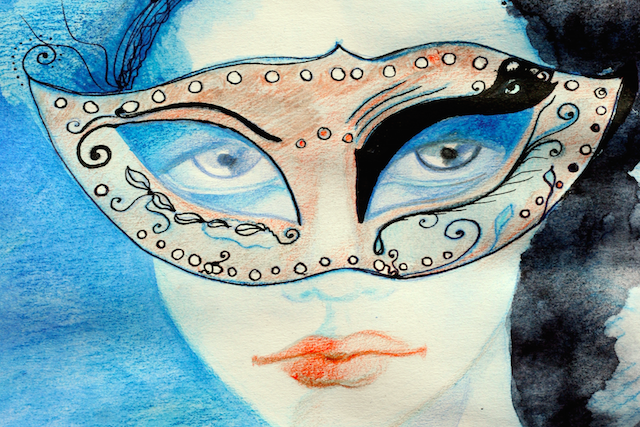
    Most of us go through our entire lives wearing a series of masks.

    We have different masks for different purposes and occasions: the “perfect” mask of someone who’s always strong, positive, and together; the professional mask for today’s meeting; the expert mask that we put on when teaching or advising; the malleable and energetic one we put on when selling our skills or flogging our wares.

    Our masks become so comfortable we lose awareness that we are wearing them. But make no mistake, the masks we wear are not who we are.

    Those masks that we put on to protect ourselves, that we reach for to be taken seriously, that we don because we think we should be that soft-spoken, outgoing, or strong, these masks are not who we are.

    Beneath our masks are real, sentient human beings, people with opinions and passions, people who can be angry and impatient; human beings who can be deeply empathetic and compassionate.

    If we want to be reminded of what a real-life, uncensored human looks like, spend some time with a baby. These little cherubs laugh with their whole bodies, and they do it frequently and loudly. They cry with gusto, their bellies expanding like a balloon when they are building up to a real howl.

    If they are already talking, they voice their opinions clearly and honestly. “Don’t like it. Want more. No, not going.”  

    Their questions are beautiful and profound because of their honesty and completely untarnished way of experiencing the world.

    Most of all, when watching these little humans, we can observe that wherever they are, whatever they are doing, they are fully in it. We work our whole lives to recapture this authenticity and ability to be present.

    Some time early in our development, something tragic happens. Maybe it happens the first time we are given signals that being jealous of a sibling is not appropriate, that crying when we are hurt is being dramatic, or that being loud is annoying. We get signals that the way we are behaving is not making the adults around us happy.

    Little by little, bit by bit, we adopt socially acceptable behaviors, facial expressions, voice volumes, and agreeable ideas that harden into a series of masks.

    In any given moment, our truth lies beneath the masks we wear, sometimes screaming for oxygen. We work really hard to stuff our truth down, to temper ourselves to fit in, to follow the rather rigid rules of social acceptability.

    We need to be authentic to fully express ourselves in the world. When we try to stuff down our inner voice or pretend it doesn’t exist, it fights back. Stuffed inside our body, repressed feelings can lead to depression, insomnia, physical pain, and if we continue, diseases like cancer and heart disease. This is real. Inauthenticity makes us sick.

    Thankfully, our authentic selves have enormous strength. I say thankfully because these breakdowns of our coping mechanisms often lead us to our greatest insights about ourselves.

    The people I know who are fully and authentically themselves have been led there by difficult events, by a crisis that shook their world, by insights that have loosened their masks long enough to reveal the people underneath waiting to breathe and live life fully.

    This has definitely been my experience. My divorce was a crisis point. Although it was over a decade ago, it remains the most transforming single event of my life. In an instant, any ideas that my former life had created were blown to smithereens.

    I saw with glaring clarity how the married person I had become was a role I was playing. For years I had been editing my behavior and my dreams to fit what I thought I was supposed to be. I wasn’t even sure who that person was, but I knew she was more patient and her energy was smaller, and it didn’t overwhelm people.

    Worse, I began to understand that I didn’t even know who I was. I’d been wearing the mask of Olympic athlete, public figure, wife, and mother for so long that I wondered if I was still in there.

    When my marriage blew up, I was possessed with renewed energy. This wasn’t because my husband was a rotten guy who had kept me under his thumb; this was because the pain, the upheaval, and the shock of what had happened broke my mask in one fell swoop. A life crisis put me back on the path of discovering my authenticity.

    If all this sounds a little hokey to you, think about something really difficult you have experienced, like the loss of a loved one, the loss of a job, or the end of a primary relationship. Often in these times of extreme crisis, we make deep connections with others—the friends that support us, the sister who holds our hand by a parent’s deathbed. In crisis, people can drop their masks and simply reach out for one another, human to human.

    There is something so magical and refreshing about this connection that many people never come back fully into their mask-wearing afterward. Life has new meaning, and the desire to live connected and live authentically becomes a motto for life.

    When I shredded the masks I was wearing, I found myself filled with creative energy. It turns out that all that pretending is pretty exhausting. When I stopped trying to be who I thought I was supposed to be, it was like I plugged my soul into a current of electric life energy. I started writing books, taking courses, painting, studying yoga, and doing all sorts of things I didn’t consciously know I wanted to do.

    Through the pain of upheaval and loss, I freed myself of the personas that I’d layered on top of my authenticity for decades.

    Reconnecting with my truth was a new and exciting adventure as well as a coming home. In terms of my mental and physical health, I believe coming home to myself saved my life. It could save yours.

    So say what you really feel. Make the choices you really want to make. Forget who you think you’re supposed to be and let yourself be as you are. At the very least, finding the courage to reconnect with the self inside yourself could be the single most liberating act of your life.

  • If You Want to Be Happy, Stop Pretending

    If You Want to Be Happy, Stop Pretending

    “If you want to be happy, don’t do something you don’t like. Don’t say something you don’t mean. Pretending and lying to yourself will only breed unhappiness.” ~Michael Lee

    Do you like your job? Do you love your partner? Are you happy? You may answer yes to these questions, but is that what you believe deep down?

    Most of us go through life pretending rather than living. We find it easier to tell ourselves that we feel good about something or someone than to admit we don’t. After all, contentment doesn’t require action. By convincing ourselves we’re happy when we’re not, we avoid the difficult decisions that would be necessary to change our current situation.

    If we pretend everything is fine, there’s no need to quit that job we hate. We don’t have to contend with all the risks, fears, and potential disapproval we might face from friends, loved ones, and colleagues if we leave it behind.

    We don’t have to tell our partner that we aren’t in love with him or her anymore or that we aren’t happy in our relationship.

    We don’t have to swallow our pride and ask for help when we need it because, hey, everything is just fine!

    We can simply smile and keep pretending.

    We try very hard to pretend everything is fine in our lives while knowing deep down that this couldn’t be further from the truth. We spend so much time trying to conform to society and the expectation of those around us that we lose the ability to listen to our hearts.

    Is it really necessary to ask ourselves if we like our job or still love our spouse or partner? Do we really have to ask ourselves whether we’re happy? The truth is, something inside of us already knows the answer. More often than not, the answer lies in the fact that we have to ask the question in the first place. When we’re genuinely happy, we know. And when we aren’t, we know that, too.

    It doesn’t take much courage to go through life pretending everything is all right. Exposing our true selves, fully embracing our deepest desires, and facing our fears, however, requires a tremendous amount.

    In all honesty, I spent many years of my life pretending. I told myself that I was happy with my job, despite knowing from the very first day that it wasn’t the right fit for me. I pretended to agree with everyone around me to avoid the risk of rejection and disapproval.

    In a way, I’ve even pretended to be shy. I’m a natural introvert, certainly. But at the same time, being shy was very convenient for me. At many times, it was a means to stay quiet, avoid risks, and maintain the illusion that I was better than I really was.

    After spending so much time hiding my true self, I finally reached a point where I’d had enough of it. Enough of being fake, enough of superficial relationships, enough of trying to be liked and seeking the approval of others. Enough!

    It was then that I made up my mind: I would stop pretending.

    I didn’t want to have fake relationships where people liked me for something I’m not because I was too scared to show them the real me.

    I didn’t want to play it safe during a date for fear of failing to give the correct answer or saying the wrong thing and ruining everything. We all want to be loved, but if we’re on a date with someone who is hyper-analyzing every little thing we do, waiting for an opportunity to reject us, how could they possibly be the right match?

    Even if that strategy works, aren’t we running the risk of ending up in a lackluster relationship with the wrong person by pretending to be someone we aren’t?

    It’s easier to pretend than to be truly honest with ourselves, but what’s the point? It comes with a steep price.

    If I pretend my current job is satisfying, what are the chances that I will make the necessary changes to create a fulfilling career that will bring meaning to my life?

    If I pretend to be happy in a relationship when my true feelings clearly say something else, how can I improve my relationship?

    If I’m constantly trying to be someone I am not, how can I create meaningful relationships with people who would have loved me if only I had given them a chance to know who I really am?

    I wanted my relationships with others to be meaningful, profound, and emotionally rewarding. I didn’t want to constantly analyze every word that crosses my mind, and handpick only those that will earn me the approval of the person I’m speaking to.

    I wanted to be able to say that I hated something even when everyone around me loved it. As a French person living in Japan, I wanted to be able to admit that I have no interest in French literature even when everybody expected me to. I wanted to be able to say that I know nothing about wine and can’t eat cheese.

    I wanted to freely admit that I couldn’t remember much about the movie my friends are discussing. When asked about my hobbies, I wanted to say with excitement that I love learning rather than murmuring “I like watching movies and listening to music” or something like that.

    These days, I’m being honest, showing the real me, and saying what’s true for me.

    When working on a new project that required me to navigate between spreadsheets most of the time, I told the client that I wasn’t good at using Excel due to my lack of experience with it. In the past, I would have hidden that fact, felt bad about it for days or even weeks, and blamed myself for “not being good enough.”

    During parties, I have no qualms admitting that I hate my job and can’t wait to quit. In the past, I would have pretended I liked it just to fit in with everyone else.

    I’ve openly shared my passion with people I’ve just met, discussed the business I’m currently working on, and even talked about how I envision my future. In the past, I would have remained quiet.

    And yes, I have unapologetically stated the fact that I don’t like cheese!

    I’ve been saying these things for a while, so it isn’t exactly a new accomplishment for me. What is new, however, is how I feel about saying and doing these things.

    I once felt guilt and shame over it, but those feelings have dissipated. At some point, I stopped feeling bad for not liking cheese. I stopped apologizing for not enjoying my job, and I stopped blaming myself for not knowing how to use Excel. That was even more freeing than speaking my mind and staying true to myself!

    In short, I went from qualifying and explaining my honest statements to saying the truth as is, without all the unnecessary comments that I would usually add to it. I stopped apologizing for being me and stopped feeling bad about myself because of things that cannot be changed.

    Pretending is costly, although it is not money we give away, but rather peace of mind and happiness.

    Fortunately, we always have a choice. We can keep pretending everything is okay, refuse to take any risks, and settle for an okay relationship, a mediocre job, and a run-of-the-mill life. Or we can make a decision to accept ourselves as we truly are, embrace our fear and discomfort, and give ourselves a chance to create a meaningful relationship both with ourselves and others.

    It might be time for you to stop pretending and start being truly honest with yourself. Otherwise, you could miss a chance to find a career that leaves you excited to wake up every morning and meet people who love you for who you are, not for who you pretend to be.

  • Why We Need to Stop Hiding and Let People See Who We Are

    Why We Need to Stop Hiding and Let People See Who We Are

    Woman Hiding Face

    “To help yourself, you must be yourself.” ~Dave Pelzer

    I spent a lot of my life being someone else. Playing the part of someone I didn’t fully recognize.

    Looking back, there were lots of reasons why I avoided being me, my mum’s suicide being one of them.

    Her death shaped me, like a rock in a tumbler, and my life, as I knew it, bore no resemblance to the one I once knew.

    I was ashamed of being the girl whose mum left her in such a violent way. What would people think? Maybe that she didn’t love me enough to stay? That I didn’t do enough to help her? That I wasn’t enough of a daughter to her?

    I started to believe that maybe I just wasn’t enough, period. That I was a bad person somehow. Because if you’re a bad person, people don’t want to be near you. They just up and leave. And that’s what she did.

    When you don’t feel enough, there’s anywhere and everywhere you’d rather be than right there, with yourself.

    I became a master at escaping myself and putting on an act in order to feel accepted. Accepted by people I believed would think things about me that I didn’t want them to think. I was too scared to let people see the real me because I believed the real me was so obviously fundamentally flawed.

    My escape artist act was compounded aged twenty-one, when I realized that I was gay.

    I wanted to hide. I didn’t want people to know. I felt different from other people, the people I already felt different from because their mums were still alive and kicking, and most definitely hadn’t killed themselves.

    And so I pretended, again.

    It’s hard, pretending to not be gay.

    People ask questions and get curious. About why you don’t have a boyfriend. Or why you spend so much time with your friend, “You sure do see each other a lot. You’re practically joined at the hip, aren’t you?”

    I spent a lot of time deflecting questions. My answers, which were always lies, became a shield that I hid behind.

    And as my lies got bigger, I became smaller, crouching behind the shield until I couldn’t see over or around it anymore.

    I had completely lost sight of who I was.

    And losing sight of me was the emptiest, most isolating feeling I have ever experienced. It felt like I was living my life behind a glass screen, like I wasn’t quite there, unable to take anything in.

    I was massively unsure of what I liked or didn’t like, and was scared to say what I thought. I mean, who was I to say? What did I know anyway? My thoughts and opinions felt lukewarm and grey. Not enough to add heat or a splash of color to a conversation.

    I didn’t dare try new things. I stuck to the same routine. I avoided anything that challenged me, for being challenged would mean crawling out from behind the shield, and I would be too exposed—and this might mean that people would see the me I didn’t want them to see.

    And we all do it, don’t we? In some part of your life right now is an area you’re avoiding. A place tucked away, deep down—a part of you that you don’t want other people to know about or see.

    So you don’t talk about it, you draw attention away. By being the life and soul of the party, even though you’re not really laughing on the inside.

    Or in your shiny, flash car that you drive faster than you should, because it’s the only way you ever feel truly alive.

    Or in your relationships with others—where you spend so much time caring for them so you don’t have to care for yourself, and yet you feel the quiet resentment creeping up when they don’t empty the dishwasher or thank you for the dinner you made.

    We avoid being exposed for who we really are while, at the same time, not knowing who we really are.

    And yet the reason we so often don’t know who we are is because we’re not being who we are.

    Over ten years later, I know this. And I see now how, bit-by-bit, and without realizing it at the time, I slowly came out from behind the shield that had protected me for so long.

    The shield that had protected me from me.

    “Figure out what you want from your life,” A friend advised. “Just get to know yourself.”

    “How the hell do I do that, though?” I asked.

    “Just do things. Anything!”

    And so I did. There were no huge, adventurous leaps, nothing particular to write home about. I just allowed my curiosity, even if it was just a smidgen of curiosity, to lead me.

    First up, I started to do things I’d never done before, like going to the cinema alone, or for lunch, with just a book for company. I read, vicariously, and mostly in the bath, mountains of self-development books.

    I wanted to understand myself better; to know why I did the things that I did and thought the things that I thought.

    In later months, I joined a barbershop harmony chorus (it didn’t last very long) and signed up for a five-kilometer race and started a blog which eventually became a website—a place where I could write openly about life, and being human.

    And slowly, very slowly, my life started to show signs of color again, and I didn’t use the shield so much. All of the things that I was doing, the “Just doing things!” were where I discovered who I was.

    We spend so much time looking outside of ourselves to find who we are, because it’s easier that way.

    When we don’t have to put ourselves on the line, when we don’t have to say how we really feel, we get to avoid the things we, as humans, don’t find very comfortable. Things like conflict, having a hard conversation, asking for what we need or offending someone.

    We get to avoid failing and messing up and risk. We get to avoid people not agreeing with us and our opinion, being different, being ‘weird.’ Being truly who we are.

    And yet, we cannot truly know who we are without being who we are.

    Only by being who we are can we experience connection—to life, to other people, and most importantly, to ourselves.

    Woman hiding face image via Shutterstock

  • When You’re Pretending to Be Fine: 9 Tips to Deal and Heal

    When You’re Pretending to Be Fine: 9 Tips to Deal and Heal

    “Our strength grows out of our weaknesses.” ~Ralph Waldo Emerson

    I never thought I’d want to kill myself.

    All my life, I’d been a strong, independent woman, building a business from home, raising two wonderful sons, and staying happy and positive throughout.

    If you’d told me I’d one day consider taking my own life, I’d have laughed and said, “You’ve got me confused with someone else!”

    But after twenty years and two sons together, my husband and I decided to split up.

    So what? Separation and divorce are commonplace. You just cope with it like everyone else. I was strong, so not coping would mean I was weak.

    But it hurt and hurt and hurt. And eventually I just wanted to stop. I couldn’t put my boys through that, but I couldn’t see another way out. So, while pretending to everyone that I was fine, I thought about it. Seriously.

    What Do You Pretend?

    Coping with everything life throws at you is tough. 

    Juggling all your different roles, trying to be all things to all people, and “shoehorning” so much into every day.

    You and your needs aren’t even worth a mention on your very long to-do list.

    You feel guilty and inadequate and worry that someday all those plates you’re spinning will come crashing down. You’re an amazing somebody who often feels like an invisible and overwhelmed nobody. Feeling lost and alone, living in silent despair.

    Not always much fun being a grown-up, is it?  (more…)