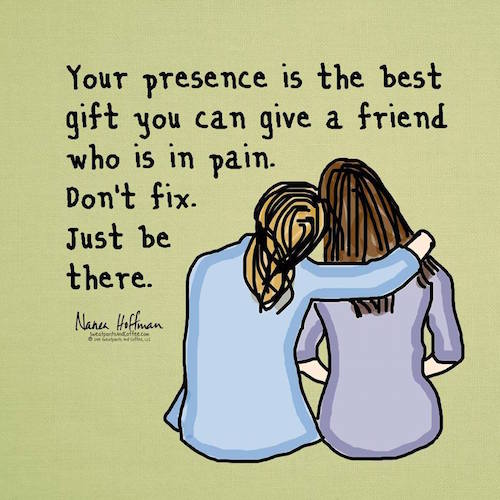
Tag: presence
-
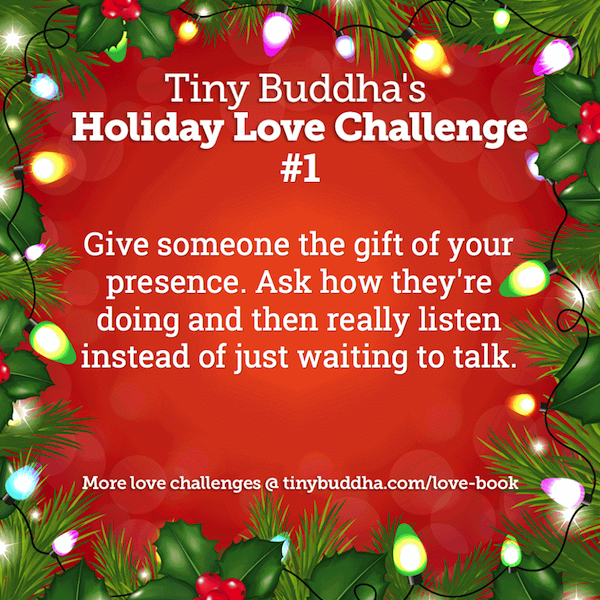
Holiday Love Challenge #1: Give the Gift of Your Presence
Want more ideas to strengthen your relationships? Get Tiny Buddha’s 365 Tiny Love Challenges.
-

How to Find Joy in Every Day (Even the Hard Ones)
“Being happy doesn’t mean everything is perfect. It means you’ve decided to look beyond the imperfections.” ~Unknown
It’s the question we’re all trying to answer: What is happiness and how do we get it? We fill our lives with the busyness of searching for happiness in many things, yet it’s possible that the very pursuit is taking us further away from the goal.
I spent many years following society’s recipe for happiness.
I was settled with my partner, climbing the career ladder, dining out, buying clothes, and planning nice holidays, but I was so busy chasing happiness, I missed out on moments of joy.
Everyone is so busy these days. It gives us our sense of self-worth; if we’re busy, we’re successful, we’re accomplishing things, we’re important, and we’re needed.
As a result we can often be too busy to notice if we are happy, and potential moments of joy pass us by.
We think happiness arrives at a point in the future when our lives become perfect, with a backdrop of fireworks and fanfare, without any disasters or annoyances. But happiness generally doesn’t come in the form of winning the lottery or marrying from Brad Pitt. It’s often more subtle and smaller.
For example: a sunny day at the beach, your favorite slippers, lying in the arms of the one you love on a lazy Sunday morning—it’s all happiness. We just need to learn to recognize it, appreciate it, and cultivate it.
Brené Brown puts it well in her book The Gifts of Imperfection: “Joy is not a constant. It comes to us in moments—often ordinary moments. Sometimes we miss out on the bursts of joy because we’re too busy chasing down extraordinary moments.”
Happiness is not about a final destination of pure perfection, but more about a journey through life, with moments of perfection sprinkled throughout, if we just stop to notice them.
So how do we find those moments within our own lives and ensure we can get more of them to create a life full of happiness?
There are two main ingredients for experiencing joy every day. The first is living in the present.
How can we be joyful if we’re too busy worrying about the future or going over the past? And how can we be joyful if we’re too busy?
Take time to smell the roses and be in the now; that’s where the joy is.
People wait all week for Friday, all year for summer, and all their lives for happiness, but by the same token if we are always rushing to get to the next place, we can’t take time to enjoy where we are.
The second ingredient for happiness is gratitude. If we appreciate all that we’re fortunate to have, rather than spending our time and energy going after what we don’t have, we’ll experience more joy.
In our consumer-driven society, we’ve put too much emphasis on having many things—bigger houses, better cars, the latest in fashion.
It’s easy to make the mistake of thinking that if you have something you want, you’ll be happier with more. And we struggle in the modern world with debt, obesity, and addiction as a result of this mantra.
We are also prone to comparing ourselves with others and wanting what they have (their house, salary, partner, looks). These are surefire ways to extinguish our gratitude and rob us of our happiness.
There’s always joy to be found, even in the mundane moments of the day, and we can tap into this by being more present.
Next time you’re sitting in a traffic jam, rather than becoming resentful of the delay or whisked away in a daydream, why not take a moment to see what you can appreciate?
Maybe it’s the nature outside, the sound of the birds, the sun shining, or just the fact you have a car to drive in and somewhere to be going.
I hate winter. I even travel to the other side of the world each year to avoid it. But even on the coldest, wettest, darkest days, I can find joy.
Maybe it’s the feel of my cozy, warm bed sheets, or being curled up by the fire with the cat and a good book, or the clean crisp look of the landscape after the first snowfall.
I try to find something to be grateful for every day, even if this is just breathing clean air, being alive, being healthy, or having an abundance of food.
There are so many people worse off than we are, but we often overlook the small things that others would be so grateful for.
I’ve also uncovered joy from “happy lists”—lists of all the small things you like to do that make you happy. It’s important to find time to do these things often. It may be a walk on the beach, listening to your favorite music, having a hot bath, or sitting in the garden with a cup of tea.
As Robert Brault said, “Enjoy the little things for one day you may look back and realize they were the big things.”
Rather than waiting for happiness to arrive, I’ve changed my perspective to realize that it had been there all along; I just hadn’t noticed. If we look hard enough, we can find moments of joy in every day. Or, if the day is a particularly bad one, reach for your happy list and create your own joy.
Jumping for joy image via Shutterstock
-
The Power of Presence : A Few Simple Ways to Enjoy Life More Now
“All that is important is this one moment in movement. Make the moment important, vital, and worth living. Do not let it slip away unnoticed and unused.” ~Martha Graham
I am someone who is always focusing on the next step rather than the step I am currently taking. I am always longing for the next thing in life.
Looking forward to the future isn’t a bad thing, but when it consumes 90% of your daily thoughts, it becomes a bit exhausting.
My energy has always been restless. I get bored easily, crave change constantly, and yearn for immediate fulfillment. At one point, I realized I was letting a good life pass me by.
I have been working full-time and have been a student year-round for over five years. Life has been repetitive for a long time, lots and lots of work with very little playtime.
This began to leave my mind in a constant state of restlessness, and there was no turning it off.
I craved more meaning out of life, richer experiences, and deep soul-searching. I had big ideas of what I wanted to do, so many ideas that it began to overtake me and make me feel angry about the life I was living.
I became impatient and intolerant of my own life. I was in a rut. I felt completely out of control and stuck.
I had always admired people who were able to be present and live in the moment. I had never been that type of person, and I really wanted to be.
I realized the only thing I could control was the present moment; I could not control the future because it hadn’t happened yet. So I decided to focus my restless energy on things I could change that would help me live a happier life right now.
In the brief moments when I wasn’t working, or at class, or doing homework, I decided to try turning off that multi-tasking motor in my brain. I began to focus on one thing, and one thing only. It could be something as simple as brushing my teeth or doing the dishes.
You’d be amazed at how enjoyable simple activities can be if you enter them with a positive and uncluttered mind.
I also decided to pick up a hobby and learn something new; I dabbled in a bit of photography and taught myself basic functions of the camera and different tricks and techniques. While school and work are stimulating, I often do things because I am told to do them, not because I want to.
This was a refreshing perspective and a great outlet for that restless energy.
I also started saying “no” less, and “yes” more. This forced me out of my comfort zone and enriched me with those new experiences I had been craving, even if they were small and simple. There’s nothing better than finding comfort in chaos and testing your boundaries.
Once I began to practice these things daily, I started seeing benefits. I felt happier, more secure, and full of life again. My heart began to open and the weight that had been pulling me down began to lift.
If you find yourself rushing through the present, focusing on the future, and not enjoying your daily life, it might help to try these small changes for yourself: fully immerse yourself in what you’re doing instead of multitasking, try a new hobby to create more moments where you’re engaged in something fun, and practice saying “yes” to things that you normally wouldn’t.
This will push you out of your comfort zone and allow you to discover new things about yourself. It’s a lot easier to live in the now when you feel blissfully alive in the now.
There will be times when you find your mind shifting somewhere that you don’t want it to go. Don’t judge it. Acknowledge it, and then mindfully transition yourself back to the present moment. With a little practice you will be amazed by how in control of your thoughts you really are.
While I still have goals and dreams for the future, I am now focusing on what I can work on to be fulfilled in the present. These are the moments that matter; these are the moments that will soon be the past. We are not promised tomorrow, but we are promised right now.
Live in it. Breathe it. Take in as much of this moment as you can.
You are capable of being your best self, and you are capable of doing it right now. I challenge you to challenge yourself, to live in this moment, to break through your limits, and to find the very best, most present you.
-

A Simple Way to Be Present and Live Life to the Fullest
“As soon as you honor the present moment, all unhappiness and struggle dissolve, and life begins to flow with joy and ease. When you act out the present-moment awareness, whatever you do becomes imbued with a sense of quality, care, and love—even the most simple action.” ~Eckhart Tolle
People have always told me to stay in the present and make every moment count. I nod my head, manage to stay present for about an hour, and then alternate between living in the past and the future.
It can be a struggle to stay in the now, especially when life seems better in the past.
I am at a huge crossroad in my life, which adds to the struggle of being fully present. Next year I will leave my hometown, where I’ve lived all my life, and move by myself to an unknown city.
It’s easy for me to get caught up worrying about the future. How am I going to support myself? What will my career path be? What If I never find someone to make a life with?
Even though my life is about to drastically change, I know now that I need to enjoy every moment and grasp it right when it’s happening.
Last summer an unexpected stranger taught me a valuable lesson about staying in the present and living to my fullest potential.
In June, I went to an intense music festival. I am a violist, and during this time, I traveled to upstate New York to meet with fellow musicians and spend eight hours each day practicing and rehearsing for upcoming concerts.
I was surrounded by thirty of the best string players in the in the country. It was an intense and nerve-wracking experience showing up the first day, not knowing what to expect and wondering how I was going to keep up.
When I arrived, I tentatively went through the lunch line. I handed my lunch card to a middle-aged worker and scanned the cafeteria anxiously. “Good Morning, Angela,” he said. “So nice to have you here.”
Bob handed back my card and smiled at me genuinely. His kindness jolted me into the present and warmed my heart. I felt lighter after that and continued my day feeling thankful.
I ate eighty-four meals at that cafeteria, and Bob always asked me how my day was going, listened, and offered thoughtful responses, even though there were people behind me,
In three days, he knew every camper’s name, and he even remembered the names of campers that had come years before.
He wasn’t a huge part of my life, but Bob is one of my biggest role models. He didn’t have the most glamorous job, but he always showed up with a smile on his face and was never rude or impatient. He made every day a little brighter for us.
I wondered why Bob wasn’t doing a grander job. It seemed like he would excel at public relations or maybe even sales. My friends later informed me that Bob used to be a professor at the university, but was forced to resign after acquiring an unfortunate illness and started to work in the cafeteria.
Life doesn’t always work out how you think it’s going to turn out. I’m sure Bob never thought that after earning a PhD, he’d work in a cafeteria setting, but what inspired me was the fact that he didn’t let his circumstances derail him.
Bob fully committed to his job and made many people’s day better at breakfast, lunch, and dinner.
It amazed me that Bob always seemed to intently listen to my response about my day.
I’ve recognized that I always want to sound like the smartest person in the room. Instead of actively listening to people and giving them the full attention they deserve, I think about next intelligent thing I can say.
Now, I try to actively listen to people and fully give them my attention. I have found active listening to a wonderful tool for staying in the present.
Since last summer, I strive to enjoy every little moment. I live intensely in the present and try to not worry about the past or future. I think we could all stand to do that more. Enjoy your morning tea. Cherish laughing with your friends. Notice the scenery while driving to school.
Also, remember that while that you may have a “boring” job, you can affect people in a positive way if you try to make the best of it. Bob changed my life and he doesn’t even know much about me besides my name and camp experience. That’s power right there.
The most important lesson Bob taught me about staying in the present is that happiness is a choice. You can be in any life situation, but it’s your decision if you want to be happy. Happiness isn’t defined by an external event but rather an internal attitude.
So yeah, I don’t know where I am going to live in a year, who I am going to meet, and what I will be doing. You know what I do know? I know that I will make every moment count and live it to the fullest.
I will appreciate everything and see the light, because even if you are scanning teenager cafeteria cards all summer, you can still have a smile on your face.
Couple talking image via Shutterstock
-

Engaging in the Moment Instead of Wanting to Be Somewhere Else
“Happiness is enjoying the moment for what it is, not what it could be or should be.” ~Unknown
Many of us have been there…
The alarm goes off. In anger, we strike the wretched machine in hopes of getting a few more precious minutes of beauty sleep.
It’s Monday again. The weekend is over and it will be another five days—120 hours, 7,200 minutes, 432,000 seconds—until we throw up our hands again in triumph and say, “Thank goodness it’s Friday!”
We’ve often committed ourselves to the lie that Monday must be terrible. In the U.S., the very idea of hating Mondays is ingrained in our pop culture.
Be it the comic cat Garfield with a disgruntled look upon his drooping whiskers lamenting over Monday’s arrival, or the nineties movie Office Space with its well known line “Somebody’s got a case of the Mondays,” there’s a prevailing notion that we must dread this day.
But this post isn’t about promoting the greatness of Monday, or promoting Monday as the new Friday. This post is about our craving for insular moments of fun.
We view weekdays, moments that we have to wait in line, time spent commuting or working, and other seemingly mundane experiences as unbearably wretched.
We believe that we must endure these moments to seek out a bit of fun. It is my belief that this craving may be causing us harm. That it’s causing us to disengage from the world before us, and it may even prevent us from being happy.
We wake up on Monday craving the weekend’s return. But it’s Monday—not Friday. Not some fun moment that we eagerly await, but simply Monday.
If we spend so much of our Monday morning investing our thoughts and emotions in a day that has yet to and perhaps will never come to pass, then we are investing our energy into emptiness.
We are ruining the potential for serenity in the current moment. We are refusing to accept that we are subject to the changing of the days (among many other things), and rather than being in the current moment, we are breaking the potential for serenity by diverting our attention toward the intangible.
If it’s our craving for an innumerable amount of things that causes us to drift away from the present and ruin our potential for happiness, how do we divorce ourselves from our desire?
In other words, how do we become engaged in the moment? I think there is no single answer to this question, but one answer may be found in oranges.
Yes, oranges. Namely, what Vietnamese teacher and Zen practitioner Thich Nhat Hanh has to say about oranges.
“Take an orange and hold it in your palm…The orange tree has taken three, four, or six months to make such an orange for you. It is a miracle. Now the orange is ready and says, ‘Here I am for you.’ But if you are not present you will not hear it. When you are not looking at the orange in the present moment, the orange is not present either.”
Thich Nhat Hanh’s words certainly make for a wonderfully deep Dole ad, but I think he’s simply talking about the beauty in the world around us.
Oranges, like so many things, are so easy to take for granted. So easy to ignore, really. I know it sounds strange to many of us to open the fridge and say, “Wow, look at this orange. It took a while for this orange to grow for my consumption. Amazing!”
However, it’s also strange to be caught up in craving things that aren’t there when we can’t appreciate the tangible and simple beauty of an orange in our hand.
Maybe that’s where the answer lies. That being engaged in the moment only requires us to truly see everything around us.
Rather than curse Monday morning, embrace it.
From the moment we wake up, many of us have an unimaginable amount of possibilities for engagement and enjoyment.
We could get up and do jumping jacks. We could doodle something we had dreamed the previous night on a scrap piece of paper. Or we could just simply watch the sunrise and all its complex brilliance.
All this is there for so many of us, and all we have to do is be there to enjoy it.
I have lived my whole life as the man hitting the alarm clock in anger, hating Monday’s return and anxiously awaiting the weekend.
I have lived my whole life holding the orange, but was never present as I consumed something so wonderful. However, cancer changed all that for me.
Nearly two and a half years ago my wife was diagnosed with a very rare and deadly form of cancer. Though I do not entirely bear the burden of this disease, I certainly share it.
Before the burden of cancer, we had an active social life. Our week was often filled with social gatherings, sightseeing, and much more. However, my wife’s disease prevented us from taking part in the exciting social life we once had.
When the weekly yet insular moments of fun were taken away from us, the initial sting of this deprivation was devastating. Weeks turned into months and months into years of these insular moments becoming less and less frequent.
At first I blamed cancer for what seemed like the death of happiness in our life, then I blamed others. But as time went on, I realized I was to blame for the disturbance in serenity.
Now, there is no doubt that cancer is the trigger for so much of our suffering, but it was I who perpetuated it. Instead of enjoying something as precious and simple as holding my wife’s hand, I was holding on to hope for a rekindled social life.
Rather than enjoy the taste of a meal we had made together, I was craving the taste of beer at one of our social gatherings.
But I now believe happiness isn’t found at the bottom of a beer glass. It isn’t found at the end of the week. All that stuff is fun, but happiness, I believe, is something far more rich and yet very simple.
It’s as simple as putting aside our yearning for something else and just engaging in the moment we are currently in.
Enjoying the sun image via Shutterstock
-
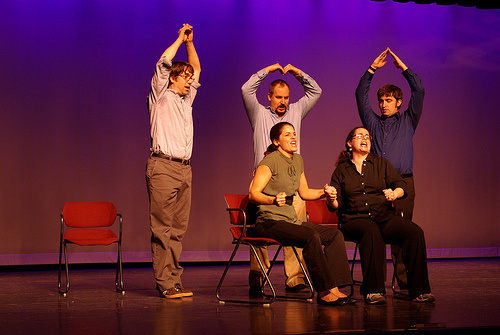
Improv(e) Your Life: Lessons on Risks, Gifts, and More
“Whatever the present moment contains, accept it as if you had chosen it. Always work with it, not against it.” ~Eckhart Tolle
Improv comedy is something I’ve always enjoyed. I thought it would be fun to try, so I eventually took a class. Countless classes and many laughs later, I’ve learned that improv is a lot like life. In fact, applying what you learn in improv can actually improve your life.
Risky Business
Showing up at an improv class for the first time might prove intimidating or anxiety provoking for some. I felt some nerves when taking my first class, knowing that I would have to expose myself to some degree. Being more on the introverted side of the social spectrum, this got me thinking.
Improv can be a great strategy for overcoming shyness. To work through these types of issues, realize that you will have to take some risks. This often requires you to step out of your comfort zone. Getting comfortable with being uncomfortable is key.
I began improv by adapting Susan Jeffers’ advice to “Feel the Fear and Do It Anyway.”
To do this, simply allow whatever thoughts or feelings arise within you to bubble up. Then, notice and acknowledge them without trying to change them. With practice, discomfort will become more tolerable and your comfort zone will have expanded.
Pay Attention
Whether you’re playing a game where you’re tracking an invisible ball that’s being thrown around, or in a scene where you have to read someone’s body language, paying attention is critical in improv. Awareness of what’s going on around you (and within you) at any given moment is the foundation upon which improv is built.
Bad improv ends up looking sloppy, disconnected, inconsistent, and is usually not much fun to watch. Not paying attention to internal or external cues can obviously have negative consequences in life.
Personally, it has sometimes been difficult for me to discern what I’m feeling emotionally. For example, this has caused strain in my relationships where the absence of strong feelings has kept me numb. As a result, I have held back in many relationships. Partners have wondered how I really feel about them and overwhelming emotional reactions have come when it’s too late.
Thanks to improv, I’m better able to discern whatever I’m feeling in the moment. It has allowed me to explore emotional nuances in between the extremes.
A powerful question to elicit your level of attention is: what’s happening right now? Consider both your inner state and external environment as you reflect on this question.
Monkey See, Monkey Do
Beginning improvisers usually commence a scene by mimicking their partner’s gestures or actions. This helps them get on the same page, establishing a shared reality from which a scene can emerge.
This approach was helpful when I was learning the guitar. I used to sit in front of the TV and mimic guitar solos note for note. This helped train my ear and showed me what was possible. Emulating my role models also kept me motivated, providing feedback on the development of my skills. In fact, I’m willing to bet that this is how they learned too.
Motivational speaker Tony Robbins urges people to think and act like those who are where they want to be in life. Why reinvent the wheel when someone already has a good, working model? Don’t worry, differentiation will come later. It did with my guitar playing. Master the basics first.
Gifts
Improv is based upon agreement. This means that you accept what’s been said or done in a scene. For instance, I was once in a scene when my partner suddenly pointed and fearfully yelled out “that spaceship is coming for us!” I accepted that statement as true and reacted as if this was actually happening.
Many improv teachers would say that in that moment, I received a gift. That is, I was given something with which I could do anything I wanted, opening up a world of possibilities and taking the scene to new and unexpected places.
Not accepting a gift could easily ruin the illusion of a scene and keep it from evolving organically.
We don’t always accept gifts in our everyday life. This can result in arguments, dead ends, and power struggles. For example, I recently made plans to meet up with an old friend I haven’t seen in years. I was excited about catching up with her, suggesting we have lunch at a restaurant I’ve been dying to try.
Disappointment set in when she told me she preferred just getting a cup of coffee or tea somewhere. I wasn’t able to accept my friend’s gift, at least not right away.
Consider how well you’re able to accept the gifts given to you by others, even when things don’t go your way.
Yes, And…
In addition to accepting a gift in improv, your job is to then incorporate it into your shared reality somehow. Going back to the spaceship scene, I acknowledged it and began to panic, shouting, “Damn, I forgot to pay my intergalactic taxes!”
This is an example of the golden rule of improv known as “yes, and.” It refers to accepting a gift that’s been given to you and giving back a gift that adds to it in some way.
The key here is to be open to the unexpected and to go with the flow, no matter where things or how end up.
Going back to lunch with my old friend, I saw that I wasn’t yes anding her. Once I realized this, I could then see her counteroffer as a gift. Disappointment soon faded and I became curious if there were coffee shops or teahouses in my area. My expectation was that there weren’t any.
I was astonished to discover an amazing coffee shop just a few blocks from home. Not yes anding would’ve resulted in lingering feelings of disappointment. I would’ve also missed out on one of the best cups of coffee I’ve had in a long time!
Practice “yes anding” things in life that you normally resist and see what happens. Doing this can increase spontaneity, heighten creativity, and allow you to better manage your expectations.
No Scripts
Like improv, most of life is unscripted. Think about it: almost every conversation you’ve ever had has been improvised. Sure, you might have had some idea about what to say to someone. But things don’t usually go exactly as planned, do they?
Others say or do things you don’t expect. Like me, you may have even surprised yourself by your own reactions or by what came out of your own mouth. Remembering that most of life is improvised can make you more easygoing. It can also keep you open to the unexpected and help anchor you in the present moment.
Application of this principle actually helped me meet my girlfriend. One evening, I saw a beautiful woman as I got on the subway.
Improv gave me the confidence to approach her on a crowded train, knowing that I could come up with something spontaneous to say without having to resort to cheesy pickup lines. The rest is history.
Improving your life
Applying the principles of improv can help you better navigate your life in innumerable ways, even during life’s more serious or challenging scenes.
However, I wouldn’t have been able to arrive at the ideas above by simply watching it on TV. I had to roll up my sleeves and step out of my comfort zone time and again.
Whether or not you’ve ever done improv, I’m curious: how have you improv(is)ed your life?
-
Slow Down and Fully Enjoy This Moment
“Don’t miss all the beautiful colors of the rainbow looking for that pot of gold.” ~Unknown
Have you noticed that time seems to go by faster as you get older? Holidays, birthdays, and anniversaries all come and go—and before we know it, here they come again.
One theory neuroscientists have is that when we are young we have more novel experiences. These novel experiences create more vivid memories. As we age, we have less “new” or “first time” experiences. There are no unique memories to stand out.
We can also look at it another way. When we’re doing something new, we’re very focused and “in the moment.” Time seems to stand still because we’re not thinking about the past or the future. We are truly living in the present.
So then by being present in our lives, no matter what we’re doing—cleaning dishes, writing a paper, or watching a sunset—or how old we are, we can experience it like it’s a “first time.”
How often are we truly present in our lives? It’s hard, isn’t it? We have so many things to do, places to be, people to see.
We all know that we should slow down and enjoy life more. We may try for a little while, but then we’re off to the races again, filling our lives with more busyness and distractions.
We start our day with well-meaning intentions: kindness, compassion, patience, and love. Then stuff happens—we hit traffic, computer goes on the fritz, or have an argument with our significant other. By mid-day, we often find ourselves worn down, defensive, and depleted.
As a massage therapist, I’ve had the opportunity to work closely with many interesting people, from actors and musicians to teachers and retirees. We share life’s ups and downs—joys and sorrows from birthdays and weddings to sickness and death.
Our perspective determines how we see and judge everything in life. And try as we may, we cannot run from the perspective that comes from growing older.
I’m lucky to work with many older clients who remind me of what’s really important in life. And what I hear most is how fast life passes you by. And the advice I hear most often: to really try to enjoy every moment.
Which then boils down to presence—presence with people, with activities, with whatever’s in front of us.
PRESENCE WITH OTHERS
Be gracious.
No matter what you’re dealing with in life, be gracious to others. Be grateful for what you have in your life and be willing to “pay it forward.”
Be present with your loved ones.
With all the distractions around us, it’s easy to get sidetracked. We may be tempted to “multi-task” by checking email or sending text messages while talking to them. But it’s so important to let your loved ones know that they’re being heard and that you value your relationship with them.
Be present with everyone you encounter.
Whether it’s a clerk at a grocery store, your neighbor, or a co-worker. Oprah has said that after talking to almost 30,000 people on her show, she’s found that everyone has the same desire—to know they are seen, they are heard, and that what they say matters.
Be yourself; don’t try to impress.
We waste a lot of time worrying about finding the right outfit or making our hair look just right to be “presentable” If you want to wear a muumuu with tennis shoes, do it!
Nurture your friendships.
As we grow older, it’s so important to have our friends to lean on, to cheer us up, and keep us going.
Always have a good joke to tell.
Everyone loves a good joke and laughter can be healing as well as contagious!
PRESENCE WHEN IT’S NOT EASY
Don’t sweat the small stuff.
Know what’s absolutely important in your life and don’t get caught up in the petty things.
Choose happiness.
Don’t let your happiness depend on circumstances. You can decide to be happy, no matter what’s happening around you.
Keep music in your life.
Music can be very therapeutic and can help boost your mood. You can take a dance class, learn how to play an instrument, or just rock out at home to your favorite music.
Let go of grudges.
Do yourself a favor and find a way to forgive and move on. Holding on to bitterness and anger will only hurt you. It doesn’t mean you necessarily forget what happened, but forgiveness allows you to release the negative and make more room for the positive.
It all boils down to remembering what’s important in life. And we definitely don’t have to wait until we’re retired to do that. We can decide today, no matter what we’re doing or whom we’re with, to let this moment know: yes, I see you, I hear you, and you matter.
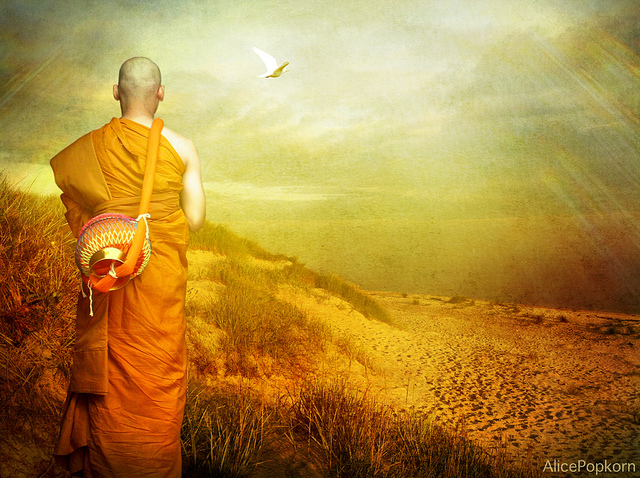
Photo by Alice Popkorn
-
Embodied Presence: Find Freedom from Your Thoughts and Emotions
“To be alive is to totally and openly participate in the simplicity and elegance of here and now.” ~Donald Altman
Embodied presence probably sounds superfluous. How else would we be present but in the body? If we leave our bodies, then we are by definition deceased. No longer present.
The simplicity of this embodied presence idea belies its depth though. The issue isn’t that I’m ever literally disembodied, but that I’m often unaware of my body-mind connection to the point that I’m not sufficiently mindful of the moment.
I know I’m not unique for this. We all do this. It’s called being distracted. I can get so lost in my thoughts that I lose touch with what’s actually happening, right now.
For example, not too long ago, I was sitting at home one evening. I was feeling really peaceful and at ease. Then, my iPhone chimed alerting me to an email. It was a message from my boss. I read the email and my whole emotional state changed.
My heart pounded, energy surged through my arms, and my chest and face felt hard and tight. Based on my body’s response, it would have seemed my life was in danger.
I attached meaning to the email I read. My interpretation registered the email as a threat. My body did what it’s supposed to do when I perceive a threat.
I immediately started typing my reactive email response. It was sharp and curt. Then, I stopped. I paused. I’m not sure what triggered my drop into my body’s senses, but that drop into my body saved me.
My awareness dropped from my thoughts to my body’s current sensations. With that drop, I was present in the moment. The investigation of my body’s sensations—the pulsing, tingling, hardness, tightness—was so interesting that my drive to immediately react dissolved.
After that body investigation, I labeled my emotion. It was anger. I was feeling angry because of a perceived threat. Then, I slowly responded to my boss’ message. I still felt the anger, but I wasn’t blindly driven by it.
I decided to carefully respond to the content of the message without indicating my reaction to her tone. She responded later that night. Her message was so gracious.
She simply misunderstood something and my reply clarified it for her. That was all. There was no problem. My initial reaction was rooted in my own story about her email.
“It isn’t what happens to us that causes us to suffer; it’s what we say to ourselves about what happens.” ~Pema Chodron
How do I stay in my body? Each morning and evening, I meditate for 30 minutes. During those meditation sessions, I concentrate on the sensations my breathing creates in my body: my heaving chest, the cool tickles through my nostrils, the expansion of my lower abdomen, even the slight spread of my shoulders each time I inhale.
This training helps anchor my mind to my body in a way nothing else does. There are so many other ways to get into your body though (e.g. yoga, tai chi, arts and crafts). Finding a way that suits you so that you can support yourself by doing it consistently can help change how you experience the day.
This is beneficial to you and to those with whom you interact. When I’m feeling a difficult emotion, I often invite myself to feel the emotion in my body—rather than creating a story line in my conscious mind—by asking myself the following question: how do I know I’m angry?
This question always helps me drop from my conscious mind down into my body and thus into the present moment. I have made the conscious choice to return to what John O’Donohue calls the temple of my senses.
“My body knows it belongs, it’s my mind that makes my life so homeless.”
My conscious train of thought can sometimes get so destructively creative in its interpretation of the moment that I’m attaching meaning to the moment that causes harm to me and others.
Through my body practices, I’ve learned three important lessons.
1. The body offers helpful insight.
Thinking isn’t the only way to relate to my life. My body experiences the moment and collects data that my conscious mind, in all its effort, can’t even see.
I find that after scanning my body and then returning to my thinking, I operate with greater clarity. When I feel a strong emotion, it’s helpful to me to investigate the sensations in my body before I label the emotion.
I may have labeled an emotion “anger,” but after scanning my body to get in touch with a deeper wisdom, I might realize it’s fear. I’m not angry, but I’m feeling threatened because of meaning I’ve attached to a situation.
Sometimes, it’s not nervousness I feel; it’s excitement. Opening into my body along with my mind allows for greater clarity and higher intelligence. I’m free to then respond appropriately to the present moment instead of being blindly driven by unexamined emotions.
2. Emotional states are universal.
I find this fact incredibly supportive: emotional states are universal. My anger isn’t my anger. My sadness isn’t my sadness. It’s the anger and the sadness that touches us all. Difficult emotions feel less personal and more universal when I pay attention to them.
I felt angry about my boss’ email because the adrenaline was still coursing through my blood. My body produced adrenaline because I interpreted the email as a threat. That’s all. It’s just my body doing exactly what it is conditioned to do in response to perceived threats.
I didn’t, however, have to perceive it as a threat.
3. Emotions pass more easily when we shine the soft light of awareness on them.
There’s this dreadful sense of solidity that sets in when I start to believe my emotions and thoughts are the only absolute reality. When I forget that what’s actually happening is separate from what I feel and think about what’s happening, my dread cements and I feel hopeless.
As soon as something unexpected happens, like someone I barely know smiles at me or a person I thought dislikes me makes sure I get a bottle of water at a meeting, the solidity dissolves.
That solidity gives way to a sense of openness and possibility that I temporarily lost touch with while believing my ego’s diatribes. I love it when something happens that breaks my ego’s trance. I am so thankful for those mindful moments that rescue me from my sometimes destructive inner monologues.
Living an embodied life is one of those paradoxical experiences. It’s hard, but it’s easy.
It’s easy because it’s a matter of focusing on what is happening now. Staying present. That’s all. It’s hard because our minds often want to create stories about what is happening. Why? Because it can. Our conscious minds are doing what they do: producing thoughts.
I can choose to see those thoughts as nothing more personal than anything else my body releases (for example, a sneeze or cough).
Our minds care so much for us and want to help. I sometimes try to calm my busy mind by reminding it that it doesn’t have to solve every problem right now.
If we open to the moment through our bodies, a whole new level of insight and wisdom can support us in ways our conscious mind cannot. May we all open to a greater level of embodied presence.
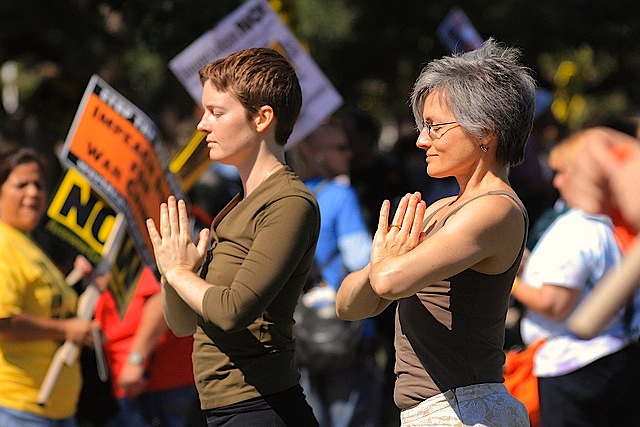
Photo by Sage Ross
-

Overcoming Anxiety: Moving from Fear to Presence

“I learned that courage was not the absence of fear, but the triumph over it.” ~Nelson Mandela
When I was a trainee teacher at a Cambridge University, I attended one of the oldest, most sought-after colleges, where most of the other graduate students were astrophysicists and economists, and 90% male.
They also seemed to come from families that were in some way related to the Queen of England, whereas I was a young, pregnant, trainee high school teacher whose nearest connection to Queens was owning a Freddie Mercury single, and I was a little shy.
Formal college dinners were a regular occurrence, and you were expected make small talk as you sipped your cream sherry in the medieval banquet hall in your black robes before dinner.
When I tried to talk honestly about what I was studying or what I was interested in, it tended to lead to embarrassed mumblings and a quick escape.
So one day, when someone asked me what I did, I said I was a lion tamer.
Their eyes lit up. “Really?” they asked, intrigued. “Oh yes!” I replied, “Each day I have to have nerves of steel as I enter a room of caged brutes and try to get them to perform tricks!”
I am no longer a teacher. But I am still a lion tamer.
In fact, it was the lions that stopped me teaching, the same lions who were hiding under the table at those grand banquets, when I couldn’t think of anything to say.
Yes, you heard me right, I live in close proximity to a caged lion. Wild, unpredictable, untamable, he longs to roam the plains. But instead, it’s just him and me, locked in my head together. His name? Anxiety!
I have learned what makes him roar, what feeds him. He smells blood and out he comes, lured by deadlines, taxes, financial issues, illness, death, or medical professionals. So far, so normal.
But he’s a strange type. He doesn’t like parties and social occasions, talking on the phone, images of me, swim suits, nudity, heights, or criticism.
And so anxiety and I live together. I know how to keep him sweet, and keep myself safe. We have learned to make deals. And I avoid his territory like the plague. (more…)
-

7 Tips To Help You Slow Down and Enjoy Your Life As It Is
“There is more to life than increasing its speed.” ~Gandhi
I have always been a person who wants to be one step ahead. I think my parents would say that I liked to push the boundaries. I wanted to experience many things, and I wanted to experience them quickly.
When my brother went to sleep-away camp, I had to go the next year despite being three years younger than him.
At age thirteen I had to ski with the older kids, racing faster and harder than I was ready for.
When I was fifteen I pushed to take a trip to Mexico with a friend despite my parents’ better judgment (and when I look back on this I realize I really was too young).
In college I continued to push the limits. This seemed okay at the time because everyone was doing it.
By the age of twenty-four I had broken away from the safety of my home state and moved myself out west and back again, living in some of the country’s most exciting places.
I wouldn’t’ stay long though—two years here, one year there.
I rushed through each amazing place, taking in as much as I could. I landed great jobs but didn’t stay long. I wanted more and I wanted change. What was I seeking?
Two years ago life shifted for me, and I was forced to slow down a bit.
I found myself in pursuit of a life-changing career. I became a teacher. I spend my days with nine year olds. Nothing makes you live in the moment like being surrounded my children. They require your complete presence and attention.
I don’t think many would call the teaching profession a stress reliever, but I find it makes me slow down and appreciate every day.
I also met a man who completely changed how I saw the world. He is older, and has experienced more of life than I have (not just in years, but in challenges and experiences I cannot imagine).
He provides me with unconditional love. He loves my best and accepts my worst. He challenges me to look at the most difficult aspects of myself. I love him and cannot imagine life without him.
At times I still find myself speeding ahead through life. I see friends getting married and having children, and I know I want that too. I struggle to not want that immediately.
Here I am at age twenty-nine, two semesters away from a master’s degree, working at my dream job, living in a wonderful city, in a wonderful and loving relationship, and yet I am constantly seeking the next thing. When will I get married? Buy a house? Have kids?
Why can’t I just live in the moment? Appreciate my life for what I have now?
This is something I have been working on over the past six months and I have found a few steps that are helpful when I have that particular “rushed” feeling.
1. Notice the small things.
I live in a small but urban city on the coast. The other night my boyfriend and I came back to my parked car after dinner to find a praying mantis sitting in the middle my windshield. We both just stared in awe and surprise—where did it come from?
I consider myself to be an open-minded skeptic when it comes to things like spirit animals, but I was not surprised to learn that praying mantis’ bring with them the idea of mindfulness and a reminder to slow down.
2. Count your blessings and keep perspective.
Chances are your life is pretty great. Yes, we all have struggles. But my “first world” problems are not life threatening, are they? Do I have an unsafe living situation? No. Do I struggle to find clean drinking water? Do I have a life-threatening illness? No and no.
I have everything I need to survive (and more)—and I bet you do too.
3. Do not compare.
Things aren’t always what they seem. That friend who just got married may not be totally happy in her career. That couple that just bought a house might be feeling strapped financially. There are ups and downs to every situation.
Trust that you are where you are supposed to be and that everything happens for a reason.
4. Find joy.
There is a lot of joy in each day; you just need to look for it. That toothless grin from a nine-year-old? Joy. Your cat pouncing on the nearest moving target? Joy. Leaves beginning to get their golden hue? Amazing. Pasta with homemade pesto? Awesome.
There are simply amazing things that happen every single day. Just open your eyes.
5. Control the controllables.
This is something my boyfriend always says, and I really like it. Change what you can and don’t stress about the rest. You cannot change traffic but you can change how you react to it. So you have an extra ten minutes in the car? See it as down time.
You cannot change others but you can change how you react to them. Your friend is late for dinner plans? Grab a beer and relax. Chances are it isn’t on purpose, and what is wrong with a little extra me-time?
6. Live in the moment.
I am a planner. I like to know when and where for pretty much everything that happens in my life. It is limiting, to say the least.
For some reason I seem to think that making plans will decrease my anxiety. But you know what makes me really anxious? When plans change. The thing is, plans change all the time! Life happens and you cannot control it.
Go with the flow. Plan only what you need to, and learn to take the day as it comes.
7. Trust the universe.
You don’t have to believe in a higher power for this one. You just have to notice all the good around you. There is proof right in front of you that things do turn out how they are supposed to. Find inspiration and hope in the happiness that surrounds you everyday.
-

12 Tips to Create a Peaceful, Passionate Life
“Get out of your head and get into your heart. Think less, feel more.” ~Osho
Osho’s game was to get people out of their heads. He wasn’t focused on world peace; he was intent on self-peace.
How do you get out of your head? How do you get more present?
For most of my life, I was stuck in my head. “Stuckness” was my primary experience. I always wanted to be somewhere else, someone else.
After years of quietly suffering and pretending to be happy, I came to understand that my stuckness was caused by numbness—physical, emotional, and spiritual.
Physically: I have been “out of my body” for 99.999% of my life—unless you’re talking about the heaviness on my chest, lump in my throat, and raciness in my head. I was constantly experiencing back pains and a general heaviness in my body.
Also, I felt inadequate and insecure in most of my intimate relationships.
Emotionally: I never felt good enough to speak my truths and share how I really felt. I blamed myself for feeling inadequate. The constant “trying to be someone” caused me to keep up multiple appearances and maintain many public versions of myself.
Spirituality: Because of all the lying, I didn’t trust myself. I felt like I betrayed myself and I felt guilty, thinking, I really am not good enough. When I was a child, in Israel, I was afraid of being punished by God. Later, in America, I was afraid of being punished by society. I wanted your approval so badly.
One day, I ran away. (more…)
-

3 Keys to Staying Present under Pressure
“The only pressure I’m under is the pressure I’ve put on myself.” ~Mark Messier
Back when Earth was cooling, I was a broker at Shearson Lehman Brothers. I still have nightmares about the pressure there—the pressure to sell stocks and bonds, to succeed, to be the best in the office, and to forget what is really important in life.
Now I write books and lead workshops. I live on thirty-three acres with a couple hundred blueberry plants, foxes, incredible people, sunrises, sunsets, and cold dips in a mountain pond all in the foothills of the Smokey Mountains.
While it would make sense that the Wall Street life was hectic and that these rustic acres should provide relief, peace, and relaxation, that isn’t really the case. Each day there is a temptation to put pressure on myself: to write a chapter, or get work done in the garden, or swim a mile, or do something that I consider worthwhile.
I have discovered that it isn’t really the situation that causes pressure and stress, but the lack of familiarity and acceptance of who I am and where I am. I can be as crazy in the mountains as on Wall Street, but I can also, with these three keys relax into myself and my environment.
How About You?
You’re busy. You live with an amount of activity that would make your grandparents’ eyes bug out. You travel more miles in a week than they would in a year. Unfortunately, you may often lose yourself, and your priorities, in your own busyness.
The pressure to get things done can be overwhelming. It can make you frantic and compulsive. You jump from doing the dishes to sweeping the floor to answering e-mails without celebrating those clean, shiny pans.
You live dizzy and busy finding yourself often in a tizzy. All the while who you really are is at peace, deep, calm, and tranquil. You deserve a little dip into that peace, especially when you are under pressure. (more…)
-
Be a Master of Where You Are Now

“Have respect for yourself, and patience and compassion. With these, you can handle anything.” ~Jack Kornfield
I hadn’t taken a yoga class in a while, and in the midst of my busy schedule I finally gave myself permission to go. Needless to say it had been a few months since I found myself in a downward dog position.
Something was different about my participation in two classes I recently took. I wish I could say I was able to go deeper into the poses, but it was actually challenging because my flexibility is not where it used to be.
What struck me were the many great metaphors that these two women, Michelle and Debbie, were sharing in their yoga instruction.
I confess, I’m a metaphor junky and look for them everywhere. I can probably blame my dad for that since he spoke to me in metaphors while growing up.
What I noticed and appreciated about my instructors was that they were both very passionate about the practice of yoga. They were cognizant in educating us about position names and consistently reminded us to breathe.
I also loved that there were so many other rich messages to be heard, metaphorically of course, being that I was paying attention to them.
There were some gentle reminders that could be related to many different areas of life—career, relationships, wealth and finances, material purchases, and health. As I share them with you, I‘m curious as to how you would relate to them in your own unique way. (more…)
-
Book Giveaway and Interview: One Minute Mindfulness

Update: The winners for this giveaway have been chosen. Subscribe to Tiny Buddha to learn about future giveaways!
The winners:
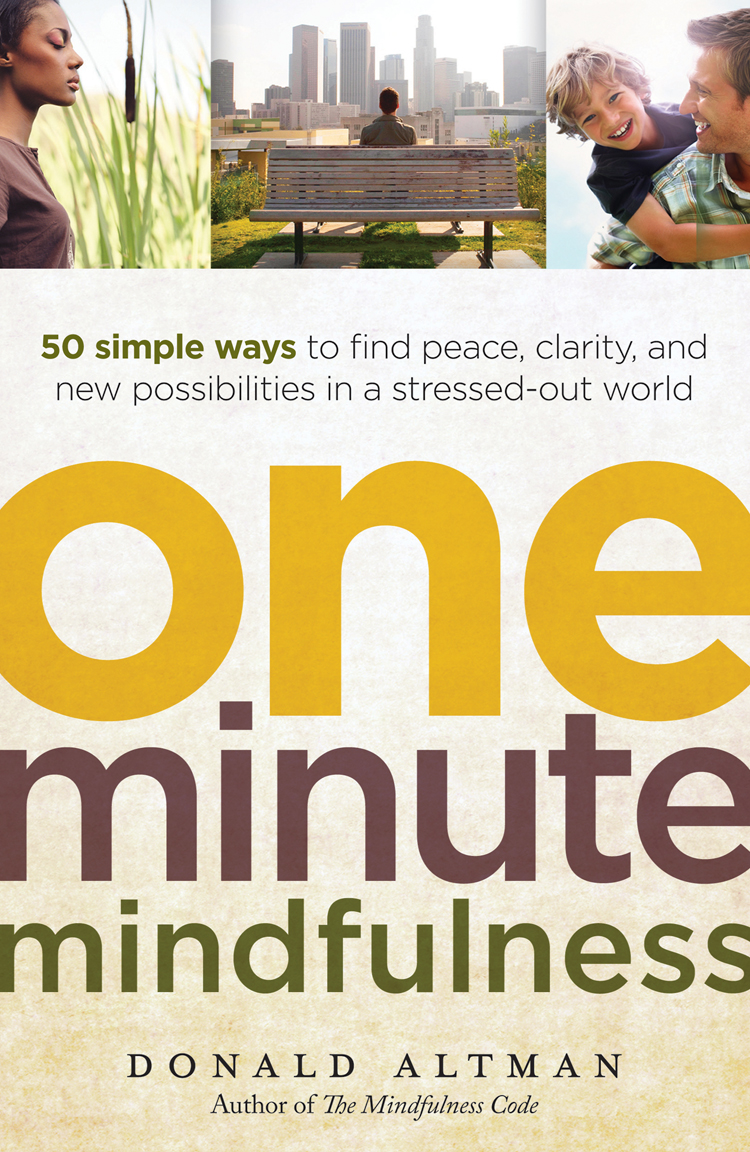
As you can likely tell from the number of author interviews/giveaways I’ve posted during these last few weeks, I’ve been receiving and reading a wide selection of books lately. One-Minute Mindfulness is now sitting on my coffee table, where I know I will refer it often.
The full title reads One-Minute Mindfulness: 50 Simple Ways to Find Peace, Clarity, and New Possibilities in a Stressed-Out World. It delivers on its promise.
From the Amazon Description:
In this book, Donald Altman brings the benefits of mindfulness down to earth and into everyday life. With fifty exercises and practices to build awareness and center attention, you will discover how to savor routine pleasures, build fulfillment in your work, enhance and heal relationships, change unhealthy habits, and connect to peace even in the midst of chaos or uncertainty.
The Giveaway
To enter to win one of 5 free copies of One-Minute Mindfulness:
- Leave a comment on this post.
- Tweet: RT @tinybuddha Giveaway and Interview: One-Minute Mindfulness by Donald Altman http://bit.ly/mQfaHA
You can enter until midnight PST on Sunday, September 25th.
The Interview
1. In your book, One Minute Mindfulness, you offer a variety of practices to create mindfulness in 60 seconds. It’s an accessible practice, since everyone can find a minute here and there throughout their day. Do you find that integrating these practices into a daily routine creates more mindfulness overall?
In my mind, there’s no question that this increases the level of overall mindfulness. This is actually in line with the Buddha’s teachings—that mindfulness is used every possible moment. And it’s why mindfulness is considered to be a path to enlightenment.
Each next sixty seconds holds the potential for anyone to open with spaciousness to whatever is happening, to see the truth of that moment. You can only do that in the next minute that is right before you, which is why a one-minute mindfulness practice is so valuable. (more…)
-

Feel. Focus. Flow.
“This being human is a guest house. Every morning a new arrival” ~Rumi
Not more than half an hour ago, I was, in a very typical fashion, struggling and getting frustrated trying to gather my thoughts for this post. I could even feel the tension in my shoulders clawing its way up to my neck (over a blog?).
Even as I took a shower, I was scrubbing the shampoo into my hair so hard because I was in a rush and had so many other thoughts whizzing round in my head! I was well and truly unconscious, going through the motions.
I’ve noticed recently that I do that a lot. I exist, rather than live. I do, rather than experience.
Going through the motions is such a mammoth waste. As a human being, I have a vast amount of potential, ability, and creativity that I don’t even know about yet.
I can even do something “basic” like choose to take a feeling of stress, and transmute it into love, humility or peace in the blink of an eye if I so choose. I can perform alchemy at any given moment, yet so often I unconsciously choose to get caught up managing my own life. I am, and always have been at my core, an alchemist.
Thinking about it in that way puts a whole new perspective on my life. So often I spend so much time thinking about the past or the future. I worry, think, and try to focus first before forgetting about my most powerful, awe-inspiring organ: my heart. (more…)
-

10 Ways to Let Go of Work on the Weekend
“One day your life will flash before your eyes. Make sure it’s worth watching.” ~Unknown
Sometimes, for me, it’s not a matter of if I’ll work on the weekend; it’s a matter of how.
On the one hand, I’m committed to being mindful and creating balance in my life.
On the other hand, I have a lot of dreams and goals and I enjoy giving my all to pursuing them. Even if it sometimes means I write on a Saturday or edit on a Sunday.
I’ve decided that what’s most important is not to create a black-and-white understanding of which days I work and which days I don’t, but instead, to be sure I have sufficient time for play and to focus on fully enjoying it.
This way, I may devote a couple hours in the morning to work, but it doesn’t dominate my thoughts through the afternoon and evening.
There are no rules to this whole life thing. There’s no choice that’s good or bad. But there are choices that cause more pain than others. For example: obsessing over work, clients, contacts, and colleagues instead of truly enjoying your downtime, however short or long it may be.
If you sometimes let work-related stresses bleed into Saturday and Sunday, these tips might help you let go and relax, even if just for pockets of time: (more…)
-
7 Tips to Keep Technology from Taking Over Your Life (from Wisdom 2.0)
“To change the world we need to combine ancient wisdom with new technologies.” ~Paulo Cohelo
This weekend I was honored and grateful to speak at Wisdom 2.0, a conference that addressed the question:
How can we use the technologies of our age, from cell phones to social media, with mindfulness, meaning, and wisdom?
Organizer Soren Gordhamer, author of Wisdom 2.0: Ancient Secrets for the Creative and Constantly Connected, created nothing short of magic by attracting participants from all sides of the conversation, from Twitter and Facebook to Yoga Journal and Samovar Tea.
If you’ve ever sat in a room with people who love you, want the best for you, and respect your words and needs, you have a fraction of an idea of what it felt like to attend this conference. There was just that much positive energy radiating from every direction.
During the first panel of the first day, Chris Sacca (Strategic Advisor for Twitter) joked he’d never, through all his experiences in tech conferences, had so many people pay such close attention to him.
It was just that sort of crowd: people who want to bring a sense of presence and gratitude to every moment, harnessing technology to meet those needs instead of letting technology hinder them.
I kept an ear out for the most practical suggestions to manage the constant flow of data through tweets, texts, and emails without letting it consume our lives. Since I missed some of the second day, these mostly come from the first:
1. Make deliberate choices about time.
Though most of us probably receive far less email than Chris Sacca, we can all benefit from his conclusion about email: He’s only willing to spend so much time reacting to communication from people instead of creating life as he wants to experience it. For Chris, this means only responding to emails that absolutely require his response.
He cited some fascinating research that reveals we actually receive a little dopamine rush when we see something new in the inbox.
My suggestion: realize it’s worth potential guilt over ignoring non-essential messages if it means allowing you more time to be as you’d like to be, and find the dopamine in a healthier way, by doing something new instead of waiting for a new message.
2. Box out time to put technology away.
Brad (Google VP of Products) offered this simple advice, perhaps one of the most important ideas: plan for specific times when you won’t engage with technology in any way. When you are using technology, aim to create a new type of flow so you don’t lose yourself or feel anxious when dealing with what’s in front of you.
3. Remember: the most precious thing you can give someone is your presence.
Roshi Joan Halifax made this beautiful observation: Though social networking can bring us closer together, nothing can replace warm hand-to-warm-hand contact.
If you keep in mind that your presence—your attention—is the most precious thing you can give someone else, perhaps you’ll be less tempted to multi-task face-to-face encounters by tweeting, Facebooking, or emailing. It’s this type of simple but powerful understanding that can help us tame the compulsion to connect digitally when it compromises physical connection.
4. Be mindful of your reasons for connecting to technology.
Tami Simon, of Sounds True, made some insightful observations about her instinct to pull out a piece of technology. Others from the panel chimed in, creating this list:
- For stimulation
- For confirmation of importance (as in, I got so many emails, I must be important!)
- To connect with other people
- To have something to do when anxiety creeps in
- To find an escape from the rawness of an experience or to feel in control
Self-awareness is such an important step. If you realize why you’re turning to technology in times when connection or learning new information isn’t critical, you’ve made the first step to reconnecting with yourself.
5. Get the most important things done and let go of the rest.
If you don’t live in a world where you’re in control of your tasks and schedule, this might be challenging. Still, there are probably a handful of tasks you don’t really need to complete but feel obligated to do for one reason or another.
Instead of assuming you have an endless list of things to do, which probably leaves you with little time at the end of the day, be clear about what’s important to you and what you can leave undone. It’s okay not to do everything. It’s okay to have emails in the inbox. It’s okay to not update your blog for a day. You deserve time to disconnect.
6. Make minimal commitments to yourself for a clear mental space.
Many of us don’t consistently honor what we need to do to maintain physical and emotional well-being because we get sucked into technology and to-do lists. Gopi Kallayil (from Google) suggests making minimal commitments: one minute of meditation, or five minutes of exercising.
It’s easier to honor a minimal commitment, and odds are, you’ll find the time so enjoyable you’ll end up increasing it. Gopi also recommends making “non-negotiable commitments” to yourself. For example, he does yoga every Tuesday, and nothing changes that.
This is what I like to call homework for being a good human being—the things you need to do on your own before you show up to play with others if you’re to be your best, most balanced self.
7. Track your day’s presence in battery life.
Leah Pearlman (from Facebook) had some of the most practical suggestions for living peacefully in a technology-driven world. Her main advice was to make it fun instead of considering it another chore.
I enjoyed her clever realization about cell phone battery life. If your phone’s about to die at the end of the day (or if you need to charge it multiple times) you’re clearly sucked into your gadget. If you can get to the end of the day with some life left, though, you’ve probably lived the day mindfully.
—
This is just a brief sampling of what went on at Wisdom 2.0. I didn’t even touch upon my favorite moment from Day 1: when Tony Hsieh explored the culture of kindness and happiness he created at Zappos (as further explored in his book, Delivering Happiness.)
Instead of giving you the play-by-play, I’ve decided to share the most valuable perspectives I can offer: ones that come from all the good people who lent their hearts to Wisdom 2.0.
- Social Media + Mindfulness = Infectious Enlightenment (from Mei Mei Fox)
- Wisdom 2.0: Living Consciously in a Connected World (by Beth Kanter)
- Wisdom 2.0: Technology and Mindfulness (Maia Duerr)
- Notes from Wisdom 2.0 Conference: Part 2 (Marguerite Manteau-Rao)
If you’ve blogged about the Wisdom 2.0 conference, let me know and I will add the link here!
-

10 Things That Are Real: How to Take a Break & Connect with Yourself
“The world doesn’t happen to you, it happens from you.” ~Unknown
It’s easy for me to drown in the sea of day-to-day things. How can I not when technology, social networks, phone calls, and the pressure to be successful in spite of the economic downturn constantly bombard me?
It’s almost as if catching a breath of air, and not a forced one, has become increasingly difficult. The world as we know it is constantly evolving before our eyes. How are we to keep up? Must we keep up if it means losing sight of the simplicities we cherish?
Some of us, myself included, become so immersed in everyone and everything with a sense of urgency and expediency; we become almost robotic “beings,” executing tasks just to complete them.
Don’t forget to breathe. Every breath of air is a well-earned one, no matter who you are or what’s on your plate. As a human being, it is your right to unwind and take a break from the numbers, bills, texts, tweets, status updates, emails, phone calls, and the mesmerizing touch-screen wonderlands.
It is your right, and never too late, to allow yourself to experience and enjoy the little things; these simple but real pleasures:
1. Create something.
Everyone is an artist, whether visually, with words, or even numbers. Take what you know and put your mind to it. Better yet, share your creation with someone. A personal touch can brighten someone’s day.
2. Ask genuinely.
Ask a friend, partner, or colleague, “How are you today?” and mean it wholeheartedly. How? Look them in the eye, even if it seems uncomfortable, and let them know you’re taking the time to care.
3. Be a giver.
Perhaps you’re excited about the way an experimental recipe of yours turned out. Bring a dish to work to share with a co-worker without expecting any compensation. Or, drop a surprise cookie on someone’s desk when they’re on a break. People enjoy unexpected indulgences.
4. Hand-write someone a haiku.
It’s not rocket science or elitist literature. Just follow the five-seven-five rule and write something that’s meaningful to you and/or the person for whom it’s intended.
5. Open up.
Let someone listen to your story. In person. You never know what insights can be gained.
6. Resurrect a hobby.
Break out that old, dusty pair of rollerblades from 1995 and hit the pavement at full speed. (Just be careful and make sure you pad up those knees, elbows, and that head of yours.) Or, build houses out of popsicle sticks and Elmer’s Glue. Pay no mind to those who tell you you’re too old. Live young.
7. Snail mail.
It’s not convenient; it’s not supposed to be. That’s the point. Put some thought into a card or hand-written letter and mail it off with a good, old-fashioned Forever stamp. It’ll get there when it gets there and the recipient will love opening it.
8. Switch off.
Shut down your laptop and cell phone one warm-weathered Saturday afternoon and enjoy the day unfold. Try not to be afraid of what you’re missing. The world will go on, and you will, too.
9. Read a book.
A real, paper book with pages that can be turned by your very own finger tips! Take a pencil, mark it up, circle your favorite excerpts or draw hearts around your favorite characters’ names. Just take a break from the Kindle or any other touch-enabled tablet.
10. Jot it down.
What have you learned today? “Nothing” is not an answer. Every day, you have the chance to learn and explore new things. Did you learn that a moth lands differently than a butterfly? Write it down! Did you discover a new hiking trail in your hometown? Make note of that, too! Discoveries help to shape the human experience.
Remember, in an ever-evolving world, you are what’s real.
Photo by notsogoodphotography