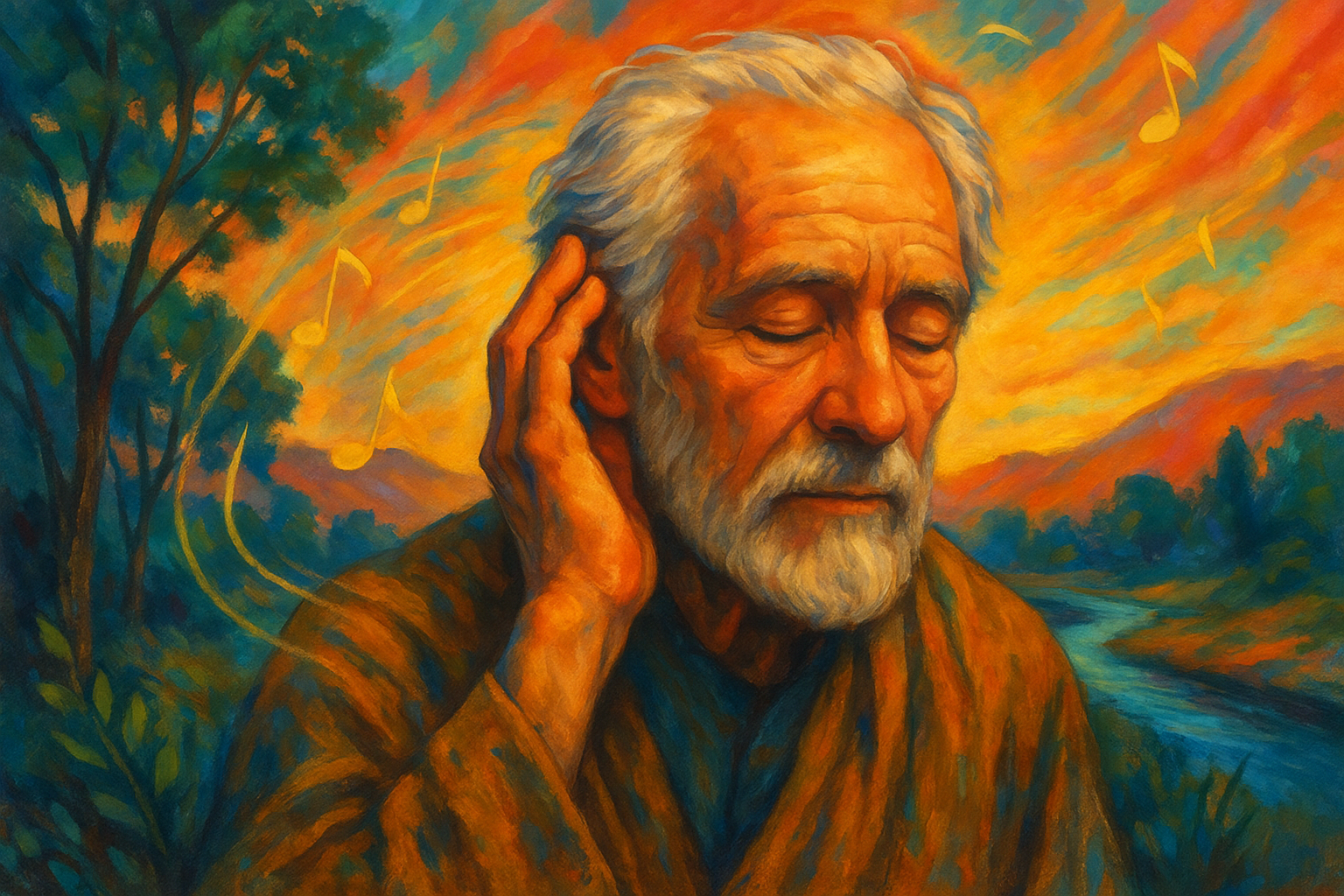
Tag: presence

  • Why Listening Matters More Than Giving Advice (A Barbershop Lesson)

    Why Listening Matters More Than Giving Advice (A Barbershop Lesson)

    “Most people do not listen with the intent to understand; they listen with the intent to reply.” ~Stephen R. Covey

    I used to think running a barbershop was all about haircuts, schedules, and keeping clients happy. I measured success by the number of chairs filled, how quickly we moved through the day, and whether everything ran smoothly. Efficiency felt like the most important thing.

    Then one afternoon, a moment with a customer changed everything.

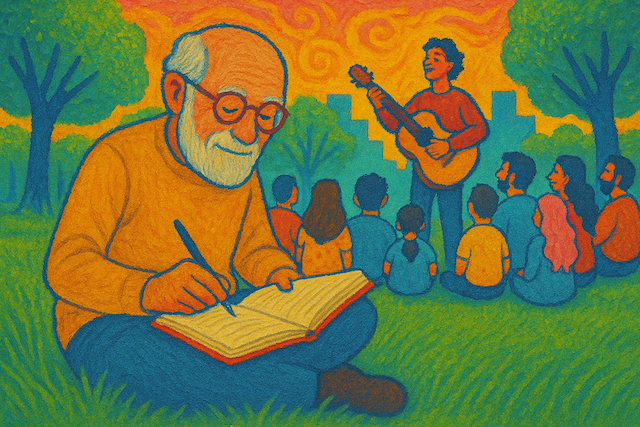
    Mr. Hicks, a regular, came in looking unusually quiet. He slumped in my chair, barely making eye contact, and gave only short, mumbled answers when I tried to make small talk. Normally, I would have filled the silence, tried to keep him talking, or offered advice. But that day, I paused. I simply listened. I let him sit in silence as I worked, resisting the urge to speak unnecessarily or try to “fix” anything.

    Minutes later, he began to share struggles he had been carrying for months—tensions at work, family challenges, the weight of constant exhaustion. By the time I finished his haircut, he looked lighter, calmer, almost relieved.

    I realized I hadn’t needed to give advice. I hadn’t needed to solve his problems. I had only given him my attention. That day, I learned a lesson I carry with me every time I sit behind the barber chair: listening is a gift, patience is a practice, and presence can heal in ways words sometimes cannot.

    This lesson didn’t just apply to Mr. Hicks. Over time, I began noticing similar moments with other clients, apprentices, and even friends and family.

    A young apprentice, struggling to perfect his techniques, came in one morning looking defeated. Instead of correcting him immediately, I stepped back, watched, and let him try on his own. When he finally turned to me for guidance, the lesson became his own. The joy on his face was more rewarding than any praise I could have offered.

    I’ve come to understand that patience isn’t just about waiting. It’s about presence. It’s about fully engaging in the moment, without rushing to the next task. In a barbershop, it’s easy to feel pressured—clients waiting, appointments lined up, every second seeming valuable. But slowing down and giving someone your full attention creates connection in a way speed never can.

    One afternoon, I faced a particularly challenging situation. A client came in visibly frustrated and tense. Every suggestion I made seemed to irritate him further.

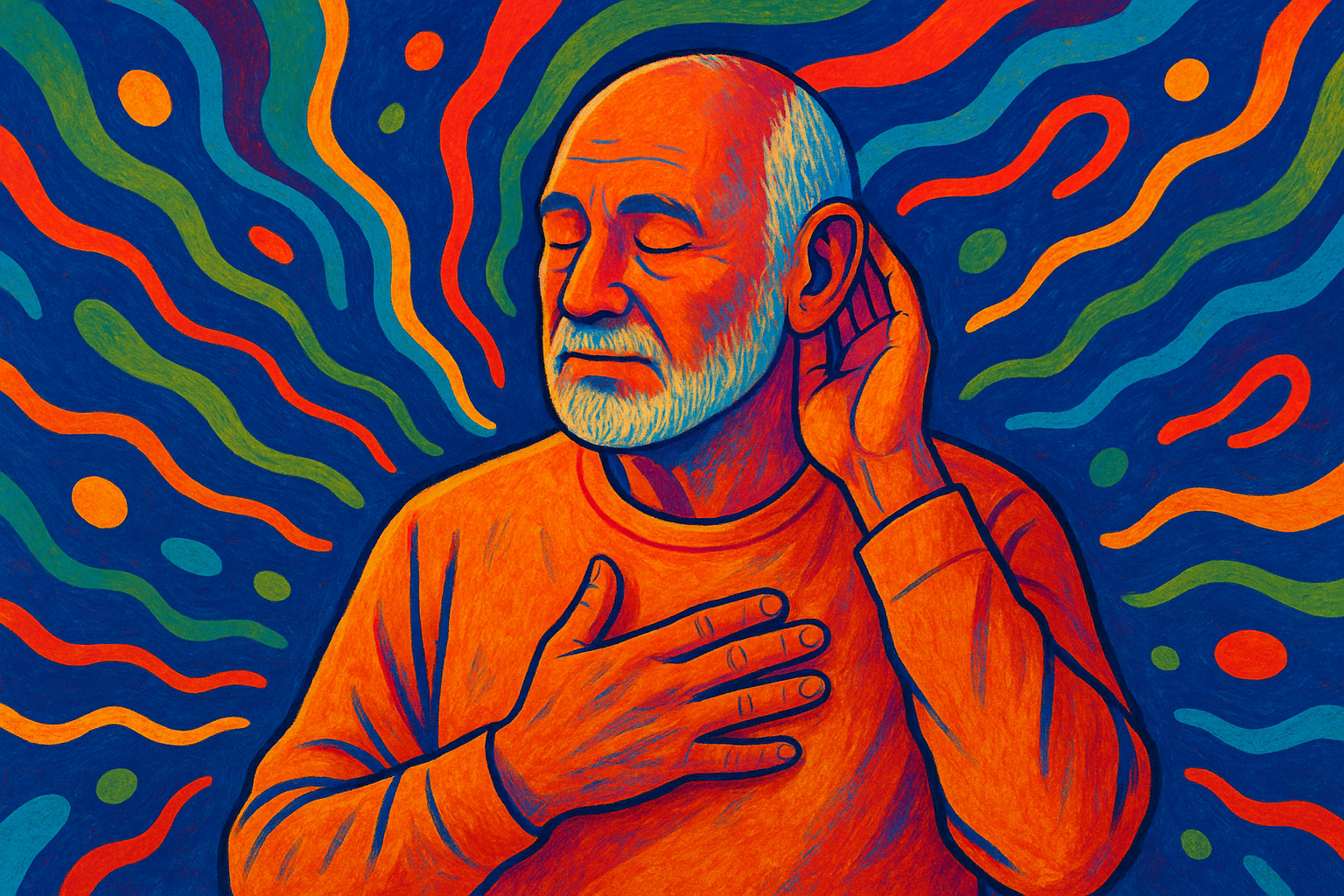
    I could have taken offense or brushed him off, but I tried a different approach. I listened not just to his words but to the subtle cues: the tone of his voice, the tension in his shoulders, the hesitation in his movements.

    Slowly, he began to relax, and by the time I finished, he was calmer, smiling, and expressing gratitude. That experience reinforced that sometimes, people need more than advice. They need acknowledgment and space to be heard.

    I’ve also carried these lessons beyond the shop. With friends, family, and even strangers, I try to pause before responding, asking myself whether I am truly listening or just waiting to reply. I’ve noticed that when I give people room to share openly, relationships deepen and grow more authentic.

    Running a barbershop has taught me humility. Not every story is easy to hear, and not every challenge can be solved with words or actions. But being present, patient, and genuinely attentive is a form of service that often matters more than technical skill. I’ve learned that my role isn’t always to fix problems but to create a safe space where people feel seen, understood, and valued.

    There have been moments of personal growth too. Early on, I struggled with impatience, rushing through tasks, wanting instant results, and missing the subtle cues from those around me. By paying attention to the human side of my work, I’ve learned to slow down, notice details, and respond thoughtfully rather than react impulsively. This patience has spilled over into other areas of my life—how I manage stress, handle conflict, and nurture relationships.

    I’ve also discovered that listening can transform the listener as much as the speaker. Each story I hear challenges me to see the world from a different perspective. I’ve developed empathy I never knew I had, realizing that everyone carries burdens and struggles silently, searching for someone willing to simply acknowledge them. This awareness has made me more compassionate, not just in the shop, but in every interaction.

    Sometimes, the lessons come in unexpected ways. I remember a shy teenager who came in for his first haircut. He was nervous, almost silent, and seemed unsure of how to interact. I spoke less, observed more, and let him get comfortable.

    By the end of the session, he was laughing, joking, and sharing stories. That simple act of patience, giving him room to open up, reminded me that growth often happens quietly, in small, unassuming moments.

    Through all of this, I’ve realized that patience and listening are not passive acts. They are active choices we make every day. They require mindfulness, attention, and the willingness to put another person’s experience before our own need to act or respond. Running a barbershop taught me that these choices, repeated over time, build trust, deepen relationships, and foster genuine human connection.

    If there’s one takeaway I can share, it’s this: slow down, be present, and listen. Whether in a barber’s chair, a living room, or a workplace, giving someone your full attention is a rare and valuable gift.

    You don’t need special training or expertise, just the willingness to be patient, notice, and understand. The lessons you learn, and the growth you experience, will stay with you long after the conversation ends.

  • The Prowler in My Mind: Learning to Live with Depression

    The Prowler in My Mind: Learning to Live with Depression

    “There is a crack in everything, that’s how the light gets in.” ~Leonard Cohen

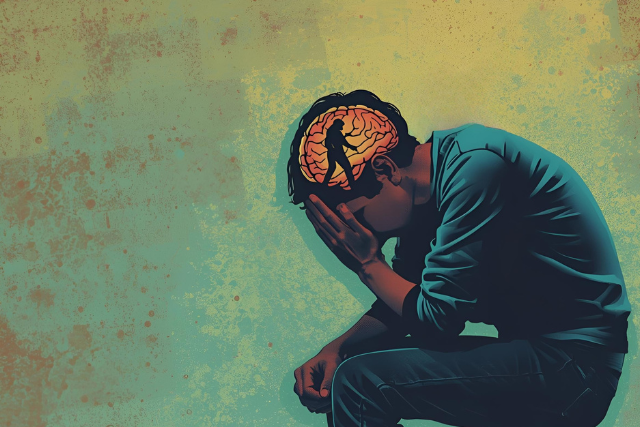
    When depression comes, I feel it like a prowler gliding through my body. My chest tightens, my head fills with dark whispers, and even the day feels like night. The prowler has no face, no clear shape, but its presence is heavy. Sometimes it circles in silence within me. Other times it presses in until I don’t know how to respond.

    In those moments, I feel caught between two choices: do I lie still, hoping it passes by, or do I rise and face it? Often, I choose lying down—not out of paralysis but patience. Sometimes the only way to coexist with the shadow is to rest, to surrender for a while, to let sleep take me. And sometimes, when I wake, I feel a little lighter. Not free of the prowler but reminded that it is possible to live alongside it.

    Carl Jung once wrote, “Everyone carries a shadow, and the less it is embodied in our conscious life, the blacker and denser it is.” I know this to be true. The more I try to push my depression away, the heavier it becomes. But when I bring awareness—even reluctant awareness—its power weakens.

    The Shadow as Teacher

    The shadow is not only my enemy. It also serves as a teacher. Depression forces me to face the parts of myself I would rather outrun: shame, grief, fear, anger, discontent. But it also carries hidden truths. Jung suggested that the shadow holds not just what we reject but also forgotten strengths and possibilities.

    For me, the shadow’s message is humility. It reminds me I am not in control, that I can’t polish myself into perfection. It pushes me to listen more deeply—to the pain I carry and the struggles I see in others. It insists that healing doesn’t come from pretending the darkness isn’t there. It comes from being willing to see it.

    Buddhism and the Prowler

    Buddhism gives me another way to see this. The Buddha taught that suffering doesn’t just come from clinging to what we crave; it also comes from turning away from what we don’t want to face. That turning away is called aversion.

    When the prowler moves through me, my instinct is always to turn away. I want to push it out, distract myself, pretend it isn’t there. But each time I run from it, the shadow grows stronger.

    In meditation, I practice staying. I sit and breathe, whispering silently, “May I be free from fear. May I be at peace.” I’ll be honest, sometimes these words feel empty or even silly. They don’t always lift me. But saying them creates a pause—a moment of willingness to stay instead of running. The prowler doesn’t vanish, but it softens a little under the light of compassion.

    Creativity and the Shadow

    I’ve also discovered that my documentary work—filmmaking, writing, teaching—is only authentic when I acknowledge the shadow. My camera becomes a mirror. When I pretend everything is light, the images feel flat. But when I allow the complexity of shadow into my seeing, the work has depth.

    When I sit with people to listen to their stories, I often sense their shadows too—grief unspoken, fear beneath the surface, contradictions in how they see themselves. I can recognize those shadows because I have lived with mine. Facing my own shadow allows me to meet others with greater truth and compassion.

    To create honestly means letting the shadow into the frame. Without it, there’s no contrast, no tension, no truth.

    Caregiving as Light

    One of the greatest gifts in my life now is caregiving for my ninety-six-year-old mother. These small daily acts bring moments of unexpected reprieve.

    I remember one morning, bringing her a simple breakfast—just toast and tea. She looked at me and smiled, her face lighting up with gratitude. In that moment, the prowler loosened its grip. It was such a small thing, yet it fed the part of me that wanted to live.

    Playing her old-time tunes on my Gibson mandolin does the same. When I see her foot tapping or hear her hum along, something shifts inside me. Caregiving sheds light into the darker places of my heart. The simplicity of preparing food or sharing music reminds me that love and service are stronger than despair. These acts don’t erase the shadow, but they bring balance, showing me I am more than my depression.

    Feeding the Shadow, Feeding the Light

    I’ve come to see that I sometimes feed my depression. Not on purpose, but through worry, anxiety, and rumination. Each time I circle the same fears, I am handing the prowler a meal.

    And then there are other times when I feed something else. The words of meditation may feel hollow, the wolf story may sound idealistic, but the simple acts are real: making my mother breakfast, playing her a mandolin tune, writing with honesty, or even just breathing one steady breath.

    It reminds me of the well-known story of two wolves: A grandfather told his grandson that inside each of us are two wolves. One is fierce and destructive, filled with anger, envy, fear, and despair. The other is peaceful and life-giving, filled with compassion, hope, and love. The boy asked, “Which one will win?” The grandfather replied, “The one you feed.”

    For me, both wolves are real. The prowler and the peaceful one live side by side. I don’t deny my depression. I know it is part of me. But I also know I can choose, moment by moment, which one I will feed.

    Presence with the Shadow

    The prowler still comes. I suspect it always will. Some days it circles silently like a vulture. Other days it urges me to lie down and surrender. And sometimes, when I wake, I feel a small relief—a reminder that coexistence is possible.

    This is what presence has come to mean for me. Presence is not escaping into light or denying the dark. Presence is staying with what is—the prowler, the heaviness, the caregiving, the fear. It means breathing with it, resting with it, even sleeping with it, without running away.

    Both Jung and the Buddha point in this direction. Jung says we cannot become whole without making the darkness conscious. The Buddha says we cannot be free if we turn away in aversion. And I have learned that I cannot create or care for others or live fully if I refuse to face the prowler inside me.

    So I continue step by step. I breathe. I stay. I rest. I create. I bring my mother breakfast. I play her mandolin tunes. I feed the peaceful wolf. I coexist. The shadow still prowls, but I am here too—more awake, more human, more present.

  • The Invisible Prison Shyness Builds and What Helped Me Walk Free

    The Invisible Prison Shyness Builds and What Helped Me Walk Free

    “Life shrinks or expands in proportion to one’s courage.” ~Anaïs Nin

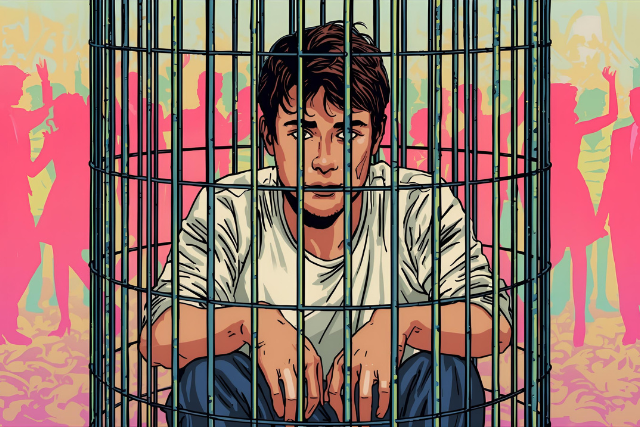
    When I think back on my life, shyness feels like an inner prison I carried with me for years. Not a prison with bars and guards, but a quieter kind—made of hesitation, fear, and silence. It kept me standing still while life moved forward around me.

    One memory stays with me: my eighth-grade dance. The gym was alive with music, kids moving awkwardly but freely on the floor, laughing, bumping into one another, having fun. And there I was in the corner, figuratively stomping paper cups.

    That’s how I remember it—like I was crushing cardboard instead of stepping into life. I can even smile at the image now, but at the time it wasn’t funny. I noticed another girl across the room, also standing alone. She was beautiful. Maybe she was waiting for someone to walk over. But in my mind, she was “out of reach.” My shyness locked me in place, and I never moved.

    It wasn’t a dramatic heartbreak—just another reminder of how many moments slipped by.

    The Pattern of Missed Chances

    That night was only one of many. Over the years I missed far more opportunities than I embraced: the conversations I didn’t start, the invitations I quietly avoided, the women I admired from a distance but never approached.

    Shyness never really served me. I hated it, but it was powerful. I carried it into my adult years, and though I fought hard to loosen its grip, it shaped how I lived and related. Over time I changed; I’d call myself “reserved” now rather than painfully shy. But the shadow is still there.

    Shyness as a Prison

    Shyness isn’t just being quiet. It’s a whole system of fear and self-consciousness: fear in the body, doubt in the mind, and inaction in the world. It feels like safety, but it’s really confinement. It builds walls between you and the very connections you long for.

    I’ve come to see shyness as a kind of “social yips.” Just as an athlete suddenly freezes when overthinking the simplest movement, I froze in moments of connection. I knew what I wanted to do, but my body wouldn’t follow. And like the yips, the more I thought about it, the worse it became. Buddhism later helped me see that the way through wasn’t forcing myself harder but loosening my grip—letting go of self-judgment and stepping into presence.

    Zorba and the Choice to Say Yes

    As I look back, I know not every missed chance would have been good for me. Sometimes the lure of conquest was more about ego than true connection, and saying no spared me mistakes.

    But there’s another kind of moment that still stings. In Zorba the Greek, Kazantzakis has Zorba say, “The worst sin a man can commit is to reject a woman who is beckoning.”

    The point isn’t about conquest—it’s about clinging. If you say yes when life beckons, you can walk away later without wondering forever. You’ve lived it, and it’s complete. But if you turn away, you carry the ghost of what might have been. That ghost clings to you.

    I know that ghost well—the ache of silence, the memory of walking away when I might have stepped forward. Those are the regrets that linger.

    A Buddhist Lens on Shyness

    Buddhism has helped me understand this prison in a new way. The Buddha taught that suffering arises not from life itself but from how we cling to it. My shyness was stitched together from craving, aversion, and delusion.

    The walls of my prison looked solid, but they weren’t. They were only habits of thought.

    Buddhism also teaches dependent origination: everything arises from causes and conditions. My shyness wasn’t my identity. It was the product of temperament, upbringing, culture, and adolescence. If it arose from conditions, it could also fade as conditions changed. It was never “me”—just a pattern I carried.

    And at the heart of it all was attachment to self-image. I was afraid of being judged, of looking foolish, of failing. But meditation taught me that the “self” I was defending was never solid. Thoughts pass, feelings change, identity shifts. When there’s no fixed self to protect, the fear loses its grip.

    Regret Without Clinging

    The memories of shyness still emerge from time to time. They’re not paralyzing anymore—I don’t live locked in that cell—but when they rise, they sting. They make me feel foolish, like a prisoner might feel when looking back on wasted years, replaying choices that can’t be undone.

    What I try to do now is not cling to them. I can see them for what they are: moderately unresolved regrets. They will probably always flicker in my memory. But instead of treating them like permanent failures, I let them pass through. They remind me I am human, that I once hesitated when I longed to act, and that I don’t have to make the same choice now.

    Regret, I’ve learned, can also be a teacher. It shows me what I value most: presence, intimacy, connection. It reminds me not to keep living behind walls of hesitation.

    Buddhism teaches that memory—whether sweet or painful—is something the mind clings to. But the door of the prison has always been unlocked. Freedom comes when we stop pacing the cell and step into the present.

    Saying Yes

    One memory from later in life stands out. I was in my twenties, still shy but trying to push past it. Someone I admired invited me to join a small group heading out after class. Everything in me wanted to retreat, to say no. But that time, I said yes.

    It wasn’t a great romance or life-changing event. We just shared coffee, talked, laughed a little. But what mattered was that I had stepped forward. For once, I wasn’t left haunted by what if. I walked away lighter, without clinging. That small yes gave me a glimpse of freedom.

    I’m still not outgoing. But I am no longer the boy in the corner, stomping cups while everyone else dances. I can step forward, even when my voice shakes. I can risk connection without assuming others are out of reach.

    Shyness may still whisper in my ear, but it no longer holds the keys.

    What I’ve Learned

    • Shyness was my inner prison, but the bars were made of thought, not stone.
    • Not every conquest would have served me—but turning away from true openness creates the sharpest regret.
    • Regret is painful, but it can teach us what matters most.
    • Memories of missed chances still surface, but I don’t have to cling to them.
    • Freedom doesn’t come from rewriting the past, but from choosing differently now.

    I still carry the memory of that eighth-grade dance, the girl across the room, the echo of other missed chances. But I don’t cling to them anymore. They remind me that presence is always possible—because freedom isn’t found in “what if.”

    It’s found in saying yes when life beckons and in stepping out of the prison of hesitation, here and now.

    To anyone reading this who has ever stood in the corner of their own life: the prison you feel around you was never locked. You can step forward, however awkwardly, and find freedom in the present moment.

  • The Unexpected Way Jiu-Jitsu Brought Me Back to Myself

    The Unexpected Way Jiu-Jitsu Brought Me Back to Myself

    “You may encounter many defeats, but you must not be defeated. In fact, it may be necessary to encounter the defeats, so you can know who you are.” ~Maya Angelou

    There was a time in my life when everything felt heavy, like I was constantly carrying around a weight that no one else could see.

    I wasn’t in a crisis, exactly. I was functioning, showing up, doing what needed to be done. But inside, I was struggling to stay afloat—trapped in my own head, questioning my worth, and unsure how to move forward.

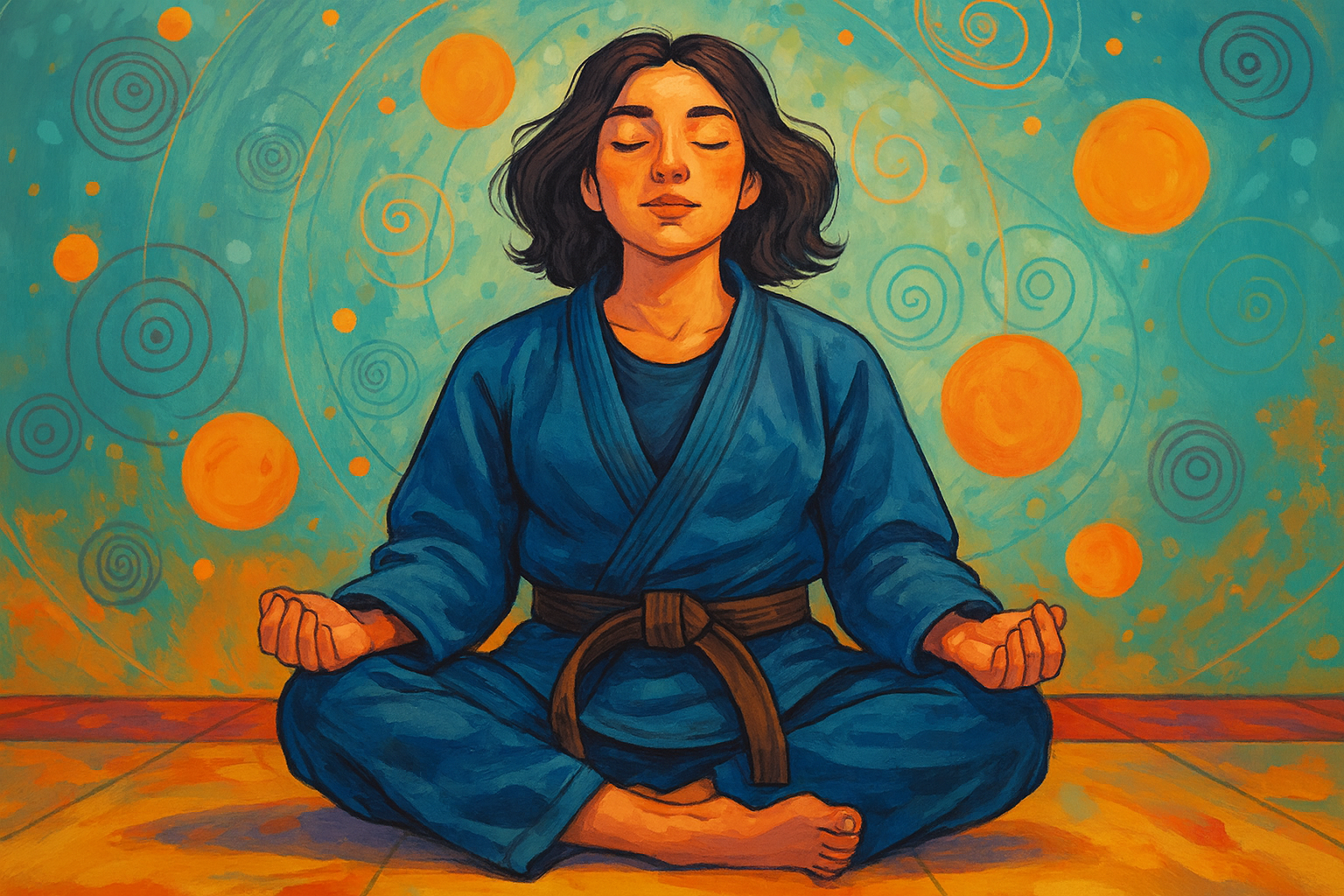
    One evening, I walked into a Brazilian Jiu-Jitsu class for the first time. I had no idea what I was doing. I didn’t know the rules, the language, or even how to tie the belt on my gi. But I was drawn to it—maybe because I was desperate for something to pull me out of my mental spiral. I needed structure. I needed challenge. I needed escape.

    What I didn’t expect was that BJJ would become more than a physical outlet. It became a form of therapy. A place where I could reconnect with my body when my mind felt like a battlefield.

    Finding Peace in the Pressure

    On the surface, BJJ looks intense—people grappling, sweating, fighting for control. But underneath, it’s a quiet game of survival. You breathe. You adjust. You adapt. You keep going.

    There were moments when I would be pinned, completely stuck, with someone twice my size on top of me. I’d panic. My breath would quicken; my thoughts would race. But then I’d hear my coach’s voice in the background: “Slow down. You’re okay. Just breathe.”

    That simple instruction saved me more than once—not just on the mat, but in life.

    Over time, I started to notice something: I was calmer outside of training. More patient. More aware. Jiu-Jitsu didn’t fix my mental health overnight, but it gave me tools to deal with the days when everything felt like too much.

    Losing It… and Finding It Again

    Of course, progress isn’t a straight line. After a few years of training, I got injured. Not once—multiple times. Each injury forced me to stop, rest, and reckon with the fear that maybe I wouldn’t return.

    Without Jiu-Jitsu, I felt lost again. That familiar darkness crept back in, and I realized how much I had come to rely on the practice to stay grounded. But eventually, I returned. Slower, more cautious, but more appreciative than ever.

    I realized it wasn’t about being the best or earning stripes. It was about showing up—for myself.

    What I’ve Learned

    I used to think healing meant getting rid of pain. Now I understand it’s more about learning to live with it—and learning how to move with it, not against it.

    Brazilian Jiu-Jitsu taught me resilience, yes. But more importantly, it taught me presence. You can’t be stuck in your head when someone’s trying to choke you out. You have to be here, now.

    That practice of presence changed how I approached everything else—relationships, work, rest. It helped me become someone who doesn’t give up so easily, even when things get hard.

    Why I’m Sharing This

    Maybe you’re not into martial arts. Maybe you’ve never set foot in a gym. That’s okay. This isn’t about Jiu-Jitsu—it’s about finding the thing that brings you back to yourself. That reminds you of your strength when you’ve forgotten it.

    It could be yoga, running, painting, journaling, hiking, music. It could be therapy. It doesn’t matter what it is, as long as it helps you come home to yourself.

    If you’re going through something right now, I want you to know: You’re not weak for struggling. You’re not broken. And you’re not alone.

    Find your mat—whatever that looks like for you. And when you do, keep showing up. You might be surprised at how strong you already are.

  • Micro-Faith, Huge Benefits: Reasons to Believe in Something Bigger

    Micro-Faith, Huge Benefits: Reasons to Believe in Something Bigger

    “Faith is taking the first step even when you don’t see the whole staircase.” ~Martin Luther King Jr.

    My grandmother passed away a few years ago after a long battle with cancer. Even as her health deteriorated, she never lost her spirit. She’d still get excited about whether the Pittsburgh Steelers might finally have a decent season after Ben Roethlisberger’s retirement. She’d debate the Pirates’ chances with the kind of passionate optimism that only comes from decades of loyal disappointment.

    But what I remember most are the afternoons she’d spend napping in her favorite chair with my son curled up against her. He’d drift off clutching some random object, like a wooden spoon or random toy from my parent’s basement. She’d just smile and close her eyes too. Even when she was tired, even when the treatments were wearing her down, she found joy in those stolen moments.

    In her final years, she lived with my parents, but she brought her faith with her.

    Her rosary beads found new homes on nightstands and windowsills. Her worn Bible sat open on the end table, bookmarked with a picture of her husband. The little curio cabinet filled with angels followed her too, a portable shrine to stubborn hope. Wherever she was, the air around her carried that same indefinable quality that I later realized was simply peace.

    My grandmother had the kind of faith that could part emotional storms with a single glance. She didn’t need to preach it. She lived it. You could feel her belief before you even stepped through the front door. She believed in prayer, in miracles, in second chances. In the Steelers. And in Diet Pepsi.

    After she was gone, I expected to feel completely untethered. Instead, I discovered something surprising. Things seemed to hold together. The sadness was real and deep, but underneath it was something solid. A foundation I’d never realized she’d built in me.

    My mother always said I “lived with my head in the clouds,” and it wasn’t until after Grandma passed that I understood where that came from. While I was raised in the Catholic church and spent years as an altar boy, my faith had always been fuzzier than hers. Less certain. More questions than answers.

    But it was there, hidden under the surface, because of her. I’d been benefiting from her quiet influence in ways I never fully understood or appreciated until she was gone. Her faith hadn’t just surrounded me. It had somehow taken root in me, even when I wasn’t paying attention.

    Learning to Recognize What Was Already There

    The months after her death weren’t filled with the existential crisis I expected. Instead, I found myself noticing things. How I naturally looked for the good in difficult situations. How I held onto hope even when logic suggested otherwise. How I moved through the world with a kind of quiet optimism that I’d never really examined before.

    I was still a professional overthinker, still a card-carrying worrier. But underneath all that mental noise was something steadier. Something that whispered, “This too shall pass,” even when I wasn’t consciously thinking it.

    It took time to understand that this wasn’t something I needed to build from scratch. Grandma hadn’t just modeled faith for me; she’d been quietly cultivating it in me all along. Through her example, through her presence, through those countless afternoons when she’d choose hope over fear, even when the odds were stacked against her health and her beloved sports teams.

    Discovering My Own Messy Version

    What I came to realize was that my faith was never going to look like Grandma’s. Hers was rooted in tradition, in ritual, in the comfort of centuries-old prayers. Mine was more scattered, cobbled together from different sources and experiences.

    My faith, I discovered, is held together with hope, a healthy dose of skepticism, and about six different kinds of sticky notes. It’s not the neat, organized kind. It’s more like a spiritual junk drawer full of useful things, but you’re never quite sure where anything is.

    I believe in second chances and fresh starts. I believe in the power of afternoon sun to reset your entire day. I believe that kindness is contagious and that sometimes the universe sends you exactly what you need, even if it arrives late, confused, and covered in cat hair.

    Some days, my faith is a whisper: “Maybe things will get better. Maybe I’m not alone. Maybe I can try again tomorrow.” Other days, it’s louder: “This is hard, but I can handle hard things. I’ve done it before.”

    My faith doesn’t look like Grandma’s, but it carries her DNA. It’s messier, less certain, but it has the same stubborn core, a refusal to give up hope, even when hope seems foolish.

    The Science of Belief

    Here’s what I wish I’d known during those dark months: You don’t have to be religious to benefit from faith. Science shows that belief in something greater than yourself can be a powerful tool for mental and emotional well-being.

    Faith literally reduces stress. Studies show that people who report a strong sense of meaning or spiritual belief have lower levels of cortisol, the hormone associated with stress. Translation? Faith helps your brain pump the brakes on panic.

    It improves emotional regulation by activating the brain’s prefrontal cortex, which helps you pause before spiraling. It builds psychological resilience by reminding you that you’re not at the center of every catastrophe. Whether you believe in God, the universe, karma, or cosmic duct tape, faith acts as a buffer against hopelessness.

    Acts of spiritual reflection can trigger the same brain regions involved in feelings of safety and joy. And faith often leads to rituals or conversations with others, building the connections that are crucial for well-being.

    Here’s the kicker: You don’t have to get it right. Wobbly faith counts. Uncertain, whispered-in-a-closet faith is still valid. Half-hearted “Okay, Universe, I trust you… kinda” mutterings are welcome here.

    The Power of Micro-Faith

    Big transformations feel great in theory but hard in practice. That’s why I’ve learned to embrace what I call “micro-faith,” these small, digestible moments of intentional belief. Like appetizers for your spirit.

    Today, try believing in something small:

    • The possibility of a good cup of coffee
    • The strength hiding inside your own weird little heart
    • The fact that what you need might already be on its way
    • The idea that this difficult season won’t last forever
    • The chance that tomorrow might feel a little lighter

    Faith doesn’t have to be grand or glowing. Sometimes it’s just showing up anyway, even when you’re not sure why.

    What Grandma Taught Me

    Years later, I realize Grandma didn’t just give me faith; she showed me how to live it. She taught me that faith isn’t about having all the answers. It’s about trusting that you’ll find your way, even in the dark.

    She taught me that belief can be quiet and still be powerful. That faith isn’t a destination but a traveling companion. That sometimes the most profound act of faith is simply getting up and trying again.

    Most importantly, she taught me that faith isn’t about perfection. It’s about showing up. Showing up to your life, to your relationships, to your own healing, even when you feel completely unprepared.

    I carry pieces of her faith with me now, mixed in with my own messy, imperfect beliefs. Some days I feel like I’m floating through life with my head in the clouds. But thanks to Grandma, and a whole lot of trial and error, I’ve learned to float up here without getting totally fried by the sun.

    If your faith feels fractured, fuzzy, or faint, you’re not doing it wrong. You’re just human. Faith isn’t a finish line. It’s a floating device. It won’t always steer you straight, but it might keep you above water long enough to find the shore.

    So go ahead and believe in something today. Even if it’s just the idea that the clouds will eventually clear… and the coffee won’t taste burnt this time.

  • Planning Without Panic and Learning to Live in the Now

    Planning Without Panic and Learning to Live in the Now

    “You can plan for a hundred years. But you don’t know what will happen the next moment.” ~Tibetan proverb

    Some days it feels like a fog I can’t shake—this underlying fear that something painful or uncertain is just around the corner.

    I try to be responsible. I try to prepare, make good choices, take care of things now so the future won’t unravel later. But beneath that effort is something harder to face: I feel helpless. I can’t control what’s coming, and that terrifies me.

    Maybe you’ve felt this too—that tension between doing your best and still fearing it’s not enough. Worry becomes a habit, like you’re rehearsing bad outcomes in your head just in case they happen.

    That’s where I found myself when I turned to Buddhist teachings—not for comfort exactly, but for a different relationship with uncertainty.

    What Buddhism Taught Me About the Future

    One of the first things I learned is that Buddhism doesn’t tell us to stop caring about the future. It teaches us to stop living in it.

    The Buddha spoke of suffering as arising from two core causes: craving (wanting things to go a certain way) and aversion (pushing away what we don’t want). When I spin into worry or try to predict everything, I’m doing both—I’m grasping for control and resisting what I fear.

    But the future is always uncertain. That’s the part I don’t want to admit. I used to believe that if I thought hard enough, planned carefully enough, I could outmaneuver risk. But I’ve learned that worry isn’t preparation—it’s just suffering in advance. It doesn’t protect me. It only pulls me out of the life I’m actually living.

    The Real Conflict: Planning vs. Presence

    Here’s the real tension I struggle with—and maybe you do too: I believe in the power of presence. But I also know I have to plan.

    As a filmmaker, planning isn’t optional. Without preparation, things fall apart. A well-structured plan doesn’t just prevent chaos—it makes room for creativity. It allows me to focus, explore, and respond to the moment without losing direction. In that way, planning is part of my art.

    So when I first encountered teachings about letting go and trusting the moment, it felt contradictory. How could I live in the now when my work, and life, require thinking ahead?

    This was the real conflict—the push and pull between control and surrender, between structure and flow. One is necessary for functioning in the world. The other is necessary for actually feeling alive in it.

    A Real-Life Lesson in Letting Go

    Years ago, I received grants to make a 16mm documentary about Emanuel Wood, a traditional Ozarks fiddler with a rich musical heritage and a colorful presence. I had high-quality gear lined up—Nagra 4.2 audio, film stock, the works—and the project felt blessed. Emanuel was eager. I was hopeful. The plan was solid.

    It felt like everything was finally coming together.

    But over the years I’ve learned something the hard way: sometimes, when I feel euphoric about a plan, it’s also a signal—a subtle warning that life might have something else in mind.

    Sure enough, Emanuel died unexpectedly just a few months before I was scheduled to begin filming. Just like that, the film I had meticulously envisioned, built support for, and shaped my year around was gone.

    I was devastated. I couldn’t give the grant money back, and I didn’t want to abandon the deeper spirit of the project. So I did what I didn’t expect to do: I stayed present, and I listened.

    I made a different film. A new one. Something just as honest and grounded in the world Emanuel represented. It was shaped by the same love of music, the same longing to preserve meaning, and it emerged only because I stayed with the discomfort and uncertainty of not knowing what to do next.

    Planning had given me the structure. But presence—and trust—allowed the story to live on in a different form.

    The Middle Path: Flexible Readiness

    I think about that lesson often. The same conflict plays out across many fields. The military trains obsessively for what can’t be predicted. A jazz musician rehearses scales for hours, only to let them go once the song begins.

    We don’t have to abandon planning. We just have to make space for improvisation.

    This is how I’ve come to understand the Buddhist path in a practical world: Planning is necessary. But clinging is optional.

    Now, I try to plan the way a musician tunes their instrument. Prepare with care. Show up with intention. But when the moment comes, play—not from control, but from connection.

    What Helps Me Now

    These days, when fear about the future rises, I pause. I breathe. I ask myself: Am I trying to control something I can’t? Can I still act responsibly without gripping so tightly? Can I trust this moment, even briefly?

    I still make plans. I still take responsibility. But I no longer pretend I can outthink uncertainty. I try to meet it with curiosity, flexibility, and a little kindness toward myself.

    Sometimes I quietly repeat:

    May I be safe. May I meet whatever comes with courage and care. May I trust this moment.

    That doesn’t solve everything. But it brings me back to the only place I actually have any power: here.

    You don’t have to give up planning. Just stop making it your emotional insurance policy.

    You can build the structure, take the next right step, and still leave space for life to surprise you.

    Let your plans serve your life—not replace it.

  • Can You Live a Meaningful Life Without Being Exceptional?

    Can You Live a Meaningful Life Without Being Exceptional?

    “The meaning of life is just to be alive. It is so plain and so obvious and so simple. And yet, everybody rushes around in a great panic as if it were necessary to achieve something beyond themselves.” ~Alan Watts

    As I enter the later stage of life, I find myself asking questions that are less about accomplishment and more about meaning. What matters now, when the need to prove myself has softened, but the old voices of expectation still echo in my mind?

    In a world that prizes novelty, speed, and success, I wonder what happens when we’re no longer chasing those things. What happens when our energy shifts from striving to listening? Can a life still be meaningful without the spotlight? Can we stop trying to be exceptional—and still feel like we belong?

    These questions have taken root in me—not just as passing thoughts, but as deep inquiries that color my mornings, my quiet moments, even my dreams. I don’t think they’re just my questions. I believe they reflect something many of us face as we grow older and begin to see life through a different lens—not the lens of ambition, but of attention.

    Some mornings, I wake up unsure of what I am going to do. There’s no urgent project at this time, no one needing my leadership, no schedule pulling me into motion. So I sit. I breathe. I try to listen—not to the noise of the world, but to something quieter: my own breath, my heartbeat, the faint hum of presence beneath it all.

    I’ve had a life full of meaningful work. I’ve been a filmmaker, a teacher, a musician, a writer, a nonprofit director. I’ve worked across cultures and disciplines, often off the beaten path. It was never glamorous, but it was sincere. Still, despite all of that, a voice used to whisper: not enough.

    I wasn’t the last one picked, but I was rarely the first. I wasn’t overlooked, but I wasn’t the standout. I didn’t collect awards or titles. I walked a different road—and somewhere along the way, I absorbed the belief that being “enough” meant being exceptional: chosen, praised, visible.

    Even when I claimed not to care about recognition, part of me still wanted it. And when it didn’t come, I quietly began to doubt the value of the path I’d chosen.

    Looking back, I see how early that need took hold. As a child, I often felt peripheral—not excluded, but not essential either. I had ideas, dreams, questions, but I can’t recall anyone asking what they were. The absence of real listening—from teachers, adults, systems—left a subtle wound. It taught me to measure worth by response. If no one asked, maybe it didn’t matter. Maybe I didn’t matter.

    That kind of message burrows deep. It doesn’t shout—it whispers. It tells you to prove yourself. To strive. To reach for validation instead of grounding in your own presence. And so, like many, I spent decades chasing a sense of meaning, hoping it would be confirmed by the world around me.

    When that confirmation didn’t come, I mistook my quiet path for failure. But now I see it more clearly: I was never failing—I was living. I just didn’t have the cultural mirror to see myself clearly.

    Because this isn’t just personal—it’s cultural.

    In American life, we talk about honoring our elders, but we rarely do. We celebrate youth, disruption, and innovation but forget continuity, reflection, and memory. Aging is framed as decline, rather than depth. Invisibility becomes a quiet fate.

    The workplace retires you. The culture tunes you out. Even family structures shift, often unintentionally, to prioritize the new.

    It’s not just individuals who feel this. It’s the society itself losing its anchor.

    In other cultures, aging is seen differently. The Stoics called wisdom the highest virtue. Indigenous communities treat elders as keepers of knowledge, not as relics. The Vikings entrusted decision-making to their gray-haired assemblies. The Clan Mothers of the Haudenosaunee and Queen Mothers of West Africa held respected leadership roles rooted in time-earned insight, not in youth.

    These cultures understand something we’ve forgotten: that perspective takes time. That wisdom isn’t the product of speed but of stillness. That life becomes more valuable—not less—when it’s been deeply lived.

    So the question shifts for me. It’s not just What’s the point of my life now? It becomes What kind of culture no longer sees the point of lives like mine? If we measure human value only by productivity, we end up discarding not just people—but the wisdom they carry.

    Still, I don’t want to just critique the culture. I want to live differently. If the world has lost its memory of how to honor elders, perhaps the first step is to remember myself—and live into that role, even if no one names it for me.

    In recent years, I’ve found grounding in Buddhist teachings—not as belief, but as a way to walk. The Four Noble Truths speak directly to my experience.

    Suffering exists. And one of its roots is tanhā—the craving for things to be other than they are.

    That craving once took the form of ambition, of perfectionism, of seeking approval. But now I see it more clearly. I suffered not because I lacked meaning—but because I believed meaning had to look a certain way.

    The Third Noble Truth offers something radical: the possibility of release. Not through accomplishment, but through letting go. And the Eightfold Path—Right View, Right Intention, Right Action, Right Livelihood, and so on—doesn’t prescribe a goal—it offers a rhythm. A way to return to the present.

    Letting go doesn’t mean retreat. It means softening the grip. Not grasping for certainty, but sitting with what is real. Not proving anything, but living with care.

    Carl Jung advised his patients to break a sweat and keep a journal. I try to do both.

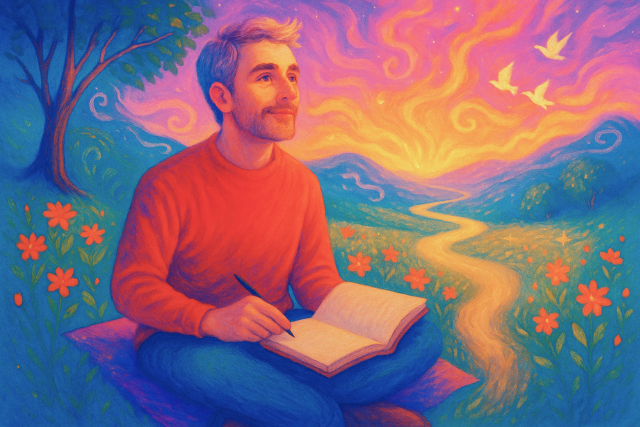
    Writing is how I make sense of what I feel. It slows me down. It draws me into presence. I don’t write to be known. I write to know myself. Even if the words remain unseen, the process itself feels holy—because it is honest.

    I’ve stopped waiting for someone to give me a platform or role. I’ve begun to live as if what I offer matters, even if no one applauds.

    And on the best days, that feels like freedom.

    There are still mornings when doubt returns: Did I do enough? Did I miss my moment? But I come back to this:

    It matters because it’s true. Not because it’s remarkable. Not because it changed the world. But because I lived it sincerely. I stayed close to what mattered to me. I didn’t look away.

    That’s what trust feels like to me now—not certainty or success, but a quiet willingness to keep walking, to keep showing up, to keep listening. To live this final chapter not as a decline, but as a deepening.

    Maybe the point isn’t to be exceptional. Maybe it’s to be present, to be real, to be kind. Maybe it’s to pass on something quieter than legacy but more lasting than ego: attention, care, perspective.

    Maybe that’s what elders were always meant to do.

  • How to Make Peace with Uncertainty—One Ritual at a Time

    How to Make Peace with Uncertainty—One Ritual at a Time

    “Rituals are the formulas by which harmony is restored.” ~Terry Tempest Williams

    Life doesn’t come with an instruction manual.

    One day, it’s a relationship you thought would last. Another, it’s a career path that suddenly dissolves. A health scare. A financial setback. Aging parents. A terrifying diagnosis. A global pandemic.

    If you’re lucky, you haven’t experienced all these—yet. But let’s be honest: we are all living in the liminal.

    The space between what was and what will be is where most of life actually happens. Yet we rarely talk about how to be there. We try to optimize or escape, hustle or numb—anything to avoid the discomfort of not knowing.

    But here’s the surprising truth: making peace with uncertainty isn’t about having more control. It’s about learning how to ride the waves instead of being pulled under by them.

    And this is where ritual offers its quiet power.

    Not necessarily the capital-R kind that requires incense and Gregorian chants—though those can work, too. I mean small, intentional actions that create a rhythm for your day, ones that help you feel grounded even when the ground feels shaky.

    Ritual as Refuge

    When my father died unexpectedly, I learned firsthand how ritual can hold you when nothing else makes sense. In the chaos of grief, it was the mourning rituals of our community—the wakes, the casserole meals, the familiar hymns filling the church—that kept us afloat.

    These weren’t grand solutions. They didn’t fix the pain. But they gave it shape. And that shape gave us something to hold onto.

    That’s the gift of ritual.

    Even now, in the most ordinary parts of my life, ritual keeps me tethered when the world is spinning.

    Sometimes it’s lighting candles for a weeknight dinner, and other times it’s stepping outside for a “noticing walk”—just a few minutes spent paying attention to the natural world around me. These rituals might look simple on the surface, but underneath, they’re working hard, stitching meaning into my day and helping me to remember who I am.

    Why Ritual Works When Life Falls Apart

    There’s a reason that rituals have been practiced across every known culture. Some anthropologists even consider ritual to be the cornerstone of civilization. Rituals help us mark time, create order, and tap into meaning—even when the future feels wildly out of reach.

    Unlike habits, which aim for efficiency, or routines, which often become mindless, rituals ask for your presence. They carry emotional weight. And they don’t have to be long or elaborate, but what they do require is intention and reverence.

    That morning walk with your dog? It can become a ritual if you treat it as a moment to breathe, notice the sky, and anchor into the now. Lighting a candle before bed. Saying a blessing before a meal. Writing a three-line journal entry each evening.

    These are not “life hacks.” They’re reminders that even in times of chaos, you still get to choose how you show up. And that choice—however small—is powerful.

    Ritual Isn’t About Perfection—It’s About Presence

    One of the biggest misconceptions about ritual is that it has to be rigid. But rituals can—and should—evolve. They aren’t meant to control life but to help us meet it with steadiness. They can also be fun!

    Rituals gain meaning not just from repetition but from what they’re rooted in. That’s why I encourage people to connect their ritual practice to a personal “North Star”—a set of core values or a vision for who they want to be in the world. When the external world feels chaotic, this internal compass becomes essential. Even the smallest ritual, when aligned with your deepest values, can become a powerful act of coherence.

    I often say, “You don’t need more time. You need more intention.” Just a few minutes of conscious action, aligned with your values, can shift your whole experience of the day.

    Especially when the day is hard.

    That’s the quiet gift of ritual: it won’t remove uncertainty, but it will remind you who you are meant to be in the face of it.

    The Neuroscience Behind Rituals

    There’s also something deeply physiological happening with ritual. When we engage in intentional, values-driven actions—especially those with structure and sensory richness—we begin to rewire our brains.

    Neuroscientists call this neuroplasticity. Repeating actions with emotional meaning strengthens neural pathways and helps us build resilience. Rituals aren’t just symbolic. They are embodied tools for transformation.

    Even the structure itself has benefits. Just a few minutes of focused, positive experience each day can begin to shift how we feel—and how we function.

    How to Begin

    If life feels unpredictable right now (and even if it doesn’t), try this:

    Choose one part of your day you can reclaim—a moment that already exists. Maybe it’s the minute before your morning coffee, the transition between work and dinner, or the final few breaths before sleep.

    Add a layer of intention to it. A breath. A word. A gesture. A prayer. A pause.

    Then go one step further: connect that moment to your core values.

    Ask yourself: What intention do I want to bring to this part of my day? Maybe it’s compassion. Maybe it’s strength. Maybe it’s a simple commitment to being present.

    Let that idea guide how you show up in your ritual. You could even write it down or say it aloud. When your ritual reflects your core values, it becomes more than just a habit—it becomes a practice of alignment.

    Need help identifying those values? Ask:

    • How do I want to show up in this moment?
    • What would my highest self do here?
    • What really matters to me—when all the noise falls away?

    Repeat your ritual every day. Not rigidly, but reliably.

    Then notice what shifts.

    You may still be in the unknown, but you won’t be untethered. You’ll have created a sacred pause. And in that pause, you might find the steadiness you didn’t know you had.

    Ritual as Resistance—and Renewal

    In a culture that values productivity over presence, taking time to ritualize your day can feel radical. But it’s also deeply restorative. Ritual reminds us that we are not machines. We are humans, longing for connection, coherence, and care.

    Whether you’re lighting a candle or taking a breath, whether your ritual is silent or sung, solo or shared—it matters. Not because it will solve every problem, but because it helps you face those problems with clarity and heart.

    In uncertain times, ritual won’t hand you a map.

    But it will remind you where your compass is.

  • How I Learned to Be Present—One Sound at a Time

    How I Learned to Be Present—One Sound at a Time

    “Time isn’t the main thing. It’s the only thing.” ~Miles Davis

    When I first read that quote, it hit me right in the chest. Not because it sounded profound—but because it was something I had been slowly, painfully learning over the course of a very quiet, very long year.

    Time used to feel like a race. Or maybe a shadow. Or a trickster. Some days, it slipped through my fingers like water. Other days, it dragged me along like a heavy cart. But always, it was something outside me—something I was chasing or trying to escape.

    I spent much of my life impatient. Not in the obvious, tapping-your-foot kind of way, but in the quiet, internal kind of way: the constant sense that something should be happening, or happening faster, or already have happened by now. I measured life by milestones—achievements, breakthroughs, arrivals. I told myself I was being productive, but really, I was just uncomfortable with stillness.

    The Turning Point: Time Isn’t Linear

    Before all this, I thought of sound as something external—music, noise, conversation. But Nada Yoga transformed that understanding. In the stillness of those long days, sound became an anchor. Even the hum of the heater or the ticking of the clock became companions. When I gave them my full attention, they stopped being background noise and became part of the present moment.

    This is when I began to understand that time isn’t as linear as I had always believed. The past and future were ideas playing out in my mind, but the sound of now—the tone, the breath, the subtle vibration in my chest—was undeniable. And every time I tuned into it, I found myself grounded again.

    Physics agrees in strange ways. Einstein called time a “stubbornly persistent illusion,” and in the language of relativity, time doesn’t pass in the way we feel it does. Some physicists believe that the past, present, and future all exist at once—that time isn’t a straight line, but more like a landscape we move through. What we experience as “now” depends on where we’re standing, so to speak—our frame of reference.

    It’s not that time isn’t real—it’s that our experience of it is shaped by attention, memory, and movement.

    This insight doesn’t make time feel less urgent, but it reframes it. If time is an illusion, it may be less about seconds ticking by and more about awareness itself. What we call “now” isn’t a slice between before and after—it’s a field we enter through presence. That’s why mindfulness and Nada Yoga matter here: they’re not just techniques for coping—they’re ways of seeing.

    In the teachings of the Eightfold Path, this felt most connected to Right Mindfulness and Right Concentration. But instead of striving to perfect these steps, I simply allowed sound to lead me there. Following the thread of vibration was a practice in presence. It didn’t matter what time the clock said. The only real moment was the one I could hear, feel, and meet with openness.

    When Time Moves Too Fast

    Eventually, I began to feel better. My body regained strength, and my thinking was clearer. I started doing more, breathing more slowly, walking farther, making plans. But with that return came a different kind of challenge: the speed of life.

    It’s incredible how quickly we can forget stillness once momentum kicks back in. Emails. Errands. The endless list of things we should’ve already done. I was “back,” but I noticed something curious—I missed the slow time. Not the discomfort, but the spaciousness. The simplicity. The depth I had discovered when life wasn’t asking me to move so fast.

    I tried to hold onto what I’d learned. I’d remind myself that presence doesn’t need to be complicated—listening to a soft drone or resting in the inner hum I could still feel when I paid attention. That tiny ritual became a way to soften the edges of my days. It reminded me that even when life is loud and fast, there is still something quiet underneath, waiting.

    And once again, I turned to the Eightfold Path, this time to Right Effort. Not effort as in struggle, but the gentle discipline to return, to listen, to not forget myself in the rush. Patience, it turns out, isn’t something you master once and for all. It’s something you practice again and again in small, quiet ways.

    The Sound of Patience

    What surprised me most was realizing that patience has a sound. It’s not always silence.

    Sometimes, it’s the low hum of the fridge at midnight. Sometimes, it’s the steady beat of a distant drum in a piece of music. Sometimes, it’s just my own breath or heartbeat or pulse, reminding me that I am here.

    And presence has its own rhythm too. The more I tuned in, the more I saw how much time opens up when I stop resisting it. A few mindful minutes can feel full and rich. A rushed hour can feel like nothing at all.

    We say “time flies” when we’re enjoying ourselves—but I’ve found something deeper: time expands when we’re fully present. When I listen—really listen—to what is here, I don’t feel late. I don’t feel behind. I feel whole.

    This doesn’t mean I’ve figured it all out. I still lose patience. I still check the clock too much. But now, I have a practice to return to—a practice built not on perfection, but on sound, breath, and the quiet trust that everything unfolds in its own time.

    The longer I walk this path, the more I see that my suffering around time wasn’t really about minutes or hours. It was about resistance. It was about the belief that the present moment was never quite enough. That I had to get somewhere, become someone, achieve something before I could rest.

    But through mindfulness, and especially through the practice of listening—whether to the soft whispering tones of the wind in Nada Yoga or to the ordinary sounds of daily life—I’ve discovered a gentler truth:

    The present moment isn’t something we earn. It’s something we enter.

    And when we do, when we stop fighting time and start listening to it, we find something unexpected—not emptiness, but richness. Not waiting, but arrival.

    A Closing Reflection

    There’s a soft drone of reticulated sounds playing as I write this now. A deep tone that barely shifts but somehow holds me steady. It reminds me to breathe. It reminds me to slow down. It reminds me that I am not behind—I am here.

    I think that’s the real gift of both mindfulness and Nada Yoga. Not to help us “make the most of our time,” but to help us feel time differently—not as a pressure, but as a presence.

    And so I leave you with this:

    Next time you feel rushed or restless, stop. Close your eyes. Listen for the quietest sound in the room—or in you. It might not be music, or even beautiful, but it will be real. And in that sound, however small, you might find a doorway to now.

    And now, as Miles Davis said, time is not just the main thing—it’s the only thing.

  • To the Dreamers Reading This, I Want You to Know…

    To the Dreamers Reading This, I Want You to Know…

    There I was, eating cereal and watching a CNN documentary about Kobe Bryant—yes, I mix deep life reflection with Raisin Bran—when his old speech teacher said something that made me pause mid-chew. He described Kobe’s approach to life as giving everything—heart, soul, and body—to his craft. No halfway. Just all in.

    I sat there thinking, “Yes! That’s it!” That’s the very thing I try to convey to my students in class, usually while making wild arm gestures and accidentally knocking over a marker cup. I believe in that philosophy with every fiber of my chalk-dusted being.

    High Risk, Deep Roots

    But here’s the deal: it’s also terrifying.

    This idea of going all in on your calling—it sounds noble and exciting and worthy of a motivational poster—but the truth is, it’s a gamble. A high-stakes, heart-first kind of gamble. Especially today.

    I mean, the ancient world totally backed this idea. Aristotle called it arete—excellence as a way of life. The Stoics preached about inner strength, Japanese samurai gave us Bushidō, and every jazz musician who ever improvised their way to bliss knows the power of flow. Even athletes talk about that magical zone where time melts away and it’s just you, the court, the ball, and that buzzing sense of rightness.

    Modern Metrics vs. Timeless Passion

    But our modern world? Eh, not so much. Today, we value your output. Your metrics. Your monetization plan. It’s like we collectively replaced passion with performance indicators.

    Don’t get me wrong—I’m not against paying the bills. I enjoy food, shelter, and the occasional streaming service. But if you’re a young person with a dream that doesn’t come with a subscription model or an app-based hustle plan? Welcome to what I call “existential whiplash.”

    You’re told, “Follow your bliss!” and “Live with purpose!” But the next second someone’s asking, “Yeah, but how will you monetize that?”

    This contradiction is exhausting. And it gets inside your head. You start to think, “Maybe I’m wrong to want this. Maybe I should just do something safer. Maybe dreams are for people with trust funds.”

    But here’s where I get a little loud in class—yes, I stand on chairs occasionally—and say: No. Your dream is not a liability.

    It’s a pulse. A heartbeat. A spark. And you owe it to yourself to explore it—even if it’s hard.

    Now, I won’t sugarcoat this: you can throw your whole self into something and not get the rewards you hoped for. I’ve lived that. I’ve made documentaries that reached small audiences. I’ve written things I thought would change the world and heard nothing but crickets. I’ve built programs that vanished when the grant money dried up.

    But here’s the weird thing: I still wouldn’t trade it. Because in the pursuit—yes, even in the flops—I found something essential.

    The Gift of Flow and Presence

    Flow. Purpose. Connection.

    When I was filming at dawn in a mountain village in the Philippines, or listening—really listening—to a student struggle their way into their voice, I wasn’t thinking about success. I was there. Fully. Mindfully. There’s nothing else like it.

    Those moments are why we do the risky thing. Because we’re not robots. We’re not spreadsheets. We’re meaning-makers. And when we pursue something with full attention and intention, we tap into something sacred.

    Still, let’s be real. In our society, even mindfulness has been commodified. There’s a subscription for calm. A brand for stillness. A market for minimalism. If I sound cynical, it’s because I’ve watched so many of my students get talked out of their deepest truths by the crushing logic of “practicality.”

    Redefining Success

    So, what do we do? How do we hold on to our inner compass when the GPS keeps yelling “Recalculate!” toward a safer, more profitable life?

    I think it comes down to redefining what “success” really means.

    I tell my students: don’t measure your life by likes, views, or even income (although, yes, make sure you eat). Measure it by the depth of your experience. By the risks you were willing to take. By the people you helped. By the moments you felt alive and grounded in something real.

    A Quiet Life Can Still Be Epic

    Because that’s what makes a life worth living. Not perfection. Not applause. But presence.

    You can live a small-looking life with a vast inner world. You can chase something meaningful and not be famous. You can teach or paint or write or code or dance or build without needing to “go viral” to matter.

    Yes, there are trade-offs. Believe me, I’ve wrestled with them. I’ve had months where I wondered if I made a mistake, if I’d be better off in a more stable career. I’ve asked myself whether it’s selfish to keep chasing ideas when I could be saving for retirement instead.

    But then I remember: a life without dreams, without creative risk, without vulnerability? That would break me faster than any unpaid invoice.

    This Is the Gift (and the Gamble)

    To the dreamers reading this—especially the young ones, or the older ones just beginning again—I want to say this:

    Don’t let the world’s cynicism shrink your vision. Stay mindful, not just in meditation, but in how you choose—how you spend your time, your energy, your attention. Live with full awareness, even when it’s hard. Especially when it’s hard.

    Because that’s the gift of mindful living. Not constant calm or peace—but full contact with reality. The beauty and the fear. The creativity and the chaos. The risk and the reward.

    Show Up Anyway

    And maybe, just maybe, that’s the point. That life isn’t about winning. It’s about showing up fully, heart, soul, and body. Just like Kobe. Just like all of us trying to do this thing with courage.

    I’m not indispensable. I’m not a guru. I’m just a guy who still gets goosebumps when a student discovers something real inside themselves. I’ve lived long enough to know dreams don’t always pay off, but they always teach you something vital—about who you are and what you care about.

    And for me, that has always been enough.

  • The Power of Silence and How to Really Listen

    The Power of Silence and How to Really Listen

    “The silence between the notes is as important as the notes themselves.”  ~Wolfgang Amadeus Mozart

    When I was younger, I thought knowledge was something you could capture—something you could write down, measure, and prove. I believed that to understand something, I had to explain it. And for a long time, I tried.

    But then, life—through film, through music, through long conversations with people whose wisdom couldn’t be found in books—taught me something else: the most powerful truths don’t always come in words. They exist in the space between them.

    I learned this lesson in the mountains, where the sky stretches wide, and silence is not empty but full of presence. I had traveled there to document a group of elders who carried the history of their people in their voices, in their stories, in the songs they sang to the younger generations.

    One elder, in particular, stood out. He didn’t speak much, but when he did, the others listened. Alongside his fellow elders, he would chant in a rhythmic, sing-song cadence, weaving the origins of the universe into the fabric of their small mountain community. But what struck me most wasn’t his voice—it was his silence.

    As the camera rolled, he sat in stillness. The wind whispered through the trees. The river murmured its eternal song. In that quiet, there was something deeper than speech, something that pulsed with meaning.

    Later, when I played the footage for a colleague, they asked, “But what is he saying?”

    I wanted to answer, Everything.

    Listening Beyond Words

    If you’ve ever felt like the world moves too fast, like people are speaking over each other instead of really hearing, then you already know how rare true listening is. We live in a time when everyone wants to be heard, but few know how to listen.

    Listening—real listening—isn’t just about hearing words. It’s about feeling presence. It’s about noticing what isn’t being said. It’s about sensing the weight behind someone’s silence, the emotion in their breath before they speak.

    I didn’t always know how to listen this way. In my early years as a filmmaker, I focused on what was visible—the shot, the framing, the dialogue. But over time, I realized that the most powerful moments weren’t always what was said aloud. It was the glance between two people who had known each other forever. It was the way someone’s hands trembled before telling a difficult story. It was the pause between sentences, where something unspoken begged to be understood.

    This kind of listening—deep listening—is a skill, just like any other. And like any skill, it can be practiced. It requires patience. It requires presence. And it requires a willingness to be quiet yourself, to let go of the need to respond, explain, or control the conversation.

    The Silence That Speaks

    There is an old teaching in Nada Yoga, the yoga of sound, that says silence is not an absence, but a vibration. It is a resonance that allows meaning to unfold.

    I have felt this in the editing room, cutting together scenes, realizing that what moves people is not the dialogue but the spaces between it—the quiet before the revelation, the moment of stillness before the truth lands. I have felt it in music, when a musician allows a note to fade just long enough for it to sink into the listener’s bones.

    And I have felt it in life, in conversations where someone shares something so raw, so deeply personal, that all you can do is sit with them in silence.

    That silence is not empty. It is full of acknowledgment, of understanding, of respect.

    The Power of Presence

    One of the greatest challenges I faced in my work was convincing people that this kind of knowledge—this ability to sit with silence, to notice, to be present—is just as valuable as facts and figures, as theories and analysis.

    Academia, where I spent much of my life, doesn’t always recognize the kind of knowledge that is felt more than written. The kind of scholarship that comes through film, through sound, through experience. There, knowledge is measured in citations, in publications, in things that can be counted. But how do you count a pause? How do you measure the impact of a shared silence?

    I have spent years trying to advocate for a broader understanding of what it means to know something. To understand that presence—the ability to be fully here, fully aware—is its own kind of intelligence.

    And here’s what I want you to know: You don’t have to be a filmmaker or a scholar to develop this skill. You don’t have to travel to distant mountains or sit in long hours of meditation. You just have to start paying attention.

    How to Listen Deeply

    If you want to learn to listen—to truly listen—try this:

    1. Pause before responding.

    Next time someone speaks to you, don’t rush to fill the space. Let their words settle. Notice what else is there—their body language, their expression, what they aren’t saying.

    2. Listen without planning your reply.

    Too often, we only half-listen because we’re already thinking about what we’ll say next. Instead, try just absorbing what’s being said. Let the response come naturally.

    3. Pay attention to the silences.

    In music, the rests are just as important as the notes. In conversation, the pauses carry meaning. Notice what happens in those spaces.

    4. Be comfortable with not knowing.

    Some of the most profound moments in life don’t come with clear answers. Be open to sitting with uncertainty.

    5. Practice with sound.

    Spend time listening to the world around you—really listening. Close your eyes. Notice how many layers of sound exist at once. The wind. The hum of a distant car. The rhythm of your own breathing.

    The more you develop your ability to listen, the more you will understand—not just about others, but about yourself.

    A Different Kind of Knowing

    I write this now, not as a call to arms, but as an invitation.

    To the artists, the thinkers, the ones who feel deeply but don’t always have the words—know that there is a place for you. There is value in the way you experience the world.

    You don’t have to explain everything. You don’t have to put it all into words.

    Sometimes, the most powerful things we know—the things that change us—exist in the space between words.

    And if you ever find yourself doubting whether your way of seeing, of listening, of feeling has a place in this world, remember this:

    Some of the greatest wisdom isn’t spoken.

    Some of the most powerful messages are never written.

    And sometimes, the best way to understand is to simply be present.

  • Escaping Escapism: From Drinking to Scrolling to Being Present

    Escaping Escapism: From Drinking to Scrolling to Being Present

    “Sit with it. Instead of drinking it away, smoking it away, sleeping it away, eating it away, or running from it. Just sit with it. Healing happens by feeling.” ~Unknown

    I had no idea I had so many feelings until four years ago. I became sober and immediately started overflowing with emotions—emotions I never knew I had.

    I stopped drinking just over a month after my twenty-fifth birthday, in January of 2021. I drank a lot in college, often going out Thursday, Friday, and Saturday nights every week. Once I graduated, though, my drinking mellowed. I was still going out, but paying for my own drinks (as opposed to the free flow of alcohol at a college party) forced me to drink less to save more.

    Early in 2020, my drinking increased again due to being stuck inside while in an unpleasant living situation. By the end of 2020, though, I again wasn’t drinking much—maybe a glass of wine or two during the weekend. I was, however, smoking weed daily.

    Cannabis, a substance used by many to calm their anxiety, did the opposite for me. Every day after work, I would sit on the front porch and smoke a joint—through rain, snow, anything. I loved the heady feeling of being high.

    When I was high, I felt motivated to become a better person (that motivation, however, lacked follow-up action). I felt like a child again, seeing everything with wonder in my (droopy red) eyes.

    While I enjoyed the effects of weed, I also felt my anxiety, an ever-present being in my psyche, slowly become more intense. One harrowing night, after being up for hours having panic attacks caused by both alcohol and weed, I made the decision to try sobriety.

    I went into sobriety with no expectations. It was an experiment for me, although I had a hunch I was on the right path. Would not smoking help my mental health? Would quitting drinking lower my anxiety? I was about to find out.

    I realized that something changes when you stop engaging with harmful substances, almost like a switch slowly flips the less mind-altering drugs are in your body. Things become clear, like taking off glasses you didn’t know you were wearing. You realize things and remember things, especially things you didn’t expect. Thoughts you had forgotten, memories you thought you blocked, trauma you thought you had released.

    There’s something about the absence of anything mind-altering in the body that makes things abundantly transparent. In early sobriety, I discovered that the anxiety I thought I was healed from was only lying dormant.

    I’ve had anxiety my entire life; some of my earliest memories are of being anxious. I remember starting kindergarten nervous that my peers would make fun of me for the way I chewed.

    By January 2021, I thought I had my anxiety under control. I was on the same medication I had started nine years prior. I was going to therapy regularly. I was familiar with the feeling of butterflies taking over my stomach, the wash of heat or cold that would overtake me during a really anxious moment.

    I did not, however, know how to manage my anxiety without any substances. The second I stopped smoking daily, it felt like all the suppressed anxiety came to haunt me. My legs were constantly bouncing. My stomach was constantly upset. My heart was constantly pounding. I couldn’t go a day without at least an hour of panic attacks.

    I was terrified and confused, thinking to myself, Shouldn’t I be feeling better? I thought I moved past these intense feelings ages ago.

    With time, my panic attacks became fewer and farther between. I learned to allow the feelings to flow through my body—my legs would eventually stop bouncing, my stomach would eventually feel normal, my heart would eventually return to its natural rhythm.

    But I still unconsciously tried to find distractions. I drank caffeine, and I scrolled on social media. I read a pile of self-help books without taking any action. Just reading the book is enough to feel successful in self-improvement, right? But really, I was in the same place as I was pre-sobriety. The only difference was I was suppressing my feelings with social media instead of the bottle or a joint.

    Then I woke up one day and recognized that social media was serving the same purpose as substances did. I would get up on the weekends feeling hungover, even though I hadn’t drank the night before. I had, however, scrolled TikTok for an hour.

    Getting out of bed after bingeing social media feels like getting out of bed after bingeing alcohol. I had stopped using substances, but I hadn’t stopped doing everything I could to get away from experiencing everything happening inside me.

    Once I had this realization, I tried, desperately, to process my emotions, to feel my feelings, but the lure of TikTok was so strong. I’d tell myself only five minutes but would be in the same position an hour later with a stiff neck, berating myself for bingeing TikTok yet again.

    Escapism was screaming in my ear, and it was so, so easy to give in. Reaching for a phone takes a second; processing an emotion takes minutes. Which one is easier? Which one is more beneficial? Which one will make me feel better?

    I was stuck in this cycle of wanting to be in touch with my feelings, of wanting to embrace life, but continually falling into the trap of one addiction or another because it’s Just. So. Easy.

    Our phones were designed to suck us in and rewire our brains to use them to escape our lives. And no matter how much I recognize that and how much I want to be fully present every day, I can’t seem to stop trying to ignore my feelings.

    Every day when I get home from work, I ‘decompress,’ using my thirty minutes of allotted TikTok time curled up on the couch. I do feel refreshed after, but I can’t help but think, how close are we to living in the spaceship from Wall-E? How soon will we all be so glued to technology we’ll be physically allergic to human emotion?

    When there were talks of TikTok getting banned in the US, people were freaking out. Influencers who make their income on the app were posting videos on where else they could be found. People were revealing secrets—some influencers even admitted to building their platforms on lies.

    When did we become so dependent on an app? How have we gone from dial-up internet to tiny computers in our pockets that we can use anytime, anywhere in the course of my lifetime? And why are social media apps designed like casinos—to give us little dopamine hits here and there to keep us engaged and addicted?

    When I phrase it like that, social media can be easily seen as evil. However, social media has also done a lot of good.

    I’ve used TikTok to find tips on managing anxiety, on curing migraines, and workouts.

    People have donated the money they’ve made to good causes—to rebuilding Asheville after Hurricane Helene, to Planned Parenthood, and to buy school lunches for children.

    Unknown authors, singers, and comedians have gained fans and recognition.

    How can something that’s done so much good be so bad at the same time? How do we, as humans with pleasure-seeking brains, reconcile this dichotomy? I regularly have this conversation with my therapist, as I recognize how far I’ve come.

    It took two years of sobriety for me to WANT to acknowledge my feelings. Although I had been in therapy on and off since I was a child, my therapy became much more effective post-sobriety.

    I felt like I was on the fast track to healing, like before I had been dragging my feet with my therapist, and now we were running together like athletes. It still took a while, however, to turn away from escapism and embrace my inner world.

    It’s taken another two years to start becoming aware of every time I turn to one of my vices. Life is so busy that it’s easy for me to go a week drinking caffeine every day, or extending my TikTok screen time for fifteen more minutes four times in a row.

    It’s taken years of building knowledge of what makes me feel good (for real) and what makes me feel like substances used to—good for a moment, bad for a while.

    I love reading, and I always feel refreshed after taking some time out of my day to read. Listening to music can always put me in a good mood. How long is it going to take for me to fully let go of technology, of dampening my emotions to avoid unpleasantness? Will I ever find peace?

    Had someone told me four years ago I would be writing about the similarities between substances and social media, I would’ve laughed and said, “They’re both so fun; they make my life better!” But that’s addiction, isn’t it? Even if you don’t have “a problem,” looking to external sources for your happiness will always end in suffering.

    Although sobriety hasn’t solved my desire to escape, I do feel a lot better than before, and I continue improving every day. Over time, I’ve learned to accept and sit with my emotions. I know that everything will pass, even the most unpleasant feelings.

    Four years in, I finally understand that vices are a way to run away from feelings. I may never totally escape escapism, but as long as I continue trying to choose presence and awareness, that will have to be enough.

  • Why We All Need to Pause More Often and How to Do It

    Why We All Need to Pause More Often and How to Do It

    “Taking time to do nothing often brings everything into perspective.” ~Doe Zantamata

    I have always been that person who just cannot seem to slow down. An overachiever? That’s putting it mildly. In every aspect of my life—work, relationships, personal goals—I have always pushed myself to the absolute limit. It is like I have this internal drive that just won’t quit.

    At work, I am always the first one in and the last to leave. Deadlines? I would meet them days early. Projects? I would volunteer for extra ones, even when my plate was already full. And don’t even get me started on my personal life. Whether it was fitness goals, learning new skills, or maintaining relationships, I approached everything with the same intensity.

    I set these incredibly high standards for myself, and I didn’t ever want to fall short. The thought of not meeting my own expectations was like this constant knot in my stomach, anxiety at its peak. I was relentless, always pushing, always striving, never giving myself a break.

    And as for motives, once I set my mind to something, there was no going back. I would make these strict plans and stick to them religiously. It didn’t matter if I was exhausted or if life threw a curveball my way. I would power through, even during the hardest burnouts I ever had in my life.

    Looking back, I realize I was incredibly hard on myself. It wasn’t just about avoiding certain behaviors or sticking to my goals. It was this rigid, almost punishing approach to everything. I had this idea that if I wasn’t constantly pushing forward, I would somehow fall behind.

    Being strict to the core might sound admirable, but let me tell you, it comes at a cost. There were times when I would lie awake at night, my mind racing with all the things I needed to do and all the goals I hadn’t yet achieved. Relaxation was a foreign concept. Taking a break felt like failure.

    It’s funny, you know. People would often tell me to take it easy, to give myself a break. But in my mind, that was just an excuse for mediocrity. I couldn’t fathom the idea of not giving 110% to everything I did.

    Little did I know, this relentless drive was setting me up for a major wake-up call. But that’s the thing about being an overachiever—you don’t realize you are burning the candle at both ends until, well, there’s no candle left to burn.

    It wasn’t until I forced myself to take a step back that I realized the toll this constant cycle of proving myself was taking on my mental health. I remember a particular moment when I felt completely overwhelmed by the endless to-do lists and expectations that I could not meet, no matter what. Instead of powering through like usual, I decided to pause.

    It is like the saying goes: We need to step back to see the bigger picture. We, as humans, have tunnel vision. The pause from the chaos of daily life hustle made me realize what I had been missing all along.

    I realized that my worth wasn’t defined by perfection but by my ability to be present, to find joy in the journey, and to extend kindness to myself. I had personified myself into these roles. Great friendship and good mentorship made me realize what taking a pause really meant.

    I have always gone above and beyond to prove to everyone around me that I am capable of doing great things too. But that stopped when I paused and thought about living up to their expectations of a great life more than mine.

    So, did I stop doing everything?

    No, definitely not; stopping doing everything in life and taking a pause is different. Pausing is not about grinding to a halt or procrastinating. It’s about creating space—to breathe, to reflect, and to gain perspective. And ironically, it’s in those moments of stillness that we often find the clarity and inspiration to move forward with greater purpose and fulfillment.

    What exactly happened when I took a pause?

    I realized a few things when I started taking pauses in my life:

    Clear picture: Taking a pause made me look at my life and perceive what was really going on with a clear perspective. It made me look at my problems from a different angle.

    Focus: Although I gave importance to all the things around me, the constant grind and cycle of work kept me from focusing on things that really needed to be looked into. Pausing changed my focus from being a people-pleaser to what I want myself to be.

    Health: How many times have we all eaten what we got our hands on whenever we were hungry and regretted our food choices later? A better focus on my life made me want to look at my food choices and exercise routine differently. This change made a good impact on my health.

    Stress: The amount of stress I was relieved from as soon as I started taking breaks was good; nah, it was great! Stress is something everyone has in their lives nowadays. I bet you can’t find anyone who is stress-free in life. (Even the rich are stressed about how to invest their money better.) Taking a little pause from the stress of what’s next is great for everyone in life, not just me.

    Energy levels: It is indeed true that energy levels are boosted after a much-deserved break from any routine. My positive energy was high in dopamine; I had clear goals for what to do. I was motivated to do certain things I would have postponed if I hadn’t realized I deserved the pause.

    Better work: There are two types of people: those who want a break before doing great work, and those who can only take a break after their good work. (This was an Instagram meme, by the way.) Whichever category you fit in, you need a break to perform at your best. I have observed that I work better after a good coffee break; my creativity is then at its peak.

    How did I incorporate pauses into my life?

    You might be thinking, “I don’t have the time to take a pause. My time is valuable.” A motto I have also suffered from, like most people in life. Pauses need not be as big as becoming unemployed, dropping all that you usually do, and starting new things.

    Meditation: It can be as simple as a ten-minute mindfulness meditation session. All you have to do is breathe and release that cortisol out of your body.

    Exercise: If you are someone who doesn’t like to sit still, you can go for a walk or run perhaps. A quick adrenaline pump can make you energized. Research suggests that your energy levels stay the same even an hour after exercise.

    Work break: If you are someone who works a lot, you can take five-minute breaks to maintain your workflow. You can also practice the Pomodoro technique, which a mentor of mine taught. It involves working for twenty-five minutes, followed by a five-minute break.

    How did I recognize the signs that I needed a pause?

    It’s funny how our bodies and minds have ways of telling us when we need to slow down. It’s like they’re waving red flags, trying to get our attention. I started noticing these little signs popping up more and more.

    There were days when I would wake up feeling like I had run a marathon in my sleep: totally exhausted, head pounding, and shoulders so tense. And I could not focus on any of my tasks. It was like my brain had decided to take an unscheduled vacation without bothering to inform me.

    Emotionally? Let’s just say I wasn’t exactly winning any “most cheerful person” awards. I found myself snapping at the smallest things, feeling anxious over stuff that normally wouldn’t faze me. People were constantly walking on eggshells around me. It was like my emotional fuse had shortened.

    And then there were the behavioral changes. Suddenly, I was the queen of procrastination, putting off tasks I usually tackled head-on. My coffee consumption skyrocketed. I mean, how else was I supposed to function?

    It took me a while to realize that these were all signs pointing to one thing: I desperately needed a pause.

    But here’s the thing: Taking a break isn’t just about flopping onto the couch and zoning out (though sometimes that’s exactly what we need). It’s about creating an environment that actually lets you recharge.

    I started by decluttering my space. You’d be amazed by how much mental clarity you can get just by tidying up a bit. I carved out a little corner of my home that became my ‘pause zone’—no work allowed, just pure relaxation.

    Setting boundaries was a game-changer. I had to train my family and friends to understand that when I was in my pause zone, it was like I had an invisible “Do Not Disturb” sign hanging over my head.

    I got a bit fancy with it, too. I started using some lavender essential oil (turns out, it really does help you chill out) and found this great playlist of nature sounds. There is nothing like the sound of gentle waves to make you forget about your overflowing inbox, right?

    The point is, creating a space that encourages you to pause doesn’t have to be complicated. It’s about finding what helps you unwind and making it a regular part of your routine. Because, let’s face it, we all need those moments to step back, take a breath, and remind ourselves that the world won’t fall apart if we take a little break now and then.

    I have also come to realize that taking a break doesn’t always mean jetting off to some exotic location or spending a fortune on a lavish vacation. Sometimes, the most effective pauses are the small ones we take in our daily lives.

    It could be as simple as changing up your morning routine, like maybe taking a different route to work or savoring your coffee on the porch instead of rushing out the door. Perhaps it’s dedicating ten minutes to mindfulness before bed or taking a quick walk around the block during your lunch break.

    These mini pauses, these tiny shifts in our day-to-day patterns, are like little reset buttons for our minds. They give us a chance to step back, even if just for a moment, and see our lives from a slightly different angle.

    And often, it’s these small, consistent breaks that make the biggest difference. They remind us that pausing isn’t about escaping our lives but about being more present in them. So next time you’re feeling overwhelmed, remember: A meaningful break doesn’t have to be big. Sometimes, the smallest pause can offer the greatest perspective.

  • How to Cultivate Awareness and Presence, Two Powerful Tools for Healing

    How to Cultivate Awareness and Presence, Two Powerful Tools for Healing

    “The present moment is filled with joy and happiness. If you are attentive, you will see it.” ~Thich Nhat Hanh

    In our fast-paced world, juggling multiple responsibilities while managing chronic conditions can make healing seem elusive. However, by harnessing the power of awareness and presence, we can unlock a profound path to recovery that addresses not just the physical symptoms but also the mental and emotional aspects of well-being.

    My Experience with Chronic Pain

    For a long time, I never really thought about my scoliosis. Not that I didn’t feel pain; it was ever-present and intensified by the demands of my busy career, family responsibilities, and a couple of car accidents.

    As I climbed the corporate ladder and juggled family needs, I neglected self-care. Frequent pain flares forced me to take more time off from daily activities, leading me to realize that my struggles were not solely physical.

    What began as occasional aches turned into never-ending pain accompanied by a fear of movement, leaving me bedridden and wondering how I had reached that point.

    Desperate to change, I started researching the role of the brain and nervous system in processing pain. I learned that stress and anxiety can amplify pain signals, making discomfort feel more intense and persistent. Understanding this connection became crucial to my healing journey.

    I soon realized that healing required more than merely managing or controlling symptoms; it involved understanding and changing the patterns contributing to my pain.

    For years, I tried various treatments and therapies, but the relief was often temporary. Recognizing specific patterns—like dealing with stress, pushing through activities, and failing to fuel my body—became key to my recovery.

    Mindfulness and presence emerged as powerful tools in this journey. At first, mindfulness didn’t come easily; my busy mind was adept at conjuring up ideas and plans, leaving me unaware of my ability to quiet those thoughts. However, after years of internal chatter, I found freedom in stillness.

    Over time, I noticed how this practice allowed my body to rest. By embracing mindfulness, I transformed my relationship with pain.

    The Mind-Body Connection in Healing

    To truly understand the importance of awareness and presence in healing, it’s essential to recognize the intricate connection between our minds and bodies. Neuroscience has shown that our thoughts, emotions, and physical sensations are deeply intertwined, forming a complex feedback loop that can either perpetuate illness or promote healing.

    When we’re constantly caught up in the whirlwind of daily life, rushing from one task to another, it’s easy to disconnect from our bodies. This disconnection can lead to a lack of awareness of the subtle signals our bodies send us, potentially exacerbating existing health issues or creating new ones. By cultivating awareness and presence, we can tune into these signals and respond appropriately, setting the stage for healing.

    The Role of Awareness in Healing

    Awareness is the foundation of any healing journey. It involves consciously paying attention to thoughts, emotions, and physical sensations without judgment. This practice has been essential in my own healing process, allowing me to:

    • Identify patterns: By becoming aware of habitual thoughts and behaviors, I’ve been able to recognize patterns that contribute to pain or discomfort.
    • Detect early warning signs: Increased body awareness helps me notice subtle changes in my physical state, allowing for earlier intervention and prevention of flare-ups.
    • Understand triggers: Awareness helps me identify environmental, emotional, or situational triggers that may exacerbate symptoms.
    • Recognize the impact of stress: By tuning into my body’s stress responses, I’ve learned to manage stress more effectively, reducing its negative impact on health.
    • Make informed choices: Increased awareness enables better decisions about diet, activities, and self-care practices.

    Cultivating Presence for Healing

    While awareness is about noticing, presence is about fully engaging with the present moment. Being here now, without getting caught up in worries about the future or regrets about the past, has been crucial in my healing journey because:

    • It reduces stress: When I’m fully present, I’m not ruminating on past pain or anticipating future discomfort, which significantly reduces stress and anxiety.
    • It enhances body-mind communication: Being present allows me to listen more closely to my body’s signals and respond with greater compassion and understanding.
    • It improves pain management: I’ve found that mindfulness and presence can alter pain perception and increase pain tolerance.
    • It boosts the effectiveness of my movement practice: When I’m present during exercises, I’m more likely to stay and feel my body and derive maximum benefit.
    • It fosters a sense of agency over my life: Presence empowers me to take an active role in healing, rather than feeling helpless or overwhelmed by my condition.

    Practical Techniques for Cultivating Awareness and Presence

    Over time, I’ve developed several techniques that help me cultivate awareness and presence. These practices have become essential tools in my healing journey:

    1. Mindful Breathing

    Setting aside five to ten minutes each day to focus on my breath helps me stay connected to the present moment. I notice the sensation of air moving in and out of my nostrils, the rise and fall of my chest or belly, and gently bring my attention back to my breath when my mind wanders.

    2. Body Scan Meditation

    This practice involves systematically focusing attention on different parts of the body, from toes to the top of the head. It’s an excellent way to increase body awareness and identify areas of tension or discomfort.

    3. Pain Reprocessing Techniques

    Chronic pain is often maintained by the brain’s learned neural pathways rather than ongoing tissue damage. By bringing awareness to my pain and reframing my relationship with it, I’ve begun to rewire these pathways. Observing pain with curiosity rather than fear or frustration has helped reduce the emotional charge associated with it.

     4. Mindful Movement

    Incorporating mindfulness into physical activities enhances body awareness and promotes healing. Whether it’s gentle yoga, tai chi, or simply paying close attention to my body during daily activities and walking, mindful movement has become a key part of my routine.

     5. Emotional Awareness Exercises

    Developing emotional awareness has helped me manage stress and anxiety more effectively. Throughout the day, I check in with my emotions, asking myself how I’m feeling and where I feel this emotion in my body.

     6. Mindful Eating

    Applying awareness and presence to my eating habits has improved digestion, helped me make healthier food choices, and fostered a better relationship with food. During meals, I eat without distractions, paying attention to the colors, smells, textures, and tastes of my food.

    7. Daily Gratitude Practice

    Cultivating gratitude shifts my focus from what’s wrong to what’s right, promoting a positive mindset that supports healing. My morning journaling practice includes writing down three to ten things I’m grateful for. This practice helps bring my awareness to the present and the positive aspects of my life.

    Integrating Awareness and Presence into Daily Life

    While dedicated practice times are valuable, I’ve found that the real power of awareness and presence comes from integrating them into daily life.

    One way I’ve done this is by using daily activities as mindfulness anchors, choosing routine activities, like brushing my teeth or daily walking, to practice full presence and awareness.

    I’ve also created transition rituals, using the moments between activities (like getting in and out of the car) as cues to take a few conscious breaths and center myself.

    Lastly, I engage my senses whenever possible. Regularly, I take a moment to notice what I can see, hear, smell, taste, and feel. This simple practice quickly brings me into the present moment.

    Overcoming Challenges

    Cultivating awareness and presence isn’t always easy, especially when dealing with chronic pain or the demands of daily life.

    Whenever I think I don’t have time, I remind myself that even a few mindful breaths can make a difference. Starting small and gradually increasing practice time has helped.

    When my mind won’t stop racing, I remind myself that this is normal. The goal isn’t to stop thoughts but to notice them without getting caught up in them. I gently redirect my attention to my chosen focus (like my breath) whenever I notice my mind has wandered.

    And when it felt too uncomfortable to focus on my body in the beginning due to the pain I was experiencing, I started with brief periods and focused on neutral or pleasant sensations, gradually building up tolerance for being present with discomfort.

    Awareness and presence are powerful tools in the healing journey. By cultivating these practices, I’ve transformed my relationship with pain, fatigue, and anxiety, allowing me to reclaim my life and fully engage in the activities I love. Healing is not just about alleviating symptoms; it’s about reconnecting with the body, understanding its needs, and responding with compassion and wisdom.

  • 5 Pillars of Mindful Awareness That Transformed My Life

    5 Pillars of Mindful Awareness That Transformed My Life

    “When things change inside of you, things change around you.” ~Unknown

    When I was twenty-three, I was diagnosed with depression and anxiety. It was not until two years later, when I stopped taking medication, that I discovered I had a mental health disorder linked to my menstrual cycles.

    Meditating daily has been foundational for my well-being. It helps me manage the physical expressions of anxiety and bad moods. It allows me to be more accepting of myself and grateful for the many positives in my life.

    But it is the awareness journey that mindfulness has paved over these last seven years that has reached so many different corners of my life.

    The awareness I developed from regular practice seeps into my life as a positive multiplier, pushing further progress in emotional regulation and health. It inspired me to start journaling daily. It encouraged me to face myself, my fears, and my choices.

    With awareness comes meaningful change. I completely pivoted my life, walking away from my career in the investment industry to prioritize things that I discovered I valued the most.

    This is just one transformation that has come from developing different types of awareness. Together, these form the pillars of a healthy, fruitful relationship with myself and the world around me.

    Everybody’s awareness journey will be different; you cannot know where yours will lead. But in case it helps with your reflection and journey, I am sharing the questions I faced on mine.

    Awareness of Emotions: Taking Back Control from the Unconscious

    Mindfulness practice revealed how much my emotions had a hold over me. I previously saw no separation between myself and my emotions. I let them convince me of things that weren’t true and lead my decisions.

    But now my relationship with my emotions has transformed from one of “I am this feeling” to “this feeling is happening to me.”

    Awareness of feelings reveals some key things. Firstly, emotions are temporary. Secondly, many emotions come from an instinctive, animalistic part of us, cropping up to protect us. This means they can often impact our perceptions and rationality.

    Emotions are there to serve us, as is our stress reaction. But we must recognize these bodily reactions for what they are—processes that need completing. Stress and negative emotions are often linked to significant health problems, but the power to minimize their impacts is within our reach.

    With awareness, I recognize my changing views, desires to act, and needs to service all the different parts of myself. The latter includes the person I am at my core, the part that houses my rationality and values. Quick, emotional reactions do not tend to represent this part.

    At first, it was difficult to accept all the parts of myself that awareness uncovers. But it paved the way for enhanced emotional regulation and management. I now know how to take the messages my emotions are trying to send me, feel them, settle them, and act in a way that represents all parts.

    When we do this, we change unconscious reactions, led by emotions, to conscious responses. It’s okay if we still have racing thoughts; it’s how we act that matters. We take back ownership of our lives from our emotions by making constructive choices.

    Reflecting on your emotions:

    • Can I name my emotions and the feelings toward the events or people involved?
    • How did the desire to react manifest?
    • Why might I feel this way, and what are my needs?
    • Does this point to any unhealed pain, fears, or insecurities?
    • How did my feelings and perceptions change, and what contributed to this?
    • Which thoughts are supported by evidence, and where do I need more clarity?

    Awareness of Capacity: Getting the Best Out of Myself

    When we are not feeling like our best selves, we naturally blame our circumstances or problems. We often completely overlook how much our inner space influences our feelings, our functioning, and what we get out of the world.

    By paying attention, I discovered how so much inside of me is always changing. My motivation, my energy, and my physiology change across the month. Patterns started to appear—times when my self-doubt and limiting beliefs were louder, or when my cognitive or physical strength were weaker.

    Some things cycle naturally. Some are heavily influenced by “too much of this” or “too little of that.” I see the links between physical factors, mindset, and progress.

    You can consume all the motivational quotes about success and personal growth out there, but if you do not prioritize your health, you are setting out on the wrong foot.

    Intuitively, we function best when we look after ourselves. We are most confident when we can recognize our self-doubt for what it is.

    With awareness, I can identify and meet my needs. Whether that be self-compassion practice when my self-doubt is loud or fueling my brain when it feels slow. I also match activities to when they best suit my capacity, working with myself instead of beating myself up.

    Reflection questions for awareness of capacity:

    • When do I feel most energized, motivated, creative, focused, and confident?
    • What are my motivation and energy killers and boosters?
    • When do I find it easiest to make decisions?
    • Which activities work best for when my brain feels slow, my body feels weak, or my social capacity is low?

    Here are some things to consider: sleep, nutrition, movement, connection with nature, time with loved ones, stress management, and downtime.

    Awareness in Relationships: Finding Peace and Improving Connections

    Reflecting on some past relationships, it often feels like I wasn’t a part of them at all. Driven by unconscious reactions and people-pleasing, they hardly felt authentic, and this really limited their richness.

    We can learn a lot about ourselves from our approach to relationships. Our deepest traumas manifest in our triggers. Our actions are mostly driven by our fears and insecurities, often underpinned by the need for validation and fear of rejection.

    Once we deal with these at the root and take back our life from our emotions, we enter a new space. Challenges with other people stop becoming reasons to walk away or make an enemy, but instead become opportunities to build something stronger. Or at least they give us a chance to act more authentically.

    Awareness of my own changing feelings, needs, and typical behaviors provides a level of empathy that is nothing less than superhuman.

    Known as a main ingredient for successful relationships, empathy is the understanding and patience we need to lovingly consider things from another’s perspective. Most of the time, everybody is trying their best to navigate the world and their relationships, acting in ways they’ve learned from their experiences rather than out of selfishness.

    Boundaries are still key when there is a misalignment of standards and values. But empathizing is useful for finding acceptance where needed. Where alignment exists, empathy is the tool that helps relationships grow and enriches connections.

    Reflecting on relationships:

    • What are my values, wants, needs, and expectations, and do I know where they come from?
    • Do I approach things authentically, or do I have ulterior motives?
    • What challenges do I often face in relationships, and what is my approach usually?
    • What assumptions do I make about how others should behave?
    • Do these answers reveal areas of required self-work?

    Awareness for Connection: Feeling Present in the World

    Becoming aware and being present are one and the same thing. When we practice mindfulness, we pay attention to the present moment. Mindfulness isn’t just about cultivating self-awareness; we also train our brains to be aware of everything around us.

    Before my awareness journey, I lived in my head. Mulling over events, worrying about things that could be, and constructing scenarios, I took attention away from everything around me.

    With mindfulness practice, you transform your relationship with your thoughts, just like you do with your emotions. You realize thoughts are just thoughts, and you don’t have to get so wrapped up in them. They become much easier to let go, and with time, your mind can become quieter.

    When we practice being present, we train ourselves to notice the little things around us. I hear the birds in the morning. I feel the wind against my skin. I see the pattern on the tie of the person sitting opposite me.

    Awareness of the world is connection to the world. And it is connection that ultimately helps us feel mentally well. This kind of awareness gives us the sense of grounding we need to get out of our heads and feel alive in the world.

    Maximizing external awareness:

    • Practice awareness of sounds, sensations, and smells during meditation.
    • Take mindful moments during the day for a few deep breaths.
    • Get out into nature.
    • Make activities mindful by engaging the senses. What can I see, hear, smell, and feel?

    Awareness of Living: Leading an Intentional Life

    Previously, I worked toward other people’s ideas of success and things I thought I “should” have or do. And I know I’m not alone.

    Again, fear underpins a lot of our motives, as we dread being judged or not accepted. We often prioritize conforming over doing things that are meaningful to us personally. We lack self-compassion, compare ourselves to others, and find it hard to say no.

    Intentional living starts with really understanding why we want the things we want and do or don’t do certain things. Then we can take ownership of our life direction and make choices in line with our values, not what we feel is expected of us.

    With awareness, we can trust that any consequences of living authentically are insignificant compared to the benefits.

    It is totally possible to go through life passively, going with whatever is presented to us. It is easy to pick up short-term pleasures and continually get sucked into the moment. But if we do this, we will always be haunted by a sense of unfulfillment.

    Awareness shines a light on passive living and encourages us to enjoy the present while making decisions for the long term.

    Reflecting on your approach to life:

    • Why do I want the things I want?
    • Am I measuring progress by comparing myself to others?
    • What is meaningful to me, and what are my values?
    • Which parts of my life lack alignment to these?
    • What do I think is expected of me, and how can I deal with these pressures?
    • When did I last make active decisions or changes for alignment in my life?

    Your Awareness Journey

    Ultimately, this is a journey that will never end. We are constantly changing, and life around us is forever moving, so there will always be a need for reflection. You might become great at recognizing your feelings and staying present, but it will still be something you should practice to maintain.

    When we accept that, like our mental well-being, awareness is not a destination, we can enjoy continually managing life rather than redundantly wishing for things to be different.

    With awareness, life becomes an art. Regardless of what it throws at you, you have a powerful tool to navigate and make something out of it.

  • The Beautiful Gift of Finding Presence in The Ordinary

    The Beautiful Gift of Finding Presence in The Ordinary


    “For a long time, it had seemed to me that life was about to begin—real life. But there was always some obstacle in the way, something to be gotten through first, some unfinished business, time still to be served, or a debt to be paid. Then life would begin. At last, it dawned on me that these obstacles were my life.”~Alfred D. Souza

    I recently came across an old photo album from when I was in my twenties. All these snippets of my life back then—going out clubbing, those harsh Canadian winters, walking in the back field with my dog, hanging out at my uni campus, watching live music at my favorite outdoor festival. I remember it all so well.

    It felt like that time of my life would never end. It just went on forever. I remember how I was always craving something bigger and better than little old Ottawa. Wasn’t life meant to be cooler and more exciting?

    Everyone told me my twenties would be the best years of my life. I felt so much pressure to live up to these expectations. And now here I am, staring at these photos with years of perspective.

    I’ve lived in two different countries since then and traveled to countless more. I’ve married and had two kids. Now it’s all just a memory, contained neatly inside a heavy photo album. It reminds me of this quote above and how, in those days, I was always waiting for something. That one thing to make life exciting. But that was it—life was happening, even in the waiting.

    It reminds me of where I am now. Deep in the trenches of motherhood and so incredibly sleep-deprived. I feel waves of guilt that I’m not enjoying every minute of it. Everyone tells me I must; it ends all too soon. Social media blares: Enjoy every minute! You only have X more summers left before your kids move out!

    I can already see myself many years from now, looking at photos from this moment. These days right now that pass like thick mud. When my baby learns to clap her hands, and sit up without support, and crawl around to locate every last crumb on the floor.

    The days when my toddler is piecing together the words to express how she feels more and more. Every day, something new.

    The days when a shower is a luxury. When I wake up feeling jet-lagged, like I’m on a perpetual flight, without ever arriving anywhere.

    The days when I’ve gone beyond my limit again. And again. These days when I find myself falling into this trap of wishing things were a bit easier, and then I could really enjoy myself.

    Then I remember that this is normal. It’s normal to yearn for things to be different when they feel hard. It’s normal to compare. It’s normal to feel so much in this highly saturated digital and addictive world.

    Not every day is amazing. Not for any human on this earth. Despite what social media shows us. Perhaps instead of being told we need to enjoy every minute of motherhood or our youth or whatever it is, maybe we should instead tell each other to be present as often as we can. To be a full participant in our lives. Whether it’s good or bad, or annoying or underwhelming, or not quite reaching our expectations in some way.

    Perhaps it’s better to make it a practice to show up and be fully engrossed in that moment. To practice accepting that this is your life right now. Even if just for a moment.

    I say practice because I don’t think it’s possible to be completely present all the time. Naturally, there will be times when we search for our phones in need of mindless distraction. Naturally, on tough days, we will long for weekends, or vacations, or some escape from the mundanity. In these moments, it’s just as important to practice forgiveness for not always enjoying everything. For being human.

    It’s important to remind ourselves from time to time of the blatant obviousness that there is no destination. That the only destination we’re heading toward is our death. Or old age, if we’re so lucky.

    For most of us, life is a series of ordinary moments strung together. The more time we spend chasing the extraordinary, the more we miss what’s in front of us.

    So, here’s your reminder to stop waiting for something to happen for you to enjoy your life. Wherever you may be on your journey, may you show up wholeheartedly.

  • Are You Paying Attention to the Beauty of this World?

    Are You Paying Attention to the Beauty of this World?

    “’I got saved by the beauty of the world,’ she said to me. And the beauty of the world was honored in the devotion of her attention. Nothing less than the beauty of the world has become more present, more redemptive, for more of us in the encounter with her poetry.” ~Krista Tippett, on interviewing poet Mary Oliver

    The act of paying attention seems rather simple. Simply being aware of life happening all around us. And yet most of us are what we might call asleep at the wheel. We perform daily tasks and engage ourselves in human interactions without a moment given to the here and now taking place in the present.

    Instead of enjoying the scenery while on a drive to finish the day’s errands or the conversation with a person directly in front of us, our bodies perform rote tasks while our minds ruminate over discussions that already took place or those that we feel we must mentally rehearse for future preparation.

    I can think of nothing worse than choosing to plan a future conversation that may or may not take place instead of deciding to be present for whatever the moment brings. Yet we are all guilty of this and other forms of past and future thinking, and we do them quite frequently.

    I really need to get more bottled water/pasta sauce/rolls of toilet paper from the basement.

    I wish she would call me back.

    How long before I need to start worrying about this? Can I do something to change it?

    What should I make for dinner tonight?

    This is just a sampling of the daily thoughts taking up precious space in my head. Our habit is to be lost in a trance. Thinking. Planning. Striving. Worrying. We forget why we’re here, and in the forgetting, there is suffering. Each day requires a gentle nudge back to our true nature. The nature that exists only in the here and now.

    “Before going to bed, I glance back over the day and ask myself: Did I stop and allow myself to be surprised? Or did I trudge on in a daze?” ~Br. David Steindl-Rast

    Our attention to the present moment is what helps us enjoy a life of meaning and purpose. It can keep us from feeling as if life is devoid of any significance. This is why remembering is so important.

    Caught in that state of nonstop thinking, believing we are alone and separate with our egos and internal chatter, we may wonder: Is this all there is? Am I anything more than a hamster running on a wheel of thoughts in some crude experiment?

    Because it doesn’t really appear all that special when our life seems to exist as a series of repeating thoughts between the ears (many of which seem punishing and unkind), rather than a kaleidoscope of sensations and experiences—along with moments of pure wonder, heartbreak, beauty, pain, and awe.

    So how can we find meaning in our lives when we are repeatedly lost in our own thinking? A beautiful place to start is with intention. Intentions help us to remember our true nature and keep us aligned with our higher selves.

    Tara Brach, renowned psychologist and teacher of Buddhist meditation, once gave a beautiful lecture on intention. She says that the more you focus on your intention, the more you pay attention. These two work together, back and forth, in a circular manner.

    The caring and compassion that comes from an increased attention to this world deepens your desire of intention, and the two feed each other in a beautiful reciprocation. What results is a habit of being more awake and alive in this world. We begin to think less, and to become more present in the here and now.

    Tara reminds us that having an intention alone is not enough. We must pay attention in order to manifest our intentions. We cannot just meander along and fail to pay attention to what is in front of us.

    “When you start setting your intention and pay attention, they actually allow your Heart and Spirit to manifest.”  ~Tara Brach

    The power of intention has helped me train my brain to be aware of my surroundings in a new and profound way. Since I know that my brain is hardwired for thought, I recognize that I must be intentional about paying attention to the world around me.

    And my intention should be to see the whole of my environment and the person or people around me, in all their messy and magnificent layers. Therefore, my intention is this: see people and my surroundings, in all their beautiful joy and struggle, and send my love and compassion to all.

    This increased awareness certainly didn’t happen overnight; it takes repeated training and subsequent brain rewiring. I still get lost in thought from time to time, but fortunately now I can catch myself falling into the trance of thought and return my attention to the here and now. This attention allows me to live from my intention, and the two dance together in a beautiful waltz, just as Tara suggested.

    When I was first getting started, I learned of a simple idea from Eckhart Tolle that resonated with me immediately. He said that when you get into your car to leave your home, take just thirty seconds to become aware of your immediate surroundings. No thinking, just observing.

    What do you see? Items in your garage, or on your driveway? Things inside your car? Or nature just outside your car window?

    Unless you are on your way to the hospital with an emergency, Eckhart says that each of us have thirty seconds to stop and take notice. I was glad he mentioned that, because most often we feel like we have no time to spare when all we are talking about is just half a minute of our day. This simple practice serves as a gentle reminder to be more present and aware as you leave your home and embark on your day. It also helps me set my intention. It was a great beginner lesson for me and one I still use today.

    Meditation and other mindfulness practices have also helped me increase my attention to this world. Study after study shows how meditation practice can not only increase focus and reduce distractions but allow us to bounce back from those inevitable distractions as well. Since the aim of many meditative practices is to help us sustain attention while letting thoughts pass through awareness, it seems logical that meditators would have an increased level of focus and attention.

    Meditation also teaches us to slow down. The tendency in our culture is to do everything at a rapid pace–whether that is driving, grocery shopping, cooking dinner, or any number of activities both inside and outside the home. When we slow down, however, we notice much more of the world that we failed to see while we were in overdrive.

    Slowing down our bodies slows down our brains. Once the brain is moving at a gentler, less frenetic pace, it removes the heavy charge of thinking and makes room for the present moment.

    “When I move half as fast, I take in twice as much.” ~Tara Brach

    Our brains are made for thinking. Lots of it. This fact makes mindfulness practices and setting intentions difficult. However, each of the practices above help us to rewire our neurons by doing a series of actions on purpose.

    Every second spent being mindful and living out our intentions helps our brains to internalize these actions by creating pathways in the brain. What begin as thin and barely recognizable trails you may see in an overgrown forest become deeply grooved track beds after repeated and daily rewiring. The key to maintaining mindful attention then, like most things, is practice.

    I desire a life of meaning. In order to have that, I know that I need to keep myself awake for all of life’s moments. There are some moments that I may not want to see. However, I must not shy away or tune out from anything I may be averse to. It is in the paying attention that I get to understand all of life in its richness and complexity. Its heartbreak and beauty.

    Some of us experience pain in the present moment that is just too great, and because of this we fall below consciousness in an attempt to ignore the deep and profound heartache that exists in the here and now.

    Anesthetics used to numb the pain, such as alcohol, drugs, food, or compulsive shopping, alleviate the feelings associated with grief, bullying, physical or emotional abuse, divorce, and many other forms of distress. However, though these feelings may temporarily subside, they return once again when we awaken from our unconscious state. And the negative feeling or emotion is often more intense each time it resurfaces. It’s begging for our undivided attention and care.

    Previously, I had no awareness of the fact that falling below consciousness was my go-to move. Perhaps because society has somewhat normalized this tendency, or because I did not want to sit with my act of ignoring what felt too difficult to face.

    Years of spiritual and mindfulness teachings slowly worked their way into my psyche, and I learned that beneath the illusions of daily life, both good and bad, there is an unshakeable inner peace that always endures.

    I didn’t need to develop this peace by hours of sitting meditation or any number of courses, retreats, or books on spiritualty; I only needed to uncover what had been there all along, waiting patiently to be discovered.

    Difficulties, both great and small, continue to present themselves. This, of course, is life. Though I have been tempted at times to return to a comforting salve, my awareness of these feelings and the nature of them (transitory and not part of my true being) allow me to sit and be with the experience, even when that experience is unpleasant.

    Author Parker Palmer once said: “My heart is stretched every time I’m able to take in life’s little deaths without an anesthetic.”

    Personal growth occurs not when we are warm and cozy and everything seems to be going all right, but when we are able to be present with the painful moments of our lives.

    We can take refuge in the fact that, no matter our situation or circumstance, our infinite beings of light cannot be harmed. They can only grow in the comforting surroundings of the great and eternal love that never leaves, lessens, or places conditions upon us. Let the storm rail on as we watch its cloud formations swirl and feel its thundering presence, patiently waiting for it to pass like all the others that came before..

    Like Mary Oliver, I want to honor the smiles, the kind gestures, the sweet surprises, the expressions of nature outside my window. I want to equally honor the catastrophes, the grief-stricken tears, and the everyday struggles in our lives—whether that is the loss of a loved one or a broken refrigerator.

    It has taken me a while to get there, but I now know there is beauty in the latter too. By remaining attentive to what is happening right in front of me, without needing to change it, I open myself up to a peace that is timeless and enduring.

    The year 2021 presented me with the most difficult experiences of my life to date. Personal injury, family hospitalizations, the loss of grandparents, crippling stress, and unimaginable anxiety filled most days of the calendar.In the final weeks of that year, I lost my mother-in-law to COVID, and the very next day I was scheduled to appear at my sibling’s court sentencing.

    Nearly two and a half years later, I only need to exercise some mental time travel to recall the still vivid scenes from that brief period—the toughest part of an already difficult year—and the corresponding emotions that came from this double whammy heartbreak.

    An anguished cry, muffled under someone’s fist. The cold and blinding snow squalls that froze my feet and stiffened my body in place; finding myself somehow unable to turn around and return inside to wade in further waves of grief. Anger being expressed as misplaced love with nowhere to go. The chains and handcuffs clinking with each step taken in the courtroom. The wad of tissues, wet and crumpled, in my free hand.

    And this. A long overdue embrace between estranged brothers. The offering of one’s home as a place of respite after burial. The gesture of love that presented itself in homemade casseroles and desserts. The joining of warm hands on a cold courtroom bench. The final look at my brother through the window of the courtroom door, our eyes meeting one another. The beautiful and bittersweet reminder that my love for both of them was greater than I’d ever imagined.

    The beauty of the world, as Mary Oliver describes it, includes everything. There are no exceptions or exclusions. When we remain aware, we are witnessing life as it unfolds and changes from one heartbreaking moment to the next jubilant occasion.

    It all belongs. And, though it may seem counterintuitive, it all needs to be celebrated. This is life, and we can experience joy and divine love in each moment of attention. Though some moments may appear too difficult to bear, we must always remember that beneath each tragedy is an inner spaciousness that gently carries the weight of it all.

    I don’t want to miss a thing. The beauty or the heartbreak—both of which make me feel alive and actively participating in life’s unfolding. For that reason, I’m striving to be awake for as much of it as I can.

  • How Replacing Worry with Gratitude Turned My Whole Life Around

    How Replacing Worry with Gratitude Turned My Whole Life Around

    “When I started counting my blessings, my whole life turned around.” ~Willie Nelson

    You know you’re not living the life of your dreams when you’re doing mundane things like brushing your teeth, doing laundry, getting dressed, or preparing a meal, and your constant thoughts are “Oh, we need more toothpaste or laundry detergent, but we can’t get either right now. Money’s too tight.” Or “We should get more milk and lettuce, but we have to put that money toward our utility bill so our lights don’t get turned off.”

    This train of thought started to be the norm for me rather than just the occasional meanderings. And, to many people, thinking about all the things they can’t do because there’s not enough money is normal. For me, it started to feel really bad and unsettling.

    I knew my mind was capable of anything, including change, and I’d proven it many times over the years on little things. But on big things like money, I just didn’t know how to get out of my fear-based, anxiety-ridden thought patterns and change my thinking. I knew I had to find a way because I didn’t like staying in those bad, unsettling feelings.

    So I wrote a bunch of affirmations and recited them throughout the day whenever I started thinking fearful thoughts. At times, that meant I was reciting my affirmations all day long to shake off the fear.

    In addition to this, I listened to hypnosis audios one or two times every day. I also spent time listening to YouTube videos and free online webinars, all focused on rewiring the brain and changing your mindset.

    All of this felt good, and I noticed profound shifts in who I was becoming and how I was showing up in world. However, I still stayed stuck around the topic of money and attracting the kind of money I want into my life. Frankly, I felt completely at a loss on how to get unstuck. 

    Then one day, a check showed up in my mailbox. This was so unexpected but something I’d been hoping for with all my heart. I honestly don’t remember the amount, but I do remember feeling happy, grateful, and a deep desire to express all of this out loud.

    I started by clapping my hands and blurting out my sincere thanks for the money that had been delivered that day. From there, I moved onto appreciation for a bunch of little things that were helping to make my life work on a daily basis. I did that for about five minutes and felt A-MAZ-ING.

    The next day, I was still feeling some residual happiness from the day before. Basking in this lingering joy, I got quiet and focused all my attention on all the things I was grateful for in that moment.

    Once I had that sentiment locked in, I spent several minutes vocally reciting all that I was thankful for. This act of verbal gratitude brought me immense joy. Once again, I felt amazing!

    As the days rolled by, I continued this daily practice. I also began adding a new ritual of expressing one minute of gratitude every time I happened to see my birthday numbers pop up on my phone clock. As soon as I see those numbers, I begin clapping my hands like I’m applauding and simultaneously speaking out loud, as fast as I can, all that I am grateful for in that moment.

    Then I began making my morning self-care routine a more conscious time. As I brushed my teeth, I read a series of affirmations that were all about appreciation and thankfulness. This practice allowed me to start my day with a positive and grateful mindset.

    The time spent styling my hair was now an opportunity to anchor myself in the present moment. I focused on the heat of the dryer on my scalp, the comb running through my hair, the products worked into each section of hair, and the scents from each of them. This mindfulness turned an ordinary task into a grounding experience.

    Gradually, my morning self-care routine became a series of mindful moments, each one tied together by my conscious presence. Living in the moment lets me fully embrace life as it happens. By focusing on the present, I can find happiness, gratitude, and peace in everyday experiences.

    This reduction in stress had a profound impact on my sleep quality. It felt as though a heavy weight had been lifted off my shoulders, allowing me to rest more peacefully and wake up refreshed.

    Then, answers that had been eluding me started flooding in. My mind became very clear and focused. This heightened clarity made prioritizing my work simple and straightforward, and I was finally able to make progress on my dream of starting an online business. The fog that had previously clouded my mind seemed to disappear altogether after I started replacing worry with gratitude.
    Finally, I noticed a shift in my emotional state. I no longer felt like I was stuck in an unending rut. Procrastination, which had once been a major obstacle, became a thing of the past. I began to love myself more and developed a profound sense of gratitude for the people in my life.

    Embracing a gratitude practice was a game-changer for me, and it can be for you too. The key is to carve out rituals that resonate with your individual sensibilities and fit effortlessly into your daily routine. The rituals that I’ve shared with you in this piece are simply examples of how I managed to incorporate gratitude into my own life, but the possibilities for you to integrate gratitude into your daily life are endless.

    The ritual you create should be uniquely yours and serve to connect you with the present moment and all the joy it holds. Perhaps you might find solace in nature and use your daily walks as an opportunity to express appreciation. Or you may find that journaling your thoughts and thankfulness each night is more aligned with your style.

    For some, it could be as simple as maintaining a gratitude jar, where you jot down one thing you’re grateful for each day and drop it in. Alternatively, you might prefer a more active approach, like dedicating a few moments of your daily workout to appreciate your body’s strength and capabilities. Remember, these are just springboards—feel free to dive deep into your creativity and craft a ritual that resonates with your unique rhythm of life.

    Just keep this in mind: the goal is to cultivate a sense of thankfulness that becomes a part of your everyday life. By being true to yourself and getting creative with your own daily rituals, you have the ability to change your outlook, alter your mindset and, ultimately, escape from any pattern that has you feeling stuck.

    Trust in your own power to make a change and let a spirit of gratitude guide you toward the life you’ve always wanted and definitely deserve.

  • You Have Just Five Minutes Left to Live – What Are Your Deathbed Regrets?

    You Have Just Five Minutes Left to Live – What Are Your Deathbed Regrets?

    “Yesterday was heavy—put it down.” ~Unknown

    Death is still taboo in many parts of the world, yet I must confess that I’ve become fascinated with the art of dying well.

    I was thinking about the word “morbid” the other day, as I heard someone use it when berating her friend for his interest in better preparing for death. The word’s definition refers to “an unhealthy fixation on death and dying,” but who gets to define what’s healthy? And why are so many of us keen to avoid discussing the inevitable?

    We talk about death from time to time on our podcast, and it’s through this work that I’ve been contemplating the topic of regret.

    We all have a story, and they’re rarely fairy tales. As we doggedly plow through life’s box of chocolates, it’s not uncommon for us to say (or not say) and do (or not do) things that we later regret. However, if we motor on, never assessing or addressing the regretful moments from our past, could we hold onto remorse for years?

    In such cases, are we unconsciously retaining dis-ease in our bodies and minds? It’s a hefty weight, after all. Some of us spend our whole lives carrying shame and regret. Cumbersome, compounded emotions clouding our hearts and minds, we take these dark passengers to the end.

    So, there you are—about to die—still living in the past or an unattainable future. Even then, you’re incapable of forgiveness. Even then, you cannot let go or express your true feelings.

    Is this the ending you want for yourself? To spend the last moments of your life incapacitated, surrounded by loved ones (if you’re lucky), yet unable to be present, all thanks to the train of regrets chug-chugging through your failing, fearful mind? Now there’s a positively joy-filled thought.

    And what of my regrets and motivation to write these words? Well, now, there’s a question.

    Like you, my life to date was not without incident. I’ve lived with childhood abuse, high-functioning addiction, self-harm, depression, and emotional immaturity. There’s nothing particularly unique about my story of suffering; I’m just another Samsaric citizen doing the rounds.

    As is traditional, I bore the shame and regret of my actions for a long time, and the weight of my co-created drama nearly drove me to suicide. My rampage lasted almost two decades, and I made quite a mess during that time. However, after a fair whack of internal work, I’m grateful to report that I no longer feel like that. 

    In recent years, I discovered a new way to live—a life of sobriety, self-love, forgiveness, acceptance, awareness, gratitude, and presence.

    Through this beautiful transformation, I saw that to live a life within a life had already been a gift, but two was an outright miracle. One might say that I died before I died. This experience drove me to review, reinvent, and begin learning the art of living and dying well. And I’ll continue learning until my last day here at Earth School.

    So I now find myself in an incredible position. If you told me I only had five minutes left to live, I’d wave my goodbyes and then spend my last few minutes contemplating how unequivocally grateful I am for the lessons and gifts I’ve received during my stay.

    But this isn’t about me—far from it. You see, presently, I’m on a mission to understand how others feel about shame and regret. Do you long to let go of grudges? Do you wish you’d said “I love you more,” or that you spent less time at work and more with family and friends? Or are you deferring such inconsequential concerns until you’ve achieved this goal or that milestone?

    But what if you suddenly ran out of time?

    In her book On Death and Dying (what the dying have to teach doctors, nurses, clergy, and their own family), Elizabeth Kübler-Ross, MD, occasionally touches on the regrets of the dying. Some of the remorse described includes failures, lost opportunities, and sadness at being unable to provide more for those left behind.

    The book features excerpts from many interviews with folks with terminal illnesses and, to this day, remains an excellent guide for people working with those near death.

    A few ideas circulate about the many regrets of the dying. We might suppose that in the final transitional phase, folks often lament the lives they didn’t live, which culminates in a significant degree of regret. But there’s been very little research done to prove this idea.

    In The Top Five Regrets of the Dying, Bronnie Ware interweaves her memoirs with five deathbed regrets gleaned during her stint working as a palliative care worker. It would appear that there’s no science to support the anecdotal regrets listed in her book, but they’re interesting, not least because they feel entirely likely.

    Digging into the subject further, on top of Ware’s list, I found more information discussing the top deathbed regrets. My entirely unscientific internet search coughed up some common themes as follows:

    1. I wish I had taken better care of my body.
    2. I wish I’d dared to live more truthfully.
    3. I wish I’d had the courage to express my feelings.
    4. I should’ve said “I love you” more.
    5. I wish I’d let go of grudges.
    6. I wish I’d left work at work and made more time for family.
    7. I wish I had stayed in touch with friends.
    8. I wish I’d been the better person in conflicts.
    9. I wish I’d realized that happiness was a choice much sooner.
    10. I wish I’d pursued my dreams.

    Heartbreaking if true, right? 

    So while I found little to no research on deathbed regrets, I did find a 2005 American paper titled What We Regret Most… and Why by Neal J. Roese and Amy Summerville.

    The report collates and analyzes several studies surrounding the regret phenomenon. Nine of these papers were published between 1989 and 2003 and contain some highly insightful metadata on life regrets. That said, one wonders how attitudes have changed in all that time.

    The research required participants to review their lives and consider what three (from a list of eight) aspects they would change if they could reset the clock and start again. Other studies asked what parts of life they would alter, and another inquired about people’s most significant life regrets.

    Interestingly, the studies showed a correlation between advancing age, diminishing opportunity, and gradual regret reduction. As older individuals’ life opportunities faded, so did their most painful regrets. Perhaps this meant they simply gave up, feeling there’s no point in regretting something one no longer has the power to change.

    While not specific, there were clear categories for Americans’ biggest regrets as follows:

    • Education 32%
    • Career 22%
    • Romance 15%
    • Parenting 10%
    • Self 5.47%
    • Leisure 2.55%
    • Finance 2.52%
    • Family 2.25%
    • Health 1.47%
    • Friends 1.44%
    • Spirituality 1.33%
    • Community 0.95%

    The paper summarizes, “Based on these previous demonstrations, we suggest that the domains in life that contain people’s biggest regrets are marked by the greatest opportunity for corrective action.” Indeed, this makes perfect sense. Perhaps it is not surprising that people regret career and education decisions in adulthood (with time left to change their course).

    I suspect, however, that such thoughts change entirely the moment one comes face-to-face with their mortality. At this point, one surely cares less about education and a successful career—about the stuff one has or has not accrued.

    I imagine that when one reaches the inevitable moments before death, we consider the true beauty of life, love, experience, family, friends, and living in peace, free from hatred, envy, or resentment toward one another. But then, I’m a bit of a hippie like that, and perhaps I’ve got it all wrong. 

    So how about we create a study of our own? I invite you to grab a pen and paper (or keyboard) and spend a few minutes imagining that you’ve got five minutes left to live—not in the future, but right now at this point in your life. You have five minutes left.

    Consider your deathbed regrets. Close your eyes if it helps (you’re dying, after all). Take a little time to breathe into these reflections consciously. When finished, perhaps you might share some or all of your list in the comments section of this post. Regardless, maybe this offers a chance to address one’s would-be deathbed regrets by considering them now, with a little breathing room.

    Perhaps it’s a timely invitation to stop and take stock. By contemplating life and death in such a way, we are learning that the secret to the art of dying well is right under our noses in how we live our lives.

  • What Carrots Are You Chasing, and Are They Worth the Sacrifice?

    What Carrots Are You Chasing, and Are They Worth the Sacrifice?

    “Not to arrive at a clear understanding of one’s own values is a tragic waste. You have missed the whole point of what life is for.” ~Eleanor Roosevelt

    I promise this essay isn’t an attempt to convince you that you’re living inside The Matrix. (Okay, maybe it is a bit.)

    But do you ever find that days, weeks, or even months have passed that you didn’t feel present for? I describe this odd sensation as feeling like you’re going through the motions like Bill Murray trapped in Groundhog Day.

    Every day bleeds into the next because you’re future-focused, and what you’re doing right now only feels valuable insofar as it’s laying the groundwork for something else; the next stage of your career, the renovation that means the house is “done,” a number in the bank account that means you’ll never have to worry about money again.

    I think it’s fair to say we both know this is total BS. We’ve climbed enough mountains in our lifetime to know that as soon as we get what we want, we’re already planning what’s next.

    The problem is not with the aim or the goal but with the belief that we can cross a finish line that will magically make these uncomfortable feelings disappear. In psychology, they call this the hedonic treadmill.

    You know that promotion that would change your life?

    You know that new kitchen you obsess over because it would make life much better?

    You know that extra cash that would mean all of life’s money troubles would disappear?

    Will they provide everlasting happiness?

    Doubtful.

    We can blame this on the hedonic treadmill.

    It’s in our human nature to quickly return to a relatively stable level of happiness despite major positive or negative events or life changes.

    Put another way: No matter what we do, buy, or hope will change our life permanently, it’s a short-lived shot of happiness injected into our life.

    I understand why people don’t want to believe this. Because it forces us to question why we’re working so damn hard to change things and to be present with what is right now.

    When I realized this, I began to reflect on what it meant for my life in a way I couldn’t when I was lost in the chase. Accepting that we have a baseline is liberating. Most of what we’re chasing is nothing more than stupid carnival prizes in a game we didn’t know we were playing.

    If the $40,000 kitchen renovation will give you a flash-in-the-pan taste of happiness, is it worth the years of your life you need to sacrifice to pay that off?

    Is it worth more hours in the office?

    Is it worth less time with your family?

    Is it worth the crippling stress?

    You have no control over the hedonic treadmill. Still, you can control how much of your life you’re willing to trade for a future that won’t make you any happier in the present.

    It’s a hard habit to break because, as philosopher Alan Watts explains:

    “Take education. What a hoax. As a child, you are sent to nursery school. In nursery school, they say you are getting ready to go on to kindergarten. And then first grade is coming up and second grade and third grade… In high school, they tell you you’re getting ready for college. And in college you’re getting ready to go out into the business world… [People are] like donkeys running after carrots that are hanging in front of their faces from sticks attached to their own collars. They are never here. They never get there. They are never alive.”

    It’s drilled into us from the day we’re born to always think of what’s next.

    You end up chasing carrots to eat when you’re not even hungry. Hell, you probably don’t even like the taste of carrots.

    This lack of presence is toxic for our children. They end up repeating the same cycle we do when we role model the idea that we need to prioritize a future self (that may never come) over time spent with them.

    Life only feels short because we burn much of our alive time on shit that doesn’t matter.

    Do you want to experience a deep, rich, and fulfilling life?

    Start by asking, what carrots are you chasing? Are they worth the sacrifice? And what values would you honor in the present if you stopped living for the future?

    I can say family means everything to me, and I’ll do whatever it takes to support and provide for them. But if I’m consumed by my phone when I’m with my ten-month-old daughter, what value am I reinforcing? To make more money in my business so I have the freedom to do exactly what I’m too busy to enjoy right now?

    To honor my values means putting the phone down, looking into her eyes, and giving her literally the only thing she wants and needs from me. My presence. And that right there—being present enough to enjoy our lives—is what will give us the happiness we crave.