Tag: practice

  • No One Starts Off at Their Best – Why We Need to Keep Going Anyway

    No One Starts Off at Their Best – Why We Need to Keep Going Anyway

    “Others have seen what is and asked why. I have seen what could be and asked why not.” ~Pablo Picasso

    This article is about the day I realized Picasso wasn’t born Picasso.

    If you’re already opening Google to find what his name was at birth, I’ll save you the typing and tell you here…

    He was born Pablo Ruiz Picasso. (His baptized name is wayyyy longer, but you get the point.)

    Okay, so he was always a Picasso.

    But he wasn’t always the Picasso.

    Let me explain by rewinding a few years back…

    I was in Spain for one of my best friend’s weddings, and I decided to spend an extra couple of weeks exploring the country.

    Of course, exploring the narrow winding streets and cultural history of Barcelona was high on my priority list (as well as eating endless tapas and indulging in delicious goblets of the most refreshing gin drinks to ever hit my lips haha).

    So many of the Great Creatives originated from Spain or left their mark in this beautifully complex country in one way or another.

    Put simply, I was in Heaven.

    I still remember the day I stepped foot in the Picasso Museum. With much anticipation I made my way up the stairs, one step at a time, until I was finally beginning my stroll down Picasso Memory Lane.

    Let me tell you… It was NOT what I was expecting.

    Confusion hit me first.

    “Wait, what? THIS is Picasso? Am I in the wrong place? Am I supposed to think these are incredible works of art?”

    Along with confusion, I was questioning my previous knowledge and what I thought I knew of this famous artist.

    I’m no art buff, but I’d like to think I know a thing or two about a thing or two.

    I weaved in and out of many more rooms, continuing to feel confused, kind of let down, and like there might be something wrong with me and my memory.

    I walked into the next room, almost feeling bored but trying to put on a super interested face by slightly tilting my head and nodding slowly as I took everything in.

    Then BOOM.

    There it was.

    The classic Picasso style we all know. The famous cube-like strokes and surrealistic images he was known for.

    I remember standing there in complete awe. It was a jaw-dropping moment for me, but it wasn’t because of the famous art I was staring at.

    It was because of all the not-so-famous art I had wandered past to get here.

    That’s when it hit me.

    PICASSO wasn’t born Picasso.

    He didn’t come out of the womb a world-famous painter, forging the way into a new era of art. He worked for it. Every. Single. Day.

    He was dedicated to his art.

    He was dedicated to the process, to the doing, to the journey of becoming the artist we all know today.

    In that instant, my perspective on the previous rooms and walls of art suddenly changed. I now saw those previous works of art as badges of honor. Of hours upon hours of self-exploration… Learning new techniques, putting images to thoughts, feelings, experiences, and words.

    Those paintings were a testament to his will and dedication not only to his art, but to himself.

    He didn’t give up just because he wasn’t acknowledged or celebrated right away.

    In fact, there were almost as many years of his work not being put on a pedestal as there were of his glory years.

    As a self-proclaimed perfectionist who has been afraid of “getting it wrong” or not being “good enough,” I’m letting go of the need to get it right.

    Yup, I’m doing it right now as I type. Eeks!

    This is a pivotal moment for me.

    I’ve realized I’ll never have the opportunity to “get it right” if I’m not willing to be okay with “getting it wrong.”

    And let’s be honest, the whole concept of “getting it right” is something that we all need to throw out the door ASAP.

    Let the “getting it wrong” begin and cheers to all of the ugly badges of honor I’ll create along the way.

    I’m realizing more than ever that like art, the exploration of self and quite simply, just living our lives, should be focused on what fuels our souls, what makes our heart sing, what makes us feel good, what makes us glow from the inside out—not how we’ll be received.

    Focusing on what feels good and true for us should be our number one priority.

    Of course, life comes with challenges, and there will always be tough times we need to wade through, but just imagine how much easier it would be to move through these times if we stayed committed to doing what brings us joy while we figure out the rest?

    This is what I think Picasso did.

    No matter what he was experiencing, he took paint to brush and brush to paper. It was his exploration, his self-expression, his therapy.

    He was the painter of his life, and he never stopped painting.

    I’m moving forward with a re-ignited, deepened knowing that while I may not be a painter, I am still the painter or rather, the creator, of my life.

    I get to paint the next picture, and there’s something very liberating and exciting about this.

    So, my question to you is simple….

    What’s the next picture you want to paint? And what would you try if you stopped worrying about doing your best work and simply followed your heart
  • How 10 Minutes of Daily Meditation Can Calm Your Mind and Relax Your Body

    How 10 Minutes of Daily Meditation Can Calm Your Mind and Relax Your Body

    “Peace. It does not mean to be in a place where there is no noise, trouble or hard work. It means to be in the midst of these things and still be calm in your heart.” ~Unknown

    I began the morning with a meditation. After taking my dog out and brewing the coffee, I sat in my sunny living room, my little dog Frankie nestled beside me. I perched cross-legged, a blue pillow on my lap for warmth. I closed my eyes and began to focus on my breath.

    When ten minutes passed, I raised my hands in appreciation. “Thank you for this day. Thank you for my family and for our health. Give me strength, wisdom, and love.” Then I extended my hands forward, “So that I may give strength, wisdom, and love.” Finally, I stretched both arms out sideways, wiggling my fingers in my peripheral vision, a reminder to be fully aware. This is how I start every day.

    It wasn’t always this way. My older brother Marc tried to get me to meditate when I was fourteen. Although he was a patient teacher, I didn’t understand the point of the exercise.

    “Let’s sit together. Close your eyes and concentrate on your breath.”

    “Why do I have to do this?

    “Just sit, Lise. It’s good for you to learn. We will do it together.”

    “OK, but why?”

    Marc tried, but I resisted. I stopped meditating as soon as he went back to college.

    Years later, as part of my psychology training, I took classes which touted meditation as a stress-reducing technique. During the classes, there were demonstrations which I always enjoyed. I sat back, breathed deeply, and felt a deep flow of relaxation inside me. But, back home, I had no follow-through. Once the classes were over, so was my meditation.

    My breakthrough into daily meditation happened in 2020, one of the few good things that arose from that dreadful year. I was home, virtually every minute of my life. I didn’t have to dash from of the house, brave traffic, and arrive at the office by 9:00. Mornings stretched more languidly. It was easier to find those ten minutes to breathe every morning.

    Now I sit every day. I scan through my body, noting points of tension, areas of pain and pressure. Simple awareness of the tension shifts any pain, and my body settles.

    My mind, free from my constant to-do lists, drifts along, as if floating on the waves of a gentle sea. I hear the sounds of the house around me, the heater outside, working mightily to warm our home; Frankie the dog beside me, sighing. My stomach muscles unclench. I notice thoughts drifting in. I don’t attend to them. The thoughts fade away. Peace.

    Of course, that’s when meditation goes well. Sometimes every minute slogs on. My scalps itches. “I forgot to return that phone call,” I think, and my body tenses into high alert. “Oh no, I have to write that woman back!” My throat tightens. “What if that editor doesn’t like my submission?” My stomach jams into a knot. I cannot let these thoughts go. “I suck at meditation. Why can’t I just breathe? When will these ten minutes be over?”

    Sometimes meditation goes like this. It isn’t always peaceful, and it doesn’t always feel good. The key, I’m told, is to keep at it. Like any skill, the more we practice, the better we get at it. It is no accident that we say one “practices meditation.” I didn’t get decent at writing in one year either.

    If you are like the fourteen-year-old me, you might be asking, why meditate at all? There are so many benefits I don’t even know where to begin; here is a partial list. Meditation…

    • Soothes anxiety: When you learn to focus the mind, your thoughts don’t spin off into anxious “what-ifs,” spiraling into anxious ruminations.
    • Calms anger: Focusing on breathing calms the mind, stopping our internal tirades over people who have wronged us.
    • Improves the immune system: The body is not designed to be in a constant “fight or flight” mode. When we are tense, our immune system works poorly. When we relax, our immune system resumes its work.
    • Lowers blood pressure: Meditation is a proven technique for improving hypertension.
    • Manages emotional reactivity: This is a big one. It is easy for me, sensitive soul that I am, to feel hurt and wounded by other people. Meditation allows me to detach from the provocations of the moment, and to tap into inner peace. Once I have calmed myself, I find freedom from reacting emotionally. I can bring more thoughtfulness and wisdom to my relationships.

    Happily, the benefits of meditation extend past the ten minutes into the whole day.

    Now that I practice regularly, I notice when my shoulders leap to attention. With mindfulness, I can lower those shoulders down.

    I notice when my stomach tenses up, and I can breathe that tension away.

    I notice when my mind anxiously swirls around my to-do list and I can tell my mind to relax.

    The awareness that comes from a regular ten-minute mediation follows me throughout my day, helping me stay calmer and more serene.

    A while ago, I was getting ready for a radio interview, as part of my recent book promotion. I had an hour to spare, and I thought I’d make a quick phone call to an insurance company.

    This “quick” phone call dragged into an infuriating forty minutes. I was on hold, listening to inane music, on some incessant torture loop. Finally, the customer service rep came on, but we had with a terrible connection. I could barely hear her, as she was undoubtedly on another continent, and I couldn’t understand her either.

    After a brief exchange, which I barely fathomed, she declared she couldn’t help me. I got off the phone in disgust.

    “I’m so aggravated! I just wasted an hour on the phone with this stupid company and now I have an interview in fifteen minutes. What a colossal waste of time! I have this radio interview and I am so upset I can barely think!”

    My husband gazed at me. “Why don’t you do your meditation thing?”

    I glared at him. I really just wanted to righteously complain. But my husband was right; I was a wreck.

    I sat in my bedroom and closed my eyes, focusing on my breath. Immediately I sensed my body’s distress. My heart rate was elevated. I breathed rapidly. My shoulders were raised and my stomach was in spasm.

    “My god,” I thought. “My body is completely dysregulated, all from one stupid phone call.”

    Quietly, I focused. I felt my muscles relaxing and my heart rate slowing. I ended the meditation, feeling like a different woman, and started the interview with a smile on my face.

    That is the power of a regular ten-minute meditation practice.

    Let’s be clear. Everyone, no matter how busy, has ten minutes to spare. You can do this, and build yourself a calmer, more peaceful life, in a healthier body.

    One final tip: it is best to find a regular time of day for your meditation practice. Do your breathing every morning, or every bedtime, or every evening after work. Otherwise, you will keep putting it off until later. If you are like me, you might even put it off for forty years.

  • Why Accepting That You’re Not the Best Is the Key to Getting Better

    Why Accepting That You’re Not the Best Is the Key to Getting Better

    Medal

    “In fear, we expect; with love, we accept.” ~Kenny Werner

    It’s easy to let our ego and fear get in the way of our own success. I’m not talking about the aspects of ego that create a desire to “win” over others, which plague some more than others; I’m talking about the more inherent aspects of our inward facing ego that plague us all.

    When I was in high school I played a lot of piano. For Christmas one year, my dad (a professional musician) gave me a book called Effortless Mastery.

    It was a book that, among other things, taught one how to practice. The author spoke about the importance of learning how to practice in order to improve one’s skill. Sounds like common sense, right? Well, sort of.

    You see, most people don’t really like to practice much of anything.

    When I was a kid I learned a few really impressive songs on piano. My favorite was “Swanee River” in a boogie-woogie style. I practiced it and practiced it until my fingers could dance around like little people on the keys.

    Once I had learned that song, I played it over and over and over again. I used to tell myself I was “practicing,” but really I just enjoyed sounding good, so I would play it repeatedly, never really improving. I had been playing piano for over ten years, but I had never really learned to practice.

    Practicing is intentionally sounding bad in order to get better, and what I was doing was performing for myself. Quite a bit of life can be spent performing for oneself, which can act as a real barrier to knowledge, the kind of knowledge that requires vulnerability to acquire.

    If all you ever do is perform, then you’re not really learning and growing. If you’re afraid of practicing because you might sound bad or fail, then you will never really master anything.

    If you’re not willing to accept being anything but the best, then you will never gain knowledge and develop the skills that come from learning from others who are better than you.

    I’ve spent over ten years thinking about that book and reflecting on it in different ways, and I’ve finally learned how to put my thirst for knowledge ahead of fears.

    My interests and hobbies have come a long way from when I was a kid. Back then, I took up anything and everything that I was good at. It’s not to say that I didn’t genuinely love the activities I was doing, because I really did, but I wanted to do things that offered me the opportunity to be the best.

    My first foray into the realm of activities that I wasn’t naturally gifted in was triathlon. After high school I took up the sport. I had been running all my life. While swimming came very naturally to me, cycling did not.

    I began to sort of thrive in the zone of discomfort that I lived in throughout my years cycling. I would ride with people who were so much better than me and they would push me harder and harder every week.

    I remember at one point, I had a game going with my cycling buddies where when we reached a hill, they would keep cycling to the top and then back down again, repeating this until I reached the top.

    I began to grow a little less uncomfortable knowing that I wasn’t the best at this sport. So much so that I was able to laugh at myself as one by one competitors would pass me on the bike leg of the race, after I had come out on top in the swim.

    If you were to look at my life today, you would find a person who participates in a range of activities (in my personal life, my career, and academically), from ones where I excel to those at which I am less than mediocre.

    My husband has helped me along on this journey, because he doesn’t have a competitive bone in his body, so I’ve learned to derive enjoyment from things other than winning and to be less afraid of losing.

    I’ve taken up things like crafting. I love it and I’m really quite terrible at it. I mean, I can do simple projects, but give me a glue gun and materials and watch out, because I’m bound to mess something up.

    I really love rock climbing. I’m middle of the road (and that might be a stretch) within the group of people I climb with. And I recently finished a research project for a degree I was working on and I took up interpretive research, a paradigm that I was completely lost in.

    I have learned to take absolute pride in not being the best. As much as I love being a mentor, I’ve discovered that I really love being a student too! I love the vulnerability that is present and how real it feels when I openly acknowledge my weaknesses and areas for improvement.

    I’m perfectly okay knowing that I’m not the best, and I’m even more okay knowing that in certain activities, I never will be.

    In activities where performing counts (like my career), I’ve learned that it’s okay (even desirable) to make mistakes.

    I declare freely when there’s something that I don’t know. Ask me at an interview what my greatest weakness or area for improvement is, and you won’t get a cliché answer that I’m too attached to my work—you’ll get the real deal.

    In this territory of discomfort, failure, and ‘sounding bad,’ I have found what it really means to have a willingness to learn.

    I accept what I don’t know and learn what I can. I practice many things every day (from communication in my relationships to skills in my career), and as a result, I learn and grow every day.

    Here’s how you too can overcome your fears, embrace failure, and learn every day:

    1. Try something new that interests you but doesn’t come naturally to you.

    I think most people have at least one activity that they might like to try but don’t out of fear of being bad at it.

    Maybe it’s singing, maybe it’s drawing, maybe it’s public speaking. Pick an activity that you’re not good at and try it out for a while. Embrace the discomfort and insecurity that you’ll experience being less than the best, and have fun with it!

    2. Ask more questions.

    When you ask questions, you display vulnerability; you’re acknowledging that there is something that you don’t know that others do.

    Asking questions doesn’t always come easily for people who derive their confidence from a sense of success. Don’t be afraid to ask questions, and ask lots of them. People appreciate sincere questions and the opportunity to teach.

    3. Lift others up.

    Take some time to tell those around you how great they are, and celebrate in their successes.

    Have a friend that you run with who runs faster? Tell them. Have a coworker who has organizational skills that you could learn from? Tell them. Have a significant other who communicates better than you do? Tell them.

    Communication is the gateway to learning. When you tell someone about a skill or trait of theirs that you appreciate and could learn from, it empowers them and gives them the confidence to own that skill/trait. The more they own it, the more you can learn from them.

    4. Don’t beat yourself up.

    When you’re used to being good at everything you do, it’s going to feel very awkward to be less than the best. Don’t allow negative self-talk.

    I often catch myself jokingly saying, “I just suck at this” during my weekly rock climbing sessions, but all that’s doing is re-focusing on a win/lose attitude. Instead, speak kindly to yourself, and focus on how much your improving and what you can do rather than what you can’t.

    5. Think about the fun you’re having.

    Reflect on things that you do in your life and why you enjoy them. Acknowledge the aspects of your life where you derive pleasure out of perfectionism and those where you derive pleasure from other sources.

    Those other sources will be the key to finding more enjoyment out of new experiences and activities that don’t involve your ego.

    6. Be enthusiastic about failure.

    Don’t just accept failure as part of life; welcome it in with open arms! Sometimes the only way to learn is through complete and utter failure. It’s what you do with the failure that counts.

    Next time you’re working on something in your life (maybe a work project, maybe a relationship), acknowledge when what you’re doing goes belly up and think objectively about what went wrong. Don’t look at failure as an extension of you; see it as the only journey that leads to true success.

    As the great Winston Churchill once said, “Success is the ability to jump from one failure to the next with enthusiasm.”

    Medal image via Shutterstock

  • Practice, Persevere, and Trust That You’re Making Progress

    Practice, Persevere, and Trust That You’re Making Progress

    Progress

    “As soon as you trust yourself, you will know how to live.” ~Johann Von Goethe

    I am on a journey of trust. It’s been about trusting my body, knowing that it can take care of itself without the control of my mind.

    For three and a half years, my body and mind have been enemies and I have been trying so hard, and knowingly, too hard, to get back to where I was at seventeen.

    It all began when I had an episode of hyperventilation in January 2010, when I heard that my Granny, who was terminally ill, had just suffered a heart attack.

    She survived it, but I knew she was going to go soon and I had never lost anyone before. It scared me and caused this anxious reaction. I feared the same thing would happen to me. My parents told me otherwise, and I believed them.

    My Granny died that April, and my reaction to it all was very delayed. It took me several weeks to let it all out.

    I was fine then until that August, when my parents and I stayed in a rented apartment that resembled a home of an elderly couple. It reminded me of my Granny, and that was the trigger.

    I hyperventilated again. This time, rather than breathing and relaxing, I thought the best way through was to tense up.

    I didn’t realize that this would be my automatic reaction whenever I got stressed for the next three and a half years.

    It felt like my body had an invisible belt that tightened, no matter how I tried to relax.

    Even if I didn’t feel stressed about anything in particular, this tension polluted events that I had looked forward to because I was trying so hard to enjoy myself, which made it all the more frustrating.

    Over time, it began to worry me. I would wake up, hoping it would disappear, and ask for a day where I could just breathe in a relaxed, normal way again. When I wouldn’t, I thought of the consequences of chronic tension and worry and what it would mean to my health.

    Living away from home in my second year of university, I experienced severe anxiety and mild depression.

    I had been suffering inside alone until January 2013, when I told family and friends, hoping that they would understand and give me some support. Still struggling, I went to my doctor and asked about therapy.

    For four months, starting in June, I did cognitive behavioral therapy to help improve my thought patterns so I could learn to react to stress in a more rational way. I also received modules to help me through hypochondria, which was the key problem.

    Mid-way through my therapy, I had an emergency kidney operation. While recovering in the hospital, I found that my mind trusted my body to breathe, simply as a survival instinct. I knew then that I could do it and hoped that I would be able to continue to breathe easily once I was better.

    I recovered at home for most of the summer and found that, as I got healthier, my mind got busier. Old controlling patterns returned and my anxiety was back.

    I saw improvements, though, as I continued with therapy. When the four months were up, my therapist was pleased with how well I had done, bringing my severe anxiety and mild depression down to the sub-clinical, everyday range.

    She reminded me that I had done all the work myself, and that she had only be there to listen, which I think is something to remember if you want to get counseling.

    After I was discharged I had a couple of wobbly months. I described it as being like a child who has had their training wheels taken off their bike. I wondered, though, when that period would end so I could start living the life I wanted.

    I realized that my therapy work had gone out of the window and that I had to continue practicing what I had learned in those four months for the rest of my life.

    For the last year I have been reading the articles on Tiny Buddha. I have been motivated and inspired by the stories from people who also dealt with anxiety, depression, and loss. Sometimes just reading a post would make me feel better.

    However, just reading their tips only took me so far. I needed to try them out for myself, to see if they worked for me. It’s that word, practice, that I have been struggling with, and patience and perseverance. These are my words that help me through, and now I can add trust.

    Practice, Patience, Perseverance, and Trust

    I find knitting is a great representation of all these things.

    Without practice, you won’t expect those uneven stiches to improve and or the projects to be completed. Without patience, you won’t accept your flaws and will be extremely angry with yourself. Without perseverance, you won’t be able to see your improvements being made, and without trust, you will be deprived of the belief that you can achieve great things.

    I find knitting is a great way to relax, and scientifically proven to slow the heart rate and calm the mind.

    Another thing that helps me is my stress journal. Writing is an effective way of logging of your thoughts, processes, and achievements. It is also scientifically proven that writing relaxes the mind.

    Music, such as instrumental tracks, have also been effective for me. There are plenty on YouTube such as “relaxdaily,” who creates beautiful New Age music. Other types of relaxing music come in meditation form, such as PMR (Progressive Muscle Relaxation), which loosens tense muscles all over the body.

    It can take a long time to see progress when you’re using these kinds of tools, and I often need to remind myself of that. But I now trust that I will get better at this.

    I have been making good progress and I have tense days every so often, but only the other day, when I was having a mild panic attack, did I realize that it’s about perspective.

    I had been so tight inside because I thought I had to be relaxed all the time, and I wasn’t. I felt I had to breathe slower so I wouldn’t be susceptible to high blood pressure and my mind wouldn’t take control, preventing me from just being.

    But I’ve come to realize I don’t need to try so hard. Recently I’ve started trusting my body, telling myself that I am healthy and I am living a healthy lifestyle. I’ve begun to trust that I can breathe freely if I allow myself to.

    We all experience stress, anxiety, and depression in different ways, and we all recover in our own unique ways too. However, it’s not about finding a cure. It’s about taking power back from our thoughts so we don’t allow stress and fear to control us.

    We all want to enjoy our lives, and we can: by being patient with our progress, persevering with our progress, and trusting that we are making progress.  

    Eventually, you will see that progress. Just keep practicing.

    Photo by Hartwig HKD

  • 7 Tips to Develop a Daily Practice for Growth, Healing, and Happiness

    7 Tips to Develop a Daily Practice for Growth, Healing, and Happiness

    Sitting

    “Our way to practice is one step at a time, one breath at a time.” ~Shunryu Suzuki

    Two years ago, I reached a breaking point. I was miserable in my job, unhappy in my marriage, disinterested in my graduate school program, and struggling with multiple medical issues.

    One night, while fighting with my husband, a deep sense of dread overcame me. Who is this person, so beaten, broken, and miserable? I’d become completely unrecognizable to myself.

    I knew I had to make a decision: continue on a downward spiral out of fear and lose myself completely, or let go, fall, and see where I landed.

    I chose to let go. In a single week I quit my high paying job, left my PhD program, filed for divorce, sold all my stuff, and bought a plane ticket to volunteer in Brazil. Completely exhausted, I left the US with only one goal in mind: to heal my life.

    The first step toward that goal was the development of a daily yoga practice. This became a key component in my healing process, serving as an anchor during a time when everything in my life was dreadfully unstable.

    My yoga mat became a safe space to reconnect with my mind, body, and spirit.

    When I arrived back home after six months, I was a completely different person. My daily practice helped me move through anger, sadness, fear, guilt, and shame. It taught me how to feel gratitude, compassion, inner strength, and happiness.

    If you’re feeling stuck in your life, developing a daily practice can be a huge catalyst toward growth and healing. Your practice doesn’t need to be yoga and meditation. It can be almost anything as long as it gives you the time and space to let go and reconnect with yourself, each and every day.

    Here are 7 steps to help you develop your own daily practice: (more…)

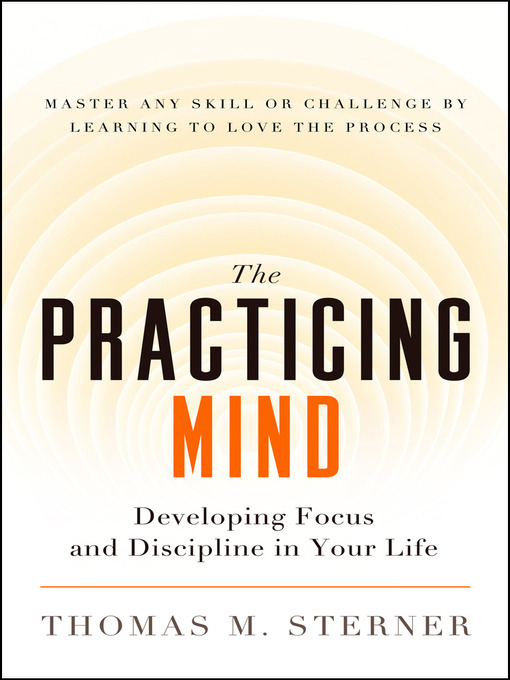
  • Giveaway and Interview: The Practicing Mind by Thomas M. Sterner

    Giveaway and Interview: The Practicing Mind by Thomas M. Sterner

    Note: The winners for this giveaway have already been chosen. Subscribe to Tiny Buddha for free daily or weekly emails and to learn about future giveaways!

    The Winners:

    Have you ever feared you’ll never excel at a skill or reach a goal you set? Have you ever judged yourself or your efforts as “not good enough,” creating a sense of paralysis? Or how about this: Have you ever felt so eager to excel that the process became stressful and unsatisfying?

    In his book The Practicing Mind: Developing Focus and Discipline in Your Life, Thomas M. Sterner explores how to “master any skill or challenge by learning to love the process,” as the cover reads.

    Sterner has mastered quite a few challenges; he’s a concert piano technician, an accomplished musician, a pilot, and a golfer—and he’s learned how to practice each skill with a focus on the present.

    Sharing personal anecdotes, insights, and lessons, Sterner teaches us how to simplify and concentrate on the task at hand; break goals into smaller, more manageable steps; and slow down so that we can give our full attention to each step along the way.

    I highly recommend The Practicing Mind to anyone who wants to find more joy in the process of working toward their goals, and in doing so increase their effectiveness.

    The Giveaway

    To enter to win 1 of 2 free copies of The Practicing Mind:

    • Leave a comment below
    • Tweet: RT @tinybuddha Book GIVEAWAY & Interview: The Practicing Mind http://bit.ly/R5EnKh

    If you don’t have a Twitter account, you can still enter by completing the first step. You can enter until midnight PST on Sunday, August 12th. (more…)

  • How to Find Peace of Mind in Under 500 Words

    How to Find Peace of Mind in Under 500 Words

    “All the flowers of all the tomorrows are in the seeds of today.” ~Proverb

    Practice and patience are like inseparable twins that have the capacity to bring us great joy when in harmony, and great angst when they are not.

    Consider the phrase: “Practice and all is coming….”

    I didn’t realize the depth of this statement when I first read it in my Ashtanga yoga manual several years ago.

    Sri K Pattabhi Jois was the Yogi who said it repeatedly to all his students. And it is perfectly reasonable for one to assume he was referring to the daily practice of yoga.

    But one morning during my writing practice (my daily moving meditation), I realized the true essence of his statement.

    For as long as I can remember I have strived to know peace—that is, peace while living in the ‘real’ world and freedom from my cluttered mind. (more…)