Tag: possible

  • How We Can Overcome Our Obstacles When We Don’t Believe It’s Possible

    How We Can Overcome Our Obstacles When We Don’t Believe It’s Possible

    “If we can see past perceived limitations, then the possibilities are endless.” ~Amy Purdy

    Nature inspires me. There are hidden messages consistently on display. On my daily walks, I find myself interpreting these messages in relation to my life.

    One day, near the end of my walk, I was paying attention to the trees. A giant one caught my eye. Its magnificence was portrayed as morning sunlight peeked through the branches and bright green leaves.

    I noticed the enormity of its trunk, and then I saw the crooked fence.

    The giant tree trunk had grown so big that it pushed a section of the fence up off the ground. The fence barely had any balance left and looked as if it could topple over at any moment.

    As I watched all of this, I remembered another tree I had seen on one of my walks. The tree’s branches had grown so long and so thick, they struck through the slats on a metal fence. Big brown wooden knobs stuck out, encapsulating the thin wires. I was in such awe, I reached out and touched the chunky parts of the tree, thinking I could unwrap it from the fence. Not a chance. The fence had become a part of the tree.

    In seeing this tree, I thought, “Trees just do what they do. They continue to grow despite any objects that happen to be next to them.”

    These objects could appear as obstacles, but that does not stop the tree from growing. The tree adapts to its surroundings and keeps on keeping on. Depending on the barrier, the tree either continues to grow around it, or the tree ends up wiping out whatever is in its way.

    How is this symbolic in the life of a human?

    The nature of our true essence is to grow. Life seems to contain many events that are beyond our control. We find ourselves in situations where it seems we are being tested. Obstacles show up on our path, and we are faced with the question, “What do I do now?”

    But it really isn’t the obstacle that is in our way. It’s our beliefs about the obstacle that can stop us in our tracks. The tree doesn’t come up against the fence and stop growing. It just keeps doing what it’s supposed to do.

    Here is how this relates to an experience I went through in my early twenties. It was a true test of following my inner guidance instead of listening to the doubts of others around me, as well as my own uncertainties.

    At the age of twenty-two, I found myself pregnant, single, and living back at home with my mother. I was working an office job forty hours a week, making ten dollars an hour. Luckily, I had good health insurance, but what I didn’t have was a lot of self-confidence. I carried around shame.

    This was in the year 2001. Times had changed, right? Why was I so ashamed of being a young, pregnant, unwed girl?

    Because even in current times, that stigma was carried around deep in the trenches of society. And my own mother and older sisters had been through it, too. You could say the feeling of shame was passed down in many generations.

    After my son was born, I knew I had to do something different with my life. I received government help for food and baby formula, and my son was on government health insurance. Again, this only added to my shame because of the looks I would get at the checkout counter in the stores.

    But I knew I wanted to provide a better life for my son, and I knew there was something inside of me that wanted to grow beyond what I thought my potential was.

    I felt an inner calling to go into the medical field. So I decided to go back to college. Many obstacles showed up on my path once I decided to go for it.

    I hadn’t even enrolled in college yet, but when I began speaking aloud about my plan, fear set in, and people’s opinions fueled that fear.

    How would I attend college full-time with a four-month-old baby, work to provide for us, and find childcare in the meantime? Could I do it?

    Some people didn’t think so. They told me it would be too hard. They told me my son was too little, that I should wait until he was older.

    Attending college and raising my son would be too stressful. How did I plan to pay for tuition? Could I even get accepted into the highly competitive program, especially since I was already on academic probation?

    Right out of high school, I proved to lack ambition, and along with poor grades, I ended up dropping out of college after just two years of study. Now, how in the world was I going to get the university to accept me back, especially as a newly single parent?

    The obstacles kept appearing, left and right. A university advisor even told me that the program I wanted into was extremely challenging. He asked me, “Do you have family who can help you with your son? Because this program is rigorous and requires a lot of time.”

    Imagine, all of these stumbling blocks could have made me believe that I was not capable of pulling it off. I could have chosen to believe what I was hearing.

    I could have formed beliefs telling me my plan wouldn’t work. I had the choice to follow my inner guidance, my true essence, which pushed me ahead to grow, or I could believe my thoughts about it all being too hard. I could buy into the shame and the collective idea that I had no future.

    But there was something deep inside of me that knew I was meant to do this. I was meant to challenge all of the belief systems put in place that could hold me back.

    Back then, I did not know the power of positive thinking. I had never heard of manifestation. There were no tools in my toolbox to help push through any doubts. All I had was my inner guidance system and the strong desire to grow and show myself that I could do something really challenging.

    Four years later, after a lot of hard work, I graduated from college with a bachelor’s degree in respiratory therapy and was already employed at a local trauma hospital. I was living out on my own with my son and supporting us with my single income. I had found my passion for life, too. I was helping people who were sick.

    Our lives are a reflection of what we believe is true and possible. The belief systems we have in place guide our thoughts, desires, and the actions we take or do not take to make things happen.

    Instead of letting your beliefs hold you back, use this process to grow around them.

    How To See Through Your Belief System

    1. Choose a specific goal you would like to meet or choose a current situation you would like to change.

    2. Write down every belief you have about that goal or situation, specifically, any beliefs you sense are holding you back.

    These beliefs include:

    “I don’t have enough time.”

    “I’m not smart enough.”

    “I’m too old.”

    “I don’t have enough experience yet.”

    “My family would never approve.”

    3. Take some quiet time to engage with these beliefs. Sometimes I find it helpful to think about these during walks, while driving, or while I’m out in nature.

    4. Question where these beliefs came from. Usually, you will see the restrictive beliefs come from somewhere outside of you. They are ingrained from childhood, simply adopted from your parents and caregivers. You will even see a lot of beliefs come from society on a collective level.

    5. Once you can see where the beliefs come from, you have a choice whether to keep believing in them. What worked for me was not to try to change my beliefs into the opposite but to keep identifying that the belief was outside myself. The belief was not a part of my inner guidance. And then I would choose to move past it, not allowing it to hold me back.

    Forward Movement

    Seeing through your belief system is not an overnight process. More than likely, the systems have been with you for a long time. It can take discipline and effort to recognize them when they arise.

    Recognition of your inner guidance during this process is vital. It will not fail you.

    Keep listening to your inner guidance, your true essence. It will take you beyond your wildest dreams. It will be the tree that grows through fences.

  • 7 Ways Running Helps Me Live My Best Life

    7 Ways Running Helps Me Live My Best Life

    “I don’t run to add days to my life, I run to add life to my days.” ~Ronald Rook

    Growing up, I was always a bit on the tubby side, or, as my mum would say, “stocky.”

    Old and grainy camcorder footage from the early nineties shows me at four years old, waddling sassily around the garden naked on a summer’s day. Watching the nostalgic home footage recently, I thought to myself, “Wow, I had a beer belly long before I began drinking beer.”

    Apart from a couple of years playing football in my teens, competitive sports and exercise were not a huge part of my life—unless we count the frequent visits to the Chinese buffets with friends, when things got competitive as we shovelled down plate after plate to see who could eat the most.

    Last year, however, after an inspiring conversation with a keen runner, my sedentary days were over.

    The man was in his forties and an ultra-runner—meaning he ran distances greater than a regular marathon (26.2 miles). I became curious as he told me about a recent 100-mile running event, and wondered to myself, why would you put yourself through that, by choice? What does one get out of this running malarkey?

    Having well and truly caught the running bug, I can now say I get it.

    It’s well known that running is beneficial to our health and fitness, but I get so much more from the experience. Here are seven ways running helps me live my best life.

    1. Through running, I take control from my mind.

    Wouldn’t you rather stay at home and watch Netflix?

    You’re not built for running!

    Who do you think you are, Forrest Gump?

    Ah, the mind.

    On days I normally run, I can guarantee thoughts like these will surface, luring me to stay in my comfort zone so they can try and shame me later on for not running.

    Don’t get me wrong, there are days where the kind thing to do is to cancel a run—if I’m hurting physically or it’s too hot—but that’s not usually why I encounter internal resistance before and while running.

    C’mon, that’s fair enough for today, my mind whispers.

    “No, we’re digging deeper and going further,” I reply.

    Our minds will always try to hold us back, but we don’t have to act on every thought. We can become more aware of when our mind is attempting to limit us, and, if we want to, dig deep and keep moving forward.

    2. Running reminds me that the hardest part of any worthy pursuit is just starting.

    Once I’m outside and running, the initial resistance disappears, and I just get on with it. I’ve never, after two minutes of running, turned around and headed home.

    This speaks to an interesting truth—so often in life, the hardest part of any worthy pursuit is just starting. If you want to write a book, the hardest part is sitting down to capture those first few words. If you need to initiate a difficult conversation, the hardest part is finding the courage to say, “Hey, we need to talk.”

    On days when my mind creates resistance and begins a battle, I gently remind myself the hardest part is putting my running shoes on and heading out the door. Once I’m through the door, I’ve won the battle—and I almost always enjoy myself.

    3. Running reminds me to keep my head up and keep moving forward.

    A few weeks ago while on a run, exhaustion suddenly hit me. My head dropped. My pace slowed, and my legs felt like they were stuffed full of lead. A feeling of dread slowly sunk through my body as I imagined the distance I was yet to cover.

    I knew, though, I was hitting “runner’s wall,” and remembered the Navy SEAL’s 40% rule—that even though I briefly felt exhausted, I’d only reached 40% of my potential.

    I took a deep breath before slowly raising my head up so my eyes were no longer looking at the ground. I was now looking straight ahead, my eyes fixed on where I wanted to go, the path ahead. Inside my head I repeated, “Left, right, left, right,” over and over again, commanding my feet. And then I ran.

    When life hits us hard, it’s normal for our heads to drop down, but we can’t let them stay down. Moving forward may seem impossible, but eventually there comes a day when we have to dig deep and find the courage to take a step forward, no matter how small.

    As Winston Churchill said, “When you’re going through hell, keep on going.”

    4. Running helps me appreciate my body.

    Sadly, the media pushes down our throats what a “perfect” body looks like, and most of us don’t have it. As a result, many people view exercise as a punishment. A punishment for being out of shape or for eating overeating the day before.

    Exercise of any form needn’t be a punishment. In fact, we can view it as a celebration of our body as it is.

    When I finish a run, I thank my body for a job well done. I’m fortunate enough to have good health and a functional body, a blessing not everyone has.

    A friend of mine suffers from a chronic health condition, and although his body is extremely limited compared to most, he’s chooses to live life being appreciative of what his body does enable him to do. For example, he can’t finish long hikes, but he’s grateful that he can walk at all—and that he has friends who’ll carry him the rest of the way when he has to stop.

    5. Running emphasizes the importance of rest and recovery.

    Since running, I’ve become kinder to myself and more accepting of my need to take time to rest and recover. Once home from a run, I normally do some light stretches before taking it easy for the rest of the day, because I’ve learned that I need to give my body a break or it will eventually break down.

    I used to believe rest and recovery made we weak and it was in someway honorable to keep myself busy all day, every day. I now believe there’s a time to push ourselves while in doing mode and a time for simply being, and both are equally important to our overall well-being.

    6. Running has taught me that what I consume makes a difference.

    Since starting to run, I’m now far more aware of what I’m consuming, both physically and mentally.

    I feel the difference when I’ve been eating well and am hydrated versus when I run on a belly full of junk food and dehydrated. What we put into our mouth really matters.

    I believe it also matters what we put into our heads—the types of media we consume. I once spent an entire forest run on high alert, looking over my shoulder ever second step. Why? Before leaving home, I’d read a local news item about a Puma that had escaped from a zoo 100 miles away. Although logically I knew it was highly unlikely I’d cross paths with this runaway Puma, it didn’t stop my mind from freaking out at every rustle in the bushes.

    On the hand, when I read or watch an inspiring story before leaving home, I notice a spring in my step and feel empowered as I run.

    If the media I consume affects my life (either positively or negatively) in the short-term, just imagine the affect is has in the long-term. What we consume matters.

    7. Running reminds me of what’s possible.

    Perhaps the biggest way running helps me to live my best life is through showing me what is possible. I can now run farther than I ever thought I could, way further than my doubtful inner critic would have predicted.

    I’ve gone from being someone who would rarely (and barely) run to someone who runs several times per week. Most of all, I’ve gone from being someone who hated even the thought of running to someone who looks forward to and, dare I say, loves, running. And if I can transform into a runner, just imagine what else I can do.

    Do I think running is for everyone? No.

    However, I do believe that everyone can benefit from my lessons. Don’t let your mind control you. If there’s something you want to do, just get started, even if you only take a tiny step. When things get tough, keep going. Appreciate what you can do instead of focusing on what you can’t. Take time to rest; it’s not lazy, it’s necessary. Be mindful of what you consume and how it affects you. And remember, you can do so much more than you think.

  • Overcoming Excuses and Believing in What You Can Do

    Overcoming Excuses and Believing in What You Can Do

    Sunrise Acrobatics

    “Your belief determines your action and your action determines your results, but first you have to believe.” ~Mark Victor Hansen

    I still remember how I felt crossing the finish line after my first 10K race. I was elated. I felt like I could conquer anything.

    I realize that for all you marathon runners, 10K may not seem like a big deal. But for me, it was monumental. Up until the two years prior to running my first race, the only running I did was in gym class (and only after trying anything I could think of to get out of it).

    But somehow, one of my good friends convinced me to give it another shot. We enrolled in a “Learn to run” class. I have to admit, I felt pretty embarrassed taking a class that promised to teach me how to run. Shouldn’t I already know how to run?

    But I showed up and I participated. For the first “run,” we practiced running one minute, then walking for two minutes. I thought I was going to die. Running for one minute felt excruciating. It wasn’t that I was out of shape. I went to the gym regularly. I tried to take care of myself.

    But running—that was totally different. It felt impossible. Unachievable. I wanted to quit. I was not a runner after all. Why was I even doing this? What was I trying to prove?

    But somehow, I found myself showing up for the next run. And the next run. And the next. Each time we added an extra minute of running, and less walking.

    As we reached five minutes of running to one minute of walking, I had an epiphany. Running five minutes felt challenging, no question there, but I realized that it felt just as challenging as running one minute did. In fact, it felt exactly the same; I had to push myself in exactly the same way to run five minutes as I did to run one minute.

    As we worked our way up to running ten minutes straight, I realized that this strange phenomenon was still true. Running for ten minutes felt just as hard as running for five minutes. Or, if I switched things around, running for ten minutes was no harder than running for five minutes.

    This switch completely changed everything. I had started out believing that I wasn’t a runner, and that running was too challenging for me. After all, I struggled to run one minute straight. Now, just a few weeks later, I was running ten minutes straight for a total of five kilometers.

    I realized the power that my thoughts had over my abilities, and how by taking small steps to push myself outside of my comfort zone, I was able to completely change how I thought of myself.

    I no longer thought of myself as unable to run. I was now a runner. And as long as I continued to stretch, there was no limit to what I could do. I pushed through and ran my first 10K race the following year.

    I don’t want to pretend that the whole process was easy, or that there weren’t challenges along the way. Each time I came to a plateau, I had to really challenge myself to go just a little further until that new place felt comfortable.

    I learned to celebrate the small victories along the way. I learned that running really is 90% mental.

    The most important piece of this whole experience, however, was learning that I was unknowingly placing restrictions on what I can accomplish. Where else had I decided I “just wasn’t good at that”? Where else was I failing to push myself out of my comfort zone?

    Now, as a business owner, I can see the same process repeating itself. I’ve exposed myself and my work for everyone to see. I’m vulnerable. I wonder if I have what it takes. I come up with excuses for why I can’t show up, just like I did in gym class.

    But this time I know that I have conquered this mental crap before, and I can do it again. It’s not easy, but I can push myself—take those small steps each day—until I reach my goals. I can celebrate the small victories along the way. I know that it is 90% mental, and I’m ready.

    I would invite you to take a look at your life and ask yourself where you’re not showing up fully. For me, this shows up as excuses and stories that I tell myself and others when I feel challenged. It shows up as self-made boundaries that keep me feeling small and safe.

    It isn’t until you begin to recognize your own sabotaging behavior that you are able to start shifting your beliefs. Once you start believing in yourself, you’re able to take those small steps forward that previously felt overwhelming or insurmountable.

    Pay attention to the stories that you are telling yourself. These are the stories that become your reality. These are the stories that have the potential to write your future.

    “Believe in yourself, and the rest will fall into place. Have faith in your own abilities, work hard, and there is nothing you cannot accomplish.” ~Brad Henry

    Photo by Zach Dischner

  • Nothing Is Impossible: Amazing Ping Pong Player with No Arms

    Nothing Is Impossible: Amazing Ping Pong Player with No Arms

    Growing up, I always admired my grandfather, who lost both of his legs to an infection and yet still maintained a positive outlook and a sense of possibility.

    He taught me, and many others, that a defeatist attitude is a far worse disability than any physical handicap, and that there’s very little we can’t accomplish if we believe in ourselves and work hard.

    Ibrahim Hamato, also a double amputee, is living proof. In this short video, he shares a little about his passion for ping pong, which he’s managed to play—and play exceptionally well—without hands or arms.

  • Recognizing and Overcoming the Fears That Make Us Settle

    Recognizing and Overcoming the Fears That Make Us Settle

    See the Light

    “Fear, uncertainty, and discomfort are your compasses towards growth.” ~Celestine Chua

    Settling feels awful. Take it from me—for the past few months I’ve been holding the Scepter of Settling in both my personal life and my business.

    And it hasn’t felt good.

    The other morning, as I sat waiting in LaGuardia Airport to board a plane for a three-day intensive business retreat in North Carolina, I had this sudden, radical a-ha! moment in which pieces of my life, both personal and business, just clicked into place.

    Have you ever had that happen to you?

    I realized I was settling in my personal life by accepting a relationship in which I was getting so much less than I wanted, and I was settling simply because I was afraid I couldn’t have more than I was currently getting.

    There is a part of me that feels slightly embarrassed to admit that I was settling because of this deep fear that I couldn’t possibly have what I wanted from a partner, because it’s been so long since I have.

    I was also settling in my business by continuing to work with a client who I bent over backward for again, and again, and again, who still always wanted more. I was settling by compromising myself and the way I work just for a few thousand dollars. I was afraid to trust that I would be absolutely fine without that money.

    Does any of this feel familiar to you? 

    • You’re settling for friendships where you don’t feel supported, where it feels like it’s rarely “about you,” or where you have to hide or make parts of yourself smaller.
    • You’re settling for intimate relationships where you’re not seen and heard the way you want to be, or can’t show up authentically.
    • You play small in your family of origin, having to dumb down your success or your inner “shine” because there are stories about who you’re supposed to be or what you’re supposed to do, or you might “out-shine” a family member if you really show your brilliance.
    • You accept more than your share of work, work longer hours than you want, get paid less than you want, or work with people for whom you feel like you’re compromising yourself.
    • You make or have way less time for yourself than you like—you put off self-care, rest, good food, and exercise because there’s not enough time, money, or support.

    In her amazing book Daring Greatly, Brené Brown talks about a marble jar that her daughter’s teacher used in the classroom.

    Every time the class collectively did something good, the teacher put a few marbles in the jar. When they misbehaved, she took a few out. When the jar got to be full of marbles, the teacher threw a class party.

    Brown talks about relationships in this context. Whenever we have a choice of attending to our partner, paying attention to them or their needs, seeing them fully and hearing them—showing up for them and our relationships—it’s like adding marbles to the jar.

    And every time we turn away from our partner, choose to walk by instead of asking what’s wrong, avoid getting involved, turn away from the work of connecting and feeding emotional intimacy, marbles come out of the jar.

    The last few relationships I’ve had were empty jars, with the occasional lonely marble rolling around desolately. I was getting sick with the settling—literally and figuratively. 

    And it was impacting my business, where I found myself also settling in ways that were completely fear-based.

    As I sat working just after dawn at LaGuardia Airport, getting ready to take three days for myself at a mastermind and business retreat, it hit me.

    I’m finally ready to let go of what hasn’t been working, and the fear, and make painfully blank, open, empty space for what works, what feeds me.

    I’m holding out for a full marble jar.

    Are you settling anywhere in your life? Does it feel awful, sad, frustrating, exhausting?

    Whether you’re settling in your friendships, your relationships, your work, your family, or your self-care, settling feels terrible and it’s bad for you, for your work, for your relationships.

    Here are a few questions to get you started thinking about where and why you’re settling.

    Grab a journal and a pen and get yourself a cup of tea. Light your favorite candle. Get comfortable. Dedicate this space to feeding yourself and filling that marble jar.

    Closing your eyes, think about the areas of your life—your work, your love life/partnership, your self-care, your friendships…

    Open your eyes and write each question. Then just start writing, without censoring or editing.

    1. Where in your life are you settling for less than you want and need? Write out each place and how you’re settling.

    2. Why are you settling? What’s the fear behind it? For instance, I found myself settling in a personal relationship because I had a deep fear that I couldn’t have what I wanted, so I thought I might as well settle for what I could get.

    3. What do you fear would happen if you stopped settling?

    4. What is a new belief about what’s possible for you that you’d like to think about working toward?

    5. What would the first small step be if you were to act as if this belief were true?

    We do this work in tiny steps so that they’re achievable and sustainable. Here’s to smashing the ways we settle.

    Photo by Jonathan Kos-Read

  • 5 Tips to Help You Stop Limiting Your Potential

    5 Tips to Help You Stop Limiting Your Potential

    Like Flying

    “Have respect for yourself, and patience and compassion. With these, you can handle anything.” ~Jack Kornfield

    I learned one of my biggest lessons in life when I ran into a high school bully many years ago. He was totally different from the last time I saw him. He was now passionate about life and adventure, and he looked very happy.

    He had a thriving textile trading business and he was set to open a clothing store in less than a year.

    After hearing his story, I couldn’t help but feel ashamed of myself.

    I realized that in my resentment toward him for hurting me years ago, I had belittled him and didn’t give him a chance to change or prove himself.

    Yes, he made a portion of my teenage life miserable. But it was unfair for me to completely dismiss his capability to turn his life around and unleash his true potential.

    His story was amazing. He spoke many times of taking risks and breaking barriers. He fought his inner demons as he struggled his way to a new life. He also had to resist negativity from some family members about starting his own business.

    I went home that day happy that I had made a new friend, enriched with new life lessons that I acquired from his powerful story.

    I learned from him that it is actually we who sometimes stop ourselves from reaching our full potential by not challenging ourselves. I was no exception; I realized that I too had been stopping myself from growing because of my own inhibitions.

    Long ago after college, I set my mind on taking a master’s degree. I didn’t make any concrete plans because although part of me wanted to to do it, I was scared of the idea of taking higher-level studies while working full time.

    I decided to ignore my fears and apply for admission a few weeks after I met my friend.

    I haven’t earned the degree yet, but I must say my growth and experience while studying was very rewarding. I gained valuable exposure to new research information that wouldn’t have been made available to me had I not signed up.

    I was also able to establish new connections with brilliant-minded people whom I turn to for professional advice and favors even to this day.

    I would like to share with you a few things I learned when I met my new friend; these may help you unleash your own potential.

    1. Let go of bitterness.

    My friend whose story I just shared told me how his parents’ separation affected his attitude in life. He became bitter as he grew, and this prevented him from making early breakthroughs.

    When he was finally able to move on in his mid twenties, he left behind a trail of hurt people and many missed opportunities for personal and professional growth.

    Obviously, he was able to make up for the missed opportunities because he was able to put up his own textile trading business. Nonetheless, he could have done more sooner if he hadn’t let his bitterness hold him back.

    If you’re holding onto anger and resentment, ask yourself: What might you be able to do if you let it go?

    2. Take major risks.

    Take risks. Big ones! That was what my friend did when he started his textile business. He could have asked his rich father for support, but he chose to do it on his own.

    He started out late in life and he wanted to catch up with everyone by going for broke. He said that even if his investment failed, he knew that he’d learn something valuable from that experience.

    Don’t be afraid to try something big. No matter where it takes you, it will enable you to learn and grow.

    3. Drown out the voices that tell you “that’s impossible.”

    Shameful as it was, I dismissed my friend as someone who was destined for misery. I was so distracted by what I was seeing from him on the outside that I thought it was impossible for him to change. But he knew himself better and he successfully turned things around.

    The same can happen for you. No matter what other people say, you have limitless potential to change, grow, and thrive.

    4. Break out of your self-stereotype.

    When I was growing up, I was fixated on the idea that there were only two kinds of kids: the good and the bad. The good kids had a wonderful future ahead, but the bad ones had nothing but misfortune and suffering awaiting them.

    I equated being good with certain types of professions, such as doctors, architects, and teachers. I aspired to be like them, but in my blindness I shut myself from exploring other things that I may have had a chance at excelling in.

    Later when I began trying out other things like writing, I began to see that I not only enjoyed them, but I also seemed to be good at them.

    Don’t limit your possibilities. If there’s something you think you might enjoy, give yourself the opportunity to find out.

    5. Listen when people praise your talents.

    Until not too long ago, I wasn’t keen on listening to people’s suggestions on showing and developing my hidden talents. They said “You’re so good at this! You should be doing this more!” But I dismissed the affirmations, thinking that those abilities were not within the parameters of my self-stereotype.

    We are our own worst enemy, so they say. It was certainly true for me and my friend.

    If you want to unleash your true potential and earn major breakthroughs in your life, you’ve got to start by believing in yourself.

    Photo by erismirror

  • We Live Unbound: An Inspiring Video About What’s Possible

    We Live Unbound: An Inspiring Video About What’s Possible

    So much is possible, if we’re willing to believe it.

    That doesn’t mean we have no limitations beyond the ones we set in our mind; simply believing that something is possible doesn’t guarantee it will happen. But it does create the possibility that it could.

    That’s what makes us feel alive: taking bold action toward possibility, knowing that the goal isn’t to control what will happen tomorrow. It’s to create a sense of freedom as we choose what will happen today.

    Are you living unbound?

  • 4 Crucial Steps to Make Your Dream Come True

    4 Crucial Steps to Make Your Dream Come True

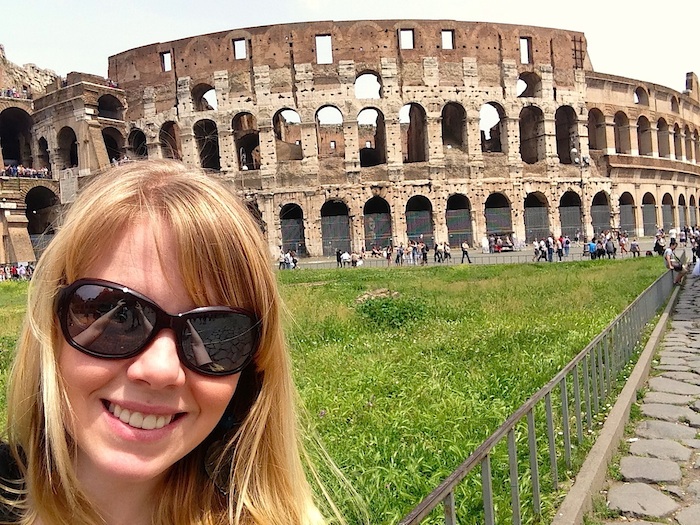
    Lori Deschene at the Colosseum

    “Don’t be pushed by your problems; be led by your dreams.” ~Unknown

    A little over forty-eight hours from now, I’ll be on a plane to Europe where I plan to spend three months traveling (and working) with my boyfriend.

    Saturday is the first day of a dream I’ve held for well over a decade.

    It was my second year in college when I did my semester abroad, staying in a castle my school owns in The Netherlands.

    I was one of less than seventy students there, part of an intimate group that traveled together on three weekend trips to Paris, Amsterdam, and Koln.

    Aside from those group excursions, we all had three-day weekends and two full weeks off to travel.

    I visited Italy and Spain during my weeks off, but spent most weekends on site, largely due to financial constraints. Still, a weekend doing nothing at a castle in Europe is, in itself, an adventure.

    After returning home, I spent the next year working 40+ hour weeks as a hostess at an upscale Boston restaurant (while also studying full-time) to pay off my charged travel expenses.

    My schedule was tight and my job, not all that exciting, but the experience felt worth every uncomfortable moment in that itchy polyester blazer.

    I had started seeing the world. I had gotten a chance to experience dorm life—something I didn’t know much about, being a commuter—and I did it in a castle with a moat, a tower, and historical significance.

    It wasn’t the most emotionally stable time in my life, so I brought a healthy dose of drama overseas, but now, fourteen years later, what I remember most are the excitement of possibility and the pride I felt in working to provide that for myself.

    And it’s those same two things that most energize me now. I’ve dreamed of this. I’ve planned for it. I’ve worked for it. And now it’s happening.

    If you have a dream, something that excites you, inspires you, and maybe even keeps you up at night, I have some advice for you:

    1. Believe that it’s possible.

    So often we think of dreams as things most people don’t get to do—luxuries reserved for people who are privileged, wealthy, or well connected.

    It’s true that some people have more advantages than others. What takes one person five years of planning and saving may require another to do little more than sell a stock and make a call.

    It’s also true that the second person may have worked incredibly hard for said stock. The point is: We’re all starting from different places, for different reasons, with different levels of work required to get from A to B.

    If your dream is something you’re physically incapable of doing, it may be improbable (but not impossible—we’ve come a long way with technology!) And there’s no denying that certain dreams are more difficult to achieve than others.

    But most of the things we dream about are things we could do if we were willing to work toward it, align our choices to support it, and stay flexible in terms of fulfilling it.

    You don’t need to believe it will be easy, or it will happen quickly, or it will look exactly like you visualized it. You just need to believe in the possibility, which really means you need to believe in yourself.

    2. Take tiny steps to work toward it.

    Working toward it entails aligning with the right people, disregarding discouragement from people who don’t support your growth, and taking tiny steps each day to move toward your vision.

    “The right people” are those who help you, support you, encourage you, believe in you, and guide you on your way to this dream. It may include people who’ve done what you want to do, people who also want to do it, and even people who just plain find it cool.

    Share your enthusiasm and progress with them. They’ll keep you excited and help you stick to your plan.

    As for those people who don’t support your growth, there will be many of them, and they most likely won’t be malicious. They’ll be well-meaning people who aren’t able to do step one for themselves, and, therefore, think they’re doing you a favor by discouraging you. Politely decline that favor.

    Their words may seem to keep you down, but it’s how you internalize them that holds you back.

    And as for taking consistent steps, they really can be tiny. It may not seem like much to make a call, bookmark a site, or send an email, but the little things add up over time—and because they’re easily doable, each one may inspire you to do more.

    3. Make choices that support it.

    Much of our experience stems from our choices. Not all of it; there are some things that we can’t control.

    This isn’t a suggestion that if we make all the “right” choices, everything will line up and magically work out. It’s just that we have more power than we often realize—and our power lies in our choices.

    Whatever your dream, the first choice is to prioritize it. As you’re able, dedicate time to it, money to it, attention to it, love to it. Give what you can, as you can, and back that giving with belief, passion, and enthusiasm.

    The other side of this coin is realizing which choices don’t support your dream—when you’re doing too much or pursuing other dreams that conflict, for example.

    For me, that’s meant pushing off some other equally exciting milestones with my boyfriend, like buying a house.

    4. Stay flexible about how you’ll fulfill it.

    It’s tempting to be rigid about a dream—when it needs to happen, how it needs to happen, and who it needs to include. But sometimes when we’re too busy clinging to a specific vision, we miss an opportunity to experience it in different shades.

    This isn’t meant to discourage you from reaching for the stars. It’s just a reminder that there are a lot more of them than you may realize, some far closer than others.

    Being a singer may include a jazz club, not a fan-packed stadium. Writing a book may entail self-publishing, not a six-figure advance. And traveling may include teaching abroad or a string of budget bed-and-breakfasts—I know because this time around, I’ve booked several!

    They may not be the ultimate dream, but they are, in fact, reflections of it.

    And in that moment when you’re doing something inspired, passionate, and in line with your deepest intentions, you’ll feel two things that you may not have realized weren’t exclusive to one specific vision:

    You’ll feel alive. And proud.

    And now, two final thoughts on making dreams come true: know that no dream is better than any other, and stay open to the possibility that your dream may change.

    Regarding the first part, your dream may not seem big or romantic. It doesn’t need to be. It’s an extension of your unique values and priorities, and all that matters is that it matters to you.

    As for the second part, sometimes we attach to dreams simply because we’ve held them for so long. It’s the sunk-cost principle: After you’ve invested a lot of time, energy, or money, it’s hard to consider walking away.

    But if your priorities have changed, you may no longer want it. Accepting this isn’t a sign of weakness or defeat. It’s growth, and the wisdom to enable it.

    Of course, there’s also the possibility that your dream may have changed in a smaller way.

    This weekend when I leave for Rome, my parents, my siblings, and my boyfriend’s parents will also be en route for a short family trip.

    My dream wasn’t just to go back. It was to go with the people I love. And after much conceptualizing, convincing, and coordinating, it’s now coming true.

    What’s your dream, do you believe you can fulfill it, and what tiny step can you take today to start (or continue) working toward it?

    *Update: That’s a picture of me at the Colosseum. I would have shared a picture of me with my family, but they’re all very private people!

  • There is No End Worse Than the End of Hope

    There is No End Worse Than the End of Hope

    “Kites rise highest against the wind, not with it.” ~Winston Churchill

    We all fall down. And you’ve probably heard that getting back up is the key to moving forward.

    But what do you do when disaster strikes? When a loved one is so injured, so debilitated, that hope seems to have vanished? What then?

    This is a true story. It may be hard to believe and beyond what you may think is possible, but it actually happened.

    It took place nearly thirty years ago.

    Disaster

    I picked up the blue referral sheet in the physical therapy office at Brackenridge Hospital in Austin, Texas one morning, like I always did.

    Scribbled on the top of the page was a patient’s name and a room number in the Intensive Care Unit along with instructions: “Physical therapy – range of motion twice daily.” I was supposed to manually move the patient’s limbs and joints to maintain mobility.

    As I walked into the room, I noticed that the patient was a young woman in her early twenties. I assumed that the people seated at her beside were her mother and father. The only sounds in the room were the pulsations of the ventilator, the intermittent beep from the IVs.

    The young woman, I learned later from her medical file, had been strangled and left for dead. She suffered from anoxic encephalopathy—severe loss of oxygen to the brain.

    She had few signs of life. Eyes shut. Body rigid. Non-responsive to touch. The family wanted my opinion and all I could say was that I would do everything I could to help. (more…)