Tag: positive

  • Think You Should Be Happy? It’s Okay to Feel Bad

    Think You Should Be Happy? It’s Okay to Feel Bad

    “We have so little faith in the ebb and flow of life, of love, of relationships. We leap at the flow of the tide and resist in terror its ebb.” ~Anne Morrow Lindbergh

    From an early age, most of us get the message that we should be happy—from well-meaning parents, teachers, and even perfect strangers. “Smile!” we are told. “Why the long face?” we are asked. It’s no wonder we grow up with the idea that feeling anything less than sunny 24/7 is somehow wrong.

    We’re ashamed to admit, even to ourselves, that sometimes we feel down. It seems that somehow we’ve failed, or that life is cheating us of our due. Facebook and Instagram certainly don’t provide a more balanced view: Everyone else is seemingly on the constant high that has become our society’s norm.

    The trouble is, life’s not really like that, and when we expect it to be we only end up feeling worse. There’s almost a sense of panic when a less-than-euphoric period lasts too long (and I’m not talking about clinical depression here, just a garden-variety restlessness or boredom). We just don’t tolerate the lows very well anymore, craving a continuous fix of what the ego calls “happiness.”

    I’ve personally bought in to the continuous happiness myth many times, and still have to remind myself that it is just that—a myth.

    From true valley experiences like sickness or divorce, to the days when life feels just plain old “blah,” my first reaction is usually to try to “fix it.” Something must be wrong, right? I shouldn’t feel this way—I should be happy!

    Something that has helped me a great deal is to substitute another word for “happiness,” a term that’s broad enough to encompass a more normal range of emotion: well-being. 

    You can continue to have a sense of well-being even in the midst of a low period. Well-being simply recognizes that life is a series of peaks and valleys, both in the macro view and on a daily basis. It is artificial (and impossible) to insist on a constantly in-flowing tide.

    So how do we cultivate a sense of well-being? It starts with self-talk. Most of our emotional reactions to life come from the way we label our experience. The ego will jump to conclusions on very little evidence and then hit the panic button: “Oh, no! Depression alert! Not feeling good—this is a problem!!”

    Try this instead: “Hmmm. I’m feeling a little down lately. I wonder what’s up with that?” And then simply sit with the feeling, and allow it to run its course. The panicky ego wants you to do something to fix what it sees as a problem. It is not comfortable simply experiencing what it considers a “bad” feeling, and will urge you to either suppress it or run away from it.

    There are lots of ways to do this (and I’ve tried them all): shopping, having a glass or two of wine, watching TV, surfing the web, and so on. None of these activities is “wrong,” unless you use it to avoid or deny your true feelings. Our emotions, besides simply being a valid part of the human experience, hold important messages for us—messages that we can’t receive when we’re running away.

    So let’s say you are allowing yourself to have the experience of feeling a bit down. It might even last for a season, but you tell yourself: “It’s okay. I know that this will pass too. I can let myself have this feeling and still be perfectly fine.” That’s well-being.

    With well-being, you can continue to enjoy all that is good in your life and treat yourself tenderly while simply letting your experience evolve naturally. And it will evolve. The beauty of allowing yourself to feel your feelings rather than stuffing them is that they then can deliver their messages and pass on through.

    Maybe the message is: You need to slow down a bit. Maybe it’s: The work you’re doing doesn’t feel meaningful anymore. Or maybe you never “figure it out.” Your body or spirit might just need a little healing or integration time. With a sense of well-being, you can trust that life is giving you just what you need, even if it doesn’t make sense or make your ego happy.

    Well-being is very similar to the Buddhist concept of equanimity, which means serenity or imperturbability. Buddhism teaches that you don’t grasp at the “good” or flee from the “bad,” but accept each as it comes.

    The Western mind often mistakes this for passivity, but it is not the same. With both equanimity and well-being, appropriate action is taken—naturally and calmly. As a bonus, action removed from the drama of the ego is often much more effective!

    And there’s another benefit to accepting the so-called “negative” experiences of life: They actually allow you to experience and appreciate the good times far more.

    When we try to go from one peak to another, we keep raising the ante: What was once satisfying is now boring; what was once a huge win doesn’t seem so impressive anymore. There’s a kind of “happiness inflation” going on that devalues what you have and makes you constantly reach for bigger and better.

    It’s counter-intuitive, but the more you experience emotions like sadness or disappointment, the more you can truly feel joy and gratitude when it comes. The poet Kahlil Gibran wrote: “The deeper that sorrow carves into your being, the more joy you can contain.”

    Hard times also temper us, making us stronger, more resilient, and more compassionate. Usually we see this only in retrospect, but we can also use self-talk to remind ourselves of it in the thick of those trying times: “This isn’t much fun, but I know I’m learning and growing from it.”

    Feeling “bad,” far from being something to flee, offers so much to those who are willing to embrace the experience. You’ll have to buck the messages of the ego and of society, but you will gain much more in richness of life when you welcome both phases of the tide, the ebb as well as the flow.
  • How Gratitude Shifts Your Perspective When Things Go Wrong

    How Gratitude Shifts Your Perspective When Things Go Wrong

    “Gratitude turns what we have into enough, and more. It turns denial into acceptance, chaos into order, confusion into clarity…it makes sense of our past, brings peace for today, and creates a vision for tomorrow.” ~Melody Beattie

    Yesterday, while praying in the Ganges River, my purse got stolen.

    Standing in The Holy River Ganges, praying up to my neck in her healing waters, the outside world felt as if it had stopped.

    The feeling of happiness to be back in Rishikesh was so strong it bordered on invincible. Instant immersion into the healing waters of Maa Ganga was the only thing on my mind.

    I had casually left my bag on the beach before going in the river. Since I had never had any problems here in previous trips, my guard was down.

    India, a magnified mind mirror, reflects back exactly what I think about at lightening speed. It also has a knack of teaching me exactly what I need to learn.

    Upon getting out of the river, I didn’t notice my purse was missing, because it had been piled under clothes and nothing seemed amiss.

    Sitting on the beach, absorbing the feelings of my post prayer bliss, a dodgy Indian man approached, asking me if the beach was safe.

    “That’s weird,” I thought. “Why is he asking me if the beach is safe?”

    My internal alarm bell started ringing and I took it as a sign to check my belongings. Sure enough, my purse was gone.

    Now what? Here is the real test. How do I respond?

    Well, first, I went after the dodgy guy, assuming he was the thief, and told him to give me back my purse. He denied up and down that he knew anything about it.

    After badgering him for a while to return the purse, I realized it was a lost cause.

    Now what?

    Searching the rocky beach, hoping maybe he had stashed it, seemed like a good idea, but there was no luck on that front either.

    Two other western girls, who were sitting farther down the beach, kindly helped me to look for it after hearing my story.

    No luck.

    Feeling as though I had exhausted all possible options at the scene of the crime, the next logical step was to return to my room, call the bank, and cancel my ATM card.

    In the purse was $100 worth of Indian Rupees, my ATM card, and both room keys. Amazingly, the rest of my cash and passport were still safe in my room.

    Listening to the little inner voice that told me to leave them there, just prior to the beach excursion, was proving to be a massive blessing.

    I had switched out the padlock on my room door with a lock I had brought, thinking it would be more secure, and both sets of keys were in my stolen purse.

    Upon hearing the lost key predicament, the Ashram manager, without blinking an eye, set out to help break into my room.

    It wasn’t an easy mission.

    It took him about an hour of trying to saw through the un-sawable lock, until finally he decided to saw through the hardware on the door, which worked. I was able to enter my room, while the manager quickly ran to the market to buy new hardware for the door.

    Meanwhile, I called my bank and cancelled my ATM card. The bank people were absolutely lovely, empathetic, and helpful.

    My neighbor in the Ashram offered to make me a cup of tea, and the neighbors on the other side offered us some of their beautiful meal they had just cooked.

    In the midst of my vulnerability, I felt supported on all sides!

    Immediately, I began searching for the lesson in my purse getting stolen.

    Acceptance, gratitude, humility, and letting go were the words that came.

    Instead of focusing on what I had done wrong and beating myself up about it, I chose to focus on what was actually good:

    • I still had my phone and money I had left in my room.
    • I had a spare ATM card and credit card in the room.
    • I still had my passport.
    • Coincidentally, I had run into a friend the day before who remembered he owed me money, and it was the exact amount I just lost.
    • My neighbors were generous and kind.
    • The Ashram manager was lovely and helpful and didn’t bat an eye at destroying the door hardware.
    • The bank people were helpful.
    • The kind girls at the beach helped me search for my purse.
    • I had everything I needed!

    After making this gratitude list, I realized how much I truly have, how blessed my life is, how many kind and generous people are in the world, and how I am always provided for.

    Sometimes the lowest times are what make us stronger.

    Coming to India always shakes me out of my comfort zone, and this was no exception. I am still absorbing the lessons, and they are powerful ones:

    • This experience has made me want to give more.
    • It has made me realize I only need to take with me what I need.
    • I felt the vulnerability of having nothing for a short period of time, and that made me want to help others.
    • It showed me my inner progress: I didn’t panic. I didn’t beat myself up. I don’t feel like a victim and am not blaming the person who stole my purse.
    • It snapped me back into respect—respect for all that I have and respect that there are people that have a lot less. It reminded me to treat all people as equal regardless of their financial status.
    • It reminded me to give others not only what I can monetarily, but also acknowledge the presence in others, by giving them my full attention.
    • It also reminded me that have a choice where I focus my thinking and attention; I can choose to accept the things I can’t change, and have the courage to change the things I can.

    What happened, happened. Now I have a choice to learn the lessons and receive the gold out of the situation.

    Today I went back to the same beach to do my prayers in the river. This time I didn’t take anything with me except my change of clothes, bringing only bare essentials. Keeping a close watch on my bag, I didn’t let yesterday’s event tarnish my heartfelt love for this place.

    Feeling blessed, grateful, and humbled to be in Mother India again, I feel love for the people here, and especially the ones who have nothing.

    The Power of Gratitude is Astonishing

    It’s amazing how gratitude can shift your perspective when things go wrong. The next time you face a challenging situation, hit your internal pause button, breathe, and survey the situation. Don’t panic.

    Ask yourself, what can I do right now? What is the number one priority?

    Accept that what has happened, happened. Don’t beat yourself up for what you didn’t do. Drop resistance and fighting what is and instead focus on what you can do now.

    Focus on what’s good in the situation. Ask yourself, what are the lessons to be learned from this? And make a gratitude list as fast as possible.

    Talk about the good that came from the event rather than constantly repeating a negative story to others. Integrate the lessons, let it go, and move on.

  • Why “Be Positive” Isn’t the Best Advice When You’re Down

    Why “Be Positive” Isn’t the Best Advice When You’re Down

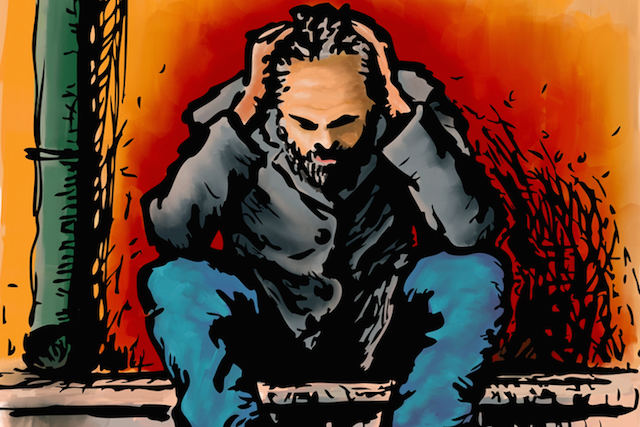
    Depressed man

    “Learn the alchemy true human beings know. The moment you accept what troubles you’ve been given, the door will open.” ~Rumi
    As much as I tried to apply personal development ideas in my life, I failed big time.

    All the affirmations in the world couldn’t make me love myself.

    The more I tried to “be present,” the more all-over-the-place my mind became, getting lost in overthinking.

    Mindfulness didn’t work for me either. Observing my thoughts got me to chase each and every thought and analyze it. When I tried “letting go,” I just held on tighter.

    This was my experience from reading hundreds of popular self-help books over a ten-year period. I studied intensely as if for a PhD, experimenting with the techniques several hundred such books suggested, but still my life wasn’t working very well, to say the least.

    My mind was a storm of thoughts and emotions. Sometimes I had panic attacks, which caused me to spend hours in bed, making me unable to work for stretches of time. I tried various drugs (medical and recreational) and other compulsive behaviors in an attempt to get over my depression that descended on me like storm clouds.

    Through my job at that time as a journalist, I interviewed some of my favorite personal development authors of the time, in a bid to overcome the low feelings and anxiety that were ruining my life. But little helped.

    At first I thought it was just me experiencing such problems—that there was something wrong with my mind—but when I spoke to other people in a support group I started at the time, I realized many people were experiencing the same frustrations as I had with some of the books out there, which made it all sound so easy.

    Although they knew they “should” be positive and focus only on what they wanted, they couldn’t do it. And then they felt bad about themselves that they couldn’t do it.

    Positive Thinking Pressure

    Positive thinking is everywhere these days, and yet it’s not helping the depression statistics—which are going up, not down.

    “Be positive” has become the new way of telling someone to “cheer up.” It didn’t work then and it doesn’t work now. It’s hardly like you need to be told that you should feel better. Of course you already know that. Of course you’ve heard it a million times before. And it’s downright annoying and useless to be told it again.

    Like Instagram and other forms of social media, this “positive thinking” movement seems to be about living up to an ideal standard of perceived perfection all the time. Not satisfied with looking “perfect,” now you’ve got to think perfectly, too.

    It’s like something out of the film The Stepford Wives, where real people are replaced with robots. Denying our emotions is an insult to the journey of what it means to be a human being, and it does nothing to help people feel better.

    Why It’s Okay to Be Down

    Even the great saints and mystics weren’t this perfect. They had bad days, and they were open about it. Buddhism, for example, teaches in the Noble Truths that pain is universal and inevitable. Of course, there is a difference between “feeling down” and dealing with major depression, but for many of us the former evolves into the latter because we compound our feelings with self-judgment.

    Unlike certain dubious New Age “teachings,” these authentic masters understood that negative thinking is part of the human journey, and that it’s okay to feel less than your best sometimes. And they also knew that it’s a quick route to self-hatred to expect any more of yourself.

    Without going into the low emotions, we would not feel and appreciate the high emotions. And another thing: it’s the challenges that actually evolve the best times and bring the best out of us by strengthening our “mind” muscles.

    Think of going to the gym and telling the trainer you want the ideal body, but you don’t want any tension on your muscles. It’s the same with experiencing challenges. The tension of life evolves us. 

    What to Do When You’re Feeling Low

    When you’re feeling low, the mind races into overthinking and you start trying to figure out a way to get out of the mood. Although doing this makes sense, this is exactly what keeps you stuck there. Like fighting with a giant spider’s web, the more you try to escape, the more trapped you get.

    Your Choice: To Fight or Relax

    In the middle of a bad mood you think your option is to feel good or not—to “be positive” or “be negative.” But it isn’t. Your two choices are seemingly more limited than this: to be okay with where you are, or fight against it.

    The frightened mind really wants to overthink and so trying to “be positive” becomes near impossible Trying to “be positive” is actually self-criticism; it is sending the message that you “shouldn’t” feel bad. We look for books to help us—suggestions to help us get out of the mood—all the while anchoring deeper into the darkness.

    Instead, you want to turn and face where you are. So in other words, you want to go with the anxiety rather than fight against it (and against yourself).

    You may not want to be there, but that’s beside the point. Making peace with somewhere you don’t want to be seems illogical, but it’s a necessary step in moving to where you want to be.

    Accepting All Parts of Life

    Now, whenever I feel low, I know it’s not the end of the world; it’s part of life. When I feel this way, I also know that positive change is on its way. I know that my life is evolving; that new ideas are on their way.

    Just as I don’t have a nervous breakdown at the gym when I feel tension in my muscles as I workout, I no longer fall apart when I feel the tension of life evolving me. I welcome it. I accept the process. And I accept myself even when I can’t accept the process in any moment. After all, I’m human.

    Nothing has gone wrong if we find ourselves feeling less than our best sometimes, despite what we may have read.

    Negative thinking will not make your world fall apart—quite the opposite. It is the source of our evolution. And the first step to feeling better is realizing it’s part of the process, and it’s okay. Just as what we resist, persists, it is only in acceptance that we can let go and move on to better feelings and better experiences.

    Meditation

    Forget rearranging thoughts; trying to sift the positive from the negative. Those “new age” gimmicks will get you nowhere, kind of like rearranging the deckchairs on the Titanic. To shift your life, a more “serious” approach is necessary. And that’s where meditation comes in. It’s something that’s been proven for centuries through all faiths and philosophies. In short: it works.

    Through meditation, we come into the present moment and foster a sense of inner calm. It’s not about changing our thoughts. It’s about learning not to attach to them and diminishing their power over us.

    Once you’ve made friends with exactly where you are, even with your negativity, a regular practice of meditation will make you less likely to be taken by those storms of negativity in the first place. But if they do take you down occasionally—and they probably will because that’s the journey of being human—you now know what to do about it.

    If you are suffering from depression or anxiety I recommend that you find a professional to support you and not do this journey alone.

  • Are You Showing Up in the World as Your Best Self?

    Are You Showing Up in the World as Your Best Self?

    Happy handsome man smiling on the beach

    “Each time a man stands up for an ideal, or acts to improve the lot of others, or strikes out against injustice, he sends forth a tiny ripple of hope, and crossing each other from a million different centers of energy and daring, those ripples build a current that can sweep down the mightiest walls of oppression and resistance.” ~Robert Kennedy

    Many years ago, I had the opportunity to take a yoga class at San Quentin State Prison in Northern California.

    I had visited the prison before, attending other classes, with inmates, on anger management and a class based on Bryon Katie’s The Work, but this was my first yoga class.

    It was an evening class, which made the prison seem that much more foreboding, and the class was full of lifers. The inmates in that room had committed very serious crimes. Most would never again see outside the prison’s walls.

    A man sat down on the mat next to mine and immediately struck up a conversation.

    He shared with me that the class had changed him in ways he hadn’t anticipated, that the yoga and mindfulness practice was helping him see the oneness in the world, and the invisible connections between all of us.

    He had also begun to realize the damage he had caused by taking a life, not just to himself and the victim, but to his family, his community, and that of the victim’s. The circle of people affected by the violent act and its outcome was ever-widening. He had been in prison for years but had never really considered all of that before starting his yoga practice.

    He said that what he had done was like throwing a pebble in a pond that causes ripples, only, he said, his was like tossing a brick in, and the ripples became destructive, monster-size waves.

    That man will never again see the outside of the prison walls, yet he is taking significant steps to show up a better person and make a difference.

    He is starting with himself.

    When you take steps toward becoming your best self, no matter what you’ve done or how you’ve felt in the past, it is essential to walk your talk, while recognizing that even a tiptoe makes ripples.

    How, you may ask, can you become your most authentic version of yourself? How can you live your values?

    Start to imagine tiny ways that you can make a difference in your community, and then translate those thoughts into actions.

    For example, if you love your neighborhood, support local businesses. If you love the Earth, recycle and compost. When you travel, look into staying at hotels and participating in activities that are both eco and socially aligned. Those are easy choices that help you feel (and be!) aligned with your values.

    Of course there will be days where you trip, and sometimes fall and scrape your knee (or just your ego), but if you do your best, your best keeps getting better!

    Your next step after a fall: Brush yourself off and examine what happened and why, then continue on the path with this new knowledge. Each time, it gets a little easier.

    Every choice we make makes a difference.

    In contrast to the lifer whose body was literally imprisoned, I knew another person whose mind it seemed was figuratively trapped. He once told me that nothing he did had any effect on anyone or anything else in the world. My heart sank—for him, and for all of us.

    The truth is, every tiny thing we do leads somewhere. Social change of any kind starts with the individual, with our thoughts, words, and actions.

    What we do and how we choose to be present in the world impacts not only our own lives, but the entire global community. The interconnections of every living being are infinite and continuously unfolding.

    From inside of the tall, unyielding prison walls, lined with razor wire and lookout posts with armed guards, the lifer I met in that yoga class was choosing to show up, contribute, and make a difference.

    He recognized that while he was only one person and had severe limitations imposed on him, he could still create positive ripples. His actions translated into a better, more mindful life for himself and those with whom he came into contact.

    We Generate Positive Ripples by Living Authentically

    This event took place nearly a decade now, but to this day, his story has stayed with me, continuing to generate positive ripples in my own life. On the person I choose to be. On the way I choose to show up in the world. On the choices I make, the words I speak and the actions I take.

    Over the years, I have learned that it takes so much more oomph to get through the day when I’m not living authentically compared to when I am.

    Inauthentic living is draining and depleting. By showing up as the most genuine version of myself, I have so much more energy, time, and space to do more in the world, creating positive ripples near and far.

    Whenever and wherever we touch the water—we toss a feather, or a pebble or a boulder, negative or positive—the ripples and waves travel as far as the eye can see (and then keep going).

    What’s most important to you? How do you reflect that through your daily thoughts, words, and actions? How do you show up in the world…what ripples are you creating?

    How do you start living authentically and create more positive ripples?

    First, define your core values. How do they show up in your daily life? How are you living them and/or not living them?

    Next, be present where you are. Each step you take on the path will bring your values more into light.

    Lastly, continue on the path, even when you fall.

    It may not happen overnight, but eventually, your values will equal your words and your actions. You will also recognize your missteps much faster as you live more authentically. You’ll then be able to correct them and continue on the path, creating more positive ripples.

  • Stop Chasing Happiness: 17 Alternative Ways to Live Your Best Possible Life

    Stop Chasing Happiness: 17 Alternative Ways to Live Your Best Possible Life

    “If only we’d stop trying to be happy we’d have a pretty good time.” ~Edith Wharton

    I have a question for you.

    What would you be willing to sacrifice to be happy?

    Would you be happy to let go of Netflix? Alcohol? Pizza?

    Would you be willing to take up a monastic life?

    Every single day of the year we’re being sold happiness. It doesn’t matter whether it’s in the form of a pill or a book or a holiday, the underlying idea is the same: What we have to sell you will make you happy.

    The problem with happiness is that no one really knows exactly what it is. It’s intangible, even a little mysterious, yet still we all want to be happy. But trying to be happy is like trying to get to sleep; the harder you try, the less likely it is to happen.

    So four years ago, on New Years Eve, I made the pledge to myself to stop trying to be happy.

    Don’t get me wrong. I wasn’t miserable. I was just spending too much time thinking about whether or not I was happy—even though neither I, nor anyone I knew really, could give a clear answer about what this meant.

    So instead of saying to myself, This year I’m going to be happy, I said, This year I’m going to try new things. I’m going to meet new people. I’m going to go to new places. I’m going to push myself out of my comfort zone.

    And if I’m not happy, well, I’m not happy, but at least I’ve had some interesting experiences.

    The result of this was the best (and probably happiest) year of my life, at least up to that point. And I realized something obvious in hindsight, but still profound: Happiness is something that comes a lot more easily when we stop thinking about it.

    It’s more like a place you occupy than an object you obtain. Some days you’ll be there and some days you wont, but the more time you spend thinking about being happy, the less likely you are to spend time being so.

    A large part of what less than happy people have is a problem with their patterns of attention.

    In the same way the attention of an extrovert is naturally directed at social communication, the attention of an entrepreneur seeks out business opportunities, and an artist looks for creative expression, an unhappy person tends to look directly at happiness.

    This post will explore some practices that can help you to stop focusing so hard on the idea of happiness and instead embrace the experiences and thoughts that will actually make you happy.

    1. Take the word “happy” out of your vocabulary.

    We all know words are used to communicate ideas. Unfortunately, sometimes a word can get overused and it becomes confusing, stifling, or even dangerous.

    Here are some other words you should start to use in conversations with yourself and others about how you feel. Don’t be fooled into believing you need to experience all of them; you don’t.

    If you find yourself asking, Am I happy? Replace the question with: Do I have [insert word] in my life?

    • Contentment
    • Enjoyment
    • Laughter
    • Well-being
    • Peace of mind
    • Cheerfulness
    • Playfulness
    • Hopefulness
    • Blessedness

    2. Practice living in the present.

    Letting go of past regrets and future anxieties is not easy, but it’s the fastest way to live a full and enjoyable life. Think about enjoying each moment for its own unique role in the ongoing narrative of your life.

    If you want a short mantra to keep in mind: be here now.

    3. Decide what you really want to do.

    A lot of people that are searching for happiness will end up with “shiny object syndrome.” This is what happens when they bounce from goal to goal because they’re looking for something (or someone) to take away all their suffering.

    Knowing yourself and what you truly want can help you develop purpose and focus—so much so that you don’t even have time to waste pondering happiness. You may even realize that happiness is not what you really want, that you’re willing to put up with being unhappy some of the time if it means you will have a sense of achievement.

    4. Let go of unrealistic expectations about how happy you’re supposed to be.

    For most of human history people lived relatively rough lives. The idea that you’re supposed to be happy all of the time is pretty new.

    Though you should strive to live the fullest life you can, it’s actually more normal and perfectly okay to live an average life interspersed with brief periods of joy.

    5. Take small daily steps.

    If you think you know what you want and you’re determined that it will make you happy, at least decide on small daily steps that you can take to get there.

    Setting unrealistical goals that you never get to finish is far less fulfilling than setting small goals that you can finish and appreciate—and ones that let you know you’re on the right track.

    6. Make serving others a regular habit.

    One key habit of unhappy people that we often don’t talk about is that they are inherently self-centered.

    This doesn’t mean that they are bad people by any means. It just means their minds spend a disproportionate amount of time focused on the self.

    Serving others is one way to break this pattern of attention from “How am I feeling?” to “How are you feeling?” There are a lot of studies that show that giving to others is more rewarding than receiving.

    7. Separate your happiness from your achievements.

    We all need to learn to separate our happiness from our achievements. It’s okay to feel content with our lives simply because we have an inherent sense of self-worth.

    Reaching our goals can obviously bolster this feeling and give us a deep sense of accomplishment, but the absence of achievement should not mean the absence of happiness.

    8. Don’t force yourself to be positive all the time.

    There’s a lot of advice in the self-help community and spiritual circles about being positive. Unfortunately, this isn’t always the best advice. It’s better to be positive when you are actually feeling positive than it is to be positive when you’re feeling negative.

    9. Remove things that prevent happiness.

    This is actually a lot more important than finding things to make you happy.

    Are you in a toxic relationship?

    Do you dislike your job?

    Are you eating a lot of unhealthy food?

    These things all need to go before you start to seek happiness; otherwise, they can hold you back and you may never be satisfied.

    10. Be okay with okay.

    When people ask you, “How’s work? How’s the new city? How’s your relationship going?” Don’t you feel compelled to say “really good!” even when it’s not?

    We’re so conditioned to feel like we need to have the best of everything that “okay” just isn’t good enough for most of us.

    Learning to be okay with okay is a much better strategy toward allowing things to become great than is anxiously wishing that they already were.

    11. Get out of your comfort zone.

    Getting out of your comfort zone is good not only for your sense of self-worth, but it also gives your brain a huge adrenaline dump and a flush of endorphins.

    You’ll know when you’re getting out of your comfort zone when you feel anxious before doing something, but you do it anyway, because you know it is beneficial to you in the long run. Afterward, you’ll often feel a huge relief and sense of self-worth at having done something you were scared to do.

    Depending on your own situation you might find this in traveling to new places, meeting new people, trying new activities (public speaking, scuba diving, bungee jumping etc.) or even just meditating through negative emotions.

    12. Look after your body.

    From muscular tension that can trap emotions to serotonin production and bacterial imbalances in your gut, your body is the number one vehicle that will allow you to experience joy and satisfaction, so treat it with care!

    13. Meditate daily.

    This is a no brainer. I’m sure anyone reading this article is familiar with the physical and psychological health benefits of mindfulness and meditation.

    But there is one I’d like to add:

    Meditation is long, slow, and you often you don’t see the deep benefits for a long time; in fact, when you are starting out, it can often seem like a complete leap of faith. But this is why it’s so important.

    When you sit and stare at a wall or focus on your breath or do anything that (compared to our normal lives) is so bland, it conditions you to not grab on to the colorful, shiny objects that usually point you toward a shallow sense of fulfillment.

    With a longstanding meditation practice that tendency to grasp will usually just fall away naturally. You’ll unknowingly get out of your own way.

    14. Meet new people.

    Meeting new and positive people can give you new vital energy that kickstarts your life and helps you focus on enjoying the present.

    Because we are such social creatures, having likeminded people in our lives can have such a powerful impact on the way our habits and beliefs develop. As the old saying goes, “You’re the average of the five people you spend the most time with.”

    To find people with similar interests and ambitions in your city, there are plenty of sites that can help you connect. You can try MeetUp.com for starters, or just do a simple search in Facebook for groups in your area.

    Likewise, if you are interested in meditation and spirituality, retreats are a great way to know people and connect on a deep level in a short amount of time.

    15. Go out in nature.

    A lot of the time our worries and concerns are largely linked to our environment—both immediately, such as the construction noise outside our bedroom, and peripherally, such as when an advert on T.V. reminds you of a past failure.

    Nature allows you to completely unplug, allowing yourself the space to experience relaxation and acceptance.

    16. Be honest with yourself.

    Discontentment often comes from what psychologists call cognitive dissonance—incongruence between two conflicting ideas or emotions in your mind.

    You can greatly reduce this by just accepting, admitting, and experiencing the emotions that are passing through you.

    If you are angry, be angry; if you are sad, be sad; if you are joyful, be joyful. When we try to actively change or deny present emotions, they become meta-emotions: guilt about sadness, anger about fear, fear about unhappiness. Then they become toxic.

    17. Energize yourself in the morning.

    As much as we like to think we have control and autonomy when it comes to our feelings, the truth is that momentum is a huge factor.

    Morning routines have been a keystone habit of content and successful people throughout history, and for good reason; starting your day with a spiritual practice, a physical practice, and a healthy breakfast may not seem like much, but compounded over years, it can make all the difference in the world to your well-being.

    We can all learn to let go of the neurotic need to chase happiness.

    Doing so will do us a world of good—and who knows, we might even have a pretty good time.

    How have you learned to stop chasing happiness? Let us know in the comments!

  • How to Feel Better When You’re Down (Without Forcing Yourself to Be Positive)

    How to Feel Better When You’re Down (Without Forcing Yourself to Be Positive)

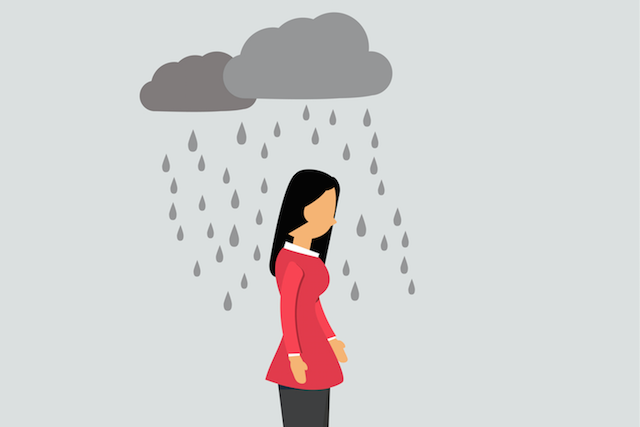
    Woman with dark cloud

    “Forget the failures. Keep the lessons.” ~Dalai Lama

    The year had finally come. I’d officially entered the “adult” world after celebrating my thirtieth birthday.

    I’d enjoyed being in my twenties. It was an incredible time for self-growth and healing after growing up in an unstable environment with a narcissistic, alcoholic father, and also a time of living life fully, having fun, and going on adventures.

    I felt pretty happy…until I hit thirty.

    I began examining my life not so positively anymore.

    Health problems had become more frequent and scary, my career path was ominous, I had not settled into a place where I wanted to live, and the answer to the big question for women my age (“Are you married with kids?”) was a definite “no.” I felt like I had nothing to show for myself.

    So, I resorted to one companion that I had known for a long time: the negativity blanket.

    We all have our times with the negativity blanket. It’s not soft, warm, or big, but it’s so familiar.

    I used the negativity blanket as protection during the times when I had no safe haven, when I had no comfort, no one to hug me and tell me it was all going to be okay. In a way, it helped me cope with the difficult aspects of my life.

    In my twenties I’d learned how to let go of that blanket. I’d learned about discarding old habits that were no longer serving me, accepting situations, fostering a positive mindset, and trying to find solutions to problems without allowing negativity to hold me back.

    The time had come to get back to that mentality—but I had to do it without shaming myself for my natural feelings.

    It’s easy to feel guilty about not being positive all the time, but we’re only human. It’s okay to have low times, so long as we don’t let them consume us.

    Below are some ways to gently move from a place of persistent negativity to more positivity.

    Go through what you have to go through.

    We all experience difficult emotions. Own them. If we do not own our emotions, we feel shame for having them and it’s harder to see the issue in front of us clearly. It may even become suppressed or internalized.

    I felt a string of mixed emotions before I turned thirty. Mostly, I felt lost and insecure because of where I was in life in comparison to a large majority of my peers. These were totally natural emotions.

    By letting myself feel them, I was eventually able to move beyond them. As they say, the only way out is through.

    Realize your triggers.

    It’s always easier to deal with something if you know what you are dealing with. Breaking down a problem and identifying your fears, unknowns, and stressors gives more clarity into what you can change, face, or let go, as well as what challenges you might have in front of you.

    For example, my triggers were fears related to being financially stable and cared for, as well as having someone to care for in the future. Realizing what was bothering me helped guide me through finding solutions, such as re-directing my life goals and working on being patient.

    Find space.

    Begin to create space between you and issues. Creating space means that you are taking a step back from your emotions and taking a look at what you’re experiencing a little more objectively.

    I began to work on shedding the shame I was feeling as a result of the narrative that I was telling myself, that I had no accomplishments when I turned thirty. Instead, I found space in between my feelings by relinquishing control over them. I stopped trying to control my future by planning or worrying, and instead focused on my hopes and intentions.

    Be grateful.

    Gratitude is a powerful tool. It’s the first step to setting a good mindset. You don’t have to be grateful for anything related to your problem; it helps just to identify three things you’re grateful for each day.

    I became aware of more value in the life I was living and began cultivating gratitude toward that. I was grateful for the opportunity to move to a different state, for my friends back home and in my new one, and for having the privilege to work as an ecological restoration technician on some of the most beautiful natural areas, I would argue, on this planet.

    Reminding yourself to be grateful allows you to see some richness in your life, regardless of what you’re going through.

    Take the good with the bad.

    It’s not that bad things don’t happen to good people, but the way we handle our issues depends on our perspective. A feeling of personal empowerment emerges when you are able to accept the bad and enjoy the good in each situation.

    Even though I had not spent my former years settling down, when I look back I see that I traveled to different countries and states, worked an array of cool jobs in the natural resources industry, got involved in various hobbies and activities that I never thought I could even do, and so much more.

    Watch for opportunities.

    During this hard time, I began to find opportunities to better myself. I started fine tuning my skills in the various activities I pursued and refined my habits into more appropriate and healthy ones. I realized that I had an opportunity to grow into a better person, and in a better direction than ever before.

    It may just take time and patience to realize what may come out of a situation; after all, to quote Joni Mitchell, “Something’s lost, yet something is gained in living every day.”

    Build strength.

    Call on your courage and see how this can make you stronger.

    I was having a terrible time traveling solo internationally at one point in my life and was reciting my woes to a hostel roommate of mine, who happened to have more bad luck than I did. Her perspective was “Sometimes the more you go through, the more you know you are able to handle.” Believe that.

    Focus on the lesson.

    If you look at past issues, are there any lessons that were learned? Did you get through them and did you feel good about that? That may be one silver lining.

    During this time, I was again reminded of how my perspective influences how I work through issues and how much I enjoy life. That negativity blanket was not as useful in the big picture of things.

    It’s not possible or healthy to be positive PollyAnna all day. Tragic events, trauma, and drama happen, and we have to go through anything that life hands us. When I felt bad for feeling bad, I reminded myself to stop being so hard on myself. This allowed me to accept my challenges and to recognize the beauty in my life.

    It’s the little things we do to motivate and encourage ourselves that bring positivity to our inner world.

    Accept all the emotions that arise, and don’t feel bad about feeling bad. Instead, gently pull yourself out of it, just as you’d offer compassion and support to a friend. With your own motivation and encouragement, you’ll feel much stronger overall, and a lot more positive.

  • How to Boost Your Resilience So Nothing Can Keep You Down

    How to Boost Your Resilience So Nothing Can Keep You Down

    “No matter how much falls on us, we keep plowing ahead. That’s the only way to keep the roads clear” ~Greg Kincaid

    How is it that some people can breeze through physical and emotional pain, whereas others wince at the mere thought of it?

    Is it their genes? Their individual circumstances? Their support network?

    Or is it a certain strength of character, something each and every one of us can develop with the right tools and training?

    Two years ago I found myself needing to answer these questions.

    I was sitting in a cafe in East London, wiping the tears from my cheeks with a napkin. To my boss, who’d just informed me she no longer needed me, it would’ve looked a little overdramatic. But at least an hour had passed since she’d left.

    It was uncertain whether or not I’d be paid the previous month’s wages. I needed it to cover last month’s rent, to buy food for the following weeks, and now to call my mom. I’d moved to London only a month prior, giving up a good job and a bright future in a good company to work on a new, small but promising community project.

    Despite the words of warning and concern from my family, I believed this was going to be the start of something great. Those tears were not for losing the position or even a month’s worth of hard work, but for the excruciating feeling of having to admit I was wrong and call my parents to take me in.

    I was a mess. I felt like a failure to myself and to all those who’d been looking out for me.

    Today when I think about that unfortunate time, I realize I wouldn’t be where I am now without it. I learned an early and somewhat easy lesson in resilience.

    Resilience: ”An individual’s ability to properly adapt to stress and adversity.”

    Resilience is not something you either have or don’t have. It’s a set of behaviors, thoughts, and actions that can be learned and developed by anyone. And the great thing is, you don’t need to lose your job, money, or pride to cultivate it.

    There are three keystone habits to master in order to become a temple of strength and resilience in times of adversity. I’ve spent the past several years practicing them, and they’ve completely transformed my life, so naturally, I now want to share them with you.

    Some of the tips may appear simple, but they take a concerted effort to put into practice and master. Start little by little today, and they’ll soon become a part of your body’s natural stress response.

    Focus on Finding the Good

    To be resilient, you need to be able to find reasons to be optimistic—some way your circumstances may actually be beneficial to you in the long run. It’s nearly impossible to bounce back when you’re focusing on how horrible a situation is. It’s much easier when you can find blessings in disguise within difficult times or identify lessons that can help you going forward.

    But this doesn’t mean you don’t experience difficulty or distress. In fact, those who are highly resilient have a much more diverse repertoire of emotions than those who are not. They feel pain, mourn losses, and endure frustrations, but they understand that pain is temporary, and they focus on identifying the positive in the negative and opportunities in challenges.

    If we don’t learn to look for the positive, we quickly become victims to the negativity bias—which means that even when the positives and negatives of a situation are of equal intensity, the unpleasant and traumatic thoughts and emotions affect us most. This is toxic because as soon as we start to complain, we become victims. If we smile and refuse to get caught up in negative interpretations of events, we are simply experiencers.

    It took me a while to see what good could come of being left in East London with no money, job, or clue as to what I was going to do next. It was only several months later, when my life took an unexpected turn for the better, that I would start to question the whole idea of positive and negative experiences and see that each brings their own unique possibilities.

    That’s often how it happens; at first, it seems there’s only one way to interpret adversity. In retrospect, though, we often find that a chain of seemingly negative events put us directly on the path to something worthwhile. Resilient people remember this when everything seems bleak.

    Question Your Thoughts and Feelings

    One major difference between those who are resilient and those who are not is self-awareness—the ability to identify their emotions and question the thoughts that preceded them.

    We know highly resilient people still experience reactive emotions from adversity like fear and worry, but they approach them in an active manner, identifying the thoughts that led to these emotions, challenging them, and quickly adapting. This is how they’re able to bounce back and summon confidence at will.

    The best way to avoid getting caught up in emotional reactions is to practice meditation in small bouts every day.

    Traditional meditation is great, but come 3 p.m. when you’re tired and hungry and in the middle of a heated debate with a colleague, it’s easy to forget the twenty minutes of calm and tranquil bliss you experienced that morning. Incorporating small bouts of meditation into your day allows you to regularly regulate your emotional state.

    Today, I don’t actively seek out difficult conversations or sticky situations, but when they do appear on my radar, I’m fully prepared and equipped to handle them. Of course, this is easier said than done, and recently this belief was challenged when a call from a family member completely knocked me off my trajectory.

    I hadn’t seen my grandma for years, not because I didn’t care but because I got busy with life, and I unwittingly convinced myself that she wouldn’t get sick again. So when it happened, it hit me hard.

    The subsequent feelings of depression and woe that consumed me at first felt inevitable, but before I knew it, I was focusing on my breath, questioning my thoughts, and reframing the situation in a positive light.

    At first, the situation seemed to have no upsides. Then I realized this was a reminder that life is short, and I need to be in touch with my grandmother more regularly. This same reminder also rekindled her appreciation for life. Pain wasn’t the only thing that could come from this situation, but growth, opportunity, and greater meaning.

    Run Toward the Pain

    As human beings, we naturally seek refuge in comfort.

    Our minds and bodies are content following familiar patterns and routines, conserving energy and hiding from the scary unknown.

    Unfortunately, that means we become dependent on external aids like smartphones to do difficult tasks and any strenuous thinking for us. This discomfort-avoiding behavior rubs off onto other areas of our lives: one minute you’re avoiding the pain of being alone by scrolling through Facebook, and the next you may be avoiding your feelings after losing someone close to you, inhibiting your ability to move forward.

    Resilient people accept painful situations and face them head-on, trusting that they can get through them.

    Rethink the little moments of discomfort and anxiety in your day as signposts to resilience and optimal health, from setting limitations on checking your phone to having that awkward conversation with a loved one.

    Whenever I catch myself feeling even an ounce of discomfort, I stop and think, “What is the next course of action that will make me feel most satisfied: avoidance or plowing straight ahead?”

    The same characteristics that make us resilient are the same traits that allow us to live stronger and more enriched lives. So look on the bright side, challenge your reactive thoughts and emotions, and learn to lean into discomfort. Then even if life gets you down, it won’t be able to keep you there.

  • 10 Ways to Cultivate a Positive Mindset and Change Your Life

    10 Ways to Cultivate a Positive Mindset and Change Your Life

    “Each morning we are born again. What we do today is what matters most.” ~Buddha

    I remember how I used to think; it was always, “People suck” and “I hate (fill in the blank).” I was constantly focusing on the bad side of humanity, so that was all I could see. It cast a shadow, which took the joy out of life.

    It should have been obvious that I was creating my own misery, but I wasn’t able to see how my own thoughts affected my mood.

    I had to change my entire outlook by training my mind to see things in a new light. It would have been easy to stay on the same path. After all, I had chronic fatigue, no money, and nothing to look forward to because I didn’t have a compelling vision of the future. I felt the present situation was permanent.

    Eventually, I’d had enough and started thinking about what I could do to change my situation.

    Change was slow, but a new path that wasn’t clear to me before started to appear as I worked on my mindset. As things progressed, my goals and dreams became bigger and more ambitious. I started imagining being fit, healthy, running my own business, and traveling the world.

    These are some of the things I did to change my mindset and my life.

    1. Seek positive friends.

    A negative social circle will act as an echo chamber for bad ideas. A positive social circle will also act as an echo chamber, but one that supports your dreams, so choose your friends carefully.

    Find people who reflect the values you want to adopt. Join groups online and go to networking or social events focused on personal growth. As your own mind starts to change, it’ll become easier to connect with more positive people.

    I’m not suggesting that you ditch friends who are going through a hard time and need your support, but rather that you evaluate whether some of your relationships are persistently draining and unhealthy.

    I left my old social circle because it was an echo chamber for negativity. Instead of focusing on a great future, everyone was talking about the things they didn’t like about life.

    It was hard to make new friends at first. The problem was that I couldn’t offer any value to people with much more positive mindsets—the kind of people who I wanted to emulate.

    That changed, but it took time. Once you find your “tribe,” progress will come much more quickly because of your new influences.

    2. Challenge your thoughts.

    When old thinking comes up, as it will, it’s not enough to try and ignore it. We need to challenge our beliefs.

    Is everything too expensive, or is it just that I can’t afford it? Do “people suck,” or am I just looking for things to criticize?

    Weigh your thoughts against the evidence. If they crumble under scrutiny, then explore why you believe them in the first place. By challenging your thoughts, your mindset will begin to evolve.

    3. Consume positive media.

    Consuming positive media daily will alter your perspective through osmosis. “Positive media” is anything that emphasizes the good in life, or how to improve our living standards and the living standards of others.

    We all know that the best way to learn a new language is through immersion. If you hear this new language every day, it starts to stick and become easier to remember. Soon, you’ll not only understand that language but you’ll speak it too.

    New mindsets are exactly the same; if you immerse yourself in personal growth content every day, it will change the language of your mind. That language is your self-dialogue, the way you speak to yourself at every moment, and it’s habitual.

    Learn a positive self-dialogue and you’ll see the world in a different way.

    4. Volunteer.

    Volunteering to help other people can make a huge impact on how you feel about yourself and your view of the world.

    By focusing on how you can help someone else, you’ll draw your attention away from your own woes. It becomes easy to develop a positive mindset when you’re looking for new ways to make someone else’s situation better.

    You can’t focus on the bad while focusing on the good.

    5. Abstain from all “bad news.”

    Wars, murders, and politics all add baggage to our thoughts.

    It makes sense that most of the mainstream media focuses on bad news, though, because tragedy sells. It doesn’t make sense for us to sit around stewing over this bad news. It’s certainly not going to allow for an optimal mindset, one that’s focused on the best that life has to offer.

    By tuning into the news about a plane crash thousands of miles away, we’re putting our mental energy into something that won’t help. We can’t change the bad things happening at any given moment, but if we put our attention into things we can change, our lives will improve.

    6. Write out your action plan.

    This is about looking at the possibilities and then doing something to make it happen. Forward thinking will move your focus away from where you don’t want to be to where could be.

    But it’s not enough to simply write it out, because we only grow when we take action. It’s just a thought until we do something to make it happen.

    Don’t know what the right steps are? Don’t worry, just identify the first thing you could do to start on the path, then do it. Even if it’s a mistake, you’ll still make progress, and that will keep you focused on creating positive change. Never allow paralysis by analysis. You have the vision; go with it.

    7. Adopt a healthy lifestyle.

    A healthy body will support a healthy mind. During the most difficult time of my personal struggles, bad health was a major obstacle. Chronic fatigue could wipe me out for whole days.

    Nonetheless, getting into action, changing my diet, and working out set the foundation for all other changes to take place. Slowly, my energy levels started to rise till the point that my health no longer was an issue.

    Look at how you sleep, what you eat, and your activity levels to identify anything that could be sapping your energy. Sometimes laziness is just fatigue.

    8. Send thank you notes.

    The simple gesture of sending a thank you note can be empowering. Not only does it feel good, a thank you note creates goodwill in other people.

    Thank you notes will also strengthen your relationships and connections, because people like to feel appreciated.

    It doesn’t really matter what they did; any small gesture you appreciated, from good service to a favor, is a candidate. Send a quick email or a card in the mail to let them know you appreciated it.

    9. Create a morning mindset routine.

    A great way to start the day is by making a mental list of each thing we’re looking forward to; it creates a feeling of anticipation and excitement that creates momentum for the entire day.

    Every morning I play personal growth videos or audio books. By focusing on the positive messages coming from this content at the beginning of the day, it’s much easier to be happy and focused. My work gets done more quickly, and it doesn’t seem so hard either.

    10. Write a wins checklist.

    So you started on good note; now finish on a great note by making a mental list of the day’s wins. It doesn’t have to be monumental; the point of the exercise is just to keep your focus on the best your day’s experience.

    Keeping track of losses can help you improve, but dwelling on them will kill your motivation and momentum. Finish strong and it will be much easier to wake up feeling happy.

    Improving your life starts with improving your mindset. Like me, you may find that these steps are a great start.

  • Look for the Good and You Will Find It

    Look for the Good and You Will Find It

    Rose Colored Glasses

    “What we see depends mainly on what we look for.” ~John Lubbock

    Have you ever noticed how as human beings, we tend to go negative?

    Looking out into the world, we see the crumpled fast food bag in the street and the torn curtain in the window.

    Looking into the mirror, we see the pores and dark circles under our eyes. We see the freckles and miss the dimple, or we hate the dimple and miss the smile.

    Our eyes focus in on what’s wrong.

    I’ve noticed it’s hard to undo this tendency in myself, though sometimes the veil drops suddenly, and I can see the beauty of the world around me.

    Many years ago, a friend and I made a three-day visit to the Polish city where we were to live for a year while we taught English.

    Arriving on the train, I was struck by the torn metal siding in the station and the crumbling rust of the ancient stair railings; as we walked along the sidewalk, how the entire city seemed one blocky stamped-out Soviet-era apartment building after the next.

    Neither of us spoke, but I felt sure my roommate’s thoughts mirrored my own: This was where we were going to live? This worn foot sole of a town was going to be our home for a year?

    Just as my mind headed in the direction of I don’t think I can live here, a tiny bird flew down a foot or so in front of my shoes, hopping a few inches here and there to nibble the tops of a tuft of grass poking out of the broken concrete.

    I let my suitcase bump to a stop and watched. The bright saturated green of the grass, the pale orange stripe on the bird’s beak, the angle of sunlight against the cracked sidewalk… it was beautiful. And at that moment my heart gave a hopeful thump. There was beauty here, too. I only needed to look for it.

    As humans, we have a built-in bias to see what’s not working, what needs fixing, what doesn’t measure up. In general, it’s not bad to see the negative… we avoid falling into pits by looking out for potholes. But seeing only the negative results in what I call “paper towel tube vision.”

    When you look through the empty cardboard paper towel tube, you only see whatever shows through the little circle at the end of it, and nothing else. This is what we’re seeing when we see only the flaws on our cheeks and only the crumpled coffee cups on the curbs of life. We see whatever appears in that little circle and lose all perspective.

    Seeing the good doesn’t mean we don’t see the bad, too. It means we throw away the paper towel tube and let our eyes take in what we don’t like and invite ourselves to see what’s good there, too. We let ourselves see it all, the big panoramic view that acknowledges that we are more than any mistake or flaw or misdeed.

    Imagine letting your mind unfold like a vast, exquisite map laid out on a table. Seeing the bigger picture can be an awesome way to see yourself with more love.

    Make a habit of looking for the good. Catch yourself looking at the world—or at yourself—with a narrow, negative view. Then step back mentally and spread out your awareness.

    See with the eyes of your heart. Look for something that’s working, something sweet, something lovely, something that opens you up.

    Look for the good in people, even people you wouldn’t want to sit over dinner with.

    Look for the good in the mirror.

    Let looking for the good become a new default for you, and give yourself credit when you’re able to hold whatever’s happening with that big perspective and big heart.

    Woman with rose-colored glasses image via Shutterstock