Tag: popular

  • If You Want To Know Love, Stop Lying

    If You Want To Know Love, Stop Lying

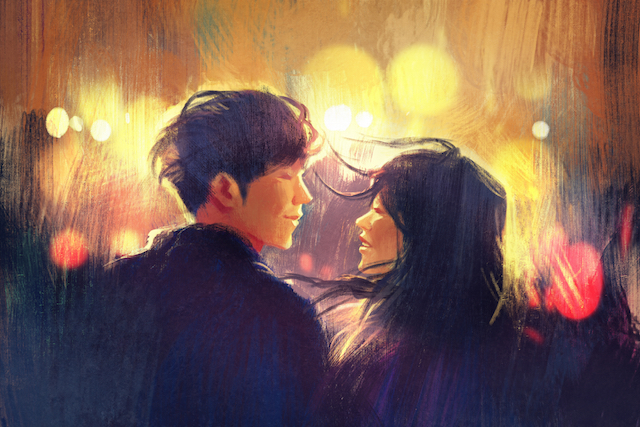
    young couple in love outdoor,illustration,digital painting

    “Lies may make people feel better, but they do not help them to know love.” ~Bell Hooks

    I was once a liar. I didn’t know I was a liar at the time. I didn’t consciously tell an untruth. Instead, my entire being did.

    Lying isn’t just something that is done with words. We can lie with our actions. We can lie with our silence. We can lie with our complicity. We can lie by pretending to be who we aren’t.

    I was the lie.

    I played dress up for most of my life. It didn’t happen all at once. I didn’t walk into someone else’s closet and come out with a new wardrobe. It happened slowly, over time.

    Each time I said or did something that didn’t get approval from the world around me, I chose to pull a garment from the imaginary closet of people who are lovable. By the time I was twenty, my true self was so far hidden that even I didn’t know where she was.

    It first began by disappearing. I felt rejected by my peers in grade school. It felt like so much work to be liked and popular. So I decided to give up trying. But instead of just being myself, I decided to hide away. Being unnoticed seemed easier than being seen for who I was.

    College was my opportunity to reinvent myself. But when I got there I found out I couldn’t force myself into being outgoing or easily likable. So I turned awkward. I was hyper self-conscious that I was not being myself, but I didn’t know how to let myself just be. So my body got stiff, my movements fidgety, and my voice uncertain.

    I began to watch other people and would, in the slightest ways, begin to mimic them. I’d adopt someone’s laugh, another person’s style, and someone else’s slang. This mishmash of what I thought it meant to be likable only kept me further away from the truth of who I really was.

    I had friends, but no one really knew me. I was lost and lying about who I was. I pretended like I had it all figured out because admitting that I was clueless would mean my world would come crashing down.

    When we build identities for ourselves we can’t risk allowing them to crumble. So we lie. We create more masks to wear and keep ourselves further from the truth. Our egos know that if one brick loosens, everything we’ve worked so hard for will be ruined.

    When we choose to deny who we truly are, we are lying. Lying is a choice, one that deeply harms ourselves and oftentimes, those around us. And even though it is a choice, it’s one that is very easy to hide from. In our search for love we will do almost anything to attain our goal even if it means denying ourselves the truth.

    The irony, though, is that love itself is impossible without honesty. If you find yourself desperate to know what love really is, take a deep breath and look at how honest you are about you.

    Do you really know yourself? Do you share who you are with the world? Are you overly concerned with what other people think about you? Will you change yourself to be accepted by others? These are all great questions to help you recognize how comfortable you are with your true self.

    Uncovering yourself is part of the path. It’s okay to share with people that you don’t know. That you’re confused. That you’re lost. That you feel pain. That you’re in the process of getting to know yourself.

    You don’t have to use all your energy to put on the facade that you’ve got it all figured out. It’s okay to not have it all together. When you begin to open up and communicate with others about who you truly are, you begin the opportunity to discover what love is.

    The people who open their hearts to you will create a beautiful container for love to grow. Those who are triggered by who you are will move their own way. Let them go. Stay connected to your truth and keep sharing with the people in your life.

    As I began to test the waters in my friendships I started to open up about my feelings of shame and guilt.

    I have one memory of sitting at the kitchen table with a girlfriend and telling her something I had never told anyone. I could feel the space opening between us as she acknowledged my feelings and matched them with her own experiences of similar feelings.

    Sharing ourselves allows us to know love. Love makes us feel safe and wanted. It makes us feel connected and like we belong.

    We often lie when we’re afraid of the truth. When we lie about who we are, we tend to be afraid that who we are isn’t lovable. If we show our true selves and we aren’t loved and accepted, we don’t know how we’ll recover.

    We recover by loving ourselves. But you can’t love yourself if you don’t know who you are. You can’t love yourself if you’re using all your energy to put on an act for everyone else. And other people can’t love you when they don’t know who you are.

    So if you want to know love, show yourself. Take off the mask. Let go of all the energy it takes to be someone else and use it to discover who it is you truly are. Love that person up and watch as the world loves you back.

  • 10 Ways to Practice Self-Compassion and Overcome Your Shame

    10 Ways to Practice Self-Compassion and Overcome Your Shame

    Self compassion

    Note: The winners for this giveaway are akarosco and Tyler Bel. Subscribe for daily or weekly emails to get wisdom in your inbox and learn about future giveaways!

    “This is a moment of suffering. Suffering is part of life. May I be kind to myself in this moment. May I give myself the compassion I need.” ~Kristin Neff

    I consider myself to be a very compassionate person, but I’ve struggled a great deal with self-compassion. Though I’ve now been sober for over six years, back when I was drinking I made a lot of mistakes, and it’s taken me a long time to have empathy and understanding for myself.

    While drinking, I did and said a lot of things that made me feel ashamed and unhappy. When I drank, one of my go-to moves was giving into a sudden, intense desire to leave (or attempt to leave) a bar or party.

    This feeling, as I vaguely remember it, hit me unexpectedly and aggressively. It was as if, at random, a little voice in the back of my head would start whispering, You have to leave. Right now. It doesn’t matter how you get home or how far from how you are, but you have to get back to there. NOW.

    I realize now that this voice piped up because, deep down, I am intensely introverted. Alcohol was the fuel I used to tolerate social situations that I just didn’t really enjoy. At some point in the evening, the “real me” would speak up and insist she’d had enough socializing and must leave. And I almost always listened.

    Sometimes this was a mere inconvenience—I left friends behind as I hopped into a cab solo or dragged them with me, convincing them the night was no longer fun and we should leave—but oftentimes it was downright dangerous.

    I hazily remember a night I simply left the bar and, realizing I couldn’t make it home in my inebriated state, decided to lie down in the middle of a city sidewalk. (This sounds comical, but it was not at all funny to those who found me or to the loved ones who had to negotiate with me to get me off the ground.)

    In another faded memory, I insisted I had to return home when I was staying the night at my aunt’s house—over an hour away from where I lived. Keys in hand, I stumbled to my car before being stopped by not one but three family members who were forced to stand in the freezing cold, bargaining and pleading with me until I eventually relinquished my keys.

    Similar situations played out many times over the course of all the years I was drinking, and friends and family were not always successful in their negotiations.

    After these must-leave-immediately outbursts, I would excuse my crazy behavior with a wave of the hand and a laugh, insisting I’d just had too much to drink and it wouldn’t happen again. Deep down, I was deeply ashamed of my behavior, and even more ashamed when it inevitably did happen again.

    And, to compound the shame, these strange, disruptive, and often dangerous outbursts were only one negative side effect of my drinking problem. For over a decade, I was trapped in a vicious cycle of drink -> do/say something stupid (like trying to leave when it was inappropriate or dangerous) -> feel bad about it -> drink to relieve the shame and pain, and then back to the start again.

    It was frustrating, disheartening, and agonizing. It wasn’t until I began having compassion for myself—truly experiencing concern over my suffering, rather than merely pointing a finger at myself in the mirror—that I was able to deal with my underlying pain and finally get (and stay) sober.

    While sobriety isn’t for everyone, the notion of using compassion to make more positive life choices applies to all of us. We all do and say things we feel ashamed of. And, because of that, we all need to compassionately care for ourselves in order to fully heal from our mistakes. Here are some of the best ways I’ve found to cultivate self-compassion:

    1. Transform your mindset.

    Sadly, it’s often challenging to lift yourself up (particularly if you’re feeling really low or ashamed), but if you want to create compassion for yourself, you have to change your mindset.

    For me, self-compassion started with changing my thoughts. I started focusing on the fact that my behavior was bad, not me. Once I started labeling behavior (instead of myself as whole), I was able to be kinder to myself and open up my mind to the possibility that I could make changes.

    2. Speak (and think!) kindly about yourself.

    Hand in hand with the first step is speaking and thinking kindly about yourself. Your words are incredibly powerful, and if you continuously tell yourself you’re unworthy, a mess, or unforgiveable, you’ll soon start to believe it.

    I did this for a long time, calling myself things like “crazy” or “out of control,” but once I started changing my words, stopping myself every time I wanted to laugh off my behavior with a negative label, I began having more compassion for myself.

    I was a person making bad choices, not a bad person. If you struggle with this step, imagine talking about yourself as you would talk about your best friend.

    3. Forgive yourself for your mistakes.

    Forgiveness is vital for self-compassion. We all make mistakes, but not all of us forgive ourselves for them. Depending on the mistake, this can be a very daunting task, but keep in mind that you cannot go back (no matter how badly you might want to), so the best thing to do is to choose forgiveness and forward motion.

    Whenever I did something inappropriate, instead of shrugging it off or excusing my behavior, I started apologizing for it, both to others and to myself. Again, I focused on the fact that I wasn’t bad; it was my behavior that was.

    4. Spend time doing things you truly enjoy.

    If you’re struggling with shame, enjoying pleasurable activities can be seen as something you don’t deserve. But each and every one of us deserves to engage in joyful, uplifting, and exciting experiences.

    Allowing yourself to experience true happiness—to take time from your life to do something you love—is an act of compassion.

    When I found myself feeling ashamed for a mistake I’d made, I began making a conscious effort to understand what situation provoked that act and I strove to make choices that put me in more positive situations.

    5. Strive to avoid judgments and assumptions.

    Though assumptions and judgments are often based on experience or knowledge of some sort, it’s very hard to predict what will happen in life. When you judge yourself or make an assumption about what you will do in the future, you don’t give yourself an opportunity to choose a different path. Instead of limiting yourself, be open to all possibilities.

    In my situation, I started assuming that I shouldn’t go to an event because I would inevitably cause a scene and have to leave. Little did I know that I’d eventually learn, with the help of therapy and self-compassion, to socialize sober. I had assumed that I would always be “wild,” but I’ve learned that you cannot know the future. Assumptions will only inhibit you.

    6. Find common ground with others.

    While self-compassion is about the way you care for yourself, one of the best ways to cultivate it is to create connections with others. When you open yourself up to sharing who you are with others, you’ll soon see that you’re not alone.

    We all struggle to treat ourselves with kindness, and recognizing this can make the struggle more manageable.

    At some point, I began admitting to friends and family that I had a problem. It was difficult to open up emotionally, but the more I did, the more I discovered that I wasn’t alone. Creating these stronger emotional ties made it so much easier to deal with my personal shame and to work toward more self-compassion.

    7. Take care of your mind and your body.

    One of the most compassionate things you can do for yourself is take care of your mind and body. Spend as much time as possible absorbing new information, and be sure to fill your mind and body with positive things (healthy food, good conversations, wisdom, etc.). Being mindful of what you consume and what you do with your energy is an important part of self-compassion.

    Once I began doing this, I was able to recognize what did and didn’t make me feel good about myself. Admittedly, I didn’t always continue to seek out positive things (and still struggle to do so at times), but the awareness of what would and wouldn’t impact my mind and body positively gave me the opportunity to make more conscious, compassionate choices for myself.

    8. Pay attention to where your passion lies.

    Most of us are passionate about something. We have things that really matter to us ¾ a career, a hobby, our loved ones. Whatever it is that gets you excited, allow yourself to focus on that, and do what you can to spend more time enjoying it. Self-compassion means allowing yourself to be passionate, without shame or fear.

    Around the time I started trying to get sober, I realized that my issues with alcohol were a reflection of deeper issues within my heart and mind. I started thinking more about my mindset and, as I explored this, I decided to start a blog to share what I found. It was at that time that my passion for self-discovery and my passion for writing merged, and Positively Present was born!

    9. Realize it’s not all about you.

    Rather than focusing on how we see ourselves, we often direct our attention to how we think others see us. It’s important not to do this for two reasons: (1) we don’t ever really know what others think and (2) more often than not, others aren’t thinking about you.

    Letting go of external validation is a very compassionate choice.

    It took me a long time to overcome this, particularly when it came to giving up drinking. For a long while, it felt like everyone was judging me, either because they thought I had a problem or, worse still, they themselves had a drinking problem and couldn’t understand why I was quitting.

    As time passed, I discovered that most people didn’t care whether or not I drank—they just wanted me to be happy—and realizing this made it so much easier to do what was best for me.

    10. Cultivate acceptance (even for your flaws).

    Just because you accept something doesn’t mean that you like it. We all have attributes we don’t love, but the more you focus on accepting the things you cannot change, the more content you become with who you are.

    One of the great challenges that came with my sobriety was realizing that I didn’t, in fact, like partying and barhopping as much as I’d claimed to. I’d made these things such a big part of my identity, and recognizing and accepting that they weren’t “me” was difficult (particularly because I had to overcome the notion that “introverted” was a negative characteristic).

    I still struggle at times with being introverted—I often wish I could be social butterfly—but accepting my limitations and my true nature has been the greatest act of self-compassion. Doing so has allowed me to direct my energy and attention to the things I love about my life: my creativity, my writing, and the people who love me just as I am.

    Embracing these ten tips has helped me to cultivate more compassion for myself, and I’ve found that the more compassionate I am with myself—particularly when I’ve made a mistake or feel ashamed—the more compassionate I am with others as well.

    The way you treat, think about, and talk to yourself isn’t just about you. It has a ripple effect that impacts all of your relationships and all of your choices, which is why it’s so important to choose self-compassion whenever possible. It changes your life and, in a greater sense, the world as well.

    The Giveaway

    Dani has generously offered to give two sets of her two new books Compassion and Forgiveness, to Tiny Buddha readers. To enter to win a free set:

    • Leave a comment below. You don’t have to write anything specific. “Count me in!” is sufficient.
    • For an extra entry, share this post on one of your social media pages and include the link in your comment.

    You can enter until midnight, PST, on Sunday, December 18th.

  • How to Release Shame and Stop Feeling Fundamentally Flawed

    How to Release Shame and Stop Feeling Fundamentally Flawed

    “But shame is like a wound that is never exposed and therefore never heals.” ~Andreas Eschbach

    Shame. Everybody has it. Nobody wants to talk about it. The less we talk about it, the more power it has over us.

    Shame goes to the core of a person and makes them feel there is something inherently wrong with them.

    I remember when I was a young girl, I struggled so much with feeling I was ‘less than’ others.

    There were many nights when I would say prayers to help change me. I didn’t like my freckles. I was so embarrassed by my body. I hated the fact that I had a lisp. My skin was either pale as a ghost or the color of a tomato. I would get blotchy when I was the center of attention. This list could truly go on and on. What I was really experiencing was a strong sense of shame.

    Shame is often the trademark in hurting families, and almost always part of the underlying matrix of psychological conditions.

    It may start with someone not owning their own feelings and making it about someone else. I was such a sensitive kid. I would get made fun of for having emotions, and this eventually led to my own struggles with insecurity that surfaced as depression and anxiety.

    In our society, shame and guilt are often intertwined. However, these two emotions are quite different.

    Guilt’s focus is on behavior. It’s about what we do. When we experience guilt, we have gone against our own code of ethics.

    Guilt tells me that I am not doing what has been expected of me. This emotion usually serves as being an internal conscience. It helps me to not act on harmful impulses. The great thing about guilt is our values get reaffirmed. There is a possibility of repair. We can learn and grow.

    Shame’s focus is on the self. It’s not that I did something bad, but that I am bad. It gives us the sense that we do not measure up to others. We are defective. We are damaged goods.

    A person cannot grow while they are in a space of shame, and they cannot shame others to change. This concept is like saying “you are worthless and incapable of change, but change anyway.”

    When we’re in shame, we don’t see the bigger picture. We feel alone, exposed, and deeply flawed.

    Oftentimes, we will respond to shame by moving away from it, moving toward it, or moving against it. Moving away from it means to withdraw, hide, and/or stay silent. Moving toward would be appeasing and/or pleasing others. Moving against suggests we try to gain power over others. We use shame to fight shame.

    As human beings, we are wired for connection. We come into the world needing connection in order to survive. When we are in shame we unravel our ability to connect. Our first reaction to shame is to hide.

    This may mean we work all the time, attach to someone in an unhealthy relationship, or withdraw from our community. More so, we may have difficulty with healthy levels of self-esteem. We may fluctuate between arrogance, grandiosity, and low self-worth. As a result of this dynamic, we are either one up or one down in a relationship. Relationships lack substance, honesty and meaning.

    According to the research of Brené Brown, shame needs three things to survive: silence, secrecy, and judgment.

    Shame thrives on being undetected. The only thing shame cannot possibly survive is empathy.

    We have to find courage to talk about shame. When we dig past the surface, we find that shame is what drives our fear of rejection, to not take risks, to hate our bodies, and to worry about the judgment of others.

    We are more likely to engage in self-destructive behaviors or to attack others. When we are honest about our struggles, we are less likely to get stuck in the black tar of shame. Shame cannot hold on when we name it.

    So, how do we become aware of shame? And, what can we do about it?

    Well, we first have to name shame when we are feeling it.

    When I make statements like “I am an embarrassment” or “I am such a failure,” what I’m really feeling is shame. When I attack my being, I need to recognize the shame and reframe the belief. “I am not an embarrassment, I just did an embarrassing thing.”

    The next step is to develop more awareness about when I am experiencing shame.

    We have to become mindful of our triggers to shame. Our feelings, beliefs, and actions are motivated by these triggers whether we acknowledge them or not. So, when we are feeling shame, we want to interrupt it with more positive thought patterns.

    Ego repair comes next.

    We have to track and replace that negative internal dialogue, and put ourselves around positive and meaningful influences. It’s important at this stage to practice loving-kindness to ourselves and others. A great practical tool is talking to and treating yourself the way you would someone you love dearly. You would never call someone worthless, right? So, why do that to yourself?

    Name and return shame.

    I was picked on a lot as a kid for being overweight. I experienced shame in my gut and in my chest. I would often feel sick to my stomach. Eventually, I developed beliefs that I was “worthless and unlovable.” These came from an ample amount of being hurt by my peers.

    As I grew into an adult, I lost a good amount of weight, but still held onto those beliefs. Of course, I learned that weight has nothing to do with worth and love. I was able to name where that shame came from, and put it back on my peers who hurt me out of their own ignorance, pain, or confusion.

    If we are unable to put shame back in its place, we will continue to attract people and situations that validate those negative beliefs and recreate shame in our lives.

    Avoid negative situations and build positive supports.

    It is crucial to place yourself around healthy and loving people. When I am active in my shame, I often want to cocoon. During these times of isolation, I feel more alone and shameful. If I am able to simply communicate what is happening with me to someone who loves me, the power of my shame diminishes.

    In order to understand where we are and where we want to go, we have to have self-acceptance about who we are. Shame can make for discomfort in relationships with others. If we could work on developing a loving relationship with ourselves, our ability to be intimate and authentic increases.

    It is vital that we learn to separate shame from the person.

    We need to understand that shame is an emotion. The concern, though, is many people have turned shame from an emotion to a state of being. We want to be able to transform it back into a feeling. All of our emotions have functions. Shame, similar to other feelings, is attempting to protect us from some sort of threat. However, it often is a misperceived threat.

    We cannot become resistant to shame, but we can develop resilience to it.

    We have to help one another know we are not alone in our experiences and in our feelings. It is helpful to have corrective, validating, and emotional experiences with someone we love. We have to understand that part of our shared humanity is having parts of ourselves we are scared to show, but we have to be brave enough to show them anyway.

  • Anxiety, Your New BFF: How It Can Help You If You Let It

    Anxiety, Your New BFF: How It Can Help You If You Let It

    Anxious man

    “Be grateful for whatever comes, because each has been sent as a guide from beyond.” ~Rumi

    Anxiety—a frequent, uninvited visitor.

    It hovers; it comes and goes. It underlines. It overpowers. It stops you in your tracks. It pursues you as you run away.

    My anxiety’s appearance is often marked by a buzzing, electric-charge energy. I used to jokingly compare it to a predatory yellow jacket. They used to terrify me. Since I was stung too many times, this insect was definitely not on my list of BFFs.

    Once I was driving my then seven-year-old daughter and her friend to school when a real-life yellow jacket began to buzz in the enclosed car space. It looked fierce and angry and armed with a vicious stinger.

    Repressing my panic, I pulled the car over.

    “Okay, girls, there’s a yellow jacket in the car. I’m going to open the doors and we’ll all exit quickly!”

    My daughter’s friend Evie remained in her seat. With a quiet calm, she extended her finger, beckoning the insect to alight upon it. When it did, she welcomed its arrival with a smile and escorted it outside.

    The yellow jacket flew off.

    “All you have to do is treat them nice and they’re your friend,” Evie informed us. “I love ‘em.”

    Years later, I awoke one morning, the alarm of anxiety resounding in my ears. Unlike my phone, I couldn’t shut it off. Hearing the buzz of worry and gloom, I dreaded getting up to face the day.

    Then I heard something else. A buzz. But this wasn’t coming from me; it was a yellow jacket flailing against my nightstand.

    With mindful attention, I was able to escort the tiny creature to the window so it could fly away. The momentary connection with an insect and the cessation of the buzzing noise was a gratifying experience. Plus, the bug did not sting me.

    I wondered, what if my anxiety were something I could “treat nice”? My usual approach is to eliminate or ignore it.

    What would it take to befriend my anxiety?

    What did it take to befriend a yellow jacket? Mindful caution and courage (they do sting), and a challenging compassion. A calm patience. 

    Maybe I could treat my anxiety as my BFF.

    Isn’t a best friend someone who reminds you of your past mistakes and helps you avoid a re-run? A friend encouraging you to take time to treat yourself better? A cheerleader excited for your success?

    Over time I have discovered that anxiety can do that for you, if you’re willing to change your perspective. Below are a few examples that may surprise you.

    Stop, Listen, and Engage

    One of my closest friends was coming for a visit. We had a no-plan of fun, a goal of aimless walking around the city. I had spent the morning alone, writing and finishing up paperwork. All of it enjoyable productivity.

    Getting ready for her arrival, I noticed an underlying stream of anxiousness. To be honest, I was furious that anxiety arrived during this completely stress-free moment.

    Remembering my vow to welcome anxiety as my BFF, I began to ask “her” questions.

    What are you anxious about?
    I just am.
    That was too broad a question, so I became more specific.

    The apartment looks fine but are you worried it’s not neat enough?
    Its not that.
    I noticed that the reassurance calmed her down a bit.

    Are you worried that we have no specific itinerary?
    No.
    I smiled at the immediate response. Neither one of us is a planner.

    I’m dressed, but I could put a little makeup on, would that help?
    Maybe.
    I did, it helped. But there was more.

    Sitting down, I took a few breaths.

    Can you explain what your nervousness is about? I waited.

    In a rush, a torrent of talk tumbled out.
    Its too much. You were quiet all by yourself and now you have to go out and do noisy things.

    A light bulb went off. I saw the issue.

    It’s about transitions? You find them challenging?

    The clarity of the Aha! burst open in a single word:
    YES!

    Transitions, in any degree, represent change, which requires special attention. My habitual response is to move fast, to move without thinking, to move on now!

    That doesn’t work for me anymore.

    I summed up where I had been (quietly writing alone), where I was going (a walk in Manhattan with noise and bustle).

    But above all, I checked into where I was NOW in the moment, which was not being able to connect the two.

    A few minutes were all it took to regain serenity and gratitude to my BFF Anxiety. She had highlighted something I’d overlooked my entire life.

    While your own inner dialogue may differ, it is possible for you to stop, listen, and engage in a conversation with these inner anxious voices.

    It Doesn’t Have to Be a Big Deal

    Sometimes, your anxiety is only asking for acknowledgment. A few breaths to clear your mind and give you more oxygen, a sympathetic word, or a short walk outside may be the answer.

    I have a client who gets a manicure to ease her spirits. When her mom was in hospice, she had them done. “I know it may seem superficial, but I have fond memories of my mother doing my nails for me when I was little and feeling sad. I look at my hands and feel like at least one thing in my life is okay.”

    Short-term solutions to anxiety’s sudden appearances can go far to alleviate symptoms of unease.

    Warnings to Watch

    There are moments when a deeper dialogue with anxiety is required.

    A friend had what seemed to be the perfect relationship. Sexy and smart, her boyfriend had a good sense of humor, enjoying his work and life. Together, they were happy, but separated, my friend’s anxiety skyrocketed.

    She decided to focus on the nature of her anxiety and began a focused inquiry with this energetic.

    “I wanted him to be the one, but I was the one making unconscious concessions. So I stopped and listened to what my anxiety was reporting back to me.”

    Rather than eliminate or ignore her anxiety, she took a hard look at what was actually going on. She didn’t feel seen in this relationship. Her desires were overlooked, and, worse, they were de-valued if brought up. Her boyfriend was subtle about this exchange, as he could be quite charming. But my friend felt out of the loop.

    She ended that relationship and started dating someone else. When, once again, Anxiety appeared, she was flustered. Taking on the premise that anxiety is her BFF, she listened. This time the message was different.

    As it turned out, she needed to proceed more slowly, as she was suffering from relationship PTSD. In actuality, there was excitement about this new prospect.

    Don’t your human best friends nudge you to practice self-compassion, encourage you to take risks, and then cheer your success?

    Anxiety can do that as well.

    Looking at Your Lifestyle

    A client came to me for an acupuncture session. “Everything’s going great. My career has skyrocketed, my family is fine. But most mornings, I can barely get out of bed; the anxiety is that strong. I can’t figure out why I’m a wreck when I should be so happy.”

    Going into further detail, it came up that he was sleeping barely four hours a night, overdosing on caffeine throughout the day, skipping workouts, and having a few drinks at night to offset the coffee. While his life was exciting, it was not sustainable.

    We devised a plan that was workable.

    He came in the following week, his anxiety diminished. “I’m good, but I’m in shock,” he reported. A colleague had dropped dead of a heart attack at the age of forty-five. “The timing is bizarre, and yet I have to look at what role anxiety plays in my life. I want to listen better.”

    It’s not that you have to become a purist Spartan, but being aware of your relationship with your physical body and how that corresponds with your anxiety (another relationship!) is a key factor to your overall health and peace of mind.

    You’re Not Alone

    Life is scary at times. Tragedies, death, loss, rejection—suffering surrounds us.

    When experiencing these challenges, anxiety can show up in full force, adding to the overwhelm.

    If you listen, you will hear what you can do to buffer the harshness of events.

    Perhaps the mere recognition of the situation’s gravity can bring relief. Maybe a few gentle considerations can change the terrain. Maybe you need support from others.

    Maybe you need to get your nails done.

    As a BFF, anxiety can remind you to slow down and take care of yourself. To have compassion and empathy for yourself and others. To remember your aliveness and your capacity to transform.

    If you listen, really listen, you’ll hear what may help.

    Treating anxiety as a friend, the messages will come to you in a whisper rather than a shout. This invisible force will align with you, if you align with it.

    This friend may be an over-worrier, she may nudge you, she may even resort to scaring you. But this BFF (Badass Friend Forever) just may bug you enough to finally discover—and cherish—your magnificence in human form.

    What magical messages is your new BFF bringing to you?

  • Do What Excites You: How to Push Through Fear & Make Bold Choices

    Do What Excites You: How to Push Through Fear & Make Bold Choices

    Woman traveling in Milan

    “You’ve got to do things that feel unnatural if you want to grow.” ~Jon Morrow

    “You’re leaving, aren’t you?” my boss said.

    “Yes,” I nodded.

    “What do I have to pay you to make you stay?” he asked.

    I just stared at him. No words would come.

    “There’s nothing I can do, is there?” he said.

    More silence. But my inner voice was anything but silent. I was consumed with doubt and deafened by the bloody battle raging inside my head.

    On one side was caution, armed with the strong, fight-to-the-death breed of soldier. Her battalion was fuelled by countless victories over the dozens of glorious ideas that had fallen on their swords before.

    On the other side was courage, armed with nothing but hope and crazy determination. There was no battalion. Only a thin veneer of pluck.

    Courage won. Only just.

    I could have balked at any moment, backed down from my insane plan and taken the easy way out. I could have taken the lucrative job at one of London’s top investment banks that was being offered to me on a silver platter.

    But my gut screamed, “No, you’ve got to go! You’ll never find what you’re searching for if you stay.”

    Days later, as the plane touched down in the Russian capital, my breath caught in my throat.

    A lone, skinny, baby-faced blonde with a crazy notion to catch the train across Siberia.

    What the hell was I doing? Caution had stowed away in the recesses of my mind and now screamed in my ear.

    Was I mad? Probably. Was I terrified? Definitely. Was I excited? Out of my skin.

    Looking back, I believe courage won the battle that day because it was backed by my overwhelming desire for discovery. I wanted to discover the world and my rightful place in it.

    And the reason it won? Because I listened to my subconscious mind.

    The subconscious mind is the feeling mind. Its ancient roots are primitive, and it’s the home of emotions such as fear, anger, and desire. The subconscious is powerful and tireless. Within it, both my fears and desires became formidable forces. But desire was stronger.

    The subconscious’s nemesis, the conscious mind, driven by logic, reason, and foresight, showed its face in the battle that day as caution and attempted to derail my desire.

    But it’s a fundamental truth that whenever the two minds are in conflict, the subconscious always wins. Deep emotional feelings overpower reasoned thought every time.

    Deep inside my subconscious mind, I knew I was searching for something I could only find by pushing myself to my limits.

    I knew I’d never find it if I continued with my dreary job. I knew that if I’d not found it in my current life already, it wasn’t there. I knew I needed to look someplace else.

    I knew I had no choice but to go.

    So I went. Here’s what I discovered on my journey.

    Discovery #1: Fear works in two ways: it will make you run or it will paralyze you.

    Fear is a curious beast. It manifests itself differently in everybody, but the result is always the same – you fight like heck or you run as fast as you can. But you can’t run or escape a mental threat, so escape becomes paralysis. You escape through inaction. By avoiding the decision itself.

    I experienced both impulses, avoiding and fighting, that day. Terrified by what lay ahead, I nearly caved and said “yes, I’ll stay,” as it was the easiest way to flee my crazy idea. But my fight response kicked in, fuelling my swift and steadfast decision to go.

    Discovery #2: For every decision you make, caution will present hundreds of safer alternatives.

    Successful life decisions are all born as “what ifs.”

    It’s easy to be confused by the volume of possibility and the memories of past choices, and miss the best decision.

    Sure, I could have decided to take the banking job and make lots of money. I could have decided to build a great career with the help of a strong advocate. I could have decided to remain in the U.K. long enough to secure citizenship that would open doors in my future.

    But the strongest and best decision for me was to leave. Because when I fought through the waves of fear and listened to my deepest desires, going on this journey felt right. The prospect filled me with the most glorious excitement out of all the possible outcomes.

    Discovery #3: You’re sharply aware of every door you close but blind to all the doors you could open.

    It’s true. Hindsight is a beautiful thing. The trouble is that it shadows our foresight. I could clearly see every door I was closing that day. Each opportunity reared its stubborn head as I slammed the door in its face.

    But when it came to my future, I was blindfolded.

    None of us have a script for what lies ahead, but we all have a critical role to play in casting the characters and choosing the scenes.

    I chose to be a bold, fearless character that day. I wrote the opening scene and stepped through the door.

    Discovery #4: Every fear conquered today makes tomorrow easier.

    Life isn’t always easy. In fact, it’s damned brutal sometimes. But every battle you face makes you stronger. You’re better equipped to deal with the next inevitable blow you face.

    I faced my fear that day, and in the days that followed. The moment I stepped onto the airport tarmac with my heart in my throat, I wanted to run. The moment I arrived at the crowded train station, feeling confused by the language and scared by the strange faces, I wanted to run. The moment the train shuddered to life and began its fourteen-day journey across Siberia, I wanted to pull the emergency break and run.

    But I stayed. My resolve had been fortified by my hard-won battles of yesterday.

    Discovery #5: The only wrong decision is the one you don’t learn from.

    Everybody’s afraid of making the wrong decision. We’re all afraid of consequences we might not foresee.

    So how do you know if you’re making the right decision? You don’t. I believe no decision is the wrong one unless you fail to learn from it, whatever the outcome.

    If you’re stuck and can’t make a decision, change your view. Take yourself somewhere quiet and think through your options, taking note of how you feel during each moment. The answers are there.

    Why my triumphs can be yours too.

    My decisions, fears, and triumphs aren’t so unique. Everyone experiences them. You experience them.

    Sure, I took the train across Siberia on my own. Not everyone does that. But you can catch your own train.

    Your train can go to a safe, predictable destination. And that’s just fine if it’s what makes you feel good deep down.

    But your train can also go somewhere uncharted.

    It can go through the door to life-changing self-discovery.

    Self-discovery that can only be fast-tracked with a bold, insane-feeling decision.

    A decision that will sit high atop a mountain of arguments and alternatives.

    A decision that will wear the scars of the fight it had with caution, fear, and desire.

    But if you think about it long enough, and listen to your subconscious mind, its power will win the fight.

    And you’ll be the one writing your life script.

    That’s what I chose. Will you?

  • To Fully Heal Your Broken Heart, Make Sure You Do This

    To Fully Heal Your Broken Heart, Make Sure You Do This

    Broken heart

    “Grief is healthy and it is healing.” ~Richard Moss

    When I was a little girl there was this belief floating around in my head that there was only one person. One person who was my soulmate. One person who could love me. I think the belief was formed by some concoction of Disney movies, religion, and American culture.

    What’s worse than this belief is that I somehow found myself afraid that I wouldn’t even have one person. I was afraid I would be alone. Forever.

    I don’t know when I adopted the belief that I wasn’t enough, that I might not find someone, that I was unlovable. My mom did her best to reassure me, but it didn’t quite do the trick.

    Self-love is the work we have to do ourselves. No one else can give us that gift, no matter how young we happen to be. 

    Into my third decade of life I did the deep work that led me to discover what it actually meant to love myself. My life transformed in so many incredible ways, and then I no longer worried about whether there was someone out there who would love me. I knew I was lovable, and by more than one person.

    At some later point I met a man. I liked him, but there were some red flags. He was a bit flaky, and he lacked the ability to communicate maturely. I was about to walk away, and then suddenly everything changed. The red flags turned green, and we pranced off into the moonlight.

    That red lack-of-communication flag never really turned green. Nothing had actually changed. He just hid who he really was until he felt suffocated and invisible. After almost a year of living like this he left me with no warning.

    For a long time I felt so much pain that my entire being melted into sorrow. I fell into a deep depression and reached out to a spiritual teacher who wrote me this:

    Please do not indulge any thought that attacks yourself or even your ex-boyfriend. Grief is healthy and it is healing.

    I wrote back to this teacher that I wasn’t indulging in negative thoughts, that the pain was so overwhelming that I felt no anger, just the deepest sadness I’d ever felt.

    I spent a lot of time in bed feeling my pain, crying, and thinking. This was a man who I was building a life with. This was a man I opened my whole heart to. This man showed me love and support like I’d never experienced before. And then he swiftly took it all away. As I lay in bed for days with a churning mind the stories began to surface in whispers:

    See, I am unlovable. He didn’t think I was worth loving.  I’m not enough.

    And the stories grew louder.

    “Please do not indulge any thought that attacks yourself.”

    The stories we tell ourselves that deny the essence of who we are may be so deeply rooted that we’re unconscious of their presence. I was attacking myself. Each time I allowed these beliefs to hold an ounce of truth I was attacking myself.

    So I worked on loving myself instead. I worked on seeing the truth of who I was in each moment. The truth I found was this: I am worth loving. I am enough. I am lovable. I am beautiful. I am whole. All of this is true right now, in every single moment I am living. 

    A few months into my grief, the anger began to surface, and I started to vilify him. I was tired of feeling the pain, so my mind created stories about him to make me feel better. I told myself he was incapable of loving me, that he couldn’t allow me to be fully me. I thought about how he was a selfish person for treating me the way he did.

    Please do not indulge any thought that attacks yourself or even your ex-boyfriend.”

    My teacher was right. Those stories didn’t do my ex justice. They didn’t honor the time we shared together. And they didn’t actually serve me. They were a weak tool to help me avoid my pain.

    The truth is simply that he wasn’t my person anymore. And that didn’t make him wrong. It didn’t make him bad. I didn’t have to turn him into a villain to heal my wounds. I didn’t have to diminish my pain or justify his actions. I could simply allow for the pain and allow for the healing.

    Grief is healthy and it is healing.”

    That breakup took me down, down, down. It made me forget who I am so I could find myself again. It was the greatest gift I have been given in a very long time, and it took me many months to recognize the gift at all.

    Grief is healthy and it is healing. I didn’t need to make up stories to ease my pain because the more I hid from it the more it had a hold on me. Instead, I chose to let the pain wash over me. I allowed it to teach me. That’s how grief can become a gift.

    We don’t need to hold on to old lovers, torturing ourselves with “what-ifs” that don’t serve us.

    We don’t need to condemn ourselves for being imperfect, for being too much, for not doing all the right things.

    And we don’t need to denigrate the people we have loved because they hurt us.

    I have never been more confident that I will have an incredible partner in life one day. You can too. But first you have to let go of that story, whether you’ve adopted it as a child or created it to feel less pain as an adult. Stop shrinking yourself down because you won’t let go.

    Allow for the grief so you can begin to truly heal. Through healing you will grow more fully into yourself, and from that place you will discover the truth. Release the burdens of storytelling. You don’t actually need them. You are strong enough to heal on your own.

  • 4 Things I’d Say to My Anxiety-Filled Younger Self

    4 Things I’d Say to My Anxiety-Filled Younger Self

    Drug user fear

    “I vow to let go of all worries and anxiety in order to be light and free.” ~Thich Nhat Hanh

    As I sit here writing this, I’m just a couple of days away from my twenty-eighth birthday.

    It’s been a whole decade since an introverted, shy version of me turned eighteen years old and entered into the realms of what many people consider to be “adult age.”

    Back then, anxiety, specifically social anxiety, plagued me.

    At the time, however, I’d never even heard of anxiety, let alone considered that I may be suffering with this thing that could be termed a “mental illness.” Truth be told, I just thought I was a bit weird.

    I thought it was just who I was. And that the uncontrollable sweating whenever I left the house, the monumental nervousness before having to go into any social situation, the sick feeling before making any phone call, and the continual worry of what might happen in the future was just an annoying part of me that I’d have to live with for the rest of my life.

    The decade that followed, though, brought some huge life lessons. I graduated from college, got my first full-time job, left said job, started several businesses (failing at most), became obsessed with health, nutrition, and fitness, met the love of my life, and traveled to various parts of the world.

    But around eighteen months ago, I left the personal training business I was miserable in and became obsessed with spirituality, personal development, and understanding my own brain.

    I wanted to know why I’d been on this journey so far, yet still felt completely worthless as a human being and filled with panic about what people thought of me or what might happen in the future.

    It was during this time I did monumental amounts of reading, inward reflection, and deep inner work in order to truly get to know what was going on inside of me. I got to understand who I was and connect with myself at a level I didn’t previously think was possible.

    So as I sit here now, ten years on from my eighteenth birthday, I’d like to share four things I’ve learned over the past decade and would want to say to that anxiety-ridden, nervous, and severely introverted version of myself if I ever got the chance.

    1. Be unashamedly all of you.

    Part of the reason I was feeling all this anxiety and emptiness inside was that I had this belief that I somehow needed to be more than who I was. Like I wasn’t good enough as me in any present moment, and so I needed to add on external things in an attempt to bridge that gap.

    Deep down, at a subconscious level, I felt that I wasn’t worthy of love or attention without chasing all this stuff that was outside of myself. The degree, the job, the business, the pay bracket.

    As I attached my entire worth as a person to all this external stuff, I created a world full of anxiety for myself.

    I got anxious about having to converse with people, for fear they would figure me out as a fraud or someone who didn’t have everything together. And my desperate looking to the future for a time when I did have it all together would cause regular panic when something even slightly compromised my ability to get there.

    The irony here is that by never feeling “enough” or “worthy” and trying to gain these external things in order to be more than I was, I was actually shrinking my real self.

    The real me wasn’t showing up in the world, and I was holding myself back from everyone and everything. Bringing just a miniscule percentage of the greatest version of myself into every situation and moment. And that’s just not fair to me, or the world.

    So the first thing I would say to my eighteen-year-old self is to stop trying to be more than you are, and just unashamedly be all that you are at any given moment.

    2. You get to create yourself.

    One of my greatest fears as an eighteen-year-old, and for a good number of years following, was that I would be this incredibly shy and anxious person for the rest of my life.

    In fact, I don’t suppose it was really a fear at the time. More a simple acceptance and frustration at the fact that I’d been dealt this hand of someone who always had a knot in his stomach, struggled to hold conversations, and was perennially labelled “the quiet one.”

    If I’m honest, it caused me to really dislike and become irritated with myself. It was overwhelmingly frustrating to see other people make their way into social circles and progress in life seemingly with relative ease. Yet here I was, having to calm down and prepare myself for the simple act of making a phone call to book a dentist’s appointment.

    This all just became a part of my identity, just who I thought I was and a part of me I assumed I just had to live with.

    At some point along the way, though, I came to the realization that I was choosing to keep this social anxiety as a part of my identity. Maybe not on a conscious level, but certainly on a subconscious one.

    I discovered that by facing up to what was going on inside my anxious head, no longer trying to push it away and suppress it, and challenging the negative thoughts floating around, I could create a blank slate of sorts, to assume an identity without all the anxiety.

    In short, a person’s past does not need to dictate their present or the future. There is no “hand” we have been dealt. And so we get to create and choose into who we want to be in any given moment or phase of our lives.

    3. Life doesn’t have to look a certain way.

    For so long, I had this grandiose illusion that everything had to look a specific way.

    I believed the “correct” path in life, whatever that meant, was already there for me, and if I veered from it, something terrible would happen. In my mind, everything was filled with “should” and “should nots” around what life was supposed to look like.

    I should have a good schooling, a degree, get a good job, behave this way, do this, do that; it’s bad to do this, it’s good to do that; I should fall in line with everyone else.

    Of course, I’m not saying we should go against the grain all the time. There are some aspects in life where it’s probably a good idea to fall in line. The concepts of not judging people by the color of their skin or not being a serial killer are pretty good examples.

    But to just accept that everything needs to look the way society, the media, a religion, teachers, school, or even your parents tells us is not necessarily serving us best.

    All this did for me was create anxiety. I had a path in my mind, and if anything threatened me falling off that path then, in my head, I would be castigated from society, nobody would love me, and my whole world would cave in.

    It was as if I was constantly on the lookout for things that could move me away from how things should look. The result was being in an almost perpetual internal state of worry, panic, and dread.

    But why do things have to look a certain way? Just because a direction, path, or way of thinking worked for one person, doesn’t mean it will for anyone else.

    This is when I realized it was perfectly okay to challenge convention. To investigate different ways of thinking without the whole world judging me and everything falling apart. And that it was perfectly healthy, even necessary, to figure out my own path.

    4. Learn to love the darkness.

    This was something that took me a while to truly understand and accept. But when I did, it created a monumental amount of inner healing and peacefulness.

    We all have dark parts of our past. Some maybe have darker parts than others, but that doesn’t make them any more or less valid.

    For a long time I wished those dark parts weren’t there. I would look into my past and feel frustration and resentment for those dark parts that caused so much pain.

    I’d look into this darkness and think about how it shouldn’t be there. That it was wrong and bad it existed, and because it did, I would be judged if anyone found out; therefore, I wasn’t worthy of being happy.

    In reality, every moment in my life, the good and the bad, was part of a vast sequence of events that led me to this very moment. We need the darkness in order to experience light, up to experience down, and sadness to experience joy. Without one, the other cannot exist.

    Of course, deep wounds take time to heal. I’m not saying we should all be able to click our fingers and instantly love every aspect of the past, regardless of how traumatic or painful.

    But opening up to the idea of letting go of resentment and frustration, and appreciating dark moments in the past for what they really are, is such a powerful step. They don’t define us, and they don’t need dictate who we are. They have given us the opportunity to harness this very moment and unleash the amazing things that are inside us on the unsuspecting world.

    What would you tell your younger self if you had the chance to speak with them?

  • 5 Things You Need to Tell Yourself After a Painful Breakup

    5 Things You Need to Tell Yourself After a Painful Breakup

    Girl on a swing

    Have you ever experienced a breakup or divorce but still loved the other person you were saying goodbye to?

    I met my ex-girlfriend on a rooftop in Istanbul. I had just sold everything I owned to travel the world, and she was a tour leader in Asia.

    She was everything I had been searching for: beautiful, confident, and funny. I followed her to India and China. She followed me to Australia. When the money and visas ran out, we moved back to Canada, found an apartment, got a cat, and shared a strong, healthy relationship for over five years.

    And then, just like that, it was over.

    There was no huge fight, yelling, or name-calling. It was just an honest discussion about the direction we saw ourselves going into the future. Unfortunately, our visions didn’t align. So we had to ask the tough questions:

    Do we stick it out and hope that things fall into place?

    Or do we part ways?

    We chose the latter, and it was one of the hardest decisions either of us had ever made.

    What followed was a month of living in the same apartment until we settled logistics like finding a new place to live, selling the car, and deciding who would keep the cat. We slept in separate beds. We talked, cooked, and went out to our favorite restaurants. We still loved each other but that only served to make our decision even tougher.

    I struggled a lot. I couldn’t bring myself to write or work on my business. I shut down. I drank and smoked too much. I cried in the shower. I second-guessed our decision constantly.

    But we stuck with it. I figured I had two choices: stay sad and depressed or put my head down and start moving forward. I chose to move forward. And here’s what I told myself to help get me going in the right direction.

    Time Doesn’t Heal

    “I realized, it is not the time that heals, but what we do within that time that creates positive change.” ~Diane Dettman

    During my breakup, friends and family loved to throw out the often used cliche “Don’t worry, time heals.”

    But guess what? Time doesn’t heal. It’s only an excuse people use to justify sitting around in their pajamas watching Netflix and eating ice cream out of the bucket with a side of red wine.

    Sure, if you wait long enough, perhaps time will heal. But how much of your life are you willing to sacrifice to get there? Six months? A year? Ten years?

    We have one precious life on this little blue planet, with no guarantees of an afterlife. It’s a waste to believe that time will magically heal our sorrows.

    It’s easy to stay stuck in sadness and depression; it’s hard to move on from someone we still love. But you have to do it. You have to take action because life isn’t going to wait for you.

    Get rid of the notion that time will heal because it’s not going to help you get where you need to go. Instead, do something. Get out of your house and meet new people. Take up a hobby you’ve been putting off. Train for a marathon. Start doing yoga. Do anything. Just don’t wait for time to heal your pain.

    Love Isn’t Always Enough

    Friends and family couldn’t wrap their heads around my breakup. “If you still love each other, can’t you make it work?” they would ask.

    We grow up with a belief that love can overcome any obstacle. I blame the likes of Harry and Sally, Edward and Vivian, and Sam and Annie. Romantic movies always end happily because love conquers all.

    But real life isn’t so simple.

    My ex and I still love each other, but we both understand it’s not enough. There were fundamental things about our visions of the future that didn’t line up. Take having children, for example. If one person wants kids and the other doesn’t, that is a fundamental difference that cannot be changed. Sure, nobody knows how the future will pan out, but it’s not fair to “settle” for the sake of love. Otherwise, there will be regret and resentment later on in the relationship.

    Things like the decision of having children, the city you want to live in, or your core values are fundamental parts of a relationship. If the fundamentals don’t align the relationship could be doomed, and you could be delaying the inevitable until one day you really do have a yelling match and break up in anger.

    My ex and I decided that we didn’t want to get to that point even though we still loved each other. We ended our relationship amiably before resentment and regret reared their ugly heads.

    So remember: love is wonderful, beautiful, and fulfilling. But it’s not always enough.

    Grieve, But Not Too Much

    It’s important to grieve our losses. Whether it’s the loss of a relationship, loved one, job, or whatever, we need to take time to be sad. We need to get in touch with our feelings and understand what we’re feeling. Labeling and being aware of our feelings is imperative in every area of life. So when you’re sad, be sad.

    Like I said earlier, I grieved in an unhealthy way. But at the time it felt good to numb the pain. I recognized what I was doing. I knew it wasn’t the best way. Still, I did it.

    And I’m happy I did. After a month of unhealthy grieving I was done with it. My productivity hit rock-bottom and I couldn’t stand it anymore.

    There are many ways to deal with grief.

    For me, I needed to start creating and writing again. I needed to travel, explore, and have adventures. I needed to connect with other people who had similar experiences to help me realize that I wasn’t alone in my pain.

    So go ahead. Grieve.

    Just don’t do it for too long or you might find yourself grieving for a long, long time.

    Don’t Do It All On Your Own

    A friend of mine sent me a blunt text message:

    “Stop drinking wine, sobbing with your ex, and move on with your life. You have a goal. Now get off your ass and make it happen.”

    Bang! We all need friends like that from time to time. We can’t do it all on our own, no matter who we are or who we’ve been in the past.

    My friend reminded me of the importance of keeping my friends and family close. Sometimes in relationships we become so enamored in our romantic partners that we neglect our relationships with friends and family.

    But when a relationship with a lover ends, who is going to be there to catch you when you fall? Who’s going to give you a listening ear, shoulder to cry on, or tough love?

    We can’t get through loss by ourselves. We need others to prop us up and push us forward.

    Keep your friends and family close, all the time, because some day you will need their love.

    No Matter What, It Was Not a Waste of Time

    It’s too easy to look back on a “failed” relationship as a waste. “Well, there goes five years of my life!” If you’re getting out of a long-term relationship it’s something that crosses your mind.

    But think back on the person you were when you first got into your relationship compared to the person you are today. Chances are you’re a different person, for the better. You’ve lived, loved, and most importantly, learned.

    Don’t look at it with the mindset that you have to start over again. You’re not starting over because you’ve grown, matured, and become a better person during your relationship.

    For me, I learned how to communicate better—skills that will continue to serve me moving forward. I learned to speak French, lived in a new city, and made a career transition. I met awesome people. I took swing dancing lessons and learned about French Canadian culture. All these things happened because of my ex-girlfriend.

    It’s easy to look back on a broken relationship as a waste of time, but when you really start to think about it you’ll realize that it’s anything but a waste.

    If you’ve recently experienced a painful breakup or divorce, I’m sorry. I feel your pain. I know what you’re going through isn’t easy.

    Spend time reflecting and getting in touch with your feelings. Grieve. Be sad. Cry. Talk about it. Cry some more.

    Then move on.

    Sounds over-simplified, I know. But ultimately, being stuck in a rut is a choice.

    If your choice is to move forward I hope you do so with more confidence, purpose, and authenticity. I hope you’re able to tell yourself some of the things I’ve mentioned above.

    Live. Thrive. Life is short so make the best of it.

  • Healing After an Affair: How to Get Through the Pain of Infidelity

    Healing After an Affair: How to Get Through the Pain of Infidelity

    “I will breathe. I will think of solutions, I will not let my worry control me. I will not let my stress level break me. I will simply breathe. And it will be okay. Because I don’t quit.” ~Shayne McClendon

    It was a Wednesday afternoon in late July, and I felt like my entire world was coming to an end. My husband of almost eleven years had become distant, and during a phone call on my lunch break he told me he couldn’t do this anymore. That evening he told me he no longer loved me and wanted a divorce.

    It wasn’t until several weeks later that I learned about another woman and reached a low I never thought possible. What just happened to my life? Just a few short weeks ago I was laughing, smiling, and enjoying my life to the fullest. Now I could barely get out of bed.

    I spent the next several months feeling like I had no control over my own emotions.

    I’d see pictures in our home where he no longer lived and break down sobbing.

    I’d hear songs while driving and literally have to pull over until I could pull myself together.

    I’d hide in my room for hours at a time so our children didn’t see mommy crying.

    I wasn’t eating, I wasn’t sleeping, my work was suffering, and I was barely making it through my day. I wanted to make this pain stop, to sleep until I figured out that this was all a bad dream. It never happened.

    I had to face the fact no matter how much I wanted it to change, the facts were the facts: My husband was having an affair and I had no idea what to do.

    I had spent my whole life saying if I were ever cheated on, I just kick him to the curb and never look back. So why was I feeling like I didn’t want my marriage to end? No one ever tells you that this conflict might come up, and no one tells you this is completely normal.

    I began reading everything I could find. I was desperately trying to make sense of a situation that made absolutely no sense to me.

    We were happy. We were the couple everyone wanted to be. I beat myself up wondering how I missed this coming. I wondered why I even cared, and why I would want to save a relationship that was causing me so much pain.

    Was I so selfish that I never saw how unhappy he was? Could I have prevented it from happening? How was I going to become a single mom? How were our kids going to get through this? And the biggest question: Am I going to just give up without a fight?

    That question changed everything for me. I decided, right then and there, that I would not just give up.

    I was a fighter, and no matter the outcome, I would give my all. While I knew I couldn’t make any choices for him, I also knew I couldn’t live with just giving up on him and my family. This man I knew and loved for so long had to be hurting too.

    The information about affairs online is absolutely overwhelming. My search engine became my best friend. As the questions came, I would type them in and search through the thousands of articles for hours and hours. Below are the top ten things that would ultimately give me back control over my own life.

    1. Stop and breathe.

    It sounds so simple, yet when you feel like you’ve just been punched in the gut, breathing can seem like the hardest thing in the world to do.

    When strong emotions came up, I learned to count backwards from a hundred by threes. A hundred (big breath in through the nose), ninety-seven (exhale through the mouth), ninety-four (big breath in through the nose). Counting by threes forces your brain to focus on something other than the intruding thoughts and worries.

    I did this a lot of this throughout the days to come. After a while, I finally felt as though I could control my own breathing no matter what was happening around me. At a time when I felt as if I had no control over anything, I finally discovered that I could control something: I could control myself.

    2. Start writing.

    Get a pen and paper, grab your computer, or put a journal app on your phone. Whatever works best for you, just start doing it. There is something about writing down whatever you are feeling that allows you to release some of the emotion behind it.

    In the beginning I felt like I didn’t have the energy to do this. Once I started writing, I realized how much of my energy I could get back by releasing some of the pain I was feeling.

    3. Eat.

    I literally stopped eating. The thought of food made me sick to my stomach. I had no energy and dropped an entire pant size in two short weeks.

    Eat anything. Soup and watermelon became my lifeline. Make it simple, make it nutritious, but make it happen.

    You need your energy to get through this, and I promise, you will get through this. I began to notice that when my body was getting the nutrition it needed, I was able to think more clearly and sleep more soundly, which leads me to the next tip.

    4. Sleep.

    Maybe you’re like me. All you want to do is sleep, yet when it comes time to go to bed you are haunted by thoughts and emotions you never knew existed. For me, going to bed was just a reminder that my husband was not there. We used to cuddle every night before falling asleep, and suddenly I was left with an empty bed.

    I learned about guided meditation and would use it to drift off to sleep. If I awoke in the middle of the night, I stopped fighting it, got up, and wrote, and allowed myself to cry. I would write and cry for hours until I had nothing left to say or feel and drifted back to sleep.

    5. Talk.

    I never realized how creative my brain was and how many false ideas and images it could conjure up on its own. We want to believe we know what is happening, and when we don’t, our brains create some pretty convincing visuals.

    Find someone, anyone that you can talk to. Make your intentions clear. I wanted to save my marriage. I didn’t want people telling me to forget about him, that I deserve better, to just move on. So I stopped talking to anyone.

    When we only have our own voice, we have no choice but to believe all the lies we tell ourselves. I would tell myself I must not be good enough, I must have been doing something wrong, maybe I’m not pretty enough, smart enough. The list is endless. We need our people now more than ever.

    I needed someone who could ground me when my brain was running wild. Whether that’s a friend, coach, therapist, or family member, just find someone you can talk openly with. Find someone who will listen without judgment.

    6. Get active.

    Maybe you already exercise daily, and that is great. I never exercised, ever. I hated it and I still do. But during this time I found the value in it.

    Yoga was easy and relaxing, and so was walking. I realized that it gave me some me time. It allowed space to clear my head if only for a few minutes, and those minutes were glorious. It didn’t always work. Some days I just couldn’t clear my head, and I learned that is okay too.

    I learned how to give myself grace. I learned that there is no perfect way to do or get through this. Just take one step at a time, keep putting one foot in front of the other, and don’t stop trying.

    7. Know that whatever you are feeling is normal.

    You will experience a rollercoaster of emotions that you never thought were possible. How can you possibly love and hate someone so much at the same time? How can you go from laughing to crying in a matter of seconds?

    You may feel embarrassment, shame, guilt, love, hope, and everything in between. The rollercoaster is real, and you know what, it is completely normal. This realization was one of the most freeing.

    No matter how you are feeling at this very moment, it will change, I promise. No matter what you are feeling, it’s normal. There is no right or wrong way to feel with this, it just is. It is just how you are feeling right now, and that’s okay.

    8. Know that this has nothing to do with you.

    It was all too easy for me to blame myself. It was my fault that he no longer loved me. I would learn that this never had anything to do with me.

    I did not make these choices for him. I did not do anything to cause him to make these choices. He didn’t ask me ahead of time. He didn’t even tell me that he was unhappy. These were choices that he made completely on his own.

    He was suffering, and when someone else boosted his self-esteem, he latched on as if it were his only lifeline. He didn’t realize how much he had been hurting over the years. All he knew was that he wanted to feel good, and because he didn’t know why hadn’t felt good before, he blamed me for his years of misery.

    He eventually learned that it was never about me. He learned that no matter how far he ran, he couldn’t out run his own demons.

    I later learned that while we can all work to improve how we show up in our relationships, nothing we are doing or not doing excuses an affair. However, since I wanted to save my marriage, I had to take a long hard look at myself and see where I could show up better in my marriage.

    I learned how to be a better listener. I learned how to be more compassionate and understanding when my husband was going through a difficult time. I learned the art of patience. And I learned what unconditional love really means.

    9. Make time for you.

    What did you enjoy doing before you were a couple? What hobbies or activities do you have on your own? If you don’t have any now is a great time to find one.

    Look at what is being offered in your community. Look at local schools. Did you always want to learn to cook? Take a cooking class. How about sewing, yoga, finances, painting, or computers? Take a class. Whatever it is for you, find something. Find something you can do at least one night a week and commit to it.

    Sometimes in marriage we forget who we are as an individual. Now is the time to rediscover that person. The added bonus to this if you are looking to save your marriage is that your spouse fell in love with who you were as an individual. Bringing that person back can be eye opening for the one who left.

    10. Give it time.

    Last, but definitely not least, know that this will take time. Research shows it takes an average two years to heal from the pain of an affair. I hated this advice in the beginning because I wanted to feel better right then. But time has helped me realize that it really is the best medicine.

    Right now all you can do is decide how you will spend that time. You can fight to find the blessings in disguise and learn and grow, or you can choose to become bitter and allow yourself to remain the victim of the cards that were dealt to you.

    I choose to fight, I choose to learn, I choose to grow.

    Change and healing didn’t happen overnight. Both my husband and I had to put in a lot of hard work. We read and listened to more information than I ever thought possible. We sought out therapy as a couple and as individuals to heal our past hurts and coaching to help move us in the direction we wanted to go.

    Ultimately, we learned that our communication had to improve. He needed to be able to communicate when he was upset about things, and I needed to be able to receive this information without becoming confrontational or defensive. His openness and honesty allowed us to begin our healing process and start restoring trust in our relationship.

    One day it dawned on me that I hadn’t thought about the affair at all for several days. I wept as I realized I had my life back, only it wasn’t the life I had thought I wanted a few years ago. It was a life that had become better than anything I could have ever imagined.

    Three short years later and both my husband and I will tell you we are happier than we have ever been. Our marriage is stronger than it ever was. Our connection is greater and our communication is better.

    Looking back on that day when I thought my life was coming to an end I now smile, realizing that for us, it was the start of a new beginning. While I never wish the pain we endured on anyone, I have learned that sometimes the greatest pain brings us the greatest blessings.
  • A Daily Self-Care Ritual for Anyone Who Feels Lost in Life

    A Daily Self-Care Ritual for Anyone Who Feels Lost in Life

    “When you recover or discover something that nourishes your soul and brings joy, care enough about yourself to make room for it in your life.” ~Jean Shinoda Bolen

    We all get lost sometimes.

    So lost that we lose track of who we are, where we’re going, what we want, and how to give ourselves what we need to feel nourished and healthy.

    I’ve been there many times, enough times to realize that it’s an inevitable part of life, to realize that it’s okay to get lost.

    The triggers? They’re never predictable.

    Some are subtle and prolonged; some are brief but so huge they knock me off my feet and leave me reeling from shock: the pain of not fitting in at school as a teenager, the sudden death of my father when I was away at university, my first serious breakup, the time I found myself in an emotionally abusive relationship but couldn’t work up the courage to leave, a betrayal by a friend that made me question if everything that we shared was even real.

    At times like these, when I find myself down on my knees, the first thing to go out the window is my motivation to take care of myself.

    I either eat too much or stop eating. I stay in bed all day. I don’t drink enough water. I drink too much alcohol. I become unkind to myself. I lose patience with myself and others.

    It just feels easier to not care.

    It was only in recent years, when I hit my mid-thirties, that I became aware of how repeating this cycle of behaviors wasn’t serving me in any way. In fact, they were keeping me stuck in a negative place and holding me back from healing and moving forward.

    It’s been during this time that I decided to break that cycle and give my intuition the voice and attention it deserved by making the following self-care steps a part of my life.

    I give myself permission to not feel motivated all the time.

    I always thought that motivation was this bright, powerful flame of desire that would drive me to do what was good for me, no matter what.

    After all, if something was important enough, I should want to do it all the time, right?

    Not really.

    As time passed and I gained more experience in life, I came to realize that there will be highs and there will be lows where I’ll feel like jumping off the moving train because it feels like too much work to stay on it.

    It’s important that you recognize this and allow yourself to be in this place without feeling guilty about it. Give yourself the space you need to breathe and be still, then gradually start easing yourself into taking the steps you need to get to where you want to be.

    I set an intention for the day the minute I wake up.

    When life has knocked you off your feet and you aren’t sure where to go, the thoughts that go through your head in the first few minutes of your day can mean the difference between getting closer to the path of healing or drifting further away from it.

    Instead of allowing negative thoughts to take center stage in my mind the way they used to, I now guide my thoughts to these two steps the minute I wake up:

    • I think of three things that I’m grateful for, and then…
    • I set an intention for the day ahead. This can be something as simple as keeping my spirits up throughout the day, or something more challenging, such as coming up with ten actionable solutions for a difficult situation that I may be facing.

    Your intention doesn’t have to be difficult or complicated. It just has to be meaningful to you.

    I prioritize getting enough restful sleep.

    Over the past few years, I experienced several violent break-ins into my home, and at the same time was struggling to deal with an emotionally abusive relationship.

    As a result, anxiety became a constant companion, making it difficult for me to fall and stay asleep.

    Now as I heal, doing my best to make sure that I get enough sleep each night has become a priority for me, and this means having a pre-sleep ritual in place:

    • I make sure my computer is turned off by 8 p.m. and that I head to bed at the same time every night.
    • I don’t drink coffee, but I love tea, so I stick to caffeine-free teas after 4 p.m..
    • I spend an hour before I plan to go to bed doing something that helps me let go of the stresses, excitement, and chaos of the day, and this typically means spending time with my dog and family, reading, talking to a friend, or going through a soothing yoga sequence. Within this hour, I also spend five to ten minutes questioning any stressful thoughts that I might have, with the help of Byron Katie’s “The Work” so that they have less power over me and are less likely to keep me up during the night.

    If you’re finding it difficult to sleep restfully for at least seven hours a night, I encourage you to start putting together a pre-sleep routine that will help calm your mind and body down to make falling and staying asleep feel easier.

    I focus on building mindfulness.

    Having been an emotional eater since my teens, it can be easy for me to fall back into my old pattern of turning to food for comfort when stress and anxiety get the better of me.

    This is why nurturing mindfulness is an important part of my daily routine, especially when things get rough.

    Rather than numb myself with food, alcohol, compulsive shopping, or some other habit that helps me avoid facing the difficult emotions I’m experiencing, I acknowledge their presence, the discomfort that they’re stirring up in me, and what the old me used to do when they came up.

    I then consciously make the decision to not give in to those old habits—habits that I know will ultimately drag me down and hold me back from getting back on my feet.

    If you’re struggling to give up a habit that you know isn’t good for you, here’s my challenge to you: Every time you’re tempted to say yes to that box of donuts, bottle of wine, or pity party, ask yourself, “Is this going to make me stronger?” If your answer is no, move away from it.

    I make gentle movement a part of my day.

    I know I can’t be happy and capable if my body isn’t healthy and strong, so I make time three to five times a week to exercise.

    If I’m not in a good place and am running low on energy, I can’t make it through an intense workout that involves heavy equipment, so I shift gears and go slow with my own body weight instead.

    Fitness isn’t always about going hard and fast all the time or getting flat abs—it also means being able to listen to your body and spirit so that you can add purposeful movement into your day that helps you build the resilience you need to deal with the anxieties of everyday life.

    I learn something new that will strengthen me from the inside out every day.

    Whenever I feel stuck in a rut or painful place, I often have my gut telling me that it’s because I may not yet have the necessary skills, insights, or right mindset to heal and break free from it.

    This is why I set a goal to learn one new thing every single day by reading a book, blog post, listening to a podcast, or even connecting with someone who has more experience than I do so I can approach life or a particular situation that I’m in from a fresh perspective.

    The internal shifts that happen don’t have to be huge, but they do add up in a way that makes a significant difference to my life: I gradually become stronger, gain more clarity, and start feeling more confident about taking that first step in a new, healthier direction.

    No matter how low or lost you feel right now, I want you to know this: There’s always a way out and up, and it will always start from within you.

  • Dealing with Rejection: It Doesn’t Mean That You’re Not Good Enough

    Dealing with Rejection: It Doesn’t Mean That You’re Not Good Enough

    “The best way out is always through” ~Robert Frost

    I was trembling as I hung up the phone. He’d dumped me.

    It was as if, while I was watching a murder mystery at the edge of my seat, the electricity had gone out. Poof! I wasn’t going to get to see the end of the movie, and I had no control over when the lights would come back on.

    I felt the fangs of rejection sink into my heart like a merciless tarantula. My mind, which is normally going 500 miles an hour, came to a halt. Suddenly I felt nothing. Frozen. I had no thoughts. Total shock. The poison of the rejection spider slowly oozed into my bloodstream, paralyzing me in my seat.

    “Get up! Get up now!” I heard the voice in my mind say. For some reason, it seemed as if moving could unfreeze my emotions.

    I did get up, but stood there as if I was listening to the strange noises coming from the kitchen in the middle of the night. Waiting for someone to tell me that I was “punked” and that he was going to call me back to tell me that it was just a silly joke. Then we were going to make up and live happily ever after. That did not happen.

    “We create what we defend against.” ~Marianne Williamson

    We had a few close breakup calls before, and I always felt like I dodged a bullet when we ended up in a smooth place. Apparently, we had used up all the close calls reserved for us.

    It was official: I was just not good enough. I was too broken to be loved. No one was going to love me forever. Um, can I get that in writing as well? I did. An email followed his phone call. It was as official as an IRS letter arriving on a Friday afternoon.

    The words I had dreaded, protected myself against at all costs from the man who had professed his undying love for me: “Banu, you are too this and that. So I am out.” He said he was sorry.

    Clingy is not sexy, nor is desperate. I had become both. All because I had not done the work to correct a limiting belief that runs in almost every human being on the planet: I am not good enough.

    In the following days and weeks, as my emotions defrosted in the scorching heat of heartache, I felt a strange sense of relief. Finally, it had happened. I was still alive. Still breathing. Still able to work, bathe, and feed myself.

    There was no news coverage on CNN about how my heart was broken, nor did the ending of my relationship break the Internet. Life went on for everyone as usual, except for me. It was the beginning of my freedom and I didn’t know it.

    I had feared being broken up with all my life because, deep inside, I believed that I wasn’t good enough. That belief was so deeply ingrained in me that I had finally created it.

    I was always the one to end a relationship because the fear of the other shoe falling would tap out my nervous system sooner than later. The guy could barely recognize the confident woman he fell in love with, who now was an emotional wreck, clinging to him for dear life.

    “A person often meets his destiny on the road he took to avoid it.” ~Jean de La Fontaine

    I am convinced of one thing: People come into our lives as mirrors of who we are.

    If we don’t recognize our worth, causing us to seek validation and approval from others, the world mirrors that, and we meet people who don’t see our worth either.

    Rejection seemed like death to me. It was. It was the death of my old self and the birth of a new era of new choices, thoughts, and beliefs about my own self-worth.

    It was unfair to tie my sense of self to the approval of one man. Unfair to both parties, in fact. What if he had died in a car crash? Was I going to become worthless then?

    The gift of getting dumped was that I saw that I could still stand on my two feet and manage not to turn to drugs and alcohol to numb the pain. I allowed myself to feel, journaled to process what was coming up, and paid attention to the self-negating stories I was telling myself.

    You would think that it would be devastating when you are rejected for the very things that you perceive are your biggest flaws. It wasn’t.

    The blessing is that, once we get through the disappointment, anger, and pain, if we are willing to look at the truth of the situation, we will find the door that has been left unlocked, leading us to freedom and our self-worth.

    And it is not the “He was a jerk anyway; it’s his loss” kind of freedom. It’s the “I am worthy of love, and I’ll be darned if I leave my sense of worth in someone else’s hands again” kind.

    It’s about making a commitment to value ourselves, and living as if we do. This affects our choices, from what we eat, what we wear, and how we behave to how fast we get up after we fall.

    “The world is a mirror, forever reflecting what you are doing, within yourself.” ~Neville Goddard

    Looking back, I could see that I had set myself up for rejection so that I could learn that my own self-rejection hurts more than someone else’s.

    I had been unknowingly rejecting myself for the things he recited as he said his final words. He was a perfect mirror.

    And the healing wasn’t going to come from someone telling me how wonderful I am fifty times a day. It was goi­ng to come from me believing it and living it. The importance of self-love and self-appreciation was the lesson.

    Through this experience, I got some insights into rejection by a love interest, which you might find helpful:

    1. Everyone experiences rejection.

    Even the hottest, most intelligent, most successful people on the planet get cheated on or broken up with. If you think that your size 10 body, your negative bank balance, or your dead end job are the reasons why you might be rejected, think again.

    If physical perfection or success could guarantee that we never get broken up with or experience heartache, no fashion model or mogul would know what rejection feels like. That’s not the case, is it? It’s a common human experience, and though it can be painful, what hurts more is the belief that rejection says something about our worth.

    2. Trying to be something we’re not just to please someone else is essentially rejecting ourselves.

    Because then we don’t get to discover who we are and be that person. We get stuck in the role we know they want us to be. We cheat ourselves of an authentic existence.

    What people like or need is strictly personal to them and dependent on where they are in their lives. If someone rejects you because they want something else, that doesn’t mean there’s something wrong with you. It just means they’re not the right match for you.

    3. Once you experience rejection and work through it, the fear loses its sting.

    If someone chooses to not be with you anymore, and you use the experience as an opportunity not to reject yourself, you are getting to a place where you will know that you will be okay no matter what.

    You get to a place where you think, “Too bad it didn’t work out. I can see what I need to heal and change more clearly now. It hurts, but I am okay.” You can only go up from there. Unfortunately, we can’t get there without going through it.

    “The best way out is always through.” ~Robert Frost

    Rejection is a part of life. If you have experienced it, consider yourself lucky. You now know that you can survive it. If you have not, believe me when I say this: You will be okay. And perhaps, as it did for me, rejection can lead you to a deeper sense of self-love and self-acceptance.

  • You Have to Know You’re Worthy to Attract a Healthy Relationship

    You Have to Know You’re Worthy to Attract a Healthy Relationship

    “Your problem is you’re too busy holding onto your unworthiness.” ~Ram Dass

    Three years ago I went through a breakup with someone I loved deeply.

    I had no idea what had happened to me after I fell in love with this girl. I now know that I was asleep from the beginning to the very end of the relationship.

    I was totally encapsulated with this girl to the point where I could not see what was in front of me. I was unable to see the red flags that were there in the beginning.

    When I first laid eyes on her, I felt a magnetic pull. I knew that she was it for me. I had her as the one before I had spoken a word to her. And what made it even harder was that when I was with her, it felt like home, as if I had known her before.

    So, no matter what she said, I had it sealed in my mind that this had to work.

    When it all started she was almost impossible to get a date with. She bailed on me three times. On the third time I was aggravated, and she knew it. We had to have a phone conversation about why we couldn’t go out.

    This had never happened to me ever before, and the weird part was that I went along with it. I had the conversation and everything was fine and dandy when we went on a date just a few days later.

    On the first date it was as if I had forgotten about the initial weirdness and aggravation. I was sucked in. But as weeks went by, I noticed that I was only able to see her once a month, even though she lived in the next town over from me.

    We would have to resort to FaceTime, when she was just at home. I couldn’t pick her up at her house because she wanted me to avoid her parents. But at the same time, she had pictures of us on social media, so it wasn’t like our relationship was a secret. I was confused, but I kept on with it.

    I remember my birthday came around and I didn’t get so much as a card. And it was sad because that didn’t dawn on me until I actually broke up with her. All I wanted from her was her time, and that was limited, and at her convenience.

    I should also tell you that I was not the kind of guy that just harbors all my frustration and doesn’t talk about issues.

    I would try to talk about my feelings and concerns, as well as try to understand her, but she would never want to hear it or talk about it. There was constant neglect.

    What could I do? How could I show her that I loved her? What would make her open her heart to me? Take her to more dinners? Buy tickets to a game? None of that seemed to make a difference. But I felt for her and understood she had been cheated on previously, so I used the excuse that “she just has her walls up.”

    I would tell myself that eventually she would understand that I was a good guy who loved her. She would eventually not be this way. In other words, eventually she would be what I thought she could be.

    I looked past her avoidant personality, the distance she needed, and the fact that we were in different chapters in our lives. I also was willing to set aside my needs to fulfill hers, and only hers. My self-worth was at an all time low. (Or had it always been that low?)

    The poison in this toxic relationship set in early, and I decided that I would enjoy more of it until the point where I needed to leave. Let’s not forget the idea that men have to pursue, pursue, and pursue. Because anything worth having won’t come easily, right?

    After she put me completely on her backburner in the relationship, I knew that I was worth more. I cut the poison chord and licked my wounds for a long time after.

    But there is healing in the “licking of my wounds.” The healing was sparked by a curiosity that I had developed in the search for myself.

    Why did I attract this type of person into my life? How could I move upward so that I could attract healthier relationships going forward? 

    I wasn’t going to just blame her and just get on with it. I didn’t want to be in denial about the fact that I had chosen to be with her. She was just being her, and how could I blame her for not being the person I wanted her to be? I needed to take some responsibility for my choice and work from there.

    I found that amongst my own mommy issues, there was some childhood bully issues, and I’d been living with the “I’m not good enough” belief for years.

    Suddenly, I was awakened.

    I was awakened to the fact that the purpose of this relationship was to spawn a new discovery in my life, and that was the search for who I really am. It wasn’t just figuring out who I thought I was or being a better me, it was the search for my deeper self—my soul.

    I believe this whole event was put forth for me to learn my worth.

    Right after the relationship, I took time to grieve. That encompassed the generic reaction of drinking and going out, because at the time I didn’t immediately get the lesson; I was still working from the only place I knew.

    But I realized that doing what the generation would consider normal—drinking, going out, and hooking up with other girls, just to run from the pain—wasn’t going to make anything better.

    In the past it may have worked, because I wasn’t as emotionally invested and didn’t care as much when relationships ended. But this particular time was unique, because, at the time, I was looking for my soul mate.

    This time around I had much higher expectations and a deeper attachment. That’s what had caused the pain from the start. I wasn’t hurting because she wasn’t the girl I wanted her to be; it was the expectation of what I thought she was rather than who she was in reality. 

    Had I been present and awake, I wouldn’t have dated her at all because I would have seen that she was the complete opposite of what I needed. But how do I know what I need? And do I feel that I deserve what I need? Am I worthy of it?

    On a simple level one could say, well, of course you deserve it and of course you are worthy. But I realized that inside I didn’t feel that way.

    I eventually realized that my upbringing wasn’t surrounded by much love, not in the way that I needed. I was taught tough love, meaning little acknowledgement and praise, and as a result I never felt good enough.

    Since there was an absence of love in my childhood, I didn’t know that I was worthy of it.

    This model that I had worked with since my childhood affected who and what I would eventually attract. I projected unworthiness, and thought that women who love, care, and are nurturing didn’t exist, basically setting forth what came into my life.

    I realized that if I didn’t let go of my issues, the pattern would continue. The pattern would show up slightly different from time to time, but I would continue attracting unloving relationships if I continued believing I was unworthy and unlovable.

    If you’ve had similar experiences, my message is to be present and be aware. This enables you to see the person you’re dating for who they are, as opposed to focusing on who you want them to be, and to see yourself more clearly as well.

    This is an opportunity to not place blame in your relationship but rather to learn about yourself and your patterns.

    Ask questions to help you dig deeper, such as: What is causing me to feel this way? Why was this event brought into my life? Where do I need healing? What issues, thoughts, or beliefs am I holding onto that are keeping me from where I want to go?

    If you can just be present you will be able to notice your own thoughts and your attachments to stories in your own mind—stories about the past, the future, fear, control, unworthiness, and other issues that you may be holding onto.

    Some questions I ask myself today when I’m meeting someone for the first time or seeing someone in the beginning include: Is this person my friend? How is their heart? Is it open?

    Simply put, when I’m with that person, my heart is open to seeing who is there.

    Do the work to heal your own wounds and to escape from your unhealthy patterns, and your heart will be open as well.

  • I Choose Me (and Why You Should Choose Yourself)

    I Choose Me (and Why You Should Choose Yourself)

    Strong woman -coach.

    “One should always be on the trail of one’s own deepest nature.” ~Henry David Thoreau

    I am watching my beautiful eighteen-year-old daughter begin to navigate life as a young adult. Dating, friends, work, school, and future plans: the perennial Big Five in terms of potential landmines.

    I am projecting like mad, reliving my own traumas, and hoping she will be more successful, more lucky, and more savvy by a long shot than I ever was.

    And mostly, I find myself on the sidelines silently urging her (okay, not always silently) to choose herself. 

    Choose herself when the friend who only wants to hang with her when there’s nothing better in the offing calls at the last minute with an invitation.

    Choose herself when the guy who looks so great on the surface just isn’t consistent in following up with his actions.

    Choose herself when the pressure comes to declare a major and everyone else on Facebook is going into Biochemistry or Genetic Engineering or Future Masters of the Universe.

    I want her, and I want you, and I want myself to choose me. This is not selfish. Repeat: this is not selfish.

    Choosing yourself is the only way to thrive in the world. You can only know yourself and your own reactions, so this is the only truly accurate compass you will ever have. You can’t steer by what other people want or need, and it will make you crazy trying to figure out what that is anyway.

    Learn to check in with yourself. Yes, it takes some practice. Yes, it will feel scary at first. Yes, you will get some things “wrong.” This isn’t the same as following hunches or even gut reactions. It’s a much deeper and richer process of learning to know yourself, becoming familiar with how your body reacts, and then learning to trust what it tells you.

    And then, most important of all, choosing yourself first.

    Make a commitment to love and trust yourself above all others. You will never be sorry for this, ever. Even when it seems like your choice might hurt another. Every one of the choices I made in my life in order to avoid hurting someone has ended up hurting them (and me) more in the long run. You can’t know what is best for someone else, only for you. Choose you.

    In the same vein, no one else can know what is right for you (even your mom, unfortunately).

    It might feel safer to outsource your decision-making to a committee of friends, authority figures, or even oracle cards, but your best decision-making tool is right there with you all the time in your own body and its reactions. Listen up, because I’m going to tell you how to use it.

    Our bodies send us signals all the time, but usually they’re drowned out by our busy minds. We tend to place a lot more credence in our thoughts than our feelings, which doesn’t help.

    In fact, the “stories” you tell yourself about your experience are probably the biggest obstacles clouding your judgment. In order to listen carefully to your body, you need to practice dropping the storyline and tuning in to the pure sensations.

    Feelings, without the story attached, are just sensations… and these are your gold.

    The sinking in the pit of your stomach. The buzzing in your chest like a swarm of angry bees. The numb, leaden feeling in your shoulders and neck.

    Or maybe it’s a little thrill up your spine, a quiet sigh of peace and relaxation, or that delicious sensation of walking on air.

    Tune in and trust what your body tells you, because it never lies.

    When something isn’t right for you, it doesn’t matter how many reasons your mind can come up with for why you should do it. Your body will feel constricted and heavy when you think about it.

    When something is right for you, even when it’s scary as hell, your body will lean toward it with a feeling of expansion and lightness.

    You can practice telling the difference simply by bringing to your mind a past situation that was awful. Close your eyes, scan your body, and note the sensations. Then think of something you absolutely love and do the same thing. See what I mean? There’s a huge difference in how your body reacts.

    This is the knowledge that will help you navigate all those tricky minefields.

    The potential relationship my daughter wanted so badly to work out? Her body felt sick and queasy waiting for his texts, and even the “good” times were accompanied by an anxious buzzing.

    The flaky friend? A feeling of pressure in her chest clued her in to mounting resentment and the need to set better boundaries for herself.

    Dancing, on the other hand, makes her whole body smile.

    You will be able to use this feedback too. Get curious about yourself. Don’t make any assumptions; just test everything against your body’s compass. What feels great for you (staying home on Saturday night to veg with YouTube) might feel crummy to your best friend.

    Make it a priority to feel good and stop worrying so much about what other people are feeling. You can’t know. Allow them to have their own experiences, and always trust their actions to show you who they really are and what they really want. The mind is an expert at making up excuses for people, but your body won’t be fooled.

    Better yet, teach them by your example how to value and care for themselves. If everyone chose themselves first and consistently communicated their authentic needs and wishes, then true connection would be the norm rather than the exception. Wouldn’t that be beautiful?

    When you’re out of your body, you can’t be true to yourself, because the body is the doorway to your essential nature, who you really are at the deepest level. The mind is a chameleon, spinning on a dime from one agenda and persona to another. The body is an unwavering star you can follow through the darkest night.

    When you come home to yourself, you’ll experience a deep peace and a knowing that feels so exquisite, you will never want to leave.

    So please, choose yourself, choose yourself, choose yourself! And live a wonderful life. You’re welcome.

  • When Fear and Panic Win: How to Deal with Anxiety

    When Fear and Panic Win: How to Deal with Anxiety

    Panicked man

    “Anxiety happens when you think you have to figure out everything all at once. Breathe. You’re strong. You got this. Take it day by day.” ~Karen Salmansohn

    As much as I believe that you can move through fear to do whatever it is that you want to do, sometimes fear wins.

    Sometimes, try as you might, you can’t push yourself forward. You retreat, worn, battle scarred, banged up, and with your tail between your legs.

    You wave your white flag. You surrender.

    Fear wins.

    But it is in this moment of loss that you can learn some very important things.

    Let me explain.

    Earlier this year, a friend invited me to a play. Looking forward to it, I got dressed, ate lunch, and headed out to take the train.

    On the train to the show I had a panic attack.

    Sometime along my teen years, I developed a phobia called emetophobia (the fear of throwing up). It manifests itself most often as panic attacks, usually in confined spaces like trains. It had been better for years, and that day on the train the panic came back.

    Through sheer grit, distraction, and tears I made it to the theater, pulled myself together. and tried to pretend that I was okay (to my friend and to myself).

    We made it to our seats in the top row in the corner and panic began again. About five minutes into the show, the panic returned, and all I could do was hop out of my seat and book it down the steps and out into the hallway.

    I tried to wait it out. I went to the bathroom, paced in the hallway, went downstairs, but I couldn’t go back inside. I sent a text to my friend to tell him that I wasn’t feeling well and needed to go home, and then I left, absolutely defeated.

    Still feeling too anxious to get in a moving vehicle, I decided to walk, or rather I just started walking. I walked almost 1.5 miles (or 2.4 kilometers) home wearing heels. About halfway home, I called my mother to tell her what happened and began to cry hysterically.

    What a sight. Fear had won. I had lost.

    Shame, disappointment, and self-hatred poured into my psyche from all angles.

    “What’s wrong with you? You’re defective. You’re unlovable like this. You’re a failure. How can you write about fear when you can’t even master your own?”

    My mind hurled insults faster than I could catch them, and by the time I got home I was so exhausted that all I could do was go to sleep.

    After I woke the next day and in the weeks after, I began to journal about my experience and speak to people about what happened.

    I learned some things that have made a profound difference in how I experience and deal with anxiety now and I’d like to share them with you.

    1. You are not alone.

    The National Institute of Mental Health estimates that 18% of adults in the United States experience an anxiety disorder. That’s at least 50 million people! And when you add in what’s likely to be similar rates around the world, that figure grows even more.

    When you’re struggling with fear, it’s easy to feel like you’re alone and no one else goes through what you go through. Anxiety is way more common than you think, and while it’s sad that it affects so many people, you can use that knowledge to lighten up on any judgment you make of yourself.

    2. With that said, there is nothing to be ashamed of.

    Fear, anxiety, and panic don’t make you defective or broken; they make you human. When I experienced a panic attack, I would find myself feeling ashamed. Like I was wearing a scarlet letter, branding me as a worthless person.

    Ever notice how people who suffer from a physical challenge like arthritis or poor vision or a broken leg don’t often feel ashamed about their condition? It’s just something they’re dealing with. They are not lesser people because of it. It’s the same with fear-related struggles.

    There is nothing wrong with you if you struggle with fear, anxiety, or panic attacks. It’s just something that you’re dealing with.

    3. Sometimes fear wins, but it’s how you bounce back that matters.

    If I’ve learned one thing thus far in this journey of life, it’s that there’s always something to work through. This means that while you might be accomplished in dealing with fear in one area (for example, I’ve developed the ability to go to social events by myself, in spite of fear), you might come across other areas that you want to work on, and that’s just life.

    The power comes in recognizing this, acknowledging that you’ve had a setback and then picking yourself up, dusting yourself off, and trying again some other time. In that way, fear may win a small skirmish, but not the long-term battle.

    4. Sometimes fear wins, but it’s what you learn that matters.

    Again, fear doesn’t win for long or at all if you learn something about yourself or life through the process.

    When I panicked on the train and at the theatre and immediately went into self-hatred and judgment, I realized just how much I was loving myself with conditions. When things went well, I felt pretty good about myself, but as soon as I felt anxious, I snatched that love away.

    True self-love comes from accepting yourself as you are, not from waiting until you are perfect. It’s about loving yourself in spite of what you feel might be wrong, and not because nothing is wrong. Let those things that you find lacking in your life make you love yourself more.

    Learning to use the panic attack as a signal to love myself more has made me feel safe in my own body to experience whatever it is that happens to come up.

    5. And in addition to self-love, learn to treat yourself with extreme care and kindness.

    Pretend you’re dealing with a small child who is terrified. What would you do? Probably not yell, judge, or berate the child. You would likely give the child a hug, offer to buy them a treat, play with them, or try to make them laugh.

    Pretend you are that child. Give yourself what you would give that child. In many ways we all carry around our child self, even when we become adults.

    6. Who you have in your corner outside of yourself also makes a difference.

    Fear can be so isolating. It’s easier to retreat to the safety of your own known thoughts than it is to chance being exposed or judged by another. At least that’s what I used to believe.

    I now believe that fighting fear completely alone can be so much harder. Having at least one person in your corner who you can talk to about your fears and your bouts with anxiety can help you keep moving forward. Someone who can say to you the things that you have a hard time saying to yourself. Someone who is kind and caring and can help you learn how to be kind and caring to yourself by internalizing their words.

    7. And finally, panic feeds on running.

    It’s the running that makes things worse, so find ways to stay with what’s happening.

    I’ve been learning more about what happens in our bodies when we have a panic attack, and it’s essentially a fear-symptoms-fear cycle.

    You feel or think a scary thought. Your body responds with the fight-or-flight response, causing your heart to race, your breathing to quicken, your hands to shake, your stomach to feel weak. You interpret those physical symptoms as something being wrong and then you get more afraid, furthering the cycle, until you’re in a big panicky mess.

    The most effective way to deal with these feelings is to understand what is happening in your body, know that it’s not dangerous, accept that you feel those things without trying to push them away (being fully able to admit how much the feelings are uncomfortable), and then just wait and let them pass. In time, they inevitably will.

    As much as I resist this, I’ve since tried this approach many times, and while uncomfortable, I’ve seen it work enough that I’m convinced that there’s something to it.

    The more you can view your panic attacks as an opportunity to learn about yourself and practice unconditional self-love, the less you will feel like a victim in your life. And when you feel empowered to know that you can trust yourself to move through any scary situation that comes your way, in the end you will have won.

    I’d love to hear what you do to support your journey when fear and panic win. Please share your tips (or questions) in the comments below so we can all support each other!

  • Why Loving Someone Isn’t Enough to Make It Work

    Why Loving Someone Isn’t Enough to Make It Work

    “We accept the love we think we deserve.” ~Stephen Chbosky

    Have you ever thought that you could love someone enough to make everything work?

    Have you been in a relationship where you knew you weren’t really happy, but you kept saying, “But I love him/her. Isn’t that enough?”

    I know how it feels to believe this. I have felt this more times than I care to admit. The worst was when I fell in love with my ex-husband. He was twelve years my junior, from another country (Greece), and barely spoke English.

    Our souls connected immediately, and I fell in love with him. What was I thinking? We had nothing in common. He was not ready financially or emotionally. We could not communicate. Our cultures were different. But I was in love, and shouldn’t that have been enough?

    It wasn’t only my ex-husband that I had this problem with. Every relationship I’ve had was fatally flawed. They weren’t flawed because I chose bad, evil men. They were flawed because I fell in love with character and not with our compatibility or their ability to contribute to my happiness.

    I fell in love with these men because of who they were, not how they made me feel. Yes, they were kind. Yes, they were ethical. Yes, they were attractive. But not one of them really listened to me. Not one of them treated me like I was the best thing since sliced bread.

    Still, I stayed. I kept trying and trying. I kept thinking that if I were enough they would care more. I kept thinking if I gave more they would understand I was doing everything to make them happy, and in return they would want to make me happy.

    I stayed hoping some miracle of all miracles would happen, because I loved them and shouldn’t love be enough?

    Unfortunately, it isn’t. It never will be. Just loving someone isn’t enough.

    So, whether you are in a relationship that you are unsure of right now or if you are just venturing into the dating world, ask yourself these things before you settle down.

    1. How do you feel about yourself when you’re around them?

    When you’re around them do you feel content and accepted, or do you feel anxious and misunderstood? Sometimes our relationships can be a reflection of how we feel about ourselves, so be careful not to push your judgment of yourself onto your partner.

    Determine whether these feelings arise out of their treatment of you, or whether they are insecurities you have no matter who you are with.

    Some people are just a better match for us than others. I’m someone who likes to talk and connect on a deep, emotional level. Unfortunately, I have a habit of choosing partners who don’t like to talk and don’t like to connect, so I always end up feeling alone and misunderstood. There was nothing wrong with them; we just weren’t a good match.

    2. Are my needs equal in importance to their own?

    When you tell your partner something is important to you, how do they react? If you tell your partner, “I really need to spend quality time with you because it makes me feel special,” and they don’t understand what that means and don’t want to know, then perhaps you are not right for each other.

    Relationships take two equal parts. If you make your partner’s needs important, then your partner has to do the same or you are in a lopsided relationship and you will never be fulfilled.

    I remember one time I came home from an extremely stressful week/month at work, and I really needed to vent. I started talking to my then husband. To this day I remember him saying to me, “Carrie. Carrie. I am not your girlfriend. If you want to talk, call Tracy.”

    What could I do with that? If my own husband doesn’t want to talk to me and doesn’t care about my day or that I’m stressed, where can we go? Yes, you can guess where we went. We went to divorce court.

    3. Are their core values in line with mine?

    We all have core principles and values that we live by. These are different for each of us. However, if your partner does not have the same values you have, then there is likely to be trouble in paradise as time marches on. Core values are things you must have in a partner.

    Core values include:

    • Religion
    • The desire to have children
    • How you deal with money
    • Integrity
    • Fidelity
    • Family
    • Health

    For example, I’m insanely ethical. I was born this way. I can’t explain it. No one wants a cheater or a liar, but many times people cheat and lie and explain it away or justify it. This is completely incompatible with my sense of self, and something I could never accept in a partner. I was drawn to my last boyfriend because of his ethical principles. He was highly actuated in this area and it made me extremely attracted to him because of it.

    Some of these things change over time, and sometimes not. Some people can become more religious or decide they want children. It is possible to change the way you view and handle money.

    Deeply ingrained core values are not likely to change. If the person you are with is not family-oriented and doesn’t want to be, and you have a huge conflict, you are setting yourself up for trouble. If you want children and s/he doesn’t and never will, then stop trying to make it something it isn’t just because you love him.

    4. Do they want to know me? The real me?

    I believe everyone has different comfort levels in regard to vulnerability. Some people crave intense emotional intimacy, and some do not.

    My parents were married for thirty-four years, and I often wonder how much they really knew each other. They were happy and content, but at times it seemed like a surface relationship because neither was willing to show the other their true self. I don’t judge them because that is what they were capable of. For me though, I want and need more.

    Are you capable of showing your partner who you really are on your darkest days? Do they want to know? Do you feel accepted and understood for all your quirkiness and irrationality or whatever your personality traits are?

    If not, then you may be left perpetually dissatisfied, and over time the relationship will probably erode itself away, or you will be drawn to someone else you think does want to know you and does accept you. Honestly, this is probably where most affairs start.

    5. Is my life better with them in it?

    Is your partner an asset or a hindrance? Do they support you or suck the life out of you? Do they want you to reach your goals and your dreams, or do they put you down and make you feel like you can’t or won’t accomplish anything?

    A partner should be your biggest supporter and cheerleader, and if they aren’t put them on the bench and find a new player. Life is too short to be with someone who doesn’t believe in you. Don’t take this to mean you should be able to do whatever you want and they should accept it. What it means is you should feel content and supported and loved with this person in your life.

    Days should not be filled with angst, fights, conflict, or division. If your days are not happy the majority of the time, then ask yourself why. What are you contributing to the unhappiness? Fix your side of the street and see if anything changes. If not, you may need to rethink why you are with them.

    What Do I Want?

    Don’t ask these questions just once. Ask them over and over. Ask them in one month. Ask them in six months. Ask them in six years. As much as you love them, and as much as you think they may love you, if they can’t meet your needs, and don’t want to meet them, then you are wasting your time and wasting precious moments of your life.

    There are many wonderful, kind people out there, but that doesn’t make them right for you. Just because you love them doesn’t mean you can be happy with them.

    Don’t waste years on someone because “you love them.” Every day is a choice. Choose your own happiness, and in doing so you will choose love rather than it choosing you.

  • How to Avoid End-of-Life Regret: Stop Giving Your Life Away

    How to Avoid End-of-Life Regret: Stop Giving Your Life Away

    happy-man

    “One day your life will flash before your eyes. Make sure it’s worth watching.” ~Unknown

    Do you ever wonder what life is all about? You may wake up day after day and go to a job you can barely stand. You might be in an unsatisfying relationship that’s on its last breath, yet you can’t seem to let it go.

    Maybe you spend more money than you have, or you eat or drink too much because it’s the only thing that distracts you from your misery. Whatever the distraction, you know you are unhappy, but powerless to know what to do about it.

    In my early twenties, I had finished college and was working at my first “real” job. My graduation allowed me to become commissioned as an officer in the Army National Guard. Most importantly, and best of all, I was in love. I was on a personal and professional trajectory and right in line with societal norms.

    The next step in my carefully predicted life was marriage and a family. My life was unfolding before me like I thought it should, and I was content to ignore the gnawing discontent that had been quietly eating away at my insides, for as long as I could remember.

    Unfortunately, or fortunately, when the “love of my life” brought our relationship to a screeching halt, I was devastated. Like, I wanted to die, devastated.

    My body froze in time, and I was unable to move with any sense of direction or intention. I was lost, as grief washed over me in relentless waves, threatening to drown me. Life had thrown me overboard, and I was not wearing a life vest.

    The truth is, all those overwhelming feelings had less to do with him and more to do with feelings that had been living inside of me long before he came along. He just reminded me they were there.

    Do you know the feeling? The feeling of the bottom completely falling out of your world, leaving you with nothing to stand on? That relationship was not my destiny, but it would turn out to be a critical turning point in my life.

    Obviously, I did not die. After crying countless tears and dragging myself out of bed every morning for a few months, wondering what I was doing with my life, I made a decision.

    I had four months of Officers training to complete at Ft. Sam Houston in San Antonio, Texas, so I decided it was time to fulfill that commitment. So for four months I worked hard, played hard, made some fantastic new friends, and got paid for it all.

    Something unexpected happened. An unfamiliar feeling of lightheartedness began to possess my body, and my eyes were opened to the seriousness with which I had been living my life.

    I had no idea how burdened I had been feeling, having rarely known anything else. I realized that I had not been living the life I wanted. I was living the life expected of me, or at least what I thought was expected of me.

    When my time in Texas came to an end, the thought of returning home wrenched my gut with dread. The feeling was in stark contrast to the lightheartedness I had been feeling. This got my attention.

    Something had changed, and I could not return to life as I had known it. What I had not yet realized was that it was me that was changing.

    I was discontent in all areas of my life, and that relationship helped me avoid it. It wasn’t until the breakup that I was forced to take notice.

    I was barely twenty-four years old, and I was miserable. So despite opposition and my own anxiety, I stopped complying with my perception of societal expectations and I started to follow my gut. I followed my feelings.

    I wanted to travel. Some said I was running away from things; nonetheless, I believed, instead, that I was running towards something. I had come to realize there were a multitude of voices in my head all vying for my attention.

    Family, friends, religion, and society were all scrambling for possession of my mind, and I had been trying to live my life the way I thought I should.

    I honestly did not know what I wanted, so used to pleasing others first. At that moment in time, what I did know is what I didn’t want. I did not want to go back home.

    So I planned a trip with my youngest sister. We spent two and a half fabulous, fun, carefree months traveling and exploring the western U.S., camping and backpacking.

    While in California I met a woman who had backpacked Europe, and I knew immediately that was to be my next trip. After my western U.S. exploration was done, I returned home to plan a trip to Europe.

    After a couple months of planning, I traveled alone to Europe, where I spent four months backpacking Western Europe, the Mediterranean countries, and Egypt. All because I began to listen to my gut, to my feelings and desires, rather than all the voices in my head telling me what I should do.

    As I stood alone on a street corner in London on the cold December day that I landed there, I was ecstatic. Cell phones were barely in existence, and no one could reach me. I was completely on my own and ready to find out what kind of grit I had, and I was amazed at how good it felt. I was amazed at how good I felt!

    I was learning that taking care of myself and making decisions for my life based on what was right for me, rather than others, was a priority. I don’t mean that in an irresponsible, indifferent way. I mean it in a “this is my life and I get to live it my way” kind of way.

    So, as it turned out, the ending of the relationship that I thought would last forever was one of the best things that ever happened to me. Not because he was a bad guy or would have made a lousy husband, but because his ending the relationship woke me up. 

    It was not his job to be my “happily ever after.” It was mine and his leaving forced me to begin to figure that out.

    Many of us expect others to make us happy and to fulfill our dreams, never knowing that we have the ability to do it for ourselves. Trust me when I tell you, you will be most happy and most contented when you do. Your relationships will be healthier when you do.

    Here’s the hard part: It means taking a chance. Maybe risking failure, maybe finding success. Likely feeling very uncomfortable—at least for a little while. But if we don’t try, we will never know. We will never grow.

    It can be difficult to make decisions that go against the grain, especially if we anticipate being rejected by or disappointing to someone close to us. I know, I lived it. Hard as it was, it was the best thing I ever did for myself.

    I also know that to live your life pleasing someone else, or following what mainstream society dictates you do, will leave you doing things you do not want to do and feeling ways you do not want to feel.

    Societal and family systems will pigeonhole us if we let them. We internalize limits based on what we have been told or taught. The key is to question what you have been told or taught. You get to decide if it is true for your life. It can be scary, I understand that. Do it anyway.

    Keep what works for you and get rid of the rest. The limits we face are usually the ones we place on ourselves. We can blame no one else if our life is unsatisfying. Take small steps, but take a step.

    The consequences of a life given away are greater than the consequences of living life on our terms. In other words, when we live life on our terms, we gain more than we lose. Period.

    I came to further understand how important that was years ago, while working as a hospice nurse. That work became my teacher, as I recognized very quickly who had lived a fulfilling life and who had not.

    It was easy to see the peace and acceptance of the contented and fulfilled, which highlighted the sad and painful turmoil of those with regrets.

    Those most at peace were the ones who had faced their fears, who’d taken chances, while risking losing. Those in turmoil had avoided themselves, their pain, their fears, and their dreams. They stayed safe or distant and disconnected and regretted it in the end. They suffered as a result.

    Life is an invitation to grow and to make a difference. You are important. You are needed. Don’t be the one dying with regret. Do not waste another minute being afraid to break out of your rut. Take a chance!

    Discover your passions. What makes you come alive? What gets you excited? What do you want? What is your gut telling you to do and what are the fears holding you back? Whose life is it?

    It’s your life. Live it!

  • When We Love and Accept Ourselves, the World Fits Around Us

    When We Love and Accept Ourselves, the World Fits Around Us

    woman-and-butterfly

    “If you feel like you don’t fit in in this world, it is because you are here to help create a new one.” ~Jocelyn Daher

    Since I can remember, I never felt comfortable in my skin. I would watch everyone else, and it seemed as though they knew exactly how to be themselves. Even as a toddler I couldn’t understand why I wasn’t like everybody else. From those earliest memories I thought something was wrong with me if I didn’t feel, understand, or think the same as someone else.

    My insecurities started young and grew as I got older. I would observe the other kids at school; they had interests, hobbies, and seemed to know who they were. I wanted to fit in so badly that I began to morph into whatever I thought I needed to be to belong.

    I would see someone and want what they had. It didn’t matter if it was clothes, shoes, or musical interests. I thought their happiness came from the life they lived, and I wanted so badly to be happy.

    I grew up poor, in a single parent home. I was overweight, and other kids bullied me daily. I told myself this was why I didn’t have hobbies: My mom couldn’t afford to put me in classes, and I couldn’t play sports because I was fat. This was partially true, but it was also true that I didn’t like sports and never wanted to play them.

    I just longed to fit in to a group, any group, and it was easier to make excuses for who I wasn’t than to admit that I didn’t fit in anywhere. I’ve always been a people pleaser, and I wanted everyone to love me. I craved love so strongly because there wasn’t any inside of me.

    The façade would constantly blow up in my face, and I’d get called out for not knowing things I acted as though I knew. There was always someone skinnier, smarter, and better than me at things. I needed to be the best at everything to feel good enough. You can imagine how often I felt unworthy.
    The issue was that I wasn’t looking inside of myself to find out what I enjoyed. I wasn’t following my heart. Instead, I used that energy to watch and mimic other kids. I constantly compared myself to others and saw only where I was lacking.
    It didn’t get easier as I headed to high school and into adulthood. I was still trying to be what I thought others wanted me to be and fighting who I really was.

    The further I pushed my feelings down, the more my social anxiety took a hold of me. Living a lie made me feel constantly on guard; it was exhausting thinking that at any moment I could be called out for being phony.

    Because I never allowed myself to be who I really was, I felt more alone than ever. Nobody understood me, and I didn’t think anyone really loved me. How could they? They didn’t even know me. Heck, I didn’t even know myself.

    The hole inside kept getting bigger, and by thirteen years old I started filling it with drugs and alcohol. I spent the next twenty years of my life using my addiction to numb the feelings of loneliness and fear, a fear that I wouldn’t be accepted if I wasn’t what others expected.

    I attracted men who didn’t care about me because I didn’t care about myself. I got taken advantage of in so many relationships, including my career, because I didn’t think I was worthy of respect. I took what I would get, and I was getting what I was giving. My world was responding to who I believed I was.

    It wasn’t until I found sobriety in a fellowship and started my spiritual journey that I began to love myself for the first time in my life. I removed alcohol, and what was left was emptiness. I had a lot of space to fill (that hole in my heart was thirty-six years big), and I got to work.

    I started meditating and looking inside myself instead of looking for acceptance from others.

    I stopped observing other people and looked at my part in every situation that brought me anger, sadness, or anxiety.

    I worked on cleaning out all the resentments I had built over the years and forgiving the people who had hurt me.

    Most importantly, I forgave myself for not believing I was worthy.

    I learned that nothing anyone does or says about me has anything to do with me. They’re acting out their own feelings based on the perceptions they’ve obtained through their own life experiences. I learned to let go and breathe.

    For the first time in my life I felt comfortable being me. Through practicing self-love, I was able to spread true, unconditional love to others, and it started to come back, twofold. The relationships and people I attracted in my life were different. They were more meaningful and loving because they were meant for me.

    Everything I do today has feeling behind it. I no longer have to defend myself because I live with integrity. I know my intentions, and I’m able to see that we’re all living our own battles. When I started to see things with compassionate glasses, I realized how my experiences could help others.

    I also learned that I do have interests! I like to read, write, and hike. I love meditation and helping others. By stuffing who I was inside, I was keeping the world from an amazing human being with so much to give.

    My people-pleasing character defect turned into an asset—instead of needing love and approval, now I love hard. I give my heart without conditions and expectations. I no longer live in fear that people won’t like me. I’ve attracted people who love me for who I am, because that’s who they see.

    The more I accepted myself, the more I started to realize I wasn’t alone. I wasn’t the only one who felt like they would never find their place in this world.

    It had taken me thirty-six years to realize that so many people are dealing with social anxiety and feel unworthy. I know I’m not the only one who was living a life they believe someone else wanted for them. So many of us are lacking the self-love to show the world who we really are.

    Not everyone understands me, but that’s okay! I no longer feel the need for everyone to like me. I don’t crave love and acceptance because it’s already in me. I’m full of it. It pours out to the people around me. It’s like one of those self-powered waterfalls. It flows to everything and everyone around me, and then comes right back around.

    I finally realized that as long as I accept myself (whoever “I” am), everything that was meant for me would come into my life.

    The most important thing I’ve learned so far on this beautiful journey of life is to follow my heart, to listen and pay attention to what my body is telling me.

    If something makes me unhappy, I investigate why and remove myself from that situation. Likewise, if something makes me feel good, I pay attention and gravitate toward that.

    I believe we’re all born with innate gifts and talents that allow us to help each other grow. When we do what feels right, we find out what those talents are.

    I no longer compare myself to others. Instead, when I’m unhappy, I look at my part in the situation and what I need to do to change it. I ask myself what I can do to be a kinder, more compassionate person. Every perceived win and loss is an opportunity to share our experience with someone else later.

    Whether you want to find your life purpose, or just be happy and fulfilled, you don’t have to go searching. It’s already in you. Just get in tune with your inner self and watch yourself blossom.

    Notice what brings you joy or anxiety and adjust your path accordingly. Finding happiness really is that simple; we, as humans, make it difficult.

    Being yourself is the greatest gift you can give this world because you never know when someone might need the real you.

    We don’t have to “fit in.” We just have to follow our hearts and love unconditionally. When we do that, the world fits around us.

  • A Surprising Way to Let Go of Painful Feelings and the Past

    A Surprising Way to Let Go of Painful Feelings and the Past

    “We do not heal the past by dwelling there; we heal the past by living fully in the present.” ~Marianne Williamson

    I’ve struggled with it.

    Letting go, I mean. I’ve struggled with moving on from my past. I’ve struggled with ridding myself of guilt, shame, and grief. I’ve struggled with freeing myself from mistakes, past relationships, and worries about the future.

    It’s not that I haven’t tried. Believe me, I’ve tried really hard. I’ve written goodbye letters, mentally cut the energetic cords, and fiercely gone back into the pain to free myself fully from it. I’ve cried my eyes out, talked about it, and brought it to my meditation pillow.

    What I’ve tried has helped to some extent, but not completely. So, instead of moving on I’ve felt stuck between my past and my future. You know, like in limbo. And that’s not the place to set up camp; both you and I know that.

    It’s frustrating because I’m fully aware of the importance of letting go and moving on. I know that attachment is the reason we suffer. I know that past pain, anger, and resentment holds us back. I know that holding on to the unwanted blocks the wanted from coming in.

    Letting go is essential. But, it’s not always easy to apply theory to practice. If you’ve also struggled with it, here’s another approach that has helped me to truly let go and move on.

    Why Letting Go is Hard

    First of all, everything is energy. Our thoughts and feelings emit a vibration, and what we send out to the world is what we receive back. This isn’t some woo-woo thing—it’s quantum physics (source).

    That means that whatever we give our attention to—wanted or unwanted—grows. If you focus on happiness, joy, and satisfaction, you’ll experience more of that. If you focus on pain, regret, and guilt, you’ll experience more of that.

    Just think about it, have you ever tried to rid yourself of stress, only to have found yourself getting more stressed, especially when you knew you shouldn’t stress? Or have you told yourself to stop worrying, only to have found more things to worry about?

    Mother Theresa knew about this. She said, “I was once asked why I don’t participate in anti-war demonstrations. I said that I will never do that, but as soon as you have a pro-peace rally, I’ll be there.”

    An anti-war demonstration focuses on war, which triggers feelings such as frustration, anger, and hopelessness. A pro-peace rally, on the other hand, focuses on peace.

    The same goes for letting go. Unless you’re able to truly let it go—meaning that you withdraw your attention completely from it—you’re more likely to focus on the unwanted and thus draw more of that into your life.

    Step 1: Say “yes” to what is.

    You cannot reject or push against the unwanted. You cannot focus on a problem and find the solution. Because the solution is never where the problem is. So, you need to shift focus.

    You shift focus by first accepting what is. If you want to let go of shame, start by first accepting that you’re feeling shameful. Don’t argue with your thoughts and feelings. Don’t resist them. Don’t try to push them away. Instead, give them permission to exist.

    As Eckhart Tolle said, “Whatever the present moment contains, accept it as if you had chosen it. Always work with it, not against it.” To reach complete acceptance, spiritual teacher Bentinho Massaro suggests a technique where you agree with your limiting and hurtful thoughts.

    For example, to accept guilt over something that happened, tell yourself, “Yes, I’m guilty.” If you struggle with forgiveness, tell yourself, “Yes, that’s right, I can’t forgive this person.”

    This doesn’t mean that what you’re saying is true. Instead, it’s a tool to control negative thoughts and emotions so they don’t control you. By agreeing with them, the battle between you and them ends. When there’s nothing more to argue about, they lose their power over you. Touché.

    Step 2: Let in instead of letting go.

    Once you’ve reached a place of complete acceptance, you can move on to the second step.

    This is about inviting the new.

    Letting go can easily trigger fear. When you leave something behind and don’t know what to replace it with, you leave space for the unknown. Change is always scary, especially when you don’t know what’s coming next. That’s why you might find yourself clinging to the unwanted because that’s what’s familiar and known to you.

    To make sure that doesn’t happen, consciously decide what’s coming next. Let in instead of letting go. Rather than pushing away the unwanted, invite the wanted.

    When I left my corporate job in search of a higher calling, I battled with shame. Shame for stepping off the beaten path, for making a controversial choice, and for not having a clear path in front of me.

    It was when I finally stopped fighting shame that I was able to see clearly. That’s when I could invite curiosity to join me instead. Curiosity did the exact opposite of shame; it helped me see the opportunities, not pitfalls, of the unknown and taking the road less traveled.

    If you want to let go of anxiety and self-doubt, invite peace and confidence. If you want to let go of a past relationship, invite a new loving relationship. If you want to let go of the lazy and dull version of yourself, invite an active and energetic version of you.

    This can be done step by step. For example, let’s say that you want to move on from an ex-love. Maybe your focus isn’t on attracting a new partner directly, but rather on inviting a happier, healthier, and more loving version of yourself. Then once you feel ready, you can invite in the relationship you long for.

    Focus On What You Desire

    It’s frustrating to replay mistakes over and over in your mind. It’s frustrating to cling to things from the past. It’s frustrating when you try really hard, but are unable to move on. Not only does that taint your future, it also steals the joy from this present moment.

    Instead of trying harder to let go, accept fully where you are. Embrace it completely. Say yes to all worry, shame, and guilt. Confirm all the negative thoughts and feelings so that you can release yourself from their grip. Simply, give up the battle.

    Then, invite what you desire. Imagine, visualize, and fantasize what you’d love to have instead in your life. Tony Robbins said, “Where focus grows, energy flows.” Focus on the wanted, not the unwanted.

    You got this!

  • The Self-Analysis Trap: Stop Dissecting Your Every Thought and Action

    The Self-Analysis Trap: Stop Dissecting Your Every Thought and Action

    Monkey Mind

    “Explanation separates us from astonishment, which is the only gateway to the incomprehensible.” ~Eugene Ionesco

    We are taught from a very young age that it is our responsibility to reflect on the motives behind our actions and behaviors. From the time we can form sentences, we are asked the questions: “Why did you make that choice?” and “What made you do that?”

    These questions often follow bad behavior and punishment. Our parents were trying to teach us, with the best of intentions, that we are responsible for our own actions.

    This is a necessary lesson for young children, who are discovering their autonomy and the consequences of their behavior in a social world.

    To a certain point, we should be held responsible for our actions, by others and ourselves. A conscientious person practices self-reflection and recognizes the origin and causes of thoughts and feelings when possible.

    But for some of us, myself included, it feels like every thought and behavior needs to be analyzed.

    Self-reflection, rumination, and justification fill my day and keep me up late at night. In order to maintain a sense of self-control and discipline, I dissect every emotion I feel and every action I take, all the while building a psychological narrative for my life.

    For a long time, my drive to understand my behavior was an asset. I could explain my actions and thoughts more maturely than other kids, and adults prided me on my reflective nature.

    When I was younger, I was blessed with mental health. Because my mind was functioning correctly and promoting the right behaviors and feelings, it was easy for me to explain and justify my actions. For the most part, they were appropriate and positive.

    If I did act slightly out of line or overreact to a situation, I could assemble a psychological justification for it. Whether I dipped into parental relationships, miniature traumas from kindergarten, or a mere misunderstanding, I always managed to justify my behavior with sound psychological reasoning.

    I thought of myself as my own personal therapist, totally capable of unearthing the intricate details of my inner psyche.

    I perceived myself to be in total control of my feelings and my life. My brain was subject to my willpower. Most importantly, I was never at a loss when asked the question: “Why did you do that?”

    The summer after I turned sixteen, my mental health began to unravel. I began to use my copious willpower and self-control to lose some weight and increase my fitness level.

    At first, I did have control of my weight loss, and my brain’s intentions lined up with my conscious goals. I looked great, I felt great, and I hadn’t faltered a single day in my diet and exercise routine.

    Then, some time in August, my weight-loss spiraled out of control. I became more restrictive and ramped up my exercise. My behavior, once a matter of conscious decision, was inexplicable to me. The thoughts in my head, centered on weight loss and extreme exercise, were loud and unintelligible to me.

    For a while, I kept these thoughts quiet, telling myself that I would soon get control of my brain. I didn’t want to admit to myself or others that I had lost control of my thoughts and feelings.

    I felt weak and stupid because I couldn’t understand my own behavior, and I felt the need to punish myself for failing to comprehend my mental state. Unfortunately, the easiest way for me to punish myself was to lose more weight and push myself even harder in my exercise.

    My parents and other adults in my life did notice that I was losing weight, and asked me what was going on.

    I cycled through faulty lines of logic—school stress, loneliness, a desire to be “healthy” taken too far—but I knew that none of these explanations was entirely correct. I would tell those around me that I had finally figured out the true root of my restrictive eating, only to continue the next day.

    Nearly a year after this began, one of my favorite teachers suggested that we have a talk about my mental health. I told him about the craziness of the past year, and came clean with the fact that I didn’t understand my own mind anymore. I apologized profusely, waiting for him to question me about my social, emotional, and academic life to find answers.

    Instead, he told me something I will never forget:

    “Avery, you don’t have to understand. No one can really understand everything that they say or do. We aren’t supposed to figure everything out, because life is messy and not everything can be analyzed and justified. Some things are just incomprehensible.”

    Some things are just incomprehensible. Hearing this lifted a huge weight from my shoulders. It was okay to rest in a state of unknowing, to breathe, even in the midst of confusion.

    After this conversation, I was finally able to accept that my brain is only partially open to my conscious analysis. I can justify some of my actions, but sometimes I will feel or think certain things that can’t be rationally explained. I realized that I am allowed to understand only a fraction of what it means to be human.

    In lieu of our talk, I stopped trying to justify my behavior, and instead focused on what I could control: my reaction to my thoughts and feelings. When thoughts enter my head, I can decide how to respond to them, even if I can’t understand where they came from or why they are surfacing in the moment.

    Paradoxically, accepting that I do not and cannot justify all of my thoughts and behaviors has been the single most important step in recovering my weight and my mental health.

    I no longer need to punish myself for failing to understand. I can love myself without absolutely knowing myself, just the way I love others without understanding their every thought and action.

    At first, when talking to my family and friends, I expected them to be disappointed in me when I confessed that I couldn’t make sense of my feelings and behavior. Amazingly, the opposite happened: People felt closer to me than ever before, and found me more relatable because I too struggled to understand myself.

    The truth is, none of us will ever fully grasp the origin and cause of our every thought, feeling, and action. Neurologically speaking, we actually aren’t supposed to; scientists now know that we can only infer and predict many of our actions, just as we predict the actions of others based on limited information.

    Letting go of our constant self-analysis and rationalization is scary at first for people like me, who take pride in self-control and reflection.

    However, by accepting that you cannot know or explain your whole self, you liberate yourself from the constant burden of rumination. You are free to control what you can control—your reactions to thoughts—and to let the rest come and go.

    Next time you ask yourself, or someone asks you, “Why did you do that?” you have the right to say, “I don’t know” if the answer truly eludes you.

    Of course, in some situations, it will be necessary to get to the root of a problem, especially when dealing with relationships. Even so, you have the right to not know yet; some feelings and habits can only be understood with time and distance.

    It’s okay to tell others that you need time and space to process your thoughts, and that, for the time being, you cannot offer a succinct explanation.

    They say that the only thing as complicated as the universe is the human brain. Both are chaotic, awe-inspiring, rife with contradictions, and impossible to fully comprehend. That is what makes them, and, by extension, life, so exciting and beautiful.

  • “Nice” Isn’t a Compliment: Letting Go of the Need to Please

    “Nice” Isn’t a Compliment: Letting Go of the Need to Please

    Timid girl

    “Daring to set boundaries is about having the courage to love ourselves even when we risk disappointing others.” ~Brene Brown

    When I was in the seventh grade, I moved to a new city and started a new school. I was terrified and filled with anxiety about navigating this new world without a single friend. What if no one liked me?

    My first week there, I walked through the cafeteria some when two girls called me over to their table. I breathed a sigh of relief, thinking maybe I would be able to make a friend. I went over smiling my best smile, then they said they wanted to ask me a question.

    One of them smiled sweetly and said, “We were just wondering why you walk around with your nose up in the air. Do you think you’re better than everybody else or something?” They sneered and laughed and proceeded to say a few more hateful things to me that I don’t exactly remember.

    I was crushed. I had never been bullied before, and I had no idea how to deal with this kind of situation. I would like to say that I gathered my strength, stood up to these mean girls, and told them where they could shove it. But I didn’t.

    I felt my face flush with heat and the sting of rejection in my chest. And then I told them I was sorry. For what, I’m not exactly sure, but I sputtered out some awkward apology and waited for them to realize that they had made some sort of mistake, and that I was clearly worth their approval after all. But they just looked at me silently like I had three heads.

    This day stands out to me because I remember distinctly feeling that in order to be accepted, I needed to be different. I needed to be careful and do whatever it took to avoid people disliking me. I was well on my way to becoming a chronic people pleaser.

    Fast-forward twenty-five years, and I still have a habit of unconsciously putting a great deal of my energy into people pleasing. I keep the boat steady, navigating carefully so as to not make too many waves.

    From an early age, I was a hater of conflict and uncomfortable situations, an avoider of angry words.

    It’s in my bones to be a peacekeeper. I have always been soft-spoken and decided early that my voice just wasn’t loud enough to compete with all the yelling. I found it easier to smooth things over, and I learned to how to artfully sugarcoat the rough edges of life.

    I could easily meld myself into the background of things, to be an observer, a non-participant. This is my comfort zone. I have been the one who doesn’t make waves, who doesn’t cause trouble, who doesn’t make anyone upset.

    It’s automatic for me to look for the bright side of things, for the cheer in dark situations. It’s a natural instinct to try to smooth and ease the discomfort of others I am around. And if I can’t smooth it out, I tend to retreat because the thought of jumping into the middle of a conflict is exhausting. Basically, I am the anti-anger.

    This way of being has served me well in so many situations. It has made me objective. It has kept me calm and steady. I am acutely perceptive of the moods of people around me in pretty much any situation. I easily absorb the underlying intricacies of interactions. A true introvert in nature, I find more meaning in silence than in a million spoken words.

    I am grateful for this part of me, which I tend to keep largely private. I am also very aware that most people see me as a really “nice” person. But as more and more people have mentioned how nice I am, I have also realized that for me, this is not a compliment.

    I think about it like this: Is “nice” the legacy I want to leave on this world? Is that what I want to be remembered by someday? That I was “nice”? No. I want more than that.  

    Nice is sweet and accommodating and agreeable. Nice is polite. But nice does not describe what we believe in. It does not indicate where our boundaries are.

    When I think of people I admire the most, some genuinely fantastic human beings come to mind. But in all honesty, most of them are not particularly “nice” people. They have character and integrity. They are compassionate and kind. But that is not the same thing as nice. Compassion and kindness require courage and boundaries. Niceness does not.

    For example, there is a person I work with that I have the utmost admiration for. She is a strong and confident woman. She exudes a sense of grace and integrity. She is straightforward and authentic and very clear about her boundaries. She stands firmly in her own truth. She seems to have very little concern about receiving approval or validation from others.

    She knows who she is and appears completely at ease in her own skin. I am in awe how she seems to move through this world in a way that not only commands respect, but also exudes great compassion and kindness. Now that is what I want to be.

    I have learned that to be sincerely kind and compassionate, we must create strong and clear boundaries for ourselves. Otherwise, being “nice” will ultimately lead to resentment, which is the opposite of compassion. 

    How do we go about shifting this way of being, when we are so programmed to please? It’s a gradual process that sometimes means unlearning the rules we have internalized about being polite. It’s about relaxing into your own authenticity and allowing the world to feel the full weight of you.

    Brené Brown, a personal hero of mine, defines authenticity as “the daily practice of letting go of who we think we are supposed to be and embracing who we are.” We must find ways to release our chronic need to please, and the courage to reveal our real and vulnerable selves.

    The first step to reclaiming our own authenticity is to recognize when we are losing sight of it. Are you feeling any resentment? For me, resentment is a red flag. It usually means that I have not been clear about my boundaries in some way. It’s my first sign that I have been using too much of my energy worrying about disappointing others.

    Next, take a look at exactly where that resentment is coming from. What boundary have you been unclear about? Is something bothering you about a situation that you have not fully expressed to someone? Have you held your own feelings back in some way, in order to avoid hurting another’s?

    We must get clear with ourselves about what’s okay and what is not okay so that we can be clear in communicating that to others. Only we can decide exactly what we are willing to accept in our lives. We can use this formula to create a dialogue with ourselves. Write it out. Be specific. 

    1. I feel resentful because….

    2. This means I haven’t been clear about something bothering me. Here is the boundary that has been blurred….

    3. Here’s what’s okay with me….

    4. Here’s what is not okay with me….

    Once I work through this process, I usually find that my feelings of resentment and anger are not actually directed at another person. They are toward myself. I feel disappointment in myself for not staying loyal to my own values, for not giving myself the respect that I so freely give out to others.

    I have learned that self-respect, boundaries, and compassion all go hand in hand. It is difficult to have one without another. Avoiding or running from tough situations does not set clear boundaries. Although it is often the more comfortable path, it also tends to breed more resentment and shame.

    Being authentic takes courage. Learning to wade through the discomfort of setting boundaries takes risk. We risk disapproval. We risk being disliked. But I think the risk is worth it if we ultimately find respect for ourselves.

    So join me in striving to reclaim our authenticity. Let’s be brave and real and imperfect. Let’s be compassionate and kind and honest. Because really, aren’t these so much better than the constraints of being “nice”?