Tag: popular

  • How Our Attractions Can Help us Learn to Complete Ourselves

    How Our Attractions Can Help us Learn to Complete Ourselves

    strolling

    “Sometimes the heart sees what is invisible to the eye.” ~H. Jackson Browne

    The first time I was stung with the notion of a soul mate, I was twelve years old. I had accompanied my mother to the wedding of a family friend. The church was blissful, the bride beautiful, and the way the groom looked at her had me thinking that one day this would be me.

    Almost instantly, I felt that I was already one half of the most beautiful love story, like a divine wave of love magically swept me into thinking that my soul mate, my proverbial “other half,” was waiting for me to find him so that we could live our lives together in wedded bliss.

    Of course, I was only twelve years old, which was just a little too young for that. But romantic dreams and fantasies soon followed, and they came and went as swiftly as two attractions I experienced as an adult.

    These attractions were powerful magnetic pulls, but unfortunately, the other thing they had in common was that both represented unattainable love. 

    It would have been impossible for these connections to transform into anything lasting. However, at their height, they lured me into a spiral of passion and longing for that sense of completeness that I thought only they could bring.

    The first of these attractions was to a man I met at the age of nineteen. A couple of years older than I, he was about to become an ordained priest and was in absolutely no position to be married to anyone but the church. Still, I was enchanted. He mesmerized me and piqued my interest in ways I didn’t understand.

    The second was with someone I met later. A free spirit who will, most likely, always want to make his life on the beach, he was not one for any type of commitment or responsibility. However, he liked me. And, I really liked him. To this day I feel happy to have met him.

    These men touched something in me, and each brought back my teenage belief in the existence of that proverbial “other half.” But both were also unavailable. If I would have actively pursued them, I would have dived into an emotional cesspool of heartache and drama. 

    So what was it then that made them so attractive? And why did they make me feel even fleetingly complete?

    I only found the answers to these questions later in life when I embarked on my journey back to Self.

    It was through meditation and self-reflection, imperative tools to my journey, that I slowly began to understand how these attractions were actually reflecting hidden parts of me.

    In other words, both these men in a way were indicative of my soul mate because they were pointing to parts of my true “other half,” my inner soul mate. They were pointing to aspects of my inner self. 

    As the first man touched upon, what was at the time, my underdeveloped spiritual side which held my need for prayer, meditation, and service to a higher power; the second man connected to another part of me—the part that was undisciplined, relaxed, and carefree, a part I always did my best to fight against.

    My heart and soul had picked up on something my brain couldn’t understand. These individuals were representing qualities within myself that needed my attention. 

    Through my journey, I learned a lot about these types of connections and, the more I did, the less I looked for anyone outside of myself to complete me.

    If you are struggling with a confusing attraction, unattainable love, or a complicated relationship that is causing you pain, yet you feel this person, in some way, completes you, I would take time out to self-reflect.

    Ask yourself what is pulling you the most toward this person.

    For instance, if the object of your attraction is a musician, could he or she be reflecting the musician in you? This is something you may wish to explore possibly through singing, learning how to play a musical instrument, or writing a song.

    If it’s not something musical, creative, or artistic, it could also be that they are pointing to an aspect of your sensuality—an underdeveloped inner energy like your inner masculine or inner feminine.

    For example, if you grew up in an aggressive environment where there wasn’t a compassionate, nurturing presence, and as a result, did not develop those qualities within yourself, you may be attracted to someone else who has them in spades simply because you’re seeking balance.

    When we meet someone and feel a magnetic pull toward them, their purpose in our life may not be one of romantic relationship or even one of deep or long lasting friendship. And, certainly, it does not mean they will or can ever possibly complete us.  

    Nevertheless, these types of attractions are important and magical because even when we don’t realize it, to varying degrees, we are seeing ourselves in another person.

    These attractions come into our lives to guide us. Each, in its own unique way, directs our attention to the parts of ourselves we need to see the most. Then, once seen, we begin to experience true completeness—that sense of wholeness that can only be found within.

    And it’s only when we’re already whole that we can feel complete in a relationship with someone else.

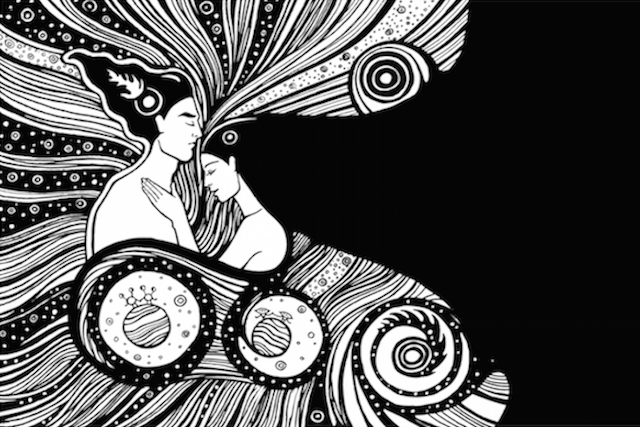
    Photo by Tony Hall
  • Encourage, Don’t Criticize; Help Instead of Trying to Fix

    Encourage, Don’t Criticize; Help Instead of Trying to Fix

    “You must love in such a way that the person you love feels free.” ~Thich Nhat Hahn

    When you think you’re an evolved and conscious woman and your partner tells you in no unclear terms that you’re “hard to be with,” it does a number on you.

    Those words landed like a well-aimed boulder, smashing the immaculate vision I’d created of evolving myself: an exemplary girlfriend who was “doing the work” to grow, to become generously loving, spiritually awake, and to wholeheartedly support and encourage her beautiful partner to open to his fullest potential.

    We met under messy circumstances. Both just weeks out of intense breakups and deeply embroiled in “processing” our respective experiences, I had a laundry list of emotional baggage to shed, patterns to break, and new nonnegotiable standards for anything and anyone I’d allow into my intimate space.

    I pinned the badges of Emotional Consciousness and the Evolved Feminine on my heart. I journaled, meditated, and prayed to the Goddesses: Quan Yin. Kali. Durga. Sati.

    And as I learned, dove deeper, sailed higher, I held fiercely to his hand. I wanted to do this together. I begged him: join me. Rise. Dig. Excavate your stagnant places.

    It’s the only way forward.

    I believed it. And I think, to a certain end, so did he.

    Then encouragement, collaborative growth, and tough love turned to jagged criticism. Instead of holding one another in our struggles, we sat on opposing sides of some false fence. I saw only his flaws and I believed I needed him to fix them.

    I saw his potential. He was brilliant, deeply spiritual, an intuitive outdoorsman and incredible teacher. He had promise, gifts to bring to the world. I wanted him to reach for it—without fear.

    And when he didn’t, when he paused to rest, when he stumbled, I saw failure. I saw an unwillingness to try. I saw a man gripped by fear, clinging to safety.

    I used those words.

    Why couldn’t he just work as hard as me?

    It’s easy to say this now. To see where my ardent desires for his evolution—to shed the excess weight and step into his highest self—so quickly became toxic. How it clouded my vision of who he was, in the moment, without the changes I thought necessary.

    Wrapped up in my own work and redefining of what it meant for me to rise, I transposed my journey onto his.

    All I saw was his shining potential, his shadowed present, and the moments he wasn’t up to the challenge. When the stones the universe hurled at his foundation bested him.

    And I ignored the brilliant light already standing in front of me, showing up in his wholeness, wounds and all. So he learned to try and hide it, for fear that I would criticize the tenderest parts I saw to be flawed.

    Nobody is perfect.

    The funny part is that I’m a coach and a yoga teacher. I write about every angle of perfectionism, I preach about loving your tender and dark parts, I read endlessly about the divinity of this eternal growing process.

    Stretching is uncomfortable. Peeling off the layers hurts. It’s a messy, messy adventure, this evolution. Blah blah blah. My brain knew all that. But that’s different from living it—and dammit if I wasn’t a full-on hypocrite.
    So… nobody is perfect. Right?

    His imperfections became my teachers. And as I crumbled, defeated in my epic pursuit of New Age Girlfriend Perfection, he taught me what it is to hold someone you love to their highest potential, with grace, love, and honor.

    Your journey is not their journey. It seems straightforward, but it requires a humble and gracious heart to resist imposing your own standards of evolution on another.

    Just because you’re in love with transcendental meditation and it has blown your ego to pieces doesn’t mean your partner will find it moving in the least. And while you’re deeply questioning the meaning of “self,” the qualities of nonattachment, or the truth of your suffering, your partner might be doing battle with self-acceptance. Or body image. Or what it means to be masculine.
    And that’s all perfect.

    See the potential. Celebrate the present. That’s where I went wrong; I missed the second step. And he gently, kindly told me that he wasn’t feeling seen. Really seen—in his work, in his accomplishments, in the steps he’d already taken.

    Spend more time celebrating the positive elements of how far your partner has already come—and then encourage them to keep going, because you see such beautiful potential and brightness within.

    Let go of perfect. You know from your own excavations that the work never ends. There is always growth, always evolving, always new spiritual/emotional/soulful expanses to be explored.

    When we think “highest self,” it sometimes feels like an end point—a “point a to point b” kind of goal. It’s not, and living from that mentality makes the experience of evolution feel hurried and time-sensitive.

    As Osho says so simply, “Slowly, slowly.” Let that be your mantra, and honor each slow step your partner takes. Even more so, honor the pauses. The deep breaths. They’re part of the work, too.

    It is not yours to push. You’re not his life coach. You’re not her personal trainer. You’re not Mom. Position yourself on the same team—encouraging, supporting, celebrating, yes. Demanding? No. That creates a power dynamic that eventually becomes toxic and corrodes the integrity of your relationship.

    When you find yourself becoming the teacher, check your motivations and rephrase. How can you encourage with tenderness and love?

    Your love will become freedom. You have this one role in your partner’s evolution: to hold the space, to fill it with love and safety and, simultaneously, the encouragement to expand—and your love will become their freedom.

    Freedom to be exactly where they are on the path and to take the journey that is right at that moment and in that time. Freedom to fall. To screw up. And to try again, with unflinching faith in their own potential.

    And that freedom, ultimately, is the only path to the highest self.

  • You’re Not Behind; You’re Just on Your Own Path

    You’re Not Behind; You’re Just on Your Own Path

    Man on a Path

    “To wish you were someone else is to waste the person you are.” ~Sven Goran Eriksson

    Endlessly comparing ourselves to others and idealizing their best qualities while underestimating our own are self-defeating behaviors, and they hurt our self-esteem. Yet in the competitive nature of our world, many of us do this.

    As a result of my own self-defeating thoughts, throughout my life, I’ve repeatedly felt like I was five years behind where I “should” be.

    After high school graduation, many of my peers went away to school and into a new wave of social experiences.

    I stayed home, worked, and went to see a lot of bands play, and when I started gaining more life experience of my own, I felt like I was in catch-up mode and ashamed that I hadn’t gotten some of these experiences out of the way earlier.

    I had a rocky college career, bouncing between, in, and out of schools, finally completing my English degree when I was twenty-five and feeling absolutely no further toward a career than I had before I’d started.

    Attracted to web development because it offered the possibility of working remotely, I learned on the side and eventually landed a job at a small web shop. I was twenty-eight, but felt behind compared to those who had their career paths charted early on, and stacked resumes.

    I decided to start freelancing with only one solid client and hoped that I’d be able to sustain myself enough to stay location independent.

    After a few years of this, though I still loved the flexibility freelancing offered, I started feeling the need for my work to not only provide for myself, but to also contribute something positive to the world. Now in my mid thirties, I feel like I need to reevaluate again, but compared to others whom are solidifying relationships and buying property, I feel behind.

    In the examples above, I’m comparing my path to others that aren’t my own.

    If you can relate, try reframing these thoughts as a more accurate reflection of yourself and celebration of your own personal journey.

    What did you want? Often when we compare ourselves to others, we are comparing ourselves to an ideal that might appear to be favored by society, media, or whatever, but it’s really not that interesting to us.

    After high school, I remember distinctly not wanting to go away to school and thinking dorm life was a manufactured environment that didn’t represent real life. I wanted to hang out with my best friend and go see live music.

    As I’ve become more self-aware, I’ve realized my anti-dorming position probably reflected my high levels of social anxiety and that the experience, though difficult at times, would have had a positive impact, though I would have probably missed a lot of awesome shows.

    What you wanted from life then might not be what you want now, and that’s okay because throughout life, we change and gain insight. The decisions you made likely reflected where you were in life at that point. Maybe it was the “right” decision or maybe it wasn’t, but celebrate yourself either way.

    Look at the positive side of your life path. Read between the lines and don’t focus on the negatives of what you didn’t do.

    When I was fourteen, my father took me to England for a couple weeks and it left me with a lasting desire to enjoy traveling beyond the confines of the “paid time off” policies at many jobs in the United States.

    I wasn’t sure what I wanted out of school, so it’s probably no surprise that while I bounced between academic institutions, I also spent some of that time period traveling abroad and hence, nurturing and developing a huge part of who I am.

    Choices made to appease what you perceive others think you should be doing, rather than what nurtures you, are self-negating. And though they may seem like shortcuts, they will often not bring you any closer to fulfillment.

    Focus on what your unique cocktail of nurture and nature enabled you to accomplish.

    While others found their career path early, I was sweating inside the back of a 3,000-cubic-foot truck, working 5am merchandising shifts at a major retailer with a group of people that ended up feeling like a family, and I know I will stay in touch with some of them for the rest of my life.

    The work felt honest and the people even better, and those are two of the most valuable things in life to me.

    While others were sculpting their career, networking, and building relationships, spurred on by my earlier travels, I started to freelance and accomplished a lifelong dream of working remotely abroad.

    I took an extended trip to Europe and two years later, did the same thing in South America. While my career development suffered most likely, accomplishing this goal was a priority, and I created memories that I will always cherish.

    Take a moment and you can probably think about when you took a less traveled road and accomplished something beautiful.

    Celebrate what you love about your personality and how those qualities have contributed to your life experience.

    It’s easy to confuse what you want to work on with those qualities that you’re quite happy with.

    If I go to a large social gathering, the introvert in me will spend time processing, observing, and taking everything in. I can be pretty quiet initially, but I’m okay with this because the attributes that make me identify as an introvert also have enabled me to form deep friendships, be sensitive to others and the world around me, and to feel on a very deep level.

    At that same social gathering, I might be hanging out in a small group listening when I think of a relevant story that I’d love to share, but social anxiety renders me quiet because I’m afraid my storytelling will not hold their attention.

    Introversion and social anxiety can sometimes be confused, but they are different concepts. Being introverted has enabled me to experience life in a unique way, but only social anxiety has held me back at times from participating in life like I want to.

    Sometimes, two aspects of yourself produce similar symptoms. When you make the decision to work on a behavior, make sure that you’re targeting the right one.

    I still catch my mind comparing myself to the ideals we are constantly subjected to by society and feeling like I will never catch up. But then I center myself and realize I’m comparing myself to an ideal that is not necessarily applicable to me, and that I need to stay true to my own path. Life is much more personal, complex, and nuanced.

    Perhaps there are times when you feel five years behind. But really, you’re constantly learning about yourself and sculpting a life that is a reflection of that, and that’s exactly where you need to be.

    Celebrate the path of others but most importantly, celebrate your own, because you’ve likely been living a pretty honest existence all along.

    Photo by h.koppdelaney

  • How Simple Mini Habits Can Change Your Life

    How Simple Mini Habits Can Change Your Life

    “The only way to make sense out of change is to plunge into it, move with it, and join the dance.” ~Alan Watts

    It was late 2012, just after Christmas, and like many others I was reflecting on the year.

    I realized that I had ample room for improvement in too many areas of my life, but knowing that New Year’s Resolutions have a poor 8% success rate (University of Scranton research), I wanted to explore some other options. I knew I wanted to start before January 1st too, because arbitrary start dates don’t sit well with me.

    On December 28th, I decided that I wanted to get in great shape. In the previous days and weeks, however, I hardly exercised at all and felt quite guilty about it. My goal was a thirty-minute workout, and it seemed impossible.

    I wasn’t motivated, I was tired, and my guilt was making me feel worthless. Feeling stuck, I remembered a technique I learned from a book, and little did I know that this technique would change my life in a big way in 2013.

    The technique is from the creativity book Thinkertoys, and it is to consider the opposite of an idea you’re stuck on. So I looked at my thirty-minute exercise goal, and my giant fitness plan to get in great shape, and I thought about the opposite.

    You could say the opposite is eating fast food and sitting on the couch, but the opposite that came to my mind was one of size.

    What if, instead of carrying around this overwhelming fitness anvil on my shoulders, I just did one push-up?

    Initially, I scoffed at the idea. How absurd to do a single push-up and act as if it means anything! But when I continued to struggle with my bigger plans, I finally gave in to the idea and did one, and since I was already in push-up position, I did a few more.

    After that, my muscles were warmed up, and I decided to try one pull-up. Just like you guessed, I ended up doing several more. Eventually, I had exercised for thirty minutes.

    My mind was blown—did I just turn a single push-up into a full workout? Yes, yes I did.

    The One Push-Up Challenge Is Born

    From here, I challenged my blog readers to do at least one push-up per day for a full year. People have had great success with it, and here’s what it turned into for me: For the last three-plus months, I have gone to the gym three to six times per week to exercise and I’m in great shape because of it. Now I know why it works.

    I have always held a keen interest in psychology and neuroscience, and I study them for my writing. So when I read about the studies on willpower that show it’s a limited resource, everything started making sense.

    I couldn’t do my thirty-minute workout because my willpower wasn’t strong enough or was depleted. But I could do one push-up and segue into a thirty-minute workout because it only required a tiny amount of willpower to start, after which my body and mind stopped resisting the idea.

    Of course, this concept does not only apply to fitness, but to any area of your life you wish to change. And I believe I’ve found the perfect way to leverage this technique – habits.

    What’s More Important Than Your Habits?

    Nothing. Habits form about 45% of your total behavior, according to a Duke University study. Not only that, but they are behaviors that you repeat frequently, which compounds their significance in your life. Habits are your foundation, and if this foundation is weak, you won’t be happy with the way you live.

    The reason people fail to change their lives, and fail to instill new habits, is because they try to do too much at once. In simplest terms, if your new habit requires more willpower than you can muster, you will fail. If your new habit requires less willpower than you can muster, you will succeed.

    The calculation can’t just be for one instance, however, but also for when you’re tired and your willpower is zapped. Can you continue it then?

    One thing I’ve been wanting to do more is write. It’s therapeutic for me and I write for a living, so it’s fairly important that I practice. When I found that I wasn’t writing as much as I should, I found out how to combine the power of The One Push-Up Challenge with a habit plan.

    How To Change Your Life With Mini Habits

    Mini habits are exactly as they sound. First, you choose a desired habit or change you’d like to make—it could be thinking more positively, writing 1,000 words a day, or reading two books per week. I’ve had success doing three at once.

    Next, you shrink these habits down until they are “stupid small,” a term I made up because when you say the requirement out loud, it is so small that it sounds stupid. Here are mine:

    1. Write fifty words per day (article, story, etc.)

    2. Write fifty words per day (for the habits book I’m writing)

    3. Read two pages in a book per day

    Easy, right? I could complete this list in ten minutes total. So far, I’ve met these daily requirements 100% of the time, and then much more.

    I’ve actually written one to two thousand words and read ten to thirty pages per day, for these twelve days in a row and counting. Prior to this, I wasn’t reading at all and writing very little.

    It works because your brain falls for the bait.

    “Oh, only fifty words? I can write that.”

    And then you start. And you’ll find, like I have, that once you start, good things happen.

    Ten Daily Mini Habit Ideas

    1. Compliment one person

    2. Think two positive thoughts

    3. Meditate for one minute

    4. Name three things you’re thankful for

    5. Do one push-up

    6. Write fifty words

    7. Read two pages

    8. Do ten jumping jacks

    9. Go outside and take 100 steps

    10. Drink one glass of water

    You can change nearly any area of your life, and at one mini habit at a time, it’s easier than you think.

    When you remove the pressure and expectations, you allow yourself to start.

    What mini habit(s) will you start today?

  • Finding a Good Match: Know What You Want and Need in a Relationship

    Finding a Good Match: Know What You Want and Need in a Relationship

    “You’ll never find the right person if you never let go of the wrong one.” ~Unknown

    I recently left a relationship that I was not happy in. Although my ex was definitely an unconditional lover, it painfully bothered me that the man I loved was not taking care of his responsibilities.

    Since I’ve entered my twenties, I’ve been looking for more than just a good time; I need a stable partner who will be able to meet our shared expenses and obligations in the future. So, I was faced with the crucial, inevitable decision of calling it quits.

    I cried the first few nights, but every night after was a learning experience. I realized that no matter how much he loved me, I needed more from the relationship than he could give.

    While I was still in it, he kept telling me that I made the entire relationship about me, saying, “You are only worried about your happiness. What about mine?”

    Although he was right about his happiness being important, I realized something: my happiness is just as important, and I cannot—and should not have to—sacrifice mine for his.

    Half of a couple can’t be happy while the other half is miserable. If neither is happy, then the relationship is already over.

    A few weeks after the big break, I began asking myself what I wanted out of a relationship. Who am I? What do I need?

    I wrote down a list of my nice-to-haves and my non-negotiables. This allowed me to see my past relationship for what it was: not what I really wanted. And thus, I experienced little pain and was able to move on gracefully.

    Don’t get me wrong, I felt incredibly terrible for breaking his heart. I have always been the one to break things off, but I wasn’t so sure if I ever broke a guy’s heart until the day I broke his.

    But I had to learn to forgive myself because I knew the relationship wouldn’t last. And it was better to break his heart now than to stay in it for far too long and inescapably break it later.

    He eventually told me I was his only source of happiness, but just as you shouldn’t sacrifice your own happiness, you shouldn’t be responsible for another’s happiness either.

    Happiness should come from within. If you have it before you enter the relationship, once ties are severed and the mourning phase is over, you will surely have it again.

    The greatest lesson I learned is that you have to know what you want before the relationship starts.

    When people say, “I don’t know what I want, but when I see it, I’ll know,” they are usually the ones who stick around in a relationship longer than necessary because they weren’t sure of what they wanted from the beginning. This causes unnecessary trial and error and a lot more pain.

    It doesn’t take long to ask yourself what it is you desire and write it down. You may not know for certain right away, but you should at least have a rough idea. Getting to know yourself better can help with this.

    Dating can also help refine your list, but making a serious commitment before really understanding your requirements in a relationship can be detrimental.

    Typically when we go into a relationship without truly understanding our requirements, we end up trying to change our partner, which never ends well.

    A loving relationship is meant to be the reward of knowing what you wanted and receiving it. Getting into a relationship in order to figure out what you want is backwards.

    Ask yourself what it is you appreciate in a partner. What will cause you to write off a potential partner (perhaps not having the same goals and dreams)? This is important because if we don’t determine what we will and will not accept, we end up accepting anything.

    But even more importantly, don’t forget about yourself. Get to know your own personal likes and dislikes. This is the one time where everything can be about what you want.

    When we’re in a relationship, we’re always so busy trying to learn about another person’s wants, needs, goals, and aspirations that we oftentimes forget about our own.

    During this time you don’t have to ask anyone for affirmation. All of your decisions are your own. No one can tell you who to be.

    And while in a relationship, you still have to remember that you complete yourself. The man or woman you’re with does not define who you are, and you do not need him or her to be complete. Your self-esteem should not begin or end with how that person feels about you.

    Be willing to give the person you love the shirt off your back, but your self-worth? Never give them that.

    You have to honestly know that you will be happy with or without them. This little piece of knowledge makes it easier for you to leave a relationship that causes you anguish, and find one that better serves you.

    That’s not to say that relationships are perfect and no one will ever hurt you; that’s certainly not the case. Every person will come with his or her own flaws, and every relationship will require a little work. You just have to know what you’re willing to work through and what you’re not.

    Some words of advice my wise mother once gave me: you are the prize. How big of a prize is defined by how much you love and respect yourself. You determine how much you are worth. Nobody else.

    Sometimes love can turn into a battle that we want to win but can’t. Many relationships aren’t meant to be. That doesn’t make it your fault, and it doesn’t make it the other person’s fault; it just makes it life.

    Whatever the case, you should never sacrifice your dignity at the expense of a futile relationship.

    As for me, I couldn’t wait for him to be who I needed him to be. And I couldn’t change him either. I had to do what was best for me and for him as well.

    If it were meant to be, it would’ve been right from the beginning.

    I just have to go out into the world and find someone who better suits me. In the meantime, I am discovering a lot about myself, things I would’ve probably never known otherwise.

    You must never get so caught up in your other half’s happiness that you forget about your own, and what matters most to you.

    By the time I get into my next relationship, I will have better clarity of what I want and what I need.

    But for right now, I am the love of my life. I am hoping that eventually I can share my love and happiness with another being, and he can share his with me.

    Romance does not only consist of loving another, but also finding it easy to love oneself in the process. And I have to remind myself to never lose sight of that self-love.

  • The Greatest Lesson We Learn When Someone Is Unkind

    The Greatest Lesson We Learn When Someone Is Unkind

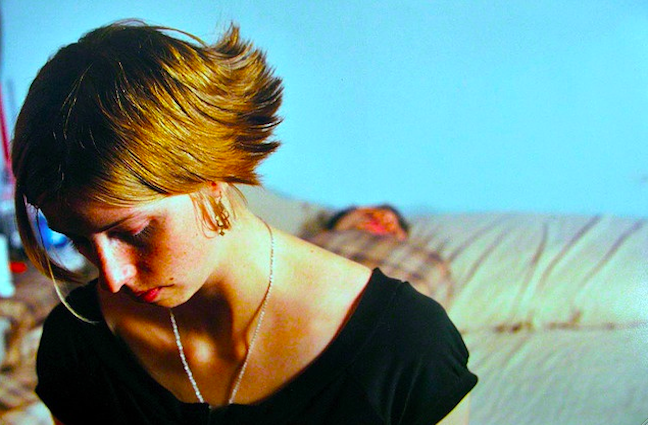
    Lonely Girl

    “I have learned silence from the talkative, toleration from the intolerant, and kindness from the unkind.” ~Khalil Gibran

    I recently travelled to Malaysia for a friend’s wedding where I spent four delicious days communing with wild monkeys and feasting on sticky rice. The people were kind and warm, the culture rich, the trip magical.

    On my last day in Kuala Lumpur, I was headed out to buy souvenirs for family and friends when I stumbled across the most beautiful temple—filled with ornate gold and red statues, air thick with sweet-smelling smoke.

    I wandered around, overcome with majesty, trying to breathe it all in. I was still under the temple’s spell when someone spoke to me.

    “Your dress is ugly.”

    I looked to my right where the voice had come from. A woman was sitting on a bench, not looking in my direction.

    “Sorry?”  I said, thinking I must have misheard. She waved me off.

    I stood there for a moment, trying to decide on a course of action. She was American, the first and only other American I’d met during my trip.

    Had she really just said my dress was ugly? It was a simple blue affair, uncomplicated and perfect for traveling. Maybe she said my dress was pretty, I thought. I must have misunderstood.

    The hurt and confusion was rising to a crescendo in my head. But if I’ve learned anything over the last few years, it’s that we all have a choice of how we choose to respond to what we are given. I chose to engage.

    “Did you just say my dress is ugly?” I asked.

    “Yeah,” she said. “I did.”

    I took a deep breath and replied, calmly, “Why would you say that to me?”

    “I’m entitled to my opinion,” she said. “Your dress is ugly; I can tell it’s not well made. Your purse is dirty. I am free to voice my thoughts and those are my thoughts about you.” 

    To say it felt like getting slapped in the face would be an understatement; it was more of a punch to the gut. My blood boiled, my heart raced, and still I kept my voice at an even keel.

    “You are entitled to your own opinion,” I said. “But we also live in congress with other human beings. Why would you say something so aggressive and unkind?”

    At which point she reiterated her insults. Her words sliced coolly into the way I looked and the clothes I wore. That’s when I said the one thing I regret saying.

    “I wish there were fewer Americans like you traveling abroad,” I told her. “You give the rest of us a bad name.”

    I turned and walked away, and she yelled one more barb at my back as I walked out of the temple. I didn’t turn around.

    My hands were shaking as I walked down the street. I felt a strange knot of emotions in my chest: hurt, anger, fear.

    I was irrationally terrified that I would run into her again, that she would be sitting in the seat next to me on my flight home and I would be subjected to seventeen hours of her cruelty, unable to escape.

    But most of all I felt baffled. Why did this woman choose to attack me? Why had she said what she said?

    I couldn’t call my boyfriend, who was back in our sunny home in California, or my best friend in DC—both of whom were sound asleep halfway across the world. So I was left to process what had happened on my own, in a foreign country, without my normal triumvirate of “healthy coping mechanisms”: yoga, conversation, tea.

    And here’s what it all came down to: kindness.

    I had just read the wonderful convocation address given by George Saunders to the Syracuse class of 2013. George talks about something he calls a “failure of kindness,” and those three words were very much on my mind.

    Yes, you could say I had suffered from a failure of kindness. But what I realized was that I, too, had been unkind.

    I wish I hadn’t said what I said to her. That came from a place of being wounded, of feeling the need to fight back. I wish I had said: “I hope the people you meet are kind.”

    Because I do hope that for her. I hope that she is bathed in loving-kindness, that she is inundated with so much that she cannot help but share it with the world.

    While it’s true that kindness engenders kindness, the lack of it can be a powerful teacher.

    For my remaining hours in Kuala Lumpur, I was abundantly kind to everyone I met. I complimented a girl on her joyful spirit, told shop owners how beautiful their merchandise was, smiled widely and genuinely. I made a point to be kind to these warm, generous people who had so kindly shared their country with me.

    And every time I was shown kindness, no matter how small, I felt immeasurably grateful.

    That woman gave me a great gift. She reminded me that we all have a choice to be kind, and we are presented with that choice many times a day.

    Say a kind word to someone you don’t know.

    It doesn’t have to be an eloquent oration—a simple compliment can make someone’s day. If you like a man’s tie or a woman’s necklace, tell them so. And if you are struck by someone’s personality or spirit, thank them for it.

    Write a note to someone you appreciate.

    Tell a co-worker, family member, or friend what you appreciate about them. Don’t hold back. These are the sorts of gifts people treasure, often keeping that little slip of paper (or Facebook post) for many years to come.

    Tip someone who doesn’t normally get tips.

    This was easy in Malaysia, where tipping is rare—one young woman was so happy she went dancing down the hall. Tipping can be a great way to show people you are grateful for their service. I still remember the night I gave $10 to a tired young man at a Taco Bell drive-thru. His eyes lit up like fireflies.

    We’ve all committed failures of kindness when we are hurt, angry, or tired. But each of us holds within us the power to achieve triumphs of kindness every day.

    Photo by Robert Vitulano

  • A Simple but Powerful Way to Kick the Worry Habit

    A Simple but Powerful Way to Kick the Worry Habit

    “Worry often gives a small thing a big shadow.” ~Swedish proverb

    I’m a worrier by nature, and I come by it honestly.

    My mother was afraid to cross bridges and ride in elevators, boats, and airplanes. Her mother died of cancer at the age of forty, and my mother spent many years—including those of my childhood—thinking every sniffle, fever, or headache might be the start of something fatal.

    Although I didn’t realize it at the time, growing up with a steady dose of anxiety, like an invisible intravenous drip, had its effect on my developing mind.

    I was an introverted, timid child. Afraid of the boys who threw snowballs, afraid of steep ski trails, afraid of not getting A’s in every subject, all the time. A lot of my anxiety got channeled into perfectionism, and—just like my mother—trying to control pretty much everything.

    The gift in my anxiety was a distinct drive to find peace. That quest led me to meditation at the tender age of nineteen.

    That was more than forty years ago. I was young and naïve and really had no idea what I was doing (the belief that I could banish worry forever being just one indication of my naiveté). But I persisted—and when I lost the thread of practice, I always eventually came back to it.

    Here’s one thing I’ve learned in forty-some years of meditation and awareness practice: There is a great deal that I’m not aware of. Still.

    That could be discouraging, and sometimes it is. But what keeps me on this path, what keeps me meditating and working to bring the light of mindful attention to the dark places in my mind and life, are the new awarenesses, the small victories I feel in moments when something that was unseen is all at once seen.

    There is a thrill in that, not perhaps like the thrill of speeding down a black diamond trail or any of those other physical challenges I’ve always been afraid of, but a thrill just the same.

    One day, not too long ago, I was driving to a train station to leave my car in a long-term lot while I visited New York for a few days. I had never been to this lot and as I drove, I was feeling the pressure of needing to find the lot, find a spot, and not miss the train.

    That feeling of pressure isn’t unusual when I have a deadline such as a train to catch. But this time, for some reason, I became more acutely aware of a subtle layer of physical and emotional tension.

    Just as I often do on the meditation cushion, I began to bring the feeling of tension more fully into awareness and to investigate it as I was driving. Here’s what I saw:

    1. I was facing an unknown (inconsequential as it was), which triggered anxiety because the unknown is impossible to control.

    2. My feelings were telling me a lie—that is, that this unknown situation had life-or-death consequences.

    And most importantly:

    3. How I was relating to the unknown of not being sure about where to park and how long it would take, this is how I relate to all unknowns in my life, large and small. That is, I approach the unknown with an underlying assumption that was completely unconscious until that moment: “It won’t work out.”

    Because I had become aware of it, I was able to question the assumption. I remembered Pema Chodron’s description of a traditional Tibetan Buddhist teaching, from Start Where You Are: A Guide to Compassionate Living: “train in the three difficulties.”*

    The first “difficulty” is to see your unhelpful patterns of thought and behavior. The second is to “do something different.” The third is to continue doing that different thing.

    So, I asked myself, “What if I tried something different, and assumed it most likely would work out?” (That is, I would find the lot, be able to find a parking spot, and get to the train on time.)

    I tried to coax my brain toward this idea, and to resist the considerable energy drawing it back to the habitual, well-worn track of  “It won’t work out.”

    It felt strange, driving toward the station with the idea that finding parking and getting to the train was workable. I mean “strange” the way crossing your legs the opposite way from how you usually do feels strange. Not bad, really, but unfamiliar, foreign.

    But not too long after it felt strange, it felt incredibly liberating. Just as assuming “It won’t work out” is a pretty sure bet to breed anxiety, approaching an unknown with the assumption that it’s going to be workable is likely to induce at least some degree of calm and equanimity.

    And it did. My shoulders relaxed, my breathing deepened, and I felt a kind of mental brightening, as if a foreboding storm cloud had unexpectedly lifted.

    I’d like to say that was the moment when I cast aside the worn-out assumption that “It won’t work out” and replaced it—forevermore—with “It’s all workable.” Well, suffice it to say, I’m still working on the third difficulty: “Continue in that new way.”

    But that’s okay with me now, in a way it wouldn’t have been four decades ago. Instead of feeling impatient to get rid of that worry-driven assumption, I feel grateful that I became aware of it.

    And to me, that kind of awareness, arising seemingly spontaneously, is the fruit of meditation and whatever other ways we work to wake up. However imperfectly we make that effort, it does make a difference over time.

    Contrary to the incessant messages from our turbo-charged culture, here’s another piece of wisdom I’ve gleaned in forty-some years of meditating and sixty-some years of life: Most change happens bit by bit, one small “aha” at a time, with lots of practice in between.

    And there’s joy to be had—in each of those small awakenings, and in the winding path we walk toward the unknown, illumined by the light of one humble, thrilling realization after another.

    (By the way–no surprise—I did find the lot and a parking space, and got to the train with plenty of time. It did work out.)

  • Stop Assuming the Worst: Your Thoughts Shape Your Reality

    Stop Assuming the Worst: Your Thoughts Shape Your Reality

    Open Arms

    “Your worst enemy cannot harm you as much as your own unguarded thoughts.” ~Buddha

    My morning bicycle ride had been uneventful until I spotted a small lump in the middle of the bike path. It wasn’t a twig, a dead mouse, or a smelly “gift” from a dog, which are some of the most common sightings during my rides.

    It was a perfect, intact slice of bread.

    In a nanosecond, my mind created several versions of how this piece of bread had ended up where it was.

    I pictured a young mother pushing a stroller and her two-year-old tossing the bread out to the side. But no one in her right mind would give a whole slice of bread without butter or jam to a picky toddler.

    “Well,” I said to myself, “Maybe this was the woman’s first child, and she had no clue what to feed little children.” Now, this woman’s poor choices had resulted in perfectly good food being wasted.

    My mind then traveled to countries where a good slice of bread (or any kind of food) is very hard to find, and I started to feel anger.

    That’s when a voice inside told me, “There you go again, making up stories in your head.” I chuckled at my crazy imagination. And that’s when it hit me: We all create stories in our head, and many of these stories make our lives miserable.

    I used to be a pro at assuming the worst.

    I remember being upset that a friend seemed to be ignoring me and hadn’t returned my emails, until I realized I had been sending the messages to her old (and inactive) address.

    I recall the time I paid an evening visit to Wal-Mart, and when I spotted a man running in my direction in the parking lot, I thought I was going to be attacked. The man only wanted to ask for a couple of dollars because his motorcycle had run out of gas.

    I remember a time in my life in which all the pieces were falling perfectly into place, and instead of rejoicing in the moment, I wondered when the next disaster would happen because life couldn’t be so good.

    The stories in our head come courtesy of our subconscious mind, which has been programmed since the moment of our conception. But without going into the technicality of how our subconscious mind is programmed, what matters is that we make our own reality.

    So how do we know when we’re judging things correctly or when our mind is playing tricks? The answer is, we don’t know.

    But we can learn to reprogram our subconscious mind. We can deactivate the programs that lead to unhappiness and replace them with uplifting thoughts of love.

    How do we reprogram the subconscious mind? The following have worked well for me:

    Become aware and inquisitive.

    Every time a thought that produces a negative emotion pops into your head, contemplate the origin of this thought and question the validity of it. Remember that beliefs are nothing more than repeated thoughts, so question your beliefs as well.

    Feed positive programs to your mind.

    Once you’re aware of a negative story in your head, replace it with its positive counterpart.

    In my case, I could’ve chosen to think that my friend wasn’t receiving my emails, and called her instead of insisting on sending more emails. I could’ve also assumed the man who asked for money had good intentions, and that my life could actually be good and joyful.

    Make your environment positive.

    Surround yourself with peaceful, uplifting stimuli. Instead of going out to the bar to yell to be heard and to get drunk, meet up with friends for dinner and make real connections. Instead of watching the disasters in the news, go out for a walk in nature.

    Associate with positive people.

    Think of your current relationships, and define whether some of those people are feeding negative programs to your subconscious mind. Send the toxic people away from your life, and welcome those who share your values and love you for who you really are.

    Changing the crazy thoughts in your head requires attention and practice, but once you’ve made progress, you’ll notice how amazing life turns out to be. As Dr. Wayne Dyer says, “When you change the way you look at things, the things you look at change.”

    Photo by Marcos Dias

  • 3 Often Overlooked Causes of Anxiety (And What to Do About Them)

    3 Often Overlooked Causes of Anxiety (And What to Do About Them)

    “Peace cannot be kept by force. It can only be achieved by understanding.” ~ Albert Einstein

    An anxious mind is a hard burden to bear. In fact, if you suffer from an anxious mind it can truly feel like a curse.

    The racing thoughts. The daily tirade of “what ifs.” The relentless voice of your inner critic constantly nagging you and deriding your every move.

    And the worst part is that the mental chatter feels uncontrollable. Truly, there were times when I struggled in vain to quiet my mind.

    It was like there was some hub or center in my brain that had gone haywire, flipped into overdrive, and couldn’t be switched off.

    I used to despair a lot over my unquiet mind. Even the great spiritual masters struggled to achieve mastery over their minds, so how could I?

    I read a lot about mindfulness and tried some mental mastery techniques like the Sedona Method and Emotional Freedom Technique. I meditated. These techniques helped, but the results would only last for a short time; the underlying issues driving my anxiety persisted and whatever peace I got would be short-lived.

    I eventually realized that if I was to quiet my chatterbox mind I would have to stop trying to control my mind and focus instead on letting my anxiety teach me what it wanted to teach me.

    I started keeping a dream journal (I had many of the typical anxiety dreams). I also started to get real with myself, sitting still with my anxious thoughts whenever they occurred and letting myself be receptive to what they were trying to show me.

    I went from trying to control and resist my anxious thoughts to the deeper place of understanding their underlying message and inherent wisdom. Here’s what I discovered.

    An anxious mind can be caused by:

    1. Unresolved relationship issues

    It turns out an anxious mind can be caused by unresolved issues in our interpersonal relationships. The anger, jealousy, regret, or unspoken feelings (positive or negative) that we harbor toward people lives on in our subconscious minds, undermining our inner peace. This is true even when we are not around those people or consciously focusing on them.

    For me, I had spent many years silently harboring anger toward my mother and father for perceived failures as parents. I was also holding on to an infatuation with a former flame that I hadn’t seen in years, and was still mentally “tuned into” negative relationship dynamics from as far back as my high school years.

    As I began to face up to these unresolved relational issues, releasing people from my heart’s tribunal, my anxiety decreased to a surprising extent. I literally felt like I could breathe easier.

    2. Unexpressed gifts or desires

    Anxious thoughts can be the result of unexpressed gifts, especially if the thoughts center around your career or how you spend your free time. In this way, anxiety is a manifestation of inner guidance.

    There is some gift or higher aspect of who you are that wants and needs to be expressed, but that has been denied expression because of fear.

    Psychologists have figured out that human beings have an inherent drive for self-actualization—to fulfill our individual potential. When there are obstructions to self-actualization, anxiety takes root.

    In ancient times, prophets often spoke of the urge to prophesy as being like a “fire shut up in their bones.”

    Anxiety is like this―a bottled-up feeling of having something inside of you that you long to express. The gift, desire, or calling within that longs for expression is bigger than you; it is tied up with your purpose for existing, which is why it feels so painful when it is suppressed.

    For me, my anxiety was telling me that I had a gift for using words and expressing myself through writing that I wasn’t cultivating enough. I also had leadership abilities and a yearning for spiritual development that I was ignoring.

    It could be latent artistic gifts, the secret desire to adopt a child, or a pull toward motivational speaking. Whatever it is, learning to express it will work wonders for your anxiety.

    3. Guilt

    Guilt is the emotional and cognitive state we experience when we feel we have done something wrong. We may have violated our own moral code or expectations, or those of others, or we may simply think that we have done something wrong even when we haven’t.

    Whatever the case, we feel judged (or we judge ourselves harshly and unforgivingly) for our actions, thoughts, or simply for being who we are.

    And because it’s so hard to express guilt (it’s not like anger where you can punch some pillows), guilt is often an internalized emotion, commonly referred to as a “bothered conscience.” Guilt sinks deep into our subconscious and manifests as anxious thoughts―it’s like our inner critic on heroin.

    At one time I harbored a lot of guilt over old friendships I had broken off. I had broken off those friendships because they were limiting my growth yet I still felt like I had violated my own standards of what it meant to be a good friend, hence the guilt.

    I walked around for years with a lot of anxiety because my guilt-tripped inner critic was always telling me that I hadn’t been a good friend in the past and never would be.

    I would feel guilty if I was anything less than the perfect, always-available, always-upbeat friend, and the fear that I wasn’t a good friend made me anxious about forming new friendships. I was always worried that I was doomed to mess up my friendships.

    It was only by examining my guilt more closely that I came to understand that my standards of being a good friend were irrational; after all, people change, it’s okay to move on, and you don’t have to be a perfect person to be a good friend.

    So our guilt is often irrational or out of proportion with what’s really at stake. And even if you feel your guilt is justified, remember everyone makes mistakes.

    You deserve self-compassion. So embrace it and put your anxious mind at ease!

  • 6 Lessons from a Poor Childhood That Lead to a Rich Life

    6 Lessons from a Poor Childhood That Lead to a Rich Life

    Happy Old Woman

    “If you want to feel rich, just count the things you have that money can’t buy.” ~Proverb

    I grew up on a farm with a father that was a hired hand and a mother that took care of the elderly.

    I had six siblings and was the fifth in line. We had little money, but I always felt loved, not deprived. In many ways I was a rich person.

    When I was four years old I lived in a two-room house, with two bedrooms built on within the year.

    We had no real kitchen (it was just a room), no running water or indoor bathroom, no TV or telephone. (No, I did not grow up with the dinosaurs). We did have electric lights.

    What did I learn by growing up in these conditions?

    1. I learned to share.

    There were four of us girls and we all slept in the same bedroom—two in one bed and two in another (both twin beds). You name it, and we shared.

    2. I learned to take good care of what little I had and be grateful.

    We each had one pair of shoes, very few clothes, and one toy for Christmas, so we took good care of what little we had and did not take it for granted. For birthdays, there was a cake baked and our present was getting to lick the bowl for the cake and icing.

    3. I learned to use my imagination.

    With very few toys we had to make your own. We walked on tall tomato cans with strips of rubber attached to hold them on our feet. We played with old tires and five gallon barrels by rolling them on their side. And stilts, we made ourselves.

    4. I learned to eat until I was not hungry any more rather that when I was stuffed.

    Food was limited, but balanced. We each got our share because my mother cut it up equally among us. (I never knew you could scoop ice cream out of the carton until I grew up, because my mother always cut a half gallon of ice cream into 10 equal pieces and that 10th piece was cut into 10 more pieces. (My father got the extra piece.)

    I have never had a problem with weight, and this is because of the good eating habits and appreciation for the food we had.

    5. I learned that it was the people that made a home, not the size of a house.

    We may not have had much, but we had each other. We had each other to talk to, play with, and laugh with. (Sometimes to fight with.)

    6. I learned to work together.

    When you live in a small space you have to work as a team. You learn good working skills and what hard work is.

    We earned money by working in the fields for the farmers, helping irrigate when it came to watering the crops, and keeping the four rooms of our house picked up, so there was room to walk.

    As I look back on my childhood and the values it fostered, I realize I was a very lucky child. Yes, things are much better and easier now, but I know what to appreciate and what’s important to be happy.

    It’s the people you share your life with—the memories you build and laughter you share.

    Things are not what make you happy. It’s living in the moment and living everyday with love in your heart.

    I only buy what I need, which controls the clutter. I have food, shelter, and water, air to breathe, and people to love that love me.

    I appreciate what I already have to add comfort to my life. I take good care of my furniture, appliances, and the little things that make life more comfortable and easier.

    We have the choice to change our life if we want. With hard work and a dream anything is possible. Obstacles can always be overcome. We learn from them and keep moving forward.

    True happiness does not come with a price tag. Happiness is something we choose with our own attitude and gratitude.

    I look at people today and all the material things they acquire, thinking they are going to find happiness, but happiness cannot be bought.

    It’s in our attitude. The love in our heart. The people we know and love. The memories life brings.

    When death is knocking at our door, what will be important is the way we loved and the memories we leave for the people left behind. They’re not going to remember the house you lived in or the beautiful things you may have had.

    People will remember the laughter they shared with you, the long talks, lessons they may have learned from you, and most important, the love that was shared.

    In the end it is who we were, how we touched other’s lives, and the love we gave and received that is going to count and be remembered.

    Are you building those kinds of memories? Are people going to smile and laugh when they think of how you touched their life someday?

    Photo by T Sundrup

  • You Are the One: 5 Helpful Tips for the Brokenhearted

    You Are the One: 5 Helpful Tips for the Brokenhearted

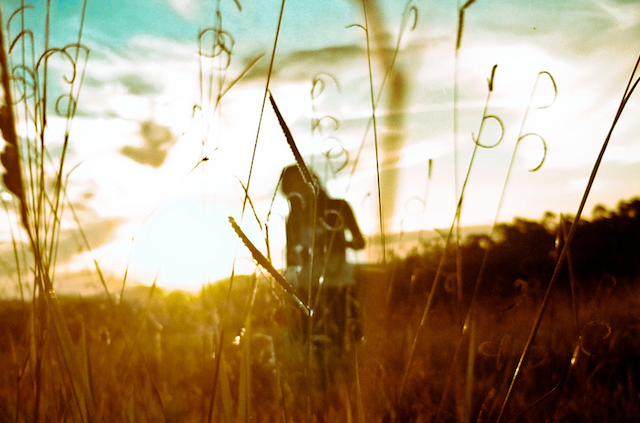
    Woman in a Field

    “All the wonders you seek are within yourself.” ~Sir Thomas Browne

    Anyone who has ever gone through some sort of heartbreak knows what awful pain it can cause, both physically and mentally. It can be devastating, shattering, and overwhelming for your spirit.

    In the beginning of 2012 I had my heart broken by a person who I thought was “the one.”

    Between tears and desperate calls, I found myself searching the Internet for remedies to get over an ex. I knew I was a strong person, but I just couldn’t see anything becoming brighter or better ever.

    I constantly needed family and friends to reassure me that I was going to be okay. It even came to a point where I started worrying about the physical agony, as I felt intense aching in my heart and around the chest area. I worried that this would be something I had to learn to live with.

    One day I realized that I couldn’t let heartache and depression destroy my life, and then found some helpful ways to heal and become happy again, even finding a sort of joy and self-worth I hadn’t experienced before the break-up.  

    I also had the amazing opportunity to share these tips with Tiny Buddha readers in my first post “10 Tips to Help Relieve Depression and Heartache.”

    During my healing period I often found myself questioning the idea of “Mr. Right” or “the one”—that special someone to sweep us off our feet and make us feel complete.

    People in my life would tell me that once I found someone new I would get over my ex. This sounded comforting, but when you feel like your life is crushed, a new love interest isn’t really a top priority, even though a rebound-partner can feel like the right solution at times.

    Also, I wondered what I could possibly offer someone with my wounded spirit. I knew I had to find another type of “Mr. Right,” and to my surprise, I did. More precisely, I found “Miss Right”—and that is me

    For little more than a year I have been dating me. I’ve been in a loving relationship with myself that has had its ups and downs, just like any other relationship.

    I strongly believe something good always comes out of something bad. So, if you are at sitting at home with a broken heart searching the web for any kind of hope of recovering, these tips may help.

    1. Be your own sweetheart.

    Just like in a romantic relationship, where you do kind things for your significant other, you should do kind things for yourself.

    Take yourself out to the places you’ve always wanted to go. Write yourself loving notes and practice daily affirmations where you tell yourself the things you formerly wanted your partner to tell you.

    I buy myself flowers and I lovingly wrap my arms around myself while I sit in stillness to embrace self-love. Try it!

    2. Laugh out loud whenever possible.

    There is no better medicine for your spirit than a good laugh. Yes, the heartbreak will remind you of your suffering, but I’ve noticed that the human body and mind are so wonderful that they allow you to smile, even during dark times.

    Find reasons to smile and laugh whenever you can, even if it’s just for short-lived moments. (A great post to read on this topic: Why It’s Essential to Find Humor During Your Darkest Hours.)

    3. Practice self-compassion.

    When you feel sad or lonely, tell yourself the caring things you would tell a friend in need—for example, that it’s perfectly okay to feel distress and anxiety, but that this too shall pass.

    You are still a good, strong, and lovely person. The truth is, even if you are single, you are never alone. You are always surrounded by loving energy from friends and/or family, and the universe/higher power.

    4. Consider yourself single and ready to mingle—with yourself!

    Know that you don’t need a romantic partner to be complete. Be your own soul mate and strive to feel whole from within, and you will find that sense of completeness.

    When you are ready to love again, you will meet that special person to share a beautiful love story with. But for now, focus on yourself. That way, when you eventually meet someone, you’ll come to the relationship whole, not someone who feels lacking.

    5. Know that it’s okay to be angry as long as you are gentle with yourself and willing to forgive.

    You’ve probably read a lot about the importance of forgiveness. I agree that forgiveness is essential to move on, but we also need to know that it’s okay not to be able to forgive in an instant moment, weeks, or even months.

    Don’t stress out when people around you encourage you to forgive. All you need to do is have patience with yourself for not being capable of forgiving just yet. Let the emotions of anger, hurt, and disappointment be released first.

    It took me a long time to learn how to forgive myself and my ex, but I finally did and it has set me free. I now understand his reasons for breaking up with me, even though I may not agree with them.

    The key is to be gentle and keep your anger at a healthy level. Don’t punish or attack yourself for what has already happened. Instead, try to grow and learn from the experience.

    Do I still look for the romantic version of ”the one”? I am not searching; I feel confident that he will show when the time is right, and when I’m ready to share my new wonderful me with someone. But for the time being, I enjoy being with myself.

    Do you?

    Photo by William Terra

  • Where True Happiness Comes From: How We Gain by Having Less

    Where True Happiness Comes From: How We Gain by Having Less

    “The things you own end up owning you. It’s only after you lose everything that you’re free to do anything.” ~Chuck Palahniuk

    Small is the new big. That is to say, minimalism and living with less is becoming a growing movement in America and it’s starting to catch on over here in the UK too.

    With the global economic crisis and changes in social attitudes, people are starting to realize that the more stuff we have, the more miserable and trapped we become. After all, stuff leads to debt, stress, and even increases our carbon footprint.

    Plus, living in larger homes with space we don’t really need only equals more stuff, more spending, and more worry. Then, when we run out of space, we move to a bigger property—or even rent storage space.

    Enough.

    Stuff doesn’t make us happy. We might get that initial glow of excitement when we purchase new things, but it doesn’t last. 

    True meaning and happiness come from experiences. From family and friends. From hobbies. It comes from the things that we do, rather than the things we own.

    Like most people, I followed the American Dream. I wanted the big house and garden. The nice car. The expensive clothes. I also wanted to portray an air of success to “get ahead” in the business world.

    As someone who runs their own business, there’s a perception that if you’re not moving along a certain path, you’re not considered to be successful. That if you don’t turn up to a meeting in a decent car or wearing expensive clothes, you won’t be taken seriously. That you’re not worth the money you’re charging.

    I guess this perception of wealth extends to our self-worth and confidence. We feel more empowered if we’re attending a meeting wearing the right clothes and carrying the right handbag, for instance.

    But then this false sentiment extends to our private lives, as well. We want our peers to think we’re successful. We’re embarrassed, for example, if we’re driving an old car or wearing last season’s fashions. We feel like we’re going backward rather than forward if we’re not “keeping up.”

    Of course, it’s easy to fall into this trap—assuming that we really must drive expensive cars, wear designer clothes, and buy things we don’t really need.

    It’s the way brands and big companies want us to feel. They want us to spend money, constantly consume, and place all our self-worth, confidence, and happiness on “stuff.”

    They want us to be on an endless mission to be happy through consumption and spending. I’m just relieved I’ve worked this out now and discovered the truth.

    Through my own endless pursuit to be happy and seemingly successful, I was miserable and constantly running on a treadmill to keep up with my excessive lifestyle. When I say excessive, it probably wouldn’t seem that way to others. Most people would see this typical way of life as pretty normal.

    At some point though, it stopped being normal to us and we had a “Eureka!” moment. We realized that we didn’t need all that space, let alone all that stuff. So, we sold our big house, got rid of our expensive car, and started to think about minimal living.

    What could we get by without? What did we really need anyway?

    Well, we’ve just bought a 600 square foot apartment in the city. It’s got one bedroom, one bathroom, an open-plan living space, and a little balcony.

    We’ve downsized our stuff and now only have what we need. Sure, there are a few luxuries but for the most part we’re a lot lighter than we used to be.

    How do we feel? We have no debt, we have less stress, and we don’t have to work as hard to maintain our lifestyle. Because we live in such a small space, housework takes no time at all. And with no garden, we don’t spend hours maintaining a lawn or borders.

    This means we have more time. And that time is dedicated to ourselves. To hobbies, experiences, and family and friends. We also have more money to spend on doing things like travel, concerts, or even French lessons.

    Because of our new lifestyle, we’ve never been happier or more comfortable. Our lives are rich with meaningful experiences and relationships. And many others who are following this minimalist lifestyle are enjoying the same benefits.

    I personally think the age of consuming could be coming to an end. It’s certainly starting to lose momentum. People are realizing there’s a big difference between “want” and “need.”

    And with an increasing population and higher land prices, the future could be quite small compared to the way we live now. It might be that minimalism becomes a necessity rather than a lifestyle choice.

    Do you feel like you’re weighed down by your things? Do you find yourself constantly working to pay for the expensive things you own? Are you lying awake at night stressed and worried about debt? 

    Why not try a little minimalism? You don’t have to go to the extremes I’ve gone to. You could just downsize a few bits and bobs. Buy less stuff. Or even swap your car for a cheaper mode of transport?

    And instead of spending money on things, why not invest in experiences? In relationships? In the times that set your soul on fire and make you jump for joy? Why not create those precious memories that have you grinning from ear to ear every time you recall them?

    Because you know what they say: You can’t take it with you. But you can certainly be satisfied that you lived a wonderful life.

    The Good Life painting by Tracy Booth

  • Dare to be Different: Why It’s Okay to Break the Mold

    Dare to be Different: Why It’s Okay to Break the Mold

    Be Different

    “Criticism is something you can easily avoid by saying nothing, doing nothing, and being nothing.” ~Aristotle

    Who am I? This is a question that haunts us all at some point, especially when the people around us are trying to constantly answer this question for us.

    How do we remain true to ourselves in a world that is constantly trying to make us something else?

    I can tell you that it isn’t easy.

    I work as a full-time police officer in a busy department. In police work, everything is supposed to fit in its right place, and there is an established value system in place. In my experience the police system is founded on one major theme, and everyone is expected to conform to this mold:

    Command is valued over communication.

    This is an area where I have done a great job making myself an outcast.

    You see, I chose to join a career where the belief system of the work is contradictory to my own.

    I genuinely care for people, and I value communication above all else in my work. I prefer to talk instead of yell, and ask instead of tell.

    My way of doing the job greatly differs from almost everyone else in my profession.

    I have also noticed that I tend to get a lot further when I am dealing with people, and get in a lot less confrontational situations than my co-workers. Coincidence?

    The truth is that people will do everything they can to make you conform to their “rules.” Because the police world is such a strong subculture, there is a lot of pressure to conform and breaking the established “rules” is even more taboo.

    It can be exhausting sometimes to remain true to yourself in an environment where everyone expects you to be something else.

    We have established that it is difficult and uncomfortable to be different, so why not just conform? The mold is there for a reason, right?

    I can’t answer that question for you, but I can tell you that the mold didn’t work for me.

    Let me explain why.

    The reason I do things the way I do is because there are people that need and depend on me to be true to myself. The last thing the world needs is one more stereotypical burnt out cop.

    Don’t be so afraid to color outside of the lines that you never pick up your crayon!

    You have a unique perspective to offer that no one else does, so share it!

    I can’t tell you how many thank you’s and phone calls I have received for my openness and helpfulness at work. All because I choose to do things differently.

    I have helped to change people’s lives simply by being true to myself. I have gotten through to people that other officers haven’t been able to by because I don’t fit the mold. I promise you, nothing feels better than following the path in your heart.

    Realize I am not saying that my way is better than any other way. I am simply sharing that the different approach that I bring to work has proven to be invaluable to others.

    Also it is important to realize that being true to yourself means you might bump heads with other people. That is okay!

    If there isn’t any conflict in human interaction it usually means one person is compromising their beliefs in some way. A little bit of conflict is natural; accept it and learn from it.

    There is a sort of catch that comes with breaking the mold though.

    It definitely isn’t the easy road and you are going to face some difficulties. At least I know that I have.

    What can you expect if you choose to break the mold?

    Will you be mocked? You bet

    Misunderstood? Count on it.

    Outcasted? Most likely

    And all of it will be worth it. To the people you help and to your happiness in life, there is no alternative. You have to be true to yourself, against all odds.

    I have had insulting posters made about me and posted up at work and I have been openly mocked for my way of doing things by other officers. I have been told on multiple different occasions walking up to a scene with violent individuals “Why don’t you just go give them a hug”… as if I don’t understand that the world isn’t that simple.

    This is the price I pay for staying true to myself, and I grin and bear it. Because every time someone tells me I was the only person on the scene who really listened to them, and that I made a difference in their life, it makes it all worth it.

    My way of living has been difficult, but also equally rewarding for me. I chose not to compromise my beliefs just to fit in, and I would gladly do it again.

    The choice of who you will be is ultimately up to you.

    If you choose to break the mold, I offer some advice to help you find your way:

    1. Intimately get to know who you are and what you represent.

    Without a crystal clear view of your identity, it will be difficult to survive the pressure and ridicule. Get to know yourself more. Spend time meditating, writing out your feelings, and organizing your thoughts before you make any big decisions.

    2. Try not to take things personally.

    What you need to realize is that humans attack what they don’t understand. It isn’t that they dislike or disapprove of you; it is that they don’t understand what you represent.

    Realize that the attacks are not personal, no matter how they sound. The people attacking you are really just protecting their own ideals, because what you represent makes them question their values.

    3. Realize that you are unique and important, despite what the people around you may say.

    Your opinion and approach matters just as much as everyone else’s!

    Once you start walking your own path, never turn back. Walk through life with your head held high knowing that you never comprised what is in your heart.

    Being true to yourself will eventually earn you respect among many of your peers. I have had this happen to me, and I have more than a few co-workers who understand my approach and respect it. Coincidentally, these co-workers are the officers I always looked up to. We handle situations differently, but we respect each other’s methods. This type of support will go a long way to keeping you on course.

    Even a few of the officers who initially gave me the hardest time have started to be more respectful. It takes time, but it does get easier.

    If you ever feel alone on your path, realize that you are in good company. Almost all the great people in history chose to break the mold and to walk their own path.

    Starting right now, I challenge you walk your own path and don’t compromise your beliefs for anyone.

    Take the first step and never turn back.

    Photo here

  • Why We Don’t Always Get What We Want

    Why We Don’t Always Get What We Want

    Lonely Man

    “Remember that sometimes not getting what you want is a wonderful stroke of luck.” ~Dalai Lama

    It’s probably happened to you. In all likelihood, it has happened multiple times in your life thus far.

    You don’t understand why it happens. And when it does, it can throw you into the deepest valleys of despair.

    Perhaps you cry out to a higher power to make things better. Maybe you just stare into the cosmos, wondering what the meaning of life is and why things get tough.

    I’ve been there. Many times. For all sorts of reasons.

    Breakups, career problems, dealing with a death, financial issues, there are a million things that can put you into this frame of mind.

    You know what you want more than anything, but no matter what you do, the universe just doesn’t seem to give it to you. Why? Why can’t things just be easier, simpler? Why can’t things get better?

    Why can’t we get what we want?

    A few years ago I was going through an extremely difficult time in my life. My fiancé of four years had broken up with me. Over the phone.

    No visit. No long talk about how we could maybe work it out. She just told me she couldn’t do it anymore.

    And just like that, I was thrown into that valley.

    I spent the next few months searching for answers. I read through different religious texts, self-help sites, and scientific books. I prayed, I meditated, and I even tried to visualize the thing that I wanted the most. 

    I just wanted my fiancé back.

    My work suffered at my job, though I didn’t notice. It took an old friend, one of my bosses, calling me into his office and having an honest conversation for me to realize that I was basically coasting through the weeks.

    In the evenings, I was plagued by dreams of my ex. In them, we were happy and together. Everything had worked out.

    Of course, I always woke up in the middle of the night, sweating and crying. Yeah, I woke up crying.

    I was raised to believe in a higher power. But during those nights of torture, I found myself pounding my pillow and begging him/her to make everything better.

    Nothing ever got better, though.

    Talks with friends yielded no good counsel. As a student of the psychological sciences, and a counselor myself, their cliché words only served to frustrate me.

    “There’s a reason for everything.” “If it’s meant to be.” “Time heals all wounds.” The more I heard their fortune cookie advice, the angrier I became. 

    And the whole time, I continued to beg the higher power to fix everything.

    One day at my job, I was talking to one of the teachers I worked with. She was a huge fan of Native American history and had an interesting perspective on my predicament.

    She suggested that I go on a vision quest.

    I’d done one of these when I was in graduate school as part of an assignment. We had studied the ancient technique the natives used when they were searching for answers, so I was pretty familiar with the process.

    If you don’t know what a vision quest is, you go out to a place where all you can do is observe the world around you and focus intensely on the thoughts that come as a result.

    This time, though, the stakes were much higher than on my previous quest.

    I decided to do it on a weekend and woke up the following Saturday morning with one mission in mind: to find answers. 

    The former capital of the Cherokee nation was only twenty minutes from my house, now set aside as a state park. I figured what better place to do a vision quest than where the Native Americans used to live?

    It was a chilly morning, and the forests surrounding the historical site were thick with fog as I began my walk.

    I stopped at various points along the way to meditate and pray. There was one spot next to a gentle brook where I watched the birds and squirrels scurrying about their day, mirroring the many thoughts and feelings rushing around in my head.

    While nature was peaceful around me, a storm still raged in my heart centering around a single question: Why can’t I have what I want?

    I continued the walk, writing down every thought and emotion that came to my mind. Minutes turned into hours and, as I neared the fourth hour of my quest, I decided it was getting close to time for me to leave. Empty handed.

    I neared the top of a ridge at the edge of the sacred land and looked up into the leafy canopy of the forest. Poplar, oak, and maple leaves hung silently above me.

    “I just want to know why you won’t fix this for me,” I said out loud, bitterly.

    Suddenly, my mind was whisked back to the school where I work to a point a few weeks before and a conversation I’d had with one of my students. I’d walked into the computer classroom to see what everyone was working on that day and he’d gotten my attention.

    “Hey, can you fix my grade in this class so I can pass?”

    The question caught me off guard and I laughed. “Yeah, I can do that,” I surprised him with my answer. As a school counselor, I have access to that kind of stuff.

    His face became hopeful. “You can?”

    I went on to explain to him that I could do that, but I wouldn’t.

    He asked why.

    I told him it was because if I fixed everything for him like that, he would never learn anything.

    My brain zipped back to the moment, standing on the forest trail. The realization punched me in the face like Mike Tyson in his prime.

    A smile crept onto my face. Then I began to laugh and looked back up into the treetops.  A robust breeze rolled in, waving the high branches around dramatically.

    I continued to smile as I spun around staring dizzily into the rustling leaves.

    That was it. If someone or something always fixed everything for me all the time, I would never learn anything. More than that, I would never be able to do anything for myself in life. I would always be dependent on someone or something else to make things better for me. 

    I would never be able to learn another language, live in a foreign environment, try new foods or activities, or grow as a person in any way.

    Sometimes in life things happen that can be difficult, and often they can be extremely painful. We must push through those moments where all seems lost. When we do, we can find a new us on the other side that is wiser and more beautiful than we ever imagined.

    By working through these difficult changes in life, we grow into something new, better, stronger.

    To paraphrase what the Rolling Stones said: You can’t always get what you want. But you get what you need.

    Photo by Zigg-E

  • You Don’t Have to Be Lonely: Proactively Choose to Connect with People

    You Don’t Have to Be Lonely: Proactively Choose to Connect with People

    Happy Brother and Sister

    “Make the best use of what is in your power and take the rest as it happens.” ~ Epictetus

    Do you know that feeling when you are completely alone?

    I don’t mean in a calm, solitary, I-choose-to-be-on-my-own kinda way.

    It’s the alone that inflates with silence that makes your ears ring. It’s the ache in the pit of your gut that boils the insecurities and needless feelings of rejection. It’s the push of desperate pain that wells in your eyes and stains your cheeks.

    You know, that kind of alone?

    I never intended to feel this way. When I first moved to Paris, the images of hope and “my future starts here” were bursting from every pore.

    As I whizzed around daily life, getting to know my new colleagues, digging into shiny new work projects and exploring the jewels of this amazing city, I was so engulfed in the newness of it all that I made no time to stop and think about the long term.

    And there was no need to. I was embarking on an exciting new phase of my life. There was no time to stop and think!

    But then the newness faded. My colleagues became familiar to me. My job was less about discovery and more about delivery. My apartment was decorated. I was done being “new.”

    And that’s when reality finally sunk in.

    It was time for normality. Routine. Familiarity.

    But nothing in Paris was like my old life. I didn’t have any real friends here; nobody I could call and say “hey, let’s hang out together today.” Family were in a completely different country too.

    The emptiness was explosive.

    Humans are naturally social creatures, and I am not just gregarious; my energy comes from connecting with others. Taking this option away from me was like stripping my identity bare.

    I didn’t descend into a depression. Neither did I go out nor have wild, cocktail-soaked nights. In fact, there was no defining moment when a flare of inspiration transformed me from the no-friends-alone-on-the-weekends person to a blossoming social butterfly.

    As with anything I had in my life, friendship would take time to achieve. And even then, there was no end game, no one event that signified completion.

    Building a life filled with what I wanted would not swiftly appear through chanting a few affirmations or signing up to a list. I would have to define it for myself. It would be an evolutionary process. The difference was made using two words: what and how.

    What did I actually want? It was simple. I wanted to have someone I could call and spend some time with. But more than ever, I just wanted engagement, conversation, a spark of chemistry and shared experiences.

    I didn’t want acquaintances. I wanted real friends—the ones where we shared a mutual respect and just had each others’ back. Simple!

    How to get there started with letting go of preconceptions and insecurities, like:

    • Everyone already has a circle of friends. Why would they want to befriend me?
    • I don’t speak the language yet, so how can I engage with new people?
    • The French are notoriously unfriendly, so the odds are against me anyway.

    Thoughts like this alone could have been strong enough to keep me routed in my own self-doubt.  But my security did not come from removing the doubts, but choosing to take action in spite of them.

    My journey to finding new friends began with two main themes: the people I knew already, and the things I was interested in doing.

    I decided I would first ask a few colleagues to have lunch with me. These conversations revealed shared interests, so I asked one colleague to join me at a couture class where we learned to sew dresses. Another colleague and I went indoor-wall climbing.

    Mingled with this was using the desire to learn French to also engage with people outside of the office. I joined an online group and began meeting people who wanted to learn English and in turn they taught me French. This created a reason to meet and some common ground to work from.

    Some of these people have become irreplaceable friends and some I will probably never see again. But I found simple joy during this process. Would I ever have encountered these people if I had not made the effort to do so in the first place?

    And that is perhaps the most fundamental lesson from this experience. If I wanted friends, I had to ask for them. It was my responsibility to make the first move. There was no magic pill, no secret formula—just discovering the what and the how.

    What changes have you made to feel less lonely? What has this taught you about yourself?

    Happy kids image via Shutterstock

  • Who to Fall in Love with First: 6 Ways to Love Yourself

    Who to Fall in Love with First: 6 Ways to Love Yourself

    “Your task is not to seek for love, but merely to seek and find all the barriers within yourself that you have built against it.” ~Rumi

    Most of us are so busy waiting for someone to love us that we’ve forgotten about the one person we need to love first—ourselves.

    Ironically, it was when my ten-year marriage fizzled that I began the innermost process of self-discovery about love.

    While discouraged and saddened at the crumbling of our relationship, I began to explore love more. How had it fizzled? Why had we stopped loving each other, and what had happened to our love?

    The People Who Were to Have Loved Us

    I grew up in a rather patriarchal culture and family, which had trouble expressing or showing love.

    In fact, they showed love in unusual and unhealthy of ways. My mother used harsh language, put-downs, and comparisons to others to berate, embarrass, and ridicule me about my personal habits, lack of achievement in school, and potential career choices.

    My dad showed love in the form of his belt, which lashed against my body throughout my childhood. I remember horrific lashes, which left marks around my legs, buttocks, and back. If I were lucky, the lashes were made by the softer leathery-parts of the belt. If I wasn’t, it was the buckle, which did the scarring.

    The violent strikes resulted from disobedience, for challenging my parents’ authority, and mediocre grades.

    My adolescent years were filled with memories of some of these physical scars, which have disappeared, but also emotional scars, which continued to linger.

    My ex-wife’s parents similarly showed love in unhealthy ways: ignoring her feelings, constantly criticizing and comparing her to others, and not expressing their love for her.

    What I’ve realized since our divorce was that we were two damaged people who had trouble loving ourselves, let alone each other. When the love you’ve known has been physically harmful, emotionally painful, and psychology scarring, how do you love another person?

    With this realization, I’ve had to find ways to love myself first.

    You too may have been unloved or shown love in unhealthy ways in your life. Here are some tips on loving yourself first before searching for love in your life.

    1. Be kind to yourself.

    You may have hurts, emotional pain, and shortcomings. Learn to accept yourself, shortcomings and all, even if your family and previous partners may have berated you about your inadequacies.

    We tend to be harsh on ourselves, often because the people who were supposed to love us were unusually cruel and heartless to us. We hear their non-stop chatter in our minds and our beings.

    Focus on your many positive qualities. Focus on your strengths, your abilities, and your admirable traits. Let go of harsh judgments, comparisons to others, and self-hatred.

    When you can see yourself as the soulful and divinely inspired person you are, the damaging internal dialogue doesn’t hold up.

    Be gentle with yourself.

    2. Feel the love within you and be that love.

    You may experience both self-hatred and self-love. Spend more time focusing on self-love.

    Try loving and positive affirmations. Nourish your soul through a love-kindness meditation or spiritual practices that help you feel compassion and love toward yourself.

    Once you feel vibrations of self-love or the peace of positive affirmations, try to be in that place of love throughout your day.

    Infuse this love with your interactions with others in your life.

    3. Give yourself a break.

    You’re not perfect. No one is. You don’t have to be at the top of your game every day. No one is happy all the time. No one loves themselves always. No one lives without pain.

    Be willing to embrace your imperfections and excuse your bad days. Don’t set such high standards for yourself emotionally and mentally. It’s normal to feel sadness and pain and to hit some low points in life.

    Allow yourself to embrace these emotions without judging yourself for them.

    4. Embrace yourself.

    Are you content being alone by yourself without feelings of anxiety, fear, and judgment?

    You may have to go within and seek solace in yourself to be comfortable in your own skin. Practice moments of alone time and be aware of how you treat yourself.

    Learn to embrace solitude and allow yourself to be mindful of your thoughts, feelings, and beliefs about yourself.

    The process of self-discovery can happen through the process of clinical therapy or counseling. This healing process can help you discover who you are and what your obstacles to loving yourself are.

    In the alternative, periods of introspection, silent meditations, journaling, and sharing your feelings with supportive friends may help you be more aware of who you are.

    The process of loving yourself starts with understanding your true nature.

    It took a combination of meditation, therapy, writing, and silence to come to terms with my past and my present. Only once I realized I wasn’t loving myself could I attempt to change that.

    5. Be grateful.

    Rhonda Byrne, author of The Magic, shares with us a powerful way to change all of our relationships and our life.

    Byrne encourages us to practice gratefulness and regularly count our blessings.

    “When you’re grateful for the things you have, no matter how small they may be, you will see those things instantly increase,” Byrne says.

    She includes twenty-eight practices for twenty-eight days of your life to help you feel gratitude more deeply. Her initial practice is a formula to count your blessings.

    She encourages you to write out the following sentence for ten items you’re grateful for everyday.

    “I am truly blessed to have _____________, because _____________(why?).”

    You will immediately start loving yourself more when you realize all the things you’re grateful for in your life.

    6. Give yourself in service to others.

    When you think about kindness toward others and being love to others, you open the door to divine love.

    “I slept and dreamt that life was joy. I awoke and saw that life was service. I acted and behold, service was joy.” ~Rabindranath Tagore

    Yes, giving to others is a gift of love you can often give yourself which brings you more love.

    When you’re being kind, considerate, compassionate, and giving of yourself, your soul will rejoice. You’ve reached the highest level of self-love in this state of serving others.

    Find ways to do small and large tasks to assist those living in your house, neighborhood, or community. Practice conscious acts of kindness and giving.

    The love you’re sharing with others in the form of service will help you feel more love and fulfillment in your life.

    You’ll realize you don’t need someone else to feel complete any longer. You’re complete.

    A relationship will only make you shine brighter and bring more love in your life.

  • 3 Unconventional Tips for Forgiving and Letting Go

    3 Unconventional Tips for Forgiving and Letting Go

    “The greatest obstacle to connecting with our joy is resentment.” ~Pema Chodron

    Forgiveness is good, right? I don’t mean in a heal the planet kind of way—I mean in a selfish, me me me kind of way.

    We want to let go of our resentments and connect with people genuinely. We want to feel happy and contented, full of love for ourselves and those around us. We want to run, carefree, through the fields in a pretty cotton dress, not sit around in our pajamas, twisted with bitterness.

    But how do you experience genuine forgiveness and stop feeling resentful? Because it’s one thing to know it intellectually but another to actually feel it. Like, in your bones.

    A few years ago, in an effort to “get over things,” here’s what I did:

    I read. I saw a therapist. I journaled. I even did the thing where you write down your hurt feelings, burn the piece of paper, and poof, up they all go.

    (I also did the one where you put your “angry feelings” in the freezer to help you calm down.)

    And sure. I felt a little better.

    But I was a long way from getting out my sundress and Googling “field with long grass to run through.” There was still that nagging thought: if they hadn’t done (blah de blah) then I wouldn’t have to deal with this.

    And it’s confusing—if you forgive, does it mean someone’s off the hook?

    It’s as if one bit of your brain is saying “It’s all good” and the other bit is saying, “Ah, I don’t think so, mister.” And in a way, this is exactly what is happening.

    Trying to forgive someone is like trying to give up smoking; until you change your underlying beliefs it’s almost impossible.

    Most smoking cessation campaigns focus on the effects. The images are frightening but they rarely change behavior.

    The most successful technique to stop smoking is Allen Carr’s Easy Way to Stop Smoking. It was how Ellen, Ashton, and I quit.

    So how does Carr succeed where squillions of health promotion dollars fail?

    It’s simple. Carr explains that cigarettes don’t elevate you to some higher plane, like most smokers think. The nicotine just raises you up to where non-smokers are naturally and then drops you back down, almost seconds after your last puff.

    The belief at the heart of why smokers don’t want to stop is they’ll miss out on the relaxing feelings. But Carr shows, give up smoking and feeling good becomes the norm. He flips the old belief.

    And this is what we need to do when dealing with the slippery fish of forgiveness. We need to flip the beliefs that make it seem difficult.

    I used to see forgiveness as something you did. A verb. Now, I see it more as a noun—something that occurs naturally when you understand the truth about your thoughts and feelings.  

    Here are my 3 Carr-like forgiveness “belief flippers” that have helped me not only let go of hurt feelings but deepen my sense of well-being.

    Admittedly, the bigger the hurt, the more challenging this gets. My hunch is these ideas might help the thing you’re trying to let go of.

    1. Your thoughts cause your feelings.

    A few years ago during an intensely challenging personal time, a good friend of mine told me she no longer wanted to be friends. It touched something deep within me, and for a long time I saw her actions as hurtful.

    But then I realized two things:

    First, I was being supremely self-centered by not considering what it was like for her.

    And second, the real reason I was upset had nothing to do with her and everything to do with me. She hadn’t done anything to me, really, but my “I’m not good enough” radar was going off big time.

    My hurt feelings were due to what I thought of myself deep down. (I say “deep down” because not so deep down, I’d convinced myself I was awesome).

    If my sense of self-worth had been rock-solid, I would’ve more easily seen her side of things. Yes, I would have missed her, but I wouldn’t have taken it personally and felt heart broken.

    Your feelings are the result of what you tell yourself about what happened. It’s your thinking causing your pain.

    Which in practical terms means you need to stop blaming others for how you feel.

    2. The art of just noticing.

    So if thinking is the cause of icky feelings, you should change your thoughts, right? Or at least figure out where they come from?

    This is a common belief. But it’s also, I believe, the hardest way. Here’s what I think is a better option:

    Rather than try and think a different thought, like gratitude, or even forgiveness, just notice your thoughts without getting caught up in them.

    Once I understood I was the creator of my own feelings, this is what I did. And for years, on the odd occasion the topic of my friend came up I’d burst into tears, but always I’d be thinking, “Wow, am I really still working through that?” Almost as if I were a bystander.

    And guess what? Over time, my sad feelings lessened and my genuine love grew. Not just for my friend, but for me too.

    By not judging my feelings or blaming them on anyone else there’s been a shift in something much bigger—my sense of self worth has got stronger.

    It’s not like I don’t get upset anymore. Cripes no. I do. But knowing that my feelings are “my bad,” I rarely take it personally. The sting has gone.

    3. Consider that there’s nothing to forgive.

    Over the years I’ve thought about the shift that happens when we go from feeling angry and hurt to loving and peaceful.

    Are we learning forgiveness or do we simply reach a point where we now see there was nothing to forgive in the first place?

    Is forgiveness so tricky because the real “cotton dress running through the fields” feeling we’re after only comes once we realize there’s nothing to forgive??

    To help me wrap my head around this I find it helpful to consider the larger picture. As in, outer space large:

    I imagine a kinder, wiser and more compassionate version of myself sitting on the moon, perhaps kicking back on a deck chair drinking a margarita with Alice Kramden, looking down and watching, as the earthly me muddles my way through life…

    Watching myself hold onto dodgy beliefs and making some epic mistakes.

    Watching children around me born into challenging times and how this affects their sense of self-worth and how easily this passes on to others.

    Watching us all learning to love ourselves unconditionally—trying, failing, and even succeeding, as we do.

    And I figure this wise margarita-drinking self would conclude that everyone in their own unique way was doing their best.

    And when you think about it, if everyone’s doing their best, what’s to forgive—doing your best? 

    Toss around the idea: “Forgiveness is understanding there’s nothing to forgive.” It’s big, but when it sinks in, it really helps. And check this out…

    Forgiveness is understanding. There’s nothing to forgive.

    Woman begging for forgiveness image via Shutterstock

  • A Powerful Lesson in Self-Compassion: Are You Allergic to Honey?

    A Powerful Lesson in Self-Compassion: Are You Allergic to Honey?

    Smile

    “If you want others to be happy, practice compassion. If you want to be happy, practice compassion.” ~Dalai Lama

    When things don’t go as planned, is your go-to explanation that it’s because you did something wrong, or because there’s something wrong with you? For many people, self-compassion is a real challenge.

    Most of us want to be kinder to ourselves, but our self-critical, perfectionistic patterns are often well-established, and it’s hard to know how to interrupt them.

    When I was in graduate school, I was driving home from school one evening when I noticed that my car was overheating. Just as I arrived in front of my building, the engine stalled completely.

    It was 5pm on a Friday, I was blocking the bike lane, and traffic was backed up behind me. Two cars sped past beeping their horns, and then a cyclist turned and waved his fist as he rode around me. I flipped on my hazard lights.

    As I dialed Triple A, the self-critical thoughts and stories started to spin:

    “Why didn’t I notice earlier that the car was overheating? I should have had it serviced. If I had been more on top of things, this wouldn’t be happening.”

    I heard more car horns beeping as the woman at Triple A promised that a tow truck would be there within 30 minutes. After I thanked her and hung up, the self-critical stories resumed:

    “I’m in the way; inconveniencing everyone around me. I’m taking up too much space.”

    I was startled by a knock at the passenger window. A guy with a goatee and a beanie stood next to my car, and I suspected that he was going to give me a hard time for being double-parked. Reluctantly, I lowered the window.

    “Hey,” he said. “I work at the cafe right here—do you want a latte or a chai or something?”

    I stared at him, speechless, blinking through the beginnings of tears.

    “We’ve also got hot chocolate and tea,” he said.

    He actually meant it.

    “Oh,” I said. “Wow. Thank you. I’d love some chamomile tea.”

    “You got it,” he said and headed back to the cafe.

    I sat there, stunned. This experience did not fit into the story my inner critic had been telling. All of my self-criticism had been completely silenced by this stranger’s spontaneous impulse of kindness.

    Suddenly none of this was my fault; it was just something that was happening, and I could allow it. All the stories had been just that: stories.

    A few moments later he reappeared with the chamomile tea and handed it to me.

    “Here you go,” he said.

    “Thanks.” I pulled a couple of bills from my wallet.

    “Oh, no, don’t worry about it,” he said.

    “Really?”

    “Yeah,” he said.

    I looked at him and took the tea.

    “Thank you,” I said.

    “Hey, I’ve been there.”

    He tapped the passenger door twice as a goodbye. I put the window back up. The tea was too hot to drink, so I held the paper cup as it warmed my hands.

    I let it register some more: This wasn’t my fault. It wasn’t evidence of me having done something wrong. It was just something that was happening, and it could just be that.

    And what was so wrong about taking up space, anyway?

    I was startled again by another knock. He was back. I lowered the window.

    “Hey, are you allergic to honey?” he said.

    “Huh? Mmm, no.”

    “Oh, good. I put honey in it. I didn’t think to ask if you were allergic. If you are, I can make another one.”

    “Oh, no. I love honey. Thank you,” I said.

    “No worries, then.” And back to the coffee shop he went.

    I smiled and blinked through a few more tears. He had put honey in my tea without me even asking? This baffled my inner critic even more; it had nothing to say.

    I thought about how the self-critical stories had flared up as soon as I found myself in a challenging situation, how automatic it was for me to think that the coffee shop guy was there to criticize me, and how immediately the trance of self-judgment was broken by his act of kindness.

    In five minutes, he had given me a life-altering lesson in how compassion alchemizes criticism. He had no ulterior motive: he was simply being kind and generous, and he inspired me to be more kind and generous with myself.

    If you struggle with self-judgment, tuck this simple phrase into your back pocket.

    The next time you notice that critical thoughts are present, experiment with asking your inner judge, “Hey, are you allergic to honey?” It just might help you interrupt those all-to-familiar patterns, and start creating new, self-compassionate ones.

    Photo by Ashley Campbell Photography

  • When You Don’t Get What You Want Something Better May Be Coming

    When You Don’t Get What You Want Something Better May Be Coming

    “Remember that sometimes not getting what you want is a wonderful stroke of luck.” ~Dalai Lama

    While every adoption story is different, they all start with a loss. Our loss turned out to be the best thing that ever happened to us.

    I’ve had two migraines in my life. Both were when I was battling infertility and in a war with my body. My brain had had enough apparently.

    The first migraine was on my way to work one day (different story), and the second was before a dinner party. My friend was inviting her close friends over to make an announcement. I knew what the announcement was.

    She was going to tell us she was pregnant. I was as happy for her as an infertile friend can be, which is not very.

    My migraine saved me that night. I didn’t have to go and pretend. Instead, I was alone in a dark room crying, which is where I would have ended up anyway. Now I know I was grieving the loss of my non-existent biological child.

    In what turned out to be an oddly not-difficult decision to adopt, my husband and I were on the way to the adoption agency for the first informational meeting when we had the biggest fight we had ever had. Uncharacteristically, I was so emotional I told him to turn the car around. I knew this was not the time to begin our adoption journey.

    About a month later we tried again. We were in the car, having just merged onto the highway on the way to the adoption agency, when we were sandwiched between two other cars in a three-way wreck. We were fine, but missed the meeting.

    Our third try turned out to be a charm as we showed up at the agency relatively emotionally stable and in one piece.

    Those who have adopted can confirm that timing is everything, especially in foreign adoptions when often the two files on the top of the pile get matched and a family is formed.

    Was something cosmic happening so that we would show up at the right time to receive the right baby?

    Once the adoption was underway and we were awaiting our sweet baby to be approved for release to us, I would talk to her. We even had a song, Coldplay’s “Yellow.”

    I would sing, “Look at the stars; look how they shine for you,” because I thought we could see the same stars. I felt closer to her, knowing we were thousands of miles apart, but could see the same sky.

    “You were all yellllllooo,” I would sing alone in my car, again and again.

    I don’t know what it is like to give birth, but I cannot imagine it is any more terrifying or exciting than meeting your adopted child for the first time. We, along with the families we were traveling with, had taken over a hotel floor when the babies started arriving from the orphanage.

    “Swenson” we heard our interpreter yell as he held out a baby, our baby. I don’t remember stumbling forward, but my husband has it on video. When I watch it I see myself holding our daughter and instinctively cupping her head and holding her to me.

    She was dressed in head to toe yellow. Shirt, shorts, even yellow jelly sandals. This. was. my. daughter.

    She was all yellllllooo.

    I did not get what I wanted. I wanted to have a dinner party and announce that I was pregnant. I wanted to carry a child in my belly. I wanted to discover how the baby looked like me and how it looked like my husband.

    I didn’t have a dinner party. I didn’t carry her in my own belly. She doesn’t look a damn thing like us.

    But what I got? What I got was even better. I got a child that was meant to be ours.

    This baby was so meant to be ours that we couldn’t make it to the adoption agency until the third try because it wasn’t time yet. This baby was so meant to be ours she was wearing head-to-toe yellow when we met after I’d been singing “Yellow” to her for months.

    So yes, sometimes not getting what you want is a wonderful stroke of luck.

    I daresay when you don’t get what you want it is because there is something better on its way to you.

    Photo by egor.gribanov

  • 50 Ways to Open Your World to New Possibilities

    50 Ways to Open Your World to New Possibilities

    “To get something you never had, you have to do something you’ve never done.” ~Unknown

    Maybe you feel stuck. Or bored. Or frustrated. It’s not that you don’t like the life you live, it’s just that you suspect there’s something more. Some greater sense of meaning or excitement. New connections. New adventures. New possibilities.

    The truth is those possibilities are always within your reach. You may not be able to quit your job or develop new skills by osmosis, but every day contains within it countless opportunities, all dictated by the choices you make.

    Some of those choices may seem inconsequential when you face them. They’re the little things, after all. Why not do it how you usually do? Why not stay in your comfort zone when it’s just so comfortable there?

    Do it for the possibility. The possibility that if you make one minor change you may set the stage for major fulfillment. Sometimes even the smallest shift in thinking or doing can create the biggest opportunity. Here’s how to get started.

    Get Out of Your Head

    1. Challenge your beliefs about what you can and can’t do. Maybe you are a good leader. Maybe you can do hard things. Maybe you can change careers at your age.

    2. Challenge your ideas about how things should work. Sometimes when you decide how things should be you limit your ability to be effective in the world as it actually is.

    3. Have a vision session. Write in a journal, create a video, sketch—anything that lets you explore what excites you most.

    4. Look for opportunities in a tough situation. Avoid a victim mentality and opt instead for a “ready for new beginnings” attitude.

    5. Remove something from your life that doesn’t serve you to make room for something better and new. You never know what you might let in when you let something go.

    6. Commit to something you always say you’ll do but always fail to start—and then take the first step right now.

    7. Turn your focus from something don’t want to something you do want. This allows you to shift your energy from complaining to taking action.

    8. Replace negative thoughts with positive ones. Positive energy creates positive results.

    9. Identify the blocks that keep you from breaking a bad habit. Anytime you improve your habits, you pave the path for personal excellence.

    10. Forgive someone if you’ve been holding a grudge. Removing that block will open you up where previously you’d shut down.

    Get Out in the Open

    11. Walk to work and open your eyes. You may find a gym you want to join or an organization where you’d like to volunteer.

    12. Talk to someone while waiting in line and ask what they do. You don’t need to wait for a specified event to network.

    13. Make an effort to connect with people you pass—smile and make eye contact for a little longer than usual. Being even slightly more open can open up your world.

    14. Learn a new skill. Start taking piano lessons or karate classes.

    15. Say yes to something you always talk yourself out of—sing karaoke or take a kickboxing class, even if you’re afraid of you’ll feel embarrassed.

    16. Take a walking lunch. Walk around your neighborhood for a half-hour with no destination in mind, and then eat at your desk when you return. You never know what will happen when you get out without a plan.

    17. Volunteer at your local animal shelter or ASPCA chapter.

    18. Start something you always assumed it was too late to do. Take gymnastics, learn guitar. If it moves you, get started today. It’s never too late.

    19. Take up urban foraging—the act of foraging for “free” fruits and vegetables around your city (where harvesting is sanctioned). According to worldchanging.com, “It saves money (free food!), it reduces waste (all that fruit isn’t rotting on the ground) and it builds community (…by forcing interaction between strangers…).”

    20. Join an adventure club to try new activities, like white water rafting and rock climbing, and meet new people at the same time.

    Get in with People

    21. Offer to help someone else. Sometimes it’s the best way to help yourself, and not just for the warm fuzzy feeling it provides. You never know what you’ll learn through the process.

    22. Carpool to work. This gives you a chance to get to know coworkers better—good for socialization, and possibly good for your career.

    23. Compliment a stranger on something you notice. Everyone likes to be appreciated, and it’s a great way to start a conversation.

    24. Take pictures of things you find interesting that other people might not notice. When you’re trying to frame the smiley face of leftover food on your plate, people will naturally want to ask what you’re doing. (I know this from experience).

    25. Do something you enjoy alone. Go to a museum or read a book in the park. You’re more accessible when you’re not engulfed in a crowd, making it easier for new people to approach you.

    26. Wear an interesting T-shirt, something funny or nostalgic. You likely won’t get through a day wearing a Gem or Alf shirt with at least one conversation with someone new!

    27. Move one of your friends into a new pool. Take one from the “we keep things light and casual” pool into the “we share our dreams and confide each other” pool. Research shows people who have five or more close friends describe themselves as happy.

    28. Bring enough lunch to share with other people at work—particularly childhood favorites. Nothing bonds like shared nostalgia.

    29. Pay attention to other people’s body language and expressions so you can offer assistance when they seem to need it.

    30. Help someone else get out of their comfort zone. You just may set the precedent that you challenge each other in your friendship.

    Get Into Your Work

    31. Show up a half-hour early or leave thirty minutes late. You’ll get more done, you may impress your boss, and you might open yourself up to opportunities for growth, particularly if your coworkers aren’t around.

    32. Speak up in a meeting, even if you don’t feel confident or you’re afraid you’ll be embarrassed. Your ideas can only take shape if you put them out there.

    33. Hold your meeting outside. People work and engage differently in new environments, particularly when they can feel sunlight on their faces.

    34. Hold a meeting standing up. This will most likely make it shorter, meaning you’ll be more efficient and create more time to work on something else.

    35. Create a business card that speaks to what really matters to you, like Meng Tan’s “jolly good fellow” card.

    36. Start learning a new language. The more people you can communicate with, the more valuable you become, particularly for work that involves traveling abroad.

    37. If you don’t work in your dream industry, volunteer within it. This allows you to be your purpose now, even though you don’t have the job; gain experience; and make valuable connections.

    38. Find a mentor. Ask someone who does what you’d like to do for tips.

    39. Attend a networking event or conference that’s big in your industry. Collect at least ten business cards, and follow up with emails the next day.

    40. Consider one of these creative ways to turn everyday situations into opportunities.

    Get Caught in the Web

    41. Check the Craigslist Community section for activities, events, and classes—and then send at least three emails today. Don’t wait.

    42. Start a group at Meetup.com to connect with like-minded people, or join one that already exists.

    43. Ask on Twitter if anyone can offer you tips to move forward with your dream.

    44. Learn to cook one tweet at a time. @cookbook tweets entire recipes and instructions in 140 characters each.

    45. Learn how to do anything that interests you on eHow, Instructables, or wikiHow.

    46. Have a “friend trade” day on Facebook. Introduce your friends to one of yours, and ask them to do the same.

    47. If you blog, find other bloggers in your niche and email them to introduce yourself.

    48. Search WeFollow.com to find the most influential people in your niche, then initiate contact them through Twitter or email.

    49. Become a host on Airbnb if you have a room to rent; it’s a great way to meet new people and earn a little extra cash!

    50. Join the TinyBuddha forums to seek help and help others who need it. (Or subscribe to tinybuddha.com for more tips to live out loud!)

    There’s a lot of information here—way more than you can tackle all at once. But it’s more about quality than quantity. Even just one small change can have a ripple effect into every area of your life. Of course it’s up to you to decide what’s possible.

    How do you open your world to new possibilities?