Tag: popular

  • Accepting Yourself as an Introvert and Loving Your Inner Tortoise

    Accepting Yourself as an Introvert and Loving Your Inner Tortoise

    tortoise

    “We can’t underestimate the value of silence. We need to create ourselves, need to spend time alone. If you don’t, you risk not knowing yourself and not realizing your dreams.” ~Jewel

    Tortoises are out of fashion. They are no longer the wise ones, taking one patient step after another, coming out victorious in the end. Today, they are the ones who can’t cross the road fast enough, the ones most likely to get hit by a car.

    There is shame involved in being a tortoise.

    And so I have spent a considerable chunk of my life trying to turn into an extroverted hare, coming up with rationalizations for why I am not, most definitely not, an introverted tortoise.

    For one, I don’t move slowly. In fact, I love to dance. I am quick in perceiving and understanding what people say and mean. I am not slow-witted.

    But these explanations don’t quite cover what it means to be a tortoise—how their rhythms are slow and deep, how they enjoy taking in the scenery instead of rushing past, how they need the shell that protects their most vulnerable, precious self.

    As introverts, it’s easy for us to get alienated from our own nature because of the extrovert bias in the culture at large. So, how do we reconnect with and start celebrating ourselves? It starts with self-awareness and living our own truths.

    The Way We Manage Energy

    As opposed to extroverts who turn to other people to recharge and renew themselves, too much interaction saps our energy. Introverts turn inward and need quiet spaces to recharge. This is why we turn to nature, to prayer, to solitary hobbies.

    We already know this from our own experience. What we often struggle with is the validity of this preference for time alone. I’ve wrestled with this too, thinking that there is something wrong with me if I am not excited about going to a party or socializing at the end of a hectic day.

    It’s only recently that I’ve begun to let go of this internal dialogue. By going deeper into my own creativity—writing more, doing photography—I’ve realized that what I am actually lonely for is a connection with myself. When I’m taking a photograph, for example, I feel present and whole.

    Engaging in activities that make us happy helps us focus on all that is right with us, instead of wondering whether we are faulty.

    As introverts, we need to start giving ourselves permission to go deeper into our own nature. If building legos, reading books, or watching birds gives us joy, that’s what we should be doing instead of going along with what other people think is fun.

    It might be fun for them, but is it fun for us?

    Another thing that I’ve learned is that although I need time alone, not all interactions affect my energy in the same way. While many social interactions leave me feeling depleted, there are some that have the opposite effect.  In her wonderful book, The Introvert’s Way, Sophia Dembling discusses this with Cognitive scientist Jennifer Grimes.

    Grimes says that the real issue is not how much energy we put in a situation, but whether we get an adequate return on this energy investment.

    She says, “There are people who like to invest a lot of energy and get a lot back. Some people don’t want to invest a lot and don’t expect a lot back. The people who are deemed the extroverts in pop literature, the people who are social butterflies, what they get back on an interpersonal level is sufficient for them.”

    As introverts, we need to be aware of this. While small talk is draining for us, meaningful conversations are energizing. They require us to expend energy, but they also give us energy back.

    Haven’t we all talked for hours about something we are passionate about, and been at a loss about what to say when we are talking politely with an acquaintance?

    The Rhythms of Social Conversation

    As an introvert, social conversations can be a challenge for me. I didn’t realize earlier that one of the reasons for this is the difference in the rhythms of how introverts and extroverts communicate.

    When we are asked a question, introverts usually pause to think about it before replying. We need this space to formulate our answers. This is different from extroverts, who formulate their answers while talking.

    Because of this difference, when we are silent, extroverts can perceive this as meaning that we have nothing to say and rush in with their own thoughts. And while they are talking, we can’t think. This dynamic renders introverts mute.

    For me, understanding this has been extremely important. Instead of getting frustrated that I didn’t get a chance to speak, I’ve started responding differently. By showing the other person that I am still thinking by providing visual cues (like furrowing my brows), I hold my ground better in a conversation.

    I’ve also started letting myself interrupt the other person. And in the case of those people who are extreme talkers, I’ve understood that it’s okay to disengage and simply walk away. By doing these things, I’ve created more space and freedom in my interactions.

    While understanding this basic difference between extroverts and introverts is important, we also need to be aware of the mistakes we can inadvertently make in social situations. One of these is being too quiet in a new group setting. Introverts don’t realize that it is the silent person in the group who gains more and more power as the conversation goes on.

    Elaine Aron talks about this dynamic in her wonderful book The Highly Sensitive Person. She says that if we remain silent in a new group, other people can be left wondering if we are judging them, unhappy about being part of the group, or even thinking of leaving the group. As a defence mechanism, the group might reject us before we have a chance to reject them.

    So, in a new group, it becomes extremely important for introverts to communicate what they are thinking, even if it is just to say that we are happy to listen and will speak up when we have something to say.

    The Focus on all That’s Right with Us

    As introverts, most of us have heard messages about all the things that are wrong with us. We are too intense, too solitary, not fun enough.

    What’s wrong with thinking deeply? What’s wrong with solitude? What’s wrong with enjoying one-on-one conversations instead of a big party? And fun according to whom?

    Once we give ourselves permission to ask these questions, we can also start seeing our own strengths more clearly. What the culture considers an aberration is what makes the best part of us.

    Thinking deeply gives us new insights. It helps us see new relationships between things. The solitude we love is also the springboard for our creativity. It gives us the chance to imagine and re-imagine our world.

    Aren’t these all amazing things?

    As introverts, connecting with our essence is what will help us actualize our talents. Not acting like an extrovert. I am sure it’s great to be a hare, but not if you are a tortoise.

    Photo by Lee Ruk

  • Your Struggle Does Not Define You: 2 Steps to Start Breaking Free

    Your Struggle Does Not Define You: 2 Steps to Start Breaking Free

    “Your present circumstances don’t determine where you can go; they merely determine where you start.” ~Nido Qubein

    It’s difficult to remember the exact moment when things fell apart.

    By now, so much time has passed that when I think back to that evening, the chain of events is clear up until everything stood still. I don’t remember how I slept after midnight or when he left.

    Just the eerie glow of the flip phone in my darkened apartment as I ignored the calls after I sent the text. The text that set my whole life into forward motion after feeling stuck for years.

    You’d think I would remember the text clearly, but instead I remember how my then-boyfriend rushed into the apartment, reeled when he saw I was safe, and then slid down the wall like a cartoon character, numb with tears.

    I think I sent “I won’t be here tomorrow,” but I can’t be sure. I thought about the tequila that was above the refrigerator and the ibuprofen that was in the medicine cabinet. I did nothing with either.

    It was the second time in my life that I was in such a low, but it was the first time in my life that I realized I had to get help. Because when I saw how much I was hurting someone else, I finally saw how much I was hurting myself.

    I tell this story today and it doesn’t feel like it’s part of me anymore, even though it’s here on this page. After that evening, I drove myself to the doctor and got an antidepressant. Then I drove myself to my first yoga class.

    And this was when things really started to get interesting.

    I considered the possibility that I was not destined for depression my entire life just because it was in my genes.

    In fact, I was not destined to be or do anything I didn’t want to be or do. I was not trapped, not insignificant, not worthless.

    Turns out, our lowest lows reunite us with our resilience.

    A lot of us equate bad days, depression, and whatever else we’re struggling with as roadblocks in our progress toward being a more mindful, happy person.

    Feeling down is not the same thing as moving backward. Depression isn’t regression. Your dis-ease is key to your transformation.

    This is for you on those off-days, those disaster days, those days when you’d rather pull up the covers for no reason at all. This is your two-step process for easing your way into a life that is worth living again.

    1. Identify that you are struggling (with depression or <insert your pain here>).

    You’ve probably heard the first step in the twelve-step program before, proposed by Alcoholics Anonymous: admitting that you can’t control your addiction.

    In this first step, however, it’s all about identifying with your pain without giving up your power to change it. In fact, you’re now fully stepping into your power because you’re present with your problem instead of remaining a victim.

    Hi, hello—yes, I see you there. I feel you and I see you. Now, let’s get on together with this, shall we?

    2. Stop identifying with your struggle.

    This is the most important thing to remember, always: You are not whatever you said you were in step 1. As an example, here’s how I recovered, day by day for two years after I sent the text.

    Every time I felt a spark of hopelessness, I told myself: You are not your depression.

    You may be or have been depressed, but depression is not who you are. That’s difficult to understand, especially when you’re consumed and it feels like there’s no other possible way to feel. Like all the feels have evaporated quicker than sweat on a 100-degree day.

    Until I started taking a yoga class once a week, I didn’t think twice about rethinking who I was at my core. But when you’re laser-focused on bending your body into yoga poses with proper alignment, you have little time to ruminate on what’s happening in your head.

    And so it dawned on me that depression is a temporary experience, just like taking a yoga class. If I could get out of my depressed mind for an hour, I had the potential to get out of my depressed mind all the time.

    You do, too, no matter what’s causing you pain. The pain is the starting point.

    The rest is up to you.

  • How to Be Happier Without Really Trying

    How to Be Happier Without Really Trying

    “Happiness is the absence of trying to strive for happiness.” ~Chuang Zi 

    I sat in the café wondering why I wasn’t happy.

    I had been listening to all the happiness and self-help gurus. I was meditating every morning. I ate a healthy diet. I exercised four times a week. I was working hard on projects I was passionate about. I wasn’t wasting time and watching my life tick away.

    Yet somehow, as I sat in the café, I wondered how I could have been “doing it all right” and yet everything felt incredibly wrong.

    There is no mistaking the feeling of being unhappy. I wasn’t quite sure where it originated, but I constantly felt exhausted, uninspired, and like the energy was being sucked from my body.

    I had this mantra constantly running through my head: If you only get one life, the solution is to cram as much stuff into it, every minute, and waste no time so that you will die fulfilled.

    But it just wasn’t working.

    So I did what we naturally do. I went to Google, the mystical tech god, to help show me why I wasn’t happy and to help figure out what to do. 

    I tried all the usual suggestions. I started journaling and keeping a track of all my moments I was the most grateful for during the day.

    I started engaging in random acts of kindness; I would buy strangers’ coffee at Starbucks, pay for someone else’s toll, or leave a gift on someone’s windshield.

    I increased my meditation time to at least forty-five minutes per day and focused on staying mindful throughout the day. 

    But the big problem was still there. I felt stressed constantly, unhappy, and had the weird feeling that even though I wasn’t wasting any time, and was using my life wisely, I just wasn’t enjoying life that much. 

    I just could not understand why at the end of the day I felt so grumpy Every. Single. Time. 

    And then, as most coincidences in life happen, I stumbled upon an article written by Martha Beck, the famous life coach, about how there was one overlooked path to success—and it wasn’t hard work.

    In fact, quite the opposite. And it was something seriously in short supply in the modern world. 

    Play. 

    At first I thought, “What?” How is that possible? I’m having fun all day long. I go to work, come home, exercise (which I enjoy), work on my side project (which I enjoy), do some studying for a bonus class (which I enjoy). I play all day! 

    No, no, no, Martha’s article said. That is not play. Play needs to be restorative; it needs to be a time when your brain and body are turned off and simply in flow. 

    I decided to do an experiment. 

    Every guru since the dawn of time has mentioned how children are closer to “the truth,” and that by observing them we could learn quite a bit.

    So every day for a week I sat in a café. And I just observed. I did nothing but watch people interact, watched them come and go, and in particular, watched how children interacted. 

    The first thing I noticed was something obvious: Life is a game to kids.

    They spill milk and then laugh. Something breaks and they act scared for a moment, then laugh. It’s pouring outside and they jump in puddles and laugh. 

    It’s incredible the 180 that I (and many other adults) make. 

    Spilled milk? Annoying. Now my clothes are dirty. Broken wine glass? Great. Now I have to spend $15. Raining outside? Ecstatic. I get to run around freezing and potentially get a cold. 

    It was insanity. We were both experiencing the exact same things in life and I was giving myself a heart attack, while little kids were rolling on the floor laughing. Same situation. Big difference.

    I then did a flow test, where I wrote down every single moment of my daily schedule and analyzed whether I was having fun or not. 

    I quickly realized I wasn’t playing. I wasn’t engaging in the relaxed, restorative kind of play that leaves you feeling strong and healthy. 

    I was too concerned with “making this one life count” that I was jamming every minute of every day with some kind of activity, for fear of wasting a single minute.

    And the horrible irony was that I was seeking happiness by not wasting time, but “doing more” didn’t get me there.

    Isn’t that crazy? One of life’s most important practices is so easily overlooked because we take it for granted.

    There’s the old saying about how kids smile 400 times a day, but by the time they reach adulthood they only smile 10 times a day. I think it’s true.

    And for me, the real secret to enjoying life, beating unhappiness, and beginning to reverse depression was all about playing more in life.

    And, like meditation, everything can become an exercise in playfulness. 

    Maybe this life-changing secret will help you too: If you aren’t enjoying life enough, stop pursuing happiness and just play.

    Happiness will come as an unintended side effect.

  • How to Heal a Broken Heart and Wounded Spirit

    How to Heal a Broken Heart and Wounded Spirit

    “We do not heal the past by dwelling there; we heal the past by living fully in the present.” ~Marianne Williamson

    My life fell apart on a warm August evening a few years ago. It had been a full summer: family visits, plans for a cross-country move, barbecues, and plenty of travel. We were happy, my husband and I.

    Or so I thought.

    On that August night, my husband came home to our cozy New York apartment, sat down, and told me, behind a smother of hands and hunched shoulders, that he’s in love with another woman. Well, not so much in those words—they actually came much later—but to save you a longer story, we’ll keep it at that.

    What was clear was that he would not leave her despite the ten years we’d spent together, despite the love he still felt for me, despite the mistake he knew he was making.

    And so, this man whom I loved with unbridled completeness, ran a sledgehammer through my life.

    As it happens, the reverberations of that blow rippled out, unceremoniously taking down other pillars I had come to rely on for my sense of stability and well-being.

    A week after my husband’s declaration, my spiritual home, the yoga studio I practiced and taught at nearly every day for years, closed with twenty-four-hour notice.

    A week later, I was downsized out of another job. .

    I shuffled through my days. At times I’d get a surge of energy and suit up with determination to do something about my situation. Other times I’d sink into an unmoving bump on the couch.

    After weeks of treading water and binging on my stories of “poor me,” I realized that, despite my best efforts, life just kept coming at me. No matter how much I resisted and whimpered, the sun rose, birds sang, and babies still made me laugh.

    I realized that I had a choice: I could keep shutting it out and wallow in misery, or I could open up and receive it.

    I decided to open, ever so slowly, almost against my will. I started with small things: feeling the comforting weight of blankets piled on top of me as I vegged out on the couch, tasting the bitter sweetness of chocolate chip cookies, seeing the texture and hue of the landscape I stared out into.

    In doing this, I discovered that what was breathing nourishment back into my soul and calling me forward into living again was none other than my senses.

    Without doing anything dramatic, without making lofty resolutions or steeling my willpower, I began to heal. I softened. I even laughed. I relearned joy and ease and the thrill of taking risks.

    Could it be so simple? Could it be so obvious?

    Yes, and yes.

    In opening, despite the pain and miserable facts of my life, a new awareness took hold: our senses are portals to the soul.

    They are our inborn pleasure centers, receiving and transmitting sensory data—pleasure and pain—directly to the soul, where it is translated into information for the soul to use, to learn from, and to grow from.

    Like a salve on a wound, senses can nourish and calm an achy soul and administer cooling bandages to a broken heart.

    The senses tell us, in every single darn moment: Yes, we’re alive (and what a gift!). And, yes, there is pleasure and joy and beauty and so much room to expand into. They tell us, yes, this journey, this life, is worth it.

    All we have to do is open up to what is, even just a tiny bit. The rest will take care of itself.

    Opening, we see the beauty of the leaves in the sunlight.

    Opening, we hear the wind chimes.

    Opening, we feel a friend’s hand on our shoulder.

    We take in the pleasure and the desire of our soul is quelled. We are set at ease. We have space now to rest, and heal.

    So, I made the decision to nurture my senses and give my soul what it desired, even if it meant that my senses brought in pain, or ugly sounds, or smelly feet.

    Because I learned that when my body aches from too many hours at the computer, I can still look to the blue sky and take cool drinks of water.

    Because when I’m wracked with disappointment or the sting of failure, I can still feel warm water on my skin.

    Because when I’m overwhelmed and wrung out from demands and deadlines, I can still breathe in the smell of a hearty stew and hear the kind words of friend.

    For every pain, there is a pleasure. And I suspect that we are capable of pleasures far beyond the reaches of any pain.

    It all starts with one simple move: opening to what is. Opening our sense portals to the deluge of pleasure that surrounds us, and filling our souls with the fullness of ease and nourishment beyond our imagination. This is the space we bathe in that heals wounded souls and broken hearts.

  • Knowing What to Do When the Path You’re On Feels Wrong

    Knowing What to Do When the Path You’re On Feels Wrong

    Man on a pier

    “Don’t let yesterday use up too much of today.” ~Cherokee Proverb

    Age is a funny thing, isn’t it? It’s both an internal and external measurement by which many of us, consciously or not, judge our successes and failures, and it’s how others often judge us: “She’s so young to be CEO.” “He’s too old to be a quarterback now.” “Those guys should have stopped touring years ago.” “How old is that woman he’s dating?”

    Measurement is part of our culture.

    Paradoxically, we initially choose our life paths when we are the least prepared to understand the significance of our decisions.

    It took me until I reached mid-life, while simultaneously hitting rock bottom, to finally change the course of my life and, most importantly, to learn how to let go of the “whys,” “what ifs,” and “if onlys” that had been my everyday mantras for as long as I could remember.

    It’s not easy to put your past in perspective and ignore cultural measurements, and it can be unnerving to allow yourself the time and space to evolve. But from my experience, the mistakes, bad choices, and seemingly insurmountable challenges you may now be facing are truly fixable.

    And once you decide you’re ready, you’ll find that it’s cathartic (and yes, a little frightening) to give yourself some time to find your true path, however you define that for yourself.

    My path appeared on March 5, 2010. I was president of my family’s company. Except for a few years out of college when I thought I would be a musician, I had always worked in the business.

    I knew very early on that joining the company was a mistake, but I had made a commitment to my father in my early twenties, worked my way up from intern to president, and had always done the “right thing.”

    In 2010, the world was still recovering from the financial meltdown, and many companies’ sins and weaknesses were exposed. On that Friday morning in March I realized exactly how far down our company had fallen.

    In the space of a few minutes, I discovered that people I trusted deeply had been lying to me for years, 300 employees could lose their jobs (including me), my savings were gone, and my house could go into foreclosure.

    Everything I had worked for and bet my life—and future—on was collapsing around me. I closed the door to my office and cried.

    But wait, it gets worse.

    I soon found I could do very little other than sit in my office and watch TV, occasionally crying for no apparent reason. I only talked to the people I had to. Things I loved to do like playing the guitar or riding my motorcycle were of no interest.

    Most days I closed the door to my office when I got there in the morning and opened the door nine hours later to go home. Some days, I didn’t even get out of bed.

    Having so much time to think, I only focused on my failures (especially as I was desperate to save the company).

    I obsessed about why I trusted so easily, where I thought I should have been by now, and why I made the choices I’d made. Regret, anger, fear, embarrassment, and blame encompassed my every moment.

    For those of you who have never seen a commercial for antidepressants, these are the classic signs of depression, and I was deep in the abyss before I sought professional help.

    Therapy was hugely valuable (and still is), but it was a conscious, meditative exercise an Eastern astrologer friend suggested several months later that gave me the freedom to breathe, gain clarity, and find the courage to change.

    My friend told me to take a break, get on my Harley, and disappear for a few days (which was far more difficult than it seems). He said the problems would certainly be there when I returned. While riding he wanted me to practice what he called ‘the simplest state of awareness.’

    This meant that any negative thoughts about anything—job, money, house, family, fear, failure, regret, crashing, etc.—were to be pushed away by focusing only on the simplest things around me such as the color of the sky, the smell of the flowers (or car exhaust), the sound of the motorcycle, a bird in flight, the weathered wood on a barn.

    If anything negative entered my mind, I was to immediately replace that thought with a simple thought.

    Oddly, I had always felt comfortable being unhappy, so to not allow anything negative in was against my nature back then.

    But when I replaced a stressful thought with a basic observation about the world around me—an observation where there was no judgment—I started to understand what it meant to “clear your mind.”

    This was not about focusing on what I wanted. When I tried to do that and skip the simplest state process, my mind always reverted to what “should” be. I wasn’t ready to start changing my life… yet.

    So, what happened? Even in my depression I had enough sense and commitment to do whatever was necessary to fix the company, and after some drastic and painful changes it was slowly stabilizing, but in my heart I knew that it was time for me to leave the family business.

    After convincing myself all my life that running the company was my destiny, I understood, and accepted, that it wasn’t. I resigned in February 2011.

    My decision did not help my relationship with my father, and I was now left without a job, yet still a mortgage, bills, and a family to support. But for the first time in my life I felt aware. The resentment, shame, and paralyzing fear of change were fading.

    I realized I needed to do what I loved and what I was good at—obvious, I know, but not at the time—which was being a creative entrepreneur and working with music in some way.

    I started a full-service, strategic creative consulting agency; we work with companies, brands, and top-level artists helping them engage differently with their audiences so they achieve their goals and grow.

    From the beginning we landed clients we never thought possible, considering we had no experience, and they’re all still happy today; our reputation has earned us more clients; I have more time to do things for me; apparently I “look” happier; and, financially, I am far better off now doing what I love to do than when I was doing what I had to do.

    I also decided to go back to graduate school part-time, which I was prevented from doing years ago; I start in the spring.

    The quote in the beginning says not to let yesterday take up too much of today, it doesn’t say “don’t ever look back.”

    I believe that while never looking back is a noble goal, it’s very difficult for many people to do, especially me, without the kind of awareness that comes only from distance. So I chose a quote that, for me, was accessible, allowing me the space to safely pause and reflect, and then inspiring me to act when I was ready. You, too, will find the right words for you, if you haven’t already.

    It took many years, a traumatic event, and depression for me to start my life over. And still it was difficult and I was afraid when I made that decision; change is scary regardless of it being “right.”

    The simplest state exercise helped me gain clarity and perspective, and then time gave me the confidence and courage to act. And remember cultural measurement? I measure myself differently now, and I actively learn from people of all ages.

    This is my story so far. I encourage you to find your inspiration and motivation to help you on your journey, and then perhaps you’ll share your story.

    Most importantly, you need to know—not just believe—there is a right time for you to change, no matter how hard, no matter your age, no matter the obstacles. If you feel in your heart that you are not where you want to be, it is never too late. Be your own light; the universe will wait for you.

  • Worrying About the Future: On Trusting in Uncertainty

    Worrying About the Future: On Trusting in Uncertainty

    “Worry pretends to be necessary but serves no useful purpose.” ~Eckhart Tolle

    The other day my good friend from back home called me hysterically crying. She felt certain she just blew a second job interview, and she’d hit a breaking point.

    She’d been struggling for months, just barely paying her bills and wondering if she could afford to keep her apartment.

    Every purchase had become an exercise in extreme deliberation. In fact, I’m fairly certain that when I visited last, I saw her stressing in the grocery store about whether she really needed that box of Twinkies that beckoned from the shelf.

    Now here she was, hyperventilating, recounting in explicit detail all the things she’d done wrong in this interview.

    The interviewer looked disgusted, she said—he was probably thinking she was incompetent. He asked her questions in an abrupt way—he was trying to trip her up. He didn’t respond when she made conversation on the way to the door—he most likely hated her and couldn’t wait to get rid of her.

    Having gone through countless interviews with multiple companies, after sending out dozens of resumes, she was just plain exhausted and starting to feel desperate.

    As she recalled the anxiety she felt in this encounter, I visualized her sitting vulnerably in front of his desk, and my heart went out to her. I imagined she felt a lot like Tom Smykowski from Office Space when he was interviewing with the efficiency experts to save his job—before he invented the Jump-to-Conclusions mat.

    “I deal with the goddamn customers so the engineers don’t have to! I have people skills! I am good at dealing with people! Can’t you understand that? What the hell is wrong with you people!?” (more…)

  • How to ROCK Your Rock Bottom and Reinvent Yourself

    How to ROCK Your Rock Bottom and Reinvent Yourself

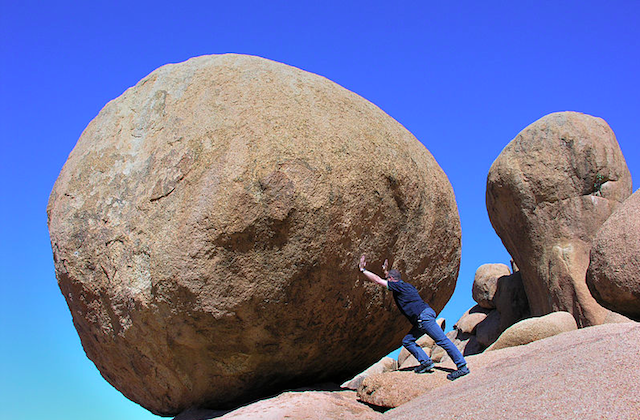
    Pushing Giant Boulder

    “When something bad happens you have three choices. You can let it define you, let it destroy you, or you can let it strengthen you.” ~Unknown

    I wasn’t always the ridiculously attractive (and humble) Jason you see before you. No, from a very young age I was overweight. I am an only child raised by a single, very hard-working mom. Her crazy work schedule meant that cooking meals was rarely a feasible option. This meant we ate at restaurants or had fast food quite often.

    Couple that with my extreme TV watching habits and only going outside when forced, and it’s easy to see how my unhealthy lifestyle led me to 250 pounds by the age of 15! You know, the age where kids are super compassionate and never cruel toward those who look different (insert sarcastic grunt here).

    Sad Kid to Sadder Adult 

    My adult life wasn’t any easier. Those patterns of poor eating and never exercising created a 330-pound 30-year-old.

    I had now made the transition from a chubby kid to a morbidly obese adult.

    You would think the high probability of various health problems and the very real concern of a premature death would wake me up, but sadly, it did not.

    For me, it wasn’t about health. It was about feeling like I never really fit in (literally and figuratively). From seat belts on planes to school desks, “fitting in” was a frustrating endeavor.

    I leveraged the only thing I thought I was good at, making others laugh, to create relationships since I thought I had nothing else to offer.

    I was always in the “friend zone” with girls (which was hell for a hopeless romantic like me), was made fun by the “cool kids,” and never felt comfortable in my own skin. My appearance, and the perception that everyone was constantly judging me, consumed my thinking on a daily basis.

    I was so sad, stressed, and depressed all because of my waistline and what I believed it meant about my self-worth.

    Sure, I became “successful” as an adult; prestigious job with a big salary, a condo in a ritzy-ish part of town, and a pimp ride, but that stuff was all a front!

    I couldn’t seem to decide what to do to alter the course I was on. And I was so hopeless sometimes that I don’t know if I would have taken the action even if I knew what to do!

    Then the Bank Got Involved 

    I remember like it was yesterday. I was at my highest weight, the Director of a technology firm, stomping across the lobby of our office building, angrily phoning the bank because my debit card was declined when I tried to make a purchase online.

    Fat JG was kind of a jerk sometimes—short on patience and quick to lose my temper whenever I felt like it. I was still the same loving, caring, and giving JG that I am now, but when I had a tantrum, it was like a vortex of schmuck that would suck everyone in! 

    I was giving the bank rep “the business.”

    “I know I have money in the account. Why is my damn card being declined? This is bullsh*t!”

    To which she replied, “I’m sorry for the inconvenience,” (you know the script) “but we have closed your card due to suspicious activity.”

    “Suspicious activity?” I inquired, “What are you talking about?!?!”

    “Well,” she continued, “yesterday there were four transactions at various fast food locations all across Orlando. It seemed suspicious that so many transactions would occur in a single day at different fast food establishments, so we shut down the card to ensure it hadn’t been stolen.” 

    The phone went silent. I was speechless. The charges were not fraudulent. They were mine. I had eaten at four different fast food restaurants in one day.

    I knew it was unhealthy, but it was just the norm for me. A multi-billion dollar corporation, however, knew something wasn’t right. My bank had essentially just told me I was an out-of-control fat ass and they were worried about me. Shame.

    I had truly hit rock bottom. 

    Let Your Future Pain Motivate You Now

    I had experienced my own rock bottom at the hands of the customer service rep at the bank, and it was now time for me to really reflect on what I was doing with my life.

    I was so lucky to have my wife Alicia to talk this through. (I could not have done this alone!) We talked about what I already missed out on and how this default life of mine was not going to get any better (it would actually get worse) unless I took bold action to change the trajectory of my health and life.

    I visualized the pain I was causing for my loved ones, not just myself. I saw a future where my wife became a widow because I had a heart attack. Where my mother would bury me, something a parent should never have to do.

    I pictured that my unborn children wouldn’t have their father at their high school graduation or wedding.

    Why was I being so selfish, taking away this joy from myself and from all of them?

    These are the questions that “rock bottom” hurls at your head and you owe it to yourself, and everyone you love, to answer them!

    Time for Some Action 

    Drastic times called for drastic measures. After researching for a year and going through every test, physical and psychological, they could throw at me, I decided to have weight loss surgery.  This was a huge decision that would require 100% commitment to healthy living if I were to be successful.

    Some people think this is an overnight fix, but it is far from it. Since surgery, I live a very healthy lifestyle including regular cardio and strength training, a vegetarian diet, and lots of thought about everything that goes into my pie hole. (I still splurge sometimes; there is no need to deprive ourselves of indulgence once in a while.)

    Prepping for, having and recovering from surgery was a six-month process, followed by another year of hard work to lose the rest of the weight. And now, almost three years later, I have lost 130lbs, kept it off and feel like 100 grand (the currency, not the candy bar)!

    My entire outlook on life has changed. I now know that if I was able to take action to reduce (or eliminate) issues in one area of my life, that doing the same for anything else I am, or will be challenged by in the future, is possible!

    Gravel or Boulder; The Choice is Yours

    Here is the beauty of rock bottom; it can have multiple interpretations.

    To me, the rock signifies heaviness, stillness, being centered. It is an opportunity, weighed down by this tremendous structure, to dig deep and decide in that moment what to do next, as if nothing else matters. Because in that moment, nothing else does.

    You can choose to be crushed by the rock. You can become gravel that outside circumstances push deeper into the earth, with no control over its own destiny. You can make excuses and pretend that this is your only option.

    But you would be wrong.

    There is another option. You can become the rock! You can use it as an example to become a boulder that is strong, unshakeable, and can steamroll anything in its path given the right direction and momentum.

    You can use the rock as a stepping stone (pun intended) to reach heights of re-invention that may have otherwise felt impossible.

    Remember, once you hit rock bottom, there is no place else to go but up!

    You Don’t Have to Wait for Rock Bottom to Rock It!

    Rock bottom did the trick for me, but the smarter way to conquer life’s difficulties is to anticipate when rock bottom may be a few feet away and to take action!

    What challenges are you facing that need action?

    Think of one, write it at the top of a sheet of paper, and then truthfully answer the following questions:

    1. What am I missing out on (personally, relationships, joy, professionally) if I don’t do something to change it?

    2. What do I stand to gain (personally, relationships, joy, professionally) if I take bold action to overcome it?

    3. Who are three people I can reach out to this week, to get guidance, direction or ideas on how to handle it?

    4. What is the smallest step I can take right now that will lead me in the direction of overcoming it?

    If you are reading this, it means you are the type of person that is committed to living on purpose and are fully capable of overcoming any challenges you may encounter. Rock on my friends, rock on!

    Photo by Hansueli Krapf

  • Peeling Back the Mask: Reconnect With Your Authentic Self

    Peeling Back the Mask: Reconnect With Your Authentic Self

    Wearing a Mask

    “You cannot find yourself by going into the past. You can find yourself by coming into the present.” ~Eckhart Tolle           

    It was 3PM on a Wednesday and I had nothing to do. An empty schedule with limitless potential. 

    I was miles from home in the freezing fog of San Francisco. The bustle of traffic reminded me of my hectic life back home, but I wasn’t bothered. I had nowhere to be and nobody to answer to, just like the day before and the next day. I was free.

    I brought my favorite travel companion along with me to aid in my journey of self-discovery: me. Not the busy Account-Manager-me. My true self.

    Last year was painful for me. Like many others, I found myself ebbing and flowing with the tide that is the nine-to-five. Living for the weekend so I could escape the grind and live outside the snow globe even if just for a moment.

    Life is more than clocking in and out with dead eyes and a slack jaw while counting the milliseconds as they fade toward your Friday night. I’m on this earth to be—not to be someone else for a paycheck.

    In recognizing that I needed a vacation, I downed a bottle of wine and booked a two-week trip to my city by the bay. Fourteen days of sweet liberation.

    Maybe you can relate to my reality.

    Back home, Rebecca in accounting is a constant complainer. She brings you down like an iron pair of boots. You’ve got to grin and bear it because she processes your expense reports and you see her every day. You’ve gotten so adept at feigning interest that you’re losing sight of what’s underneath the mask.

    Rebecca gets the sympathy mask. Your boss gets the I’m-passionate-about-my-job mask. Jackie in distribution gets the I-like-politics-because-you-like-politics mask. We wear whichever we have to in order to make things easier. Nathaniel Hawthorne said it best: 

    “No man, for any considerable period, can wear one face to himself and another to the multitude, without finally getting bewildered as to which may be the true.” ~The Scarlet Letter

    Two psychological terms stand out as they relate to being someone you’re not: cognitive dissonance and the act of compartmentalization.

    They go together like a cerebral peanut butter and jelly sandwich. To understand our challenges, we must first define them. Enter Merriam-Webster:

    Cognitive Dissonance: Psychological conflict resulting from incongruous beliefs and attitudes held simultaneously

    Compartmentalization: Isolation or splitting off of part of the personality or mind with lack of communication and consistency between the parts

    When was the last time you spent an entire day doing exactly what you wanted to do? Said exactly what you wanted to say? You have a belief system, a rule set. Stuffing these things in a box and being someone else makes you exactly that. Someone else. This is compartmentalization.

    It’s a defense mechanism to combat the cognitive dissonance you feel when you have conflicting personalities—when there’s a difference between who you are and who you become in certain situations.

    When faced with a challenging situation, a compartmentalized person has to decide how to act. Quelling the reaction most natural to their authentic self, they respond inauthentically because they’ve developed a completely separate personality.

    We must be mindful of who we really are—and we get to decide who that is.

    “We are our thoughts” isn’t just Eastern voodoo wisdom. The word “brainwashing” has a negative connotation, so let’s call it brain painting. Painting your mind with things you love is a surefire way to become a happy you. This is nothing more than surrounding yourself with people, books, subjects, and thoughts that make you smile. Be selective and consistent with what you allow in.

    It’s important to take time to foster your own well-being in a world that demands so much. Almost two thousand years ago, stoic philosophers like Seneca and Marcus Aurelius told us to retire into ourselves. Frequent self-examination has been a practice for thousands of years.

    Being comfortable with and conscious of what you find is the definition of knowing who you are. Constantly look within and connect with your mask-less you. We can nurture our inner authenticity by being mindful every day.

    • Meditate. You don’t have to have an Om tattoo and a stick of incense to find a quiet place to look inside. Take a twenty-minute vacation inside your own soul. Be cognizant of what you find.
    • Observe. Take a walk and leave your phone at home. Look at everything around you with child’s eyes. Notice the beauty in the trees or the vastness of space. Be a living part of your surroundings.
    • Create. Doodle something while your coffee brews in the morning. Take a few minutes to write something meaningful. It doesn’t matter what you do as long as it comes from your own creativity. Exercise your mind, amigo. You’ll be surprised at how out of shape its gotten.

    Traveling solo isn’t an escape. It’s a small opportunity to delete distraction. Lucius Seneca said, “All of your problems are with you.” Running away from them is impossible. But we can, for a time, run away inside our own soul.

    I spent my favorite day in San Francisco walking through the residential Noe Valley and Dolores Heights. A simple stroll down sidewalk after sidewalk, without a boss barking orders or my phone buzzing with e-mails. Just me and my smile to enjoy the cool breeze.

    It wasn’t so much the city I enjoyed, as it was the chipping away at my mask. Each footstep, a small victory at finding myself underneath it all. I remembered not who I was, but who I am.

    Though I’m back to the doldrum routine of my everyday life, I’m still the same human I was in San Francisco. Underneath the demands of a challenging career lies the same person that wandered those sidewalks so many weeks ago. A smiling nomad. He who digs coffee shops. The one who loves wine.

    We have the tools and presence of mind to make our journey for authenticity a daily practice. Recognizing when we’ve strayed from our true selves is the first step to staying the course. No one can be you better than you can. Look inside, befriend yourself, and be free.

    Photo by Frank Kovalchek

  • Letting Go of the Lies That Make Us Feel Bad About Ourselves

    Letting Go of the Lies That Make Us Feel Bad About Ourselves

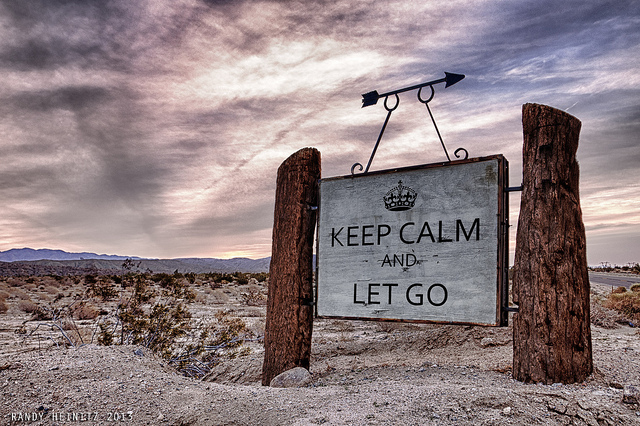
    Keep Calm and Let Go

    “Genuine forgiveness does not deny anger but faces it head-on.” ~Alice Duer Miller

    The man who I thought was my soul mate walked out on me fourteen years ago. He immediately remarried a lovely, beautiful woman who was everything I was not.

    I am desperate to fall in love. I’m thirty-eight. I want a baby. I want a relationship. I feel alone.

    A year ago, I fell unexpectedly in love with my photographer. Yes, star-struck romantics, it was just like the movies. Shy, awkward woman gets pictures taken for her brand-building website, and she is completely unraveled by his boyish sweetness and the power of his lens.

    I had never felt so beautiful, so free, so seen, so celebrated. It was a wham-bam-thank-you-mam whirlwind romance. We “hung” out only four times.

    But I had felt the life times between us, even if he didn’t.  And he didn’t. He didn’t choose me. But that didn’t stop me from becoming a crazy woman. Obsessed.

    I cried every other day, made up stories, fantasies. Of course we had shared past lives together. He was my “real” soul mate.

    Even if my mind was making up the stories, my body remembered. Why else would I be so upset? I felt like I was dying, my heart was being squeezed into blackness, and all I could do to get past the tears was scream.

    I had many, many moments that looked like this:

    Imagine me, on my bed, with a box of tissues, crying from the pit of my soul. Snot coming out my nose and spit out my mouth, all dripping into a sticky pool on my bed. I’m angrily screaming out and yelling “Why?!? Haven’t I suffered enough pain? I’ve done what I thought was right. I’ve prayed. Meditated. Done good deeds. Challenged myself. Don’t I deserve love? The man I want? What can I do differently? What is wrong with me? Why am I not blessed? What do I have to DO-O-O-O-O-O-O-O?!”

    Not a pretty scene.

    It was gut-wrenchingly painful being in that victim hell realm. I had to get out. But how?

    How do you get out of your own way? How do you survive when you are drowning in a pit of dreadful dark emotions and thoughts? All I could think about was that penetrating question, “Universe, what do I have to do??

    Do? What do I have to do, right? Because obviously, I did something wrong or didn’t do something right to win his love.

    In this two-lettered word, do, I realized everything. It wasn’t about doing. It was about surrendering, letting go, and trusting in the organic flow of life.

    Not easy.

    I constantly forget this, and the universe kindly reminded me of my sticky attachments to the external, yet again. Then, to make matters worse, that little voice crept up and said in its annoying voice, “You need to look inside for love, not on the outside.”

    Who’s heard that before?

    And I say back defiantly, “Easy for you to say. I’m only human. I’m not an enlightened being. I want love, damn-it. Love!”

    Then, I stopped. I took a breath, dropped into my body, and surrendered. And then surrendered some more.

    Finally, I said to myself, “It’s okay to want love. It makes me a loving human being. It’s even okay that I became a crazed, angry woman, mad at the world, making up fantastical, delusional stories. It happens. But, mainly it’s okay because deep, deep down inside myself there was a lie I was telling myself.

    (Breathe)

    I was telling myself that it was my fault for being so unlovable, so broken that these men didn’t choose me. And of course, I know that’s not true.

    At first, I felt like an idiot. Geez, not the stupid loathing-lack-of self-love-thing again. But then I remembered to give myself empathy. I forgave myself for my lie because I know that many of us on this planet have the same one.

    That is what makes us human.

    Self-acceptance, forgiveness, and self-love washed over me. And I felt a little bit better, lighter. I felt like I was thrown a divine rope to pull me out of that pit of despair.

    I went through this routine about 100 more times, until one day, months later, I felt normal, clearer, and joy eventually snuck in again. I haven’t met Mr. Right yet, but I’m hopeful. I’m more grounded, more open, more trusting, and less attached.

    And when I start to feel the chatter of my mind and those icky feelings bubble up again, I remind myself of what I learned months before. There is a universal process of forgiving and letting go. We each have our own way of describing it, but mine goes something like this.

    1. Acknowledge what you are feeling, your anger, your sadness, and your pain.

    2. Release it. Express it (safely, away from blunt objects, and in the comforts of your home). Don’t hold it in your body to fester and turn into disease!

    3. Ask yourself the tough questions, and answer truthfully until you get to the very bottom of your pit of despair. There, you will find the treasure: the lie you have been telling yourself.

    4. Be gentle. Accept your lie. Forgive yourself for telling it.

    5. Lovingly let it go and rewrite your story. For me, it was: “I’m not unlovable. I’m lovable, and love will come to me in its perfect timing! Yahooo!”

    6. Finally, chuckle at the absurdity of it all, and remind someone else of this human process of death, rebirth, and growth through your own sharing, storytelling, and your art.

    Breathe. Breathe. Breathe. And smile.

    Photo by Randy Heinitz

  • 3 Keys to Feeling Happy, No Matter What Happens

    3 Keys to Feeling Happy, No Matter What Happens

    Smiling Flower

    “Look at what you’ve got and make the best of it. It is better to light a candle than to curse the darkness.” ~Proverb.

    The year 2013 was the happiest of my life.

    Not because it was the most perfect or problem free year. In reality it was as messy, sad, and as difficult as any previous year.

    In October I looked at the last correspondence between my biological father and me for the first time since his suicide years before. I felt as devastated as the day he died. Healing is a much longer journey than I’d imagined.

    Around March my psychologist noted that I was codependent on my blissfully independent husband and in serious need of my own identity.

    In August I traveled to the U.S. for the first time in three years, and people I love rejected me.

    From April to November I hated the stress, demands, and despair of my job and wanted to quit. Every single day.

    That’s not all.

    Extended family ignored requests to help me write a memoir about my biological father and grandmother. I gained weight, broke my toe, and couldn’t get rid of an itchy rash. Not a single piece of my writing got published and my blog went days without a visitor.

    The miracle of 2013 is that I broke free of the notion that happiness is an if/then proposition.

    If…I get the job, if he loves me, if I stop feeling anxious, if my health gets better (insert your own if here)…

    …then I will be happy.

    Happiness is not when everything turns out exactly how we want or plan.

    Happiness is a full-hearted, unreserved embrace of life—exactly as it is.

    I identified three keys to making happiness a more enduring state—not just a flickering emotion dependent on other people and results.

    Here is how I do it.

    1. Gratitude

    In 2013 I started keeping track of my gratitude. Each day I write between five to eight unique events I am grateful for. I don’t repeat anything from the previous day.

    If you grew up in an abundant environment and learned to be grateful because of it, awesome. I did not.

    Learning was a slow process for me. After twenty-one days I was not a more positive or grateful person. A hundred days in, it had completely changed my life.

    Gratitude does not come naturally to me, but it’s the surest path to happiness, I promise.

    Even when work sucks and people disappoint me or I let myself down, I make an effort to see all the spaces, places, and people for which or whom I am grateful.

    With time, I have begun to recognize my gratitude not just at the end of the day, but when things actually occur.

    2. Self-Compassion

    I accompany homeless adults on the arduous journey of trying to reenter the work market. Recently, one participant (in a drunken rage) broke the leg of the chair and threatened to attack another person.

    My team took care of the immediate danger, and the next day it was left to me to conduct the reflection.

    The conversation lasted less than five minutes. He justified his actions and I couldn’t muster up the courage to challenge him.

    “Is this your first time?” our new social worker asked with concern.

    “No, more like my hundredth,” I replied.

    Not my best work. I felt like a failure.

    One year ago I would have replayed the scene in my head over and over and called myself every name in the book. I’m the manager, what example am I setting, my team thinks I am a loser, the participant thinks I am a joke, etc.

    It’s hard to be happy, in any circumstance, when you are your own worst critic.

    Being kind to myself is a huge challenge—and a fundamental element in my pursuit of living an authentic and happy life.

    Recognizing that self-compassion is not weakness or going to make me a lazy, unmotivated slob has greatly increased my willingness to be nicer to myself.

    The truth is, the kinder I am to myself, the more willing I am to get up from each failure and try again.

    Writing not published? Try somewhere else.

    Friend not responding? Give it some time.

    Husband really mad at me? That is okay, it happens to everyone and we will work it out.

    How do you treat yourself when you fail? Make sure it’s with a hug.

    3. Passion

    After I recovered from the shock of the therapist’s statement that I had no clearly formed sense of self, I knew she was right.

    What now? How do I discover who I am?

    I asked myself, what do I love to do?

    I didn’t ask myself how I will make the most money or become famous or what I am the best at. I asked myself what I love and then acted upon the response without reservation.

    The answer was writing.

    I can’t identify independent clauses, I have never read Dostoevsky, I will probably never be able to make a living from writing, and it is what I love to do.

    This was the motivation to start taking online writing classes, reading books, and starting a daily writing practice.

    Better yet, by investing in one interest, several others had room to grow.

    In 2013 I took a photography class, began sketching, created desserts with no refined sugar, and started a blog—all of which I do while maintaining my full-time job.

    If no one reads what I write or looks at what I create, that’s okay.

    What matters is that I showed up for me.

    If someone asks you who are you, what are your hobbies, what you would do if money weren’t an issue and you don’t have an answer, don’t worry—I didn’t either.

    Simply start with what you love.

    Don’t judge, don’t censure, don’t over think. What do you love?

    Start. Today.

    You will experience sadness and loss and suffering in life. There is no guarantee or protection against pain. But if you practice gratitude and self-compassion and invest in your identity, you will create a default state of happiness that will support all the difficulties and failures along the way.

    Take a deep breath, get in touch with who you are, and find something you appreciate about your life, exactly as it is. There you have it.

    Happiness is within your reach right now, no matter what is happening in your life.

    Photo by geralt

  • How Pain from the Past Can Be a Gift in the Present

    How Pain from the Past Can Be a Gift in the Present

    “When something bad happens you have three choices. You can let it define you, let it destroy you, or you can let it strengthen you.” ~Unknown

    Don’t hate your past. No matter what it contained or what it did to you, the past shapes who you are, not just for the things you felt damaged you but for the lessons you can take from it.

    I love working with the people I call the world shakers. They’re the people who want to make a difference in the world so that they leave it in a slightly better way than they found it.

    I love these types of people because they’re so driven by their heart and passion for others. They’re kind. They value people.

    You know what else these people have in common? They have empathy for others and a desire to make the world a better place. Not in a showy, “give me the Nobel Peace Prize” kind of way (although a bit more showy-ness wouldn’t go amiss!) but in a gentle, modest way.

    Do you know what really amazes and inspires me about world shakers? They’ve had their own hurts, challenges, and heartbreaks but instead of letting those things harden them and make them brittle, they’ve allowed themselves to stay open and vulnerable.

    They’ve taken those things that have wounded, battered, and pierced them and transformed the experiences into fierce empathy for others.

    They can’t walk past the person who’s struggling because they know how it feels to struggle. They have a way of recognizing the human condition in all of us.

    They turn it outward and use it as a learning experience, one that enhances their ability to empathize and drives their conviction to change things for others.

    It could be the mother who refuses to pass on the cycle of abuse she experienced to her own kids, or the teacher who bans the world “stupid” from her classroom because she can remember how much it crippled her to hear it as a child.

    It could be the man who gives coffee to the homeless guy every day because he can knows what it’s like to feel like no one cares about you, or the recovering addict who works with troubled teens to try and save them the pain of his experiences.

    World shaking is often driven by a need to make things better because of the pain we’ve suffered ourselves. 

    Still, I still have to catch myself when I bemoan the things that have happened to me over the years. Like everyone, I’ve had my share of unpleasant, difficult, and down right heart breaking experiences.

    For the longest time I was angry at the world because I’d experienced them. I hated the mistakes I made. I berated myself for my screw-ups and stupid choices. I felt defined by them—embarrassed and soiled—like I should be wearing a T-Shirt with the words “Damaged Goods” on it.

    One day, a very wise person said these words to me:

    Everything that has ever happened to you is the perfect preparation for the person you’re destined to become.

    And everything flipped.

    Those things that I had regretted so much had shaped me. What’s more, I had a choice in it. I had inadvertently used those things that had happened to me as things that drove me forward. Many of the things I’d become interested in, my passions, and my values were driven by those very experiences.

    I’m a passionate advocate for reducing the stigma associated with mental health issues, and I started my whole journey of learning about personal development and emotional resilience because of my own battles with stress-related illness.

    I help people find joy, passion, and a sense of purpose at work and that’s undoubtedly because I spent so many years in jobs that didn’t suit or that where I didn’t feel I was making a difference.

    I’ve also struggled in jobs that really did suit me because I didn’t know how to handle the stresses and challenges our work can bring. I didn’t understand the importance of asking for help, having strong support networks, actively managing stress, and making sure I wasn’t mentally giving myself a hard time too often.

    Having to take a break due to burn out and stress felt horrible at the time it happened to me. But during that time out I studied, trained, and read—a lot!

    I realized that resilience is a practice, not some innate skill that you either have or you don’t. I learned how to develop my own resilience and that made me immensely driven to help others do it, too.

    My dark times also forged my sense of empathy, a key skill I bring to my work. If I’d had the “charmed” life I’d originally wanted, would this have been the case? Somehow I doubt it.

    All of the lessons I’ve learned led to wisdom that can only be gained through experiencing life’s ups and downs.

    Hard lessons learned are deep lessons. They shape us. Most of us are familiar with the term post-traumatic stress, but did you know there is also a phenomenon called post-traumatic growth?

    It’s the ability to grow through adversity—to come out the other end stronger, clearer, and with a renewed zest for life.

    I think that’s what many of us fail to recognize in ourselves, that those dark times, far from diminishing us, can give us the most profound of gifts—the gift of recognizing human life in all its messy, painful, courageous glory.

    We can take those gifts and use them to be a beacon to others to say, “It’s okay. I’ve been there. This too will pass.”

    And that surely is a real gift worth giving.

  • How to Wake up Every Morning on Top of The World

    How to Wake up Every Morning on Top of The World

    “You get peace of mind not by thinking about it or imagining it, but by quietening and relaxing the restless mind.” ~Remez Sasson

    What’s the first thought that goes through your head when you wake up in the morning? Is it deliberate, or is it the default “Oh shi#$, it’s 6:00!”?

    If that’s how you start your day, then it’s likely your day will be filled with anxiety and stress. It’s not exactly the most productive mechanism for getting things done.

    Questions are quite powerful if used in the right way. (more…)

  • 25 Ways to Be Good for Someone Else

    25 Ways to Be Good for Someone Else

    “Don’t wait for people to be friendly. Show them how.” ~Unknown

    When I was a teenager, right around the time I knew everything, my mother used to tell me I only remembered the bad things.

    When I told stories about my family, they didn’t revolve around family beach trips, barbecues, and vacations; they focused on painful memories and all the ways I felt my childhood had damaged me.

    The same applied to friends and milestones in my life. I chronically remembered and rehashed the worst experiences.

    In fact, straight through college I followed up every introductory handshake with a dramatic retelling of my life story, focusing on a laundry list of grievances about people who had done me wrong.

    It was as if I was competing for most royally screwed over in life, like there was some kind of prize for being the most tragic and victimized. (Full disclosure: I hoped that prize was compassion and unconditional love. It was more like discomfort and avoidance).

    Not everyone is as negative or needy as woe-is-me-younger Lori was, but I’ve noticed that many of us have something in common with my misguided past self: We focus on how we’ve been hurt far more than how we’ve been helped.

    Psychologists suggest that to some degree we complain because we’re looking to connect with people who can relate to the universal struggles we all face (though in some cases, complaining is a constructive way to find solutions to problems as opposed to a chronic need to vent negativity). I think there’s more to it, though.

    When we complain about everything that’s gone wrong or everyone who has done us wrong, we’re drowning in our self-involvement. (more…)

  • A Message for Anyone Who’s Been Abused and Has Kept It Inside

    A Message for Anyone Who’s Been Abused and Has Kept It Inside

    Stand Strong

    TRIGGER WARNING: This content deals with an account of sexual abuse and may be triggering to some people.

    “Nobody can go back and start a new beginning, but anyone can start today and make a new ending.” ~Maria Robinson

    My uncle molested me from the time I was about four until I was in my early twenties. He held me too long and hugged me too tight. He would growl in my ear like an animal in heat, his warm, wet, often alcoholic smelling breath overwhelming me.

    This is how he greeted me at every occasion. When I was really small, I almost looked forward to seeing him because I liked the attention and believed he loved me, although deep down inside, I always felt as if I were doing something wrong, something naughty.

    As I grew, he began to grope my ass through my clothing while he whispered in my ear. He would tell me that I was sexy as he growled and hugged me tighter, pressing me up against his body. Much to my horror, I was aroused.

    I was aroused by my uncle. “MY UNCLE!” I would think to myself. “What on Earth was wrong with me? Surely something was gravely wrong with me to be aroused by my own uncle.”

    I wasn’t even sure of what arousal was at that point and only in retrospect could identify what I was feeling. I didn’t have a name for sex at that age, but I could feel it and knew it was wrong deep down in my belly. I felt wrong. 

    He was an adult. He was my uncle. He loved me.

    I felt the problem was surely mine and would chastise myself as disgusting and dirty. I kept my secret close. I assumed the other members of my family knew of his behavior and that he was normal. He didn’t try to hide it, or so it seemed to me.

    He acted out all the time. He was loud, erratic, and verbally abusive. His behavior was blamed on his drinking and the fact that he was an eccentric artist who simply couldn’t control himself.

    This was the way it was. This was the way it was to be.

    When I was a teenager dancing at a wedding, he told me seductively that he wanted to “make love to me.” I laughed, deflecting his advance as he pulled me in tighter. He had told me that he wanted to have sex with me.

    I knew it was true. I wondered if I would have the strength and courage to say no. I felt the planes and curves of his entire body pressed into mine on that dance floor as I drifted up above, looking down from a cloud, wondering how I might ever escape myself.

    It was only in my late teens that I began questioning if my sickness wasn’t possibly in part his sickness, because in every book that I read and every movie that I saw, I searched but could not find a relationship like the one I had with my uncle. 

    I would wait for the scene in a movie between two related people to become romantic. When it never did, I began to wonder if that bad, ugly feeling in my belly had been trying to tell me something about him.

    I cried to my boyfriend night after night, because the more emotionally intimate we became, the harder it became for me to be physically intimate with him, and he wanted to know why I was in such pain.

    After a Thanksgiving dinner accompanied by my uncle’s raucous behavior and inappropriate advances, my boyfriend insisted on confronting my father. To my shock, my father claimed that he had no idea of my special relationship with my uncle. He never would have guessed.

    No one knew but me.

    I simply never imagined that I would be in the position of having to defend myself. My uncle had been so free in his behavior with me. It never occurred to me that he would deny it.

    He denied it, as did his wife and the entire side of the family that accompanied him. Not only did they deny it, they threw accusations at me.

    “Crazy. Depressed. Liar. She’s unable to interpret harmless behavior.” They defended his honor as husband, father, and grandfather with vigor as if he were a hero—someone to be lauded, not disparaged and blamed with this filth.

    My father had confronted him and relayed the information to me. I did not have the courage to confront him myself.

    Just as I never dreamed I would need a defense, I never dreamed of how many would accuse me. Even my own brother sided with them, and my father would soften my uncle’s blame with statements like “he didn’t mean to hurt you.”

    I wanted to scream so loud the heavens would respond. Cry so long my eyes would bleed into pools of blood around my feet on the floor. Vomit up every one of my organs in sheer disgust.

    But what they didn’t understand is that the blaming, name-calling, and crafting of an airtight defense against me were all unnecessary. I wanted nothing from any of them. I did not want an admission. I did not want an apology. 

    I did not want revenge.

    I did not want him grabbing my ass at my wedding. I did not want to have to explain to my someday husband my “special” relationship with my uncle. I did not want him to have access to the children I would someday have.

    I wanted him to reconsider his behavior before his son’s newborn baby girl, the first girl born into the family since my birth, turned four. I did not want to ever see his disgusting face again. I did not want to feel anymore that sick, dark pain deep in my belly as he touched me.

    I did not want him to touch me again, ever. I wanted my future to be different from my past.  That is all I wanted.

    And I got it. I never saw him again. I turned and walked away from all the disbelievers and my uncle the molester.

    I found people who did empathize and help me heal. I faced the truth of what had been done to me and got the help I needed to go on to live a healthy, normal existence. In doing so, I learned that it is common for families to turn on abuse victims and believe the abuser rather than the abused.

    Were you abused? Did you speak your truth, and no one believed you? Did you speak your truth and experience the pain of even one person doubting you?

    If you were abused and someone, anyone, didn’t believe you, know that I do. I believe you. I stand with you, and for you, in the small way I can. 

    Speaking the truth after being abused takes incredible courage and strength. I am proud of you.  My story can be your story.

    We can be victorious together as survivors. I am a survivor. You are a survivor.

    We are stronger for having survived. We stand together triumphantly and move forward, bravely living abuse free lives.

    If you have been abused or are currently a victim of abuse and have not yet spoken out, I urge you to reach toward a safe person and speak your truth. You too are strong and courageous and deserve to live an abuse free life. Stand with me, no longer a victim but a survivor.

    Start today and make a new ending.

    Photo by Cornelia Kopp

  • 33 Ways to Be Childlike Today

    33 Ways to Be Childlike Today

    Kids Painting

    “Great is the human who has not lost his childlike heart.” ~Mencius

    Remember when life was simple?

    When your friends were the most important thing in the world. When a snow day was a perfect excuse to have fun, not a block of time when you felt guilty about being unproductive.

    When the ice cream truck could make your day, no matter what happened before. Bad grade? Big deal—it’s snow cone time. Skinned knee—who cares, you have a screwball!

    If only you could bottle that sense of freedom, fun, and enthusiasm for the little things, you could carry it in your responsible adult pocket and take a swig when you started taking everything too seriously.

    I don’t know about you, but mine would be in a glass vial embellished with red, pink, and purple swirleys, topped with a water globe stopper that had a palm tree in it. (Yeah—that’s right!)

    Maybe we don’t need some major departure from business as usual to stop being stuffy and start being childlike (which can actually help you become more innovative, in case sheer joy isn’t motivation enough).

    I’ve compiled a list of ideas to be more childlike today. I chose thirty-three because it’s the house number where my parents live, and it’s because of them I am the best couch cushion fort maker on both the east and west coasts. Enjoy: (more…)

  • How Relationship Issues Can Lead to Growth (and Why It’s a Daily Process)

    How Relationship Issues Can Lead to Growth (and Why It’s a Daily Process)

    “When something bad happens you have three choices. You can let it define you, let it destroy you, or you can let it strengthen you.” ~Unknown

    Relationships are tough. Even more difficult is maintaining healthy boundaries within a relationship.

    My head hurts and I feel like I’m going to throw up. Let me explain. I’m in a loving, healthy relationship with a beautiful woman, and I’m proud to call her my partner.

    Great, so why do I feel like I want to throw up? Well, because last night was a tough night for us, for me, and today I have an emotional hangover.

    Here’s the breakdown. She was going to her girlfriend’s house for dinner and girl time. Great. I was home cooking myself dinner and doing a little reading and television viewing. Great again.

    I sent her a text at 9:40 asking if she was having a good time. No response. Okay, no worries. An hour and a half later, worries—a head full of them.

    Is she okay? Why no reply? Did I do something wrong?

    She always replies to my texts. Always. So why not now?

    Good question.

    A healthy response would’ve been to tell myself she’s having a great time and will call when she’s on her way home. I didn’t have a healthy response.

    I leaked. Leaked all over the place. Leaked as in my boundaries were nowhere to be found, and hence what should have been kept in my head instead leaked all over our relationship.

    I texted a pissy good night text saying I was going to bed and hoped she was having fun. Tough to tell tone via text, but anyone could have seen that I was pissy. 

    A leak = poor containment. I wasn’t containing.

    She replied!

    She said she was having a blast and that I was entitled to be upset. Not good enough. By now I was shaking.

    Containment breach! Containment breach! We have leak in the dam.

    I couldn’t stop. I texted her saying her behavior was anything but normal. That she always texted me back.

    This didn’t help. Stop Zach! I couldn’t.

    The scared, wounded little kid had his hands on the steering wheel. He was in charge, not me.

    I called her. Told her how she had hurt me, that her lack of communication triggered my abandonment issues.

    I blamed her for my own stuff. Great boyfriend I am. Actually, I am a good boyfriend; I just had a tough night.

    My lack of containment led to my leaking all over the place, all over her. Bad boundaries, it happens to the best of us.

    Here’s the growth. Yes growth. There’s growth all over this and I’m thankful for the opportunity.

    Today I can own my part, which was assuming, taking things personally, lack of containment, and blaming. My breach of containment led to all of this. There’s growth because I can see my part, learn, and make amends.

    There’s growth because although I have an emotional hangover, I know in my heart that the relationship is not over. In years past I would have shut down and never recovered from something like this. Not the case today.

    As my therapist told me (yes, I texted him about this), we have to make mistakes to learn and grow.

    Sometimes containment means holding back our own crazy and being the functional adult who can move beyond it. Other times we leak looking for the other person to be responsible for us. It’s about practice and progress, not perfection.

    Relationships are tough, but I’d rather say relationships are rewarding if we’re willing to look at our part and do the work. It’s a daily practice. And not just with a significant other.

    I’m talking about relationships in all areas of our lives: work relationships, sibling relationships., relationships with our parents—all of this and so much more. The biggest for me is relationship with self. I wasn’t taught growing up how to like and love myself.

    I was taught that everything is my fault and that I don’t matter. Makes having a loving relationship with myself tough work. It’s a daily practice, as mentioned.

    If daily is what’s needed, then daily it is. Some days are better than others but still daily, nonetheless.

    I call it re-parenting.

    I call it love.

  • Change Your Life by Changing Your Mind About Yourself

    Change Your Life by Changing Your Mind About Yourself

    Happy Woman

    “The way you treat yourself sets the standard for others.” ~Sonya Friedman

    I’d had enough.

    Once again, I’d sent follow-up emails to guys who had shown interest in my dating site profile. Once again, I’d included full-length photos with those emails, unlike the headshot that went along with my online profile.

    And once again, days later, my inbox was a virtual ghost town.

    Didn’t these guys know how much courage it took for me to set up a profile in the first place? I was twenty-six years old and been on fewer than a dozen dates in my life—including my senior prom, to which I took a freshman.

    I was morbidly obese for most of my twenties and had only recently lost fifty pounds. I was still overweight but in better shape than I’d been in years. And yet it still wasn’t good enough.

    As soon as these once-interested guys got past my witty, self-deprecating profile full of catchy phrases like “loves to cook,” “enjoys watching football,” and “can quote The Godfather” and saw me head-to-toe, they remembered that it doesn’t matter if a girl likes watching sports or can cook a mean Sunday dinner—as long as she’s “fit and athletic.”

    My self-esteem was lower than low. This was just as bad as being ignored to my face in bars and at parties.

    I felt like I had to apologize for the way I looked. “Hey, sorry I’m fat, but I’m a really nice person! And I’ve spent a lot of time developing my sense of humor while the rest of you were out dating and stuff!”

    I’m not sure what finally flipped the switch inside my head, but I remember the date the switch got flipped: March 7, 2006.

    I’d had enough. I realized (somehow, for some reason) that I didn’t have to apologize for anything about myself.

    That there were plenty of girls who looked just like me and managed to find love on their own terms—who managed to live life regardless of the voices in their head which tried to tell them they weren’t allowed to.

    I got mad, both at the world and at myself for wasting so much time feeling apologetic. Like I had to gratefully accept any little crumbs thrown my way.

    So I went on a rant. And I took that rant to the bastion of all that’s sketchy about the internet.

    Yes, I went to Craigslist. Hey, why not? I had nothing to lose at this point.

    I wish I’d kept that rant because it was gold. I derided the nameless men who let me know without saying a word that I wasn’t good enough once they got a look at the full package. I called it exactly as I saw it, with all the vitriol I could manage.

    I then announced to all of the world that I wore a size 14/16, and that anyone who had a problem with that shouldn’t bother wasting my time.

    I listed the same qualities I’d listed on my dating profile, and asked if my size really mattered in the face of all I had to offer. My humor, intelligence, hatred of reality TV, love of old timey movies, insanely huge music collection spanning six decades, mad cooking skills…did my size matter all that much, really?

    I may even have referred to myself as “a catch.” I don’t know, it all became a blur after a while.

    And much to my surprise, my inbox exploded with responses. Many of them were immediately deleted—you know, pictures of genitals and all that. (Craigslist will always be Craigslist.) Some were practically unintelligible, so I moved past them pretty quickly, too.

    But one reply…one reply caught my eye.

    The guy could spell and knew how to use punctuation. He seemed warm and friendly and smart, and appreciative of what I had to say. The fact that he liked to cook earned him points, too. (Ladies, I think we can all admit that we get a little swoony over a man who knows his way around the kitchen—men, pay attention!)

    I knew immediately that if nothing else, this guy and I would be friends. What I didn’t know at the time was that I would marry him in September 2008.

    See, I know now that the moment I decided to start treating myself like I was worth loving—no apologies, no holds barred—was the moment the Universe breathed a great big sigh of relief and said, “Finally.”

    That’s when a man who’s called me beautiful every day since we first met found me. Things started clicking within minutes of me publishing that post.

    For years I had assumed that everyone else saw me the way I saw myself: fat, unattractive, worthless. I know now just how deep my self-loathing went, and I wish I could go back and hug that old version of me.

    That sort of thinking is a vicious cycle—the worse you think you are, the more you cut yourself off from others, which makes you feel even worse than you did before.

    All I had to do was change my mind about myself, about what I was worthy of, about what I was willing to accept from others.

    Bonus: Because I was so utterly myself—snarky, sassy, smart, sarcastic—I attracted someone who likes those qualities and I never have to pretend to be any other way.

    If you’re in a situation where you feel as though you have to change yourself in order to measure up, or like you have to put up with someone else’s mess because you can’t do any better (be it in a relationship or a job), change your mind.

    Know that it’s just your insane, misguided ego trying to keep you small and quiet—and that’s understandable, because your ego wants to avoid going out on a limb and possibly being hurt.

    But you absolutely have to ignore that fearful voice and start speaking and living your truth anyway. And as soon as you put yourself out there, your life will start to change.

    This doesn’t have to be anything on an epic scale—no Lifetime movies-of-the-week here. It can just be something as small as posting a rant online, claiming your worth, and announcing that you’ve had enough of feeling “less than.”

    Maybe you’ll simply start holding yourself to a higher standard when it comes to the way you talk about yourself and others.

    And maybe that new way of talking about yourself will leak into the way you talk to yourself. You might actually start smiling when you see yourself in the mirror.

    You might then start seeing all the ways you’re playing small in your life, and you might start making subtle shifts in how you handle things going forward.

    You’ll stop putting yourself last. You’ll start speaking up when a situation doesn’t feel right to you. You’ll stand a little stronger every day.

    And the Universe will breathe a great big sigh of relief and say, “Finally.”

    Photo by kris krüg

  • A Letter from Your Future Self

    A Letter from Your Future Self

    “The place to be happy is here. The time to be happy is now.” ~Robert G. Ingersoll

    Dear Past Me,

    Remember that day when you thought all was lost? When you thought there was barely any point in carrying on?

    The bank account was dangerously low.

    You were arguing with everyone close to you.

    The roof was leaking.

    It felt like everything was a struggle and the so-called abundance of the Universe was nowhere to be seen.

    You were going over the mistakes you’d made.

    The money you had lost.

    The opportunities you had missed.

    You were going over angry conversations and thinking about how right you were and how wrong they were.

    You were searching for forgiveness but holding onto the unfairness of it all.

    Remember how low you felt?

    You actually spent more time than you care to admit wishing you didn’t exist.

    You thought at least that way, nobody would miss you and you wouldn’t cause them any pain if you had never existed.

    Dude.

    Seriously?

    You do realize now that you wasted a bit of time with that ridiculousness, right?

    You wished for a lightning bolt of awareness to hit you in the head.

    You were hoping for a finely tuned droplet of self-aware genius to magically transform your heart.

    The Universe provided because in the next few moments, you read this:

    The average person lives to be 76 years of age, which is approximately 28,000 days.

    28,000 days.

    That’s when it hit you.

    Every day is truly precious.

    Months seemed to come and go.

    Years flew by.

    But days. Days were made up of habits.

    You woke up to your own habits at that point.

    How much time had you wasted drifting into jealousy?

    How many hours had been lost sinking with regret or crying over disappointment?

    If you added up the hours you’d filled with worry, regret, anger, sorrow, and guilt, how many days would it equal?

    It was terrifying to even consider.

    You shifted.

    You found three ways to live in each day that have changed you forever.

    1. You are not your feelings.

    When anger or hurt hits your heart like a ton of bricks on a hot summer day, it can feel like it consumes you.

    The more you resist, the more you fight it, the bigger it gets.

    Allow the pain to be there. Talk to it. Realize that you are the witness that is doing the talking.

    2. Meditation.

    It seems like everyone talks about meditating.

    Once you made it a non-negotiable part of your life, everything else shifted for you.

    Think of it like brushing your teeth or taking a shower.

    You can sit quietly anywhere. In your car. At your desk. Just close your eyes and breathe.

    It will help you to be in the day.

    3. Forgiveness.

    As much as you’re struggling with your own crapola, everyone else is going through his or her own lessons as well.

    As soon as you leaned into forgiveness, you felt better.

    You stopped resisting.

    Forgiveness gives you flow.

    And when you flow, BOOM—you’re in the present moment again.

    I want you to wake up to what you have right now!

    I want you to know that no matter what, today is beautiful.

    It doesn’t matter if it’s pouring rain, pounding snow, or penetrating sunshine.

    Weather is neither good nor bad. It just is.

    Today is what you make it, and I want you know that here and now, in this future moment that I’m writing you from, love is the only thing that lasts.

    Whether your current moment is filled with sorrow or bursting with joy, this too shall pass.

    Find ways to make today into a beautiful painting of kindness toward yourself and toward others, and you will reach the end of your 28,000 days with a knowingness that you lived well.

    What day is it today?

    It’s the best day ever.

    Love,
    Future Me

  • Stop Attracting Unhealthy Relationships: 3 Promises to Make to Yourself

    Stop Attracting Unhealthy Relationships: 3 Promises to Make to Yourself

    “When you stop trying to change others and work on changing yourself, your world changes for the better.”  ~Unknown

    For years, I was entering relationships with men where I saw their potential to be a good match for me, if only they would completely change who they were.

    For twelve years, it was the same pattern until one day I finally realized something was broken.

    After my last unsuccessful relationship, where I was just holding on, hoping he would change and be the person I wanted him to be, I had had enough. So, I took a much-needed hiatus to regroup, reprogram, and refocus.

    The Problem

    My sorority sister used to say, “If you always do what you always done, you’ll always get what you already got.” So, what was I doing that constantly attracted me to men who were not a good fit for me? What was so compelling to me about that?

    Here’s what I discovered: The tape that continued to play in my mind said, “I am not able to attract a man with a steady, regular job who’ll make time for me, and is emotionally available.” So, I constantly attracted men who were emotionally damaged, who cheated on and ignored me.

    The Analysis

    Now that I knew what attracted me, I wanted to figure out what made me stay in so many loveless relationships.

    I’m almost ashamed to admit it but I stayed in relationships I should have never started because I thought I could change save them. They were hurt and I could treat them better than their previous lover because, let’s face it, I’m better than everyone.

    I was going to swoop in and save the day and show “him” how much better I was than “she” was to “him.” And “he” will not cheat on me like “he” did “her.”

    But, guess what?  “He” always did. Always.

    And I always took it as a personal failure. As if I had failed “him” somehow, because I wasn’t even good enough, much less better. It never occurred to me that “he” might have been just a jerk to begin with.

    The Solution

    After finally learning my lesson, I’m now ready to re-enter the dating arena, and I’ve made three promises to myself. If you’ve also attracted unhealthy relationships, perhaps these could help you, too.

    1. I will trust myself.

    Many times in the past, I can remember thinking this relationship was not a good idea, or something wasn’t right. But I didn’t listen. And as my grandmother used to say, “If you don’t hear, you feel.”

    When you feel something is off, make the determination of whether you are just nervous because you’re afraid of making another mistake, or if something really feels off. When your intuition tells you something is wrong, move on.

    Trust that you know what is best for your happiness. You are the only one who does.

    2. I will value myself.

    Moving on is much easier to do now that I’ve raised, expanded, and updated my standards. Looking back, it seems that my only requirements were that he be breathing and he liked me.

    For you, it may be time to reevaluate your standards and decide that you deserve to have a happy, healthy relationship with someone who meets your needs.

    Create a list of your top three non-negotiables, and even when you get slack from your friends and family, who mean well, telling you your standards are high or you’re being too picky, don’t waver.

    Not listening to your intuition is what most likely got you in this dating predicament in the first place, so value yourself and stop ignoring your inner voice.

    3. I will focus on myself.

    Worrying about whether the other person was happy or not in my past relationships was emotionally draining, and never created a happy ending for me. So I’m bringing the focus back on me. I’m no longer looking to fix, change, or save anyone, nor restore their faith in relationships, and neither should you.

    If this has been an issue for you, read these next words carefully: It’s not your job to make the other person happy. It’s theirs.

    Believe me, you will save yourself a lot of wasted years, tears, and time by following this one rule.

    If you’re ready to take responsibility for your dating life, consider taking a break to reevaluate your previous relationships, update and expand your standards, and work on your own happiness first. You’ll be a happier, more whole and joyful person—which can ultimately lead you to the relationship you want.

  • Why Love Addiction Deprives Us of Love, and How to Let It In

    Why Love Addiction Deprives Us of Love, and How to Let It In

    Love

    “What we seek in love is finding someone with whom we feel safe to reveal our true self.” ~Karen Salmansohn

    I wasn’t always in a relationship, but I was almost always in love.

    I even had crushes in kindergarten. I hated school because my grade school teacher didn’t like me. Maybe my crushes helped me avoid feeling the void, the loneliness, and the sense that I was not of this world, an outcast.

    Being in love let me ignore those uncomfortable feelings. Of course, I did not understand any of this at age six. Now I do.

    As an adult, I wanted a lover because I wanted someone to treat me better than I treated myself. I wanted him to fall in love and stay in love with me. I wanted this because I needed something as desperately as the desert needs water: to feel good about myself.

    I wanted someone to mirror back to me the good he saw in me—my beauty, intelligence, and worth.

    I wanted someone to accept and appreciate my quirks, even when I didn’t. I wanted someone to see me for once. I wanted to be okay in the eyes of one person, at least. It never occurred to me that that “one person” needed to be me.

    I also waited for a life partner to enjoy life. His love would protect me. I had no guarantee that I would not hurt again, but if there was one person guaranteed to love me, then I could endure other disappointments that life would throw at me.

    I wouldn’t go camping, to concerts, or even to the Sunday market unless I had someone with me who was “the one.” I missed out on so much while I waited for the love blanket to protect me so I could feel safe enough to discover myself.

    I was a love addict. And I didn’t know it.

    Society pushes this notion on us. Vacation ads feature happy couples. Valentine’s Day comes and people post pictures from their night of love on Facebook. Meanwhile, we lonely love addicts make do with heart-shaped chocolates purchased on sale one day too late.

    How much of life I allowed myself to miss! Instead of drowning in regret, I faced the truth and noted the signs of my love addiction. Maybe these symptoms will seem familiar to you:

    • You’re preoccupied with your love objects—checking their Facebook page, Googling them (many times), daydreaming about them. They become our dreams!
    • An email, text, or smile from your love object, it all sends you into ecstasy. But the next day, the void and the longing come back. The fix has lost its effect.
    • You listen to your love object’s voicemail repeatedly and save them… forever.
    • You gush about your love object any chance you get. And you project qualities you can’t own in yourself, shadow or light, onto them, because it is safer. (For example, you may detest your partner for arrogance, a quality that you deny in yourself, or idolize them for their talent, which you’ve never allowed yourself to express.)

    I am thirty-nine years old. This awareness is relatively new for me. When my last addictive relationship ended, for the first time I experienced what a heartache is.

    After we broke up, he went off to date the woman we had the biggest fights over. That broke my heart. But it also showed me that I did the right thing by leaving him. At that point, I realized he was more wounded than I was. That did give me some relief but didn’t really take the pain of self-betrayal away.

    I lost thirteen pounds in three weeks and had to drive myself to the ER.

    At ninety-seven pounds, I couldn’t eat. I knew my life was in danger and even wondered if my heart was bleeding. With compassion, the ER doctor said, “You will heal, I know, because you were strong enough to drive yourself here.”

    Yes! Right then, I began the excruciating but necessary journey into Self.

    I discovered and felt in my body how much I was depriving myself of life by getting addicted to the crumbs of love—when I actually wanted the whole loaf. I realized that I had never really believed I deserved that much.

    Then, I fell in love again. Just when I thought I was done, for a while at least. He had a similar past, so we immediately bonded.

    During our six-week relationship, I recovered from my love addiction. We used the relationship as a love lab and processed all the feelings and thoughts that came up. We swore to radical honesty and kept our word. With full transparency, we found out what happens when we just show up as ourselves—addictions and all.

    We made passionate love, shared breakfast in bed, went to the farmer’s market on Sundays, did grocery shopping, and kissed at the most beautiful spots on the island.

    He rubbed my feet as I fell asleep, and I lathered sunblock lotion on his body before we took off to the beach. I went snorkeling with him, and we swam naked in secret, secluded beaches with only turtles for discreet company.

    I understood he would move back to New York and it would end, and I appreciated this gift from the Universe, as he helped me be okay with loving someone. Period. No desperate attachment. I knew he didn’t owe it to me to stay with me forever.

    I discovered that my feelings were my own. I, not the other, was the source of my feelings.

    I wasn’t born with my feelings for him. I had created them. I had allowed them. And I was going to love Jim, Mike, Darren, and Chris in the future the same way. I realized they were the objects of my love, but they were not the bearer of it. I was.

    Oh, what a relief! What a blessing to overcome love addiction in the thick of an intense, beautiful connection. I was sad when he left, but I was not left with nothing. I had a happy life and fulfilling work. This was all new for me and I felt so light and free.

    The truth is, when you are a love addict, you have way less love in your life than you were aiming for.

    Ironic, isn’t it? The reason is simple: Making one person the only source of love does not work because love is in everything and everyone. When we miss that, we miss the point of life. Really.

    I now see love in all forms—in the guy bagging my groceries so diligently, in the blissful expression on my best friend’s face as she comes out of her massage session, or in the way the 7/11 guy jokes about my glasses that are too big for my face. Witnessing these things is love. So is painting my toenails while watching an Eckhart Tolle video on YouTube.

    I missed all this while I was hooked on someone. I missed life. I missed myself.

    I hope I live long enough to pass this onto my kids when I have them. If I have a daughter, I will teach her about real love so that she does not end up experiencing what I did. I will teach her that even if I am her mother and love her to death, she owes me nothing because she deserves it by just being her.

    We all do.