Tag: popular

  • Focus on Yourself Instead of Trying to Change Someone Else

    Focus on Yourself Instead of Trying to Change Someone Else

    “If you can’t change the circumstances, change your perspective.” ~Unknown

    I was the one who was the designated driver in high school and college. I wanted to be in control of how I arrived and left a party. Besides, the taste of alcohol did not please, so it was a win-win situation in my mind.

    Then, a decade later, I found myself dating someone who was addicted to drugs. I thought if he could just hang around me, see how I found joy without being altered by substances and bask in my love, then he could stay sober.

    In the midst of it, I didn’t see that I wanted to have control over him.

    I didn’t see that my annoyance with his victim mentality, blaming external relationships and circumstances for his situation, reflected my own victim mentality and judgment.

    And the joy I wanted him to emulate from me was really just tears of the clown, because I wasn’t aligned with my true self.

    Pain is a Mirror Image

    The pain I felt was a mirror to his pain. He felt shame and judged himself harshly for using; I felt shame and judged myself harshly for not being where I thought I should be in my career, and for the way I looked as I packed on the pounds of responsibility he never asked me to take.

    It wasn’t until I gave up on wanting him to change that I found peace. I realized I wasn’t in pain because I loved this person. I was in pain because he wasn’t acting how I wanted him to act. I was in pain because I deemed a specific path to joy and expansion, and he wasn’t taking it.

    Accept the Other, Accept Yourself

    After I realized that I could be at peace by accepting who he was and his choices, I could finally accept my responsibility for our relationship and for bringing him into my life. I decided to love him for the being he was, and most importantly, to love myself.

    My relief was astounding. I started meditating daily and allowed myself to listen to my truth. I let go of the weight of trying to be his savior, and that translated into inches off of my body. It was like dense matter had seamlessly transformed into light.

    When I began to love myself, I empowered myself to make healthy choices. Since I knew I couldn’t change him, I figured out that it was my preference to no longer be around that environment. So I decided to leave it.

    I understood that he used drugs to obtain relief and to be soothed from his troubles, which is what we all try to do in different forms when we experience that contrast from where we are and where we want to be.

    But I was closing that contrast gap for myself, and where I was and where he was energetically could not be in the same space for too long. I was still there for him as a friend, but as I grew one way our phone conversations became less and less.

    This man has been one of my greatest teachers. He recently passed away, and ever since I learned of this, I have been hearing one of his favorite songs consistently on the radio, Levon, written by Elton John and Bernie Taupin.

    This teacher of mine used to sit in his favorite chair and laugh and cry to that song. The protagonist, Levon, was a man seeped in tradition. He was born poor, and once he started making money, he became attached to it.

    My ex saw himself as Levon’s son, who would blow up balloons all day (how his father made money) and watch them fly away. The son was a dreamer who wanted to go to Venus.

    My friend, my love, did fly away in his physical form. I don’t know the circumstances that surrounded his death. I think he finally found in the non-physical what I learned to do in the physical—to love himself and find relief.

    Getting to That Better Feeling Place

    If you too are waiting on someone else, hoping they’ll change and realize their “potential,” and you’re feeling miserable as a result, it may help to do the following:

    1. Realize that the only person you can change is yourself.

    You can be a guide and an example, but ultimately change comes from within.

    2. Accept the situation didn’t “just happen to you.”

    You made a choice to enter this situation. When you accept responsibility for your part, thoughts, and reactions, you will be empowered to transform.

    3. Accept the person for who they are and where they are.

    By doing this, you will be living in the present moment and not putting blame for what happened yesterday and creating stories about what could happen in the future.

    4. Connect with the feeling of relief.

    Realize that underneath it all, the person is just trying to feel better, even though it might be in a harmful way, and you don’t approve of their choices.

    5. Write down your dreams and preferences.

    Focus on your inner world and what thoughts bring you to a place of joy. Decide how you choose to live and what’s healthy for you.

    6. Be consistent.

    And after you make this a consistent practice, the situation must change—either the person will start moving to where you are, or you will exit each other’s lives.

    I certainly needed to take these steps and learn these lessons. I learned from him to go to Venus and dream. To listen to my true self and to follow a path that was aligned with thoughts of joy and smiles of inspiration.

    When I became clear on my dreams and aligned with them, that gave me the motivation to move by the ocean and to take the first steps to leaving a legal career behind. I finally accepted myself. I finally felt like I knew who I was.

    I am so grateful for where I am now, and I thank him for nudging me out of my comfort zone and for helping me learn acceptance, allowance, and awareness of who I really am. And now when I find myself thinking thoughts of those opposites, I can now blow up balloons, put those thoughts in them, and watch them fly away—with a smile, in my favorite chair.

  • Why Self-Pity is Harmful and How to Let It Go

    Why Self-Pity is Harmful and How to Let It Go

    Letting Go of Self Pity

    “Bad things do happen; how I respond to them defines my character and the quality of my life. I can choose to sit in perpetual sadness, immobilized by the gravity of my loss, or I can choose to rise from the pain and treasure the most precious gift I have—life itself.” ~Walter Anderson

    Some of us experience more adversity and painful events in our lives than others. We wonder why our difficulties don’t happen to the “bad” people out there instead of us. Unfortunately, life is not fair.

    Awful things happen. Dreadful circumstances or tragedies will affect most of our lives at some point. It’s okay to cry and feel sorry for yourself and your circumstances, mope around, or get angry. But at some point you must shake it off, let go of the past, and choose to not let it consume you entirely. Otherwise, you won’t be able to learn from the experience and move forward in a constructive way.

    Now, I am not addressing true clinical depression here. I am talking about self-pity, defined by Merriam-Webster dictionary as “a self-indulgent dwelling on your own sorrows or misfortunes.”

    My Own Pity Party

    When I was young, I moved from Florida to Minnesota for a new job. I met a guy there and thought I was in love.

    Then the guy got a new job across the country in Oregon and asked me to move there with him. Thinking I was in love, I got a job transfer as close as possible to his new city (two-and-a-half-hour drive each way) to live with him in his new house. I thought we would get married.

    A few months later, we broke up. (I bet you saw that coming, right?) I had nowhere to live, no friends in that state, and I was stuck all the way across the country from anyone else I knew. I felt alone, abandoned, and unloved. I was also trapped with no money, as I’d put everything I had into his house.

    I was a hapless victim of love, and I played my part like Shakespeare had written it for me. I gave in completely to self-pity. I cried in public for the poor cashier at the grocery store. I wore my swollen eyes like a badge of honor.

    Kind and compassionate coworkers found me a roommate with a twenty-minute commute instead of two and a half hours. They gave me solid proof that I was not alone, not abandoned, and not unloved, yet I refused to be consoled. I allowed self-pity to consume me and held tightly to my belief of being alone and unloved. Poor me, UGH!

    I’m sure there were other people around me who were also in pain, struggling with homelessness, sickness, financial difficulties, bereavement, worries over children. But I didn’t see them or notice them. I didn’t care about them. I only cared about myself and my broken heart. I fed on my own misery.

    When I look back on that time, I see how fortunate I was that I didn’t marry that guy, and I am amazed that I didn’t give more consideration to the kind people who helped me. Self-pity also made me less gracious toward my friends.

    Self-Pity is a Choice

    When we fall into the depression of self-pity, we allow it to take control of our lives. We become completely self-absorbed. It is destructive to dwell on negative events and carry that bitterness and resentment forward. When we keep our focus on the hurt, we aren’t focused on taking control of our lives.

    If we blame negative circumstances for our place in life, we are giving up responsibility and control.

    We whine and feel sorry for ourselves. We can choose to spread our misery, or we can choose to rise above our circumstances.

    Self-pity is a form of selfishness. It makes us less aware of the needs and suffering of others. Our own suffering is all we think or care about in our self-absorbed state.

    The Story of Tony Melendez

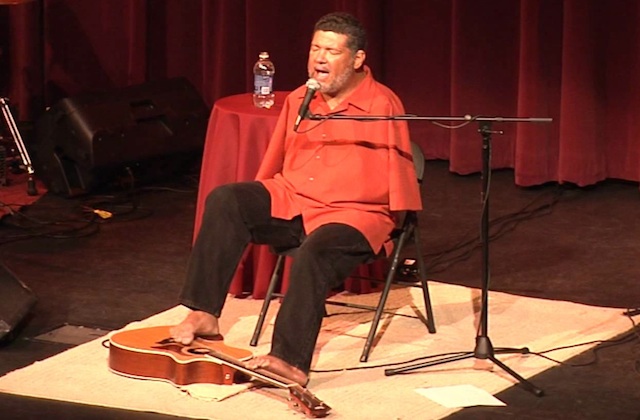
    Tony Melendez

    Tony Melendez was born with no arms and a clubfoot. Despite his misfortune, Tony chose to control his own life and happiness. He improved his circumstances as far as he could control them. He made positive choices and took responsibility for his own future.

    As stated in the biography page of his website, Tony is “a man who has spent his life putting personal confidence above his handicap.” How? By learning to play the guitar with his toes!

    He began his career in Los Angeles. Tony is a musician and vocalist with several successful albums. He is also a composer, motivational speaker, and writer.

    In 1987 Tony played for Pope John Paul II in Los Angeles. The Holy Father was so moved that he approached Tony on the stage and commissioned him “to give hope to all the people.”

    Tony took the pope’s words to heart. Tony Melendez Ministries is a non-profit organization that helps people throughout the world, bringing them hope, compassion, scholarships, and other funding.

    Tony Melendez and the Toe Jam Band have a busy tour schedule. There is no room for self-pity in Tony’s busy life because he does not focus on himself. He unselfishly gives to others he feels are less fortunate.

    But don’t expect Tony to play at your pity party. He will give you an example to overcome self-pity and inspire you to achieve a wonderful life.

    You can choose to lift yourself up and enjoy life! You are in charge of your own happiness. It is your personal responsibility.

    So go ahead and cry and mope and feel sorry for yourself and stay in bed all day. Feel the pain and the hurt. Live your reality and misery. It’s okay and even healthy to do that. But then let it go!

    Don’t let it consume your life. You are not alone or unloved. Remember there are other people in your life who need you. There are people you haven’t even met yet who need you! You can’t help anyone else if you only see yourself.

    You cannot change the past, but you can change your future.

    Photo by jeronimo sanz

  • Dealing with Difficult People: 5 Effective, Compassionate Practices

    Dealing with Difficult People: 5 Effective, Compassionate Practices

    “Whatever you fight, you strengthen, and what you resist, persists.” ~Eckhart Tolle

    It’s morning; you’re in a great mood. You’re relaxed and have plenty of time to practice your morning routine. After a delicious breakfast, you head out to start your day. Then it happens: You encounter a difficult person, and your calm turns to calamity.

    We all have encounters with people who prefer to stay miserable, making everything difficult. They exist, and perhaps there was a time in your past when you once where one of those negative people. Perhaps you still can be at times.

    As a former miserable person, I know it was my inability to handle my mental and emotional states that kept me oozing all over others. I felt so disconnected from life, living obsessively in my mind, that I truly felt helpless.

    Most often that helplessness manifested into continuous critiquing, judging, anger, and sometimes even pure rage. I was unwilling to take full responsibility for my relationship to life. I wanted peace, joy, and harmony, but I was unwilling to do the necessary work to experience them.

    Difficult people are demanding. They demand something from the external world in hopes of filling the disconnection and restlessness they feel within. Whether they are demanding our attention, a certain action or reaction, or a particular outcome, the root of their behavior is a demand for something other than what is.

    Difficult people haven’t yet learned to take responsibility for their whole selves—mind, body, and spirit. Feeling disconnected and restless gives rise to their need to argue, judge, critique, and tweak everyone around them.

    Their inability to handle themselves adds fuel to the fire, which perpetuates their harshness.

    Underneath their personality is a feeling of being separate and a desperate plea for help.

    We can’t change another and we can’t make someone want to change. The only way we can help is by being true to our self, finding our power within, and being an example of wholeness.

    Here are a few practices I’ve found useful, loving, and extremely effective.

    1. Be still and ground yourself.

    Naturally, when we are confronted with a rude, irritable, or irate person, we tend to avoid them. We think that if we avoid them they will go away, or at least we hope they will. The truth is that, although this may happen, it is much more likely that they won’t until we learn an alternate way of dealing with them.

    Negative energy has a force and it can knock us on our butt, usually in the form of us engaging in toxic behavior. If we are not grounded, we may find ourselves arguing, judging, or stomping out of the room.

    Making sure we are firmly planted in our body enables us to look the person in the eye and be completely present. It gives us the opportunity to remain calm and pause rather than engage in behavior we may later regret.

    2. Look them directly in the eyes.

    Darkness, negativity, can’t stand light, so it can’t remain in the light. Looking someone directly in his or her eyes dispels darkness. Your light pierces through the superficial persona to their being.

    When I practice this tool one of two things always happens:

    • The person walks away or stops talking.
    • The conversation takes a more positive direction.

    We all want to be seen, from the cashier at Target to our spouse. Taking the time to look at someone offers them the greatest gift we have to offer: connection.

    Try it as an experiment and see what happens.

    3. Listen to understand.

    I find that whenever a difficult person confronts me, I automatically tense up and mentally consider my defense. When I am calm and open-minded, I know that I never have to defend myself, ever.

    The most effective way to diffuse a difficult person is to truly listen to what they are trying to say, which means keeping my mouth closed and hearing them all the way through.

    Whether or not I agree with them is irrelevant, and I certainly don’t need to let them know what I think. I can listen and get back to them if necessary such as with a spouse, co-worker or friend.

    I find the following responses to be most effective:

    “Let me get back to you on that.”

    “You could be right.”

    When a person is being difficult, it is because they are responding to their perceived reality rather than what is going on in the moment. Often times their frustration has very little to do with us.

    I find when someone’s reaction seems over the top for the situation that repeating the same response diffuses the situation.

    4. Learn when to be silent.

    Some people are extremely closed-minded and impossible to talk to, but we need to speak to them. When I find myself in a situation with someone who just can’t hear me in the moment, I don’t force the issue. Trying to get my point across to someone that can’t hear me only escalates the situation. Sometimes the clearest form of communication is silence.

    At a later time I can revisit the conversation with the person and communicate what needs to be said. Regardless of the person’s response, I can share my feelings and thoughts and let go of the outcome. Focusing on them responding a certain way only results in two difficult people unable to accept what is.

    5. Be honest with yourself.

    If we are repeatedly in a situation with someone who is abusive verbally, physically, and/or emotionally, we must stop trying to change him or her. If we find we are practicing a spiritual way of life and someone close to us isn’t changing, it may be time to get honest with our self and find out what is really going on.

    The question of whether or not to end a relationship with a difficult person, whether a friendship, work or romantic relationship, can only come from within you.

    If you can honestly say you have done what you know to do, have asked for help from a friend or professionally and nothing is changing, then its time to go within for the answer and trust what you find.

    On the other side of a difficult person is an opportunity to grow.

    No matter what we are presented with in life, we have an opportunity to choose more or less responsibility. Remembering that true responsibility is our ability to respond in the moment.

    Of course, this takes practice and is not easy. However, as we take more and more responsibility for our life, circumstances and people lose their power over us. We learn to choose our responses moment by moment, no longer being dragged around by emotions, thoughts, or circumstances created by another or our self.

  • How to Love More and Hurt Less in Relationships

    How to Love More and Hurt Less in Relationships

    “Our interactions with one another reflect a dance between love and fear.” ~Ram Dass

    In my personal experience, I’ve learned that it is sometimes easier to dance this journey of life solo rather than in partnership. Many of us have experienced life both in relationships and outside of them. Both are just as sweet.

    I’d like to offer up some lessons I have learned in my dance in and out of relationships:

    1. They are not meant to last forever.

    Our society seems to put a lot of pressure on the idea that things will last forever. But the truth is, everything is impermanent.

    After a recent breakup, I found myself feeling as though I had failed the relationship. Then I stepped outside of my conditioned thinking and discovered that love and failure do not reside together. For when you have loved, you have succeeded, every time.

    It was Wayne Dyer that introduced me to the rather practical concept that “not every relationship is meant to last forever.” What a big burden off my back! Of all the souls hanging out on this planet, it seems to make sense that we might have more than one soul mate floating around.

    Relationships can be our greatest teachers; it is often through them that we discover the most about ourselves. In relationships, we are provided with an opportunity to look into a mirror, revealing what we need to work on as individuals in order to be the best version of ourselves.

    Each relationship will run its course, some a few weeks, months, years, or even a lifetime. This is the unknown that we all leap into.

    2. Attachment is often the cause of suffering.

    We sometimes cling to people in an attempt to hold them closer, but this often pushes them further away.

    In love there is nothing to grasp; it is so expansive that trying to capture it is like trying to capture water with a net. When we attempt to control where a relationship is going, we become disconnected with the sweetness of the moment.

    Ram Dass shared one of the most exquisite paradoxes: “As soon as you can give it all up, you can have it all.”

    It is silly to think that we can own someone’s love, but many of us have tried to do it.

    I often find myself fantasizing about how my future will unfold with a new partner, but it is in that moment when I fall out of the present.

    We have the opportunity to surrender to the natural flow of relationships, letting go of our proposed outcomes and taking ourselves out of the driver seat.

    This means being fully present in moments of intense love, conflict, uncertainty, vulnerability, and joy.

    3. Being vs. doing.

    In the beginning of relationships, we strive to show up as our best selves, hoping to impress the other person and to receive their love in return. In most cases, we are focused on doing simply because we want to make an outstanding impression on the person we fancy.

    But if you’re anything like me, being and doing are extremely hard to keep up at the same time.

    In relationships there is work, but there isn’t much we have to actively do. In fact, doing can often be associated with attempting to control a situation.

    The place where we should hang out is in the being. Being allows us to show up as our authentic selves. When we show up as humans being, something magical happens. Being is our natural state. Love thrives in this space.

    4. Allow for change.

    Don’t be attached to any particular way your partner is showing up each day. Change is inevitable. As humans being, we are constantly growing and discovering new passions and experiences.

    For example, next week your partner might wake up with the realization that they want to leave their job as a lawyer and become a yoga instructor. How will you respond? The news might be shocking and somewhat unusual, but change happens. The question is, can you allow space for that?

    Oftentimes it is harder to embrace change within others than it is to accept within ourselves. If you are anything like me, consistency is super important; however, completely unrealistic. Someone once told me “you are consistent with your inconsistency.” I initially took this as an insult, but now I see it as a practical strength. It shows movement and willingness to change.

    Love is the greatest dance in life. Surrender to each step. Hold your partner close to your heart, but don’t grasp. If we can allow ourselves to enter into partnerships with this awareness, it may dramatically shift the way we see and experience relationships and love.

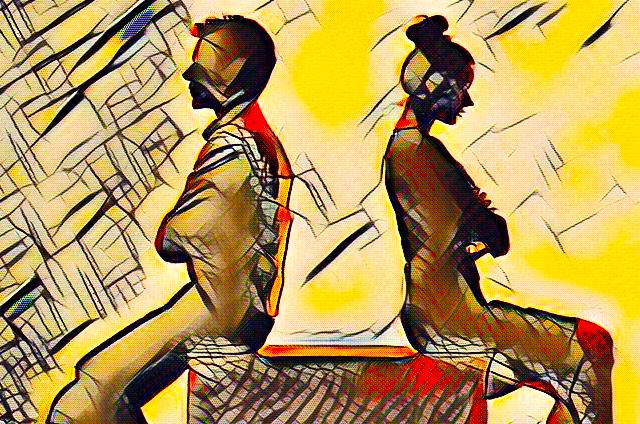
    Couple image here

  • Tending to Your Garden of Thoughts and Keeping Your Mind Weed-Free

    Tending to Your Garden of Thoughts and Keeping Your Mind Weed-Free

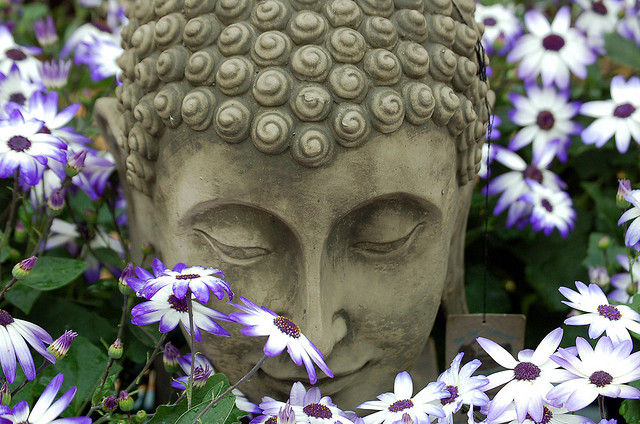
    Garden Buddha

    “All that we are is the result of what we have thought. The mind is everything. What we think we become.” ~Buddha

    Imagine your mind as a garden. Positive thoughts are the beautiful flowers that brighten your life. Negative thoughts are the ugly weeds that spread and suffocate the flowers.

    Tending to my garden is an ongoing process.

    I’m not into chemical pesticides, but my natural weed killers are yoga, meditation, inspirational reading, and hanging out with positive people.

    Sure-fire weed food is worrying about what other people think, taking things personally, and stressing out about situations that don’t matter or are out of my control.

    I used to find myself having drawn-out imaginary conversations: “And if she said this, I would say that…” with absolutely no outcome. Now I catch myself and change the channel.

    I’ve seen firsthand how dangerous it is to let weeds snarl and take over.

    My dear Grandma Betty lived to be ninety-two. She outlived all six of her children, and had a lifetime of good physical health, yet her mind was tangled with weeds that began growing decades before she died.

    She was suspicious, distrusting, and convinced that people didn’t have her best interests at heart or were talking behind her back. I never noticed it when I was a kid, but it became increasingly apparent later on.

    Perhaps she felt lonely when my grandfather died early and she had too much time alone with her thoughts.

    It’s easy to over-think things, jump to conclusions, or get wrapped in negativity when you don’t have others to give you a fresh perspective. It then becomes a bigger problem when you alienate the ones who love you the most because you’re difficult to be around.

    This is what eventually happened. I loved her to bits, but she became challenging to talk to. The cup wasn’t half full; it was bone dry.

    This was in sharp contrast to my Grandma Millie. She was always smiling or laughing with a twinkle in her eye.

    Life dealt her a crappy deck. She was widowed young and had to raise three kids alone. She nursed her second husband through a nightmare of Alzheimer’s. She also experienced the tragic loss of both of her sons.

    But she always picked herself back up and remained positive.

    She drove for Meals on Wheels, delivering to people younger than herself.

    She went blind from cataracts disease in her early eighties but continued to find volunteer work so she could feel useful and keep active and social.

    Insistent on staying in her apartment, she remained fiercely independent.

    I used to ask her how she kept her great outlook when she’d been through so much. Her reply, “Well, I could sit around complaining, but then nobody would want to be around me!”

    Truer words have never been spoken.

    Complaining is pointless. It doesn’t make things any better, and it drains the complainer and everyone else around them.

    I loved both of my grandmas equally, but I know which one I was more likely to pick up the phone and call.

    Having these two amazing examples in my life gave me huge inspiration. I saw for myself how important it is to tend to my garden regularly and give it high quality fertilizers to keep it abundant and healthy.

    My friends are my fertilizers!

    My positive Grandma had a gaggle of girlfriends and those gals knew how to have a good time. They got together and played cards or Scrabble, went off on outings, and even went on a camping trip in their eighties. They were each other’s support systems.

    She used to say to me, when you get married, don’t ever forget about your girlfriends. They may outlive your husband and be all you have in your old age.

    Her very best friend died two days before she did. Both asked after the other in their final moments, neither knowing that the other was dying. They’d been friends for eighty-eight years.

    Both grandmas were my mentors in their very own ways. One being an example of how I want to live my life, the other showing what happens if I allow my mind to become overgrown and tangled with weeds.

    I wish I could have done something to help my Grandma Betty tend to her garden. If she had the awareness, she could have taken a machete to those weeds and felt a lot happier.

    We can all use the garden metaphor to bring an awareness of what helps our own mind grow and flourish, rather than creating a dark, tangled mess.

    What’s on your list of fertilizers and weed-killers? How does your garden grow?

    Photo by Neil Piddock

  • The Blessing of a Broken Heart: How Pain Can Lead to Healing

    The Blessing of a Broken Heart: How Pain Can Lead to Healing

    Broken Heart

    “Never fear shadows. They simply mean there’s a light shining somewhere nearby.” ~Ruth E. Renkel

    My last breakup was on April 16th, 2012.

    I remember the date because on the evening of April 17th, as I sat with a blotchy red face and tears in my eyes, my dad told me I soon would remember that day and be glad I was no longer sad. “Men are like buses,” he said. “If one leaves you behind, rest assured another will come.”

    I found his support very touching, but it did little to console me. If this guy was a bus, it was the bus I wanted to be on, period. That day, on my dad’s couch for the second night in a row, I slept a total of an hour and cried for about eight.

    I found the breakup pretty surprising and abrupt. After not more than a strange feeling, and a day during which I sensed an uncomfortable distance, I said to my then boyfriend, “I feel that you might not be in love with me,” to which he responded, “Maybe.”

    Boy, did I feel like a fool. What got to me the most was discovering he’d felt that way for a while but hadn’t said anything. There I was, thinking he loved me, and there he was, waiting for me to what, wise up?

    It was harsh to say the least. My feeling was that he didn’t even care enough to bring it up.

    The following weeks were pretty dreary. I sobbed in the shower, sobbed at home, sobbed while I was working, and felt that my worth was at zero. I’d been dropped like a hot potato by someone that knew me; that had me!

    We’ve all been there, left by someone to whom we attributed a big part of our identity, someone who confirmed us as worthy of love and partnership. To different degrees, we all recover, meet someone new, and perhaps go through variations of the same ordeal later on.

    I’d been through breakups before, and painful ones at that. But at some point, in the fog of this loss, I got the feeling that rather than this one being something I had to get over, it was one I had to get, as in understand, beyond the corroboration or mending of my bruised ego.

    I avoided the traditional post-breakup ranting to friends. It didn’t feel right, and there was little room for trash talking since I couldn’t see the inherent wrong in his change of heart or mind. That led me to suspect that the real source of my pain was absolutely inside of me.

    I wanted to go there; I was on a mission. Determined to find the gold, I decided to put myself through a daily routine of questions regarding the source of my pain.

    I first asked myself if it was really that surprising that the relationship had ended. Were things really going so well that it would make zero sense for this person to choose to end things? The answer was, unequivocally, no.

    We had actually been growing apart. We had fundamental differences in opinion, which had an impact on the development of our relationship; we experienced incompatibility in our rhythm of communication; and our expectations of what it meant to be with someone were different.

    On several occasions I actually found myself wanting out, wanting to not feel the potency of loneliness in the company of another; I just kept it to myself. That kind of blew me out of the water: I’d been feeling that way for a while too, and, I too hadn’t addressed it.

    Once that little nugget came to light, I found my assumptions regarding his approach to breaking up were, at best, doubtful. I couldn’t sensibly hold them against him, or myself for that matter. I had to let my resentment toward the manner of the breakup go. I couldn’t be angry with him.

    Lack of presence can create a disconnect between actual experience and fantasy or expectation. It certainly did for me. There’s what I had, and what I demanded it become, and it was my relationship to the latter that I was most attached to.

    Another step in my recovery was accepting that I was most upset about breaking up with my fantasy and my expectation, not with the real, flesh and blood person, and certainly not with the strained relationship.

    Then there was the matter of low self-worth. How could my self-worth be challenged by my worth to someone else? As it turned out, my low self-worth hadn’t actually been engendered by the breakup but rather exposed. It was there all along, supplemented by the relationship.

    The worthiness I had found in the relationship had little to do with self-worth and everything to do with my reliance on someone else’s evaluation of me.

    While I was looking outward for sources of acceptance, affection, validation, and understanding, I could have been looking inward and cultivating the one relationship through which life is experienced, the one with yours truly.

    It was bittersweet to learn of this. It gave the situation meaning and a powerful possibility for growth and wellness. I was still grieving, but I realized that what I was grieving was the tragedy of abandoning myself.

    I decided to go right ahead and feel it all, with the condition that I keep a watchful eye on the narratives that came up. It was important to remain clear about what it was that was really hurting rather than letting the inner storyteller convince me that I had just lost the love of my life.

    Then again, I had indeed lost sight of the love of my life for a while. This was more a case of mistaken identity, because really, what is the love of your life if not your own love?

    I chose the path of natural grieving, and by doing so I became present to myself and acutely aware of how important my well-being is to me.

    If I was grieving my own abandoning so deeply, then I did have deep love, tenderness, affection, and care for myself. I had so desperately needed my own company and acceptance that when the relationship curtain was pulled, the sight of the neglect was unbearable.

    Little by little that presence, awareness, and allowance gave way to trust and safety within on a level I hardly thought possible. I was able to stand by myself, with all that meant, my ups and downs, my strengths and weaknesses.

    I haven’t since looked at romantic relationships in the same way. I haven’t since looked at any kind of relationship in the same way.

    I still remember the night of April 16th as a sad and painful one, but as the distance between me and that night has grown, a fuller picture has come into view that leaves me utterly indebted and grateful to the events that came to pass.

    The night of April 16th was a rude awakening to a reality that demanded and ignited an important part of my healing—one that, in all likelihood, saved my life. I was blessed.

    A Course in Miracles says that we are never upset for the reason we think. Just as words point toward something but aren’t themselves what they mention, the happenings in our lives and our reactions to them point to greater truths, but aren’t themselves the truth.

    If we take it upon ourselves to see what inside of us they are pointing toward, all grievances become opportunities to heal and love ourselves.

    Photo by Sandy Manase

  • Why Forgiveness Is a Gift to Yourself and How to Release the Past

    Why Forgiveness Is a Gift to Yourself and How to Release the Past

    “Forgiveness does not change the past but it does enlarge the future.” ~Paul Boese

    On a snowy winter day in the dark month of January, I got hit by a car. My left leg was immediately amputated. A darkness started growing in my seventeen-year-old heart that day.

    Harvey was the man driving the car that hit me.

    Because of Harvey’s decisions, I didn’t have my leg. Because of Harvey, I walked in pain. Because of Harvey, I lost my confidence as an attractive woman.

    At the trial two years later, Harvey and I weren’t allowed to talk to each other. I saw him at the defendant’s table with his head cast down in shame. He never looked me in the eye. In fact, Harvey never apologized to me.

    I was a strong woman who didn’t let my disability keep me down. I tried to pretend that I was as capable as two-legged people. I learned how to ski, kayak, rock climb, backpack, scuba dive, and sky dive.

    I spent just as much energy stuffing my anger, depression, and grief. I was terrified that, if given half a chance, they would eat me alive.

    I felt like two women. The one the world saw was capable, strong, independent, and inspirational. The other woman I reserved for myself. She was sad, insecure, and boiling with anger.

    During my twenties, I had three significant romantic relationships. Although each one of those men told me how amazing I was and how much they loved me, none of them wanted to marry me. I assumed it was because of my leg.

    Harvey took marriage from me as well.

    When I was truly honest with myself, I had a vague understanding that my depression and anger, which I usually expressed inappropriately, could have contributed to my failed relationships. I decided it was time for counseling.

    Therapy was a time for me to finally grieve. I realized how fear controlled me and how post-traumatic stress dictated my life. I started to understand the magnitude of my negative feelings—toward the Universe, toward life, and toward Harvey.

    Over many months, I learned appropriate ways to express sadness, anger, and resentment. My emotions didn’t eat me alive as I had feared. Actually, I became alive when I started to truly feel them.

    On the fifteenth anniversary of the accident, I was alone in my apartment, nursing my depression with some wine. My thoughts turned to Harvey. Did he know what today was? Does he remember me? Then I was struck by a bolt of brilliance. I’ll call him!

    If he isn’t going to call me to apologize, then I’ll call him and rub it in his face how he ruined my life.

    I didn’t think twice. I jumped up off the couch, found his number, and dialed. The phone rang once. Twice. Five times. I ended up leaving a message.

    At work the next day I could hardly concentrate, and by the time I got home from work, I was a bundle of nerves. Would he call?

    And then the phone rang.

    “Hi Colleen, this is Harvey.”

    I screamed at him, “Do you know who I am? Do you know what yesterday was?”

    “Oh yes,” he said through his sobs. “I remember you. I think about you all the time.”

    My heart lurched. He thought about me all the time? Then why didn’t he contact me?

    Harvey and I conversed and connected and ended the call with an agreement to meet.

    In preparation for our visit, I spent a number of sessions with my therapist preparing to give Harvey a verbal lashing. I was ready to shame him for what he had done to me.

    When the day finally came, Harvey and I saw each other across the hotel lobby. Tears welled up in his eyes as he walked toward me.

    “Hello Colleen,” his arms opened wide. “Can I give you a hug?” What? You want me to give you a hug? Wouldn’t a good chest beating be more appropriate? The nice girl in me gave him a hug.

    During the four hours we spent together, instead of screaming at him for everything he had taken from me, I listened. I heard how the accident happened from his perspective—and he heard how it happened from mine.

    We rehashed every moment leading up to the impact and, in doing so, we realized that, given all the same conditions, given our mutual naiveté, if placed in the same position again, we may very well make the same decisions.

    I listened as he talked about how his life was impacted by the accident. He was just a twenty-one-year-old married guy at the time of the accident. Afterward, anytime he saw someone who reminded him of me, he broke down and cried—or became mean. His marriage suffered; he and his wife eventually divorced.

    At the end of the visit, when Harvey and I parted, I gave him a hug. That time I wanted to.

    Back home, when I realized I was able to see the situation through Harvey’s eyes, I felt a freedom I had never known before.

    When I made the choice to let go of the past and forgive Harvey, I felt empowered. I didn’t see it then, but looking back I can see that when I harbored bitter feelings toward Harvey, I was hurting myself more than anyone.

    Harvey and I saw each other a year later when I was visiting his town for a conference. While at dinner, instead of re-hashing the accident again, we talked about our lives. We came to the table ready to pick each other up off that roadway that had held us captive for so long.

    I don’t think it’s a coincidence that just a year later I finally met the man who would become my husband. We married a year later and soon started our family. When I was able to let go of the past, I was finally able to create the future I had always wanted.

    Do my bitter feelings and resentments still surface? Absolutely. But now I don’t allow them to define me as a victim. I allow them to remind me to forgive. Again. And again. And again.

    I’ve learned that forgiveness is a journey. When our heart becomes too heavy with the burden of our bitterness, there are distinguishable steps we can take that lead us to inner peace.

    What about you? Is there something in your past that is hard to forgive? Do you want to let this go? Do you want to live more fully into your potential by releasing the past? If so, try these steps:

    1. Acknowledge your feelings related to the situation and actually feel them.

    Move through them. For fifteen years anger, depression, resentment, and bitterness were subversive hijackers of my life. Once I learned how to acknowledge and feel these emotions, they not only lost their power, they subsided.

    2. See the situation from the other person’s perspective.

    Our myopic view of the situation keeps us stuck in the past. If possible, have a conversation with your perpetrator. If that’s not possible, imagine the situation from your perpetrator’s point of view. What story can you tell that might explain the situation from his or her perspective?

    3. Release your bitter feelings.

    Remember, you were not born angry, sad, or vindictive. Let go of these accumulations and allow yourself to return to your pure humanity.

    4. Make the choice to forgive.

    Yes, forgiveness is a choice. It doesn’t just happen. And you may need to forgive a transgression again and again until that becomes your new normal.

    Forgiveness is not about condoning another’s actions. When forgiving another, we are not absolving them of restitution. Forgiveness isn’t even about the other person. The choice to forgive is always a gift we give ourselves.

    Photo by Okinawa Steve

  • Why Self-Love Is The Key To Finding True Love

    Why Self-Love Is The Key To Finding True Love

    “The way you treat yourself sets the standard for others.” ~Sonya Friedman

    The moon was shining brightly that balmy summer’s night in the park. He’d arranged a meeting to “sort things out.” Little did he know I’d finally built the courage to walk away. And that’s exactly what I did.

    I was devastated but mostly relieved. Finally, I was free.

    For the longest time I’d craved his love. I needed his approval. I wanted the happy ending so badly.

    Why? I meant something when I was with him. I felt worthy and kind of secure.

    But I wasn’t. I’d given away all of my power. I was dependent on him to feel love.

    And he knew it, so he treated me however he wanted. For him it was a game, and every problem in our relationship somehow always came back to me.

    I was needy, insecure, and completely out of touch with who I was and what I really wanted. I’d sacrificed everything about me in an effort to try to please another being.

    He told me I wasn’t sexy enough, so I read book after book about how to be more feminine and alluring. He told me I was too quiet, so I went out of my way to be outgoing, happy, and bubbly. He told me I took up too much time, so I made other plans and disappeared for a while.

    He could have told me anything and I would have accepted it. There wasn’t an ounce of self-respect in my bones. My misery was born from this very fact.

    I’d let this happen for so long. It wasn’t entirely his fault. My neediness and lack of self-worth had created and perpetuated our problems. But for some reason that I can’t explain, that evening a spark had been ignited and I’d finally had enough.

    I’d reached my pain threshold. I was completely done with feeling miserable, doubting myself, and feeling disrespected. I was so over letting someone else control my decisions, emotions, and self-worth.

    I’d begun to love myself a little more than I loved him. A butterfly was emerging from the cold, dark cocoon I’d been hiding in my whole life. It felt new and scary but ridiculously empowering and liberating.

    In a moment of clarity a string of epiphanies melted my confusion:

    • Deep love comes from within.
    • I’ll never be satisfied just with love from someone else.
    • If I don’t authentically love myself, I can’t expect anyone else to truly love me.
    • The way I treat myself shows others how I expect to be treated.

    That evening I vowed to put myself first and to be kind, loving, and generous with myself. This is the way I wanted to be treated. Out of self-respect and needing a fresh start, I walked away. From that point on it was my intention to live my life on my terms.

    It might sound selfish, but it was completely the opposite. And it eventually led me to the life-long relationship of my dreams.

    What’s The Real Impact Of Neediness On Relationships?

    I wholeheartedly believe that sharing the joys and wonder of life with another being who lights up your world is absolutely priceless. There’s nothing like it. It’s one of the greatest joys on Earth, and something every human being deserves to experience.

    But it’s extremely hard to find this happiness with another if you’re in a relationship with a need to be filled up by someone else.

    Being needy, insecure, and trying to gain approval and a sense of self-worth from your partner puts a huge amount of pressure on them, and it’s a major turn-off.

    It’s an unachievable task because feeling inherently loved and worthy comes from within. Not from your partner.

    An outstanding love doesn’t come from two half-fulfilled people coming together to make one whole, complete life. Outstanding love comes from two whole people coming together to share and enhance their already full and beautiful lives.

    An amazing relationship comes about when we own and appreciate who we are and completely accept the other person for who they are.

    So loving and putting you first is not selfish, it’s necessary. It’s imperative to creating the wonderful love and life we all desire. And let’s get something straight—loving yourself doesn’t deplete the love tank; it actually fills it up so we have even more to give.

    What Does Self-Love Really Look Like?

    It’s prioritizing your dreams and making an effort to do things that inspire and light you up.

    It’s saying no to things you don’t agree with or that don’t fit in with your plans.

    It’s deciding to spend time with people who support, encourage, and motivate you to be the best version of you.

    It’s owning your thoughts and opinions and refusing to be swayed in order to please others.

    It’s being gentle with and talking kindly and sweetly to yourself.

    It’s having the courage to try new things that you’ve always wanted to experience.

    It’s taking time out to nourish your mind, body, and soul—exercise, eating well, alone time.

    It’s trusting your intuition and honoring your own truth.

    It’s spending money on things that make you feel amazing while investing in your future.

    It’s daring to believe that you’re capable of achieving and creating the life you visualize.

    It’s choosing to see the good and refusing to let others bring you down.

    It’s gifting yourself forgiveness and accepting yourself for all of your beautiful and not-so-cool quirks and qualities.

    How Does Self-Love Create A Great Relationship?

    When we truly love and respect ourselves, we’re free from doubt and endless worry, so we trust our feelings and decisions. It allows us to be courageous and authentic.

    We begin to live from the heart and play a bigger, kinder, more generous version of life. We forget our self-imposed boundaries and dare to dream larger and wilder.

    We stop focusing on negativity and become present to the beauty and possibilities within and outside of ourselves. We realize how great our lives are and open the doors for gratitude to flow in abundance.

    We start to emanate happiness, confidence, playfulness, peace, and positivity.

    It’s electric and like a powerful magnet to others. Your ideal partner will be drawn to you like a bear fresh out of hibernation looking for his first meal.

    And once you find that special one, love will be easy.

    It’ll be natural. It’ll flow freely without judgment or pretense. It’ll inspire and nourish you. Your lives will be even richer, happier, and more vibrant than ever.

    And you’ll wonder why you didn’t take the time to fall radically in love with you just a little bit sooner.

  • 16 Things to Let Go to Live a Truly Happy Life

    16 Things to Let Go to Live a Truly Happy Life

    “Happiness is not something you postpone for the future; it is something you design for the present.” ~Jim Rohn

    Sometimes I feel like I’ve spent the better part of my life chasing after happiness. It always seemed like happiness stayed just a tad bit out of my grasp—somewhere in the future that I could always see, but not quite touch.

    For instance, when I was a kid, I believed I’d be happy if I got an admission into a good college. In college, I believed that I’d be happy if I got a good job. When I got a job, I believed that I’d be happy if I got a promotion and a raise. And on and on it went.

    Every time I reached a goal, it seemed like the next goal was where true happiness lay.

    Sadly, this affected my personal life as well. I thought, “When I find a great guy, I’ll be happy. Wait, to be truly happy, we need to first get married. Being married is great, but we need to have kids to find real joy. Gosh, our baby needs to grow up a little so we can really enjoy being with her…” And so on.

    For more than thirty-five years, I chased happiness on this path, not realizing what a futile chase it was.

    And then, about two years back, I was abruptly jolted out of it.

    One evening, on a day that had started out like any other, I found myself at the hospital with my three-year-old daughter in tow, waiting outside the emergency room that my husband lay in.

    After a week at the hospital, my husband came out okay. However, it fundamentally changed the way I look at life.

    For the first time I saw the futility of our chase. I still believe that goals are important and we should strive to achieve them. But now, I see them more as mile markers in life’s journey, not having much to do with happiness.

    Happiness, it turns out, is not something we go after. It’s something already within us. We just need to clear up some clutter to find it.

    The two years that followed have been an amazing journey of slowly letting go of some of that clutter in the quest to find the true happiness within. It’s still a work-in-progress, but here are the things I’ve been striving to let go.

    1. Let go of trying to control everything.

    The only thing that we can truly control is our own attitude and reactions. Once we accept that, we can find happiness right where we are, irrespective of how things turn out. This was perhaps the hardest but the most necessary part of the transformation for me.

    2. Let go of trying to please everyone.

    Every time we pretend to be someone, it takes us away from our true selves, and from our place of happiness. It was hard at first to stop trying to please others. Eventually I realized how liberating it was to dare to be myself!

    3. Let go of the sense of entitlement.

    I often found myself asking “Why me?” It was hard to replace that with “Why not?” After all, everyone gets their share of joys and sorrows; why should I somehow be above it and deserve only the joys?

    4. Let go of resentment.

    Unless we walk in the shoes of the other, we really don’t know the reason for their behavior. Carrying resentment only hurts us and delays any repair. I cannot tell you how amazing it’s been to let go of some of the resentment I didn’t even know I’d been carrying for years!
    5. Let go of guilt.

    On the flip side, if we are the ones who made a mistake, it is time to forgive ourselves and make amends. “I’m sorry. How can I fix it?” can go a long way in starting the healing process.

    6. Let go of pride.

    Neither apology nor forgiveness is possible without letting go of pride. Nor is there room for authentic connection where pride resides. Let it go.

    7. Let go of perfectionism.

    If I had a dime for every opportunity I squandered in the quest for perfection, I’d be rich! But no one can be perfect all the time. That’s what makes us humans. We are quirky. We have flaws. We are beautiful just the way we are.

    8. Let go of negativity.

    In any given situation we have a choice—look at what’s good and be grateful, or look at what’s wrong and complain. Deliberately adopting the attitude of gratitude literally changed the course of my life.

    9. Let go of draining, unhealthy relationships.

    We are the average of the people we hang out with, and if they are frequently negative, it becomes hard for us to maintain an attitude of gratitude. It’s been a tough call to distance myself from people in my life who were bringing me down, but it was necessary to move on.

    10. Let go of the busyness.

    Somewhere along the way, many of us have bought into the notion that the busier we are and the more we achieve, the happier we will be. After thirty-five years, I’ve come to realize that busyness does not equal happiness.

    11. Let go of the attachment to money.

    Money is definitely good to have, but once our basic needs and savings goals are met, it’s time to evaluate the tradeoff of earning more and more. Letting go of the need for money just for the sake of it has been a very hard but fulfilling experience for me.

    12. Let go of the fear of failure.

    Everybody who tries anything worthwhile fails at some point or the other. Failure does not mean we are broken. It simply means we are courageous to dare! Easier said than done, but I’m trying.

    13. Let go of the fear of abandonment.

    Fundamentally, we all crave for connection. But when fear of abandonment starts to rule our lives we make very irrational choices. I try to trust that what is meant to be will happen. And no matter how things turn out, we’ll come out of it okay.

    14. Let go of comparison.

    We usually only get to see the highlights reel of other’s lives. Comparing my behind-the-scenes to that has only made me unhappy in the past. It’s time for change.

    15. Let go of expectations.

    In the end, the core of all my issues was that I expected things to be a certain way. I expected what a good spouse or a friend ought to act like. I expected my daughter to behave a certain way. I expected how situations should turn out. Heck, I even had fixed expectations of what happiness was! Letting go of expectations has helped everything else start to fall in place.

    16. Let go of yesterday and tomorrow.

    And finally, how can we find true happiness if we are saddled down by the baggage of the past or fear of the future? Once I learned to let go of some of the above, I started to focus deliberately on today and now. Suddenly, music and beauty emerged from what was previously mundane. Is there a better way to find true happiness?

    Letting go of something that is ingrained in our minds for years is hard. In my experience, even when I do manage to let go of something some of the time, at other times, it comes right back. In the end, it’s the journey that matters, right?

    So, what will you let go of today?

  • When You Still Don’t Know What You Want to Do with Your Life

    When You Still Don’t Know What You Want to Do with Your Life

    “If you worry about what might be, and wonder what might have been, you will ignore what is.” ~Unknown

    Sitting at my kitchen table, I can’t help but ask myself over and over again how I got to be here. Just yesterday it seems I was sitting with my family for dinner, discussing my college plans and a future that seemed so far away from the comfortable and naïve life I always knew.

    Now, I am graduating from college and embarking on the unknown journey that is “the real world” with what seems like no preparation whatsoever. Well, I wouldn’t say that. If they had beer pong tournaments or sorority trash talking in this “real world,” I would be more than prepared.

    The funny thing about life is that it’s set up to always be preparing us for something.

    Elementary school gets us ready for junior high school, which prepares us for high school, which prepares us for college, which prepares us for this “real world.” We are set on this path right from the start and told to follow the path to get us to where we need to be.

    But what society doesn’t seem to understand is that humans aren’t designed to stick to one path. Humans are free flowing, always changing, and always moving. One moment we can be so joyful we want to start a flash mob in the middle of the train station, and the next we can be disheartened and hopeless.

    Our feelings are ever changing and ever flowing, as are our thoughts, beliefs, interests, and our relationships with others.

    Maybe this is why when we are told to pick a major, a job, or a career, we are ultimately faced with the hardest challenge of our life. We spent our whole lives preparing for this moment, after all. The decided fate of what we will spend our whole lives doing.

    When I was faced with the big decision of picking my major and future career four years ago, I was at a standstill. I had so many interests, how was it possible to pick just one? Being the over analyzer I naturally am, I contemplated for a long time, measuring the pros and cons of each profession. I planned and thought, and planned some more.

    But it was when I was on a road trip with my family to Colorado, when I had finally stopped planning and thinking, that everything made sense to me.

    I was sitting in the car next to my little brother, who has autism. He is nonverbal but probably smarter than any average thirteen old; people just don’t see him how I do.

    Pondering about life, as I had nothing else to do in a twenty-five-hour car ride, everything suddenly made sense.

    Speech therapy, where I can help people like my brother whose intelligence is underestimated due to his autism, suddenly became my purpose. I can’t explain the feeling other than it seemed like my brother was set on this planet to be my brother and to help me find this purpose in life.

    It turned out all that time contemplating my future had gone to waste, because I didn’t need to contemplate at all. I just knew, and the beauty of it all was that it came to me when I was doing absolutely nothing.

    So this is where the great plan idea doesn’t quite have it right.

    We spend our whole life in preparation. We don’t realize that while we’re planning, we’re missing out on the important things in life. While we’re planning, we’re missing out on the opportunities to relax and let the plan come to us.

    We’re missing out on valuable time spent living our lives worry-free and stress-free. Nobody needs a plan or a set path to get to where they need to be, because where you need to be is where you already are.

    Being someone who is in the process of growing up, I can confidently say that I believe humans never really “grow up.” But I do believe that humans are constantly growing and changing to be the best selves they can be. People have multiple purposes in life, not just one.

    So take those risks. Venture onto different paths; explore the paths that may seem far-fetched or unrealistic. Travel the world, start a business, do the things that are pulling you toward them.

    I strongly believe everything happens for a reason, and if you have an instinct to do something, there is a reason for that feeling.

    When you become confused about life, can’t make a decision, or are anxious about having a plan, take a deep breath and remember that life is a journey, not a destination. There is no plan required in life. The only thing required is to keep an open mind and go with the flow.

    You never know what might hit you when you are relaxed and doing nothing, and what instinct will draw you to your next adventure.

    It’s important to have faith in yourself and know that our internal selves are more powerful than we think.

    If we can trust ourselves, knowing that we don’t need anything external to give us answers, everything will come together. Remember, you know yourself better than anyone else, even if you don’t think you do.

  • Life Lessons on What Really Matters from a Dying Man

    Life Lessons on What Really Matters from a Dying Man

    All We Need Is Love

    “Live as if you were to die tomorrow. Learn as if you were to live forever.” ~Mahatma Gandhi

    You know how you can remember exactly when you found out that Michael Jackson died? I think it’s called flashbulb memory. It’s when something traumatic happens and because of that, you remember everything else that was occurring at the time. I was on a bus in Santorini after watching an amazing sunset in Oia.

    The day I found out my boyfriend was dying was just like that, but worse. I remember everything.

    Let me digress.

    We spent the week leading up to the surgery that was his last chance at life at Vancouver General Hospital, where we passed the days planning our casual beach wedding in Tulum.

    We pictured it down to the last very last detail. I would walk down the aisle (barefoot of course) to Bob Marley’s “Turn Your Lights Down Low” and a mariachi band would serenade us at dinner. It gave him hope and something positive to think about when the pangs of hunger threatened his usually calm demeanor.

    They made him fast for days as we waited for a surgery room to finally open.

    According to the doctors, the likelihood of him surviving the surgery was only 50%. We savored each moment as best we could, enjoying each other’s company and focusing on love.

    When the nurse came to tell us it was time, I was taking a very rare moment in the hospital cafeteria, as I didn’t want to eat in front of him. I rushed up the elevator and made just in time to accompany him downstairs.

    It was one of the only times I cried in front of him. I didn’t know if I should say goodbye, just in case.

    I looked into his brave eyes. I told him I loved him. I held his hand until I was no longer allowed. The doctor told me not to cry.

    I made my way to the family room where my best friend and our families waited. I felt loved. And scared to death. I remember thinking that this is what it means when they say “blood curdling fear.” I got it and I thought it was fascinating.

    The surgery was supposed to take about five hours, so my best friend took me to my dad’s hotel so I could take shower and a break. I lasted about fifteen minutes before I needed to go back.

    That’s the way it was in those days. Every cell in my entire being simply needed to be there. When I returned, I noticed a bridal magazine in waiting room. I flipped through and found my most beautiful dream dress. I hoped it was a good omen.

    Two hours later, the doctor came in. He looked defeated. I could barely stand up.

    He sat down and with a tremendous amount of compassion (and tears in his eyes), he told me that they had found Benito’s liver completely covered in tumors and therefore a resection or transplant was not possible.

    I remember the moment when courage and fear collided. I asked, “Is he gonna die?”

    And, I remember the doctor’s answer, “We’ve done a bit to make him more comfortable, but there is nothing else we can do.”

    I curled up into a tiny ball on the hospital chair with my head between my legs and sobbed.

    The doctor assigned me the task of telling Benito. He said it would be better coming from me.

    I remember sitting in the corridor holding his mom’s hand. Waiting. Doctors rushed passed with patients on stretchers. I thought of my mom. At the time, she was MIA in Costa Rica. She didn’t even know he was sick. I didn’t even know she was alive. I wanted her to hold me.

    When I saw him, lying there like a helpless child covered in tubes, my breath escaped me for a moment. But I told myself to stay calm. This next part was about him. It was all about him.

    He was groggy from the anesthesia, but he looked at me. With jolt of last minute courage, I put my hand on his boney shoulder and I told him everything. He was too high to really get it.

    He went in and out of consciousness. Each time he woke up, he asked in almost a joking way, “Am I dying? Am I really dying?” I retold the story, barely holding it together. He told jokes. One time, much to the nurse’s amusement, he even belted out an AC/DC tune while attempting a feeble air guitar. He was awesome.

    But two things he said that day, while moving in and out of drug-induced sleep, have shaped my life forever. The first was, “If I only I had ten more years, just think of all the good I could do.” And the second was, “I feel sorry for you.”

    I was shocked, so I asked him why. He said, “Because your boyfriend is dying. We were supposed to get married and adopt babies from Peru” followed by a joke of course, just to cheer me up.

    He said, “Now don’t go dating any of my friends while I’m gone. You’re hot and I know them. They’re gonna try.” Like I said, awesome.

    I think of these two things often in my life—that compassion for others and that strong drive to make a difference in the world.

    Turns out, when a thirty-one-year old party-boy finds out he’s dying, compassion for others and making a difference is the driving force. And, making the entire recovery room laugh of course.

    This is a lesson I’ll never forget. I got my ten more years. And perhaps you will too.

    What can you do today that will make a difference?

    How can you have more compassion for others?

    How can you bring in laughter?

    Perhaps this is what it’s all about.

    Photo by Bethauthau

  • How to Find Your Path When Life Suddenly Changes

    How to Find Your Path When Life Suddenly Changes

    “Never fear shadows. They simply mean there’s a light shining somewhere nearby.” ~Ruth E. Renkel

    As an ocean lover, I frequently visit the shore, even during the winter. Encouraged by a day with blue skies and forecasted temperatures above freezing, I hopped in the car and headed for the coast.

    The beautiful view of the ocean is the best part of the six-mile walk I intended to do. However, as I neared the coast, I noticed a thickening layer of fog. By the time I parked, the fog had completely blocked my view of the sun and everything at a distance beyond fifty feet.

    Because of the thick fog, the ocean appeared to be a backyard pool. I told myself that maybe the fog would burn off, and I started moving in the usual direction through this low-lying cloud.

    The beginning of my walk was freezing, and my steps, uncertain. I was eager to see where I was going, but couldn’t.

    That’s when I remembered the last time I had felt something similar, but I hadn’t been at the beach then. I was at the lawyer’s office signing the papers that officially declared the end of my marriage. Back then, my future had been covered in a fog of uncertainty.

    I didn’t know what to do then, but now, I know. And because I’m aware that you might be facing or will face a dramatic life change, I’d like to share what I learned as I came out of the fog.

    Everyone deals with life changes.

    We might get laid off during employee appreciation week, hear our romantic partner proclaim out of the blue that he or she is leaving us, or be diagnosed with a disease we thought happened to “other people.”

    Regardless of the nature of the change, we must feel comforted in the realization that we are not alone. Human existence can be described as a continuous stream of changes. 

    When life suddenly changes, it’s a normal reaction to feel confused and disoriented.

    After the shock has worn off, we might feel as though we don’t know where to go or even who we are. All we might be able to see is our current unfortunate life situation.

    The fog might take a while to dissipate.

    When we go through a challenge, we might not see what options are available to us for days, weeks, months, and even years. Sometimes the uncertainty, or the anger, or the pain seems to last forever.

    We can choose to keep moving even if clarity hasn’t arrived yet.

    Instead of being paralyzed by the uncertainty, we can decide to continue being the best we can be, connecting with people and taking care of ourselves while the answers come to us.

    Even when everything seems confusing and scary, happiness is still within reach.

    It might be hard to see ourselves being successful, loved, or healthy again, but if we trust that happiness is there, waiting for us, we’ll be able to gather the strength we need to keep going.

    Clarity arrives gradually.

    We must keep in mind that each step we take is leading us out of the fog and closer to what is supposed to enter our life so we can reach our ultimate goal. We must be patient with ourselves and with the unfolding of events as we go on. 

    Once we reach clarity, everything makes sense.

    All the pieces of the puzzle fall into place to tell us that there was a meaning in what happened to us. We understand that we wouldn’t be where we are had we not gone through the change or challenge.

    That day at the beach, the fog eventually lifted. The blue skies and puffy white clouds I had seen when I left home were in full view, the shining sun felt warm on my face, and there, clearly defined, was the majestic, beautiful ocean landscape I had intended to see.

    I climbed on a large boulder and stared at the ocean, knowing I had made the right decision by not giving up on this walk, and also by not giving up on my life when my efforts to save my marriage didn’t pan out.

    The road to clarity and purpose was arduous and longer than I expected. When I thought I had reached my final destination, another change or another challenge would pop up.

    I wasn’t consciously aware that I was creating a new life, and I didn’t realize that the process of creation includes multiple tests, adjustments, and setbacks.

    But I continued listening to my intuition and reaching out to help others who were in a similar situation. I continued spending time in nature, consuming healthful foods, and being active. I continued my labor of creation through writing and art.

    By engaging in activities that added meaning to my life, I connected with my purpose, and now this purpose is as clear as a cloudless sky: I intend to help people realize their magnificence. Clarity allowed me to regain control of my destiny.

    When clarity arrives in your life, you too will feel empowered.

    You’ll feel confident.

    You’ll understand the lesson.

    You’ll be home.

    And best of all, next time life throws you a curve ball, you’ll know what to do. You’ll know that the fog will eventually lift, and that all you need to do is to keep going.

  • Addicted to Approval: Reclaim Your Self-Esteem

    Addicted to Approval: Reclaim Your Self-Esteem

    Happy Woman

    “To be beautiful means to be yourself. You don’t need to be accepted by others. You need to accept yourself.” ~Thich Nhat Hanh

    The past few years have been full of hard but necessary lessons that I needed to learn about my relationships with others—their limits, boundaries, what healthy relationships are and are not.

    I realized that the foundation for some of my relationships (the unhealthy ones) was my need for attention and approval. This, of course, was futile, because we can only truly feel good about ourselves despite outside opinions.

    Because I felt inadequate and overly self-critical due to a past full of put-downs and personal failures (real or perceived), I needed “proof” that I mattered and was worthy in the eyes of people who represented the very individuals from my past who had shamed me, abused me, ignored me, and devalued me.

    Growing up, I was always the outlier, and in a lot of ways I still am—the girl with the wild imagination and unpopular hobbies (art over sports, unique tastes over trends, time alone in introspection over socializing).

    I was also the middle child who didn’t quite measure up to the overachieving big sister and gifted little brother—often ignored, humored, my “little” achievements dismissed.

    While I was not mistreated or neglected in any major, obvious way, the lack of attention and validation culminated over time to make me feel like a general disappointment as a human being.

    Even after many major accomplishments, I felt inadequate. I earned a master’s degree, married a wonderful man, quickly built an impressive career, made amazing friends, moved to my dream town and into a gorgeous home, but I still sought validation from others that I was worthy and wanted (and still occasionally do).

    I recently realized that I was holding onto some people not because they were friends I needed (they were actually quite toxic and manipulative), but because they seemed to want or need me. They occasionally fed me a crumb of self-esteem—complimenting me, asking to spend time with me, and telling me how much they liked me.

    These friendships were superficial and damaging to me because of all the times they made me feel just the opposite, because they were too busy or self-absorbed and I interpreted that as a negative reflection on me.

    They reminded me of the people I’d failed to win over in my past. People I was still intent to gain approval from but never will. And I needed to let that expectation go.

    I have ended or distanced myself from these relationships and I often feel heavy with sadness about no longer being close to them. But I know that the grief I feel has more to do with the loss of attention (“approval”) I got from them, not necessarily them.

    It was selfish that I had held onto them for an (artificial) ego boost and out of a sense of duty, because a relationship had been established; that was unfair to them and unhealthy for me. I needed to be selfish in another way: focus inward and provide myself with that ego-boosting energy.

    In approval-addiction friendships, both people seek validation and attention from each other instead of truly being there for one another, unselfishly. That’s a no-win situation.

    I am now on a journey toward self-love and acceptance from within. I have developed four “mantras” I repeat to myself when I find myself drifting back into old relationship patterns, clinging to other people and things to gain feelings of self-worth.

    Self-Love Mantras

    1. No one else can prove your self-worth.

    True friends can help boost it, but only temporarily. Authentic, lasting personal validation exists when you value and approve of you.

    2. You are who you are, and that’s good enough.

    You will have moments, even phases when you’ll doubt this, and that’s okay. Just remember: bad things are going to happen. Some people aren’t going to like you. But these are not a negative reflection of the awesome person you are.

    3. Your friendship, time, and thoughtfulness are precious.

    Invest these wisely and with integrity. You deserve it, as do your loved ones.

    4. Be proud of yourself and all you do.

    Depending on others to confirm that you’re worthwhile is a recipe for disappointment. No one will approve of everything you do. You don’t either, right? You have more than enough to be proud of and that pride should come from within and be unshakeable at its core.

    Photo by kris krüg

  • You Don’t Have to Believe Your Negative Thoughts About Yourself

    You Don’t Have to Believe Your Negative Thoughts About Yourself

    “The outer conditions of a person’s life will always be found to reflect their inner beliefs.” ~ James Allen

    We all have a picture of ourselves in our minds. A picture of what we believe we are like. A picture we choose to believe no matter what.

    We can cling to this idea about ourselves all we want, but that will not make it true. This is not as easy to realize and even harder to accept, but it’s an important step toward a conscious life.

    I believe we all go through dark phases when our image of ourselves breaks and we start thinking less of ourselves. This phase can pass after some time if we let it, but if we insist on clinging to the picture of  ourselves in our minds, it will be harder to get through it.

    The good news is: You are whoever you choose to be.

    It’s not a coincidence that all the great spiritual masters spoke about detaching from our thoughts. Our thoughts do not represent reality. We are the ones who choose to believe that they are real, when, in fact, they have nothing to do with reality.

    No matter what situation life presents us, we can always choose to view ourselves the way we want.

    You can either view yourself as a victim or as the hero who lived through all the controversy. It’s all a matter of perspective.

    Whichever you choose you will become, since you believe that is who you really are, so you will ultimately behave that way.

    This has nothing to do with the person you actually are; it solely depends on how you choose to view yourself.

    I was an anxious person all my life. Anxiety, panic attacks, depression, phobia—you name it, I had it. I had so many issues that it was hard to view myself as sane.

    I had to realize that these feelings were never my identity; they could never define me because how I chose to see myself, despite my feelings, was my choice.

    I remember sitting on the couch and making myself sad by thinking about what a horrible person I was.

    I used to believe that I was somehow not normal and that I didn’t belong here. I chose to stay at home all the time because I believed that if I went out and lived the life of a normal person, something horrible would happen and I’d end up hurting others or myself.

    I also felt pity for my husband, because he had to spend his life with such a horrible person.

    I was not insane or different, no matter how much I believed that I belonged in a mental institution. It took me a long time to realize that what I thought of myself had nothing to do with reality, and an even longer time to apply this knowledge in my life.

    I was not perfect, I’m still not, and I never will be, but nobody else is either. We tend to believe that we are the only people struggling. Always remember that you are not alone. When you feel horrible, know that there are countless people out there who feel just like you do.

    If you feel alone and different from everybody else, this is just a thought; it’s not real. We can choose to believe it is, or we can choose to see that we are never really alone, and so many people share our feelings.

    Just because you believe something does not make it true.

    People who promote positive thinking would advise you to start thinking positively. I think this is obviously better than negative thinking, but it’s still not the solution. I believe in letting thoughts go.

    Let go of all the destructive thoughts you hold about yourself. Once you are able to accept that you are not what your thoughts are telling you, you will become free.

    You will no longer limit yourself with your thinking because you will accept that your thoughts are faulty.

    Once you realize that your thoughts are faulty, there will be nothing else standing in your way. And when you realize that there is nothing standing in your way, you will see it was your thoughts that were holding you back from being who you wanted to be this whole time.

    When I look back at how I used to be, I see a girl who was always such a nice, kind-hearted person, but for some reason chose to believe that she was something completely different and, therefore, isolated herself from the world.

    I hold no false ideas about myself nowadays. Since I acknowledged that all my opinions about myself are just thoughts that have nothing to do with reality, I realized I am who I choose to be. Nothing and no one, not even myself, can stop me from being the person I want to be.

    I embrace who I am now. I love being outside, enjoying the company of people and nature, and I know that I can bring a smile to people’s faces with my kind and loving attitude. I care for my husband even more because I know that my love and attention is valuable.

    I even started writing my first fiction novel, which is something I always wanted to do. I envied the authors who could come up with magical worlds and could use their minds to build up something beautiful. I thought that my mind was not a place of wonder, but since I let that thought go, I’ve started to build the wondrous world I never thought I could.

    I still have thoughts in my mind that I sometimes think shouldn’t be there, but that is also a part of me. As long as I can identify them for what they are, they can do no harm. I know now that nothing can control my actions, only me.

    Don’t let your mind push you around—just let it go.

  • The Most Important Thing to Do Before a Difficult Conversation

    The Most Important Thing to Do Before a Difficult Conversation

    Conversation

    “You are your choices.” ~Seneca

    After four years of radio silence, a former flame appeared in my inbox.

    We set up a time to talk later that week. And when the day came, right on time, he called.

    We talked. I had many questions. He explained the best he could. The conversation eased into Taoism and Twitter. Totally comfortable.

    But for the twenty-four hours beforehand, I was bracing myself.

    I was expecting long, awkward silences, angry words, and maybe even a premature hanging up of the phone. In case it’s not clear, things hadn’t ended so well with us.

    And if I had lunged into the conversation with all that tightness and fear, I probably wouldn’t be writing these words right now.

    Because all my tightness and fear would more than likely have generated tightness and fear in him, and there would be nothing enlightening or inspiring to share out of that.

    But thankfully, that’s not how this story pans out.

    Here is what actually happened:

    I set aside an hour before the call. I didn’t have a plan for what I’d do in that hour. I just knew that it was going to be a time of relaxation and rest.

    I sang sweet pop songs while making my bed. I took a long, hot shower. I put on my favorite dress and snuggled with my puppy.

    And then I sat cross-legged on my bed and, as Marianne Williamson puts it, I invited the Holy-Holy to “enter where You already abide.”

    I meditated on words like “forgiveness” and “compassion.” And I also made room for words like “boundaries” and “clarity.”

    The phone rang, and like I mentioned, the conversation went smoothly.

    I’ve faced a string of difficult conversations lately and the consistent theme I’m noticing is this:

    When I traipse up the stairs in last night’s pajamas with a smudge of peanut butter on my lip and a beeping phone in my hand, I am inviting more of that same messy, jumbled energy into the conversation I’m about to have.

    If I want clarity and connection in my relationships, what the heck do I expect to happen when I begin our conversations with restless, twitching unfocused-ness?

    What I bring to any interaction is (usually) what I receive from it.

    So it boils down to this:

    Before walking into tough conversations, we must get clear on who we want to be in that moment.

    Before the birth control discussion with your daughter, take ten deep breaths. Remind yourself that you want her to understand the joy of sex and the life-shifting responsibilities it can bring.

    Before you take away drunk Uncle Larry’s keys, ground yourself in the love and concern you feel for him and the safety of the other drivers and pedestrians on the road that night.

    Before you walk into the big meeting, before you sign the divorce papers, before you say “I do,” pause and ask yourself:

    Who do I want to be as I do this thing I’m about to do?

    You might choose to be kind, open, attentive, loving.

    You might prefer strong, firm, connected, a leader.

    Inhale that. Affirm that. Be that.

    This doesn’t mean that your body language and words will be in permanent alignment with the qualities you’ve chosen to focus on.

    And it certainly doesn’t mean you’ll now morph into some super-human communicator deluxe.

    You will still mess up, somehow. That’s part of being human.

    But, I believe, you will mess up less.

    I believe that when you get deliberate about the intention and energy you want to carry into a conversation or a room, you shift the dynamic.

    The context moves from He-made-me-say-it to I choose these words. I choose these actions.

    You are no longer floundering around.

    You are no longer a victim or a puppet of the circumstances and people around you.

    You’re making clear, conscious choices about the person you want to be. That’s what true power is. That’s what it means to create your life.

    So before you open your mouth or write the email or turn the doorknob, be clear as seawater about who you want to be in that moment.

    And then be that.

    Photo by Benson Kua

  • We Have the Power to Choose

    We Have the Power to Choose

    Man watching the sun

    “Be miserable. Or motivate yourself. Whatever has to be done, it’s always your choice.” ~Wayne Dyer

    When I was twelve years old I returned from a weekend at my aunt’s house, with my mom, to find my father dead in bed. I remember my mom’s screams causing many of our neighbors to come over to see what had happened.

    The experience shut me down. I don’t know how else to put it. My father was young: fifty-three years old. It was a huge shock to everyone.

    Apparently, he was too proud to get a pacemaker. He died of a heart attack.

    My oldest sister was on her honeymoon. She had just gotten married a week before. My other sister was away at college. When they came home they were hysterical, just like my mom and the rest of the family.

    I felt like I had to be the strong one because I was the man of the house now. I was very quiet and reserved about the whole thing. This gave the impression that I was handling it well.

    Things were not well, though. I never dealt with it in a proper way. I never received therapy or any other kind of help. I buried the experience deep down—so deep that I can barely remember him.

    I rarely even spoke about it with anyone. I may have had only a handful of conversations about it by the age of thirty.

    I thought I was okay with it, but I was damaged. (more…)

  • How to Deal with Regret: 8 Ways to Benefit and Move Forward

    How to Deal with Regret: 8 Ways to Benefit and Move Forward

    “Stay away from what might have been and look at what can be.” ~Marsha Petrie Sue

    When I look back at some of the most painful moments of my life, I see myself sitting alone, feeling either immense shame or regret.

    It’s bizarre how we can get so offended and angry when other people hurt us and yet repeatedly choose to torture ourselves, far worse than they possibly could, through repeated mental rehashing.

    For the longest time, my biggest regret revolved around missing out on life.

    From a distance, people always thought I had everything going for me. Up close, you could see the cracks in that facade. No matter what I got, I was painfully discontent and depressed, and often isolated in fear.

    I remember my last night in NYC at twenty-five, sitting in a tiny boxed-up efficiency studio apartment that I rented in a low-income building. I’d been in the apple for two and a half years, and my greatest accomplishments were barely noticeable to anyone but myself.

    Granted, they were big ones: I’d quit smoking, formed a yoga practice, and begun the slow uphill climb to liking who I was.

    But the list of what I didn’t do often felt far more compelling: I didn’t form many real friendships, I never had a storybook NYC romance like I dreamed about, and I never even once auditioned for a play after growing up on the stage.

    I went to NYC to convince the world I was strong, then I broke into a million little pieces and, in stubborn resistance to “giving up,” spent two years trying to glue myself back together.

    For a long time I regretted that I went to the city where dreams come true and did absolutely nothing to go after mine. Then I realized something: I was not that girl anymore, and in another second, I would again be someone new.

    At any moment I could let go of the weight of who I’d been and allow myself a better chance of becoming who I wanted to be.

    What I did or didn’t do could either paralyze me further or motivate me to do something now—something not conceived in reaction to past disappointments but born completely anew from a moment of strength and empowerment. (more…)

  • Sharing Yourself Without Worrying About Being Accepted

    Sharing Yourself Without Worrying About Being Accepted

    Hiding

    “Happiness is really a deep harmonious inner satisfaction and approval.” ~Francis Wilshire

    Acceptance.

    This is a word we often toss around, but what does it truly mean? Perhaps the meaning of it ultimately resides within its beholder. I know I have certainly achieved my own understanding of what acceptance means to me and for me, and so far, this definition is ever evolving.

    On November 6, 2013, I returned to the United States after having lived in Australia for two and a half years. I spent the majority of my time there studying and practicing yoga and teaching yoga and meditation.

    As a teacher, I had to face my attachment to the experience my students had or did not have. I feared that I would not be good enough, that somehow they would find fault in my delivery, and that I would ultimately not be accepted.

    Now, let’s be clear, this fear was no new fear. It had haunted me all my life. Becoming a yoga and meditation teacher was just one of the divine blessings that brought this fear to the surface for me to clear and overcome, like nothing had been able to before it.

    At the end of last year, I traveled to the Oneness University in India. For thirty-one days we went through many classes, ancient rituals, and ceremonies, and had an abundance of time and opportunity to see ourselves clearly.

    The monks lovingly guided us to look at our unconscious fear, pain, suffering, and inauthentic actions.

    This was extremely confronting, because most of us had no idea we were operating on a level of such fear.

    After that, I went back to Australia and spent the next five months falling apart as I became aware of so much inner dissatisfaction and disapproval. Holy Moly! I sometimes wondered if I’d ever come through it.

    During this time, I did some coaching with a woman named Jaxin Brooke. In our initial consultation, it became clear how much I longed to feel like I fit somewhere, like I belonged, like I was completely accepted.

    She helped me see how I had been going about this with external efforts; I thought if I could up my career game, or perhaps if I moved back to America, or got married, then maybe I would “fit in.”

    The truth was, I suffered from internal rejection and an inability to feel like what I was offering, who I was, and where I was at in my life were good enough.

    Awareness is the most effective tool for helping me shift from fear to love, from criticism to compassion, and from conditional to unconditional love.

    Awakening begins with seeing.

    Once I become aware of the way I am currently operating—meaning I can see the inner critic, the judgments, the fear, and the stories—the awareness alone brings light to the darkness or consciousness to the unconscious. This brings about an automatic shift in perception. So for me, inner satisfaction and approval depend on my level of inner awareness.

    Between working with Jaxin and watching a TED talk by Brené Brown on vulnerability, I began to experience a profound shift. There was a specific message that I received, and that message was this:

    “Acceptance comes as a result of sharing what’s in our hearts, regardless of the outcome.”

    It clicked. I understood that acceptance was no one else’s responsibility. It was my own. The first step toward it was vulnerability. Vulnerability is courageous. Courage comes from the Latin word cor, which means heart.

    I began to share what was in my heart, regardless of the outcome, in my classes, with my boyfriend, with my clients, with my friends, in my articles, and I began to experience something beautiful.

    Showing up and sharing was no longer about the feedback or responses I got from others. It was about me doing my part. It was about showing up as the best version of myself, without hiding the things I assumed other people wouldn’t love.

    I began to apply this into my daily life as a spiritual practice. I began to give fully, to speak my truth openly, to share what was in my heart each day, regardless of the outcome, and I experienced the joy of connecting with people like never before.

    I was no longer trying to be perfect, but rather letting them see me exactly the way I was.

    I was finally able to see my boyfriend through loving eyes, becoming aware of everything that was awesome about him instead of picking out what was wrong about him.

    I was able to share, personally and professionally, from a place of authenticity and vulnerability. I was no longer taking responsibility for what others did or did not get from my sharing, because I knew my only job was to generously and unconditionally give what sat in my heart and to surrender the rest.

    As a result, my relationships became even more powerful, even more mutually nourishing, and even more effective.

    Everything began to flow in abundant ways after this awareness blossomed within me, which has been a huge help for me now that I am back in the U.S. and spending time with family.

    Our loved ones have the ability to show us our deepest, darkest corners of insecurity, self-judgments, and inner disapproval.

    As a result, we typically end up pointing the finger at them and complaining about how imperfect they are. This trip home has been different for me than trips in the past.

    I have always assumed my family thinks certain things, that they judge me, or are disappointed in me for not being what they may have wanted me to be.

    Now, however, when I see myself in conversations with them and the old programs come up, telling these stories of their disapproval of me, in that moment I can soften. I can recognize the pain that is present in us all in that moment. I can have compassion for them and myself.

    I can reaffirm that I know who I am, I know what I’ve achieved in my life, and I know what amazing things I am up to; and therefore, I don’t have to demand their approval.

    I can consciously choose to let go of the old stories, the boxes I have put us in, the need to prove anything, and instead I can re-examine things with fresh eyes that have only one goal: to love myself and them.

    Even if my assumptions about my family were right, which is unlikely, with inner satisfaction and approval, I can still be happy and okay in the face of other people who may think, feel, and see things differently than I do.

    Awareness is what opens the pair of internal eyes that we need to see what is going on onside of us. Awareness will shine the inner flashlight on the internal fear and criticism. It will show us where we are currently operating and offer us the opportunity to upgrade.

    I am not inviting you to fix or change yourself. I simply invite you to turn on the flashlight within and see what happens. I invite you to become willing to surrender to the process that will follow such awareness, and to stay committed to your intention to accept yourself and others.

    Photo by Jennifer Graevell

  • You Are Good Enough and You Have Nothing to Prove

    You Are Good Enough and You Have Nothing to Prove

    Boy Sunset

    “You alone are enough. You have nothing to prove to anyone.” ~Maya Angelou

    I sat on a big, cold stone on the beach next to Lake Ontario and watched as the waves lapped upon the shore.

    To my right, there were swans and ducks floating on the water. The swans were graceful and beautiful as they glided along the shoreline, and the ducks were being their usual kooky selves.

    It always made me laugh to watch them dive underwater, kick their webbed feet in the air, and wag their feathered bums back and forth. They were so natural, so unaware of my presence, so carefree.

    I admired them for their untroubled lives and yearned for what they had—the complete and total lack of care for what I thought of them.

    To my left in the distance, I saw the CN tower and the surrounding high rises of Toronto. I was in college studying acting for film and television, which had always been my dream.

    But now, sitting next to the vast open water under the clear skies and watching as the waves slowly rolled up and receded, breathing in the fresh air, I realized this was the most content and peaceful I’d felt in weeks.

    All of my life, I wanted to be an actress. I wanted to see my face on the big screen, my name credited in large, bold letters; to be a guest on talk shows and able to meet all of the successful actors I admired.

    I wanted to be someone who was noticed, praised, respected, and looked up to. I wanted to be special.

    I also loved the craft of acting itself and thought that connecting with other people was so beautiful. But since coming to college four months ago, all I’d really felt was judged.

    Rosalind Russell said, “Acting is standing up naked and turning around very slowly.” That’s exactly how I felt in my program, every day.

    Day after day, I would pour my heart and soul into a performance for my professor and my classmates. I’d receive some small praise but buckets and buckets of criticism on top of that—what I could have done better and what was wrong with what I did or how I looked.

    Deep inside, I knew that that was how I’d learn, grow, and become better, but the constant flow of negative feedback was really taking its toll on me. Most days I would go back to my small residence room and cry about how terrible I was.

    I never felt good enough. I hadn’t yet realized that I was so afraid of judgment from other people because I was constantly judging myself.

    Flash forward to exam week and I was sitting on the beach. To my left was the city. The hustle and bustle, the crowds, the competition, and the never ending flow of judgment and criticism.

    To my right was the gentle blue waves, the soft stones and pebbles strewn along the sand, the ducks in all their carefree and content splendor, the swans with their heads held high, floating peacefully along the shoreline.

    I knew in that moment that I would have to make a choice.

    I either had to dedicate myself wholeheartedly to this profession, with all its criticism, or walk away and find something new. Both choices were equally daunting.

    I always loved nature, and being immersed in it made me feel so calm. Life became simple and easy in those moments and it was okay to be me.

    But I also loved performing—the sound of applause and the times when the light shone on me and I was approved. The brief moments when what I did was good enough.

    The ducks didn’t need anyone to tell them that they were good enough. They didn’t have to memorize a script, work on it for hours, find the perfect costume, and perform their guts out to earn a single head nod.

    The ducks were simply themselves. They didn’t care that there was someone on the beach. They didn’t instantly attempt to straighten their feathers or worry about whether or not I liked how they were swimming. They were completely at ease. Free.

    I knew that if I continued down the path an actor takes, judgment was going to be with me every step of the way. It would be there for every performance, every agent I met, and every audition room I entered. What everyone else thought would always matter.

    I decided that I would much rather be a duck with ruffled feathers and happy with myself than someone constantly striving and working toward validation from others, which was how I felt as an actress.

    I had also started to hide behind the characters I was playing as a way to avoid being myself. That day, I resolved to find a different path, one I could walk down as me.

    I gathered up my courage and withdrew from my program, which was terrifying. Dropping out meant letting go of the image I had of myself, and the image everyone else had of Stacey, the actor.

    I had to let go of the idea of me, the idea I loved, the idea of who I wanted to be, in order to accept who I really was as a person.

    Just as I was judged when acting, I knew I could also be judged for leaving it behind. But that simply didn’t matter anymore. 

    The best and most fulfilling realization came to me that day on the beach. I didn’t have to earn the right to be deemed good enough. I didn’t have to work for it. I didn’t have to do a song and dance to prove I was worthy.

    The truth is there will always be judgment in life. There will always be someone to tell you that you aren’t smart enough, thin enough, or successful enough. You can’t change what people think. The good news is you don’t have to. If you believe in yourself, nothing else matters.

    Sitting on that rock alone, appreciating the breeze in my hair and smiling at the ducks, I finally embraced the truth. I was already good enough. And it was in that moment of acceptance that I was truly free.

    You can’t change people but you can change how you respond to them, which is what I did. Now, I acknowledge the criticism when it comes and immediately let it go. When someone offers support, encouragement, and love, I bring it in and allow it to raise me up higher.

    The wonderful part of self-love is that once you know you are good enough already, there’s no way to go but up. The negativity fades and the positivity grows. Embrace the security, contentment, and inner peace that come with accepting yourself.

    How can you accept yourself today? My best advice is in three small words: be a duck!

    Let the judgment and criticism from others slide off your beak like water, swim how you want to swim, look goofy with your bum in the air, make silly sounds, do whatever makes you happy without caring what anyone else thinks, knowing you are wonderful exactly as you are right now.

    Shout it from the rooftops and let the whole world know.

    “I am good enough!”

    Because you really are. So, give yourself permission to be you. Accept, believe in, and love yourself knowing you are already enough and you don’t need anyone else to tell you that. It is only once you accept yourself that you’ll be free to live the life you’ve imagined.

    “Be who you want to be, not what others want to see.”

    I learned that lesson from the ducks. And for that, I’ll be forever grateful.

    Photo by ikon

  • Finding the Strength to Leave: Run Toward, Not Away

    Finding the Strength to Leave: Run Toward, Not Away

    Running Toward

    “You don’t need strength to let go of something. What you really need is understanding.” ~Guy Finley

    It was 11pm on a Monday night and yet again I was chatting online with my friend about the woes of my failing marriage. “I just need a knight in shining armor to take me away from all of this,” I said.

    “Not real life,” she said, “but you’re bright and strong, and you’ll be fine.”

    I didn’t feel strong. All I could see was a mountain of practical reasons why I had to stay in this relationship: our two-year-old twins, the expensive rented house with ten months remaining on the lease, marital obligation, family expectation…

    The fact that I was no longer in love with him, very unhappy, and at times even scared of him didn’t seem to register as important in the face of money worries and how I would cope as a single parent. My weakness was finding ways of keeping me stuck. I was hiding from the inevitable.

    I wanted the knight to bring me money and emotional support so that I didn’t have to be strong. I could bypass my own lack of strength if I could rely on someone else’s.

    Every day I felt the acute pain of ignoring my inner voice and carrying on with a marriage, and a life, that was sucking the energy and what little strength I had left out of me.

    I looked for reasons to stay. For reasons I could hold up as fact and persuade myself that staying was the best thing to do. Anything but face up to the huge upheaval that leaving would cause.

    No matter how bad his behavior got, and how many times I considered I’d hit rock bottom, I convinced myself that happiness wasn’t for everyone. And I stayed.

    My inner voice continued to scream at me that this was all wrong. I went round and round in circles. I found problems and obstacles to leaving him everywhere I looked. And I stayed.

    I found reasons to leave too, good reasons. But I couldn’t summon up the strength to act on them.

    Then I started writing. Every day. Pages and pages about how I felt and what I wanted out of life and in a partner.

    Some days I wrote fiction—short stories featuring protagonists remarkably similar to me. Other days I wrote non-fiction, describing my hopes and dreams in detail. Like a diary entry from a life I didn’t really have.

    Fiction or fact, the themes were the same. Ideas recurred. My real desires became clearer to me.

    I wanted a happy family. A husband who was present more than he was absent. Someone who preferred spending time with our children and me to his friends and work colleagues.

    Yet I had no intention of doing anything about it. They were just words—dreams, wishes, unattainable nonsense. That took the pressure off finding the strength to make any of it happen.

    But now I understood what I was looking for out of life and in a partner. I longed for a man who loved and respected me, and the realization that wasn’t what I currently had started gnawing away at me.

    All the bad things that had happened, and which were still happening, were not enough to make me leave him. But seeing a glimpse of how my life could be if I left him was starting to give me the strength I had been missing up until then.

    I couldn’t run away, but I could run toward.

    It took time. But my inner voice became less desperate and more encouraging. I found myself using my writing to run through real practical options about where I would live and what work I could realistically do instead of focusing purely on the unlikely and improbable.

    At some point I found the strength to talk to him. I told him I wanted to leave. He took it well; he seemed to understand what I was saying. He too was unhappy with the way things were.

    But he still tried to talk me out of it. All my steps forward and I had to take some back now. It knocked me for a while, but I kept focusing on what I could have.

    I kept writing about it every day.

    It actually didn’t matter that some of what I wanted might never happen. Meeting someone else—particularly someone resembling a knight in shining armor—could happen, but probably wouldn’t.

    But that didn’t matter. All I needed was the possibility. The vision of what my life could be. A dream to hold onto.

    For the first time in years I could see what I wanted and was able to make a rational decision to go in search of it. It didn’t really boil down to strength after all—more an unshakeable conviction that there was something better out there, and an unwillingness to ignore that knowledge.

    All that took months. The ten months remaining of our joint lease ran out and with it so did I, taking our children with me.

    No knight has since turned up with money or emotional support. One day he might, and he’d find that I didn’t really need him after all. In the end I managed just fine on my own.

    I found the strength to leave my marriage by writing every day until I understood what I wanted in a partner. In the end it turned out to be quite simply someone who will love and respect me, and be a caring father to my children. I haven’t found him yet, but I’m happier now that I’ve left the person who definitely wasn’t him.

    You might find your strength to leave another situation—your job, a toxic friendship—by writing as well. It’s about finding clarity on what you want instead. Giving you something to go toward rather than run away from.

    And I hope when you find your clarity, you’ll find your strength, like I did.

    Photo by geralt