Tag: popular

  • Why People Are Rude and Unkind (and Why It’s Not About You)

    Why People Are Rude and Unkind (and Why It’s Not About You)

    “How people treat other people is a direct reflection of how they feel about themselves.” ~Paulo Coelho

    By nature, I am a happy, optimistic, idealistic person. I have always been one to look on the bright side and see the good in people. My usual philosophy in life is that the world is full of brightness, love, and possibilities to seize.

    Recently, though, my philosophy began to fade in the face of a mild depression.

    I began to cry a lot and retreat into myself rather than being social and opening up, which only furthered the problem. I felt alone, miserable, and, try as I might, I could not regain that feeling of the world being beautiful.

    I felt like something had crawled into my brain and flipped all the positive switches off and the negative ones on. I felt hopeless, like it was more of a disease than a feeling.

    Before the depression, I was a kind, gentle, and compassionate person. Sometimes I was even too gentle, afraid to bring up anything that might offend someone else or damage our relationship.

    I didn’t understand how other people could be mean, rude, or offensive toward strangers or friends. I took it personally when people affronted me or were curt with me, believing they were truly out to get me for something I’d done.

    When people were mean, I figured it was a personal choice, that it was a conscious decision to stop caring about other people’s feelings and opinions.

    When I became depressed, though, my temper shortened and I felt far more irritable.

    I had little patience for anything, and I lived in a constant state of anxiety about social interactions. Whenever I engaged in conversation with someone else, I assumed they found me boring, annoying, or self-obsessed, and it sent me even further into my sadness.

    I started to become rude and unkind myself. I lashed out at people, or, more commonly, gave them passive aggressive excuses for distancing myself from them.

    I even became prone to insulting people as a way of protecting myself if they didn’t like me.

    I didn’t make a conscious decision to be mean. I didn’t wake up in the morning and think, “Today, I am going to hurt someone’s feelings.” It just happened in the moment when I was feeling especially down on myself.

    Most of the people I was rude to were actually friends of mine, people I liked and had nothing against.

    This is no excuse for rudeness, offensive behavior, or being unkind to other individuals. I am not proud of the way I’ve acted, and I’m not suggesting you follow in my footsteps, but it did give me a new perspective on other people I come across who are less than kind.

    When someone is rude for no reason, especially a stranger, it’s rarely a personal assault, even if you accidentally did something to irritate them.

    People aren’t mean for the sport of it, or because they are against you; people are mean to cope.

    Being unkind, more often than not, is a reaction to anger with ourselves or our perceived inadequacy. When I was rude to other people, it was because I was afraid they wouldn’t like the nice me. I didn’t mind if they were angry at the fake, unkind me, because it really wasn’t me.

    I felt unlovable, undesirable, and antisocial, and I needed a way to cope with these feelings by giving myself an alter ego that deserved to be disliked for reasons I could understand.

    When you find that people are being rude to you in your everyday life, they are really being mean to themselves.

    They have likely convinced themselves that they are unworthy of love, and that is the biggest tragedy of all.

    You don’t have to tolerate it when others are not nice, but it’s not something to take personally.

    You don’t have to internalize the meanness as a fault of your own. You can simply recognize that the person being rude is struggling with their own problems, and needs a way to cope with them.

    You cannot control the actions and behaviors of others, only your personal reactions to them.

    If you yourself are the one who has been unkind, it is time for self-reflection. Why do you attack people? What are you trying to protect yourself from?

    In my case, I got depressed because I felt socially awkward and I began losing friends. After that, I shied away from social gatherings, only augmenting the problem.

    I constantly thought negative things, such as “Nobody likes you,” “Who would want to be your friend?” and “You are not worthy of the friends you have.” I created a toxic environment inside my own head, and it wasn’t based in reality.

    I knew I had to change my outlook, so I pushed myself to see the good in myself and the reasons why I’m likable; as a result, I began to see the good in others again too.

    It’s not an easy process, and for many, it requires therapy and months of time. However, you can begin your journey back to kindness by being kinder to yourself.

    Listen closely to your destructive, self-critical thoughts. Are they based in reality, or are you fabricating them?

    If you criticize yourself because you feel guilty about things you did in the past, work on nurturing self-forgiveness, just as you’d forgive a loved one for those same mistakes.

    If you criticize yourself because you were raised to believe you were a bad person, recognize this isn’t true, and know that you can choose to heal and challenge this belief as an adult.

    Try to look at yourself from an outside perspective and remind yourself of all the unique and beautiful qualities you possess and have the ability to share with the world.

    With enough time and effort, you will begin to see the pattern in your unkind behavior and its link to your own anger at yourself.

    Once you can hone in on your feelings about yourself, you can begin to make conscious decisions to be kind to others instead of lashing out as a coping mechanism.

    I have always unfalteringly held the belief that people are inherently good, and only do bad things in reaction to bad situations.

    The most important thing to remember, whether you are receiving or giving unkindness, is that you are inherently good, too, and deserve to be loved, no matter what you or someone else tells you.

  • 45 Simple Self-Care Practices for a Healthy Mind, Body, and Soul

    45 Simple Self-Care Practices for a Healthy Mind, Body, and Soul

    “There are days I drop words of comfort on myself like falling leaves and remember that it is enough to be taken care of by myself.” ~Brian Andreas

    Do you ever forget to take care of yourself?

    I know. You’re busy, and finding the time to take proper care of yourself can be hard. But if you don’t, it won’t be long before you’re battered from exhaustion and operating in a mental fog where it’s hard to care about anything or anyone.

    I should know.

    A few years ago, I had a corporate job in London, working a regular sixty-hour week. I enjoyed working with my clients and colleagues, and I wanted to do well.

    But I had no life.

    I rarely took care of myself, and I was always focused on goals, achievements, and meeting the excessive expectations I had of myself. My high tolerance for discomfort meant I juggled all the balls I had in the air—but at the expense of being a well-rounded human being.

    So I made an unusual choice. I quit my job and moved to Thailand to work in a freelance capacity across many different countries and companies, which enabled me to set my own hours and engagements.

    I began to take care of myself better, scheduling in time alone, for exercise and for fun.

    I got to know myself better and know what I needed—not just to function, but to flourish.

    But guess what?

    At the end of last year, I spent Christmas alone in bed, completely exhausted.

    Why did this happen?

    Well, I had been running my busy website and consulting in seven countries in just two months. I forgot to take care of myself again, and I got a nasty case of strep throat.

    Self-Care Isn’t a One-Time Deal

    The strep throat was a harsh reminder that self-care isn’t something you do once and tick off the list.

    It’s the constant repetition of many tiny habits, which together soothe you and make sure you’re at your optimum—emotionally, physically, and mentally.

    The best way to do this is to implement tiny self-care habits every day. To regularly include in your life a little bit of love and attention for your own body, mind, and soul.

    The following ideas are tiny self-care activities you can fit into a short amount of time, usually with little cost.

    Pick one from each category, and include them in your life this week.

    Tiny Self-Care Ideas for the Mind

    1. Start a compliments file. Document the great things people say about you to read later.

    2. Scratch off a lurker on your to-do list, something that’s been there for ages and you’ll never do.

    3. Change up the way you make decisions. Decide something with your heart if you usually use your head. Or if you tend to go with your heart, decide with your head.

    4. Go cloud-watching. Lie on your back, relax, and watch the sky.

    5. Take another route to work. Mixing up your routine in small ways creates new neural pathways in the brain to keep it healthy.

    6. Pay complete attention to something you usually do on autopilot, perhaps brushing your teeth, driving, eating, or performing your morning routine.

    7. Goof around for a bit. Schedule in five minutes of “play” (non-directed activity) several times throughout your day.

    8. Create a deliberate habit, and routinize something small in your life by doing it in the same way each day—what you wear on Tuesdays, or picking up the dental floss before you brush.

    9. Fix a small annoyance at home that’s been nagging you—a button lost, a drawer that’s stuck, a light bulb that’s gone.

    10. Punctuate your day with a mini-meditation with one minute of awareness of your thoughts, feelings, and sensations; one minute of focused attention on breathing; and one minute of awareness of the body as a whole.

    11. Be selfish. Do one thing today just because it makes you happy.

    12. Do a mini-declutter. Recycle three things from your wardrobe that you don’t love or regularly wear.

    13. Unplug for an hour. Switch everything to airplane mode and free yourself from the constant bings of social media and email.

    14. Get out of your comfort zone, even if it’s just talking to a stranger at the bus stop.

    15. Edit your social media feeds, and take out any negative people. You can just “mute” them; you don’t have to delete them. 

    Tiny Self-Care Ideas for the Body

    1. Give your body ten minutes of mindful attention. Use the body scan technique to check in with each part of your body.

    2. Oxygenate by taking three deep breaths. Breathe into your abdomen, and let the air puff out your stomach and chest.

    3. Get down and boogie. Put on your favorite upbeat record and shake your booty.

    4. Stretch out the kinks. If you’re at work, you can always head to the bathroom to avoid strange looks.

    5. Run (or walk, depending on your current physical health) for a few minutes. Or go up and down the stairs three times.

    6. Narrow your food choices. Pick two healthy breakfasts, lunches, and dinners and rotate for the week.

    7. Activate your self-soothing system. Stroke your own arm, or if that feels too weird, moisturize.

    8. Get to know yourself intimately. Look lovingly and without judgment at yourself naked. (Use a mirror to make sure you get to know all of you!)

    9. Make one small change to your diet for the week. Drink an extra glass of water each day, or have an extra portion of veggies each meal.

    10. Give your body a treat. Pick something from your wardrobe that feels great next to your skin.

    11. Be still. Sit somewhere green, and be quiet for a few minutes.

    12. Get fifteen minutes of sun, especially if you’re in a cold climate. (Use sunscreen if appropriate.)

    13. Inhale an upbeat smell. Try peppermint to suppress food cravings and boost mood and motivation.

    14. Have a good laugh. Read a couple of comic strips that you enjoy. (For inspiration, try Calvin and Hobbes, Dilbert, or xkcd.)

    15. Take a quick nap. Ten to twenty minutes can reduce your sleep debt and leave you ready for action.

    Tiny Self-Care Ideas for the Soul

    1. Imagine you’re your best friend. If you were, what would you tell yourself right now? Look in the mirror and say it.

    2. Use your commute for a “Beauty Scavenger Hunt.” Find five unexpected beautiful things on your way to work.

    3. Help someone. Carry a bag, open a door, or pick up an extra carton of milk for a neighbor.

    4. Check in with your emotions. Sit quietly and just name without judgment what you’re feeling.

    5. Write out your thoughts. Go for fifteen minutes on anything bothering you. Then let it go as you burn or bin the paper.
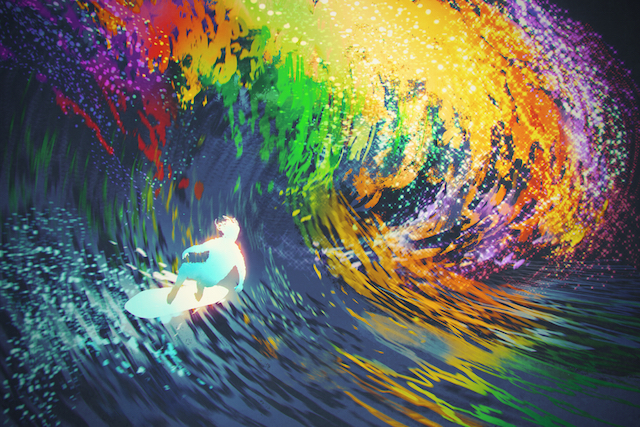
    6. Choose who you spend your time with today. Hang out with “Radiators” who emit enthusiasm and positivity, and not “Drains” whose pessimism and negativity robs energy.

    7. Stroke a pet. If you don’t have one, go to the park and find one. (Ask first!)

    8. Get positive feedback. Ask three good friends to tell you what they love about you.
    9. Make a small connection. Have a few sentences of conversation with someone in customer service such as a sales assistant or barista.

    10. Splurge a little. Buy a small luxury as a way of valuing yourself.

    11. Have a self-date. Spend an hour alone doing something that nourishes you (reading, your hobby, visiting a museum or gallery, etc.)

    12. Exercise a signature strength. Think about what you’re good at, and find an opportunity for it today.

    13. Take a home spa. Have a long bath or shower, sit around in your bathrobe, and read magazines.

    14. Ask for help—big or small, but reach out.

    15. Plan a two-day holiday for next weekend. Turn off your phone, tell people you’ll be away, and then do something new in your own town.

    Little and Often Wins the Day

    With a little bit of attention to your own self-care, the fog will lift.

    You’ll feel more connected to yourself and the world around you.
    You’ll delight in small pleasures, and nothing will seem quite as difficult as it did before.

    Like that car, you must keep yourself tuned up to make sure that you don’t need a complete overhaul.

    Incorporating a few of these tiny self-care ideas in your day will help keep you in tune.

    Which one will you try first?

  • Why I Never Fit in Anywhere and the One Realization That’s Changed Everything

    Why I Never Fit in Anywhere and the One Realization That’s Changed Everything

    “Don’t force yourself to fit where you don’t belong.” ~Unknown

    When I was young, I was a real daddy’s girl. He was so proud of me and took me everywhere with him.

    When my parents got divorced and my dad moved away to start a new life with a new family, I didn’t understand why he left, as I was still a child. I thought that he didn’t love me anymore. I felt abandoned and rejected. Perhaps if I’d been better behaved, prettier, cleverer then he wouldn’t have left me?

    Until recently, I didn’t realize the impact that this has had on my adult relationships.

    Because I fear abandonment and rejection, I’ve struggled to fit in and make friends.

    I had a relationship with an older man who was very similar to my dad. I hoped that he would provide me with the love and affection that I didn’t get from my father and would heal my wounds. However, while things started off great and I thought I had found the one, since the relationship felt like home and was so familiar, he was actually emotionally unavailable, just like my dad, and unable to commit.

    When he started to pull away, this triggered my insecurity. This caused me to pursue him more, as I desperately wanted this relationship work.

    I tried to change myself into what I thought he wanted. I became clingy and jealous, which only drove him further away. When the relationship finally ended and he found someone else, I couldn’t understand why he could love her but not me. What was wrong with me? It confirmed my greatest fear, that I was unlovable and unwanted.

    This pattern continued to follow me in my relationships, which left me feeling more unloved and rejected.

    So I threw myself into my career. I had done well academically, however, I struggled to fit in and make friends there too.

    I was good at my job, but I didn’t feel valued or appreciated and I was often ignored, excluded, and ostracized by my fellow team members. My workplace became a toxic environment. I was bullied, which led to anxiety and depression, and I couldn’t face going into work. Eventually I was let go, as they said I could no longer do my job.

    Since my identity was tied up with being a successful career woman, when I no longer had a career, I didn’t know who I was. What was my purpose in life now? I was at the halfway stage of my life with no family of my own and no job. I took everything that other people had said and done to me very personally.

    I shut myself away at home. I didn’t go out or socialize. I was on medication for anxiety and depression, and I just wanted to stay in bed. What was the point of getting up? I was worthless, I had no value, no one wanted me, I didn’t fit in anywhere. I couldn’t love myself, as others didn’t love me. I had no self-esteem and no confidence to try to start again.

    I had therapy, read lots of self-help books and articles, and did guided meditations. Although I could relate to everything, I struggled to apply the things I had learned to myself.

    As I spent time alone, listening to relaxing music, I had a lightbulb moment. I couldn’t see straight before then because I was so emotional. However, I am naturally a very logical and analytical person, and good at solving problems, which is why I was good at my job.

    The idea came to me that if I took the emotions out of my issues, then I could see them in a logical and rational way and try to solve them like any other puzzle.

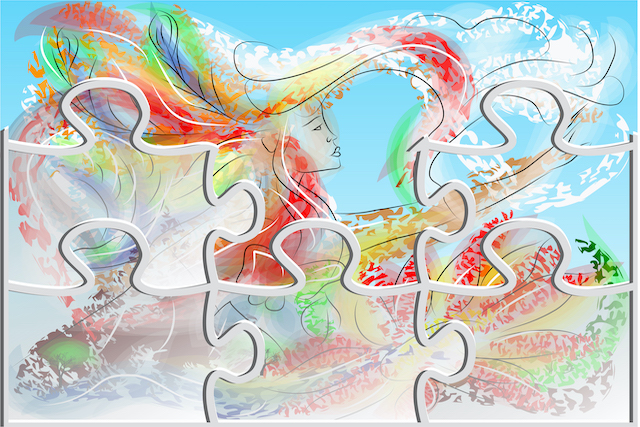
    And then I thought, what if I saw my whole life as a jigsaw puzzle? It’s a perfect analogy, really, since my lifelong struggle has been fitting in.

    Visualizing Our Lives as Jigsaw Puzzles

    Each of us start with just one piece—ourselves.

    When we start the puzzle at birth, it is easiest to join the first two pieces together—ourselves and our family.

    As we grow up, we try to find other pieces that fit—friends, romantic relationships, jobs. We may be lucky and find other pieces that fit perfectly straight away, but more often than not we struggle to find the right pieces, and in our frustration, we may even try to force two pieces together that don’t actually fit. However, if we do this, we find over time that none of the other pieces seem to work together.

    No matter how much time we have already invested in this ill-fitting piece—be it an unhealthy relationship or a job that doesn’t align with our purpose and values—we will eventually realize that we have to accept reality and remove the piece that we tried to force to work. This is the only way to make room for a new piece that will fit perfectly into place. A piece we won’t even try to find if we’re too attached to the one that doesn’t fit.

    This doesn’t mean there’s something wrong with us, or the other piece we tried to force to fit, which means we don’t need to blame ourselves or them. We simply need to recognize we don’t fit together, and then learn the lessons we need to learn to stop repeating the same patterns.

    This also doesn’t mean that we made a mistake with the ill-fitting piece. Every time we try to make the “wrong” things fit, we learn the value of taking our time to find the right piece.

    Sometimes we learn that we need to focus on another area of the puzzle first—if, for example, we realize we need to take a break from relationships so we can build up our self-esteem and learn to love ourselves first.

    And sometimes when we’re having difficulty with one section of the puzzle, like love, we recognize that we need to focus on a different area instead, where it might be easier to find the right pieces—like our career or social life, for example.

    When we connect with like-minded people who have similar hobbies or interests and enjoy our company, we feel better about ourselves and start to realize how great we truly are.

    If we change jobs to something we love, that shows off our strengths and enables us to succeed, this improves our confidence and helps us realize that we’re good enough and we do add value.

    Once we become happier with ourselves and other areas of our life, we’ll send out more positive vibes into the world and attract the right kind of people. And we’ll have enough self-worth to recognize people who are not right for us and not waste our time.

    If we don’t do these things, we may complete the puzzle, with all the elements of our life neatly in place and find that we have a piece left over. That piece is you or me, and it doesn’t fit because it was in the wrong box and never meant for this puzzle.

    That was why we struggled to fit in—we chose things in all areas of our lives that were never right for us. So the problem wasn’t us, it was where we trying to force ourselves to fit.

    It may feel daunting to start over, but when we find the right puzzle we belong to, everything stops feeling like a struggle because we slot easily into place. We will end up with a different picture than we originally imagined, but it will feel much better, because our piece will finally fit.

    Where Am I Now?

    After spending half my life struggling to fit in and complete my jigsaw puzzle, I have realized that I am the piece left over, and it’s now time to start again and find the right puzzle that I belong to. This time, I’m starting with the most foundational pieces first—self-love, self-confidence, self-worth.

    There was never anything wrong with me. I just needed to recognize my patterns so I could stop trying to force things that weren’t right. I know my pieces are out there. And so long as I let go of the wrong ones, I know, in time, I’ll find them.

  • If You Want Closure After a Breakup: 6 Things You Need to Know

    If You Want Closure After a Breakup: 6 Things You Need to Know

    “We eventually learn that emotional closure is our own action.” ~David Deida

    When my last relationship ended, I didn’t really understand why. After eight years together and still feeling love for each other, my partner walked away saying he didn’t feel able to commit.

    He didn’t want to work on the relationship because he felt that nothing would change for him. So, I had no choice but to let it end and do everything I could to pick myself up from deep grief, intensified by great confusion.

    Now, over a year later, I still cannot give you a definitive reason as to why we broke up. I do still think about the breakup and occasionally it can bring up emotion, even now.

    But these days, instead of that burning need to understand and make sense of it, I have a more distanced curiosity when I think about the reasons we ended. I think this might be that elusive state we call “closure.”

    This reflection led me to explore what closure means: why we strive for it and why it feels so hopeless when we think we can’t reach it. Do we ever truly have it and where does it come from?

    What is Closure?

    When we say we want “closure” at the end of a relationship, what do we actually want?

    I have discovered that when people talk to me about needing closure, what they generally tend to mean is that they want answers and understanding about why things ended the way they did.

    Heartbroken people often believe that they will get the closure they so desperately desire, if only they could make sense of why. They expect that this knowledge will help them stop the overthinking and relieve them of their painful emotions.

    I used to believe this too, but experience from my previous crushing divorce taught me it doesn’t work like that. Closure must come from within because if you look to your ex or anywhere else to find it, you will be left frustrated and helpless and you will prolong your healing process.

    So, let’s look at some truths about closure that explain why it has to be an inside job:

    1. Your ex’s responses will lead to more questions.

    At the point of my breakup, my ex and I had a couple of conversations that involved me doing a lot of asking why, but not getting many answers. He couldn’t really explain; he told me “It’s not you, it’s me,” and when someone gives you that as their reason, there is nowhere you can go with it.

    For the person leaving it probably feels like the best way to end it. But for the person left, it’s deeply unsatisfying, and our natural tendency is to desperately ask more questions: “What’s wrong?” “Can I help you with whatever you’re going through?” “Can we fix it somehow?” “Can we at least work on it?”

    It’s important to know that when we are still in love with someone, nothing they can say will us give closure. The answers will never feel enough, they will only lead to more questions and more longing.

    2. “One last meeting” extends the pain.

    If there is still communication after a breakup it’s tempting to ask for one last face-to-face, to help you understand and gain the closure you seek. But for all of the reasons above, this will not help.

    A meet-up is often an excuse to get in touch because the ending feels too painfully final. Sometimes there’s a veiled hope that by seeing them for “one last talk” they may rethink or have doubts about leaving.

    Nobody is ever wrong for seeking closure this way, but before deciding to meet, check whether you are really hoping for reconciliation. Consider how your pain might be prolonged if you don’t get it.

    3. Your closure can’t come from their truth.

    You cannot rely on the words of the person who broke your heart for your own closure. Not because they are being deliberately dishonest (except for specific cases when they are), but because there is never just one truth at the time of the breakup.

    The answers you receive from your ex may bring you a little bit of understanding or peace at first. But if you depend on them for your closure, and then the reality shifts, it can set you back and bring even more pain.

    I allowed myself to feel deeply reassured by my ex’s assertion that he left because he needed to be by himself. So, when he told me two months later that he was dating again, it left me utterly devastated because I had allowed my peace of mind to come from his words and not my own healing. I had believed “It’s not you, it’s me,” then felt the gut punch that it actually was me.

    However, as I started to move through the healing process, my growth allowed me to shift my perspective on the meaning I gave to this revelation. I learned to reframe the deep feelings of rejection to create my own, more empowering, understanding of why we ended.

    You cannot cling to reassurance from someone else’s truth or explanations, because they will not hold lasting meaning for you. Your closure will only have a strong foundation if it comes from your own truth.
    4. Moving on should not be conditional.

    You disempower yourself when you believe that you can only get closure via your ex-partner. In doing so, you are effectively allowing them to say whether it is okay to move on.

    If you require an apology, changed behavior, an explanation, empathy, forgiveness, or anything else from them before you can move forward, what happens if those things never come? Are you okay with potentially spending years waiting for someone else to fix your pain?

    Whatever your ex-partner tells or withholds from you, however they acted back then, whatever their current situation or future behavior, is far less relevant than your response to any of these things.

    Your ability to gain closure is unconditionally within your control, and it becomes far easier when you stop focusing on your ex.

    5. Closure is not passive—what you do counts.

    We have a common understanding that “time heals a broken heart.”

    While it’s true that the intensity of grief emotions can lesson over time, what really makes a difference to your speed of moving on, is how willing you are to do the inner work to change and grow.

    As you gain closure, you’ll notice you are no longer so emotionally triggered by the same external situations. However, this doesn’t happen because anything out there is different; it’s because you are different.

    When you learn to heal an internal wound, shift your perspective, and change your responses to events, you gain peace from the inside. This is not dictated by time; it’s up to you how soon you want to make these changes.

    6. Closure is not a one-time event.

    There is a misconception that closure is something we finally “get.” The word itself implies that it’s a conclusion to everything related to the breakup. Because of this belief, we find ourselves constantly wondering when we will “have it.”

    Instead, if we see it as a process rather than a one-time event, it takes the pressure and expectation away from reaching this end goal. Creating closure is a continual journey of self-awareness, learning, and checking-in on our progress. We don’t just wake up one morning with a clean slate for a new life.

    Reframing closure this way also relieves us of judgment about how we should feel. It’s common to regard new emotional triggers, after a period of good progress, as unwelcome. They are negatively seen as a sign of a setback, but they are just highlighting where we still need a little more healing.

    Allow Yourself Achievable Closure

    The way we view closure matters. Compare the statement “I’m gaining closure every day” with “I don’t have closure yet.” You know straight away which feels kinder, more healing, less self-judging.

    I recently asked people what closure looked like to them, and I found that most believed that it is something you reach when you no longer think about or have emotions around your breakup.

    I wonder how realistic this thinking is. Perhaps it’s healthier and more attainable to claim we have closure, not when our thoughts and feelings have completely gone, but when they no longer have power over us.

    In my experience, becoming at peace with your breakup ultimately comes from healing through growth, and choosing to focus on what is within your control. This is the kind of closure that doesn’t come from an ex-partner, a rebound relationship, or any other external source. When you gain closure this way, it cannot be taken away from you.

  • The Key to Helping a Person Who Is Depressed

    The Key to Helping a Person Who Is Depressed

    “Don’t look for someone who will solve all your problems. Look for someone who won’t let you face them alone.” ~Unknown

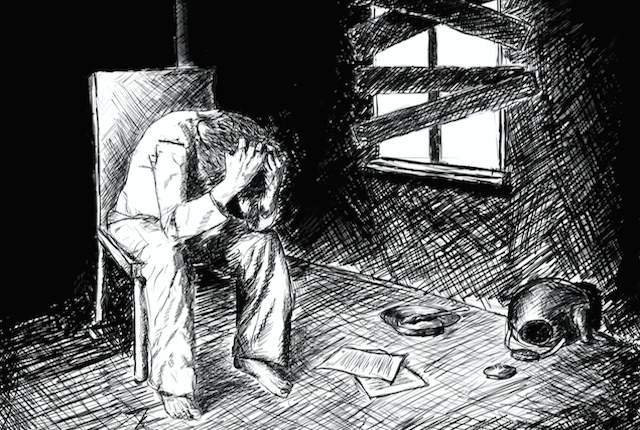
    Depression for me is like constantly walking up a hill.

    Most of the time the hill has only a one percent gradient. You can hardly even tell it’s a hill. I walk, run, jump, skip along, doing cartwheels and stopping to smell pretty flowers and listen to bird-calls; it’s sunny and warm, with clear blue skies.

    Even though I have to put in a little bit of effort to walk up, times are good.

    And then something happens in my life, like I lose my job, I have to move, or I’m having ongoing arguments with my partner, and my hill starts to get a bit steeper.

    It’s still reasonably easy climbing, but it takes a little more effort. It gets a bit darker around me, like the sun has just gone behind the clouds. But it’s fine. I can do it.

    And then some other things happen, like I’m feeling stressed out because it’s exam time, and I call my friend to hang out but she doesn’t have the time, and I injure myself and can’t do my usual activities anymore—and my hill gets even steeper.

    And then all of a sudden, almost without me realizing it, I’m on hands and knees, crawling up this really steep hill.

    It gets kind of dark around me, and pretty windy, like a storm is brewing. The temperature drops, I get goosebumps. But I don’t look at the darkness around and behind me. I am still aiming for the spot of brightness at the top. I know I’ll get there soon.

    I struggle to make eye contact with people, go out to social events, or call friends back, because I’m so focused on just making it up the hill.

    And then some other things happen, like I get a virus, or someone I love dies. And then my hill is so steep it’s like climbing a ladder, but slippery and made of grass and dirt and rocks.

    I freak out a little bit now, because it’s really hard! I’m scared of falling, but I still keep trying, to keep going up. Even though I’m barely moving.

    I can’t talk to you. It’s like I retreat right into the depths of my mind, and I can’t connect with anyone. I really need all my concentration not to fall.

    And then it starts raining. Really heavily. It’s become pitch black, like the middle of a moonless night. It’s still crazy windy. I try to grab a tuft of grass, to hold on to something, anything. But it’s slippery and wet, it slides through my grasping fingers, and I fall.

    And I fall, down the hill; sometimes not so far, sometimes a long way before I can grab a hold of something and stop myself. And I’m scared. Because that far down the hill, it’s dark, it’s rainy and stormy, and I feel so alone.

    And at that point, people around me—my friends, my family—get frustrated with me. Because I’m crying all the time, at this point. (Wouldn’t you, stuck in a storm in the dark?).

    People think they need to, or they think I want or expect them to, fly down on a helicopter, throw me a rope, and haul me straight back up to daylight. Fix me. Save me.

    I can understand people wanting to do that, because you know, I would like it to be that easy. It would be nice. But no one can do that for me. It’s my hill. I have to climb it—myself.

    And what is so comforting, at this point, is someone to just climb next to me. That’s all I want.

    Just someone to sit it out with me, dry my tears and hold my hand, and give me words of encouragement and feed me occasionally, while I start to make the trek back up from so far down.

    Because it’s a whole hill I have to walk up! It’s really steep that far down! It’s going to take me a little while. It’s hard for me to even remember what it feels like to be near the top.

    But I’m trying, I’m forever climbing, and eventually I do get back up to the daylight, where it levels out and it’s not so steep and hard at all.

    Though it can be tough climbing next to me, because when I’m down I’m inclined to do things like cry or ignore you or get angry with you over nothing, its worth it! Because when I get back up and I’m skipping along in the sunshine, I’m a really great person.

    If you have someone in your life that’s struggling up their own hill in the dark, could you not worry about fixing them and instead just offer to be there with them? Sometimes that’s the most meaningful thing.

    Depressed woman image via Shutterstock

  • 40 Reasons You’re Amazing and Worth Appreciating

    40 Reasons You’re Amazing and Worth Appreciating

    I’m willing to bet that most of us spend far more time focusing on what we aren’t than appreciating who we are. We home in everything we think we lack and then feel bad about ourselves, when there’s actually a lot to celebrate if we take the time recognize it.

    It’s partly a byproduct of our time: We’re constantly inundated with pics and stories narrating everyone else’s lives, when really, they’re just highlight reels. They’re the filtered, photoshopped version of lives as messy and imperfect as ours.

    And regardless of where they pose, what they wear, or what they’re doing there, all those people, they’re just like you and me. They’re sometimes confident, sometimes insecure, and they often need to be reminded that they’re worth loving, and doing better than they think.

    So, if, like me, you’re a perfectionist, or you’re just hard on yourself sometimes, sit back, relax, and consider all these reasons you’re amazing and worth appreciating.

    Your Strength

    1. You’ve survived every challenge life has thrown at you, and there have been a lot.

    2. You’ve done your best in every situation, based on where you were at that time in your life, where you’ve come from, and the resources at your disposal.

    3. You’ve acknowledged and worked on weaknesses—maybe not always, and maybe not without some resistance. But you’ve made progress countless times when it would have been easier to stay stuck where you were.

    4. You’ve risen back up after failure and rejection. You could have given up when you were laid off, or passed up for the job, or told “It’s not you, it’s me…,” but you licked your wounds, got through it, and put yourself back out there instead.

    5. You’ve forgiven, the ultimate test of one’s strength. You may not be ready to forgive everyone who’s hurt you, but you have done it before, even though it was hard.

    6. You’ve apologized. It’s not always easy to admit mistakes, but you’ve done it. You’ve owned your part, acknowledged pain caused, and vowed to do better going forward.

    7. You’ve tried things outside your comfort zone, whether that means taking a new job overseas or saying hello when you would have preferred to stare at your feet.

    8. You’ve faced a fear at some point. It may have seemed small to you, but any time you do something that scares you, it’s huge!

    9. You’ve adapted to change, often without having chosen it, and have grown through the experience.

    10. You’ve solved problems that could have crippled you and have helped other people with their problems while grappling with your own.

    Your Kindness

    11. You have good intentions. You might think you sometimes do the wrong things, but your heart’s generally in the right place.

    12. You’ve made someone feel appreciated, and maybe many someones, by acknowledging their efforts and thanking them for what they’ve done.

    13. You’ve made someone’s day, probably without even realizing it, by listening, understanding, or simply being thoughtful and kind.

    14. You make people laugh—maybe even at your laugh, because you cackle or snort or sound like Beavis. (Too young for the reference? Google it!)

    15. You look out for the people you love. When you say you care, you mean it, and you back it up with actions.

    16. You smile at people. It might seem insignificant, but your smile has likely been someone’s lighthouse on a dark, scary day.

    17. You remember the important things—or at least some of them. That “Happy birthday” card or call or text? It was a simple acknowledgement that helped someone feel valued and loved.

    18. You ask people how they’re doing. You might not always get an honest response, but you’re willing to receive it.

    19. You treat people how you’d like to be treated more often than not. Sometimes you slip up—you’re only human, after all! But you do your best to be a decent human being who treats other people with respect.

    20. You’ve given second chances when you knew someone really needed it.

    Your You-ness

    21. You have many positive qualities, whether you realize it or not. Maybe you’re adventurous or brave or creative or dependable—or all of the above. You could probably go through the whole alphabet and list twenty-six amazing qualities for each letter that you possess. (Or at least twenty-five—X is tough!)

    22. You’re passionate about something, whether it’s your work, a hobby, a dream for the future, or your family, and that passion is both admirable and contagious.

    23. You have unique quirks that make you interesting, endearing, and fun to be around. Maybe you have a passion for Steampunk, or you talk to your plants, or you collect something weird, like umbrella sleeves.

    24. You have eclectic taste and have likely introduced other people to many things they’ve come to enjoy—bands, movies, books, restaurants, the list goes on and on.

    25. You’re beautifully messy, like all human beings, and your emotions give you empathy, depth, and many other gifts you may not even recognize.

    26. You’re creative in your own way—everyone is! Maybe you bake or write or make cool things out of wine corks or scrabble pieces or rocks.

    27. You have your own kind of smarts—book smarts, street smarts, emotional intelligence, maybe even all three.

    28. You have a voice that has soothed someone, even if it sounds like Sofia Vergara’s, simply because it’s yours.

    29. You are physically a work of art. Seriously. Our culture has long promoted a one-size-fits-all definition of beauty (though, thankfully, that seems to be changing), but there’s beauty to be found in every unique combination of body and facial features. Big noses, asymmetrical eyes, crooked smiles—every last of one of them, beautiful!

    30. You are mentally fascinating. Just think of all the outlandish, complex, crazy thoughts that go through your mind each day.

    Your Journey

    31. You’ve amassed a vast assortment of experiences that have given you insight and a unique perspective. No one else sees the world exactly like you!

    32. You’ve healed and grown through all your ups and downs, becoming stronger and wiser every day.

    33. You’ve done some interesting things in your time. If our lives really do flash before our eyes before we die, yours definitely won’t be boring!

    34. You’ve learned what matters to you throughout the years, and you’ve tried your best to honor those things.

    35. You’ve started over when it was hard, whether it was a new direction, a new job, a new location, or a new relationship.

    36. You’ve found and/or created opportunities for yourself, and possibly in fields that aren’t easy to break into.

    37. You’ve adulted: you’ve fed yourself, done laundry, cleaned your house, paid your bills, and done countless other responsible things—often when you would have preferred to lie under a blanket fort eating cereal from an oversized bowl.

    38. You’ve built a treasure chest of amazing memories through the years, and you recognize them for the gold they are.

    39. You’re the co-star in many other people’s favorite memories.

    40. You’ve made it to where you are right now. And here you are, strong, kind, uniquely you, and worth celebrating.

    So there you have it, all the reasons you are absolutely amazing, every last one of you. Have anything to add to the list?

  • How to Get Out of Your Head and Show Up for Your Life

    How to Get Out of Your Head and Show Up for Your Life

    “If you think there’s something missing from your life, it’s probably you.” ~Robert Holden

    Most people would agree that thinking too much can cost you your peace, your happiness perhaps—but your life? Surely that’s a bit of an exaggeration.

    I’ll explain with a story.

    I remember taking my daughter to the park one day when she was around three years old. Like all kids of that age, she was thrilled and mesmerised by her surroundings—the insect crawling up the blade of grass, the ducks squawking in the pond, the dog chasing the frisbee nearby.

    She was fully engaged with the life around her—fully present in the moment.

    All of a sudden, she pointed up to the sky and shrieked, “Airplane!”

    Her shrill voice snapped me out of my reverie and, looking up at the plane high above us, I became aware of my surroundings for the first time.

    I noticed that we’d actually arrived in the park. Although my body had been there for several minutes, I had just arrived.

    Prior to that, I was a million miles away, deep in thought about something or other, totally oblivious to my surroundings.

    Life is always happening now, but, distracted by our thinking minds, we fail to notice.

    Your Body Is Here—Where Are You?

    As soon as we wake up each morning, the mind TV automatically switches on and starts broadcasting our familiar programs.

    And through habit, we give it our full attention. We find the mind’s content way more compelling than the life around us.

    My days used to go something like this. Maybe you can relate?

    I’d be gulping down breakfast and thinking about my to-do list for the day or how the traffic was going to be on the way to work. The next thing I knew, I’d be staring down at the empty cornflakes bowl in front of me, with no recollection of having eaten it.

    I’d totally missed out on the wonderful taste and texture of the food in my mouth, not to mention the warm sun streaming in through the window and the beautiful song of the skylark outside.

    The body would then be driving the car to work while I was busy replaying the conversation I’d had with my sister the night before, missing the clouds, the trees, and the beautiful sky along the route.

    Next thing I knew, I’d be pulling into the car park at work, with no recollection of having driven there.

    The body would then be sitting at its desk, but again, I was somewhere else—counting the days until the weekend or making plans for our next holiday.

    Robert Holden, director of The Happiness Project, sums it up beautifully with these words:

    “If you think there’s something missing from your life, it’s probably you.”

    The Past and Future Have No Life of Their Own

    Being lost in past and future mind-movies pulls our attention away from the present moment, away from life, away from reality.

    The past and future have no reality of their own. What happened yesterday or what may happen tomorrow exist only as ideas in your head.

    The moment is always fresh and alive. The movies that play in our heads are old and stale. They are devoid of life.

    Thinking too much costs you your life.

    When we spend too much time lost in our thinking minds—rushing from one appointment to the next—life, which is always happening now, flashes by unnoticed.

    The days, the weeks, the months, the years all blur into one, as the preciousness of each living moment is lost to a lack of presence.

    We’re left wondering where all the time has gone and why we feel so dissatisfied, unfulfilled, and disconnected.

    Taking time to be more attentive to each new moment as it arises is the key to experiencing more peace, connection, and aliveness, regardless of what is going on in your life or what you believe it should look like.

    When we are absorbed in the present moment, contentment happens by itself. We need not look for it. It is a by-product of being present.

    Out of Your Head and Into Your Life

    So how do you get out of your head and back into your life?

    Present moment awareness is key. This is where life hangs out!

    And the good news is that, because the mind can only be in one place at a time, you don’t have to actively try to stop thinking. Bring your attention to the present moment and thinking will stop automatically.

    To my mind, mindfulness practice is the simplest and most effective way to achieve this.

    Although I had been practicing and teaching other forms of meditation for many years, I became curious to learn more about the mindfulness approach and signed up for an eight-week course.

    During the course, there was one particular exercise, “walking meditation,” that had a lasting impression on me.

    As we walked slowly and silently through the lush gardens of the retreat center, we were invited to be attentive to the present moment—to feel the ground beneath our feet and pay close attention to every little movement and sensation in the body, as we mindfully placed one foot after the other.

    We were instructed to give our full attention to each of the senses, one by one.

    This is what I wrote in my journal afterward:

    “Being attentive to the intricate patterns and colors of the leaves, the spider busy at work on its web, feeling the texture of the grass under the soles of the feet and the gentle breeze on the skin, smelling the soil, the herbs, the fragrant moss, listening to the gentle crackle of twigs underfoot and the rustle of the wind in the trees—transformed what, at first sight, appeared to be a lovely garden, into Narnia, the magical kingdom!”

    It is both astonishing and humbling to really notice the enormity of what is going on around us and within us in every moment—when you pay attention.

    The wondrous transformation of the garden happened through a shift in attention alone. Nothing new or different appeared on the outside. Everything was exactly as before.

    And we can bring this quality into every aspect of our lives.

    We are normally so distracted by the thinking mind that we fail to notice the immense richness that is present all around. Being attentive to the fullness of what each moment contains, as children are, naturally instils a sense of wonder and joy within.

    Our True Home Is the Present Moment

    I’ll finish with these beautiful words about walking meditation from Buddhist mindfulness teacher, Thich Nhat Hahn:

    “Walking in mindfulness brings us peace and joy and makes our life real, enjoying peace in each moment with every step. No need to struggle. Enjoy each step.

    When we practice walking meditation, we arrive in each moment.

    Our true home is in the present moment. When we enter the present moment deeply, our regrets and sorrows disappear, and we discover life with all its wonders.

    Breathing in, we say to ourselves, ‘I have arrived.’ Breathing out, we say ‘I am home.’ When we do this, we overcome dispersion and dwell peacefully in the present moment, which is the only moment for us to be alive.”

    When the mind is quiet, we are able to engage directly with life, as children do. When we really pay attention to the richness of the present moment, we become enthralled with life, as children are.

    Too much thinking will cost you your life.

  • Dear Estranged Adult: You Are Strong and Worthy of Love

    Dear Estranged Adult: You Are Strong and Worthy of Love

    Dear estranged adult,

    What I want you to remember is that it was never really about you, although it might have felt like it at the time and it might feel that way now.

    When your parents told you over and over you weren’t good enough, that you would never amount to anything, they were just projecting their own feeling about themselves on to you because deep down, they do not feel they are good enough and don’t believe they have amounted to anything.

    Maybe these feelings were passed down from their parents, or maybe your parents have regrets about their lives that they transfused on to you, but these reasons are not that important. Not as important as that fact that what was said to you, what was done to you, was never your fault. It was not about you.

    You were always good enough; you were always going to amount to something. and that might have threatened them. No one is born unlovable or unworthy of love, no one.

    Over the years I have learned that people’s words, actions, and beliefs have very little to do with me and are more about themselves.

    As people interact with others, they project how they think, what they believe, and how they feel on to others. In fact, we all do this, even you and I do it. But what sets us apart is the fact that we can reflect on how our actions and words impact others. We can see the world from our own perspective and can also understand how others might see it.

    If you grew up in an environment like mine, you were taught the incorrect belief that how others see things and how others see you is more important than how you see yourself. You were likely taught to put your own thoughts and feelings aside and instead engage your parents’ thoughts and feelings.

    In some cases, you might have mistaken their thoughts and feelings as your own. You might have heard their voices in your head over and over, and you might have found yourself saying their words.

    Over time, if you were at all like me, you began to experience dissonance with what your parents told you, and you began to connect with your own ideas, thoughts, and feelings.

    In some cases, you might have felt doubt about your ideas, and you might have tried to suppress them. In other cases, you might have found yourself on a teeter-totter between your thoughts and their paradigms of you on the other side. But either way, you found your truth, and even though it caused you pain you found your voice.

    As you found your voice you found yourself and started to speak your truth. As you started to speak your truth you were told over and over “But they are your parents, they love you, you can’t cut them out, you can’t let them go. They are getting older, they need you.”

    In your heart you know the truth, but because you were taught to listen to and believe the voices of others you questioned yourself and tried over and over to reconcile. With each attempt to fix a broken relationship, your heart ached until you knew you could not take it any longer. You had to listen to your own voice, or you would break.

    You likely wrestled with guilt and you might feel guilty now. If you are struggling with guilt over going no contact with your parents, let me ask you a few questions:

    How do you feel after you have interacted with your parents in any form? Be honest with yourself.

    Do your parents respect your boundaries?

    Is there healthy reciprocity in the relationship?

    Do you feel you can be who you are, and state your truth without judgment?

    Do you feel respect or love or acceptance from your parents?

    If the answers to these questions are painful, know in your heart you have made the correct choice for you. You have made the choice that is best for your health and well-being.

    Now here you are, an estranged adult child. You are navigating the world without connection to your family of origin. You might be stronger than you have ever been, in some cases happier, healthier, and more confident then you have ever been.

    Every day you confront the childhood trauma that brought you to this choice with clarity, resolution, and strength to work through it.

    You might have done things you did not know you were capable of doing; you might have built a supportive family of your own and/or helped others in the ways you needed help. You might be taking small steps every day to live as your best self. Take a moment to celebrate that!

    You have done something that no one should ever have to do, you have made one of the most painful choices you will ever have to make, and you have been misunderstood by so many—and yet you remain strong. You remain true to yourself and your story!

    Maybe you are desperate for people to understand your story, to validate your lived experience. You might long for your parents to say that they are sorry for the pain that they have caused you. I know because I have felt and longed for these things, but the truth is you don’t need these things.

    You might question why. Why will my parents not understand the pain they have caused me, say they are sorry, and love me the way I have needed to be loved all my life?

    I wish I had an answer that would satisfy these questions and somehow take away that pain. The best answer I can come up with for you and for myself is that some people are not ready to accept that they are the villains in your story, and they might never be. Rather than reflect on what you have asked, they lash out, desperate to protect their narrative as kind and loving parents.

    Parents often don’t want to experience any cognitive dissonance, or things that cause them to question who they believe they are as parents and as people. This may be why you do not get the validation you deserve. The truth is, you don’t need that apology you might never get, and begging and pleading with them to validate your truth is likely hurting you.

    Some people will never understand you; some people will hurt you in more ways than you can imagine, and they’ll walk away as if it was all your fault or as if nothing ever happened. This is about them; it’s not about you. You know your story and you are prepared to own it. You are living it despite adversity. and I am proud of you for that.

    Please try not to focus on those who don’t understand, don’t try and convince them to see it your way. You will be better off emotionally if you abandon those fruitless efforts. Sometimes people can only understand what they themselves have lived through.

    If your friends or extended family grew up with supportive parents, they might not even be able to picture what you went thought, and that is okay. Instead, try to surround yourself with people who do understand and do your best to validate your own lived experiences. Write or record notes about your experiences, and when you start to question yourself, look back at these and self-validate. This helped me when I questioned myself, and I still do this today. I know this is not easy.

    Take time to celebrate you, because you deserve it. You have discarded the story your parents tried to write for you, and you have started to write your own. You have walked away from abuse and adversity in a society that sees you as the problem, and you continue to stay strong every day.

    Tell your story, live your truth, and never be ashamed of the painful choice you had to make. The abuse and the way you were treated was never about you, it was about them. You have virtues, insights, and values. You are lovable and you deserve to be celebrated and loved for the person you are and the person you are becoming. You are not alone.

  • How to Love Yourself and Break Your Relationship Patterns

    How to Love Yourself and Break Your Relationship Patterns

    “And still, after all this time, the Sun has never said to the Earth, ‘You owe me.’ Look what happens with a love like that. It lights up the sky.” ~Rumi

    I grew up believing love was conditional. My grandmother, as much as I adored her, was extremely controlling, and unless I met her high standards of behavior and gave her a certain level of attention, she treated me with coldness.

    Whenever she disapproved of my behavior, she would tell me, “I love you, but I don’t like you.” As if she had a switch she could turn on and off that stopped or started the flow of love from her heart.

    When I was in her good graces, she gave me the world.

    After my grandfather passed away, I provided her much support and attention. As such, she became very loving and generous toward me. Helping me pay off my credit cards, gifting me valuable pieces of her jewelry, praising me on my accomplishments. It felt amazing to be loved by her. But this kind of love based on conditions is not sustainable.

    Eventually I fell out of her favor, and the switch turned off once again. The flow of love stopped. This pattern continued until she passed away a few years ago.

    I do not fault her or claim to be a victim, as I understand she learned this behavior from her own mother, and it was passed down for generations. Even more devastating, she grew up in Nazi Germany, where her family was prosecuted for being Jewish. These are deep multigenerational wounds that need healing.

    As an adult I am aware enough to break this inherited cycle. I recognize how I have repeated this pattern in my own relationships.

    I am very nurturing and giving to others. This is my love language and it feels good to give. However, when a relationship ends or the flow of love stops, I feel those old emotional wounds resurface.

    When the love I attempt to give is rejected this causes me much pain and distress and makes me question my own value. I make it mean something about myself, as I did with my grandmother. That I’m not enough, worthy, or lovable.

    I have also withheld love and affection toward others when I have felt vulnerable or hurt. We mirror for one another the parts of ourselves we reject, the parts of ourselves that need healing.

    I’ve recognized that the only way to break my unhealthy relationship patterns is to work on healing my emotional wounds and develop love for myself.

    How can we cultivate self-love and change our relationship patterns?

     1. Become the observer.

    The first step to breaking down the barriers that impede self-love is through awareness of our thoughts. By observing our thoughts, we can begin to identify our own destructive patterns and shift our thinking. As Buddha said, “All that we are is the result of what we have thought. The mind is everything. What we think we become.” Our thoughts become our words, our words become our actions, and our actions become our life.

    So often we stand in our own way. By living in our own personal dramas. Through our stories and conditioned thought patterns. By our inability to see things as they actually are. So many of these barriers exist in our own mind.

    In order to become more aware of our thoughts we need to carve out space to simply be still and watch them. Meditation and mindfulness are powerful tools to develop awareness.

    If we want to take it one step further, we can write down the flow of thoughts, and from this space we can see the often-ridiculous nonsense our mind produces. The more space we have from our thoughts, the more we can find peace within ourselves and can choose where to direct our energy.

    2. Find ease in your aloneness.

    I find it extremely unconformable to be alone. I have this irrational need to be in constant communication with others, yet at the same time, when I feel I am being stifled or overwhelmed, I have an intense need to retreat and go within.

    Then often when I am alone the negative thoughts and questions of worth resurface. My mind replays all the ways I have failed in my relationships and in my life. I become sad or angry or hurt as I put energy into these thoughts. It’s a toxic dance with my own thoughts and emotions.

    There is a difference between being alone and being lonely. Being lonely is where we feel isolated and disconnected from others and from ourselves. Being alone is being comfortable enough with ourselves to sit still in our own presence. To quiet the mind and simply be present with our breath.

    When we find ease in being alone with ourselves, we can move from a place of self-love rather than a place of need or insecurity. The more comfortable we become with ourselves, the more ease we will experience in our relationships, which will be founded on an open flow of mutual love and acceptance.

    3. See the love all around.

    I often ask myself why am I so concerned about the few people who treat me unkindly when love exists all around and within me.

    There are many instances in my life where I have been rejected, and I dwell on these relationships for weeks; meanwhile, my best friend or my puppy or a stranger on the street is demonstrating love toward me.

    When we focus on what is lacking, it closes us off to the flow of abundance always available—the love demonstrated in nature, the love pouring from other relationships in our lives, the love that exists in our own heart.

    When we shift our focus from what is missing and see what is right in front of us, we develop an increased level of awareness and attract like situations, relationships and experiences. 

    4. Practicing presence, trust, and surrender.

    The more present we become, the less we live in our minds and the more we move with the flow of life.

    We can always choose a higher path of acceptance. When we find ourselves in a situation or relationship that is not in our best interest, we can choose not to take things personally or make it mean something about ourselves. We can have enough self-respect to walk away from a relationship or situation that is not healthy.

    Trust is letting go and allowing the beauty of life to flow through us. If we could trust our path like we trust our own breath, that with each exhale a fresh inhale will come and fill us back up again, then perhaps it would be easier to let go.

    Releasing attachment, for me, is a regular practice, which is why I tattooed the word “surrender” in Sanskrit on my ankle as a daily reminder.

    One of my favorite books, The Mastery of Love, by Don Miguel Ruiz Jr., tells the story of the Magical Kitchen.

    The story goes like this: Imagine you have a magical kitchen. You have so much abundance and amazing food to eat that you generously share with everyone. Everyone eats at your house because your kitchen is overflowing with nourishment.

    Then one day, someone comes to your door and offers you pizza for life. All you have to do in return is allow them to control you. What would you do? You would laugh and say, “I don’t need your pizza! I have a magical kitchen, but come in and enjoy the food I have to offer!”

    Now imagine you are starving, and your kitchen is empty. You haven’t eaten anything substantial for days. Now someone comes to your house and offers you the pizza. And you are so starving you accept it, allowing them to control your life.

    All of our hearts are like the magical kitchen, though we forget or get cut off from the abundance of love in our hearts. We accept relationships and situations that are unhealthy for us because we are starving for love and affection. All the while our heart has an eternal flow of love that asks for nothing. We are full of abundance, and once we rediscover this universal truth, we will never be hungry again.

    The most important relationship in our life is the one we have with ourselves. If we want to attract people and situations in our life that are healthy and based on mutual love and respect, then we must heal our emotional wounds, change our patterns, and love all parts of ourselves without condition. Only then can true love flow in our life and our relationships.

  • 5 Positive Lessons from the Coronavirus Crisis

    5 Positive Lessons from the Coronavirus Crisis

    EDITOR’S NOTE: You can find a number of helpful coronavirus resources and all related Tiny Buddha articles here.

    “What is to give light must endure the burning.” ~Viktor Frankl

    The world is facing challenging times of crisis. Closed borders and travel bans, quarantine, shortage of food supply, scary news, and much fear. Viruses don’t care about our status, money, or fame, spreading from state officials to famous actors.

    Being a human right now is not easy. My thoughts are with those who lost a family member or a friend. I can’t imagine the pain of those battling mental or emotional illnesses during dramatic life changes. Some are struggling to put food on the table. Some lost their jobs. Some are alone and afraid.

    During turbulent times of stress, I feel worried, sad, and confused. Meanwhile, I show up every single day and do the best I can to help myself, my loved ones, and my community.

    I keep myself informed from reliable sources and stay away from negativity and drama. With all the toxic news imparted to us over TV and social media channels, it takes some inner work to keep ourselves balanced and calm.

    I know there are many things far beyond my control: earthquakes, tsunamis, the rain, the sunset, the stock market, political changes, economies that are going to collapse, this pandemic included.

    But there’s one thing I can surely self-manage, and that is my inner world: my actions, my thoughts, my emotions. The way I respond to whatever happens outside my inner space is totally up to me.

    There is much power in hope and faith. A positive mindset helps to boost our immune system with serotonin, the feel-good hormone. Feeling good keeps us healthy!

    I choose to believe we live in an intelligent universe where everything happens for us, not to us. There’s no breakthrough without a breakdown. I think we are all here, students at the School of Life, to learn from our experiences and get more resilient, wiser, and stronger.

    I’ve been asking myself this question:

    What’s the message life is trying to give us? What’s the blessing in disguise, the gain in pain?

    Here are five positive lessons I have learned so far from this global crisis:

    1. We have a lot to appreciate.

    “Your ancestors were called to war. You are called to stay on your couch. You can do this.” That’s what my Facebook newsfeed reminded me the other day.

    Oh, boy! That really helped to put things into perspective.

    A big thank you to the medical staff all around the world, those doctors, nurses taking care of the sick, facing sleep deprivation, while most of us are currently stuck in the comfort of our homes.

    A big thank you to all the workers in the grocery stores or doing online deliveries these days. I see you, and I do appreciate what you do.

    Because of this virus crisis, my family had to postpone our vacation—another wake-up call. There are so many things I’ve been taking for granted! Good health. The water and food supply. The internet and cable. The car. The shelter. The nice parties with my friends. The coffee shop. The gym subscription. The beauty salon. The freedom of traveling and seeing the world. And so much more! For all this, I am truly thankful.

    2. Everything is easier when we stay grounded in the now.

    Life doesn’t always go as planned; it can be very unpredictable. With so much confusion and uncertainty, staying grounded can be a challenge. Especially for people like me, who’ve lived decades trying to have full control over everyone and everything—how people acted or felt, how my future was going to look, and so on.

    A panicked mind can’t see and think clearly, and fear sells well.

    To be mindful is to realize our mind is full. So what is it currently full of?

    Here are some of my worries since this pandemic took off:

    What if we end up with no food? How am I going to feed my baby?

    What if my mother (who works in a hospital) gets sick?

    What if our savings get ruined?

    Such concerns are human. But we can always choose which kind of thoughts we allow into our minds.

    Whenever I find myself tormented bywhat if” questions, I check the sanity of my thoughts. I ask myself: Is that true? How is this thought helping me right now? How would my life be if I let go of this thought?

    Such questions help me realize everything in the future is an illusion, a possibility, and my worries are not real. Whatever I might be fearing, I am not there yet.

    I need to learn how to trust the flow of life and surrender when the only reality is time will tell.

    3. Life isn’t just about doing; it’s also about being.

    Todays modern society has transformed many of us into doers, performers, and over-achievers. Since an early age, we’ve been conditioned to value ourselves through how well we do things in life. Most of us were raised to deliver results, always running somewhere, always busy.

    Most of us need a job, and money is a much-needed instrument for us to survive. But is our existence supposed to be all about our jobs? What if the ultimate purpose of us being here was just to be happy? No matter how, if through the work we do or not?

    Today I am a coach, in the same way I am a wife, a daughter, a sister, or someone’s friend. I wearing many hats, and so do you.

    Most of us are currently getting the gift of time. And what a golden asset that is, as it means life and it’s never coming back!

    Some people are spending quality time with their loved ones. Calling old friends. Reading the good books on the waiting list. Playing with their babies. Talking to their children, asking questions, listening to what they have to say. Cooking, baking, eating together. Playing games and watching movies.

    Some are doing yoga, Pilates, dance. Spending time outdoors, cleaning their gardens. Playing with their pets. Getting creative. Painting, writing, making art.

    Others are learning new skills, signing up for new courses. Watching interesting documentaries on Gaia or Netflix. Decluttering their homes of things they don’t want, use or need.

    We’re unable to go out, so many of us go in. Sleep, recharge, pray, meditate, journal. Reflect on what’s important and what makes us truly happy.

    To many, it’s a transition from survival to living. During times of pain, we are invited to learn new ways of being—to do less and be more. To reconnect with our true human nature.

    4. We are all one.

    In a world with so much scarcity, hunger, poverty, divisions, and wars, we are reminded that, in front of adversity, we are all one.

    During times of physical disconnection, staying emotionally connected is a true blessing. Unity, collaboration, giving, support, community, service, compassion, inclusion, empathy, collaboration—such human values have never been so essential as today. People all over the world are doing so many acts of kindness!

    In our community, some ask their neighbors if they need anything before they head to the supermarket. These are the same people who, before this crisis, barely spoke to each other.

    Many volunteer their money and time these days, making sure older people have all they need. They share food, medicines, essentials, baby necessities. Support those who don’t have any savings or income.

    Some buy fresh flowers and groceries from the small local shops around the corner. Purchase vouchers and gift cards to be used later so they can keep small business alive.

    Teachers and tutors offer support for busy parents with children.

    Museums do virtual tours for free. Famous singers invite their fans to live concerts from the intimate space of their living rooms.

    Coaches, consultants, trainers, healers, spiritual teachers, and lightworkers offer resources to help people stay healthy, calm and empowered. Collective meditations and prayers are held all around the world.

    5. Challenges always lead to growth.

    Real, sustainable growth happens during challenging times that stretch us, not when everything is nice and easy.

    With so many children studying online these days, we can foresee a restructuring of the school system with a new view on homeschooling.

    With so many bars, restaurants, and malls getting closed (fewer distractions and alcohol consumption, less over consumerism), we are invited to spend less time out and focus on what’s in.

    Some people lost their jobs, which is sad. However, many were stuck with jobs they hated and didn’t believe in—a new opportunity to find something meaningful, something that brings them genuine joy and fulfillment. A great time to brainstorm possibilities and new business opportunities.

    Managers in the corporate world see they can keep their businesses up and running without unnecessary meetings and travel.

    Reduced traffic means fewer cars, subways, and planes. Less trash on the streets. Cleaner water and air. Our tired planet is taking a deep breath. Mother Earth is healing.

    Besides keeping our hands clean, let us take a mind shower, and do it often. In most countries, this is the spring season, reminding us that all endings are new beginnings and this too shall pass. It is a time for evolution, creativity,and connection. Let us be the light we want to see in the world and press the reset button. Let us take a big leap from fear to love.

  • If You Think You Have to Be a People-Pleaser to Be Kind

    If You Think You Have to Be a People-Pleaser to Be Kind

    “I don’t need a friend who changes when I change and who nods when I nod; my shadow does that much better.” ~Plutarch

    People-pleasing can seem Iike a way of connecting with others. We believe that if we keep people happy, then they’ll like us and want us around. While it may be true that pleasing others will win us approval and a place in their lives, changing and editing ourselves can’t create the connection we long for.

    We confuse people-pleasing with kindness. After all, aren’t we, as people-pleasers, described as too nice? People-pleasing can be seen as giving of ourselves to put others first, but people-pleasing isn’t the kindest way to treat ourselves or the people around us.

    Honesty is Kinder than People-Pleasing

    My friend, Amy, would occasionally invite other people to join us without letting me know. I’d arrive at the park or the coffee shop and find myself unexpectedly part of a group.

    To Amy, this wasn’t a big deal. She was generous about introducing me to new people and for her it was genuinely the more the merrier. I, however, prefer one-on-one interactions to groups, and I really dislike being surprised in social settings.

    The thing is, she never knew it bothered me because I never told her. I was so worried about making sure she liked me that I pretended to be happy about these surprise additions to our outings. I told myself I didn’t want to hurt her feelings.

    Unfortunately, the result was that I resented the other people and didn’t give them a fair chance to see if we might also become friends. It undermined my trust that Amy really saw me and valued my friendship. It reinforced my belief that I wasn’t good enough for someone to want to spend time with just me.

    When I wasn’t honest about how I felt, it wasn’t kind to anyone involved. I knew Amy to be a caring and thoughtful person. Most likely she would have been glad to let me know when she was extending additional invitations and to check in about what I wanted for a particular meet-up if only I’d been honest about how I felt.

    When we people-please, we say and do things that aren’t really true for us. We may accept an invitation that is inconvenient or agree to do a favor we resent doing. We might claim to want to eat at a certain restaurant or do a certain activity even though we’d actually prefer something else.

    We may keep our opinions and beliefs to ourselves unless we’re sure they line up with those of the person we’re trying to please. We might base our decisions—from what clothes we wear to what jokes we laugh at to what career we pursue—on what we think will win approval. We may hide how the other person’s actions are impacting us.

    None of these things are honest. We’re not being kind to others when we try to manipulate them into liking us instead of letting them really see us.

    We get tripped up because honesty can feel unkind if we think it will disappoint someone or make them unhappy. Of course, honesty can be used in an unkind way. People will say intentionally hurtful things and then justify their cruelty under the guise of honesty, but we can be honest with kindness.

    When we are honest in our relationships, we give others a true representation of who we are. We are clear about what we will and won’t do, what we do and don’t want. When we are honest we build trust with others that they can take us at our word and learn to see ourselves as a person who can be trusted.

    Presence is Kinder than People-Pleasing

    When I spent time with Amy, I worried a lot. I watched to see how many cookies she ate before helping myself to another. I worried about whether she was offering tea just to be nice or whether she’d actually be disappointed if I didn’t want to try the new blend she’d been sent as a gift.

    I avoided conversation topics where I wasn’t sure we’d agree. I was cautious when answering her questions about what I was up to. I’d offer only a glimpse and then try to gauge her levels of interest and approval before sharing the next little bit.

    The thing is, I wasn’t able to relax and just enjoy spending time together. It was obvious to her that I was trying to do things the way I thought she wanted me to. She tried to reassure me that it was okay to be myself, which was embarrassing for both of us.

    I appreciated Amy’s ability to ask thoughtful questions and how encouraging she was about anything I did share with her. The main things I remember about the time we spent together, however, don’t tell me much about who she is. I remember more about what I said and did because my focus kept turning to how I was measuring up.

    When we engage in people-pleasing behaviors, we watch the people we hope to please for cues about what they want and need and who they expect us to be. It can seem like we’re being very present with them because we’re paying such close attention.

    Too often, however, our attention is strategic—we’re using it to meet our own ends instead of really engaging with them as people. We watch for how each thing we do or say is received and use that data to continually adjust ourselves to be more pleasing.

    What if, instead, we approached our time with another person with curiosity—seeking to know them for the joy of knowing another human being? Curiosity requires presence—being open and welcoming to what is there instead of what we expect to find. One of the kindest things we can do for someone is to set aside our expectations and see them for who they are—and that includes ourselves.

    Trust is Kinder than People-Pleasing

    It didn’t matter how kind and encouraging I believed Amy to be, I didn’t trust that she would want to be my friend if I ever let her really see me. I didn’t trust that relationships could survive disappointments, differences, or disagreements. I struggled to believe that anyone really wanted to know me and that I would deserve their friendship if they did.

    When I didn’t trust that Amy would want to be my friend unless I went out of my way to please her and I didn’t trust that I was worthy of her friendship, it made for an uneven relationship. I saw her as better than me and was trying to control her perception of me so I could keep a place in her life. Our interactions were based on my striving to please instead of on two humans seeing and supporting each other.

    People-pleasing is characterized by a lack of trust. We people-please because we don’t trust that we are good enough to be wanted just as we are. We don’t trust others to see the value in us and treat us well unless we always give them what they want or stay within the parameters of who they expect us to be.

    A kinder approach is to cultivate trust. As we unhook from people-pleasing, we build trust in ourselves. We develop trust that we can meet our own needs and that we can express our preferences with kindness. We learn to trust that we will be okay if not everyone likes us and that there are new opportunities even after disappointment.

    There is also kindness in trusting others. When we choose to trust someone, we give them a chance to see and support us. We open up the possibility for a mutual relationship.

    Trust others and trust yourself to build a relationship that is genuine and satisfying for you both. Some relationships will not survive if we cease people-pleasing, but those relationships were not built on true kindness to either person. Invest in relationships that are based on kindness instead of control—where you can know and be known.

    Consider your closest relationships. Are they a space where you are honest, present, and trusting? If not, what gets in the way? How can you bring a little more honesty, presence, and trust into your relationships this week?

  • Stressed and Anxious? Here’s How to Stay Emotionally Healthy

    Stressed and Anxious? Here’s How to Stay Emotionally Healthy

    EDITOR’S NOTE: You can find a number of helpful coronavirus resources and all related Tiny Buddha articles here.

    “Health is not just about what you’re eating. It’s also about what you’re thinking and saying.”

    A virus is spreading across the globe. Schools are shut down. People are out of work. Grocery stores are empty.

    Weddings, graduations, vacations, a day in court—canceled.

    This is the ultimate test in emotional resilience.

    Uncertainty is one of the main reasons we stress, along with a lack of control, and right now we’ve got it in truckloads. I’ve spent the last decade building my mental and emotional resilience to stress and adversity, and yet fighting off the anxiety is still a challenge.

    I’m putting all the tools in my toolbox to good use.

    And they are working. So I want to share these tools with you.

    1. Talk to someone, but limit the bitching.

    It can be cathartic to share with others the fear, panic, and challenges we’re experiencing. It makes us feel not alone. It validates our feelings and makes us feel connected. So talk to someone about what is stressing you out right now.

    But set a time limit to focus on the negative. Maybe ten or twenty minutes each to share. Then it’s time to change the conversation.

    Here are some cues:

    • What is going right?
    • What are you proud of yourself for?
    • What are you grateful for?
    • What are you looking forward to?
    • Despite the hardships, how are you coping?
    • How can you encourage and praise your friend?

    When we only focus on the negative, we forget what is going well and then all we can see is the bad.

    I also find it incredibly helpful to notice how differently my body feels when I’m complaining, angry, and blaming than it does when I’m grateful and optimistic. One feels tight, hot, and heavy. The other feels lighter, looser, and freer.

    And as I listen to my husband, mother, or friends share their pain with me, I always make it a point when they are done to change the conversation and ask them what’s going good. I can hear the tone in their voice change as they bring their thoughts to the positive.

    2. Be generous.

    This doesn’t need to be a gift of money!

    It can be a roll of toilet paper. It can be an hour Facetiming your grandmother who is held up in her nursing home with no visitors right now. It can be offering to pick up and drop off groceries for a neighbor or making them a plate of enchiladas.

    I have a three-month-old and am blessed with an ample supply of breastmilk, so donating some of my freezer stash costs me nothing, but can mean so much for a needy mother and child right now.

    Generosity can even come in the form of well wishes or prayers for others dealing with difficult times.

    Giving is scientifically proven to be good for your emotional health.

    It activates regions of the brain “associated with pleasure, social connection, and trust, creating a ‘warm glow’ effect. It releases endorphins in the brain, producing the positive feeling known as the ‘helper’s high.’”

    Giving has been linked to the release of oxytocin, a hormone that induces feelings of warmth, euphoria, and connection to others.

    It’s been shown to decrease stress, which not only feels better, but lowers your blood pressure and other health problems caused by stress.

    What can you give right now?

    3. Take a mental break.

    It’s so easy to get stuck in mental go-mode all our waking hours. Especially since our brains crave being busy or entertained.

    Even when we rest, we flip through Facebook, watch TV, or daydream.

    These past few weeks I haven’t been making the time to take my mental breaks. I usually meditate daily, but with a baby who doesn’t yet have an eating and sleeping schedule, plus with all the extra stresses right now, I’ve not given my mind a break!

    So I could feel the anxiety creeping in. It started in the body. I felt the tension in my muscles. My jaw was tight. Breathing was shallow. And I was irritable!

    I know it’s time for a mental break when something as simple as my husband leaving another towel on the banister makes me want to file for divorce. (Or end up on an episode of Dateline!)

    So I put my husband on baby duty, ran on the treadmill trying to focus on my breath and not my to-do list, took a shower, and brought my attention to the warm water instead of worry over how I will get clients. Then I meditated for fifteen minutes zoning in on my breath every time my thoughts turned to worry over daycare and the coronavirus.

    I felt like I’d washed my brain. The tension was gone, my mind was clear, and I no longer wanted to strangle my husband.

    From our anxious place, we catastrophize as we spin out in our negativity bias. All we can see is the negative.

    We need these mental breaks to create space from these ruminating thoughts. We need to hit the reset button.

    A mental break is taking anywhere from thirty seconds to thirty minutes to consciously turn our attention inward, away from outside influence, as well as our flow of thoughts.

    We can’t stop the flow of thoughts, but we can notice when they’ve taken our attention, and purposefully redirect that attention to something in the present moment like the breath, a mantra or sound, or a visualization.

    Here are a few ways to take that mental break:

    • Breathwork
    • Meditation
    • Time in nature
    • Walking, exercise, or dancing
    • Practicing mindfulness
    • Listening to music

    Simple mental break breathing:

    • Start with a re-calibrating big, big inhale, hold it, and breathe out all the way.
    • Now breathe in slowly to the count of four, then hold for a second.
    • When you hold, hear the silence between the breaths.
    • Then breathe out to the count of four and hold for a second at the bottom.
    • When you hold, feel your mind clearing as you listen for the space between inhale and exhale.
    • Repeat until you feel relaxed.

    4. Allow all the feels.

    This stress and anxiety feel terrible. And it can be hard to muster up the strength and will to try out some of the items on this list to make yourself feel better.

    That’s okay.

    But what tends to happen is we want to run from the discomfort, try to suppress it with distraction like TV or social media, or numb it with wine, food, or drugs.

    It’s normal to want to avoid pain. We’re naturally geared to avoid it. However, when we block this pain from flowing, when we don’t allow ourselves to feel our emotions, they get stuck.

    Emotions are energy in motion. If you stop they, they just bottle up. They don’t disappear.

    Try this exercise to allow your emotions to flow:

    • Take a moment to close your eyes and sit in a quiet space or block out distraction as best you can.
    • Take a deep breath in and slowly breathe out.
    • Notice the physical feelings of stress. Where are you holding it in your body? What does it feel like?
    • On your next exhale, release as much tension as you can.
    • Repeat:
      • “I am allowing these feelings to be present.”
      • “I let these feelings flow through me.”
      • “These feelings are causing me no harm.”
    • Now scan your body starting from your head, jaw and neck. Shoulders and hips. Down your legs and feet. Release any tension you find along the way.

    Once you’ve allowed these feelings to exist and flow, the following tool is a fantastic next step toward emotional health.

    5. Express gratitude.

    We humans have a natural negativity bias. It’s a mechanism in place designed with the intention of keeping us safe.

    Being on the lookout for danger, in theory, might be a better tactic to keep us alive than ignoring any signs of danger for the sake of focusing on pleasantries. Like being on alert for a mountain lion instead of enjoying a bed of flowers.

    But 99% of the time, or more, our lives are not in imminent danger. Yet the negativity bias remains.

    As it turns out, much like generosity, gratitude is also scientifically proven to be good for our emotional health.

    It’s shown that people who express gratitude are more optimistic and feel better about their lives. Surprisingly, they also exercise more and have fewer visits to physicians than those who focus on sources of aggravation.

    In some studies, it’s also shown people immediately exhibiting a huge increase in happiness scores, as well as improved relationships.

    Here are some ways to express gratitude:

    • Write a thank-you note or email
    • Thank someone mentally
    • Try a gratitude journal
    • Pray or meditate on something you are grateful for

    6. Ask for help if you need it.

    I am so proud of our communities coming together, staying home, helping each other out. If there is something you need, there are whole groups of people ready and willing to help a stranger out. I see it all day on my Facebook feed, people offering up formula or diapers, services to drop off food, or offering homeschooling tools and advice.

    Thankfully, this pandemic has come during a time of advanced technological capabilities, allowing us all to connect digitally.

    Doctors, teachers and coaches are now available online. From the comfort of your socially distant home, you can find help right at your fingertips.

    Ask. It doesn’t make you look weak. You aren’t impositioning anyone. People inherently like to be helpful.

    Especially if you need help dealing with the anxiety of our current situation. We don’t make good decisions coming from a place of fear. Now more than ever it is essential to have emotional resiliency to get through this tough time and come out the other end whole and ready to move forward.

    We’ll get through this. Together, even though we’re physically apart. Wishing you much love, luck, and light on your journey.

  • 10 Things I’ve Let Go and How This Has Set Me Free

    10 Things I’ve Let Go and How This Has Set Me Free

    “I do not fix problems. I fix my thinking. Then problems fix themselves.” ~ Louise Hay

    Looking back on my life, I came to understand that perfection was my worst enemy. I was raised in an environment of high expectation, and every day in school felt like I was competing with others and fighting to be the best in class.

    At the age of ten I believed I was stupid just because my brain couldn’t work out physics and math. I was good with literature, arts, and foreign languages, but that wasn’t a sign of brilliance in the Eastern-European culture that shaped me.

    Much later, as a grown-up woman, I didn’t see myself as good enough, beautiful enough, smart enough, or successful enough. I felt unworthy of being loved by a wonderful man, unworthy of getting a good paycheck to reflect my skills and talents, too unworthy to apply for a tempting position at work.

    My life looks completely different today, and I embrace the new me with much gratitude and joy. I love myself as I am. I am happily married and doing what I was born to do in the world.

    So how did this shift happen?

    I can recall myself feeling overwhelmed after a long meeting at work, and looking for some inspiration to help me release the stress and feel better. As I was searching for The Secret movie on the YouTube, I “accidentally” opened another video that went straight into my heart: You Can Heal Your Life, by Louise Hay.

    Today, I know that was no accident. The teacher shows up when the student is ready—so true! I was so touched and absorbed by that movie, I couldn’t stop watching. Listening to Louise was pure magic; every single word went straight into my heart. I finally felt home, in a space where it was perfectly okay to be me: “I love and approve myself as I am. I am whole and complete and life loves me.”

    Over the next year, I discovered the work of other enlightened souls—Wayne Dyer, Byron Katie, and Don Miguel Ruiz—inviting me to precious moments of self-reflection and deep learning. Their teaching helped me to let go of old thinking patterns and cultural limiting beliefs that didn’t serve me well.

    After much trial and error applying their wisdom to my life, I have found a new sense of freedom. Here’s how:

    1. I’ve let go of the need to be perfect.

    I am perfectly beautiful and beautifully imperfect, and this is what allows me to be me.

    Perfection is an illusion—it doesn’t exist. I stopped stressing myself out trying to be perfect and now I am always aiming for “good enough.” I have learned to embrace my mistakes as much needed opportunities for growth, blessings in disguise that make me wiser. If I fail at anything, it doesn’t mean I’m a failure, because I am not what I do. Sometimes we win, sometimes we learn. We never lose.

    “Your best is going to change from moment to moment: it will be different when you are healthy as opposed to sick. Under any circumstance, simply do your best, and you will avoid self-judgment, self-abuse and regret.” ~Don Miguel Ruiz 

    2. I’ve let go of the need to be busy all the time. 

    Being in a rush isn’t a sign of virtue. I have learned to listen to my body, and I no longer feel guilty for doing nothing. I know I sometimes need to recharge the batteries of my body and soul, and I don’t feel like I owe anyone any explanation for doing that.

    If I don’t have time for myself, I make it. Watching a good movie, listening to relaxing music, reading a good book, singing, taking a walk to connect with nature—I do whatever makes my heart sing.

    “I am a human being, not a human doing. Don’t equate your self-worth with how well you do things in life. You aren’t what you do. If you are what you do, then when you don’t…you aren’t.” ~Dr. Wayne Dyer 

    3. I’ve let go of self-criticism.

    I pay attention to my inner talk; I don’t call myself names, and I treat myself with dignity and respect. I stopped telling myself things I would never tell a good friend. I am enough, whole, and complete.

    I have come to understand that in life, we don’t get what we want. We get what we think we deserve. That’s why it’s necessary to believe in ourselves and see ourselves as enough and worthy of the best things life has to offer.

    “You’ve been criticizing yourself for years and it hasn’t worked. Try approving of yourself and see what happens.” ~Louise Hay

    4. I’ve let go of blaming.

    I now know that each time I blame someone else, I am making myself a victim. Blaming others for taking my time, my money, or my love is unfair, because I always choose how much I give and to whom. No one can hurt me or upset me without my conscious (and often unconscious) consent.

    Instead, I now take responsibility for the way I feel, act, and think. I am in charge of my actions, and I know my future is the result of my current choices. I am what I believe and whatever I choose to be.

    “All blame is a waste of time. No matter how much fault you find with another, it will not change you. You may succeed in making another feel guilty about something by blaming, but you won’t succeed in changing whatever it is about you that is making you unhappy.” ~Wayne Dyer

    5. I’ve let go of judging.

    I know that everyone is on their own journey, and my job is to focus on my own. I also know that each time I am judgmental with people, I’m reacting to something that bothers me about myself. If I believe you are mean, it means I can also be mean; how could I see that in you, otherwise?

    “Placing the blame or judgment on someone else leaves you powerless to change your experience; taking responsibility for your beliefs and judgment gives you the power to change them.” ~Byron Katie

    6. I’ve let go of making assumptions about what other people feel, want, or think.

    I am not them, so there’s no way to know what they’re feeling and thinking.

    I stopped making up imaginary scenarios and letting my mind play with me. Each time I find myself disturbed by what people do or say, I know it’s time for a reality check.

    From “The Work” of Byron Katie, I’ve learned to examine the thoughts that trouble me and ask myself: “Is that true?” Many of my assumptions likely aren’t. For example, I might assume someone doesn’t like me, when really she’s just having a bad day. Or maybe she’s just shy. Not everyone is the same.

    The moment I realize I can’t know what this person thinks, simply because I am not her, my mind gets clear and I am able to meet her with an open heart.

    “I found that my unquestioned assumptions were the cause of all war and all peace in my world.” ~Byron Katie 

    7. I’ve let go of competing with others.

    I now know that my need to fight is nothing but my ego’s scream for self-validation. I don’t need anyone to lose any game so that I can feel good about myself. I love harmony, collaboration, and win-wins.

    I’ve stopped comparing myself to others. I choose to connect with people from a place of love instead of fear, and I believe in abundance. I choose to believe that we live in a supportive universe, where there is enough of everything and for everyone, including myself.

    “Love is cooperation rather than competition.” ~Dr. Wayne Dyer

    8. I’ve let go of chasing happiness.

    I no longer project my happiness into an imaginary future, hoping that someday, when I have that job, that house, that car, that success, I will be happy. I have learned to find happiness in the small pleasures of life, and I embrace the only reality that is, the present moment, with gratitude and much joy.

    I stopped waiting for the weekends to feel like living because each day is a gift and every single moment is precious and equally important.

    The day I shifted my focus from stressed to blessed, everything changed. I am thankful for everything I am and for everything I have: a healthy body and mind; a loving family; a few genuine, long-lasting friendships I’ve made over time; and a job I love and believe in.

    “I have noticed that the universe loves gratitude. The more grateful you are, the more goodies you get.” ~Louise Hay

    9. I’ve let go of worrying about the future.

    I accept that there are things in life that I cannot control, no matter how hard I might try. Each time I find myself worrying, I keep telling myself “Time will tell.”

    I might not always get what I want, but I know I always get what I need. I trust the flow of life, and choose to believe we live in an intelligent universe, where everything unfolds perfectly. Sometimes in life, even the time needs time.

    “Life is simple. Everything happens for you, not to you. Everything happens at exactly the right moment, neither too soon nor too late. You don’t have to like it…it’s just easier if you do.” ~Byron Katie

    10. I’ve let go of pleasing others.

    I no longer seek external validation so that I can feel liked or accepted. Worrying about what others think is a waste of time. Other people’s opinion of me is all about them and what they see in me, filtered through their lenses; it has zero to do with me.

    I’ve stopped expecting others to give me what I wasn’t giving myself: love, care, and attention. Loving myself as a whole—body, mind, and soul—is not selfish. I keep my cup full of self-love, and I take good care of my needs and my heart’s desires.

    I have learned how to make powerful choices for my highest good without worrying about disappointing people. People disappoint themselves by setting expectations for who they want me to be or what they want me to do.

    Saying no to things we don’t want to do is a learned practice and a sign of self-care. If it sounds like a “should,” I don’t do it. I go for the things that feel like a want. My wants come from myself, instead of being imposed on me by others. I always choose how I am spending my precious time and with whom. I know my time is my life, and it’s never coming back.

    My life is about me and I have the right to make my own choices. Life is to be lived, not existed, and I choose to live it authentically, with no apologies and no regrets.

    “Nothing others do is because of you. What others say and do is a projection of their own reality, their own dream. When you are immune to the opinions and actions of others, you won’t be the victim of needless suffering.” ~Don Miguel Ruiz

    My self-transformation into the mindful person I am today didn’t happen overnight. It’s been an ongoing process that required continuous inner work.

    Today, I am still a student at School of Life, and every day is a great opportunity for new learning. I know that I have the power to create my own reality, by the way I think. So I make sure I nourish my mind with healthy thoughts, knowing my mind has power.

    And now, I would like to hear from you. Are you holding on to any of these things? What’s preventing you from letting them go?

  • How Holding On to Unrequited Love Keeps You Alone and Stuck

    How Holding On to Unrequited Love Keeps You Alone and Stuck

    “Let no one who loves be unhappy, even love unreturned has its rainbow.” ~James M. Barrie

    My first experience with unrequited love took place when I was a little kid at swimming lessons.

    I developed a huge crush on one of the instructors. I don’t remember his name, but I remember the excruciating feeling of absolutely adoring someone who didn’t even know I existed. I wish I could say that this was a one-time experience, but it wasn’t.

    Sadly, this pattern continued for many years. I seemed to have a radar device installed in my heart that would automatically fixate on the man least likely to return my affections and bam, I had to have him. Only it never worked out.

    I once spent many painful years pining away for a man I’d been crushing on, even after he’d moved across the country and married someone else. I simply could not get him out of my head.

    It should be noted that I never had a real relationship with any of these men. I never dated them, kissed them, nothing. I was friends with some of them, but that was it.

    Perhaps you can relate. You’ve finally met someone special after what seems like an eternity. It’s like finding an oasis in a desert of nothingness and you are beyond excited. It just has to work out with this person, so you immediately go into obsession mode.

    You have an agenda for this relationship. You know exactly how you want it to go and it needs to happen ASAP.

    Becoming fixated on someone can be an extremely uncomfortable experience. Insisting on one relationship working out exactly the way you want it to is like trying to put a choke hold on the universe. It simply cannot be done, and trying to do it will only result in frustration.

    If this is happening to you, see the situation for what it is, look inside for what’s really going on, and be open to the many amazing possibilities life holds for you.

    It’s tempting to think that this person holds the key to your happiness, but that simply isn’t true. He or she is a human being with imperfections, and you don’t know them very well yet.

    When you have an intense emotional reaction to someone you don’t know very well, you’re dealing with your own mind, not the other person. When you become infatuated with someone and think that life will be wonderful once you are finally a couple, you place your chances for happiness outside of yourself.

    Another person can never hold the key to your happiness, and when you believe that they do, you’re giving away your power.

    Of course, it’s possible that you’ve known the person for a while. He or she may be a colleague or a friend that you’ve developed intense feelings for.

    Do you infer much more meaning into a simple exchange than is really there out of your own wishful thinking? How much time do you spend analyzing your interactions with this person? Healthy relationships don’t need to be evaluated constantly.

    If you’re spending a considerable amount of time obsessing about your chances of being in a relationship with someone, stop and ask yourself what’s really going on. It can help to confide in a friend, therapist or coach to get some outside perspective. If you hesitate to do this, ask yourself why.

    When you become fixated on someone, it can feel confining for the other person. There’s a level of unease, a possessive desperation that can come off as needy or even creepy.

    You must address the part of you that wants to cling to this person and give it what it needs. That needy part of you has something to teach you, and it’s not about holding on to this relationship. It’s about being at peace with yourself.

    You cannot hide this by simply playing it cool or following dating rules about when to call or text. This needy energy will leak out of you and repel the other person. Don’t berate yourself about it; instead, listen to yourself with compassion and love.

    What is it that you’re not facing? Do you resist the idea that you’re responsible for your own happiness? Are you hoping that a wonderful romance will take the edge off the pain of a less-than-stellar career or boost your confidence?

    What do you hope that this person can give you that you don’t have now? Confidence? Love? The knowledge that you are special?

    What can you do to give yourself what you need? Whatever it is, you’ll never be able to get it from another person. Take care of this within yourself and you’ll feel much better.

    Trust that there is someone else out there for you and you will meet him or her when the time is right. There are so many people in this world. This is not the last eligible person you will ever encounter. If this relationship does not work out the way you’d like it to, trust that things happen for a reason and move on.

    When you’ve gotten stuck on one person, it’s the perfect opportunity to examine what’s happening inside of you. Life has dished you up a generous helping of potential self-discovery, so welcome the lesson as much as possible and learn everything you can. You’ll be so glad you did.

    If you dig in and see the situation for what it is, instead of waiting for your would-be lover to come to his or her senses, you stand a much better chance for happiness.

    All of my heart-wrenching experiences with unrequited love led me to so much growth and self-discovery. I came to see that my fantasy relationships with these men were my way of protecting my heart.

    I was alone, but I was sure that it wasn’t my fault; it was theirs for not wanting me. If only they’d see how great I was, everything would be fine. I was not opening myself to love by insisting that love could only come from one person.

    Once I was able to really see that, and to truly love myself, I never had another experience like that again.

    Every relationship and circumstance can bring you closer to the love you want if you open up and allow yourself to learn as much as possible. Love can come from so many sources. Don’t close yourself off. Be open to life, to alternatives, to possibilities.

  • 5 Things to Stop Doing When You’re Struggling and Feeling Drained

    5 Things to Stop Doing When You’re Struggling and Feeling Drained

    “There is nothing in nature that blooms all year long, so don’t expect yourself to do so either.” ~Unknown

    Recently I’ve been spread incredibly thin, and, at times, I’ve felt stressed to the max.

    In addition to being at the tail end of a high-risk pregnancy, with complications, I’ve been working toward various new projects—not just for fulfillment but also because I’ve allowed the business side of running this site to slide for years. And I have a baby coming soon. It’s crucial that I revive what I’ve allowed to deflate because I’ll have a whole new life to provide for.

    There’s a lot I need to do over the next six weeks, before my scheduled C-section, and a lot I’ve failed to do over the previous weeks, largely because I’ve had many days when I’ve felt physically and emotionally incapable of rising to the challenge.

    To be fair, there’s also been a lot to enjoy and appreciate, and I know I am incredibly fortunate to be pregnant at all, and to have the opportunity to do so much professionally. But life has felt somewhat pressure-filled as of late, and along with many small wins have come many hours and days when I’ve felt drained and defeated.

    I recently realized that my best days all have certain things in common—little things I choose to do for my well-being, and a number of unhelpful habits I resist the urge to indulge. If you’re also struggling, personally or professionally, and feeling drained, perhaps my lessons will be helpful to you too.

    5 Things to Stop Doing When You’re Struggling and Feeling Drained

    1. Stop comparing your struggle to anyone else’s.

    Over a year ago an old friend of mine was diagnosed with breast cancer. She’s the same age as I am, and she’s someone I’ve long admired, even though we’ve fallen out of touch beyond occasional interactions on social media.

    She’s left unfulfilling jobs, despite the financial risk involved; walked away from relationships that weren’t right for her, even while engaged, when it would have been easier to stay; and jumped out of more than 100 planes, each leap representative of the courage that guides her every inspiring, bold life choice.

    She’s faced cancer with the type of bravery I’ve come to expect from her, coupled with an honesty and vulnerability about her fears that, to me, displays even more strength. But still, I know it’s been grueling.

    As I sit here in my own very fortunate circumstances—at the same as age as her—I often tell myself I have no reason to be struggling. My current experience couldn’t even be termed a struggle compared to what she’s been through. I should just suck it up when I’m having a hard day and push myself through any tiredness or discomfort. Because I’m lucky.

    But the reality is, I still have hard days. I am still going through a high-risk pregnancy, juggling a lot, and dealing with a host of fears and physical symptoms that require my compassion.

    I wouldn’t compare my hard days to her devastating year—there’s clearly no comparison—but the point is, I don’t have to.

    I’m allowed to experience the feelings and struggles associated with my current life circumstances even if someone else’s are far more tragic. And so are you.

    Many may have it “worse,” but why compare and judge? If it helps alleviate self-pity so you can find the perspective and strength you need to keep going, then by all means, make comparisons. But if it only serves to minimize your feelings and needs, try to remember that two people can have completely different situations, and both can need and deserve compassion equally.

    2. Stop focusing on things that aren’t priorities.

    When we’re going through a tough time, we need to get extra-discriminating about what truly matters and what doesn’t. If we exhaust ourselves with the non-essential, we’ll have little energy for the things that can actually move the dial in the areas of our life that most need our attention.

    I remember when I had surgery to remove uterine fibroids seven years back. I knew I needed to take it easy or else I’d prolong my healing, but I also felt the overwhelming urge to maintain order in my environment. I’m a control freak. It’s what I do.

    I remember there was a pair of shoes next to the door, where shoes didn’t usually go, and not only that, they were askew. The horror!

    I was one day out of surgery, my lower stomach stitched together after being sliced across the middle, yet I still felt the need to slowly lower myself so I could put those shoes in the closet—even though it was painful to do so. My mother, who was visiting to help me, pointed out the insanity, and I knew she was right.

    I now think of those shoes whenever I am struggling physically or emotionally, and I ask myself, what else really doesn’t need to be immediately done, or do I not actually have to do myself?

    Can the dishes wait till the morning? Or can I get someone else to do them? Does every email in my inbox need a response—and immediately? Can I say no to some requests? Can I simplify my daily routine? What do I really need to do for myself, physically, emotionally, and professionally? And what do I just want to do because I think I should, to feel ahead of the curve, or on top of things, or good about how much I’m checking off my to-do list?

    Scaling back can feel like failure, especially if you’re Type A, like me, but sometimes we have to prioritize so we can use the limited energy we have wisely. If we don’t, we risk busting open our “stitches,” whether that means physical burnout or an emotional breakdown, and then we set ourselves back even further.

    3. Stop expecting yourself to do what you could do before.

    Maybe you were far more physically active or productive before (I know I was). Or you were the person anyone could call any time, any day, whenever they needed an ear or a hand. Or you were everyone’s go-to person for a night out when they needed to blow off some steam.

    It’s easy to cling to our sense of identity when we feel it slipping away. Not only do we mourn who we used to be, fearing this change may be permanent, we worry other people may not like this new version of ourselves—this person who’s far less fun or far more needy.

    But the thing is, we’re not who we were before. We’re in a new chapter, facing new circumstances and challenges, and our evolving needs won’t go away just because we ignore or neglect them.

    I’m not going to sugar coat this: It just plain sucks when you can’t do the things you once enjoyed. My boyfriend has had multiple knee surgeries and ongoing knee problems, and my heart breaks for him knowing he may never be able to do certain things he loves again, like playing basketball.

    But he’s accepted his limitations and found new things to do that check off some of the same boxes. He works out on an elliptical to stay in shape and rehab his knee. He throws himself into fantasy football to scratch his competitive itch. And he sweats it out in the sauna to help blow off some steam.

    As for me, I’m not going to yoga classes at the moment because I don’t have the time or energy, and I’m also not getting as much done as I once did on a daily basis. But I count my lucky stars that I’ll someday be able to do these things again, even if not for a while after the baby comes.

    It’s natural to grieve losses, temporary or permanent, big or small, but eventually we need to accept reality and then ask ourselves, “How can I work with the way things are instead of resisting them?” Otherwise, we cause ourselves a lot of unnecessary stress—and it doesn’t help or change anything.

    4. Stop pushing yourself when you need to take it easy.

    We all do it, or at least I suspect we do: We minimize our physical and emotional needs because we judge ourselves for having them. We think we should be able to do more. Maybe because other people in similar situations are doing more. Or because we just plain expect a lot from ourselves.

    But the thing is, telling yourself you shouldn’t be exhausted doesn’t make you better able to function through your tiredness. Demeaning yourself for needing a break doesn’t make you any more productive or effective. And belittling yourself for feeling whatever you feel doesn’t immediately transform your emotions.

    If you’re tired, you need rest. If you’re drained, you need a break. If you’re hurting, you need your own compassion. And nothing will change for the better until you give yourself what you need.

    I get that we can’t always instantly drop everything to take good care of ourselves, especially when other people are depending on us. But we can usually create small pockets of time for self-care by alleviating our self-imposed pressure and prioritizing our needs.

    Recently I’ve been embracing the idea of mini-self-care practices. It’s not easy for me, because I have a tendency to be very all-or-nothing. But sometimes, small things can make a big difference.

    I might not have time for an hour nap, but I can rest my eyes for fifteen minutes. I might not be able to clock in 10,000 steps, but I can take a walk around the block. I may not have the time to journal about my feelings for an hour, but I can jot down three worries and three potential solutions to help calm my mind.

    And sometimes, I just need to find a way to do more for my own well-being, whether that means cancelling a commitment or asking someone for help.

    It’s tempting to push ourselves, especially if this has been our pattern. But some days aren’t for moving forward. They’re just for honoring where we are.

    5. Stop reminding yourself of how you’re “falling behind.”

    I think it all boils down to this. When we minimize our struggle, try to do too much, and push ourselves despite our desperate need for self-care, it’s generally because we’re afraid we’re somehow falling behind.

    We think about everything we want to accomplish, everything we believe we need to do in order to become who we think we should be, and we panic at the thought of losing momentum.

    Most of us are accustomed to living life like a race to some point in the future when we imagine we’ll be good enough—and our lives will be good enough. Any threat to our sense of progress can feel like a threat to our self-esteem and hope.

    We also live in this constant bubble of comparison, as if we need to keep up with everyone else in order to make the most of our lives.

    But none of this is true. While we may want growth and change, we don’t need it in order to be worthy or happy, and certainly not on a pre-determined timeline. We also don’t need to keep up with anyone else because we’re never behind; we’re simply on our own path.

    What’s more, wherever we are right now, this is a valid piece of our life experience, and perhaps even a valuable part. We don’t need to rush through it to catch up to everyone else or to where we thought we’d be.

    Most people would agree that some of their most immense growth came from their greatest challenges, and in some cases, even their sense of purpose.

    I would never have guessed, during the ten-plus years I struggled with depression and bulimia, that that period of my life would be the catalyst for this site.

    I could never have imagined how profoundly my pain would shape the trajectory of my life, and how this chapter would lead to new chapters that were equally as exciting and fulfilling.

    Wherever you are right now, be there fully. Accept it. Open up to it. It’s only when we accept the lows that we’re able to grow through them and rise to the highs.

    Yesterday was a tough day for me. I was tired. I hurt. I did little, got down on myself, and cried. But today was better. Today I was kind to myself, I did what I could, and I gave myself what I needed.

    Whatever you’re going through, I wish the same for you: self-compassion to help alleviate your pain, permission to do only what you reasonably can, and space to take good care of yourself.

  • 25 Things Introverts Want You to Understand About Them

    25 Things Introverts Want You to Understand About Them

    “Solitude matters, and for some people, it’s the air they breathe.” ~Susan Cain

    We live in a culture that celebrates extroversion and sees introversion as a weakness or something to overcome.

    If you’re an introvert, you may have grown up believing there was something wrong with you. You may not even have realized there’s a word for your personality type, that 26 to 50% of the population falls under that umbrella, and that our brains are actually wired differently than extroverts’ brains.

    According to Scott Barry Kaufman, the Scientific Director of the Imagination Institute (which sounds like the coolest place in the world to work), it all boils to down to the neurotransmitter dopamine.

    When our brains release dopamine, we feel more motivated to strive for external goals and rewards, like a raise or an ever-widening social circle. Though we all have the same amount of dopamine in our brains, the reward center is more active in extroverts. That’s why an extrovert might feel energized and excited anticipating a social event, while introverts might feel over-stimulated.

    We introverts rely on a different neurotransmitter, acetylcholine, which makes us feel good whenever we turn inward—something we’re much better able to do in calm environments, with minimal external stimulation.

    Yes, I said “we.” I’m a proud deep thinking, quiet-time needing preferrer of profound conversations over small talk. I’d rather dissect the meaning of life on a rooftop below a starry night, with one close friend by my side, than scream over loud music amid a rowdy crowd at a party or in a bar.

    For years, I felt like a loser because I have fewer friendships than most and spend more time alone. But it’s not that I’m less likable than other people (or at least, I hope that’s not true). It’s just that I detest forced socialization, superficial relationships, and feeling the pressure to ‘perform’ for a group.

    While I’m beyond relieved to finally recognize my personality type isn’t a character flaw, I appreciate when the people around me understand and value my nature as well. And I know I’m not alone.

    I recently asked the introverts within Tiny Buddha Facebook community what they wish people understood about them, and their responses all sounded like pieces of my own internal monologue. Below, I’ve shared a small selection of the 1,000+ comments that came in.

    If you’re an introvert, this list might put into words what you’ve thought many times—from all different angles, while enjoying various solo activities. If you’re an extrovert, this will hopefully give you a little more insight into how your introverted friends feel, what they want and need, and why they do the things they do.

    25 Things Introverts Wish People Understood About Them

    1. I’m never lonely. I love, love, love the time I spend alone (or just with my immediate family). It feeds my soul. ~Kim Kay

    2. I would rather have a deep conversation with one or two people than small chit chat with twenty-five. I value quality over quantity. ~Lyle Hatch

    3. I’m not grumpy or unsociable, I just don’t know how to do small talk. Also, I’m not boring or uninteresting; you just never initiate deep conversations with me. ~Natashia Lee

    4. I do not enjoy forced conversation and situations. They only make me want to retreat back to my own space. Just let me sit back to observe, and I will decide if I should join in. ~Michelle Bush West

    5. I do not think I am better than you. ~Kimmie Nielsen

    6. I mean what I say and only speak when I have to say something. ~Roland Laufer

    7. Not wanting to hang out is not personal. I need way more down time and rest than other people may, and that doesn’t mean I’m lazy. ~Dani Hughes

    8. We’re not all social butterflies; we’re more like social caterpillars. We take a while to open up. When we do, we can either be like a butterfly around you, but if things go south we’ll want to stay in the ‘wrapped up’ phase forever! ~Carole Ann Rickerd

    9. Canceling plans with people less than twenty-four hours beforehand has nothing to do with them and everything to do with my self-care. ~Sahej Anand Kaur Khalsa

    10. Just because I’m not all smiley and enthusiastic doesn’t mean I’m not happy. ~Brandon Logan

    11. When you mention how quiet I am because I don’t talk much in large gatherings or make a big deal when I do speak, it just makes me feel self-conscious and retreat more into myself. ~Angela Eaves

    12. I cannot be “on” when you want me to. There are times when I can join the conversation or party, and times when I simply cannot. ~Sabree Johnson

    13. Just because I’m an introvert doesn’t mean I’m anti-social or stuck up. It just takes me longer to recover from events and big groups of people. ~Angela Stewart

    14. I deeply care and empathize with so many people in my life, even those that I don’t know personally. I can’t ‘turn it off.’ Going home is my way of avoiding overworking my emotions. It’s so I can rest up and be a good friend, colleague, employee, and citizen tomorrow. ~Jayme Taylor

    15. My silence in group conversations isn’t aloofness, indifference, or lack of personality. I’d just rather get to know you one-on-one before I start revealing my thoughts and opinions. ~Amanda Perrett

    16. Just because I’m not loud and don’t share my feelings with everyone in sight, it doesn’t mean that I don’t have them. Quite the opposite. I feel things very deeply. ~Liz Szentendrei

    17. I’m not a flamboyant personality, but I have as much substance as the next person. ~Terrie Lynch

    18. Sometimes I just want to walk in silence, but I am neither sad nor lonely. ~Debra Temple

    19. Just because we keep to ourselves, or we are not talkative, does not mean we do not have an opinion or are less intelligent than others. ~Tony Solis

    20. Just because I’m quiet doesn’t mean I’m upset or mad, so there’s no need to keep asking me “Are you okay?” That gets very tiring. ~Linda Burton

    21. I’m not talking because I don’t have anything worthwhile to say and I’m fine with the silence. ~Amber Lockey

    22. Sometimes I may act extroverted, but it’s kind of a survival skill I’ve adopted in an extroverted-centered world. Still leaves me feeling mentally exhausted and drained. And feels unnatural. ~Dalas McCown

    23. If you ask a question and we don’t respond right away we are thinking through every possible response, how you might react to each response, if it is actually the truth, and then we might get distracted and eventually ponder the meaning of life … even if you just asked how we are doing. ~Michelle Cobley

    24. I don’t hate people. I just save my energy for genuine interactions. ~Sharon Stewart

    25. I want to be invited! I may not always go or have the ability to stay long, but it doesn’t mean I want to be entirely left out. ~Diana Rouge

    Extroverts, is any of this news to you? And introverts, is there anything you’d add to the list?

  • Create More, Consume Less: How to Feel More Excited About Life

    Create More, Consume Less: How to Feel More Excited About Life

    “Creating means living.” ~Dejan Stojanovic

    We live in a consumer culture. We love to eat, drink, and be merry—while binge watching whatever’s trending on Netflix and getting a dopamine hit for every item added to our cart on Amazon Prime.

    We love to take it all in—information, entertainment, status updates, news reports, substances, and an endless array of stuff. There’s never a shortage of things we can consume, often to keep our minds distracted and our feelings silenced.

    Now don’t get me wrong. I love a good meal, a Jim Beam or two, and an afternoon spent zoned out on my couch, Penn Badgley haunting me hour by hour as his stalking escalates from creepy to criminal.

    And I’m all for staying educated and updated, on issues both important and inane. I’ve spent hours obsessively researching all things health-related, and I’m embarrassed to admit that my search history reveals more than a healthy number of celebrity websites, if such a number exists.

    I also understand the instinct to shut down for a while. Our minds can get intolerably loud, and sometimes, external demands can be overwhelming. A little disengagement can be a good thing in a world that often requires us to be on.

    But there needs to be some kind of balance. If we spend our whole lives ingesting information and scarfing down an assortment of stuff meant to soothe us, we’ll never have the time or space to connect with ourselves and create the things we want to create.

    I’m not talking just about artistic expression, though I personally feel more alive when I’m bringing some type of creative vision to life. I’m talking about filling the void inside with our own curiosity, passion, and awe instead of constantly stuffing it with external pleasures.

    It may not seem like it in the moment when our shows, social media, or shopping carts beckon, but often the greatest pleasure stems from actively working toward a life that excites us.

    What are some things we can create?

    1. A mission statement

    Many of us go through our days without a sense of purpose. We have no idea what we value or what we stand for. We have no idea what we’re really doing with our lives, or why.

    Nothing feels exciting when nothing is fueled by passion or intention.

    In order to feel alive, we need to be connected to what matters to us most individually. I’m not talking about a specific career direction, though that could be a part of it. I’m talking about creating a blueprint for how you want to show up in the world so you can be the person you want to be and make decisions that feel right for you.

    For example, my current mission statement is:

    To live with wonder, courage, compassion, and integrity, prioritizing family, freedom, adventure, and creative expression.

    Knowing what I value, I’m better able to decide which opportunities to pursue and accept and which ones to politely decline.

    This doesn’t have to be set in stone. Mission statements change over time as we grow and evolve. So write, revisit, and revise, as often you deem necessary.

    2. Art

    This is the low-hanging fruit for this list. Yes, art is something you can create! Big shocker! But it clearly has a place here nonetheless.

    Especially if you’re tempted to consume to avoid your feelings, why not channel them into a creative project instead? Creativity is not only calming and healing, it’s a journey back to the simplistic joy of childhood—when you had countless Lego castles, doodle-filled pages, and chalk street art masterpieces to show for your time. And the possibilities are endless.

    You could color, sketch, paint, sculpt, sew, crochet, knit, make jewelry, build something, or write a poem, short story, or song. You could art journal, scrapbook, create a magazine collage, try origami, or make something with unconventional materials (duct tape, wine corks, doll parts from your childhood).

    If you tune into your feelings and curiosity, you’ll find endless inspiration, and if you look around, you’ll find endless materials to use and recycle.

    It’s worth noting that quite frequently, consumption fuels creation. I can’t tell you how many scripts I read and films I watched when preparing to write my first screenplay. Every movie helped me learn and sparked ideas for my own story and its execution.

    Though it’s also wonderful to enjoy art for the sake of it, there’s something thrilling about consuming with a purpose. Not just to be entertained but also to be inspired—so you can create something personally meaningful to you that will hopefully move and inspire other people to live and a love a little louder.

    Little feels more exciting than chiseling a piece of your heart into something beautiful that will endure, while simultaneously motivating other people wake up and live more fully.

    3. A medium for self-expression

    We live in an exciting time for self-expression. No longer do gatekeepers get to decide whose words deserve a platform. Anyone can start a blog, vlog, or podcast to share their thoughts and views with the world.

    The beautiful thing is, it’s not too hard to get started. You don’t need a fancy site or special equipment to get going—though those things are nice to have, and they’re things you could always acquire in time, if you like the medium you choose and decide to see how far you can take it.

    With a little googling you can easily find a way to get set up today, for free, so you can move out from the shadows and share what’s in your heart and on your mind.

    Not only will you give yourself an opportunity to express your feelings and feel truly seen, you’ll likely also help other people through your honesty and vulnerability. Yes, you.

    If you think your voice doesn’t matter, consider this: a blog can reach only one person, and yet be the one thing that saves or changes that person’s life. You never know who you’ll help or inspire by finding the courage to speak up.

    4. Memories

    At the end of it all, when we look back on our lives, we won’t take a mental inventory of the dollars we earned, followers we gained, or items we checked off our to-do list. What we’ll see is a mélange of moments—times when we loved, connected, got outside our comfort zone, and engaged with the world with wonder and enthusiasm.

    These moments generally don’t just fall into our laps. We have to actively create them. And sometimes that means stepping outside the realm of our routine and actually doing the type of things we daydream about.

    There’s a scene in the movie Stepmom (spoiler alert!) where Susan Sarandon’s character, Jackie, knows her cancer is getting worse and her time with her family is limited. So she does something out of character and beautifully touching: She wakes her daughter Anna in the middle of the night and takes her horseback riding, in the snow.

    Anna says she’ll never forget this moment, and how could she? She’s nestled close to her dying mother, on a horse, in nature—when the night’s at its most peaceful and she’s usually asleep and unable to see it. Together they feel completely present and alive in this magical moment of connection and awe.

    We can all create these kinds of moments. We can create magic for ourselves, someone else, or both, if we’re willing to prioritize it and put in the effort.

    5. Possibilities

    I suspect a lot of us feel pretty discontent with our lives. Perhaps Thoreau conveyed it best when he wrote “The mass of men lead lives of quiet desperation.”

    Most of us merely survive and think of thriving as a luxury unavailable to the majority. I’m not going to lie; it’s easier for some to thrive than others. Some of us are born into more ideal circumstances, and some get more advantages.

    But perhaps the problem isn’t just that not everyone gets the same chances, but also that not everyone takes the same chances.

    If we settle into a pit of discontentment and do the same things every day, nothing will ever change.

    The only way to make our lives any better is to find and seize opportunities instead of waiting for them to come to us.

    Make the call. Send the email. Sign up for the course. If you can’t afford it, research scholarships or free or cheap alternatives. Do something to create a new possibility for your life, whether it pertains to your work, your hobbies, or your relationships.

    Then the next purchase you make might be something you need for this exciting new path, not something you want because you’re miserably unhappy with the status quo of your unfulfilling life.

    6. New connections

    We live in an increasingly disconnected world. We spend more time holding devices than hands and look into more screens than eyes, as the Dulce Ruby quote suggests. This is such a lonely way to live. But it doesn’t have to be like this. Not if we prioritize forming and maintaining relationships.

    Of course this isn’t easy. It can be challenging to pull ourselves away from our usual indulgences, get outside our little bubble of comfort, and get present in the world beyond our own door. But it’s oh so worth it.

    One day last year I was a feeling a little down about my limited social circle where I live near LA. I’ve moved a lot, I travel a lot, and I work from home; and I haven’t done a great job prioritizing relationships where I live.

    As I was scrolling through my Facebook feed on this afternoon, trying to distract myself from the sadness in my heart, I decided to do something different; so I navigated to a group for Highly Sensitive People, that contributor Bryn Bamber had actually recommended in a post about sensitivity, and introduced myself, asking if anyone lived near LA.

    Several people responded, including one who’s become a great friend—someone I can relate to on a deep personal level. Someone who gets me, who I get back. And not only did I make a new soul connection, I also opened myself up to new possibilities: because of her, I began volunteering at a nearby community theater, where I hope to volunteer again in the future.

    It can feel awkward to initiate conversation with someone new. Or at least it feels that way for me. But as Frank told Don in The Green Book, “The world is full of lonely people afraid to make the first move.” Make the first move. You just might change two lives.

    In the words of Ferris Bueller, life goes by pretty quickly. Friendships evolve or fade, jobs run their course, kids grow up—and before you know it, we’re looking back at our years, either feeling proud of everything we created or wondering how and why we squandered our time.

    I don’t know about you, but I want to prioritize the things that truly matter to me and fill my hours with purposeful actions that fill my heart with peace, passion, and excitement.

    I want to make beautiful things, share empowering ideas, and collect more moments of awe than there are grains of sand on the beach.

    I also want balance.

    I want abundant movie marathons, occasional retail therapy sessions, and Sunday morning mimosas.

    I want trashy magazines in the tub, an endless rotation of used true crime books, and a full Netflix queue that seems to scream, “I know what you like, Lori. I get you.”

    But I want to consume those things intentionally. Not to avoid or escape anything, but just because they’re fun.

    I think that’s a reasonable goal for all of us. To be a little more intentional, a lot more engaged, and in the end, far more excited about the lives we’re living.

  • How to Push Through Phases of Uncertainty

    How to Push Through Phases of Uncertainty

    “I beg you, to have patience with everything unresolved in your heart and to try to love the questions themselves as if they were locked rooms or books written in a very foreign language. Don’t search for the answers, which could not be given to you now, because you would not be able to live them. And the point is to live everything. Live the questions now. Perhaps then, someday far in the future, you will gradually, without even noticing it, live your way into the answer.” ~Rainer Maria Rilke

    I once trekked on my own along the Salkantay Trail in Peru between the town of Mollepata and the magnificent Machu Picchu. The journey in total was fifty miles, and it took me four days. I had never backpacked before, let alone on my own, let alone in a foreign country, but the opportunity was appealing.

    Along the way, I learned four important lessons that have helped me accept and make sense of phases of uncertainty. But before I share those, a little backstory:

    The year prior, I experienced many internal challenges. In a short time, I transitioned from having clear direction in my life and knowing what was important to me to having no grasp of what I wanted and feeling lost. The feeling was unfamiliar to me. I had spent much of my life plowing forward, knowing exactly what I wanted, why, and how to get there.

    Almost two years before my trip to Peru, I had just finished working breathlessly on a local political campaign for the 2016 election. The candidate lost, and the outcome of the presidential election left me feeling even more defeated.

    Shortly after, I traveled to Thailand for three weeks with a friend. When I returned to the states, I was unsure of where I wanted to place my next step. I was still feeling politically fired up, and with that energy, I decided to start a nonprofit organization in my state to encourage women to run for office.

    I worked day in and day out putting together statistics, a website, a business plan, and coffee dates with important people in the community. It didn’t take long for the organization to gain momentum because it attracted the support of people who were also intensely moved by the election.

    Meanwhile, I entered into a tumultuous and emotionally exhausting relationship, I moved to a different town after living in my parents’ basement, and I was seeking full-time work to pay bills that I barely had the money to cover. I felt split between two worlds: one of chaos and one of professionalism. In my naive mind, I believed those two worlds existed separately, and I couldn’t find my place in either one.

    When I jumped on the opportunity to start an organization in my community, I wasn’t fully aware of how demanding it would be. Just as it started to gain momentum, I secretly knew I didn’t want to be part of it long-term.

    I knew I was capable of building the organization, but I was also young and inexperienced, insecure, and distracted by the ambiguity of being a fresh college graduate. I chased after a shiny object that I, as I got closer, discovered wasn’t something I was as interested in as I initially thought.

    A year after the organization started, I resigned from the Board of Directors. We then decided to dissolve the organization altogether, and I breathed a major sigh of relief.

    Around the same time, my boyfriend and I split for the second or third time. I was left in a state of confusion and felt defeated again, but it was a different type of defeat. It was a feeling of intense vulnerability. I felt exposed and lost—two feelings I’ve always been good at avoiding.

    When I decided to trek fifty miles through the Andes Mountains, it was an attempt to find clarity. I hoped that hiking by myself in nature would bring sudden insight into what I had just experienced and what I needed to do next.

    I instead learned that clarity doesn’t arrive just because we demand it. Rather, clarity comes in its own time, typically after one has endured the uncomfortable but often necessary road of uncertainty.

    If you’re currently facing uncertainty in your career, relationships, or any other area of your life, perhaps some of my other lessons will be helpful to you.

    1. It will be painful—keep going anyway.

    On the third day of my hike, I grew nasty blisters on the heels and toes of my feet. I also felt a throbbing pain on the inside of my calves. Halfway through the day, simply putting weight on my foot became the most painful task.

    I was walking by myself on a dirt road, and I had no idea how much further I had to walk before reaching my campsite. I wasn’t even confident I was headed in the right direction.

    Okay, just walk to that point, I’d tell myself, looking about 100 meters ahead where the road curved or changed in some way. Maybe the view will change once you get there, I thought.

    A different view meant that I might suddenly see my campsite in the near distance. Not knowing kept me going because there was always the possibility that I was meters away from resting.

    Breaking the hike down into smaller chunks also helped me to stay motivated. If I imagined the total distance I had left to go, it was overwhelming.

    A journey of uncertainty guarantees pain. It’s uncomfortable. It’s vulnerable. It’s frustrating. Sometimes we want to lie down in the middle of the road and give up. It feels easier to stay in the same place than to walk toward something that’s unknown.

    But with uncertainty, there is no way out but through. Try to break it down into more manageable parts—can you make it through the day? The week? The next month?

    With uncertainty, you never know when you might turn the corner and suddenly see answers in sight. Tomorrow might offer insight, so why stop now?

    2. Distractions don’t solve uncertainty.

    The beauties of traveling alone are many, but they always come with a degree of loneliness. In Peru, it was difficult to wake up cold and alone in a tent, knowing I only had myself to talk with. I would’ve much rather reached my arm across to pull a warm body close.

    I was jealous of the couples I had encountered on the same trail who were hiking together. I was frustrated with my loneliness and annoyed with myself for being alone.

    Really, what I wanted was love to distract me from the uncertainty I was facing in my life. But I knew that if I wallowed in what I wanted instead of what I had to do, which was to pack my tent and all my other belongings into my backpack and move forward, I would stay stuck in the same place and wouldn’t get any closer to my destination.

    When we’re caught in a phase of uncertainty, it’s tempting to attach to distractions that’ll keep us from focusing on the discomfort we feel. The most appealing distraction when confused about life is to chase after opportunities that aren’t necessarily best for us. The panic we feel when we lack direction is so strong that we would rather seek mediocre, senseless options than stay in the uneasiness as we wait for clearer direction.

    Ultimately, waiting for direction leads us to our greater purpose. But we can’t follow the direction if we’ve already made a decision based on fear.

    3. Trust that there will be guides.

    The first time I went the wrong way along the trail was on day one. I had just walked through some sort of political event. Interested citizens sat along a ledge while they listened to a well-dressed man speak in a confident tone.

    After I passed, I took a left turn at a crossroads. I heard a voice behind me and turned around. It was one of the men from the group, pointing in the opposite direction. He had followed me a few steps up the trail, making an effort to redirect me. “Salkantay?” I said. He nodded.

    On the third day, I arrived at a small village where a family of three lived. After hiking a steep hill, I sat on a wooden stump by their home to rest. I bought and devoured two passion fruits from their garden.

    On my way out, I turned right on a dirt road. A boy about two years old saw me and pointed left. “Salkantay?” I said. He cocked his head. “La Playa?” I said the town where I was headed. He nodded and pointed left again. I turned around and continued to hike along the dirt road.

    On the last day, I passed a turn I needed to take. My senses stopped me. I had just passed a few hikers, and they weren’t behind me any longer. I pulled out a book of directions (which I’m never good at understanding), walked back, and found the small path that led me into the mountains.

    Without unfamiliar faces along the way to guide me, I would’ve easily wound up lost in the Andes Mountains. Maps and written directions aren’t always helpful when standing in a specific place.

    Sometimes, finding the way requires trust. If you haven’t found a sign to help guide you on your path of uncertainty, have faith that it’ll arrive in the right moment. The only way to find the signs is to keep walking—keep taking action and trying new things. The signs and guides are waiting for you to arrive.

    4. Take good care of yourself.

    Near the end of the trek, when my feet were blistered and my legs swollen, it was important that I had enough time to rest before the next day. I knew that in order to push forward, I had to take care of my body.

    I spent the evenings stretching, massaging my muscles, and wrapping tape around my blisters. Though the pain would still be there the next morning, it was a little more manageable than the night before. The pain had subdued just enough that I knew I could continue hiking.

    Since we’re never sure when a phase of uncertainty will end, it’s critical that we take care of ourselves throughout it. Creating time to rest and take care of ourselves—which for me is getting enough sleep, exercising, and journaling—ensures that we will have enough energy to push through the discomfort we feel.

    It’s when we lose our energy that we cling to distractions, miss important signs along the way, or give up. Trust that no matter how difficult a single day is, there is always space to pause and take a deep breath. Sometimes that’s all you might have energy for, and that’s okay. Without rest, there is no journey.

    On my flight out of Peru, I peered out the window at the many trails that marked the earth’s skin like scars. I thought about the trek I had just experienced. I wondered, what did the trail look like from the sky?

    I imagine a life’s journey looks similar. It curves and zigzags through different terrain, some parts uphill, some downhill. It’s never a straight line.

    Uncertainty is a natural and guaranteed part of life. A journey isn’t intended to be seen from a bird’s-eye view. It’s rather meant to be lived in the moment through our own experiences. We don’t need to know what lies beyond what’s right in front of us. We’ll reach it eventually, in the right time.

    There are moments when we reach a lookout point and can make sense of the larger picture of our lives. From that perspective, we can look back at the journey we just accomplished. We can understand the connection between the series of events that have created our lives up to that point.

    But more often than not, we don’t have the ability to see our journeys from the lookout point. We instead see what it looks like right in front of us: a steep hill, thick trees blocking the view, and no signs in sight. We have doubts about what lies ahead.

    When we trust that there’s a grander view of the trail we see directly in front of us, we can muster the energy we need to carry us to a day when, finally, we reach a lookout point. From that view, everything makes sense. Trust that, regardless of what it looks like now, the lookout points are waiting for you along your path.

  • Happily Single: Why Marriage Wasn’t a Good Fit for Me

    Happily Single: Why Marriage Wasn’t a Good Fit for Me


    “I’m not sad about any of my life. It’s so unconventional. It doesn’t look anything like I thought it would.” ~Edie Falco

    I knew what was coming. My co-worker Rose was midway through her second chocolate martini and feeling loose enough at our after-work get-together to stop talking about her marriage and instead, start talking about my non-marriage.

    “I don’t get it. Why haven’t you ever been married?” she asked, in a disbelieving tone.

    I sighed. “You know, this is the third time you’ve asked me that. Remember? We had that whole conversation about it at the office Christmas party last year.”

    Looking deeply perplexed, she sipped at her drink, not ready to drop the subject. “I just mean…you’re so attractive and you have such a great personality. How is it that you’ve never been married?”

    That’s what she said. What she meant was: What’s wrong with you? Are you some kind of a freak? Couldn’t you get a man? Are you man hater? Or a lesbian? (Not that there would be anything wrong with that—and actually, it’s no longer a valid excuse to be single, now that same-sex marriage is legal).

    It’s possible that I was imagining more subtext than Rose intended, and to be fair, she was not the first person who’d put me on the spot about my single status.

    On a regular basis, people I meet express astonishment at my never having tied the knot, taken the plunge, walked down the aisle to what is widely assumed to be a happily ever after existence. I am expected to explain myself—to defend my life choices—often to people I’ve just met.

    Well-mannered folk who would almost never consider prying into the private lives of a brand new acquaintance have no reluctance in doing so when they find out that she’s an old maid. (Yeah, I’m owning that term.)

    I’ve experienced this with bosses, co-workers, a man at a class reunion whom I hadn’t seen in thirty years, dental hygienists, a stranger sitting next to me on an airplane, manicurists, and various random strangers at parties.

    A polite conversation can suddenly turn awkward if I let slip that I am an old maid. (I did recently have a different experience with a hair stylist who is divorced and struggling to raise two kids with no financial help from her ex. When she found out that I’d never been married, she said, “How’d you get so lucky?” But that reaction is the exception.)

    People want an explanation. A story. Something that makes you make sense to them. After all, isn’t everybody supposed to grow up and get married?

    For years, I’d stammer out some cliché intended to put people at ease, like, “I never met the right guy,” or “I moved around a lot for my career.” While that may have satisfied their curiosity, it invariably made me feel worse. Why did I have to apologize for who I was? Assure others that I was normal (in most respects)?

    As I grew older, people became even more inquisitive and judgmental. After all, the bloom was off the rose. Even if I came to my senses and made a determined effort to find a spouse, I had aged out of my peak mate-attracting years.

    Eventually the questions took a toll on my self-esteem, causing me to question myself and my choices.

    Had I made a horrible mistake by not prioritizing getting married? Did everyone else know something I didn’t know? Would I someday deeply regret not having “Mrs.” in front of my name?

    Seeing one friend after another get married multiplied my doubts and made me wonder: “Is there something wrong with me?”

    I’d wake up abruptly in the middle of the night, overwhelmed by a sick feeling of dread, thinking: “I FORGOT TO GET MARRIED!”

    When I was young, I did assume that someday I’d get hitched and have a family. I didn’t have a clear picture of what that would look like, although I was definite about not wanting to do a lot of housework, like my mother did. (I still don’t; I pay someone to clean my house). I had no interest in cooking—another of her daily chores—and as for motherhood urges, I preferred Barbies to baby dolls.

    Marriage is a wonderful institution, for many people. I have lots of friends who enjoy sharing their lives with loving spouses—and I’m happy for them—but marriage is not a good fit for everyone. Those who do not, for whatever reason, get married should not be subjected to “single shaming.”

    For my part, it took the hindsight reached after decades as a singleton to realize that I’d been deeply ambivalent about matrimony all along. I saw marriage as a choice that would affect all other choices, a partnership with many benefits but one that would tie me down and limit—at least to some extent—my ability to follow my own dreams.

    What I really wanted was adventure. My parents’ traditional marriage worked for them, but it didn’t appeal to me, a child of the sixties and seventies who saw new doors swinging open for women, offering us opportunities that had not been available to my mother when she was coming of age.

    I wanted an interesting career—preferably something outside of the mainstream—and I knew that marriage would restrict my options. When I was a kid, I wanted to be a spy. That didn’t happen, which is just as well for America, since I can’t keep a secret. Perhaps predictably, I went in a direction that allowed a lot of communication and became a radio personality.

    Had I been married, I would not have been able to advance my career by moving all around the country, bringing comedy and commentary to listeners in various states. I got to broadcast from the back of an elephant in a circus, a hot air balloon high in the sky, and a pace car making the rounds at a racetrack. I introduced bands like REO Speedwagon and The Judds at concert venues and made guest appearances on local TV shows.

    Early in my career, when I’d worked my way up from teeny tiny markets to a merely small market, I got a job offer from a radio station in San Francisco. San Francisco! In one move, I could more than double my salary, which at that time kept me just above the poverty level.

    Of greater importance to me was the opportunity to work with major market personalities and reach many more listeners than I ever could in Champaign, Illinois. Additionally, I could go from the Midwest to an exciting city in California.

    I thought about it for a hot second, and then said, “Yes!”

    I didn’t have to ask a husband if he wanted to move. If he would be able to transfer or find a new job in the Bay Area. If he would be willing to leave behind friends and family, forego the recreational softball team for which he’d played third base for so many summers, abandon the garden he’d lovingly hewed out of the wilds of the backyard.

    I was able to make a major decision based solely on what I wanted to do, and it was exhilarating. With the exception of the job interview I’d flown in for, I’d never even been to San Francisco, but I was thrilled as I packed up and hit the road for a new position in an unfamiliar city.

    Ironically, that job turned sour pretty quickly, for reasons that had nothing to do with its location. After a year, I left for greener pastures (okay, Chicago) just as easily as I’d headed for San Francisco. And that wasn’t my last move, by the way.

    Imagine if I’d uprooted a husband, convinced him to go to the Bay Area to start a whole new life there, and then turned around in a year’s time and told him that I’d changed my mind. If he had objected to moving yet again—which would have been completely reasonable on his part – I might have been stuck indefinitely in a job I hated. I would likely have brought that bitterness home from work every day, where it would have affected my marriage.

    Being single enabled me to make the career decision I needed to make at that time. Not all of my decisions have been brilliant; I haven’t always had a lot of money, but what I do have is mine to do with as I wish, as is my time. Whatever actions I take or choices I make are done without having to consult with, negotiate with or ask permission from anybody, and I enjoy the hell out of that.

    I go where I want to go on vacations, sleep in late when I feel like it and commit to time-consuming projects that appeal to me. I act in plays and sing in a band. I’ve run half marathons, traveled through Europe, and worked as a personal assistant to a movie star. My annual Halloween costume party is legendary.

    I’m constantly learning new things; my current efforts include speaking Italian, playing the bass guitar, and sewing.

    The point is: I spend my free time doing what I love to do, without having to accommodate someone else’s wants, needs, or schedule.

    Married women, of course, get a lot done as well, but their accomplishments are not shadowed by the big “but,” as in, “She climbed Mt. Everest and discovered a new solar system, but she never found the right guy. How sad.” An old maid could find a cure for cancer, figure out a way to reverse climate change in a week, and invent high heels that felt like cushy slippers but at her funeral, people would still whisper, “She never married,” as if that canceled everything else out.

    What’s interesting about this is that as a society, our ideas about marriage and family have undergone profound changes in recent decades.

    Biracial couples who might have raised eyebrows some time ago are commonplace now and are regularly featured in TV commercials. Same-sex marriages are being accepted—or at least tolerated—to a greater extent now. It may have taken Aunt Vivian awhile to accept the fact that her niece Carolyn will be exchanging vows with someone named Diane, but Viv wouldn’t think of missing the wedding.

    But what about people who don’t get married to anyone? Now that’s radical.

    Why would someone want to go through life uncoupled? After all, being single past a certain age means being lonely and miserable, right? In a society that relentlessly promotes coupledom as the normal and only desirable way for adults to live, that negative perception about single women (in particular) persists.

    That negativity eventually got to me. I became convinced that I was the last unmarried woman over forty (ok, over fifty) on the planet, and that I had made a big mistake in taking the road less traveled. I couldn’t reconcile the happy, busy, friend-filled life I had with the perceptions of other people. That they were people who didn’t know me well didn’t seem to matter.

    My friends loved and accepted me for who and how I am. Why wasn’t that enough?

    Like everyone who feels alienated, I found myself looking for my tribe.

    I discovered that there are plenty of “old maids” out there who are living their lives fully and enthusiastically, despite the annoying questions and side eye glances that come their way. Many are still open to the idea of marriage but they are not waiting for it, not keeping their dreams on hold until the perfect partner comes along. They are complete, just as they are.

    Many of them (okay, many of us) thoroughly enjoy the freedom and autonomy that go along with being single.

    It’s a tribe that’s growing in size. The percentage of single people in the U.S. is greater than ever before, with single men and women making up 47.6% of households in 2016, according to U.S. census data. More singletons were women: 53.2% compared with 46.8% who were men.

    It took me awhile, but I reached the point where I no longer summon up clichés to explain myself to people who can’t think beyond the conventional. I’ve realized that it’s not my responsibility to reassure them that I’m normal. I am normal. I’m just not married.

  • 13 Insights About Relationships That Could Save You A Lot of Pain

    13 Insights About Relationships That Could Save You A Lot of Pain

    “It’s amazing how quickly someone can become a stranger; it’s even more amazing how quickly someone can become a treasured friend.” ~Unknown

    The past six months have been unbelievably difficult for me.

    My “normal” life turned upside down and inside out, as my beautiful daughter continues to fight a complex pain condition, which took us all by surprise one bright and sunny Monday afternoon. And literally, in a single heartbeat, just like that, instead of a regular routine day of school, work and afternoon activities, our time was consumed with juggling doctors, hospitals, tests, and specialists—all of us fully devoted with how to help her heal.

    Oprah so aptly says that in life, lots of people want to ride with you when you’re in the limo, but what you really want is someone who will take the bus with you when the limo breaks down. Well, my friends, my limo didn’t just break down. It completely crashed, along with my world as I knew it.

    And when days and nights are both sleepless and endless, and you’re not cruising luxuriously through life in your limo but rather doing your very best at any given moment to barely crawl from point A to B without breaking down yourself, you start to realize even more so the complex, beautiful, fragile, and priceless value of real, genuine, consistent friendship.

    Sadly, a few people who I thought would walk me home sort of disappeared.

    They may have jumped off at their desired station—and I’ve come to understand that it’s alright; I truly only wish them well. Perhaps the fear that this could happen to them was all too much to bear, I get that. Or perhaps they are giving me space, I don’t know. All I know, is they aren’t here.

    Others not only ran to my bus, but jumped straight on, and continue to walk me home every single day. These people take the time to check in on me, hold my hand, let me cry, bring me food, make me laugh, and ensure I have enough coffee and love to keep on going through the day.

    I love these friends with all my heart and am so deeply thankful to have them on my journey.

    Here are some insights about people, relationships, and friendships from my bumpy bus ride that might be useful and comforting for you in your own interactions…

    1. Two people can look at the exact same situation and see it completely differently.

    I have always believed this, and I’m even more sure of this after hearing my friends repeatedly tell me how in awe they are of my unwavering strength and optimism while I have never felt more fragile, insecure, helpless, or scared. Perception is everything.

    2. We always see life as we are, not as it is.

    There actually isn’t an objective reality when it comes to people. Facts may be facts, but our viewpoint and our vantage point impact our ability to process the facts as they are neutrally.

    We look at life through our own personal filters, our own past experiences, beliefs, and paradigms. We see everything and everyone through our unique subjective lens that has been forming since we were younger.

    As Marcel Proust wrote, sometimes, the real voyage of discovery consists not in seeing new landscapes, but in having new eyes. If we are courageous enough to remove the lens through which we currently view a situation, we may discover something worth looking at, that we didn’t see before. This is true for opinions and advice. Think about a current dilemma in your life. What aren’t you considering? What are you possibly overlooking because you are still seeing the situation through the same lens?

    3. People change.

    I sometimes secretly wish we would stay exactly as we are, but I know that we are designed to grow. We are allowed to. I am learning to give myself permission to grow and change. Let yourself. Let others. Everyone deserves that.

    4. People come into our life for a day, a week, a month, a season, perhaps a year or longer, always to teach us something.

    Thank them, always. Even if they cause you pain. Some lessons hurt, a lot. In fact, during these challenging months, the voice of my workout instructor reminds me “If it doesn’t challenge you, it doesn’t change you”—true for fitness, true for relationships, true for life. Each person we meet has been brought to us as a gift. Our job is to unwrap it, whatever it may be.

    5. You are allowed to close doors to protect yourself, you may even say goodbye, but never wish someone harm.

    This is the hardest for me personally. My heart is very big and maybe too hospitable and welcoming at times. To look after yourself and preserve what you value most, you sometimes have to be selective about who you let in.

    If someone steals your joy, keep them out. It’s a basic premise of safety and security. Give someone the benefit of the doubt—until they give you reason not to. Then don’t.

    There is a critical difference between being a volunteer and being a victim. The first time someone hurts you, you may or may not see it coming. Like me, I always try see the best in people. And when it hurts and you face a blow to the heart, you come crashing down because you never expected that or foresaw it coming your way.

    If the same person hurts you again, it’s now up to you to see them coming. It’s up to you to set new boundaries to protect yourself. You can be kind to everyone, but not everyone belongs in your inner circle.

    6. You may be willing to do more for others than they do for you.

    Don’t change who you are. Keep doing your thing. People may surprise us. Sometimes they really let us down. Others may step up in ways we never imagined. If you keep a checklist, you’ll often be disappointed.

    Never do things for others just because they would do things for you. You get to decide what kind of person you want to be. And if you choose to give 300%, then go for it, regardless of what others give you in return.

    If you do something for someone just because they did it for you or you want something back, you are doing business, not kindness. Just be yourself, without calculating what you’re receiving in return. When we live this way, we come from a place of generosity and abundance. It’s so much nicer to live this way.

    7. Choose your inner circle wisely.

    We have limited energy. Choose to surround yourself with people who make the time and effort to lift you up, who genuinely care about you, encourage you, and want to see you win. Our time here is limited, precious, and fragile. Choose your sacred relationships, friendships, and partnerships wisely.

    8. Actions speak louder than words.

    We can have the best intentions in the world, but our lives are measured by our actions. If you mean well but don’t do well, no one can read your mind. At the end of the day, what counts is what we do.

    I am all for giving people the benefit of the doubt—often only seeing the goodness in others myself—but when you are in a tight space, what you really need at the end of the day is someone to help you breathe and get you out, not just someone who thinks about you but doesn’t show up and hold out their hand for you to grab.

    That being said, sometimes people can’t show up for us because…

    9. People are always fighting battles we can’t see, or may know nothing about.

    Remembering this will help us be patient, kinder, more empathetic, and far less critical and judgmental. Life is hard and some days we dress up and show up using every ounce of energy and willpower we can possibly muster. We can’t be in top form all the time. No one can. We are human beings, not human doings, so let’s try to notice what’s going on with the people around us.

    10. Minimize the drama.

    We have limited energy, especially when going through a hard time, as I’ve been lately. Let’s preserve our energy for our goals, passions, purpose, and doing more good. We do not have to attend every drama we’re invited to. Decline the invitation and keep moving.

    If you feel you’re getting sucked in to drama—gossip, or creating conflict where there doesn’t need to be any, for example—take a step back and pull away. Keep yourself focused on your needs, your passions, and your purpose. Drama isn’t good for anyone.

    11. It’s okay to gently drift away from people.

    There are seasons when gardens bloom and other seasons where branches lay bare. Let it go, let nature do its thing. We can’t force a flower to grow. Energy is real. If your intuition or gut says someone isn’t right for you anymore, listen carefully.

    12. Not everyone is going to love you or your choices.

    Your job is to love you and your choices. Your tribe will find you. If you live your life according to your values, and you make choices in alignment with them, the right people will be attracted to you and you will gradually ensure you are surrounded by people who are your best fit. Keep doing your thing. I have seen this so beautifully over the years. and when I look at my closest friendships and relationships today, it is testimony to this.

    13. Relationships, friendships, partnerships—they don’t work unless we do.

    Don’t assume that just because someone has been in your life for years, they are going to want to stay there. These are precious, treasured, cherished interactions that require thoughtful investment, attention, love, and care.

    If you want someone in your life, show them. Spend real time with them, genuinely check in on them, do your best in your own unique and special way to help them wherever you can, have fun with them, cry with them, celebrate with them, and please catch the bus with them.

    We are all just walking each other home.

    Who are you walking with?

    You have to really be in someone’s life in order to stay in someone’s life.