Tag: popular

  • Fitting In Is Overrated: Embrace Your Uniqueness to Find Meaning in Life

    Fitting In Is Overrated: Embrace Your Uniqueness to Find Meaning in Life

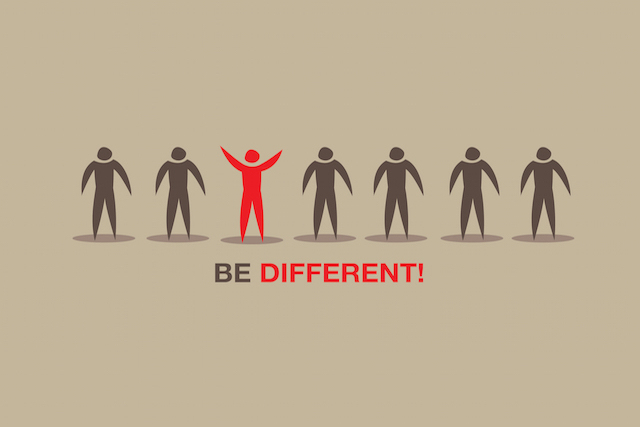
    Be Different

    “To be yourself in a world that is constantly trying to make you something else is the greatest accomplishment.” ~Ralph Waldo Emerson

    Have you ever felt different—like you don’t fit in at all?

    Do certain things captivate other people but leave you struggling to find meaning?

    What about the big picture? Maybe you feel you chose the wrong career, or you wonder if you were born into the right family—no one else seems to think the way you do.

    Feeling different can be unsettling in a world that values sameness. You can derail your confidence and your progress by demeaning yourself for your differences.

    I felt uncomfortably different most of my life—out of place, misunderstood, and alone. I always worked hard to fit in, fighting a constant, frustrating inner struggle with no tools to help me cope.

    I always got top grades, but didn’t seem to think the way everyone else did, perhaps because my family was poor but I attended an upper-middle-class school.

    I was extremely introverted and shy in an extroverted world. I kept to myself, hiding so no one would know I was different. This broke my heart because I wanted to fit in so badly.

    My desire to fit in continued through college and beyond. I finally realized I was wasting a lot of time and energy by struggling to fit in. I was denying my uniqueness and my chance to create a truly meaningful life.

    By hiding my differences, I short-changed the very reason I was born.

    Most of us don’t realize that hiding our true nature is devastating to ourselves and to the world.

    How We Get Steered Off Course

    Subconsciously, we’re all searching for true meaning in life. We think of it as trying to find happiness.

    Society teaches us we’ll be happy by following norms that make us the same as others. We are encouraged to seek outside of ourselves rather than connecting inward and being fulfilled by the things we love.

    For instance, we learn to:

    • Compete with each other to get into the best schools and to land and keep the best jobs.
    • Look for partners to give us self-worth and complete us.
    • Strive to make money to buy things to make us happy.
    • Do everything to stay young-looking, valuing youth more highly than age and wisdom.

    With these goals, we are constantly doing rather than being. Time disappears because we aren’t embracing life by connecting with our inner being.

    We forget who we are. We are not living. We are grasping for an elusive happiness on the outside.

    We feel like we’ve found happiness repeatedly, only to realize it is temporary. Each time we find it slipping away again, we search to find happiness in some other way.

    Embracing our uniqueness and finding true meaning in life will break the pattern.

    Take the first steps toward freedom.

    Changing direction requires some upheaval. But this is your life. If temporary discomfort results in discovering your meaning and purpose in life—which leaves you feeling fulfilled, balanced, and happy—isn’t change worthwhile?

    Assess your life to see if you abandoned your own uniqueness just to fit the mold.

    Review the five bullets above. Are you following someone else’s path instead of your own? If so, what would you prefer to do instead? It’s never too late to change.

    If you’re seeking approval or self-worth from others, learn how to find these qualities within yourself. If you’re in a career that doesn’t satisfy you, acquire the skills you need to follow your passion.

    What are you doing just to fit in? What daily activities feel like drudgery? What responsibilities or tasks do you often put off or even avoid?

    A long list is a sure clue that you’re not following your passion. Seeking further can help you find true meaning.

    Determine what makes you unique.

    We all have a passion—something that makes us light up inside, something we want to do more than anything else. We bring our own uniqueness to our passion. Following it will help us find true meaning in life.

    Assessing your uniqueness takes careful thought. Set aside an hour at a time. Longer blocks of time are even better. The key is to feel free to brainstorm because nothing else requires your attention.

    Schedule time on your calendar and hold to it.

    When it’s time, go to a quiet place with purpose. Take a notepad or something to capture your ideas. Don’t judge any of your thoughts. Brainstorming means all ideas are of equal value.

    You can be selective later. Judging in advance blocks your creativity and you’ll likely miss something you are suppressing or something new.

    Some questions to ask to uncover your uniqueness are:

    • Which activities cause me to completely lose track of time?
    • What am I always trying to find time to do even when I only have a few free moments?
    • What makes me really happy?
    • What matters most to me personally?

    Once you have thought through and listed all your answers to these questions, list each answer on a separate line. Ask yourself what parts of your life feel most and least aligned with your favorite activities, passions and values.

    Record and study this information closely to find clarity.

    Leverage what you’ve discovered.

    It’s time to follow your heart, honor your uniqueness, and discover your true meaning. Gather your answers and decide how to incorporate this newfound knowledge into your life.

    Maybe you uncovered a passion you’ve always suppressed. For example, I always loved writing, but I only pursued it indirectly in the form of business writing because that was a practical way to earn a living.

    Business writing is not my favorite form of writing, and it never satisfied my desire to write. But now that I have my own business, I’m writing the way I’ve always wanted to.

    I’ve combined writing with my other passion of pursuing better ways to live. Now I’m excited when I write, I’m fulfilling my purpose, and I’m helping others.

    Seek further if your passion still eludes you.

    Maybe you’ve squelched your uniqueness for so long that you can’t find your truth. If you have more questions than answers, that’s great! That’s when it’s time to experiment.

    Answers can come from many different sources, so cover a lot of ground. When you find clues, you can piece them together to form your plan of action.

    Ask others what they do, find books and other resources to read, seek professionals to help you, join a group of like-minded individuals, take a class, or ask the universe. Use your creativity to reach out broadly. The answers will come.

    Start exploring one area that calls to you. Try something creative such as art, theater, or science. Begin looking for solutions to your biggest problem, or reach out to help someone else. Life holds many right answers. Seeking and finding them is the fun part.

    When I began my search for happiness, I looked everywhere. I even opened my mind to things I thought were illogical, like aura balancing. I was surprised when I discovered that I could actually feel negative energy being pulled out of my body by someone using a crystal.

    That incident sent me to seek spiritual answers. Ultimately, I found my answers through the teachings of yoga. I was so motivated by these teachings that I moved into a meditation center for a year to pursue them.

    This brought me around full circle, proving that I really am different—and because I found my passion, I learned that being different is completely okay. This changed my life radically.

    Don’t be afraid to go out on a limb with your search. You never know where it might lead you. It is far better to follow your heart and be different than to struggle to try to be the same.

    We all have differences in a world that values similarity. When fitting in means suppressing who you are and what you love the most, you miss your opportunity to connect deeply with yourself—to live, shine, find true meaning in life, and offer your unique talents to the world.

    By opening your heart and mind and being completely free to explore what matters to you, you will learn who you are. Next time you find yourself holding back to avoid standing out, realize that you add value to the world.

    Never be afraid to follow your passion and blaze new trails. It’s important to have faith in the process of life. The trick is to realize and embrace your uniqueness. By doing so, you will be led in the direction you were meant to go.

    Be Different image via Shutterstock

  • Relinquishing Control of Others: 5 Ways It Serves You

    Relinquishing Control of Others: 5 Ways It Serves You

    Letting Go

    “Selfishness is not living your life as you wish to live it. Selfishness is wanting others to live their lives as you wish them to.” ~Oscar Wilde

    My mother is a huge control freak. I am told she got it from my grandmother, who basically ran everyone’s life.

    Regardless, growing up, I noticed that she really struggled with relinquishing control of what we were all doing with our lives.

    It was partly out of love because she just wanted what was best for us, and partly because she feels a sense of panic when she doesn’t know what’s going to happen if the person chooses to go in a different direction than she envisions as the “right” one.

    I inherited my own need to be in control of everything and everyone from her. It took me a long time to learn how to surrender to what was and let go. Not just of the things happening in my own life, but what others close to me were doing.

    I know that when I am outside of somebody else’s personal situation I have much more perspective because I’m not emotionally invested in their drama the way they are. At least, I think I’m not.

    See, that’s the big fallacy! I have come to realize that I do actually get emotionally invested, and I hold onto an expectation that the person will take my advice and do what I so clearly think is the right thing for them.

    Let’s be real—do we really know what the right thing to do is for another person?

    I recently had a great conversation with a close friend of mine who is incredibly advanced on his spiritual path. We were discussing a mutual friend of ours who is currently in a relationship with a woman we know is absolutely wrong for him.

    We have pointed out all the warning signs we see. He has also admitted that he sees them himself and senses them, but still he cannot walk away from the relationship.

    I was expressing my sadness and frustration over my friend not taking my advice or hearing me. I said, “What else can I say to him so he gets that this is a huge mistake?”

    My friend calmly replied, “You’ve said everything you need to. Now you need to relinquish control over the situation and allow his soul to have the experience it wants to have. Maybe his soul needs to have a horrible, destructive relationship to get him to the next level of his learning.”

    Wow. Why hadn’t I seen that?

    It is true that we don’t know the journey that each person is on. And we need to allow the people in our lives to make choices that feel right to them—because what is right for us may not be right for another person.

    When I started to relinquish control over what everyone in my life was doing, I started to feel a huge shift in my energy.

    I realized that by just “holding space” for people, which, according to Heather Plett, means “being willing to walk alongside another person in whatever journey they’re on without judging them or trying to impact the outcome,” I was able to be of better service to them, and in turn allow them to follow their own path.

    Letting go of others’ decisions and any expectations we have of them has a number other benefits. Some of the ones I found were great motivators for me.

    1. You have more energy to focus on yourself.

    What a difference I felt when I stopped obsessing and worrying over every single friend’s problem and trying to figure out how to fix it for them.

    I didn’t realize how draining it was for me to take on everyone else’s “stuff.” When I started to let go of what other people were doing to fix their own problems, I found I had way more energy to focus on me.

    2. It can be more empowering to just listen rather than “fix.”

    People don’t always need us to “fix” things. What they need when they come to talk to us is to feel heard. Nobody likes to be told what to do.

    Releasing control of what the people in my own life decided to do enabled me to be a better listener since I was spending less time thinking of ways to “fix” their problem.

    3. We develop trust.

    When we can surrender to what is, allow things to unfold, and realize that every experience serves a purpose, we start to trust that whatever happens may really be for the best.

    Relinquishing control and allowing things to play out without our interference can reveal some surprising outcomes that we never could have planned and ultimately be the best for everyone involved.

    4. It strengthens our relationships with others.

    When my mother started to release her tight grip on everything I did, we became closer. I understood how difficult this was for her to do, and I had a lot of respect for her.

    By not telling people what to do all the time, we are essentially saying to them, “I trust you to make the best decision for you.” This really strengthens our relationships with them when they believe there is a mutual trust and respect for their judgment and choices.

    5. We learn something new when we watch how others do things.

    I always thought I had all the answers. Clearly not since my life has been in shambles many times over. There is so much we can learn from others when we observe the way they do things. The next time we find ourselves in a similar situation, we may find that their way was the better way.

    When we reflect on all of the reasons it serves us to let go of controlling others, it’s a great excuse to allow the people in our live to follow their own path. Whether it’s the right path or the wrong path is not for us to decide. It’s simply their path.

    Letting go image via Shutterstock

  • Grieving a Loss That Feels Like a Death

    Grieving a Loss That Feels Like a Death

    “Grief is like the ocean; it comes on waves ebbing and flowing. Sometimes the water is calm, and sometimes it is overwhelming. All we can do is learn to swim.” ~Vicki Harrison

    Most grief books are written to help you mourn the death of a loved one and learn how to deal with their absence in this world.

    Death is probably the most challenging thing a human can face. It breaks us down. It brings us to our knees. Some people are so significant in our lives that the mere thought of living without them feels incredibly overwhelming and incapacitating.

    Losing someone we love is hard. Accepting loss is extremely challenging. So how do we cope with yearning and adapt to the emptiness following a divorce or huge breakup without feeling like a loser or the psycho who cant let go?

    It’s an unfair misconception to think that those who have a hard time letting go or are taking longer than usual time to move on are somewhat weak.

    Psychology agrees that when a major relationship or marriage ends, the person who was left may feel grief as painfully as someone who lost a loved one to death. Sometimes the pain can even be stronger.

    Divorces and breakups can sometimes be worse than death, because the person who died to us is very much alive, haunting our every thought.

    I remember how lost I felt right after Mr. Big broke things off with me for the 87th time. I remember packing my car with all my belongings and driving from San Francisco back to Los Angeles with our eight-month-old son in the car crying the entire six hour drive.

    I felt as if he had died. My whole world collapsed. I was terrified that I wouldn’t be able to support our son.

    I wondered how he would turn out without his father in his life. Would he feel unloved? Would he wonder why his father cut him off his life? Would he blame himself or think he wasn’t good enough for his dad?

    So many questions rushed through my mind while I drove through the vast freeway back home.

    I felt humiliated. I felt alone. I felt a variety of feelings and emotions. But the one that I always remember is the feeling of loss. I had lost everything I ever thought I would eventually have. The family, the life and most importantly: the man. The man I had loved for five years had died.

    His body was still there but his soul was gone. Everything I ever thought of him was gone. His words were gone. His spiritual presence was gone.

    There is a lot more to life than a physical body. Millions of people have experienced the death of their loved ones without ever having to plan their funeral.

    When I arrived home it was time to pick up the pieces and move on. At least that’s what everyone around me was telling me.

    They expected me to shake everything off and move on with my life as if my son’s father didn’t exist. As if our story didn’t happen. But accepting the death of someone in our lives is a process.

    I kept going back and forth between missing him and hating him for leaving. At times the mixed emotions felt like I was literally sinking into insanity. One moment I would cry and the next I would yell.

    Nobody told me that grief does that to people, and because I didn’t know what I was feeling was normal, I felt even more alone.

    I had never heard of the five stages of grief until I went to see a therapist, because the pain was so unbearable. It’s then I learned that a person goes through denial, anger, bargaining, depression, and acceptance after the death (or loss) of a loved one.

    Unlike what I originally believed, there is no specific order to these feelings. You may feel as if you are on an emotional rollercoaster as you are jumping from stage to stage. Its important to know that this emotional ride is normal, and if you get the proper help you will get off of it alive and stronger.

    I know what it feels like to not want to get out of bed. I know what it feels like to not want to take a shower, or brush my teeth or even eat.

    I know what is like to lose twenty pounds in six weeks, to lose friends and to lose your dignity begging someone to take you back. I know the feeling that the world has ended and you were left behind alone and miserable.

    I have been there, so believe me when I say that there is hope.

    There is, in fact, a light in the end of the depression tunnel. But the only way to get to that light is to walk through it. There is no way of getting around the process, and the earlier you begin the journey of mourning and healing, the sooner you will reach peace.

    The journey is long, but there is no race and no competition. It’s a journey with yourself. There will be days when you will feel stronger than ever and some days will bring you back to your knees.

    Just remember: The rollercoaster is the journey. So even when you are down, feeling as if you’ve made no progress, remember that progress is being made every day you choose to be alive.

    Progress is being made every day you choose to not call the one who left you.

    Progress is being made every day you choose to take another breath.

    You are alive. You are strong. You will survive.

  • 4 Ways to Deal With Criticism So It Doesn’t Get You Down

    4 Ways to Deal With Criticism So It Doesn’t Get You Down

    Sad Man

    “The final proof of greatness lies in being able to endure criticism without resentment.” ~Elbert Hubbard

    Are you afraid of receiving criticism?

    Even if it’s minor or well-meaning, criticism can feel like a punch in the gut.

    And if you let it, criticism can leave you feeling down and resentful for days or weeks after.

    As the music director at my church, I occasionally receive negative feedback from members of the community.

    After services one Sunday, a congregant came up to offer some critique of my music selections. At first it felt like a full-on attack. I didn’t even have a chance to get up from the organ bench before she began.

    I wish I could say that I responded perfectly, but I didn’t. I immediately became defensive. My breath shortened. I interrupted her before she could complete her thoughts. But at some point in the midst of the barrage, I regained my composure and listened.

    It was hard and painful to just listen without being defensive. On reflection, I realized that my pain had little to do with her criticism. It came from my own fear of being judged. Once I became aware of this, it was much easier for me to recover emotionally and move on.

    If you struggle with the fear of being criticized, here are some things to keep in mind:

    1. Criticism will not kill you.

    The mere possibility of being criticized can fill you with dread.

    When I was being criticized, my fight or flight response was automatically triggered. Though I was in no real physical danger, my mind started to immediately generate thoughts such as: “What if she starts a campaign to get me fired?” and “How will I find work to support my family?”

    In hindsight, it’s easy to see that the leap from criticism to catastrophe was a gross distortion of reality. But in the moment, the thoughts can feel very real.

    Over time I’ve learned to regain control of my thoughts by asking questions, such as: “Are my disastrous scenarios likely to happen?” or “Will this kill me?” I’ve found the answer is often no.

    Criticism can hurt, but it cannot maim or kill. If you struggle with the fear of criticism, know that you too have the resources to get through it and move on.

    2. Giving criticism can be as hard as receiving it.

    It’s hard for people to say what’s truly on their minds. Most would prefer speak ill of you behind your back or let resentment build rather than risk conflict.

    As I struggled to hear the woman’s criticism, I noticed that she was visibly shaking. It dawned on me that this person, rather than simply grumbling to other parishioners or the pastor, had summoned the courage to speak directly to me.

    In that moment, I was able to empathize with her. This profoundly changed my experience of being criticized. My attitude shifted from that of fear to compassion, even gratitude. I no longer perceived her as a threat and my own fears were calmed.

    If you’re facing criticism, try to see the situation from the other person’s point of view.

    3. Not all criticism is created equal.

    Think of the last time you were criticized. Did you find yourself overanalyzing everything the person said?

    In the struggle to articulate their feelings, people often say useless or hurtful things. Somewhere in there is the main concern they are trying to communicate. It’s tempting to let negative comments, often arising out of frustration, get the best of us.

    In my own situation, I chose to address the genuine concern and discard the rest.

    You too can challenge your own tendency to focus on the negative by asking yourself: “What’s is the focus of their complaint?” If the purpose of the criticism is simply to antagonize, give yourself permission to discard it all.

    4. Criticism can fuel your personal growth.

    When we’re in defensive mode, it’s practically impossible to be self-reflective. But once the defenses drop, allow this question to come to the surface:

    Is there any truth to the criticism?

    Entertaining this question will be the starting point of your personal growth.

    Once I’d processed the valid concerns of the criticism, I began taking practical steps to incorporate the feedback into my work and attitude. I also began to process my own fears and general defensiveness. Finally, I worked to drop my resentment toward the person who criticized me.

    How can you effectively incorporate useful criticism into your life? Focus on using the criticism to improve yourself rather than please or appease the person. This will help you let go any lingering resentment toward them.

    Kick Your Fear of Criticism to the Curb

    As long as you are breathing, leading, or doing something that matters, you will be criticized.

    Don’t let your deep, dark fears of being criticized hold you back.

    Instead of trying to avoid it at all costs, expect it—even welcome it.

    You’ll learn to conquer your fears and increase your confidence.

    So next time you’re staring criticism in the face, take a deep breath, smile, and say to yourself, “Let’s do this.”

    Sad man image via Shutterstock

  • When Following Your Dreams Results in Failure After Failure

    When Following Your Dreams Results in Failure After Failure

    Our greatest glory is not in never failing, but in rising up every time we fail.” ~Ralph Waldo Emerson

    Everyone tells you to chase your dreams and follow your passion. At some point, you’re brave and full of hope and decide to do it—quit your job, become an artist, apply for that dream job, and change your lifestyle.

    It’s wonderful and empowering and exciting and all those things that make living worthwhile.

    But what happens when you fail? When quitting your job left you broke, no one wants to publish your work, and your dream job turns you down? You are left feeling utterly defeated and a little bitter toward all those people who told you to go for it. It didn’t work. What then?

    I’m no stranger to failure. I’ve tried so many times and had nothing concrete to show for my efforts. I’ve had to tell people, “No, I didn’t get it.”

    Most recently, I’ve been hustling as hard as I can to get a job that will send me overseas in the development field to work for women’s human rights. Unpaid internships and grad school and applications and cold emailing have so far led to nothing.

    It can be incredibly frustrating and leave me feeling hopeless, sometimes questioning if it’s worth following these dreams when I’m feeling so defeated. Like I said, I have nothing concrete to show for any of my efforts yet.

    But a while back something happened that changed everything. And no, I didn’t get the dream job.

    What happened was internal. I was sitting outside with a mug of hot coffee cuddled between my hands, a soft jacket pulled around my shoulders to combat the cool, autumn morning. Red, yellow, and orange leaves were raining down from the trees, spiraling to the ground. Painted clouds streaked the deep, brilliantly blue sky.

    I could feel the sun on my face. And as I sat there, with none of my dreams coming true, I realized that it doesn’t matter if they never do.

    I am alive, healthy, and free. I have people who love me. And I have the capacity to be grateful for this life and the ability to even contemplate following my dreams, let alone throw everything I’ve got into the fray.

    I realized that even if my dreams never come true, I will be okay. It was so liberating. I will keep trying; I actually had a second wind after this realization. Because now I know that my life is full and worthwhile and beautiful even if I’m just sitting outside with coffee in the sunshine.

    If you allow yourself to love everything, as simple and small as it may be, even if not all of your dreams are unfolding around you, there may come a day when your dreams do come true and it will be icing on an already magnificent cake.

    The defeated feelings from failure come from letting all your hopes and happiness ride on the dreams coming true. If you allow yourself to appreciate the freedom and aliveness in just having the opportunity to try, the failing will be so much less painful.

    You should keep chasing your dreams and following your passion. At the same time, you shouldn’t let yourself feel so bad if you’re failing.

    Check with yourself and see—would it really be so awful if you just kept trying and things never quite worked out the way it does in your dreams?

    Really think about it. How wonderful and fun and exciting is it that you can go off and chase those dreams? And how much more concrete and valuable is love in your life, joy in the simple things, and appreciating what you have?

    If all your dreams come true but you neglected your relationships and forgot how to be grateful and happy with the little things, it won’t matter.

    Let living fully be your passion. Chasing your dreams is a byproduct of that. Finding a way to make them come true is not the end all, be all.

    Be fully immersed in your own life—your relationships with others and yourself, tasting good food, comfort and peace, enjoying a quiet morning with the sun on your face, laughter.

    Failure isn’t so bad when you realize that taking the steps to make your dreams come true is a dream coming true in itself.

  • How to Stop Envying Other People’s Seemingly Perfect Lives

    How to Stop Envying Other People’s Seemingly Perfect Lives

    “The reason we struggle with insecurity is because we compare our behind-the-scenes with everyone else’s highlight reel.” ~Steve Furtick

    It’s in our nature to compare ourselves with others. The ability to weigh one situation up against another helps us make decisions and live our lives productively.

    The downside is that when you constantly compare your own life with those of other people, you will always come up short.

    Over-comparing causes envy. Envy is the feeling or sensation we have when we want to get something that someone else has and we can’t be happy for them when they have it.

    Getting stuck in a cycle of envy is just about the best way to ruin your life. Fortunately, there are several ways to deal with envy that will guide you toward happiness and well-being.

    Don’t Compare Your Cutting Room Floor With Someone Else’s Highlight Reel

    Have you ever seen anybody post an unflattering photo on Facebook? Let’s face it, you rarely read about someone fighting with their spouse, hating their job, or declaring bankruptcy. Most people show you what they want you to see—a highly edited, glossed-up version of their life.

    The next time you feel envious about someone else’s life, remember that you’re only looking at part of the story, the part they want you to see.

    Think of something that another person has that you want. For example, maybe someone you know is far more popular than you. On the surface it may appear that they are surrounded with people who look up to them, and that they are well-liked and respected.

    But in reality people might have a different view of them behind closed doors. In this case, the actual reality and what we perceive as reality are two very different things.

    Even the most enviable lifestyle has downsides. For example, many people covet the glamour and glitz of the rich and famous. But have you ever sat down and thought about what kind of life a famous person has?

    Ask yourself if you’d enjoy someone jumping out of a bush and taking a snapshot of you in your grubby tracksuit pants while you’re collecting the newspaper from the front lawn.

    There are always two sides to every coin. What you think you see is not necessarily the reality. So the next time you get caught up in envy, always remember that unless you are that person you don’t really have the whole story.

    Isn’t It Already Here?

    I am by nature a private person, but I wasn’t always that way. In my twenties I was invited to every party, had scores of friends, and was (in my own mind, at least) funny, clever, and popular.

    As the years went by I became more introverted, and not too long ago I started beating myself up for not having many friends. Why wasn’t I popular like other people?

    One particular couple that my husband and I love catching up with came to mind. Whenever we wanted to see them, we had to literally book months in advance because they were so busy with other social commitments.

    Then I started to really ask myself, what is the essence of what I think popularity will bring me? The answer was simple: I wanted to feel a sense of connection and belonging.

    It was at that time I realized that the essence of what I wanted was already here. I have a loving husband, a great family, a couple of good friends who would do anything for me, and plenty of time to do what I want.

    I also realized that I would absolutely hate not having a moment to myself; being popular would probably make me pretty miserable.

    So the next time you feel as though you’re missing out on something that somebody else has, drill down into the essence of whatever you think that thing would give you and ask yourself, is it already here?

    Do You Really Want What They Have?

    If you really want to play the comparison game, remember that if you want someone else’s life you have to be willing to do a complete swap; that is, you would have to give up your life as it is and swap over to theirs.

    Here’s an exercise that will help you decide if you really want out of your situation and into someone else’s:

    When you’re ready, think of someone you know who has the kind of life that you envy. Then take a piece of paper and in the left hand column write the heading “What I have that they don’t have.”

    Then in the right hand column, write the heading “What they have that I want.” In this column you are going to make a list of all the things this person has that you want. Write down whatever comes to your mind. For example, do they have a lot of money, a nice house, nice clothes, or the perfect partner?

    When you’ve finished doing this, move to the left hand column. Write down everything that you value in your life. For example, family, friends, pets, and everyone who is important to you.

    One caveat: the other person may indeed have friends, family, and pets just like you. But in this case you’re not so much looking at what they have (i.e.: a dog, a child, a husband), but the unique relationship and connection you have with your pets and loved ones. So remember to write down the names of your family members, friends, and pets.

    Be as specific as you can. Get really clear and what you love about your life. It could be something as simple as being able to finish work early on Thursdays so you can go to the gym.

    Now its crunch time; you’ll probably find that the list on the left hand side is much bigger than the list on the right. So ask yourself, is there anything in this list you would be willing to give up in order to have the life that the other person has?

    What you’ll likely discover is that everything you have in your list is as valuable as or more valuable than the things that the other person has.

    Practice Gratitude

    One of the reasons we feel envy is that we often take the good things in our own lives for granted.

    The happier you are with your lot in life, the more good things will come to you. Happiness studies show that truly happy people are not necessarily wealthy, powerful, or famous.

    They have simply made a choice to be happy by paying attention to the good things around them. Since whatever you focus on will become the inclination of the mind, this makes perfect sense.

    Every night before I go to sleep I ask myself the following questions:

    • What do I take for granted in my life?
    • Who are the important people (or animals) in my life?
    • Who is in my corner?
    • What freedoms do I enjoy?
    • What advantages have I been given in life?

    This allows me to take stock of what is important and gives me a nice feeling of contentment before I drift off to sleep. Try it for yourself!

    Our society has conditioned us to believe that your net worth equates to happiness. Accordingly many people strive to be more, do more, and have more.

    But none of those things actually cause any lasting happiness. They are all impermanent and subject to change. Most importantly, they represent other qualities of heart that can be achieved regardless of net worth.

    Ask yourself the question: “What really makes me happy?” Is it actually the money, possessions, or reputation? Or is it freedom, joy, peace, and serenity?

    Happiness is the ultimate currency, and there’s no law that says there isn’t enough of that to go around.

    Envy image via Shutterstock

  • 5 Reasons We All Deserve Forgiveness

    5 Reasons We All Deserve Forgiveness

    Remorseful Woman

    “To forgive is somehow associated with saying that it is all right, that we accept the evil deed. But this is not forgiveness. Forgiveness means that you fill yourself with love and you radiate that love outward and refuse to hang onto the venom or hatred that was engendered by the behaviors that caused the wounds.” ~Wayne Dyer

    When we have been deeply hurt or betrayed by a friend, loved one, or even an acquaintance, it can be incredibly difficult to let it go and forgive them. Some acts seem almost unforgivable, but really not much is.

    My belief is that people who hurt us are more often than not in a lot of pain themselves, and they’re making choices and decisions based on their own wounds.

    I’ve spent the past two years working hard to forgive someone I loved deeply who hurt me. It hasn’t been easy, and it’s taken a huge amount of time looking within, acknowledging my own mistakes in life, and seeing all the reasons it’s imperative I forgive others for their wrongs. They deserve it as much as I do.

    It’s one of the most powerful and loving things we can do, and it ultimately brings us peace of mind and the loving energy we deserve in our lives.

    So, why should you let go of your resentment and rage and forgive someone who has hurt you? A few reasons that have been motivators for me:

    1. Forgiving allows the other person to work on themselves.

    Nobody is perfect. We have all had times in our lives when things have gotten out of control or we acted in ways that weren’t in alignment with who we want to be in this world.

    Yes, sometimes people do hurtful things because they are flat out selfish, but most of the time we screw up without meaning to. We all deserve a second chance to do better.

    Receiving a second chance when I have hurt someone else has allowed me to step up my game and prove to myself and to them that I can do better.

    Sometimes it’s taken time for me to really get it. We don’t change our thought patterns and behaviors overnight. But I know that when somebody has forgiven me, it has forced me to take stock of my actions and motives and work on myself. And in the process, I have shown up as the woman I want to be in this world and proven to myself and to others that I can change.

    We wouldn’t even bother trying if another person hadn’t forgiven our actions as a way of saying, “I can let this go, and I trust and hope this experience has taught you something.”

    2. If we show others compassion, we learn how to develop it for ourselves.

    Often when we are holding onto resentment toward someone who hurt us, it’s about our ego. We want them to suffer as much as we did.

    One of my close friends has been teaching me about compassion. I don’t show much for myself, so I have a difficult time showing it for others. But as I have slowly learned to develop compassion for people who have hurt me, digging deep into the reasons why they may have done it, it’s allowed me to develop more compassion for myself for the things I have done.

    Developing compassion for someone who has hurt you is a powerful and integral step toward healing for both of you.

    3. Forgiveness helps everybody involved move on.

    Not all people and situations are meant to be a part of our lives forever. Sometimes, they are there for a period of time to teach us something, and once their purpose is served, they move on and the next chapter of our story begins.

    As difficult as it may be to let people go, whether they are a long time friend, a family member, a spouse, or a lover, when we forgive them we create a space for them to move onto their next chapter, as well as ourselves.

    If we’re holding onto the old story of “what they did to us,” we can’t create a space for better things to come into our life.

    4. When we know better, we do better.

    I live by Maya Angelou’s quote that for most of us, “when we know better, we do better.” I truly believe that people don’t go around intentionally trying to hurt others, especially those closest to us.

    Most people are doing the very best they can with what they know, how they were raised, and where they are at in life. I know that I personally have often made the same mistakes over and over again until I really got the lesson and developed the tools to do things differently. When I’ve known better, I’ve done better.

    Try to recognize that every experience in your life, especially the most painful ones, are teachers that reveal to us what we still need to master. You have the opportunity to become better if you can avoid holding onto bitterness.

    5. Without forgiveness we don’t grow spiritually.

    The process of spiritual growth is infinite. Some of our spiritual lessons are to learn compassion, self-love, and unconditional love for others. We are still operating at the bottom realms of our spiritual growth when we are carrying around feelings of hate and bitterness and thoughts of revenge.

    When we receive somebody else’s forgiveness, I believe we graduate one step up that spiritual ladder. Whether we feel we deserved it or not, somebody gave it to us. And when we receive such a beautiful and selfless gift from somebody else, we are compelled to give it back.

    This mutual exchange of loving energy between people who have wronged us is a beautiful step forward on our spiritual journey.

    The bottom line is, forgiveness is something we ultimately do for us, not the other person. And without it, the pain inside our hearts will never heal.

    Remorseful woman image via Shutterstock

  • How Non-Attachment Can Benefit Your Relationship

    How Non-Attachment Can Benefit Your Relationship

    “You only lose what you cling to.” ~Buddha

    I remember one of my first mindfulness classes that pertained to impermanence. I went home in a bit of a slump.

    Nothing is permanent; everything ends; “This too shall pass.” It was quite a shock to the system.

    After getting over what, on a surface level, seemed to be incredibly dire, I realized that this could be incredibly liberating.

    Enter the principle of non-attachment, a notion that has the potential to aid in the evolving nature of day-to-day life.

    Rather than clinging to things—relationships, jobs, material goods—hoping that they will last forever, or being fearful that the uncomfortable parts of our lives will never change, we learn to deal with the moments as they arise.

    There is power in knowing that our moments can, and will, inevitably shift.

    Knowing the good won’t last forever gives us permission to embrace the moment fully without clinging or depending on it.

    Acknowledging that the bad won’t last forever gives us strength to move forward instead of being caught up in helplessness and insight to make shifts and changes if need be.

    Impermanence is a blessing in disguise. And non-attachment is the only way to truly forgive and love another person.

    Sounds counterintuitive, doesn’t it? How can non-attachment possibly lead to a happy, fulfilled relationship?

    Here’s how.

    In my last relationship, I prided myself on being honest and open. I didn’t want to play games, because that’s not the sort of person I am, nor the sort of man I wanted to attract into my life.

    I wanted a guarantee that he would stick around and that our relationship was progressing. I wanted to know that he wasn’t going to just disappear from my life, a dialogue from my past that prickled at my defense mechanisms and inevitably pushed him away, too.

    This made me fearful and scared, and I shut down intermittently. This invisible pressure burdened both of us.

    The hard truth is that there are no guarantees.

    Of course, there were other factors in our relationship. The point here is that there was also an unhealthy attachment present; I became dependent on him, and I clung.

    I was like a child who was holding onto a baby animal, who was so scared of it running away that I held it tightly, suffocating it.

    Non-attachment means that you are able to live your life outside of the other person; it ultimately takes pressure off and allows you to be without depending on anything or anyone to feed your soul.

    Clinging onto things—relationships, jobs, materials goods—simply does not make sense considering their evolving nature.

    These things add to your life, but they are not your life. You’re all that’s guaranteed, and even you grow and change, physically, emotionally, and spiritually.

    This doesn’t mean that past lessons or past behaviors can’t or won’t guide your present actions or that future goals aren’t important. Instead, it means that you can live out your moments naturally and organically, with appreciation and/or awareness, because you aren’t leaning on something that might change or shift.

    Non-attachment in relationships is not indifference or apathy to another person. It’s an absence of fear. Fear and clinginess come from a sense of impending loss.

    However, if we go into a relationship or exist in a relationship already knowing that things may change or shift (for better or worse), we rid ourselves of pressure and burdening expectations. We can approach the relationship and issues with an open heart and simply see what unfolds naturally.

    Relinquishing (some) control is scary, but not impossible.

    This is not to be confused with blind acceptance of things that aren’t satisfying.

    Existing in the unattached present moment acknowledges what is actually happening now and gives us the power and capacity to shift or change a situation, which is also applicable to a relationship that isn’t what you want, need, or deserve.

    I know many couples who are staying together, even if it hasn’t been working for years and years, because it was “so good long ago.”

    I’m an advocate for working through things, but ultimately, the present is all that is relevant.

    As far as relationships go, I was once told that some people you simply get for a season, some people appear in your life intermittently, and some people stay around for longer and forever, if you’re lucky.

    The catch is that you ultimately don’t know which category the person you’re dating or in a relationship with is or will be in, and red flags aside, there is no way to know.

    However, being unattached, open, and aware is a key ingredient to experiencing a relationship organically and observing what may unfold.

  • 4 Life-Changing Lessons for People Who Struggle with Anxiety

    4 Life-Changing Lessons for People Who Struggle with Anxiety

    Peaceful Man

    “There is only one way to happiness and that is to cease worrying about things which are beyond the power of our will.” ~Epictetus

    Sweaty. Hot. Shallow breathing.

    Thoughts barreled through my mind like a never-ending freight train. I couldn’t keep up. It was everything all at once, blurred into nothing in particular.

    I felt like I was about to jump off a cliff, nervous anticipation building into panic. My head was spinning. My hands trembled.

    Choking down a gulp, I forced the tears back that wanted to cascade down my cheeks in sobs. There would be time for that later. This wasn’t the place.

    My heart raced. I was on edge. I was on the edge.

    I’d catch glimpses of my thoughts as they rumbled through my brain.

    Impending foreclosure on our old house. The psychiatric hospital I had been to six months ago. Bankruptcy paperwork that still needed finished.

    The kids trying to make friends at their new schools. My wife playing with the budget for hours to make ends meet. Me falling asleep in my car left running in the closed garage.

    I was at work. I was having a severe panic attack. And I had to go home.

    Luckily, most of my anxiety attacks aren’t this severe. And thankfully, they don’t happen too often any more. Happily, this attack, which came out of nowhere and hit hard, disappeared as quickly as it came on.

    The longer I deal with and work to manage my anxiety, the more I find I can learn from it. This in turn helps me cope better the next time anxiety comes along.

    Here are some things I’ve learned about anxiety through my years of dealing with it:

    1. Anxiety is a lie.

    No matter how close to home anxiety hits, there is always a lie hiding in it somewhere.

    Maybe it’s based on a false belief. Maybe the problem doesn’t have to be dealt with as immediately as it feels. Maybe there are options we haven’t considered.

    But anxiety always—always—contains a lie. It might be big and in our face or it could be small, tricky and subtle. Look hard enough and we will uncover it.

    One of the most powerful tools I’ve gained through working with a therapist on anxiety is learning to look for the lie. It’s difficult at first; we have to sit with our anxiety and pick through it a little bit at a time, and that’s certainly not a comfortable thing to do, but if we’re careful and patient we can find the lie. Finding the lie takes the teeth out of the anxiety.

    And when we take the teeth away from anxiety, we can really begin to free ourselves. Anxiety needs a hook; it needs something to gnaw at us to keep it forward in our minds. By finding the lie and taking that hook away, we take away anxiety’s power over us.

    2. “Should” should be a four-letter word.

    Unreasonable expectations are, for me, at least, one of the biggest causes of anxiety. Some of the expectations I still struggle with are patterns of thinking that I can trace back to when I was a child. Because they’re so deeply engrained, they’re some of the toughest to get rid of.

    When I was a kid, I was pretty smart. Things came easily to me. I learned quickly.

    My parents, meaning to encourage me, told me I could do anything I wanted. And I believed them. And I started to expect anything I wanted out of myself.

    When you’re a kid, you can get away with that. If I wanted to do something, I’d learn it and do it, end of story. As an adult, things became more complicated.

    We can’t just want a particular job and make it happen. There are too many outside circumstances and other people involved. I should do that particular job isn’t just something that happens when you put your mind to it.

    When we start thinking about how we should be, we can really get ourselves into a trap. We should be this to that person and this when we do that—we’re just continually setting ourselves up to fail. “Should” doesn’t allow for any wiggle-room or compromise.

    “Should” can hurt us in other ways too.

    3. “Perfect” should be a four-letter word, too.

    I’m a bit of a perfectionist, so for me, being good at something isn’t good enough. I should be perfect, dammit! Please tell me you caught the “should” in that statement, right?

    Perfectionism is my old reliable. My trusty friend. My almighty hammer.

    The expectations that come from perfectionism can bury us alive. It’s a never-ending race that we’re never going to win.

    No matter how much I want to, I will never be the perfect husband, father, or son. The amount of anxiety I have felt in my forty-two years of life trying to be one of these three things is immeasurable. Think about how much time I’ve wasted worrying about being something I could never be.

    Perfect is such a damaging expectation, in any respect. When “good” or “just okay” will suffice in most situations, why do we torture ourselves chasing an impossible ideal?

    The truth is, when perfectionists start settling for “good” is when we really start to shine. We’re unencumbered by the restraint of high expectation and that allows us to work to really high levels—levels we’ve probably been failing to hit in the past.

    Anxiety comes about when we place these unattainable, perfect goals in front of ourselves. And our failures, which we will most certainly encounter, only serve to push us harder after our goals. Perfectionism becomes a never-ending cycle of anxiety and failure that we need to let go of.

    4. Anxiety is an ultimatum.

    The last lesson I’m taking away from this recent panic attack is this: anxiety always makes you an ultimatum. All or nothing. Black or white.

    There is no gray area when it comes to anxiety. Now don’t get me wrong, anxiety will hide in the subtleties of our doubts, but it will force us into taking a black and white view of ourselves, our situation, or our surroundings. Anxiety leads us to think that we’ve got only one choice to make.

    In my panic attack, I got overwhelmed by several different situations I’m dealing with right now. I am facing foreclosure on the house I’ve just moved out of. I am in the process of filing for bankruptcy.

    My kids are having to adjust to being the new kids at their schools since we’ve moved. We do have to be careful with our money right now. I am scared that I will have to go back to the psychiatric hospital again—or worse.

    But my anxiety attack turned all of these things into ultimatums for me. I felt like I had to resolve all of these issues at once (and immediately!) or the world would end. The fear I felt was so strong I was unable to think these problems through rationally.

    Once I did get home from work, I cried myself to sleep. Waking up, I could feel that the fear had left me. I was able to look at myself, the anxiety attack, and my problems in a clear-headed manner.

    What I saw was man suffering from anxiety, having been hit, but not harmed, by severe panic. I saw a man that was regaining his composure, a man who was moving on. I saw a man who was stronger for what he had just been through.

    Peaceful man image via Shutterstock

  • 4 Ways Introverts Can Super-Charge Their Happiness

    4 Ways Introverts Can Super-Charge Their Happiness

    Introvert

    “Solitude matters, and for some people, it’s the air they breathe.” ~Susan Cain

    Do you get ticked off too?

    I mean, when people say you’re awkward, naive, and anti-social.

    Your feelings get bruised, and then you find yourself drowning in a sea of unhappiness.

    All you want is to be normal. To be accepted and to fit in. The more social you try to be, the more uhappy you get.

    You’ve worn all the right masks to be normal, but it seems all your efforts aren’t good enough.

    Well, I know that feeling all too well, unfortunately.

    How Trying to Fit in Made Me Unhappy for Years

    I was six years old when I joined the school dance team because I wanted to be like my friends. Long hours of practice replaced my alone time. It was rough. But all I wanted was to fit in and belong.

    I should have known public dancing wasn’t for me. I panicked during the audition, and all I wanted was to crawl under a chair. I stood frozen in fear the entire time.

    And boy, that didn’t go to well. No matter what I said to appease the teacher, she yelled and banned me from the school dance team.

    In college, I was embarrassed to tell my friends I would rather stay in than go out in loud and busy places.

    So, I followed my friends for adventures. It was okay for a few hours, but then I would take frequent bathroom breaks for quiet moments and to hear my own thoughts.

    I pushed too hard to hang out every weekend. By the end of the day, I felt like I had been in a marathon that I didn’t sign up for.

    After college, I ached to belong and be accepted. I always said yes, even when I wanted to say no, just to please others.

    A friend suggested we (including her nanny and child) rent a bigger house together and split the costs, which meant we would pay less than we were paying to live separately, and we’d enjoy living in a better neighborhood.

    Soon after we moved in together, her siblings moved in and took over the house. I was miserable. The house was crowded and noisy. There was no space for solitude.

    This invasion of space built lots of tension, so I moved out, and doing so ruined our relationship.

    I tried to explain, but I was misunderstood. I was left confused that my friend didn’t understand my need for quiet space. All I wanted was to have a happy friend who understood me.

    I stumbled upon personality types in my twenties and learned about the differences between introverts and extroverts. I finally realized nothing was wrong with me. I realized I was an introvert, and I learned that us introverts often feel isolated and misunderstood by society.

    After I understood myself, I stopped working so hard to fit in and please people. I was finally content just being myself.

    Knowing I was introverted empowered me to stand up for myself and overcome some of the roadblocks to my happiness. You can do this too.

    1. Focus on your strengths.

    Introverts tend to focus on their weaknesses, like not being good at small talk, and some beat themselves up trying to fix them.

    They might desire to be more talkative and outgoing, so they promise themselves the next time they go out, they’ll strike up a conversation. Or they promise in the next office meeting to voice their opinion. But when the moment comes, they back out and feel disappointed with themselves.

    I knew I was self-conscious when I danced, but I felt it was something I needed to fix. That’s why I kept signing up for dance teams, even while knowing that they’d just make me want to crawl under a chair.

    Are you focusing on your weaknesses and sinking in the sea of unhappiness?

    So what if you’re not the best at small talk? You have plenty of other positive qualities that you should be proud of—having a strong conscience, drawing energy from deep conversation, and being empathetic.

    Take fifteen minutes to just think about all the qualities you like about yourself. Jot them down. You might realize you have more positive qualities than you give yourself credit for.

    2. Socialize selectively.

    Shy introverts want to fit in, so they push their limit by attending parties out of their comfort zone.

    In college, my friends handled going out every weekend with ease. I followed my friends to parties I didn’t even care about, only to be left overwhelmed by all the noise and small talk.

    I started suppressing the feelings and struggled to toughen up. Doing so left me swinging back and forth, from happy to unhappy.

    Does that sound familiar?

    Trust your feelings to guide you. Learn to stop and retreat when you feel over-stimulated.

    You should only socialize in ways you feel comfortable with.

    Maybe having a small group of friends over for dinner is better suited to you. Maybe you know a couple of quieter cafes that you like and can refuse invitations to places you dislike.

    And maybe, if you do want to step out of your social comfort zone a bit, you should feel free doing so, but you should also feel free to go home when you feel over-stimulated.

    3. Honor your quiet time.

    Most introverts need their alone time. It makes them feel at ease and can help them catch their breath between social events. However, many introverts neglect this need.

    I used to say yes to every request I got, such as school sports kiosk, fundraising events, and baby showers. I wanted to fit in and was afraid of missing out on what was happening, but that only exhausted me.

    All that stopped when I understood I was wired differently and deserved to pamper myself with some quiet time.

    Honor your quiet time, and consider it as an investment.

    It’s okay to retreat for some nourishment and recharging. This sounds selfish, but it’s not. You cannot serve others well if you cannot care for yourself.

    4. Seek out kindred spirits.

    Most introverts have those friends who make them feel different and alone because not all understand the nature of introverts.

    They might try to bring you into the conversation when you’re content just listening. They might try to “help” you be more social and talkative. Or they might constantly ask why you’re being so quiet.

    I had such friends, and the more I tried to make them happy, the unhappier I got.

    I finally rocked my own boat. I no longer bent over backward to fit in, and I just expected people to respect me for who I was. Some fell overboard, but those who really understood me stayed.

    So, seek out support of kindred spirits who understand the uniqueness of each person.

    And because they understand other personalities, they already know how to manage and treat others.

    They will make you feel comfortable just being you around them. And you don’t have to try and fit in because they understand you and accept you for who you are.

    Time To Feel Complete

    Stop trying to fit in by changing your personality to match others because you’ll only make yourself unhappy.

    Instead, try to find people who will accept you for the introverted spirit you are.

    Remember, you’re not alone. Some historic figures such as Martin Luther King and Steve Jobs were introverts and happy too.

    You can be happier too if you focus on your strengths and accept yourself for who you are instead of trying to fit into someone else’s mold.

    Embrace your introversion.

    And spread your happiness to the world.

    Introvert image via Shutterstock
  • Moving Beyond Passive-Aggression: Stop Repressing Your Feelings

    Moving Beyond Passive-Aggression: Stop Repressing Your Feelings

    Sad Girl

    “Don’t let the fear of what people might think stop you from speaking your mind. Speak up, you deserve to be heard.” ~Unknown

    I used to suffer from immense communication problems that manifested as passive-aggression. I had no idea how to get what I needed, and I often failed to express my desires.

    My maladaptive response was to remain positive at all times, while burying my feelings and casting them into the back of my mind. It wasn’t the greatest time in my life, but it served as a valuable lesson more than a decade later, when I cleared away the cobwebs of anger and reclaimed my true self.

    I frequently notice passive-aggression in people who are passionate about being positive. Have you ever met someone who seems to radiate with positivity and yet, upon closer inspection, you find out that they’re actually a walking ball of resentment?

    We’re all only human. A person who tries at all costs to maintain a facade of success and happiness is eventually going to have a bad day, and their shield will crack. Once they’re emotionally spent, the feelings that they’ve kept inside for so long will come to the surface.

    Ignoring feelings is never the solution. Accept them, investigate them, and then act.

    I’ve learned that passive-aggression is a form of subtle resistance—we feel that we can’t resist openly, so we use sarcasm, or we flake on people, or we put that little smiley face at the end of our snapchat message to disguise our anger. Other examples include procrastination and intentional inefficiency.

    At some point in your life you’ve probably been on the receiving end of sugarcoated, venomous attacks without even realizing it, and on the opposite end of the spectrum, you’ve probably tried to infect someone with your unconscious passive aggression.

    It’s not necessary. And it’s not healthy.

    Passive-aggressive behavior often has roots in childhood; it has to do with how much attention our parents gave to our desires.

    If your caretakers constantly rejected reasonable wants and needs, you likely felt like an inconvenience to them and learned to stop expressing your desires openly, so as to not create more tension in those relationships.

    Yet you still had wishes. If protesting became impossible, the only other way to resist was through lies and deceit—for example, by doing the complete opposite of what your parents requested, or doing it so badly that you may as well not have done it.

    When you grew up, you likely still maintained the belief that you could not simply outright express your wants and needs to your spouse, colleagues, boss, or anyone else in your life; that’s how it was for me.

    This inability to ask for what we really want is a heavy burden to bear.

    The coping strategy then becomes one of securing outside validation. If we can’t be assertive, then we have to beat around the bush to achieve the same result, and that’s why so many of us suffer from what I like to call people-pleasitis.

    The only way to get out of the mire of people-pleasitis is through acceptance and courage.

    You have permission to feel your feelings. Regardless of what you’re feeling, you’ll discover that nothing bad comes out of catching your emotions as they come. Once you train yourself to observe your emotions, you will see that they are simply feedback.

    You don’t have to inhibit them or judge them or block them. You don’t have to turn on the T.V. so you can distract yourself from what you’re feeling. Acceptance and courage are the keys.

    Accept your emotions. Love them. Embrace them.

    Courage is required to express your true self to other people. This is a choice you can make right now.

    Choose direct communication rather than indirect people-pleasing behavior. Choose to express your needs, wants, and feelings. You may lose some friends by doing this, because people have gotten used to the people-pleasing you. It’s worth it.

    I’ve changed so much simply by having the courage to communicate my needs and wants to the world. It’s scary—it really is—but what lies on the other side is more valuable than gold. You find yourself—and you find people who value and respect your thoughts, feelings, and wishes.

    For many people, this is a lifelong process. But learning to express yourself assertively is one of the greatest gifts you can give to yourself and the world.

    Have you ever noticed how naturally authentic folks seem to attract so many people?

    They’re so comfortable with themselves that they also make you feel comfortable. And you know this because you will feel inexplicably good around them. They are not hiding anything from you, and they don’t produce any queasy feelings in your gut (the same feelings you get with passive-aggressive people).

    Behind passive-aggression lies a valley filled to the brim with anger and hostility. When this valley can no longer support all the pent-up negativity, it will come out in a furious outburst that will leave your friends and family dazed and confused. You see this all the time with people who suppress their feelings.

    Only by freeing yourself from these toxic emotions can you fully reach your potential as a human being.

    I was but a shadow of my true self when I was passive-aggressive, because I wasn’t being authentic with people.

    I unconsciously created distance between myself and others. By far the biggest area of improvement in my life has been relationships. I believe that you can’t reach your greatest potential without the support of people who truly, deeply know you, and I now have people like this in my life.

    If you’re engaging in passive-aggressive behavior, it’s time to have the courage to confront yourself, because what lies on the other side is infinite possibility.

    Sad girl illustration via Shutterstock

  • We Don’t Need to “Fix” Our Appearance to Be Beautiful

    We Don’t Need to “Fix” Our Appearance to Be Beautiful

    Happy Older Woman

    “Kindness and awareness work together. Through awareness we understand the underlying beauty of everything and every being.” ~Amit Ray

    We were in Yorkshire—my brother, sister, and I—driving along narrow, windy roads. Sometimes we would come up a steep incline and be unable to see the rest of the road until we got to the crest. It was a little bit scary.

    It could have been worse, but that night it was a full moon and even though it was almost midnight, there was a great deal of light in the darkness. We were not normally out that late but had been to an evening theater show in Harrogate, which was about an hour and a half drive from where we were staying.

    My sister and I were playing CDs and talking to keep my brother awake, although between the bright moonlight and the difficulty of the route, I imagine sleep was the last thing on his mind! Possibly it was just knowing he was uncomfortable with that type of driving that was really motivating us to stay awake ourselves.

    We were chatting about the day’s events and planning what we would do for the rest of the week. Then, as we slowed down and came round a bend, right in front of us was the shell of an old abbey. We appeared to be in the middle of nowhere, so we were truly surprised by the fact that it was there.

    Gazing at it for just a few moments, the three of us were awed by the underlying beauty in the remnants of the ancient building.

    Eventually we made it home, after midnight. All of us exhausted, but happy to be finding our way to our respective beds. As I lay there in the dark, I couldn’t help thinking how magical the ruins of that old abbey had seemed.

    Maybe it was the moonlight shining through what was left of the priory windows, or the sheer height of the building. Or perhaps it was the unexpectedness of encountering it so far away from a town or village.

    Whatever it was, as I fell asleep I remained enchanted with the picture in my mind—the image of that dilapidated abbey, which still retained so much of its original majesty and beauty.

    In the morning as I meditated alone in my room, I started thinking about perfection, about beauty, and the obsession that seems prevalent in our culture today.

    I wondered why so many people go to such extraordinary lengths to stay looking young, to reject any signs of aging, and to “fix” those aspects of themselves that do not conform to what is considered beautiful.  

    I thought about the magnificence of the abbey—that despite the deterioration, the building was still exquisite. I recalled that there in the moonlight, it was easy to see the graceful lines, the lovely arches, the grandness of what it had once been. Yes, the stained glass windows I imagine it once had were long gone, but for me it did not need to be perfect; its loveliness still touched my heart.

    How much more true must this be for those we know, care about, and love? Does anyone really need to hold on to what time and loving has altered? Do wrinkles need to be removed, teeth whitened, or bodies lifted and tucked?

    Surely the beauty of who we are does not diminish in the eyes of those around us, because we look a little, or even a lot older?

    It’s not that I am against anything anyone does. I don’t feel it is wrong to try and improve your looks. It is more that I believe it is not necessary.

    Through awareness, I have learned that everything and everyone has an underlying beauty.

    For a long time I was very focused on beauty. I only saw beauty on the outside, was critical and judgmental. I used the word ugly. But with spiritual awareness, I now look at things and people differently. I have become kinder—more willing to observe from my heart.

    I know that true beauty does not lie in perfection, or in only looking as young as possible. I have no desire to hold onto or create an illusion of youth. I am happy to accept my face, my body the way it is, knowing this is a natural part of the experience of living.

    Here in my heart is the sum of the learning I have gained and the wisdom I have acquired, from all I have gone through. Here in my heart is the peace that has come from knowing myself, from loving myself. Here too, is the love I hold—the memories I have—for all the gentle souls I have known, who touched my life in the most beautiful of ways.

    These days, what I see in those I know and love are not flaws or signs of aging, but the beauty that shines through—the result of tears we have cried, smiles we have shared, and the love that binds us together.

    Though my eyes may take in what time or illness has altered, my heart looks with loving kindness at the person before me. And, noticing only what has always been there—a loving, caring, supportive, accepting being—my soul acknowledges and marvels at the underlying beauty of the person I see.

    Happy mature woman image via Shutterstock

  • How to Make Anxiety Work for You, Not Against You

    How to Make Anxiety Work for You, Not Against You

    Lonely Girl

    “Growth begins when we start to accept our own weakness.” 
~Jean Vanier

    I got fired from my job, my boyfriend left me, and my father died in one day.

    In reality, my career was going super well, I didn’t have a boyfriend, and my father was amazingly healthy, but what I did have was something I call an ultra amazing imagination, where I would make up fascinating stories about things that could happen and worry about them. (Or as other people call it, general anxiety disorder.)

    I met my now BFF anxiety when I was about ten years old. Initially, she wasn’t that much of a drag, except for casually letting me know that I should dread going to school on Mondays because something terrible was going to happen.

    I didn’t understand why she was telling me this.

    Rationally I knew it wasn’t true. I loved school. But I couldn’t get her words out of my mind. I tried explaining what was happening to my sweet and caring father, but the only words I could get out were: “Dad, I feel bad, and I don’t know why.”

    Anxiety took the liberty of moving into my room and accompanied me through my teenage years and twenties. She had black greasy hair that covered her face, and shrivelled, pale white skin that looked like it was starving for something. I just didn’t know what.

    The more I ignored her, the more she dug her dirt-filled, jagged nails deep into my bare skin.

    There was nothing I could do to escape her. I obviously couldn’t tell anyone. She assured me people wouldn’t understand.

    Besides, I had grown used to the feeling of having knots in my stomach every day and the sleepless, nightmare-filled nights. If I didn’t have these experiences anymore, who would I be?

    That’s until I turned thirty and had, well, as public speaker and shame researcher Brené Brown calls it, a spiritual awakening (a breakdown). I had reached breaking point and realized I couldn’t live the rest of my life like this.

    There had to be another way.

    I did all the typical things people do when they have a spiritual awakening.

    I journaled profusely, saw a psychologist, joined an eight-week mindfulness-based meditation class for people with anxiety and depression (I took the class three times), and learned something called Psych K to change my subconscious beliefs about myself.

    These things helped immensely. But what really changed the way I felt about anxiety was watching, wait for it, a teen, Hollywood, science fiction movie—Insurgent.

    (Warning, spoiler alert). There’s a scene in the movie where the main female character, Tris, has to pass a variety of simulations to escape a futuristic prison she’s been captured in.

    The particular simulation that changed my life shows twenty-something, short-haired Tris standing face to face with her beautiful clone, who’s embodied the anxious voices in her mind.

    She sees the clone running at her full force, trying to physically kill her. (If you’ve ever had major anxiety, a lot of the time, that’s what it feels like.)

    They duel it out, Matrix style, by flying around the room trying to attack each other, while smashing into thick glass windows.

    Her clone violently shouts out all the things Tris tries to avoid hearing such as: no one will forgive you and no one loves you. (I might have added the love part in, but hey, it adds to my point).

    Tris then stops fighting as she realizes she’s the only one who can accept her ego and says lovingly: “I will forgive you. I will love you.” The clone stops attacking her, the simulation dissolves, and she’s passed the test.

    After watching this scene I collapsed into what looked like a hunched over tree that had been hit by a storm. I burst into inconsolable tears, while my little white, fluffy dog looked at me with his head tilted as if to say: “What’s wrong, girl?”

    I thought about how all these years I’d been talking to myself like I was worthless. Every time I felt sadness or anxiety I berated myself further and emotionally smashed myself into the ground whenever I needed help.

    I was the one who had turned anxiety into some sort of creepy horror movie character, when really all she was, was a version of me who just wanted to be heard and loved.

    I decided that day to change anxiety’s name to “sweetheart.”

    Sweetheart and I get along really well now, and she’s so much happier too. She now has a rosy complexion; long, shiny black hair; and beautiful, glowing skin.

    When she feels worried, I tell her I am there for her, and she smiles. When she’s angry, I listen to what’s bothering her, and she relaxes.

    The most important thing is I give her attention when she wants it, and she thanks me and happily skips away to wherever she goes instead of torturing me. (I am assuming my mind has a virtual Starbucks where she hangs out, and it now offers coconut milk.)

    When you accept and love parts of yourself that you deem unacceptable, a strange thing happens. Those parts start working with you instead of against you.

    I don’t really look at anxiety the same way anymore. I look at it as an unbelievably creative imagination. (UCI is the medical term I give it.)

    If it’s used or channelled out of me through writing, I feel awesome, energized, and optimistic. If I don’t do anything with it, I catastrophize doom and gloom, feel exhausted, and see the worst in everything.

    I believe having UCI is a sign showing me my life calling, which is a career in story telling through writing and public speaking. I would never have figured this out unless I paid attention to the voice in my head.

    If you are currently struggling with UCI (aka anxiety), believe me, I understand how you feel and how dark things can get. But I also believe we are given certain traits or tests in life to teach us something and move us in a certain direction.

    Rather than seeing UCI as something that needs to be removed, think about the gifts it brings to your life and choose to see it differently.

    Now that I can see my anxiety as a gift, I know what I need to do to get back to inner peace, something I don’t think I’ve ever really been able to do.

    So go forth my friends, find the sweetheart of your mind, and listen to what she wants to tell you. You may be surprised at how cool and wise she really is…

    If that fails, watch Insurgent with your dog.

    Lonely girl image via Shutterstock
  • 50 Questions That Will Help You Feel Grateful and Good About Life

    50 Questions That Will Help You Feel Grateful and Good About Life

    “Gratitude makes sense of our past, brings peace for today, and creates a vision for tomorrow.” ~Melody Beattie

    There’s very little that upsets me like feeling stuck and out of control. That’s exactly how I felt at the beginning of this year.

    Things were going well in many areas of my life, but I was unhappy living in my boyfriend’s childhood home in a Bay Area suburb, after we’d spent years living in LA and traveling. Though I knew this was ideal for him, it just didn’t feel right for me,

    And even if I could wrap my brain around asking him to leave his hometown when he was just settling back in and reconnecting with old friends, I wasn’t entirely sure what would make sense for us both long term, given that we have family on opposite coasts.

    Some days I’d start crying out of nowhere, while eating breakfast, working, or watching TV. I’d feel fear, anxiety, and confusion, and then more guilt for being so emotional and unable to identify and own my desires.

    One day I realized I’d fallen into a trap I’d fallen into many times before, and an ironic one, at that: because I’d felt trapped in my circumstances, I’d gotten trapped in my emotions.

    I was dwelling, overanalyzing, and worrying about worst-case scenarios. No wonder I was so blocked. I was trying to solve a problem from a place of desperation and fear. Always a recipe for disaster.

    So I decided to do something I’d done before, but hadn’t in quite a while: I started a gratitude journal.

    I knew I needed to nurture more positive emotions on a daily basis, and that everything would get clearer and easier from there.

    At first it was a little difficult. I’d write something down—“catching up with my brother,” for example—but it didn’t necessarily change how I felt.

    That’s when I remembered that knowing you should be grateful and truly feeling gratitude are two very different things.

    In order to actually feel gratitude, I had to dig deeper and reflect upon just how fortunate I was.

    People have always seen me as fortunate, even when I was secretly struggling with depression and bulimia, as I’ve always appeared to have a lot going for me.

    But I realize I am more fortunate than ever at this point in my life. I just needed a little more to help me access my gratitude, buried as it was beneath layers of fear and anxiety.

    Throughout this year, I’ve been building a list of questions that help me identify what I most appreciate about my life and the people in it.

    If you too could benefit from nurturing more positive emotions—and let’s face it, we all could—try asking yourself one of these questions and see where they take you.

    1. What’s one kind or thoughtful thing someone did for you recently?

    2. Who is always there for you, and how do you feel about them?

    3. Who has helped you become the person you are today, and what’s the top thing you’d thank them for?

    4. Who’s someone who always really listens when you talk, and how does that affect you?

    5. How have your spiritual beliefs or practices fulfilled you recently?

    6. What’s the best thing that happened today so far?

    7. What’s something that inspired or touched you recently?

    8. Has anyone done anything recently that made your job easier?

    9. What’s one thing you enjoyed about doing your job recently?

    10. Can you think of any non-physical gifts you’ve received recently—someone’s time, attention, understanding, or support?

    11. What about today has been better than yesterday?

    12. Who have you enjoyed being around recently, and why?

    13. How have you used your talents and abilities recently, and what have you enjoyed about doing that?

    14. What have you learned recently that will help you in the future?

    15. What made you laugh or smile today?

    16. What’s the last song you heard that you enjoyed? How did it make you feel, and why?

    17. Have you experienced any blessings in disguise lately—things that didn’t turn out as you’d hoped and yet turned out for the best?

    18. What’s the weather like today, and what’s one good thing about that?

    19. How has technology enhanced your life and your connections recently?

    20. Have you had an opportunity to help someone recently, and how did you feel about that?

    21. What’s one thing you experienced recently that made you feel a sense of wonder or awe?

    22. What’s the best thing about your home, and have you taken time to enjoy it recently?

    23. If you didn’t get what you wanted today, can you identify something in what you got that’s worth having?

    24. What’s improved about your life from this time last year?

    25. What choices have you made in the last five years that you’d thank yourself for making?

    26. What’s something you did well recently, and what qualities or skills enabled you to do this?

    27. Who made a positive difference in your life recently?

    28. What’s something you’re looking forward to in the future?

    29. What did you learn from the most difficult part of your day yesterday, and how will this lesson benefit you going forward?

    30. What’s something you witnessed recently that reminded you that life is good?

    31. What’s something you witnessed recently that reminded you that people are good?

    32. How many of your basic needs do you not need to worry about meeting today?

    33. What event or interaction made you feel good about yourself recently?

    34. How have you made personal or professional progress lately?

    35. What simple pleasures did you enjoy—or can you enjoy—today?

    36. What modern conveniences (i.e.: electronics and appliances) do you enjoy that make your life easier?

    37. What’s the most beautiful thing you saw today?

    38. What’s something enjoyable you get to experience every day that you’ve come to take for granted?

    39. What are three things your arms or legs allow you to do that you enjoy?

    40. What’s the kindest thing someone has done for you lately?

    41. How do your friends and/or family members show they care about you?

    42. What’s the last thing you enjoyed with your senses—a good meal, a song you love, or aromatherapy—and how amazing is it that you were able to experience that?

    43. What movie, book, blog, or article affected your life for the better recently?

    44. What have you seen in nature recently that made you feel happy, peaceful, or free?

    45. How has modern medicine improved your life, recently or overall?

    46. How does electricity simplify and improve your life—and can you imagine what life would like be like without it?

    47. What’s your favorite thing about your bed, and how often does it enable you to get restful sleep?

    48. What’s something you have easy access to that always improves your mood, and how has it improved your life?

    49. Who in your life has survived something difficult, and how do you feel when you think about the fact that they’re still here?

    50. Have you recently imagined a worst-case scenario that didn’t actually happen?

    This last one was crucial for me. Not only did this help me appreciate things that turned out better than I’d anticipated, it reminded me how often this happens—if only I’m willing to act.

    And act I did. A couple of months ago my fiancé and I moved back to LA, still far from my family, but in an area I love, near an industry we both love. And we’re now planning to start working on short films together.

    We’re also prioritizing visits with our loved ones, together and separately, so we can both still nurture our relationships.

    It’s a compromise we can both not only live with, but hopefully one that will enable us to thrive.

    I am far happier for having made this choice (and grateful that my fiancé was open to it). And I know I found clarity and the strength to act on this, in large part, because I made the effort to change my mental state.

    It’s funny how that happens. We can sit around and stress about our problems all we want, trying to force a solution. But sometimes the best way to fix what isn’t working is to first focus on what is.

    Everything gets easier when we move past fear and desperation and nurture a grateful, hopeful heart.

    UPDATE: Tiny Buddha’s Gratitude Journal is now available for purchase! You can grab your copy here.

  • How Expectations Undermine Our Relationships and Happiness

    How Expectations Undermine Our Relationships and Happiness

    “I’m not in this world to live up to your expectations and you’re not in this world to live up to mine.” ~Bruce Lee

    A few years ago, my husband was away from me for a few weeks, working in another town. It was summer, and we were living close to the beach at the time, so I often spent my Saturday nights walking along the ocean at sunset, enjoying the colors and sounds.

    One Saturday night I was in a simply glorious mood. The beach was filled with happy families and couples, the Atlantic was a particularly lovely shade of aquamarine, and life felt just about perfect.

    When I got back to my car I looked at my cell phone and saw that I had missed a call from my husband. I called him back and quickly realized his mood was not nearly as buoyant as my own: He wasn’t particularly chatty, and seemed pretty negative about the work he was doing.

    I took this extremely personally and turned cold and quiet almost immediately, eventually taking the very juvenile step of hanging up on him. How dare he ruin my perfect summer evening!?

    About ten minutes later, in the parking lot of a grocery store, I had a huge epiphany: He hadn’t ruined anything. It was all me, as my negative feelings were entirely created by my expectations of how he should have behaved.

    I had been anticipating that he would be in the same great mood I was, and when he wasn’t, I took it personally. I became upset that he wasn’t acting as I expected. I became angry because he wasn’t meeting the standards I had set.

    In other words, I was completely responsible for my deflated mood.

    This was the very first time I realized how having expectations of how other people should act was causing unnecessary pain and suffering in my life. Once I started looking around, though, I saw many other examples.

    For instance, I once had the expectation that a new acquaintance would quickly respond to my text and agree that she, too, had a nice time hanging out with me.

    When she didn’t, I ended up spending more than twenty-four hours wondering if she liked me, feeling pretty bad about myself. (She did eventually respond with a very nice text; she’s just a busy person who doesn’t respond to texts immediately!)

    I expected an automatic response, and not getting one undermined my happiness.

    Another example is the time I was seventeen and gave my dad a Father’s Day card I thought he’d find really funny, and he barely even responded to it at all.

    I had built up a vision of him having a really warm and amused reception to this card, and when there was almost zero reaction, I was crushed. Again, my expectations, and the beliefs about what it meant if they weren’t met, were causing pain.

    Before you think that I’m suggesting you lower your expectations of other people and never, ask anything of anyone, let me clarify a bit.

    Telling a friend about a tough situation at home and expecting you’ll get some words of wisdom is wonderful. Hoping the guy whose eye you’ve been trying to catch will smile at you today can be fun and rewarding.

    Hoping for the outcome you desire is one thing, trying to force it and being overrun with negative thoughts and feelings when it doesn’t work out is another.

    You can’t control the way people think, feel, or react. Ever. You may try to, you may want to, but ultimately, how they act is up to them.

    And when you base your feelings of happiness, worth, or confidence on the actions or reactions of other people, you’re setting yourself up for many moments (or days or even years) of avoidable misery.

    There are a few ways to keep hoping for positive interactions with other people, but not get sucked down into the mud and muck when they don’t go as you expect.

    1. Stop expecting other people to act exactly as you would like them to—it’s a game you’re guaranteed to lose. Instead, try being open to any and all reactions from others.

    If, on that gorgeous night back in 2012, I had opened my mind and heart to my husband with no preconceived notions of what his mood should be, my evening could have remained joyful and I may have even improved his evening, too.

    Back when I was seventeen, if I had realized that my dad’s lack of reaction had nothing to do with me, but was about his own problems with expressing emotions, I would have felt far less hurt. I couldn’t make him react the way I wanted, and assuming he would do what would make me happy led to a sad experience for me.

    2. Start building up your own happiness and confidence on something you do have power over: your thoughts and beliefs.

    When someone does the unexpected and it disappoints you, it’s always because you had a belief about what they were supposed to do.

    You believe that your mother should have been proud when you won the essay contest, and when she wasn’t, you were sad. If, on the other hand, you lean in to the truth that your mother can react however she wants to, but still believe you are a wonderful writer anyway, your pain won’t be so great.

    You believe your son should have gotten better grades, but when he brings home a poor report card, you feel angry and guilty. When you stop believing that your son’s grades are a reflection on you as a parent, and start believing that you’re doing the best you can and letting go of guilt, you suffer less.

    3. Stay in the moment as often as you can.

    Stay present with your thoughts, and see if you’re holding onto expectations of how other people should behave.

    It’s when you slip out of being in the now that you are truly disappointed. When this happens, you’re letting your thoughts and stories about what the other person should have done, or what will happen now because of this perceived slight, or why you deserve to be angry, take you out of the now and down a path that is full of rejection and fear.

    The bottom line is that you will not find peace if you’re always expecting other people to give it to you with their actions or words or even love. The only way to find it is to drop your expectations of others, let go of what you think they should or shouldn’t do, and allow yourself to create your own happiness.

  • What If Success Was Measured by How Well You’ve Loved?

    What If Success Was Measured by How Well You’ve Loved?

    Heart Hands

    “That man is a success who has lived well, laughed often and loved much.” ~Robert Louis Stevenson

    When I was a child, I learned a lot from my parents and other authority figures. I learned the difference between wrong and right, the value of hard work and perseverance, that one must not mistreat or use people, but be good.

    I learned about love too, for when my loved ones were happy, the same joy always came back to me.

    Making the difficult transition into adulthood, I picked up a whole lot of other things from whatever environment I managed to land in—from school, college, and my workplaces.

    I learned that I had to get a certain rank in class for my intelligence to be considered acceptable. I was questioned and cross questioned repeatedly on why some kid who lived in my building got a better rank than me. Why couldn’t I perform better?

    My future somehow seemed to be in peril due to my underperformance in math, geography, and languages, and my bad handwriting.

    So I learned to be competitive and strive harder. I also learned that no matter what I did, even if I performed better than my last result, it wasn’t good enough because some friend in class or someone in the colony or prior performance by my siblings was always better!

    Soon an epic thirst for ‘success’ kindled in me.

    I learned that success meant doing well in class—getting great marks, getting into a good college, getting epic marks there, as well (you cannot fall lower than a first class), getting an epic job. And it should be in an epic company (brand name) and pay well enough to sound epic and also allow me to spend and save well, to provide sufficiently whenever I find a partner, have kids etc.

    Makes sense, right?

    Oddly enough, I managed to do most of that—get good marks, get a good job in an epic company with an epic package, and make my parents proud.

    I seemed to be at the pinnacle of (my self-defined) success!

    Well, not quite.

    For one, I hated my epic job. The epic company that had hired me (thought they had bought my soul) put me in a department that was a far cry from what they had hired me for.

    They increased the pay of said department a few months down the line (there were many others stuck in the same mess as me). I guess it was supposed to compensate. I also had to move away from home, far from my loved ones.

    After much frustration and in a span of one year, I was packing my bags and returning home. I wasn’t ready to hand over all of my soul, after all!

    What happened after that is a long story best kept for another time. Let’s just say that I returned to what would be, compared to my peers, a relatively mediocre place, both in terms of position and finances.

    I was fast slipping off the success radar!

    Something else also started happening though. While I was busy wallowing in self-pity and licking my wounds, I became more reflective and perhaps, more observant.

    I noticed how happy I was to be with my family.

    With all the glorious dysfunctionality that existed within, of which I am an integral part, I realized that I love them to bits and pieces. I had always taken them for granted, and the time spent away is helping me to treasure the time I spend with them now.

    I discovered joy in little things.

    A neighborhood cat gave birth to a litter of kittens. The mere sight of those tiny babies evoked love and joy in me that I cannot put into words! It was pure bliss feeding them every day, checking on them, and playing with them.

    Most of the litter along with the mom cat dispersed. But two kittens, now nearly year old cats, still linger, and I look forward to going home every single day to feed and cuddle the furballs.

    I took a course in dancing.

    It was one thing I had loved as a child but that I simply wasn’t good at. While I struggled with it through the course, it was a liberating experience. It made me realize that we place a lot of shackles around ourselves as far as our capabilities are concerned.

    I questioned my ultimate ambition in life.

    Do I want to compromise on my health, happiness, and loved ones to achieve ‘success’ like everyone else around me seems to be doing? As a kid I had a lot of other dreams, and now I am revisiting them.

    I realized that in the success I had been chasing for so long, in the rat race that I am still running, there is little room for integrity.

    We are lying every day, be it to get a promotion, to get selected in an interview, or to aggressively sell a product. We are lying so much that it has become part of the fabric we’re made of.

    I realized that power and success as I knew it did not teach love.

    I noticed that people in prominent positions around me were not necessarily using their power with kindness. I have seen people in power abuse those below them, aggressively push them to overwork, look down upon them, and invoke bitterness in them. And I have also seen such behavior being hailed as the hallmark of a performer who could get the job done.

    I realized that it was my responsibility to learn to become a better human being.

    Whether or not I learned to become successful in practical, worldly terms.

    I am not saying I have risen above any of this, only that I am better aware of what I’m doing these days and I reflect on the kind of choices I want to make for the road ahead.

    Just think about it—what if success was measured by how well you’ve loved instead of what you’ve earned or how many people know you?

    What if success was actually how much you’ve loved life itself, filling it with love and giving even more love? And not necessarily what you are wearing, the places you’ve been to, or the phones, cars, and yachts you’ve owned?

    What if success was measured by how much joy you’ve brought to the table and how much better or worse you left the place than when you arrived?

    What if success was measured by how kindly and sincerely you’ve treated those around you?

    What if you actually got negative points every time you treated someone meanly or unfairly or judged someone or looked down on someone?

    How would your success graph look in that case? Would you need to put in more effort to make it better?

    I know I would be in the red.

    These days I make it a point to not take for granted all that I have been blessed with.

    Things like a stable home, concerned parents who love me and care for me in spite of some tremendous difficulties and conflicts, a great education including a post grad degree, loving reassurance whenever I feel I’m not doing well in life, freedom to live life on my own terms. Two cats who let me feed them and give some reluctant hugs for the same—all this and more!

    These days, I have also come to notice many who are working out of love, giving freely, who are true blessings, making this world a better place, in whatever small ways that they are. Quite possibly, you are one of them!

    I’ve learned that one can always appreciate what one has instead of clamoring for more of everything; it’s a good way to feel content. Yes, there are things to be achieved and they will be achieved in due time. Yes, I still lie as much as I am required to and I need a do a lot of work there.

    I accept that I still don’t know exactly where I am headed in life, and that’s okay. I prefer to call it figuring it out instead of failing.

    At the very least, I know that I am editing my definition of success. I am learning a whole new definition in fact, bit by bit, every day!

    Heart hands image via Shutterstock
  • Create a Kinder Mind: How to Stop Your Mean, Hurtful Self-Talk

    Create a Kinder Mind: How to Stop Your Mean, Hurtful Self-Talk

    Two Kinds of Brains

    “You have been criticizing yourself for years, and it hasn’t worked. Try approving of yourself and see what happens!” ~Louise Hay

    In my quest to learn to love myself I did therapy, read plenty of self-help books, and took personal development courses, hoping I could learn to love myself like I could learn accounting.

    This was all helpful; however, when I reached the self-talk stage my progress came to a standstill.

    Before then, I hadn’t consciously realized that I used powerfully negative words when speaking to or about myself. I was the first to put myself down, the first to criticize and chastise myself, and my own harshest critic.

    While this helped me push through some physical and mental barriers and, therefore, achieve things that I never thought possible—such as completing an Ironman triathlon and running ultramarathons—these moments were the exception, not the rule.

    I hid behind the excuse that it motivated me in order to justify being mean to myself, perpetuating the cycle. My so-called valid reasons were holding me back from changing my life and loving myself so that I could be happier and more fulfilled.

    I recognized that I spoke so terribly to and about myself because I suffered from incredibly low self-esteem.

    I was trying to measure up to my own high, unrealistic standards of who I thought I needed to be in order to be loved, approved, and accepted. But these destructive and critical habits were actually in conflict with what I really needed, as they didn’t allow me to give myself love.

    I needed to change the way I spoke about myself, and I needed to do it quickly!

    I realized I’d formed these habits as a result of both conscious and unconscious decisions I’d made in the past. And if my thoughts about myself came from decisions I had made in the past, I had the same power today to make different decisions to shape the person that I would be in the future.

    These are some of the tricks and tools that I’ve used to overcome my self-esteem issues and begin speaking to myself more kindly:

    1. Journaling.

    Before I began changing my self-talk, I had used my diary to vent what I was feeling. It was painful to read what I had written. Among the negative thoughts and feelings were momentous and joyous events, but the painful memories and thoughts overshadowed them.

    When I purchased a new journal I decided to focus instead on what I did or said for and about myself that demonstrated love and kindness.

    So for instance, if I felt fat and was beating myself up about my thighs being too big, I would write that I was grateful that my big thighs were strong enough to help me run marathons.

    You too will find that after a few days of consistently doing this you will be able to catch mean thoughts before they spiral into something bigger.

    2. Eliminating the words should/must do/have to.

    I have stopped using these words and replaced them with kinder words such as “I choose to,” as I found that “should,” “must do,” and “have to” were causing me to feel unnecessary guilt.

    As an example, when I set my alarm clock at night instead of saying that “I should wake up early and exercise,” I now say to myself, “I choose to wake up early and exercise.”

    Stop ‘shoulding’ all over yourself and you too will feel much better about yourself.

    3. Smiling.

    In my most recent marathon, instead of beating myself up for not being faster, I started the race with the intention of smiling for as much of as it as I could. It was the best thing that I could have done.

    It made me feel good, and the spectators noticed it and cheered me on, which in turn filled me with more positive energy.

    Try smiling now and see how much better you feel. Imagine yourself doing this all the time when crossing the road or even when answering the phone. You will find that a little smile becomes a big smile in no time.

    4. Saying yes to yourself and no to others.

    I have learned to say yes to myself, which sometimes means saying no to others.

    I now examine my motives for saying yes to someone else. If it is to be loved and/or accepted, it will likely create disappointment when I don’t get what I expect in return.

    Imagine if we all said yes to others only when we really felt it in our hearts. There would be no resentment, and when we do things for others it would be done with joy, creating more positive feelings about ourselves.

    5. Accepting that we don’t all have to like each other.

    I have started to also worry less about what others think of me and my decisions, so long as I am comfortable with my choices, and they come from a place of integrity and honesty.

    This has helped me with my self-talk, as I no longer tell myself that I am a bad person if someone doesn’t like me.

    Just as we don’t like everyone else, everyone won’t like us, and that’s okay. You might be surprised how liberating it feels when you are okay with not being liked by everyone else.

    6. Asking, “How does this decision make me feel about me?”

    I measure every choice against how it makes me feel about myself. I ask myself, “Does this make me feel good about myself? If not, what needs to happen for me to feel good about me?”

    For instance, before I accept an invitation to see ‘an old friend,’ I now stop and ask myself, “Would spending time with this person make me feel good about myself?” If the answer is no, then I make a decision to spend my time with someone else whose presence empowers me.

    Ask yourself this question and you too will make more choices that build you up instead of tear you down.

    7. Setting achievable goals and celebrating progress.

    I now set achievable goals and celebrate them. I also don’t beat myself up anymore if I don’t achieve them, or don’t achieve them in the way I had hoped to.

    You can celebrate your small accomplishments by going to dinner with friends or buying yourself a small gift as a reward. Whatever it is, make sure that you are present in the moment when you celebrate, as this will reinforce that you are a wonderful person and you deserve credit for all the good you do.

    8. Walking away.

    I have also learned to walk away from people who don’t treat me with respect. It’s not an easy thing to do; however, if I allow others to be disrespectful toward me, then I perpetuate the cycle and I am also giving myself permission to do the same to me.

    You too deserve to be treated with love and kindness—both by yourself and others.

    How does your self-talk reflect the way you feel about yourself? Could you be kinder and more loving to yourself?

    Two brains image via Shutterstock
  • Why We Need to Share Our Honest Feelings

    Why We Need to Share Our Honest Feelings

    Sealed Lips

    “I learned that courage was not the absence of fear, but the triumph over it. The brave man is not he who does not feel afraid, but he who conquers that fear.” ~Nelson Mandela

    She hurt my feelings. She was leaving soon to live in another country for up to six months. I knew that if I held on to my hurt, this resentment would fester, and my best friend would be the recipient of my anger.

    I prayed for courage to find the right words. I didn’t want to hurt her. I knew I had to say something or I would allow my hurt to manifest into something huge.

    The courage came, and I acted immediately. I dialed; my heart pounded. I was so afraid.

    She answered. The lump in my throat made me silent. I began to weep.

    I gently uttered, “I’m calling to tell you that you hurt my feelings. When you didn’t show up for my big event, with no phone call, no communication, it hurt my feelings. When I asked for your opinions on my new gig, you didn’t respond. It hurt my feelings.”

    I stopped and let the silence set it in. Within a few seconds she responded.

    “That was the bravest thing I have ever heard you do. That took so much courage. I’m sorry. I’ve been self-absorbed.” And the story went on.

    She ended by saying that she, too, has been seeking to speak her truth, and that I had just provided the greatest example of how to do it gently and with kindness.

    The woman I called is one of my best friends from childhood. Believe it or not, making that phone call was one of the hardest things I’ve done in my new way of living. I’m a recovering alcoholic, and I’m learning how to feel and how to communicate.

    I spent my first forty-plus years sugarcoating my life and my feelings—putting a beautiful spin on everything and avoiding controversy at all costs. But that didn’t work, and the ultimate cost was I almost lost my life to alcoholism.

    Growing up in a dysfunctional and alcoholic home, I developed the ability to shine things up at an early age. I spit polished every word that came out of my mouth.

    I painted a thick coat of pretty on every fear that besieged me. When asked how I was doing, the simple “fine” or “great” would ward off further inquisition.

    There was a lot at home to worry about back then, but I believed that worry was for the weak and that I was stronger than worry, so I locked it in a steel-cased compartment deep inside of me and threw away the key. Things were just fine.

    And I did not even acknowledge anger. I can’t tell you where or how to access the anger that has burned slowly within me for decades because I have never given it a voice.

    “Aren’t you angry?” a therapist would ask me on occasion. With a genuine and convincing smile on my face, I would nod no. I didn’t feel angry, but the truth is that I really didn’t feel anything.

    I learned at an early age that it was just easier to get along in this world by placating everyone. I didn’t realize that while I was overly concerned about not hurting others with the truth, I was sacrificing my soul.

    I know now that I was an incredible liar. I lied all of the time and to everyone. And while a lie about how I was feeling may have seemed insignificant, it wasn’t. Those lies were the most powerful and did the most damage to my psyche. They continued to reaffirm the idea that I did not matter.

    I had my first drink at thirteen. I was a blackout drinker from the start, and alcohol let me escape from my fraudulent life.

    I was a high-functioning alcoholic for many years achieving much success in my career and personal life despite my drinking patterns. I could mold the veneer of my life into whatever I thought would earn society’s approval.

    After years of heavy drinking, I was graced with the gift of sobriety at forty-four. Let me tell you, getting sober is like growing up all over again, and it’s a rollercoaster of a ride. There are many days when I simply feel like a little kid, paralyzed by fear, overcome with sadness, or gleefully happy.

    One of the many gifts of sobriety has been discovering my true self and creating new habits and patterns for living.

    Over the course of my journey, I’ve regularly struggled with two issues—faith and honesty. I will leave faith for another post, but learning how to be emotionally honest with myself has been a brutal and slow process.

    Like peeling away the skin of an onion, I find that I have to peel away my old habits and walls that I have in place to shield me from the truth. Every time I think I have it mastered, another opportunity arises that challenges my commitment. I find I actually have to practice being honest with myself.

    A good friend of mine who has helped guide me in this new way of life constantly reminds me to pray for and meditate about courage. During my first summer of sobriety, I did this constantly.

    I’ve had some hard conversations. Actually, the terrifying part was imagining how those discussions would unfold, but in reality, they weren’t that difficult. And, I found that people tend to admire and respect someone who can be completely honest.

    These are the steps I take when I face emotional honesty. It’s a simple process.

    • Identify and connect with my emotions.
    • Identify my part in the situation.
    • Pray for the courage to speak honestly, with kindness and authenticity.
    • When courage hits me, act immediately.

    For those who don’t believe in a higher power, meditating on courage will help them find the strength within to be emotionally honest and tell the truth to themselves and others.

    We may think that it’s easy to tell a little white lie to save someone else’s feelings, but is it? Wouldn’t it be easier to just tell the truth?

    It’s funny, but I relish the opportunity to practice honesty now. And, it is becoming more of a natural way of life for me. If I feel overwhelmed by the truth I have to share, I begin praying for courage immediately.

    I also have learned to speak with compassion and without hate or anger.

    When I told my friend that she had hurt my feelings, I was overcome with relief, as well as a feeling of gratefulness for her friendship. By speaking up, it allowed us to grow closer, but I had taken a stand for me first; I had demonstrated to both of us that I matter.

    Each day we are given a precious gift—the gift is that day. What we do with it is up to us. I choose on this day to be authentic to the world. It’s all I can be. It’s freeing just being me. I choose to remain vulnerable by speaking my truth and sprinkling love wherever I go.

    When we learn to speak our truth, we become courageous, we value ourselves, we shine our light from within, we become worthy, and we feel, share, and connect on a more intimate level. We can inspire honesty in others.

    Sealed lips image via Shutterstock

  • 7 Things Your Inner Child Needs to Hear You Say

    7 Things Your Inner Child Needs to Hear You Say

    Sad Child

    “Stop trying to ‘fixyourself; youre not broken! You are perfectly imperfect and powerful beyond measure.” ~Steve Maraboli

    Have you ever thought about why you can’t move forward? Have you wondered why you sabotage yourself? Have you ever questioned why you so easily feel anxious, depressed, and self-critical?

    Inside each of us there’s an inner child that was once wounded.

    To avoid the pain, we’ve tried to ignore that child, but s/he never goes away. Our inner child lives in our unconscious mind and influences how we make choices, respond to challenges, and live our lives.

    My mum left me when I was six. I didn’t see her again until I was fourteen.

    I don’t remember ever missing her. I told myself it was a good thing that she left, because no one was beating me anymore.

    But now I had to prove myself to make my dad proud. He was all I had.

    So I was one of the popular kids at school. I got good grades. I went to a top university to get a commerce degree and was hired into a big bank’s graduate program before I even graduated.

    I worked for years in the finance industry, writing corporate lending deals, meeting clients, and selling derivatives trading tools. But I saw firsthand and up close how that was destroying people’s wealth and lives.

    It didn’t align with my values. I felt like a zombie, taking the transit every day back and forth, living like a fraud.

    But what else could I do? I had always believed that getting into finance was the way to success, and the wounded child within me was afraid of failing and disappointing my dad.

    Then, on my twenty-ninth birthday, I stumbled upon an online art course and discovered my passion. But ditching finance to pursue the life of an artist wasn’t easy for me.

    My dad was disappointed and angry, and he tried to change my mind. Now I understand that he was afraid for me. But at the time I was angry with him for not supporting me because deep down I was scared that he would no longer love me.

    I knew then, to have the courage and strength to continue down the road less traveled, I had to heal my fearful, wounded inner child.

    If you too feel lost, lonely, small, and afraid of losing love and acceptance, you may also benefit from healing the inner child who once felt insecure and not good enough. Saying these things to yourself is a good start.

    Say These 7 Things to Heal and Nurture Your Inner Child

    1. I love you.

    As children, a lot of us believed that we needed to accomplish goals—get good grades, make the team, fill our older siblings’ footsteps—to be lovable.

    We may not have had parents who told us we deserved love, no matter what we achieved. Some of us may have had parents who considered showing love and tenderness to be a sign of weakness. But we can tell ourselves that we are loveable now.

    Say it whenever you see yourself in the mirror. Say it in any random moments. Love is the key to healing, so give it to yourself.

    2. I hear you.

    Oftentimes when we feel hurt, we push down our feelings and try to act strong. For a lot of us, this stems from childhood, when we frequently heard, “Quit your crying or I’ll give you something to cry about.”

    But those feelings don’t just go away. They fester inside of us, affecting the choices we make as adults until we make the conscious effort to hear them.

    I never acknowledged that I felt abandoned when my mum left, but I did, and I carried that into my adult relationships. To heal, I had to acknowledge how her leaving affected me. I had to give a voice to all the pain I stuffed down back then.

    Instead of suppressing the voice of your inner child, say, “I hear you. We’ll work through it. It’s going to be okay.”

    3. You didn’t deserve this.

    As children, many of us assumed that we deserved to be abused, shamed, or abandoned. We told ourselves that we were a bad kid, that we did something wrong.

    But that’s simply not true. In many cases, the people who wounded us simply didn’t know any other way. Perhaps my mum was beaten as a child, so it was the only way she knew how to parent her daughter.

    A child is innocent and pure. A child does not deserve to be abused, shamed, or abandoned. It’s not the child’s fault, and though we may not have had the capacity to understand this then, now, as adults, we do.

    4. I’m sorry.

    I’ve always been an overachiever. I considered slowing down a sign of weakness.

    Not too long ago, I was constantly stressed about not doing enough. I couldn’t enjoy time with my kids because I’d be thinking about work.

    One day it dawned on me that since I was a child I’d been pushing myself too hard. I never cut myself any slack. I would criticize myself if I simply wanted to rest. So I told my inner child I was sorry.

    She didn’t deserve to be pushed so hard, and I don’t deserve it now as an adult either.

    I’ve since allowed myself a lot more downtime, and my relationships with my loved ones have improved as a result.

    5. I forgive you.

    One of the quickest ways to destroy ourselves is to hold on to shame and regret.

    The first night my mum returned home when I was fourteen, she asked to sleep with me. We only had two beds at that time, one for me and one for my dad. I couldn’t fall asleep, and I kept rolling around. Then all of a sudden, my mum blurted out, “Stop moving, you *sshole!”

    The next day, I put a sign on my door that read “No Unauthorized Entry” to prevent her from coming in. My mum left again. Then, a few days after, my dad told me that they were getting a divorce (after being separated for eight years).

    I thought it was my fault. Why did I have to roll around and so childishly put up a sign?

    But now I know that their divorce wasn’t my fault. And I forgive myself for anything I could have done better. I was only a kid, and like everyone, I was and am human and imperfect.

    6. Thank you.

    Thank your inner child for never giving up, for getting through the tough moments in life together with you with strength and perseverance.

    Thank your inner child for trying to protect you, even if her way was holding on to painful memories.

    Your inner child doesn’t deserve your judgment. S/he deserves your gratitude and respect.

    7. You did your best.

    As a child, I always tried to outperform, to overachieve, to meet someone else’s standard, to be “perfect.”

    I was always demanding and cruel to myself, and no matter how well I did, I never felt it was good enough.

    But I did the best I could at the time, and you did too. We’re still doing the best we can, and we deserve credit for that.

    When we let go of perfection, the fear of failure recedes. Then we can allow ourselves to experiment and see how things unfold.

    I started saying these things to my inner child as I was recovering from depression. They’ve helped me experience more love, joy, and peace. They’ve helped me become more confident and compassionate.

    My social worker, who first came to work with me after a self-cutting incident, recently asked me how I got to be so content and happy.

    It started from acknowledging, accepting, and beginning the ongoing process of re-parenting my inner child.

    What is the one thing you most want to say to your inner child today?

    Sad child image via Shutterstock
  • 7 Vital Choices for Happy Relationships

    7 Vital Choices for Happy Relationships

    Happy Couple Jumping

    “Being deeply loved by someone gives you strength, while loving someone deeply gives you courage.” ~Lao Tzu

    A little over a decade ago I thought I was going to marry my college sweetheart and become a young bride, which made it all the more devastating when happily ever after didn’t pan out. When we broke up, I felt literally like I lost a limb, complete with phantom sensations of his hand in mine.

    It didn’t take long for a dark guilt to bubble up—a constant festering reminder of all the mistakes I’d made. I was highly unstable and insecure back then, and most of my relationships revolved around holding me up.

    In the ruins of that romance, I didn’t know what scared me more—that someone else might hurt me again, or that I might hurt them enough first to deserve it.

    I simultaneously felt an aching need to fill in the hole where he’d been and an overwhelming sense of nausea at the thought of being with someone else. (more…)