Tag: popular

  • How to Leave a Toxic Relationship When You’re Still in Love

    How to Leave a Toxic Relationship When You’re Still in Love

    “Sometimes good things fall apart so better things can fall together.” ~Marilyn Monroe

    Why does it have to hurt so badly?

    You’re so in love, but your relationship has become toxic. It simply can’t continue.

    Night after sleepless night, you lie awake replaying the fights in your head.

    You can’t understand why your partner won’t change or how they can simply ignore how you feel. You wonder if they ever truly loved you.

    You’ve tried everything to save your relationship, but nothing’s worked. You know it’s time to end it, yet the thought of being alone petrifies you.

    But still, the pain has become too unbearable. If you don’t end things now, you might completely lose yourself.

    Learning to Let Go

    Letting go of someone you care about is definitely a difficult thing to do.

    I was forced to accept that my relationship with my ex wasn’t meant to be.

    The lies and the cheating became too much to handle. And to make matters worse, he was also physically abusive to me.

    The blows were so unexpected. I never knew if the next argument would put me in the hospital, or maybe worse, be my last.

    I wanted him to stop hurting me. I wanted him to understand that his behavior tore me apart inside.

    I wanted him to change.

    It didn’t matter how much I loved him. It didn’t matter if I was the best woman or friend in the universe; nothing would have worked.

    Was he really worth all of this?

    No, he wasn’t. And I knew I needed to get him out of my life.

    If you’re stuck in a toxic relationship, know that you can find the strength to get yourself out of it and move on.

    Realize That You Deserve Better

    Sometimes, loving someone just isn’t enough if you aren’t receiving the same love in return.

    It’s like putting work into an old, broken-down car. No matter how much sweat and tears you put into it, it will never be the same again.

    The time you waste on the wrong person prevents the right person from coming your way.

    How can they come into your life if you already have that space filled?

    It took me a long time to realize this.

    If you had told me back then that I would have found a man who truly loved and respected me for who I was, I would have never believed you.

    I had to let go.

    Shortly after as I let go of my abusive relationship, I met my husband. He is the reason I believe in true love today.

    I am living proof that you can experience true love if you just believe that something much better is out there for you.

    You may not know who they are, or when they will come, but they are waiting on you to let go so that they can come into your life.

    Stop Waiting for Your Partner to Change

    This is the biggest mistake a person can make when deciding to stay in a relationship in which you’re being mistreated.

    You have to accept that the only person you control in this world is yourself.

    Unless the other person owns up to their mistakes, and shows the desire to get help, they probably won’t change.

    They may promise to change and turn things around for the better.

    They may even be genuine about their intentions at that moment.

    But more than likely, things will stay the same, especially if they made promises in the past that they didn’t fulfill.

    Change has to come from within; it can’t be forced. Only then do things have a chance of working themselves out.

    I thought my ex would change for me. I thought that if I tried hard enough to convince him how much he hurt me, he would have no choice but to change. But I was wrong.

    Sometimes our judgment is clouded. Sometimes we simply want to see the best in someone. Sometimes we’re just so afraid of being alone.

    Regardless of what we tell ourselves, some relationships are just irreparable.

    Accept That It Will Hurt

    There is no easy way of getting around it.

    It’s going to hurt. And it’s going to hurt a lot!

    You’re worried about missing the feeling of being desired and wanted, the intimate and close moments you shared.

    Instead of being just a part of your life, they have become your entire life. You have forgotten how to live for yourself.

    Getting over the initial discomfort of being alone is the hardest part. But once you get past that stage, life becomes a whole lot easier.

    The lessons you learn along the way will allow you to grow and become a better person.

    The pain will not last forever. Time is your best friend.

    When I ended my relationship with my ex, I tried everything I could to distract myself. I figured that if I didn’t think about it, the pain would eventually disappear.

    When that didn’t work, I tried to think of ways to mend our relationship rather than end it. I figured that accepting the disappointment in him was easier to handle than being lonely.

    That was another failed attempt at avoiding heartache.

    At some point, I knew I had to accept that it would never work out, and any route I took to end it wouldn’t be an easy one.

    If you work through the pain, instead of trying to avoid it, you limit the chances of your feelings coming back to haunt you later on.

    Use Crying As a Cure

    The best thing you can do for yourself is to release the pain. Don’t hold it in.

    Sometimes, we are expected to be strong when we’re dealing with tough situations.

    I’ve found that to be ineffective.

    The more I tried to hold in my pain and be strong, the worse I felt, and I eventually stressed myself out.

    So what did I do?

    I cried.

    I cried over and over again, and then I cried some more.

    Yup, you heard me right.

    I cried like a baby!

    I stopped pretending everything was okay. I allowed the tears to keep falling until I felt they couldn’t fall any longer. It lasted a few weeks, but I felt like a new person when it was over.

    The tight feeling in my chest was no longer there. I began to think clearer and notice that things weren’t truly as bad as I thought they were.

    I started smiling again. I started noticing the sun shining and the beautiful clouds in the sky. I was no longer in that dark place. I felt brand new.

    Instead of trying to be strong, crying can help with the healing process.

    Take Some Time Off

    Sometimes, it seems like the end of the world, even though it’s not.

    Your mind attempts to play tricks on you, making you believe that happiness isn’t possible any longer.

    But that isn’t true.

    Often, the best cure for pain is time.

    By resting your heart, mind and soul, you give yourself a chance to heal. This is also the best time to get to know you.

    Maybe there’s a hobby that you love or an activity you enjoy doing.

    For me, it was baking. Even though it didn’t completely take my mind off of things, it allowed me to spend time alone doing something I really enjoyed.

    And I appreciated that.

    Eventually, I began focusing more on myself, and less on my situation.

    It didn’t work immediately, but over time, it helped a lot.

    If you allow it, each day will become a little easier. Time heals.

    And even though my relationship didn’t work out as planned, I realized I could still enjoy my life.

    Happiness is Within Your Control

    Your life isn’t over. Taking back control begins with you.

    Everyone needs help at one time or another. You don’t have to go through this alone.

    If you’re in a toxic relationship, there are people that can help you. Seeking help from your loved ones, a professional or even a clergy member, can help you get back on your feet.

    I am living proof that you can get through this. You can overcome your situation.

    Just imagine finally being happy again and enjoying the things that you used to love. No more worrying about the future. You are finally content with the present.

    The load has been lifted off of your chest. The tears no longer fall.

    You finally realize you deserve better. It may seem unimaginable right now, but it’s definitely possible.

    If you make the choice today, you are one step closer to a happier tomorrow.

    You can do it. I believe in you. Now it’s time for you to believe in yourself.

    Make a declaration that today starts the healing process. From now on, you will work toward living the amazing life you deserve.

    **If you believe you are in a dangerous situation, please seek help. Don’t wait. Contact The National Domestic Violence Hotline for help. You can find additional free resources here.

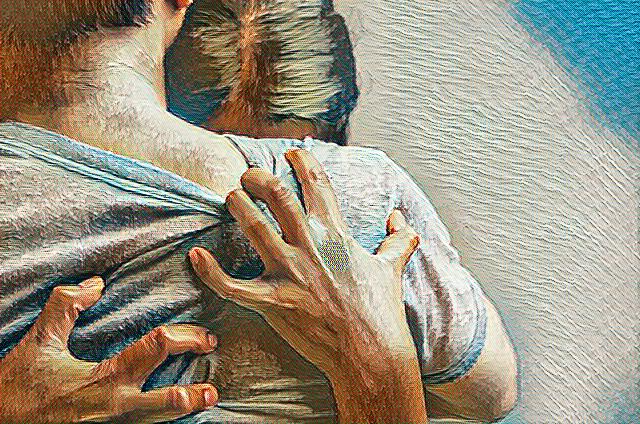
    Clinging woman image via Shutterstock
  • Sensitivity Is a Gift: How to Thrive with a Bleeding Heart

    Sensitivity Is a Gift: How to Thrive with a Bleeding Heart

    “You are not a mess. You are a feeling person in a messy world.” ~Glennon Doyle Melton

    I can recall crying myself to sleep at night when I was a little girl. Not a loud bawl, more of a soft weep.

    My mom would tuck me in goodnight and as soon as she turned the lights on her way out, I would be left with a feeling of fear and sadness. Not because I was afraid of the dark, but because I was afraid of my dark.

    The thoughts that entered my mind that kept me from falling into a peaceful slumber as an elementary school kid were rife with pain and suffering.

    Mom would say, “Think good thoughts, honey.” But I didn’t. I couldn’t. I was too affected by all the suffering I saw.

    I cried for all the injustice in the world.

    I cried for all the pain I couldn’t necessarily see but could sense in others.

    I cried for the kids getting bullied at my school.

    I cried for myself getting teased at school.

    I cried because people died and I didn’t get why they had to.

    Somewhere along the way I received the message that it wasn’t okay to cry, or feel anything other than fine. That it was somehow bad to feel emotion. That to be a good little girl, I had to conceal and go along.

    The only problem was, I had a lot of feelings. All the time I had them, intensely strong ones.

    The world is not set up to honor sensitive people. When we see someone crying, we also usually see someone rush to their side and say “Oh, don’t cry.”

    My question is, why?

    Why can’t we cry? What is so bad about crying?

    I want to scream from the rooftops:

    I reserve the right to be sad if I’m sad.

    I reserve the right to be mad if I’m mad.

    And I reserve the right to cry if I feel like crying. It’s my life and I’ll cry if I want to.

    Crying is a sign of life, by the way. It means you are alive. It’s the first thing we want to hear when a new baby is born—their cry. It is one of the most natural human reflexes we have.

    But growing up as sensitive or empathetic, we learn that we are oversensitive, too much, too emotional, cry babies, wimps, too fragile, over-reactors. So what is given to us as a gift—our sensitive nature—is often squashed, repressed, and stifled.

    And when we don’t know how to use our superpower sensitivities for good, the weight of the world’s suffering will most definitely crush us. My sensitivity felt like a wicked curse for a long time, before I learned how to treasure it like the blessing it is.

    Some things I have learned:

    Honor your sensitive nature.

    Do this by affirming yourself and realizing that this is how you were made. Make the best of it and turn it from a commonly perceived negative trait to your biggest asset.

    Maximize the strength of being highly sensitive by making sure you have a creative outlet. It is essential to have a place for it all to go. Whatever it is for you, go there as much as you can to release the myriad of emotions from any given day. Find it, do it, love it, and let it rejuvenate you.

    Find your fellow heart-bleeders.

    It can be alienating to feel like you’re the only one feeling so deeply. But there are so many of us out there, I assure you. There’s even a book called If You Feel Too Much.

    Kindle up friendships with these people and create your tribe. There is such strength and power in connecting with like minds. You will know who they are by the way you feel around them—they see and accept and love your depth of feeling, they do not shame you for it or tell you to change your nature.

    Reserve the right to cry.

    Crying is a release and a ritual of mine. I love when a good, hard cry sneaks up on me in yoga. It’s just so healing. My emotions can overwhelm me, from unbearable grief to overstimulating joy. I cry to help release that energy overflow; otherwise, my heart might explode. I am moved to tears on a regular basis and let them come and go as they please, even welcome them now.

    You do not have to be the suffering-holder and pain-keeper.

    Just because you are acutely aware of the pain and emotional nuances of those around you doesn’t mean you need to take it on and make it your own. In fact, you really can’t. It’ll bring you down with them.

    There is a beautiful word in the English language known as boundaries. Compassion is also a beautiful word. Boundaries and compassion can, in fact, co-exist. The way to be compassionate and have boundaries at the same time is to show your love and caring for others without taking responsibility for their pain and problems by trying to fix them.

    Being born extra-sensitive is a gift, so long as we choose to see it that way. It was my fatal flaw until I learned what to do with it. When we can learn to work with it, rather than against it, we can undoubtedly make it our greatest strength and the source of all the magic and richness in this life.

  • There’s No Expiration Date on Grief (So Don’t Rush Your Pain)

    There’s No Expiration Date on Grief (So Don’t Rush Your Pain)

    Woman Sitting Alone

    “They say time heals all wounds, but that presumes the source of the grief is finite.” ~Cassandra Clare

    I lost my father to a heart attack when I was sixteen. I went to school on the morning of April 14, 2008 having a dad and went home that night not having one. I soon found myself dealing with an unfamiliar cocktail of emotions, pain so overwhelming that I wouldn’t wish it on anyone.

    Every time I thought I was pulling myself together, I’d notice his belt buckle sitting on the dresser, or a pair of his socks on the floor, and suddenly the haphazard stitches I’d been sewing myself up with would tear open with heart-wrenching sobs.

    I lost the ability to make simple decisions like what takeout restaurant to order from or what to watch on TV. Nothing made sense that week.

    Dad had been my best friend, though not in the sense that he tried to act my age or allowed me to get away with things. On the contrary, my father was quite strict, always pushing me to be a better person.

    He was my best friend in that I could go to him with any worry and receive honest, unbiased advice. He forced me to see the good in myself instead of dwelling on the negative. I could cry in front of him knowing that he didn’t feel awkward or want to avoid me like dad characters on TV sitcoms.

    On the day of his death I had to accept that I could rely on no one but myself. That in and of itself seemed challenging, but now I had the added burden of everyone else depending on me. I was the shoulder that my mother and younger sister cried on.

    As the oldest child I became second in command under Mom. She relied on me for help with planning funeral details and making sure papers were in order. I didn’t mind the new role because it was empowering, as though by helping Mom I was giving back to Dad for everything he’d done for me.

    My greatest character flaw has always been focusing on the future instead of remaining grounded in the present. Not surprisingly, my father’s death and my long-term response to grief were no different.

    I cried for the entire week after he died. I cried along with everyone else at the funeral. Surely that’s all that grieving was supposed to be, right?

    When the funeral was over and the house was devoid of mourners, I picked my life up from where I was before his death.

    I avoided living in the “now” because the present was too painful, yet simultaneously tried to convince the rest of the world that I was a strong woman dealing with her pain. I stayed focused on getting into college and doing all of the things I knew my father would have wanted for me.

    This worked well until my senior year of college. I was on the Dean’s List, I had just gotten accepted into graduate school, and graduation was right around the corner.

    Then my boyfriend proposed.

    Except, I never expected that he would propose with my mother’s engagement ring, the same ring my father bought and proposed with. There was now a reminder of my father glimmering on my finger every day that I couldn’t ignore.

    Despite it being one of the happiest moments of my life, my engagement caused all of the sadness I’d buried to start bubbling up to the surface with such vigor that it felt like the day of his death all over again. I couldn’t run home and tell Dad the happy news. He wasn’t going to be able to walk me down the aisle.

    I realized how much I had been lying to myself. I hadn’t finished grieving because I hadn’t started grieving in the first place. I had been so focused on taking on the role of adult of the house that I didn’t give myself the chance to feel angry, resentful, or depressed, or to find the acceptance I really needed in order to move on.

    During the funeral people approached me to say that things would become easier in time. In truth, I don’t think this is ever the case. I have decided that grief never ends; we just find different ways of working with it in our lives.

    At twenty-four, I pretend to be a stoic and emotionless professional woman, but discussing my father with people still melts me like butter. I think about him and write about him more now than I did seven years ago, and that’s okay. There are no time limits for grief other than the ones we force on ourselves.

    If I could talk to my sixteen-year-old self, I’d tell her she shouldn’t feel guilty for her sadness. She’s entitled to grieve however she wants, for however long she wants. More importantly, I’d tell her that it’s important to take the time to sort out those feelings instead of hiding from them or putting other people first.

    I admit that certain memories of Dad still trigger a twinge of heartache. I will always feel emptiness in my life without him here. But I am aware of how much of him still lives with me—in my smile, my hobbies, and in the shared memories of people in my life who had the honor of knowing him.

    The key to grieving is not to try to stop it as quickly as possible. Grief cannot be shut off at will, despite how long I spent trying to convince myself otherwise. What matters is that we acknowledge that we are in pain and try to find the goodness in our life despite it.

    I used to look down at my engagement ring and feel numbed by sadness, both for the past and for the things that can never be. But with a new mindfulness I can look at my ring, this gift from my father, and know for certain that I’m allowed to move on and find the same happiness that my parents had.

    My father’s never going to disappear from my life; he’s just talking in ways that require careful listening.

    Woman sitting alone image via Shutterstock

  • How to Be Your Own Hero When Faced With a Hopeless Challenge

    How to Be Your Own Hero When Faced With a Hopeless Challenge

    Superhero

    “You are very powerful, provided you know how powerful you are.” ~Yogi Bhajan

    Can you remember a time when you felt completely helpless?

    I do. It was the day my daughter was diagnosed with a serious digestive illness. The doctor told us in the hospital chapel, and he acted like it was a death sentence. His one and only solution was to hand us sets of harsh prescriptions.

    I was in shock, and I knew deep down that something just didn’t add up. Her symptoms hadn’t even been that severe, although she had lost a significant amount of weight. What was happening to my little girl?

    I turned to some of the most highly respected specialists, hoping to stumble upon one who was willing and able to think outside the prescription pad. Instead, the best any of them could do was offer a pill of a different color.

    At that point, doctors seemed more like villains than the heroes I was hoping for. So, I took matters into my own hands.

    The journey was long, and we had many ups and downs. With every step forward, we had to take a step back. I became concerned that my daughter would never lead a normal life, but we kept going and never gave up.

    Then, something amazing happened. After four long years, we finally found the missing piece of her complicated health puzzle. Not only did our persistence and determination pay off, but my daughter got her life back! Her digestive system had healed, and the future was bright once again.

    It was a true miracle.

    After that experience, I realized that I could overcome almost any obstacle, as long as I set my mind to it. Now I know that no matter how unbearable or hopeless a situation may initially seem, I have the power to do something about it.

    You do, too.

    Here’s how to unleash your inner superhero, if and when you’re faced with a serious challenge of your own.

    1. Act like a sea star, not a wounded bird.

    While a wounded bird usually can’t heal on its own, a sea star regenerates its own limbs. It doesn’t have to wait for another sea star, or a human, to come to the rescue.

    Doctors backed me into a corner when they implied there was no alternative to their short sighted, one-size-fits-all solution. One even accused me of being a bad mom. That’s when I knew that I had to empower myself to help my daughter as best I could.

    The bottom line:

    You don’t always need someone or something else to help you overcome your obstacle. Yes, outside help can be beneficial. But you have the power within you to seek and potentially find solutions to your problem. First, you must acknowledge that you have tremendous power within. Then, and only then, can you take steps to unleash it.

    2. Remember: the world is your oyster.

    Did you know that oysters form pearls as a way to protect themselves from foreign substances, such as sand? Well, you could say that you have “pearls of wisdom” that give you the power to protect yourself and your loved ones.

    It all starts with trusting your gut instincts. If I had ignored mine early on, then I would have missed an important clue that doctors’ advice could be more harmful than helpful to my daughter. And I would not have given myself a chance to connect the many dots that ultimately set her health free.

    The bottom line:

    Listen to your inner voice. Not only is it there to protect you, but it can guide you toward people, places, information, and ideas that can transform your life.

    3. Dive deep into the research.

    Just think about how many expert opinions, and stories of real and imaginary people who have walked in similar shoes, are available in books and online resources. But the best ones are not always easy to find.

    I can’t tell you how many books and articles I’ve read ever since my daughter was diagnosed. Some were helpful; others were not. But there was one book that truly changed, and quite possibly even saved, my daughter’s life. And countless others as well.

    The bottom line:

    To become your own hero, go above and beyond surface level information. Reading the right book or article can not only relieve stress, but also provide you with valuable guidance that you probably won’t find anywhere else.

    4. Avoid becoming overwhelmed.

    On the other hand, so much information is available these days that exposing yourself to too much of it can actually work against you. Confusion can lead to indecision, which can easily prevent you from moving forward.

    I caught myself going down the rabbit hole many times during those four years. Eventually, I learned to nip it in the bud, using simple stress-reduction techniques. I would practice deep breathing, go for a walk, listen to music, cook, or write. The time away allowed me to see things with a fresh perspective.

    The bottom line:

    Stress relief is crucial during challenging times, and especially when negative thinking patterns set in. Try different techniques, and set aside time for them every day, even if it’s only for a few minutes. The mental break will do you good, so don’t feel guilty taking it.

    5. Learn from your mistakes. (We all make them!)

    While every decision and action may seem like a monumental task, in reality, you will likely go through a lot of trial and error before you find a complete solution. Be patient with yourself.

    During our four-year journey, I made decisions based upon the limited information I had at the time. Nothing was ever clear-cut. I moved forward, knowing I’d make mistakes. And in the end, those mistakes allowed me to connect important dots and make the necessary adjustments.

    The bottom line:

    Do not strive for perfection. Learn from mistakes and move on. Fully immerse yourself in the journey, without allowing fear to paralyze you along the way.

    6. Don’t be afraid to ask for help.

    Sometimes, life can get so challenging that we isolate ourselves. And while a certain amount of alone time can be transformative, you should find a source of emotional support as well.

    This was a tough one for me since most of my friends and family members just didn’t understand what I was going through, and seeing my daughter experience the same thing at such an awkward age was heartbreaking. But I got a lot of support from a handful of people, including some forward-thinking health care providers. I couldn’t have gotten through those four years without their help.

    The bottom line:

    Do what you need to do on your own, but don’t be afraid to ask for personal and/or professional support. Seek out people who lift you up, rather than pull you down.

    7. Make gratitude a daily habit.

    When you stop and think about everything you have to be thankful for, the situation seems a lot less bleak. A little gratitude can go a long way. And true hero power cannot be unleashed without it!

    It was my gratitude for having been blessed with such a wonderful family that fueled my every action during our four-year journey. I was reminded of it every day, when I looked at my two beautiful children. At times, I felt like a lion protecting her cub. Love motivated me from the core of my soul, each and every day.

    The bottom line:

    Every day, count on one hand five good things that are happening in your life. May they remind you of the five arms of a sea star. Jot them down in a journal, so you can revisit them anytime.

    Do you believe you can become your own hero?

    It’s not as hard as you might think.

    And you don’t have to risk your life to do so.

    Looking back on my experience with my daughter, it wasn’t any one grand, heroic gesture that turned her life around. It was small, consistent actions taken by both of us that ultimately got us where we needed to go.

    It was our faith in a positive outcome, even when the path was unclear.

    So, if and when life ever throws you a hopeless challenge, know that you can face it head on and make it through to the other side.

    All you have to do is have faith in yourself, and make the decision to try.

    Because no matter how difficult a situation may be and how helpless you may initially feel, there’s always hope. Even if you’ve hit rock bottom and have lost all faith in many of the people around you, the one person you can always count on is you.

    As a true American hero, Theodore Roosevelt once said, “Believe you can, and you’re halfway there.”

    If you believe in yourself, there’s nothing you can’t do!

    Superhero image via Shutterstock

  • You Don’t Have to Appear Perfect: It’s Okay to Admit You’re Flawed

    You Don’t Have to Appear Perfect: It’s Okay to Admit You’re Flawed

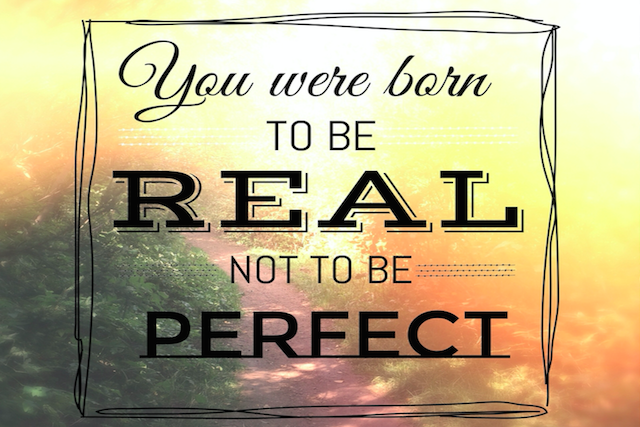
    You Were Born to Be Real

    “Out of your vulnerabilities will come your strength.” ~Sigmund Freud

    If you’re anything like I was, you have an image of yourself that you want other people to adopt. You think people expect that of you or would like you better if that’s who you were, so you pretend to be that person.

    Over time, you put on layers of protection to prevent people from seeing the imperfections that would undermine that perception. You refuse to admit to those imperfections. You may also blame others, the weather, or fate for any perceived failure—anything but yourself.

    As a result, you can’t interact with people in a real way because you can never let your guard down and be yourself. So your relationships are less than they could be.

    And you can’t really grow, because that would involve admitting you have a weakness.

    I’ve been there.

    I spent decades trying to live up to the image I thought people wanted and expected of me: the golden-boy, the successful one, the smart one.

    I am an only child and the oldest kid in my generation in my family. With that came a lot of pressure, mostly self-imposed.

    I got good grades in smart-kid classes, I didn’t drink, I didn’t do drugs, I started on my high school basketball team, I could do things on my own without help, I didn’t make mistakes.

    The problem was I did make mistakes. For example, when I was seventeen I wrecked my friend’s car because I didn’t look before I pulled into traffic, but I blamed the clutch.

    After a basketball game in which I missed a few free throws, at the next practice, our coach put me on the free-throw line and made me shoot until I made two in a row.

    Every time I missed, the whole team had to run except for me. The team ended up running twenty times before I finally hit the free throws. Instead of taking responsibility for not putting in the work to make sure I made the free throws, I blamed the coach for putting me in that “unfair” position.

    When my college relationship broke up, I blamed my girlfriend for being clingy and selfish. But the reality was that we just weren’t right for each other and it had as much, or more, to do with me than it had to do with her.

    What I perceived as clingy and selfish was just her totally reasonable reaction to my fear of commitment and my resulting withdrawal. Not recognizing that it was mostly my issue led to a series of relationships where I made similar mistakes, always concluding my partner was clingy—until I finally took a look in the mirror and recognized the only consistent variable was me.

    In each of these examples, and countless other times, I just ignored my mistake or made some excuse for it and kept moving on because recognizing it wouldn’t fit in with the perfect version of myself I thought everyone expected.

    The more time I spent being this polished up version of myself, the more removed I became from who I actually was. And it just built on itself all throughout adulthood.

    In fact, even when I started being okay doing things I would have perceived as a mistake when I was younger, like drinking socially, I wouldn’t do it around my family. Not even at holiday functions when everyone else was drinking.

    I felt like I needed to live up to the idealized version of myself that I envisioned they had. So I kept up appearances.

    The longer I lived that version of life, the more difficult, almost impossible, it became for me to grow, because to do so meant I had to recognize I did actually make mistakes and had room to grow.

    It may sound like I was conceited and super full of myself, but that wasn’t really it. It wasn’t that I believed I was perfect; I just needed everyone else to believe I was, which meant I had to pretend. I was terrified of anyone finding out it wasn’t true.

    When I finally came to terms with the fact that playing perfect (unsuccessfully, I might add) was a terrible way to go about being happy, having real relationships, and making choices in life, it was terrifying.

    It meant I had to do something I never really had before—admit weaknesses, admit I needed help with things, admit mistakes were my fault, not someone else’s or just bad luck.

    Peeling off the layers of protection is an ongoing process. But it has allowed me to reach out for help and truly grow as a person for the first time in a long time.

    Ironically, becoming vulnerable has allowed me to get closer to being (although certainly not actually becoming) the person I pretended to be for so long.

    It can do the same thing for you.

    You Aren’t Sir So and So, Take Off the Knight-like Suit of Armor

    Being hurt sucks, whether it’s physically, mentally, or emotionally. So we protect ourselves from pain.

    And we are generally good at minimizing the physical kind.

    Our lives are climate-controlled, we rarely feel the pangs of hunger or a desperate thirst, we treat our illnesses and minor aches with medicines that knock them out before they really get started, and we rarely experience the loss of a loved one before old age.

    All of that is great, and a fairly good list of why we should be thankful to live in the modern world rather than any of those that preceded it.

    But we also spend a lot of energy protecting ourselves from the type of emotional pain that comes along with being authentic and vulnerable, admitting our weaknesses.

    And, ironically, that causes us significant emotional pain because having to always be a shined-up, polished version of ourselves is hard and stressful.

    Plus, it cheats us out of the type of emotional pleasure we want because when we aren’t authentic with people, it’s very difficult to have authentic emotional connections.

    It also blocks our growth.

    The longer you act as though you are perfect the way you are, the harder it is for you to see where you need or want to grow.

    You become so used to acting perfect, you start to believe it. Maybe not intellectually, but subconsciously, you think, “I’m pretty good as I am. I just need a lucky break and then I’ll be happy and successful.”

    And when you start putting the focus and power on your future success on something external like “a lucky break,” you fairly quickly lose any motivation for self-improvement and instead just sit around doing what you have been doing, waiting for fortune to smile on you one way or another.

    This is not a great formula for improvement, or success for that matter.

    Also, not being vulnerable makes it is difficult, if not impossible, to recruit anyone else to help you because to do so, you have to admit you aren’t perfect.

    So how do you start this process?

    The first step is to the difference between who you are and the version you show to the people in your life.

    This will take time, because (if you are anything like me) you have been play-acting “super-you” for so long that it’s actually hard to tease out the difference. That’s okay.

    Start small. Just listen to yourself talk to people over the next couple of days. In what situations do you say things you really don’t believe so that you can fit in? Are there particular people that you do it more often with?

    Once you’ve identified your situations where you tend to cover up your flaws, the next step is doing something about it.

    When you find yourself in the situations in which you tend to be less than honest about who you are, be diligent about being true to yourself. Stop yourself, or even correct yourself if you say something dishonest.

    If you can start to be vulnerable in those situations, it will start to be much easier to do it throughout your entire day.

    That has certainly been the case for me.

    For a long time I regularly covered up my faults and weaknesses with my family because I desperately wanted to meet their expectations. So when they asked, everything was always great. School was great, work was great, and my relationship was great, even when they weren’t.

    Once I decided to just be real with my family, my relationships with them, which had previously felt inauthentic, plastic, and rigid, started to warm, soften, and deepen.  

    The other situation where I was rarely, if ever, willing to admit mistakes was in athletics. When something went wrong while I was playing, it was always bad luck or someone else’s fault.

    When I recognized my tendency to be inauthentic in team situations, and embraced it, taking responsibility when things were my fault, a couple things happened.

    One, no one kicked me out and judged me as incompetent (which was my fear), and two, I was able to get help to get better at things.

    Taking strides toward admitting my imperfections in these areas carried over to other situations too.

    For example, I am now much more likely to admit that I did something wrong at home or in my personal relationships.

    When you allow yourself to recognize you aren’t perfect, you will also be able pursue growth, stop making the same mistakes over and over again, and deepen your relationships with everyone you interact with.

    Shedding the layers of protection you have put on over the years is hard, but once you give yourself permission to do it, the freedom will feel tangible. You will breathe an exhilarating sigh of relief.

    And once you’ve started the process, the momentum will carry you. You will start living a life and having relationships that are true to you, not to whatever you thought everyone else wanted from you.

    And it is all within your power. You just have to decide, and then do it.

    You were born to be real image via Shutterstock

  • The Dangers of Being Too Busy and How to Restore Your Health and Sanity

    The Dangers of Being Too Busy and How to Restore Your Health and Sanity

    Busy Schedule

    “Take care of your body. It’s the only place you have to live.” ~Jim Rohn

    Busy doesn’t adequately describe my life over the past few years. Let’s say it was a hurricane of a schedule, with extra storms and a tsunami thrown in. Looking back from my current safe vantage point, I’m not sure how I survived.

    The Stress Of A Busy Schedule

    In 2011 I was working full time for the civil service and working part time trying to start up my own business. Early in the year I had my son, who turned out to be a non-sleeper and a constant crier.

    After nine months of sleeplessness, stress, and upset I went back to the civil service ‘part time’ three days a week, but the reality was I had the same workload, only now I had to sort out childcare and stay awake all night to deal with my son too.

    Over the course of three years we also moved three times. You know how they say moving is the most stressful experience? It is—especially with two jobs and a toddler.

    On top of all this stress I kept getting ill. At my check-up I was told my blood pressure was too high. I couldn’t shift a permanent backache, cold, and headache.

    I cried literally all the time, boosting the crying human total to two in one house. My son outdid me, though, because you’ve got to get on. Being a new mum is hard, but I told myself “Get a grip,” every day.

    The Wake Up Call

    Then my aunt suddenly died at the young age of fifty-nine.

    She was always busy moving, rescuing horses, and looking fabulous. She complained to her doctor about headaches and he sent her away with a “stress” diagnosis. The following week she was taken to the emergency department and she died of cancer a few months later.

    It was a mighty wake-up call for me. Work, stress, and demands had taken the fun out of life—it was miserable.

    Life is too short, so I made a vow to sort myself out. I was ungrateful for my life, too busy to appreciate anything except tea and Kit Kats. I was a horrible person to be around, if anyone actually saw me.

    How I Dealt with the Nightmare Years

    I ate rubbish.

    I don’t eat much meat or dairy, but I ate a lot of processed foods to save time. My son had lovingly prepared home-cooked foods, but me? I ate standing up in the kitchen—usually jam on toast.

    I didn’t exercise.

    I didn’t have time to exercise. If my son was asleep it was time to work on the business, or cook something, or even clean.

    I found time for friends instead of me.

    I sent round robin emails and Facebook updates to stay in touch because I didn’t have time for individual chats, but I went on nights out even when I was too tired to stand up. I felt my social obligations were important. I was still the joker and laughed at anything going, but by god, it was exhausting. 

    I lost touch with my hubby. 

    We argued all the time, trying to outdo each other in the “I’m more exhausted than you” Tiredness Olympics. I won because I fell out of bed one night and didn’t wake up. He didn’t notice.

    I didn’t enjoy my son.

    I feel robbed of his early years, not just because he was a nightmare baby, but because I didn’t have time to appreciate him.

    I cried a lot. 

    I cried every day, usually in the bath at midnight after I fell asleep and dropped my phone in the water.

    So what do you think of my coping strategy? It’s pretty pathetic looking back. Many of us do this in the belief that we’re soldiering on, but in fact we’re destroying our health.

    How I Made it Better

    After discussions with my husband we decided to make some cutbacks so I could give up my civil service job. The thought of us both commuting and juggling a school run with a traffic jam was the deal breaker. I was to concentrate on my home business instead.

    I realize I was fortunate to be able to drop my job and focus on my son and my business, and that not everyone can do that. But I believe everyone can start restoring their health and their sanity by making these choices and lifestyle changes.

    Sleep and more sleep. 

    Skip that TV program and go to bed.

    I started getting ready for bed at 10:00. By the time I was asleep it was 11ish, but this was a lot better than my midnight to 1:00am routine.

    When my son woke in the night, instead of putting him back in his own bed (with an hour of fighting), I just let him in with us. It’s quite cosy, and he’s more relaxed.

    Getting kicked every now and then is worth it in my opinion. A new Korean study has shown we increase our odds of diabetes, stroke, and heart disease if we get less than six hours a night—so damn the parenting magazines.

    I went to the doctor.

    It’s easy to dismiss small symptoms when you don’t have the time to stop.

    When I finally got to the doctor, who went thirty minutes over my allotted ten minute appointment, I left with appointments for a physiotherapist, an ultrasound, and the contraception nurse; a prescription for psoriasis treatment; and instructions to buy a steam inhaler and some iron tablets.

    It turned out that I had a large ovarian cyst, anaemia, sciatica, chronic nasal infections, a bad time on the implant contraceptive, and violent psoriasis all dragging me down—and I was exhausted. The doctor thought I had post-natal depression, but in hindsight I think I was simply tired out.

    Talk about a mess! That’s what can build up when you ignore your health. The solution?

    Exercise.

    Fresh air and walking are tonics like no other. I started walking and talking with my son. I soon realized he was bright and had a real grasp of emotion and how people felt. He told me I was always cross, but he wanted to make me happy (cue crying).

    He’s now at school, so we walk there and back every day to talk about his day and the worries he might have. His behavior is startlingly better and he sleeps well too.

    After drop-off I walk to the supermarket or wherever, just for the exercise. I’ve lost fourteen pounds and my backache is pretty much gone.

    Put the mobile down.

    It’s easy to constantly look at Facebook, Twitter, personal emails, and even work emails when you should be resting.

    Keeping work and home life separate is harder than ever, but it’s more important than ever. Talk to your family, watch mindless TV, or read a book. I stopped reading email or Facebook after 6:00pm and immediately felt more relaxed.

    Drink water, not wine.

    Dehydration is a problem for many people, but they don’t realize it. Your body doesn’t function well without water. A new study claims that millions of us visit the doctor with tiredness symptoms when we’re simply dehydrated.

    I didn’t drink much water in the dark days because it didn’t give me a boost and I resented all the peeing time. As a result, my skin was dull and grey, and yes, I was exhausted.

    I got a pet.

    My rescue cat was the best present ever. He kept me calm with purring, sleepiness, and soft fur. Dave lent me a furry ear and didn’t mind when I complained or cried it out.

    Mindfulness.

    From the outside all was calm, organized, and clean. On the inside I was fire fighting with sugar, caffeine palpitations, and a bad attitude. So I took up mindfulness—the act of present-time-awareness.

    According to The NHS, “Mindfulness, sometimes also called ‘present-centredness,’ can help us enjoy the world more and understand ourselves better.” They aren’t wrong!

    It’s okay to say you need some alone time, or to leave the house messy. I didn’t want people to think badly of me back then, so I put myself under pressure to be an actual Wonder Woman. I found out there’s a reason she’s fictional.

    I stopped eating sugar.

    Processed stuff was my main diet, and it’s horrible for our health.

    I was never fond of meat and dairy, but I was filling up on caffeine and sugar. I upped our family intake of fruit and vegetables, bought soya milk, and caffeine-free teabags to use in every other cup. Bye-bye constipation and headaches.

    No smoking.

    I wasn’t a smoker, but a busy stressful schedule can cause people to start or to smoke more. Goodness knows I was looking for a prop. The effects of smoking on health are devastating—heart disease, cancer, asthma, and susceptibly to colds are just a few. There are no pros.

    Feeling Human

    It’s taken almost a year to feel human again. My dietary changes, exercise, and water intake helped almost immediately, but it took a little longer for the health problems to clear up.

    Now I find myself looking back and wondering how on earth I allowed my busy schedule to harm my health so badly, not to mention my family life and friendships.

    Nothing is more important than your health and well-being, because without it you have no life. Is that overtime really worth it? Can that email wait? Those illness symptoms certainly can’t.

    When we’re on a busy schedule, fitting in some self-care and relaxation time just feels like another chore. However, it’s one that could save your health, life, and relationship. Make it your number one priority—before it’s too late.

    Busy schedule image via Shutterstock

  • What We All Really Need When We’re Struggling

    What We All Really Need When We’re Struggling

    Sad Man

    “There are two ways of spreading light: be the candle or the mirror that reflects it.” ~Edith Wharton

    I tucked my boarding pass safely into my coat pocket, donned my eyeglasses, and searched for the overhead signs that would lead me to the correct gate. Thanksgiving would be here soon and the Orlando airport was bursting at the seams with travelers.

    I turned the corner and jerked to a stop. Hundreds of people stood before me, bunched together in a space the size of a ballroom. I’d have to maneuver my way through them, I thought, to get to the security gate off in the distance. And then I quickly realized that’s exactly where all those other people were headed, too.

    I resigned myself to a long wait. What a waste of time, I thought to myself. I just want to get home.

    A symphony of sounds surrounded me: babies crying, kids fussing, some folks complaining, some laughing, loudspeakers blaring, cell phones ringing, along with the buzz of constant chatter.

    This being Orlando, a family wearing mouse ears huddled directly in front of me. I rose up on tiptoes to peek above their heads and catch a glimpse of the security area. Still far away. With no roped lanes to guide us, some newcomers gently nudged by me in an effort to gain a little bit of extra distance. Funny how you can be pressed up against others in a large crowd and at the same time be invisible to them.

    The swarm of people slowly funneled their way into one of two security lanes, and at last it was my turn. I handed my identification to the agent and was ushered into a long line of people waiting to go through the scanners. At least now it was an obvious line. No more folks jockeying for position.

    The woman behind me sighed. A few seconds later she sighed again. Not a sigh of frustration, more like a sigh of grim resignation. A TSA agent passed by and she flagged him down.

    “This is taking so long,” she said. “Will I be able to make my flight on time?” Her tone was one of despair.

    “I don’t know,” the agent replied.

    “Do you think they will hold the plane a few extra minutes for me?” she asked.

    I didn’t hear his response. I imagined he simply shook his head no. “Oh, dear,” she muttered to herself. “Oh, dear.”

    At the pace the line was moving I figured it would be another ten minutes at least before we would pass through the x-ray scanners. Then it was anyone’s guess how far you had to walk to arrive at the proper gate.

    Out of the corner of my eye I watched the woman behind me lower her head, forlorn and clearly troubled by her situation. I turned to her.

    “I couldn’t help but overhear,” I said. “Please switch places with me. Every little bit helps.” She gratefully accepted my offer. We both understood that my act saved her perhaps fifteen or twenty seconds of time. Hardly enough time to make a meaningful difference.

    But that which is most meaningful may not always be what you think.

    Instantly, as if by magic, her demeanor changed from being tense and downcast to cheery and hopeful. She exhaled another sigh, but this time it was a sigh of relief.

    “Isn’t this crazy!” she said, grinning ear to ear. “Next time I will plan better. Have you ever seen so many people?”

    She stood next to me, not in front of me or behind me, but side-by-side.

    We spent the next several minutes chatting happily about ordinary things—where we were headed, how wearisome travel can be, how a cup of strong coffee would taste so good right about now. But her smile never left her. And I was smiling, too. As much as I helped her to feel uplifted, I was now uplifted. My thoughts of a long day of travel ahead of me vanished.

    I grew deaf to the noises and chatter all about me. I didn’t see anyone else—no kids in strollers, no adults with mouse ears. This time I wasn’t invisible but everybody else was. It was just the two of us cracking jokes and making small talk. Side-by-side.

    Suddenly it was our turn for the x-ray scanner. She thanked me one last time and we parted ways. Within a minute I lost sight of her.

    What just happened? I asked myself. And then I realized something important. What this woman wanted was reassurance she would make her flight on time. But what she needed was to know that somebody cared.

    And isn’t that what we all need most of the time? When we feel worried or hurt or simply frustrated by life’s burdens; when the “givens” of life (sickness, loss, disappointment, heartbreak) overwhelm us; when we struggle to make our way through another day; a warm embrace, thoughtful gesture, or a hand on our shoulder can be all we need to feel a little more hopeful and, perhaps, a lot more cared about.

    I don’t know if that woman got to her plane on time. When you help others along the road you may never know the outcome of their journey. But it may not have been your purpose to know. Your purpose may have been to simply meet them on the path and in some way be a source of light so they can see things from a clearer perspective—and in so doing discovering that they may have been a source of light for you.

    As for me, I no longer see long lines as a waste of time but as opportunities to make a difference, however small, in someone’s life.

    Never underestimate your power to make a difference in the life of others by even a small act of kindness or a few comforting words. Opportunities abound every day. Seek them out. And we all know this to be true: it is in the giving that we receive.

    Lost hope image via Shutterstock

  • 10 Powerful Practices to Take Good Care of Yourself

    10 Powerful Practices to Take Good Care of Yourself

    Woman Meditating

    “You don’t pass or fail at being a person, dear.” ~Neil Gaiman

    I discovered my spiritual path early. As a teenager I would read my mother’s self-help books. I spent most of my twenties actively pursuing self-development by studying, attending workshops, and going on retreats all over the world.

    At the time, I thought I was searching for happiness and inner peace. I see now that I bought into a rigid idea of what a ‘spiritual person’ was and tried to live up to that.

    My inner world was not happy or peaceful. The way I treated myself was far from soulful. In fact, it was down right abusive.

    I thought I needed ‘fixing’ because even after all the learning and work I had done, I would still beat myself up whenever I wasn’t perfect. My internal story about myself continued to be judgmental and negative, and I remained fixated on gathering evidence to prove I wasn’t good enough.

    Over a decade later, I was married with a child and had gained many qualifications that helped solidify a life without self-abuse. It didn’t occur to me until I had my second child—nine years after my first—that I wasn’t really being nurturing or caring toward myself either.

    I knew I was doing something right, because my experience the second time around was completely different; it was a lot more joyful.

    I reflected on exactly what the difference was between my two experiences. I came to realize that the answer was me.

    I had changed so much—my thoughts, my expectations, my beliefs, the way I responded to emotions and stress, all of which had a flow-on effect that influenced everything else in my life.

    Then something so minuscule happened. I would escape the house and my newborn for thirty minutes, once a week to read an inspirational Tiny Buddha article over coffee.

    This was enough to keep me ‘topped up’ so I wasn’t completely depleting myself while caring for my family during those first few months. No big revelation really that taking time out for yourself is going to be a good thing.

    Yet, this simple act had such a huge impact on me. I really started focusing on self-care. It became an intention.

    Instead of forcing myself to exercise and lose weight, I listened to what my body needed (as a result I didn’t beat myself up if exercise wasn’t achieved).

    I stopped expecting myself to complete everything on my to-do list.

    I questioned certain beliefs (like defining what being a mother, wife, and woman meant to me).

    If any unkindness about myself crept into my thoughts, I challenged it. If there was some truth to the thought, I met that with acceptance, which invoked a compassion that wasn’t present before.

    I started paying attention to what was different from a good day to a bad day. I explored when I felt pain and suffering trying to locate why it was there (hint: usually when reality was different from what I wanted it to be). All this eventually turned into an inner practice for me.

    An inner practice doesn’t tell you what to think, or what to do. It invites you to explore how you think, and why you do something (or don’t do it).

    Here are some tips for creating your own inner practice:

    1. Connect with yourself.

    Self-awareness is being able to explore aspects of yourself with curiosity instead of judgment. Once we develop this ability we can deepen the connection we have with ourselves—not just our mental self, but emotionally, physically, and spiritually.

    2. Connect with acceptance.

    Acknowledge what’s true about yourself, today, in this moment, exactly as you are—without seeking to immediately change anything. This is acceptance.

    Ignoring, rejecting, or refusing to acknowledge any part of yourself will never bring about effective change. Acceptance brings the possibility of transformation. A caterpillar transforms into a butterfly; it doesn’t change into one or become a better caterpillar. When we practice self-care, transformation shows up in our life.

    3. Connect with self-kindness. 

    Offer yourself kindness. You are not any less special from anyone else on the planet, so why would you show others kindness and not yourself? Is abuse toward anyone (including yourself) ever acceptable?

    You have a choice whether you meet your inner world with kindness, ambivalence, or meanness. (Tip: life is easier with kindness in it).

    4. Connect with self-compassion.

    Have compassion for yourself when you aren’t able to achieve kindness. Acknowledge your flaws, faults, and failing by meeting them with compassion.

    Either being human and judgment go hand-in-hand, or you align yourself with being human and compassionate. Which would you rather? Only one can exist at a time.

    5. Connect with your needs.

    Most of us spend our lives caring for others. Sometimes we sacrifice our own needs, but is it really the grand loving gesture we convince ourselves it is? Do you over-give to others so you don’t have to listen to what might be lacking in your life?

    What do you need physically, emotionally, mentally, and spiritually? What do you feel deprived of?

    We have to decide that our needs are non-negotiable and put boundaries in place to ensure that we receive what is vital for our well-being.

    If you asked yourself how your life would be different if your needs were met, the answer would be a positive one. (Although it is important to note that needs and wants are completely different things).

    6. Connect with your thoughts.  

    If we have been unkind to ourselves for a long time, it can take a while to break that habit. Being aware of your thoughts gives you the opportunity to choose whether they are true or not. You should challenge a thought’s truth, kindness, and purpose.

    Sometimes we aren’t even aware of how a single thought can ruin a good mood. For example, have you ever looked at a photo of yourself from a few years ago and thought, I was much prettier /slimmer/ happier/more fun, then? Wouldn’t you think it was a bit rude if a friend said those same things to you?

    Or, do you place your future self on a pedestal like I used to. Future Belinda had achieved so much more than me; she was way more confident, wiser, more spiritual, happier, and healthier. It’s so unkind (and painful) to compare yourself to a version of you that doesn’t exist.

    7. Connect with your beliefs.

    Sometimes our feelings don’t match what our logical brain is telling us. When this happens, the answer often to that contradiction lies in our beliefs.

    We formed a lot of our beliefs about the world as children. As adults we can still unconditionally continue to believe what a child interpreted as truth.

    Self-care is exploring what beliefs you hold—giving yourself the option of whether you wish to continue to believe them or not. Start with your beliefs about self-care—do you think that it’s selfish or self-preservation?

    8. Connect with your expectations. 

    Our expectations can change the way we view everything in our life. I notice that on days I am able to completely disable my expectations, I usually have a really good day because there are no conditions placed upon it.

    What happens if you don’t achieve the expectations you place on yourself? Why is the expectation there? Self-care is ensuring that your expectations serve you—not you serving them.

    9. Connect with your wants.

    There is a gap between how things are now and how we want them to be. Sometimes we fill this gap with worry, pain, and stress.

    Explore this gap between what is and what you want. What exactly would you like to be different? What would be useful to help narrow this gap?

    10. Connect with your intention. 

    Intention is behind everything we do. For one day, one week, or one month, make your main intention self-care.

    That means that every decision you make is with the conscious intention of doing what is best for you and your health. Do you think that you would make the same choices? How would life be different?

    We are all perfectly imperfect, so we are going to temporarily fail at some point. The main thing to remember when creating any practice is: begin, continue, and repeat.

    Woman meditating image via Shutterstock

  • How to Respond to a Verbal Assault Without Losing Your Cool

    How to Respond to a Verbal Assault Without Losing Your Cool

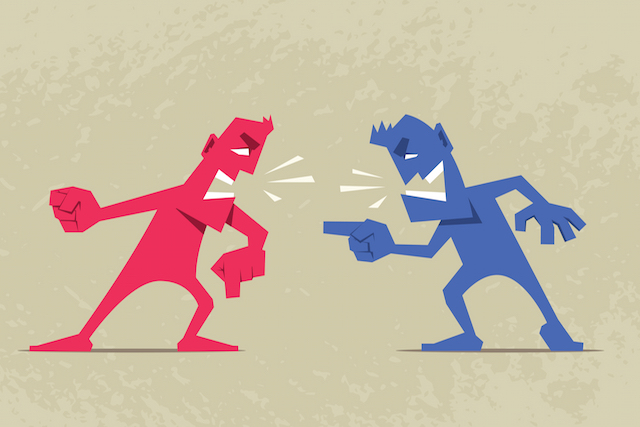
    Two Angry Men

    “Often those that criticize others reveal what he himself lacks.” ~Shannon L. Adler

     I answer the phone.

    And then the yelling starts. The woman on the other end lets fly a barrage of abuse.

    She’s angry and upset and she’s taking it out on me. Because I haven’t sent her a text message for two days.

    She wants to know why I haven’t responded and what is wrong with me. She wants to know how I can be so mean.

    I don’t understand. I thought I was giving her space during a difficult time. I was also dealing with events in my own life.

    I’ve known her for five years, during which time she’s shown herself to be a powerful ally, a fierce supporter, and a generous friend.

    But her power has a flip side, as she’s also difficult and draining.

    Forceful and forthright, she’s an expert in getting people to do her bidding.

    This power had caused cracks in our friendship some time ago, and recently those cracks had become chasms.

    I knew she had a string of broken friendships that had erupted dramatically when she perceived a slight.

    And now it was my turn because I didn’t respond to her SMS.

    Normally I hate conflict. I turn to jelly, stutter and stumble over my words, and feel guilty as all hell. I take on more blame than I should—say it’s all my fault. I just want the conflict to stop.

    Actually, I want to run and hide until it all blows over.

    But there’s no hiding from this call. No running away from this angry torrent of questions and blame.

    And somehow I don’t turn to jelly this time. I find I have a strong inner core. A firm resolve that I can call on.

    I’m not quite sure how, but I managed that conflict effectively. Even elegantly.

    I didn’t necessarily manage it in the way that the other person wanted me to, but I managed it in such a way that I am proud of myself.

    I managed to draw on all the conflict resolution skills I read about, but never used.

    Here’s what I did.

    1. Take their side.

    One of the best things you can do to deflate a conflict is to empathize and agree with the other person, particularly if they’re really angry and emotional.

    By agreeing with at least some aspect of their argument, they have nothing to fight about.

    The goal isn’t just to placate them. You may find that by empathizing you recognize some truth in what they’re saying. When someone is emotional, it’s hard to recognize when they have valid points, but at times they do.

    If you simply can’t see eye to eye, you don’t have to agree with their whole argument, just agree with something. You can start by saying, “You have every right to feel that way.”

    What I said during that call was “I’m sorry you’re upset.” Because I was genuinely sorry that she was so distressed. Saying this allowed me to empathize with her, but not give away my own power or accept blame for the situation.

    2. Pretend it’s Groundhog Day.

    Remember Groundhog Day—when Bill Murray had to do the same thing over and over? Well, it’s often good to pretend it’s Groundhog Day when someone is angry.

    You see, when someone is really emotional and upset or angry it’s a little like they’re drunk. Adrenaline is coursing through their body. This sets off a series of events that triggers the release of hormones.

    In fact, some people use the term “adrenaline drunk” because when we’re in this state our ability to behave appropriately, listen to reason, and even control ourselves is vastly diminished.

    That old expression “I’m so angry I can’t see straight” is fairly accurate.

    So repeating your message is necessary. I kept repeating, “I’m sorry you’re upset, but I haven’t done anything wrong.”

    3. Channel Eeyore.

    If you keep your voice calm and soothing, it has a relaxing effect on both of you.

    Try channeling Eeyore. He’s the pessimistic grey donkey in Winnie the Pooh. Although he’s often a little gloomy, he’s completely unflappable.

    Nothing gets Eeyore riled or cranky. And he’s also empathetic, so channeling Eeyore can be really helpful when you’re caught in the crossfire of someone’s fury.

    During this call I managed to distance myself and remain calm. I didn’t raise my voice or get emotional. Everything I said was spoken in low tones, and I forced myself to speak slowly.

    It wasn’t easy, but I held it together until the end of the call. Using a soothing voice calmed me as much as it calmed her.

    4. Establish ownership.

    Get clear on who owns the problems or issues that come up. I know this is easier said than done, but doing this helps to separate the person from the problems.

    It also allows you to work on solutions, and to be clear on your own attachment to both the problem and the solution.

    If you can do this, you retain your personal power. This technique allows you to stay in control, and ensure that you don’t become involved in an emotional slanging match.

    During this call I listened to what the real problems were. It turned out that my friend had a lot of unwritten rules for our relationship.

    These were rules I didn’t know or understand, and rules she felt I’d disobeyed. She was upset that I’d violated these unspoken rules.

    I also realized that I wasn’t interested in keeping a friendship that was so complex and difficult. For me, the cost of this relationship suddenly looked far too high.

    5. Look after yourself.

    Above all else, make sure you take care of yourself.

    Sometimes you can’t reach a win-win solution, or even a win-lose solution. In my case, I had to agree to disagree because the underlying issues weren’t resolvable.

    One of the ways I looked after myself was to know that I’d done everything in my control to resolve the situation in a reasonable way. I tried my hardest but we couldn’t make it work.

    I was sad the friendship was over. But I was comfortable that I had stayed true to myself.

    I also knew that I had taken part in the conversation as an equal party. I had made a conscious decision not to apologize or ask forgiveness.

    I could easily have given in, accepted all the blame, and done whatever it took to patch things up. I could have let all her yelling and anger bully me into apologizing.

    But I put myself first, and that made a huge difference. Normally I focus on the hurt that the other person is feeling. This time I focused on myself.

    Respect is Everything

    Here’s the key takeaway I have for you: Respect is everything.

    Conflict is part of life, whether we like it or not. And the real key to any conflict is respect.

    It’s important to show respect for the other person’s thoughts and feelings, and you can do that by agreeing with some part of their argument.

    But you don’t have to agree with everything. And you don’t have to give in or turn to jelly.

    Because showing respect for other people’s thoughts and feelings is only half the story. Your feelings and thoughts are just as important as anyone else’s.

    You deserve to be heard and understood too.

    Your opinions and beliefs are valuable.

    Your message is just as valid as anyone else’s.

    You don’t have to shout from the rooftops. You just need to look after yourself.

    So the next time you find yourself involved in a conflict, keep yourself calm by speaking calmly.

    Breathe deeply and find your inner core.

    It’s there, just waiting for you.

    Two angry men image via Shutterstock
    Editor’s Note: This post has been expanded for clarification, and the title has been changed to better reflect the story and messages shared.

  • The Power of “No”: Better Boundaries Lead to a Better Life

    The Power of “No”: Better Boundaries Lead to a Better Life

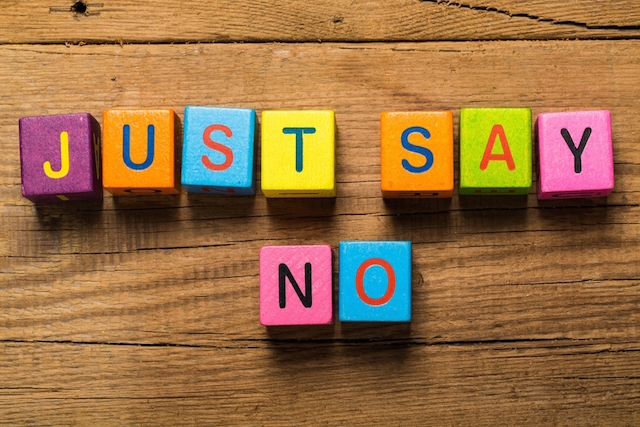
    Just Say No

    “’No’ is a complete sentence.” ~Anne Lamott

    When I went to counseling for the first time, my therapist told me I needed better boundaries. I had no idea what he was talking about, and although the book he lent me on the subject helped a little, I still didn’t really get it.

    I tried here and there to integrate the few concepts I’d picked up from the book into my life, but mostly I stayed away from anything that could be considered boundary setting, as I still couldn’t quite figure out what it meant.

    A decade after my first introduction to the concept, though, two life coaches I admire happened to be teaching a free class on the subject, and I jumped at the chance to take my learning to the next level.

    After hearing what they had to say, things finally started to click. I began to understand that it wasn’t about trying to control someone else’s actions, but rather about being clear on what action I would take if and when my boundaries were crossed.

    Still, it was hard for me to set boundaries, because I felt very uncertain of myself and my worth. Was it okay to tell someone no? Or that I wasn’t satisfied with the way things were?

    Since the world works in mysterious ways, chances to test my boundaries continue appearing in my life whether I want them to or not.

    Most recently, it came up with my child, an area where I’d never realized boundaries would be necessary (silly, but true).

    My mother and I were out to lunch with my toddler, and I spent most of the wait for our food walking around bouncing my daughter, trying to keep her entertained. After the food came I was barely able to eat, because my little girl wanted to be held and would not stay in her high chair.

    After that experience, my mom sent me an email. She thought I needed to start setting some gentle boundaries with my daughter, and was buying me a book that she thought would help. I burst out crying because I knew she was right.

    As soon and I started reading the book, I finally got it. Everything that I’d been trying to understand about boundaries for the last fifteen years finally made sense, and I finally started believing it was okay for me to get my needs met, and that it was totally acceptable to say no sometimes.

    This change with my daughter has come more easily than I imagined, and, thankfully, it’s starting to impact how I interact with adults, too.

    I have a feeling I’m going to need another fifteen years to become an expert at setting boundaries, but here are some things I’ve learned so far.

    1. Most of us are socialized to actively not have boundaries.

    We’re taught that we shouldn’t say no, and that it would be impolite to ignore another person’s wishes.

    This point was driven home for me the other day when I saw a kid’s TV program that made it clear that even the youngest members of our society are being taught they should always do what other people want.

    In the program, one character (a bear) was watching TV, but then a second character (a little girl) came in and wanted to watch something else. She gave the bear big, sad, puppy dog eyes, and, even though he clearly didn’t want to, he gave up the TV.

    As the girl watched TV, the bear paced back and forth, wishing he was watching his program. He kept hoping she would fall asleep, or go play outside, so he could get back to what he really wanted to be doing.

    This is exactly how we start learning that it’s not okay to say exactly what we want. When we’re young and impressionable, we’re taught that it’s rude to be clear on what we do and do not like.

    2. Not having clear boundaries keeps us in lives that are subpar.

    In my own life not having boundaries has been a huge problem. It’s allowed me to stay in unhealthy relationships (both the romantic kind and the friend kind), made me a doormat, and made me anxious and unhappy.

    Setting a boundary simply means saying no if I don’t want to do something (instead of feeling guilty and obligated). It means telling my husband what I need rather than getting mad when he doesn’t read my mind. It means only working the hours I’ve set for myself rather than running myself ragged trying to do “enough.”

    3. When you refuse to set a boundary, it leads to anger and resentment.

    It can tear relationships apart, keep you in a role at work that doesn’t suit you, and cause you to feel badly about yourself.

    Looking back on a relationship I had in college, I can see how not having boundaries set us up for failure. My boyfriend at the time was involved in a couple of activities that made me very uncomfortable, but I wouldn’t set a boundary with him, so instead I just lashed out with anger and jealousy, which just made things worse.

    The healthiest thing I could have done for myself would have been to say, “I’m not okay with you doing that. If that’s something you’re going to continue doing, I am going to have to remove myself from this relationship.” I was too fearful of the consequences, though, so it took me a long time to end things.

    One caveat when setting boundaries like this: You must be sure you’re not setting a limit in order to control or change someone. You must be truly ready to walk away from the relationship, and you absolutely must be setting the boundary from a place of love and respect for yourself, rather than a place of fear and control toward someone else.

    4. Setting boundaries is going to be uncomfortable sometimes.

    If you always say yes to everything, or let your parents or neighbors come over unannounced even though it really annoys you, or always clean up after your spouse because you don’t want to upset him or her by requesting they clean up after themselves, you’re going to have to take some scary steps to start drawing lines in the sand.

    The uncomfortable feelings don’t mean you shouldn’t follow through with boundary setting, though. In the long run everyone will be happier if you set better boundaries, and if they’re not, it’s really and truly their own issue, not yours.

    5. Boundaries are never about trying to change someone else’s actions or behaviors.

    This one gets kind of tricky for me, but think of it like this: If you’re in the car and someone is speeding, your boundary wouldn’t be “stop driving so fast,” it would be “I am very scared that you’re driving this fast; if you’re not going to slow down, I need you stop and to let me out of the car.”

    You’re not trying to make them stop speeding, you’re telling them you won’t allow yourself to be in the speeding car.

    Boundaries are about getting your needs met, but not by getting someone else to sacrifice their own needs. You have to decide what you really want for your own life, and then go about setting limits that serve these goals.

    Just say no image via Shutterstock
  • How to Stop Beating Yourself Up Over the Little Things

    How to Stop Beating Yourself Up Over the Little Things

    Woman in a Cage

    “You are perfect just as you are and you could use a little improvement.” ~Shunryu Suzuki-roshi

    A few weeks ago, I had a day that I felt like an utter failure.

    I had eaten junk food even though I was trying to get healthy. I’d skipped out on going to the gym for no good reason. I forgot to call my parents even though I promised them I would. I didn’t meet my daily writing goals and ended up watching two movies I’d already seen.

    In other words, I slid into a lot of bad habits all at once.

    I think we all know the feeling you get after a day like that.

    I was spinning out of control, losing hold on everything I’d managed to build so carefully over so many months.

    My grip on order felt slippery at best, like trying to catch a determined fish with your bare hands. I remember sitting down on the floor and just crying, full of the shame that comes with letting yourself down.

    The worst part? It was the third day in a row I’d felt this way. It was the third in a series of days in which I’d gone to bed feeling like my life was falling apart on my watch.

    I felt like the ultimate letdown, consistently messing up something that I knew was in my control. It was my life! Why was I having so much trouble getting a handle on it?

    Then I remembered someone long ago who had said to me, “You are perfect just as you are, but you are still growing.”

    I don’t remember who said that or in what context this little olive branch was offered to my soul, but like all integral memories, it surfaced at just the right time. I got off the floor, brushed myself off, and said, “I’ll do better tomorrow.”

    And I did.

    As a writer, I let myself down all the time. I don’t reach my word quota. I watch too much TV when I should be working. I forget my house chores, the gym, the cat. I eat badly because I’m eager to get back to work, or I take a long lunch to procrastinate something important.

    But even before I was writing, back when I was in the medical field, I remember that there wasn’t a day that passed where I wouldn’t let myself down in some small way. Forgot to take out the trash. Said something thoughtless or rude. Ate more than my fill.

    This wormhole is a tempting one to enter, the I’m-not-good-enough black spiral of thoughts that can suck you in forever. Your brain is always happy to supply an infinite list of reasons that you’re not good enough, smart enough, loving enough, witty enough, pretty enough, and so on.

    And if you feed that cycle, fixating on all the tiny ways you failed, then it comes back. You condition your brain to think that you want those thoughts, so it offers more of them.

    Trust me, I’ve been there.

    What if we all forgave ourselves for the little failures? What if we let go of the tiny mishaps that happen in a day and focus instead on what went well? What if we released the shame and pain of all the ways we didn’t measure up and allowed ourselves to relish in everything we already are?

    It’s an old argument, but it bears repeating because it’s a practice that must be rehearsed every day. I know I’m human. I know I’ll fail. I’m not perfect, and that’s part of the beauty of life. I am perfectly imperfect, an exquisite human specimen who’s doing the best with what she’s got.

    However, accepting that doesn’t mean we are allowed to stagnate, because we are still improving. We can fail today and aim to do better tomorrow.

    We need not feel ashamed or inferior because of slip-ups. All we need to feel is normal, accepting the challenges of a life on this Earth with patience and grace.

    Taking it one day at a time, we can always do better tomorrow.

    I started focusing on this practice after my meltdown week. Ever since then, I’ve tried focusing on doing the best that I can on a given day.

    I give every task my all, give all my love to my friends and family, pour all my energy into whatever I’m doing. And I don’t (or at least try not to) focus on how I fall short. I do the best that I can that day, and when I feel like it didn’t bring me as close to my goal as I wanted it to, I simply say “I’ll do better tomorrow.”

    Because that’s all I can do.

    In this bustling, high-speed country, I think we all strive for our slice of perfection. We fight for the perfect body, marriage, home, kids, job, etc. without any real idea of what that fight is doing to our psyche.

    What’s the point in pursuing perfection if we don’t get to enjoy the journey there? And the shame we gather in not reaching the ludicrously unattainable goals we set for ourselves dulls the bright colors of our life.

    This toxic feeling of inadequacy is a poison that will ruin the pleasure of striving for a goal. Not only that, shame will make the pursuit of a goal that much more difficult. Negative reinforcement and mentally beating yourself up will halt any progress in its tracks, and that will only push the spiral deeper.

    Fight this venom before it ruins your days.

    Self-forgiveness and acceptance are the counter-wind to that inner tornado.

    Allowing yourself to be human, perfect as you are, enough will bring you far more joy than focusing on all the ways you are insufficient.

    Don’t be ashamed of what you’re not, be joyful in what you are! You are a human being, struggling to be better, but whole and perfect in this moment.

    And we’re all right there with you.

    Woman in a cage image via Shutterstock
  • Why It’s Okay to Be Right Where You Are in Life

    Why It’s Okay to Be Right Where You Are in Life

    “Start where you are. Use what you have. Do what you can.” ~Arthur Ashe

    Whenever I go see my Rolfer Jennie, I look forward to the wisdom she shares with me. As a Rolfer and Bodyworker of twenty-five years and an expert in the mind-body connection, she has it by the bucket-load.

    Recently, upon visiting her, I fell into my old familiar trap of wanting to be ‘fixed’ or perhaps wanting her to have a simple answer for me with regards to some tension in my inner leg that had been progressing (even though I’m fully aware things are never simple with the structural scoliosis in my body).

    So as we began working, and she pinpointed several things that were going on, I said with a sigh, “I’m just going to have to continually bring my attention to different areas, aren’t I? My spine is never going to just be pain-free or without other problems cropping up that are connected to it?”

    And she replied with the crystal-clear clarity that Jennie always does.

    “Darling, you start with where you are. You always start with where you are and work from there no matter what stage you’re at or how much work you’ve already done.”

    And this really couldn’t be truer, not only for our health, fitness, and what’s going on in our bodies, but for everything else in our lives as well.

    You see, for many years now I’ve been doing a lot of work on my body, on myself, and on building businesses, and although a fascinating journey, at times it’s not easy.

    There’s always a temptation to want to be further along the road than we already are, to have it all figured out, be stronger, more balanced, ‘fixed,’ and have everything feeling amazing.

    And we can sometimes tell ourselves that when we reach a goal we’ve set, or we finally get something we’ve wanted for a while, that we’ll be ‘sorted’ or happy or things will perhaps seem easier.

    But we’re forgetting that every time we shift, every time we unwind, and every time we strengthen and then let go of something, there is always something new that will require our attention, because we’re never ‘done.’

    There is always a new area that needs our energy and nourishment. And there is always a new layer to educate ourselves on underneath every layer of ourselves that we have already shed.

    And this is what Jennie and I discovered in my body. We’d realized that some work we’d done together to open my spine and neck had been hugely transformative. But as my body had adjusted to the new pattern (which is pretty awesome on its own), because I’m not naturally perfectly straight and balanced, a new imbalance had occurred in my leg, and my body had found a new way to compensate in the only way it knew how.

    I could have viewed that as an annoyance (don’t get me wrong, at times I do get angry with my body and the way I was born, and at first I did). But then I realized that instead, I could decide to view it as a new challenge and a new interesting layer to work with and unwind, and get curious about what I could learn from it.

    The point here is that we can’t rush change.

    Meaningful, lasting change to our development, to our patterns, to our beliefs, our bodies, and to our lives cannot be rushed. 

    Because no good thing, no amazing thing worth doing, was ever created in some slap dash kind of a way.

    When we try to rush life and try to get to the ‘finish line,’ when we try and force ourselves to do something new in a way that doesn’t feel fully aligned for us (much less forgetting to celebrate how far we’ve already come), what usually happens is that it simply doesn’t stick.

    It’s like when we throw ourselves into a new exercise routine that requires us to suddenly get up two hours earlier every day. The results are usually injury, exhaustion, or resentment because we’re doing it as a result of feeling we have to, in a way that doesn’t sit right with who we are, and we’re pushing ourselves too hard, too fast.

    We’ve got to work gradually on our deeper, more profound change.

    We’ve got to open ourselves up to working on things carefully, layer by layer.

    We’ve got to exercise more patience with ourselves.

    We’ve got to allow our truth and our message to evolve as we evolve and figure out what we need to serve us.

    And we’ve definitely got to acknowledge and celebrate how far we’ve come more frequently so that we can practice being kinder to ourselves along the way. 

    So can you let yourself off the hook here and just be okay with starting where you are at right now?

    Having got to somewhere you wanted to be doesn’t necessarily mean there won’t be more new challenges ahead, but neither does it mean you have to start all over again; you’re just starting from a new place.

    We’re never ‘done,’ we’re never finished, and for the things we really love and are passionate about, why would we want to be?

    So how about getting excited about that instead of frustrated?

    How about welcoming it in with fondness and anticipation instead of impatience?

    And what would it feel like to just be okay with being where you are right now while knowing that you’re doing your best, you’re moving forward, and you’re more than equipped and ready for what’s next?

  • 9 Basic Needs We Have to Meet to Feel Happy and Alive

    9 Basic Needs We Have to Meet to Feel Happy and Alive

    “No person, no place, and no thing has any power over us, for ‘we’ are the only thinkers in our mind. When we create peace and harmony and balance in our minds, we will find it in our lives.” ~Louise L. Hay

    Seven years ago I felt a tangible sense of despondency about where my life was heading.

    Having ended a six-year relationship, I found myself alone, feeling isolated, often with only a bottle of wine (or two) for company on a weekend. For the first time ever I wondered if I had depression.

    After weeks of feeling helpless and sitting on my sofa crying, I decided enough was enough and started taking action to turn my life around.

    In doing so I discovered the “Human Givens Basic Needs.” Suddenly, everything made sense to me.

    I realized I didn’t have depression; I just hadn’t been meeting my basic needs in a healthy and balanced way.

    Working through the basic needs, I scored myself a number between one and ten for each, with ten being fully met.

    After taking action and pursuing a new diploma, I reflected on how much better I was meeting my basic needs for control, creativity, and stimulation, and how much happier and alive I felt as a result.

    I also recognized that I was meeting my need for status in a new way, as people were amazed when I told them what I was studying.

    Seven years on, I have never forgotten the basic needs. Every six months I take a few hours to do a stock check of my life to see how well I am meeting each of the needs, and where I need to take action or do something different.

    At the moment I am training for my third marathon, which is meeting so many of my basic needs in one hit!

    People tell me how awesome it is that I am running a marathon (attention and status), I look after my body better (mind/body connection), I have a goal (purpose), and I’m doing something positive with my time (creativity, stimulation, and sense of control).

    As we head into the New Year, I’d invite you to take an evening, curl up warm, put on some music you enjoy, and take a stock check of your life.

    Look at each of the different needs and mark out of ten (ten being fully met) how well you are meeting each one, and how.

    Where you are not meeting a need fully, don’t worry. Instead, think about what actions you can take to improve this area, and write down some steps to achieving that.

    Rather than trying to improve every area of your life all at once, I suggest focusing first on meeting one need that would make a considerable difference in your life, and then moving on to another.

    Like me with my marathon, you may find that while meeting one need, you end up meeting others naturally as a result.

    Finally, put your stock check or action plan somewhere you can see it daily.

    Take a Stock Check of Your Basic Human Needs

     1. The need for attention

    We need quality attention from the people in our lives. More and more people in the world live alone. Unless your needs are being met elsewhere, a lack of attention can lead to low self-esteem, feelings of loneliness, and a lack of connection.

    Join a meet up group, do an evening course, join a fitness group—anything that gets you out there and talking to like-minded people.

    2. Mind-body connection

    The way we look after ourselves physically directly impacts our psychological well-being. Feed your body good food and you’ll feel good. (That doesn’t mean pizza and wine!) Get out in the fresh air and get moving to get your serotonin and endorphins levels pumping, making you feel more alive.

    3. Purpose and goals

    Having a purpose or goal adds meaning to your life. Sign up for a 5K charity run, take up a night class, or volunteer for a local charity. Use your time to do the things you enjoy.

    4. Connection to something greater than ourselves

    A sense of connection to like-minded people or others who share your perceptions and work for a common goal is important. I chose to run one of my marathons for a homeless charity, for example.

    It may be being part of a group raising awareness about a shared cause, or working for an organization that shares your values.

    5. Creativity and stimulation

    Boredom and a lack of achievement can leave you feeling unsatisfied and depressed. Spending time reading about a subject that interests you, learning a new skill or craft, or doing anything that stimulates the creative part of your brain will see you feeling happier and more stimulated.

    6. Sense of security and safety

    Without a sense of security and safety you can feel anxious. You don’t have to own your home to feel secure. Security can come from having a supportive partner and family or even changing your beliefs about what security and safety mean to you.

    7. Intimacy and connection

    It’s important to feel that at least one person really knows you for who you are. Intimacy and connection don’t require a romantic partner; it can just be a close relationship with someone, even your pet!

    8. Sense of control  

    Feeling that you have no control in a given situation or in life can lead to feelings of hopelessness. In some cases people will over-control to compensate for feeling helpless. Trying to control people and situations you have no influence over will only suck your energy. Control the one thing you can—you.

    9. The need for status

    Being recognized for your talents helps meet your need for status. Take action to do something you have always wanted to do, such as a jewelry-making course, signing up to a sporting group, taking up dressmaking, or volunteering your talents where they would be well received.

    Small changes in your life can create a big ripple effect, and, like me, you may be surprised by how much happier, healthier, and alive you will feel as a result.

  • How Using Your Hands Creatively Can Reduce Stress and Anxiety

    How Using Your Hands Creatively Can Reduce Stress and Anxiety

    Painting

    “Making something, even imperfectly is empowering because it’s an expression of the self.” ~Alton & Carrie Barron MD

    Do you ever suffer from stress or anxiety?

    If so, you’ve probably tried to find relief, but finding something that works for you can be quite hard. We all react differently to different remedies, and what works for one person may not be the best remedy for you.

    I used to suffer from stress and anxiety a lot. After trying lots of different remedies, I finally found relief in an activity I never considered would help.

    I was locked into a life dependent on templates for everything that wasn’t basic living. Without clear instructions, clear steps, and a clear understanding of the desired end, I couldn’t get myself to start a project, journey, or activity, no matter how big or small.

    At every seminar or webinar, I asked a million questions. I needed to know everything in excruciating detail. The thought of missing or misunderstanding something would send me into a panic.

    Just the thought of doing anything without knowing every step in advance caused me tremendous stress and anxiety. Even in something as innocuous sounding as in creating art.

    I always loved art. Art materials always made me salivate, but I never made the time for it because I didn’t know what to do with those gorgeous materials.

    Years ago when I was a kindergarten teacher, I used to love watching how the kids expressed themselves creatively in their art. It brought me so much joy that I eventually became an art teacher.

    This got me involved in reading any and every book on art and creativity I could find.

    How I First Heard of This Unlikely Cure for Anxiety and Stress

    Not until I started reading voraciously about all kinds of creative art for adults and how healing it was did I discover the connection between stress, anxiety, and using your hands to create.

    If I could bottle its effects, I would make a fortune.

    I read a wonderful book called Painting Your Way out of a Corner about the amazing meditative effects of different types of unplanned and improvisational art.

    Then I read The Creativity Cure by Alton and Carrie Barron, both doctors who talk about how healing creative hand use is, which is the act of using your hands along with your imagination to create something new.

    From those books, I learned that creative hand use that focuses on process rather than result can relieve anxiety and stress. I also learned that the creative activity couldn’t rely on following a template.

    Creative hand use is supposed to help you by expressing yourself. When you follow a template, you are not expressing yourself; you are expressing the person who designed the template.

    When we make something, even imperfectly, especially imperfectly, we are truly expressing ourselves, which is what helps us relieve our stress and anxiety. This is why art that focuses on the process as opposed to the product is so much better.

    According to the books, creative hand use, when done right, could relieve anxiety and stress in the following ways:

    You gain more self-awareness.

    Painting and doing art from imagination evokes thoughts, feelings, and behaviors that block us in normal day-to-day experience. It loosens up our thinking and leads to notice how we make decisions.

    Do we hide from our mistakes or try to cover them up? Can we let go and be responsive to the moment or do we need stay in control? Are we scared of making a mess, looking silly, not being good enough? All of these things come into play as we create without preconceived ideas and embrace the results.

    Once you have this new awareness, you can use it to make better choices and be more effective. This will help clear up your anxieties thus making you happier and less stressed.

    You become more resilient.

    As you create, you might find that sometimes you try something that doesn’t work out quite as you thought it would. You learn to accept this and simply continue with the process. You continue and try to make the best of what you’ve got. After a while, you’ll notice that when things in your life don’t go as planned or when you’ve made a mistake, you can more quickly recover and move on.

    You become more confident in your decisions.

    By valuing the process of what you are doing, you learn how you make decisions. Simple projects need many small decisions that lead to larger ones. As you make decisions and notice that you can deal with any of their outcomes, you begin to have less anxiety and more confidence in your decision-making.

    You experience peace of mind, tranquility, and sense of well-being.

    Certain types of creative work put you into a meditative state as you focus on what you are doing by being strictly in the moment. This will also give you all the benefits that meditation promises, like peace of mind, tranquility, and a sense of well-being that leads to a less stressful life.

    So Did Creative Hand Use Heal My Stress and Anxiety?

    I had to see for myself if it was true.

    I chose mixed media as my creative activity because it seemed to fit the criteria the best; you need no skill or template to do it. It uses a combination of painting, doodling, pasting, stamping, and stenciling, and there is no wrong way to do any of it.

    Creating without some guidelines can lead to chaos and anxiety, so to begin, I gathered the most exciting project ideas that I found from all of my notes, bought some materials, and then started a small class in mixed media art with some neighbors.

    As we started, I quickly realized that I needed everything to be perfect even before we got started. I needed to check my materials and my notes to see if we had everything I might need; just beginning was quite a hurdle for me to overcome.

    When I began, a refrain would run through my mind, “It’s not perfect, but it doesn’t have to be,” over and over again as I struggled with things not being exact.

    Only as I continued with the art did my anxieties start to resolve over time.

    What a freeing, relaxing feeling.

    Over time, I also noticed I had fewer problems with my stress and anxieties in everyday life. I noticed I could start projects earlier without obsessing over every little detail. I found that I wasn’t as anxious in the face of big decisions. I discovered that, in general, I felt more calm, relaxed, and at ease.

    Get Rid of Your Stress and Anxiety Once and for All

    Just because I chose mixed media art to be my art vehicle does not mean that you cannot get the same benefits with other forms of creative hand use as well.

    Unplanned watercolor painting (as discussed in the book Painting Your Way Out of a Corner), sculpting, or clay work can give you the same benefits.

    If art is not your thing, then other types of creative hand use are available such as gardening, crocheting, knitting, woodworking, or even cooking.

    You will express yourself, and you will become more self-reliant, productive, stress-free, and happier as you get absorbed in something greater than yourself—your creative handiwork.

    The important thing is to choose one of these creative activities that you feel drawn to and then to make serious time for it.

    Once you get hooked, you won’t know how you handled your stress before you got creative.

    And a wonderful new world will open before you.

    Painting image via Shutterstock
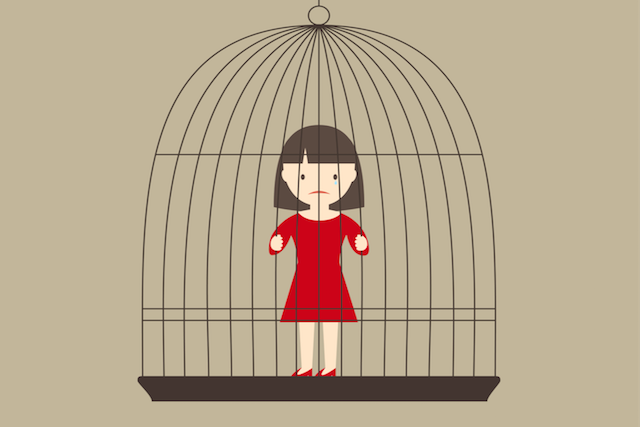
  • Letting Go of Attachment: From A to Zen

    Letting Go of Attachment: From A to Zen

    “Most of our troubles are due to our passionate desire for and attachment to things that we misapprehend as enduring entities.” ~Dalai Lama

    If there’s one thing we all have in common, it’s that we want to feel happy; and on the other side of that coin, we want to avoid hurting. Yet we consistently put ourselves in situations that set us up for pain.

    We pin our happiness to people, circumstances, and things and hold onto them for dear life. We stress about the possibility of losing them when something seems amiss. Then we often get stuck in grief when something changes—a lay off, a breakup, or a transfer.

    We attach to feelings as if they define us, and ironically, not just positive ones. If you’ve wallowed in regret or disappointment for years, it can seem safe and even comforting to suffer.

    In trying to hold on to what’s familiar, we limit our ability to experience joy in the present. A moment can’t possibly radiate fully when you’re suffocating it in fear.

    When you stop trying to grasp, own, and control the world around you, you give it the freedom to fulfill you without the power to destroy you. That’s why letting go is so important— letting go is letting happiness in.

    It’s no simple undertaking to let go of attachment—not a one-time decision, like pulling off a band-aid. Instead, it’s a day-to-day, moment-to-moment commitment that involves changing the way you experience and interact with everything you instinctively want to grasp.

    The best approach is to start simple, at the beginning, and work your way to Zen.

    Experiencing Without Attachment

    Accept the moment for what it is.

    Don’t try to turn it into yesterday; that moment’s gone. Don’t plot about how you can make the moment last forever. Just seep into the moment and enjoy it, because it will eventually pass. Nothing is permanent. Fighting that reality will only cause you pain.

    Believe now is enough.

    It’s true—tomorrow may not look the same as today, no matter how much you try to control it. A relationship might end. You might have to move. You’ll deal with those moments when they come. All you need right now is to appreciate and enjoy what you have. It’s enough.

    Call yourself out.

    Learn what it looks like to grasp at people, things, or circumstances so you can redirect your thoughts when they veer toward attachment—when you dwell on keeping, controlling, manipulating, or losing something instead of simply experiencing it.

    Define yourself in fluid terms.

    We are all constantly evolving and growing. Define yourself in terms that can withstand change. Defining yourself by possessions, roles, and relationships breeds attachment, because loss entails losing not just what you have, but also who you are.

    Enjoy now fully.

    No matter how much time you have in an experience or with someone you love, it will never feel like enough. So don’t think about it in terms of quantity; aim for quality instead. Attach to the idea of living well from moment to moment. That’s an attachment that can do you no harm.

    Letting Go of Attachment to People

    Friend yourself.

    It will be harder to let people go when necessary if you depend on them for your sense of worth. Believe you’re worthy whether someone else tells you or not. This way, you relate to people, not just how they make you feel about yourself.

    Go it alone sometimes.

    Take time to foster your own interests, ones that nothing and no one can take away. Don’t let them hinge on anyone or anything other than your values and passion.

    Hold lightly.

    This one isn’t just about releasing attachments; it’s also about maintaining healthy relationships. Contrary to romantic notions, you are not someone’s other half. You’re separate and whole. You can still hold someone to close to your heart; just remember, if you squeeze too tightly, you’ll both be suffocated.

    Interact with lots of people.

    If you limit yourself to one or two relationships, they will seem like your lifelines. Everyone needs people, and there are billions on the planet. Stay open to new connections. Accept the possibility your future involves a lot of love whether you cling to a select few people or not.

    Justify less.

    I can’t let him go—I’ll be miserable without him. I’d die if I lost her—she’s all that I have. These thoughts reinforce beliefs that are not fact, even if they feel like it. The only way to let go and feel less pain is to believe you’re strong enough to carry on if and when things change.

    Letting Go of Attachment to the Past

    Know you can’t change the past.

    Even if you think about over and over again. Even if you punish yourself. Even if you refuse to accept it. It’s done. The only way to relieve your pain about what happened is to give yourself relief. No one and nothing else can create peace in your head for you.

    Love instead of fearing.

    When you hold onto the past, it often has to do with fear—fear you messed up your chance at happiness, or fear you’ll never know such happiness again. Focus on what you love and you’ll create happiness instead of worrying about it.

    Make now count.

    Instead of thinking of what you did or didn’t do, the type of person you were or weren’t, do something worthwhile now. Be someone worthwhile now. Take a class. Join a group. Help someone who needs it. Make today so full and meaningful there’s no room to dwell on yesterday.

    Narrate calmly.

    How we experience the world is largely a result of how we internalize it. Instead of telling yourself dramatic stories about the past—how hurt you were or how hard it was—challenge your emotions and focus on lessons learned. That’s all you really need from yesterday.

    Open your mind.

    We often cling to things, situations, or people because we’re comfortable with them. We know how they’ll make us feel, whether it’s happy or safe. Consider that new things, situations, and people may affect you the same. The only way to find out is to let go of what’s come and gone.

    Letting Go of Attachment to Outcomes

    Practice letting things be.

    That doesn’t mean you can’t actively work to create a different tomorrow. It just means you make peace with the moment as it is, without worrying that something’s wrong with you or your life, and then operate from a place of acceptance.

    Question your attachment.

    If you’re attached to a specific outcome—a dream job or the perfect relationship—you may be indulging an illusion about some day when everything will be lined up for happiness. No moment will ever be worthier of your joy than now because that’s all there ever is.

    Release the need to know.

    Life entails uncertainty, no matter how strong your intention. Obsessing about tomorrow wastes your life because there will always be a tomorrow on the horizon. There are no guarantees about how it will play out. Just know it hinges on how well you live today.

    Serve your purpose now.

    You don’t need to have x-amount of money in the bank to live a meaningful life right now. Figure out what matters to you, and fill pockets of time indulging it. Audition for community theater. Volunteer with animals. Whatever you love, do it. Don’t wait—do it now.

    Teach others.

    It’s human nature to hope for things in the future. Even the most enlightened people fall into the habit from time to time. Remind yourself to stay open to possibilities by sharing the idea with other people. Blog about it. Talk about it. Tweet about it. Opening up helps keep you open.

    Letting Go of Attachment to Feelings

    Understand that pain is unavoidable.

    No matter how well you do everything on this list, or on your own short list for peace, you will lose things that matter and feel some level of pain. But it doesn’t have to be as bad as you think. As the saying goes, pain is inevitable, suffering is optional.

    Vocalize your feelings.

    Feel them, acknowledge them, express them, and then let them naturally transform. Even if you want to dwell in anger, sadness, or frustration—especially if you feel like dwelling—save yourself the pain and commit to working through them.

    Write it down.

    Then toss it out. You won’t always have the opportunity to express your feelings to the people who inspired them. That doesn’t mean you need to swallow them. Write in a journal. Write a letter and burn it. Anything that helps you let go.

    Xie Xie.

    It means thank you in Chinese. Fully embrace your happy moments—love with abandon; be so passionate it’s contagious. If a darker moment follows, remember: It will teach you something, and soon enough you’ll be in another happy moment to appreciate. Everything is cyclical.

    Yield to peace.

    The ultimate desire is to feel happy and peaceful. Even if you think you want to stay angry, what you really want is to be at peace with what happened or will happen. It takes a conscious choice. Make it.

    Zen your now.

    Experience, appreciate, enjoy, and let go to welcome another experience.

    It won’t always be easy. Sometimes you’ll feel compelled to attach yourself physically and mentally to people and ideas—as if it gives you some sense of control or security. You may even strongly believe you’ll be happy if you struggle to hold onto what you have. That’s okay. It’s human nature.

    Just know you have the power to choose from moment to moment how you experience things you enjoy: with a sense of ownership, anxiety, and fear, or with a sense of freedom, peace, and love.

    The most important question: What do you choose right now?

    Jumping for joy image via Shutterstock
  • 7 Things Everyone Should Learn Before They Die

    7 Things Everyone Should Learn Before They Die

    Woman reading book

    “I would rather die of passion than of boredom.” ~Vincent Van Gogh

    I attended an interesting event a few nights ago. It featured ten speakers who spoke for ten minutes each on ten things you should know before you die.

    The speakers included TV and film stars, CEOs, cover-shooting photojournalists, traveling journalists covering natural disasters, and HIV survivors. As you can imagine, there was a wide spectrum of perspectives shared.

    Here are a few of the lessons that stuck out for me. A lot of these can profoundly change your mindset, how you view the world, and how you choose to react to things. You just need to take a step back and put things into perspective, which leads us into our first one.

    1. Maintain perspective.

    A journalist told a story of how he traveled to Haiti after the devastating earthquake that hit them a few years back. In the capital of Port-au-Prince many of the homes had fallen apart, and people who already had nothing were now living in small plots of land in public squares in the city.

    The separations between each family’s plot were drawn in by hand, with tents and tarps set up overhead.
    In one particular plot was for a seven-year-old girl and a one-year-old boy.

    The speaker spoke a bit of Creole French and asked the people in neighboring tents which family these children were with. They replied, “That is the family.”

    The seven-year-old girl and one-year-old boy’s parents and older siblings had been killed. She was now responsible for this baby.

    This is where the notion of perspective comes in. The next time you’re upset at traffic, or someone is taking too long in the checkout line, or someone hasn’t texted you back quickly enough, take a step back and ask yourself, in the grand scheme of things, is this really worth being upset about?

    The book Unbroken drove this point home for me. Reading what this man went through quickly made me realize, if I were privileged to be born into a first world country (Canada) in the current peaceful time, I have absolutely nothing to complain about. A reminder to myself the next time Netflix is slow to load something…

    2. Take care of your health.

    Health is the gateway to happiness. If you are not living with your fullest energy and vibrancy, how can you expect to get the most from life?

    This was the main message from a middle-aged woman and entrepreneur who broke the status quo and went her own way in life, much to the dismay of her parents. She dropped out of school and traveled the world, falling into a few rough crowds on the journey and eventually settling in Toronto.

    There, she visited a local fresh juice place that ended up changing her life. She fell in love with how the juices made her feel and the energy they gave her, and ended up opening her own juice place called “Juice for Life” (which her Jewish parents hilariously thought was called “Jews for Life” at first). She’s now the founder and CEO of Fresh Restaurants chain in Toronto.

    Anyone who knows me knows health is massively important to me as well. I always pose the question: Is it not a bit crazy to think that people will spend more money on their car, their fashion, and accessories than they would on their body?

    Ask anyone with a serious illness what would they rather have; they all would give up everything they own to get healthy and undo the damage that was done.

    3. Be true to yourself and your calling.

    If you are living and doing something that doesn’t align with you, how can you ever be truly happy and enlightened?

    This was the main message from the founder of Yuk Yuk’s comedy club, a popular spot in Toronto.

    You can imagine the reaction he got from his friends and family when he told them he wanted to enter the comedy business. This was his passion, however, and he knew from experience that if he was doing something different, he would rarely be at peace or be inspired.

    When you find something that aligns and resonates with you, you will know it from the energy it gives you.

    The Vincent Van Gogh quotes sums the message here up quite nicely: Would you rather die of passion or of boredom?

    4. Don’t be afraid to stand out.

    When you go your own way and make your own path, you alone write your legacy.

    This was the motto of a female photojournalist who spoke to us. She joined the world of journalism in the sixties and seventies, when it was completely dominated by men. She was different from what was considered the norm and despite ridicule, sexist remarks, and being seen as lower, she used it to her advantage.

    Being shorter than the male photographers, she was always in front of the pack, allowing her to capture some of the closest, most personal photos. She became one of the first females to have their photos published on the cover of multiple well know magazines, and went on to be the prime journalist covering Terry Fox’s run across Canada.

    It is your inherent right to challenge the status quo. Never be afraid to forge your own destiny due to the thoughts of others. People may laugh at you because you are different. You could pack up and quit here, or you could feel sorry for them because they are all the same.

    As well, never be afraid to challenge why things are the way they are. After all, this is the very question that has forged almost all innovation mankind has ever done.

    5. Don’t play the victim.

    As I mentioned earlier, one of the speakers was a girl born with HIV. She was abandoned by her parents and adopted by a supporting family with nine other adopted children.

    Her new family took her in with love and put her through school like a normal child. But when the other children’s parents found out she had HIV, it was no longer normal. They refused to invite her over to birthday parties and sleepovers and forbade their children from being friends with her.

    She could have closed up and felt angry at the world, but instead she took a position of power and action. Now in her late teens, she has spoken globally, on major TV networks and YouTube, to educate the world on HIV and how ridiculous it is to “ban” your kids from socializing with someone who has it.

    Many people constantly place blame on everything and everyone and make themselves a victim. Why did this happen to me? Why can’t I make more money? Why am I stuck at this job?

    The world doesn’t owe you anything; you were not born a victim. Yet when you look around how many people do you find complaining about their situation but not taking any action or effort to improve it?

    The world gives you so much to work with if you work with it and put in the effort.

    6. Re-direct your energy.

    An actress told her story of failed audition after failed audition while witnessing other people’s success. She knew she could have gotten caught in the negative energy of envy and blame—upset that others were getting roles, getting paid more, or traveling more.

    She didn’t go this way, though; she knew envy can be channeled into focus and motivation.

    The lesson in here is quite simple. Instead of wasting energy being angry, envious, or jealous of those with more success, redirect that energy and ask, “What can I learn from this person to improve my own life?”

    As a result of doing this, she re-auditioned for a part she hadn’t received and was so motivated she ended up blowing them away and getting the role on the spot.

    7. Give your attention.

    One of the speakers began his talk with a severe stutter. The energetic crowd grew quiet, not knowing how to react. He then switched to a more fluent voice and told the audience he suffered with this stutter for the first twenty years of his life.

    When he was a young teen, he worked at one of Vidal Sassoon’s salons, doing odd behind the scenes jobs where he didn’t need to speak, like sweeping and tidying up after customers. Most people didn’t give him the time of day or would mock his difficulty in speaking.

    One day it was announced that Vidal Sassoon himself, the CEO, was coming to visit their Salon. Vidal made a point to meet with everyone, from the highest manager to the ones attending to the cut hair on the floor.

    When he approached the young boy, he asked what his name was. The boy tried to respond but was too nervous, and his stutter was so severe that he just could not get his name out. Vidal smiled, crouched down in front of him, and said “It’s okay, son, I have all the time in the world.”

    The greatest gift you can give someone is your attention. Never allow yourself to get in the mindset that people are “below you,” because even the smallest conversation can make someone’s day. People will forget many things, but they will always remember how others made them feel.

    Imagine a world where everyone learned the lessons above from a young age. It’s possible, but starts with each of us.

    Woman reading image via Shutterstock
  • How to Live a Fulfilling Life: 10 Powerful Lessons from Loss

    How to Live a Fulfilling Life: 10 Powerful Lessons from Loss

    Man in Rays of Sun

    “Make ‘Let go of control’ your mantra today.” ~Tiny Buddha’s 365 Tiny Love Challenges #177

    When the phone call came I was thousands of miles from home. My father was suddenly ill, admitted to the hospital. I was a medical doctor by then, and I felt a foreboding.

    My mind went back to my childhood.

    Imagine being a little child in a dark room. Every small noise evokes images of vicious monsters lurking in the night. They draw nearer.

    You cry out, “Daddy!” And cry out once more. Then your hero comes to the rescue.

    Your father shuffles in half-asleep, picks you up, and pats you to sleep. All terrors dispelled, you feel invincible in your father’s arms. That’s one of my earliest memories.

    That feeling of utter safety and joy in my father’s arms was deeply imprinted in me. I said to my wife, “I don’t want to lose him!” He wasn’t very old, my mother had just retired, and they intended to travel the world together.

    Only months earlier I had taken our daughter to visit him. His first grandchild had thrilled him beyond description. He gazed at her adoringly as she fell asleep, bought a parrot in a cage to amuse her, clowned around to keep her laughing, and generally behaved as if he was high on love.

    Now we had a brand new baby, a son. My father had not seen him. “As soon as Daddy’s well again, I’ll come back with our son,” I thought.

    I rushed from the airport to my father’s hospital bed. He seemed to have aged by decades in the few months since our last visit! A variety of tubes went into and out of him, his eyes were shut.

    “Daddy, it’s me,” I said. His arms, pinned down by tubes, tried to reach up for a hug. The tangle of tubes made a hug impossible.

    Over the next few days I watched with growing frustration as he sank. All my instincts as a son and a doctor were to save him by any means. I demanded to speak to his very able doctors, and urged them to try a novel, desperate procedure.

    It was too late; his internal organs started shutting down. As the sun set over the sea outside the window, I held his hand and chanted to him softly, “Sleep in peace, old warrior, my darling.” He died some hours later.

    The fact of his death didn’t sink in immediately. I was still smiling at his funeral, comforting and reassuring the mourners.

    The next morning I woke up in my old bedroom and went automatically toward the bathroom where Dad would usually be shaving. He wasn’t there. I couldn’t exchange the usual “Good morning.” That’s when it hit me.

    I broke down, blabbing like a baby. His brother, my uncle, hugged me close. It was the start of a slow grieving process, which opened my eyes to a few things about life.

    1. You can’t control some of the most important things, so stop pretending. Be less impatient and more carefree.

    As Nietzsche wrote, “Through the certain prospect of death a precious, fragrant drop of frivolity might be mixed with every life.” Or, as Belloc wrote, “There’s nothing worth the wear of winning but laughter and the love of friends.”

    Make some room each day to nourish celebration, no matter how dire your circumstances. You’re breathing; treat that as a gift. Inhabit each moment more fully instead of being constantly preoccupied with the past or future.

    2. Don’t postpone happiness.

    It’s okay to make plans for when you’re 100, but don’t forget to reach for fulfillment this year, this month, this week, and today. You aren’t just preparing for life; this day and this moment are all you might have.

    As the economist Keynes wrote, “In the long run we’re all dead.” Make sure you live before you die.

    3. Don’t be afraid to reach for your dreams, even if you might fail.

    No matter what you do or don’t, the eventual outcome of your life is certain: death. Death can be sudden and unexpected.

    If you can’t predict when you’ll die, there’s little point in fearing small failures. Just aim for the most fulfilling life you can imagine, and take one meaningful step after another in that direction. You’ll surprise yourself with how much you achieve, and how meaningful the journey is.

    Sometimes you’ll win and sometimes you’ll lose, but join the games that fit you. Only potentially catastrophic risks need put you off.

    When the dice roll against you, remember death. It will help you make molehills out of mountains. That’s how you’ll stand like a rock in the storms of life.

    4. Fill your minutes with fulfillment and the years will take care of themselves.

    Time slips away like the sand in an hourglass. The hourglass of your life, however, can collapse without warning.

    Live intentionally; choose what work, play, and celebration receive your precious time. Even if you have a boss, find ways to be the pilot of your own life. Don’t be afraid to move on from soul-destroying situations as you reach for more fulfillment.

    Don’t neglect to allocate your time intentionally on a weekly and even daily basis. Align work, chores, play, relaxation, and celebration with your most cherished values.

    5. Measure your success by criteria that go beyond money.

    There’s only so much you can eat and drink, and only so much bed-space you can occupy. Don’t let the pursuit of money blind you to the wider ingredients of a deeply fulfilling life.

    As Steve Jobs said, “Being the richest man in the cemetery doesn’t matter to me. Going to bed at night saying we’ve done something wonderful… that’s what matters to me.”

    6. Make the most of the sheer, primal joy of family.

    One of the best gifts I gave my father was the joy of holding his first grandchild. I have a picture of them together, from our short visit. It’s one of my most treasured possessions.

    It’s amazing: two individuals come together and make a baby, then that baby often goes on to make a baby of the next generation. When someone says you have your father’s eyes or your mother’s nose, they are usually seeing a physical part of your parents in you.

    If you’ve started a family, don’t treat it as an interruption in your “real” life. Recognize, respect, and nurture it as a deep and priceless part of your being.

    7. Don’t let grudges simmer.

    Death takes away the opportunity to clear the air and make things right with someone. Do it now.

    I was blessed with a beautiful relationship with my father, which easily bore the weight of our faults and shortcomings. However, his death prompted me to put things right with other loved ones.

    If you were to exchange circumstances and history with someone else, you might behave even worse than they do. Be more understanding toward the real or imagined faults of others. Even your parents are mere human beings deserving of your understanding and forgiveness.

    8. Build hoops of love that can reach beyond the grave.

    My father is with me everywhere now. I should have a hole in my heart where he was, but it’s partly filled by the wonderful love that flourished between us and which I still feel vividly.

    The grief of loss is still real, but the profound love which underlies the grief is like an everlasting balm.

    9. Don’t underestimate the power of touch.

    As I broke down the morning after the funeral, my uncle’s hug was more comforting and healing than any words could be.

    People with depression will tell you how powerfully comforting the gentle touch of a loved one can be. A hug can reach the parts that mere words can’t reach.

    10. Live as if nobody’s watching.

    When you’re dead, the expectations of others will be irrelevant to you. Don’t squander your life suppressing your own potential in order to chase the approval of others.

    Keep growing in your understanding of the gifts and treasures within you, which deserve and require nurturing. Keep growing toward your best self, and recognize that you are a unique gift to the world. Don’t blindly copy the lives of others, or you might die before you’ve had a chance to live your own life.

    Death often brings indescribable grief and pain to the bereaved. But it’s also a great teacher.

    Whenever you remember death, treat it as a pointer to a better life. Create a life in which each moment expresses your cherished values. Then death, however sudden and unexpected, won’t be able to snatch fulfillment away from you.

    Man in rays of sun image via Shutterstock
  • What the Bathroom Scales Are Not Telling You

    What the Bathroom Scales Are Not Telling You

    Feet on Scale

    The only person who can pull me down is myself, and I’m not going to let myself pull me down anymore.” ~ C. JoyBell C.

    At a recent visit to the doctor’s office I had some routine checks done. Afterward, the doctor flipped through the findings and said, “Blood pressure, good. Pulse, good. Weight, okay.”

    He then continued talking about other things, but my mind was still on his previous words. “Weight, okay.”

    Why wasn’t my weight “good” like my pulse and blood pressure? 

    I had managed to completely skim over the fact that my vital signs were absolutely fine. I immediately fixated on the physical aspect—and added my own negative slant to it. 

    There is so much that is so deeply ingrained within us that even when we are self-assured, we still get caught off guard sometimes.

    A few weeks before the doctors appointment I’d gone shopping for a winter coat. I found one I liked, grabbed two sizes for comparison, and went through to the fitting room. One size was slightly too snug under the arms and the other gave me more freedom to move.

    But the better fitting coat had a label that read “large.” And I had a problem with it.

    I tried both coats on again, as though somehow expecting a different result. I told myself I was just making sure. Just being certain. Once again I determined that the larger size was a better fit. Except this time, I played it a little differently.

    Instead of just looking at my body shape and size in my reflection, I looked into my eyes. I reminded myself that I am a beautiful, empowered woman who does not permit herself to be restricted by limiting labels. Who does not measure her self-worth by numbers. 

    And off I went to the cash register smiling.

    Both experiences gave me a bit of a wobble, but I was also grateful for the opportunity to remind myself of what truly matters.

    It can be challenging at times to keep our confidence in tact, because even when we deflect the worst of what some of society (and almost all of the media) tries to throw at us, occasionally it finds a way through.

    Yes, I could be slimmer. I could say no to the glass of wine or the homemade fudge. I could. But—empowerment alert—I don’t want to.

    I choose my life. All of it. I choose the thoughts that I feed my mind and I choose the food that I feed my body. I strive to ensure that I’m in balance.

    There is a space between greed and deprivation and I (mostly) live there. Sometimes I wander. I’m okay with that. Because honestly, it’s better for me to visit both directions occasionally than to be hell-bent on staying firmly in the middle. 

    I follow a plant-based diet and I exercise every day. But I don’t want to be fixated on a so-called ideal (and unrealistic) image that doesn’t allow me to enjoy my life.

    Sometimes a little loss of control is good for the soul.

    Like many of us, I used to obsess about my weight. I would step onto the bathroom scales every single day and look to see if I could hit that magic number. Quite often I did. I also had a variety of hospital trips that unearthed low blood pressure, repeated urinary tract infections, and a brutal inner ear infection.

    And that’s why I went to the cash register with the large coat and a larger grin.

    The bathroom scales cannot tell me how much my contribution to this world counts. They cannot tell me the density of the passion I feel for what I do. They cannot tell me the value of my cherished relationships.

    What if we stopped measuring our waistlines and started measuring our magical moments? The ones where we laugh like lunatics with our friends. The ones where we look down and find our hand wrapped in someone else’s. The ones where we let ourselves get gorgeously lost in a book or a movie. The ones where we fill up on love and get dizzy drunk with happy. 

    Will you get to the end of your days thinking, “I’m so glad I spent all those years sucking in my stomach”?

    Or will you smile as remember how much you enjoyed creating precious memories?

    Will your final thoughts be that you wish your thighs had been slimmer or smoother?

    Or will you just be grateful that they carried you?

    Will you ponder on what everyone else thought of your life?

    Or will you just think “I’m glad I did it my own glorious way”?

    I may have the odd moment of self-doubt (aka being human) but there are many, many more moments where I remember that I’ve come a long way since being that younger, slimmer, unhappier, less confident girl.

    I’m now a woman with a wonderful weapon—an empowered mind. And believe me when I tell you, she doesn’t play small.

    Feet on scale image via Shutterstock
  • Why We Should Never Force Our Spiritual Beliefs on Other People

    Why We Should Never Force Our Spiritual Beliefs on Other People

    Monk Meditating

    “A journey is a person in itself; no two are alike. And all plans, safeguards, policing, and coercion are fruitless. We find that after years of struggle that we do not take a trip; a trip takes us.” ~John Steinbeck

    Around six years ago I started to meditate. I had a spiritual awakening, and life started to look really different.

    I have always been a feeler and reader of emotion, but this was different. It was like I was synchronized with everyone around me, as if everyone else was connected to me in some strange and mysterious way.

    It later turned out to be the case that everyone is connected to me, the same way everyone is connected to you. That we are all made up of the same stuff and really we are just one giant organism connected to the same sphere of consciousness.

    I believe that if you project hate, hate is what you will receive, and if you project love, you will be showered with love.

    This is a strange concept, and one that I am sure many of you think is a little crazy, but everyone is entitled to their own opinion, and what is a reality to me may not be a reality to you.

    For me to claim my version of reality is the one truth that exists from over seven billion minds on the planet would be pretty egotistical and naïve.

    The fact is science could account for everything, in the same way a higher power could or evolution or the collective consciousness of humanity.

    We could have been put here by a lifeform more intelligent than ourselves, or our planet could indeed be just a cog in a bigger organism that we do not understand. We could be a hologram or a hallucination or something conjured up in the mind of someone or something. The truth is we really do not know!

    But when I had this moment of spiritual enlightenment six years ago, I did know. There was clarity, things made sense, and the world seemed like a better place. I thought that I had stumbled upon secret wisdom and that I was in some way elevated to a deeper level of mind than most other people.

    I knew this was the answer not only to my own problems, but the problems of every man, woman, and child on the planet. The only problem was no one who I knew was sharing my enthusiasm.

    Over the last six years since that first moment of clarity, I have come to realize that when you have a spiritual awakening it is only the start of a journey that has no end. You learn more and more about yourself as the days go by, but with each new answer multiple questions will be asked.

    If I had written about spiritual awakenings six years ago or even one year ago this article would have been very different, and if I write one six years from now, I am sure I will have many more revelations and differences from the opinions I have now.

    When I started out, I was certain that everyone else needed to meditate, that everyone else needed to jump on the spirituality bandwagon. And if you were not into spirituality you were in some way less enlightened than I was. But I now know this was my ego getting in the way.

    Because of this I alienated myself from friends, my behavior became erratic, and it nearly cost me my relationship with my girlfriend. Something that I learned from this experience is: you should never force enlightenment, information, spiritual beliefs, or a way of life on anyone else.

    I wrote this article because after coming to this realization, I noticed that it was not all that uncommon for people just starting out on the spiritual journey and even those who have been living it for a very long time to develop this spiritual snobbery and an aggressive need to inform people who are really not that interested in this way of life.

    The fact is people need to come to their own conclusions in life. No matter how big an opportunity, no matter how easy it is, even if something is so painstakingly obvious, it doesn’t matter. People want to make their own decisions and we have no right to force our way of life upon them.

    One of the main reasons we seek to recruit others when we go through transformation is to seek validation. The spiritual journey is a cosmic experience that can sometimes leave you questioning reality. If you have someone to join you it seems less scary. But you have to embrace the fear and do it anyway!

    The same rings true for a lot of other things—we may want our partners to come and see a show with us even though we know they are not interested, or we may need a buddy to join us at a martial arts class because we do not have the confidence to attend alone.

    However you dress it up, human beings generally crave acceptance and validation of their decisions.

    The truth about spirituality is that while it is one of the most connecting things that you can do, it is also one of the most solitary and individual experiences that you sometimes need to face alone. This is not to say that you should not seek guidance (you should), but a good teacher will lead you, not show you, and every conclusion and realization that you come to should be your own.

    This is why you cannot force your beliefs onto others, because while spirituality is a personal experience for you, it is also a personal experience for others; and if you do convince someone else that it is the right thing for them, they will only be doing it in an attempt to seek your approval.

    The best thing to do is be available to those who want your help and are asking questions. It can be very fulfilling to help someone who is just getting started, but ultimately they will still need to find their own way.

    There are plenty of people and communities where you can connect with those who are on the same path as you are. People who have experienced a spiritual awakening are usually pretty friendly, so don’t be afraid to reach out to others who have common goals and interests as you.

    They will usually (not always) have more of an understanding of what you are going through than your friends and family, so sometimes it is just good to be able to chat with someone whose beliefs are in line with yours.

    To wrap up, the things I have spoken about in this article do not only hold true for spirituality, but also any other journey that goes against the grain. The opposite could be the case; you are not spiritual in nature and are surrounded by people who are deeply spiritual and do not understand you.

    Maybe you have escaped the rat race and found a great business opportunity, which is being met with the same kind of resistance. Or maybe you have found out that you can reverse disease naturally and no one wants to listen to you.

    Whatever it may be, remember the only life you can live is your own; you cannot control anyone else’s destination or path. So get to know those around you, connect with people with common goals, stop seeking approval of others to validate your journey, and get out there and start living!

    Monk meditating image via Shutterstock
  • A Simple Phrase That Can Prevent Arguments and Resentment

    A Simple Phrase That Can Prevent Arguments and Resentment

    Communication

    “It’s not the events of our lives that shape us, but our beliefs as to what those events mean.” ~Tony Robbins

    I am always making up stories about what others think of me or what they really meant when they made that comment. And I typically make up the worst case scenario. According to my brain, everyone is mean-spirited and ridiculing me.

    This is not an uplifting way to live one’s life. The pessimistic stories I create are generated in part by my low self-esteem, and by convincing myself they’re true, I continue to fuel it. My constantly negative perceptions affect my relationships with others and overall mood in a harmful way.

    I recently experienced a huge breakthrough in regard to this aspect of my thought processes. I am a huge fan of Dr. Brené Brown’s work and recently read her newest book Rising Strong. One of my biggest takeaways was this one phrase that will improve your relationships: “The story I’m making up…”

    Why We Make Up Stories

    As humans, our brains make up stories. We automatically search for meaning. If there is a lack of information, then we will try to fill in that gap.
    Studies have shown that we like stories to make sense or fulfill a pattern, and we will use our own experiences as reference for this.

    Brown actually says that research shows we get a dopamine hit when we recognize a pattern. Our brains especially like it if the story can give us more insight into how to protect ourselves and secure our survival.

    This is why we make up stories to explain why bad things happen. If we know the cause, next time we can plan accordingly to avoid the situation altogether. Unfortunately, even though we honestly believe them to be true, the stories we make up are usually at least somewhat inaccurate.

    This is where the phrase, “The story I’m making up…” works to clear things up in our interactions with others.

    How to Use It

    “The story I’m making up…” can be used in times of struggle or conflict with another person. Perhaps a co-worker quickly changed the subject after you expressed a concern about a project. You can use this phrase to say, “The story I’m making up is that I’m being dismissed because my opinion is not valued.”

    Or maybe your significant other flipped on the television when it’s supposed to be date night. You can say, “The story I’m making up is that our relationship is not a priority to you.” It is an effective tool that can be used in family, friend, work, and romantic relationships.

    Recently my husband and I were arguing. He shared his feelings with me, which is often challenging for him. Because I know he really appreciates physical affection (and I struggle to give it), I chose to pull him into a hug instead of responding verbally.

    The hug did not feel reciprocal as his arms were loosely around me. I was vulnerable when I offered physical affection, and his lackluster embrace registered as a cold shoulder to me. I was feeling very hurt as I told him, “The story I’m making up is that this lifeless hug is an expression of rejection.”

    He apologized and explained that he did not intend to reject me; he was just feeling thrown off by my lack of spoken response.

    His mind was whirling trying to figure out a sense-making story as well. “The story I’m making up…” created a space for us to share our intentions and feelings and work through the misunderstandings in a calm and safe environment.

    Why Use It

    The beauty of this phrase is that it provides the setting to speak openly without initiating a defensive reaction from whomever you’re speaking with. It allows you to honestly express your experience while still taking responsibility for your own feelings. This is a disarming method of communication that leads to a more productive dialogue.

    “The story I’m making up…” becomes an opportunity to revisit a confusing or troubling situation. From there you can challenge your perceptions and reality-check them against the viewpoint of the other person. It provides space for the other person to clarify their intentions.

    The majority of the time this phrase stops an argument before it can even start for me and my husband. When one of us is feeling confused, hurt, or misunderstood, we tell the other what story we’re making up.

    Oftentimes the other person clears up the issue without any conflict because typically our intentions with one another are good.

    Miscommunication and negative assumption are the causes of so much unintentional and unnecessary conflict in relationships. Instead of getting into a fight or silently resenting the other person, using the phrase, “The story I’m making up…” establishes a safe place for meaningful dialogue to gain better understanding of the situation and one another.

    You may realize there actually is no issue, or if there is, you can continue to work through it together in a respectful and effective manner.

    Communication image via Shutterstock