Tag: play

  • How ‘Griefcations’ Helped Me Heal from Loss and How Travel Could Help You Too

    How ‘Griefcations’ Helped Me Heal from Loss and How Travel Could Help You Too

    “To travel is to take a journey into yourself.” ~Danny Kaye

    The brochure read, “Mermaid tail, optional.” What forty-something mom doesn’t have a shimmering fish tail tucked in her closet for just the right occasion? Not me. I live in Minnesota. I’d borrow one when I got there.

    I took a flight from Minneapolis to Panama City, and then a water taxi to a backpackers’ resort. Not the kind with frozen cocktails and bad DJs. The next thing I knew, I was on a sailboat, swinging from an aerial circus hoop suspended over the sparkling Caribbean Sea, dressed as a mermaid.

    I felt free and alive and playful in my body.

    How did I, a grieving daughter, sister, and mother, end up there? That’s what I was asking myself. It’s both a long and short story.

    After a few years marked by death and loss, an “aerial and sail” retreat called to me. It would be a gift to my wounded self. That’s the short take.

    The longer explanation is the most painful, but probably speaks to why so many of us chase adventure or time away from our routines and responsibilities. We’ve got to work on ourselves outside of our regular lives. I certainly did.

    After losing my dad to cancer and my brother to suicide within a span of six months, I then had to say goodbye to the daughter we’d made part of our family for four years. We thought we would adopt her, but she went to live with another family.

    In my grief, I’ve redesigned my approach to life.

    It’s grief that pulls me to say, “Yes, I’ll try that.” Travel. The flying trapeze. Mermaid tails.

    An unexpected gift of grief is being cracked open and feeling the urgency of these opportunities. They are too fleeting and too precious to pass up. I’ve also embraced play and movement and taken up circus arts. The retreat offered some of the best aerial coaches out there.

    But aside from honing a skill, I craved an escape from the underpinnings of my everyday life and the frequent reminders of my missing family.

    Losing loved ones is something we will all experience, no doubt many times over. How each of us grieves is individual, but what I can say from experience—as a trauma psychologist and as someone living in grief—is that taking a journey out of one’s comfort zone can be profoundly healing.

    A “griefcation” won’t cure the pain, but meaningful travels can help us cope, possibly even heal.

    When I last Googled “griefcation,” it appeared just over 400 times on the search engine, with the earliest hits dated from 2017. That’s not a lot when you compare it to “staycation,” which appeared in more than 100 million articles. But I believe that travel is a conscious way to grieve that yanks us out of a funk of isolation and provides an opportunity for relief, insight, healing, peace, and transformation.

    Travel forces us to be in the moment, hyper-aware of new surroundings as we read a map, find a hotel, hail a cab (or look for an uber), and mentally calculate currency exchanges. All of this is a welcome reprieve from the overthinking and overwhelm that comes with grief.

    These days there are “grief cruises” and bereavement boats, with a chaplain on call. If you want to dip your toe into a travel experience, instead of fully diving in, retreats—mini-vacations, if you will—can be a good and less pricey alternative.

    I’m living in grief, but I am also lucky and privileged to work for myself, with flexible time off and enough travel points accumulated from business trips to orbit the planet. For others, your grief vacation might be closer to home or shorter in duration.

    I first sought out a short griefcation in the year after my dad and brother died. I had an urge to be with others who were grieving: those who would just know that I had no words for how I was feeling. I found a “Grief Dancer” retreat in Big Sur with a description that spoke to me: We invite you to a weekend retreat to hold together what should not be held alone.

    I flew to San Francisco and then drove the Pacific Coast Highway to what I affectionately called a “hippie’s paradise,” where primal music, soulful rhythm, and unselfconscious dancing helped me find joy in judgment-free movement.

    Ever since my dad and brother died, I’ve sought out places to travel, sometimes to escape traditions that now trigger me.

    My dad loved the gaudy, over-the-top nature of Christmas celebrations and would string twinkly rainbow lights all over our house in southern California. He collected singing snowmen from Hallmark, too. He had a dozen of them. He’d terrorize us, his grown children, by switching them on all at once so they’d each sing a different Christmas carol, competing for cheery seasonal supremacy.

    My dad died from cancer in November and after an early December memorial, my mom and my surviving brother retreated to our respective corners of the country to grieve alone. I hunkered down with my husband and two boys, hibernating in the dark cold of Minneapolis.

    And just like that, my family stopped gathering for Christmas. In its absence, I’ve worked to build a new holiday tradition for my sons that has a travel experience at its core. We now routinely head to sunny beaches to relax, read books, play together, and create special moments to remember those we’ve lost. No matter where we find ourselves on Christmas Day, we always set a place at the table for my dad and brother.

    I’ve learned that it’s possible to be living in grief, but also experience profound joy. Grief is an invitation to deeply value the moments of your life and find joy where you can, because of a renewed sense of how fleeting they are.

    We can travel to escape our grief, or we can focus on our loss as a significant component of the travel experience, creating activities to honor the lives of those we’ve lost.

    Dr. Karen Wyatt, a hospice physician and the founder of End-of-Life University Blog, has written extensively about the “safe container” that travel can provide to heal grief and loss. She defined six categories of grief travel to consider when making plans. Restorative. Contemplative. Physically active. Commemorative. Informative. Intuitive.

    Before a significant grief anniversary, I took another retreat, this time to Morocco with my husband and other entrepreneurs, to experience “radical self-awareness while leaving our comfort zones in a wild, extraordinary place.” While I wasn’t there to grieve specifically, I am always on that journey. There, my experience—to borrow categories from Wyatt—was contemplative, intuitive, physically active, informative. And commemorative.

    In the Sahara Desert near the border with Algeria, I honored the fourth anniversary of the death of my dad. It was a day of beauty and reflection. The shifting sand was a meditation on the transient nature of life. The stark nature of the landscape was an affirmation that life is never guaranteed to be long, and survival is not assured.

    The stunning beauty of the place, and the company I was with, was an invitation to honor the magic of this one “wild and precious life”—to borrow from poet Mary Oliver. It was both an embodied and soulful experience to dwell in grief. To hold in my body and spirit the importance of Dad’s memory. I grabbed handfuls of his ashes and sand and flung them into the air. Releasing. Weeping. Celebrating.

    You can’t live every day like it’s your last—if I did, I’d be broke, exhausted, and probably in prison—but you can do what makes you truly happy as often as possible.

    Travel, like grief, takes you to different lands, where life seems more precious and urgent. If you’re lucky, you will find joy amid the sadness, as I did. The memories stay with you forever.
  • Why My Boyfriend and I Play Like Kids and Are Happier for It

    Why My Boyfriend and I Play Like Kids and Are Happier for It

    “Play is the foundation of learning, creativity, self-expression, and constructive problem-solving. It’s how children wrestle with life to make it meaningful.” ~Susan Linn, Psychiatrist

    We met at a job interview for a summer camp. At the time, I was twenty-two years old and pursuing a bachelor’s degree in English literature and psychology at UBC. On the other hand, H was attending college in the hopes of one day becoming a high school history teacher. He also “liked to promote and support the development of children.”

    During our first date, we grabbed coffee and spent some time at Indigo Books & Music. I was impressed. I had not only found a boy who was willing to tolerate my endless browsing, but genuinely seemed to enjoy it.

    H was funny, dressed nicely, and most importantly, didn’t know much about me. Later, he would learn that I’d grown up a perfectionist, that I became overwhelmed easily, and that I always took life too seriously. I valued the art of productivity and felt self-conscious when acting silly.

    In our early days, we enjoyed sunbathing at the beach and went “playground hopping,” a term coined after spending an entire afternoon going from playground to playground, sitting on the swings, flirting. We climbed the various structures and found out we could no longer get across the monkey bars.

    We had a typical “summer romance.” We sent each other flirty texts at work, and I chased him around the jungle gym during one of our outings with the kids. We played Connect 4 instead of strip poker and went to the candy store to buy samples of all our favorite childhood treats. He loved to make blanket forts and was always to blame for the ensuing pillow fight. We put on music and danced in our underwear in my bedroom late at night.

    He brought out my inner child. We played handshake games while waiting for the bus without caring about the other commuters’ glances. We painted cheap wooden frames from the dollar store and bought a puzzle at Toys R Us. We went to the kid’s arcade and had a playful Skee-Ball competition.

    After a few months of dating, and as a result of my interest into Acceptance and Commitment Therapy (ACT), H and I sat down and made a list of what would become our Common Core Values. Out of sixty values, we picked about a dozen. Then, we talked about them.

    Connecting with our values adds meaning to our lives, but clarifying values can be challenging, because most values are words that are vague. Take, for example, the value of respect. Most people I know value respect. But what does it look like? And what does respect look like specifically in a romantic relationship? We recorded our choices in our newly bought couple’s journal.

    Our values included words such as connection (physical, emotional), equality, boundaries, safety, teamwork, gratitude, humility, and kindness, as well as trust, courage, and vulnerability.

    The value that stood out to me the most, though, was play.

    Play has been one of the core tenets of our relationship. When we first met, he had no idea that I was heavily involved in the mental health community.

    I worked at the hospital where I did peer support work and supported children as well as their families navigate the (highly complex) mental health system. I heard devastating stories of families trying to access care.

    I sat on the board of a non-profit organization that held support groups for students every week and spent a lot of my time holding space for others, while at the same time admiring their resilience. Outside of that, I was busy taking classes, and trying my best to care for my own mental health.

    A few years ago, when I fell in love with Brené Brown’s The Gifts of Imperfection, the chapter that stood out the most to me was: “Wholehearted Living Guidepost 7: Cultivating Rest and Play.”

    In the chapter, she introduced Dr. Stuart Brown, a psychiatrist who has studied play. He explained that play is time spent without purpose and can include a variety of “frivolous activities.”

    As a young adult, overachiever, and university student, I spend most of my time working hard, trying to achieve the definition of “success” society has defined for me. At times, there are sleepless nights, two cups of coffee, and skipped breakfasts.

    When H and I play, we lose track of time. We become immersed in our decorating of gratitude jars, tickle fights, and me chasing him down with an ice cream cone.

    My relationship with H has given me one of the greatest gifts: the ability to lose myself in laughter, and permission to focus on leisure without feeling guilt or anxiety. In the words of Brené Brown, it is all about “letting go of exhaustion as a status symbol and productivity as self-worth.”

    I like to refer to H as “Mr. Fun” because it’s the part I love most about him. If it wasn’t for him, I would rarely allow myself to play. I often feel self-conscious and judge myself harshly whenever I feel the urge to do something “childish,” like coloring. I tell myself, “Don’t be ridiculous. Grow up. You’re not a child anymore.”

    At the time of our discovering our common core values, we had only been dating for three months. Since then, we’ve grown enormously as a couple. The wonderful thing about our common core values is that we now have a silent agreement. We have both committed to living by those values, so we refer to them as needed, especially during a conflict. When we make mistakes, we refer to the value of forgiveness. It lessens the guilt and shame while still holding us accountable.

    Essentially, play encourages self-enquiry, social connection, and being curious about the world.

    Play has allowed us to cultivate a relationship that is based on vulnerability and helps us cope with the uncertainty of the world. It has enhanced our intimacy and helped us relax during stressful times. After all, we are realistic, and understand that our relationship will encounter many obstacles in the future, including having to cope with economic and political instability.

    From an outsider perspective, I am described as responsible, punctual, and can be found balancing my budget with an Excel sheet, every month. You are more likely to find me writing professional emails than singing in the shower or expressing my creativity.

    Sometimes H and I argue about the pros and cons of having carpet in our future dream home and sometimes we make lists of supplies to buy, like Play-Doh, or Legos. Sometimes we discuss Canadian politics while drinking apple juice in plastic cups. We eat Kraft Dinner as a snack and calculate the cost of a one-bedroom apartment. We are both children at heart and young adults trying to navigate the world.

    And not too long ago, H surprised me with a heart shape made of colourful melted beads.

  • How to Be a Lot Happier: A Simple Solution

    How to Be a Lot Happier: A Simple Solution

    “Simplicity is the ultimate sophistication.” ~Leonardo da Vinci

    There’s a funny thing with us humans.

    We spend our lives trying desperately to find happiness, and yet we don’t even know what it is. We can’t explain, describe, or define it. We just know that we want it because it’ll make everything peachy. Time and time again, though, studies have shown that our never-ending quest for happiness is quite often the very thing that makes us miserable.

    Trying to find happiness is an exercise in futility. This is a truth I did not easily come to realize. It took a succession of major depressive episodes, the sudden death of my father, a cross-country move, a broken heart, and countless hours reading airy-fairy, self-help nonsense for me to understand that instead of trying to find happiness, I should consciously take steps that let happiness find me.

    Suffice it to say, you will no longer find me spinning my wheels, dejectedly searching for answers and chasing the abstract. You will no longer find me on a never-ending quest for happiness.

    But given my endless fascination with the subject, my work as a coach, and my ever-present desire for more street cred, I recently found myself immersed in a year-long Psychology of Happiness certification program created by best-selling author and former Harvard professor Dr. Tal Ben-Shahar.

    During the program, we were asked:

    What was one of the happiest periods of your life?
    What did you do during that period that made it so good?
    How can you generate more happiness in your life?

    I had a profoundly difficult time answering these questions, particularly the first two. But the more I scanned through my mental scrapbook, the more I kept thinking about the months between ninth and tenth grade—my last romp as a camper at the sleepaway camp I’d been going to for six consecutive summers.

    It wasn’t so much what I did—or what we­ did—that made it so good. I think, perhaps, it was what we didn’t do.

    There were no smartphones. So, there were no screens to stare at, no calls to make, no messages to check, no constant dinging notifications.

    There was no social media. There were no Facebook rants, no Twitter trolls, no outlandishly phony Instagram influencers to drum up our insecurities.

    We weren’t constantly comparing ourselves to others while looking at the carefully curated highlight reels from their lives.

    No, we were making our own highlight reels in the middle of nowhere—or, more accurately, in the middle of northern Wisconsin. We hadn’t the slightest idea what anyone else was doing, and we didn’t care.

    There were no dating apps, no heads to swipe on for hours at a time. There was no ghosting, no haunting, no orbiting, no zombieing, no submarining, no breadcrumbing, no roaching. These hyper-specific subtypes of appalling human behavior simply didn’t exist.

    And despite our raging hormones, there was no palpable desperation. You either “hooked up” with someone the night before or you didn’t. Then, you moved on with your life.

    Nobody gave a damn who was president, either. We just knew it was some old, white guy just like it was the year before, and the year before that, and the year before that. He sat in his office, and signed some papers, and maybe spoke to the country every few months and that was it.

    There was nobody on the far left trying to ruin the life of anyone who’s ever made a mildly offensive quip. There was nobody on the far right trying to accelerate conflict and build some kind of white ethnostate. There were no conspiracy theorists trying to convince the world that celebrities run pedophile rings out of pizza parlors or that Jewish folks crisscross the country to start wildfires with space lasers.

    Oh, but Tony, you might be saying to yourself. There were definitely people like that back then! And you get no argument from me.

    But we never heard from them. They didn’t have public platforms. There were no 24/7/365 news channels, there were no online news magazines, and there was no YouTube; so, they just kind of kept their crazy crap to themselves.

    It’s no wonder that one of the happiest periods of my life was the summer of 1997, in the middle of nowhere in northern Wisconsin. We spent all of our time in nature, laughing and singing and bonding and playing frisbee.

    One could theorize that we were happier purely because we were kids, but I’m not so sure. From what I can tell, kids today are lost, distracted, and isolated. They spend most of their time indoors, glued to their devices. They are overstimulated, oversensitive, and overprotected. They are riddled with anxiety and depression as they deal with the psychological trappings of growing up in a technological world.

    Twenty-five years ago, during the summer of 1997, life was just…simpler.

    That’s what made it so good.

    And I don’t think that life in general will ever be that simple again.

    But every time I simplify my own life, even just a little bit, I’m a little bit happier.

    Every time I de-clutter, I’m a little bit happier.

    Every time I delete a dating app, I’m a little bit happier.

    Every time I forgo watching the news or sign off social media, I’m a little bit happier.

    Every time I turn my phone on Do Not Disturb, I’m a little bit happier.

    Every time I have a real conversation in real life with a real person I really care about, I’m a little bit happier.

    Every time I go outside and walk around and do nothing but look at the sky, and the trees, and the architecture, I’m a little bit happier.

    Every time I sit in silence and meditate and let my thoughts pass by like the weather, I’m a little bit happier.

    So, how can you generate more happiness in your life?

    Well, I don’t have a whole lot of street cred. But if I had to take a stab at it: Stop doing the things that cause you unhappiness. Simplify, simplify, simplify. And maybe find a summer camp for adults.

  • Searching for Purpose? 5 Ways to Embrace Not Knowing What You Want

    Searching for Purpose? 5 Ways to Embrace Not Knowing What You Want

    “Omnipotence is not knowing how everything is done; it’s just doing it.” ~Alan Watts

    We sometimes hear of remarkable people who just knew what they wanted to become from a young age. I, however, was not one of them.

    When I was about eight years old, I told my cousin that I wanted to become a scientist. Looking back, I find that pronouncement baffling since I wasn’t particularly interested in science at the time. What I did love doing, though, was making art.

    My interest in art eventually led me to study graphic design. I thought that design would be a perfect fit since I’m creative and logical. But at a certain point, I realized that while design made some sense logically, it didn’t feel right to me.

    I wondered, how could I have put so much time and effort into something I didn’t enjoy doing? It was only much later that I recognized my error: I believed that I had to have everything figured out completely.

    Embracing Not-Knowing

    What do you do when you realize what you worked so hard to attain isn’t what you want anymore? In this situation, many feelings may come up. I felt despair, fear, anger, resentment, sadness, hopelessness, and desperation.

    These powerful emotions can overwhelm us and bring us into a state of paralysis. I remember wanting to pivot, but seeing numerous obstacles before me. If I make a drastic change now, I will have to start from zero, I thought.

    I believe those thoughts and emotions stem from putting too much emphasis on the need to know. In the book The Overweight Brain, Lois Holzman, Ph.D., describes how our obsession with knowing “constrains creativity and risk-taking, keeps us and our dreams and ideas small, and stops us from continuing to grow and learn new things.”

    As Holzman explains, infants don’t know much of anything. However, they grow tremendously in a relatively short period. They can develop this way by “not-knowing growing,” which one does through play.

    Learning to Play Again

    Let’s think for a moment. When you play a game, do you want to know what will happen next? If you did, then the game wouldn’t be any fun—there would be no point in playing it.

    After working for seven years in my full-time job, I ended up quitting with nothing lined up and no idea of what to do next. Leaving your day job like this isn’t something I would suggest to everyone. But for me, it felt like the best thing to do at the time.

    Taking a risk like that was exhilarating. I felt like a newborn child, free to explore the world and its possibilities again.

    Before I made that decision, I used to sit in my office thinking, once I figure out what I want to do, I’ll be able to take some action. But I didn’t need to figure anything out. I just needed to begin by exploring.

    As I tried many new things, I gained insight into who I was becoming. By interacting with the world with openness and curiosity, I found the clarity I needed to create my life with purpose.

    Five Ways to Embrace Not-Knowing

    So, how do you start embracing not-knowing to realize your true potential? Here are five ways for you to consider.

    1. Question your situation.

    Notice the assumptions you’re making about what is and isn’t possible. Like a child, be curious about what opportunities are already available at this moment. Instead of thinking, “Things can’t change because (some reason),” ask yourself: “I wonder what would happen if I said this… looked that way… went over there… tried this and that…?”

    2. Take tiny risks.

    You don’t have to quit your job to find a sense of purpose. Once you’ve identified the possibilities by questioning your situation, see what would happen if you did something different.

    For example, if you’re passionate about diversity, inclusion, and belonging, how can you contribute to supporting that in your current role, or even outside your job? Perhaps you can spark a conversation about it with a few people. Because the risk is low, you may feel a rush of excitement from breaking your regular pattern.

    3. Alchemize the experiences you’ve gained.

    If you lose interest in something you worked hard for, realize that it wasn’t all for naught. Think instead, “Okay, so this is how I feel about it right now. How can I transmute this thing by combining it with other elements to produce something new and life-affirming?”

    For example, I already had design and writing skills. I also had an interest in anthropology, psychology, learning, and human development. So, I tried to combine my existing skills with my interest in learning and human development to become an instructional designer. That pivot eventually led me to join a team in designing an online course that teaches intercultural skills to internationally trained professionals.

    4. Give an improv performance.

    If you’re a person who feels the need to plan everything, see if you can give an improv performance of a different version of yourself. For example, you can perform the version of yourself that finds the unknown exciting. Go out and walk like that version of you, speak like that version of you, listen like that version of you, eat like that version of you.

    If it helps, imagine that you are an actor in a movie scene.

    5. Do something unexpected.

    Do you have a routine that you follow? What if you broke out of that routine for one day? Choose a day when you have no plans and do something that would surprise people who know you well. Maybe you will end up having a conversation with a total stranger and make a new friend.

    Final Thoughts

    From my journey, I’ve learned that not knowing what we want isn’t a sign that something’s wrong. It’s an invitation to walk the path of self-discovery. The journey is not a straight line—there are twists and turns, and sometimes we find ourselves at crossroads.

    Remember that we are constantly in a state of becoming. We can shape each instance of our life by choosing to stay open, be curious, and explore the world with a sense of child-like wonder, which releases us from the confines of the mind.

    Living this way, we give ourselves the space to grow into our true potential.

  • How I Overcame the Stress of Perfectionism by Learning to Play Again

    How I Overcame the Stress of Perfectionism by Learning to Play Again

    “What, then, is the right way of living? Life must be lived as play…” ~Plato

    I am a recovering perfectionist, and learning to play again saved me.

    Like many children, I remember playing a lot when I was younger and being filled with a sense of openness, curiosity, and joy toward life.

    I was fortunate to grow up in Oregon with a large extended family with a lot of cousins with whom I got to play regularly. We spent hours, playing hide-and-seek, climbing trees, drawing, and building forts.

    I also attended a wonderful public school that encouraged play. We had regular recess, and had all sorts of fun equipment like stilts, unicycles, monkey bars, and roller skates to play with. In class, our teachers did a lot of imaginative and artistic activities with us that connected academics with a sense of playfulness.

    I viewed every day as an exciting opportunity and remember thinking, “You just never know what is going to happen.” My natural state was to be present with myself, enjoying the process of play

    Unfortunately, my attitude began shifting from playfulness to perfectionism early on. Instead of being present and enjoying process, I started focusing on performance (mainly impressing people) and product (doing everything right). The more I did this, the less open, curious, and joyful I was.

    Instead, I grew anxious, critical, and discouraged.

    I first remember developing perfectionist tendencies when I was in elementary school and taking piano lessons. For some reason, I got the idea that I had to perform songs perfectly, or else I was a failure.

    Eventually I became so anxious, I would freeze up while playing in recitals. I started hating piano, which I once had loved, and eventually quit.

    My perfectionism spread into other areas of my life, too. In school, I pushed myself to get straight A’s, and if I earned anything less, I felt like a failure. I often missed out on the joy of learning because I was so worried about getting things right.

    My perfectionism also negatively impacted my relationship with myself. I believed I had to look perfect all the time. As a result, I often hated the way I looked, rather than learning to appreciate my own unique appearance and beauty. I also remembering turning play into exercise at this time of my life and using it to pursue the “perfect” body.

    Movement, which I loved when I was a child, began to feel exhausting and punishing.

    Perfectionism also hurt my relationships with other people. I felt like I had to be smooth and put together and that I always had to put everyone else’s needs above my own. Not surprisingly, I often felt unconfident, anxious, and exhausted around other people.

    At this time in my life, I believed that if I tried and worked hard enough, I could do everything right, look perfect, and make everyone happy.

    My perfectionism increased in young adulthood until eventually it became unsustainable. In my early thirties, I became the principal of a small, private middle school where I had taught for eight years. I loved the school and was devoted to it.

    In many ways, I was the ideal person to do the job. But I was also young and inexperienced, and I made some big mistakes early on. I also made some decisions that were good and reasonable decisions that, for various reasons, angered a lot of people.

    To complicate matters, the year I became middle school principal, the school underwent a massive change in our school’s overall leadership, and we suffered a tragic death in the community. I worked as hard as I could to help my school through this difficult time, but things felt apart.

    My school, which had largely been a happy and joyful place, suddenly became filled with fighting, suspicion, and stress. These events were largely beyond my control and were not the fault of any one person, but I blamed myself. For someone who had believed her whole life that if she worked hard enough, she could avoid making mistakes and could make people happy, my job stress felt devastating.

    I felt like my life was spinning out of control and that all the rules that once worked no longer applied. I crashed emotionally, and I remember telling my husband at this time, “I will never be happy again.”

    That was one of the darkest times of my life.

    It took me several years to find happiness again. One of the major things that helped me to do so was recovering a sense of playfulness.

    After my emotional crash, I decided I was done with perfectionism. I understood clearly that focusing so much on avoiding mistakes and pleasing-people was the source of much of my suffering. 

    I realized I needed a different way to approach life.

    About this time, my friend Amy and I started taking fencing lessons together. I was quite bad at it, but it didn’t matter. Because I had given up perfectionism, I didn’t care anymore about impressing people at fencing class or performing perfect fencing moves.

    Instead, I cared about being present with myself in the process and staying open and curious, and focusing on joy.

    I had a blast. I felt free and alive, and something flickered to life inside me that had felt dormant for many years. I felt playful again. And I realized that I had been missing playfulness for many years, and that it was part of what had caused me to become so perfectionistic.

    Playfulness is the attitude we take toward life when we focus on presence and process with attitudes of openness, curiosity, and joy. Perfectionism, on the other hand, makes us focus on performance and product and encourages anxiety, criticalness, and discouragement.

    Fencing helped me rediscover play and leave perfectionism behind.

    I fully embraced my newfound playful attitude. It touched every area of my life, and I hungered for new adventures. I began reconnecting with dreams I had put on hold for a while. Eventually I decided to leave my job as a middle school principal and return to graduate school to earn my PhD in philosophy, a goal I’d had since seventh grade.

    Earning a PhD in philosophy may not seem like a very playful thing to do, but it was for me. For six years, I immersed myself in the ideas of great thinkers like Plato, Aristotle, Kant, Hegel, Rousseau, Herbert Marcuse, and Paulo Freire.

    It felt like I was playing on a big, philosophical playground. But I also faced some significant challenges.

    I was thirty-seven when I returned to grad school and was a good ten to fifteen years older than most of my colleagues. Most of them had a B.A. and even an M.A. in philosophy, while I had only taken one philosophy course in college. I had a lot of catching up to do, and I faced some major challenges.

    One of the biggest challenges I faced early on was our program’s comprehensive exams. We had two major exams over thousands of pages of some of the hardest philosophical works ever written. The exams were so difficult that at one point, they had over a fifty percent fail rate. If students didn’t pass them by the third time, the graduate school kicked them out of the program.

    I was determined to pass these comps and spent all my Christmas and summer breaks studying for them for the first several years of graduate school. But I still failed both exams the first time I took them, and I failed my second exam twice.

    It isn’t surprising I failed them, given the high fail rate for the exams and the fact that I was still learning philosophy. But it was painful. I had worked so hard, and I was afraid of getting kicked out of the program.

    I was tempted to revert to my old perfectionist habits because they had once given me a sense of control. But I knew that would lead me down a dead-end road. So, I began applying all the lessons I had learned about playfulness to the comprehensive exams.  

    Rather than focusing on performance and the product, I focused on presence and process. I also focused on practicing habits of openness, curiosity, and joy. Mentally, I compared the comps to shooting an arrow into the bull’s eye of a target. Every test, even if I failed it, was a chance to check my progress, readjust, and get closer to the bull’s eye.

    This turned the comprehensive exams into a game, and it lessened the pain of failing them. It helped me accept failure as a normal part of the process and to congratulate myself every time I made progress, no matter how small it was. This attitude also helped me focus on proactive, constructive steps I could take to do better, like meeting with faculty members or getting tutoring in areas I found especially challenging. (Aristotle’s metaphysics, anyone?)

    I also taught myself to juggle during this time. Juggling not only relieved stress, it was also a playful bodily reminder to me that progress takes time. Nobody juggles perfectly the first time they try. Juggling takes time and patience, and the more we focus on openness, curiosity, and the joy of juggling, the more juggling practice feels like a fun game. 

    I began thinking of passing my comps like juggling, and it helped me be more patient with the process. I eventually mastered the material and passed both my comps.

    Studying for the comps taught me to bring playfulness into all my work in graduate school.

    Whenever I felt stressed out in my program, I reminded myself that perfectionism was a dead-end road, and that playfulness was a much better approach. Doing this helped me relax, be kind to myself, accept failures as part of the learning process, and to take small consistent steps to improve.

    This playful attitude kept me sane and helped me make it to the finish line.

    Playfulness was so helpful for me in graduate school that I have tried to adopt this spirit of playfulness in all areas of my life, including the college classrooms in which I teach. I have noticed that whenever I help students switch from perfectionism to playfulness, they immediately relax, are kinder to themselves, and increase their ability to ask for help.

    I am dedicated now to practicing playfulness every day of my life and to help others do the same. Playfulness isn’t something we must leave behind in childhood. It is an attitude we can bring with us our whole life. When we do so, life becomes an adventure, even during difficult times, and there is always something more to learn, explore, and savor.

  • 9 Lessons from my 9-Month-Old Nephew, Who’s Taught Me How to Live

    9 Lessons from my 9-Month-Old Nephew, Who’s Taught Me How to Live

    “The mediocre teacher tells. The good teacher explains. The superior teacher demonstrates. The great teacher inspires.” ~William Arthur Ward

    Oliver.

    Ahh, my heart skips a beat at just the sound of his name.

    In 2018, a tiny human being arrived on the planet, one who would change my life. In the short nine months my nephew Oliver has been in my life, I’ve learned a lot. I’m not talking about changing nappies and bottle-feeding, although I’m getting to grips with these essentials too. No, Oliver has taught me valuable lessons about life itself. Here are nine of the biggest.

    1. Love and be loved.

    Those who meet Oli can’t help but love him. He has big, beautiful, blue eyes and a smile that you can’t help but reciprocate.

    Although he’s beautiful on the outside, it’s his spirit I love most. He’s gentle, innocent, and curious. I see the good in him, and even though I know he’ll make mistakes as he grows up, I also know it won’t change my unconditional love for him.

    Loving Oli in this way has taught me to be more loving and less judgmental of others because I recognize that in every adult there’s an innocent child who’s just trying to do their best.

    This has also helped me better open up and receive love. I feel how deeply I want to help Oli, and how much it means to me when I can, which makes me more receptive when others want to help me.

    2. Make time to play.

    Oliver’s social schedule is impressive, better than most adults! He goes to birthday parties, visits family, has trips out, not to mention the numerous baby classes he attends. Regardless of where he is, whether it’s a class with friends or a rainy day spent at home, I can count on one thing—he’s playing!

    One morning, while watching Oli play, I asked myself, “Do I make enough time to play?” Adulting can be a serious matter at times, but that’s not to say we can’t pass time in a way that lights us up. Maybe I’m a little old to play with toy cars (or maybe not). Still, it’s important I make time for fun.

    So I now make time to play piano and watch movies instead of telling myself these things are unimportant, and I try to infuse a spirit of play into everything I do instead of taking it all so seriously.

    3. Praise ourselves.

    Recently, my sister taught Oli the song “If You’re Happy and You Know It Clap Your Hands.” He’s always a little out of time, but he’s mastered clapping itself. It melts my heart to see him clapping away with his mini hands.

    I hope when he’s a little older, he’ll clap for himself after all his accomplishments and learn to praise himself for a job well done. Children are usually great at this. Sadly, when we become adults, we become more critical of ourselves, and words of praise become words of criticism. We become our own worst enemies, which makes it hard to ever feel happy, proud, or successful.

    I formed a habit at the end of last year, to praise myself for three achievements at the each of day. Big or small, it doesn’t matter. I simply praise myself. I’m a lot less critical of myself since starting this ritual—and a lot happier as a result!

    4. Give encouragement.

    “C’mon, you can do it.” This seems to be my catchphrase when I’m spending quality time with my nephew. He’s forever on the move, grabbing on to the side of the sofa and pulling himself up slowly.

    Rather than helping him directly, I sit back, smile, and encourage because I want to support his growth instead of just doing things for him. If my family are in the room, they’ll join in and it begins to feel like we’re a group of cheerleaders rooting for our favorite sports team.

    Oli loves encouragement. Don’t we all? Life can be challenging sometimes, and hearing someone say, “I believe in you” can help us push through when we’re tempted to give up.

    I now put more energy into encouraging my loved ones—and myself. Replacing my inner dialogue from negative, doubtful messages to pure encouragement has been life changing. Our thoughts determine our feelings, which influence our actions. For this reason, even a little self-encouragement can dramatically transform our lives.

    5. Express how you feel.

    Another important lesson Oliver has taught me, and taught me well, is to express how you feel. When Oli is hungry or tired you know about it! He doesn’t hold back. And he always gets his needs met as a result.

    For a long time when I was living with anxiety, I wore a mask and hid my real feelings, putting on a “brave face.” I was afraid of being judged and I falsely believed that “real men” shouldn’t show weakness or ask for help.

    I’ve gotten better at expressing how I feel, though there’s still room for improvement. As a result, I’m also better able to move past my challenges and get what I need.

    6. Be determined.

    One of Oliver’s cutest idiosyncrasies is his growl. He’s one determined little man, and his determined actions are always backed by a “GRRRR.” He’s advanced for his age, and I bet it’s because of his determination. If he fails the first time around, he tries again.

    As adults, we’re sometimes too quick to form conclusions about what’s possible and what we’re capable of doing. Babies don’t have this kind of internal monologue—they just keep going when they have a goal in their sights!

    Watching Oli has inspired me during recent challenges to really dig deep, get determined, and keep on going.

    7. Know when to rest.

    As playful and determined as he is, Oliver knows when it’s time for a nap.

    In the past I’ve been guilty of pushing too hard, working too long, and not resting enough. I sometimes think I’ll get more done if I work harder and longer—probably because I often heard growing up “You can be successful if you work hard.” But I’m actually more effective if I allow myself to stop working and rest when I’m tired, since I can then come back stronger and recharged later or the next day.

    I may not require as much sleep as a baby, but I do need to listen to when my mind and body is saying “enough.” It’s not about working harder, but smarter.

    8. Try new things.

    The last time I saw Oliver, my family and I took him to the English seaside for the first ever time. It was a cold and windy day, but we didn’t let the weather prevent us from having a great time. We walked for hours along the coastline, breathing in the salty sea air and listening to the sound of the waves crashing against the shore.

    Having a baby in the family is the perfect reason to go and experience all the world has to offer, to show them its wonders for the first time.

    As adults, our lives can get routine. We drive to work the same way, eat the same foods, and see the same people day to day. According to Tony Robbins, one of our six core needs is the need for uncertainty—or variety. Without new experiences, life starts to get boring.

    There’s so much joy to be had when we enter the realm of the new with a curious pair of eyes. Trying new things also helps us discover new things about ourselves—new interests or strengths, or traits we didn’t know we had.

    After this outing with my family, I made a list of new things I’d like to experience, from foods to devour to countries to explore. I may be far beyond Oil’s age, but we’re never too old to try new things.

    9. Live in the present.

    Perhaps the biggest lesson my nephew has taught me is to live in the present moment. He has no concept of time. The past and the future don’t exist in Oli’s world; he lives completely in and for the present, which ultimately, is the only time we can ever live in.

    Oliver hasn’t yet learned how to remember. He hasn’t learned how to worry. He is pure. Like we all were at one time. If he falls down, he forgets it quickly and goes right back to playing, completely connected to the joy of what he’s doing.

    It’s never too late, I believe, to return to living life in the present. Although over the years, thoughts may have pulled our focus like a tug of war rope, back and forth, between the past and future, we can always return to the now, right now.

  • Life Is Short—Don’t Wait to Do What You’ve Always Dreamed of Doing

    Life Is Short—Don’t Wait to Do What You’ve Always Dreamed of Doing

    “Life is short. Say what you’ve wanted to say. Do what you’ve wanted to do. Don’t wait until the only thing you can say is, I wish I’d had the courage to do it sooner.” ~Lori Deschene

    Lunch hour.

    Escaping the stale, re-circulated air of my office, I fled down Main Street in pursuit of freedom from the routine of the day.

    A rusty bell clanged against the door of a dusty used bookstore when I pushed it open.

    Scanning the horizon of bulging shelves and teetering stacks of magazines, my eyes suddenly met his and my heart began to race.

    They were the blazing orange eyes of an African lion on the dog-eared, sun-faded cover of a National Geographic magazine.

    I hadn’t seen those eyes in thirty years, but their impact on me hadn’t faded.

    As a kid I use to spend hours dreaming within the pages of these very magazines before cutting out pictures of unsuspecting lions and elephants to carry them around in a small wicker basket—a somewhat seventies version of a vision board.

    One Sunday night, I brought a three-page book I had written about these magical creatures, complete with pasted-in cut-outs, to the dining room table where everyone had gathered for dinner.

    Feeling proud with accomplishment, I handed it to my dad, a retired Naval officer, who held it up and began to read it aloud—only soon he couldn’t read anymore, for he was laughing so hard and so was everyone else.

    Of course they were just laughing because they thought it was cute, but I was only six years old. How could I possibly have known that?

    That day I stopped playing with magazine cut-outs of African animals and writing silly little stories to paste them into.

    That day I stopped dreaming about Africa.

    Have you ever had a dream that got away?

    Have you ever wanted to do something—paint sunsets, sing opera, run marathons, design skyscrapers—but stopped yourself before you even tried because it wasn’t realistic, practical or, in line with what your family/friends/co-workers expected of you?

    When we shelve our dreams, the human experience runs the risk of feeling more like a life sentence of obligations.

    When the lunch hour was up I returned to work with an African lion tucked under my arm.

    In the days that followed, I looked at that magazine often, dreaming of being under a blazing crimson African sky, only now that sky was clouded with regret.

    The opportunity of spending a ‘gap year’ volunteering in Africa or joining the Youth Corps had long since passed.

    Or had it? Yes, it’s true I couldn’t go to Africa for several months, but maybe I could volunteer in Africa for a few weeks.

    Over the next several weeks I gave myself permission to at least play with the idea. I began to research short-term volunteer opportunities in Africa with lions, elephants, and all the other magical animals I use to tote around in that little wicker basket.

    I began to budget, barter, and save, determined to make it happen.

    Even that old, worn-out lion on the magazine cover seemed to be perking up as the puzzle of a plan began to come together.

    Months later that lion, now freed from its magazine, was tucked into my passport folder as I boarded a plane for Cape Town, South Africa to volunteer on an African animal conservation project.

    Thrill and excitement deafened the echoes of friends and co-workers who thought I was going to Africa because I was ‘lost’ or approaching a mid-life crisis.

    No, I’m going to Africa because I want to stop saying, I wish I’d done it sooner.

    I arrived and met my boss, a khaki-clad, burly, young (ten years my junior) South African ranger named Gary.

    With big, strong hands on his hips, he eyed my tennis shoes and embellished denim clam diggers and said,

    “Let me guess, you’re here because you dreamed of Africa.”

    “Yes!” I beamed.

    He grunted and said, “Well it’s time to wake up, Canada. This is a working game reserve; these are wild animals.”

    “Okay.”

    “You’ll be sleeping alone over there in that tent. The electrical wire mostly keeps the animals out.”

    “Ooooo.K.”

    “And one last thing, Canada. Out here you’re going to have to learn to play with a lion’s testicles.”

    “What?! That wasn’t in the brochure! And even if it was, I won’t do that!”

    “Relax, Canada,” he said. “It’s a local expression. It means you’re going to have to get out of your comfort zone, take some risks. Have the courage of a lion.”

    The next morning when we began our patrol in an open-air jeep under a symphony of red, orange, lavender, and yellow hues playing above as the African sunrise came to life.

    Silhouettes of giant African elephants appeared in the morning mist.

    I was no longer dreaming in the pages of a National Geographic magazine, I was living them.

    Moments later Gary parked the jeep and handed me a rusty, heavy shovel and said, “Time to shovel sh*t.”

    Elephant dung. Mountains of it. It will be used as fertilizer in the reserve’s sustainable vegetable garden.

    Within fifteen minutes my back was aching, and my new work gloves were stretched out and so slippery with dung and sweat that they refused to stay on my hands.

    This wasn’t the dream of Africa I had. This was beginning to feel more like a nightmare.

    I began to question myself.

    You came all the way to Africa to shovel elephant dung?

    Maybe my dream of Africa was a silly childhood vision.

    Maybe I was lost and should have spent this money on therapy instead.

    What would my friends and co-workers say if they could see me now, knee-deep in dung, barely able to lift this antiquated shovel?

    They’d think I was a fool.

    Humiliation began to creep over me, engulf me even.

    But then I remembered Gary’s words; playing with a lion’s testicles was a huge step out of my comfort zone. I needed to have the courage of a lion. Lions don’t complain. They’re the king of the jungle because there’s nowhere they won’t go.

    And the lioness is the hunter, the conqueror, the fearless female who doesn’t back away from anything.

    And hey, I’m in Africa. I am in Africa.

    This elephant dung will help feed a village, and I get to contribute to something meaningful, something bigger than my mouthy little ego.

    Get out of your head and focus on that.

    I dug in deep. This was my dream, to come to Africa. As I became heavy with appreciation, the shovel lightened up.

    Days were spent rebuilding roads one stone at a time, by hand, darting a grumpy Rhinoceros who needed hormone therapy, tree planting within the lion’s camp as a pride of (satiated) lions looked on and moving more mountains of elephant dung.

    The elation, the satisfaction, the joy of being in this place was even greater than I had imagined and dreamed.

    It was the first time in my life I felt real and true meaning.

    It was the first time in my life I felt purpose.

    It was the first time in my life my soul was satisfied.

    And the irony was, it was the first time in my life I was paying to do a job instead of getting paid to do one.

    The more I gave of myself, the more I received.

    As my project came to a close, I removed the now almost unrecognizable lion cut-out from the pocket of my denim clam diggers and placed it with a young tree sapling in the lion’s camp.

    I no longer needed to tote him around for my dream of going to Africa had been realized.

    Sometimes we believe our dream has to be huge and world-changing, or at the very least net us millions of dollars so it has the stamp of society approval on it.

    Whether you’re moving mountains, or just moving mountains of elephant dung, a dream is still a dream, and it’s yours.

    The shadow of regret is only ever a decision away; we can keep it at bay by having the courage to play with our dreams.

    So how do we play?

    P – Give yourself permission to pursue possibilities and reshape your dreams to meet your current reality.

    L – Lay low. Don’t feel like you have to tell everyone what you’re going to do. Tell them what you did, that way you won’t be bogged down by other’s fears and doubts. Not everyone will be your cheerleader.

    A – Acknowledge your fears and doubts. When they appear, it means you’re doing something that’s meaningful to you, otherwise fear wouldn’t bother showing up.

    Y – Why not? You deserve to play, to discover and uncover those things and experiences that make your heart beat a little faster. You are worthy because you were gifted the gift of life.

    You don’t have to go to Africa to play with a lion’s testicles. You can play wherever you are.

  • 19 Simple Daily Habits for a Happier Life

    19 Simple Daily Habits for a Happier Life

    “Hug harder. Laugh louder. Smile bigger. Love longer.” ~Unknown

    Did you ever have it all mixed up?

    Happiness, I mean. I once thought that a university degree and good grades would make me happy. I thought that traveling the world would leave me feeling fulfilled. I thought that moving abroad and getting that top-notch job would make me satisfied and content.

    They all did, but only for a while. They always came with an expiration date.

    Finally, I had to stop and ask myself, “If I’m not able to be truly happy now, will I ever be?” If I couldn’t appreciate everything I already had in my life, would more really be the answer?

    No.

    Then I thought, “If happiness is what I want, why not take a shortcut and go there directly?”

    So, I did. I stopped putting it on hold. I stopped allowing external circumstances to dictate how I felt. And I stopped relying on illusionary destinations of promised happiness and bliss.

    What I realized is that happiness doesn’t happen by chance–it happens by choice. It’s a skill that anyone can develop with the right habits.

    19 Happiness Habits That Could Change Your Life

    1. Appreciate more.

    This morning I woke up feeling appreciative of my bed, my incredible friends, and my mom for being the rock in my life. Appreciation feeds happiness. It highlights and gives value to what matters in our life. And the more you appreciate, the more you’ll find things to be appreciative of.

    When waking up and going to sleep, remind yourself of three things you currently appreciate in your life.

    2. Energize yourself every morning.

    Mornings set the tone for the rest of the day. A good morning routine leaves you feeling centered, energized, and ready to take on the world.

    Meditate, do yoga, write a list of everything you love, watch inspirational YouTube videos, or listen to your favorite song before leaving the house. Simply, set yourself up for a great day!

    3. Practice acceptance.

    Things don’t always go as planned. I used to get frustrated when plans changed or when the bus arrived late. But resisting never changed anything; instead, it just sent me into a downward spiral. When I started accepting whatever happened, I relieved myself from unnecessary suffering.

    Start practicing acceptance. Adjust to the new situation, without fueling it with negative emotions.

    4. Live in the present.

    This is where it all happens, the present moment. It’s the only place where you can experience happiness (or anything else for that matter). It’s the only place worth being. It might sound obvious, but realizing this was life changing for me. In the present I think better, feel better, and act better.

    Whenever you enter a new place, use your five senses—sound, sight, touch, smell and taste—to find more nowness.

    5. Listen attentively.

    Listen with focus and compassion. Give people the gift of your full attention. This is a powerful source of happiness, as it creates strong bonds between people and places you in the now.

    Whether it’s your colleague, partner, or a complete stranger on the street, decide to be more present in all your conversations.

    6. Save money to invest in memories.

    Material things might satisfy us short term, but experiences are what makes us happy long term. For the past year I’ve barely bought anything new. Instead, I’ve used that money to travel. Just thinking about the beach parties in the Caribbean, those sunny days in Central Park, and that festival in Ibiza puts a ridiculously big smile on my face.

    Buy only things you need or fall head-over-heels in love with. Then, use that extra money for experiences that will make you go “Aaah,” “Ohhh,” and “Wow” when you think back of them.

    7. Make new friends.

    Many of us stop making friends after the age of twenty. Make new friends and you’ll grow as a person, be exposed to new experiences, and have a rich social life.

    Have a friendly conversation with a stranger and maybe you make a new friend. Maybe it’s for five minutes, or maybe it’s for a lifetime.

    8. Dream big.

    Dreams are good; they propel us forward. They enliven our heart, awaken our mind, and give us reasons for living. Allow yourself to dream big and trust that it can become a reality for you.

    Dedicate at least five minutes every day to be swept into your dream life. Make it as real as possible: visualize and create the feelings of being, doing and having all that you want.

    9. Take steps toward your dream.

    Now, does your present look like the future you’re dreaming of? If not, put more time and energy on what you want to see grow.

    Take small steps every day to elevate you toward what you want. Tiny steps all add up.

    10. Develop a mindset of abundance, not scarcity.

    How we experience the world depends solely on our perception of it. When you live in lack, you protect and hoard. When you give away, you signal that you have more than enough for yourself.

    Don’t feel like you get enough love? Give love to someone else. Don’t feel like you make enough money? Give money to someone else in need.

    11. Take time to re-charge.

    Even though we live in a society that fosters us to do more, be more, give more, and have more, we need time to re-charge. We need to fuel ourselves with energy. Take short breaks, and why not a power nap?

    What doesn’t get planned usually doesn’t get done, so make sure to plan for downtime.

    12. Make time to play.

    Living isn’t a duty. You didn’t come here to fix something that’s broken or to complete a to-do list. You came for the fun of it, for the exhilaration and magic of being alive.

    Set aside at least fifteen minutes every day for fun-time and make that time non-negotiable.

    13. Be around happy people.

    Attitudes are contagious. If someone’s smiling at you, you’ll probably smile. If someone is rude, then you’ll probably be rude back. Only hang out with people whose attitude you want to catch.

    If happy people aren’t near, go online and watch videos with awesome-attitude people such as Marie Forleo, Tony Robbins and Regena Thomashauer (Mama Gena).

    14. Move slowly.

    Lao Tzu said, “Nature does not hurry, yet everything is accomplished.” Faster doesn’t mean better. Busier doesn’t mean exceeding. Don’t rush through life.

    Slow down. Put your heart and energy into what you’re doing and focus on that (and only that).

    15. Actively soothe yourself.

    What matters isn’t what happens in our lives, but how we choose to deal with it. To make better decisions, we need to become our own lifeguard and sooth ourselves from negative thoughts.

    When I feel bad I usually go running, meditate, or write a list of everything I love about my life. Practice different techniques until you find some that work for you.

    16. Let go.

    Letting go isn’t always easy, but it’s the only way new and better things can come along. When we let go of something, we come to a peace of mind. The struggle is over and new ideas and perspectives can begin to open up.

    Practice letting go of what doesn’t serve you, such as complaining, comparing yourself to others, negativity, and mistakes from the past or worries about the future.

    17. Forgive often.

    Maybe someone was late, maybe someone was rude, or maybe someone forgot to call you back. Forgiveness doesn’t excuse behavior; it frees you from it. It releases resentment and other negative emotions tied to a person or a situation.

    Make a habit of forgiving people, even for the smallest of things.

    18. Attend to the real world.

    Smartphones, tablets, and laptops are constantly screaming for our attention to the world of social media. The digital world is supposed to be a complement to our real life, not the other way around.

    So, take time to be present where you physically are (the Facebook status update can wait).

    19. Care for yourself.

    Our body, mind, and soul are connected. Make a change in one of them and you change the state of all three. Isn’t that nice to know?

    Do something every day to improve your overall state of well-being, such as preparing a good meal, exercising, or watching a good movie. And know that caring for yourself is caring for the world.

    Claim Your Happiness Once And For All

    Not being in charge of your happiness is frustrating. Relying on external events and circumstances to be in a certain way in order to feel good is a recipe for misery. Because, when life doesn’t go as planned or things fall apart, so does our happiness.

    Happiness isn’t about having all the pieces in place. It isn’t about having a problem-free life or reaching a certain goal or objective. Instead, it’s about being able to enjoy where you are, no matter what.

    Don’t leave your happiness to chance. Choose to claim it. Live the life you deserve to live.

  • 40 Ways To Live, Laugh, And Love Like A Child

    40 Ways To Live, Laugh, And Love Like A Child

    “Children see magic because they look for it.” ~Christopher Moore

    Adulthood? No thanks!

    All too often, being grown up is the pits.

    It can leave you drowning in responsibility, suffocating from anxiety, and sinking with doubts about your ability to be all that you should.

    Frazzled, you fall into bed to fortify yourself for tomorrow’s craziness. Then you lie awake fretting over your lack of action you regret, scary debt, and all the targets you haven’t met.

    Life’s supposed journey has left you dreading where you’re heading.

    What the hell happened?

    Somewhere between making daisy chains and making money, life’s magic became a disappointing sideshow. Somehow, your everyday blue sky turned a disconcerting gray.

    Rediscover Your Sunshine

    Children are sunshine, sunshine on little legs.

    Because sunshine is all they see.

    They have no concept of worrying about the future and living up to responsibilities or overwhelming to-do lists. They feel no embarrassment in falling over, getting it wrong, or showing anyone exactly how they feel.

    Every day brings discoveries, wonder, and excitement. Every day is new.

    They’re always way too caught up in the fun to even think about the consequences. They laugh with every inch of their bodies until they hurt, and they still keep laughing.

    There’s a word that sums up all of these characteristics …carefree.

    Ah! That’s an incredible state to be in.

    Imagine brimming with blissful expectation rather than a million worries. Being pleased with everything you’ve said and done instead of regretting forever. And swapping fear of what the day might bring to being too excited to wait and see.

    Oh boy, we can learn a huge lesson from our mini experts on life. I certainly have.

    Luckily, years ago my career path took a convoluted turn, and I ended up being surrounded by happy innocence while immersed in the whirlwind of teaching children.

    Right from the start, my wagon load of worries felt an extra heavy burden amid their light, lively atmosphere. All my long-standing hang-ups stood out as making life unbelievably difficult among their unrestricted actions. And my critical inner voice sounded super mean around their enthusiasm over the slightest achievement.

    But I desperately wanted to be one of their gang, so I resolved to emulate my young friends.

    I decided to rediscover my silly, consequence-free side, to unlock my optimism, to question everything and see responsibility as nothing more than fun tasks I’d chosen to accept.

    I worked with my little sunshines on legs nine to five every day, but it no longer felt like work.

    They made every task bright, fun, and interesting . . . and chaotic. Their infectious excitement and belief in good things pervaded my every working day. Their unconscious behavior and easy emotions filled my every weekday thought.

    I owe those little smiley faces a heck of a lot! Being surrounded by children for years made me feel years younger.

    You don’t need to be childish to be childlike. You can find happiness in everyday routine.

    I’d love for you to have carefree times too. To breathe. To dance. To laugh so hard that you physically shake.

    How can you take the first step toward feeling that free? With one small, child-like action at a time. Run with the ideas below that jump out at you. Skip into some more when you’re ready.

    Re-discover your sunshine…

    How to Live, Laugh and Love Like a Child

    1. Belly laugh at your own jokes.

    Give your happiness a double boost by delighting in your own unique sense of humor.

    2. Hop, skip, and run.

    Instantly halt worry with the enjoyable distraction of moving your body in fun ways.

    3. Believe you have super powers.

    Call on your amazing inner store of talent, knowledge, and intuition to feel superhero invincible and stay blissfully upbeat no matter what the day throws your way. “All the wonders you seek are within yourself.” ~Sir Thomas Browne

    4. Giggle with friends.

    Build heart-warming, life-long relationships and a treasure of great memories with fun, giggle-making get-togethers.

    5. Ride a chariot.

    Whiz along on a shopping cart or anything with wheels for a gleeful ride that will blow any earnest thoughts from your mind.

    6. Holler, “Me! Me! Me!”

    Trust good things will happen, and put your hand up for every opportunity that comes your way.

    7. Jump into the circle.

    Join in with any fabulous fun around you without waiting to be asked. You’re bound to form some great new relationships with like-minded good-timers.

    8. Demand, “Why not?”

    Argue back against any limiting thoughts regarding your chances of happily succeeding with any ideas or plans you have for the life you dream of.

    9. Radiate joy.

    Let your presence spread happiness to others by the infectious nature of your joy.

    10. Clown about.

    Brighten up your day by acting out any daft idea that strikes you—the sillier the better.

    11. Be impulsive sometimes.

    Follow your gut instead of overthinking. It’s a great way to find what truly motivates and inspires you.

    12. Jump up and down.

    Encourage feelings of excitement to bubble up more often by giving them glorious, physical free rein. Others will fall in love with this hugely appealing quality.

    13. Be a rebel.

    Question every wretched rule that hampers your precious happiness. Realize consequences are mostly imagined.

    14. Talk nonsense.

    “I like nonsense, it wakes up the brain cells.” ~Dr. Seuss

    15. Sing happy birthday.

    Give yourself the gorgeous gift of looking forward to birthdays (even the “big” ones!) by focusing on sharing, receiving, and celebrating all you’ve contributed in the past twelve months.

    16. Do a twirl.

    Pander to your creative flair for a brilliant mood-boost by wearing exactly what you fancy, unrestricted by any concerns for color matching or trends.

    17. Dress it up.

    Delve into your dressing up box to turn unavoidable chores into fun, let-me-at-‘em tasks by completing them while regaled in fantastically outrageous items that instantly lift your spirits.

    18. Boogie on down.

    “Kids: they dance before they learn there is anything that isn’t music.” ~William Stafford

    19. Eat jam from the jar.

    Bypass the rules every now and then if you see a happiness-boosting opportunity, and it won’t hurt anyone else.

    20. Splish splash through puddles.

    Take a break from meaningful activities to relax by being deliciously frivolous.

    21. Banish bedtime blues.

    Play late into the night if you’re having fun; you’ll sleep better for it and wake up feeling super positive.

    22. Hug your friends.

    Lavish love and affection on the people who make your world a great place to live.

    23. Burst into song.

    Sing lustily when a tune pops into your head to bring on feelings of pure joy.

    24. Chatter to yourself.

    Have upbeat conversations with yourself out loud to silence your inner critic. Kid’s don’t have an inner monolog and get things out in the open – much more healthy.

    25. Have a powwow.

    Don’t be self-conscious about asking for help from strangers. Discussing your problems in a positive way with someone else not only finds a solution faster but also can find a new friend as well.

    26. Splash in the bath.

    Get super playful with mundane events to make these supremely enjoyable.

    27. Camp out.

    Build an overnight den in the yard or even in the lounge for an exciting change of routine that will keep your thinking patterns fresh.

    28. Stamp your foot.

    Be strong over matters that are important to you. No one has the right to steal your, or a child’s, happiness.

    29. Blurt out, “I love you.”

    Love at face value. Don’t be shy about telling those you cherish just how much they mean to you.

    30. Say sorry.

    Be the first to quickly repair any relationship breakdowns for a lifetime of loving support and a million happy memories.

    31. Play with your food.

    Make meal times fun again by dining in playful settings and choosing menu options you associate with celebrations, holidays, and picnics.

    32. Trust a stranger.

    Rekindle unconscious, natural behaviors by talking to people you’ve never met. You’ll be amazed by how much you light up their day and what you learn along the way.

    33. Be boastful.

    Be proud of every little success each day, and give yourself a gorgeous reward that encourages you to keep going.

    34. Refuse to tidy your room.

    Leave tasks unfinished when you’ve had enough in favor of an activity that will give your happiness a super boost.

    35. Ask for the world.

    Be cheeky, and ask for something seemingly outrageous if it’s important to your joyful well-being.

    36. Point with awe.

    Re-discover how awesome the everyday world is around you.“There are no seven wonders of the world in the eyes of a child. There are seven million.” ~Walt Streightiff

    37. Create chaos.

    Get messy, big, and bright! Focus on fully enjoying any activity you choose so that you can encourage carefree thinking and let go of needing to control the result.

    38. Be queen (or king) of your kingdom.

    Rule your own imaginary world and let some of that feel-good fantasy rub off in the real world. “Logic will get you from A to B. Imagination will take you everywhere.” ~Albert Einstein

    39. Please yourself.

    Leave dull, unimportant tasks till later, and make time for the things that truly matter to you.

    40. Slay the dragon.

    Believe in fairy tale endings by casting yourself as the heroine or hero in your own true life story. Act this out for an incredible life of happiness. “If children ran the world, it would be a place of eternal bliss and cheer.” ~Peter David

    Forever stressing through all the pressures of adulthood is exhausting.

    The relentless demands on your time and physical and emotional wellbeing leave you feeling totally wrung out.

    Your natural energy and enthusiasm have totally lost their sparkle.

    But small, simple actions toward rediscovering your sunshine can help you burst with the joy of being a kid again.

    Consciously choosing a child-like approach brings incredibly carefree times that you can build on.

    Rekindle your natural inner child. Giggle, guff, snort, and chortle until pure joy runs out your nose. Live, love, and laugh like you never lost the magic.

    And wake up feeling as if every day is the first day or your childhood.

  • Rekindle Your Joy by Harnessing the Power of Play

    Rekindle Your Joy by Harnessing the Power of Play

    Kids Playing

    “It is a happy talent to know how to play.” ~Ralph Waldo Emerson

    It was one of those weeks that felt like I was dragging my feet through mud. Everything seemed like an effort and nothing seemed to be flowing.

    I was caught up in conflicts from the past—a miscommunication with my boyfriend, which resulted in hurt feelings on both sides, and a professional crisis that plunged me into fear and self-doubt.

    In an attempt to calm my mind and become more present, I meditated and chanted mantras, but the tape of negative self-talk continued to play in my head. It berated me for not handling both situations better and made me feel like I was not measuring up.

    A cloud of depression began to hover at the edges of my psyche, threatening to block me from the sunlight of the spirit. I was a captive to thoughts of inferiority. Self-compassion seemed like a far off destination I would never reach.

    I live in a beautiful part of Mexico, but even the warm tropical air wasn’t enough to bring me out of my mental slump.

    Then, my sister came to visit from the states, having taken a long weekend off from work. It was a great diversion and I knew just the place to take her. We drove to a secluded beach on the Pacific coast to spend the day.

    When we arrived, we saw that the usually calm ocean had been churned up by a distant storm. Waves crashed violently upon the shore and a steady wind whipped against our cheeks.

    I took to the water anyway. I wasn’t brave enough to tackle the hulking waves but waded into the shallow white wash. It swirled around me like a natural Jacuzzi. The changing tides threatened to destabilize my footing, so I crouched down to avoid toppling over like a bowling pin.

    Releasing control, I was moved by the push and pull of the current. At one point, a large wave hit further out, sending the tide rushing in. It spun me around like laundry in a machine. A hearty laugh escaped from my lungs as I tumbled around in nature’s whirlpool, completely present in the moment.

    It washed me up on the shore like a happy seal and I whooped with the simple joy of it. My hair was tangled with sand and salt and my swimsuit twisted around me. My sister sat calmly on the shore and, seeing my dishevelled state, laughed along with me before joining me in the water.

    We giggled heartily as we played in the shallows like children. I bodysurfed the whitewash of the waves with my arms outstretched, allowing the water to carry me like a twig. In that moment, nothing existed except the water and the shrieks of joy that erupted from within me.

    The joy that had eluded me for the last week had been inadvertently tapped into by the power of play.

    Sometimes even the most disciplined spiritual practice is not enough to provide the shift we need, and that’s where play becomes an important part of our lives.

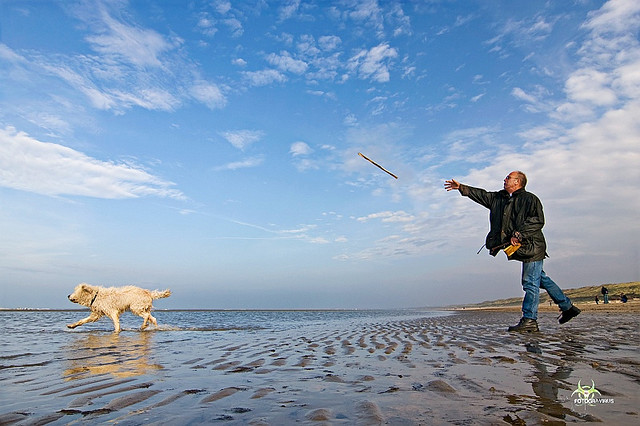
    We need only look at a young child playing in mud or a puppy fetching a stick to recognize the power of play. It is a healing practice that returns us to our innocence and brings us into the present moment; no chanting required.

    As children we relished the power of playfulness and saw life as one big game to participate in. We threw our whole selves into tumbling down grassy hillsides or playing tag rather than spending time in our heads worrying and planning.

    As adults we often forget that play still needs to be part of our lives. No matter how old we are, it is possible to return to that place of pure joy that exists within us.

    It may require some extra effort on our part to make time for play, but it is worth it for the mental and physical benefits.

    Here are five simple ways to harness the power of play in your daily life and rekindle your joy:

    1. Get into the woods.

    The woods make a wonderful playground, and spending time in nature is hugely therapeutic. Stomp through piles of crisp fall leaves and throw them into the air like natural confetti. Climb a tree and re-ignite your child-like wonderment.

    If you really want to access your joy, play a game of “hide and go seek” among the trees with a friend. You will be surprised how much fun this game can be as an adult.

    2. Play ball.

    Play ball, any kind of ball! Whether a game of tennis, soccer, or shooting hoops, the mind-body connection required for ball sports is sure to relieve stress and shift negative thought patterns. Visit your local driving range to hit golf balls. Even if you’ve never golfed before, this can be super fun.

    3. Dance up a storm.

    One of my favorite ways to play is to put on music and dance around my house. Dance in your bedroom, in the kitchen, or in the backyard, with or without other people around. In fact, dancing alone like no one is watching provides a massive release of endorphins which is great for the mind, body and spirit.

    4. Host a game night.

    Next time your friends want to get together, why not host a game night instead of going to a bar or restaurant? Games like charades Pictionary or even the classic Twister bring out the playful side of even the most serious adults.

    5. Visit your local park.

    Visiting your local park is one of the simplest pathways to play. Swing on a swing, slide down a slide, and if there is a grassy hill that takes your interest, roll down it! Just because you are an adult doesn’t mean you have to give up your favorite childhood activities.

    We can all harness the power of play to access the ever-present joy within us. Making time for play in our lives between work, relationships, and other commitments can relieve stress, transform negative thinking into spontaneous laughter, and may just be the greatest gift we ever give ourselves.

    Kids running image via Shutterstock

  • The Secrets to Happiness: Lessons from a Toddler

    The Secrets to Happiness: Lessons from a Toddler

    Happy Kid

    “Happiness is the absence of striving for happiness.” ~Chuang Tzu

    My niece is nineteen months old and the most present person I have ever hung out with. If you have children or are around them, you know exactly what I am talking about.

    I know you want more joy, health, and lasting happiness in your life, we all do.

    Could it be that instead of only teaching our children the lessons of life perhaps we should let them teach us the lessons of happiness?

    I don’t live in the same city as my niece so time with her is very important and most of it is spent observing and playing. It got me thinking about her abundant joy and how I should take these lessons to heart.

    Here is what she is teaching me about the secrets to happiness:

    Don’t think about playing; just play.

    My niece doesn’t think about playing or how to play, she just plays. Just like a blade of grass doesn’t intend to grow, it just grows. But we get so caught up in thinking about doing something that we think that contemplation is action, but it couldn’t be farther from it.

    Are you practicing making a change to your life so much that you forgot to make the change happen? One of my mottos is “Ready, fire, aim,” because if I think about it too long, I will talk myself out of taking action. Don’t think about playing, just play.

    Stop and listen to the birds.

    One of my niece’s favorite things is to listen to the birds in the morning. When was the last time you listened to the birds at dawn? When was the last time you smelled a blooming flower? When was the last time you took over an hour to eat a meal, savoring each bite?

    This is mindfulness and it is so good for creating happiness. Part of mindfulness is practicing gratitude. It’s hard to be grateful if you don’t stop and notice all the good things in your day. Stop and listen to the birds.

    Explore above, below, and everything underneath.

    Like most children, my niece is incredibly curious. Everything is new to her, so naturally it has to be explored. She has to explore every aspect of something new, no matter if it’s chalk, the sound a bell makes, or what ice cream tastes like. Her entire day is one big exploration of life.

    As an adult I get set in my ways; don’t you? We are so content in our ways we forget about new ideas, new perspectives, and new ways of doing things.

    When was the last time you took a new route to work, tried a different restaurant, jumped in a pool, or danced? Happiness is in the joy of the moment, and there is no greater way to create joyful moments than to explore new things. Explore above, below, and under everything.

    Bath time is a cause for major celebration.

    For my niece there is no greater activity than taking a bath. Total happiness ensues as she gets placed in her tub. Everything about a bath is full of joy—the water, the splashing, making bubbles, and time with her parents.

    When was the last time you reveled in something like a bath or even a hot shower? Instead, we get in to get clean and spend the whole time rushing through to-do lists in our heads. Use your bath or shower to cleanse your thoughts and enjoy the experience. Bath time is cause for celebration.

    If it’s funny, silly, or exciting, then laugh.

    A child laughs an average of forty times per day. An adult laughs an average of fifteen times per day. If something is funny, silly, or exciting, then my niece is laughing. Some are small giggles and some are deep belly laughs. Both are full of present happiness and joy.

    There is so much to laugh about. Don’t worry about looking silly or being the one with the loud laugh. Laughter is contagious and immediately changes your mood. If it’s funny, silly, or exciting, then laugh.

    Above all else what my nineteen-month-old niece is teaching me about happiness is to be present and enjoy the beauty of life. There is much to be grateful for and enjoy.

    Instead, like many, I can easily get wrapped up in deadlines, feeling bad about my body, relationship drama, or fear of failure. All of these are self-created.

    If I really stop and just notice the world around me in that moment, I see trees and hear birds. I enjoy the sunrise and sitting with friends. There is no anxiety without anticipation. And you cannot anticipate the present moment; you can only be in it.

    Photo by Mindy Gerecke

  • How to Be Happier Without Really Trying

    How to Be Happier Without Really Trying

    “Happiness is the absence of trying to strive for happiness.” ~Chuang Zi 

    I sat in the café wondering why I wasn’t happy.

    I had been listening to all the happiness and self-help gurus. I was meditating every morning. I ate a healthy diet. I exercised four times a week. I was working hard on projects I was passionate about. I wasn’t wasting time and watching my life tick away.

    Yet somehow, as I sat in the café, I wondered how I could have been “doing it all right” and yet everything felt incredibly wrong.

    There is no mistaking the feeling of being unhappy. I wasn’t quite sure where it originated, but I constantly felt exhausted, uninspired, and like the energy was being sucked from my body.

    I had this mantra constantly running through my head: If you only get one life, the solution is to cram as much stuff into it, every minute, and waste no time so that you will die fulfilled.

    But it just wasn’t working.

    So I did what we naturally do. I went to Google, the mystical tech god, to help show me why I wasn’t happy and to help figure out what to do. 

    I tried all the usual suggestions. I started journaling and keeping a track of all my moments I was the most grateful for during the day.

    I started engaging in random acts of kindness; I would buy strangers’ coffee at Starbucks, pay for someone else’s toll, or leave a gift on someone’s windshield.

    I increased my meditation time to at least forty-five minutes per day and focused on staying mindful throughout the day. 

    But the big problem was still there. I felt stressed constantly, unhappy, and had the weird feeling that even though I wasn’t wasting any time, and was using my life wisely, I just wasn’t enjoying life that much. 

    I just could not understand why at the end of the day I felt so grumpy Every. Single. Time. 

    And then, as most coincidences in life happen, I stumbled upon an article written by Martha Beck, the famous life coach, about how there was one overlooked path to success—and it wasn’t hard work.

    In fact, quite the opposite. And it was something seriously in short supply in the modern world. 

    Play. 

    At first I thought, “What?” How is that possible? I’m having fun all day long. I go to work, come home, exercise (which I enjoy), work on my side project (which I enjoy), do some studying for a bonus class (which I enjoy). I play all day! 

    No, no, no, Martha’s article said. That is not play. Play needs to be restorative; it needs to be a time when your brain and body are turned off and simply in flow. 

    I decided to do an experiment. 

    Every guru since the dawn of time has mentioned how children are closer to “the truth,” and that by observing them we could learn quite a bit.

    So every day for a week I sat in a café. And I just observed. I did nothing but watch people interact, watched them come and go, and in particular, watched how children interacted. 

    The first thing I noticed was something obvious: Life is a game to kids.

    They spill milk and then laugh. Something breaks and they act scared for a moment, then laugh. It’s pouring outside and they jump in puddles and laugh. 

    It’s incredible the 180 that I (and many other adults) make. 

    Spilled milk? Annoying. Now my clothes are dirty. Broken wine glass? Great. Now I have to spend $15. Raining outside? Ecstatic. I get to run around freezing and potentially get a cold. 

    It was insanity. We were both experiencing the exact same things in life and I was giving myself a heart attack, while little kids were rolling on the floor laughing. Same situation. Big difference.

    I then did a flow test, where I wrote down every single moment of my daily schedule and analyzed whether I was having fun or not. 

    I quickly realized I wasn’t playing. I wasn’t engaging in the relaxed, restorative kind of play that leaves you feeling strong and healthy. 

    I was too concerned with “making this one life count” that I was jamming every minute of every day with some kind of activity, for fear of wasting a single minute.

    And the horrible irony was that I was seeking happiness by not wasting time, but “doing more” didn’t get me there.

    Isn’t that crazy? One of life’s most important practices is so easily overlooked because we take it for granted.

    There’s the old saying about how kids smile 400 times a day, but by the time they reach adulthood they only smile 10 times a day. I think it’s true.

    And for me, the real secret to enjoying life, beating unhappiness, and beginning to reverse depression was all about playing more in life.

    And, like meditation, everything can become an exercise in playfulness. 

    Maybe this life-changing secret will help you too: If you aren’t enjoying life enough, stop pursuing happiness and just play.

    Happiness will come as an unintended side effect.

  • 10 Ways to Enjoy More: What’s Your Guilty Pleasure?

    10 Ways to Enjoy More: What’s Your Guilty Pleasure?

    “Happiness consists of living each day as if it were the first day of your honeymoon and the last day of your vacation.” ~Leo Tolstoy

    For as long as I can remember, I’ve had an epic list of guilty pleasures.

    As a young girl, my top three guilty pleasures included dressing up and dancing in my living room to Madonna (“Annnnd…VOGUE!”), watching over-the-top nighttime dramas with my mom over bowls of Breyer’s vanilla ice cream (“Kevin…I’m pregnant! And you’re not the father!”), and penning addictive, soap-opera-worthy novellas about the kids in my fifth grade class (they’d line up and beg for the next chapter).

    I found so much joy and fulfillment in those activities. And while I jokingly call them “guilty pleasures,” I never felt a single pang of remorse.

    As a grown-up girl, my guilty pleasures follow a similar strain: booty-shaking hip-hop classes, binge-watching Game of Thrones, and eating anything with the words “chocolate” and “peanut butter” (or both).

    Oh, and I’m penning a screenplay that’s one-part erotic paranormal romance, and one-part political thriller. (Obviously.)

    Clearly, I’ve got a lifelong passion for guilty pleasures—and I’m fascinated by how our bodies respond to our favorite ones.

    How our boundaries dissolve. How our curiosity ignites. How we find ourselves with an insatiable need to indulge (NOW!) before we explode with anticipation. (If you’re hopelessly addicted to any juicy TV series, you know what I’m talking about.)

    Guilty pleasures are exhilarating, and there’s no denying that they bring oodles of fun to our lives.

    So, why don’t we indulge in these pleasures more often?

    I believe the word “guilty” may be the culprit. For some of us, it’s hard to even say the phrase “guilty pleasure” without feeling a prickle of shame.

    And that semantic buzz kill needs a definition makeover.

    I’ve decided to re-define the term “guilty pleasure” as something that ignites and electrifies you in a way that should be totally illegal, but isn’t. It’s something you should enjoy every day, with wild abandon. It doesn’t (necessarily) have to be unhealthy or calorie-laden, but it’s got to feel decadent.

    Now that you have complete permission to pursue your most electrifying passions, here’s a peek at 10 ways you can make your whole life feel like one big guilty pleasure.

    Go ahead—indulge.

    1. Schedule daily guilty pleasure breaks.

    No more guilt means no more excuses to avoid partaking in your favorite pleasures.

    You now have full permission to take a break from work and read that enticing gossip blog, catch up on the latest season of your favorite show, or revel in a romance novel (or audio-book—who’s gonna know?) and savor it while pumping away on the elliptical machine.

    2. Spice up boring to-dos.

    Loathe folding laundry? Detest doing the dishes? Crying into Quicken? Crank up the music that makes you grin like a goofball (classic Justin Timberlake, anyone?) and shimmy while doing your chores. Even Gwyneth Paltrow rocks 90s hip hop while cooking her uber-healthy, organic meals.

    3.  Create guilty pleasure play dates.

    Stuck in an “activity rut” with your significant other, family, and friends? Instead of dinner at “the usual place,” infuse your favorite guilty pleasures into your play dates. Get creative: host an at-home triathlon (video game competition, quickie card game, or a cupcake-eating contest!) or take a guided ghost tour of haunted historical buildings in your city. Spooky!

    4. Just giggle.

    Nothing lowers stress like a good chuckle. Create a giggle bank of hilarious YouTube videos (the boys from Saturday Night Live + T-Pain = win!), Awkward Family Photos, and hilarious blog posts (The Bloggess never fails). Get yourself in stitches, daily.

    5. Try something brand new.

    For an instant boost of pleasure and adrenaline, try something you’ve never done before, but always fantasized about. Channel your inner Gustav Klimt at a nude figure-drawing class (Dr. Sketchy’s Anti-Art School is always a delight!), find your local Ultimate Frisbee League, or try an aerial yoga class.

    Give yourself permission, and enjoy every clumsy attempt. You may spark a new lifelong hobby!

    6.  Do a tedium detox.

    This kind of “detox” isn’t about gulping kale-infused liquids. It’s about clearing out everything that’s tired, tedious, and boring.

    Rummage through your closet and get rid of anything that doesn’t make you feel like a million bucks. Donate old books you’re never going to read, toss stale ingredients that hog your cabinets, and chuck dusty relics that make your home feel like a cluttered mess.

    Once you cleanse the un-pleasurable, fill those spaces with items that delight and inspire. (Or, just leave some empty space. Ahhhh.)

    7. Try on a new character.

    Ever wish you were a Sherlock Holmes-worthy super spy? Or an adorkable hipster like Zooey Deschanel? A head-turning hunk, or traffic-stopping bombshell?

    Instead of throwing on your usual “uniform” in the morning, try dressing like your alter-ago—and live out your day as this new character. This could mean a little harmless flirting with the local barista, strolling through the city in a bright sundress with a parasol, or jotting down secret notes as you observe passersby, at an outdoor cafe.

    8. Make pampering a priority.

    Ladies, remember how much fun it was to play with scented lotions, glittery nail polish, and cake-batter-flavored lip gloss when you were a tween?

    Primping and pampering yourself is (still) absolutely essential. Bring back the joy with a quickie 10-minute scalp massage, a mini-pedicure, or a pre-bedtime back rub from your partner. To keep it simple, just take a few extra moments in the shower to lather up and let your mind wander. Completely cathartic.

    9. Keep conversations centered on pleasure.

    I once read—in a glossy magazine, of course—that the French find it rude to discuss work, religion, or politics at dinner parties, and focus their banter on movies, art, and music. Infuse every conversation with joie de vivre by asking, “So, what are your favorite guilty pleasures?”

    You can enjoy a conversation with anyone if you shift the conversation to pleasure.

    10. Build a guilty pleasure emergency kit.

    If you suffer from excruciating headaches, you probably tote a mini-emergency kit around in your handbag or briefcase. Why not build a Guilty Pleasure Emergency Kit for a mood-boosting pick-me-up?

    Put together a bundle of scintillating magazines, juicy novels, caramel-laced chocolate (or whatever floats your pleasure-boat) and label it “For Emergency Use Only.”

    Of course, you may find yourself “inventing” a dire emergency (“What?! The post office is closed on Sundays?!”) just to give yourself a reason to indulge. And that’s just fine.

    It’ll be our delicious little secret.

  • 6 Tips to Keep Becoming Who You’re Meant to Be

    6 Tips to Keep Becoming Who You’re Meant to Be

    “Life is a process of becoming. A combination of states we have to go through. Where people fail is that they wish to elect a state and remain in it. This is a kind of death.” ~Anais Nin

    Last October, in a whiplash-fast, three-hour labor, two and half weeks before my due date, I gave birth to my first baby, a boy, named Jackson.

    While pregnancy hadn’t been a breeze—I was hospitalized twice with complications, and, you know, no sushi for nine months—the first few weeks of Jackson’s life left me feeling, at times, like a shattered shell of my former self.

    His was an ear-piercing scream that seemed endless in those early days, leaving me both physically and mentally exhausted; and save for a few smiles, the hint of who he’d become was so teeny—like a faint, faraway twinkle in the night sky—that I wondered how I’d ever form the bond with my child I so deeply craved.

    Around the time Jackson turned five months old, things began to shift. While his ear-piercing screams still made an occasional guest appearance, an infectious laugh had begun filling some of the spaces between them.

    And the sleepless nights that so recently left me dragging through each day, dreaming of Egyptian Cotton sheets and a strong sedative, had been replaced with eight-, nine-, sometimes even 12-hour blocks of sleep.

    Jackson was becoming a funny, inquisitive, playful little person with a growing personality and a whole host of new tricks: rolling, sitting up, babbling, crawling, clapping. He reacted and responded to me now in a way that felt like communication, using a language of giggles, grunts, and physical cues.

    All these changes, as well as the growing bond between us, reminded me of why I’d been so excited to have a child in the first place: It’s super cool to raise and watch a person rapidly evolve through the formative stages of becoming who he’s meant to be.

    I am also reminded that those stages—those opportunities for growth—may slow in adulthood, but they’re always there for those interested in pursuing them. One of the best ways to find them is to engage in the world like a baby does, by following these six tips: (more…)

  • Quiet Your Mind and Just Play (in 20 Ways)

    Quiet Your Mind and Just Play (in 20 Ways)

    “If it’s not fun, you’re not doing it right.” ~Bob Basso

    I spend a lot of time contemplating and philosophizing about life. According to my mother, I spent the first year of my life silently observing the events around me with a serious stare and a furrowed brow.

    I’ve always leaned toward reverent acts of self-discovery and introspection. In high school I studied Buddhist texts and on Sunday mornings. At age eighteen, when my college classmates were nursing hangovers, I was shopping around for a spiritual home, which I found in the form of my Unitarian-Universalist church.

    For most of my life, I’ve lived with intention and rarely with abandon.

    And I think I’m starting to feel the weight of this.

    Contemplation has its place, but sometimes life just calls for a little spontaneity—a small dose of irreverence interspersed amongst the otherwise-trying bits of living.

    I write this tonight because I have had a few uncharacteristically playful moments over the past few weeks, and I am quite sure they have prevented me from cracking up during some significant stress. Either that or, I am cracking up and my behavior has regressed to that of a four-year-old.

    In either case, it feels good.

    And I want to share those good feelings. So to encourage you to foray into the world of play, I’ve created a list of some things that have brought me unexpected and simple joy the past few weeks (along with some things I haven’t quite worked up the nerve to do just yet).

    Have fun and en-joy!

    20 Ways to Play

    1. Blow bubbles in the bathtub.

    Sometimes they bounce off the surface of the water. And when they pop, they make this satisfying “click” sound. If the lights are off and you have candles burning, the reflection in the soapy dome that hovers on your bath water is mesmerizing.

    2. Hula hoop.

    I just learned this skill. At age thirty-two. It’s addictively fun. Jump “rope” with the hula hoop, too. Just for laughs. My good friend advised me to, “Never hula hoop naked.” But I think that if you’re after laughs, this might be a good route.

    3. Make a paper “fortune-teller.”

    Then write ridiculous fortunes on the inner flaps. Present it to friends and neighbors for a range of amused smiles and baffled glances.

    4. Teach your dog a trick.

    Another hula hoop-inspired one for me, as my dog loves to leap through the hoop with the promise of a morsel of pepperoni. And her enthusiasm is contagious.

    5. Be a “surprise fairy.”

    Leave an anonymous gift or token for someone special. It could be a trinket or a poem, a hand-me-down necklace, or a handmade card.

    6. Belt out a show tune.

    Preferably in public. I won’t even tell you what’s been in my repertoire recently, but it’s a calypso tune sung by an ocean-dwelling animated crab. Catch my drift?

    7. Use stickers.

    Liberally. Just slap ‘em on notes and letters and planners. I dig Hello Kitty, but to each her own.

    8. Write silly poems on the envelopes to your bills.

    Last month’s masterpiece to my electric company expressed my relief at the rising temperatures and the lowered energy bill, and wished the reader a sunny afternoon.

    9. Leave a song on someone’s voicemail.

    Your high school best friend will be thrilled when he leaves work to check a voicemail containing the epic musical swells of “Bohemian Rhapsody.”

    10. Play with clay.

    You don’t have to be a sculptor. Get some play clay and roll out some worms, construct a tiny dinosaur (even if it looks like a rabbit), or use a cookie cutter to make a row of stars.

    11. Run down a hill.

    Or roll. Get some speed and feel the abandon. You’re freeeeee!

    12. Draw on the walls.

    Use bathtub crayons and create something while you shower. Or get some sidewalk chalk and have fun making hopscotch courses outside. Tape paper to your wall and scrawl in broad strokes with markers. It’s liberating.

    13. Give in to an urge.

    It’s 11pm and you’re suddenly compelled to drive to the beach? Do it. It’s 10am and the sunshine outside your office window is luring you out to take a walk? Do it. Not all urges are irresponsible.

    I think when we feel drawn toward freedom or to do something spontaneously, it’s usually our soul’s plea for joy and levity. We can’t always ignore that or ask it to wait patiently for the weekend. If we do, it may stop speaking to us all together.

    14. Borrow a kid.

    If you already have one, borrow another for a change of pace. Go to the playground and chase them around. Let them push you on the merry-go-round. When the other adults shoot you a look, smile inside, content in the knowledge that you know a secret to happiness: play!

    15. Swing on the swings.

    With or without kids. Feel the breeze across your face and the drop in your stomach when you go just a little bit higher.

    16. Learn a new trick.

    I still can’t do a cartwheel. And I can’t quite dive. But every time I set out to do either, I feel a renewed zest for life. Try something new and have fun with it.

    17. Play an instrument.

    Bongos and kazoos are fun for the not-so-musically-inclined.

    18. Make a “faerie garden.”

    My mother did this with my son recently. She used an old wooden crate and some found objects, and let him create a beautiful little “garden” filled with ceramic turtles, tree branches, and an angel figurine. There’s no real reason. But why not?

    19. Throw a party.

    Go all out and make it a themed event for all of your friends. Or go small scale and celebrate your dog’s birthday with some balloons, a new toy and a feast of fresh beef and rice. You can celebrate anything, if you want to.

    20. Dance in public.

    At a karaoke bar or in the grocery store. And if you somehow just can’t bring yourself to do it…do it anyway.

    These moments of fun and play are what keep me feeling alive. I consider them to be my soul’s expression of joy. And my body’s expression of joy. And my heart’s expression of joy. But my mind is blissfully quiet during these times.

    In these moments, my mind is off the hook and all I have to do is just play.

    Photo by Brian Tomlinson

  • 10 Ways to Make Your Life More Playful

    10 Ways to Make Your Life More Playful

    “We don’t stop playing because we grow old; we grow old because we stop playing.” ~George Bernard Shaw

    I was 25 and traveling through Ireland by myself. I was in Cong, a rural small town outside of Galway. It was quiet. Very quiet. Even though I had met people on my trip, I was starting to feel lonely.

    I was thousands of miles from home. I had nobody around who knew me well or cared for me, and in the days before cell phones or internet cafes, I couldn’t just get in touch with my friends or family at the drop of a hat.

    I went on a walk in a local park, along a wide stream that emptied into a small, pristine pond.  The weather was grey and gloomy, the park was damp and romantic-looking, with its bending trees and dark water.

    On a whim, I sat down by the edge of the pond and began to do something I hadn’t done in probably 15 years: I started to build a fairy village out of sticks, pebbles, and leaves.

    As a child I had practically lived in the backyard, building intricate tiny villages, exploring the spaces in between plants and trees, making tree roots into cottages and lumps of mud into hillsides.

    It calmed me down and got me away from sometimes troubling thoughts. In Ireland, I found the same thing happened: My loneliness and anxiety vanished, and an hour or so later when I finished, I felt better: lighter, and less worried.

    When we lose ourselves in play, whether creating a make-believe world, throwing a ball between friends, frolicking with our dog, or watching silly YouTube videos, we allow ourselves to get out of the linear, problem-solution, adult mindset.

    We’re activating a part of our brains that we don’t use much in the grown-up world: the one that doesn’t care about deadlines or mortgages or how much we weigh, the one that doesn’t care how we look to others.

    In the land of play, we make connections we wouldn’t normally make. We see things in new ways. Play can boost our creativity, heighten our mood, make us laugh, and can engage us in the world in ways that regular “adult” life often doesn’t.

    For some reason, I’ve never grown up enough to stop playing. When I stop noticing the playfulness of the world around me, I know I’m in a bad mood or too stressed, and I often make myself stop and re-engage in the world in a playful way, even if just to watch a funny movie. (more…)