Tag: planning

  • Planning Without Panic and Learning to Live in the Now

    Planning Without Panic and Learning to Live in the Now

    “You can plan for a hundred years. But you don’t know what will happen the next moment.” ~Tibetan proverb

    Some days it feels like a fog I can’t shake—this underlying fear that something painful or uncertain is just around the corner.

    I try to be responsible. I try to prepare, make good choices, take care of things now so the future won’t unravel later. But beneath that effort is something harder to face: I feel helpless. I can’t control what’s coming, and that terrifies me.

    Maybe you’ve felt this too—that tension between doing your best and still fearing it’s not enough. Worry becomes a habit, like you’re rehearsing bad outcomes in your head just in case they happen.

    That’s where I found myself when I turned to Buddhist teachings—not for comfort exactly, but for a different relationship with uncertainty.

    What Buddhism Taught Me About the Future

    One of the first things I learned is that Buddhism doesn’t tell us to stop caring about the future. It teaches us to stop living in it.

    The Buddha spoke of suffering as arising from two core causes: craving (wanting things to go a certain way) and aversion (pushing away what we don’t want). When I spin into worry or try to predict everything, I’m doing both—I’m grasping for control and resisting what I fear.

    But the future is always uncertain. That’s the part I don’t want to admit. I used to believe that if I thought hard enough, planned carefully enough, I could outmaneuver risk. But I’ve learned that worry isn’t preparation—it’s just suffering in advance. It doesn’t protect me. It only pulls me out of the life I’m actually living.

    The Real Conflict: Planning vs. Presence

    Here’s the real tension I struggle with—and maybe you do too: I believe in the power of presence. But I also know I have to plan.

    As a filmmaker, planning isn’t optional. Without preparation, things fall apart. A well-structured plan doesn’t just prevent chaos—it makes room for creativity. It allows me to focus, explore, and respond to the moment without losing direction. In that way, planning is part of my art.

    So when I first encountered teachings about letting go and trusting the moment, it felt contradictory. How could I live in the now when my work, and life, require thinking ahead?

    This was the real conflict—the push and pull between control and surrender, between structure and flow. One is necessary for functioning in the world. The other is necessary for actually feeling alive in it.

    A Real-Life Lesson in Letting Go

    Years ago, I received grants to make a 16mm documentary about Emanuel Wood, a traditional Ozarks fiddler with a rich musical heritage and a colorful presence. I had high-quality gear lined up—Nagra 4.2 audio, film stock, the works—and the project felt blessed. Emanuel was eager. I was hopeful. The plan was solid.

    It felt like everything was finally coming together.

    But over the years I’ve learned something the hard way: sometimes, when I feel euphoric about a plan, it’s also a signal—a subtle warning that life might have something else in mind.

    Sure enough, Emanuel died unexpectedly just a few months before I was scheduled to begin filming. Just like that, the film I had meticulously envisioned, built support for, and shaped my year around was gone.

    I was devastated. I couldn’t give the grant money back, and I didn’t want to abandon the deeper spirit of the project. So I did what I didn’t expect to do: I stayed present, and I listened.

    I made a different film. A new one. Something just as honest and grounded in the world Emanuel represented. It was shaped by the same love of music, the same longing to preserve meaning, and it emerged only because I stayed with the discomfort and uncertainty of not knowing what to do next.

    Planning had given me the structure. But presence—and trust—allowed the story to live on in a different form.

    The Middle Path: Flexible Readiness

    I think about that lesson often. The same conflict plays out across many fields. The military trains obsessively for what can’t be predicted. A jazz musician rehearses scales for hours, only to let them go once the song begins.

    We don’t have to abandon planning. We just have to make space for improvisation.

    This is how I’ve come to understand the Buddhist path in a practical world: Planning is necessary. But clinging is optional.

    Now, I try to plan the way a musician tunes their instrument. Prepare with care. Show up with intention. But when the moment comes, play—not from control, but from connection.

    What Helps Me Now

    These days, when fear about the future rises, I pause. I breathe. I ask myself: Am I trying to control something I can’t? Can I still act responsibly without gripping so tightly? Can I trust this moment, even briefly?

    I still make plans. I still take responsibility. But I no longer pretend I can outthink uncertainty. I try to meet it with curiosity, flexibility, and a little kindness toward myself.

    Sometimes I quietly repeat:

    May I be safe. May I meet whatever comes with courage and care. May I trust this moment.

    That doesn’t solve everything. But it brings me back to the only place I actually have any power: here.

    You don’t have to give up planning. Just stop making it your emotional insurance policy.

    You can build the structure, take the next right step, and still leave space for life to surprise you.

    Let your plans serve your life—not replace it.
  • When You Stop Forcing, Life Flows

    When You Stop Forcing, Life Flows

    “You don’t have to force the flow—sometimes your only job is to soften and let go.” ~Unknown

    For most of my life, I was obsessed with getting everything right. Planning. Controlling. Anticipating every outcome so I wouldn’t be caught off guard. I saw life as a kind of puzzle: if I just made the right moves in the right order, I’d get what I wanted. Peace, success, love.

    But life doesn’t work that way.

    The more I tried to control it, the more I felt out of alignment. I would burn out trying to make things happen. When something went wrong, I blamed myself for not anticipating it. I couldn’t relax because I was always tightening the reins, trying to steer the unknown.

    Then one day, something cracked.

    It was the winter of 2021. I was staying in a quiet village in southern Portugal, trying to piece my life back together after a painful breakup and the collapse of a startup I had poured years into. I’d gone there thinking solitude and fresh air would help me reset.

    But nothing felt right.

    I couldn’t focus. I couldn’t meditate. I couldn’t even enjoy the ocean—something that once brought me pure joy. Instead of peace, I felt stuck and overwhelmed. My mind replayed every decision I’d made over the past few years like a courtroom drama. “If only you’d done this.” “You should have seen that coming.” “You’ve ruined your shot.”

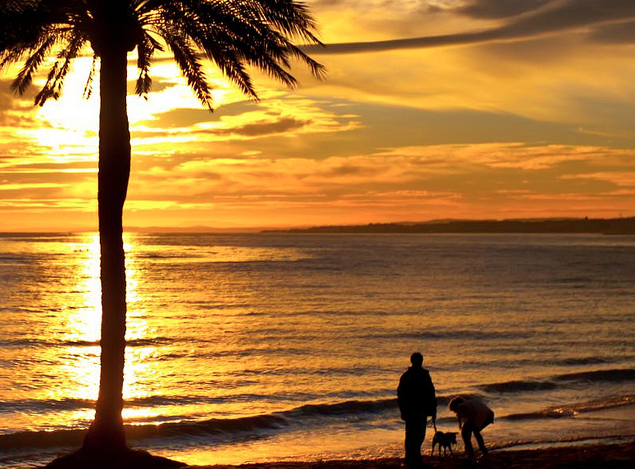
    I sat on the beach one evening as the sun went down, feeling completely defeated. I remember watching the waves crash rhythmically against the rocks. They didn’t care about me or my mistakes. They weren’t rushing or apologizing. They were just… doing their thing.

    That’s when it hit me.

    Nature doesn’t force anything. A wave doesn’t strive to be taller. A tree doesn’t try to grow faster. They exist in a kind of trust—a natural cooperation with life. And somehow, despite all that ease, they thrive.

    What if I’m the one disrupting my own flow by trying to control everything?

    It wasn’t a lightning bolt. It was more like a soft whisper inside. But something shifted.

    I started asking myself a new question each morning: “What would happen today if I didn’t try to control anything?”

    I didn’t have to force myself to do nothing. I still worked, moved, made decisions. But I tried to stay present rather than five steps ahead. I let myself feel uncertain without reaching for solutions right away. I listened more—to myself, to life, to the quiet.

    And over time, I noticed something strange. My anxiety started to fade—not all at once, but like a fog lifting. I stopped catastrophizing every decision. I felt a little more at peace, even if nothing around me had changed.

    That’s when I began learning what I now call divine flow.

    To me, divine flow is the current of life that we can either resist or surrender to. It’s not passive. It’s not about “doing nothing” or abandoning effort. It’s about cooperating with something deeper—something beyond just logic or planning.

    It’s learning to recognize that there are seasons for pushing and seasons for resting. That sometimes what looks like a setback is actually an invitation to realign. That clarity often comes when you stop chasing it.

    There’s a trust that builds when you live this way.

    You realize you don’t need to have everything figured out. You can still move forward with intention—but without gripping so tightly.

    Since then, I’ve built a life more aligned with who I am. I started creating wellness events focused on community and connection rather than perfection. I met people who inspired me simply by being themselves. I even learned to show up vulnerably, like I’m doing now, without needing everything to be polished or impressive.

    I still have moments where I fall back into old habits—where I try to force outcomes or fix everything too quickly. But I catch myself faster now. I’ve learned that tension is usually a sign that I’m out of the flow.

    If you’re in a space where things feel hard or disconnected, here are a few gentle invitations that helped me reconnect with the flow:

    • Let yourself feel lost. You don’t need to rush to “figure it out.” Sometimes the most fertile growth happens in the spaces where we allow ourselves to feel confused and uncertain.
    • Listen more than you analyze. Instead of trying to force answers, sit with your questions. Journal. Walk. Let thoughts come without needing to trap them.
    • Release the timeline. Things don’t have to happen on your schedule. You’re not late. You’re not behind. You’re just unfolding.
    • Ask for signs—but don’t cling to them. Sometimes life will whisper directions when you’re quiet enough to hear. But the key is to listen without expectation or pressure.
    • Come back to your breath. When your mind spirals, anchor into the present. One breath. One step. One moment.

    We can’t always choose what happens to us, but we can choose how we meet life. With resistance—or with curiosity. With fear—or with trust.

    These days, I still sit by the ocean when I can. I still watch the waves. I remind myself that there’s a rhythm beneath everything—and that my only real job is to stay soft enough to feel it.

    Maybe that’s all we ever needed to do.

  • Want to Change Your Life? Draw the “You” You Want to Be

    Want to Change Your Life? Draw the “You” You Want to Be

    “You are not too old and it is not too late.” ~Unknown

    In less than a month, I’ll be hitting a major “milestone” birthday. I quit my full-time job six months ago, ending a twenty-plus year career in education, and have spent time thinking about what I want the next chapter of my life to look like. I found myself thinking back to a drawing exercise I did a few years ago that has made such an impact on my being willing to make major changes in my life.

    Entering my mid-forties, I had come to a point where something just felt “off.” I wasn’t sleeping well, often waking at 3am with anxiety about real or imagined catastrophes. I was often stressed and short-tempered. I was gaining weight and my health wasn’t in the top-notch condition the way it had always been. I felt directionless and unmotivated, but wasn’t sure what I would rather be doing.

    I recalled a TED talk I had seen in which Patti Dobrowolski discussed the power of “drawing your future.” While the concept seemed a little silly to me at first, I decided to give it a go one evening while journaling.

    The end result is a poorly drawn stick figure of myself in lotus position (which I can’t actually do) and a few notes in the margins. My goal was to draw and describe myself nine years in the future. What kind of “older woman” did I want to be? What were my activities? Had I conquered anything that currently plagued me?

    The stick figure I drew has salt-and-pepper hair, as she no longer feels any need to waste her time and money trying to look younger. She instead proudly wears her silvers as a testament to her experience.

    She is a vegetarian…maybe even vegan. She practices yoga and meditation daily…possibly is a yoga instructor. She rarely, if ever, drinks alcohol. She owns her own business, makes a six-figure salary, and has a healthy nest egg for retirement.

    Most importantly, she is completely at peace with herself and her place in the world.

    That fifty-five-year-old stick figure was so far removed from the forty-six-year-old me who drew her.

    I was still spending exorbitant amounts of money every eight weeks coloring my hair. I was an omnivore though eating meat disgusted me more than I cared to admit. I practiced yoga every now and then, but not seriously, and I never meditated. While I never identified as an “alcoholic,” my drinking went far beyond the recommended single four-ounce glass of wine per day. I did not own my own business, but rather was in a job that wasn’t going anywhere.

    Here’s what I found amazing. Within weeks of drawing that picture, I stopped eating meat. Within just a few months, I had cut out dairy and eggs as well. Six months later, I dyed my hair for the last time. I do at least a few sun salutations every morning. Most recently, I stopped drinking alcohol and said “good-bye” to that dead-end job.

    The biggest change was the confidence to make all of these decisions and to realize there is a thrilling and fulfilling future awaiting me.

    I still haven’t accomplished everything that stick figure has. My nest egg is growing, but I still have a way to go before I consider myself comfortably “financially independent.” I don’t yet own my own business, and I’m still working on trying to meditate more regularly. But having this vision of the future has helped me to set manageable goals about what’s important to me.

    None of this has been done easily. It has required vast amounts of reading, educating myself, learning new recipes, and discovering that kombucha or a shrub in a fancy glass makes me just as happy (actually more so) than a glass of champagne.

    I’m blown away by how inspiring that little stick figure has been and how the simple exercise of drawing my future helped me to get clarity about what I want out of life.

    Research shows that the odds of anyone making a change in their life are nine to one. If you want to beat those odds, according to Dobrowolski, you need to see your ideal future, believe it’s possible, and then ask and train your brain to help you bring it to life.

    That’s why a picture can be so powerful. When we draw, we utilize our creativity and imagination. This gets us away from our inner critic which often runs the show and tries to keep us safe from harm.

    Once we have our picture, we’re able to close our eyes and connect the dots from the present to the future, factoring in all our life experiences and imagining the steps that would help us get from A to B.

    If you’re struggling to picture your next steps in life, consider watching Dobrowolski’s video. She encourages you to first draw your current state—with complete honesty— and your desired new reality. Add color to the new vision to make it pop. Make it something that draws you in and gets you excited. Then outline steps to take that will make your new reality possible. You may be surprised at the clarity that transpires! Draw the “you” you want to be.

  • 4 Reasons to Let Go of the Need to Plan Your Future

    4 Reasons to Let Go of the Need to Plan Your Future

    “No valid plans for the future can be made by those who have no capacity for living in the now.” ~Alan Watts

    I went to college a little bit later in life. Because of that, people often mistakenly believed I was operating on a specific (and somewhat urgent) timetable—as though I was running to catch up with the rest of the people my age.

    However, I was already in a career I loved (teaching yoga) that supported me financially. For me, going back to school was mainly about enjoying the process of getting an education without any pressure to get it over and done with.

    As it came time for me to graduate, I frequently got asked, “So, what’s next?”

    I never quite knew how to answer this question, and to be honest, it always made me a little bit uncomfortable. Mostly it made me uncomfortable because I could sense others’ discomfort with my answer, which was: “Nothing’s next.” People seemed to bristle at my reply and worse, give me a list of reasons why they thought it was risky not to have anything lined-up after I graduated.

    Even though their reactions weren’t personal, and for the most part, didn’t really have anything to do with me, the truth was: I was still insecure about making my own way through life and taking the path less traveled—which in this case was teaching yoga full-time and not making any concrete plans for the future.

    People clearly thought I should go out and get a “real” job (as if teaching yoga didn’t qualify as a real job). Another yoga teacher even asked me if I was going to get a “big girl job” when I graduated. Ouch.

    It seemed as though everyone expected me to launch into a new career or go on to higher education, and in spite of myself, I subconsciously agreed that perhaps I should just make a nice solid plan for my life.

    The problem was A) I already had a plan (which was not making any plans) and B) up until that point, my whole life had been spent making plans, and that hadn’t worked out so well. Over-planning had led to a lot of wasted time and energy. Plus, it had become readily apparent that life doesn’t always go according to plan (and thank God for that!).

    While plans aren’t in and of themselves bad, and they can certainly help lend direction to life, equally, I found it was generally in my best interest to leave things wide open to possibility, and here’s why:

    1. Planning tends to solidify life, and life is simply not meant to be frozen solid.

    Cliché as it may sound, life is a lot like water, and making plans is like placing a whole lot of logs and rocks and other obstructions in life’s way—it clogs up the current. Plans create resistance, and life is usually best when not resisted.

    2. When you’re looking for a specific outcome, you’re often not looking at anything else.

    A whole world of fantastic prospects could be surrounding you, but when you have on what I like to call the “focus-blinders,” all you can see is what you think you want, and nothing more.

    3. This one’s sort of an addendum to number two: We might miss out on opportunities.

    For the most part, people are inclined to think they’ll recognize opportunity when it comes knocking, but it’s been my experience that opportunity comes in all shapes and sizes, and it might easily be missed (or severely delayed) if we’re expecting it to look a certain way.

    4. This last one might be the most important, and it’s that over-planning can cause us to overthink and end up second-guessing or compromising ourselves, as well as our values and goals.

    I’ve learned the hard way (on more than one occasion) that having a plan and sticking to it like glue can be a fast path to rock bottom.

    All those years ago, when I was on the eve of graduating from college and on the verge of having a major planning relapse, I looked back at my life so far and could see that everything had always worked out in one way or another, and often in ways I could never have orchestrated (or predicted) myself.

    While the future certainly looked intimidating from where I was standing, I had the sense that I could trust things would continue to work out. Even if I wasn’t the one carefully planning everything out.

    The story we tend to tell ourselves is that if we don’t make plans, then nothing will happen. And if we’re not in control, then things might fall apart.

    But the gentle truth, which is actually the glorious truth, is: we’re not in control, anyway. Not fully. And that’s such a lot of pressure to take off your shoulders. Even if you don’t plan your life down to the last detail, things will still happen. Opportunities will still show up.

    Phew, it’s not all up to you!

    That doesn’t mean you can’t also have some idea of where you’d like to go—there’s nothing wrong with having dreams and goals. But there’s something to be said for staying open instead of being rigidly attached to a specific outcome.

    That compulsive urge to plan comes from the urge to avoid uncertainty, a protective instinct that’s literally hardwired into our biology. Planning is a powerful impulse to minimize risk and ensure our continued safety and security.

    However, if you can find a way of making peace with a future that is largely unknowable, and also recognize that unknowable doesn’t automatically mean bad, it will help soothe that part of your brain that instantly wants to launch into planning mode.

    Ultimately, real security doesn’t come from the outside—from making plans or holding office jobs or earning Master’s Degrees. Real security comes from within.

    The most control we can exercise is to keep on doing the next right thing, taking steps that move us closer to the center of our Self, and living our lives in a way that reminds us of who we are.

    I still occasionally fall under the spell of planning, but every time I get wrapped up in the false sense of security planning offers, I come once more to the realization that life simply does not function according to my made-up agenda (no matter how well-crafted).

  • When You Still Don’t Know What You Want to Do with Your Life

    When You Still Don’t Know What You Want to Do with Your Life

    “If you worry about what might be, and wonder what might have been, you will ignore what is.” ~Unknown

    Sitting at my kitchen table, I can’t help but ask myself over and over again how I got to be here. Just yesterday it seems I was sitting with my family for dinner, discussing my college plans and a future that seemed so far away from the comfortable and naïve life I always knew.

    Now, I am graduating from college and embarking on the unknown journey that is “the real world” with what seems like no preparation whatsoever. Well, I wouldn’t say that. If they had beer pong tournaments or sorority trash talking in this “real world,” I would be more than prepared.

    The funny thing about life is that it’s set up to always be preparing us for something.

    Elementary school gets us ready for junior high school, which prepares us for high school, which prepares us for college, which prepares us for this “real world.” We are set on this path right from the start and told to follow the path to get us to where we need to be.

    But what society doesn’t seem to understand is that humans aren’t designed to stick to one path. Humans are free flowing, always changing, and always moving. One moment we can be so joyful we want to start a flash mob in the middle of the train station, and the next we can be disheartened and hopeless.

    Our feelings are ever changing and ever flowing, as are our thoughts, beliefs, interests, and our relationships with others.

    Maybe this is why when we are told to pick a major, a job, or a career, we are ultimately faced with the hardest challenge of our life. We spent our whole lives preparing for this moment, after all. The decided fate of what we will spend our whole lives doing.

    When I was faced with the big decision of picking my major and future career four years ago, I was at a standstill. I had so many interests, how was it possible to pick just one? Being the over analyzer I naturally am, I contemplated for a long time, measuring the pros and cons of each profession. I planned and thought, and planned some more.

    But it was when I was on a road trip with my family to Colorado, when I had finally stopped planning and thinking, that everything made sense to me.

    I was sitting in the car next to my little brother, who has autism. He is nonverbal but probably smarter than any average thirteen old; people just don’t see him how I do.

    Pondering about life, as I had nothing else to do in a twenty-five-hour car ride, everything suddenly made sense.

    Speech therapy, where I can help people like my brother whose intelligence is underestimated due to his autism, suddenly became my purpose. I can’t explain the feeling other than it seemed like my brother was set on this planet to be my brother and to help me find this purpose in life.

    It turned out all that time contemplating my future had gone to waste, because I didn’t need to contemplate at all. I just knew, and the beauty of it all was that it came to me when I was doing absolutely nothing.

    So this is where the great plan idea doesn’t quite have it right.

    We spend our whole life in preparation. We don’t realize that while we’re planning, we’re missing out on the important things in life. While we’re planning, we’re missing out on the opportunities to relax and let the plan come to us.

    We’re missing out on valuable time spent living our lives worry-free and stress-free. Nobody needs a plan or a set path to get to where they need to be, because where you need to be is where you already are.

    Being someone who is in the process of growing up, I can confidently say that I believe humans never really “grow up.” But I do believe that humans are constantly growing and changing to be the best selves they can be. People have multiple purposes in life, not just one.

    So take those risks. Venture onto different paths; explore the paths that may seem far-fetched or unrealistic. Travel the world, start a business, do the things that are pulling you toward them.

    I strongly believe everything happens for a reason, and if you have an instinct to do something, there is a reason for that feeling.

    When you become confused about life, can’t make a decision, or are anxious about having a plan, take a deep breath and remember that life is a journey, not a destination. There is no plan required in life. The only thing required is to keep an open mind and go with the flow.

    You never know what might hit you when you are relaxed and doing nothing, and what instinct will draw you to your next adventure.

    It’s important to have faith in yourself and know that our internal selves are more powerful than we think.

    If we can trust ourselves, knowing that we don’t need anything external to give us answers, everything will come together. Remember, you know yourself better than anyone else, even if you don’t think you do.

  • Fuel Your Dreams with Simple Daily Habits

    Fuel Your Dreams with Simple Daily Habits

    “A good plan today is better than a perfect plan tomorrow.” ~Proverb

    My name is Katie and I am an over-planner. I spend way too much time laying out meticulous plans as if they were exquisite bejeweled gowns. I spread them across beautiful handmade notebooks, trim them with pink and green headings and sub-headings, and step back to admire them when I’m done.

    They are tomorrow’s plans. Each one more stylish, more elaborate, more organized than the last. Each one the perfect plan. But in reality, not one of them is. Once the latest plan has been printed or pasted or posted, I grow weary of it and want another.

    I’m addicted to perfecting my plans, but not actually executing them.

    This repetitive crafting of the next best laid plan has me caught in a time warp where I’m forever looking ahead, forever color-coding the future, forever laying out a decorative path that I don’t have time to explore because I’m too busy planning and perfecting.

    My perfect plans are nothing more than plastic-sealed sofas no one ever touches or perfectly manicured rose gardens no one ever smells.

    They are an illusion, they are excuses, they are busy-makers, they are attempts to control the chaos, and they only succeed in helping me avoid the real work of digging and pushing and acting and living today, not tomorrow.

    Maybe your plans feel this way too. Do you find yourself planning and organizing and researching and preparing, but never really getting down to mastering anything except planning?

    You could be like me—a bit of a perfectionist, a slight over-achiever, a touch bossy, a tad of a control freak, but I bet you are a whole lot more than that. You’re also likely a soulful human being with dreams and goals and a desire to live purposefully and joyfully.

    If so, here’s a new plan of attack that just might get you out of your perfect planning rut. Choose a simple, heartfelt habit and do it every day. Don’t worry about being perfect or doing everything all at once, just repeat this habit each and every day.

    Today, I will walk the dog, grab a coffee, then come home and write a few pages of my novel. Now there’s a good plan—a plan that I can do today and maybe even repeat tomorrow.

    Maybe I’ll end up getting in shape, feeling good about life, and finishing that book I’ve been writing. (more…)

  • How Planning Less Can Set You Free

    How Planning Less Can Set You Free

    Feeling Free

    “Life is a process of becoming. A combination of states we have to go through. Where people fail is that they wish to elect a state and remain in it. This is a kind of death.” ~Anais Nin

    Normally my girlfriend and I have a routine for Saturday mornings:

    She goes to yoga at eleven AM and then heads into Central London to do a small amount of shopping, and perhaps visit a museum. I might get up, do some writing in the morning, tidy the flat, and then take a dance class at 1PM. These are routines we enjoy, or at least enjoy most of the time.

    Last Saturday we spontaneously decided to do none of that.

    Instead, we went for a walk along a local canal towards central London. It was a mild, hazy morning, with calm water, seagulls, ducks, joggers, quiet, and sun.

    We left the canal and visited some inner city churches and their second hand markets, offering cheap coffee and large, silent spaces.

    We finished by visiting two different specialty coffee shops. At the end we sat in the second and best, with sun streaming in through the windows, feeling calm and content.

    As opposed to our normal Saturdays, there was a natural flow to the morning—perhaps better described as an evolution.

    Every decision was spontaneous. Every decision felt natural. Every moment was savored.

    I could have spent an hour planning our “intimate time” down to the last degree—but would it have contained the joy and peace that naturally flowed that day?

    This is increasingly how I am practicing living my life: with a minimum of routines and plans, allowing the present moment to dictate the future.

    I try to stay in touch with the process of becoming. In doing this:

    I don’t want to knock routines completely. They can bring richness, happiness, and comfort. For example, I cherish my early morning coffee grinding. (more…)

  • On Planning Less: How to Let Go & Enjoy the Ride

    On Planning Less: How to Let Go & Enjoy the Ride

    “Don’t seek, don’t search, don’t ask, don’t knock, don’t demand – relax. If you relax, it comes. If you relax, it is there. If you relax, you start vibrating with it.” ~Osho

    As I drove home today, I embarked on a familiar exercise: planning out, in ridiculous detail, the next week, month, and year of my life.

    To be clear, I’m not suggesting that planning is bad. In my world, a complete lack of planning would be anarchy. And anarchy equals anxiety. So I try to avoid it—both the anarchy and the anxiety.

    But, historically speaking, I plan to a fault. You could say I live the classic cart-before-the-horse existence. In fact, in my world, the cart comes before the horse has even been born. Or conceived.

    I think of a neat product to create, then spend (read: waste) days mentally planning which boutique in NYC would be best to approach first, before I’ve even figured out if I can afford the supplies (or safely use them).

    I find myself drawn in by late-night Zumba infomercials and spend the next several hours envisioning myself completing the workouts daily for six months, finally emerging from underneath the burden of the “workout so fun it’s not even like working out” perfectly toned, ready to ride my surf board (the one I don’t yet own) on the shores of Maui, Cameron Diaz-style.

    Did I mention that I don’t like cardio? You’d glean this if you saw the thirty-two Zumba-like DVDs that already grace the mantel of my family room. Unopened.

    Almost every Saturday, I wake up and declare my intention to stay in pajamas all day, to lie around and simply be lazy. And then by 11:07AM I’m bored to pieces and excitedly headed to Barnes & Noble (while remembering my vow not to get out of PJs).

    So today, as I drove home while unconsciously plotting how I’d like to spend every hour of every day of the next week, month, and year, a song called “Going Whichever Way the Wind Blows” by Pete Droge came on the radio. The lyrics, which repeat over and over at points, advise: (more…)

  • On Getting Started When You Don’t Feel Ready

    On Getting Started When You Don’t Feel Ready

    Jumping

    “Don’t wait for your feelings to change to take the action. Take the action and your feelings will change.” ~Barbara Baron

    A few months ago I challenged myself with Adventure Boot Camp. I thought, “What would be more challenging than waking up at five in the morning and working out with a group of ladies for an hour, four days a week?”

    And I have to say, it was tough! I couldn’t walk for three days.

    But as the days progressed and my muscles acclimated, it occurred to me: I’m someone who can roll out of bed at  five in the morning, and within a half hour, lift eight-pound weights over my head while jogging a track. I didn’t know that I could do that!

    That’s the thing about taking an action. You don’t know that you can do it until you do it. And then you become someone who does it. (more…)