Tag: photography

  • How Self-Portraits Brought My Messy, Honest, Beautiful Self into Focus

    How Self-Portraits Brought My Messy, Honest, Beautiful Self into Focus

    “And then I realized that to be seen by others, I first had to be willing to see myself.” ~Anonymous

    In a world that teaches us to be visible only when we’re polished, productive, or pleasing, I found something unexpected on the other side of my camera: myself.

    But not the filtered version. Not the composed one or the “smiling because I’m fine” version.

    I found the person I’d forgotten—the one who had spent years loving, giving, showing up for everyone else but rarely turning any of that tenderness inward.

    I didn’t pick up the camera to take pretty pictures. I picked it up because I was afraid I’d disappeared.

    I Didn’t Want to Be Seen; I Needed to See Myself

    The idea of photographing myself didn’t come from a place of vanity. It came from absence.

    One evening, while trying to upload photos for a dating profile after years of single parenting and heartbreak, I realized I had no photos that felt like me. Not the version of me who had weathered so much. Not the version I was becoming.

    So I quietly set up a tripod. Brushed my hair off my face. Took a deep breath.

    Click.

    The first photo felt awkward. The second felt posed. But by the third, something shifted. I saw a glimmer—not just of who I had been, but of who I might become.

    This wasn’t about being photogenic. It was about presence.

    Each Click Became a Quiet Homecoming

    Soon, I started photographing myself regularly. Alone. Unrushed.

    Some days, I wore mascara. Other days, I didn’t even brush my hair. And some days, I cried.

    But every day, I tried to show up as honestly as I could.

    Slowly, I began to notice things I’d overlooked for years:

    • Strength in my eyes
    • Grace in my aging hands
    • Resilience in my stillness

    They weren’t just pictures. They were whispers. Visual love letters. A way of saying, “I’m still here.”

    And I wasn’t invisible. I’d just been looking through the wrong lens.

    I Thought I Was Taking Pictures, but I Was Actually Healing

    We live in a culture that celebrates busyness and output. But it rarely teaches us how to witness ourselves—especially in stillness.

    In those quiet moments behind the lens, my camera became a gentle teacher. It held space for the version of me that didn’t always feel put together. It didn’t ask me to smile. It didn’t judge. It just saw.

    And in being seen—truly seen, by my own eyes—I began to heal.

    My camera became more than a tool. It became a mirror. Not the kind that criticizes or compares, but the kind that says, “You’re allowed to take up space. Just as you are.”

    Here’s What I Learned (and Keep Learning)

    Through this experience, I learned:

    • I wasn’t invisible. I just hadn’t looked at myself with curiosity in a long time.
    • I had looked with judgment. With fatigue. With shame. But not with compassion.
    • These weren’t selfies. They were self-portraits—acts of reclamation.
    • I didn’t need to be beautiful. I just needed to be honest.

    Each session became a quiet act of rebellion—against perfectionism, against invisibility, against the pressure to perform.

    And slowly, a truth emerged: I didn’t need to wait for a milestone to be worthy of attention.
    I didn’t need a transformation. I needed permission. Permission to see myself. Permission to say: This is me, now.

    From Healing to Helping Others

    Eventually, something unexpected happened.

    I began to share pieces of my story. And people started reaching out.

    • “I feel like I’ve lost myself, too.”
    • “I haven’t seen a photo of myself I actually like in years.”
    • “I don’t remember the last time I felt comfortable in front of a camera.”

    So I started photographing others—not for branding or special events, but for healing.

    In natural light, in safe spaces, we’d create images that captured something more than appearance.
    We captured presence. Belonging. Truth.

    One woman whispered after her session, “I feel like I’ve come home to myself.”

    I knew exactly what she meant.

    You Don’t Need a Special Occasion to Be Seen

    If you’ve ever felt like you’ve gone a little quiet inside…

    If you’ve ever looked in the mirror and wondered when you stopped recognizing the person staring back…

    If you’ve ever felt like the world sees only a fraction of who you really are…

    I want you to know this: you don’t need to wait.

    You don’t need to lose ten pounds or gain a promotion or start a new relationship to become worthy of your own gaze.

    You already are.

    So if you’re feeling invisible, here’s a gentle invitation:

    Set up your camera. Let the light fall on your face. Be still. Click.

    The first photo might feel strange. The second may feel forced.

    But keep going.

    Eventually, someone will show up in that frame. And when they do, you’ll remember: you’ve been here all along.
  • Life Is Like Photography

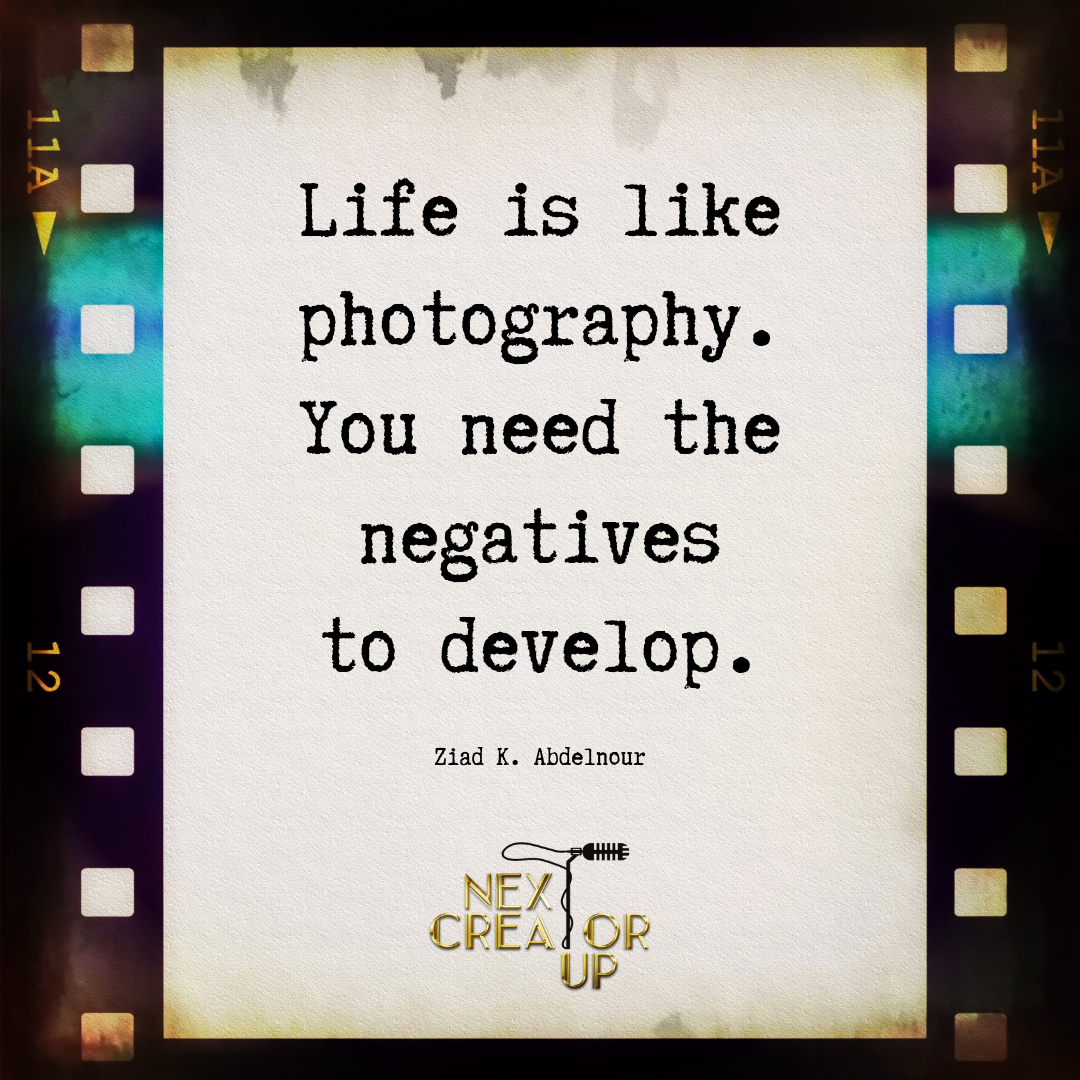
    Life Is Like Photography

    Develop your negatives into something beautiful. Check out the new podcast for established and aspiring creators, by Tiny Buddha Productions: https://nextcreatorup.com

  • How a Creative Hobby Can Boost Your Mental Health

    How a Creative Hobby Can Boost Your Mental Health

    “The world always seems brighter when you’ve just made something that wasn’t there before.” ~Neil Gaiman

    A few years ago I wrote an article about my personal experience with bulimia. The piece was published by several different media channels, and some time afterward I was interviewed by CNN.

    It was the first time I had publicly and explicitly spoken about that particular part of my journey. But the desire to acknowledge and address the emotional effects of my experience had been present for some time.

    Prior to writing the article, I hadn’t felt ready to lay myself bare in such a direct way. However, I instinctively knew that I needed a means of self-expression that would allow me to speak of what I’d been through without being quite so specific.

    That’s where creativity came in.

    I began using photography as a way of expressing everything I was still too vulnerable to verbalize. It was a beautiful revelation for me to realize that I could share my thoughts and feelings in an abstract way. I could pour my pain into the creation of something new. This was a crucial step in my recovery.

    I’d begun binging and purging as a way to avoid my feelings after the breakdown of my marriage. I had fallen out of love with my husband, and I was carrying a tremendous amount of guilt inside me, constantly feeling as though I’d failed my family and friends by not being able to make my relationship work. I hated myself for walking away from my marriage, for daring to want more.

    I was also dealing with intense pressure at work and financial stress, all of which had left me feeling as though everything was out of control.

    Bulimia had given me the illusion of control, but it was also a way of punishing myself for not being able to stay in a relationship that everyone else expected me to be content with.

    Mental health issues are often accompanied by feelings of shame and guilt. We tell ourselves that we should be able to handle everything, that we shouldn’t be placing a burden on our loved ones. It’s a self-destructive cycle that has the potential to send us spiraling.

    Although creativity doesn’t act as a magic wand, it does give us an opportunity to take a breath and gain a greater understanding of what’s going on internally. We can use creativity as a means of translating ourselves to ourselves.

    Photography became a lifeline for me. I could capture texture and shadow, play around with light and motion. I could convey some of the darkness that was still haunting me, but instead of succumbing to my feelings, I was able to build something from them.

    I also began to use poetry and creative writing as tools to help me channel my emotions. The personal value of this was enormous. In creativity I had a friend, a means of telling my own story in my own way, and a source of strength and support that I could rely upon to be there for me.

    Here’s how a creative hobby can help us cope with mental health issues:

    1. Creativity reminds us that we have the ability to effect change, and it also helps us be more present.

    When we are experiencing mental health challenges, it can be easy to fixate on the fear that there won’t be any light at the end of the tunnel. When I was dealing with bulimia, I would obsessively weigh myself every morning and every night. If I were away from home or in a place where I didn’t have access to a bathroom scale, I would feel a sense of rising panic. I couldn’t imagine a time when I would be free of the need to control my weight.

    Immersing ourselves in creativity can help us believe in our ability to heal, grow, and change because we are actively participating in the production of something new.

    Whether it’s baking, gardening, painting, dancing, sculpting, or any other creative pursuit, we are taking an idea and breathing life into it.

    This not only helps to keep our focus on the present moment, thus alleviating future fears, but it also gives us the additional benefit of shaping and impacting an outcome through our efforts.

    When we create, we are combining imagination and resourcefulness. We are envisaging an end result and then taking action to make it happen. This adds to our personal skill set and emboldens us to have the same courage in other areas of our life.

    Whenever I’m revisited by old demons that threaten to topple me, I create something. Anything. The act of creating helps me to re-center and focus on my abilities, rather than obsess about my perceived shortcomings. It also helps me step outside myself, shift my perspective on my challenges, and remember what’s truly important.

    I recently herniated a disc in my back and was unable to practice yoga with as much ease as usual. As I lay on my mat at home one morning, feeling frustrated at my body for failing me, I began to slip into some old self-talk about not being good enough.

    But then I noticed the pattern that the sunlight was projecting on the wall beside me. I took my phone and snapped a photo. As the light shifted again once more, I was reminded that nothing is static and everything is always changing. My energy automatically lifted.

    Creativity teaches me about trust and impermanence and also expands my sense of awareness. The simple act of witnessing and photographing the moving light was enough for me to remember that each day is full of beauty. I don’t want to miss any of it by wasting my energy on criticizing my body.

    2. Creativity enables us to process some of what we’re feeling without the intensity of putting ourselves under a microscope, and it can also help us meet our needs.

    We’re not always ready to closely examine every experience. We’re not always comfortable talking things through, or wading into the depths of our pain or trauma. But we need to work through these feelings, or else they’ll lie beneath the surface, limiting and controlling us.

    Creativity can offer us a safe space in which we’re able to release some of our emotional weight without over-analyzing. We eliminate the scrutiny but still receive the benefit of self-connection.

    When we’re able to connect with what we’re really feeling—whether it’s anger or regret or disappointment—and then channel that into a creative project, we are less likely to engage in behaviors that are numbing or harmful. Which means we actually work through the feelings instead of just distracting ourselves from them.

    Creativity can also be a compass. It’s a way of identifying an inner need and then permitting ourselves to meet that need.

    Perhaps you are craving more vibrancy or flavor in your life. Being creative might mean choosing bright, bold fabrics to make a clothing item, or being experimental in the kitchen with new cuisine.

    And just as creating something from nothing can help us believe in our ability to create change in other areas of our lives, meeting some of our needs through creativity can empower us to meet other needs—the need for self-care or boundaries, for example.

    When we’re struggling with mental health issues, it’s easy to minimize or neglect our needs, but this only prolongs our healing. Creativity helps us trust our intuition and follow our instincts. It isn’t necessarily a substitute for therapy, but it can play a pivotal role in helping us build confidence and resilience, enabling us to both work through how we’re feeling and take good care of ourselves.

    3. Creativity enables us to connect with others and build community.

    Common mental health issues such as depression or anxiety can lead to social withdrawal and isolation, increasing feelings of loneliness and heightening the body’s stress responses.

    Creativity is a wonderful way to connect with others. Social media platforms provide us with ways to share our creativity and spark conversation with people who have similar interests. When I first began blogging online, I was amazed at how quickly I was able to become part of a supportive community, many of whom I’ve since met in person.

    Most libraries or community centers offer group arts and crafts classes. These are fantastic opportunities to establish local connections and circle with others. I recently attended a free creative sculpture workshop at the New York Public Library. I had no previous experience, and my creation was far from perfect—none of that mattered. It felt amazing to come together with other people and make something.

    We are all creative beings. Experimenting with different mediums can be a wonderful way to find out what sparks joy and brings comfort. You don’t have to be an expert. Remember, perfection is not the goal; you’re simply making your world a little brighter.

    My journey with creativity has given me more than I could ever have anticipated. It may not always change external circumstances, but inwardly there’s a shift every single time. An easier breath. A blank canvas and a fresh start. A reminder that I can begin again and again, as many times as necessary. And sometimes that’s all we need to be okay.

  • A Creative Way to Judge Less and Appreciate Life More

    A Creative Way to Judge Less and Appreciate Life More

    “Judgments prevent us from seeing the good that lies beyond appearances.” ~Wayne Dyer

    I am one of the millions of people in the world obsessed with photography. My camera is almost always with me, and when it isn’t, my trusty iPhone works pretty well.

    But photography for me is much more than a fun hobby, and it is much more than taking pretty pictures that I can sell.

    Photography helps me notice and appreciate my life.

    I practice what is called a meditative or contemplative form of photography. It’s about being present and open to life as it is, without judgment. It’s about being open to what the world offers up to me rather than looking for a particular shot.

    How can we be open to life without judgment? Isn’t judgment part of life?

    Well, if we are photographing life as it is, there is no room for judgment. If we are photographing reality, it stands on its own.

    We don’t have to label it interesting or boring, beautiful or ugly. What we perceive as beautiful or ugly is highly subjective and often prevents us from seeing the complexity, the wholeness of what is actually there.

    Let’s face it. We don’t like to be judged. And we are complex people—interesting to some but not everyone, sometimes kind, generous, and compassionate, and sometimes not.

    Rainy days are one example I like to use when it comes to judgment. How many times have you heard someone say what a terrible day it was because of the rain? I’ll bet we’ve all done it.

    Rainy days can be inconvenient, interrupting our plans and causing our mood to match the gloominess of the day. Yet, rainy days are also necessary and nourishing, cleansing and cooling.

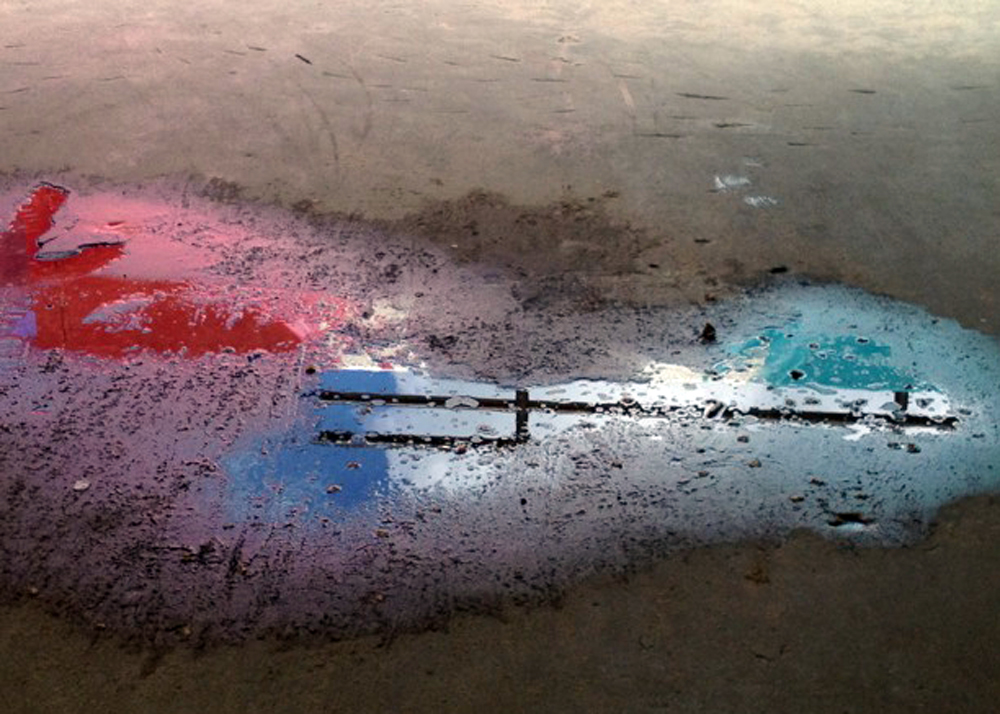
    As someone who practices contemplative photography, I have learned to appreciate (almost) every day, rainy or not. I have photographed drops on leaves and reflections in puddles that are a wonder.

    Rain 2

    (more…)