Tag: phone

  • What Happened When I Went Off the Social Media Grid

    What Happened When I Went Off the Social Media Grid

    “Remember, being happy doesn’t mean you have it all. It simply means you’re thankful for all you have.” ~Unknown

    It was 3 a.m. when I realized I was the only person not in St. Barts. At least that’s what it felt like on Instagram, even though I know it wasn’t true. I wasn’t the only person not dancing on tables to a saxophone in the Caribbean. My fiancé was asleep right next to me.

    For the next three hours, I continued down the rabbit hole.

    Three hostages were released. Trump did more things to avoid bringing up at dinner parties, even in Texas, where I found myself living by accepting a marriage proposal from a Houstonian after a lifetime spent proudly between New York and L.A.

    I was served (and purchased!) an acrylic purse organizer for my closet that makes them stand just so, as if the algorithm had been privy to my frustration when they all fell limp sideways just yesterday. Some friends were pregnant. Even more got skinny—Ozempic. Shockingly, aside from procreators, on Instagram, no one ever gets fat. Which was how I was feeling then, now that I think about it. The fetal position is unbecoming for a midsection.

    By 6 a.m., my eyes were bloodshot from the screen’s glow, and I official felt like the heaviest, least pregnant, most geopolitically confused loser, not in St Barts, with a messy closet—who lived in Texas.

    It went on like this for weeks. Really only since I got to the Lone Star State and became a lone star with no friends, in a place I had considered visiting only if there were engine trouble. Devoid of an actual social life in a new city, I had begun to live vicariously through my old friends by staying in touch with them on Instagram. I’d never been more ‘connected’ or felt more isolated and alone. Still, I scrolled. And if I didn’t stop, I would never again get to sleep.

    I was going cold turkey. Wasser: 1. Zuckerberg: 0.

    When the time came, even my phone was skeptical. “Delete Instagram?” came the pop-up. I knew what I had to do. And so, with a swift ‘click-hold-delete,’ the Instagram app icon shimmied out of existence on my home screen. The joke was on me, though; getting back to bed was not in the cards. I couldn’t wait for my friends to wake up—on both coasts—so I could gloat.

    “Just FYI—if I don’t get back to you on Insta, … I’ve deleted it from my phone,” I’d say with a cool, casual air of someone who’s escaped the matrix of social media, like I was better, completely leaving out the part where I’d become an addicted insomniac crackhead.

    My L.A. friends called me “brave.” My New York friends were nonplussed if not annoyed: “So what? I’m supposed to call you now?”

    While not exactly a Nobel laureate reception, here’s what happened when I had nowhere to hide and forced myself to live IRL. My sleep got better. Packages from China stopped coming as I stopped spending frivolously on clothing that couldn’t make it through a wash. But these were obvious upsides.

    My screen time went down 42%, which, according to the Mayo Clinic, can improve your physical health, derail obesity, and boost your mood. Then, I did the math. By removing Instagram from my phone, I had taken back nearly two weeks of my life—every year.

    I was markedly happier… With my dog and the way she takes over my pillow now that I wasn’t exhausted in the morning. With my fiancé, who is much more fun to be around now that we’re both paying more attention to phone-zombie behavior (mostly when I remind him). Even Texas isn’t that bad.

    When I started looking up versus down at my screen, life in the present got prettier (even with Houston’s lack of zoning laws that puts fine dining establishments next to an AutoZone.)

    And then it hit me. The hardest part of growing up is coming to terms with who you are and, moreover, all of the versions of yourself you’ll never be. As an older millennial, I have had social media tracking my life since I was eighteen. I am now thirty-seven. I have been so many people.

    I’ve had multiple attempts at careers until I found one. I have had dreams I’ve let go of. Dreams that haven’t died. Loves I’ve lost. Men who still looked at my story even though I never wanted to speak to them again. They still bring me right back to being nineteen/twenty-two/twenty-seven every time I see their name.

    Social media connects all my ‘eras.’ Every success, failure, false start, and hair color that comes with adulthood and the people, places, and things that accompanied them. All my past timelines living amongst my present, right in my pocket. No wonder I found it so hard to let any of them go. And even less shocking, I couldn’t make new friends. My dance card—albeit virtual—was full.

    Within weeks without Instagram, I found myself with time on my hands. I was exercising more. The dog and I found walks we like in the neighborhood. I went out and actively looked for community outside my phone screen. It existed. Turns out the adage is true—you are where you put your attention.

    By making eye contact and staying present when out at restaurants, or getting coffee, or at the gym, I’d even made friends. New friends I hosted for dinner. A dinner so large I had to rent a table because there were more coming than my six-person dining table could seat. A table I did have to source online, but not on Instagram—an app I only regretted not having when I wanted to give my friends at home major FOMO and show them what I was up to.

  • The Invisible Effects of Social Media: When It’s Time to Stop Scrolling

    The Invisible Effects of Social Media: When It’s Time to Stop Scrolling

    What you do today is important because you are exchanging a day of your life for it.” ~Unknown

    Is there a more precious commodity than time? It’s the currency of life; the most basic finite resource, and we have a responsibility to spend it wisely. It’s up to us each individually to figure out what that means to us. For me, that means being mindful of the people, activities, and thoughts to which I give my time and energy.

    I am an obsessive reader, and at any one time I have at least fifteen books checked out of the library. I tell myself that I won’t check out any more books until I’ve finished reading the ones I’ve already borrowed, but I never listen and I’m glad for it, because reading is one of the wisest and most enjoyable ways I can spend my time.

    I try to be cognizant of what grows my spirit and what shrinks it, and I aim to use my time accordingly.

    But this is hardly an easy task, especially with the constant lure of technology and smartphones. Unlike with books, the escape these devices offer can quickly lead me down a rabbit hole of anxiety where I feel my inspiration leaking away and self-doubt taking its place.

    Whether this is because I’m feeling guilty for wasting so much time, tired from staring at an electronic screen so long, or because I’m negatively comparing myself to other people, I know that my time can be put to better use.

    I often end these technology binges with a nagging sense of emptiness and, despite the vast array of connection offered by technology, a vague feeling of disconnection as well. I don’t want to scroll my day away, yet sometimes feel compelled to do it.

    We all have a basic need to belong, and social media’s popularity can be boiled down to its ability to tap into that need. However, it’s important to keep in mind that the complexities and imperfections of real life are often glossed over or edited out entirely. To compare your real life to someone else’s crafted digital persona is unfair and unrealistic, and it sets you up for disappointment.

    Social media can also taunt us by bombarding us with the adventures of people better left in our past.

    I didn’t fully appreciate this hurtful effect until my social media usage worsened a recent experience of heartbreak. Like a bullet in the back, my screen suddenly and completely filled with him. And not just him, but his new girlfriend too.

    It wasn’t long before the photo left the confines of the screen and filled my room and my mind; my entire world became consumed with memories of when he held me that way and the accompanying feelings of sorrow, loss, anger, and jealousy.

    I thought strength meant I shouldn’t be affected by something as silly and trivial as Facebook or Instagram, but no matter how much I don’t want to be affected, the truth is that I am. And the effect social media can have on our feelings of self-worth is not trivial.

    Only when I accepted this did I begin to move toward easing the pain of heartbreak. The first step was using my time not for social media obsession, but for reflective writing and poetry, which are activities that provide me with real, sustainable healing.

    When I do use social media, I make sure my feed is filled with posts that I enjoy seeing and that help me grow rather than make me feel smaller. And I share posts that are an expression of my inner feelings or at least can make someone laugh.

    I have also made a commitment to be present with myself and my emotions, without judgment, instead of using social media to distract myself from my feelings. This mindful practice, though difficult, is worth the effort because it allows me to strengthen my ability to treat emotions as valid but fleeting, rather than being in resistance or letting them consume me.

    Heartbreak and pain are part of the human experience. It helps to remind myself that I am not alone and to reach out to loved ones—offline—and let myself be vulnerable enough to express what I’m going through. For me, too much social media actually dampens my sense of connection to others because I tend to retreat when I start believing my life is not as exciting or meaningful as other people’s.

    I’ve learned to limit the time I spend fueling insecurity with social media and to fill that time either with mindful scrolling or something else entirely. I keep in mind that this technology is the new terrain on the landscape of communications, and it can be a fantastic and fun tool if I navigate and utilize it responsibly.

    This article is most likely reaching you via a social media channel, and I’m thankful for the opportunity this provides for sharing work that elevates our awareness and consciousness. Because of social media, I’ve increased my exposure to websites and channels that facilitate personal growth, such as Tiny Buddha, but I’ve had to learn to become more mindful of when it’s okay to unwind online and when it’s harmful.

    Sometimes I need a break, and watching a video of cats that are afraid of cucumbers or hopping from one newsfeed to the next can be a good stress reliever. I also find that pausing occasionally during creative activities gives ideas the necessary time to simmer below the surface until they are ready to come to light, and social media can be a good way to give my mind a break.

    I know I need to stop scrolling when I feel a shift in my emotions; when the lighthearted fun of connecting virtually and the joy of sharing my creative work with people all over the world becomes a self-imposed prison of mindlessness. I don’t want to allow my precious time to tick away in a stream of posts and updates. When I feel this shift, I know it is best to turn off my device, take a few deep breaths, and turn my attention and time to something more enriching.

    I also realize now that it’s more beneficial to be present with my surroundings rather than tuning out into a digital world during every available moment. On walks, commutes, and at the dinner table I enjoy being fully present with the people and things around me, as well as my own sensations and feelings.

    These small moments of togetherness and solitude are fertile with opportunity for self-reflection, presence, and connection, but only if I resist the temptation to compulsively check my smartphone.

    The key here is to become aware of how often we reach for our phones so we can examine how we spend our time and whether we can put some of that time to better use.

    I’ve caught myself multiple times at the beginning of an unproductive scrolling session and made the intention to put my phone down after ten minutes so I don’t get too lost in a cycle of posts and updates. And on other days I could use a good cat vs. cucumber video, and that’s okay too; it’s all about balance and awareness.

    Social media can be a good thing when we use it responsibly. Whether we are scrolling, sipping a cup of tea, or having a conversation, cultivating mindful presence can only enrich our experiences. This, I believe, is how we can wisely utilize the small amount of time we are afforded.

    When I dip into moments of deep, full presence, the only response that springs forth is gratitude, and I can think of no better way to spend my time than in a state of appreciation.

  • Why We All Need Time Unplugged

    Why We All Need Time Unplugged

    “Life is what happens while we’re busy worrying about everything we need to change or accomplish. Slow down, get mindful, and try to enjoy the moment. This moment is your life.” ~Lori Deschene

    Technology is everywhere today, integrated into our lives from the moment we wake up and check our email to the twenty minutes we spend checking our Twitter feed before falling asleep.

    From smartphones and tablets to Fitbits and multi-display work computers, it’s hard to use technology mindfully, and most of us spend a great deal of time throughout the day looking at screens.

    Choosing to unplug, disconnect, and put down our devices is a deliberate decision. For me, the decision to unplug came as I was preparing to set off for a year and a half of traveling around New Zealand.

    The Problem

    I had just left a job where I spent most of my day emailing, updating social media, and scouring the Internet for websites that would be useful contacts for my company. I would get home from the office and eat something while simultaneously scrolling through my personal Facebook, Instagram, Twitter, and email accounts. The barrage of information was endless. I would often end the day red-eyed and battling a headache.

    I realized I didn’t actually know how to relax and unplug, and I also realized I didn’t know what a huge toll the excessive screen time was taking on me until I stopped the flow. It took a few weeks, but slowly the constant need to check feeds and update statuses faded, and I spent a great deal more time actually, well, doing things in the world—without posting about it.

    Deciding to Unplug

    Since I was embarking on a new chapter in my life, it seemed like a good time to try something new and try to not let technology take over my life. I was afraid of missing out on the experiences I would have while traveling because I was too busy trying to take the perfect photo or craft the perfect post instead of just being there and enjoying the moment.

    I sold my smartphone, cancelled my cell phone service, deleted my social media accounts, and asked all my friends and family for their mailing addresses so I could send postcards and letters instead of emails and tweets. I went cold turkey and all-in.

    While resistant at first, most people close to me were supportive of this change in the long run, although I did get the occasional, “How will I ever contact you if you’re not on Facebook?!” I figured the people who mattered would find a way to stay in touch, Facebook or no Facebook.

    My partner and I decided that while traveling, we would share one iPad mini we’d use to post monthly blog posts about our travels, and all other devices would stay at home. No phones, no nothing.

    Technology’s Impact on Behavior

    The effects of technology on our thought patterns and behaviors aren’t great. The presence of technology seems to give us a free pass to be rude and unmindful in group situations (i.e. texting during dinner), or to flake out on our friends. It also changes the way we interact with others, including our children, when doing an activity together, like reading.

    “Electronic readers seem to change the types of conversations that parents and children have over a story,” according to KinderCare Learning Centers. “With e-readers, we adults tend to be more prescriptive when talking—push this, swipe that—and less conversational…”

    For all the talk about technology connecting people around the world, it certainly does its share of creating disconnection, too. I strongly believe we would all be happier if we spent more time face-to-face and less time face-to-screen.

    Together but Apart

    I recently moved into a new house, and it took a few weeks for my Internet to get hooked up. There was a very noticeable shift in my behavior and that of my roommates once we were online.

    Before the Internet, we all interacted with each other when we were in common spaces, playing games and talking about our days. With the Internet, we were more likely to be in our own rooms, procrastinating and wasting time.

    Of course we still interacted and still have frequent game nights together, but often the presence of a smartphone or laptop changes the entire vibe of an evening. I long for the days when we were unplugged and connecting more deeply.

    Physical Reasons to Unplug

    In addition to emotional and behavioral patterns, the physical costs of excessive screen time are great. Vision and eye problems like dry eye syndrome can be exacerbated by too much screen time, while headaches and back problems are common among people who sit in front of computers all day. Lack of exercise due to too much sitting in front of computers directly leads to obesity and other health issues.

    Somehow, these ailments don’t seem to stop us. We’d rather end up at rehab camps for tech addicts than set down our devices. Do we really want to be chained to the Internet and at the beck and call of each notification that lights up our smartphone?

    A Different Way

    It’s unrealistic to banish technology from our lives completely. But we can take steps to unplug from certain networks or devices, or to designate a no-tech period in the day that’s screen-free. For me, finding that balance is key.

    Once I returned home from my travels, I found myself wanting to connect to all the social media networks I had abandoned. I wanted to share travel photos and stories and see what friends had been doing while I was gone. I felt torn between this urge to scroll and post and the desire to stick to my commitment of trying to be a more mindful user of technology.

    So I made some compromises. I waited a year before getting back on Facebook (and have since found it significantly less interesting) and I use a flip phone (I know, I know—living in the Stone Age) instead of a smartphone. I know I have to make it easy for myself to not get sucked into the social media/internet vortex.

    One technique I also like to use is list-making. Have you ever gotten online to do one simple thing and then found yourself staring blankly at your computer an hour later, having no idea what you set out to do in the first place? I like to make a specific list of what I need to accomplish online and stick it in front of my laptop where I can see it. That way I’m reminded of my goal and purpose for opening my computer.

    Finding individual solutions is the key to success, whether you need to get outside and completely away from technology, or you simply need some productivity tools to keep you on task so you can be done with your work sooner. Either way, everyone can benefit from unplugging from time to time. Our health depends on it.

  • The Power of Off: Staying Sane in a Virtual World (Interview & Book Giveaway)

    The Power of Off: Staying Sane in a Virtual World (Interview & Book Giveaway)

    Tech Addiction

    UPDATE: The winners for this giveaway have been chosen. They are: Akshay Bhat and Kaitlyn.

    Have you ever found yourself mindlessly surfing the web, hopping from one site to another, when you didn’t have any specific reason to be online?

    Maybe you were looking at a cute cat video on Facebook, and then you ended up taking a quiz to determine which Westworld character you are. And then, five listicles, four memes, three tweets, two comments, and one hour later, you realized you’d spent a whole lot of time doing a whole lot of nothing.

    Worse, you may have been somewhere surrounded by people, and yet you still felt compelled to seek the kind of stimulation that feels unique to a glowing screen.

    It’s like a tiny world inside your pocket, full of information and opinions and conflict, overflowing with stuff to consider and debate and buy, and it can be incredibly addictive.

    As someone who works online, I have struggled with this myself. I promote and practice mindfulness, and yet I have found myself using technology in a compulsive way, distracting myself with emails, social media, and the pursuit of more information.

    Sometimes I recognize my behavior and am able to disengage. Sometimes I don’t. I know I am not alone.

    We are living in the age of constant connection, and ironically feeling more disconnected than ever—from ourselves, from the people around us, and from the world at large.

    But it doesn’t have to be this way. We can learn to use technology mindfully, for good, with greater awareness and with fewer negative consequences in our lives.

    If, like me, you’ve set this goal for yourself, I highly recommend you check out The Power of Off: The Mindful Way to Stay Sane in a Virtual World.

    Written by psychotherapist Nancy Collier, The Power of Off outlines a process for using technology without compromising our overall well-being, our relationships, or the other things that matter to us in life.

    The book explores:

    • How and why today’s devices push our buttons so effectively, and what you can do to take back control of your life
    • Tips for navigating the increasingly complex ways in which technology is affecting our relationships—with ourselves, others, and our devices themselves
    • Self-evaluation tools for bringing greater awareness to your use of technology
    • Mindfulness practices for helping you interact with your devices in more conscious ways
    • A thirty-day digital detox program to kick-start a new healthier relationship with technology

    I believe this book is a must-read for anyone who owns anything with a screen, or has access to one.

    I’m grateful that Nancy offered two copies of her book for Tiny Buddha readers, and that she’s shared a little about her experience and her book.
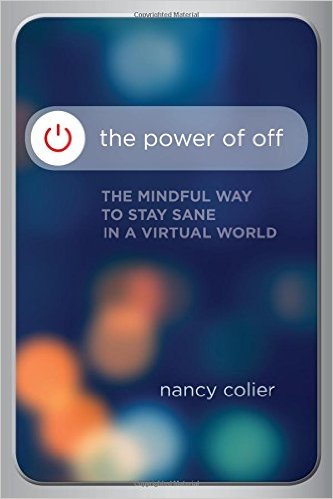
    The power of offTHE GIVEAWAY

    To enter to win a copy of The Power of Off:

    • Leave a comment below. You don’t have to write anything specific. “Count me in” is sufficient!
    • For an extra entry, share this interview on one of your social media pages and include the link in your comment. 

    You can enter until midnight PST on Sunday, December 11th.

    *Winners outside the US will receive a digital copy, not a print book.

    THE INTERVIEW

    1. You admit to being addicted to technology. That’s one of the reasons that you wrote this book. Can you give us a sense of your addiction and what it was like for you before you transformed it?

    I was an email addict, checking email far more often than what I was receiving warranted. I experienced a hit of pleasure every time I checked; even just thinking about checking delivered a shot of feel-good chemicals into the reward center of my brain, triggering what I call “lottery brain.”

    Just the possibility that something wonderful might appear in my inbox kept me coming back for more, even if it never delivered.

    I once walked by my own children at the end of a workday, with not much more than a quick hello, to get a fix from my addiction. It was at that moment that I realized that I was not okay with the way I was living, the choices I was making.

    I woke up in that moment to the reality that what I was paying attention to and where I was putting my time and energy was not in alignment with what actually mattered to me.

    It was then that I knew I needed to wake up and start making more mindful choices, to consciously create a handshake between what was most important to me and the way that I was living.

    2. You say that our society has an addiction to technology and that it’s no different than an addiction to food, sex, drugs and alcohol.

    An addiction is a behavior that we act out without awareness, either out of habit or impulse or both. We use technology without consciously deciding if we genuinely want to use, simply because the thought arises to use.

    This is the nature of addiction, and all addictions cause our lives to shrink and eventually deplete our lives as they become more and more about our substance of choice and less about those elements that truly nourish us.

    Technology is no different than any other addiction. It is, however, more like an eating disorder than an alcohol or drug addiction, because we have to find a way to incorporate our substance into our life. We cannot simply do without it, but rather, must find freedom in technology not from technology.

    The only difference between this addiction and other addiction is that we have all drunk the Kool-Aid; we’re all in. This is a condoned addiction.

    Other addictions put you outside the societal norm; they exclude you from being included. Tech addiction offers just the opposite, membership in the club. Tech addiction makes you part of the club, an insider, which makes it that much harder to break. The consequences of tech addiction may prove harder to acknowledge and take seriously.

    3. Can you explain how an addiction to one’s phone is just as serious as a drug or alcohol addiction?

    The negative consequences of a tech addiction are no different than the negative consequences of any other addiction.

    -The addiction keeps you from being present in your life as more and more of your attention goes into getting your fix.

    -The addiction occupies your time and energy, at the expense of other important parts of life (hobbies, activities, friendships, spiritual pursuits) that previously brought satisfaction, enjoyment and nourishment.

    -The addiction causes negative effects on your health, work, social or family life.

    -The addiction causes negative effects on your psychological wellbeing including mood swings, depression, anxiety, aggression, insecurity.

    4. What are signs that one is addicted to technology?

    Ask yourself:

    -Is your reliance on technology increasing?

    -Do you experience withdrawal symptoms when not able to use?

    Are you continuing to use technology despite knowing that its causing impairment in your work, health, social, and/or family life?

    -Is your life increasingly revolving around technology?

    -Have you given up activities you used to enjoy to be able to use technology instead?

    -Are you lying about the extent of your use?

    5. You use the term TWIRED. Tell us what it is and how it feels to be “Twired.”

    To be “twired” is to be simultaneously tired and wired. When we are twired, which most of us now are, we feel exhausted and overwhelmed, spent, and depleted, but also anxious and amped up, over-stimulated and buzzy. The experience of being “twired” is uncomfortable and ungrounded, which is what now is considered normal.

    6. You are not advocating not using technology, but how to have a healthy relationship. How does one go from full force addiction to living a balanced, healthy life along with technology?

    We must shift our relationship with technology so that when the thought or impulse to use arises, rather than just acting on it, we can use it as an opportunity to develop more self-awareness.

    If I am standing in line and the thought arises—Oh, I could check my email, or shoot out a text, or look something up on Wikipedia—instead of obeying the thought out of habit and doing what it tells me to do, I could simply notice the thought itself without acting on it. I could use the thought to point me to the present moment, as in: What is here right now that is making me want to distract myself? Or: What would I have to feel if I didn’t use right now?”

    The appearance of my addictive thought can then turn into a portal to awakening and mindfulness rather than a portal back into my addiction.

    7. Is it true that studies show people would rather give up their friends, wine, even sex for a Wi-Fi connection?

    Yes. One in three of all people would rather give up sex than their phone. Half of millennials would rather give up their sense of smell than their phone. Most millennials would rather give up their pinky finger than their phone. The majority of millennials would rather give up friends, alcohol, exercise, music, movies and TV, going out, and dessert, for a month than their Wi-Fi.

    8. You say that technology is the antithesis of mindfulness, and that our culture’s recent interest in yoga is a result of technology making us feel disconnected. Can you explain?

    We talk a lot about mindfulness these days in our culture, but the way we are living with technology is actually the antithesis of mindfulness. Mindfulness is the act of paying attention on purpose to the present moment, and doing so without judgment.

    Most of us are spending our time staring at a screen, which takes us away from what is happening right in front of us. We are living in the virtual world and missing out on the world that our body is actually inhabiting.

    If we are not staring at our personal screen, we are using our experience to build our personal brand, walking on a country road looking for places to take selfies so we can post on social media and show everyone how we are the kind of person that take country walks.

    If we are not using life to build our personal identity/brand, we are busy taking photos of and capturing our life so we can show everyone the life we are living. We end up then with 64 gigabytes of iPhoto file memories but no direct experience of life lived.

    The cost of this relationship with life, however, as something we can possess or use in service of our identity, is the direct experience of life itself. We end up, therefore, with the concept of mindfulness as something else we use to prove that we are a mindful person, but without the practice of mindfulness, which is living the moment as it is actually happening.

    The way we are using technology is also causing us to become disembodied; that is, entirely identified with our minds and thus controlled by our thoughts, as if we were just little heads floating around in cyber-space.

    Technology offers us a smorgasbord for the mind through data, entertainment, information, and just plain stuff to think about and do. The more technology we ingest, the more disembodied we feel.

    Our fascination with yoga these days is an attempt to get back into and reconnect with our bodies, to feel grounded in our direct, physically-lived experience—to be where we actually are.

    9. You talk about loosing a connection with our “self,” and how our obsession with our “personal brand” is very unhealthy. Can you please explain what you mean?

    We now view our self as a kind of vacuum. Many people experience a sense of dread or terror when left alone with just themselves. We fill our lives with more entertainment, more information, more data, more of everything to avoid ever meeting just ourselves.

    We no longer see ourselves as a destination, a place to inhabit. We fill ourselves up and derive our sense of meaning and worth from external sources, as in, the number of likes and followers we have.

    We no longer process our lives internally. If we stop on the street and open a door for someone struggling with a stroller, rather than spending a few moments thinking about that experience or taking it in, owning and absorbing it, we now immediately post what happened with a #gratitude or #kindness.

    We then wait to find out what the experience should mean and how we should think of it, how we should think of ourselves as a result of the feedback we receive. We ourselves are no longer a place we want to spend time or consider valuable.

    What we care about now is how we are seen by others and how popular we are, not what we think or feel about ourselves. Our own experience has been vacuumed out by the technology that tries to defend it.

    10. How can parents and teachers be of benefit to our children to help them learn to live “with technology” and not “for technology” as you might say?

    We need to set limits with our children and model discernment and moderation. But also, to recognize that young people have no experience with another way of living and that their social, academic, and every other part of life happens online, so separation from their technological life can feel like death or non-existence.

    What we need to do, besides setting clear rules that include periods of abstinence from technology, is to continue pointing our children to remain aware of how they feel in relationship with technology.

    That is, asking our child how she feels after a full day of Snapchatting, Instagramming, and Facebooking, how it is when she’s with a friend who is constantly texting while they’re together, how well she can focus on her homework when simultaneously receiving dozens of notifications on her other devices, how her personality changes when she is asked to give up her phone and how she feels after a a day (or week!) off all technology.

    We need to keep our children awake and tuned into how technology is affecting them so that they don’t lost touch with their own experience and forget that there is another way to feel besides the way that technology induces.

    You can learn more about The Power of Off: The Mindful Way to Stay Sane in a Virtual World, here.

    FTC Disclosure: I receive complimentary books for reviews and interviews on tinybuddha.com, but I am not compensated for writing or obligated to write anything specific. I am an Amazon affiliate, meaning I earn a percentage of all books purchased through the links I provide on this site. 
  • Look Around (Not at Your Phone) and Be Present in Your Life

    Look Around (Not at Your Phone) and Be Present in Your Life

    Friends on Cell Phones

    “Enjoy the little things because one day you may look back and realize they were the big things.” ~Robert Brault

    Ten years ago I moved from the urban metropolis of London, where I grew up and spent the early part of my adult life, to the rural Mediterranean idyll of the coast of the Costa Brava in Northern Spain, in my quest to find the ultimate “quality of life.”

    I was able to make this move largely because I could be digitally connected to the rest of the world from anywhere.

    For me, digital technology in its early form provided a whole new series of life choices.

    Although it was during the pre-smartphone and WiFi era, I was able to be digitally connected via an ADSL cable that magically appeared from a field and connected to my studio, enabling me to work from there, nestled on a remote hill top location, surrounded by languid hilltops and lingering forests, underscored by a sea that merged with the sky like a pair of faded jeans.

    Perfect live/work balance achieved, or so I thought.

    But that was before. That was before something that is five inches tall and a quarter inch thick transformed every aspect of the way we live. The smartphone.

    The advent of the smartphone changed my life, but not in the way that you might think. It actually took me away from life, because it took over my life.

    Suddenly I didn’t need to be in my studio on my laptop to be connected, or to get my emails or to send projects through to clients, as I could do that from anywhere. I was free, no longer desk or studio bound.

    I could access information wherever I was. It was a revelation and totally life changing. However, although it was an incredible, life-enhancing tool in many ways, I think I was slow to realize that having access to the world in the palm of my hand also means the world had access to me.

    As my euphoria at being able to be connected anywhere and at any time began to wear off, it was replaced by the debilitating dependence of needing to be connected anywhere and everywhere, at all times.

    The more I became digitally connected, ironically I began to feel more and more personally disconnected from my surroundings, as my virtual life was not giving me any real nourishment.

    It provided a lot of ‘noise’ but I could no longer find the inherent ‘melody’ and rhythm of my daily life.

    Given that I was living in the sort of surroundings that are viewed as the ultimate off grid environment (the sort of place actually where weekend digital detoxes take place), I realized that the problem could not only be viewed as relating to a purely urban demographic.

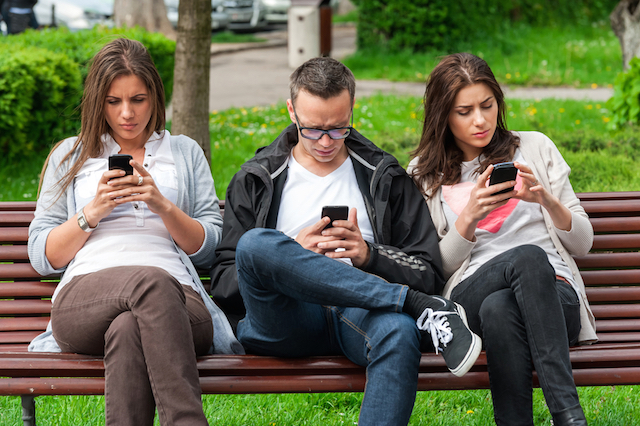
    I looked around me, at my friends and colleagues, and realized that we would get together for lunch on a beach or at someone’s house and we would all have our heads buried in our smartphones, oblivious to each other or the breathtaking beauty that surrounded us.

    It was a problem that was wide spread. I realized that what had at first been my life line had little by little started to strangle me.

    My digital dependence had become a habit filled with avoidance techniques, providing constant distraction to avoid being with myself. I found that, without realizing it, my reliance on my digital devices had gone from expanding my life to disabling it.

    When we created the smartphone it was designed to be a tool, albeit a very useful tool, but I was using it for everything it wasn’t designed to do:

    • Distraction
    • Taking me away from awkward situations
    • Making me feel busy
    • Make me feel important
    • Not making me feel alone
    • Anything in fact to avoid spending time with myself

    I took a hard look at myself and found that, despite living in an exquisite natural landscape, I was actually living a digitally reductive, hands-free, edited life, where nothing was messy, chaotic, or emotive.

    My epiphany came on a Saturday morning in my local market, where I had gone to get some vegetables for a dinner I was giving that evening. I arrived at the market, which was a bustling, vibrant gathering of the whole neighboring town, the meeting place for everyone to get together once a week.

    Walking amongst the throngs of people looking at the kaleidoscope of recently picked, sun ripened fruits and vegetables, was a heady, textural experience.

    The air was filled with the aromas of basil, ripe fruits, locally made honey, and soft goats cheeses, but I was oblivious to that, as I was on a mission to get some tomatoes to roast with some fresh fish for the dinner I was making that evening.

    I joined the endlessly long line at the fruit and vegetable stall I usually get my produce from and was checking my emails while I waited, and waited, and waited.

    The line didn’t seem to be moving. The only thing that seemed to be moving were the numbers on the digital clock of my smartphone showing me that I had been standing in line for twenty minutes.

    I was getting more and more stressed thinking, How long can it take to buy a pound of misshapen tomatoes?

    I stepped outside of the line to try and find out what was going on. Looking to the front of the line I saw an elderly lady, with her dog, chatting with the woman who ran the stall.

    They were discussing the stew she had made last week from the marrow she had bought from there, the plight of her neighbor who had had a fall, and the wedding cake she had made for her niece’s wedding.

    They were talking, communicating face to face, sharing the stories that made up their daily lives.

    As I looked along the line I noticed that actually everyone was talking to each other, animated, interested and alive. 

    That was the tipping point for me when I realized that I was physically there but was not present. I was missing in action from my life and missing all the little things.

    For me really being present meant giving myself times to disconnect from digital technology and instead taking time to connect with the seasons, learn the names of the different winds, recognize the cycles of the moon, and read the ever changing personality of the sea.

    Ultimately I learned how to be from going to local farmers’ markets. There, I learned to appreciate the beauty of imperfection. The splendor of a misshapen tomato, appreciating the real meaning of “slow.”

    I had to learn a new rhythm, one without a preset time limit for every thing. Where queuing for twenty minutes to buy some fruit was just how it was, and was something to be savored and appreciated, because every one in the line spoke to each other and wanted to share their stories.

    It was there, waiting to buy my imperfectly shaped, local, seasonal produce, that I began to really connect with where I was and learned to appreciate all the moments and experiences that really matter—those unique fleeting moments that bring us joy.

    If you are finding you are missing in action from your life, try adopting some of the practices that were game changers for me.

    Remember to take some time out every day to put your smartphone away, pause, breathe, look up, and embrace the art of slow by living in the now.

    Scheduling in fifteen minutes of mindfulness meditation practice every morning will set you up for a day of centered calmness, and will encourage a reconnection with yourself and your natural surroundings.

    In order to be more engaged in your life, try to do things more mindfully by concentrating on being present and in the moment.

    These small changes to your daily practices are manageable and meaningful, and will shift your focus from “faster, bigger, better” to an appreciation of the micro moments, the little things that punctuate our daily lives, which ultimately, in the words of Robert Brault, “we realize are the big things.”

    Friends on phones image via Shutterstock

  • Are You Missing Out on Life While Checking Your Smartphone?

    Are You Missing Out on Life While Checking Your Smartphone?

    Distracted by smartphone

    “The present moment is filled with joy and happiness. If you are attentive, you will see it.” ~Thich Nhat Hanh

    “Yeah…Uh huh…Uh huh…Yeah…No way! Uh huh.”

    This was the response I got when talking to a friend the other day. I could tell he wasn’t really listening, because he was browsing Facebook at the time.

    Why was his smartphone more important than me? It didn’t used to be this way.

    I know I’m at risk of sounding out-of-touch and technophobic. But I really do think this is a much bigger problem than we perceive.

    We’re talking about our lives here. Do we really want to dedicate them to an iPhone?

    Another Smartphone Shocker

    The other day I saw a man on his Blackberry during an entire meal with his family. He was with his wife and young children (although they’ll be adults before long).

    How rare are moments like this? How precious are they?

    Yet, the man let this moment pass him by forever. If only he’d brought his attention to the present moment, he’d have experienced something far more valuable than anything displayed on a three-inch screen.

    And is there any joy in a stroll through the park or along a bustling city street?

    Last year I roughly counted one in five people glued to their phones while walking. And this was on New York’s 5th Avenue—one of the most exciting, alive, beautiful streets I’d ever walked on.

    Was it really so mundane to these people?

    Let me be clear. I’m not suggesting you throw away your smartphone and communicate with telegrams. The smartphone is an extremely useful tool, no question.

    What I’m saying is this: Bring attention to the moments when you reach for your smartphone.

    There are three questions I suggest you ask yourself every time.

    Question 1: What’s the emotion behind this decision?

    I work from home most days, and this wasn’t easy at first.

    I spent a good couple of years completely addicted to my email account. If there was an opportunity to check my inbox, you can bet your best socks I’d have taken it.

    But once I began meditating, I became much more aware of my emotions.

    I soon realized I didn’t check my email to check my email. I checked my email because I wanted fulfillment. I wanted somebody to praise me for good work, send me a dream brief, or tell me something fascinating.

    As you check your smartphone, try to pinpoint the emotion behind your decision.

    Is it anxiety? Boredom? Or are you subconsciously putting off something more important?

    Once you know the emotion, ask yourself: Can this emotion be fulfilled by something else?

    I realized I got the same feeling of fulfillment from writing. So I stopped checking my email first thing in the morning and would write for two hours instead. Since I’m a copywriter, this was doubly beneficial, because it made me better at my job.

    Question 2: What value do I place on this present moment?

    If you show gratitude for the present moment, you might think twice about using your smartphone.

    Riding the bus is a common place to start checking Facebook. The bus is, admittedly, quite boring. You follow the same route every day, and not much seems to happen.

    But what if riding the bus became a wonderful in-the-moment experience? Rather than grab your phone on instinct, notice the passing scenery, the feeling of movement, and the different people who hop on and off.

    This is a moment in your life. Never forget that.

    If you need to check your phone, the bus is a good time to do it. But if you don’t, why not experience the journey?

    Also, remember, if you’re with a friend or relative the present moment has twice as much value. You have someone else to consider.

    Personally, I don’t think it’s ever appropriate to check your phone in someone else’s company. (Unless you have something very serious going on in your life, of course.) Show people how much you value them instead.

    As Thich Nhat Hanh said, “The most precious gift we can offer others is our presence. When mindfulness embraces those we love, they will bloom like flowers.”

    Question 3: Can my smartphone really add value to the present moment?

    Before the smartphone, we had something very precious indeed—the unanswered question.

    Your smartphone can answer any question in a couple of seconds. That’s true. But don’t you find it’s the unanswered questions that spark the most interesting conversations.

    Unanswered questions start debates. They enrich friendships.

    The other day I mentioned that the author Jack Kerouac was Canadian.

    “You’re wrong,” a friend jumped in. “He was American.”

    “Are you sure? I swear he was from Quebec,” I replied.

    “I’ll find the answer,” another friend said, withdrawing their smartphone. Presto! Two seconds later, the conversation was over.

    Another time, at dinner, a group of us wondered who composed the Lord of the Rings score. All sorts of interesting topics popped up along the way—from Hans Zimmer to John Williams to Star Wars and back to Lord of the Rings again.

    “I’ll find the answer,” someone said. And again, it was a smartphone that killed the conversation.

    Unanswered questions are uncomfortable.

    Reaching for your smartphone is understandable. Perhaps it’s even human nature. But it’s important to stop, reflect, and question what might happen when you do.

    I believe mindfulness is more important today than ever before. Unless we take control of ourselves, our gadgets will take control for us.

    Notice the present moment. Understand it. Be grateful for it.

    And if you decide it’s not a good time to use your phone, please resist the urge. You’ll feel much happier.

    Distracted by smartphone image via Shutterstock

  • 8 Things I Learned from a Phone-Free Month

    8 Things I Learned from a Phone-Free Month

    “Tell me what you pay attention to and I will tell you who you are.” ~Jose Ortega y Gasset

    I used to live in San Francisco, a city celebrated for its carnivals, free music festivals, thriving bar culture, Mexican food markets, beautiful parks, fantastic literary events, thrift stores, and… (Can you tell I miss it?]

    The effect of having all this culture available is that quite often, we spend more time around the doing of an event than the doing itself. I’ll elaborate.

    I would spend x amount of time on my phone searching for cool events to go to. Then I would be on Facebook, advertising this future event and inviting friends.

    The day of the event I would spend time calling and texting people to establish a meeting place, before following the little blue dot to find that place. Then, during the actual event, I would spend x or even xxxx amount of time trying to find signal to call a lost friend or—in the more likely case—relocate my lost self and find the group.

    When not trying to find signal and/or friends, I would be sending texts telling people who couldn’t make it what they were missing out on.

    Or I’d be holding my phone in the air taking x amount of pictures of where I was and publishing the photos on Facebook/Instagram/Snapchat/all the above (checking my phone every x minutes thereafter to get an update on like-count) trying to show the world how much fun I was having (read: forgetting to have).

    Does any of this sound familiar? The x amount of time spent on my phone combines to way more x’s than the time spent enjoying x event itself. See, I can’t even remember what the event was.

    I remember Nokia’s first advertising campaign: “Connecting People.” Now this slogan would more correctly read: “Connecting Phones,” because I observe that the people behind the phones are actually hugely disconnected from valuable forms of interaction, myself included.

    We live in a world where losing your phone is more dramatic than losing your virginity, and I found it way more distressing because I couldn’t call my mum and tell her about it.

    I lost my phone in the fatal sense; it fell to its death and I was phoneless for a month. This month was somewhat transformative for me. I mean, I know that a phone isn’t technically a limb, but at first it felt very hard to walk anywhere if I wasn’t 100% sure that I was going in the right direction.

    My phone used to guide me. It was brave to go somewhere to meet a friend, not sure if they’d had to cancel without being able to let me know. My phone used to confirm things. Another hard thing was the not knowing what my friends had eaten for dinner the previous night. Instagram used to show me.

    How are people going to invite me to things?! Denial, anger, frustration, loneliness… I’M FALLING OFF THE RADAR! People will forget me! Desperately clicking my heels “There’s no place like phone, there’s no place like phone” … *Spiral into delirious black out.

    It’s hard to believe that a month later I had become pretty nonchalant about even getting my phone fixed. I could now afford to, but I had discovered a charm and liberation to my life without a phone that I was now scared to lose.

    Here are some ways I found myself when I lost my phone:

    1. I would give myself time to get lost, and enjoyed taking notice of my perhaps wayward route.

    I would find things on the way that I’d never seen before—great street art and food joints. If really lost, I would ask locals for directions, and in so doing met interesting characters and appreciated their willingness to help me. I enjoyed not being self-reliant.

    2. My friends were always there to meet me at the time we’d planned in advance.

    When is the last time you made plans with a friend a week or two in advance—Lunch at Rosso on the 12th, 2:00—and not called to confirm before hand? It’s a test in your trust that friends won’t let you down, nor you them. It’s fun to have something to look forward to and to simply… show up.

    3. I didn’t update Instagram nor Facebook for a month.

    I lost the urge to show people a #nofilter photograph of my burrito or let Facebook know which Disney Princess I am according to Buzzfeed. I started reading more, enjoying my own company. When I had moments to spare, I would reflect on my day rather than take out my phone and read about everybody else’s.

    4. I started being present at events in the true sense of the word.

    If you spend all your time on social media telling people where you are, it probably means you weren’t present at all. I mean, take a cool picture, by all means; start a photography blog. But a photograph should be a memory of an experience, not the experience itself. Don’t check out when you check-in.

    5. I became more spontaneous.

    There is something organic about running into friends unexpectedly, when the stars align to connect you with someone even when you couldn’t call to make plans. I could be more spontaneous without a phone, or perhaps it just felt that way because as it was harder to plan things. I started to accept and embrace all the twists and turns of my day.

    6. I became unreachable at times.

    It feels great to be unreachable in a world where we are expected to be so available. We are at the beck and call of a beep or a buzz, and apologize if we respond to a text twenty minutes later because we were in the shower.

    I realized that my time is my own and stopped feeling that I owed people my attention 24/7. When you disconnect from the outside world, you connect with yourself.

    7. I became acutely aware when my company was dividing his/her attention between their phone and me, and I hated it.

    That’s probably how I used to interact before I learned how it feels to speak to the top of someone’s head. I enjoyed the dose of self-awareness, and I like to think I’ve become better company for it.

    8. I realized I wasn’t really staying in touch.

    What I’d been doing to “stay in touch” with friends were things such as liking their Instagram photo, commenting on their Facebook status, vaguely committing to an event they were hosting with no real intention to go, texting sporadic and disinterested-sounding questions like “How’s life?” etc.

    Without a phone, I realized how lazy my most valued friendships had become, namely, because I didn’t suddenly feel disconnected from those people; rather, I realized I hadn’t been connected in the first place.

    I’m not suggesting that you should smash your phone on the ground after reading this; I eventually had my phone fixed, and in these times there are obvious safety and organizational benefits to having one.

    What drives my thought process is this: Phones are merely tools, and we are at risk of trying to extend their function beyond their limitations. Phones are a poor substitute for real interaction, presence, experience and connecting.

    Life doesn’t happen on a tiny screen. Take a leap and leave your phone at home once in a while. Say brb and give your immediate world your undivided attention, because that’s where the good stuff is, and you’re missing it.