Tag: permanent

  • The Key to Acceptance: Understand That Everything Changes With Time

    The Key to Acceptance: Understand That Everything Changes With Time

    “If you argue with reality, you lose, but only 100% of the time.” ~Byron Katie

    I love this quote. Ironic, really, because when I first read it, I was furious—furious with my reality and anyone who encouraged me to accept it. In my mind, to accept chronic illness was to accept defeat.

    I had just been diagnosed with fibromyalgia, an incredibly painful condition that had me bedridden most days and unable to care for my then two-year-old daughter, never mind myself. My home became filled with carers and aides and adaptations.

    Rather than starting a new career as a newly qualified occupational therapist, I was struggling with the fear of lifelong pain, the shame of unemployment, and the guilt of not being the active mother I desperately wanted to be. I was in no mood to accept such circumstances in life.

    So how did I move from a position of resistance to one of restoration? How can we find some wiggle room in situations that may feel utterly immobilizing? Well, chocolate and cake help, but what really started creating space for growth was the Buddhist notion of impermanence and the insight, acceptance, and mindfulness that flowed from that.

    Impermanence is a universal law; every single thing is in flux. Take the British weather, for example. We know it’s unpredictable and always changing, so when we go on holiday here, we often take boots and raincoats as well as sunscreen and hats!

    We see this same principle mirrored in ourselves as we change with age. I remember a time when I was washing dishes and, in looking down at my hands, was taken aback at how much they resembled my mother’s. Soft lines and delicate wrinkles that had found a home on my skin stared back at me.

    The profound realization that not a single person or thing is fixed and all is ultimately impermanent can cause some sadness and anxiety, but within this there is a freedom and hope.

    The Glass Is Already Broken

    Someone once asked a well-known meditation master, Ajahn Chah, in a world where everything changes, how can there be happiness?

    The teacher held up a drinking glass and, with much compassion, explained, “You see this goblet? For me, this glass is already broken. I enjoy it. I drink out of it. It holds my water admirably, sometimes even reflecting the sun in beautiful patterns. If I should tap it, it has a lovely ring to it. But when I put this glass on a shelf and the wind knocks it over, or my elbow brushes it off the table and it falls to the ground and shatters, I say, ‘Of course.’ When I understand that this glass is already broken, every moment with it is precious.”

    When I read this and really let it sink into my bones, slowly, gently, something shifted. I realized then all human life is fragile—sickness doesn’t discriminate.

    Though my ill health had initially caused so much loss and sadness, I was able then to move from a place of “Why me?” to a “Why not me?” It cooled my rage, and the first shoots of acceptance began to show.

    We will all experience pain at some point in our lives. It is part of the package of being human. Accepting this can help ease the suffering enmeshed in pain and encourage us to truly embrace and appreciate life’s pain-free moments, the pockets of joy.

    Saying Hello to the Here of Our Circumstances

    There is a wonderful story in Pádraig Ó Tuama’s book, In the Shelter, about a photojournalist who was returning to a tribe in Papua New Guinea where she had lived as a child. Within this tribe, there was no word for hello. Instead, upon seeing someone, you simply said, “You are here,” and the response, being equally clear, was “Yes, I am.”

    Isn’t that wonderful? No judgment—just acknowledgement of what’s here. When we say hello to the here of our circumstances, no matter how dire or unfair they seem, we’re better able to accept them.

    Acceptance is not defeat. It is an acknowledgment of the truth. Once we accept where we are, we can move forward with greater clarity, courage, and strength. It’s an opportunity to become unstuck, to experience well-being in the midst of our symptoms and beyond our symptoms.

    The Power of Mindfulness

    One thing that helped me get unstuck was mindfulness, which means conscious awareness of our moment-to-moment experience, without judgment.

    When I began to tentatively practice mindfulness each day, I soon realized that my experience of pain was never static. It changed in its intensity and location, and ultimately had many flavors. Sometimes it was a stabbing or burning sensation, at other times a dull ache. I could observe how it felt in different parts of my body and how, like waves, it had a tendency to rise and fall. I was shown how my experience of chronic pain was, like the weather, ever-changing.

    This helped me shift my focus from one of resistance to flexibility. It removed the sting of emotional suffering from my pain, creating a much less devastating and more manageable illness experience.

    I was finally able to whisper a faint hello to the pain and the emotions around it, and the practice of listening became a sort of self-hospitality. I could welcome what is just as I would welcome a friend.

    Within this I also saw the flip side of impermanence, the gift that nothing is set in stone. I was told I would always be in constant pain, but I knew my pain experience was fluid. I had occasional respite from it, even if it was just one hour a day, and with new pain knowledge and Buddhist principles, I was learning to emotionally disengage from it.

    Seven years after my devastating diagnosis, I actually recovered from the pain of fibromyalgia. That was over three years ago, and I have never had to take pain medication for it since, but that’s another story.

    As it stands I’m currently learning to navigate life with another painful chronic illness—hello, broken glass—but I’m much better able to manage it now that I understand the universal truth of impermanence and have nurtured the willingness to say hello to the here (albeit at times begrudgingly).

    If a black mood does settle on me, I try to take myself out for a mindful meander in nature.

    When I can be still and behold a whirling turn of birds, twisting and twirling like leaves caught in a breeze, it cuts through the chatter and noise, my frets and fears. It’s a sweet balm for life’s concerns.

    Mindful moments like these, when there is peace in every breath and joy in every view, are sacred to me. They remind me that there is so much beauty in the world to balance the pain. In nature I feel truly hushed, seen, found, and grounded, enabling me to appreciate the present moment and helping to create the chance of a promising future.

    Happiness is, after all, an inside job. It’s not about having perfect circumstances; it’s about making peace with what is and making the best of the hand we were dealt.

    Practicing mindfulness, appreciating nature, and understanding impermanence are some of the things that have helped me—and could help you too. When we embrace what is, enjoy what we can, and accept that all things inevitably change, peace becomes possible.
  • Whatever Is Taken for Granted Will Eventually Be Taken Away

    Whatever Is Taken for Granted Will Eventually Be Taken Away

    “They say ‘you don’t know what you’ve got until it’s gone.’ The truth is, you knew exactly what you had. You just didn’t think that you were going to lose it.” ~Unknown

    She was a mother of eight children. She lived with her family in a small village in the countryside.

    Living in a poor family, with eight mouths to feed, she worked every possible job from dawn till dusk, from working in her family’s own rice field to accepting gigs from anyone who’d hire her.

    Many people told her not to put her children in school so she could have some help with work. But she insisted on letting her children be educated so that they could have a shot to live a better life than hers. It meant working ten times extra, but she did it anyway.

    She lived more strictly than a monk. She didn’t eat enough, because the less she ate, the more her children could eat.

    Fast forward nearly forty years later, she suffered from heart disease, blood pressure problem, and many serious illnesses. According to the doctor, the main reason was that she’d neglected herself for so long.

    In the last couple months of her life, she couldn’t walk or talk. She became paralyzed and she forgot her children and grandchildren. Later she died in the arms of her family.

    That was the life story of my grandmother, the woman who sacrificed her entire life to take care of other people and expected nothing in return. And everyone took her for granted.

    It’s not because we didn’t love her. But we were just too busy with our lives. And most importantly, our society raised us not to express our love and feelings to others, because it was considered a sign of weakness.

    I remember just a couple hours before she died, we were all expecting it and we gathered together to be with her.

    My mom said, “Grandma is so weak.” I hugged her.

    It was the first time I saw her cry.

    A couple years later, my aunt told me she never hugged my grandma and told her how much she loved her. She didn’t know better at that time. She does now, but she’ll never have that chance again.

    They took her for granted. And now she’s gone.

    My grandma’s love and sacrifices seem to repeat themselves—with my mom.

    A mother of four children, she found herself in a familiar situation.

    She raised her four children herself while her husband was away to work for many years. She never had good food because she tried to save money to provide for her family.

    And honestly, I also took her for granted.

    She was always there for me when I needed her. She never left me when I got sick. She fixed my clothes and bought me some pretty shoes when I asked for them, even though money was tight. She provided me with everything I’ve ever needed. And magically, she still managed to do the same for my siblings.

    She was a superwoman to me.

    It was not uncommon for her to do all the household chores while we just sat around, studying, chatting, or playing.

    I knew she worked hard, but I also thought that’s how all moms were. I never remembered to say “thank you” to her. She plays a huge part in my life, and for a long time I just didn’t realize it. Until she was diagnosed with cancer.

    My world collapsed. Life was so brutal.

    When she was in the chemo, the house was a mess. No one cared to clean, cook, or talk. My family and I only talked about Mom, who was becoming weaker by the day.

    I remember when she finally came home after the first chemo session, we kept asking her what food she could eat and how she felt. That was the first time she received so much attention.

    I also remember she got up, ran outside the room, stood in the dark, and cried. She cried not because she was scared of death, but because she was scared that no one would take care of her children.

    I had taken her for granted, but I still had a chance. Since then, I learned to take care of her as well as she took care of me.

    Even after my mom was cured, the fear of losing her still scared me to death. But it also makes me realize that we all tend to take people around us for granted, especially the people who are closest to us. We only remember to cherish them when we are about to lose or after we lost them.

    I now make it a goal to never take anyone for granted. I make sure I appreciate everyone around me. If you think you might also be guilty of taking people for granted…

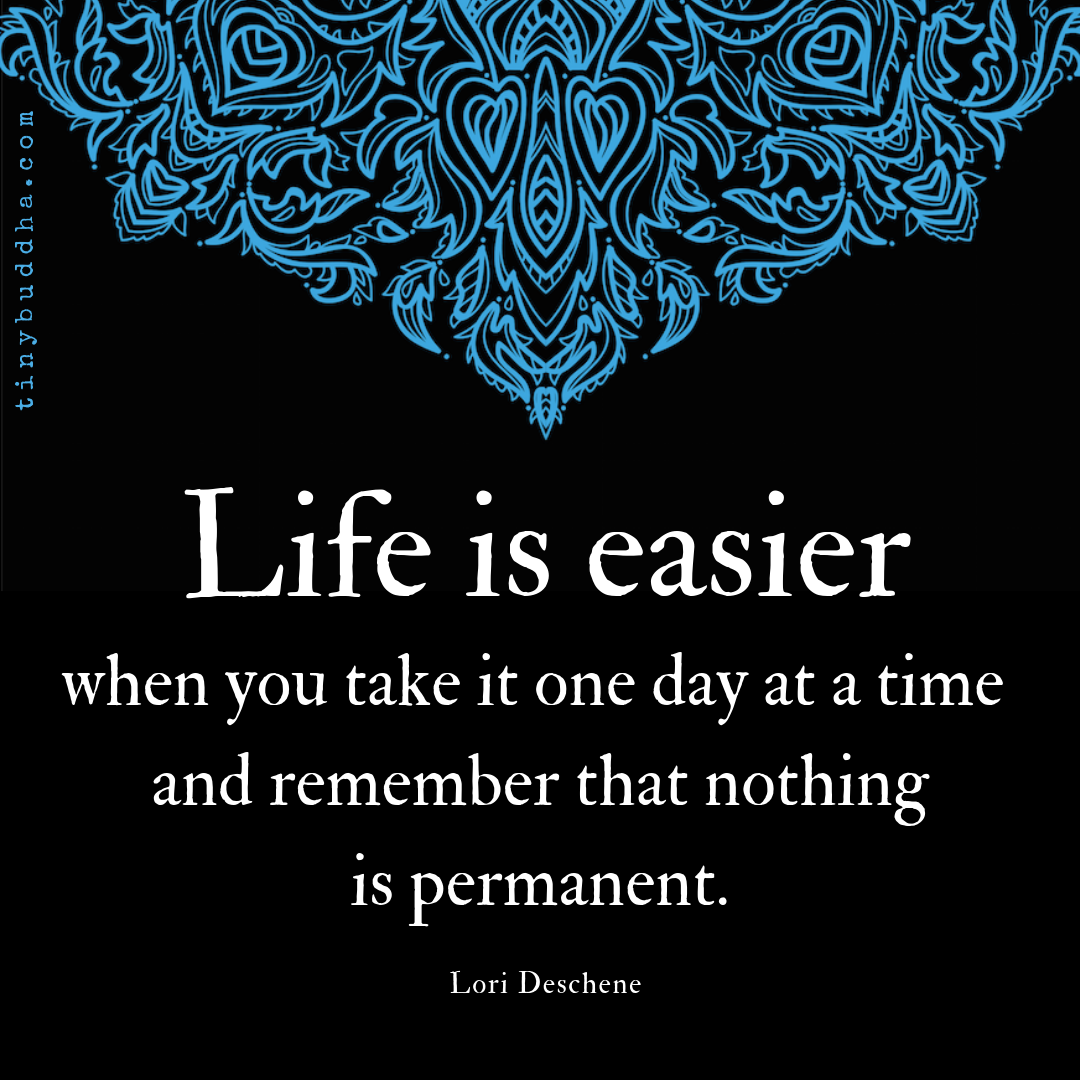
    Remind yourself that nothing is permanent.

    Nothing you have today will last forever. Not your job, your house, or your car. Not the people who are closest to you. Not even the people who vowed to never leave your side.

    Take a moment and accept the fact that life is short and you don’t have a lot of time to be with your loved ones. Someday all those people will no longer be around you, and you can’t possibly know when. Cherish them while you can.

    Expect nothing. Appreciate everything.

    No one is responsible for you and your life. No one is obligated to show you affection and kindness. Even if they are the people you love, it doesn’t mean they must love you back. They don’t have to do anything for you, even the smallest things.

    So when they do, recognize their efforts and thank them for everything they do for you. Everyone appreciates knowing they’re appreciated.

    Express your love with little gestures.

    Born in a third world country, I wasn’t raised to express my feelings for other people. Many times I struggled to tell my mom how much I love her. I thought she knew because she is my mom. But it doesn’t mean she would not feel happier if I chose to share how much I cared.

    It was strange at first, but now I call her every day and kiss her over the phone camera. I send her random text to tell her I love her and arrange flowers to be delivered to her house.

    Even if you’re busy, put in the effort to show how much you care. It doesn’t have to be anything big. As Robert Brault said, the little things are often the big things.

    Stay in the moment.

    Sometimes we are so busy with our work, our hobbies, and our relationship problems that we don’t focus on the people who are right in front of us.

    But if you don’t, when you look back on those moments, you will regret not being in the moment and enjoying time with your loved ones.

    Make a commitment to yourself today: Stop worrying about things you have no control over. And if you can’t stop worrying altogether, at least vow to put your worries aside for a while every day so you can be there for your loved ones, both physically and spiritually.

    It is easy to get used to all the sweet and kind gestures people do for you. But don’t take them for granted.

    Go ahead. Call your mom, dad, or someone else you love. Tell them how much you love them and thank them for everything they do.

    Send a text to your significant other, if you have one. Thank them for cooking a big breakfast for you, or even just for listening.

    Buy a bouquet of flowers and send it to your spouse or friend, along with a note to tell them how much you appreciate the little things they do for you every day.

    “Smile big. Laugh often. Never take this life for granted.” ~Unknown

  • Nothing Is Permanent: Letting Go of Attachment to People

    Nothing Is Permanent: Letting Go of Attachment to People

    “Impermanence is not something to be afraid of. It’s the evolution, a never-ending horizon.” ~Deepak Chopra

    I have been reading a lot lately on attachment and impermanence. It’s a big topic, one that is often hard to wrap your head and heart around. How can I live a life without attachment? Doesn’t that mean that I am not being a loving or caring person? I mean really, no attachment—it just seems cold.

    This all started for me when the love of my life told me, “I love you, I am just not in love with you.” Ouch.

    To say I was hurt would be a gross understatement. How could someone who I felt such strong love for not reciprocate the same feelings? This wasn’t the way it was supposed to go. We were together, attached forever, remember? Wrong.

    While I didn’t like it and I didn’t want to, I had to accept what I’d heard. Sure, I fought it for a while, told myself little fairy tales that she would change her mind and come back. The call never came, my love letter did not arrive in the mail, the “here I am on your doorstep” never occurred.

    It was over, and it was time for me to move forward, but how?

    I would like to say that I held my head high and just moved forward with dignity and grace.

    I would like to say I had a secret potion to “get over” the love of my life. I wish I could tell you of a magic book I read or twelve steps to follow to heal a broken heart. Those things I cannot offer, but I can offer you hope.

    Days after we parted ways I had an overwhelming urge to walk in nature. All I wanted to do was walk by myself, and that’s exactly what I quietly did. Day after day, rain or shine, I took my little heartache out for a walk in the forest until it was exhausted.

    A funny thing started to happen after a few weeks of walking. I started to notice the trees, how beautiful they were, tall, strong, and magnificent.

    I started to hear the sound of the birds, the leaves blowing, the babbling of the creek, and the crackle of the earth under my feet. I started to step outside of my head and heartache, and I started to notice the things around me. It was beautiful, fresh, and amazing.

    As my heart started to take in the grace of my surroundings each day on my walks, I felt little pieces of my broken heart start to heal. My self-talk of “why me” drifted away with each step.

    I began to stop thinking about my loss of love and started to think about how lucky I was to have experienced love. I opened myself to gratitude rather than attachment and loss.

    I had attachment to a person, an ideal, a hope. In many ways I had attached my personal happiness to this person.

    In my mind the love of my life was attached and permanent, to me and for me. As I have now learned nothing in life is permanent. If we can appreciate this reality, we can open ourselves to cherish “now” moments.

    Love is not about attachment or permanence. Love is about spending time with another person, sharing moments, experiences, and each other.

    The moment we make it about “keeping” another for our own gain, our own need, it becomes about our ego, fears, and insecurities. A mindful, compassionate, kind being only wishes happiness and love for others. Sometimes happiness and love for others is moving on and letting go.

    Months have gone by and I still walk in the forest. My heart does not ache as I walk, though.

    I think of the many wonderful memories. I feel full of gratitude thinking of the magnitude of wonderful times, the laughter, and the love. I cherish those memories and I think I am pretty lucky that I was able to share those wonderful experiences of love with another person.

    The trees, the forest, they remind me of the simplicity of our beautiful life. While each day is different and ever changing, I still see the splendor and magnificence. Each tree holds its own life; it is an individual amongst many others, just as we are as humans.

    When I walk in the forest today I am reminded that I can appreciate the beauty of each tree, just as I can appreciate the beauty of love I share with each person.

    With a deep breath and a full heart, I know just as my relationship is to the trees, so is my relationship with others. Free of the idea of attachment and permanence, we are able to see the simple beauty of this moment, now.