Tag: perfectionism

  • My Secret to Overcoming the Painful Trap of Perfectionism

    My Secret to Overcoming the Painful Trap of Perfectionism

    “A meaningful life is not being rich, being popular, or being perfect. It’s about being real, being humble, being able to share ourselves and touch the lives of others.” ~Unknown

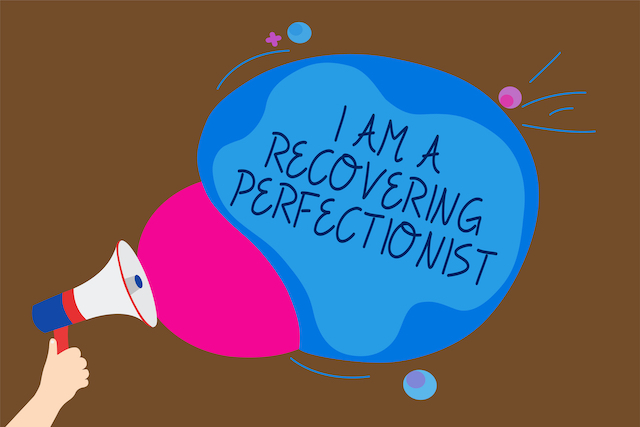
    Hello, I’m Kortney, and I’m a recovering perfectionist.

    Like so many of us, I spent the greater part of my life believing that unless something was perfect, it wasn’t good at all. There was really no in-between. If it wasn’t perfect, it was a failure.

    One of the problems with perfectionism is that it’s common to believe it’s a positive thing. In our society, people tend to value it. If you’re someone that aims for perfection, you must be accomplished. Driven. Smart.

    Have you ever had a sense of pride over being called a perfectionist?

    I have.

    Have you ever thought about why?

    Speaking for my own experience, when someone called me a perfectionist, I felt like even though I didn’t believe I was perfect, it meant that they were perceiving me as being perfect. They saw me as being one of the best, or as someone who was talented. It was validation that I was seen as someone who was good at things.

    My rabid thirst for this sort of validation fed the perfectionist machine for years.

    If you’re wondering what it means to be a perfectionist, here are a few traits:

    • Perfectionists obsess over mistakes, even when it’s not likely that anyone else even noticed.
    • Their self-confidence depends on being perfect.
    • They think in black and white—things are either good or bad. Perfect or failure.
    • They have unrealistic expectations and crazy-high standards for themselves and beat themselves up when they don’t meet them.
    • They put up a front that everything is perfect, even when it’s not, because the thought of someone else seeing their imperfection is unbearable.
    • Despite their quest for perfection, they don’t feel anywhere close to perfect.
    • They can’t accept being second-best at something. That’s failure.
    • They spend excessive time on projects because they’re always perfecting one last thing.
    • They spend a lot of time searching for external approval.
    • No matter what they do, they don’t feel good enough.

    At one point in my life, all of those bullet points described me well. I wasted so much time worrying about approval and validation so that I could feel like I was awesome. But I never felt even close to awesome. I never felt good enough at anything.

    Sure, there were times when I felt like I was good at something, but then I had to raise the bar. Just being good at something wasn’t enough. There was always another level to reach. The bar kept getting higher and higher, which isn’t necessarily a bad thing for people who are striving to make improvements in a healthy way, but for a perfectionist whose self-worth hinges on reaching the bar every time it’s raised, it’s not a positive.

    It was exhausting.

    After a lot of struggle in my life, I knew I needed to explore my perfectionist ways and find a way to be more compassionate toward myself. Perfectionism was holding me back from loving my life. And to be honest, I don’t think I intentionally set out to rid myself of the perfectionist mentality specifically. It came as a byproduct of a great deal of other personal work.

    I began to realize that I had many beliefs that were etched into my brain that weren’t helpful. Beliefs that I never thought to question. These beliefs also severely hindered my ability to be happy and to live the life I wanted to live.

    We all have belief systems that we don’t really think to question. We’ve grown up with them. We’ve learned them from the media, culture and society. But if we actually take a step back to notice that these thought patterns that inhibit our ability to grow and progress are there, we can start to question them.

    Some common limiting beliefs that keep people stuck in perfectionism are:

    • People reward me for having high standards. They are impressed and I gain approval.
    • The only time I get positive attention is when I am striving for big things or achieving.
    • If I make a mistake, I’m a failure.
    • If only I can make so-and-so proud with my achievements, he/she will love me, and I’ll be happy.
    • If I fail, I am worthless. Failing is not okay.
    • If I don’t check over everything multiple times, I’ll miss something and look like an idiot.
    • My accomplishments are worthless if they’re not perfect (i.e.: receiving a “B” instead of an “A” in a class is a failure),
    • If others see my flaws, I won’t be accepted. They won’t like me.

    The good news is that thoughts like these are examples of faulty thinking—faulty belief systems that keep you stuck in perfectionism. By identifying the specific thoughts and beliefs that keep you stuck in perfectionism, you can start to build new, more helpful thought patterns and belief systems.

    I also stumbled upon another secret for overcoming perfectionism.

    The secret is that I became okay with being average. I worked to embrace average.

    If you’re a perfectionist, you know that being called average feels like the end of the world. It’s a terrible word to hear. My inner critic was not having it. “How dare you even think average is okay?” it hissed.

    As a teenager, a twenty-something, and even a thirty-something, my world would have come to an end if I had accepted being average.

    But sometimes life has a way of making you better.

    Life has a way of putting things into your path and it presents opportunities for you to grow. Everyone has these opportunities at one point or another, but you have to notice them and choose to take advantage of them.

    There was a time not too long ago when I went through a really difficult time and had to rebuild my life.

    Looking back, I can see that the situation was an abrupt “lane-changer”—a push in a new direction to make a change. I was not living my best life and I wasn’t meant to stay stuck in that lane. I struggled with depression and anxiety, much of which was triggered by perfectionism.

    By working on thoughts like the ones I listed above, and working to accept lowering my standards—the ones that told me that achievement and success were the only way I would be worth anything—I gradually learned to replace my old standards with this one:

    Just be happy.

    Learning to make this my standard led me to a place where I am okay with being average. Eek! I said it. Average.

    Today, I can honestly say that I’m pretty happy with being average. Do I like to do well? Sure. But it doesn’t define my self-worth. While it’s created more space for me to fail, at the same time it’s created the space for me to succeed.

    The difference is that my self-worth isn’t tied to whether I succeed or fail.

    Here’s how I look at it:

    I’m really good at some things, but I’m not very good at other things. You are really good at some things.  And you aren’t very good at other things too. The good and the not-so-good all average out.

    At the end of the day, we are all just average humans. We are all the same. We’re humans trying to live the best life we can. We are more similar than we are different.

    Don’t you think that if we all ditched our quest to be perfect, or better than everyone else, we’d feel a little happier? Don’t you feel like we’d all be a little more connected?

    If you struggle with perfectionism, I invite you to take a look at the list of limiting beliefs above and see what resonates for you. What evidence can you find that can disprove these limiting beliefs? What would you like to believe instead? Try on those new beliefs and build them up with new evidence to support them.

    And along the way, work on accepting that you are enough, even if you’re average.
  • How to Stop Procrastinating When Things Feel Hard or Scary

    How to Stop Procrastinating When Things Feel Hard or Scary

    “You’ve been criticizing yourself for years and it hasn’t worked. Try approving of yourself and see what happens.” ~Louise L. Hay

    I dreamed of starting my own business for years. Ten years, exactly.

    While there are a few reasons it took so long to take the plunge, procrastination is at the top of the list.

    It’s hard work to change careers, uncomfortable to leave a steady paycheck, and nerve-wracking to think of failure.

    Even after spending months and years learning, studying, and getting certified, when it was no longer a matter of having the skills, the uncertainty of success was enough for me to keep kicking the can down the road to start marketing myself.

    I was afraid of failing. I was afraid of not being perfect. I was afraid that people would think I was a joke. And I was afraid that I wasn’t going to be capable of all the work it entailed.

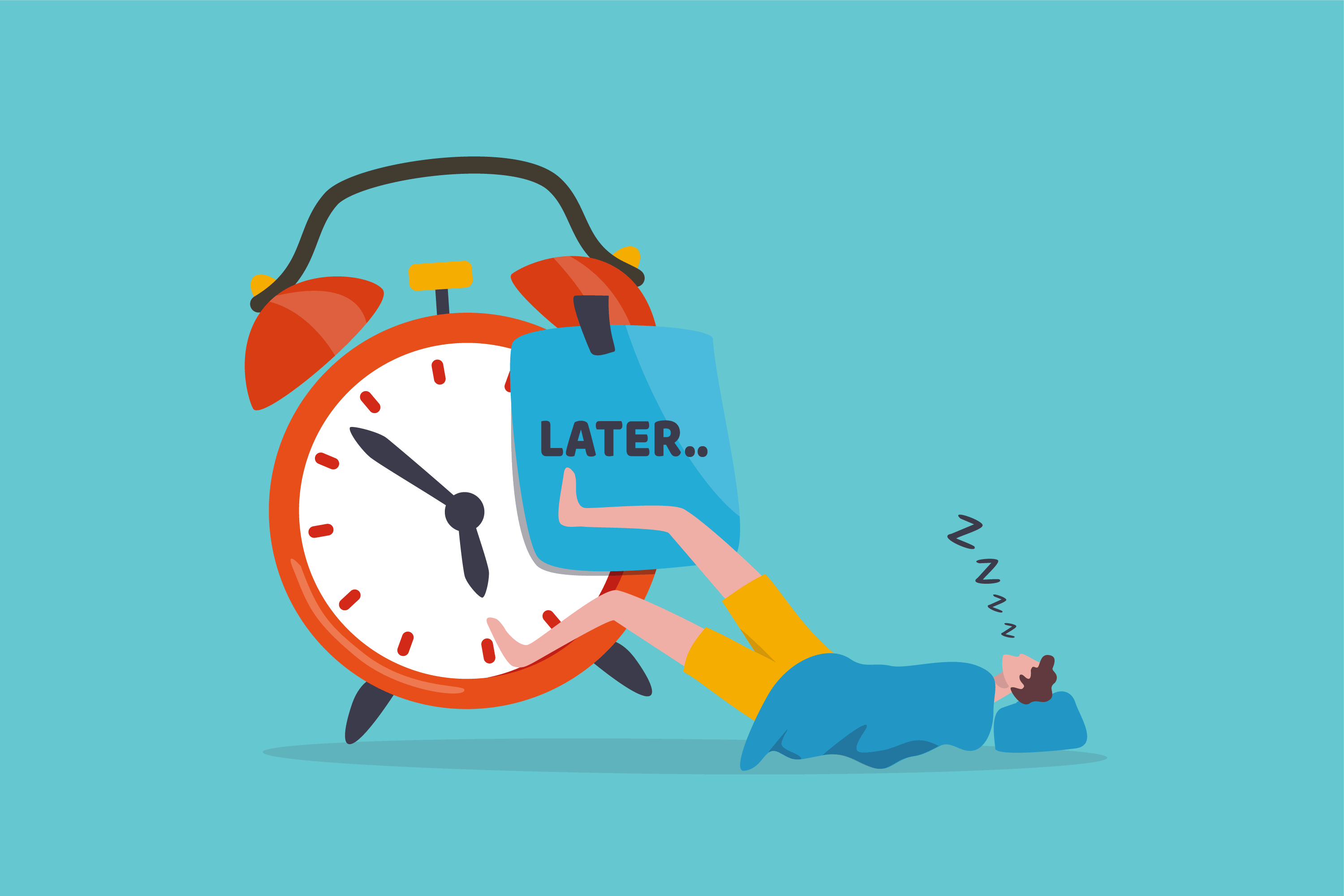
    So I dragged my feet and kept passing my work off to “Future Me.”

    I did this for everything, though.

    “Tomorrow Sandy” can do the dishes. She’ll take care of scheduling that doctor’s appointment. Oh, and sign her up for that tough conversation I need to have with my mom too.

    At one point I recognized that I often procrastinated because I needed everything to be perfect.

    • I wouldn’t work on a craft project or cook a new recipe unless I knew it would come out flawless.
    • Or I would keep tweaking projects at work up to the last second and beyond, at the sacrifice of getting more work done.
    • Or I would agonize over every text and email I sent, often opting not to send any message unless I knew exactly what to say.

    But, as you can see, I’ve come a long way from that version of me.

    I’ve since started my own business (and I’m loving it!), and I’ve pulled my best tools together on paper for how to stop procrastinating—even though I actually procrastinated on writing this post (ironic, I know!).

    Today, I didn’t let my fear of “good enough” hold me back from sharing actual, helpful advice and mindset shifts to get moving and stop staying stuck.

    Because when we’re stuck, we start telling ourselves stories. So that’s where we’ll start, with this story we tell ourselves about why we procrastinate.

    What We Think Procrastination Is

    We have this misconception that procrastination is laziness.

    But procrastination is an active process. You choose to do something else instead of the task that you know you should be doing.

    In contrast, laziness is not caring. It’s apathy, inactivity, and an unwillingness to act. It’s an “I could, I just don’t wanna” kind of attitude.

    But when you’re procrastinating, you feel even more stressed because you do care about getting the task done. You’re just avoiding stress and having difficulty with motivation.

    Because that is why we procrastinate.

    What Procrastination Really Is and Why We Do It

    Procrastination is a stress-avoidance technique. It is an active process to temporarily avoid discomfort.

    We subconsciously are saying, “Present Me is not willing to experience this discomfort, so I will pass it on to Future Me.”

    (We do this as though we’re asking a stranger to do the work for us. Researchers have seen on fMRI that when we think about our future selves, it lights up the same part of the brain as when we think about strangers.)

    The really cool news is that by working toward overcoming your procrastination habit, you’re building your overall resilience to distress.

    That is how I define resilience: a willingness to experience discomfort.

    Examples of Procrastination

    Procrastination is tricky. Sometimes it’s obvious that we’re doing it. Sometimes we don’t quite realize it (like when I had to water the plants right then and there instead of writing this blog post).

    So here are some examples:

    • Scrolling through Instagram instead of getting started on important tasks
    • Putting off work assignments until the last minute
    • Wanting to start a new positive habit (dieting, exercising, or saving money), but repeatedly delaying it while telling yourself that “I’ll start soon
    • Wanting to start a business but wasting time in “research mode” instead of taking action
    • Doing an easy, less important task that “needs to be done” before getting started
    • Waiting until you’re “in the mood” to do the task

    5 Steps to Stop Procrastinating

    Now that we know what it is and why we do it, let’s look at how to stop.

    1. Motivate yourself with kindness instead of criticism.

    What really holds us back from moving forward is the language we use when talking to ourselves.

    Thoughts like:

    • I don’t want to.
    • It will be hard.
    • I don’t know how to do it.
    • It might not come out as good as I want it to.
    • I’ll probably fail.
    • This will be so boring.

    This is what we think that drives us to procrastinate. I mean, really, when you read those thoughts, they just feel so demotivating, right?

    This negative self-talk has a good intent. It is trying to save us from discomfort.

    Unfortunately, it’s achieving the opposite because it adds to the stress by making us feel bad.

    If you speak to yourself with kindness, just as you would a friend, it will feel so much more motivating.

    So think about what you would say to that friend. It might sound like:

    • I get it, it will be uncomfortable, but you’ll be done soon and then you can relax.
    • Once you get started, it will be easier.
    • You can do it!!
    • If it doesn’t come out perfect, at least you’ll have practiced more.
    • If you fail, you’ll have learned so much.

    2. Create a pattern interrupter.

    That negative self-talk has simply become part of your procrastination habit.

    Because that is what procrastination becomes—a habit—and habits are comprised of a cue, a routine, and a reward.

    • The cue is thinking about a task that needs to be done.
    • The routine is to speak that negative self-talk that leads to procrastination.
    • The reward is less stress. (Not no stress, because avoiding the task is still somewhat stressful because we know it eventually needs to be done.)

    In order to break the habit and create a new one, you need to introduce a pattern interrupter.

    Mel Robbins has a great one she calls the 5 Second Rule. When you think “I should do this,” before the negative self-talk starts in, count backwards, “5-4-3-2-1-GO” and move.

    I find this helpful when I’m having a hard time getting out of bed in the morning.

    If I’m having trouble getting motivated to do something difficult like write a post about procrastination, my pattern interrupter is “I can do hard things.” Not only am I interrupting the pattern, I’m motivating myself positively as well.

    If I’m having trouble doing a boring and tedious task like my taxes, I use something like “I’m willing to be uncomfortable now so that Future Me can be at peace.”

    3. Break down the task.

    One of the big drivers of procrastination is overwhelm. Overwhelm happens when we’re looking at a project in full scope, either not knowing where to start or feeling like all the work involved will be too much.

    If the next task at hand is too big, or if you don’t know where to start, your first task really is to either 1) make a list, or 2) figure out the smallest thing you can do first.

    The whole house is a mess? I bet you know where that one sock goes!

    Another example, I had social anxiety and going to the gym was overwhelming to me.

    So I broke it down into:

    • I just need to put gym clothes in my car, that’s it.
    • I just need to drive to the gym. I can turn around if I want once I get there.
    • I just need to walk in the door. I can always leave.
    • I just need to get changed in the locker room I can do that.

    Honestly, I never turned around and went home. Because once I’d taken the small, easy step, the next small easy step was doable.

    Which leads me to the next step…

    4. Just commit to five minutes.

    Studies show that if we commit to five minutes only, 80% of us are likely to continue with the task.

    Five minutes is nothing. You can do anything for five minutes.

    There is an 80% chance you’ll continue working once you put in those five minutes, but even if you don’t, you’re still five minutes closer to your goal.

    And, you’ve taken one more step to breaking the old habit of not starting.

    It’s a big win-win!

    5. Reward yourself or make the task more enjoyable.

    Another problem with looking at a big task in scope instead of the next five minutes is that the reward is too far away or not satisfying enough.

    When you’re trying to lose weight, twenty pounds is weeks and months away.

    Or, when you’re putting off your taxes, if you aren’t expecting a return then the reward is “not going to jail.”

    So bringing in more rewards sooner will fast track creating the new habit of getting started.

    But also, making the task itself more pleasant will make it a less monotonous task.

    • To write this post, I put on my softest bathrobe and grabbed my baby’s tub from when he was an infant to make an Epsom salt foot bath under my desk while I write.
    • I’ll be starting my taxes in the next few weeks, and I already plan to have a glass of wine and super fancy cheese and crackers while I sit down to do them.
    • I save listening to super nostalgic nineties music for when I’m exercising just so that it makes that time extra special and fun.

    What Would Open Up for You If You Stopped Procrastinating?

    We spend so much more time avoiding the discomfort of a task than we do stepping into what it will be like once the task is complete.

    If you were to stop procrastinating, what would open up in your life?

    • Would you start your business because you’re no longer afraid of experiencing any discomfort if you “fail”?
    • Would you simply enjoy life more if you weren’t in a perpetual state of stress because there is a list of things you’re putting off?
    • Would you finally lose weight or get in shape and feel good once you push through being able to get started?

    The Bottom Line

    Procrastination is an active process to temporarily avoid discomfort (it is not laziness!)

    By overcoming your procrastination habit, you are building your emotional resilience.

    Notice the negative, demotivating self-talk and motivate yourself with kindness over criticism.

    Create a pattern interrupter before the negative self-talk starts weighing you down.

    Commit to just five minutes and you’ll either keep going to do more, or you’ll at least be five minutes closer to done.

    Reward yourself or make the task more enjoyable so there is less discomfort to avoid.

  • 5 Psychological Strategies to Ease the Stress of Perfectionism

    5 Psychological Strategies to Ease the Stress of Perfectionism

    “Striving for excellence motivates you, striving for perfection is demoralizing.” ~Harriet Braiker

    The last three months I’ve been trying an experiment. It’s something that I’ve never done before, and in a certain way, it’s been a huge challenge. However, in other ways, it’s been an enormous stress relief, and I would say a largely successful effort.

    What I’ve done seems to go against conventional wisdom, but that doesn’t mean it wasn’t a wise choice.

    So what exactly is this challenge? Well, I have actively gone out of my way to be average.

    Yep, sounds a little weird, doesn’t it? But hear me out.

    Over the past year, I’ve become more aware than ever of how much unconscious stress I put on myself to be above average. I’ve always known I have a type-A personality, but I didn’t know to what extent this was doing me harm. A large part of this realization came from journaling my dreams and discussing them with a psychotherapist, and another part came about through a mindfulness practice.

    So for six months, whenever I felt like relaxing, and the little voice in my head would pop up and tell me I could be doing more in this moment, I would ignore it. I would decide to watch that extra episode on Netflix. I would choose to sleep in the extra fifteen minutes. I would leave the little bit of extra work until tomorrow.

    What came out of this was unexpected. The more I ignored the voice, the more loud and aggressive it became.

    Coming into contact with this part of myself ultimately did three things.

    Firstly, it showed me that I had an issue with perfectionism that I wasn’t entirely aware of. Secondly, it showed me just how tricky and persuasive the little voice of perfectionism could be. And finally, and most importantly, it taught me how overcoming that perfectionist tendency could lead to less stress, more productivity, and greater well-being.

    So, the moment of truth. How do you know you’re a perfectionist?

    • You often feel weighed down by fear of your goals not succeeding
    • You’re constantly looking for the ‘right’ moment to do something
    • You have a persistent sense of dissatisfaction with what you’ve achieved
    • You obsess over small mistakes that have little impact on the big picture
    • You neglect self-care in favor of achievements

    I came up with five psychological strategies to overcome this perfectionism. This has allowed me to take steps toward accepting the average parts of myself, and it’s helped me let go of a shocking amount of hidden stress.

    I’ve decided to share these steps with you here so you can begin to accept who and where you are, and enjoy the journey a little more.

    1. Rethink what it means to be average.
    In our society, we often consider anything less than greatness to be failure. That’s not an exaggeration; it’s just the reality of our skewed notions of achievement that have failed to account for larger and more interconnected societies in which it’s increasingly difficult to stand out.

    When we hear the terms “average” or “mediocre” we consider them dirty words, although they’re supposed to denote the middle of the pack. If you are average at something, that shouldn’t have any correlation whatsoever to your self-worth. Most people are average at most things for most of their lives. Does that mean that most people should feel bad about themselves?

    Accepting the ways in which you are average doesn’t mean you can’t strive to achieve greatness in some areas of your life. All it means is that the desire to excel doesn’t need to be driven by the feeling that you are incomplete. It can be out of the love of competing with your past self, the need to serve your community, or even just the enjoyment of a challenge in the present moment.

    2. Challenge the all-or-nothing fallacy.

    Perfectionism is a direct result of the all-or-nothing fallacy, also known as black-and-white thinking. When we believe that our value is completely tied to our achievements, for example, we cannot help but obsessively strive to do everything the right way, because any mistake would undermine our entire self-worth.

    We can also see this when we look for the one perfect moment to get started on something, when we put all our efforts into one project and neglect our health, and most toxically, when we try to evaluate our life against the over-generalized boxes of success or failure.

    When you see this type of thinking emerge in your psyche, challenge it, and replace it with more nuanced explanations.

    For example, I used to believe that I was either being productive or lazy. When I was being productive I wasn’t being lazy, and when I wasn’t being productive I was being lazy. I’ve started to challenge that idea with the more nuanced explanation that breaks are sometimes lazy and sometimes productive; they serve many purposes. They can be reinvigorating, rewarding, and sometimes need no justification.

    3. Become friends with what you don’t know.

    Another key trait of perfectionism that I saw in myself is a strong desire to control outcomes. We have this tendency partly because we have a heightened fear of things not going the way we want or expect.

    In part, this is because perfectionism creates stress, and when we are stressed we start to become more susceptible to cognitive biases. For example, we may believe that if things don’t go the way we anticipate, everything will fall apart, we will lose out on opportunities, or we will be criticized by others.

    One way we can counteract this attitude is by becoming more comfortable with the unknown. You can only ever influence a certain amount of any situation you’re in, whether that’s work, money, or relationships.

    I have become more comfortable with the unknown by journaling about my fears over time. By seeking out counterexamples of when your fears haven’t been true (and they often aren’t), you can see how worries about the future are exaggerated by the brain, and you can start to gain more control over your emotions.

    It may also help to practice setting a wide range of goals, with varied levels of difficulty. Meeting the easier goals should fulfill your need to be in control and achieve, and working toward the more difficult goals will simply be a challenge to be creative, go above and beyond, and enjoy the uncertainty of things that are out of your control.

    4. Become friends with what you don’t love.

    Likewise, perfectionism is largely tied to the relationship you have with what you don’t accept about yourself.

    You probably know that acceptance is at the root of love. It’s therefore not surprising that people often advise you to love yourself when you’re dealing with internal conflict. Well, it sounds simple, but it’s never that easy, unfortunately. So I’m going to propose something more manageable: become friends with what you don’t love.

    If there are parts of yourself or your experience that you can’t accept or bring yourself to love, just befriend them. Ask what purpose the things you don’t like serve; become familiar with them the way you would a friend.

    Ease into the changing relationship you have with these harder-to-accept parts of yourself, and over time you’ll see a shift in your perspective that calms your anxiety around them.

    For example, I used to have an antagonistic relationship with my anxiety. The fact that I wasn’t always cool, calm, and collected, was something I found hard to accept, and it created internal conflict and (obviously) more anxiety. When I was able to see that anxiety was just a part of my brain was trying to help me, I was able to accept it. And over time I even started to appreciate this quirky part of myself.

    5. Reassess how you measure your success.

    If your perfectionism is driven by the belief that you’re not successful enough, then it’s not necessarily you that needs to change. It could be that the way you’re measuring success needs to be reassessed.

    For example, it’s common that we compare ourselves to others, and while we’re often told to focus on ourselves, making social comparisons in specific situations—such as workplace evaluations or in competitive sports—does have some (albeit limited) utility. If we didn’t make these comparisons, it would be difficult to see how we were improving and in what roles we could most help the group.

    When you start to generalize this idea to the rest of your life, however, that’s when it becomes a problem. If you start to tell yourself that so-and-so’s life is better than yours or that he or she is more successful than you, that’s almost always a generalization. What makes a life better? What does success mean? Are we talking about financial achievements? Free time? Deep relationships? Take a closer look at how success could be more effectively defined in your life.

    My own definition of success used to be based on how well I compared to people in my life in standardized measures (money, relationships, novel experiences etc.) Now I see success as how well I’m able to find meaning in the present moment, stay motivated for the future, and spend my time working on something that helps me, the people I love, and the rest of the world.

    All of the elements of my definition may not be relevant to anyone else, but because they are more fluid and flexible, and can grow with my personality, they prevent me from falling into the habit of perfectionism.

    To bring this all full circle, consider this: You can be average in one area and successful in another. This doesn’t mean you don’t have value, are not worthy or love or respect, and don’t deserve some down time every once in a while.

    Being average is normal, and it’s not an indicator of worth. You have inherent value just as you are. And if you should want to obsess about a project or be a little bit of a perfectionist every now and then, that’s fine. But be driven by the love of the creative process itself, not the anxiety that you can never do enough.

    What experience have you had with perfectionism? Have you used any of these strategies to find more peace of mind? Let us know in the comments—we’d love to hear from you!

  • Freeing Your Truest Self When You’re Anxious to Please

    Freeing Your Truest Self When You’re Anxious to Please

    “Stress, depression, and anxiety are caused when we are living to please others.” ~Paulo Coehlo

    I came from a broken and very poor family. My father left the house during my teenage years, and it was just my mother, little brother, and I remaining.

    Like most single parents going through the hardships of singlehandedly caring for two children, my mother was often anxious about my well-being. And she overcompensated for her anxiety by being overbearing.

    I unfortunately inherited this anxiety.

    For the longest time, it was a daily battle for me.

    You know the feeling.

    Your muscles tense up, you feel an overwhelming sense of fear, and your heart begins to race.

    It’s the uncomfortable worries that surface as you play out worst-case scenarios in your head.

    Though we can feel anxiety about debt, work pressures, or any number of challenges, for me, it was mostly triggered by the fear of not being good enough and disappointing other people.

    My struggle with anxiety was one of the most crippling experiences, and as a result, I never grew.

    So, is it really possible to overcome anxiety?

    I realized the answer is yes, but first I needed to understand where my anxiety was coming from.

    Anxiety is Your Brain Trying to Protect You

    There’s a small, almond-sized part of your brain known as the amygdala whose main job is to look out for your survival. For example, if a mountain lion were chasing you, your amygdala would trigger fear so that it would activate your body to run for your life or grab a weapon to fight.

    Your amygdala doesn’t only watch out for your physical survival. You feel the same kind of fear when you are nervous about giving a public speech or going on a first date.

    When you experience anxiety in these situations, it’s your brain’s way of trying to help you survive emotionally.

    Unfortunately, your amygdala is not the greatest at accurately gauging how dangerous a situation might be. It often blows things way out of proportion.

    I remember what it felt like when I was a kid and wouldn’t see my mother the whole day because she was always working late. I’d wait for her to talk about something I was excited about only to have her turn the conversation toward things about myself that I should be improving.

    Even though this was her way of trying to make sure I survive in the world, because we were barely getting by, the constant requests to do things better made me feel like I wasn’t good enough.

    It felt like no matter what I did, I could never fully please her. If I accomplished something she requested of me, I’d get a quick “thank you,” then she’d move on to talk about what else I should do.

    I found it most hurtful when she would talk about how great someone else was. She’d update me about some amazing thing that one of her client’s children had accomplished and suggest that I should try to follow in that person’s footsteps.

    All that did was make me think that something was wrong with me.

    I ended up with low self-esteem, and because I thought I was worthless, nothing was scarier than the thought of making mistakes and failing, because that would confirm that I was not good enough.

    This was why I never took too many risks and searched only for options that seemed to have a guarantee for success.

    My anxiety made me develop a behavior of perfectionism, and it was ruining my life. The more I let it make my decisions for me, or lack of decisions for that matter, the further I felt from who I wanted to become.

    Ironically, becoming a perfectionist was my brain’s solution to helping me feel good enough.

    “Perfectionism is the belief that if we live perfect, look perfect, and act perfect, we can minimize or avoid the pain of blame, judgement, and shame. It’s a shield.” ~Brené Brown

    This toxic behavior put me in an endless cycle of working hard to achieve all sorts of cool things so that one day, I might feel good about myself. In reality, every accomplishment felt anti-climactic. I was always dissatisfied and constantly looking for the next big accomplishment to chase.

    No matter how much I succeeded, it was never enough for me, just like I never felt like I was enough for other people.

    It wasn’t until I met someone who could see the real me that I finally figured out how to overcome my anxiety.

    The Power of a Safe Space

    When I was a teenager, a man named Anthony saved my life. If it weren’t for him, I would’ve gone down a much more self-destructive path.

    He never questioned the mistakes I’d made unless I wanted to talk about them. And when I didn’t want to talk about them, he’d openly share his own horrible mistakes.

    I never once felt judged by him, nor did I feel like he had a set of expectations for me.

    Anthony helped me feel safe.

    I realized for the first time that for most of my life, I didn’t feel safe to be who I was.

    I was almost always in survival mode, shielding myself emotionally. All my behavior was in reaction to the anxiety of not feeling good enough for other people.

    Being in a safe space finally helped me put my guard down and look at myself objectively. It was in these moments that I became deeply aware that being a perfectionist wasn’t the answer to my anxiety, and that I was heading down a path toward depression.

    I didn’t come to this realization sooner because the pre-frontal cortex, the thinking part of the brain, is turned off when the brain’s in survival mode. This pre-frontal cortex is what’s capable of rational behavior, critical thinking, and emotional regulation.

    The only way to calm down the survival mode of your brain is to place yourself in environments where you feel safe.

    The thinking part of your brain will help you understand where your anxiety comes from and figure out an effective way to handle it.

    It was in this safe space that I finally realized that I had the power and responsibility to stay true to myself.

    How I Overcame My Anxiety

    Deep down, I hated myself for constantly giving in to other people’s expectations of me and for letting their standards determine my self-worth.

    But the reality is that I let this happen.

    And here’s the even harsher truth.

    I let it happen because it’s much easier to live a life that someone else wants you to live.

    The scariest part is that once you take ownership of the one life you have, you have no one to blame if things go wrong. At least following someone else’s path gave me the right to blame him or her.

    My brain would rather me let others’ standards dictate my life and sacrifice my mental health than do anything that might make me experience the emotional pain of looking like a failure and falling short of someone’s standards.

    Now that I knew all my anxiety was coming from my brain being in survival mode, I needed to figure out a way to regularly calm it down.

    This was when I discovered meditation. 

    I learned that brain scans in studies have revealed that meditation calms the amygdala and activates the thinking part of your brain.

    I started using the free version of an app called Headspace, and I learned how effective it can be to simply be present and enter a state of awareness.

    For most of my life, I’d been tossed left and right by my circumstances and was a slave to my emotional reactions. Meditation helped me become more aware of why I was behaving the way I did, especially in these reactive moments.

    I finally saw that almost all my anxiety led to irrational thoughts and behaviors.

    For example, I remember when I decided to start my business, it was hard to build my audience. Nobody was reading any of my articles, and I wasn’t getting any traffic on my website.

    I’ve given up on other ventures plenty of times before, and I was ready to give up on this one too. I took it personally and started telling myself the familiar narrative that I didn’t have what it takes. I just wasn’t good enough. Then I recognized that I was reacting to my anxiety as I’d always done, and I could choose a different way.

    I was able to be aware and think to myself, “I’m feeling anxious right now because this moment feels similar to a couple of painful experiences I had in the past.”

    The moment I became aware of this I gave myself the power to make a choice rather than to habitually react.

    So I told myself, “The old you would put yourself down and give up, but the new you can try to assess the situation objectively and see what is really setting you back.”

    After doing this, I was finally able to grasp that I didn’t have business challenges because of my character, but most likely because of the strategies and tactics I was using to market myself. Once I used different strategies, I got different results.

    Your Best Life Starting Now

    In order to live our best life, we have to calm our anxiety about disappointing other people and not being good enough and find the courage to be true to ourselves.

    It is one of the hardest decisions you will ever make, but it will also be one of the best.

    The first step to changing my life for the better was having awareness. The next key step was focus.

    What you focus on is usually what you will gravitate toward.

    The key to living your best life is not to run away from who you were, but to run toward who you want to become.

    As I meditated, my anxiety calmed down and I started to have such a clear idea of the person I wanted to be.

    I no longer wanted to be the anxious person who thought he was worthless. I wanted to become a great husband, father, and leader. Rather than worrying about not being able to meet these expectations, I started to engage the thinking part of my brain to figure out what needed to be done.

    I didn’t have all the answers, but I knew I could only make this life I wanted a reality if I started making changes and learned as I went.

    I wanted to learn what it took to become a better husband, so I started going to marriage counseling.

    I wanted to become a better parent, so I researched how children are wired and how to best communicate with them.

    I wanted to be a better leader, so I invested in credible leadership and coaching courses.

    And I did these things not because I wanted to prove something to myself, but more because it mattered to me deeply and I knew it was a part of who I truly was.

    I’ve spent too much time running away from opportunities for growth because I was afraid I might not be good enough. The problem, though, was that I was running away without knowing where I wanted to go. I ended up in destinations where I felt more lost than ever, and my anxiety kept catching up to me in the end.

    Now, whenever I experience anxiety, I tell myself, “This is anxiety.” I thank my brain for looking out for me and then I ask myself, “What do I need to focus on in this moment, and how can I get it?”

    Then, surprisingly, the anxiety calms down and the thinking part of my brain activates to try and figure out the best way to go about things.

    This is what changed everything for me.

    And I know it can for you too.

    While people might have expectations for you, the world desperately needs the power that comes from you living your most authentic life.

    If you are battling anxiety about not being good enough or pleasing other people, take a moment to slow down and acknowledge what you are experiencing. Then, identify what you need to feel safe so you can turn on the thinking part of your brain and start uncovering the answers you most need. That might mean meditating, talking to a close friend, or even just getting out in nature for a walk.

    It’s time to take a deep breath, be compassionate with yourself, and decide who it is you want to be.

    Stay aware and focused and you’ll be there sooner than you think.

  • Overcoming a Negative Body Image: 4 Things to Remember

    Overcoming a Negative Body Image: 4 Things to Remember

    TRIGGER WARNING: This post deals with an account of anorexia and may be triggering to some people.

    “You will never be free until you free yourself from the prison of your own false thoughts.” ~Philip Arnold

    I really don’t remember my life before anorexia. I think back to my early teenage years when I ate peanut butter sandwiches and drank hot chocolate without a single thought of how many calories I had consumed. There was no guilt, no worry, no need for perfection. How I wish I could get those carefree moments back.

    A few years ago anorexia completely distorted my perception of myself. All it took was one seemingly innocent comment from my classmate: Haven’t you gained weight recently? From that moment on, I no longer saw a healthy, fit person when I looked into the mirror. All I saw was an imperfect body.

    Meticulous calorie counting, diet restriction, and exercise time logging began to fill day after day. I wasn’t living as a human, but rather as an engineer treating my body as a machine. I loved myself for every pound I lost, every piece of clothing that felt a bit looser, and every little bit of food I managed to leave on my plate.

    I felt like a crazy person because my reasonable self knew that I shouldn’t be starving myself and exercising ridiculous number of hours every single day. I knew exactly what was wrong with me except there was nothing wrong.

    Somewhere in the evolution of the illness, I lost control. I ate one apple a day, drank only water, ran ten miles every morning, did squats and push-ups while studying, and paced in my room instead of sleeping. Nobody asked any questions, so I didn’t provide any answers.

    And then one day I was finally rewarded with my target weight glowing on the scale. I had done it! The hard work had paid off and I was free. Or so I thought. The control I now had over my body was deceiving. Once I reached my target weight, I couldn’t stop. The rush was too inviting. Every extra pound lost felt like a victory.

    You Don’t Notice You’re Losing Control Until It’s Lost

    When I looked into the mirror, I saw my ribs with their thinly stretched coating of papery skin, and every single hump of the spine as I bent over. People began to whisper. The doctors told me that I wouldn’t survive if I didn’t start eating. But I was proud. Every comment about how skinny I was felt like an accomplishment. My insecure self was at rest only when I met all so high standards I set for myself. It felt like a prison I couldn’t get out of.

    The prison was in my head. If at some point I was controlling everything related to food and body image, now I had lost control and the illness controlled me.

    I was hungry, cold, tired, and unable to pick myself up. The voice inside my head was telling me that nothing I did was good enough. If I ate a salad, I shouldn’t have had it. If I went for a walk, I hadn’t walked far enough. I pushed my body to the point that I collapsed.

    Since I’m at a healthy weight now, people ask me how I overcame anorexia. The truth is that the recovery didn’t happen overnight, and not without relapses. It took a lot of tears and struggling, but eventually I stopped drowning. I chose to step out of my self-imposed prison, with the help of friends, family, and a counselor.

    I was fortunate enough to have the support of loving parents who were there when things were hard, when I wanted to give up because I felt too fat, when I needed somebody to remind me that recovery was worth it. And more importantly, that I was worth it.

    It was a taxing mental battle that still at times rages within me. The old eating disorder voice creeps up sometimes, but I now recognize that voice as irrational and destructive. I’m learning to ignore it. I’m learning to quit running away from myself.

    4 Things to Remember When You’re Under the Spell of a Negative Body Image

    Negative thoughts about your body consume you. They take and take and take. To recover, you essentially have to figure out who you are again. You have to build yourself up from the smallest bits of what you know of yourself. You have to differentiate yourself from the condemning voice. Here are some of the things I learned (and had to embrace) on my way to recovery.

    1. Not all thoughts are facts.

    The problem with a negative self-image is that it feels like a fact. You can easily convince yourself of something that is not true. Even at 5’7” and my lowest weight (ninety pounds), I believed that I needed to be thinner.

    I felt that my waist wasn’t slim enough, my arms weren’t toned enough, and my thighs weren’t narrow enough. My mind was a very thorough liar, and there was nothing anyone could say to convince me otherwise.

    If I hadn’t learned about these lies and how to discern them, I would probably never have gotten out of that vicious cycle.

    You might have a hard time discerning truth from lies in the beginning, so instead of questioning whether your thoughts are facts, ask yourself which ones serve you and which do not.

    Growing up with an athletic sister, most of my negative thoughts evolved around my body. I could objectively say that although I was very thin, I wasn’t particularly lean. So I signed up for a gym membership and started lifting weights.

    However, what was initially a constructive thought—that it would serve me to build muscle—turned into an obsession within a few months.

    I remember standing in a basement gym, pushing a heavy barbell above my head, when I realized I was crying. I let my tears roll down my cheeks and focused back on the barbell. I had to finish my workout. I was exhausted and hungry from all the workouts I put my body through every single day, but all I could think of were toned arms and washboard abs.

    I think I knew long before that day that my desire for a lean body was no longer serving me. However, I couldn’t stop exercising. I had to sweat. I had to feel my heart race. My life revolved around my fitness routines.

    I knew then I needed to challenge the thoughts that told me I wasn’t lean or fit enough, and adjust accordingly.

    That isn’t to say that I stopped working out altogether. There are days I still experience anxiety when I know I won’t be able to get to the gym. But any time a destructive thought about my not-so-toned body pops up, I remind myself this doesn’t serve me and do my best to let it go and focus on something more positive. I may not have the leanest body, but I am more than just my physique.

    2. Absolute control is an illusion.

    Eating disorders are all about control. Control issues with what goes into your body and what comes out of your body. It’s about exerting control over at least one aspect of your life. However, it’s an illusion. In fact, you may feel in control, but be very out of control. The more successful you are at exerting control over how much food you take in, the less control you actually have. The eating disorder and twisted ideals are controlling you.

    Right before I hit rock bottom, I was paralyzed with fear and crippled with anxiety. I needed the eating disorder. I needed the identity and illusionary control it gave me. If I felt I got everything under perfect control, I felt strong. Paradoxically, that’s when I ended up under the doctors’ and my parents’ supervision, with no control over my food intake.

    Letting go of control was the hardest part. I would be lying if I said I no longer struggle. However, I’m much better at reminding myself that the greatest control is in letting go of the need for it.

    3. Perfectionism is unattainable.

    Perfectionism goes beyond doing your best. It’s about setting extremely high standards that are unrealistic. In my perpetual quest for perfection, I believed I could meet those high standards. I strived for perfection in my studies, relationships, cleanliness, exercise, and diet. Mediocrity was unsatisfactory. It was all or nothing.

    Perfection is so addictive because it locks you into thinking that if you do everything perfectly, you can minimize the feelings of pain and judgment. But the truth is, you can’t. There will always be people in your life who judge you no matter what you do or what you say.

    The one thing you can do is to surrender. Accept that you are work in progress. Embrace all parts of yourself, even those that seem “imperfect” to you. Practice forgiveness and self-compassion. And most importantly, be patient. Adopting new patterns of thinking takes time, but the work is worth it.

    4. Food isn’t the enemy.

    The difficulty with negative body image is that it’s closely tied to weight (and therefore, food). But unlike a drug addict, you can’t avoid the trigger. You can’t simply avoid food for the rest of your life, although it is very tempting to adopt the mindset that the fewer calories you eat, the better.

    In that sense, healthy eating literally saved my life. Fueling my body with simple whole foods shifted my focus from calorie counting to nourishment. Instead of weighing myself several times a day, I focused on my health.

    At times, I still pay attention to how my clothes fit and how I look in the mirror, but food is no longer the enemy. It’s the means to achieve the good health we all find so radiantly beautiful—glowing skin, shiny hair, and a fit, strong body.

    Silencing the Voice

    Do I still struggle at times? Yes. However, when my negative thoughts and struggles reappear, I no longer let them run my life. I recognize them as something I must overcome. There are days that I have to make a conscious effort to eat and not panic when the scale shows an increase. But thankfully, I know the price of letting fear take over my life.

    I know that one day I’ll be able to step on the scale and not cringe at the numbers that appear in front of me. One day, I’ll be able to eat a meal without thinking about calories. One day, my mind will be completely free. Until that day, I keep silencing that voice.

  • Why Striving For Perfection Is Actually Holding You Back

    Why Striving For Perfection Is Actually Holding You Back

    “The thing that is really hard, and really amazing, is giving up on being perfect and beginning the work of becoming yourself.” ~Anna Quindlen

    I used to strive for perfection in every aspect of my life. I thought perfection would make me “acceptable” to others.

    Deep down, I felt inadequate, insecure, and not enough. And subconsciously, I decided that if I could just achieve perfection with myself, my body, and my life, than I would finally feel the deep love and inner acceptance I longed for inside of myself.

    As a kid, I demanded a perfect report card: only straight A’s would suffice. I spent hours upon hours studying in high school and college, doing extra credit, attending office hours any chance I could get, all in a desperate attempt to maintain a 4.0 GPA.

    As a young adult, I agonized over what career path to pick, wanting to pick the perfect job that would be my dream career. I was desperate to be the best, wanting to be the perfect employee, and giving nothing less than 150% in every project I worked on and presentation I did.

    I was terrified to make a mistake and required excellence in every task. I was afraid of others judging me. I didn’t see it my mistakes as learning experiences; I saw them as a way of others seeing what I didn’t want them to see: that I was flawed, imperfect, and somehow not enough.

    I demanded perfection in every part of my life. But the area I struggled the most with was the desire for body perfection.

    As a teenager, I decided that 110 pounds was the “perfect” body. I spent years trying to whittle my body down with exercise, diets, and restriction in an attempt to get the figure I deemed flawless.

    The pressure I put on myself to be a size 2, to eat only 1200 calories a day, to spend at least 45 minutes at the gym daily was agonizing. I lived and breathed this obsession of needing and wanting to be perfect.

    Looking back, I can see how detrimental this drive was to living and enjoying my life. In my chase for perfection, I put unnecessary pressure on myself to be something I was not. I wasted hours and hours trying to be someone different and wishing I was somewhere other than where I currently was.

    But the biggest lesson of all was that in my quest for perfection, I wasn’t really living.

    The reality is that striving for perfection holds us back. We spend so much time doing, striving, achieving, in an endless quest to get it all “perfect,” and we end up missing out on what life is really about: being in each moment and experiencing life where we are, as we are.

    I vividly remember New Year’s Eve in 2007. One of the dear friends I had met living abroad in Thailand was in town and wanted to see me. She wanted to do dinner with a group of people, then head out dancing for the ball drop.

    I agonized over this decision to go or not. I remember wanting to meet up with her, but feeling so awful about my body not being “perfect” that I didn’t want to go out and have to “hide” my body in baggy clothes.

    It pains me to say that I didn’t go. I gave up a chance to catch up with this dear friend, to have fun with others, and to dance the night away because I was unhappy with my body. I stayed home that night and ran on the treadmill in my parents’ basement.

    It was the ultimate low in my quest for body perfection: I decided that I needed to burn off what I had eaten that day and work to “fix” myself into a smaller size.

    The anxiety I felt about eating more calories at a restaurant, when I already felt “fat” in my body, pushed me to stay home and run on the treadmill. It was a moment of life that I missed out on because I was desperately pursing a perfect body.

    When we’re caught up in the pursuit of achieving the perfect body, finding the perfect mate, landing the perfect job, or being the perfect person, it actually hinders us from seeing how beautifully our journey is unfolding right before our eyes.

    Perfection detracts you from the incredible life path you’re on and prevents you from seeing the gifts that are always in front of us. So the next time you get caught up in the endless pursuit of perfection, here are three things to remember:

    1. Perfection isn’t attainable.

    We try so hard to achieve an ideal in our lives that is next to impossible. There really is no perfect body, perfect job, or perfect life. It isn’t possible to have our lives be happy, joyous, and 100% problem free. Unexpected tragedies happen. Something doesn’t turn out as you hoped it would. Someone you love disappoints you.

    When you understand that perfection isn’t actually something you can achieve and maintain forever, you can let go of the never-ending quest for your job, your body, your parenting skills, or your relationship to be perfect.

    Letting go of this unattainable goal is a huge sigh of relief. We don’t have to try to be perfect, because it’s impossible anyway! Once we relax into the idea of letting go of perfection, life becomes easier, less stressful, and a lot more fun.

    Perfection leaves little room for error and joy, and while life can sometimes be messy, it’s during these times where we learn and grow (and have some adventure along the way).

    2. Perfection isn’t authentic.

    When you’re always striving to be perfect, you miss out on showing the world who you truly are. Years ago, when I was in the throes of dieting and restriction, trying to be “perfect” in my eating and my body, I wasn’t being true to myself. I was hiding from the world, desperately trying to conceal what I thought were imperfections.

    In the drive to be perfect, I never allowed myself to be vulnerable—to show up and let myself be seen. I thought when I’d reached perfection, I’d find approval and acceptance. But since the pursuit of perfection is an endless chase, the approval and acceptance never came.

    It was only when I had the courage to drop my unattainable goals and bring my true self to the world, imperfections and all, when I began to find the inner acceptance I had wanted all along.

    It was scary to show up as who I was without wearing a mask or pretending to be someone I was not. But I began making decisions for and from me.

    I quit my job and traveled for a year without an agenda (giving up a well-paying, secure job in the process). I ended a relationship that was no longer serving me (letting go of a man who was also my best friend). I took Spanish classes, wore a bikini to the beach without a cover up, told friends I wasn’t into partying anymore, and began to speak up for what I wanted and what I thought.

    It wasn’t easy or comfortable, but it was incredibly freeing. I felt vulnerable and naked, but as I began to express my honest opinion to others, voice what I needed or wanted, follow my own preferences instead of what was expected of me, and show more of who I was to the world without hiding, it got easier and easier.

    Your imperfect self is enough. Allow yourself to show up in the world as you are. When we’ve demanded perfection from ourselves for years, it can be scary to let go of our ideal and let the world see us as we are. But this is where your true, authentic beauty resides. Not in perfection, but in bringing all of who you are to the world.

    3. Perfection is stagnation.

    No one is meant to be perfect in any area of life, whether it’s your body, relationships, personal growth, habits, or your career, because in a “perfect” world, everything is stagnant. There is no growth and no evolution. It is only through mistakes, missteps, and experimentation that we learn and grow. 

    Looking back on my life, most of my decisions that seemed irrational or didn’t make sense in the traditional way ended up leading me to a path that was a perfect fit for what I needed and wanted. Life is funny that way.

    I quit a stable job, but had incredible adventures traveling South America for a year. I left my hometown to move cross county without a plan, but ended up starting a business that is my true passion. I mistakenly got thrown into a role that I didn’t want at a job, but learned so much about fundraising and development that I ended up enjoying it.

    These “mistakes” allowed me to see how perfection would have actually held me back. If I had followed the “perfect” path, the path without risk, without chance of failure, and the path that felt safe and easy, I never would have had these life-changing personal growth experiences.

    Many people who are striving for perfection in their life path, wanting to plan it all out and have it go exactly how they think it should, end up missing out on some of life’s best surprises and most meaningful moments.

    It is a refreshing way to view life. To allow ourselves to make mistakes is a relief, whether it’s messing up our food plan, getting into a fight with a family member, expressing emotions to a close friend and having it come out all wrong, or experimenting with a new hobby knowing you’ll likely mess up trying to master it. It’s these “mistakes” that allow us to incorporate feedback and chart a new course.

    If we’re constantly striving for perfection, we end up missing out on the lessons we most need to learn. In the pursuit of being flawless, our eyes are always looking three steps ahead of where we are. And as we’re consistently living a few steps ahead, we end up missing out on life’s most precious moment: now.

    Perfection isn’t something you can achieve because it doesn’t actually exist. So the next time you find yourself striving to be a more perfect version of yourself, remember that the imperfect, flawed, vulnerable you is perfectly enough.

  • 4 Life-Changing Lessons for People Who Struggle with Anxiety

    4 Life-Changing Lessons for People Who Struggle with Anxiety

    Peaceful Man

    “There is only one way to happiness and that is to cease worrying about things which are beyond the power of our will.” ~Epictetus

    Sweaty. Hot. Shallow breathing.

    Thoughts barreled through my mind like a never-ending freight train. I couldn’t keep up. It was everything all at once, blurred into nothing in particular.

    I felt like I was about to jump off a cliff, nervous anticipation building into panic. My head was spinning. My hands trembled.

    Choking down a gulp, I forced the tears back that wanted to cascade down my cheeks in sobs. There would be time for that later. This wasn’t the place.

    My heart raced. I was on edge. I was on the edge.

    I’d catch glimpses of my thoughts as they rumbled through my brain.

    Impending foreclosure on our old house. The psychiatric hospital I had been to six months ago. Bankruptcy paperwork that still needed finished.

    The kids trying to make friends at their new schools. My wife playing with the budget for hours to make ends meet. Me falling asleep in my car left running in the closed garage.

    I was at work. I was having a severe panic attack. And I had to go home.

    Luckily, most of my anxiety attacks aren’t this severe. And thankfully, they don’t happen too often any more. Happily, this attack, which came out of nowhere and hit hard, disappeared as quickly as it came on.

    The longer I deal with and work to manage my anxiety, the more I find I can learn from it. This in turn helps me cope better the next time anxiety comes along.

    Here are some things I’ve learned about anxiety through my years of dealing with it:

    1. Anxiety is a lie.

    No matter how close to home anxiety hits, there is always a lie hiding in it somewhere.

    Maybe it’s based on a false belief. Maybe the problem doesn’t have to be dealt with as immediately as it feels. Maybe there are options we haven’t considered.

    But anxiety always—always—contains a lie. It might be big and in our face or it could be small, tricky and subtle. Look hard enough and we will uncover it.

    One of the most powerful tools I’ve gained through working with a therapist on anxiety is learning to look for the lie. It’s difficult at first; we have to sit with our anxiety and pick through it a little bit at a time, and that’s certainly not a comfortable thing to do, but if we’re careful and patient we can find the lie. Finding the lie takes the teeth out of the anxiety.

    And when we take the teeth away from anxiety, we can really begin to free ourselves. Anxiety needs a hook; it needs something to gnaw at us to keep it forward in our minds. By finding the lie and taking that hook away, we take away anxiety’s power over us.

    2. “Should” should be a four-letter word.

    Unreasonable expectations are, for me, at least, one of the biggest causes of anxiety. Some of the expectations I still struggle with are patterns of thinking that I can trace back to when I was a child. Because they’re so deeply engrained, they’re some of the toughest to get rid of.

    When I was a kid, I was pretty smart. Things came easily to me. I learned quickly.

    My parents, meaning to encourage me, told me I could do anything I wanted. And I believed them. And I started to expect anything I wanted out of myself.

    When you’re a kid, you can get away with that. If I wanted to do something, I’d learn it and do it, end of story. As an adult, things became more complicated.

    We can’t just want a particular job and make it happen. There are too many outside circumstances and other people involved. I should do that particular job isn’t just something that happens when you put your mind to it.

    When we start thinking about how we should be, we can really get ourselves into a trap. We should be this to that person and this when we do that—we’re just continually setting ourselves up to fail. “Should” doesn’t allow for any wiggle-room or compromise.

    “Should” can hurt us in other ways too.

    3. “Perfect” should be a four-letter word, too.

    I’m a bit of a perfectionist, so for me, being good at something isn’t good enough. I should be perfect, dammit! Please tell me you caught the “should” in that statement, right?

    Perfectionism is my old reliable. My trusty friend. My almighty hammer.

    The expectations that come from perfectionism can bury us alive. It’s a never-ending race that we’re never going to win.

    No matter how much I want to, I will never be the perfect husband, father, or son. The amount of anxiety I have felt in my forty-two years of life trying to be one of these three things is immeasurable. Think about how much time I’ve wasted worrying about being something I could never be.

    Perfect is such a damaging expectation, in any respect. When “good” or “just okay” will suffice in most situations, why do we torture ourselves chasing an impossible ideal?

    The truth is, when perfectionists start settling for “good” is when we really start to shine. We’re unencumbered by the restraint of high expectation and that allows us to work to really high levels—levels we’ve probably been failing to hit in the past.

    Anxiety comes about when we place these unattainable, perfect goals in front of ourselves. And our failures, which we will most certainly encounter, only serve to push us harder after our goals. Perfectionism becomes a never-ending cycle of anxiety and failure that we need to let go of.

    4. Anxiety is an ultimatum.

    The last lesson I’m taking away from this recent panic attack is this: anxiety always makes you an ultimatum. All or nothing. Black or white.

    There is no gray area when it comes to anxiety. Now don’t get me wrong, anxiety will hide in the subtleties of our doubts, but it will force us into taking a black and white view of ourselves, our situation, or our surroundings. Anxiety leads us to think that we’ve got only one choice to make.

    In my panic attack, I got overwhelmed by several different situations I’m dealing with right now. I am facing foreclosure on the house I’ve just moved out of. I am in the process of filing for bankruptcy.

    My kids are having to adjust to being the new kids at their schools since we’ve moved. We do have to be careful with our money right now. I am scared that I will have to go back to the psychiatric hospital again—or worse.

    But my anxiety attack turned all of these things into ultimatums for me. I felt like I had to resolve all of these issues at once (and immediately!) or the world would end. The fear I felt was so strong I was unable to think these problems through rationally.

    Once I did get home from work, I cried myself to sleep. Waking up, I could feel that the fear had left me. I was able to look at myself, the anxiety attack, and my problems in a clear-headed manner.

    What I saw was man suffering from anxiety, having been hit, but not harmed, by severe panic. I saw a man that was regaining his composure, a man who was moving on. I saw a man who was stronger for what he had just been through.

    Peaceful man image via Shutterstock

  • 5 Vital Lessons for People Who Feel Like They’re Not Good Enough

    5 Vital Lessons for People Who Feel Like They’re Not Good Enough

    Sad Woman Behind Bars

    “What if I fall? Oh, my darling, what if you fly?” ~Erin Hanson

    Like most people, my life has had its share of ups and downs.

    My household growing up could be best described as a roller coaster. There were times of excitement and happiness, then there was the plummeting into darkness, shame, and self-loathing.

    Throughout my childhood and adolescence, I felt that I was a mistake, unloved, and unwanted by my father. His mood swings and verbal abuse would come raging like a storm without any warning, and without any end in sight.

    He often told me that I wasn’t good enough and that I was the reason for all of his problems.

    I was often frightened to go home and face him. When my mother would have to go out of town, I would insist on staying with a friend because I didn’t feel safe being alone with him.

    I was extraordinarily lucky to have such a warm and loving mother that provided me the love and support I needed to keep going. Despite all of her good intentions and love, though, I still found myself falling into a deep hole of depression and severe anxiety.

    Some of the happier times that I remember from my childhood were the years that I was in gymnastics. It made me feel alive and free to express myself.

    However, that too slowly led to destruction, as soon I began competing. My obsessive need to please others caused me such significant levels of anxiety that I decided to quit. I was only twelve, and my dreams of becoming an elite gymnast were over. 

    Though it was a good decision to move on from that life, I was still left with this feeling of shame because I couldn’t mentally handle the pressure. I felt that I had let everyone down, including myself.

    Also, without this release, my anxiety levels continued to increase, leaving me feeling on edge and awkward in my social interactions.

    As I entered adolescence, I found it harder and harder to put myself out there, in fear that others would judge me. I worried that they would think I wasn’t good enough, cool enough, skinny enough, smart enough, or pretty enough.

    I eventually created this hard exterior to prevent people from getting in and knowing the real me.

    I believed for a long time that this wall was there to protect me; however, all it did was prevent me from building relationships with others, or even a relationship with myself.

    For many years I self-medicated in various ways to deal with the pain and to allow myself to let my guard down just enough to find a solid, small groups of friends.

    It wasn’t long before I became so depressed and anxious that my family doctor put me on medications to “fix me.” They numbed me so much, though, that I medicated myself on top of that to feel alive, which of course was a recipe for disaster.

    After years of taking these medications, I couldn’t function without them. I’m became so desperate to feel alive that I took myself off of them cold turkey. This was not a pleasant experience. I went through a period where I secluded myself away from my friends and family and fell back into old habits.

    I eventually managed to pull myself out of that hole after some intense therapy and self-reflection; however, I still struggled daily with my depression and anxiety.

    Fast forward several years, after I graduated from my Masters program, and I found myself happily married, spending time with my close knit friends again, and working daily on myself.

    I had finally cut out everything negative in my life except for chain-smoking cigarettes, and then I became pregnant with our first child.

    My husband and I were ecstatic, but making that final step to quit smoking so suddenly threw me for a loop. Since it wasn’t just me now, I made the decision to try something new, yoga.

    At first it was hard, boring, and frustrating. I didn’t get it. I kept going, though, and about the time I was six months pregnant I was finally getting the hang of it.

    I didn’t just like it; I loved it! It has been just over five years since I walked into that first yoga class, and I am so thankful for everything it has taught me.

    Here are the top five ways that I believe yoga has saved my sanity. It taught me that:

    1. Practice makes progress.

    For someone that struggles with perfectionism, this mantra has been a lifesaver.

    When I first started my practice, I felt frustrated because I couldn’t make my poses look like the advanced yogis in the room. The reality was that those yogis didn’t accomplish those moves in their first class. It took time, patience, and self-acceptance to get there, and those poses could continue to progress from there.

    There is no such thing as perfect but rather always room for growth. Striving for perfection is a no-win battle in all aspects of life, for perfection is a defining wall that we create in our own minds.

    2. We have to acknowledge our own successes.

    I have never been one to take compliments well. I doubted them and worried that they were insincere.

    Even as I became stronger in my practice, I didn’t feel secure enough to attempt difficult poses in a class full of people. I feared that someone would find flaws in them or think I was a show-off.

    It wasn’t until about a year ago that I finally decided to just go for it. Since I made that leap, I have been able to grow so much more in my confidence and praise for myself.

    If you can’t be proud of yourself, how can you expect others to be?

    3. We need to surround ourselves with positive, happy people.

    Ever heard of the phrase “You become who you surround yourself with”?

    The yoga community is filled with joy, support, and kindness everywhere you turn. Although I am still not the most outgoing or social person, I embrace the positive energy every day when I am in a yoga class.

    Everyone there has come there for a purpose—to better themselves. We all have our own stuff going on in our lives, but have taken a moment to come together and to take care of ourselves.

    4. We can conquer our fears.

    The first time I saw someone in crow pose, I convinced myself that I could never do something that difficult. I just knew I would fall on my face and everyone would laugh at me. I resisted even attempting it because I was scared of failure.

    The thing is, though, sometimes we have to fall to then pick ourselves back up and try again.

    Once I started practicing and finding success, I become braver every day on my mat and found that I could, in fact, accomplish much more than I ever believed I could. We are stronger than we think we are.

    5. It’s okay to let ourselves be vulnerable.

    There is a moment at the end of every yoga class when you lie on your mat in shavasana, with your eyes closed, and just breathe.

    The idea of surrendering yourself in a room full of strangers is terrifying. This pose has taken me forever to feel comfortable in. It taught me that it is okay and actually good for the body and mind to let it all go and just be. This is when you can find peace within yourself.

    It has now been twenty years since I quit my gymnastics career, and I have finally found something that has allowed me to get that same sense of freedom that I once felt as a child.

    I know that every day after I finish my yoga class, I have let go of the enormous amount of tension that I constantly carry with me, and I feel content, relaxed, empowered, and proud of myself for what I have just accomplished.

    I truly believe that yoga has saved my sanity and taught me how to love and respect myself. But you don’t need to go to a yoga class to learn these lessons. You can make the choice to let go of the pressure, tackle your fears, and celebrate yourself for being bold, brave, and vulnerable.

    Sad woman image via Shutterstock

  • How to Motivate Yourself Instead of Criticizing Yourself

    How to Motivate Yourself Instead of Criticizing Yourself

    “I define depression as a comparison of your current reality to a fantasy about how you wish your life would be.” ~Dr. John Demartini

    I always wanted to do things “right.” I was the little kid at the front of the room, raising her hand for every question. I was great at pushing myself to succeed and please.

    My drive to be perfect was an asset through college and law school. I rocked high grades and landed a big firm job right out of school. But that same drive drove me right into a therapist’s office at twenty-five, where I was diagnosed with severe depression.

    Then just like any good perfectionist, I drove myself harder to overcome the depression, to be more perfect. I Cookie Monstered personal growth, intensely gobbling up books, lectures, retreats, and coaching.

    Have you ever been cruising along, then suddenly realized you’ve been going the wrong way for a while?

    When I had suicidal thoughts in my thirties after giving birth to my daughter, my intense drive came to a screeching halt. My desire to be perfect had driven me into a deep and scary postpartum depression.

    My thoughts were no longer mine, and for the first time in my life I was afraid of what was happening in my head. Something had to shift.

    So I went on a new journey, one designed to find out (for real this time) how to reduce the daily suffering that I knew I was causing myself. What I learned shifted my entire life. But I’m getting ahead of myself.

    Let me walk you through my journey. Maybe you can discover something about yourself along the way.

    To Motivate or To Berate—That is the Question

    Like all good journeys, mine starts with a hero (me) and a villain (my inner critic voice). Now, that “little voice” for me was not little at all. It was more like the Stay Puft Marshmallow Man in Ghostbusters, the mean one with the scary eyes.

    One day I decided to turn toward my Mean Marshmallow Man Voice and ask it questions. Why must I be perfect? Why are you always criticizing me?

    “Because you’re not perfect.” It said, with a booming voice. “You’re not…” and then it went on to list about 2,000 things that I was failing to do, be, say, or accomplish.

    But this time, when I pictured all of these 2,000 things, I started to imagine the person who would actually have done all of those things. Who would this person be, this perfect version of me? Let’s name her Perfect Lauren.

    Well, let’s see. Perfect Lauren would never let the clothes on her floor pile up, or the mail go unread. Perfect Lauren wouldn’t spend hours watching The Walking Dead or surfing Facebook. Perfect Lauren would work out every day, in the morning, before work.

    Perfect Lauren would eat extremely well and would skip Starbucks, no matter how much she loved Salted Carmel Mochas. Perfect Lauren would have a perfect meditation practice every day.

    I saw my entire life flash before my eyes, one long comparison to Perfect Lauren and one long failure to measure up. Did I assume that with enough self-abuse, one day I would become Perfect Lauren? One day I would finally be this fantasy super mom who would always “have it together”?

    Suddenly I realized that my immense drive, the one that had allowed me to be so successful, was not a drive toward the happiness I wanted. I was not driving toward anything at all. I was driving away from something.

    I drove myself to avoid feeling shame, self-criticism, and self-hate. I drove myself to please the Mean Marshmallow Man Voice. I drove myself to avoid hating myself.

    Why do you do things? Do you exercise, eat right, study, or work hard because you love yourself and want good for yourself? Or do you do these things to avoid shame and self-criticism?

    I had spent my entire life motivating myself with negativity. And I was now paying the price.

    Why It’s Hard to Change

    Once I realized how much I compared myself to Perfect Lauren, I tried to stop. It seems simple. Just stop doing it.

    But when I tried too hard, I kept getting stuck in this Dr. Seuss-like spiral of hating myself for trying to not hate myself. My former coach used to call that a “double bind,” because you’re screwed either way.

    For me to finally learn how to change this, I first had to ask myself…why? And yes, I know that I’m starting to sound like Yoda, but follow me here.

    Why did I need to compare myself to Perfect Lauren? Why did it matter? When I pulled at the thread, I found the sad truth.

    I compare myself to Perfect Lauren because somewhere deep in my mind I believe that Perfect Lauren gets the love. Real Lauren doesn’t. So I must constantly push myself to be Perfect Lauren, never accepting Real Lauren.

    Okay, that sounds ridiculous. When you highlight a belief, sometimes it can look like a big dog with shaved fur, all shriveled and silly. I don’t believe that at all.

    I believe the Lauren that leaves clothes on the floor and loses the toothpaste cap deserves love! The Lauren who hates to unload the dishwasher and loses bills in a pile of mail, she deserves love too!

    How to Transform Self-Criticism

    Have you ever looked endlessly for something and then realized it was sitting right in front of your face? It turns out that the solution to my self-criticism and comparison was actually pretty simple—start loving myself more.

    Now loving Real Lauren, with all faults, is not easy. But I’m trying.

    Instead of pushing myself with shame, hatred, and self-criticism, I am learning to motivate myself with praise. Instead of threatening myself, I am pumping myself up.

    And this has changed everything. I actually get more done using positive motivation. And more importantly, I feel better about what I get done. I’m happier, calmer, and feel more at peace with my life.

    If you want to shift your own self-criticism and free yourself from the tyranny of your Mean Marshmallow Man, stop trying to fix yourself and start trying to love yourself.

    Here is a practical way to implement this into your life:

    The next time you notice that you are criticizing yourself or comparing yourself to Perfect You, stop. Hit the pause button in your head.

    Next, say, “Even though I… I love and accept all of myself.” So, for me today, “Even though I shopped on Zulily instead of writing this blog post, I love and accept all of myself.”

    Now imagine that you’re giving yourself a hug, internally. Try to generate a feeling of self-compassion.

    When you do this regularly, you will start to notice what I noticed. Love and self-compassion can shift even the strongest negative thoughts and emotions and allow you to enjoy more of your life.

    And that’s the real goal here, isn’t it? If we keep driving ourselves using self-criticism, we will never be happy, no matter how perfect we are, because we won’t enjoy the process. We won’t enjoy the journey.

    I believe that the happiest people in life aren’t the ones with the least baggage. They are just the ones who learned to carry it better so that they can enjoy the ride.
    The more we generate self-compassion and love, the easier perfectionism and self-criticism will be to carry. And the easier it will be for us to love and enjoy this beautiful and amazing journey called life.

  • Do You Think You Need to Be Perfect to Be Accepted?

    Do You Think You Need to Be Perfect to Be Accepted?

    Hiding Behind Hood

    “What you resist, persists.” ~C.G. Jung

    There it is: Perfection, Eureka!—the holy grail of achievement, like an elusive mirage in the middle of a desert or that pesky little pot of gold we are always hunting for at the end of the rainbow, purring with all of its possibilities, protection, and promise.

    Yet, despite its charm and the value we tend to assign to the trait, as well as on those who possess it, perfectionism ultimately leads to the same destination. In striving for perfection, we may soon find ourselves disappointed, dissatisfied, and even sometimes, knee-deep in suffering and denial, like I did.

    What does it really mean to be perfect? To do things perfectly? To be a perfectionist?

    For me, perfectionism is best described as a constant striving—the sense that you or the circumstances in your life are unacceptable as they are. This also goes far beyond a healthy desire for excellence or improvement.

    The chance to do more and to be more consumed me. And ultimately, the chance to become the living, breathing, endlessly disciplined and carefully retouched image of my actual self was just too tantalizing.

    It seemed to offer me the ability to control the circumstances as well as the people around me, shaping them all and living life according to my own terms and conditions.

    We are often taught that along with perfectionism, and its corresponding high level of accomplishment, comes an automatic sense of admiration, security, certainty, and predictability—all acting as some sort of insurance or safeguard against the painful, frustrating, and seemingly unavoidable irritations and nuances of our day-to-day lives. 

    What I realize now is this: I longed to be admired by all, yet truly seen and known by none. For me, perfectionism became a way to mask all those less-than perfect, too different or undesirable aspects of my self.

    Growing up, I felt fundamentally different from my peers, which at the time, translated to feeling inferior and never quite fitting or blending in. I had decided I stood out like a sore thumb.

    Being biracial and heavily influenced by my Peruvian culture growing up, I remember longing to fit in or to be more like those around me—to watch American television shows, to listen to American music and radio in the car, and to eat American food every night for dinner.

    At school, I desperately hoped to fit in and be accepted, but despite my best efforts, oftentimes, I felt like I was on the outside looking in.

    I did not understand then that what made me different actually gave me insight, depth, openness, compassion, and the ability to empathize with others.

    I longed to push my differences deep down, far enough that I could just about convince myself that they had actually vanished, and that I was victorious.

    Later on, my obsession with perfectionism and its illusion of control took up most of my time, consumed my mind, yet left me riddled with feelings of anxiety, depression, unworthiness, shame, guilt, and several increasingly unbalanced and unhealthy relationships in its wake.

    It was never enough. The harder I tried, the more I felt sure I was failing, and the pain inside grew stronger. I came to better hide my true self, feeling ashamed of the parts that did not measure up.

    I had already decided I was unworthy, because I was simply too bossy, too sensitive, too shy, too fearful, too quiet, too reactive, too emotional, too unfocused, too messy, too raw, and entirely too quirky. I was too imperfect as I was.

    In being so judgmental of myself, it is no wonder that this critical perspective began to spread and apply to everything and everyone around me.

    Once I am perfect, or closer to perfect, we find ourselves thinking, I will finally be that much closer to being able to truly and wholly accept and love myself. At last, I thought, I can be safe, decidedly removed from all judgment and ridicule—no longer vulnerable or ashamed.

    I was no longer forced to see and accept things as they were—the good and the bad, all braided together into one and, always already beyond the span of my control.

    The incessant worrying, people pleasing, and the constant search for external validation through the approval of others all culminated in the implosion of a four-year romantic relationship that I had been doing just about everything in my power and beyond to maintain—even at the expense of my overall well being.

    This was my misguided attempt to ensure everything appeared seamlessly and seemingly picture perfect for everyone around me.

    Nights spent crying and mornings where I could not bring myself to get out of bed, I knew I was drained and broken down. I could not keep pushing forward and denying myself, and I could no longer disguise or deny the chaos lurking only inches below the perfectly polished façade.

    I had been denying my true self, my needs, my wants, and my feelings to the point where they became unintelligible to me. In fact, I am still working to decode, understand, and listen to them.

    But I do know this much: What I was craving more than anything was to be seen and accepted for who I was—without all that extra effort and perfectionism piled on top.

    I wanted to belong, to be desired, and to be loved for who I am already. And I was looking for that stamp of approval outside of myself and from others.

    When I looked around me, all I could see were my unrealistically high expectations mirrored back at me. The seeds of expectation and subsequent suffering had now firmly taken root.

    With reality on one side and my demands and expectations on the other, I found myself bridging the chasm, clinging to both sides, exhausted, and using nearly every last bit of energy in my reserve to unsuccessfully close the gap between expectation and reality.

    The solution: complete and total acceptance of what is—of your present set of circumstances: self, feelings, wants, and needs, for better or for worse.

    Here is the key: you don’t have to be happy with or even have chosen your present set of circumstances in order to acknowledge them or to simply see them as they are in their unfiltered state.

    Not you, nor your circumstances, nor the people in your life need to be perfect (or even any different than they are at this exact moment) in order for you to accept them.

    You can accept uncertainty, and you can accept that sometimes, temporarily, you may not be feeling happy, and you might even be feeling pain inside. Allow it. Feel it. Listen to it.

    The reason this is possible is because everything changes—all circumstances and feelings are constantly rearranging, changing, and forever in flux. Nothing is truly permanent, fixed, or secure. And perfectionism does nothing to change that.

    To accept means to see and to acknowledge what is—with brutal and unflinching honesty. It means seeing without resistance and reserving the desire to control or to change what you see. No more hiding from or resisting reality.

    Fortunately, this is the foundation for genuine and enduring self-love, self-compassion, and being truly grounded and in touch with your true self. This in turn, becomes the most natural way of authentically being able share boundless and replenishing love and compassion with others.

    Hiding man image via Shutterstock

  • Doing Your Best Without the Stress of Perfectionism

    Doing Your Best Without the Stress of Perfectionism

    Stressed

    “Better to do something imperfectly than to do nothing flawlessly.” ~Robert H. Schuller

    Have you ever been stopped in your tracks by perfectionism? Would you rather not do something if you can’t be sure it will be perfect? Although this kind of thinking doesn’t make much sense, I understand it, because I’ve been there.

    I’d like to share with you some insights that helped me overcome my own deeply ingrained perfectionism and the unhappiness and stagnation it caused me.

    Avoiding perfectionism doesn’t mean avoiding quality work and high achievement.

    I am someone who loves making sure that even the smallest details of my work are right, and that the work I deliver lives up to my highest standards.

    I used to think that the opposite of perfectionism was doing sloppy work, so I tried that for a while, but it really didn’t sit well with me. I don’t know about you, but I like to do something well and make it good quality work, and doing something less than that makes me feel bad.

    If giving your best is what you do naturally, then doing something only half as well as you could just to avoid the trap of perfectionism isn’t going to help you. Trying this has always made me feel stressed because I was going against my nature and because I didn’t like the work I produced. So what to do?

    Who defines your “perfect”?

    I think perfectionism is really fear of being judged by others. It’s actually likely that others will judge us for what we do and say, but in most cases, we can get over it because it’s not so bad—or because we have to.

    However, a perfectionist never looks to compassionate and wise people and imagines how they might judge them! For example, when I am writing a new blog post, I never think of what my grandmother or the Dalai Lama would say about it. (It would probably be something like, “It’s wonderful that you express yourself creatively and try to help others at the same time!”)

    Instead, the people I have in mind are the cynical journalists whose articles I read (which is really my own fault) and the mean and angry people who post anonymous insults in online newspaper forums. I’m pretty sure they would actually hate what I have to say, but why do I pick them as my internal jury?

    This internal process is what I call destructive perfectionism, because it’s a way in which we beat ourselves up and possibly feel so stifled that we never even start our work, or never dare show it to anyone.

    Constructive perfectionism is the fuel you need to move forward.

    Destructive perfectionism stops you in your tracks. Constructive perfectionism allows you to start and do your best—even if a year from now you find it amateurish. That’s how great things get done; you have to start somewhere and work your way up.

    I started getting into strength training, movement art, and gymnastics over a year ago because I wanted to move as capably, strongly, and gracefully as the movement teachers I admire. I soon found that achieving this in a short time frame was highly unrealistic, meaning: For a long time I looked and felt more like an elephant doing gymnastics than an actual movement artist.

    But the vision of what is possible kept me going, and now I am a far better and stronger mover than when I started, even though I am miles away from what I want to achieve. If I had given up after one attempt because it wasn’t perfect, I’d still be a couch potato!

    In my journey away from perfectionism, I also stopped beating myself up and driving myself so far that I came by several injuries, and started enjoying the movement and the small progress I made every day.

    Maybe I will never reach the kind of athletic ability and grace that I long for, but I am enjoying the process so much and doing my health a big favor. So I hope you take this to heart and start enjoying yourself by doing what you love and giving it your best.

    Life is too short to miss out on the pleasure of doing something well just because others might judge you or you might not get it right. As they say: Shoot for the moon. Even if you miss, you’ll land among the stars.

    Photo by Helga Weber

  • Releasing Pressure and Expectations to Make Room for Life

    Releasing Pressure and Expectations to Make Room for Life

    Free

    “For things to reveal themselves to us, we need to be ready to abandon our views about them.” ~Thích Nhat Hạnh

    My husband and I bought our first house two years ago. Expecting a child and excited to move on to the next stage in our lives, we listed all of the ways we would make the house perfect.

    As first-time homeowners and parents, we assumed this list was manageable. Surely the house could be painted in a weekend! Of course we can get work done while the baby naps!

    Indeed, it seemed manageable and, therefore, (to me) mandatory.

    To kick off the home improvements, we tested a few new paint colors on the wall in the hallway, and they are still there today. For two years I looked at that paint and reminded myself of what I didn’t accomplish. What were once radiant, bold, and playful colors had become glaring, critical, and mocking.

    It can be easy for our expectations to get the better of us. What may have begun as aspirations transform into laws that must be followed precisely. Who we are and how we live are suddenly not enough.  

    Our internal critic bombards us with well-rehearsed and compelling judgments and criticism. Expectations and judgments masquerade as the truth and influence our emotions and our actions. It can be difficult to detect when our expectations don’t really match reality.

    Upon reflection today, it’s clear to me that we had no idea what we were in for when we made that list two years ago; yet, these expectations had become non-negotiable. Where was the room for living in these expectations?

    Discrepancy between our expectations and reality can be uncomfortable. We may blame ourselves and tighten our grip on our expectations. We believe that it is only once they are met that we can let go and be happy.

    It is also tempting to place blame on another person or our circumstances. Again, we believe that if only he/she/it/this would change, we could let go and be happy.

    The trick in all of this is that there will always be new expectations to be met preventing us from letting go and truly embracing our lives.

    While I struggled with this discrepancy between what should be and what really is, my daughter smiled at the paint on the wall. She doesn’t know what we were “supposed to” finish. She doesn’t know how a wall “should” be.

    My moment of clarity came when she looked up at the wall and triumphantly stated, “Green! Red! Purple!”

    I asked myself then how the same paint on the wall could hold such a different meaning to me. If the walls were painted, what would really be different? Not only that, but what did this unfinished wall make possible and what had I been missing all this time?

    I realized then that the wall more accurately reflects the richness of my life than it does any shortcoming of mine. This wall reflects dancing in the living room and weekends at the park, not failure as a person. I was inspired then to frame the paint on the wall rather than wish it were gone.

    It was both liberating and humbling to acknowledge that this isn’t about the paint on the wall at all. This is about me. It is not the paint that needs to be changed, but what I see when I look at it.

    We can be easily persuaded by the false promises that control and perfection make. We can forget that perfection will never be achieved, and we mistakenly believe that this means we are not enough.

    We might even believe that our self-talk, as negative as it may be, is reality. When thinking errors overshadow the good that is within our lives, it can seem that life must always be something else.

    To find release from the emotional toll of the “shoulds” and “good enoughs,” we focus on what must be different: ourselves, a loved one, a stranger, circumstances, or that irksome wall.

    Why is this so hard to change? Change often brings with it the fear of the unknown. Change is not certain.

    However, when we can change this, not only do our expectations change, but so do our happiness, contentment, and gratitude for what is. We are more likely to fully see things as they are when we can detach ourselves from unyielding expectations.

    We are free to live when we make room for life.

    To begin to see your “wall” through different eyes:

    1. Remind yourself that you are enough.

    It isn’t even necessary to be good enough. You are simply enough.

    We might need to remind ourselves of this often. After all, that inner critic has had a lifetime to develop.

    2. Slow down and take notice of your self-talk.

    What has your inner critic convinced you of? Explore this question with curiosity, not judgment or criticism.

    When we can do this with non-judgmental curiosity, we are able to see with clarity and compassion. We can begin to identify those things we tell ourselves that just make us feel worse and don’t change anything anyway. We can reduce our suffering, even in a naturally painful situation.

    3. Reevaluate your expectations.

    Have you made room for life? Do you have new information now that you didn’t have before? Are these expectations compatible with your priorities?

    When we can make our expectations more fluid, we have the freedom to live in the present moment, and enjoy it. We are free to decide what our life is about, and we are free to change our minds about this at any time.

    4. Get at the underlying fear.

    What are you really afraid of these “walls” revealing? Are these fears accurate?

    Quite often, our fears take the form of “what if” and “what this says about me.” Even when there appears to be a kernel of truth behind the fear (after all, it was true that I hadn’t painted that wall), there is more to the story. The belief that we are unworthy, irresponsible, weak, unlovable imposters is simply a fear, not a fact.

    5. Consider how this “wall” might be described in your biography.

    What is the whole story? How boring would the biography be if it were just about a wall?

    Perhaps we are focused on the small, inconsequential details of life. Perhaps we take our lives for granted. Intentionally taking a step back and really looking is how we get to appreciate the fullness of life.

    Although taking these steps requires the conscious effort to make a change, the result is far more rewarding than a newly painted wall could ever be.

    Photo by Graham

  • 16 Things to Let Go to Live a Truly Happy Life

    16 Things to Let Go to Live a Truly Happy Life

    “Happiness is not something you postpone for the future; it is something you design for the present.” ~Jim Rohn

    Sometimes I feel like I’ve spent the better part of my life chasing after happiness. It always seemed like happiness stayed just a tad bit out of my grasp—somewhere in the future that I could always see, but not quite touch.

    For instance, when I was a kid, I believed I’d be happy if I got an admission into a good college. In college, I believed that I’d be happy if I got a good job. When I got a job, I believed that I’d be happy if I got a promotion and a raise. And on and on it went.

    Every time I reached a goal, it seemed like the next goal was where true happiness lay.

    Sadly, this affected my personal life as well. I thought, “When I find a great guy, I’ll be happy. Wait, to be truly happy, we need to first get married. Being married is great, but we need to have kids to find real joy. Gosh, our baby needs to grow up a little so we can really enjoy being with her…” And so on.

    For more than thirty-five years, I chased happiness on this path, not realizing what a futile chase it was.

    And then, about two years back, I was abruptly jolted out of it.

    One evening, on a day that had started out like any other, I found myself at the hospital with my three-year-old daughter in tow, waiting outside the emergency room that my husband lay in.

    After a week at the hospital, my husband came out okay. However, it fundamentally changed the way I look at life.

    For the first time I saw the futility of our chase. I still believe that goals are important and we should strive to achieve them. But now, I see them more as mile markers in life’s journey, not having much to do with happiness.

    Happiness, it turns out, is not something we go after. It’s something already within us. We just need to clear up some clutter to find it.

    The two years that followed have been an amazing journey of slowly letting go of some of that clutter in the quest to find the true happiness within. It’s still a work-in-progress, but here are the things I’ve been striving to let go.

    1. Let go of trying to control everything.

    The only thing that we can truly control is our own attitude and reactions. Once we accept that, we can find happiness right where we are, irrespective of how things turn out. This was perhaps the hardest but the most necessary part of the transformation for me.

    2. Let go of trying to please everyone.

    Every time we pretend to be someone, it takes us away from our true selves, and from our place of happiness. It was hard at first to stop trying to please others. Eventually I realized how liberating it was to dare to be myself!

    3. Let go of the sense of entitlement.

    I often found myself asking “Why me?” It was hard to replace that with “Why not?” After all, everyone gets their share of joys and sorrows; why should I somehow be above it and deserve only the joys?

    4. Let go of resentment.

    Unless we walk in the shoes of the other, we really don’t know the reason for their behavior. Carrying resentment only hurts us and delays any repair. I cannot tell you how amazing it’s been to let go of some of the resentment I didn’t even know I’d been carrying for years!

    5. Let go of guilt.

    On the flip side, if we are the ones who made a mistake, it is time to forgive ourselves and make amends. “I’m sorry. How can I fix it?” can go a long way in starting the healing process.

    6. Let go of pride.

    Neither apology nor forgiveness is possible without letting go of pride. Nor is there room for authentic connection where pride resides. Let it go.

    7. Let go of perfectionism.

    If I had a dime for every opportunity I squandered in the quest for perfection, I’d be rich! But no one can be perfect all the time. That’s what makes us humans. We are quirky. We have flaws. We are beautiful just the way we are.

    8. Let go of negativity.

    In any given situation we have a choice—look at what’s good and be grateful, or look at what’s wrong and complain. Deliberately adopting the attitude of gratitude literally changed the course of my life.

    9. Let go of draining, unhealthy relationships.

    We are the average of the people we hang out with, and if they are frequently negative, it becomes hard for us to maintain an attitude of gratitude. It’s been a tough call to distance myself from people in my life who were bringing me down, but it was necessary to move on.

    10. Let go of the busyness.

    Somewhere along the way, many of us have bought into the notion that the busier we are and the more we achieve, the happier we will be. After thirty-five years, I’ve come to realize that busyness does not equal happiness.

    11. Let go of the attachment to money.

    Money is definitely good to have, but once our basic needs and savings goals are met, it’s time to evaluate the tradeoff of earning more and more. Letting go of the need for money just for the sake of it has been a very hard but fulfilling experience for me.

    12. Let go of the fear of failure.

    Everybody who tries anything worthwhile fails at some point or the other. Failure does not mean we are broken. It simply means we are courageous to dare! Easier said than done, but I’m trying.

    13. Let go of the fear of abandonment.

    Fundamentally, we all crave for connection. But when fear of abandonment starts to rule our lives we make very irrational choices. I try to trust that what is meant to be will happen. And no matter how things turn out, we’ll come out of it okay.

    14. Let go of comparison.

    We usually only get to see the highlights reel of other’s lives. Comparing my behind-the-scenes to that has only made me unhappy in the past. It’s time for change.

    15. Let go of expectations.

    In the end, the core of all my issues was that I expected things to be a certain way. I expected what a good spouse or a friend ought to act like. I expected my daughter to behave a certain way. I expected how situations should turn out. Heck, I even had fixed expectations of what happiness was! Letting go of expectations has helped everything else start to fall in place.

    16. Let go of yesterday and tomorrow.

    And finally, how can we find true happiness if we are saddled down by the baggage of the past or fear of the future? Once I learned to let go of some of the above, I started to focus deliberately on today and now. Suddenly, music and beauty emerged from what was previously mundane. Is there a better way to find true happiness?

    Letting go of something that is ingrained in our minds for years is hard. In my experience, even when I do manage to let go of something some of the time, at other times, it comes right back. In the end, it’s the journey that matters, right?

    So, what will you let go of today?

  • Stop Aiming for Perfection: Can You Let Good Enough Be Good Enough?

    Stop Aiming for Perfection: Can You Let Good Enough Be Good Enough?

    Ready to Receive

    “Good enough is the new perfect.” ~Becky Beaupre Gillespie

    The music started. Pachelbel’s Canon in D on harp and flute. I was supposed to enter the room near the end of the piece.

    I knew there were fourteen sets of four measures each, but in my nervous state I quickly lost track. I picked a random moment in the music that I thought might be near the end (surely I’d been waiting forever already), opened the door, and walked in.

    Then: BAM!

    The door startled me by suddenly slamming shut behind me. Oops… That was not supposed to happen.

    Thus started my recent wedding, with the bride oh-so inelegantly slamming a door.

    Then, uh-oh, I heard my dad stumble over a note on his flute. And when I got to my designated spot by my groom and our officiants, I realized—oops—I had entered way too early. We all had to stand there awkwardly while the piece played on for what seemed like ages.

    Twenty years ago, at my first wedding, this stuttering start probably would have horrified me. This time, thank goodness, things were different.

    Instead of being horrified that my perfect day was being ruined, I just beamed. My heart swelled that my parents, who get so nervous playing for a rapt audience, were the ones sharing their music with us. I giggled as my groom and I mimed flirting with each other while the music played, and everyone else laughed along.

    All the “mistakes” were part of the fun and specialness of the day.

    Twenty years before, when I got married the first time, I was a card-holding Perfectionist with a capital P. I sought out the best string quartet, the best photographer, the best caterer, the best florist, the best makeup artist.

    When my custom-made gown (made by the best seamstress) didn’t turn out exactly the way I wanted (read: perfect), I feared the world might end.

    Oh, yes, I was one of those brides. I admit it. The sad fact is that I was a perfectionist about the wedding because some desperate, scared, insecure part of me unconsciously believed that if the wedding were perfect, maybe it would somehow fix my flawed relationship and make it okay.

    If the wedding were perfect, maybe my life would be good enough.

    As you may already have gleaned, from the fact that there was a second wedding, this isn’t how things worked out.

    That first wedding was perfect. Or, at least, darn near close to it. And this, not surprisingly, did nothing to save what was ultimately a doomed marriage.

    Yet for years I still hid behind a perfectionist mask, believing that if I only showed my shiny highlight reel with the world, and never revealed the messy, broken, confused, imperfect self underneath, somehow my life would be good.

    It was the continuation of a lifetime of perfectionism.

    When I was in school, happiness seemed to depend on getting straight A’s.

    As a newlywed, happiness seemed to depend on the perfect, beautiful home.

    Then, as I started exploring the world of art and calligraphy, and gradually grew a small business from my creative work, happiness still seemed to depend on keeping up a shiny, perfect front.

    I did my best to hide my flaws and mistakes. And as my marriage disintegrated, I focused even more intently on achieving perfection in my work.

    But of course, true perfection is not possible, so all of this seeking of happiness through perfection only left me miserable.

    I became too scared of imperfection to try anything. My creative flow dried up.

    Who can create anything when only “perfect” is considered good enough?

    I suspect the ultimate collapse of my marriage played a big part in getting me on the road to recovering perfectionism. A divorce makes it very hard to pretend to the world that everything is perfect.

    And once you acknowledge that you aren’t perfect, that your life isn’t perfect after all, you no longer have to keep up the charade. Suddenly, it becomes acceptable to simply be you, in all your glorious imperfection.

    Letting go of a lifetime of perfectionism is not easy. Like recovering from alcoholism, I see it as an ongoing pursuit, and I consider myself a recovering perfectionist.

    Now, though, instead of aiming for perfection, I intentionally embrace imperfection. I proudly call myself an Imperfectionist with a capital I!

    I’ve learned the hard way that when I wait until something is perfect before I can try it or share it with the world, I stay permanently stuck in perfectionist paralysis.

    Whether building a website, learning to sing, asking someone out on a date, broaching that difficult conversation, putting a new product on the market, or anything else, the only way to move forward in life is to allow yourself to be imperfect.

    Plus, embracing imperfection is just a kinder, gentler way to live. I haven’t given up on my quest for excellence, but I’m a strong believer that going for “good enough” leads to a lot more happiness than going for “perfect.”

    This was certainly true when, twenty years after my first wedding, fifteen years after that “perfect” marriage ended in divorce, I said “I do” a second time.

    This time around, instead of seeking out a passel of the best wedding vendors, we aimed for “good enough.”

    I knew that the marriage was the truly important thing, while the wedding was merely a small entertainment we were doing because it gave us pleasure, and because it gave our families pleasure, which in turn gave us pleasure.

    Freed from my perfectionist paralysis, I even wrote a song to sing at the ceremony, as a surprise for my new husband. I’d started writing it a few years before, but had never managed to finish. Perhaps I’d been trying to make it perfect?

    Now, though, I had a new goal: not a perfect song, but simply a complete song—a good enough song.

    I also had a deadline, and deadlines are magical things, especially when combined with imperfectionism.

    I did complete my “good enough” song and I surprised my groom with it, right before our officiant officially declared us married. Like my dad on the flute, I was a bit nervous. My voice wasn’t the absolute best it’s ever been, and I messed up one of the chords.

    And you know what? It was perfect.

    Where can you let go of “perfect” in your life, and replace it with “good enough”?

    Photo by AJ Leon

  • 5 Tips to Accept Your Imperfections, No Matter How Different You Feel

    5 Tips to Accept Your Imperfections, No Matter How Different You Feel

    Cheerful Girl

    “I follow four dictates: face it, accept it, deal with it, then let it go.” ~Sheng Yen

    Growing up different isn’t easy for anyone.

    I was born normal, happy, and healthy. I had five fingers and five toes. I reached all my developmental milestones and showed promise as a vivacious, energetic child. It all changed when I was ten months old.

    I became violently ill with bacterial meningitis. I battled the infection with a strength I was naturally graced with at birth. One week into my hospital stay, I was finally able to lift my head; two weeks later, I was back home.

    I was lucky to escape with my life from the meningitis. When it’s not fatal, it can result in long-term complications, such as low IQ, cognitive impairment, loss of limbs, and learning difficulties, to name a few.

    I came away with profound hearing loss. Not quite deaf, but enough loss to have it impact on my daily functioning.

    At seven years of age, I got my first pair of hearing aids. It opened my world to a whole new experience. I could hear a lot more and I have this vivid memory of hearing a leaf scatter across the pavement for the first time. I couldn’t for the life of me figure out what that noise was.

    It brought challenges along with it too.

    I was known as the kid with “the things in her ears.” I was bullied for being different. I hung out with the boys playing football and cricket because the girls didn’t want a bar of me.

    It left me emotionally dead. I was really good at burying all the pain inside and trudging along every day.

    I became a master robot—a mechanical human being incapable of trusting and feeling. It was my survival mechanism doing its best to avoid accepting who I really am.

    Entering the real world after school became a shock. Out of my comfort zone, I had to enter a world of large groups, noisy parties where I couldn’t hear what anyone was saying, large lecture rooms, and meeting new people. I had to suddenly be more than okay with my hearing loss.

    I had to be okay with being a little different.

    It was the biggest lesson of my life—my own perceived fears are far more powerful than anything else.

    I perceived people would treat me different or look at me differently if I told them I had hearing loss. By believing this, I practically encouraged them to treat me differently without realizing it.

    So there I was, in my late teens, brewing with years of buried emotions and a confronting new reality of accepting who I am. So what did I do? Partied hard of course. The emotions came out in a flurry of binge drinking and hangovers worthy of a death bed.

    It took me three years to finally wake up. Three years to finally realize that I must accept every part of me in order to live the life I want. Negative emotions continue to build up when we cannot accept ourselves for who we really are, and burying our emotions is no different to avoiding our true self.

    Accepting who we are is a beautiful, bone-achingly hard thing to do. It’s about being vulnerable, consciously opening our eyes to our flaws, and seeing them in a whole new light. It hurts at first, but it’s a pain worth a thousand lifetimes.

    By changing our perception to see our flaws as neutral traits that are both good and bad, we change how we choose to react to things. It will ultimately change our life for the better.

    I’ve learned to see the benefits of my hearing loss. I’m a world-class lip reader who can probably “hear” better than you in loud settings. I’m more visually aware and observant than most, which has been incredibly handy in understanding human behavior.

    I had to face my hearing loss through accepting it as a genuine, unique part of me. I am absolutely in love with my life, despite all its challenges and pitfalls, and I have no doubt that if I didn’t have this unique part of me, I would be in a very, very different place.

    If I could give you five tips to help you accept who you are, they would be this:

    1. See your perceived flaws in a whole new light.

    Nothing is ever completely good or completely bad. In fact, everything is in perfect, harmonious balance. Find the benefit of that one thing you have trouble accepting, and change your perception to see that it’s not so bad having it after all.

    2. Practice gratitude daily.

    We all have so much to be grateful for. Gratitude helps to cultivate a positive mindset, which will help you to accept yourself for who you really are.

    Create a daily gratitude journal and list three things for which you are grateful. Do this in the morning to start your day on a positive note.

    3. Recognize that you are not your thoughts.

    We get so lost in the story that goes through our minds. Our egoistic mind is, in fact, our greatest storyteller. And too often, we believe everything it tells us.

    Learn to recognize that thoughts are created by an egoistic, survival-focused mind. It sees the threat in everything. Start to separate yourself by asking your mind this: “Does this thought serve me and my purpose? Does this thought actually help me?”

    4. Be vulnerable with others.

    You will be pleasantly surprised to know that you are not alone in this big, beautiful world. Someone out there has gone through your tribulations and trials, and they will understand what you are going through.

    We can feel so alone with our ego at times, so sharing with others can help us to see the light at the end of the tunnel. It also helps us to change our perception, as others can guide us to a different angle.

    5. Look after yourself.

    Eat a nourishing diet, move regularly, rest often, and be mindful. We, too often, underestimate how the mind and body work both ways. By looking after your body, you are creating a sacred environment for your true being. It makes acceptance a lot easier when you look after the house your soul resides in.

    It wasn’t until I started applying these five tips that I finally began the arduous process of accepting every little part of me, including that ever so tough one of my hearing loss. Every day, I accept myself a little more.

    I just want you to remember this: you are imperfectly perfect, just the way you are.

    Photo by g-imagination

  • 5 Habits of High Self-Esteem to Adopt If You Want to Be Happier

    5 Habits of High Self-Esteem to Adopt If You Want to Be Happier

    “Stop beating yourself up. You are a work in progress; which means you get there a little at a time, not all at once.” ~Unknown

    Ten years ago, when I was in my early twenties, I wasn’t really my own best friend.

    I was in college and although things were going okay with my studies, I wasn’t very happy.

    When I made a mistake or failed I beat myself up for days or sometimes weeks.

    I mostly focused on the negative and rarely took the time to appreciate the small and wonderful things about my life and myself.

    I compared how I looked, my results in school, and success while dating—or more accurately, the total lack of dates—to what other people had and their results.

    I was stuck in a rut of negativity and low self-esteem. Not a good place to be in.

    But finally, after many years, I broke out of that rut.

    It wasn’t easy. But step by small step I made changes in how I thought and how I viewed the world and myself. I stumbled along the way and many times I fell back into my old negative habits.

    Today I’d like to share five habits that helped me to make that big change in my life, that I still rely on to this day and every day to maintain and build my self-esteem.

    1. Compare yourself to yourself.

    One of the first things I decided that I needed to stop doing was comparing myself and what I had to other people and what they had.

    But what to do instead, since replacing a habit tends to be more successful than trying to just stop doing it?

    I decided that I would compare myself to myself instead.

    To look at how I had grown. How far I had come. How I had become more successful in small or bigger ways.

    2. Be kinder toward other people.

    One interesting thing I discovered was that when you are kinder toward other people in your life, you tend to think about and treat yourself in a kinder way, too.

    And the other nice thing about this is that how you treat others is how they tend to treat you in the long run.

    So I have found it very helpful to focus on being kind in my daily life.

    This kindness doesn’t have to be about big things.

    It can simply be to:

    • Just be there and listen fully for a few minutes as you let someone vent
    • Give a genuine compliment
    • Let someone into your lane while driving
    • Take a few minutes to help someone out in a practical way by giving advice, using Google to help them find something, lifting a heavy table, or making arrangements for a dinner at a restaurant

    3. When you stumble, be your own best friend.

    Instead of beating yourself up when you make a mistake, fail, or stumble in some way, ask yourself: How would my best friend or parent support me and help me in this situation?

    Then simply do things and talk to yourself like he or she would.

    This simple change in perspective can help you to not fall down into a valley of depressed thoughts, but to be constructive and optimistic about what you do from here on out.

    4. Leave perfectionism behind.

    One of the biggest reasons why I beat myself up so much was that I often wanted things to be perfect.

    And so I held myself to an inhuman standard, in school and whatever I did, really.

    A big problem with this mindset was, of course, that I often did not do things at all because I was afraid that I could not do them perfectly. Or, I felt it would be too much work and quit before I had even gotten started.

    Just realizing how this mindset was hurting me and people around me helped me to let go of it and adopt a healthier outlook.

    Also, reminding myself that there is a thing called “good enough” and focusing on reaching that instead of perfection helped me not only to get better results, but also perform better in all areas of my life.

    It also helped me to stop procrastinating so much and to take a lot more action to improve my life step by step.

    5. Keep in mind why your self-esteem is so, so important.

    Here is my experience with improving my own self-esteem in the past few years:

    • Life will become simpler and lighter, because you will not make mountains out of molehills nearly as often anymore.
    • You’ll be less needy and more stable as a human being. When you like yourself more, when your opinion of yourself goes up, then you’ll stop trying so eagerly to get validation and attention from other people.
    • You’ll sabotage yourself less. By raising and keeping your self-esteem up, you will feel more and more deserving of good things in all areas of your life. So you’ll go after these good things more often and with more motivation. And when you get them, then you’ll be a lot less likely to self-sabotage because you know that you deep down actually deserve to have them in your life.
    • You’ll be more attractive in any kind of relationship. With better self-esteem you’ll get the benefits listed above. And all of that is highly attractive in any kind of relationship. No matter if that relationships is with a friend, at work, in school, or with a partner.

    All these huge benefits have also made my life happier. And as I move through my days I keep these very important reasons for keeping my self-esteem up and improving it in the forefront of my mind.

    Doing this simple thing has done wonders for my own self-esteem and for my motivation to make it a top priority in my life.

  • Why Screwing Things Up Is Crucial to Your Well-Being

    Why Screwing Things Up Is Crucial to Your Well-Being

    “Where there is perfection there is no story to tell.” ~Ben Okri

    Somehow I’d gathered my courage and volunteered from the audience during a local improvisational theater show. And before I knew it, I was up on stage with the troupe, being welcomed, supported, and seamlessly gathered into the scene in a way that only professional improvisers can do.

    I left the stage high as a kite from the adrenaline rush, returning to my seat and enthusing to my friend that I wanted to start taking improv classes right away!

    What I didn’t realize until I was several weeks into my first class was something I have since accepted as a truism:

    Improv theater is basically boot camp for perfectionists.

    A group of which I am a card-carrying member in good standing.

    In class, I understood intellectually that I was supposed to relax and go with the flow, but I didn’t know how to actually do that. All my life I’d learned to do the exact opposite—to prepare thoroughly and know exactly what I was doing whenever I went into a new or challenging situation.

    At first I managed to fake it, mentally choosing a few potential characters and situations before every class so that I could appear to be spontaneous in a pinch. Clever me! I was always ready with a funny line or interesting story.

    The problem was, I was also always stressed about it.

    At first I chalked up the rapid heartbeat and shallow breathing to the rush of performance, until I found myself obsessing after class about what I could have done better. Wondering where I could have been funnier, or reached deeper to bring out more poignant emotions, so that I could make sure that everyone liked me and thought I was a fantastic improviser.

    It was okay for everyone else to be fallible, merely human. I had to be better. In fact, I had to be perfect.

    Like so many perfectionists, I’d internalized the message that my self-worth was based on what I did, not who I was. And if what I did wasn’t good enough—well, then, obviously neither was I.

    At its heart, perfectionism is rooted in feelings of shame and inadequacy.

    Those of us who suffer from it are afraid that we’re not worthy of being respected and loved for our natural, unedited selves. There are many reasons why this happens, but the consequence is that we always feel the need to justify ourselves and our actions.

    We also feel we must prove ourselves, over and over again; we’re never good enough just as we are.

    Talk about a recipe for depression, stress, and burnout.

    A 2008 Psychology Today article titled “Pitfalls of Perfectionism” states, “[T]he biggest problem with perfection may be that it masks the real secret of success in life. Success hinges less on getting everything right than on how you handle getting things wrong.”

    What if we really got that?

    What if we practiced the pursuit of passion rather than perfection?

    When we are very young, everything is play. We don’t worry about failing because we’re so excited about trying. As kids, we haven’t yet learned that we’re supposed to think of ourselves as being on trial before the world.

    Think back to the first time you rode a bike. Or jumped off the high dive. The thrill you felt probably far outweighed any curb-slamming or belly-flopping you might have done.

    You didn’t do it perfectly, but you had a blast making the attempt. And because you had so much fun, you did it again, and again, until you improved. But improving wasn’t the goal. The fun was.

    That’s why it’s so important for us all to mess up once in a while. We must re-learn what we knew as children—that screwing up is not the end of the world. That we can recover, and keep trying, and get better.

    We must learn failure resiliency. We need to know deeply, not just mentally, that we can always bounce back.

    And maybe even have some fun in the process.

    If your sense of security comes from trying to be perfect, or even just “the best”—king or queen of the hill—you’ll be disappointed either when you never get there, or when you do and some newcomer knocks you off your throne.

    In other words, if your sense of self-worth is synonymous with your performance, you will never feel safe.

    Now what happens if you allow yourself to appear fallible? A few pretty nifty things:

    • The intense pressure is suddenly off. You can relax a little. Or even, with practice, a lot.
    • You now have room for improvement. If you score 100% right from the start, how can you ever hope to do better than that?
    • People will not expect 100% of your effort all the time. Now you’ve got some leeway when you’re operating at less-than-normal capacity for any reason.
    • People will feel more connected to you because they’ll feel you’re one of them, not up on top of (or trying to climb) some kind of pedestal.

    Now please understand that I’m not arguing for deliberate mediocrity here. I’m not saying that you should be lazy, or that you should stop setting and striving toward goals. That’s probably not in your genetic makeup anyway. After all, here you are reading a life-improvement blog, right?

    What I am saying is that if you can surrender your need to appear so relentlessly perfect (to yourself as well as others!) then you’ll be able to loosen up and enjoy the ride a whole lot more.

    When you leave perfectionism behind, you also get to define success and happiness by your own internal measurements rather than society’s external benchmarks.

    Granted, this takes practice. A lot of it. You can’t shuck all of your conditioning with a single shoulder-shrug.

    But you can gradually learn through experience that it’s okay to be imperfect—like I did on the day that I finally froze up in front of my entire improv class.

    I ran out of stories. I choked completely. Everyone stared at me, and I couldn’t come up with a single thing to do or say. I got dizzy; I felt my face flush and my pulse pound. I finally looked up, helpless, convinced they all thought I was a loser.

    “Sorry,” I mumbled. “I’m out of ideas.”

    And my entire improv class responded, as one, in the way we’d been trained to do from the first day. When a scene or offering flops, everyone throws their hands in the air and lets out a celebratory whoop, as if to say, “We screwed up, and it’s okay!”

    There I was, convinced that because I wasn’t the perfect improviser I expected myself to be, I was a failure. Then I dared to look up from my feet and out into the audience at my classmates.

    They all smiled at me, threw up their hands, and yelled “Whooooo!!!” at the top of their lungs.

    And in that moment, I understood that I was fine exactly as I was.

    Just like you are.

  • How to Release Anxiety and Feel Peaceful, Calm, and Free

    How to Release Anxiety and Feel Peaceful, Calm, and Free

    “I vow to let go of all worries and anxiety in order to be light and free.” ~Thich Nhat Hanh

    For a long time I have struggled with episodes of anxiety. At times, I’ve gotten a feeling of crushing fear that occurs even in situations that most people consider to be safe.

    The first episodes I remember were from my early childhood, when I was so frightened that I used to cry all the way from home to kindergarten because I didn’t want to go, although I apparently had no reason.

    As I grew up, I learned to hide this anxiety by doing the things I was good at. During high school I discovered that I loved computers, and I felt confident and safe, as I knew that I could achieve something in this field.

    When it was time to go to college, I decided to study computer science. I wanted to build applications, as many as possible. But I soon discovered that school was not like that; long classes of mathematics and physics were ahead of me, classes that had nothing to do with my dream.

    During my second year, my anxiety started to strike back. I was feeling exhausted, and I had a feeling that everything I did was worthless.

    After some months of living with the fear, I decided to do something about it: I took a shot at one of the local software companies. Although there were a lot of obstacles, I was willing to fight them all, as I had the feeling that I was on the right track again.

    The next hop was during my fourth and final year when I started to feel that I was stuck in one place.

    The tasks I’d been given at work were very similar, and I started feeling bored. But behind this feeling of boredom, my anxiety grew again. Along with this anxiety came a feeling of frustration, because I thought I wasn’t able to change my job.

    When I finally decided to go, I found out that the step was too big for me. My body suffered under the huge amount of stress that I had put on myself over the years.

    Although my colleagues at my new workplace were friendly, I couldn’t break the feeling of fear. I quit after three weeks, deciding to take a long break to think about my future.

    What I didn’t know at the time was that my anxiety would come with me wherever I went.

    I needed a brand new way of dealing with it, so I decided to break it once and for all by developing a healthier mindset.

    Here are some of the realizations and choices that helped me release my anxiety, along with how I put them into practice. Anxiety can have many different causes, but perhaps something from my experience will be helpful to you:

    1. Remember that good enough is the new perfect.

    I’ve always tried to be the best in everything I’ve done, and this has led to a huge amount of anger and stress. I decided that it was okay to let go from time to time. I didn’t have to get nervous for every exam; I didn’t have to win all the time. It was okay just to play the game.

    Doing this, I also managed to develop better friendships and relationships. I discovered that my “I want to win everything” attitude was placing everyone in an enemy position.

    When you focus less on being the best, you release the pressure you’ve put on yourself.

    2. Stop multitasking.

    Although this may not seem to have anything to do with anxiety, it’s related. I used to do a lot of things at the same time: work, check my phone, answer emails, make small talk with somebody, and so on.

    These interruptions made me lose track of where I was standing, and those times when you feel lost are a great place for anxiety to settle in.

    Focus on one thing at a time and be mindful in that one activity, and you’ll naturally feel less anxious.

    3. Stop avoiding things that you don’t like.

    I was always afraid of going to crowded places, such as supermarkets and malls. I’d tell myself, “This time it’s okay not to go. Next time you’ll feel more confident.”

    But that never happened. The next time I had to face the situation, my body knew that the previous time, I had let fear win. So instead of dealing with the feelings in one situation, I had to deal with feelings from two.

    Now, instead of avoiding things when I am scared, I always tell myself, “This is the best time to face my fear! Bring it on!”

    Don’t hide from the unavoidable situations that make you anxious; little by little, condition yourself to work through your feelings.

    4. Find a passion that calms you.

    I noticed that in periods of great stress I seemed to have nothing to enjoy. Friends would tell me to take a day off or do something I liked, but I had a hard time finding things I liked.

    During these days I’d sit in my bed, turning from one side to another, and then return to work more tired than I was when I left.

    One day I remembered that, as a kid, I had a dream of running every morning before everybody woke up.

    After a month of daily runs, I can say that I feel awesome. Whenever I feel anxious, I picture myself running, take a few deep breaths, and I calm myself down instantly.

    5. Focus on the things that you can control.

    In the past, I often complained about not feeling well. I was convinced that I was ill, even though I had lots of medical tests all stating that I was healthy. The symptoms that I encountered were dizziness, lightheadedness, and tension all over my body.

    As frightening as these were at the time, I realized that it was my obsession with control that was causing them. I was always asking myself, “Am I feeling well?“

    In worrying about the symptom, it became real.

    I’ve learned that I cannot control my body. I can only control my thoughts—but my thoughts directly influence how I feel physically. Now and then when I feel dizzy, I take a moment to ask myself, “Am I causing this by worrying?”

    6. See anxiety as an opportunity.

    In retrospect, I see that anxiety was probably the best thing that ever happened to me. It was when I felt anxious that I knew that I had to make changes—with my approach to my work, my passions, and my mindset.

    Anxiety goes away only when we learn what it’s teaching us. That is when we can move on.

  • The One Thing You Need to Know to Overcome Perfectionism

    The One Thing You Need to Know to Overcome Perfectionism

     “You’re imperfect and you’re wired for struggle but you are worthy of love and belonging.” ~Brene Brown

    There’s nothing perfect about me, and I’m okay with that… now. This wasn’t the case for most of my life, though. In fact, I’ve been a perfectionist for almost thirty years. I’m not counting the first five years of my life when I was free to be as messy and magical as I wanted.

    In third grade I asked my mom to buy me a stack of lined notebooks and colored pens. I spent hours neatly labeling each notebook by class, date, and assignment deadlines. If I made one mistake, like a jagged cursive letter or a misspelling, I’d rip out the page and begin again on a fresh sheet.

    This was tiring but it was also a compulsion. Everything had to be neat and ordered or else—or else I’d be out of control, scared, and overwhelmed.

    Before the divorce, my parents rarely fought, but my father’s frequent absences and his coolness toward my sister and me sparked a firestorm in me.

    Expressing anger wasn’t a thing in our family, especially for women. That simply wasn’t Christian enough or loving enough or good enough.

    So I denied my anger and my sadness and, most of all, my fear that my family was breaking apart and I couldn’t do anything to stop it.

    Inside I burned like coals after a long night’s fire. I never let it get too hot. I played the good child, the loving daughter and sister, but my life was out of control. Thus began my long dance with perfectionism.

    In my twenties I tried to be a perfect girlfriend, perfect student, and perfect employee, all the while denying the expression of my full self, imperfections and all. Even when I dressed the part of the disaffected adolescent, I was perfect at it all the way down to my spiked hair and scuffed Doc Martins.

    At parties, I perfected the art of banter and hosted like no one else. All was accounted for, each detail a way for me to control life.

    I never realized that perfectionism was an attempt to avoid all rejection, all criticism, and all failure. It was a matter of life or death.

    Perfectionism saved me from drowning, but it didn’t help me to swim. I was treading water, staying safe, and desperately trying to control my reality, which is never truly possible. What I realized later was at the heart of perfectionism is the desire for love and acceptance.

    Life is a practice and when we practice we make mistakes. The desire for love and acceptance are universal. There is no shame in mistakes, just an opportunity to learn and to grow.

    No matter the root causes of your perfectionism or your desire for it, know that it is a desire for love and acceptance and there is another path to get there. Maybe your family only showed you love and attention when you did everything right. Or your boss only notices your work when you slave over every detail.

    Maybe you feel the need to challenge yourself to be bigger and do better in your work and your relationships. This is not a bad thing. But there’s a difference between excellence and perfection.

    The One Thing You Need to Know to Overcome Perfectionism

    Surrender.

    When we surrender to the moment, to change, to messiness or imperfection, we allow the seeds of excellence to grow. Excellence is that drive toward raising ourselves up to our own highest good thereby allowing our unique gifts, talents, and personalities to benefit the highest good of all.

    Excellence, unlike perfectionism, is about lovingly pushing ourselves to act, think, relate, and create from the highest part of ourselves.

    Perfectionism is about trying to control the outcome in order to receive love and acceptance. It’s all about fear. Surrender is about accepting where we are at in any moment, knowing that we are a work in progress.

    Love and surrender gently tug us toward our own centers and ultimately to the center of the universe, which only knows love. Surrender also invites self-forgiveness, an act all perfectionists need to practice daily.

    3 Tips to Manage Perfectionism

    1. Laugh.

    About anything. Do it often. Having a sense of humor about ourselves and our actions, especially embarrassing or disappointing experiences, doesn’t have to be a shield or form of protection. Humor can heal or at least create enough dopamine and endorphins to get us through the tough moments.

    2. Forgive, forgive, forgive. Most of all, yourself.

    Forgiveness is actually a selfish act. This is not a bad thing. Forgiveness releases us from fear-based thoughts and emotions. It is the gateway to surrendering our perception of control over our lives and over the actions of others.

    3. Surround yourself by free spirits.

    If you can’t find anyone like that in your circle of friends, then read about them or watch movies about dreamers and risk-takers—people who’ve failed or made huge mistakes only to overcome them and create an even better life than they could have imagined.

    This is why mythology was used to help people transition from one phase of life to another in many cultures. There is power in story and identifying with a character who has gone through many trials and adventures only to re-emerge as the hero.

    After thirty years of perfecting perfectionism, I’ve finally learned to let go of controlling every detail of my life. It’s scary sometimes, and there are days when I want to organize and reorganize my desk instead of facing what’s really bothering me.

    But those difficult, uncomfortable, and challenging moments pass much quicker when I simply exhale and surrender to whatever is in my heart and in my mind. A softening occurs, and my body finally relaxes instead of being constantly braced for struggle.

    I may still compare myself to that social media dynamo who effortlessly attracts a huge following on Facebook or avoid looking at myself as I pass a store window for fear of being disappointed by my reflection, but now I just smile and keep going, knowing that this too shall pass.

  • Scared to Try: Moving Beyond the Paralysis of Perfectionism

    Scared to Try: Moving Beyond the Paralysis of Perfectionism

    “Fear is inevitable, I have to accept that, but I cannot allow it to paralyze me.” ~Isabel Allende

    I am a recovering perfectionist.

    Up until now, this is the only way I’ve known how to live. The thrilling burn of perfection invaded every aspect of my life to the point that I became paralyzed by fear. If I couldn’t do it right, I didn’t want to do it at all.

    When I was younger, I allowed the desire for perfection to control all of my actions. In music, if I couldn’t sit first chair, I didn’t want to play an instrument at all. In sports, if I couldn’t play first singles, I wanted to put the tennis racket down.

    All of the choices I made reflected back on what I could do perfectly.

    Several things happened.

    First, I was never satisfied. Even when I was the best, I was always looking over my shoulder at someone else who wanted my spot. I also doubted my accomplishments and thought, “Anyone could’ve done this.”

    Second, my admirable drive to succeed transformed into something ugly. I became paralyzed by fear. If I couldn’t play my scales perfectly, I stopped practicing for fear of hitting a wrong note.

    And then the fear turned into anxiety. I fretted about going on auditions because someone who doesn’t know her scales certainly isn’t going to get chosen for first chair. I was stuck between the wanting and the work.

    I wanted to be the best, but I didn’t want to work at something that I might not ever achieve. The threat of failure was too much to bear.

    As I got older, my perfectionism made me more and more miserable. Reasonable goals that were attainable as a child morphed into more challenging goals that were more difficult to achieve as an adult. My ultimate goal: I wanted the perfect life.

    Wanting more, yet full of fear, I continued to eagerly seek the promise of perfection. As if to spite these desires, my world got smaller and smaller. Finally, I stopped taking any action.

    If I couldn’t be a best-selling author, I wasn’t going to write a word. If I couldn’t run as fast as the person next to me, I’d get off the treadmill. If I couldn’t decorate my house just like the pictures in glossy magazines, I wouldn’t put anything on the walls.

    And it got worse. If I couldn’t have the perfect house, I’d live in a cluttered mess. If I couldn’t be the perfect size, I’d stuff my face. If I couldn’t be the fastest and the best and the most perfect and the brightest and the shiniest and the most beautiful, I just wouldn’t do any of it.

    So you see, instead of living comfortably in the middle of perfection and failure, I went completely the other direction. Because my world was black and white—either I was successful in everything that I touched or I was an utter failure. I couldn’t live in the grey space. I couldn’t be happy with my effort—with the thrill of just trying something new.

    Finally, I came to the point where there was only one thing that I wanted to do because I knew I could do it perfectly.

    What was this magic thing that I could do without any threat of failure?

    Walk the dog.

    I could walk that dog for a solid fifteen minutes and do everything right. I’d put on that leash, walk up and down the block, give her time to do her business, pick up the business in a baggie, and return home. I was a solid A dog walker.

    But boy was I unsatisfied.

    I had dreams and passions and hopes and aspirations. But I didn’t dare touch any of those things for fear of failure. I couldn’t bear the sting of defeat.

    So I walked and walked and walked that dog. I was neglecting my other interests, which would pop into my mind and quickly get pushed out, but my joyous, tail-wagging, tongue-lolling dog certainly loved every second of it.

    And then I learned two life-changing lessons.

    My first lesson came from my dog. Just watching her pure joy of life—her contentedness to just be—had a positive effect on me. Instead of focusing on being the best dog on the block, she drank in the sunshine and set her sights on appreciating her surroundings.

    That contented dog has taught me more about life that I ever thought possible.

    My second lesson came from a day at our town’s street fair. The organizers brought in a rock-climbing wall, and I plopped down near the wall to eat a snack. I watched the kids excitedly scurry to the top and come whizzing back down.

    One girl, about ten years old, made her way to the front of the line. She got strapped into a harness and approached the wall.

    What came next was painful to watch. She tried climbing the wall and stumbled again and again. One step up, one step down.

    She couldn’t grab a foothold, and the other kids waiting their turn started to become anxious. To my amazement, she didn’t seem to notice her detractors. One step up, one step down.

    She went on like this—without making an ounce of a progress—for a good ten minutes. By this point, the kids behind her became loud and restless. They wanted her to stop trying—to stop wasting everyone’s time.

    But she kept on. One step up, one step down. Watching her perseverance, something I didn’t have at my age and certainly didn’t have at eight years old, made me cry.

    I was so proud of this little girl—this stranger who reminded me of the person I wish I had been. Even if I couldn’t be the best, I wish I tried.

    Finally, tired and sweaty, she backed away from the wall. Instead of looking defeated, she had a huge smile on her face. She turned around and ran towards her mom.

    “Mom,” she cried. “I almost did it! Can I try again later?”

    And with those simple words, I was a changed person—a recovering perfectionist.