Tag: perfect

  • What Happened When I Stopped Expecting Perfection from Myself

    What Happened When I Stopped Expecting Perfection from Myself

    “There is no amount of self-improvement that can make up for a lack of self-acceptance.” ~Robert Holden

    Six years ago, I forgot it was picture day at my daughter’s school. She left the house in a sweatshirt with a faint, unidentifiable stain and hair still bent from yesterday’s ponytail.

    The photographer probably spent less than ten seconds on her photo, but I spent hours replaying the morning in my head, imagining her years later looking at that picture and believing her mother had not tried hard enough.

    It’s strange how small moments can lodge themselves in memory. Even now, when life is smooth, that picture sometimes drifts back. The difference is that I no longer treat it as proof that I am careless or unloving. I see it as a reminder that no one gets it all right, no matter how hard they try.

    I tend to hold on to my “failures” long after everyone else has let them go. My daughter has never mentioned that photo, and one day, if she becomes a mother, she might discover that small imperfections are not proof of neglect. They can be a kind of grace.

    For most of my life, I thought being a good person meant being relentlessly self-critical. I stayed up too late worrying over things no one else noticed, like an unanswered text or a dusty shelf before company arrived. Sometimes I replayed conversations until I found the exact moment I could have been warmer or wiser.

    The list was endless, and my self-worth seemed to hinge on how perfectly I performed in every role. Somewhere along the way, I started expecting myself to already know how to do everything right. But this is the first time I have lived this exact day, with this exact set of challenges and choices.

    It is the first time parenting a child this age. The first time navigating friendships in this season. The first time balancing today’s responsibilities with today’s emotions.

    The shift came on a day when nothing seemed to go my way. I missed an appointment I had no excuse for missing, realized too late that I had forgotten to order my friend’s birthday gift, and then managed to burn dinner. None of it was catastrophic, but the weight of these small failures began to gather, as they always did, into a heaviness in my chest.

    I could feel myself leaning toward the familiar spiral of self-reproach when I happened to glance across the room and see my daughter. And in that instant, a thought surfaced: What if I spoke to myself the way I would speak to her if she had made these same mistakes?

    I knew exactly what I would say. I would remind her that being human means sometimes getting it wrong. I would tell her that one day’s mistakes do not erase years of love.

    I would make sure she knew she was still good, still worthy, and still enough. So I tried saying it to myself, out loud. “We all make mistakes.”

    The words felt clumsy, almost unnatural, like I was finally trying to speak the language I had only just begun to learn. But something inside softened just enough for me to take a breath and let the day end without carrying all its weight into tomorrow.

    Self-compassion has not made me careless. It has made me steadier. When I stop spending my energy on shame, I have more of it for the people and priorities that matter.

    Research confirms this truth. Self-compassion is not about lowering standards. It is about building the emotional safety that allows us to keep showing up without fear.

    And here is what I have learned about actually practicing it. Self-compassion is not a single thought or mantra. It’s a habit, one you build the same way you would strength or endurance.

    It begins with noticing the voice in your head when you make a mistake. Most of us have an internal commentator that sounds less like a mentor and more like a drill sergeant. The work is in catching that voice in the act and then, without forcing a smile or pretending you are not disappointed, speaking to yourself like someone you love.

    Sometimes that means literally saying the words out loud so you can hear the tone. Sometimes it means pausing long enough to remember you are still learning. Sometimes it means choosing kindness even when shame feels easier.

    It also helps to remember what self-compassion is not. It is not excusing harmful behavior or ignoring areas where we want to grow. It is acknowledging that growth happens more easily in a climate of patience than in one of punishment.

    The science supports this. When we practice self-kindness, our stress response begins to quiet, and our nervous system has a chance to settle. This does not just feel better in the moment; it makes it easier to think clearly and choose our next step.

    I’ve noticed other changes as well. Self-compassion makes me braver. When I’m not terrified of berating myself if I fall short, I am more willing to try something new.

    I take risks in conversations. I admit when I do not know something. I start things without obsessing over how they’ll end, and when mistakes inevitably happen, I don’t have to waste days recovering from my own criticism.

    Sometimes self-compassion is quiet, like putting your phone down when you begin to spiral through mental replays. Sometimes it is active, like deciding to stop apologizing for being human. Sometimes it is physical, like unclenching your jaw or placing a hand on your chest as you breathe.

    Over time, these small gestures add up. They rewire the way you respond to yourself, replacing the reflex of blame with the reflex of care.

    We are all walking into each day for the first time. Of course we will miss a detail or lose our patience. Of course we will get things wrong.

    But when we meet ourselves with kindness instead of condemnation, we remind ourselves that love, whether for others or for ourselves, has never depended on perfection.

    And that lesson will last far longer than any perfect picture.

  • To the Parent Who’s Stressing About Being Imperfect

    To the Parent Who’s Stressing About Being Imperfect

    “Your greatest contribution to the universe may not be something you do, but someone you raise.” ~Unknown

    Have you ever heard the saying, “Mama knows best” or “If mama ain’t happy, nobody’s happy”? Honestly, who decided that moms should know everything and that the entire emotional balance of the home rests solely on their shoulders? Isn’t Mom a human too? A beautiful soul navigating this life, trying to figure things out just like everyone else? How is it fair that we pile all the pressure onto this one person—the keeper of the schedules, the task doer, the tender space for everyone to fall?

    It’s no wonder the pressure on moms today is sky-high. We carry expectations that are impossible to meet—being nurturing yet productive, selfless yet balanced. And let’s not forget about dads, who often get a bad rap for not doing things “as well as mom.”

    We need to take a step back. Both parents are human. They come into parenting with their own limiting beliefs, inner critics, and childhood wounds. Being a parent doesn’t mean you automatically know what you’re doing.

    I’ll never forget the drive home from the hospital with my first son. I was in the backseat, staring at this tiny human, thinking, “They’re really letting us take him home?”

    It hit me, sitting in that glider in his nursery a few weeks later, that I had no idea what I was doing. I tried reading all the books, hoping the answers were tucked in there somewhere. But even after reading the same chapter of Healthy Sleep Habits, Happy Child at least thirty times, I still felt lost.

    So, I did what felt natural—I called my mom. Surely, she had the answers. But all she said was, “This too shall pass.” At the time, her words made me angry. I didn’t have time for things to pass; I needed solutions. Yet, over the years, I’ve come to realize that she didn’t have all the answers either. None of us do.

    This journey of figuring it out—of reading books, blogs, and consulting my mom—lasted for many years. I wanted so badly to be a good mom. I was a good mom. I loved my kids deeply, left little notes in their lunch boxes, tucked them in at night, and kept them safe with helmets and seatbelts. But as he grew, so did the struggles, and often, so did my fear.

    When my son was in elementary school, he began struggling terribly. At first, I thought maybe he just needed a little extra encouragement. But when he would cry at homework or tear up on our way to school, I knew it was deeper. He would rush through his work just so he could turn in his tests at the same time as the other “smarter” kids. School was overwhelming for him, and it was crushing me to watch.

    Eventually, he was diagnosed with ADHD and dyslexia, and a wave of conflicting emotions washed over me. I was relieved to know he had support now, but the meetings, the individualized education programs, the tutoring—all of it weighed on me.

    Sitting in those meetings with teachers and specialists, I’d feel a tightness in my chest and tears spilling over. I wanted him to have an easier path, but I was realizing that I couldn’t just “fix” it. I was the mother, the one who was supposed to protect him, but I was helpless in the face of these challenges he would have to navigate on his own. My heart ached for him, and I often felt ashamed of my own emotional unraveling.

    Reflecting back, I see how much of those tears were for him—and for me. I was spread too thin. Work was overwhelming, my marriage was strained, and I had little left to give. My life felt like a juggling act, and each new challenge threatened to tip the balance. The layers of fear, responsibility, and love were always there, piling up, and I felt the weight of every single one.

    And then came the teenage years. Those years where the stakes felt higher, where choices carried more weight, and where my fear around his decisions—who he spent time with, the roads he might choose—grew even stronger.

    I remember one day, standing in the garage in an argument with him. The tension was thick, and we were both yelling—my fear bursting out as anger. I don’t even remember what we were arguing about; it’s a blur. But the shame and guilt afterward were so clear.

    The truth is, every stage of my son’s life brought forward a new version of myself—a woman, a mother, learning as she went, trying her best to balance it all. My own fear of failure, of not being enough, would surface in unexpected ways. But somewhere along the journey, I realized that my fears and my need for control were driving a wedge between us. And the more I tried to grip tightly, the more I lost sight of the tender love and wonder I wanted to bring into our relationship.

    So, I started working on myself. I went to therapy and hired a coach—not because I was broken, but because I knew I wasn’t showing up as the parent, or the person, I wanted to be.

    Through my healing journey, I learned that my desire to control was rooted in fear—a fear that if I didn’t do everything perfectly, he would somehow slip through the cracks. I feared for his future, that he’d face pain or hardship. But as I began to peel back those layers, I started to see that my fear wasn’t protecting him; it was keeping me from fully loving and trusting him.

    As I did this inner work, something shifted. My approach softened. I wasn’t as reactive or rigid. I found that I could set boundaries from a place of love instead of fear, listen without rushing to fix, and let him make his own choices.

    I became less focused on making sure everything was perfect and more focused on simply being there. I was less afraid, more open—and, truth be told, I began to enjoy life more. I found joy in the little things again, the mundane moments I used to take for granted. And he noticed.

    My children began to see me differently. They told me I was more patient, kinder, and even more fun. This loop of healing—me working on myself, allowing my own growth to ripple into how I showed up for them—created a connection that only grew stronger. The more I invested in myself, the more balanced I felt, and the deeper my love for them became.

    So, what about that old saying, “If mama ain’t happy, nobody’s happy”? Perhaps instead we should say, “No one is happy all the time, but if mom is struggling, she needs time and space to address her own issues, and everyone in the house will benefit.” The same goes for Dad. If he’s checked out, he needs to come back to this one life we’re given. Both parents need to heal, grow, and show up for themselves so they can be there fully for their kids.

    Just like the thermostat in your home, if things are too hot or too cold, you adjust it to find comfort. The same goes for parenting. When we take the time to work on ourselves, we create the right environment—not perfect, but balanced and loving—for our children to thrive.

    It’s never too late to start. Let’s embark on this healing journey together so we can show up as the best parents we can be—not because we have all the answers, but because we’re willing to do the work, grow, and love along the way.

  • The Perspective Shift That Helped Me Overcome My Perfectionism

    The Perspective Shift That Helped Me Overcome My Perfectionism

    “Perfectionism is the exhausting state of pretending to know it all and have it all together, all the time. I’d rather be a happy mess than an anxious stress case who’s always trying to hide my flaws and mistakes.” ~Lori Deschene

    When I got my start as a math teacher, it was 2012, and I had not been in a classroom in over ten years. I really wasn’t sure how teaching got done anymore.

    I came into my first class with a piece of paper and many examples to share. I got up and started writing the examples on the board for my students. When I looked at the board after my lesson, what stood out to me was that my handwriting was sloppy. It looked like a third grader wrote it.

    I also noticed that many students laughed during my lessons, so, determined to find the cause of the laughter, I started to look at other teachers to see if I could come up with any ideas to improve my lessons.

    What stood out to me is that almost every teacher in the school was using some kind of multimedia display, and I was just writing with a marker. So, at that point, I decided to make a change to create all my lessons on multimedia.

    I spent considerable time and effort typing the examples before my lessons so I would not have to display my messy handwriting for all to see. I was very proud about how clear and easily readable my multimedia presentations were.

    Three years passed, and I was at a new job. About a month went by, and I was sure that I was impressing everyone with my beautiful multimedia lessons. But one day my manager brought me in and said that there was overwhelming consensus amongst my students and their families that I should handwrite my examples.

    Upon hearing this, my heart sank. In my mind, I was “tech savvy” and in control when I taught. With this new mandate, I was going to become the low-tech teacher who wrote like a third grader and had black marker ink all over his hands.

    During this time, I could not sleep very well. I also spent time searching online to see if there were other non-teaching jobs that I was qualified for. I couldn’t get the picture out of my mind of that whiteboard from 2012. I could just see how sloppy it looked, and I could hear the laughter of those students.

    As I started to make the requested changes to my teaching, not only was I uncomfortable, but I didn’t believe my students would want to learn from someone who had such sloppy handwriting. As time went on, I began to realize that handwriting the calculations made me much more nervous than just displaying them. I very often made mistakes and then had to erase and fix them.

    After a few weeks’ time, a light bulb went off inside me. If I, the experienced and degreed teacher, got nervous and made mistakes during my teaching, then how much more likely would it be that my students would make the same mistakes?

    I decided to change the tone of my teaching to not just handwrite the examples but to also explain my thinking process. I could tell the students exactly where they were likely to make errors during their work. Since I was working through problems and making myself vulnerable in the same way my students were expected to, we all had more of a common connection.

    My overall confidence as an instructor rose. I became more authoritative as a teacher. I wasn’t just the reader of the lesson; I was the author. Students didn’t ask anymore how our books define concepts; they asked me directly how I defined them.

    Today, nearly twelve years later, I still handwrite my examples live in the room with my students. At the end of a recent lesson, I looked at the board. My handwriting is still rather sloppy, but I just don’t pay attention to that anymore. Instead, I see effort, thought, expertise, and willingness to put myself in the shoes of my students.

    At the beginning of my teaching career, I was so fixated on one of my bad qualities that I went to great efforts to try to hide it. In turn, that blinded me to a multitude of other good qualities.

    How many relationships and marriages end because the only thing we can see in our partner is their ‘sloppy handwriting’? How much depression is there in this world because when we think about ourselves, the only thing we see is some bad quality?

    In truth, if we took the time to catalog a list of our good qualities, we’d likely see they far outweigh the bad. So often we just can’t see these qualities because we tend to focus exclusively on our negative qualities and our mistakes. We think that is all that we are. We want to destroy our bad qualities in the same way I almost destroyed my teaching career by quitting it.

    I recommend taking a small piece of paper and writing down all your good qualities and the good things that you do. Carry this paper with you everywhere you go. Take time throughout the day to read this list and add to it. Any time you think of or worry about one of your negative qualities, bring the list out. You will soon find that the truth is easier to see.

    Our list of bad qualities is a short list. Our list of good qualities is a long list. With some training, we can learn to recognize when we are focusing exclusively on the short list. Then we can change our focus to the long list. When we get this true and properly balanced picture of our lives, they flow much more smoothly.

    When we don’t focus on or worry about the bad qualities on our short list, we are free to reinvent them for our own purposes.

    On one occasion, I was working with a group of students, and one student was picking on another about his bad handwriting. I ran over to stop this potential bullying. I observed his handwriting, and it was true this student had lousy handwriting. Without any forethought, I said, “Well, doctors are known for having bad handwriting, so it’s really a sign of intelligence.”

    That student really appreciated my insight. Then I looked at him and said, “See, we both have something in common. We write like doctors.”

    It’s very possible to take things from our short list of bad qualities and move them to our long list of good qualities. Sometimes we just need a different way of looking at things.

  • The Consequences of Perfectionism and How to Embrace Life’s Messiness

    The Consequences of Perfectionism and How to Embrace Life’s Messiness

    “Perfectionism doesn’t make you feel perfect. It makes you feel inadequate.” ~Maria Shriver

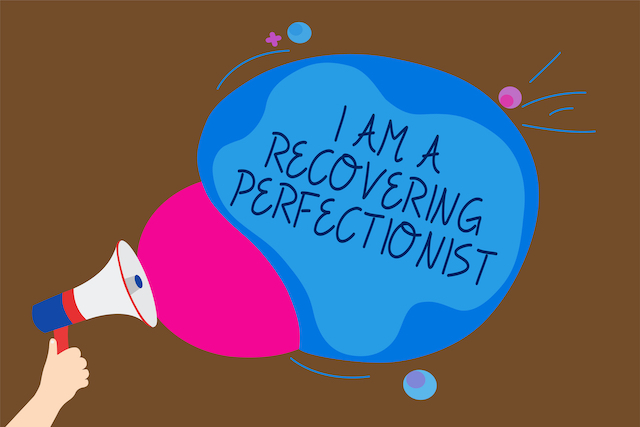
    My name is Steffi, and I am a recovering perfectionist. This might come as a surprise to those who know me because I don´t fit the stereotype. The inside of my bag is as messy as my hair, and I always give off the impression that I left the house five minutes too late (which is usually true). My wardrobe is not color-coordinated, and I haven’t organized a flawless birthday party yet.

    It also goes against how I have always seen myself. My greatest life skill is my ability to freestyle—to think on my feet and go with the flow. Because it goes against everything I believed about myself, it took me a long time to recognize and accept my perfectionism.

    And yet, in the areas that I truly care about, I hold myself to the highest standards. I become rigid and controlling. I feel no joy or flow, just a crippling pressure to be perfect.

    In my work, I am always analyzing where I need to do better. I constantly wonder whether I am a good enough partner, friend, and family member (and the answer is usually no). And I really want to live a sustainable life and feel guilty when I am not meeting my own standards.

    Even in the areas where I seem to have embraced my own messiness, I kind of wish it was different. I judge the inside of my bag and my mediocre event planning skills. I feel judgment about all the parts of my life that don´t feel perfectly put together.

    To my great frustration, my perfectionism has the opposite of the desired effect: I become worse at what I do. I am no longer able to be flexible, experimental, and curious. I notice that when my perfectionist tendencies are at their strongest, my creativity doesn’t flow, and I can’t show up in my relationships the way I want to.

    When my perfectionism feels extra strong, I self-sabotage by just not showing up at all. I choose the disappointment of what could have been over the potential pain of being confronted with my own shortcomings.

    The difference between healthy self-reflection and perfectionism feels very clear to me. When my perfectionist tendencies show up, my body becomes tense, my breathing shallow, and my thoughts scattered. I want to immediately go and fix things and drop whatever else I was doing in that moment.

    Perfectionism can be seen as a positive force for improvement and progress, but it does not come from a positive place. It is a fear-based approach, and underneath it lies a fear that if we are not perfect at what we set out to do, we are not good enough. And because we set the standards impossibly high for ourselves, we will probably not live up to them.

    Underneath it lies a fear of criticism, not just from others but mostly from ourselves. When someone finds fault in what we do, that is the confirmation of what we feared all along: that we simply are not good enough at what we care about the most.

    While, for some people, perfectionism brings them great success in their career, it often comes with a high cost. It can lead to frustration, exhaustion, and burnout. The intense pressure we put on ourselves can rob us of our joy and peace.

    When the pressure gets really intense, it can even lead to procrastination. As we are convinced that we can never live up to the standards we put on ourselves, we stop trying altogether. This way, we avoid criticism from ourselves and others, but it also robs us of the chance of achieving something meaningful.

    Perfectionism is, in essence, the fear of not being good enough. We believe that if only we are perfect in that area, we will finally be worthy of good things: a successful career, money, love from other people, or health and well-being. We subconsciously believe that by giving it our all, we can protect ourselves and our loved ones from the pain of feeling that we are falling short.

    The problem is that, eventually, we do fall short. Because perfectionism means we have set standards for ourselves that we can´t always fulfill. Life and other people and their opinions are simply not always within our control.

    The irony is that perfectionism not only can’t stop us from falling short, but it can also encourage it. Oftentimes, we become so critical of ourselves that we don´t even try, or when we do, it stops us from fully showing up.

    While my perfectionism pops up from time to time, I now know how to recognize it and stop myself from spiraling. I focus on calming my mind and body and making space for the joy and messiness of life. If you recognize this feeling of your perfectionism running the show, here are some things you can do.

    1. Learn to recognize your own critical voice.

    What are the areas of life that you feel most protective of? What are the fears and doubts that come up when you think about those areas of life? What do you believe it says about you when you don´t live up to your standards?

    You can even go back and see if you can remember when you first heard that critical voice. Does it sound like your own, or like the voice of a teacher, parent, or someone else you know?

    Reflecting on what your critical voice sounds like and becoming familiar with it will give you insight into where it comes from. It also helps you recognize your perfectionism when it comes up in your day-to-day life.

    2. When your perfectionism shows up, pause and take a deep breath.

    This might feel counterintuitive, as your perfectionism probably wants to propel you into action. It can be very tempting to follow the voice and fix what you feel needs fixing. But this only supports your perfectionism.

    Focusing on your breath gets you out of your head and your critical thoughts, even if it is just for a moment. It then gives you a choice: Do you want to act from a place of fear or move forward with more kindness toward yourself?

    3. Notice the sensations in your body and make loving space for them.

    When you have taken a moment to breathe, see if you can notice your physical sensations.

    Perfectionism means your nervous system feels activated, so where do you notice that in your body? Where do you feel tension or contraction?

    Give yourself the space to really experience what you are feeling. It does not need to go away or be any different. Make loving space for your experience. Just breathe and feel.

    As you breathe into the tension, you might feel emotions coming up. Just let them flow. With some loving attention, you will probably feel the tension dissolve, even if it is just a little.

    Your perfectionism is a form of self-protection. It is there to keep you safe from pain, disappointment, and rejection. By giving the experience your gentle care, you are giving it the opposite from the criticism it usually receives.

    4. Implement a calming practice.

    Perfectionism is fear-based, which means you are no longer looking at your situation from a neutral perspective. Calming your nervous system helps you open up to a new perspective, as your mind feels calmer when your body is relaxed.

    It is really helpful to find out what feels calming to you. It could be humming, taking deep breaths, practicing gentle movement, or looking at the clouds. For me personally, it is walking barefoot, feeling soft fabrics around my body, and hearing the sound of the ocean.

    Finding your own calm resources means you will always be able to access them. Over time, this will help you feel triggered for shorter periods of time, and it will be less intense.

    5. Allow yourself to be a little messy.

    Make the conscious choice to be a little messy in the areas that you feel most perfectionist about. Life is a little messy, and so are we. When you choose your messy moments, you become more equipped to handle them when they inevitably happen.

    Now, I am not saying “let everything go and be messy.” Instead, I encourage you to choose flexibility where before you felt rigid. It is like you are gently stretching your resilience for messiness.

    That could mean leaving the laundry for the next day, buying a birthday cake rather than making one, or allowing your unfinished art projects to be seen by your loved ones. Maybe it means giving yourself a day to eat unhealthy food, starting a new hobby that you have no talent for, or freestyling a presentation at work.

    6. Connect with your joy.

    Perfectionism and fear are the opposites of joy. Finding a little bit of joy in the areas you feel perfectionist about changes the narrative that you have about those areas. It can be incredibly liberating to invite in joy where you previously just felt pressure.

    So, whether your source of pressure is parenting, cooking, cleaning, your work, or all of the above, see where you can be a little creative. Try out a new recipe, make cleaning more fun with music, or go crazy with the decorations at the event you are organizing. Do a course that you enjoy, give yourself space to experiment at work, or take your kids to a theme park that you love.

  • How to Embrace the Glorious Mess of Everyday Life

    How to Embrace the Glorious Mess of Everyday Life

    “Embrace the glorious mess that you are.” ~Elizabeth Gilbert

    Let’s begin with a simple fact: life is inherently messy. Despite our best efforts to organize, control, and perfect, life has a way of surprising us and tossing our neatly folded plans into disarray. I used to think that if I worked hard enough, if I was good enough, if I did everything right, I could keep the chaos at bay. But life, as it turns out, doesn’t work that way.

    My kitchen, for instance, is a testament to the beautiful chaos of daily living. There are dishes in the sink, crumbs on the counter, and perpetually sticky spots on the floor from toddler and puppy splashes.

    For the longest time, I let these imperfections bother me, believing they were reflections of my failure to maintain control. A sign I was falling short as a mother, a wife, a homeowner, a professional person, an adult. Then one day, I was relieved by a revelation. This mess is not a sign of failure but of life being lived. The chaos is evidence that I am showing up, day after day, doing my best, and this is more than enough.

    The Beauty of Showing Up

    Showing up, as it turns out, is half the battle. We often get so caught up in the pursuit of perfection that we forget the importance of simply being present.

    I have learned that life isn’t a quest for perfection, but a journey of embracing the mess and the inevitable chaos. True beauty lies in finding grace in the everyday moments, those uncelebrated instances that may never make it to Instagram but form the very fabric of our existence.

    For me, this realization came during a particularly difficult period in my life. I was dealing with a career transition, an injury that stopped me from participating in my beloved outlet—running, family issues, and a general sense of being utterly overwhelmed.

    I felt like I was drowning in a sea of responsibilities, unable to keep my head above water. Then, one day, a wise friend gave me a piece of advice that changed everything: “Just show up,” she said. “Show up and do your best. That’s all you can do.”

    Lessons from the Mess

    Embrace Imperfection

    We live in a world that glorifies perfection, but the truth is, perfection is an illusion. Embrace your imperfections, your mistakes, and your failures. They are part of your story and make you who you are.

    The Japanese concept of wabi-sabi, which finds beauty in imperfection, inspires me to accept my flaws and see them as unique marks of my journey. A cracked bowl is repaired with gold and revered for the richness of the story and life it represents. Its imperfections set it apart in beauty, just as yours do.

    Find Beauty in the Ordinary

    Life is made up of small, ordinary moments. Find beauty in these moments, whether it’s the warming way light filters through your kitchen window in the morning or the delightful screech of your child’s laughter. This is what matters.

    One of my most cherished memories is of a simple evening spent baking cookies with my two-year-old son. Flour was everywhere, the cookies were slightly burnt, and my shirt was blotched with butter, but when I let go of my ideal of cleanliness and order, I tapped into a priceless and memorable joy.

    Be Kind to Yourself

    We are often our own harshest critics. Practice self-compassion and be kind to yourself. Acknowledge your efforts and give yourself credit for showing up, even when things are difficult.

    During this tough period, I started a habit of writing myself small notes of encouragement: “You can handle this. You are a good mom. A caring therapist. A worthy person.” It felt awkward at first, but over time, it became a powerful tool for self-kindness.

    Let Go of Control

    Trying to control everything is exhausting and ultimately futile. Let go of the need to control and learn to go with the flow. Trust that things will work out, even if it’s not in the way you expected.

    I used to plan every detail of family vacations, but the most memorable trips were the spontaneous ones, where we let go, embraced the adventure, and followed our curiosities as they surfaced.

    Practical Tips for Embracing the Mess

    Practice Mindfulness

    Mindfulness involves being present in the moment and accepting it without judgment. When you find yourself overwhelmed by the chaos, take a few deep breaths and focus on the present moment. Notice the sights, sounds, and smells around you.

    I started a daily mindfulness practice, spending just two minutes each morning in quiet reflection. That’s right—two! That’s all I can manage before I hear “Mommy, Mommy,” but it makes a marked difference in my ability to be present and receptive. This simple act has transformed how I approach my day.

    Set Realistic Expectations

    It’s easy to get caught up in unrealistic expectations, both for yourself and for others. Set realistic goals and be flexible when things don’t go as planned.

    I learned this lesson the hard way when I tried to juggle my counseling practice, family responsibilities, and my new exercise and rehab routine. It was only when I scaled back, created a list of true priorities, and focused on one meaningful task at a time that I found a sustainable balance.

    Celebrate Small Victories

    Acknowledge and celebrate your achievements, no matter how small they may seem. Every step forward is progress, and it’s important to recognize and appreciate your efforts.

    My husband and I have created a gratitude practice at the end of the day where we share even the smallest victories, like finishing a task or having a good conversation. It helps us rise above the inevitable frustrations and disappointments of the day and reminds us of our blessings and progress.

    Learn to Say No

    It’s okay to say no to things that don’t serve you or that you don’t have the capacity for. Prioritize your well-being and focus on what truly matters to you. I used to say yes to every request, stretching myself thin. Learning to say no was liberating and allowed me to invest my energy in what truly mattered.

    Moving Forward with Grace

    As I stand in my kitchen, surrounded by the beautiful chaos of daily life, I am reminded of the profound lessons that come from embracing the mess. The crumbs on the counter and the sticky spots on the floor are not symbols of failure but of life being fully lived. They show that I am present, day after day, doing my best.

    Life’s messiness is where we find our true selves—where we learn to embrace imperfection, find beauty in the ordinary, and show kindness to ourselves. It’s where we let go of control and learn to go with the flow, trusting that things will work out, even if it’s not in the way we expected.

    Embracing change and the chaos that comes with it has taught me that the most beautiful moments often arise from the most unexpected places. It has shown me that resilience, adaptability, and strength are born from facing our fears and stepping into the unknown.

    Recently, a wise friend gifted me a fridge magnet that reads, “A clean house is a sign of a wasted life.” There was a time when I might have felt defeated or even insulted by this message. Instead, I now see it as a gentle reminder to exhale and accept myself and my messy life as they are—worthy, unique, and filled with rich lessons and avenues for growth.

    If you find yourself struggling with the messiness of life, I encourage you to look for the grace in the chaos. Embrace the imperfections, show up, and do your best. Remember that you are enough, just as you are. Life doesn’t have to be perfect to be beautiful.

    So, the next time you find yourself overwhelmed by the crumbs on the counter or the sticky spots on the floor, take a moment to breathe and appreciate the life being lived in those messy, imperfect spaces. Show up, do your best, and trust that this is more than enough.

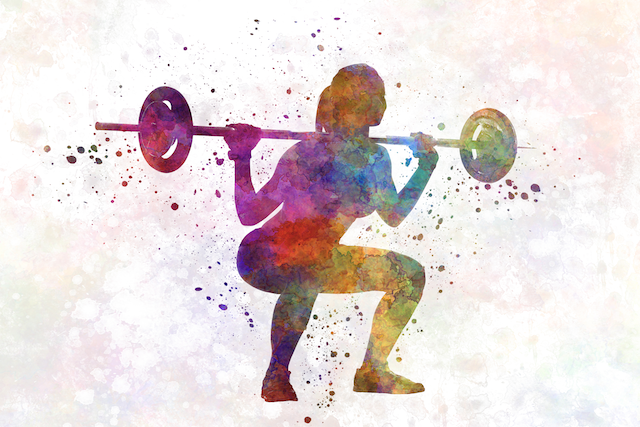
  • How a Barbell Helped Me Confront the Harsh Voice Inside my Head

    How a Barbell Helped Me Confront the Harsh Voice Inside my Head

    “The greatest mistake you can make in life is to be continually fearing you will make one.” ~Elbert Hubbard

    I’m breathing fast; my heart rate is off the scale. I close my eyes and try to fill my lungs with air. My pulse starts slowing down.

    Still forty seconds of rest left, my timekeeper shows. A single drop of sweat is running down my back, tickling me. I open my eyes again and drink a sip of lukewarm water, then I get ready for the next series.

    Six down, four to go. This is a good day, I think while watching the seconds pass.

    They called me gifted when I was a kid, but it often felt more like a curse because I never believed a single good word people said about me. It was imposter syndrome at its finest, because it was rooted in me since childhood. 

    I didn’t just get good grades in primary school; I got straight A’s. I remember my English teacher telling my mom that I was the daughter everyone dreamed to have. Mom shrugged it off and answered that that was not the case.

    In a way, I’m grateful that my parents were never particularly impressed by my performances. Otherwise, they would have probably pushed me until I broke down, or inflated my ego and made matters worse. Instead, they were just perplexed by a kid that seemed to effortlessly excel.

    And that was what confused me. Even at seven years old, it was clear to me that I did not need to put in so much effort to reach those accomplishments.

    I was critical toward my own schoolwork. Sometimes, I could spot imperfections in the assignments I turned in, but the teachers would either not notice or give me the highest possible grade all the same, because the work was already off the scale with respect to the rest of the class. I started to feel like a fraud, and any time I tried to point out that I wasn’t that good, my words were mistaken for modesty, or even worse, humble brag.

    In a sense, I was right: the game was rigged. I knew nothing about the subtleties of the school grading system. To me, an A was not a judgement of the work I had done compared to my classmates, or to the average level of someone my age.

    To me, an A just meant perfect, and I knew that wasn’t me. That made me grow wary of the compliments and trophies. I felt like they were not demanding enough of me.

    On the other hand, an ever-growing fear was starting to quench my thirst for knowledge. When your entire personality is based on a vague ability to give the correct answer to random questions, you start to dread the day you’ll be asked a question you don’t know the answer to.

    But see, this is a lose-lose situation. Because every time I managed to stand out without putting in much effort, I just thought the assignment was too simple to deserve such praise. And every time it wasn’t, and I really needed to do my best and then some, I started to think that I couldn’t be as gifted as they said, because otherwise that would not have been so hard.

    I know that my words sound pretentious to most. I can only imagine how hideous I sound to all the people who spent their afternoons studying as kids, and their families who had to pay for tutoring and extra help, only for their kids to barely reach a passing grade. The achievements I’m dismissing are the ones they so intensely yearned for.

    My classmates never believed me when I told them that I admired them as much as they admired me. That they were better than me in so many things. And they really were.

    To complete the painful stereotype of the teacher’s pet, I was a shy, goofy, chubby kid. I had few friends and even fewer hobbies. While I was home reading, expanding my vocabulary, and translating foreign song lyrics to kill the time and to appease my curiosity, they played football, took part in summer camps, and went out for dinner and on holidays with their families.

    Later on, they learned to drive a car and french kiss, while I felt even clumsier and avoided parties. But no one put grades on those life skills, so they kept being envious of me for the only thing I was good at.

    Then came the university, and the only thing I was good at got hard. Turns out you’re not that gifted after all, the voice in my head gloated. See, we were right to doubt it from the start.

    I managed to get my physics degree, but it cost me every single ounce of the scarce supply of self-confidence I’d put together during all those years. So, there I was, feeling even worse: studying was all I was able to do, and yet I had struggled with calculus. Definitely not the daughter anyone would want, Mrs. English teacher.

    That was the idea I had of myself when I first stepped foot in my boyfriend’s home gym at twenty-eight. An imposter, with the constant fear of getting busted. A perfectionist, with no confidence in her body and mind.

    I’d never lifted a single weight before in my life, and I would never even have considered trying, if it weren’t for that boy who seemed so determined to believe in me. We’d been together for a couple months. I didn’t want him to give up his daily workouts, but I also wanted to spend every waking minute with him, so the best arrangement was for me to find something to do in that scary place.

    Flash-forward to a few months later, and weightlifting had already become my drug of election. I had unsuccessfully tried meditation before, and this was the closest thing I could find. The repetitions, the short recovery intervals between sets, the regularity and simple logic of it all were like fresh water for my brain, abused by years of harsh thoughts and self-doubt that had left their mark like a burning scar.

    There’s no thinking when you’re under the barbell: you need to focus on the movements, the range, the technique, and the strain. To be able to assess the right amount of discomfort, the effort that leads to growth and not to damage. You need to be in the present moment completely.

    Leg day was a whole different story. While all the other training sessions seemed to be just fine, this one I could not handle.

    Glutes and quads are big muscles, and they need a heavier weight to be properly stimulated. The whole body has to engage in the movement, and when you reach the bottom of your squat, just for a moment, you feel you’re not sure you’ll be able to get up again. You have to gather all your strength and focus on your breathing in order to bring that weight back up.

    You have to trust your body to do it, and trust your spotter or rack to support you if you can’t. You have to come to terms with the feeling of your legs burning and your heart racing, and remind yourself that the air is there, that you’re not going to asphyxiate. At least, that’s what I felt.

    I protested every time my boyfriend added another plate on my barbell.

    “It’s too heavy. I won’t be able to lift it up.”

    “You will. I’m here to help you.”

    “What if I can’t lift it up?”

    “Then don’t. Just let it fall to the ground.”

    “But what’s the point in trying if I already know I can’t do that?”

    “Don’t you get it? You’re supposed to fail. That’s how your body learns. That’s how you’ll be able to do one more rep next time.”

    I had been terrified of failing all my life. But now, someone was telling me that he would love me all the same if I let go. That it was okay to let go.

    Even if it was only a stupid iron bar on my shoulders, it felt like all the weight I’d always carried with me. The weight of perfection, of praises I never thought I deserved, of achievements I’d never been proud of. I could just let it fall to the ground.

    I cried. A lot. I cried during sets; I cried in between sets.

    I cried because I was afraid to fall and be crushed under the weight of the barbell—although my boyfriend was there to help me all the time, and the weighted barbell was not even heavy enough to harm me. I cried because I felt there was no air to breathe—although he had taught me to move slowly, to pause every time I needed to. I cried because I felt weak and miserable, and at some point, I cried just because I felt like crying.

    He was worried about me.

    “If it makes you feel so bad, you can just give it up.”

    No way.

    I had never been one to push through hardships, because to me it was all about being good straight away or not good enough, but this was something I didn’t want to lose. I liked how I felt after completing the workout. I liked how I felt when the weight I had not been able to lift two weeks before suddenly became lighter, and I could add another small plate.

    It wasn’t even about losing weight or being toned or impressing my boyfriend—it was about that feeling I had been chasing all my life: the feeling of not making it. It was the thing I had always feared the most, and now I could look it straight in the eyes, and finally find out that nothing happens if you fail.

    Just like a kid learning to walk, I needed to let the barbell fall again and again and again and see that the world wouldn’t stop spinning on its axis if I failed. That I had permission to try again next time, and improve. Most of all, I needed to see that he would still want to love me, even when I was messy and tearful, even when I was weak.

    “Have you seen it? I made it!”

    “Why are you so surprised? Didn’t you expect to grow stronger?”

    No, I didn’t. I wasn’t familiar with progress and improvement, just with failure and shame, as opposed to instant success I never truly enjoyed.

    And slowly, slowly, the voice in my head started to sound different. A feeble light began to filter through the cracks, among all the petty and cruel things I whispered to myself. A light that sounded just like him, that rooted for me instead of working against me.

    For the first time in my life, I was actually proud of me—and it had nothing to do with how much I could lift, or how much weight I’d lost, or how much better I looked. It had never had nothing to do with results and praises and accomplishments, after all. It had to do with patience and perseverance, with the confidence to suck it up and show up, even though it scared me, every single week.

    And to know when not to show up and give my body the rest it needed, without feeling like a loser. To learn that I could skip a workout if I was ill, or tired, or too busy, and the barbell would still be there for me the following week. To learn to cheer myself up, instead of bringing myself down.

    To do it, even though I was not strong enough, until I finally was.

    Three years later, I married that boy—and the topper on our wedding cake had the shape of two little guys under a barbell.

  • A Mindfulness Technique to Overcome Perfectionism and Step into Self-Love

    A Mindfulness Technique to Overcome Perfectionism and Step into Self-Love

    “When we allow ourselves to be vulnerable, we are not pretending, we are not hiding—we are simply present with whatever is going on inside us. Ironically, it is this very feeling of authenticity that draws people to us, not the brittle effort of perfectionism.” ~Maureen Cooper

    Most of my life I have been really good at following the have-tos and oughts of perfectionism.

    I have to keep the house clean. What will the company think?

    I ought to be pleasant and pleasing. Stop being stubborn. Worse yet, stop being angry.

    I should not have told that long story to my coworker. They looked bored. Oh, yes, they were probably bored.

    Doing what I thought other people wanted and doing it in just the right way was my attempt to use perfectionism to belong.

    We all want to belong, and some of us, myself included, learned that belonging comes with strings attached. If I could control those “strings,” then I wouldn’t have to feel rejected and judged. Perfectionism was a way of exercising that control.

    The intense need to meet my too high expectations filtered into every area of my life: relationships, academics, body image.

    I remember from an early age becoming obsessed with getting straight A’s in school. Anything less than a 100% was not good enough. Anything below an A- was a moral failing.

    I worked out until my BMI was low enough to still be considered “healthy” because I wanted to be pretty enough for other people.

    All the perfectionism in my life was a way to protect myself against the inevitability of being judged. Of being seen as someone less than, flawed, failing—human.

    And if I wasn’t judged, then I might be liked? Accepted? Maybe even loved? Even if I didn’t like, accept, or love myself.

    Perfectionism, at its core, is a drive toward accomplishment, characterized by an internal pressure to avoid harsh criticism and failure.

    The problem with this way of thinking is that you can’t control other people. No matter how perfect you try to be, someone will judge you. You will fail. No matter how hard you try, you won’t be able to maintain the facade of perfection.

    Perfectionism is the armor I have worn through my life to protect myself from what is underneath the judgment and criticism. Perfectionism protects me from the fear that I am not good enough. If I am not good enough, then I am not worthy of belonging.

    I desperately wanted to be loved, but in trying, I stopped loving myself.

    From small details, like what to wear to a party, to big problems, like the realities (and conflicts) of an authentic and healthy relationship, my high expectations made it impossible for me to relax into who I am.

    I was constantly beating myself up. I didn’t wear the right outfit. I look too dressed up/not dressed up enough.

    I was constantly biting my tongue, hesitating to share bits of myself. What will he think? That part of my personality is too weird, too different, too messy to be valued?

    My life was a constant struggle to meet unattainable ideals. The maintenance of which was stressful, all consuming, and riddled with anxiety. Furthermore, no matter how hard I tried, I still didn’t feel like I belonged.

    It was not until I decided that my relationship to myself was the problem that I started to see changes.

    If I wanted to feel connected to other people, belong to a community, a friendship, a partnership, I had to let go of being perfect.

    I had to let people see me authentically, and I had to be willing to let go of the too high expectations that were keeping me from being myself.

    To help me let go of perfectionism, I started practicing the art of mindful self-compassion.

    The tenants of mindful self-compassion are based off of the work of mindfulness teacher Tara Brach. To explain mindful self-compassion, she coined the term RAIN.

    RAIN stands for Recognize, Allow, Investigate, and Nurture.
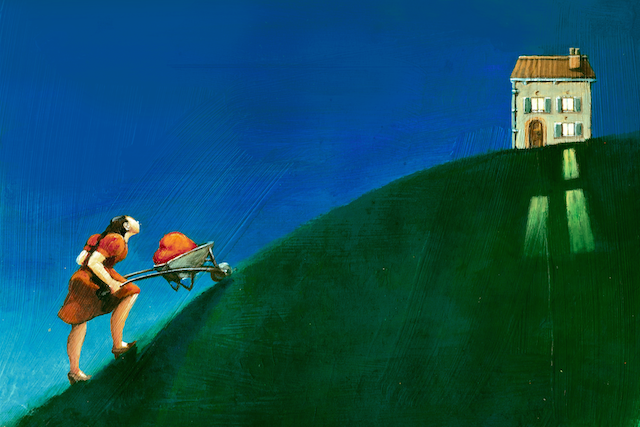
    Recognize and allow your perfectionism to be what it is.

    Based on RAIN, the first two steps of mindful self-compassion are the basis of any mindfulness practice. Mindfulness is the practice of bringing non-judgmental awareness to your present moment experience.

    In other words, you first recognize or bring awareness to your lived experience in the now and then you allow, without judgment, that experience of thoughts and feelings to flow through you.

    When it comes to perfectionism, this means recognizing the need to worry over, hustle through, force, or avoid a particular way of being. It also means allowing those same feelings and thoughts to exist without trying to change them and without trying to act on them.

    For example, if I notice I am feeling the need to write and rewrite, edit and re-edit this essay because isn’t “good enough,” then instead of continuing on the track of perfectionist behavior, I can recognize that I am feeling worried and allow those feelings to exist without doing anything to change them.

    Investigate the deeper why.

    The next step of the RAIN mindfulness technique is investigate. Investigating and the last step of nurture are the two aspects of this technique that have helped me see the biggest changes in my own habit of perfectionism.

    Investigating means you dig a little deeper. You ask yourself, why are these feelings and thoughts here? What is actually at the heart of my need to control?

    Investigating requires you to be vulnerable with yourself. Are you worried about failing? Do you think that if you let go of control people won’t like you?

    In what ways are your perfectionist tendencies guarding your heart?

    If we go back to my writing example, the reason why I am trying to perfect the outcome of this essay is because deep down I really, really want you, dear reader, to like it. If you like it, then that means that I am a “good” writer, and I so desperately want to be a good writer.

    By investigating my feelings around perfectionism, I get to the real reason for my actions, which is that I want to be accepted. I want to be liked. I want to belong.

    Which brings me to the last component of RAIN, nurture.
    Nurture the feelings and thoughts behind the perfectionism.

    The last step of RAIN, nurture, asks you to take all of your feelings and care for them. How can you give love to the person you are today who is worried about being good enough and worried about belonging?

    Maybe this looks like reaffirming you are good enough and that everyone feels like you feel right now from time to time.

    Maybe this looks like journaling about your feelings or talking it out with a good friend.

    Maybe this looks like giving yourself a hug, taking a warm shower, or doing some breath work, then going back to the task when you feel ready.

    Ultimately, nurturing what is underneath the perfectionism means giving yourself a bit of a break. You don’t have to do everything just the right way for it to be enough.

    For me, in the context of perfectionism related to publishing this essay, I would take a break, go for a walk, and remind myself that 80% is good enough.

    Overall, RAIN is an incredible mindfulness technique for letting go of perfectionism.

    By using this technique, perfectionism is less at the forefront of my life. RAIN helps me let go of the big feelings and thoughts associated with perfectionism and tend to the underlying beliefs and assumptions I have about myself that contribute to it.

    Ultimately, I have learned that I don’t have to be perfect to be loved and that being imperfect still makes me worthy of belonging. The RAIN technique helps me see that I am good enough for others and, most importantly, I am good enough for myself.

  • How I’m Overcoming Perfectionism and Why I’m No Longer Scared to Fail

    How I’m Overcoming Perfectionism and Why I’m No Longer Scared to Fail

    “Perfectionism is a self-destructive belief system. It’s a way of thinking that says: ‘If I look perfect, live perfect, and work perfect, I can avoid or minimize criticism and blame.’” ~Brené Brown

    I struggled with trying new things in my past. I learned growing up that failure was bad. I used to be a gifted child, slightly ahead of my peers. As I got older, everything went downhill.

    Whenever I tried out a new activity, I would quit if I wasn’t instantly perfect at it. If there was the slightest imperfection, I would get extremely frustrated and upset. I would obsess over the same mistakes in my past over and over.

    This made me procrastinate and avoid trying new things, fearing failure. I would simply tell my friends “I’m not interested” when they tried to get me to grow outside my comfort zone.

    I tried out various passion projects, solely focused on the results. Sketching was a fun hobby of mine, but I was slowly losing steam. “All the drawings I’m doing aren’t good enough! Argh!”

    I attempted public speaking competitions. “I didn’t get any prize? This is such a waste.”

    And even stopped having an interest in sports when I was dominated in a match by my friends.

    I didn’t know it at that time, but this was a clear case of unhealthy perfectionism.

    Growing up, I thought I was good at everything. I embodied this identity with pride. But when I did something that contradicted this identity, like failing at something, I did everything I could to not feel that pain again. Even if it meant I didn’t pursue my passions and feared failure my whole life.

    Now that I’ve grown internally more, I’ve realized that perfectionism is really about control—trying to control how people see you. Perfectionism is, at its core, about earning approval and acceptance.

    “Perfectionism isn’t striving to be our best or working towards excellence. Healthy striving is internally driven, perfectionism is externally driven with a simple, all-consuming question: ‘What will people think of me?’” ~Brené Brown

    Studies show that perfectionism actually hampers the path to success and leads to anxiety and depression. Achieving mastery is fueled by curiosity and viewing failures as opportunities for learning. Perfectionism kills curiosity.

    When I was struggling to reach my own high standards, I learned that it’s better to move on and figure out how to thoughtfully bridge the gap between where I was and where I wanted to be over time, rather than spinning my wheels and being stuck in place in an effort to get everything perfect today.

    Curing my unhealthy perfectionism and letting in authenticity, I believe, mainly came down to grace.

    I gave myself the acceptance and grace to be where I was that day, and to enjoy the process rather than the result. I allowed myself to make mistakes, be curious, and experiment. This was a major turning point in my life. I didn’t want to live with fear anymore, so I vowed to live authentically and be free.

    I stopped putting pressure on myself and let my childlike curiosity out. I became adventurous and started trying new things. Every time I did something outside my comfort zone (and a little scary), I wanted to jump with excitement. I felt truly alive and present.

    This is what it means to be successful—growing from failures and enjoying the journey instead of trying to do everything perfectly.

    I practiced mindfulness, self-love, and gratitude to further improve my mental state. I realized that I badly craved approval from the outside world, even though I used to deny it and have this “I don’t care what others think of me” attitude. I used to be wary of how others would judge me, so I focused on developing my relationship with myself and loving myself exactly as I was.

    But of course, the change wasn’t immediate, and it took me some time to fully cure my perfectionism. I started slowly changing my thought patterns by speaking kindly to myself, as if I was my younger self. I imagined myself as a young child who just needed love and acceptance. I forgave myself when I made mistakes, let go of the past, and moved on.

    I encouraged myself to keep improving and I continued to work on my passion projects—showing up every day. Now, it has led me here, where I can share my guidance and love with those who need it. I am more fulfilled and happier than ever.

    And I now know that failing doesn’t mean I’m a failure. It means I’m someone who’s brave enough to try new things, and that’s the identity I now embody with pride.

  • How to Show Up When Nothing About Your Life Is Perfect

    How to Show Up When Nothing About Your Life Is Perfect

    “I saw that you were perfect, and so I loved you. Then I saw that you were not perfect, and I loved you even more.” ~Angelita Lim

    I’m not a perfect parent. I’m not a perfect partner. I’m not in perfect health. I’m not a perfect friend. And I’m far from perfect with my finances.

    Hell, nothing about my life is perfect. And guess what? I’ll never be able to attain perfection in those areas. And I’m sorry to say it, but neither will you.

    Don’t be fooled by calling yourself a perfectionist. Perfection as a destination is what causes procrastination. And for most of us, it’s nothing more than an excuse to avoid putting in the work, because why try if we don’t have the skills to be perfect?

    Unfortunately, this belief that we can attain perfection is bullshit. It’s an idea adopted from the school system. Grades were meaningless because they had nothing to do with effort. They were a simple way of ticking boxes for the masses.

    Conversely, a meaningful life comes down to your effort when no one is watching.

    What did you do today? Did you show up? Did you make an effort to be a better parent, a better partner, be in better health, a better friend, and better your finances?

    No effort = No progress = No reward.

    We can’t put off living our lives hoping that someday these areas will magically be perfect.

    Yesterday is dead and gone. Tomorrow is nothing more than a dream. So focus on today.

    You’re living right now. This is your chance to be better.

    Want to be a better parent? Want to be a better partner? Want better health? Want to be a better friend? Want better finances?

    Start by putting your phone down and giving each area your undivided presence.

    Be with your kids. Be with your partner. Be with your health. Be with your friends. Be conscious with your money.

    Perfection is horribly discouraging because who the hell has time for their ideal two-hour morning routine? I sure as hell don’t. With a kid who isn’t in daycare, running a business, and paying bills, many days feel like I’m flying by the seat of my pants.

    And that’s also why many of us fail to progress on what’s meaningful. If you get stuck in an all-or-nothing mentality, it almost always means you’re doing nothing.

    But suppose you did something radical and showed yourself empathy in these moments. In that case, you’ll change the entire trajectory of your life by simply showing up.

    Don’t have time to go to the gym? Don’t have time to do an at-home workout? Don’t have time to go for a walk? Don’t have time to do ten squats and a few pushups?

    Pick your kid up, throw on some Taylor Swift, and throw a dance party, you crazy fool.

    Change the scope of what you deem a win for the day.

    When you accept that perfection is impossible, you can get down to the actual work of making improvements because you’ve given yourself a way to show up every damn day.

    Every action you take (or don’t take) is a vote toward the person you’re becoming. Don’t discount the truth that small actions create colossal change.

    Think of a single vote: In a democracy, a single vote can be the deciding factor in an election, which can have significant consequences for the direction of a country.

    Think of a small spark: A small spark can ignite a large fire, which can have severe consequences for people and the environment.

    Think of a tiny seed: A tiny seed can grow into a large plant, providing food, oxygen, and habitat for various living things.

    Think of a simple idea: A simple idea can lead to development of a new technology or product that changes how people live and work.

    Think of a single word: One word or phrase can spark a movement, change public opinion, or inspire others to take action.

    Dedicate today to taking one small action on something that matters to you, even if it’s just five minutes and feels insignificant.

    This small, simple, single step you’ve been putting off could be the catalyst for the explosion that propels you forward and transforms your life (and the world) for the better.

    You got this.

    You deserve a better life.

  • How Embracing a Good Enough Life Gave Me the Life of My Dreams

    How Embracing a Good Enough Life Gave Me the Life of My Dreams

    Acknowledging the good that you already have in your life is the foundation for all abundance.” ~Eckart Tolle

    It was perfect. Well, almost.

    I was doing the work I love, with someone I love, my two boys were thriving, and we seemed to finally be on the road to retirement. What could possibly be wrong with this picture?

    A lot, apparently.

    I was waking up worried and unsatisfied. Always feeling like life was missing something, like I was missing something, not doing enough, asking: How can my business be better? What will my kids do next year? Is my partner gaining weight? Did I run yesterday?

    Anxiety crept into my mind and contracted my body before I had a chance to get ahead of it. It was an unease that something just wasn’t quite right. And if it was, then it wouldn’t be for long.

    I knew enough about neuroscience and anxiety to know what was happening.

    Negative thoughts are a protective pattern that come from scanning our environment for potential threats.

    Our ancestors were wired this way to survive, thankfully, and we are probably in the first generation that can even talk about the word “abundance,” at least in this part of the world. The intergenerational trauma of feeling unsafe is in the recent past and runs deep in our DNA, especially for women.

    But even armed with all the knowledge of trauma and all the best practices of breathing, meditation, and yoga, there was still a missing link.

    My worries seemed trivial given the war that was raging in the world. It seemed self-indulgent to want more, to even consider that this was not enough. Even when it felt enough, it was because all the factors were lining up in that moment, but it felt precarious, like a house of cards—even though I knew it wasn’t.

    All the self-help books promised I could “reach for my dreams” and “have my best life ever” if I only changed my habits and my mindset and lived like I thought all the people around me were.

    In fact, I was so busy working on my life that I felt exhausted and still felt like I wasn’t doing or giving enough. Even when deciding what charity to donate to, to help those in need, I felt like I had to choose the “right” one!

    It was through my work with people in chronic pain that one day something shifted. I was teaching about the difference between acceptance and giving up in the search for a cure, and I said something like “It’s not so much what you are doing but how you are doing it.”

    Doing something from a place of pressure and intensity, with a worry about making a mistake or not getting it right, creates fear. Fear creates more fear in the end, and it creates pain.

    My inner perfectionist gasped and took a step back. She was outed.

    Not only did I see how my inner perfectionist had been running the show, I knew that if I wanted to negotiate with her, I was going to have to come from a different energy other than “getting this right.”

    She had helped me; she had worked so hard to stay on top of everything and got me through some tough times.

    She had guilted me when I felt like a bad mother, a bad friend, a less-than therapist, or a mediocre spouse and showed me all the ways I could be better. She even lent her expertise to my family, telling them how they should behave, what they should eat and not eat, and how they should conduct their lives.

    This was sometimes done directly, but she also worked coercively behind the scenes through people-pleasing, manipulation, and other passive-aggressive behaviors.

    She was based in fear and shame as a trauma response, learned early on in my childhood years, that told me my authentic self was clearly not good enough. So I employed her services to keep me safe, help me fit in at school, get good marks, and be an all around “good girl” on the outside. But the inner pressure of a perfectionist is unbearable and soon morphed into an eating disorder when life felt out of control.

    Many of us live in a nasty triangle that can be difficult to see and even more difficult to disrupt. It goes: shame-inner critic-perfection, and it balances itself precariously inside our mind and body leaving its imprint of “not good enough” to guide our lives.

    This is compounded by a culture that primes us to feel like we’re not okay and there is always something to buy, change, or fix, because it is not normal to just be okay.

    Even though my trauma happened decades ago, the vestiges remained. I could not quite relax into my life without something or someone, mostly myself, feeling “not quite good enough.” I also found this same core belief to be at the root of many if not all of my clients’ struggles with anxiety, depression, and chronic pain.

    It was the constant feeling of being here but wanting to be… somewhere or someone else. A knee-jerk resistance to life or an inability to truly sink into all life has to offer without finding fault or a hiccup somewhere. Or worse, thinking that I had to earn my worth by doing more and being more, and all without effort!

    Not. Good. Enough.

    Not good enough for what? For whom? This is an unanswerable question because it is a lie. But it is one thing to know that and another to let my inner perfectionist know I was safe now and she could take a backseat because, well, I’m good enough.

    I thought about the times I felt free and at peace.

    I thought about the people I knew whose lives had the biggest impact on me.

    I had a chat with my future self twenty years from now about the qualities she had, how she moved, and what she valued.

    And it came down to a word: simplicity.

    Here is where I had to tread carefully. My inner perfectionist would make finding simplicity very, very complicated and approach it with an all-in attitude, as she did everything: live in a tiny house, two chairs, two sets of cutlery, and a bed.

    No, there had to be another way, an easier way.

    It turns out, it was the easiest way possible: Embrace what is here now.

    What if everything was good enough, just as it is, in this moment? What if I was good enough, just as I am, in this moment? What if my body, my health, my relationships, all the ways I tried, were just good enough?

    It felt radical, revolutionary. It felt like I was disrupting all my programming about what it means to live a good life. It was not the energy of giving up or rationalizing that I didn’t deserve more and I should settle for less. It wasn’t even the energy of gratitude or appreciating what I have and how privileged I am.

    It was the opposite.

    Embracing my life as good enough busted the myth of inferiority and superiority that tells us some people are more or less worthy than others. It let me relax into the fact that we are all doing the best we can with what we know at that moment. If I was good enough, then others were too.

    It busted the myth of needing more and being more, because I didn’t have anything to prove to anyone. It also busted the myth that if I truly accepted my life as it is, I would just lie down on the couch and never get up. Again, the opposite happened.

    Energy was freed up for more of what I love, not what I should do. Worry and struggle were replaced with self-forgiveness.

    Embracing my life as good enough gave me the doorway I needed to a quality of life I couldn’t imagine.

    I realized I was good enough to show up just as I am.

    I realized I was good enough to set boundaries around what and who aligned with me.

    I realized I could write, speak, and create in a messy, fun, good enough way.

    I realized I was good enough to rest.

    I realized I was good enough to embrace my own wants, needs, and desires.

    I realized I was already good enough for pleasure right here and now in a million ways I couldn’t see before.

    I realized my life was not about being better, improved, fixed… it was about being who I am, and that was enough.

    I realized I could work less and make more money.

    I realized my body was a remarkable organism that was to be loved and held, not manipulated.

    I realized that every decision I made was right for me because it was good enough.

    I realized that struggle was never meant to be my life, but giving, loving, and contributing were.

    I realized I was already good enough to live a life of joy, comfort, and ease.

    One of the most beautiful parts of this is looking in my children’s eyes and knowing that they, too, are so perfectly good enough just as they are. They don’t need to prove their worth to anyone.

    Embracing my good enough life has allowed me to enter my life, just as I am, and has turned “good enough” into “how good can it get?” It gave me the safety I needed to “do what I can, with what I have, where I am” (Theodore Roosevelt).

    Can you imagine a world where everyone knew they were just good enough? Where we all lived life from a place of forgiveness, grace, and compassion for ourselves?

    What are you already good enough for that life is just waiting to give you?

  • How Perfectionism and Anxiety Made Me Sick and What I Wish I Knew Sooner

    How Perfectionism and Anxiety Made Me Sick and What I Wish I Knew Sooner

    “Perfectionism is the exhausting state of pretending to know it all and have it all together, all the time. I’d rather be a happy mess than an anxious stress case who’s always trying to hide my flaws and mistakes.” ~Lori Deschene 

    “That’s not how you do it!” I slammed the door as I headed outside, making sure my husband understood what an idiot he was. He’d made the appalling mistake of roasting potatoes for Thanksgiving instead of making stuffing.

    He was cooking while I studied, trying to make sure I got a semblance of a holiday. We lived away from our families, and I had exams coming up. I was on the verge of losing it most of the time—and he was walking on eggshells. Or roasted potatoes.

    I was in my first year of law school. Every student knows that if you look to your left and then to your right that one of those people won’t be there next year—they will have dropped out or failed. I was terrified of failing.

    Every morning, I had a pounding headache that no amount of painkillers touched. My shoulders sat permanently around my ears (try it, you’ll see what I mean). I had insomnia, was highly irritable, and often felt panicked. 

    My friendly barista made me a triple vanilla latte each morning at 7:00, and by 10:00, I was out of energy. I bought Red Bull by the case to get through the rest of the day, and in the evening, I’d switch to red wine. My digestive system was distressed to say the least.

    I was hustling so hard, trying to get it all right. And then, I got a C on my Torts midterm. And sobbed for three days.

    I know this must sound ridiculous. A big part of me thought it was. I beat myself up for being such a “drama queen” and not being able to move past it.

    But at the time it was devastating. My sense of self-worth was so inherently tied to my achievements that I felt like a giant failure.

    I didn’t tell anyone. I was too embarrassed. What would they think of someone who got that upset?

    I knew that I appeared to be highly functioning externally, and that was something. I had friends, I went out to dinner, I went to the gym, I walked on the beach. Internally, though, I was in turmoil.

    My husband encouraged me to go to the doctor. He could see how hard I was on myself and how it was impacting me. As I relayed my physical symptoms, she asked whether I was under much stress. I replied, “No, not really. Just the usual.”

    I didn’t know what to tell her. Partly because I’d lived much of my life this way and didn’t know it was anxiety, partly because I felt so out of control, partly because I was ashamed, partly because I assumed she’d only be able to help with the physical.

    And … part of me knew that saying it out loud would shatter the illusion of having it all together. 

    So, I went away with a diagnosis of irritable bowel syndrome. It wasn’t funny, but it makes me laugh now. My bowel was definitely irritable, but that irritability was nothing compared to what was going on in my head. It was a piece of the problem, but certainly not the whole problem.

    It wasn’t so long ago that I figured out I’d struggled with anxiety for a long time before I even knew what it was. Like many of us, I learned that if a feeling wasn’t “positive,” it wasn’t acceptable. So I stuffed down all the “negative” emotions we’re not supposed to have: fear, rage, jealousy, and sadness.

    Because I’m a highly sensitive person, I have a lot of big, deep feelings. A lot to shove down, or suppress, deny or project. I was good at this, and I looked down on people who expressed their feelings.

    I thought they must be needy. The truth is, I was scared of my feelings. And I didn’t know I had needs.

    Rather than daring to let either my feelings or needs show, I used perfectionism to make it seem like I had it all together. Perfectionism made me feel like an anxious mess. But I couldn’t admit that because it would be acknowledging a problem.

    That makes it hard to ask for help. It’s also exhausting. As Lori Deschene said in her quote at the beginning, “I’d rather be a happy mess than an anxious stress case always trying to hide my flaws and mistakes.”

    Life is hard enough without stressing about how we appear to everyone else. It’s just not worth it. When I allow myself to be fully human, I can laugh at myself, talk about my struggles, and show up in my imperfections. It makes life so much easier.

    Here are five things I wish I’d known earlier:

    1. Perfection is unattainable because it can’t be quantified.

    What is perfection anyway? Do we actually know? I don’t.

    It’s something I kept setting up for myself—an arbitrary standard I thought I was supposed to meet. But once I’d achieved something, I was already looking for the next thing.

    Where does it end? It doesn’t, and that’s the problem.

    2. No one looks back on their life and wishes they’d had worse relationships.

    This seems obvious, but it’s something I think about. I don’t know if I’ll ever completely untie my self-worth from my achievements, or find an amazing balance where I feel fulfilled yet not striving. Maybe? One can hope.

    I do know that when I’m on my deathbed, that’s not what’s going to matter. My people will matter. And I don’t want my striving or perfectionist tendencies to get in the way of those important relationships.

    3. Anxiety feels very real, and it’s just a feeling.

    If you’ve experienced anxiety you’ll know how awful it feels. For me, it’s a racing heart, shaking hands, flushed face, and a feeling of dread.

    It’s important to remind yourself to breathe. And to keep breathing. It will pass.

    Anxiety is fear, and fear can’t hurt you, as much as it can seem like it might.

    4. Anxiety is the stress response in action. It’s physiological and nothing to be ashamed of.

    Anxiety was my brain telling my body that it believed there was a dangerous situation. That’s it.

    While the fear of falling short is hardly a saber toothed tiger running toward you (as our cavemen ancestors had to worry about), my brain didn’t know the difference. And where’s the big stigma in that? To be clear, I believe there should be no stigma around mental health either, but I’m painfully aware that there is.

    Reminding myself there was no tiger, and thus no real danger, was useful.

    5. Imagining the worst in every situation isn’t as helpful as you’d think.

    Going straight to the worst-case scenario did seem helpful at the time. On some level, I believed if I could plan for the worst, I’d be prepared for it. But it can also create a lot of unnecessary anxiety about unlikely (even extremely unlikely) possibilities.

    For example:

    “If I get a C, I’m not going to make it through the first year. I’ll get kicked out. That would be a disaster. It also means I’m a failure. People might pity me. They will definitely think differently of me.”

    Helpful thoughts would have been:

    “If I get a C, that means … I got a C. Nothing more. Perhaps I could learn differently. Perhaps I could seek extra help. Or perhaps I could remember that I’m doing my best and that is enough.”

    Unravelling what fuels anxiety, learning to manage it differently, and being able to extend a lot of compassion to myself has been a journey. Wherever you’re at with yours, I hope something here makes a difference for you.

  • How I Overcame the Stress of Perfectionism by Learning to Play Again

    How I Overcame the Stress of Perfectionism by Learning to Play Again

    “What, then, is the right way of living? Life must be lived as play…” ~Plato

    I am a recovering perfectionist, and learning to play again saved me.

    Like many children, I remember playing a lot when I was younger and being filled with a sense of openness, curiosity, and joy toward life.

    I was fortunate to grow up in Oregon with a large extended family with a lot of cousins with whom I got to play regularly. We spent hours, playing hide-and-seek, climbing trees, drawing, and building forts.

    I also attended a wonderful public school that encouraged play. We had regular recess, and had all sorts of fun equipment like stilts, unicycles, monkey bars, and roller skates to play with. In class, our teachers did a lot of imaginative and artistic activities with us that connected academics with a sense of playfulness.

    I viewed every day as an exciting opportunity and remember thinking, “You just never know what is going to happen.” My natural state was to be present with myself, enjoying the process of play

    Unfortunately, my attitude began shifting from playfulness to perfectionism early on. Instead of being present and enjoying process, I started focusing on performance (mainly impressing people) and product (doing everything right). The more I did this, the less open, curious, and joyful I was.

    Instead, I grew anxious, critical, and discouraged.

    I first remember developing perfectionist tendencies when I was in elementary school and taking piano lessons. For some reason, I got the idea that I had to perform songs perfectly, or else I was a failure.

    Eventually I became so anxious, I would freeze up while playing in recitals. I started hating piano, which I once had loved, and eventually quit.

    My perfectionism spread into other areas of my life, too. In school, I pushed myself to get straight A’s, and if I earned anything less, I felt like a failure. I often missed out on the joy of learning because I was so worried about getting things right.

    My perfectionism also negatively impacted my relationship with myself. I believed I had to look perfect all the time. As a result, I often hated the way I looked, rather than learning to appreciate my own unique appearance and beauty. I also remembering turning play into exercise at this time of my life and using it to pursue the “perfect” body.

    Movement, which I loved when I was a child, began to feel exhausting and punishing.

    Perfectionism also hurt my relationships with other people. I felt like I had to be smooth and put together and that I always had to put everyone else’s needs above my own. Not surprisingly, I often felt unconfident, anxious, and exhausted around other people.

    At this time in my life, I believed that if I tried and worked hard enough, I could do everything right, look perfect, and make everyone happy.

    My perfectionism increased in young adulthood until eventually it became unsustainable. In my early thirties, I became the principal of a small, private middle school where I had taught for eight years. I loved the school and was devoted to it.

    In many ways, I was the ideal person to do the job. But I was also young and inexperienced, and I made some big mistakes early on. I also made some decisions that were good and reasonable decisions that, for various reasons, angered a lot of people.

    To complicate matters, the year I became middle school principal, the school underwent a massive change in our school’s overall leadership, and we suffered a tragic death in the community. I worked as hard as I could to help my school through this difficult time, but things felt apart.

    My school, which had largely been a happy and joyful place, suddenly became filled with fighting, suspicion, and stress. These events were largely beyond my control and were not the fault of any one person, but I blamed myself. For someone who had believed her whole life that if she worked hard enough, she could avoid making mistakes and could make people happy, my job stress felt devastating.

    I felt like my life was spinning out of control and that all the rules that once worked no longer applied. I crashed emotionally, and I remember telling my husband at this time, “I will never be happy again.”

    That was one of the darkest times of my life.

    It took me several years to find happiness again. One of the major things that helped me to do so was recovering a sense of playfulness.

    After my emotional crash, I decided I was done with perfectionism. I understood clearly that focusing so much on avoiding mistakes and pleasing-people was the source of much of my suffering. 

    I realized I needed a different way to approach life.

    About this time, my friend Amy and I started taking fencing lessons together. I was quite bad at it, but it didn’t matter. Because I had given up perfectionism, I didn’t care anymore about impressing people at fencing class or performing perfect fencing moves.

    Instead, I cared about being present with myself in the process and staying open and curious, and focusing on joy.

    I had a blast. I felt free and alive, and something flickered to life inside me that had felt dormant for many years. I felt playful again. And I realized that I had been missing playfulness for many years, and that it was part of what had caused me to become so perfectionistic.

    Playfulness is the attitude we take toward life when we focus on presence and process with attitudes of openness, curiosity, and joy. Perfectionism, on the other hand, makes us focus on performance and product and encourages anxiety, criticalness, and discouragement.

    Fencing helped me rediscover play and leave perfectionism behind.

    I fully embraced my newfound playful attitude. It touched every area of my life, and I hungered for new adventures. I began reconnecting with dreams I had put on hold for a while. Eventually I decided to leave my job as a middle school principal and return to graduate school to earn my PhD in philosophy, a goal I’d had since seventh grade.

    Earning a PhD in philosophy may not seem like a very playful thing to do, but it was for me. For six years, I immersed myself in the ideas of great thinkers like Plato, Aristotle, Kant, Hegel, Rousseau, Herbert Marcuse, and Paulo Freire.

    It felt like I was playing on a big, philosophical playground. But I also faced some significant challenges.

    I was thirty-seven when I returned to grad school and was a good ten to fifteen years older than most of my colleagues. Most of them had a B.A. and even an M.A. in philosophy, while I had only taken one philosophy course in college. I had a lot of catching up to do, and I faced some major challenges.

    One of the biggest challenges I faced early on was our program’s comprehensive exams. We had two major exams over thousands of pages of some of the hardest philosophical works ever written. The exams were so difficult that at one point, they had over a fifty percent fail rate. If students didn’t pass them by the third time, the graduate school kicked them out of the program.

    I was determined to pass these comps and spent all my Christmas and summer breaks studying for them for the first several years of graduate school. But I still failed both exams the first time I took them, and I failed my second exam twice.

    It isn’t surprising I failed them, given the high fail rate for the exams and the fact that I was still learning philosophy. But it was painful. I had worked so hard, and I was afraid of getting kicked out of the program.

    I was tempted to revert to my old perfectionist habits because they had once given me a sense of control. But I knew that would lead me down a dead-end road. So, I began applying all the lessons I had learned about playfulness to the comprehensive exams.  

    Rather than focusing on performance and the product, I focused on presence and process. I also focused on practicing habits of openness, curiosity, and joy. Mentally, I compared the comps to shooting an arrow into the bull’s eye of a target. Every test, even if I failed it, was a chance to check my progress, readjust, and get closer to the bull’s eye.

    This turned the comprehensive exams into a game, and it lessened the pain of failing them. It helped me accept failure as a normal part of the process and to congratulate myself every time I made progress, no matter how small it was. This attitude also helped me focus on proactive, constructive steps I could take to do better, like meeting with faculty members or getting tutoring in areas I found especially challenging. (Aristotle’s metaphysics, anyone?)

    I also taught myself to juggle during this time. Juggling not only relieved stress, it was also a playful bodily reminder to me that progress takes time. Nobody juggles perfectly the first time they try. Juggling takes time and patience, and the more we focus on openness, curiosity, and the joy of juggling, the more juggling practice feels like a fun game. 

    I began thinking of passing my comps like juggling, and it helped me be more patient with the process. I eventually mastered the material and passed both my comps.

    Studying for the comps taught me to bring playfulness into all my work in graduate school.

    Whenever I felt stressed out in my program, I reminded myself that perfectionism was a dead-end road, and that playfulness was a much better approach. Doing this helped me relax, be kind to myself, accept failures as part of the learning process, and to take small consistent steps to improve.

    This playful attitude kept me sane and helped me make it to the finish line.

    Playfulness was so helpful for me in graduate school that I have tried to adopt this spirit of playfulness in all areas of my life, including the college classrooms in which I teach. I have noticed that whenever I help students switch from perfectionism to playfulness, they immediately relax, are kinder to themselves, and increase their ability to ask for help.

    I am dedicated now to practicing playfulness every day of my life and to help others do the same. Playfulness isn’t something we must leave behind in childhood. It is an attitude we can bring with us our whole life. When we do so, life becomes an adventure, even during difficult times, and there is always something more to learn, explore, and savor.

  • The 6 Personalities of People-Pleasing and How I Overcame Them

    The 6 Personalities of People-Pleasing and How I Overcame Them

    “The truth is, you’re never going to be able to please everybody, so stop trying. Remember, the sun is going to continue shining even if some people get annoyed by its light shining in their eyes. You have full permission to shine on.” ~Unknown

    I used to be a rebel. I was the girl at the party who would waltz into a room and have everyone in awe, their attention and curiosity caught by my presence. I felt it, they felt it, it was magnetic. I loved it—I had become the girl I wanted to be.

    That was until one night at a party, while I was making a batch of popcorn in the kitchen, someone came up to me and asked, “Why do you need to prove yourself all the time?”

    This question caught me so off guard. I was instantly confused. I was staring into space trying to figure out how I was proving myself all the time. So, I asked exactly how I was doing this.

    It turned out that when someone shared a story about themselves, I would share one of my own, and it came across as bigger and better. This person went on to tell me, “Actually, no one likes it, and it’s totally not necessary to win over your friends.”

    Holy moly. My blood started pumping faster through my veins, my face was burning up, my gut was wrenching at the thought of these people who I called friends not liking me. I thought I had finally found my community of like-minded souls.

    In this exact moment, I made the biggest decision of my life.

    It was time to squash down who I was, again. You see, I was in my mid-twenties, and I finally felt free from my childhood patterns. I was confident. I had friends. I could finally be me—who I was without the filter.

    They needed a toned-down version of me.

    So, I began to hide.

    I would sit in the corner or behind someone else. I wouldn’t share stories of my life adventures. I stopped dressing to impress. I apologized for silly things, and I watched every move I made around these people. It was exhausting, but the fear of them not liking me was crippling.

    Over the years I perfected these new behaviors of how to not be “too much” for the people around me. I went from being a wild, carefree soul to someone who was filled with anxiety in every social scenario.

    These new patterns overflowed into my work, family, relationships, and friendships. I became oversensitive, reactive, and uncomfortable to be around.

    After a decade of self-punishment, I was on a call with someone who I was working with, and they called me out for apologizing for not getting something right, even though it was the first time I had tried what they were teaching.

    Then the words that flew out of my mouth were: I did it again.

    Seriously, here I was, thinking I had it all figured out. I had adapted my behaviors, beliefs, patterns, and values to get through life, all in order to please other people. This was the slap on the face that I needed.

    So, I went on a deep soul journey that involved journaling daily. I took a real good look at myself and what I had created in my life. I began evaluating friendships, my work, the people in my day-to-day life, my family, and my environment.

    I had created a reality where I was no longer happy.

    My life revolved around everyone else’s needs, and I placed them before my own. I had become so aware of people’s energy, reactions, body language, and tone that I felt like I was suffocating.

    And for what?

    To not have friends, to not have people like me, to sacrifice my life for others.

    From that moment forward, I chose me.

    In order to do that, I needed to recognize how I’d formerly denied myself and my feelings so I could become aware of when I was tempted to fall into old patterns.

    Let me share with you the six personality types I lived through for a decade, how they play out in our daily lives, and how I overcame them.

    The Six People-Pleasing Personality Types

    The Approval Seeker

    When I was living in approval-seeking mode, my actions were geared toward praise. I would do anything to be the best employee in my jobs, from working overtime to taking on extra responsibility. I would play by the rules when it came to my family. I would make an effort to be noticed by my friends, all while chasing that sense of belonging.

    Praise was the fuel that kept me going. It reinforced the things I was doing right.

    The remedy to being an approval seeker is self trust, owning my values and my beliefs instead of looking for external validation. I simply started by questioning my motives in my actions.

    If I suspected I was doing something solely or primarily to receive approval, I asked myself, “Would I make this choice if I were being true and fair to myself?”

    The Busy Bee

    As a busy mumma of two, wife, business owner, sister, daughter, and friend, there was a time when I thought I had to keep it all together for everyone around me. I was the person who organized all the parties, Christmas dinners, birthday celebrations, family get-togethers, kids’ school activities, groceries, holidays, and anything else you can think of.

    The people around me saw me as dependable and organized, and they knew that I would do any task to help out. Of course without any fuss because I was being of service to the ones I loved.

    After I spotted a yoga class I really wanted to attend and realized I needed to make time in my schedule, I started to review my weekly routine. I realized I didn’t have to be everything for everyone at all times, which was hard to accept since “acts of service” is one of my love languages. But I knew being less busy was an act of kindness and love for myself.

    The Conflict Avoider

    When people raise their voice or assert their authority to me, I tend to crumble. It looks like I am still standing there, but in my mind, I’m in the fetal position on the floor.

    Speaking up for what I believe in is sometimes easy when I am fueled by passion for topics I love, but there are a few people in my life who turn me back into the conflict avoider in a second.

    In tense situations with these people, I often observe what is about to play out and create an exit strategy. I ask myself, “What do I need to do? Who do I need to be? What do I need to say to get me out of here?”

    When I recognize I’m doing this, I now take a few breaths to ground myself before leaning into the discomfort I’m feeling. I consider how I can stay true to my values and respond in a way that opens the space for discussion.

    The Self-Sacrificer

    This is the most common form of people-pleasing because it’s driven by love. It happens with our nearest and dearest.

    I once had a boyfriend who was into punk music, and slowly, over time, while dating him, I turned into a punk chic. I listened to his music, I wore all black, I tore up my clothes, and I went from blonde to black hair. I would have done anything for his love.

    Self-sacrificing is when we put others’ needs ahead of our own, fitting in with their agendas and adapting to them, yet in this process we lose small pieces of ourselves.

    It’s a personal crime when this happens because it takes years to rediscover all the things we once loved.

    Experimenting is the cure to finding that feeling of pure happiness we once held. I took belly dancing and various yoga classes, went for walks in different places, and challenged myself to try new and old things to see if they lit me up. I also reminded myself that I don’t need to sacrifice my interests and needs for anyone else because, if they truly love me, they’ll want me to honor those things.

    The Apologizer

    Sorry! Oops, sorry. Oh yes, I would apologize for everything from accidentally bumping into someone at the grocery store to taking a long time getting drinks at a bar.

    I eventually realized I apologized all the time because I believed I was at fault in each situation—not just super observant and sensitive to other people, as I’d formerly believed. I blamed myself for all kinds of things, from meeting my needs to taking up space.

    One day I decided to walk the busy city streets with my head held high, no more side-stepping to get out of other people’s way or apologizing for almost bumping into them. I bit my tongue and simply reminded myself that it is okay to have my own agenda, I am not to blame for things that are out of my control, and I have a voice.

    The Sensitive Soul

    Often, I would guard myself against the world, even though I wanted to trust it, because I had a hard time creating emotional boundaries. The word “should” always hung over my head—I should always be available, I should be able to listen whenever someone needs me. But this took a huge toll.

    Everyone would come to me to share their story, offload their junk, and then move on, leaving me with a negative energy load. I would push down my feelings and pretend everything was okay. Also, I felt like I couldn’t share my story with others because they were in a bad mood, feeling sad, or the timing wasn’t right. I was a doormat.

    I needed to address my conditioning in order to stop taking on other people’s problems. Why did my feelings come second to others’? Why were their stories more important than mine? I discovered that I had been putting others on a pedestal and that I needed to dig deep into the “shoulds” and start tackling them one at a time until I was able to speak up and set limits.

    I started people-pleasing because someone told me I was always trying to prove myself, but ironically, that’s what people-pleasing is—trying to prove you’re a good person by doing all the right things so no one will be upset or disappointed. Ultimately, though, we end up disappointing ourselves.

    Since I’ve started challenging these personalities, I’ve slowly offset my need to please. It hasn’t been easy, but I’m now a lot closer to the person I used to be—someone who likes who she is and has nothing to prove to anyone.

    Do any of these personalities sound familiar to you? And how are you going to tackle it?

  • How to Motivate Yourself with Kindness Instead of Criticism

    How to Motivate Yourself with Kindness Instead of Criticism

    I don’t always make the best choices, but today I choose compassion over intolerance, sympathy over hatred, and love over fear.” ~LJ Vanier

    It’s crazy to me now, to look back and realize how freaking hard I was on myself for decades.

    Had I ever talked to anyone else the way I talked to myself, it would surely have left me friendless and jobless, and I definitely would have been kicked out of school.

    Basically, I was a bully. Just to myself.

    If I said something awkward, I called myself an idiot.

    When I couldn’t find the motivation to clean my house, I called myself a lazy slob.

    If I wasn’t invited to a party, I told myself it’s because no one liked me.

    When work projects were hard, and I had to make it up as I went, I told myself that I was going to get fired as soon as my boss figured out that I had no idea what I was doing.

    My parents set high expectations of me. A’s were rewarded and B’s were questioned: “Why didn’t you get an A?”

    They are successful, intelligent people (who somehow also are able to keep a clean house, like all the time), so if I did anything that didn’t meet what I assumed were their expectations, I told myself, “I’m not good enough, I’ll never be good enough.”

    At a certain point, I realized this “strategy” wasn’t working out for me.

    It wasn’t making me any smarter or more successful.

    It wasn’t making people like me more.

    It wasn’t getting my house any cleaner.

    What it was doing was making me feel like crap. Every day. And it got old.

    Looking back, I realize now my catalyst for change was when I finally pushed past my social anxiety and found the courage to take classes at the gym.

    I found that I performed better when in a group because of the positive energy of people cheering me on.

    After a while I noticed I didn’t cheer people on quite as much as they cheered me on, and since it felt good for me to hear it, I busted through my fears and started cheering on everyone else in the class.

    It felt really good.

    It felt even better when it dawned on me that I could talk to myself that way too.

    And that is what self-compassion really is.

    What is Self-Compassion, Anyway?

    Self-compassion is speaking to yourself as kindly and empathetically as you would a friend.

    It involves consciously directing kindness inward.

    Self-compassionate people recognize that being imperfect, failing, and experiencing challenges are all inevitable parts of life, so they’re gentle with themselves when confronted with painful experiences rather than getting angry when life falls short of their expectations.

    Therefore, they speak in kind words—intentionally—to themselves.

    It is recognizing the shared humanity in our suffering and difficult experiences.

    When we’re being compassionate toward someone who is going through a hard time or has made a mistake, we say things like:

    • “You’re not alone.”
    • “Everyone makes mistakes.”
    • “You’re only human.”
    • “I’ve been there too.”

    Because there is comfort in recognizing that pain and making mistakes is part of life, it’s part of the process, it’s how we grow, and we all do it—literally every human.

    When we don’t take the time to say that to ourselves when we misstep, we feel isolated, and isolation breeds shame and separation and makes us feel worthless.

    Why We Are So Darn Hard on Ourselves

    We live in a success-driven, “no pain no gain,” “win at all costs,” “if you have time to lean you have time to clean,” “failure isn’t an option” kind of culture.

    There is nothing wrong with pushing ourselves and driving success.

    The problem is, we are a mimicking species, and when all we see are examples of people being hard on themselves and few or no examples of people being kind to themselves, we don’t know what that looks like.

    So the idea of self-compassion is foreign to most people. As such, we have these misconceptions that keep us from being self-compassionate.

    Myth #1: I need high self-esteem to feel good about myself.

    One of the biggest misconceptions about self-compassion is that it is the same as self-esteem.

    We grow up believing that high self-esteem is the key to feeling good about ourselves.

    The problem is, in our culture, to have high self-esteem, we have to be above average or special in some way.

    It’s almost an insult to be considered “average.” If someone were to say, “There’s nothing special about her” that would make a person feel especially bad.

    So, by this measure, self-esteem is conditional to everyone else’s status in comparison to ours. Our self-esteem (and therefore self-worth) go up and down as those around us go up and down.

    That’s why there are so many bullies in our society—because putting others down is one way to make your self-esteem go up.

    (There are literally studies showing an increase in bullies and narcissism in our society in the past several years, and many psychologists point to the “self-esteem” movement as a big factor.)

    Myth #2: I need to be hard on myself, or I’ll let myself get away with anything.

    A lot of people have the misconception that self-compassion is self-indulgence.

    They worry that they could be too self-compassionate and too soft on themselves, that they need to be hard on themselves in order to keep on track.

    But self-compassion enhances motivation, it doesn’t hinder it.

    Let’s say your friend is upset that she texted someone, and they haven’t texted her back.

    Do you say to her, “That’s probably because you did something wrong. I bet she doesn’t like you anymore, or maybe she never really did. You should apologize even though you don’t know what you did wrong, since she is most likely mad at you for something.”

    Absolutely not!

    Not only is it a mean thing to say, you know objectively that this is almost certainly not true.

    You would likely say, “I know that feeling too. I get disappointed when I don’t get a response from someone. But she likely forgot or is busy, just like a lot of people. Her not replying isn’t a reflection of you, it’s an inaction by her. Don’t worry, she still might message you back, or you can message her again later!”

    Which one of those feels more motivating? Which one feels more stressful?

    Which way do you talk to yourself when you slip up?

    The motivational power of your inner bully comes from fear, whereas the motivational power of self-compassion comes from love.

    How to Practice Self-Compassion

    1. Mindfully recognize when you hear your inner critic talking.

    We get so used to using negative self-talk that we don’t even notice it. We just run with the critical stories we’re telling ourselves.

    But you can’t change anything unless you recognize when you’re doing it by mindfully bringing attention to your thoughts, without judgment.

    First, notice how you feel. Because self-criticism feels crappy. That’s your sign that you need to do a little mindful digging.

    Now, the best tool you can use when you get that sign is to ask, “What is the story I’m telling myself?”

    • The story I’m telling myself is that people at work think I’m a fraud because I’m making everything up as I go, and I’m not giving myself any credit for all that I do know and have achieved.
    • The story I’m telling myself is that I’m not a good mom because I let my house get messy, and I’m not thinking about how happy and healthy my kids actually are.
    • The story I’m telling myself is that I’ll never lose weight because I ate those cookies, and I’m not giving myself permission to make a mistake.

    What is the story you’re telling yourself, and what language are you using to tell it?

    2. Understand the positive intent behind your negative self-talk.

    This is going to help you reframe your negative self-talk into self-compassion.

    Let’s say you’ve been wanting to lose weight, but you look down and realize you just ate an entire box of cookies.

    And now your harsh inner critic is saying, “You’re disgusting, you’ll never be able to lose weight, you have no self-control, this is why you’re so fat.”

    Again, words we would never say to someone else.

    What is the positive intent, what is that self-critic voice trying to achieve?

    • It wants me to be more conscious of when I’m eating and what I’m eating.
    • It wants me to be a little stronger when I have these cravings so I can lose weight.
    • It wants me to make a better choice in the future.

    Right? It’s not trying to beat you up for the sake of beating you up. That voice has a purpose, it’s just using the wrong words.

    3. Reframe that positive intent with self-compassion.

    Restate what your self-critic is saying with the voice of self-compassion by talking to yourself as you would a friend or loved one, recognizing the shared humanity in the experience, and consoling in the fact that this too shall pass.

    Can you look inward and say, “I see what you’re doing here. Thanks, subconscious, for the reminder, I know you’re just looking out for me. Now that we’ve heard what you have to say through the self-critic voice, let’s hear what the self-compassion voice has to say…”

    What would that sound like?

    “I get it, I’ve had a stressful day, I skipped lunch, and I’m tired, so I just fell back on an old habit—I made a mistake. Now that I know why I ate all those cookies, I can make a better decision tomorrow. All is not lost.”

    Which one of these feels better? Which one would motivate you to do better tomorrow?

    4. If you think you can’t be self-compassionate…

    If and when during this growth process, you find yourself thinking, “I just can’t stop talking to myself in that negative way, it doesn’t feel natural to speak positively to myself,” I want you to understand two things…

    First, self-compassion is a habit.

    That negative self-talk you’ve been doing for years has simply become a habit.

    It’s become your habitual reaction to stress, adversity, and failure. And that’s what we’re doing here: breaking old habits and creating new ones.

    It will be a challenge at first, as are all new habits. But with some practice, this is going to get easier and easier. It’s making self-compassion your new default mode.

    It will feel weird and unnatural at first. Don’t let that make you think it isn’t working. The more you practice this, the more you are training your brain to focus on compassionate self-talk instead of criticism, meaning you’ll spend less and less time with that critical language and more time with the compassionate language. In time, this will become your new, natural response.

    Eventually, you’ll reach a point where you say, “Hm, if I did that a year ago, I would have beat myself up for days. Good for me!”

    Second, you have a natural negativity bias that is working hard right now.

    When you feel like you can’t be self-compassionate, understand our natural negativity bias.

    We all have a negativity bias. It’s there with the intention to keep us safe. Your ancestors who were on the lookout for mountain lions lived longer than those who sniffed flowers all day.

    But we are centuries beyond the point in our evolution where we need to be on guard in order to keep safe at all times. When you’re living with chronic stress and anxiety, your negativity bias is sticking in the on position.

    Meaning, all you can see are threats. What could go wrong. What is wrong. What might be wrong. If you get a ninety on a test, you look at that ten that you missed and not the ninety that you achieved.

    Know that you have blinders on to positivity, that your negativity bias is making you focus solely on challenges instead of achievements.

    It’s what I call wearing poop-colored glasses instead of rose-colored glasses. Mindfully notice when you’re wearing them. Then take the glasses off! (They smell and they aren’t helping anything, anyway!)

  • My Secret to Overcoming the Painful Trap of Perfectionism

    My Secret to Overcoming the Painful Trap of Perfectionism

    “A meaningful life is not being rich, being popular, or being perfect. It’s about being real, being humble, being able to share ourselves and touch the lives of others.” ~Unknown

    Hello, I’m Kortney, and I’m a recovering perfectionist.

    Like so many of us, I spent the greater part of my life believing that unless something was perfect, it wasn’t good at all. There was really no in-between. If it wasn’t perfect, it was a failure.

    One of the problems with perfectionism is that it’s common to believe it’s a positive thing. In our society, people tend to value it. If you’re someone that aims for perfection, you must be accomplished. Driven. Smart.

    Have you ever had a sense of pride over being called a perfectionist?

    I have.

    Have you ever thought about why?

    Speaking for my own experience, when someone called me a perfectionist, I felt like even though I didn’t believe I was perfect, it meant that they were perceiving me as being perfect. They saw me as being one of the best, or as someone who was talented. It was validation that I was seen as someone who was good at things.

    My rabid thirst for this sort of validation fed the perfectionist machine for years.

    If you’re wondering what it means to be a perfectionist, here are a few traits:

    • Perfectionists obsess over mistakes, even when it’s not likely that anyone else even noticed.
    • Their self-confidence depends on being perfect.
    • They think in black and white—things are either good or bad. Perfect or failure.
    • They have unrealistic expectations and crazy-high standards for themselves and beat themselves up when they don’t meet them.
    • They put up a front that everything is perfect, even when it’s not, because the thought of someone else seeing their imperfection is unbearable.
    • Despite their quest for perfection, they don’t feel anywhere close to perfect.
    • They can’t accept being second-best at something. That’s failure.
    • They spend excessive time on projects because they’re always perfecting one last thing.
    • They spend a lot of time searching for external approval.
    • No matter what they do, they don’t feel good enough.

    At one point in my life, all of those bullet points described me well. I wasted so much time worrying about approval and validation so that I could feel like I was awesome. But I never felt even close to awesome. I never felt good enough at anything.

    Sure, there were times when I felt like I was good at something, but then I had to raise the bar. Just being good at something wasn’t enough. There was always another level to reach. The bar kept getting higher and higher, which isn’t necessarily a bad thing for people who are striving to make improvements in a healthy way, but for a perfectionist whose self-worth hinges on reaching the bar every time it’s raised, it’s not a positive.

    It was exhausting.

    After a lot of struggle in my life, I knew I needed to explore my perfectionist ways and find a way to be more compassionate toward myself. Perfectionism was holding me back from loving my life. And to be honest, I don’t think I intentionally set out to rid myself of the perfectionist mentality specifically. It came as a byproduct of a great deal of other personal work.

    I began to realize that I had many beliefs that were etched into my brain that weren’t helpful. Beliefs that I never thought to question. These beliefs also severely hindered my ability to be happy and to live the life I wanted to live.

    We all have belief systems that we don’t really think to question. We’ve grown up with them. We’ve learned them from the media, culture and society. But if we actually take a step back to notice that these thought patterns that inhibit our ability to grow and progress are there, we can start to question them.

    Some common limiting beliefs that keep people stuck in perfectionism are:

    • People reward me for having high standards. They are impressed and I gain approval.
    • The only time I get positive attention is when I am striving for big things or achieving.
    • If I make a mistake, I’m a failure.
    • If only I can make so-and-so proud with my achievements, he/she will love me, and I’ll be happy.
    • If I fail, I am worthless. Failing is not okay.
    • If I don’t check over everything multiple times, I’ll miss something and look like an idiot.
    • My accomplishments are worthless if they’re not perfect (i.e.: receiving a “B” instead of an “A” in a class is a failure),
    • If others see my flaws, I won’t be accepted. They won’t like me.

    The good news is that thoughts like these are examples of faulty thinking—faulty belief systems that keep you stuck in perfectionism. By identifying the specific thoughts and beliefs that keep you stuck in perfectionism, you can start to build new, more helpful thought patterns and belief systems.

    I also stumbled upon another secret for overcoming perfectionism.

    The secret is that I became okay with being average. I worked to embrace average.

    If you’re a perfectionist, you know that being called average feels like the end of the world. It’s a terrible word to hear. My inner critic was not having it. “How dare you even think average is okay?” it hissed.

    As a teenager, a twenty-something, and even a thirty-something, my world would have come to an end if I had accepted being average.

    But sometimes life has a way of making you better.

    Life has a way of putting things into your path and it presents opportunities for you to grow. Everyone has these opportunities at one point or another, but you have to notice them and choose to take advantage of them.

    There was a time not too long ago when I went through a really difficult time and had to rebuild my life.

    Looking back, I can see that the situation was an abrupt “lane-changer”—a push in a new direction to make a change. I was not living my best life and I wasn’t meant to stay stuck in that lane. I struggled with depression and anxiety, much of which was triggered by perfectionism.

    By working on thoughts like the ones I listed above, and working to accept lowering my standards—the ones that told me that achievement and success were the only way I would be worth anything—I gradually learned to replace my old standards with this one:

    Just be happy.

    Learning to make this my standard led me to a place where I am okay with being average. Eek! I said it. Average.

    Today, I can honestly say that I’m pretty happy with being average. Do I like to do well? Sure. But it doesn’t define my self-worth. While it’s created more space for me to fail, at the same time it’s created the space for me to succeed.

    The difference is that my self-worth isn’t tied to whether I succeed or fail.

    Here’s how I look at it:

    I’m really good at some things, but I’m not very good at other things. You are really good at some things.  And you aren’t very good at other things too. The good and the not-so-good all average out.

    At the end of the day, we are all just average humans. We are all the same. We’re humans trying to live the best life we can. We are more similar than we are different.

    Don’t you think that if we all ditched our quest to be perfect, or better than everyone else, we’d feel a little happier? Don’t you feel like we’d all be a little more connected?

    If you struggle with perfectionism, I invite you to take a look at the list of limiting beliefs above and see what resonates for you. What evidence can you find that can disprove these limiting beliefs? What would you like to believe instead? Try on those new beliefs and build them up with new evidence to support them.

    And along the way, work on accepting that you are enough, even if you’re average.

  • If You Expect a Lot and You’re Tired of Being Disappointed

    If You Expect a Lot and You’re Tired of Being Disappointed

    “Letting go gives us freedom, and freedom is the only condition for happiness. If, in our heart, we still cling to anything—anger, anxiety, or possessions—we cannot be free.” ~Thich Nhat Hanh

    Almost universally, many of the problems we face in life are tied to our own expectations.  Expectations of ourselves. Expectations of others. Expectations of situations. Expectations of the world at large.

    We may expect ourselves to be perfect and successful in all our pursuits. We may expect to feel constantly happy with our lives. We may expect others to think and react like we do. We may expect life to always go to plan, and the world to be uncompromisingly fair.

    To be clear, some expectations are perfectly healthy and reasonable. For example, it’s reasonable to expect that the people we love will not intentionally hurt us, or that they’ll care when we share our feelings. On the flipside, it might not be reasonable to expect they will show their care in a specific way, since we are all different.

    Holding onto expectations can cause us much harm internally.

    It can eat us up, from inside out. It can lead us to frustration, anger, and resentment. We may blame others and ourselves for the way things are. Or perhaps we feel so hurt that we retreat into a shell to try to protect ourselves, withdrawing from those that care about us and the world at large.

    We can then become indifferent to all that life has to offer. Flat, uninspired, and deeply unhappy. At their worst, these festering emotions can lead us to some very dark places.

    To avoid falling into depression and improve our quality of life, we have to look for ways to let go of our unreasonably high expectations.

    This isn’t easy to do, old habits die hard. Letting go of anything can be tough. We grow attached to objects, habits, people, behavior, and everything in between. But it is possible if we practice self-awareness, continually work at letting go, and have patience with ourselves when it’s hard.

    Personal Experiences: Expectations of Others That Have Only Hurt Me

    Over the years, my expectations of others have brought me much frustration, and some degree of hurt. I’ve left myself open to disappointment when others haven’t seemed to give something that’s important to me equal priority, as I perceive it. As I type this, I realize how trite it sounds. I understand this is entirely about my perspective and expectations, but it’s also something I have had to fight hard against at times.

    This outlook has not been reserved purely for those closest to me, either. A former manager (and something of a mentor in a work setting) once said to me, “Carl, you know your problem is you expect too much out of people.”

    And in that succinct sentence is a very large element of truth. Something I have had to wrestle with.

    I’ve recognized that I hold expectations of others in various circumstances, and it always leads to disappointment. It could be frustration with a good friend for pulling out of plans last minute (even if they had a good reason). It could be a work colleague missing a deadline, that I believe they should have taken more seriously. It could even be related to a stranger not acknowledging the fact that I just held the door open for them.

    Any disappointment I feel in any of these cases is entirely about my own expectations. What I expect others to do, or how I expect them to react. Nevertheless, emotions don’t always make perfect sense, so I’ve had to be mindful of when I’m falling into this harmful pattern.

    Bizarrely, I can also get frustrated at my own frustration—because I expect myself to be better. I’m someone who values calm in my life and sees himself as being pretty rational and reasonably emotionally intelligent. When I let any perceived ‘infringements’ shake this calm, I inevitably reflect on how far I still have to come.

    Self-Examination Without Judgment

    Experiences like these, and how I react to them, have made me confront myself.

    Why did I feel slighted or hurt? Is it all ego, or is something deeper at play? If there is something deeper, what can I do to address the bigger issue instead of stewing in my feelings?

    What good did it do me to carry this energy for any length of time? What good would it do my relationships if I voiced my frustrations?

    Was I guilty of not walking my talk and acting in an adult fashion? Is this the person I want to be? Can I do better?

    Do I expect so much of other people because I expect so much of myself? Would cutting myself some slack enable me to do the same for others?

    This self-inventory is an important step for all of us if we wish to develop ourselves in any way.

    We all have our strengths, and we all have areas that need attention. Without beating ourselves up, we need to ask some tough questions of ourselves at times. If we want to avoid negative reactions in the future and get better at handling expectations and emotions, we also need to have an understanding of them.

    In my case, I’ve realized what a waste of precious life it is to hold onto negative energy. I don’t want to be the person that holds a grudge. I don’t want to carry any anger or resentment with me. I don’t want to be the person that becomes bitter. So now I learn a lesson, if there is one to learn, but then release the negative energy so it doesn’t weight me down.

    I’ve realized that some of my frustrations indicate areas of my life that may need attention.

    If it’s related to a friend who keeps breaking promises, maybe we just need to broach the subject directly, have an open chat, and clear the air. Or maybe, that’s just not the friend for me. We can grow in and out of relationships, as much as we may attach ourselves to them.

    I’ve also realized my ego is often at play in these scenarios. I feel slighted because I take things personally—that someone is cancelling on me, or not honoring something important to me, and therefore, they must not value our time as much as I do. But often, when people disappoint me it has little to do with me and everything to do with their own life circumstances.

    This is something I need to watch and work on. I’m far from perfect, but I am getting better, and now less of my behavior is ego-led.

    I have also made peace with the fact that I may not always be as Zen as I’d like to be, but that’s okay.  My journey is my journey. The important thing is for me to recognize what I am and work on being the best version of me I can be.

    Besides, I’m sure even the Zenist of monks are not immune to the odd expectation and frustration, creeping into their day.

    I have also tried to develop a practice and habit of gratitude in my life to offset the pain of unmet expectations.

    When we feel gratitude, true appreciation and joy for something, it’s hard to stay in a negative space.

    Gratitude enables us to celebrate others for who they are instead of vilifying them for not being who we want them to be. We can embrace the fact that we are all different, we are all fallible. We all have our own little weird and wonderful ways. This is what it is to be human. We can choose to judge less. We can choose to accept and move on.

    We can choose to let go.

    Letting Go Is a Journey

    Expectations are a natural part of life. Not all are necessarily negative, but they often need balancing. If our expectations are causing us pain or making us a person we do not wish to be, we must learn to let them go.

    It doesn’t happen overnight. It’s a journey. It means taking the time to ingrain new habits—like self-reflection, ego-challenging, and gratitude—that will support new ways

    And paradoxically, sometimes our unmet expectations signal something else we need to let go—like friendships that are consistently draining or a career path that is persistently unfulfilling. This means we need to check in with ourselves occasionally to make sure we’re on the right path for us. And we need to be brutally honest with ourselves about what it is we truly hold dear in our lives.

    Letting go not only means confronting ourselves and making challenging choices, it also involves facing down some of our biggest internal fears and perceptions. What we thought we needed may not be what we actually need to nourish ourselves fully. For example, we may realize we need to validate ourselves instead of looking to other people for validation and interpreting every perceived slight as proof of our own unworthiness.

    Learning to let go of our expectations is hard, no doubt, but it’s also necessary to maintain our relationships, our peace, and our sanity and become the best versions of ourselves.

    Are you ready to let go?

  • Why You Should Love Your Imperfect Self

    Why You Should Love Your Imperfect Self

    “Love yourself first and everything else falls into line.” ~Lucille Ball

    If you were to ask me ten years ago what self-love meant, I would’ve probably said something general like “being happy.” But self-love goes way deeper than that; it involves accepting the past versions of yourself and your present challenges, while giving yourself credit for how far you’ve come.

    While we may have an idea of the “perfect person” we want to be, sometimes we are so hard on ourselves that we forget to appreciate who we are right now. The notion that we won’t be the ideal version of ourselves until we are the ‘right’ weight, have a certain job, or overcome all our personal issues is not serving us.

    For years I struggled with my weight and what my “perfect body” would look like. Years of being called fat and being bullied in elementary school had instilled in me that I wasn’t enough.

    Even though I was too young to know I wasn’t going to be this way forever, I started a cycle of self-hate.

    At around ten years old I was already obsessed with my weight, taking weight loss supplements behind my mother’s back and dreaming of the day I could finally be skinny. The cycle eventually led to binge eating and even more weight gain.

    Every time I was able to go a day without eating, I felt powerful, invincible, but this was quickly followed by shame and guilt when I gave in—and I would punish myself by repeating the same cycle. Over and over.

    Looking back at my life now, I wish I could’ve just told the younger version of myself to let go of my own expectations and enjoy the innocence of youth.

    Self-love is forgiving ourselves for our past mistakes, giving ourselves credit for what we have done, and finding comfort within ourselves during dark times.

    I suspect we’ve all been so hard on ourselves for not living up to our own expectations (or others’) that we’ve forgotten to enjoy who we are in the moment. But only the present moment is promised. We don’t know where we will be tomorrow, or if we will even be here.

    So, instead of getting too caught up on your past versions, realize that you are the best version of yourself you can be right now. And then commit to loving yourself as you are. Why?

    The world deserves all of you—just as you are now.

    This is the only guaranteed moment we have. It doesn’t matter if you made a mistake in the past because dwelling does not serve you in the now. Your family, friends, and spouse deserve the authentic you that isn’t tainted by doubt, insecurities, or past mistakes. Allow self-worthiness to flow through you and let go of the idea that you aren’t enough. You are. Flaws, weaknesses, and all.

    If you don’t love yourself, you’ll settle for less.

    When we don’t love ourselves, we tend to settle for less from others and life because we don’t think we are worthy. We figure that since we can’t even live up to our own expectations, we shouldn’t have expectations for others.

    So, we give in, saying yes more often than we should. We accept relationships that add no value to our lives and do things that aren’t in our best interest. Self-love teaches us that we don’t have to make huge sacrifices just to please other people or accept anything that doesn’t serve us.

    You are valuable.

    I’ve had many situations in my life that made me feel less than. I’ve compared myself to others and felt I would never be as important as them. However, feelings aren’t facts. Just because someone may have more, or may have done more, that doesn’t mean their lives are worthier than yours.

    We can learn to accept that others might be more fortunate and accomplished than us, but we still have something to offer to the world. We all have strengths, skills, knowledge, and ideas. And for many of us, our strengths come from our struggles, which means we have something to offer because we’re imperfect. So forget about what everyone else is doing and recognize you are capable of more than you realize.

    You need self-love to break the cycle.

    It may be hard to break deeply engrained habits, especially when they stem from trauma, but with self-love, change is possible.

    For me, the cycle of binge eating resulted from wanting to be a perfect version of myself. I lied and told myself that next time would be different, but next time was the same as the last because I was always so hard on myself. It wasn’t until I started being kinder to myself that I finally broke the cycle because I was able to forgive myself for a setback and get back on track instead of acting on my guilt and shame.

    What is the cycle that is holding you back in life? Can you be kind to yourself when you struggle so it’s easier to break it?

    Self-love isn’t something that happens overnight. It’s ugly, it’s crying yourself to sleep some nights, it’s accepting some of the trauma from your past, but it’s worth it. You are the only version of yourself that you have. You don’t need to sacrifice who you are in the present moment to fulfill an idea of who you should be. Everything you need to be, you already are.

  • Slow, Imperfect Progress Is Better Than None at All

    Slow, Imperfect Progress Is Better Than None at All

    “When perfectionism is driving, shame is riding shotgun, and fear is that annoying backseat driver.” Brené Brown

    Sometimes I feel like the girl who cried film.

    I first wrote a blog post introducing Tiny Buddha Productions three years ago, and despite my earnestness, passion, and enthusiasm, I have only one short film to show for myself.

    When I was working on this short, which we filmed partly in my apartment—in my bedroom, amid the worn clothes and shoes in my walk-in closet even—I felt more alive and aligned than I’d felt in years.

    I was doing something I’d wanted to do since college, in LA, the mecca of filmmaking, with a team of talented people I admired and respected.

    I was telling a story that felt deeply personal and authentic to me, sometimes tearing up behind the camera because it was finally happening, after months of planning, failing, and trying again.

    It kind of felt like a Jerry Maguire moment. I wasn’t my father’s son again, but I was the old me again—the me who felt most at home amidst lights, costumes, and makeup, even when I was standing back and watching other people shine. The me who felt a sense of belonging in a family of oddball actors and crewmembers who seemed like reflections of myself.

    Then we released the short. And it seemed to resonate with people. I was proud of what we’d done. Proud of who I’d become. And I couldn’t wait to write the next. Except I couldn’t.

    I couldn’t think of another idea that felt good enough. I’d start brainstorming, judge everything I wrote as cliché and uninspired, then delete it all, like a frustrated kid scribbling over a coloring book page filled outside the lines.

    Endless blank pages mocked and pressured me, telling me I was a sad excuse for a screenwriter and I better get it together soon because time was running out.

    It was like I was timing myself running a mile, except I was too scared of my potential inadequacy to move my legs. So I just stood there, staring at the finish line in the distance, losing confidence as each second ticked by on the maddeningly loud stopwatch inside my white-knuckle-clenched fist.

    It took me a year to finally commit to an idea, one my boyfriend and I had explored years prior, this time for a feature film. This story seemed obviously meant for me to write, given the themes and parallels to my own life experience. And once again, it felt like magic.

    That idea swallowed the track whole, the finish line and stopwatch instantly engulfed, surrounding me in the vast open space of inspiration and possibility. And it filled every crevice of my available brain space. Whether I was flossing, folding laundry, of feeding my fish, I was filming it in my head.

    Characters, plot points, and symbols came to me with surprising regularity, and though the words didn’t always flow, when they did, it was just them and me. A universe of sparkling ideas I was floating through, weightless, oblivious to the world of stresses and struggles I’d left far below.

    It all sounds kind of corny and over-romanticized, I know, but that’s how it was. Life can sometimes feel unbearably serious, overwhelming, and urgent. Like it’s just one fire to put out after another. But when we’re creating, time seems to stand still. The flames freeze, far off in the distance, and all we can see is what we feel in our hearts about what we’re bringing to life.

    It took me over a year to write the film, with the help of a talented mentor who taught me things I didn’t know I needed to learn and showed me possibilities I didn’t know to create. But I did it. Draft after draft, I crafted something that felt meaning and beautiful and true.

    Then I re-wrote parts after getting a budget to make it more affordable to film.

    And then recently, once again, I stalled. To be fair, I’m currently spread a little thin, and pregnant, which, as you may know, can be physically and emotionally exhausting. But I’ve also procrastinated on the action steps to get this made because I’ve felt inadequate and scared.

    I’ve questioned whether this is a realistic goal, given that lots of people try to raise money for films and fail.

    I’ve doubted my aptitude for producing, reminding myself that I’ve worked in solitude for over a decade and possess the networking skills of a feral cat.

    I’ve even considered that maybe I’m actually an untalented hack who misled herself into believing she has something new to offer, when really she’s just a one-note blogger who should stop fantasizing and stay in her lane.

    All the while I’ve paralyzed myself with endless comparisons, juxtaposing prolific filmmakers’ portfolios against my embarrassingly vacant IMDB page.

    I’ve known for a while I needed to write a pitch for investors, and I’ve had many open windows when I could have begun working on it. But instead I’ve read celebrity gossip. And emailed my sister about inane life events that really don’t need to be rehashed. And scanned my growing stomach for stretch marks while eating small cups of cereal, as if five small cups are somehow better than one average-sized bowl.

    But this week, I did something different. This week I made one tiny choice that finally enabled me to get out of my own way: I decided to stop judging and start doing.

    I decided to stop judging my work—to suspend my disbelief about whether it’s good enough and act as though I know it is.

    I decided to stop judging myself—to stop berating myself for the skills I think I lack and simply focus on the task in front of me.

    And I decided to stop judging the process—to consider that maybe every slow, timid step happened exactly how and when it needed to, so there’s really no reason to paralyze myself in shame.

    Then I wrote one short section of the pitch. And another the next day. And another the day after that. I wrote what I could, as best I could, in small windows of time that felt manageable, until my energy and focus ran out.

    I’m not finished yet, and I have a ways to go, but I have a start. I’m sure I could improve what I have, but at least I have something. And in time, I’ll make it stronger.

    This isn’t an easily accessible path for perfectionists. We want to do it all, and perfectly, right now. We don’t want to take it slowly, or allow ourselves to be incompetent while we learn, through practice, how to excel.

    We want to speed down the highway of consistent progress toward our goals. We don’t see the speed bumps and detours as valuable because we take them all so personally—as if we could somehow find or create a more smoothly paved path if only we did better. If only we were better. But it’s all valuable.

    This is how we grow—all of us. By doing. By allowing ourselves to be where we are until we learn to get beyond it. By learning from every struggle and setback. No one can jump from zero to a hundred. No one can wake up an expert on something new. We simply have to go through the process.

    We can use all our energy questioning, doubting, and judging, or we can use it to move forward, one tiny, imperfect step at a time, knowing we’re getting closer to our goals every day.

    I’m not gonna lie—this isn’t easy for me to accept. I would rather do only what I know I can do fast and well. I would rather not risk being judged as inadequate. And if I could, I’d spend forever floating in that universe of sparkling ideas instead of hopping my way through an obstacle course of logistics, often feeling blindfolded. But I know this is what it takes to evolve and put myself out there.

    It’s messy and confusing and frustrating. It’s hard and scary and uncertain. There are no guarantees as to where it will all lead, or if the time invested will feel worth it in the end. But every great story involves risk and hardship. And every inspiring hero soldiers on, perhaps temporarily disheartened at times, but never down for the count.

    In the end, she might not get what she wants, but she usually gets what she needs. She grows into someone stronger and wiser. Someone better able to live, love, and experience life with more passion and less fear.

    So maybe I’m not the girl who cried film. Maybe I’m just a human being, like the rest of us, learning to get out of my own way and doing the best I can. My story might be slow and imperfect, but it’s still going. I’m still going. And I know I’ll go a lot further if I choose to stay focused on that.

  • Let’s Get Real: Why I’m Done Pretending to Have It All Together

    Let’s Get Real: Why I’m Done Pretending to Have It All Together

    “If you’re not really happy, don’t fake a smile on my behalf. I’d rather you spill your guts with tears every day until your smile is real. Because I don’t care about the show, the disguise, the politically correctness. If you’re in my life, I want you to be in your own skin.” ~Stephanie Bennet-Henry

    This is the story of my inner child, the insecure part of myself that I am ready to respect and recognize.

    My thoughts and views are as follows: I’m not a superior mom, probably just an average psychologist, and am way too sensitive about everything. I have this view of myself, when challenged by others, as that insecure little girl who believed she didn’t measure up. I shrivel up and want to cry.

    As I age, I think I am less likely to accommodate to please others, but I also have been more in touch with my vulnerability. It stirs things up in me when someone challenges a decision I made or when I am faced with uncertainty.

    I want this to be known, and don’t want to pretend that I’ve got it all together, because I don’t.

    I know that there are moments when I am victorious, such as when I was able to resign from a job where I didn’t feel respected or treated as valuable after fifteen years. That decision felt good, but it also left me with feelings of uncertainty and fear that haven’t quite resolved.

    The victorious spirit, that Norma Rae moment, didn’t last. I wondered afterward if I’d made the wrong choice. Will I ever be able to make a living like I did in my previous job? What if I fail? How will those around me see me? Will I be good enough? Am I good enough right now?

    Yes, I am a psychologist. I’m an educational psychologist. I specialize in helping children feel a sense of competence and mastery over their lives and find their voice.

    Why did I want to do this? Well, I wanted to fill a role for others that I wish someone did for me when I was younger. I wanted to be a presence for a young person and let him/her know that “everything would be okay.”

    Learning how to self-soothe is an important skill, and I spent about thirty years trying to figure out how to do that. Over the years, I have learned some tools, such as having a sense of humor—usually self-deprecating—doing many years of therapy myself, learning self-compassion, and finding one or two really good friends I could trust with my stories. Yet, deep down, there is still this tug, this pull, and anxious stir that reminds me that I may not be all that.

    I have learned not to seek reassurance from others as I used to do during my teen years and early twenties, through alcohol, sex, and unstable relationships. As I got older I found a stable partner. I was married for eighteen years, and many of these years were very happy and fulfilling.

    I have an amazing son who works hard in school, is a good person, and most of all seems to be happy, confident, and self-assured. People tell me that he is a result of my parenting and I love to think that, but somehow this idea feels foreign to me. I think that he is his own creation and magically developed without my influence. This is a crazy idea considering how much I know about child development and my education and training. I discount my importance.

    So, where does this leave me? I think that I am like many people, but I just admit to the dark side maybe a little more freely.

    I get tired sometimes of being told to just focus on the positive and not to let in any negative thoughts. Sometimes I need to go through it. I need to go through it so I can get to the other side.

    I appreciate when someone shares their struggles and acknowledges that there isn’t always a resolution at the end, it’s just about continuing, experiencing, and being authentic. At least that’s how it is for me.

    I don’t want any pity or sympathy or anger. It’s funny how this can ignite anger in some people. Sometimes I think it reminds others of a part of themselves that they might deny. What do I want? I want to tell my story and I want to be fully present, aware, and I guess just accepted for where I am right now. I want to believe that is good enough.

    I suspect we’d all be a lot happier if we would just allow ourselves to be authentic. It’s painful to hide our true selves and our feelings, and it keeps us disconnected from other people.

    The only way to really connect with others on a meaningful level is to let them see who we are and to share what we’re going through and what makes us tick. Not everyone will like it, and that’s okay. We gain self-worth not by being what others want us to be, but by being true to ourselves.

    If there’s one lesson I’d like to share from my experience, it’s this: You don’t need to have it together all the time, and you don’t need to be fixed, as you are beautifully flawed. We all are. Emotions are not good or bad, and most people actually appreciate and admire when we share them. Some of the most tender moments I can remember in my life were when people told me how beautiful I was, not in spite of my feelings but because of them.