Tag: people-pleasing

  • How to Love Mindfully When You’re a Socially Anxious People-Pleaser

    How to Love Mindfully When You’re a Socially Anxious People-Pleaser

    “It’s okay to care about what people think. Just know there’s a difference between valuing someone’s opinion and needing their approval.” ~Lori Deschene

    My date—an attractive student in her twenties—talked away excitedly, but all I could think of was this:

    “How can I make her like me?”
    “How can I impress her?”
    “How can I make her laugh?”

    I agonized over every word that I said, every response from her, every moment of our interaction, and I poured every single detail that I could find—or imagine—under the microscope of my mind… and all of a sudden, the date was over!

    As we said goodbyes and as I walked out of the cafe, I recalled the conversation. Wait. What did we talk about? What did I say?

    To my horror, all I could remember were my anxiety-filled thoughts. I said the wrong thing! She frowned! I mumbled! It got even more awkward!

    At that very moment, I felt trapped in a hell of my own. And I had no idea how I’d ever get out.

    For years, I would remain stuck in the seemingly eternal loop of social anxiety and romantic failure.

    I was mostly unsuccessful in sparking new romantic connections. Even if there were sparks of chemistry, they fizzled out by the end of the first date.

    And when I did have a girlfriend? I sacrificed my needs to please her in any way possible, which led to me eventually resenting the relationship and lashing out (which I’m not proud of at all).

    Desperate for change, I embarked on a multi-year journey of learning and reflection.

    I read dozens of books on relationships and communication. Took multiple mindfulness courses. Journaled and meditated daily. Sought advice from a therapist.

    After four years, here are the four things I’ve learned about loving mindfully, with less worry.

    Loving mindfully is about accepting your insecurities.

    Whether it’s feeling not successful enough, not rich enough, not smart enough, or not attractive enough.

    What’s your biggest insecurity?

    That might just be at the heart of your social anxiety. And when you’re socially anxious, you’re more sensitive toward judgment—especially if it’s about your deepest insecurities.

    For example, if you’re feeling insecure about your looks, a passing comment on your pimple might feel like they are critiquing your entire appearance. The anxiety amplifies the criticism, making it a lot louder and stronger in your mind.

    The stakes? When you aren’t aware and accepting of your insecurities, they can shape the entire dynamic of your romantic relationship. When you don’t feel worthy of love, you might engage in excessive people-pleasing and even hide your true personality.

    Tara Brach, a celebrated clinical psychologist and meditation teacher, calls this the Trance of Unworthiness. In her words:

    “Basically, the familiar message is, “Your natural way of being is not okay; to be acceptable, you must be different from the way you are.”

    When in this trance, we are living in an imprisoning perception of who we are. When strong, our beliefs and feelings of deficiency prevent us from being intimate and authentic with anyone; we sense that we are intrinsically flawed and others will find out. Because the fear of failure is constant, it is difficult to lay down our hypervigilance and just relax. Instead, we are consumed with hiding our flaws and/or trying to be a better person.”

    My biggest insecurity was—and still is—that I’m not successful enough. As a result, I’d say and buy things to please my partner, since I felt that I had to “win” their affection and make up for my inadequacy. When I shared this with Raz, a close friend of mine, she said something profound:

    “You can still date while becoming more successful.”

    The power of what she said is psychological flexibility: accepting your insecurity and your desire to improve without shying away from romance. Rather than an “either or” story, you focus on a  “this and that” story instead.

    Loving mindfully is about accepting disagreement and disappointment.

    For socially anxious people-pleasers like me, disagreement and disappointment can feel like relationship-ending threats. If your partner or date disagrees with you, you might see it as a sign that they dislike you or that you need to change your opinion.

    For example, if you love dancing and your date says, “Nah, I would never try dancing,” you might start thinking, “Are they hinting that we aren’t a good match?” You might even backtrack on what you said: “Actually, I don’t like dancing that much.”

    As a result of your fear of disagreement and disappointment, you avoid conflict, and you often become overly accommodating. Over time, you lose your sense of self in a relationship. You’re no longer the full, vibrant you, and that’s a tragedy, isn’t it?

    I know all this too well, because this was my default mode of interaction for years. Rather than being an equal romantic partner, I became a servant to my partner’s needs and preferences. Now, I’m learning to be okay with letting others down and accept that I will feel bad doing so.

    The truth is, even the best relationships experience disagreement and disappointment. And the reason is simple: no one can 100% agree with each other or meet each other’s needs all the time.

    Loving mindfully is about accepting and respecting their choices.

    Here’s how Hailey Magee, a codependency recovery coach, defines codependency:

    “Codependent relationships exist between partners who rely predominantly on each other for their sense of value or purpose. People in codependent relationships tend to neglect themselves while overprioritizing their partners’ values, needs, and dreams. The result? A painful and tangible loss of self.”

    Sounds kind of like people-pleasing, if you ask me.

    In fact—based on my experience, at least—there’s a lot of overlap between people-pleasing and codependency. When you’re a people-pleaser, you put your romantic partner’s needs above yours, and your happiness depends on their happiness.

    In my case, I took excessive responsibility for my girlfriend’s feelings and problems. If anything wasn’t going right in her life, I tended to assume fault and went out of my way to make her feel better.

    Over time, I learned that love isn’t about helping your partner solve their problems or feel good all the time. Support and encourage them as needed, but never become their babysitter. What does that mean?”

    • Not ‘fixing’ their feelings, as Dr. Aziz Gazipura, a clinical psychologist, would say. (I highly recommend learning from him, by the way.)
    • Not giving unsolicited advice (a telling phrase is “you should…”)
    • Not making their decisions on their behalf

    Loving mindfully is about accepting the possibility of a breakup.

    When your partner breaks up with you, it can feel like a blow to your ego—that you’re not as desirable or lovable as you thought. To many, it’s the ultimate form of rejection. You might be so afraid of a potential breakup that you spend all your time with your partner looking for signs it might be coming and trying to prevent it—and then you might end up creating a self-fulfilling prophecy,

    You might also end up settling for a good-but-not-great relationship. As Eliora Porter, a University of Pennsylvania psychologist, suggested:

    “Socially anxious individuals may be more inclined to stay in a less than optimal relationship for fear of having difficulty finding a new partner if they were to end the relationship.”

    So how do you accept the painful possibility that your relationship might end one day? Accept that a relationship doesn’t have to be permanent to be successful. Even if it doesn’t last forever, you can enjoy each other’s company and help each other learn and grow. Adopting this mindset will enable you to get out of your head and appreciate the relationship for what is in the moment.

    Also, see the silver lining in heartbreak. When a relationship ends because you weren’t a good fit, it gives you another chance to find a better match.

    In the past, I stayed in unsatisfying relationships for much longer than I wanted to, as I was scared that I’d never find someone else. So, what changed my mind? Going on Tinder when I was newly single and getting more matches than I thought I would. That made me realize that, “Hey, I’m not that unattractive after all.”

    To sum it all up, mindful love is about:

    • Accepting your insecurities.
    • Accepting disagreement and disappointment.
    • Accepting and respecting their choices.
    • Accepting the possibility of breakup.

    And above all…

    Mindful love is a dance between your needs and your partner’s.

    While you balance both with empathy, you’re always acting from a foundation of self-awareness and compassion—and that’s what gives you the strength in any relationship.
  • How I’m Overcoming Codependency and the Need to Prove My Worth

    How I’m Overcoming Codependency and the Need to Prove My Worth

    Everywhere you go, there you are.” ~Unknown

    I have heard this quote many times throughout life, but that was it. I heard it, thought hmm, and moved on. Well, here I am at the age of thirty-nine, and I am really starting to see and understand it.

    I first started noticing this idea showing up over and over again recently, at a time of a change in my career. I went from an ER nurse to an RN in the transfer center. So bedside nursing to office work.

    I noticed one day, as I was sitting in my new, quiet office area looking at the board of the ER in epic (which shows how many patients are currently in the emergency room), there were about ninety-eight patients in a forty-four-bed unit. I felt as if I was actually in the ER. I felt horrible on the inside, and felt sorry for the patients, nurses, doctors, etc.

    Then I thought, What the hell am I doing? I am in an office; I am not down in the ER. If I am going to experience the same feelings in this office as I would have in the ER, then why did I change jobs?

    It was at that moment that I was like Katie, you got to heal this wound. Whatever it is, you got to heal it.

    I took a deep breath and consciously chose not to feel that way. I decided to acknowledge that there were long wait times, that workers were overwhelmed, and that patients may not get the care they needed due to the hospital being saturated.

    In that moment I chose to be thankful that I was not one of them. I chose to feel better. I chose to celebrate that I had stepped out of an environment that was unhealthy for me.

    Another time it happened was when we were working on a stroke transfer. Everyone was rush, rush, rush.

    I felt my face get flushed; my chest tightened. The fear and worry were taking over. I thought to myself, What the hell, Katie. You are doing it again. You are feeling as if you are in an emergency room at the bedside. Calm down. Remember, if you are going to feel the feelings you felt in the ER, you should have just stayed in the ER.

    Once again, I took a deep breath. I reminded myself that I am only one person. I was doing all that I could do, as fast as I could, and that was enough. I reminded myself that I don’t have a magic wand and can’t teleport anyone in an instant. I felt better but was really starting to have an awareness of “Everywhere you go, there you are.”

    This happened again on a day of consistent work in the transfer center. I did try to be creative, do some swapping of patients, but, ultimately, all my work led nowhere.

    As I was sending out my email that shows transfers that were complete, it read “zero.” I had thoughts like Omg, they are going to think I did not do anything today. I did not help the ER at all. They have thirty-three admits, and I got no one moved from the hospital.

    The truth is I did my best. There were things out of my control that inhibited the movement.

    At that moment of frustration, I heard in my head, once again, “Everywhere you go, there you are.”

    I started talking about how I was feeling with one of my friends and coworkers. He asked me if I was familiar with codependency, I’m guessing because he could see the signs in me.

    It made me laugh because codependency is definitely something I am working on overcoming. Everywhere I go, there you are, codependency. It does not just show up in relationships; it shows up in all areas of my life.

    In my work, it showed in how I looked to validate my importance by the number of transfers out of the hospital I made, even though there are so many factors involved in transfers, most of them out of my control.

    In my personal relationships, it showed in how I aimed to please everyone but myself, ultimately to feel worthy based on their approval.

    According to Psychology Today, codependency is “a dysfunctional relationship dynamic where one person assumes the role of the giver, sacrificing their own needs for the sake of others.”

    This, in my opinion, is what’s happening in healthcare. So many healthcare providers give, give, give but only receive a paycheck. That is not sustainable, not satisfying to the individual or their spirit.

    Do you find that you often feel responsible and overly invested in the lives of others, abandoning your feelings, thoughts, and identity; feel guilty for asking for a break or just sitting for a minute; have poor boundaries or no boundaries with your friends, family, coworkers, and clients? If so, it might be a good idea to take the time to reflect and see if you are codependent.

    Self-awareness and understanding what role you play in feeling burned out or dissatisfied can lead to a much more fulfilling life and career.

    Pay attention to your thoughts, emotions, and feelings. They are powerful messengers. Take the time to be curious about your reactions and your triggers. When you replace judgment with curiosity, you create space in your brain to learn.

    As I reflect on my nursing career, I have a feeling that many people, especially in healthcare, struggle with codependency. I think perhaps we create most of our problems from unhealthy patterns developed in childhood.  For example, I learned young to neglect my needs, please other people instead of speaking up for myself, and suppress and deny how I felt.

    So, what was I really feeling in that moment—the moment when I felt guilty that there were no transfers? I was feeling like a letdown. I was feeling like I wasn’t good enough, and why? Old habits are hard to break, but I am thankful now because I have awareness. With awareness I can do better, create new habits, and break old patterns. I can pay attention to what follows me everywhere I go.

    Tomorrow is my last day as an RN. I am stepping out on faith and wanting to create a new life and career for myself.

    I am not expecting all rainbows and sunshine. I am aware now that as I embark on this journey there are going to be thoughts, feelings, and emotions that are going to follow me everywhere I go.

    I am going to have to remind myself not to make choices based on the need for validation. I might get insecure when I get just one like on something I posted on social media, or I might worry that my son won’t like me if I don’t buy him everything he wants.

    But I have to remind myself not to allow views and likes to determine my worth, and I also have to remember it’s more important to set a good example for my kid than to win his approval.

    It all starts with questioning my thoughts and trying to get to the root of my behavior.

    With awareness I can grow, heal, and become the person I am destined to be. Perfectly imperfect.

  • Unbecoming the Old Me: How I’m Finally Discovering That Life Can Be Fun

    Unbecoming the Old Me: How I’m Finally Discovering That Life Can Be Fun

    “The definition of insanity is doing the same thing over and over again expecting different results.” ~Albert Einstein

    I woke up one morning and realized that I had no idea who I was. I realized that over the past thirty-something years I had been everyone but myself.

    I was like a chameleon molding into the people that surrounded me. Not wanting to make noise or cause disturbance to others or trigger my own inner wounds.

    My goal was being whoever I thought the person around me wanted me to be. To be accepted, loved, and liked by others. I realize now that I was searching for something external to validate what I needed to give myself. I needed to learn who I was. I needed to like, love, and get to know myself.

    Once you discover that you do not like yourself and that you don’t even know who you are or what you like, change starts to happen. You start to identify areas where you were using people and things to fill a void that only you can fill. Alcohol to numb the pain, sex to feel less alone, to feel valuable. Helping others and fixing external problems so you don’t have to look at yourself.

    I had no clue this is what I was doing. Honestly, I thought I just wanted to help people. Turns out I was projecting externally what I needed to be doing internally. We tend to do this without any awareness. If you find yourself constantly nurturing or encouraging other people but, on the inside, you feel alone, sad, or wondering if this is all life has to offer, you may be doing this as well.

    Pay attention to what you constantly give to others. It’s likely that’s what you need to give yourself. Pay attention to what you say to others because you likely need to say that to yourself. 

    The journey to discovering myself has been a long one. It has been a fun one and a difficult one. I have explored different activities and hobbies—reflecting back on activities that I enjoyed as a child and bringing those back into my life; trying new things that I have always been curious about or wanted to try. I have kept the ones that bring me joy and peace and eliminated the ones that lower my energy.

    I have also done this with people, jobs, and my own thoughts. The voices in my head have been the most challenging to discard. But after years of consistently working with them, my inner dialogue is finally much nicer.

    Yes, the criticism does still arrive, but I see it for what it is and get curious about it. I ask if what my negative inner voice says is true. Ninety-nine percent of the time it is not. I see what it is trying to teach me.

    I often will ask myself: Who said that to you and when? Oddly enough, my thirty-year-old self’s belief system was one I built as a kid, when I concluded that I wasn’t good enough and I was only valuable when I had something to give someone. It’s really funny when you realize you are an adult body carrying around beliefs you developed as a child, with zero awareness. 

    I also had to take the time to reflect on how my actions and thoughts were playing a role in my life. I had to make the decision to basically do the opposite of what I had been doing to get different results.

    For example, instead of waiting for the people around me to start respecting and prioritizing me, I had to start respecting and prioritizing myself. I had to identify my wants, honor my needs, and set boundaries in relationships.

    Instead of sleeping in, I had to start getting up early before my son so we could have a pleasant morning versus running out the door. I had to nurture myself at the beginning of the day before the world had a chance to pull at me.

    Instead of holding my truth in, I had to muster up the courage to speak it. To share my feelings, rock the boat if I had to, and trust I wasn’t “being crazy.”

    Instead of tiptoeing around everyone and trying to please them, I had to understand that this is not even possible.

    Instead of hating myself, I had to start loving myself.

    Instead of being closed off, I had to open my heart—to myself, others, and the world.

    Instead of remaining stuck, I had to start taking baby steps to discover who I am and who I want to be. Like spending time in silence in nature so I could hear my inner voice, making art, saying positive words to myself in the mirror while brushing my teeth, and meditating for just three minutes a day.

    Before I started doing the opposite of what I had been doing, I had no clue that life could be fun. I am here to tell you that life really can be fun, you’re not alone, and by taking one small step you can begin to transform your life into something you didn’t even know was possible for yourself.

    It does take courage, compassion, consistency, and commitment, but if you start today, when you look back in a few years you will not even recognize yourself or your life.

    If you start to believe bigger than your beliefs about yourself and this world, magic will start to happen.

  • Why I Didn’t Trust Myself to Make Decisions (and What If It’s All Okay?)

    Why I Didn’t Trust Myself to Make Decisions (and What If It’s All Okay?)

    “Tell me, what is it you plan to do with your one wild and precious life?” ~Mary Oliver

    Lately, I’ve been taking time to think about what I actually want. Not what I “should” want or what other people want for me.

    One thing I have learned is that mistakes happen when you choose not to follow your inner guidance system. The problem is that, for many years, I chose not to listen to mine.

    Whenever it screamed and pulled at me, desperate to get my attention (“Don’t purchase a car from that shady car dealership! Don’t go out with that person who makes you feel very uneasy! Don’t spend thousands of dollars on a degree that doesn’t make you happy!”), I would simply override it. I would tune out everything my gut was telling me, and instead, justify in my head why doing xyz would be a perfectly fine idea.

    After enough of these experiences piled up, rather than arriving at the realization that I willfully chose to ignore my intuition and that’s what got me into trouble… I arrived at a somewhat different conclusion. I decided that I simply wasn’t good at making decisions.

    So I stopped trusting myself. Before making an important decision about anything, I’d always have another person “validate” it. You know, just in case. My justification was, if I end up making a totally messed up decision, well, I don’t need to feel too badly about it since it was backed by another human being. Evading personal responsibility at its best.

    Now, short term, this sort of worked.

    The people offering guidance and helping me with my decisions were sound-of-mind individuals who cared about me. In fact, some of their guidance was largely beneficial to me, and I’m glad I listened.

    The thing is, while listening to others can be very helpful, it should not be used as a crutch. If someone gently encourages you to make a decision that you know, deep down, is good for you, that is perfectly fine. However, if you are relying solely on input from others because you’re afraid to make the “wrong decision,” that needs to be examined.

    Three problems started to slowly arise for me.

    One, I started to lose my own voice. I started to forget my own taste and what I liked, disliked, agreed with, or disagreed with. I convinced myself that I honestly didn’t know. But oh, I knew. I just was terrified of admitting it to others, much less myself.

    Two, there were occasionally moments where someone’s advice did not resonate with what I wanted. Wait, disagreeing with someone?! Feeling like I might have a separate, completely valid opinion that is different than another human’s?? TOO MUCH TO HANDLE.

    And three, chaos ensued when multiple people had multiple opinions about how I should live my life. And every single person expected me to honor their advice and guidance. And oh my god, what do I even do now?

    After years of dealing with the anxiety caused by trying to do everything everyone wanted, as well as the deep depression that arose as I realized I had become a former shell of who I was, unsure of who I was or what I wanted, I knew that something needed to change. I was lost and slipping away.

    I started making small decisions. It felt terrifying.

    I would like to buy this shirt. I would like to eat sushi for lunch. I would like to stay in this evening, rather than go out.

    Little wins for self-advocacy!

    Then I started making bigger decisions.

    I would like a new job. I would like to stop “hustling” during my non-work hours and just do things that make me happy. I’d like to take more abstract, nature photos than cookie-cutter family photos.

    With each little decision I made, I also made sure to pay close attention to how I was feeling.

    If I felt a tightness in my chest and a feeling of uneasiness, I would pay attention to that. I’d think to myself, “You know what, brain… I know you might object to this for various reasons, but the heart is telling me to steer clear of this decision.”

    I slowly started becoming much more aware of everything my body was feeling at any given moment.

    I also started to realize something else. Maybe there truly are no “shoulds.”

    No matter what decision you make, there will be someone who is all for it and someone who disagrees completely. There are thousands of choices that a person can make in a day. It’s impossible to guarantee that everyone will like or approve of all of these little choices. From the decision to order a cinnamon dulce latte at Starbucks (yes, I see all you Dunkin’ Donuts diehards out there cringing), to the decision to dye your hair purple.

    What about the even bigger decisions? Such as the choice to work a certain job, have a family or not have a family, follow a certain political party, etc.

    What if the whole point is to simply live in accordance with our values, and honor other peoples’ desire to do the same?

    What if it is literally all okay?

    To plant down roots. To fly with wings.

    To be financially abundant and have more than you could need. To have just enough to live happily and comfortably.

    To be tall, short, skinny, fat, lean, muscular, and everything in between.

    To live on your own or to live with others. To be in a relationship or to be single. To work sixty hours a week or five hours a week. To have a job you adore or a job that pays the bills.

    To be a work in progress. To be sure. To be unsure.

    To still be learning. To still be searching. To be saved. To not believe. To be straight, gay, bi, or none of the above. To love men. To love women. To love animals. To simply love.

    What if it is okay to have hard ambition and dreams that are larger than life?

    What if it is okay to have soft ambition and dreams that are just right, which make us happy and honor our capacity?

    What if it is okay to not have any “ambitions,” per se, and to simply focus on cultivating habits rather than reaching goals?

    To experience satisfaction on our own terms without needing to prove anything to anyone, ever.

    What if being enough isn’t about trying to be everything to everyone? Rather, it is about being who you want to be, unstoppably, and nothing more?

  • 7 Ways Childhood Trauma Shows Up in Your Romantic Relationships

    7 Ways Childhood Trauma Shows Up in Your Romantic Relationships

    “Love is the greatest miracle cure. Loving ourselves creates miracles in our lives.” ~Louise Hay

    When you are unlucky in love, you tend to blame yourself for not being enough and maybe blame fate for not giving you a break already! Everyone else around you is in happy, long-term relationships, but you just can’t get there.

    You might come to the conclusion that there is something wrong with you—you’re too old or too fat—and all the good ones are already married, and you will just die alone! You never think for one moment that your relationship history is playing out a dynamic from childhood.

    I felt like this for thirty-seven years of my life. It was like I kept dating the same man but in different bodies. The way I felt was always the same. Always chasing after someone who was unavailable in some way. Some had addictions, some were in relationships, some prioritized other people, but the underlying feeling was the same. I am not good enough to be loved.

    Other times I avoided relationships all together, or I was the one running away from the ones who did want me, telling myself that they were not what I wanted. In all situations it ended in the same way—me single, feeling incredibly lonely and hopeless. Looking at everyone who could manage a relationship wondering what was wrong with me.

    I continued aimlessly looking for love in all the wrong places, completely unaware of how my childhood was impacting my relationship choices. Thankfully, I began a journey of healing that started by reading and listening to self-help content. I became aware of Pia Melody and the concept of love addiction after reading her book by the same name.

    This relationship behavior I kept repeating was actually a trauma response. I had grown up with a dad who was emotionally unavailable and very much focused on his own needs. Unconsciously, I was finding him in these other relationships. It got worse after his suicide.

    Since then, I’ve learned a lot about how our childhood trauma plays out in relationships. Here are seven ways it can happen:

    1. You are in a relationship but don’t feel loved.

    You are in the relationship you once wished for, but you still feel this emptiness and feel like your partner is to blame. If they did x, then you would feel loved and enough.

    You blame them and they trigger you. But are you expecting the love and care from them that you are not even giving to yourself? Are you filling up your own love so that their love is just a bonus? Are you even noticing the ways they show you love? It may be different to your love language. Maybe things are not right, but are you working on repairing the issues rather than blaming or ignoring them?

    Our first relationships (with our parents or childhood caregivers) teach us about attachment. If your relationship with your parents was sometimes really loving but other times they were cold and distant, you didn’t grow up with love being available and consistent. Which is why relationships can make you feel anxious and you can over-give and feel lonely in a relationship.

    2. You are the fixer in love.

    When you date or even marry, your partner tends to be the broken bird that you are obsessed with fixing. Or they might be a narcissist who is all about their needs and you taking care of them. Either way, you have found yourself in toxic relationships that don’t feel safe or good.

    They could be an addict and you pour all your energy trying to save them while feeling depleted and unloved. You become almost obsessed with how you can save this person you love so much. It’s quite possible you’re repeating a dynamic with one of your parents.

    For example, I very much repeated a pattern of finding men to fix because my relationship with my dad was all about his needs and his struggles with his mental health. I was always saving him, and when I did, I would receive love from him. I thought this was love, so I repeated this unconsciously in other relationships.

    3. You chase unavailable love.

    You spend all your time and energy chasing after someone who is not available in some way. They need fixing, have addiction or family issues, are in a relationship already, or won’t commit to you. But you think of them day and night. You are obsessed with getting them to choose you, but they don’t and this spirals you into despair.

    You just keep trying and sometimes use other addictions to numb the pain. I was addicted to a psychic line at the height of my love addiction with an unavailable man because I was looking for confirmation that we’d end up together. This is what launched my healing journey, as it really did make me feel insane at times, especially when the object of my affection kept coming forward and then running away.

    We often will attract people who are playing out their attachment trauma from childhood with us. Often one that is opposite to us. So if you chase love, you may attract someone who runs away.

    4. You avoid relationships entirely.

    Falling in love feels like too much and it just makes you feel so anxious, so you might avoid relationships entirely and seem to function better single. But the loneliness is intense. You wish you could be held at night.

    You will do things to avoid these feelings, like overwork, take care of others, keep your social calendar super busy, numb with TV, drink all the time—whatever you can do to not feel your feelings!

    If you even attempt to go on a dating app your heart races and you feel terrified. So you run back to your safe single life, wondering what is wrong with you that you can’t even go on a date.

    5. You ignore the red flags.

    The object of your affection does things that don’t feel safe, yet you don’t say anything out of fear of losing them. You have no idea how to set a boundary and ignore warning signs that this person may not be good for you—how they talk to you, put you down, deny your reality, or even get physically violent.

    Since you grew up with a parent that did the same to you, it feels almost normal. Even though your body will tense up around them, you are used to that. You stay too long in relationships that don’t make you feel good, where you get very little. You feel like this is the best you can get, so you focus on the good rather than noticing the bad.

    6. You feel suffocated in your relationship.

    You are in a relationship that feels safe and easy, but then your brain starts to question it all. Am I attracted to this person? Do I feel suffocated by them? Are they the right one for me? You will convince yourself that they are wrong for you and end the relationship, as you have no idea what healthy love even is. It makes you feel so anxious to end up with the wrong person.

    7. You don’t think you can get better.

    You are in a relationship because you don’t want to be alone, but it doesn’t make you happy. But you don’t think you deserve any better. The fear of leaving and being alone feels like too much, so you just stay. Resenting the other person for not making you happy but not taking any action to make your situation better.

    Many of us fall into more than one of these categories.

    Without healing and inner work, we unconsciously play out patterns from the past and stop ourselves from having a fulfilling relationship.

    We can’t even objectively see what is wrong because so much of what we are experiencing in our relationships is based on our past trauma wounds. We don’t know what we don’t know, and if no one  modelled a healthy relationship for us growing up, how can we know what it is ?

    I had no ideas my parents’ relationship was unhealthy because the constant fighting was my normal, so I had no idea I could have something different.

    Romantic love felt stressful for me for many years. I was either pining after them or they were driving me mad. I didn’t know there could be any another way.

    But understanding my relationship patterns and where they came from has been a game changer for me.

    Now, after a journey of healing the past relational traumas with my parents through therapy, books, and support groups, I know how to have healthy love. What changed was I learned how to love myself and care for myself the way I wish others would love me.

    This changed everything…

    As my relationship with myself improved, so did my relationship with men. I am now married, and thankful my marriage is nothing like my parents’. When there’s conflict, we have the tools to move through it and come out stronger.

    We have a strong relationship in large part because I have done a ton of inner work and healing. Unlike in previous relationships, I now know my own worth, and I also know how to express my needs and boundaries with love and kindness.

    I finally took responsibility for my behavior and moved out of victim mode. This changed the relationships I attracted, not just romantic. I now knew how to treat myself with love and respect, and this meant the quality of love I received was healthier as a result.

    Our internal issues play out in our relationships. Once we heal on the inside, everything changes.

    Love yourself the way you wish to be loved by someone else. Notice when your relationship is triggering negative emotions and ask yourself, “What do I need?” Start to give yourself what you need and then you will learn to ask others for what you need. Showering yourself with your own love will change everything.

  • I’m Kelly and I’m a Heroine Addict: Why I Get My Fix from Fixing People

    I’m Kelly and I’m a Heroine Addict: Why I Get My Fix from Fixing People

    “Self-will means believing that you alone have all the answers. Letting go of self-will means becoming willing to hold still, be open, and wait for guidance for yourself.”―Robin Norwood, Author of Women Who Love Too Much

    My drug of choice is not the kind of heroin one shoots in their veins. My drug is the kind of heroine that ends with an e—the feminine version of hero.

    When I help someone, and they are grateful for the gifts I offer, my brain fizzes with a cocktail of oxytocin, serotonin, and dopamine, resulting in a “helper’s high” I ride through town like a homecoming queen on a float, waving a gloved hand, blowing air kisses at admiring fans.

    There is no accident these two words, heroin and heroine, look and sound so much alike because they strangely have more in common than you might think: They are both highly addictive, both more destructive than the user realizes, and both leave a trail of collateral damage.

    According to the twelve steps, we stand a chance at recovery only if we can admit we are powerless over our addiction and that our lives have thus become unmanageable… so this is my coming out party. I figure by making this public declaration, I won’t be as tempted to sneak back to my old ways.

    My painful revelation was delivered to me on a cinematic silver platter, while driving with someone incredibly close to me—let’s call her Chloe. She was desperate to find a place to live… that is until I’d swooped in on my noble steed, found her a hidden gem of an apartment, vouched for her, and landed her the deal of the century.

    Instead of being met with the gratitude I expected (and secretly craved), I was devastated by her volcanic rage. She spewed, causing me to nearly drive off the road.

    What crime did I commit, you ask? The week earlier, she had called me, and I had the audacity not to hear my phone ring. In fury, she screamed about how I had set her up to need me, depend on me, and think of me as her savior. And then, when she needed me most, my phone’s ringer was off, leaving her alone to flail in pain, cursing the water I once walked upon.

    In my defense, I never (consciously) promised Chloe I’d be her forever rescuer. Little acts of service became the gateway drug to more elaborate feats that took immense effort and a toll on my own life. I somehow imagined one day I’d receive a smiling postcard from her, telling me my services were no longer required because of how brilliantly her life turned out (thanks to me)… but that hasn’t happened (yet).

    How did I co-create such an epic fail?

    Hitting rock bottom with my “disease to please” sent me on a search-and-rescue mission of my past to discover the genesis of my addiction. My detective work led me, surprise, back to childhood.

    As the eldest of five, I was awarded points from my well-meaning parents for doing big-sisterly things, such as treating my siblings like they were my babies, teaching them to tie their shoes, showing them how to swing a softball bat, and how to combat bullies.

    I was raised believing it was my job to take care of them, and I proudly accepted that mantle. It empowered me; it made me feel important.

    But what I didn’t realize was that while I was getting puffed up like the Goodyear blimp with praise, soaring higher with every pat on my back, some of the victims of my heroism were becoming progressively weakened. It was as if my efforts sent the unconscious message that they were broken and crippled and, without me, incompetent.

    As I struggled to more deeply understand my heroine addiction, I sought the counsel of a friend who said, “Your struggle is a microcosm of a global issue. For example, the US has funneled over 500 billion dollars to Sub-Saharan Africa (to mitigate starvation and famine), only to make the situation worse when they pulled out.” He continued, “In spite of good intentions, if the giving is a handout, not a hand up (giving fish instead of teaching how to fish), it’s unsustainable, exacerbating—not curing—the problem it set out to fix.”

    Even though I extended my support without conscious strategy or agenda, I hurt people more than I helped.

    So, what is the solution?

    It isn’t as simple as no longer helping people. It’s like being an overeater who can’t just swear off food. If I had an actual heroin addiction, my job would be to cease injecting the drug in my arm. But even Abraham Maslow taught that service is near the top of his hierarchy of needs, and I’ve certainly been a grateful receiver of people’s kindnesses.

    This is clearly one of life’s “can’t live with it, can’t live without it” conundrums. Perhaps I just have to figure out how to do “service” differently.

    So, as a newly sober heroine addict (an energy vampire cloaked behind a superhero cape), convulsing in withdrawals as I seek to live on the razor’s edge between serving and savior-ing, here are my marching orders, thus far. Just for today (and hopefully every day after), I will:

    1. Fire myself from the job I unwittingly accepted (too enthusiastically) as a little girl: to be everyone’s big sister.

    2. Admit I have a problem and that I am powerless over saving, fixing, and controlling people.

    3. Give up the belief that I know best on how others should live their lives.

    4. Refrain from getting my fix by fixing people, searching for God in all the wrong places.

    5. Make ruthless compassion my replacement addiction, in the way heroin addicts safely detox using methadone or suboxone.

    Ruthless compassion, by the way, is the unwillingness to see another as broken or inadequate, but instead as innately whole and complete, regardless of what they’ve been through or what they believe to be true about themselves.

    6. Practice “For Fun and For Free”—this twelve-step motto is about only giving to others from surplus bandwidth (time, money, and energy) unless it’s a true emergency.

    7. Tattoo my brain with my new personal prayer (a mashup of The Serenity Prayer and the lyrics to Kenny Roger’s “The Gambler”):

    God grant me the serenity…
    to know when to hold ‘em,
    when to fold ‘em,
    when to walk away
    and when to run.

    If you relate to my story, I hope this will help you with your hero or heroine addiction. But if it doesn’t, that’s okay. Because, through the lens of my new Ruthless Compassion sunglasses, I see you are more than capable of finding your own answers, thankfully without any excess do-gooding from me.

  • I Cheated on Him with My Higher Self (and We’re Still Going Strong)

    I Cheated on Him with My Higher Self (and We’re Still Going Strong)

    “It’s okay to let go of those who couldn’t love you. Those who didn’t know how to. Those who failed to even try. It’s okay to outgrow them, because that means you filled the empty space in you with self-love instead. You’re outgrowing them because you’re growing into you. And that’s more than okay, that’s something to celebrate.” ~Angelica Moone

    “How could you do this to me? It’s obvious you’re with someone else.”

    That was the third and final message I received from my partner of nearly three years, several weeks after we had finally decided to break up. I say “we” because initially it seemed that the decision was mutual, although it would later be revealed that it was me who wanted out.

    He was right, by the way. I had left him for someone else.

    No, not the lover that he had conjured up for me in his own mind. In fact, what had pulled me away was much more powerful and seductive than that. I had cheated on him with my higher self. And she had been trying to win me over for quite some time.

    My higher self: AKA my intuition, AKA my inner badass that will never be ignored. Yep, she’s the one I had left him for.

    Much like when I was nearing the end of my marriage, she had started off with a gentle nudge, a tap on the shoulder every now and again. I’ve noticed throughout my life that if I don’t stop what I’m doing, these attempts to get my attention will become more consistent, until what was once a whisper finally becomes a roar.

    Such was the case three years ago when she decided that I should shave my head. At that point, I had invested a lot of money turning my naturally dark brown hair into a platinum blond mane. This was before the pandemic, when I couldn’t imagine anything coming between me and my monthly visits to the salon.

    As with most suggestions that come from my higher self, my ego was not impressed.

    If the two of them had been sitting across from one another, the conversation would have gone something like . .

    “You want to do whaaaat??”

    “Shave it.”

    “Excuse me?”

    “Take it all off.”

    “All of it?”

    “All. Of. It.”

    So I attempted a compromise by shaving a bit off the side. I knew I was kidding myself when I thought that would be the end, but at least it was a start. Over the course of the next twelve months, I felt equal parts admiration and jealousy whenever I caught a glimpse of someone with a shaved head. This peculiar mix was familiar to me, and it signaled what was destined to happen next.

    When I had finally made the decision, it was a random Tuesday morning, and it made absolutely no sense to my logical mind. Unlike the ego that thrives on being booked and busy, the higher self loves white space. When we give ourselves the opportunity to tune out and tune in, our deepest desires have a funny way of being revealed.

    That fateful day I had decided to take an extra long walk with my dog through one of the parks here in Barcelona. There’s nothing like nature, movement, and a bit of solitude to help you cut through the noise and get to the heart of what you really want. Instead of returning to my apartment, we headed to the salon.

    As I took a seat at my hairdresser’s station and looked at myself in the mirror, my ego had a full-blown tantrum while my higher self popped open the proverbial champagne.

    In those moments of feeling the clippers pass over my scalp, watching my shoulder-length hair fall to the floor, I finally felt free. Whether it’s our hair, our jobs, or a relationship we’ve long outgrown, the higher self seeks our liberation, no matter what the cost.

    That day when I told my then partner what I had done, the conversation didn’t go as I had hoped but exactly like I had imagined.

    “You’re bald.”

    While this was indeed a fact, the tone made it feel like a personal attack. He asked me why someone so beautiful would intentionally make herself so ugly. For once in my life, being “pretty” hadn’t been the deciding factor. I wasn’t so concerned with how I wanted to look but rather how I wanted to feel. As I’ve come to learn since, life really changes when this perspective starts to shift.

    If his thoughts and feelings were any indication, I was no longer much to look at when it came to the male gaze. Ironically, all he could see was “a weirdo” while the person I saw with my own eyes was a queen. 

    While my ex couldn’t get past my shaved head, I couldn’t get over the luminosity and the brilliance that could fully shine through. As he continued to fixate on what I had lost, I knew the truth of what I had gained: freedom, courage, and beauty on my own terms.

    Perhaps I always knew that he would leave me over a haircut. No one likes to think that the future of their relationship comes down to the length of their hair, but he had told me from the beginning that shaving my head was the one thing I should never do. Funny the rules we’ll follow in an attempt to belong to other people while we strategically abandon ourselves.

    I had spent nearly four decades of my life searching for safety in the fulfillment of everyone’s expectations. I used to be an expert at figuring out what they wanted and becoming exactly that. Until one cold, cloudy morning in February 2021, when I decided I was done. Done with the pretending. Done with the pleasing. Done with the denial of what I knew to be true.

    I was finally ready for a different kind of love. And this time it was all my own.

    You could say that I cheated on my ex with my higher self, or maybe she was the one I was meant for all along. Either way, I’ve chosen to be faithful to my inner wisdom. And from what I can tell, we’re still going strong.

  • The One Thought That Killed My Crippling Fear of Other People’s Opinions

    The One Thought That Killed My Crippling Fear of Other People’s Opinions

    “Don’t worry if someone does not like you. Most people are struggling to like themselves.” ~Unknown

    For as long as I can remember, I have been deathly afraid of what other people thought of me.

    I remember looking at all the other girls in third grade and wondering why I didn’t have a flat stomach like them. I was ashamed of my body and didn’t want other people to look at me. This is not a thought that a ten-year-old girl should have, but unfortunately, it’s all too common.

    Every single woman I know has voiced this same struggle. That other people’s opinions have too much weight in their lives and are something to be feared. For most of us women, there is nothing worse than someone else judging our appearance.

    After that fear first came to me in third grade, I carried it with me every day throughout high school, college, and into my twenties. This led me to trying every diet imaginable and going through cycles of restricting and binging. I just wanted to lose those pesky fifteen pounds so I could finally feel better about myself and not be scared of attention.

    There was no better feeling than getting a new diet book in the mail and vowing that I would start the next day. Following every rule perfectly and never straying from the list of acceptable foods. I stopped going to restaurants and having meals with friends because I wouldn’t know the exact calorie count.

    All this chasing new diets and strict workouts was because of one simple thought that I carried for years. I just assumed everyone was judging my body and would like me more if I lost weight. I was constantly comparing my body to every other woman around me.

    This fear of what other people thought also led me to have a complicated relationship with alcohol in my late teens and early twenties. At my core I am naturally sensitive, observant, even-keeled, and sometimes quiet. But I didn’t like this about me; I wanted to be the outgoing party girl that was the center of attention.

    The first time I got drunk in high school I realized that this could be my one-way ticket to achieve my desired personality. With alcohol I was carefree, funny, and spontaneous, and I loved that I could get endless attention. I was finally the life of the party, and no one could take it away from me.

    I wanted everyone to think that party-girl me was the real me, not the sensitive and loving person that I was desperately trying to hide. Classmates were actually quite shocked if they saw me at a party because I was so different than how I appeared in school. It was exciting to unveil this persona to every new person I met.

    But the thing with diets and alcohol was that this feeling of freedom was only temporary. When the alcohol wore off or the new-diet excitement faded, I was back to the same feelings. In fact, I found that I was even more concerned about what people thought of me if the diet didn’t work or the alcohol wasn’t as strong. I feared that they would discover the real me.

    The irony was that whenever I drank, I felt worse about myself after the alcohol left my system. I felt physically and emotionally ill from the poison I was putting into my body. I would often be embarrassed about not remembering the night before or fearing that I said something I shouldn’t have. It was a nightmare of a rollercoaster that I no longer wanted to be a part of.

    I decided in my mid-twenties that alcohol would no longer have power over me. That I wouldn’t rely on it to feel confident and instead work on loving the real me. I decided to break up with alcohol and put it on the back burner. I was moving to a new city where I didn’t know anyone, so I figured this would be a good time to start fresh.

    Once I moved and started my new life, those same familiar fears and pangs of shame started to show up again. If I wasn’t the loud party girl, who would I be? What would people think of me if I wanted to stay in and read instead of partying? I wasn’t confident in my authentic self yet, and I was desperately looking for a new personality to adopt. That’s when I turned back to a familiar friend for help: dieting.

    In the span of five years, I tried every major diet out there: paleo, keto, vegetarian, vegan, counting macros and calories, you name it. I dedicated all my free time to absorbing all the information I could so I could perfect my diet even more. At one point I was eating chicken, broccoli, and sweet potatoes for every single meal. My body was screaming at me for nutrients, but I continued to ignore it.

    Then one day I hit that illustrious number on the scale and finally felt happy. Well, I assumed I would feel happy, but I was far from it. I felt like absolute crap. My hair was falling out, I had trouble sleeping for the first time in my life, my digestion was ruined, and I had crippling fatigue. I finally lost the fifteen pounds, but my health was the worst it had ever been.

    I felt betrayed. The scale was where I wanted it, but I wasn’t happy. I was more self-conscious of my body than ever before. I didn’t want people to look at me and notice my weight loss. That little girl that cared about what people thought was still ruling my life. I had to make a change, and I had to start loving the girl in the mirror no matter what I looked like. My life depended on it.

    It was during one of those nights where I felt so confused and lost that I stumbled into the world of self-development. I bought my very first journal and the first sentence I wrote was: “Self-love, what does it mean and how do I find it?” I vowed to myself that I would turn inward and get to know the real me for the first time in my life. 

    This new journey felt uncomfortable and scary and pushed me completely outside my comfort zone. I couldn’t just hide behind external sources anymore like I did with alcohol and strict diets. I had to get to know authentic Annie and show the world who she was.

    It was in this journey that I found my love of writing and inspiring people. I decided to follow my dreams and get certified as a life coach and finally make my writing public. But when I went to hit publish on my first post, that same fear reared its ugly head.

    This time I was deathly afraid of what my coworkers and friends would think. They would see the real me, the sensitive soul that had deep feelings and wanted to inspire other people. This fear caused me to deny who I was for far too long, again.

    I hesitated for years to share my writing because this fear stopped me. But this time I wasn’t going to let it have control over me anymore. One day this thought popped into my head and stopped me dead in my tracks. It was an enormous epiphany and one I couldn’t ignore. The thought was:

    When I am eighty years old and looking back on my life, what do I want to remember? That I followed the same path as everyone else or I followed my heart?

    As soon as that thought came to me it was like I was hit over the head. For the first time in my life, I understood it. I realized that if I kept living my life in fear of other people’s opinions, I wasn’t really living my own life.

    Every human is here to be unique and serve out their own purpose, not to just follow the crowds blindly. I couldn’t live out my purpose if I wanted to hide away.

    Self-acceptance and self-love come from knowing and respecting all parts of myself. It comes from acknowledging my shadow sides and still putting myself out there regardless of opinions. It comes from going after big and scary goals and having fun along the way. Because the absolute truth is this: other people’s opinions are not going to matter in one year. They won’t even matter five minutes from now.

    So now I want you to ask yourself the same question: What do you want to remember most about your life when you are at the end of it?

  • How Not Setting Boundaries Serves Our Primal Need for Acceptance

    How Not Setting Boundaries Serves Our Primal Need for Acceptance

    “When we fail to set boundaries and hold people accountable, we feel used and mistreated.” ~Brené Brown

    I used to believe that others didn’t have healthy boundaries. They didn’t know where to draw the line, and I was the victim of overbearing people. People that would always cross the invisible line.

    When people crossed that line, it left me feeling uncomfortable, exhausted, and resentful. It felt wrong in my gut, but I never knew how to communicate it or change it until later in life. Lack of boundaries seeped into every part of my life, personal, professional, and everything in between.

    For example, an ex-boyfriend assumed it was okay to borrow my car. I wanted to be nice and easygoing, so I let it slide until I found myself walking home in the middle of the day from a long work shift. The same ex-boyfriend also moved in with me during a difficult life transition for him, and I thought being supportive meant letting him stay.

    I struggled with staying up late to talk a friend through her troubles night after night, even though I knew I needed to rest and felt depleted. In many cases, she wasn’t listening and was unaware of how long we had been speaking. I wanted to be helpful and caring and thought that it was the right thing to do.

    I also felt afraid to speak up with friends on subjects I was passionate about and would keep quiet when a friend said something that I didn’t agree with because I didn’t want to rock the boat or receive her judgment of my different opinion.

    In work situations, not setting boundaries meant I made myself overly available and overly responsible.

    I had a boss that would call me during off hours to complete a task he wasn’t able to do during the day. My instinct was to ignore, yet the people-pleaser in me wanted to be a “good” employee. I also went above and beyond finding my own replacements when I left jobs so that the transition would be smooth, and my co-workers wouldn’t have to bear any extra weight with my leaving.

    I’d continuously find myself offering and accepting situations that left me stressed out and resentful and would wonder why other people didn’t notice.

    I blamed others until I realized that it wasn’t anyone else’s job to guess what I was thinking or feeling. It wasn’t their responsibility to change to suit me; it was my responsibility to change to suit myself—my truest self, the part of me that felt confident enough to be honest, communicate, and trust that it was okay to do what was best for me.

    My problem with boundaries wasn’t that other people kept crossing the invisible line. It was that the line was invisible. I needed to start setting boundaries with myself. That meant recognizing that I struggled with setting boundaries because I felt safe and secure when I over-gave. I felt loved and worthy.

    After realizing why I struggled with boundaries and empowering myself to learn more about my unhealthy pattern of people-pleasing, setting boundaries became about facing my fears around others’ approval or disapproval.

    Being able to say no to people I loved or jobs I cared about might come at a cost to me. Would they ultimately love and accept me even if I didn’t meet their needs, or would they abandon me?

    In most cases, the communication or conversation wasn’t so dire; however, the fear I felt was big. After years of habitually putting others first and pleasing, I had to have the courage to disappoint others and even lose relationships that no longer fit.

    Thankfully, when I faced my fear of speaking up and potentially being abandoned, I was mostly met with unconditional love and support. In fact, most of the judgment came from myself and not from others. The pain I felt wasn’t about them, it was about me.

    To overcome my fear, I spent time journaling and listening to my heart. I spent time getting to know myself and accepting myself. I realized it was safe to be myself and that the relationship that mattered most was the relationship with myself. When I started to love and accept myself, I no longer searched for love acceptance through approval of others.

    I had to reach a point when honesty with myself and honoring my deepest desires became non-negotiable. Continuously going above and beyond for others left me angry and lonely. I wasn’t able to be authentic, so even if I was accepted by others, it was impossible for me to feel good.

    If you struggle with setting boundaries, speaking up for yourself, or saying no, begin by asking yourself why. What part of you desires to put others first? What are you truly afraid of? And are you willing to face your fears in order to meet your needs and create more reciprocal relationships?

    In order to communicate our needs to others we need to be clear with what they are first. That means taking the time to understand what is most important to you and what helps you feel your best.

    If, like me, you’re afraid of being abandoned, you can overcome your fear of rejection by understanding where it stems from and taking the time to nurture and soothe it. Then taking initiative and getting clear with what you want (and don’t want) won’t be a problem any longer.

  • The Exhausted Extrovert: How I Stopped Worrying About How People See Me

    The Exhausted Extrovert: How I Stopped Worrying About How People See Me

    “When we allow ourselves to be vulnerable, we are not pretending, we are not hiding—we are simply present with whatever is going on inside us. Ironically, it is this very feeling of authenticity that draws people to us, not the brittle effort of perfectionism.”  ~Maureen Cooper

    Most people in my life would call me an extrovert, and I often refer to myself with that label as well. On the surface, I appear friendly, talkative, and enthusiastic, and those characteristics became part of my identity at an early age. I enjoy being around other people and value my interpersonal relationships.

    I also participate in a variety of social groups and remain connected to friends near and far despite our busy schedules. I have often attributed my love of people to the fact that I am an only child who always wanted to spend more time with kids my own age.

    Despite my friendly nature, I usually felt drained after social interactions, especially when they involved large groups of people. I dreaded small talk, mingling at parties, and attending events where I was the only new person in the group.

    For example, my anxiety was sky high when I met my husband’s large group of close friends for the first time. I felt intimidated because they had all known each other since preschool, which automatically made me feel like an outsider. As a child and young adult, I tended to avoid situations where I felt uncomfortable, preferring to focus on the environments and people that I already knew.

    Even in familiar social situations, I still often came home feeling depleted. I enjoyed myself during these events but required a lot of downtime to fully recover and feel like myself again. This reaction confused me because I thought extroverts craved and felt energized by social interactions. 

    I struggled to classify myself because neither introvert nor extrovert truly matched my personal experience. I often felt torn between wanting to attend social events and worrying that I would feel exhausted afterward. These conflicting desires prompted me to explore the reasons why being social fed and depleted my soul at the same time.

    This journey would hopefully allow me to develop a deeper level of self-awareness and learn how to take better care of myself. As I paid more attention to my thoughts, feelings, and behavior at social events, I noticed that I was hyper focused on how I came across to others. I wanted to be liked, make a good impression, and be viewed as fun.

    I frequently wondered what people genuinely thought of me, including friends that I had known for years. I also worried a great deal about others’ feelings and wanted to make sure that everyone was having a good time. As the host of parties or gatherings, I went out of my way to ensure that the house was spotless, the food options were plentiful, and the environment was comfortable.

    I avoided choosing group activities out of fear that people would not like my decisions and from a desire to be known as the “easy-going, chill friend.” Even when I wasn’t the host, I found myself studying everyone’s reactions to see if they were happy and had their needs met fully. I made it my responsibility to take care of everyone even though no one asked me to be the superhero.

    If someone wasn’t in a good mood or a conflict arose, I immediately intervened to be the peacemaker or crack a joke to lighten the mood. I also did my best to keep the focus and attention away from me. I acted like an interviewer, asking other people endless questions and rarely sharing about my own life.

    I hated any silence within the conversation and would quickly fill it by bringing up a new topic or giving compliments. I began to realize that even my closest friends didn’t know much about me because I was so guarded with them. My fear of boring others, seeming conceited, or talking too much prevented me from being honest and authentic.

    For most of my life, I thought these behaviors were typical and even smart ways to be a good friend. I wanted others to accept me and enjoy being around me, but my ways of accomplishing these goals left me exhausted at the end of the day. Upon realizing how I navigated social interactions, I chose to examine why I needed these techniques and how they affected my view of interpersonal relationships.

    Up until this point, I believed that my behaviors were simply proof of my strong social skills, compassion, and emotional intelligence. I also assumed that most people thought and acted similarly to me because it was so natural and automatic in my life. In reality, my behavior involved coping strategies that I had developed from an early age due to an intense fear of being left out, disliked, and alone.  

    I came to learn that as an empath, I needed to set emotional boundaries to prevent myself from becoming depleted. A healthy empath holds space for another person’s emotions and experiences without making it their responsibility to fix, save, or protect the person. In order to be accepted and liked, I became a chameleon who adapted to any environment, didn’t speak up, and focused on pleasing everyone else at my own expense.

    In doing so, I didn’t allow people to get close or learn about the real me. My outward focus on how everyone else was thinking, feeling, and acting left me exhausted and overwhelmed because I took on their problems as my own. I remained fearful to share my true opinions, make any decisions, or take up space in social settings.

    Fading into the background felt safer, easier, and more comfortable to me, but it didn’t allow me to relax and be fully present. I constantly scanned the environment for any issues, working to please others and control what people thought of me. On top of that, I made it a priority to appear easy, effortless, and relaxed so that no one would see my internal struggles.

    I didn’t want to appear stressed, tired, or unhappy because I could possibly be viewed as “needy” or “too much.” My hypervigilance only intensified when I was around new people because I desperately wanted to make a good first impression and earn their validation. After a social gathering lasting only a few hours, it was no wonder that I felt so drained and needed to recharge.

    I began to realize that while I do love people and enjoy interacting with others, these situations would be more fun if I slowed down, checked in with myself, and focused on being truly present. I needed to practice turning the spotlight on myself for the first time, making choices and doing activities that worked for me. 

    When I allowed other people to manage their own feelings rather than jumping in to fix, save, and protect them, it freed up more time and energy for me. I also allowed myself to open up and engage fully in conversations, sharing small details at first and allowing other people to carry the conversation. These behaviors showed me that it was safe to take up space and let people get to know me.

    Instead of blending in and always going with the flow, I could practice offering my opinion, choosing a restaurant or a movie for the group, and turning down social opportunities when I was tired or uninterested in the outing.

    I knew that I needed to take these steps slowly because they would require courage, and I didn’t want to give up out of overwhelm. I also begin learning to trust that people wouldn’t abandon or reject me for speaking up and setting boundaries.

    And if I did lose friendships or people didn’t love everything about me, I could handle that reality and survive. My mantra became “I am not for everyone, and that is okay.”  

    Since that time, I have made strides toward relaxing, being present, and releasing control, allowing myself to “just be.” Some days and situations are easier than others to practice this new mindset. But now that I have self-awareness and understanding, I can more easily catch myself when I engage in people pleasing behaviors to earn love, praise, and acceptance.

    I pause, take a deep breath, and remember that I am allowed to take up space, that I deserve to have fun and be myself, and that my needs, feelings, and opinions matter. In doing so, I enjoy social interactions, even with new people, more than I ever did. And that has made all the difference for a social butterfly like me.

  • Why People-Pleasers Lie and What We Gain When We Share Our Truth

    Why People-Pleasers Lie and What We Gain When We Share Our Truth

    “You’re a liar. People-pleasers are liars,” a friend said to me. I felt like I was punched in the gut. “You say yes when you mean no. You say it’s okay when it’s not okay.” My friend challenged me, “In your gentle way, begin to be more honest.”

    I believed the lie that pleasing people would make my relationships better. It didn’t.

    I decided to take my friend’s challenge to tell the truth. People didn’t have a relationship with me; they had a relationship with another version of someone else. They didn’t know me.

    People-pleasing was safe; it was how I hid and protected myself so I could belong. Besides wanting to belong, pleasing-people is a bargain for love. If I kept people happy, I believed I would be loved. If I took care of others, I believed I would be loved.

    Showing up differently in relationships is like learning a new dance. You may feel clumsy and awkward at first, but the old dance, while comfortable, is unhealthy. The old dance creates overwhelm, frustration, and resentment.

    I am now a recovering people-pleaser. My journey started when I faced the truth that I was a liar. The first step in change begins with self-awareness. Once you are aware, you can learn new dance steps. The new dance looked like saying no, tolerating less, and telling my truth.

    As I told the truth, here’s what I noticed in my relationships:

    First, I experienced true intimacy.

    As I was more engaged in being honest, others began to know me, not a fake version of me.

    In his book, Seven Levels of Intimacy, Matthew Kelly describes intimacy as “In-to-me-see.” I started saying things I’d never felt comfortable saying before—like “I see things differently” and “that doesn’t work for me.” Secret-keeping was killing my soul, so I also started opening up about the pain and brokenness I felt regarding my former spouse’s addiction and how I’d protected him at a cost to myself.

    When we share more of who we are with others, then we are known and loved, which is a powerful need in humans. I was not broken as a people-pleaser but broken open. I allowed myself to receive the love of others as I allowed them to see me. As a result, I experienced intimacy in a new way.

    Secondly, when we stop lying to others and ourselves, it builds trust.

    It is hard to love someone when you don’t trust them. Trust is the foundation of all relationships. When we are real, others trust our words and actions, and we become more trustworthy. We are no longer chameleons, adapting and saying what others want to hear when interacting with us, and trust grows.

    Lastly, when we pay attention to being more real, we are more fully engaged in our relationships.

    We are wired for connection. When we are engaged in bringing a greater depth to our relationships, the investment pays off. It’s like we are making a deposit in the relationship when we allow others to “see us,” and they in turn feel closer to us. As I began to share more in my relationships, it helped others to open up. One friend said, “Keep sharing; it helps us too!”

    Being more honest in our relationships is a dance worth learning. It improves intimacy, trust, and closeness in our relationships. After all, the alternative is being called a liar!

  • 3 Painful Consequences to Overgiving and People-Pleasing

    3 Painful Consequences to Overgiving and People-Pleasing

    People-pleasing, overhelping, overgiving—we can give it lots of different names, but the consequences of putting yourself last all the time are generally the same.

    You may have been raised to see giving and helping as virtuous things. And hear me say, they are. I believe wholeheartedly that it’s a beautiful thing to serve, support, and help others. However, people-pleasers don’t always know when to draw the line; they give and give almost as if they have an endless supply of time, energy, and resources.

    Surprisingly, people-pleasing is often about control. It’s rooted in your need to try and boost your own self-esteem, avoid conflict, and manipulate the environment into what you need it to be to feel at ease.

    But I can assure you, there are vast and detrimental consequences to working so hard to please and appease others. I know firsthand. My overgiving, overhelping ways were rooted in my deep need to be seen, supported, and cared for. I’ve experienced fried adrenal glands not once, but twice from pushing so hard to say yes to everything but me.

    Let me share with you some of the costs of overgiving and people-pleasing now.

    Deep Resentment

    The more you try to please those around you, the less time you have for yourself and the things you need and desire, which then leads to feeling resentful.

    If your needs aren’t being met by those around you (because, let’s face it, most people-pleasers aren’t being honest and telling our people what we need), it can cause deep hurt and anger.

    It’s not other people’s job to read our minds. It’s our job to speak our truth and be honest, but often, we fail to do so. So when they don’t intuit or “just know” our needs, we start becoming resentful toward them too. “Arghhh, how can they be so uncaring?”

    Anger then takes hold. Resentment is what happens when we stuff or suppress that anger (common for the people-pleaser—remember, we need to keep the harmony at all costs, so speaking on behalf of our anger is major a taboo!).

    And once resentment kicks in, that’s when the illness of bitterness seeps in and festers. Resentment is what leads to long marriages and relationships of contempt, rolling eyes, and “staying together for the kids.” It leaks out as criticism, defensiveness, and snarky side comments. It explodes in the kitchen at a random comment (that actually isn’t random—it simply pressed on the already existing wound).

    Loss of Identity

    People-pleasers spend a great deal of time editing themselves—so much so that they lose sight of who they really are.

    When you’re always trying to please other people, you often hide yourself or morph into behaving like other people to get what you want. You’re a master chameleon, an expert at being anyone… other than you.

    This was my ammo 100%. I didn’t know who I was because I had spent decades trying to be what I thought others wanted me to be. It was the only way I knew how to keep myself safe. I had spent years feeling like I was unlikable, didn’t fit in, or that I wasn’t smart enough. So I simply bought into the notion that I had to go along to get along.

    This led me straight down a path to never understanding what I enjoyed, liked, disliked, or needed because I rarely made any choices for myself. I didn’t put aside time for myself and explore new things because I had no idea what those things might be. So I just didn’t. I continued in my pattern of pleasing and appeasing to my own detriment.

    Loss of Intimacy/Loss of Relationships

    For a typical people-pleaser, their relationships often look one-sided.

    Let me guess, you’re the one that:

    • Plans outings
    • Is the listening ear
    • Is the shoulder to cry on
    • Everyone calls when they need something
    • Is always “holding space for others”

    This makes you feel needed, wanted, valued, and important. But when you stop to think about it, you realize you’re not getting the same in return.

    It’s not hard to see how this leads to short-lived relationships following a set pattern:

    Joy and fun at first, then you start to feel exhausted, then resentment creeps in, followed by mild confrontation and the inevitable parting of the ways. (And I know because this is a pattern I followed more times than I care to confess).

    There came a point where I had to get honest about the depth of my friendships. Yes, many were fun. But they lacked the support and intimacy that I longed for. No one ever asked about me and what I had going on. No one ever held space for my hurts and frustrations in life. I often felt emptier when I came home from spending an evening together than I did when I left.

    Fear kept me in those relationships long past their expiration dates. I didn’t walk away sooner because I was too scared to be alone.

    I noticed that I held back from being honest and sharing myself with them. I didn’t think I could be intimate or vulnerable, so at some point, the relationship simply expired. Just like a carton of yogurt that gets pushed to the back of the refrigerator, it saw its final date.

    As I was growing and healing, I began to see that the people I had chosen to be in relationships with were no longer healthy for me. My soul was healing, and I was learning to align with relationships that felt honest and authentic.

    Speaking your truth and asking for what you need doesn’t make you a selfish person. It makes you a real person with real needs, and real relationships are only formed when we are willing to be… you guessed it, real.

    It’s okay to want to help and support people. I’m not telling anyone to be a jerk and to never lend a helping hand. However, you need to know where to draw the line; you need to find a balance of helping them and you.

    We all matter. We all have needs that matter. And the only way to get our needs met is to be honest about them—and to set healthy boundaries that honor them.

    Boundaries are not about saying no all the time and demanding things of other people. Boundaries are about knowing where the line is for you and communicating that line in a way that is firm and compassionate so you can flourish and thrive.

    When set correctly, boundaries give both people a choice as to what happens next in the relationship. It’s okay sometimes to walk away. But it’s also okay to stay in the relationship and practice honesty and intimacy if that feels right. When you start to become familiar with boundary-setting, your intuition will guide your next steps.

    Trust yourself. I know from being a recovering people-pleaser that this step alone can be so challenging, as we don’t really know who we are, so how do we trust ourselves? But that small, still voice within has always been there, guiding and leading. The difference is, now you’re listening.

  • 3 Things I Realized When I Stopped People-Pleasing and Let Myself Receive

    3 Things I Realized When I Stopped People-Pleasing and Let Myself Receive

    “Until we can receive with an open heart, we are never really giving with an open heart.” ~Brene Brown

    The honest truth about needing to please is that we do it to make other people happy. We will sacrifice everything and anything to put a smile on another’s face and lighten their load, while ours keeps building.

    The only problem is that while helping others makes us feel good, it’s almost addictive until we are burnt out. And giving and pleasing others starts to come from a place of resentment.

    I’ve been there!

    There was a time when I used to come up with a thousand reasons why I couldn’t leave the house. I was desperate to get to a yoga class and claim an hour away from being a mum, wife, friend, and entrepreneur.

    But instead, I prioritized keeping my kids happy and did everything I could to avoid the onset of a tantrum and also made sure my husband sat down to a delicious, home-cooked meal each night. And when the kids were napping, I would use that time to do a little work.

    The routine started to get boring. I complained daily. I was grumpy and irritable.

    Yet the days kept coming and I started to drag my feet. The tasks were mundane and never-ending, and they started to get on my nerves. I’d lash out at the washing machine or slap together a half-assed attempt at dinner. And I wasn’t just overextended and resentful in my home life. My clients were taking advantage of me, and my friends sucked my energy dry.

    I kept showing up for everyone around me—striving to keep the peace, to keep them happy, while I was worried that I might let them down or wasn’t living up to their expectations. Yet with a whole lot of hindsight, I discovered that I had placed all this pressure on my shoulders myself.

    Denying myself a sixty-minute yin yoga class was the stupidest thing I had ever done. It still sounds ridiculous now. But at the time, I couldn’t see any solutions. I had tunnel vision and it didn’t revolve around me.

    I felt like I didn’t deserve the break.

    I felt responsible for everyone around me.

    I was unsure what would happen if I left our house for an hour and what I would walk back into after leaving my two young kids alone with my husband.

    Each afternoon, I was an emotional wreck by the time my husband came home. Being the problem solver that he is, he encouraged me to go and find a class—as if it was that simple. I thought, “What does he know anyway? He has no idea about all the things I still have to do.”

    But I eventually realized he was right. I needed a break, and I had to get out of my own way and take it.

    Finding a class was easier than I had imagined. There were loads to choose from and all kinds. I settled on a 4:30 p.m. class on a Friday, that was only a five-minute bike ride away.

    I remember walking through those yellow doors to find only me, two other people, and a smiley yoga teacher.

    Ahhh, I relaxed. I rolled out my mat and lay down because it was a yin restorative practice. We lay there for what seemed a lifetime. I spent it fighting with my mind to not think about what might be happening at home, my to-do list, my kids, the grocery list, my work… Thankfully, we finally got moving and I started to tune into the music.

    The class was literally six poses of deep stretching and rest, and it was a challenge to surrender instead of extending each pose.

    My mind focused on how to allow my limbs to soften even in a standing pose that we held for a good five minutes. Not collapsing took every ounce of concentration I had.

    I took big belly breaths, in to fill my lungs and out to gently soften.

    In the final fifteen minutes we had a deep meditation (savasana), with the yoga teacher coming around to us individually, massaging the back of our necks to the bottom of our skulls. She finished it off by pressing her two warm hands down on my shoulders as if she was pushing me back into the ground. Tears began streaming down my face as she walked away.

    I had fully surrendered and left my mind to be in the present moment, and her touch released the stress and burden I was carrying. It was an intense moment, and I felt joyful and at peace. I had literally forgotten that I had to return to my family only minutes later.

    That class changed me as a mother and a wife.

    I went back every week religiously after that. I saw the power of connecting with my breath and myself. Because that one hour reset each week was enough to fill up my cup and change how I was showing up for myself and others.

    My daily chores didn’t bother me anymore. I had more love to give my kids and partner. I had a renewed sense of energy. When someone asked for help, I had the capacity to give because I wanted to instead of seeing it just as another task I had to do.

    Once I learned to receive, which meant surrendering my responsibility and need to control and allowing myself a little love, I discovered that I often denied myself other things, like going out for walk or catching up with friends. And this is where I had to lean in deeper and question what it means to receive. Here is what I realized.

    Accepting Help

    It is not a sign of weakness to ask for help or receive it, and I don’t need to prove myself or my worth through giving.

    I really felt like I was doing life alone, taking on the responsibility of everyone around me and driving myself into the ground. People would make kind gestures to help, but I would often shut them down with an “I’ve got it covered, thanks.”

    The day my husband stepped in to wash the dishes after I shared that I had a looming deadline, he practically threw me out of the kitchen. I felt so guilty, like I should be the one doing them, not him.

    What I thought was a one-time deal has now lasted three years. It has lightened my load, and our relationship has been better because I no longer feel like I’m the one doing all the things.

    Accepting help is receiving an energetic exchange with someone that wants to offer support. So take it.

    Acknowledging Compliments

    Too often, I would deflect when someone would say something nice to me. I found it uncomfortable, and it made me question their ability to see what was really happening.

    I didn’t feel like I deserved a compliment because I didn’t see myself like others did. I didn’t feel worthy of being praised, so I brushed it off with, “No worries, it was nothing,” “I would do it for anyone,” or “This old thing? I bought it on sale five years ago.”

    Learning to receive a compliment showed me that I could be honored and celebrated for who I am and that there was nothing to be ashamed of. I thought that people who received compliments looked nothing like me and were doing more important work than little old me. But I learned that compliments are praise, and we all deserve to feel seen, heard, and acknowledged.

    Realizing I’m Not Responsible for Everything

    Here was my greatest lesson, which was letting go of my need to control all situations. The responsibility I carried, because I felt it was my job to make everyone happy, was costing me my physical and mental health along with my relationships.

    When I released the control, it created space for things to happen without my interference. It provided space for me to see how others could step up and take responsibility, for mutual needs and their own. It gave me permission to invest in my own well-being.

    Instead of over-giving, fixing, and manipulating, I stood back. From here I could see that life is a two-way street where we exchange our energy with one another. This allows us to give from a full, nourished heart, and this is much more satisfying than giving from a sense of fear and obligation.

    Opening our hearts to receive eliminates our tendency to over-give. When we give without our full presence, we are not showing up fully for ourselves or for other people.

    We all love to support the people we care about, but we need to receive just as much as we give, creating a balance that never leaves us feeling drained or that we “should” be doing something.

    Do you find it hard to receive? What helps you let go of control and fill your own cup?

  • Sick of Toxic Relationships? Love Yourself Enough to Walk Away

    Sick of Toxic Relationships? Love Yourself Enough to Walk Away

    “There comes a time in your life when you walk away from all the drama and people who create it. You surround yourself with people who make you laugh. Forget the bad and focus on the good. Love the people who treat you right, pray for the ones who do not. Life is too short to be anything but happy. Falling down is a part of life, getting back up is living.” ~José N. Harris

    Letting go of relationships that impact your well-being and make you feel unsafe may seem like a simple act for many, but for those of us who are cut off from our emotions, it is a challenge even to know how we feel around other people.

    Some of us have lived with a feeling of unsafety since birth. It was our normal from the beginning. It was in our first homes and in our first relationships.

    This was my experience for most of my life.

    I was born into a house where my mum had felt unsafe while pregnant with me. That fear she felt living with her in-laws and my dad was real. She had an arranged marriage at twenty-two and had no idea her father-in-law was an alcoholic.

    Her first experience of alcoholism was mine too, but I was a newborn. I have memories of her being too scared to go into the house. My body still remembers how this feels.

    So I came into this world on high alert, waiting for an eruption to occur at any given moment. I remember being terrified in my crib. This experience wired me to be sensitive to energy. As a baby I could feel the tension and would almost hold my breath around my family.

    I learned early that people were unsafe. I learnt about fear and how to contract my body. For me, fear was normal, and I felt constantly on the lookout for any perceived threat.

    My poor little body didn’t know how to survive, and my parents were preoccupied with dramas in our house, so I learned survival skills like freezing, not speaking, and pleasing my adult caregivers to keep the peace. When they were calmer, I got connection and love and was able to survive.

    We all learned young how to survive in the family we were born into, and our nervous systems were wired accordingly.

    As I got older and came in contact with people I felt unsafe with, I would do the same—freeze, rescue, or please others and silence myself. It crushed my self-esteem and made me quite the doormat for other people’s drama.  It made me suicidal, as I wanted to escape the pain yet felt trapped in these patterns.

    I let people talk to me awfully. I let people work out their trauma on me. I saw my parents doing the same and didn’t know it wasn’t normal. I thought being a punch bag for other people’s trauma was okay.

    I didn’t know how to express my truth or have boundaries.

    As I got older it became obvious to me that I had become a magnet for toxic relationships. I was constantly reliving these unsafe feelings from my childhood.

    I gravitated toward people who needed me to help them with emotional regulation, just as I’d learned to do as a child. These relationships drained me and kept me in a constant cycle of pain, yet I was almost addicted to these interactions

    I had become so needless and wantless myself that I didn’t know who I was without these people. I would get a dopamine high from getting their love and acceptance for a small moment after making them feel better.

    I was always chasing the love and safety I longed for in my childhood home. 

    I was attracted to people who required rescuing due to their own trauma and addictions. I was either trying to save them or letting them persecute me.

    I would say nothing when they blamed and shamed me without justification, internalizing their blame—just as I had as a child when my dad persecuted me for all the stress he felt. “If Dad says everything is my fault, then it must be,” I thought.

    I saw it as my job to take care of other people’s emotions. If they were sad, I would help them feel better, and if they were angry, I let them take it out on me, as I always had done. If someone was angry with me, I believed it must have been my fault.

    One day, I came across the drama triangle, and it made me look at my relationships in a whole new way. A drama triangle has three points:

    Persecutor: blames others for their pain

    Victim: feels powerless to a persecutor

    Rescuer: tries to rescue others to manage their emotions

    I found myself in the role of victim and rescuer for many of my relationships. I felt powerless to other people’s emotions and behaviors. Like I just had to accept them.

    The time came for me to take responsibility for my own happiness and build my strength to end this pattern I had been in my whole life. No more being a victim to other people’s trauma. 

    After hitting rock bottom, I finally started to invest my time, money, and energy in myself. I started small with little acts of love—walking in nature, meditating, exercising, and cooking myself healthy, nutritious meals.

    I started to notice feeling calm and relaxed in my body. I became aware of my own feelings and needs. I began to connect with the voice within me, which I couldn’t hear previously. It was always overpowered by other people’s voices.

    This voice guided me to begin to say no to certain events and prioritize my own time. This voice guided me to get therapy, read books on healing, and join support groups.

    There was no way I could make my relationships healthier until I had a healthier, more stable relationship with myself. Building this foundation is what gave me the strength to make more difficult decisions further down the line.

    Over time I became more grounded in my own energy, something I had never experienced before. I noticed which relationships felt safe and when I was getting what I was giving.

    It also became apparent which relationships didn’t feel good and negatively affected my well-being. 

    When I began this journey, I was in a workplace where, unknowingly, I was highly triggered on a daily basis. Once I started to incorporate self-care before and after work and during my lunch breaks, it became apparent that this job had to go!

    I had never expressed my truth in relationships, not even the ones I felt safe in. I just kept it all in and came up with my own stories and assumptions about how the other people felt about me. I drove myself crazy like that.

    I began to change this behavior by expressing my feelings in relationships I felt safe in. I realized how communication can make relationships healthier and more fulfilling.

    Self-expression in relationships created true Intimacy. I had always hidden my true self away.

    I had been single for most of my life because of my previous patterns, but after building a foundation of self-love, I was able to form a relationship with a man who is now my fiancé, who gave me what I’d learned to give to myself—unconditional love and safety.

    As my relationship with myself grew, so did my strength to walk away from relationships that felt unhealthy for me. Some of these were easier than others. I had never been okay with hurting people’s feelings, putting my needs first, or causing trouble.

    I was always the good girl. It took courage not to be.

    I became the one who was seen as selfish or the troublemaker in the family.

    After growing and experiencing relationships in which boundaries are respected, you cannot accept it when people ignore your boundaries and have complete disregard for your feelings. I realized it’s not healthy for someone else to avoid taking responsibility for their actions, blame you, and focus solely on winning an argument.

    You cannot ignore the drama in a drama triangle when you step outside of it.

    Some people just do not want to respect your boundaries because of where they are in their own healing journey.

    You will realize that walking away from some people you have loved your whole life is essential for your own well-being, whether it be for a short period of time or forever. You cannot keep putting yourself last to continue a relationship that does not feel good for your health, no matter who they are. Especially when your inner voice is shouting at you to walk away.

    Many family systems run on the drama triangle with us each taking on our role. But when we step out of it, we give others the opportunity to grow and emotionally regulate themselves.

    It is natural for your family to have a reaction to changes to the family dynamics. But it is not your responsibility to ease that discomfort for them. That is down to each individual.

    My self-love journey empowered me to heal my nervous system from past trauma and stress. My body did not function properly anymore because of the wear and tear from my relationships. I finally listened.

    I invested in body-based treatments such as cognitive breathing, craniosacral therapy, trauma-release exercise, and qi gong. These modalities helped my nervous system heal from the past.

    It took bravery and courage to step away from the toxic relationships in my life, but it’s been my greatest act of self-love to date.

    Begin to tune into the relationships in your life. How do they make your body feel? What is your body telling you? Is it time to set a boundary, express your truth, or step away?

    If that all feels too scary right now, just focus on building that foundation of self-love. And recognize that you don’t deserve to be blamed or shamed for someone else’s issues, and it’s not your responsibility to fix or save them.

    In time, as your love for yourself grows, so will your strength to put yourself first and no longer accept relationships in which you are not treated with kindness, love, and respect.

    You are worthy of relationships that make you feel loved, energized, and happy. Most importantly, you are not responsible for rescuing anyone else or being the place where they project their pain.

  • A Guide to Saying No Without Guilt: 7 Steps for People-Pleasers

    A Guide to Saying No Without Guilt: 7 Steps for People-Pleasers

    “You can be a good person with a kind heart and still say no.” ~Unknown

    Why is it so hard to say no? The uncomfortable buildup of emotion I felt while contemplating dropping the ‘n’ word used to have me rushing around town, home, and work for the people I loved in a heartbeat.

    I remember one day I was on the cusp of complete overwhelm with the responsibility of being a mother, wife, sister, daughter, friend, and business owner. Hanging up the phone with a potential new client who was keen to work with me, I was wired. I had jumped the gun and said yes, when I knew all too well that this was a bad idea.

    I jumped in my car to go pick up my kids from school, slightly perplexed at what had just unfolded in that thirty-minute conversation. It went from me asking questions to see if we were a good fit, to things being turned around when the potential client questioned my ability, to being locked in to meet in person a week later.

    Yet, something didn’t feel right. Still, the thought of landing them as a client was exciting, as it brought in a sizeable paycheck. And it gave me a sense of purpose knowing that I could help them, especially since they’d had bad luck in the past. My past track record of helping people is pretty expansive; I will do just about anything for anyone if I can.

    Sending over the invoice and contract with my two kids running around me wildly meant that a fifteen-minute task required an hour. Finally hitting send made my stomach drop. I questioned “How did this all happen?”

    Reality hit when one of my kids fell to the floor with a flood of tears—I now needed to get back to my day-to-day tasks.

    My life was busy, and I was desperate to get to my yin yoga class. My hubby was running late from work, the kids’ dinner was on the go, while my mate was on speaker phone.

    I shared with her how this new client wanted me to drive an hour for our sessions at no extra charge, and that somehow, I had agreed. I felt totally taken advantage of and my alarm bells were going off, but I wanted the extra income.

    She asked me, “How would you feel if you didn’t say yes?”

    I replied simply, “Bad, because I know I can help them.”

    Resting my head on my pillow that night, my mind whirled with thoughts about “what if?”. Is it too late to change my mind? What if they’re amazing people and I’m just scared because I felt a little resistance? I don’t really want to have to drive. Why did I agree to that? It’s my whole day out the window.

    The day before our meeting, I noticed that the invoice and contract still had not been paid or signed.

    Then my kids’ school decided they were throwing a last-minute sports day, which I really didn’t want to miss. My heart was loud and clear. My daughter won. I decided to call it. These people had not paid or signed, and it was twenty-four hours until their meeting.

    I emailed them to cancel our meeting and suggested they find someone else for the job. It took me a good hour to write that short, to-the-point email, and it took me another hour to hit send because I felt so guilty for letting them down. I wished I had just said no at the beginning. Instead, I took a week to stew.

    Within five minutes, our phone rang. I had forgotten that they had our number, which I never give out, but they’d insisted that we speak that way. I was completely caught off guard as a woman’s voice started questioning why I would do this at such late notice.

    Considering her tone, I felt under attack.

    I explained about the unpaid invoice and unsigned contract and then shared how I wanted to be there for my daughter’s unexpected sports day. She grilled me for ten minutes. The only thing I could say was “I apologize,” which I had to repeat over and over until she abruptly hung up the phone.

    Rattled, I sobbed while my body slowly stopped shaking. I realized that I had just asserted my boundaries by prioritizing my family first. Still, I felt guilty about what I had just done. But I also felt guilty for not wanting to say no in the first place.

    When we continually say yes to things we don’t really want, we are saying no to ourselves. We are confirming that other people matter more than we do.

    This is why it’s so important to embrace saying no and practice it with grace instead of guilt. If I had done that from the beginning, I would have saved myself—and my client—a lot of stress.

    Here’s how I now practice saying no without guilt, and how you can do it too.

    7 Practices to Embrace Saying No Without the Guilt

    1. Resist the urge to justify or overexplain yourself.

    The fear of saying no is just one part of the puzzle. The second is that we often feel we need a legitimate reason to say no, like we have to prove that our no is completely justifiable. Otherwise, of course we would help, right?

    Wrong. Overly explaining or justifying why we are saying no reinforces our need to please others—as if we need them to confirm that our reasoning is valid. That we’re still good people even if we can’t do what they’re requesting. A simple “no, I can’t” is actually enough, so get straight to the point.

    Try: Thanks, but I’ll have to pass. Or: I can’t today. Or simply: No, thank you.

    2. Give yourself more time to respond.

    Not all situations are created equally, but if you can buy yourself some extra time to respond it might save you from jumping right in with a big ole yes to save the day.

    Now this doesn’t mean giving yourself permission to ghost someone with an “I’ll see” or “I’m not sure” and then leaving them hanging. What you’re trying to do here is stop yourself from reacting impulsively so you have time to make an informed decision. Give yourself a little time to think it through and realize, for example, that staying at work for an extra couple of hours and missing your weekly yoga class is not worth the overtime in your pocket.

    Try: Can I let you know in {insert timeframe of choice}? Or: I’ll put some thought into it and get back to you.

    3. Refer them.

    The need to please often leaves us wanting to do all the things for everyone. We might not have the exact right skill but will throw ourselves into a task to help someone out.

    Over the years I’ve learned that I can only work with my skill set, and if I can’t do something, that doesn’t mean I’m letting someone else down. This simple way to say no is honestly my lifesaver. It doesn’t mean I’m palming off a task but redirecting where to find the right person for the job. I no longer need to be a jack of all trades

    If you’re broken down on the highway, you call roadside assistance; if you need your bathroom sorted, you call a plumber. Everyone has a skill set unique to them, so let’s all honor that.

    Try: Unfortunately, I can’t; however, you could try {insert person for them to contact}. Or: I know someone who would be perfect for this.

    4. Know your limitations.

    This is drawing a line in the sand according to our boundaries, and it requires us to learn more about who we are and what we value so we can understand our priorities around time, finances, relationships, home, family, and even our environment. Respecting our priorities means saying no when we realize we are not honoring our values. Each time we let one of our values drop, we are devaluing ourselves.

    These limitations can be simple, like not going out because you’ve got a big meeting the next day and want to be well-rested. Here, the importance of work outweighs socialization.

    Try: Unfortunately, I don’t have time for that today. Or: I’d like to help, but I can’t manage that at the moment.

    Negotiating solutions that work for both parties will help curb the pattern of always saying yes first. Here we already understand our limitations, so now it’s about supporting others in a way that feels good for us instead of just caving into what we’ve been asked.

    For example, perhaps a friend needs your help doing something on Saturday, but you have a full day planned out with your family. Instead of saying yes in a heartbeat and moving your family day, you could suggest that you can help on Sunday instead. Think of this as offering what you can do instead of what you can’t.

    Try: I can’t help you with that, but I can do *this* for you instead.

    6. Be persistent.

    If you’re anything like me, I bet the people around you think you’re superhuman. It’s almost like they expect you to help because you have never said no before.

    Here is an opportunity to get a little uncomfortable and stand your ground by practicing persistence with that one person who won’t take no for an answer, or keeps going and going until you break. It will bring up a lot of mixed feelings, especially if the other person doesn’t listen and  throws all kinds of accusations and emotional tidings your way.

    Reinforcing your response over and over again until they get it takes courage, and it might be tempting to start offering excuses if they keep it up. But hold on in there.

    Them: “Can you help me get to work?”

    You: “Unfortunately, I can’t.”

    Them: “You can pick me up whatever time suits you?”

    You: “I can’t today.”

    Them: “What if I give you gas money?”

    You: “Unfortunately, I still can’t.”

    Try: Holding your ground. Eventually they’ll get the message.

    7. Write yourself a permission slip.

    It’s okay to honor ourselves and respect our priorities. And if this is the permission slip you need today, then here it is: There is absolutely no need to do all things for everyone around you. It’s okay to say no. You are not responsible for anyone else but yourself. Remember that. It’s okay to turn down your best friend for a Friday night dinner when you’re exhausted. Or decline a work opportunity when there’s something you’d rather do. Or say no to anything when it’s not in your best interest.

    Try: I’m honored you’ve asked, but I can’t. Or: Thank you so much for thinking of me, but not today.

    Saying no was challenging at first, but it became easier with practice. I no longer feel like I have to be the one to save the day all the time—and this has saved my sanity.

    Do you find it hard to say no? And how are you tackling it?

  • How to Feel Comfortable Setting Boundaries and Why We Need Them

    How to Feel Comfortable Setting Boundaries and Why We Need Them

    “Avoiding certain people to protect your emotional health is not weakness. It is wisdom.” ~Unknown

    The word “boundary” often conjures up negative thoughts. After all, it’s usually an indication of something being restricted.

    However, deciding to set boundaries is one of the most empowering things you can do for your mental well-being.

    Growing up I always put the needs of others before my own, and not much has changed in my adult life.

    While I enjoy the idea of being a mediator in some ways, or the person that other people come to in times of need, it gets exhausting and emotionally draining.

    You see, the more you engage in these sorts of dynamics the more difficult it becomes to set boundaries to protect your emotional energy, especially when you’re a people-pleaser, like me.

    Where My Poor Boundaries Came From

    I grew up in a hostile environment where the norm was my parents arguing and me deciding whether to use fight or flight.

    Younger-me tried to intervene many times, but they just got angry with me or blamed me when the issue had nothing to do with me.

    I quickly learned that the best way to deal with things was to go with the flight response. I would keep myself in my room until the arguing or chaos had ended, and then, when it felt safe to return, I’d tip-toe around the house while my parents served each other the silent treatment—sometimes for days on end.

    I became accustomed to not expressing my feelings, since they weren’t available to receive them, but they often dumped theirs on me. I would often be unwillingly involved in their arguments as one parent would come to me and try and coerce me into taking their side and agreeing with their point.

    I knew this was a horrible tactic, but it was impossible not to be involved in their relationship to some degree.

    So, I grew up not knowing where I was to position myself. I learned to keep silent but other times agree with others all for keeping the peace, and I lost touch with my own emotions, growing to believe people didn’t care about my needs and it was best not to trust others.

    Boundaries became non-existent in my world. Until recently, they always have been. Thankfully, I’m now able to see that boundaries are healthy and important.

    Feeling Comfortable Setting Boundaries

    When I first explored the idea of boundary-setting, when I was twenty-two, I approached it in an unhealthy way and cut off all contact with my mum for almost a year.

    After setting this boundary, that I didn’t even communicate, I did not feel empowered. In hindsight, I’d say I was trying to escape my emotions rather than face them.

    The ongoing pattern of my parents’ dysfunctional relationship continues to this day; however, I now choose not to be involved.

    I’m far more mindful of how I set boundaries now, and I try to do so in a compassionate way. I’m often met with resistance, anger, or blame when I set them, but I know that they’re paramount to my healing.

    If you also struggle with boundary-setting, here are some suggestions to get comfortable with it.

    1. Get curious about your struggles.

    Think about which emotions you struggle to express. Is there a reason why (like my story above) you learned to minimize said feelings? Once you have insight into where your struggles began, you might find it easier to speak up and share your feelings and needs.

    2. Accept that boundaries are good.

    Think of how other people in your life assert their boundaries. If nobody comes to mind or you don’t have great examples, think about how you’d feel if a friend were to set a boundary. By doing this and accepting that it is normal and okay for others to set boundaries, you’ll come to accept that it is good to set your own.

    3. Journal about the boundaries you want to set.

    Perhaps you have a certain friend who texts you with problems around the clock, or your mum constantly gossips with you and pushes you to offer personal information you don’t want to share. Journal about why the situation makes you uncomfortable, what you’ll gain if you set a boundary, and why you have every right to do it.

    4. Visualize how much lighter you’ll feel with boundaries in place.

    Oftentimes poor boundaries result in feeling exhausted emotionally, not aligned with our true selves, and constantly anxious about other people’s lives.

    5. Use affirmations to reassure yourself that boundaries are okay.

    If you grew up without good examples of how boundaries can protect and serve you emotionally, you will struggle with boundary-setting. Affirmations can help especially when repeated each day aloud. Here are some examples:

    • I set boundaries with others to protect my energy.
    • Boundaries are not selfish.
    • I choose to put myself first with boundaries.
    • My needs matter, and that’s why I use boundaries.

    How To Set Boundaries Honestly and Compassionately

    Many people confuse boundary-setting with not caring, but this is far from true.

    When you set a boundary, you’re demonstrating that you care about yourself enough to honor your emotional needs. And when you communicate your need for a boundary, you’re conveying that you care about the other person enough to be honest about what your relationship needs to survive.

    You don’t need to give in-depth reasons as to why you are setting a boundary. In fact, you’ll likely find that people who aren’t used to you asserting boundaries with them will resist your decision. You may be met with all sorts of mixed emotions—including your own.

    Here’s how I communicate boundaries in an open, honest, and compassionate way:

    1. Choose a peaceful setting and a good time to have the discussion.

    If you have the conversation while the other person is driving in rush hour traffic, or right when they walk in the door after a stressful day at work, odds are they’ll be agitated and unreceptive.

    2. Show the person you care about them.

    Ask how they’re doing and have a normal conversation before bringing up the topic of boundaries. This may disarm them and make them more receptive to your feelings and needs.

    3. Approach the subject of boundaries gently.

    Bring up the subject in a compassionate way, owning your own feelings instead of blaming them. Perhaps start with “I’ve been feeling really emotionally drained recently because I haven’t been clear about my needs.”

    4. Talk about why you wish to set a boundary.

    Keep it short and to the point, e.g.: I can’t be in the middle of your arguments anymore because it’s not good for my mental health. Don’t allow the other person to emotionally manipulate you or diminish your reasoning or needs. Oftentimes, this will happen, and you have to be prepared to assert yourself again.

    5. Reassure the person, but put your needs first.

    If the person is insulted or shows negative emotion, you can say something reassuring, like “I understand this may feel uncomfortable, but this doesn’t mean I don’t value our relationship. I just need some space in our connection to honor my own needs.”

    If you take one thing from this article, let it be this: boundaries are healthy and a way of showing love for yourself.

    Today, I feel more empowered than ever knowing that I put boundaries in place to protect my energy and to maintain my inner peace. My relationships are far more balanced now, and I no longer feel like I’m neglecting my own needs just to keep other people happy.

    I hope that you too can grow to be comfortable with setting boundaries so you can reap the benefits as well.

  • How My Dad’s Advice to Let Someone Else Shine Created My Fear of Success

    How My Dad’s Advice to Let Someone Else Shine Created My Fear of Success

    “Sometimes what you’re most afraid of doing is the very thing that will set you free.” ~Robert Tew

    Everyone has fears. It is not an emotion that is only for a chosen few. One’s fear may seem irrational to the outside world, but I guarantee to that person it is debilitating. So much so, that it shapes their perspective and how they see the world. My fear is of success.

    I know what you’re thinking. “That doesn’t make sense at all. Who doesn’t want to be successful?” Well, let me explain what I mean.

    You see, I am an introvert, so I don’t really want to draw attention to myself at all. My “success” is a personal gain, not a flashy show of pride to the world.

    I wasn’t quite sure where this fear of success began until this year when I was talking to my wife. Our discussions brought up a memory that I am sure started this fear.

    When I was twelve years old, I loved basketball. It was my all-time favorite sport. You had to be good individually but also as a team.

    Being introverted, I had to work hard at the latter, but it was a challenge I was willing to take on because I loved the game so much. I practiced all day every day. My grandma even brought me a basketball hoop to put in her driveway so I could practice. (This was a big deal because she loved her yard and thought the hoop made it look less appealing.)

    Nonetheless, I got good and made the basketball team. So now I could work more on the team aspect.

    One day I was at my cousin’s house, and we were playing basketball. A teammate lived across the street. After my game with my cousin, she came over and challenged me to a game one on one. I agreed

    As we were playing, I noticed she became more intense and aggressive. I didn’t pay much attention to it and just kept playing. When I won the game, I went toward her to say, “nice game.”

    She threw the ball at me and ran toward her house crying. I was so confused. My dad saw and made me go with him to her house, where she was sitting on the porch.

    He asked her what was wrong. She said, “Why does she have to be so good? She always wins. I’m not even a starter because of her.”

    My dad pulled me to the side and said, “You don’t have to be good all the time. Why don’t you let her win sometimes?” 

    I remember being confused. My twelve-year-old mind couldn’t understand why my dad would want me to lessen myself so that someone else could achieve, even though I worked hard. But he was my dad, and she was crying.

    Later, I found out that the girl was the niece of my dad’s future wife. I guess he was trying to impress her. But that’s a story for a different blog.

    From that time on I questioned the results of my success. If I succeeded would people be upset? Would I be taking someone else’s spot? Would this person hate me? Should I not try my best?

    This fear of success became a big deal in my twenties. At that time, I decided to make good on a goal I set for myself when I was in high school—to become a poet like Maya Angelou and Nicki Giovanni and a writer like John Grisham.

    At that time, I was working at a tutoring center, and there was this nice older gentleman name GW. He always saw me writing in my journal, and one day he invited me to an open poetry mic night that he held on Fridays in a barn.

    I didn’t think much of it. When I went home, I looked up the guy and learned that he was a famous poet. So, I decided to take him up on his offer to attend.

    It was great, everyone was kind and just wanted to share their work. After a couple of visits as a spectator, GW asked me when I was going to share my work. The thought was scary for me.

    It took so much for me to even attend. I told him I was just enjoying being there. He then said something that I hold on to even to this day.

    He said, “When you are a writer you have to become two people: the author Nesha and the regular Nesha. The regular Nesha can be afraid and introverted. But the author Nesha needs to be strong, confident, and want success, not fear it.”

    He then told me he was going to feature me as the poet of the night, where I would do a set of my poems for fifteen minutes for everyone. I reluctantly agreed.

    It took so much for me not to cancel. I had to constantly tell myself, “This is author Nesha.” I had to work on being in a room where all the attention was on me. It was a lot, but I’m glad I did it

    This fear of success is tough to deal with, especially as I continue to pursue my writing career.  I feel as though I have multiple personalities. “Author Nesha” wants success. I want to be a famous writer with people reading my books.

    “Regular Nesha” is introverted and just wants to write because I love it. “Regular Nesha” is afraid. I am afraid that I will get successful, and everyone will criticize my art that I worked so hard on.

    Will people say I shouldn’t be where I am because I am not good enough? Will I be taking someone’s spot? Will people want to meet me, touch me, speak to me?

    This fear of success has also morphed a bit into social anxiety. When I do open mics (which is rare because of my fears) I need to have my wife by my side.

    I remember one time I did an open mic, and as I was speaking, I noticed this woman crying and staring intently at me. My mind began to swirl with so many questions. Why is she staring at me? Does she think my work is bad? Will she want to talk to me?

    When I was done, I walked to my seat near my wife. The woman came and sat behind us. She touched my shoulder, which brought fear to my heart. I turned around. She was still crying.

    She said, “Your words brought me so much joy. I am crying because I recently lost my mom and your poem reminded me of her.” It was happening! Someone was talking to me!

    All I could think was, this is going to spiral into a full-blown conversation. All I could muster up was “I’m glad you liked the poem, and I’m sorry for your loss.”

    That night was difficult and exhilarating. Difficult because so many people came up to me and wanted to talk and shake my hand, and I was so afraid and had so many thoughts flying through my head. Exhilarating because OH MY GOD! People liked me!

    This battle between “Author Nesha” and “Regular Nesha” is something I deal with daily. Not only in my pursuit of being a writer but in other aspects of my life.

    I am an English teacher by day. In my staff meetings, I’m afraid to share my ideas because what if I succeed and some people like them? Will they expect me to always have good ideas? What if others are upset at me or think less of me because of my ideas?

    But then again, I want to share my thoughts because I worked hard on them and feel like they are worthy to be shared.

    I know you’re thinking, how do you survive? Well, first, I had to acknowledge that what my dad did when I was twelve was not right. He may have thought he was doing the right thing, but he should never have told me to dim my light so someone else could shine.

    Second, I try to do things out of my comfort zone. For example, in my staff meeting we were discussing how to improve student motivation. Usually, I don’t speak, but I pushed myself to share what I do in my class, and they loved it.

    Of course, I couldn’t help but question If they really loved it, or if someone was upset about my idea, but I pushed those thoughts aside and focused on what I can actually see and hear.

    Finally, success is relative. My idea of success may not be someone else’s idea of success, and that’s okay. By learning these things, I can now follow through on things that scare “Regular Nesha,” and that is me facing my fear of success.

  • Why Belonging Is So Difficult for Survivors of Domestic Abuse

    Why Belonging Is So Difficult for Survivors of Domestic Abuse

    “Our sense of belonging can never be greater than our level of self-acceptance.” ~Brené Brown

    Sitting there watching The Greatest Showman, with tears pouring down my face, I asked myself why does this song, in fact this whole film, make me cry so much? Why does it evoke so much emotion in me?

    “I am brave,

    I am bruised,

    I am who I’m meant to be.

    This is ME.”

    “Look out cos here I come,

    And I’m marching on to the beat I drum,

    I’m not scared to be seen,

    I make no apologies.

    This is ME.”

    I am brave, I am bruised, and I know, after many years of working on myself, that I am who I am meant to be. But if I am honest, I am still not marching to the beat of my drum, I am still scared to be seen, and I am still apologizing.

    The reason why this film makes me so emotional is because it brings up emotional scars that have still not fully healed. It highlights a part of me that still needs work. I watch these people who have lived their lives as outcasts and have never before found somewhere they belong, and I empathize.

    I have never been cast out of anywhere. I grew up in a stable, loving family, but I am familiar with the feeling of not belonging because for many years I have been scared to show the real me.

    This fear or inability to be me started the minute my ex pushed me over for voicing my opinion and trying to argue my point. It grew with every punch, kick, threat, humiliation, criticism, and brush off. It grew as the secrets I was keeping mounted up, as the lies I was telling became bigger and bigger.

    From the moment my relationship became abusive I did not belong anywhere because I was no longer free to be me.

    I hid what was going on, and when it was obvious something was happening because of the bruises, I made light of it and played it down.

    I withdrew from myself, becoming just a shell of a person. When I was at home with my partner, I was who he expected me to be; when I was with my family, I tried to be just like them. When I was at work, I was who I thought they wanted me to be.

    I found some sense of belonging when I gave birth to my first son. As I lay there in hospital with him in my arms this new feeling came over me—nothing else mattered apart from this wonderful little person. However, I quickly learned to be the mum my partner wanted me to be rather than the mum I wanted to be, and that broke my heart.

    Friends disappeared, work colleagues were unsure how to treat me, and on the one occasion I reached out for help (to one of my son’s teachers), I was brushed off. It was a private school, and domestic abuse was not something that was part of their agenda. I did not belong there.

    When I finally left for good, I turned up to a women’s refuge, with my seven-year-old son, in a place that I did not know, miles away from my family and friends. I thought that was it, that all my pain was going to stop. While the physical pain obviously stopped, the pain on the inside has taken much longer to heal.

    Over fifteen years later, after years of inner work and a happy marriage, I still do not feel that I belong in many places. This is because I am still holding myself back from being me.

    My self-preservation tendencies, which were once so vital for my survival, are now holding me back. The fear that kept me on high alert, that helped me to evaluate my words and actions before speaking or acting, to keep me safe, was so strong that even after all these years, it is still there.

    What if I do something to upset my husband, will he leave me?

    If I voice an opinion that is different to someone else’s, will they brush me off and think I am stupid or stop liking me?

    What if I say something and open myself up and no one cares or listens? That will just make me feel worthless and unimportant again.

    If I do what I really want to do and get it wrong or fail, others will think I am useless.

    Why would anyone want to listen to what I say?

    Making decisions that everyone agrees with means I am doing the right thing, even if I am not sure that is what I want.

    This fear has prevented me from finding places I belong.

    Yes, I fit in wherever I go because I speak and act in a way that suits the situation, that ties in with everyone else. I sit on the fence and do my best to understand and accept everyone’s point of view without voicing my own because then everyone will like me, and I will not get hurt.

    But just fitting in is not good for your self-esteem. It just cements the belief that you need to hide the real you.

    Being a good communicator involves adapting to suit the environment and situation that you are in, but it should not be at the expense of your own values and opinions, which are just as important as everyone else’s. Pleasing everyone else at the expense of yourself means that you are not giving them the best of you, because that can only come from being wholly and truly YOU.

    As a result of domestic abuse, I suffer from low self-esteem. It has got a lot better over the years, but it still pops up now and again.

    I go through times when my self-love and self-worth are purely based on what others think of me. One unkind word, one difference of opinion, one moment of feeling ignored has me plummeting into the depths of self-hatred and self-doubt.

    It normally happens when I meet someone new or join a new group. I am overly concerned with what they think of me, so I mold myself into someone I think they want me to be, ensuring that they like me. I still hold back now and again with my husband, preventing a disagreement that could potentially result in him deciding he doesn’t love me anymore.

    The truth is, everyone who meets you genuinely wants to meet the real you. The best you is the authentic, bruised, brave, perfectly imperfect you.

    There are times when I genuinely feel that I belong, when I feel comfortable being my funny, hyper, jokey self, when I can speak up and voice my opinion, when I have the confidence to make a mistake and to listen to and act on my intuition.

    At these times I feel content, my head is not working on overdrive trying to figure out what I should say and do, my heart is open, and I feel safe to be me. And I know that during these times I am able to give the best of me. These are the times when I feel I am just as important as everyone else. When I feel that I am an equal.

    I want to feel like this all of the time! I don’t want to just fit in. I want to belong wherever I go. I want to march to the beat of my own drum. I want to fulfill my potential and be all I can be.

    I know, however, that there is only one place I truly need to belong and feel safe to be me, and that is within.

    I need to know who I am, what I want, what I like, and what I don’t like. I need to be clear on what my values are and what my dreams and aspirations are. I need to be honest with myself about how I am feeling. I need to work on that overpowering self-preservation mode that is still on autopilot by recognizing that I am safe, that I will not get hurt if I open up and let my true self out.

    I need to give myself a break from the ridiculously high expectations I have of myself and treat myself with compassion and respect. I need to love and accept myself for who I am, not just when I have achieved something.

    Only then will I truly belong, will I be able to unapologetically be me and shout from the rooftops “THIS IS ME!”

  • How I’ve Stopped Attracting One-Sided Relationships That Leave Me Feeling Empty

    How I’ve Stopped Attracting One-Sided Relationships That Leave Me Feeling Empty

    “Curiosity will save your soul.” ~Danielle LaPorte

    When I was a young girl, about age five, my mother volunteered weekly at a nursing home. Because she was a stay-at-home mom, I was required to tag along with her.

    While she would wheel all the residents into the front room and sing prayers and read devotionals, I simply couldn’t sit still for 2.5 seconds. I was a busy girl with an agenda. I had people to see and things to do.

    Weekly, I would pop in and out of residents’ rooms while my mom banged on the piano down the hall. In and out of each room I would float, loaded with question upon question for each resident.

    At the ripe age of five, I knew something about these people that many struggle to see. I didn’t see them as sick, helpless people preparing to leave this world.

    Oh, I was fully aware that their last and final days would be spent in this place. I was fully aware that many of the folks sat day after day with no visitors, no family, and no sense of community. And while that broke my heart, I saw these people as productive individuals—teachers, attorneys, homemakers, and accountants who had stories to share and things to offer.

    I saw them as humans who had contributed to society, using their gifts and talents to leave the world a better place.  

    I loved cruising those dark and dim hallways just to see who would make eye contact with me so I could strike up a conversation.

    My curiosity wasn’t just contained to the hallways of the nursing homes. Many times, my mother would find me at a neighbor’s house down the street, following them along while they tilled or pulled weeds in their garden, asking question upon question to experience just a snippet of their worldview and hear their life stories.

    Often, I think my mom was taken aback by this behavior, thinking it was intrusive rather than a gift. Many times, I was told not to bother folks or to be quiet. She didn’t do it to be coldhearted or cruel; I think sometimes my endless curiosity and questions just felt exhausting to her.

    While I have come to see my curiosity as a beautiful gift and one of my strongest skills, I didn’t always see it that way.

    In school, I was often told I was too social, too talkative, by teachers and coaches. My love and curiosity for others weren’t things a lot of other people appreciated. As a child who was also highly empathic, I felt everything. I was very attuned to other people’s feelings and emotions.

    I didn’t really know what my boundaries were, and so I often was overly attuned to others and took responsibility for their emotions, neglecting my own needs and preferences.

    Looking back, I can see how I have always been the cheerleader and the “yes girl” within my friend groups. I was the one who would rally the girls and include everyone because I believed from an early age that everyone mattered, and everyone’s story mattered.

    And frankly, I am not willing to stop using this precious gift of mine. Holding back on using my curiosity in my relationships would be out of integrity for me and mean not showing up as my authentic self.

    However, over these past few years my curiosity led me to realize that these relationships I seemed to care about so deeply were beginning to feel a bit one-sided. Most folks love being around me. I am fun, vibrant, always asking questions and always holding space for others. I love deep conversations and getting to know someone’s heart.

    However, I started to realize that while I was getting to know someone, they really weren’t getting to know me.  

    I started to pay attention to how I felt after being around certain people. It was evident that when I would return home after time with particular friends, I felt empty. Sure, we may have had a “good time,” a few good laughs, but for me, something was missing.

    I turned my own gift of curiosity on myself to explore what that might be.

    I began to realize that many of my relationships were, in fact, one-sided. In order for a relationship to be healthy and to deepen, it has to go both ways.

    While I love getting to know people and deeply understanding them, I crave and need to be known by the other person too.

    I need my relationships to be two-sided.

    Because that is a sign of a healthy relationship. Give and take. Two-sided. Holding space for one another.
    It’s easy for me to allow my curiosity to run rampant when building relationships, but now that I am aware of this deep need within myself there are a few questions I ask myself before giving my time and energy away. Maybe these will be helpful to you too.

    1. Do you take turns sharing about various aspects of your lives?

    2. Do they know about your interests or struggles, just as you know about theirs?

    3. Does this person reach out to you? Or are you the only one initiating?

    If you want to develop healthy relationships, the first thing you have to do is to identify the unhealthy ones. It’s hard to forge healthy friendships if you’re spending all your time and energy on dead-end relationships. So while it never feels good to release old friendships, in order to make room for the new, sometimes you have to release the old.  

    Healthy relationships aren’t created by luck. They are created by knowing what you need and what matters to you and then seeking out or asking for that in your relationships.

    Knowing and communicating our needs is key to intimacy and honesty in our relationships. When we take this step, we are actually teaching people how to be successful in a relationship with us. They get to decide if they have the capacity or desire to meet our needs. Their feedback is all we need to know to either move forward and create greater depth or back away, understanding that this may not be a friendship we want to invest a lot of energy into.

    The truth is that for us recovering people-pleasers, we were often taught to:

    • Be nice.
    • Get along with others.
    • Be polite.
    • Never rock the boat.

    However, being nice, having good manners, and working to make the waters smooth for other people is not how you make good friends. It’s how you become a wonderful houseguest.

    I want more. And I want more for you.

    I want us to learn how to move far away from toxic relationships and pull in healthy ones.

    I want us to have friends who share in our heartaches and celebrate our successes.

    I want us to have friends who know us inside and out.

    In order to have relationships like that—even just one relationship like that—we are going to need to decide we deserve two-way relationships with people who cherish and adore us for who we are, and we’re not willing to settle for less.

  • 3 Reasons Why It’s Hard to Set Boundaries and What to Do About It

    3 Reasons Why It’s Hard to Set Boundaries and What to Do About It

    “Care what other people think, and you will forever be their prisoner.” ~Lao Tzu

    I love this quote because it is such truth. But I also recognize the difficulty and the uncomfortable feelings that arise when working toward living this quote.

    There’s a reason why it feels so hard to set healthy boundaries, and that is what this article is going to show you.

    Discovery #1: Understanding our hard wiring

    Our minds were not created to care about healthy boundaries. Say what? Let me explain.

    From the beginning of time, we humans were hard wired for connection. We are not solitary creatures; we are similar to herd animals. Back in the caveman days, we needed a hive or a pack because we were more powerful when we were together. If we didn’t lean on our tribe, we were eaten by a saber tooth tiger.

    We were built to care about others, to rely on others, to let others watch out for our safety and for us to watch out for them too. Staying in our herd, our hive, our pack, our tribe is how we stayed safe. And it worked!

    Our tribe was important to us back then for our survival. If your pack wasn’t happy with you, you were outta there. Your tribe is what kept you alive, and so the human brain learned, “Oh, we must keep people happy with us and then we get to live.”

    If you struggle with people-pleasing, I hope you will understand that we come by our people-pleasing instincts naturally. They are quite literally part of our survival set up. It is part of being human. It is perfectly normal to have the urge to people-please.
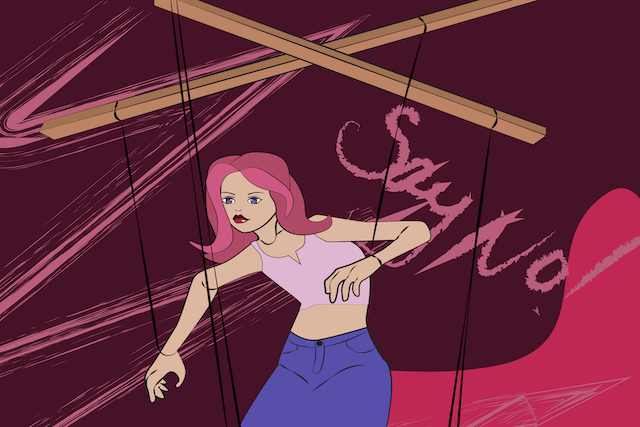
    Wanting to serve and please others is a perfectly good and often wonderful thing. The problem with people-pleasing in today’s world is when we don’t have good boundaries to go with it.

    Our brain today says, “Let’s do whatever keeps the tribe happy. Let’s do whatever we need to, to be part of the gang.” Most of the time that looks like acquiescing, going along to get along, and doing whatever we can to “not upset the apple cart.”

    As children we gain information from all types of sources around us—our traumas, personality, health status, our race, ethnicity, gender, family of origin, our class, economic status, and more! Each one of these alone comes with a handbag of rules that instruct us how to behave, act, what to think and what to say in order to please our tribe. Our poor mind has to put all of these pieces together somehow in a way that makes sense and keeps us alive.

    Discovery #2: The Rulebook

    In essence, our sweet mind creates a sort of rule book in terms of what will keep us safe. We start to notice from the time we are small that if our people are not happy with us, we do not feel safe. We start to notice this in our bodies, our feelings, the look on someone’s face, the tone, what is not being said, the iciness of the room.

    When we are children, we are 100% dependent on our caregivers. They are quite literally everything to us. Remember the tribe, the pack, the hive that I talked about earlier? Well, to our little toddler minds, they are our first tribe.

    It is our caregivers’ job to mirror to us who we are in the world. And hopefully with healthy caregivers, we are shown that we are loved, cherished, worthy, important. This is what creates our self-esteem. This is what relays the message to us that we matter.

    This gets written into the rule book or the rolodex file of our little child brain.

    However, many folks did not grow up this way. Those of us who may have grown up with caregivers who were harsh, unloving, absent, unpredictable, neglectful, and even abusive, their little, sweet mind recorded a whole different set of rules into the rulebook of life.

    It may sound something like I am not loveable, I don’t matter, I’m a nuisance, I am a bother, I should never take up space. It might sound like I’m loved as long as I’m good, or performing, or agreeable.

    (Please note, much of the time our parents did the best they could with the skills and tools that they had in their awareness. However, to our innocent, little, childlike selves, it simply wasn’t the message that we needed. The message was misconstrued, and we wound up feeling as though we somehow did not matter).

    Often this gets passed down generation after generation.

    So now are you starting to understand that the mind’s idea of boundaries is to do whatever it needs to do to keep you alive?

    Perhaps when you were little, if you were constantly told to be quiet, that you were too loud, too much, or to simply go away, then the mind created a belief that came into agreement with this. A rule was filed away that it was better to not disrespect your elders and continue to be loud or to take up space.

    The problem is that of course this is nonsense (you were just being a sweet and normal child), but you never questioned the rule. You questioned Santa Claus, the Easter Bunny, and the Tooth Fairy. Yet, you never stopped or questioned your rules or beliefs about yourself. You wrote those things in the rule book as absolute truth.

    Your mind doesn’t care that you are older now and that the situation is different now. To the mind, a rule is a rule. And remember what happened to humans who questioned the rules in the past? They didn’t survive!

    Let me tell you a little bit about my own rulebook…

    Several years ago, I was deeply terrified of what other people thought of me. Growing up in a small town, it was written in my rulebook that all eyes were on you. Boundaries were one of my biggest struggles because it meant breaking free of the people-pleasing pattern in order to speak my truth.

    Having struggled with codependent patterns and low self-esteem, I didn’t even know what my truth was, what my needs and values were, or what mattered to me.

    What I did know was that I needed people to like me, to not talk ill of me and to think of me in a certain way—nice, kind, giving, good.

    I couldn’t excuse myself from a phone conversation.

    I couldn’t end playdates at the time I needed to even if my kids were throwing a full-blown temper tantrum.

    I couldn’t remove myself from a conversation that made me uncomfortable because of the topic.

    I laughed at jokes that, deep down, I found offensive.

    I agreed with others’ opinions because I either didn’t know my opinion or if I did, I didn’t feel confident sharing it.

    I talked incessantly because silence felt unbearable.

    I couldn’t even be on time, because I was rushing from one activity to the next, just trying to show face and that I was doing my part to be the nice girl and make everyone around me feel good.

    Speaking my truth was so uncomfortable that many years ago I actually had a seven-hour coffee date.  I didn’t want a seven-hour coffee date. The idea was come over for a couple hours, chit chat a bit, and move on with our day.

    However, this woman arrived promptly right after the kiddos left on the school bus in the morning and was still there when they got home on said school bus at 3:30pm.

    I can recall the massive headache I felt because I wanted so badly to ask her leave and tell her I had things to do, but I couldn’t.

    I remember that I never invited her back again, even though she was a great gal in many ways. I was clueless in how to handle these situations, so my answer was to cut the relationship off and move forward by avoiding her.

    At the time I was a young mom with a husband who worked long hours, and I often felt lonely. I wanted so badly to connect with other women and be a part of a community, and I thought the way to connection was through self-abandoning any of my needs so that I could focus on appeasing what other people in my life needed.

    This was all written in my rulebook. All of this worrying about what others thought and not wanting to upset anyone caused me severe stress, anxiety, and overwhelm.

    I was trying to function on fried adrenals and walking on eggshells. I was unhappy, and it showed up in my relationship with my partner, my kids, and mostly, the relationship I had with myself. But there was something always driving me to keep pleasing, keep appeasing, and that leads me to our next discovery.

    Discovery #3: But why do I always feel so guilty?

    Why do we feel so darn guilty when we try to set a boundary? Well, anytime we step outside the rulebook, the mind pushes a great big, huge alarm bell.

    Remember, our mind thinks that this is a rule created for our safety. I share this because hopefully you can start to relax and realize that there is absolutely nothing wrong with you. The mind simply is perceiving danger.

    From there we may experience bodily reactions—our palms get sweaty, we have a million butterflies in our stomach, our temperature rises, our throat constricts.

    Our brain’s one and only job is to keep us alive, so it often uses guilt to get us to acquiesce and once again, go along to get along.

    How many times have you been invited to a baby shower or a barbecue on a Saturday and absolutely dreaded it? You’ve worked fifty hours this week, you coached soccer two nights, ran the carpool this week, and are utterly exhausted. You know you need a day to get caught up, sleep in, and take a little time to yourself. But there it is—guilt lurking around the corner, “What will Aunt Betty think if you don’t show your face at Cousin Amy’s shower?”

    That guilt pushes on you, making you feel as if you are doing something wrong. So, what do you do? You RSVP that you will gladly be there. Oh, and you will also make and bring the punch.

    Pretty effective strategy to get you to follow the rules, right?

    This is why boundaries feel so challenging. Because they are not part of our original hardwiring.

    So where do we start if we want to set healthy boundaries?

    1. Understand that boundaries are first and foremost an internal job.

    Yes, we create parameters and limits with institutions and people. But ultimately, before we can ever do that, we have to start on the inside.

    When we aren’t taught how to properly do the internal work, our boundaries come off as rigid walls and we are left isolated and lonely. I have been that person because I didn’t understand what boundaries were, how to set them, and I certainly wasn’t going to entertain any sort of an uncomfortable conversation that looked like any type of repair or reconciliation work. I was left alone and miserable.

    Boundary work starts by addressing our own issues. And as the inner work is done and healing occurs, it organically flows into changed outer behaviors, habits, and choices. We can be empowered to have loving and compassionate conversations that build bridges of connection rather than walls of isolation.

    2. You have to realize that boundaries are in fact healthy.

    If you don’t believe this then it will be hard to lean into them. Make the agreement right now, or work toward believing, that setting boundaries is healthy for you to do.

    3. You have to know your needs.

    Do you know your needs? Have you ever thought about them? Many people don’t, so if you haven’t, know that it’s not uncommon.

    Start by thinking of what a “good” parent would do for their child. What needs do they help their child remember to meet? I.E., even if the child does not want to go to bed, they help them to calm down and go to sleep. Start by making a list of the needs a good parent will help a child to meet.

    When you’re done with that list, circle the needs that you are not meeting for yourself (or inconsistently meeting).

    For each circled need, respond to the following questions:

    • How do I respond to this need?
    • What gets in the way of responsiveness or consistency?
    • How do I respond to other people when they have this need?
    • How would my life improve if I responded to this need?

    For each need, create an intention that you will honor by setting boundaries if necessary. Focus on one intention a week to get a need met more fully and consistently. I know you want to do more, but remember, your mind will fight you because it wants you simply to stay safe and alive. It will douse you with that guilt working you toward acquiescing and shape shifting, so let’s just focus on nailing one for now. Keeping it simple is key!

    Write out your intentions weekly by finishing the sentence stem:

    My intentions are:

    If you’re working to build up the strength to bring more integrity to your relationships and set healthy boundaries, please understand that you don’t have to go it alone. Be consistent and trust that your hard work in your boundary journey will pay off.