Tag: people pleaser

  • Afraid of What People Think? Free Yourself by Realizing How Unimportant You Are

    Afraid of What People Think? Free Yourself by Realizing How Unimportant You Are

    “You wouldn’t worry so much about what others think of you if you realized how seldom they do.” ~Eleanor Roosevelt

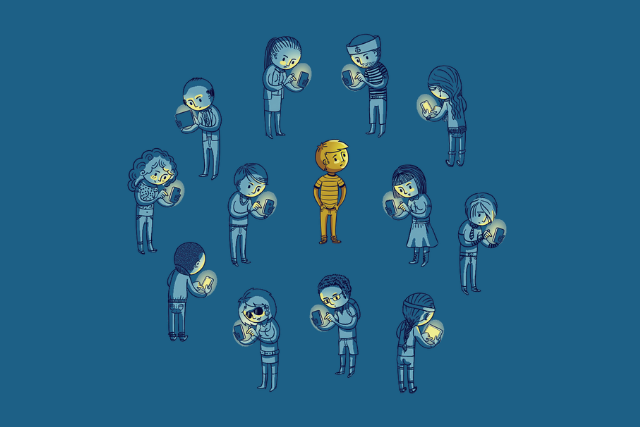
    It’s natural to think that we’re always in the spotlight.

    We think that people care about the way we dress, but they don’t.

    We think that people notice our nervous habits, when in reality, they’re worried about whether people are noticing their own.

    We tend to go through life as if our every move is being watched, judged, and evaluated on a moment-to-moment basis by the people around us. Here’s a reality check—you’re not that important.

    I don’t mean that in a brash way. This shouldn’t make you feel small or inferior, it should liberate you. And if it doesn’t, I have a feeling that what I’m about to talk about will.

    The Truth About Funerals

    As you guys know, a funeral procession is broken up into two parts: the funeral and the burial.

    During the funeral, spiritual leaders read various snippets from religious texts about the meaning of death, and close family members are allowed to get up and say a few words about the deceased.

    The burial takes place directly after the funeral, although some religions operate on a different procedure. During the burial, the body is transported outside, and the deceased is put to rest in the grave site.

    Now, you’re probably wondering why I’m spending so much time talking about funeral procedures. I’d probably be asking myself the same question reading this article, so here’s the bottom line.

    The burial takes place outside on grass.

    Do you want to know the number one factor that determines how many people attend the burial after the funeral procession is over?

    The weather.

    If it happens to be raining outside, 50% of people who attended the funeral will decide not to attend the burial and head home.

    That doesn’t mean those people don’t care, just that they’re first and foremost focused on themselves and their own lives and needs, as most of us are. Which means they’re focused on what they’re doing than what you’re doing.

    So why would you worry about what others think of your life choices? Why would you care about what other people say about you if you haven’t done anything to harm them?

    Why would you live life being bogged down by the opinions of others if half of the people attending your funeral will skip the burial because of bad weather?

    Coming across this information struck me like a lightning bolt. And no, I’m not going to sit here and lie to you by saying that reading this factoid about funerals led to some life-changing epiphany and now everything is sunshine and rainbows.

    What I will say is that it had an impact on my mindset. It forced me to really look at my day-to-day life and analyze where my actions were being driven by the opinions of others.

    Realizing just how little people cared about the decisions I made was one of many factors that influenced me to start shutting down the inner critic—that voice that tells you that everything you do is being judged by others.

    The Confessions of a Chronic People-Pleaser

    For most of my life, I let the opinions of other people stop me from living a rich, fulfilling life.

    In social situations, it was more comfortable for me to agree with what was said than express my own beliefs.

    It was more comfortable for me to sit back and watch instead of calling one of my friends out for something that he shouldn’t be doing.

    It was more comfortable for me to avoid the situations I was afraid of instead of diving into them head-first and stretching my limits. The fear of failing publicly in front of other people was absolutely terrifying to me.

    One particular instance from my high school years illustrates this perfectly.

    It was my freshman year, and our first dance of the year had arrived. I showed up in all-white, trying to keep consistent with the “white-out” theme that had been planned for the dance.

    As the dance started and music started playing, students began rushing to the middle of the gymnasium and dancing their hearts out.

    That’s when the fear hit me. My insides felt like they were twisting around each other.

    My breathing matched my heartbeat. It wasn’t calm and collected, it was frantic.

    My mind went into full “stop him from taking action” mode by conjuring up a bunch of scenarios in which I look like a total idiot on the dance floor.

    For the rest of the night, I was glued to that wall. Only thirty feet away, there was a bunch of care-free teenagers having the time of their lives.

    I went to the bathroom about seven or eight times just to make the time go faster. I talked to other people who weren’t really dancing, and we were all playing it off like we were too cool to express ourselves in public.

    The truth is that we were all just terrified of being ourselves in front of other people.

    That moment set the trajectory for the rest of my high school experience. I wish I could go back in time to my fifteen-year-old self and tell him to wake up. I wish I could tell that shy, insecure person that rejection, public failure, and the opinions of other people don’t matter.

    I wish I could tell him that at the end of someone’s life, the biggest factor in determining whether or not people attend their burial comes down to whether or not the sky cries more than the congregation does.

    But I can’t do that. I can only look forward to what’s in store for me now that I’ve finally realized how unimportant my actions are. It’s not a shameful thing to admit that you’re unimportant, it’s liberating. It gives you the freedom to take risks and challenge yourself.

    Life becomes a lot more fun when you realize that everyone around you is so absorbed with their own thoughts and feelings that they couldn’t care less what you do.

    So next time you see someone that you want to talk to, don’t let the fear of rejection stop you, go introduce yourself. I promise you that if you embarrass yourself and the conversation goes nowhere, the person won’t even remember your name tomorrow.

    The next time you feel the urge to call a friend that you haven’t spoken to in a while, but feel like it might come across as “weird,” I promise you there’s a 99% chance that the person will be extremely grateful for the call.

    And if the person isn’t grateful and gives you the cold shoulder? Well, let’s just say that you’re not the one with the problem if you’re trying to be friendly and warm and are flat out dismissed.

    I encourage you to write down the things in your life that you’re scared to do because you’re afraid of what other people will think. And then each day, cross one of those things off your list.

    Constantly remind yourself that everyone is busy thinking about one thing—themselves.

    Going through life with this mindset will make you much more likely to face down the demons that are stopping you from living the life you want.

  • How to Stop Rescuing Other People to Feel Good About Yourself

    How to Stop Rescuing Other People to Feel Good About Yourself

    “If your compassion does not include yourself, it is incomplete.” ~Jack Kornfield

    It seemed like the natural thing to do.

    A middle-aged man had dropped his keys near me. I jumped up, hopped over, picked the keys up, and gave them back to him.

    Not so unusual, except I had a badly twisted ankle after slipping on a walking holiday and needed to rest it while the pain and swelling went down. I struggled back to my seat, wincing.

    It was a small incident but symbolic of my rescuing, codependent, instinctive habits at the time. If something needed doing, I would be the one to do it. If there were a problem around, I’d jump to fix it.

    Of course, I could have just called out to the man and pointed at his keys from where I was sitting. But I felt like I had to do it myself.

    I thought that’s what ‘being good’ was. And the harder something was for me, the more ‘good’ I thought I was being.

    When Trying Harder Makes It Worse

    It was part of a whole guilt-driven people-pleasing pattern. Other people’s appreciation gave me brief relief from feeling bad about myself. It was a temporary pass into being okay.

    Over the years came relationship breakdowns, career misfires, and increasing anxiety and insecurity.

    Whenever there was a problem in a relationship, I considered it my job to fix it. Though my intentions were good, this actually created a sense of separation. Instead of being in the relationship, I became more like a mechanic looking at it from the outside.

    As for work, I took on so much that it left me stressed and created a distance from my colleagues. I thought they were acting coolly toward me because I wasn’t doing enough, but the opposite was actually true—I was doing too much.

    I didn’t recognize at the time how my actions were affecting the balance of my relationships. I couldn’t understand why I kept failing.

    I’d always been taught that if I wasn’t succeeding, the answer was to try harder, but the harder I tried, the worse it got.

    So I tried therapy. Naturally I tried to be the best therapy client.

    I did all my homework, read all the books, and often turned up with ‘helpful’ notes for the therapist. Of course that didn’t work either.

    Learning about what I was doing wrong made it worse. Now I had a whole new set of things to beat myself up about. I was even failing at therapy!

    I was pointing in the wrong direction, so going further just got me more lost.

    Seeing Through New Eyes

    “The real difficulty is to overcome how you think about yourself.” ~Maya Angelou

    The turning point was realizing my cruelty. My kindness to others had blinded me to how cruel I was being to myself. Trying harder and beating myself up for where I was failing was just more cruelty.

    However much I did, no gold star was ever going to come from outside to officially certify I was “enough.” If I was to become a truly kind person, I needed to start learning to be kind to myself.

    It was hard. I had to stop constantly being the most helpful person around. But in my mind, at least, that’s who I was. My profession, my relationships, and my identity were all based on that. If I wasn’t that, what was left?

    I was like an addict in withdrawal. Without the regular feel-good boosts of appreciation from others, I had to face all the difficult feelings I’d had about myself for as long as I could remember—the guilt, fear, and insecurity I’d developed when I was a sensitive kid who felt like he didn’t belong and always thought he had something to compensate for, atone for, or prove.

    But at least I was now pointing in the right direction, so every step was progress.

    Each week was a little better than the last. Spotting when I was being too self-critical and learning to be kinder. Holding back from fixing a problem someone could easily fix for themselves.

    For example, unless my partner specifically asked me to help solve a problem for her, I learned to empathize, encourage, and support her so she could work it out for herself.

    Stepping back meant some things didn’t get done, took longer, or went wrong. But sometimes they went better than if I’d tried to fix them. Who knew? And sometimes the person asking decided it wasn’t important after all.

    More importantly, though, by learning to hold back, I was allowing others the space to develop while weaning myself off the quick, feel-good boosts I got from helping others.

    Of course, this didn’t happen overnight. Changing deep patterns takes time. But each small change sets you up for the next one. It’s a gradual positive, self-reinforcing cycle.

    So what did I learn?

    Be Your Own Best Friend

    If people tell you that you are your own worst enemy, how about becoming your own best friend?

    Many of us are better friends to others than we are to ourselves. We’re kinder, more supportive, and more willing to stand up for their needs.

    You’ve heard the “golden rule”: “Treat others how you would like to be treated.” That holds true the other way too. Treat yourself how you would treat a good friend.

    If you wouldn’t say something to a good friend, don’t say it to yourself.

    If you wouldn’t ask a friend to put up with something, don’t put up with it yourself.

    You’re as much a part of nature as they are and just as important. Plus, looking after yourself is your job!

    Make Friends With Your Flaws

    You’re not perfect.

    Big news: No one else is either.

    Even bigger news: You don’t have to be. Thinking you have to be perfect is part of the problem.

    You don’t have to make up for simply existing. You don’t have to be gooder than good.

    No one can give you the gold star that certifies you as “enough.” And you can’t get it through your accomplishments, how good you have been, or how many people you have helped today. You have to learn to give it to yourself. It’s your basic pass for being part of nature.

    This doesn’t mean you’re perfect. You’re not. It means making friends with your flaws.

    Support Yourself

    There’s a humorous office sign that reads, “The beatings will continue until morale improves!” We laugh at the sign, but many of us carry an idea that the harsher we are to ourselves, the more likely we are to change.

    The opposite is true. Research shows that people who are compassionate toward themselves are better able to take on feedback, grow, and change. They find it easier to adapt because they’re already comfortable with themselves.

    They’re less fragile because their whole sense of identity isn’t on the line. They know that what they did isn’t who they are. They can open up, connect, and learn.

    Self-compassion doesn’t mean glossing over your failures or challenges. It means supporting yourself while you’re putting them right.

    Stop Putting Yourself Last

    You’re not so special that you need to be last.

    This isn’t about becoming selfish. It’s about balance. You’re as deserving of love and good things as anyone else. Not more. Not less.

    You might need to learn how to be more assertive. That could be difficult at first. Support yourself while you’re learning.

    Be Patient

    It isn’t always easy. It takes time. But once you’re pointing in the right direction, you’ll start feeling better each week. And as you feel better about yourself, you’ll feel less of a need to be everyone else’s hero in order to receive their appreciation and validation. And you’ll become as good a friend to yourself as you are to everyone else.

    **This post was originally published in December, 2018.

  • I Was Addicted to Helping People – Here’s Why It Made Me Miserable

    I Was Addicted to Helping People – Here’s Why It Made Me Miserable

    “As you grow older, you will discover that you have two hands, one for helping yourself, the other for helping others.” ~Maya Angelou

    Growing up in Africa, I was told that the virtue and worth of a woman lies in her ability to take care of everyone around her; that a woman was considered good or worthy when everyone around her was happy and pleased with her. I took this advice to heart, especially since I watched my mother meet this standard to a T. Putting everyone else, including strangers, above herself.

    Most of the Things We Learn as Kids Shape Us

    As a kid, I was taught how to cook, clean, and care for others. As a teenager, I got a lot of practice caring for my younger siblings; at first, it was great, being a caregiver, being the one who everyone went to when they needed something. I loved being needed, and I relished in the label I was given as dependable.

    Family, friends, and even strangers knew that I was the go-to girl for whatever they wanted. If I couldn’t help them with whatever they needed, I would find someone who could. I was determined to never leave anyone high and dry. I loved being needed, and if anyone needed me, I believed that I was their last resort.

    The Joy of Giving

    You see, one thing about giving is that it feels good… until it doesn’t. The moment you get to a place where giving doesn’t feel good anymore, it means that you need to turn the giving around and start giving to yourself. But how does someone who is addicted to being needed realize this?

    When helping people started feeling more exhausting than exhilarating, my first instinct was to give more because I believed that the more I gave to others, the more I would receive from them. But that was not the case. The more I gave, the less I received, and this prompted me to label most of my friends as bad friends because I wasn’t getting as much as I was giving to them.

    When I became isolated from cutting friends off because they were “bad” to me, I realized the problem wasn’t that I was not getting as much as I was giving; the problem was that I was giving to everyone but myself. I had put myself in the back burner and abandoned myself. How can I abandon myself and not expect others to abandon me?

    The Guilt That Comes with Giving to Yourself

    Realizing my deep-seated issues was easy, but addressing them was a whole other thing. Because I was conditioned to believe that my worth was in pleasing others, I always said yes to everyone who needed my help; saying no was extremely difficult.

    This was because I was suppressed by intense guilt and ended up caving in to finding help for the person at my own expense. Everything changed for me when a former classmate said to me out of the blue: “You are nobody’s last resort.”

    You are nobody’s last resort, no matter how bad it is. If you cannot help someone with their problem, another person will. And more importantly, it’s not your responsibility to ensure they get the help they need—it’s theirs.

    This was a turning point in my life because now I knew that telling someone no because I needed the time to invest in my own needs did not mean that they were never going to get help.

    The guilt was still there, but little by little, I persevered in choosing myself over and over again. I started with little things, like saying no to helping a friend walk their dog to stay at home, to take a long bath and read a book (I enjoy reading). And over time I was able to get better at saying no to larger requests that would have been draining and would have negatively impacted my mental health.

    Give to Yourself and You Won’t Expect Too Much From Others

    Slowly but surely, I learned that my worth is determined by me and me alone—by how much love and care I direct toward myself. Guilt still visits me sometimes, but it is not as intense as it used to be.

    I know now it is better to feel guilty for taking care of yourself than to expect others to anticipate your needs and take care of you. News flash: if you don’t take care of yourself from the inside out, no one will.

    Don’t get me wrong, I still take care of my loved ones and help others as well as I can, but I now do it from a complete place, a place of wholeness, knowing that I will be fine whether they invest in me or not.

    I don’t expect much from people, and I don’t get disappointed much because I have learned to prioritize myself. Frankly speaking, I have noticed that the people around me enjoy me more now that I am not a self-righteous person who resents her giving and selflessness.

    “I give and give and give, and what do I get? Nothing.” If you have heard yourself say or think these words, then you are expecting people to make you happy just because you are bending over backwards to make them happy. If you keep bending backwards to make others happy, one day you will break your back. A broken back is very painful to bear, take note.

    Life’s a Journey, Not a Race

    This is not an overnight process; it will take time and patience. I have learned that part of taking care of myself is being nice to myself, whether I’m making progress or not. I’m done talking down to myself. Everything I wouldn’t do or say to another person, I’ve vowed never to do or say to myself.

    There is no glory in stomping all over yourself to please the world, there is no glory in self-deprecation and self-hate. It is not humble to call yourself terrible names or to live in suffering because you don’t want to hurt some else’s feeling or because you want to be called a nice/polite person.

    Our feelings and needs matter as much as anyone else’s, but we can only honor them if we recognize this and prioritize them.

  • The 6 Personalities of People-Pleasing and How I Overcame Them

    The 6 Personalities of People-Pleasing and How I Overcame Them

    “The truth is, you’re never going to be able to please everybody, so stop trying. Remember, the sun is going to continue shining even if some people get annoyed by its light shining in their eyes. You have full permission to shine on.” ~Unknown

    I used to be a rebel. I was the girl at the party who would waltz into a room and have everyone in awe, their attention and curiosity caught by my presence. I felt it, they felt it, it was magnetic. I loved it—I had become the girl I wanted to be.

    That was until one night at a party, while I was making a batch of popcorn in the kitchen, someone came up to me and asked, “Why do you need to prove yourself all the time?”

    This question caught me so off guard. I was instantly confused. I was staring into space trying to figure out how I was proving myself all the time. So, I asked exactly how I was doing this.

    It turned out that when someone shared a story about themselves, I would share one of my own, and it came across as bigger and better. This person went on to tell me, “Actually, no one likes it, and it’s totally not necessary to win over your friends.”

    Holy moly. My blood started pumping faster through my veins, my face was burning up, my gut was wrenching at the thought of these people who I called friends not liking me. I thought I had finally found my community of like-minded souls.

    In this exact moment, I made the biggest decision of my life.

    It was time to squash down who I was, again. You see, I was in my mid-twenties, and I finally felt free from my childhood patterns. I was confident. I had friends. I could finally be me—who I was without the filter.

    They needed a toned-down version of me.

    So, I began to hide.

    I would sit in the corner or behind someone else. I wouldn’t share stories of my life adventures. I stopped dressing to impress. I apologized for silly things, and I watched every move I made around these people. It was exhausting, but the fear of them not liking me was crippling.

    Over the years I perfected these new behaviors of how to not be “too much” for the people around me. I went from being a wild, carefree soul to someone who was filled with anxiety in every social scenario.

    These new patterns overflowed into my work, family, relationships, and friendships. I became oversensitive, reactive, and uncomfortable to be around.

    After a decade of self-punishment, I was on a call with someone who I was working with, and they called me out for apologizing for not getting something right, even though it was the first time I had tried what they were teaching.

    Then the words that flew out of my mouth were: I did it again.

    Seriously, here I was, thinking I had it all figured out. I had adapted my behaviors, beliefs, patterns, and values to get through life, all in order to please other people. This was the slap on the face that I needed.

    So, I went on a deep soul journey that involved journaling daily. I took a real good look at myself and what I had created in my life. I began evaluating friendships, my work, the people in my day-to-day life, my family, and my environment.

    I had created a reality where I was no longer happy.

    My life revolved around everyone else’s needs, and I placed them before my own. I had become so aware of people’s energy, reactions, body language, and tone that I felt like I was suffocating.

    And for what?

    To not have friends, to not have people like me, to sacrifice my life for others.

    From that moment forward, I chose me.

    In order to do that, I needed to recognize how I’d formerly denied myself and my feelings so I could become aware of when I was tempted to fall into old patterns.

    Let me share with you the six personality types I lived through for a decade, how they play out in our daily lives, and how I overcame them.

    The Six People-Pleasing Personality Types

    The Approval Seeker

    When I was living in approval-seeking mode, my actions were geared toward praise. I would do anything to be the best employee in my jobs, from working overtime to taking on extra responsibility. I would play by the rules when it came to my family. I would make an effort to be noticed by my friends, all while chasing that sense of belonging.

    Praise was the fuel that kept me going. It reinforced the things I was doing right.

    The remedy to being an approval seeker is self trust, owning my values and my beliefs instead of looking for external validation. I simply started by questioning my motives in my actions.

    If I suspected I was doing something solely or primarily to receive approval, I asked myself, “Would I make this choice if I were being true and fair to myself?”

    The Busy Bee

    As a busy mumma of two, wife, business owner, sister, daughter, and friend, there was a time when I thought I had to keep it all together for everyone around me. I was the person who organized all the parties, Christmas dinners, birthday celebrations, family get-togethers, kids’ school activities, groceries, holidays, and anything else you can think of.

    The people around me saw me as dependable and organized, and they knew that I would do any task to help out. Of course without any fuss because I was being of service to the ones I loved.

    After I spotted a yoga class I really wanted to attend and realized I needed to make time in my schedule, I started to review my weekly routine. I realized I didn’t have to be everything for everyone at all times, which was hard to accept since “acts of service” is one of my love languages. But I knew being less busy was an act of kindness and love for myself.

    The Conflict Avoider

    When people raise their voice or assert their authority to me, I tend to crumble. It looks like I am still standing there, but in my mind, I’m in the fetal position on the floor.

    Speaking up for what I believe in is sometimes easy when I am fueled by passion for topics I love, but there are a few people in my life who turn me back into the conflict avoider in a second.

    In tense situations with these people, I often observe what is about to play out and create an exit strategy. I ask myself, “What do I need to do? Who do I need to be? What do I need to say to get me out of here?”

    When I recognize I’m doing this, I now take a few breaths to ground myself before leaning into the discomfort I’m feeling. I consider how I can stay true to my values and respond in a way that opens the space for discussion.

    The Self-Sacrificer

    This is the most common form of people-pleasing because it’s driven by love. It happens with our nearest and dearest.

    I once had a boyfriend who was into punk music, and slowly, over time, while dating him, I turned into a punk chic. I listened to his music, I wore all black, I tore up my clothes, and I went from blonde to black hair. I would have done anything for his love.

    Self-sacrificing is when we put others’ needs ahead of our own, fitting in with their agendas and adapting to them, yet in this process we lose small pieces of ourselves.

    It’s a personal crime when this happens because it takes years to rediscover all the things we once loved.

    Experimenting is the cure to finding that feeling of pure happiness we once held. I took belly dancing and various yoga classes, went for walks in different places, and challenged myself to try new and old things to see if they lit me up. I also reminded myself that I don’t need to sacrifice my interests and needs for anyone else because, if they truly love me, they’ll want me to honor those things.

    The Apologizer

    Sorry! Oops, sorry. Oh yes, I would apologize for everything from accidentally bumping into someone at the grocery store to taking a long time getting drinks at a bar.

    I eventually realized I apologized all the time because I believed I was at fault in each situation—not just super observant and sensitive to other people, as I’d formerly believed. I blamed myself for all kinds of things, from meeting my needs to taking up space.

    One day I decided to walk the busy city streets with my head held high, no more side-stepping to get out of other people’s way or apologizing for almost bumping into them. I bit my tongue and simply reminded myself that it is okay to have my own agenda, I am not to blame for things that are out of my control, and I have a voice.

    The Sensitive Soul

    Often, I would guard myself against the world, even though I wanted to trust it, because I had a hard time creating emotional boundaries. The word “should” always hung over my head—I should always be available, I should be able to listen whenever someone needs me. But this took a huge toll.

    Everyone would come to me to share their story, offload their junk, and then move on, leaving me with a negative energy load. I would push down my feelings and pretend everything was okay. Also, I felt like I couldn’t share my story with others because they were in a bad mood, feeling sad, or the timing wasn’t right. I was a doormat.

    I needed to address my conditioning in order to stop taking on other people’s problems. Why did my feelings come second to others’? Why were their stories more important than mine? I discovered that I had been putting others on a pedestal and that I needed to dig deep into the “shoulds” and start tackling them one at a time until I was able to speak up and set limits.

    I started people-pleasing because someone told me I was always trying to prove myself, but ironically, that’s what people-pleasing is—trying to prove you’re a good person by doing all the right things so no one will be upset or disappointed. Ultimately, though, we end up disappointing ourselves.

    Since I’ve started challenging these personalities, I’ve slowly offset my need to please. It hasn’t been easy, but I’m now a lot closer to the person I used to be—someone who likes who she is and has nothing to prove to anyone.

    Do any of these personalities sound familiar to you? And how are you going to tackle it?

  • 7 Reasons I Was Scared to Take up Space and How I Boosted My Confidence

    7 Reasons I Was Scared to Take up Space and How I Boosted My Confidence

    “You are allowed to take up space. Own who you are and what you want for yourself. Stop downplaying the things you care about, the hopes you have.” ~Bianca Sparacino

    I deserve to take up more space. Plain and simple. By taking the space I deserve, I further build the confidence I need to live a rich life that resonates with who I truly am.

    Over the past several years, I’ve had to navigate a new life after hard breakups, difficult career transitions, and moving back home. I’ve had to face the feeling that I’m not doing enough. That I am not enough. That I don’t deserve to take up space. To be seen, felt, and heard with all of the faults that scatter among all my strengths.

    I know I owe it to myself to show up. I know I owe it to myself to be present as I am. I know I owe it to myself to finally come out from the back curtains and take center stage where my heart can shine.

    I deserve to take more space in my presence around others and to be truly seen.

    I deserve to take more space in my voice in a loud world and to be truly heard.

    I deserve to take more space in my heart and take care of my needs first.

    Because I know these things, I now try not to make my voice small when I want to speak so loudly that it hurts.

    I try not to be apologetic for taking the time to express what I feel to others when the person I should be accommodating first is myself.

    I try not to bottle up my emotions because the longer I do, the longer it will take to get past ignoring them.

    After taking moments to pause and breathe, I gently remind myself again that I am enough. That I deserve to speak from the heart and to be heard. That my thoughts, opinions, and voice matter.

    Over time, I’ve recognized the reasons why I lacked the confidence to take the space I deserved, and I’ve also identified what I need to do to change.

    7 Reasons I Was Scared to Take up Space (And How I Changed)

    1. I lacked confidence in my communication and overused apologetic terms, which minimized my opinions.

    I used to say sorry a lot in my interactions, if I thought I’d made a mistake or I interrupted a conversation, for example.

    Research shows that when you say sorry, people tend to think less of you. I may have thought that I was displaying myself as a nice and caring person, but I was actually sending the message that I lacked confidence.

    “Sorry” isn’t the only word I needed to watch out for. These 25 limiting words diminished my statements. For example, with the word “just”—if I was “just wondering” or telling someone it will “just take me a minute.”

    There’s no need to use minimizing words. My needs and opinions are as important as others’. I built more awareness and confidence by flipping the script and being firmer in my conversations. I started saying phrases like “Thanks for pointing that out” or “Here, let me get out of the way” or “It will be a minute.”

    2. I thought it was unkind to say no, even if something didn’t align with my priorities.

    By consciously saying no to one area, I am confidently saying yes to another more important one. I don’t want to give my space away without consideration of what the true cost is. I need to protect my time like it is my most valuable commodity.

    Saying no is not a natural response for many of us, though. We often feel nervous about creating conflict with others and tend to value others’ needs more highly than our own.

    At least for me, I have learned to please others by being kind and helping those who ask for it. I tend to say yes because I want to be seen as caring, selfless, and generous. I didn’t realize that the ability to say no is closely linked to self-esteem.

    So how did I start to say no without feeling bad about it? I kept my responses simple and to the point. I learned how to strengthen my delivery and not over-apologize.

    Sometimes, when I provide too many details, I get caught up in the why behind my decision to say no. I’ve learned that there’s no need to overanalyze, and that I have the right to say no as much as yes. I just need to remember that I’m not saying no to the person, I’m saying no to the request. Also, I’ve learned not to take someone else’s no personally. Sometimes their no means “no for now.”

    3. I didn’t realize my thoughts can contribute to a richer conversation.

    Sometimes, it’s been easier for me to keep quiet and listen to the entire conversation without saying a word. I’ve learned that I have a seat at the table, and with every word I speak, the more confidence I gain.

    I know I have many valuable thoughts that could add a new perspective to the conversation at hand. Whether it’s in a work meeting or hanging out with friends, I consciously remind myself not to hold back my voice.

    The world benefits when we all find our voice. Whether it’s to elevate good ideas or discuss alternatives to bad ones, speaking up is how we arrive at the best outcomes.

    4. I struggled with being vulnerable because I worried about what people thought of me.

    Vulnerability is consciously choosing not to hide your emotions and desires from others.

    Being vulnerable with others is scary and uncomfortable for me because it’s letting go of what people think of me. When I’m not afraid of what other people think, that’s when true confidence begins to grow.

    Vulnerability bridges connections and helps me build confidence in the relationships I am creating. Vulnerability frees me up to share personal stories that others can relate to. Vulnerability sparks conversations that allow me to move beyond fear to a place of shared experiences.

    Connecting with others by being vulnerable—as opposed to overcompensating and trying to get everyone to like you—will result in some of the best interactions and relationships of your life.

    5. I felt insecure about sharing my dreams and achievements along with my mistakes and failures.

    I needed to let myself be excited and proud in order to build confidence in what I’ve accomplished. Sometimes I have to be my own cheerleader to keep the confidence going and be okay with that.

    By sharing my successes, I hope to inspire others and kickstart them in a direction that helps them on their journey.

    By sharing my failures, I accept the mistakes I’ve made along the way. I’ve built confidence by taking the lessons learned and continuing to strive toward my dreams.

    6. I felt uncomfortable asking for help.

    It’s hard to ask people for help. Like most people, I’ve been taught to carry all the weight on my own. To be independent. To be self-sufficient. When you ask for help, people may say no, but it doesn’t hurt to simply ask. Each ask will give you confidence for the next.

    Most people like helping others by sharing their time, knowledge, and experiences. I realized I am in a village where others look to help me, which in turn helps the entire village.

    Asking for help isn’t a sign of weakness, it’s a sign of strength. Asking for help is uncomfortable because it’s a behavior I wasn’t used to. But it gives me the confidence to know others are there along the way to support my dreams and goals.

    7. I didn’t realize how much I have to offer.

    There are times I thought I didn’t have much to offer to others, but I now know I do. I possess a wealth of experiences that can help others live a brighter, more confident life. Whether it’s sharing how I aced a job interview or how I created a fine-tuned budget, there are people out there seeking my help.

    As I started to offer my knowledge to others, I was surprised by how many people I began to help. By being of service to others, I built confidence that I have more to give than I realized. I am a wealth of knowledge and experience that can help others build their own confidence.

    I’ve learned that my thoughts and needs matter—that I matter. That I can speak up unapologetically, say no when I need to, share my successes and failures, ask for help when I need it, and make a real difference for other people. I just need to let myself take up space, knowing I deserve it, and the world is better off because of it.

  • If You Think You Have to Be a People-Pleaser to Be Kind

    If You Think You Have to Be a People-Pleaser to Be Kind

    “I don’t need a friend who changes when I change and who nods when I nod; my shadow does that much better.” ~Plutarch

    People-pleasing can seem Iike a way of connecting with others. We believe that if we keep people happy, then they’ll like us and want us around. While it may be true that pleasing others will win us approval and a place in their lives, changing and editing ourselves can’t create the connection we long for.

    We confuse people-pleasing with kindness. After all, aren’t we, as people-pleasers, described as too nice? People-pleasing can be seen as giving of ourselves to put others first, but people-pleasing isn’t the kindest way to treat ourselves or the people around us.

    Honesty is Kinder than People-Pleasing

    My friend, Amy, would occasionally invite other people to join us without letting me know. I’d arrive at the park or the coffee shop and find myself unexpectedly part of a group.

    To Amy, this wasn’t a big deal. She was generous about introducing me to new people and for her it was genuinely the more the merrier. I, however, prefer one-on-one interactions to groups, and I really dislike being surprised in social settings.

    The thing is, she never knew it bothered me because I never told her. I was so worried about making sure she liked me that I pretended to be happy about these surprise additions to our outings. I told myself I didn’t want to hurt her feelings.

    Unfortunately, the result was that I resented the other people and didn’t give them a fair chance to see if we might also become friends. It undermined my trust that Amy really saw me and valued my friendship. It reinforced my belief that I wasn’t good enough for someone to want to spend time with just me.

    When I wasn’t honest about how I felt, it wasn’t kind to anyone involved. I knew Amy to be a caring and thoughtful person. Most likely she would have been glad to let me know when she was extending additional invitations and to check in about what I wanted for a particular meet-up if only I’d been honest about how I felt.

    When we people-please, we say and do things that aren’t really true for us. We may accept an invitation that is inconvenient or agree to do a favor we resent doing. We might claim to want to eat at a certain restaurant or do a certain activity even though we’d actually prefer something else.

    We may keep our opinions and beliefs to ourselves unless we’re sure they line up with those of the person we’re trying to please. We might base our decisions—from what clothes we wear to what jokes we laugh at to what career we pursue—on what we think will win approval. We may hide how the other person’s actions are impacting us.

    None of these things are honest. We’re not being kind to others when we try to manipulate them into liking us instead of letting them really see us.

    We get tripped up because honesty can feel unkind if we think it will disappoint someone or make them unhappy. Of course, honesty can be used in an unkind way. People will say intentionally hurtful things and then justify their cruelty under the guise of honesty, but we can be honest with kindness.

    When we are honest in our relationships, we give others a true representation of who we are. We are clear about what we will and won’t do, what we do and don’t want. When we are honest we build trust with others that they can take us at our word and learn to see ourselves as a person who can be trusted.

    Presence is Kinder than People-Pleasing

    When I spent time with Amy, I worried a lot. I watched to see how many cookies she ate before helping myself to another. I worried about whether she was offering tea just to be nice or whether she’d actually be disappointed if I didn’t want to try the new blend she’d been sent as a gift.

    I avoided conversation topics where I wasn’t sure we’d agree. I was cautious when answering her questions about what I was up to. I’d offer only a glimpse and then try to gauge her levels of interest and approval before sharing the next little bit.

    The thing is, I wasn’t able to relax and just enjoy spending time together. It was obvious to her that I was trying to do things the way I thought she wanted me to. She tried to reassure me that it was okay to be myself, which was embarrassing for both of us.

    I appreciated Amy’s ability to ask thoughtful questions and how encouraging she was about anything I did share with her. The main things I remember about the time we spent together, however, don’t tell me much about who she is. I remember more about what I said and did because my focus kept turning to how I was measuring up.

    When we engage in people-pleasing behaviors, we watch the people we hope to please for cues about what they want and need and who they expect us to be. It can seem like we’re being very present with them because we’re paying such close attention.

    Too often, however, our attention is strategic—we’re using it to meet our own ends instead of really engaging with them as people. We watch for how each thing we do or say is received and use that data to continually adjust ourselves to be more pleasing.

    What if, instead, we approached our time with another person with curiosity—seeking to know them for the joy of knowing another human being? Curiosity requires presence—being open and welcoming to what is there instead of what we expect to find. One of the kindest things we can do for someone is to set aside our expectations and see them for who they are—and that includes ourselves.

    Trust is Kinder than People-Pleasing

    It didn’t matter how kind and encouraging I believed Amy to be, I didn’t trust that she would want to be my friend if I ever let her really see me. I didn’t trust that relationships could survive disappointments, differences, or disagreements. I struggled to believe that anyone really wanted to know me and that I would deserve their friendship if they did.

    When I didn’t trust that Amy would want to be my friend unless I went out of my way to please her and I didn’t trust that I was worthy of her friendship, it made for an uneven relationship. I saw her as better than me and was trying to control her perception of me so I could keep a place in her life. Our interactions were based on my striving to please instead of on two humans seeing and supporting each other.

    People-pleasing is characterized by a lack of trust. We people-please because we don’t trust that we are good enough to be wanted just as we are. We don’t trust others to see the value in us and treat us well unless we always give them what they want or stay within the parameters of who they expect us to be.

    A kinder approach is to cultivate trust. As we unhook from people-pleasing, we build trust in ourselves. We develop trust that we can meet our own needs and that we can express our preferences with kindness. We learn to trust that we will be okay if not everyone likes us and that there are new opportunities even after disappointment.

    There is also kindness in trusting others. When we choose to trust someone, we give them a chance to see and support us. We open up the possibility for a mutual relationship.

    Trust others and trust yourself to build a relationship that is genuine and satisfying for you both. Some relationships will not survive if we cease people-pleasing, but those relationships were not built on true kindness to either person. Invest in relationships that are based on kindness instead of control—where you can know and be known.

    Consider your closest relationships. Are they a space where you are honest, present, and trusting? If not, what gets in the way? How can you bring a little more honesty, presence, and trust into your relationships this week?

  • 9 Powerful Lessons from People-Pleasers Around the World

    9 Powerful Lessons from People-Pleasers Around the World

    A woman struggles to tell her boss that no, she won’t work overtime for the third day this week.

    A man feels resentful in his relationship because he always gives, and his partner always takes.

    A woman wants to stop faking pleasure in the bedroom but doesn’t know how.

    Though their stories differ, these folks share a painful secret. They worry that if they are truly and authentically themselves, they will not be loved or accepted. They have spent their lives morphing into smaller, more “acceptable” versions of who they are, sacrificing their authenticity along the way.

    I, too, am a recovering people-pleaser. In my teens and early twenties, I listened in envy as my friends splattered their unfiltered truths across our conversations like fistfuls of finger paint. Meanwhile, every time I needed to turn down an invitation to a party, World War III raged in my chest as I was racked with nerves and guilt. The thought of disappointing others terrified me.

    I used to feel terribly alone in my predicament. Specifically, I was convinced that 1) I was the only one who struggled with this degree of people-pleasing, 2) there was something dreadfully wrong with me, and 3) I would be that way forever.

    In the years since, my work has led me to speak with recovering people-pleasers, recovering codependent folks, highly sensitive people, empaths, and chronic caregivers around the world. From Ireland to Yemen, India to Malaysia, France to South Africa and more, I’ve spoken with folks who are conquering the people-pleasing pattern, setting empowered boundaries, and mastering the art of speaking their truth.

    Their stories taught me that people-pleasing is a very common—and entirely breakable—pattern. From hundreds of conversations, here are the nine most valuable lessons I learned:

    1. If you don’t speak your truth, your truth will speak through you.

    At first, staying silent to keep the peace sounds like a good idea. Why speak our truth and deal with others’ negative reactions when we could stomach our own discomfort like champs? Those of us who played the role of peacekeeper in our families of origin will find this approach familiar, maybe even comfortable.

    But people-pleasers around the world agree: external peace does necessitate inner peace. When you stay silent, the folks around you might be blissfully ignorant, but you feel the repercussions emotionally and physically. Debilitating anxiety, depression, jaw tension, and stomach aches, for example, are common symptoms folks report when they stifle their voice over an extended period of time.

    Recovering people-pleasers around the world recommend: Recognize that speaking your truth isn’t some corny self-help mantra: it’s a necessary prescription for a psychologically and physically healthy life.

    2. If it’s hard for you to access your wants and needs, a great first step is to tune into your body’s simple physical desires.

    Even those of us who have long histories of people-pleasing can access the sacred whispers of our inner selves through our bodies. As Martha Graham famously wrote, “The body never lies.” We can begin living our truth by listening for our bodies’ cues for food, sleep, movement, sex, dance, and play.

    Recovering people-pleasers around the world recommend: Sleep when you’re tired. Don’t eat food you don’t like. Don’t have sex if you’re not in the mood. Dance when you want to dance. The more you practice listening for these simple wants, the more complex desires will arise.

    3. Expecting others to mind-read your needs is a recipe for resentment.

    In the past, I spent undue time and energy analyzing others for cues of their likes and dislikes. I was a bonafide chameleon, tailoring my colors in whatever way I believed would please others most.

    Given my hyper-vigilance to others’ preferences, I believed that if people really knew me and really loved me, they would predict my needs, too. Unfortunately, you can’t love your way into being a mind reader, and I was regularly disappointed when folks didn’t show me care in the way I wanted.

    When we assume that others should automatically know how to take care of us, we assume that we all share the same definition of being cared for. You might need your partner to say, “I love you,” but your partner might show her love by rewiring your toaster.

    Gary Chapman’s book The 5 Love Languages depicts five distinct ways folks show love, including words of affirmation, quality time, gifts, acts of service, or physical touch. Avoid the guessing game and explicitly communicate your needs often.

    Recovering people-pleasers around the world recommend: Explain your needs to loved ones to avoid mixed messages that could lead to painful miscommunications.

    4. Caregiving can be selfish when we don’t have a strong foundation of self-love.

    Many people-pleasers take care of others because it gives us a sense of value. We structure our identities around being reliable, generous, good listeners, and maybe even sacrificial. However, if we give care to others without taking care of ourselves—without developing our own interests—we may find that we need to be needed to feel a sense of purpose. This means that we may insist on caregiving even when our efforts are no longer required, requested, or welcome, which can violate someone else’s boundaries and autonomy.⠀

    Recovering people-pleasers around the world recommend: Give yourself the degree of love and care you’d regularly give to others. Pay your bills. Go to the doctor. Take quiet time. Treat yourself to a nice dinner. This way, when you do make the decision to take care of others, you can do so with no strings attached.

    5. Just because it feels awkward to state your needs and take up space doesn’t mean it’s wrong. It means it’s new.

    Many of the folks I spoke with remembered how scary it felt to state their needs and take up space at first. To them, it felt “impossible,” “terrifying,” and “overwhelming.” Can you relate?

    That discomfort is a natural growing pain. After all, breaking the people-pleasing pattern means rewriting the scripts you’ve followed since childhood. Maybe as a kid you were told that speaking your truth made you unlovable. Perhaps you were bullied in school for being different and made fierce efforts to blend in as a result. Regardless, you are breaking a years- or decades-long pattern of making yourself small. It will feel less challenging with practice.

    Recovering people-pleasers around the world recommend: Instead of interpreting anxiety as a sign that you’re doing something wrong, reframe it as an affirmation that you’re doing something new—and growing as a result.

    6. It’s totally normal to feel mean, guilty, or overwhelmed after setting a healthy boundary.

    If you grew up in an environment where you were punished or neglected when you expressed your true feelings, learning the art of honest expression is a radical act. The simple act of setting a boundary may feel like an enormous emotional upheaval. You are learning how to stand up for yourself, and like any new skill, it takes practice. 

    After setting a boundary, you might wonder if you’re a bad friend/mother/colleague/[insert role here]. You’re not, of course, but your nervous system needs to learn that with time.

    Recovering people-pleasers around the world recommend: Acknowledge that by setting a boundary, you’ve just done some serious emotional work. Hold yourself with compassion and give yourself permission to rest and recuperate.

    7. If you struggle to set boundaries, you might have a tendency to cut people out when resentments arise. Learning to set boundaries will help you maintain your relationships through moments of conflict.

    For much of my life, I was unable to maintain a single close friendship for more than a year. It seemed that every friendship eventually withered away—not with a bang, but a whimper.

    When I sat down and reflected on this pattern, I realized that when conflicts arose—and conflicts will naturally arise in all meaningful relationships—I had chosen to let the friendships fade instead of addressing, and resolving, my grievances.

    People-pleasers might cut folks out when we don’t have the tools to communicate how we really feel. When we break the people-pleasing habit, we develop the ability to have difficult conversations with friends and loved ones—which enables us to nurture and strengthen those relationships.

    Recovering people-pleasers around the world recommend: Contrary to popular belief, boundaries are an invitation to connect. Remember to consider the many ways that setting boundaries will benefit, instead of threatening, your relationships.

    8. Sometimes extroversion is just people-pleasing at a social scale. For some of us, breaking the people-pleasing pattern means learning to embrace our own introversion.

    As people-pleasers, we regularly act against our instincts to become a version of ourselves we believe is lovable. For many of us, the bubbly extrovert we present in social settings is really just an unconscious performance. In my conversations with many people-pleasers, I was shocked to hear gregarious, fast-talking folks share that all they wanted was permission to be quiet. “I want to trust that I’m worthy of love even when I’m not entertaining others,” they would say.

    As children, we may have received love only when we actively acted in an outgoing, cheerful manner. If our parents were addicts or suffered from mental illness, we may have acted as their de facto caretakers, providing sunshine, reassurance, and good spirits. As a result, we feel that in order to be loved, we must be constantly happy or outgoing—and we are exhausted by it. In adulthood, we’re tired of performing and we crave inner peace.

    Recovering people-pleasers around the world recommend: Practice giving yourself permission to not always be “on” around others.

    9. There is no “right” way to feel after leaving a toxic relationship.

    I had to leave a platonic relationship recently. It was a friendship that had many beautiful parts and many toxic parts, and my decision to leave was fraught with indecision.

    In the aftermath, I felt a hundred ways about it. I felt grief at the loss. I felt empowered for advocating for myself. I felt anger at the circumstances that led to our dissolution. I felt compassion for my friend’s limitations, as well as my own. I felt self-doubt and found myself second-guessing whether I handled the conflict properly. I felt hopeful for friendships yet to come. And I really missed my friend.

    There is no right way to feel after leaving a toxic relationship. Relationships are never one-dimensional, and so our emotions when they end will rarely be one-dimensional, either. You can simultaneously be certain you had to leave and miss the person terribly.

    Recovering people-pleasers around the world recommend: When you leave a toxic relationship, recognize that all of your feelings are legitimate. You don’t need to pick just one.

    ⁠—-

    Years and hundreds of conversations later, my initial understanding of people-pleasing has shifted entirely:

    The myth: “I am the only one who struggles with this degree of people-pleasing.”

    The truth: If you are a recovering people-pleaser, you are far from alone. Millions of folks worldwide are doing the challenging and rewarding work of learning to speak their truth. There are even Facebook support groups like this one designed specifically for folks who are working to conquer the people-pleasing pattern.

    The myth: “There is something dreadfully wrong with me.”

    The truth: As a kid, people-pleasing was likely how you secured love and affection from distant, neglectful, or self-centered caregivers. It was a survival strategy. Now, you can give yourself permission to let it go.

    The myth: “I will be this way forever.”

    The truth: People-pleasing is not a life sentence; it is a pattern that you can break with practice and intention. You can seek support from friends, therapists, and coaches as your practice the art of radical self-expression.

    As hundreds of folks around the world made clear: With time and intention, you can master the art of speaking your truth and find the strength, authenticity, and inner peace you’ve been waiting for.

  • Why I Was a People-Pleaser and How I Stopped

    Why I Was a People-Pleaser and How I Stopped

    “When you say “yes” to others, make sure you aren’t saying “no” to yourself.” ~Paulo Coehlo

    For as long as I can remember I have been a people pleaser. I have prided myself on being well-liked, on saying yes and never saying no. I go out of my way for people even when it’s inconvenient for me. I have felt proud that a skill of mine is accommodating people so much so that I am needed. I avoid conflict; I make the jokes. I am happiest when I feel like people are happy with me.

    For some time, this felt like a good thing to me. I felt helpful. I liked being described as easy going. By making myself likeable, I was making everything around me better, more stable. It didn’t matter that I wasn’t doing what I wanted to do, all that mattered was what I should do.

    But then there were the other times. The times where I felt I acted outside of myself just to please someone else and be liked. The times I have done things out of my character, said yes to people who didn’t deserve yes, and went above and beyond just to keep the peace.

    I had never thought about the why behind this behavior until this year when a friend asked me for a favor. This was something I had done before for this friend, but it would inconvenience me greatly on this specific day, one that I had packed full of necessary obligations and chores.

    I typed out an answer to decline and erased it at least six times before I asked myself, why was I so afraid to say no? Why did I always feel so afraid to say no? Why did saying no to something I actually could not commit to cause me so much anxiety? Why was I always trying so hard to please everyone around me?

    The answer came when I started examining my past, particularly by examining the first people in my life I ever felt the need to please—my parents. Many of my memories of my parents’ marriage are joyful. They are memories of times we’d go on family vacations, soak up the sun together, and go on great adventures. There are memories and video evidence of happy holidays filled with laughter, excitement, and joy.

    Then there are the other times. The times when they would scream at one another, throw things at one another, and spew negativity and hate. There were slammed doors and physical struggles between the both of them to get to the other. There were weeks-long silent treatments, threats, police called, a house filled with eggshells for floors.

    It was in this environment I learned what to do to cause the least amount of added complication. It was in this environment I became what I needed to be to add the least amount of stress to an already terribly stressful situation. It was in this environment I became a people pleaser.

    All of my life I never considered the effect growing up in that environment had on me, but suddenly everything became so clear. This is where all of it came from. This is where the part of me that has been so afraid to make any kind of wave derives from. This is where the me that is afraid to add to any chaos or upset anyone and the me that is has been so eager to please just to keep the peace comes from.

    When I realized this, I finally started to make peace with many of the decisions I had and had not made. I made peace with the part of me that wants everything to always be okay, predictable, and planned. I made peace with the part of me that has acted beside myself just to fit in. I made peace with the part of me that has lied just to be liked. I made peace with this part of me and have started to let go.

    Not everyone will be pleased with me at all times, and that is okay. I can be the source of chaos. I can be the stress of a situation, and that is okay too. Saying no won’t make the people in my life scold me, hate me, or leave me. And if they do, that relationship wasn’t strong enough to begin with.

    There are reasons behind the reactions you have, the ways you act and the ways you think. The negative behaviors, those draining thought patterns—they can all be sourced back to different moments in your life.

    By examining these patterns and questioning these behaviors, we are able to identify their source and see why it is so necessary for us to let them go, no matter how safe and stable these patterns have made us feel.

    If you are ever acting in a way that confuses you and brings you unnecessary anxiety, I encourage you to question yourself and ask exactly where this feeling is coming from. It may be one of the most powerful things you ever do.

  • Confrontation Can Be Hard, But It’s Worth It

    Confrontation Can Be Hard, But It’s Worth It

    “When we can talk about our feelings, they become less overwhelming, less upsetting, and less scary.” ~Fred Rogers

    I was immediately uncomfortable when the older gentleman rode up on his bike and loudly told us that our kids shouldn’t be riding their bikes on the velodrome; it was against the rules.

    If it had been just me and my daughter, I would have said no problem and left the area, maybe even apologized. But I wasn’t alone, I was with my friend and her son, and my friend doesn’t back down from confrontation like I do.

    Instead of saying okay to him, she pressed him to explain himself. Where was the sign that said the kids couldn’t be riding their bikes (as this man was)? What was the issue?

    As I stood by uncomfortably, the two of them hashed things out. She turned to her son, age five, and told him that if he continued to ride on the tilted area of the track, this man might accidentally run into him, and asked if he understood that. Her son nodded his head.

    Suddenly, in the midst of the conversation, the man softened. He said he was just worried about hurting the kids, he wasn’t really mad, and soon he started coming up with suggestions for how the kids could stay safe. He said he’d call out before he got to where they were on the track, and then pointed out a blue line where, were they to stay below it, they would be safe, as he’d ride above it.

    The kids repeated the options, and my friend thanked the man for working with us to come up with a solution, then rode off. Each time he came around the track (he was much faster than our kids!), he’d yell out, and my friend’s son would get out of the way. My daughter chose to stay low, below the blue line, so she wasn’t in his way.

    This interaction may seem like nothing to you, but to me it was a big deal. Confrontation had been a very scary thing for me, something I avoided at all costs. The idea that my friend could not only stand up to confrontation, but elicit such a warm response from the person whom she was confronting left a huge impression on me.

    At that moment, I decided it was time for me to stop avoiding conflict. Lucky for me, I was almost immediately presented with many opportunities to prove to myself I could do it.

    First, I found out that a neighbor had an in ground pool with no fence around it. This made me feel uneasy (you know, because I have a five-year-old), and I felt like I at least needed to talk to him about it.

    You would be astonished at how nerve-wracking this was for me, but I knew I wanted to start talking to people, even when I was scared.

    The same day I decided I needed to speak to him, I got my chance. I was driving down the street, and there he was, walking. I pulled over and rolled down my window.

    I expressed that I hadn’t realized until the day before that his pool didn’t have a fence, and asked him if he’d ever considered putting a fence up.

    He said no, he’d had the pool built long before there were any regulations. I told him my daughter couldn’t swim yet and it made me nervous he didn’t have a fence. He acknowledged my concerns (though he wasn’t interested in building a fence), and then we parted ways.

    I made some calls to the local building and zoning departments, but apparently in the town where I live there aren’t any ordinances that would force my neighbor to build a fence, as he had hinted.

    The outcome of this encounter may not have been ideal, but I had to consider this a win. At least I’d spoken up and expressed my concerns, which I wouldn’t have done in the past.

    My next opportunity to express myself was at a kid’s birthday party, which was being held at a community pool. (Who knew pools caused so many confrontations!)

    A friend and I were talking, but someone kept squirting us with water. After a while we realized it was coming from an adult, which was a surprise, and we moved away from the area. Shortly thereafter, though, the squirting continued, this time hitting not only us, but the friends we’d moved closer to. It seemed clear at this point that we were being targeted on purpose.

    This would have been the perfect opportunity to confront the perpetrator, but my friend beat me to it, getting up out of her seat and marching over to the offender.

    It did not go well. I won’t get into the details, but she was called an offensive slur and a lifeguard ended up getting involved.

    It was during this incident that I was reminded why confrontation is so scary for me—what if someone gets mad at me?? However, I also saw that saying nothing meant being treated in a way that made me and everyone around me upset and uncomfortable, and no one should sit in silence in that sort of situation, even if it’s as minor as getting splashed at a pool.

    My third opportunity for confrontation came in my marriage, and I’m happy to say this one turned out very well, much better than the previous two encounters.

    My husband and I had been agitated, both in general and at each other, for a few days. One Friday morning we started talking about things and both ended up even more irritated, and our conversation ended with him making a comment about how I should (or rather, should not,) spend my money.

    Later in the morning, once we’d both had time to process things and my husband was at work, I called him.

    I told him all the ways I felt and all the ways I thought things were being mishandled in our relationship. By the end of the talk he was the one being proactive, suggesting that we needed to start carving out a block of reconnection time right after our daughter went to bed each night. He also apologized for his comment about the money.

    Confronting him about our disagreement and actually bringing into the light the things that were bothering me has made an enormous difference in our relationship. Since then I’ve felt confident in expressing how I feel at the moment I feel it, and he’s been incredibly receptive. I’m also more receptive to hearing feedback from him.

    I’ve had one other opportunity for confrontation since that day at the park, and this time it was regarding my daughter. And speaking up made me cry, but I’m glad I did it anyway.

    I had to take her to the dentist, something neither of us enjoys very much. I’m not a huge fan of this particular dentists’ office, but there aren’t many pediatric choices in my area.

    Admittedly, I was already not in a great headspace when we arrived at the appointment. We were taken to the back, and my daughter was asked to get up into the chair.

    The hygienist immediately started talking about how my daughter was going to have pictures taken (X-Rays), and then quickly started working on her teeth.

    My daughter starting crying at that point—she cries every time we go to the dentist. Have I mentioned she’s five?

    And then the hygienist started saying, over and over, “You don’t have to cry, stop crying, you don’t need to cry, don’t cry.” I came over and held my daughter’s hand and rubbed her leg, but the hygienist kept working and kept telling my daughter not to cry.

    This was really making my blood boil. If there’s one parenting tenant my husband and I stand by, it’s to let our child express and feel her feelings.

    This, coupled with the hygienist’s continued insistence that my daughter needed x-rays, but without discussing it with me first, pushed me over the edge.

    I started asking many, many questions about the necessity of the x-rays. As she answered with vague, boilerplate responses, I continued to feel frustrated, and realized I needed to tell her the thing that was really bothering me: Stop telling my daughter not to cry.

    She got defensive, and now it was my turn to start crying. I’m still new at this confrontation thing, and upsetting people, even when I disagree with them, makes me feel upset.

    I pressed forward, though, and told her that in our house, my daughter was allowed to express her emotions, even uncomfortable ones. I also told her I wanted to speak to the dentist about the x-rays and make my own choice about them.

    Later in the appointment, once I’d spoken to the dentist, my daughter was back in the chair getting the final treatment from the hygienist. She started to tear up again, and this time when the hygienist started to tell her not cry, she stopped herself. I considered that a win.

    Confrontation is really, really hard. For me, at least.

    I think it’s worth it, though. In just the month or two since I was inspired to start facing conflicts head on, I’ve improved my relationship with my husband and proven to myself that I’m willing to stand up for my child, which makes me feel like I’m being the mom I want to be.

    I think in order to start confronting others, you need a bit of bravery and a bit of a plan.

    You have to decide that you’re actually willing to talk to others, even if it’s going to be uncomfortable. Instead of making up random excuses in your head, you have to silence those fears and just go for it, no matter how worried you are about the outcome.

    My experience has shown me that it’s best to have a conversation when you’re calm, although that’s not always possible. When it is possible, though, I think being calm allows you to have perspective on the issues you really care about and have a clear vision of what you’re hoping to get out of the confrontation.

    In fact, I think that might be one of the most important factors to consider if you decide to take this on: What are you trying to achieve? Confrontation just for the sake of confrontation is pointless; you must have a reason to speak up.

    Do you want your boss to give you a raise? Do you want your sister to treat you like an adult? Do you want your child to move out of the house? Do you want your friend to start paying more attention to you than her phone? Figure it out ahead of time if at all possible.

    Once you’ve got a goal, you can decide what points you’d like to cover. This is, once again, assuming you’re able to pre-plan the confrontation.

    But what if you’re not? What if it sneaks up on you?

    Well, I think you have to do what I did at the dentist. You have to speak your truth in that moment, even if you cry. Yelling is acceptable, too, of course, though that may make it harder for the person to whom you are speaking to really take in what you’re saying.

    Remembering what you hope to get out of this is the most important thing, though. What’s your goal?

    Ultimately, confrontation will probably improve your life.

    Sometimes, though, you might lose a relationship. Your partner may not want you to stand up for yourself. Your coworker may not want you to take on more work and receive more credit. Your parents might not like that you’re leaving your high paying job for something that feels more satisfying to you.

    You’re not doing this for other people, though; you’re doing it for yourself. To prove that you know what you want and are not afraid to talk to other people about it. You’re not afraid to show the world what you really think and feel. You’re not willing to be treated poorly.

    In the end, anything that allows you to express what’s inside you is worth it. Even if you can’t get that fence built.

  • How Recovering People-Pleasers Can Discover What They Really Want

    How Recovering People-Pleasers Can Discover What They Really Want

    “When you say ‘yes’ to others, make sure you’re not saying ‘no’ to yourself.” ~Paulo Coelho

    People-pleasers regularly subvert their own needs for the needs of others. We spend years saying “yes” when we mean “no,” signing up for commitments we’d rather avoid, and occupying our minds with others’ desires.

    When we finally clear out the clutter to put ourselves first, we look around at the empty space, bewildered, with endless questions. What do we want? What does true happiness look like for us? What would a life lived on our own terms be like?

    For me, these questions once provoked anxiety. I’d spent a lifetime catering to my parents, friends, colleagues, and lovers—anyone but myself. By asking what I really wanted, I was looking my fear straight in the eye: my fear of being responsible for my own happiness. My fear of not getting what I wish for.

    These fears are both potent and entirely surmountable—if we’re brave enough to connect with our innermost desires.

    When we’re strongly connected to our dreams and desires, we begin to set boundaries with other people so we can reach them, and we slowly start finding the confidence to speak our truth. Our dreams and desires remind us how communicating authentically will change our lives, and the lives of our loved ones, for the better.

    For this reason, we recovering people-pleasers need to reclaim our familiarity with our inner voice and innermost needs. We cannot communicate authentically with others if we can’t communicate authentically with our inner selves.

    In my journey to overcome people pleasing, I’ve learned a few helpful tricks to connect with my innermost self and uncover what I really want in all areas of my life. Perhaps one (or more) of these methods may help you do the same.

    1. Label your feelings.

    As I mention in my post on setting boundaries, many of us have become so attuned to the feelings of others that our own feelings are elusive strangers, entirely unrecognizable to us.

    Our feelings are critical guideposts as we learn to prioritize our own needs—if we’re able to identify and own them. We can rebuild our connection to our feelings by noticing their presence in our bodies and hearts.

    First, we must learn to give ourselves permission to be excited, inspired, and desirous. I often notice these feelings when they appear as fluttering in my chest or tingling down my spine. These feelings signal that I’m moving toward something that excites me.

    If, like me, you’ve spent a lifetime motivated by guilt and anxiety, your positive emotions can starkly illuminate the activities and relationships that bring you pure joy.

    We can also learn from feelings that are challenging or unpleasant, once we’re able to identify them. Instead of glossing over anxiety, overwhelm, and anger, we can notice these feelings as pits in our stomachs, pressure in our chests, and tightness in our throats. Those feelings might be signals that something isn’t right for us, or that we need to set boundaries with others.

    2. Leave the system.

    Sometimes our deepest desires are buried under layers of fear, particularly the fear of seeming selfish or the fear of disappointing others. One way to dig beneath the fear is to mentally remove ourselves from the systems of which we’re a part.

    Begin by considering one of your social systems: your romantic relationship, your workplace, your church, your family. Then, ask yourself: “What would I do differently if I weren’t a part of this system?”

    Previously unacknowledged desires emerge when you extricate yourself from the pressures and influences of your system.

    Years ago, when I first did this exercise, I wrote in my journal, “What would I do differently if I weren’t in a relationship with my partner?” I was amazed as my hand flew across the page, scribbling: “Sign up for a dance class! Go out with friends more! Sleep in on Sundays!”

    My answers helped me realize that I was suffocating my own desires out of fear of my partner’s reactions. What I really wanted was right there on the page. Having this list enabled me to consider how I might carve out more space for my own desires within my relationship.

    3. Make a wish.

    The first time I saw a life coach, she began our session with the simplest of questions: “If you were granted three wishes, what would you wish for?”

    At first I thought her question was contrived, but when I answered, two of my responses were illuminating: I wished for a healthier relationship with my family, and I wished to become fully self-employed in the career of my dreams.

    Then she looked me in the eye: “You want these two things very much?”

    I nodded.

    “More than anything else in the world?”

    I nodded again.

    She grinned. “Then what have you been waiting for?”

    I was speechless. I’d never given myself permission to suspend reality, if only for a moment, to dream big. Making a wish allowed me to dive into my dreams without stopping myself with “What if?”s  “How?”s and “I could never do that.” Once I spoke my desires aloud, I could no longer ignore their truth. I begin strategizing how to get there.

    Practice suspending reality to discover what you crave. Imagine that you could make a wish that would be instantly granted, or imagine that you could walk through a door and your ideal life waited on the other side. What do you notice about these dreams? What desires do they demonstrate?

    4. Weave a web of impact.

    One of people-pleasers’ greatest challenges is the fear of being perceived as selfish or uncaring. I know this was true for me. Many of us believe that our worth comes from meeting others’ needs. Sometimes we forget that speaking our truth positively impacts other people.

    Take a moment to ask yourself the question: “If I spoke my truth and set firm boundaries, who else would benefit, and how?” Consider your partner, your friends, your colleagues, your children, passersby on the street. Consider who you might serve as a role model. Who might benefit from witnessing your strength and independence?

    You will quickly realize that speaking your truth has far-reaching benefits. Keep your list visible to remind yourself of the web of impact your new habits will have.

    5. Start small.

    If you’ve been in a habit of people-pleasing for a long time, it may be challenging to immediately identify your own big dreams. You may feel that you truly don’t know what you want right now, and that is totally normal. Living your truth and communicating authentically are muscles; when you exercise them regularly, they become stronger over time.

    Give yourself permission to start small. For example, you might not yet know what you want out of your career, but you do know you love strolling around the lake in the morning and winding down your nights with chamomile tea. You may not yet know which city you want to relocate to, but you do know you’d like to take a mid-afternoon power nap and buy thermal socks.

    These wants are sacred whispers from your innermost self. Give your innermost self time to surface. By pursuing these small desires, you learn to trust yourself. You begin to realize that you are fully capable of being your own advocate and building the life you want.
    Pay special attention to how it feels to meet your needs. Be patient. With the passage of time, bigger dreams make themselves known in your heart.

    Authentic communication is a two-way street; we must speak truthfully to ourselves before we can speak truthfully to others. Once we become familiar with what we really want, we can imagine a world where we replace old habits, like people-pleasing, with new visions for a brighter future.

  • 5 Practices That Helped Me Stop Being a People-Pleaser

    5 Practices That Helped Me Stop Being a People-Pleaser

    “If you spend your life pleasing others, you spend your life.” ~Cheryl Richardson

    Looking back on my life, I came to realize that I spent quite a high amount of my precious time trying. Trying to be perfect. Trying to be appreciated and liked by everyone else around me. Trying to fit in with different groups of people so that I could feel accepted and approved of.

    I can recall many situations in my life when I did things I didn’t really want to do to comfort or please others. I was a master of people-pleasing and, to be honest, it wasn’t always because I wanted to make everyone happy.

    The truth is that I wanted people to like me. I expected them to give me the things I wasn’t giving myself: love, care, and attention.

    People-pleasing is an unhealthy behavior, a clear sign of low self-esteem. It is disempowering, inauthentic, and extremely time- and energy-consuming.

    Here are five simple practices that helped me stop being a people-pleaser.

    1. Allow myself to be me.

    I can recall I once told a guy I was dating that I wanted to join him for a football match when, in fact, I didn’t. I knew he loved football, so I thought he would see me as a right partner and like me more. Big mistake.

    If you’re also doing things you don’t want to do, hoping those things will strengthen your relationships, be careful with that. Be honest about what you like or dislike. Be real. Pretending and faking who you are and what you want will only work against you.

    Being myself got me married. The day I had the first dinner with my husband (as friends at that time), I had no expectations of getting involved in a romantic relationship. I didn’t care if he liked me, I didn’t try to please him in any way because, to me, he was just a friend, not “a marriage prospect.” No lies, no mask, no hidden agenda.

    He got to meet the honest, real me, and this was whom he eventually fell in love with. Authenticity is magnetic! Being genuine is a matter of choice, so I stopped explaining myself for what I want and for who I am.

    If you also feel like wearing a mask when among people, I want you to know it is okay to be you. Your perfect imperfections make you special and unique.

    Be your own kind of beauty. Stay true to your feelings, opinions, thoughts, and emotions. Live your own life, with no apologies and no regrets.

    “Authenticity is the daily practice of letting go of who we think we’re supposed to be and embracing who we are.” ~ Brene Brown

    2. Detach from other people’s opinion of me.

    Did you know that the fear of public speaking comes first among all kinds of fears? Even the fear of death comes second! Most people don’t feel brave enough to show up in their vulnerability in front of others because they’re focusing more on what people might think about them than on the message they want to convey. I was there in the past, and whenever I had to hold a speech at work, it felt like torture.

    Seeking validation from others turns us into their prisoners. In reality, we can’t control what other people feel or think, but we are in charge of our own actions, feelings, and thoughts.

    When I know that what other people think of me does not define me, I set myself free from any judgment. What they see in me is their opinion. Some might perceive me as smart, funny, and talented. Others might think I’m an average public speaker or even a lousy one. To some, I might look pretty. To others, I might not. It’s all about their standards of beauty or intelligence, and it has nothing to do with me.

    I do the best I know and the best I can every day. I love and approve of myself as I am, and other people’s opinion or validation of me is neither required nor needed.

    If this rings a bell with you, please know you cannot please everyone, no matter how much you might try. Other people’s opinions of you are nothing but perception, filtered through their own lenses, expectations, or system of belief. Know you are worthy and beautiful, not because others think so, but because you decide to believe it.

    When I seek your approval, I don’t approve of the me that’s seeking the approval.” ~ Byron Katie 

    3. Set healthy boundaries with the outer world.

    One of the most challenging things I had to learn was how to say no to things I didn’t really want to do, without feeling selfish, guilty, or overly worried that I might hurt or upset someone else. I struggled with this in my personal relationships (like when I saw a movie in town on a Sunday because a good friend had asked, even though my body only wanted to sleep and recharge), but not only in this area of my life.

    This was a challenge at work, as well, whether I was saying yes to tasks that were not part of my job profile or volunteering to take on new projects when I already had a lot on my plate. But one day, I decided to speak up for myself and see what happened. Surprisingly, everything was just fine when I started telling people what I needed.

    To me, setting healthy boundaries was a learned practice, and here’s where I am today:

    Saying no doesn’t mean I dislike or reject the other person. I say yes to the person and no to the task. In reality, I know I can’t disappoint anyone. People disappoint themselves with the expectations they set for whom they want me to be and what they expect me to do. It’s always their story. If they truly love me, they’ll understand.

    We teach people how to treat us by deciding what we will and won’t accept. I ceased letting anyone take advantage of me. I am not a doormat. It is not my responsibility to entertain other people and make them happy. Whenever I offer people time, I give them a piece of my life.

    Today, I spend my precious time with people who bring the best in me, who support me and accept me just the way I am. Relationships in which we need to pretend are toxic. If I don’t feel at ease with people, I don’t change myself; I change the people.

    Setting boundaries in a relationship might look selfish to the outer world. In reality, it is a form of self-respect, self-love, and self-care.

    “No one can make you feel inferior without your consent.” ~ Eleanor Roosevelt

    4. Assertive communication.

    Often cases, I found it extremely difficult to say no only because I didn’t know how to express myself with clarity and confidence, fearing I could sound aggressive or impolite. I learned to say no with grace, without offending anyone.

    Here are some simple formulas that always work well for me:

    • It doesn’t work for me right now.
    • I’m not able to make it this Sunday/this week/month/year.
    • I’ve got too much on my plate right now.
    • Thank you for thinking of me, I’m sorry I can’t at this time.
    • It’s too bad I’m busy, but please let me know how it turns out.
    • Perhaps another time, let me know what next week looks like for you.
    • No thank you, but it sounds lovely.

    “When you say Yes to others, make sure you are not saying No to yourself.” ~ Paulo Coelho

    5. Become my own best friend. 

    For my happiness, I’m in charge. I stopped expecting others to make me happy and to fulfill my needs and desires.

    I’ve made myself a priority in my own life. I engage in activities that bring me joy. I do more things for my heart and soul. This way, I create happiness from the inside out instead of chasing it through other people.

    It is not my husband’s responsibility to make me feel valued, cherished, loved, whole, and complete; it’s mine.

    Loving ourselves as a whole—mind, body, and soul—is not selfish; it is necessary. Being loved is a human need. However, being needy is something different. I came to understand that people who are taking good care of themselves are less dependent on the approval of others.

    I pay attention to my self-talk. I eliminated disempowering words or thoughts from my repertoire: “I am stupid,” “I am too fat,” “I’m a failure,” “I’m not good enough.”

    I treat myself with dignity and respect. I talk to myself kindly. I don’t call myself names and I acknowledge myself for my achievements, for my willingness to learn and grow. This way, my cup of self-love is always full, and external praise comes as a bonus.

    I practice the art of embracing praise. I take compliments gracefully instead of putting myself down, as if I’m unworthy of such a celebration. I enjoy when people compliment me but I am not dependent on them to feel good about myself.

    “It’s not your job to like me; it’s mine.” ~ Byron Katie

    Once I decided to embrace myself with love and compassion, being alone didn’t feel scary or hard, and I started to enjoy my own company.

    Just think from this perspective: Out of everyone you know in the world, the only person that is always present in your life, non-negotiable, day and night, is you. So if you don’t like being all by yourself, at least from time to time, you might need to work on the most important relationship you’ll ever get in life: the one with yourself.

    To some people, the need to be alone could also be a personality issue, as introverted persons want to charge their batteries from the inside out and don’t always need to be surrounded by people. Meanwhile, I have met very extroverted people who suddenly didn’t need to spend so much of their time with others and started focusing more on themselves.

    Being liked and included and feeling a sense of belonging to a community are basic human needs. As defined by Descartes, humans are “social animals.” However, many people use others as a diverting tool that helps them run from themselves.

    I’ve been there as well in the past—spending time with others to feel seen or included, or keeping the TV switched on all day long in my home, even if I wasn’t watching. In reality, I was using that noise to run from my own thoughts and emotions.

    When we have a harmonic relationship with ourselves, we no longer look to other people to fill holes in our self-esteem. We need people but we aren’t emotionally needy. There’s a big difference between the two.

    “You can never feel lonely when you like the person you’re alone with.“ ~Wayne Dyer

  • Feeling Anxious? People-Pleasing Could Be to Blame

    Feeling Anxious? People-Pleasing Could Be to Blame

    “Living with anxiety is like being followed by a voice. It knows all your insecurities and uses them against you. It gets to the point when it’s the loudest voice in the room. The only one you can hear.” ~Unknown

    White lights flutter before your eyes. Your chest tightens, as if under the weight of a hundred ten-pound bricks. You wonder if your next breath will be your last. Emotions rip through you: fear, glooming dread, hopelessness. Without warning or clear cause, these feelings consume you.

    You start to wonder if you’re going crazy. It’s like you no longer have control over your own body, your own thoughts.

    This is the experience of chronic anxiety. And if you’ve ever encountered it, you know that the presence of it—and the absence of answers or solutions—can make you feel like you’re losing it. It can make everything that was once enjoyable feel like a struggle.

    I know this feeling all too well.

    I used to suffer from periodic anxiety attacks in my early twenties. They left me perplexed and afraid. I felt like I was being possessed. I felt out of control and believed I was dying all the time, with no evidence of a real illness.

    Anxiety stole parts of my life from me, until I decided I wouldn’t let it take away my hope for a better future. One day, embarrassed after having to pull over onto the side of the road in order to breathe, I decided to get help for my anxiety attacks.

    I realized then that people pleasing was causing me anxiety in two ways.

    First, I felt anxiety about being imperfect, making mistakes, and making choices that others didn’t approve of, especially in my family relationships. Then I felt more anxiety because I thought I shouldn’t feel this way. I thought if people knew I was suffering from anxiety that they would reject me.

    Life can be messy, strange, and hard sometimes. And it gets even harder when the faith you once had in yourself is bulldozed by your inability to take a deep breath and calm yourself down.

    It’s hard not to blame yourself. It’s hard to avoid feeling inadequate, like your issues are all your fault. It’s especially hard when you’re a people-pleaser.

    Chronic people-pleasers want to look presentable all the time, like we have it all together and our lives are perfect. Anxiety doesn’t fit into the perfect lives we’ve established for ourselves. So when it hits, we become our harshest and cruelest critics.

    We fail to realize that when we don’t accept our symptoms, we only exacerbate them. We forget that judging things never makes them better. We can’t help but get angry with ourselves.

    Stop Playing Pretend

    Anxiety had its most crippling effects on me when I was in college. I believed I needed to get all A’s on my report card in order to be a good student. I also believed that if I had to study to get good grades, I was somehow intellectually inferior.

    I studied a lot for tests—more than what I thought should be necessary. But when I talked to other people, I pretended like I’d barely studied at all. And whenever I received the occasional B, I beat myself up pretty harshly.

    I didn’t want anyone to know that I didn’t have the best report card. Little did I know at the time it made me appear pretentious and stuck up.

    After graduation, I interned at a university clinic, where I started to see clients. With each client, I was assigned a therapy room. This one time, I accidently used a room that wasn’t assigned to me. When the therapy was over, the clinical supervisor was not very happy with me and did not have trouble showing it.

    Not knowing how to handle disappointing someone, I cried to her and ran off because I could feel a panic attack coming on. Later I felt like a baby, and couldn’t understand why I had such a strong reaction to making a mistake.

    Later I realized I was always anxiously trying to please people because it was difficult for me to deal with disappointing others. I thought somehow making a mistake devalued me as a person, and that made me anxious to think about.

    I would assess my worth on how much I could do right, instead of realizing I had intrinsic worth regardless. This experience helped me understand that my urge to please was based on anxiety and fear more than anything else.

    I spent that time of my life hiding who I was and putting a fake smile on my face.

    In trying to appear perfect, I became rigid and lost my edge and my humor. I resisted my outgoing personality because I thought I would interrupt people too much. I thought I should always let others take center stage while I didn’t ruffle any feathers in the background.

    I pretended everything was great, but it wasn’t. I was suffering from crippling anxiety, feeling disconnected, and often misunderstood. I was hiding my pain, and my frustration with people who were acting rude and selfish.

    I gave advice and ran to the rescue of anyone in despair, and partook in activities that I didn’t necessarily enjoy. I hid my true self by hiding behind other people’s problems. I convinced myself that there was no room for me.

    Through my own experience, I learned that the greatest changes begin when we look at our problems with interest and respect, instead of judgment and denial. When we allow our true thoughts and feelings into awareness, we have the opportunity to learn from them instead of unconsciously reacting to them without knowing why.

    We keep our negative feelings relaxed by not ignoring them, and we increase our awareness of reality by being willing to encounter our personal truths.

    After therapy, I learned that my panic attacks were a reminder that I was a human, not a perfect being. I needed to be acknowledged for who I was, instead of always putting others first or forcing myself to have it all together.

    I needed to know that my worth didn’t depend on what I did for others or what grades appeared on my report card.

    Our bodies have so much wisdom, and sometimes they know more than we realize. Sometimes our anxiety is merely a signal telling us to take a closer look within.

    Anxiety As A Symptom, Not The Disease

    When I first sought therapy for my panic attacks, I thought they were a sign of weakness that needed to be eliminated. What I came to understand is that we can choose to bury our unexpressed emotions and deep thoughts, but they’ll come back later, often in unpleasant ways.

    In my case, they came back as panic attacks. When aspects of ourselves are distanced, denied, or devalued, they’ll always try to make us listen by surfacing as unwanted symptoms.

    Think about what some aspects of your ignored self are trying to tell you. Maybe your symptoms are coming up as chronic anxiety, depression, muscle pain, headaches, feeling lost, etc.

    The analogy of the missing roommate, from Bill O’Hanlon and Bob Bertolino’s book Even from a Broken Web: Brief, Respectful Solution-Orientated Therapy for Sexual Abuse and Trauma, can help clarify the impact of ignoring our inner selves.

    The Missing Roommate

    Imagine that there are a bunch of people living together in a house, and they decide to kick out one of their roommate because they don’t like him. They lock him out and change the locks.

    He comes to the door and tries persistently to get back in, but the roommates tell each other to ignore him, thinking he will go away.

    After a while, he becomes exhausted and slumps against the door. They think he’s gone away and won’t cause any more trouble. For quite a while, it seems to have worked. But he’s really just sleeping outside the door.

    Eventually, something wakes him up, and he decides he wants to get back in the house. He pounds on the door again but gets no response and becomes tired again. Finally, he becomes desperate and crashes through the front window.

    That is what happens when parts of your true self are vanished, unexpectedly. The parts of you that went missing will want to show you who you’re meant to be. They’ll scream, “I want to come back! I am part of you! I will not be ignored!”

    This is how it happened for me. I got so caught up in trying to be who I thought I was supposed to be, I lost who I actually was.

    However, when we devalue parts of ourselves, they develop a mind of their own. They may go away for a while, at the expense of our wellbeing and relationships, but before long they’ll come crashing through the front window.

    We must realize that the experiences we have, even seemly negative ones, are here to teach us, challenge us, and allow us to grow.

    How you see yourself, your life, and your options is shaped by your mindset. If you live with the mindset of a people-pleaser, you’ll constantly feel pressure to fit in, make others happy, be liked, gain acceptance, and seem happy all the time. That’s a lot of pressure. No wonder you feel anxious!

    When I reached out for the help of a therapist, I thought there was something wrong with me because of how sick I’d gotten. I wasn’t able to see that even if I could benefit from making some changes, my anxiety wasn’t my fault. I needed to grow so I could learn to better manage my life and be okay with sometimes disappointing other people in order to take care of myself.

    It’s okay to make mistakes; it’s all right for people not to approve of all your choices; it’s fine to have the occasional issue. In fact, it’s through the pitfalls of life that you can learn and experience who you are.

    I’m thankful for my panic attacks. They allowed me to open my eyes and change my life. I started making myself a priority and embraced my imperfections with open arms.

    Editor’s note: Ilene has generously offered to give away two free copies of her latest book, When It’s Never About You: The People-Pleaser’s Guide to Reclaiming Your Health, Happiness and Personal FreedomTo enter to win one of two free copies, leave a comment below. You don’t have to write anything specific—”Count me in” is sufficient! You can enter until midnight PST on Sunday, December 24th.

    Update: The winners have been chosen. They are Stephen Chavez and Julie.

  • How I Healed My FOMO and Started Saying No

    How I Healed My FOMO and Started Saying No

    “When you say ‘yes’ to others, make sure you are not saying ‘no’ to yourself.” ~Paulo Coelho

    My sister-in-law returned to Montreal after spending three months in Portugal. She told me that the biggest adjustment to being back was spending twenty minutes in the pharmacy aisle deciding which shampoo brand to get because the options were endless. She missed life in Portugal, where she only had one brand to choose from.

    Ah, the paradox of choice.

    I am a recovering indecisive person. I used to stand in line at restaurant counters, telling people to go ahead of me with their orders because I couldn’t make up my mind.

    What if I got the poached eggs on cod cakes but the French toast with apple butter was really the way to go? At least with brunch menus you can order both and split it with a friend, but it gets a little trickier when you’re talking about plans where you can’t be in two places at once, but you still try to be.

    When I was invited to four different Halloween Parties in my twenties, I attempted to go to all of them! I didn’t want to have FOMO (fear of missing out), so I spread myself thin trying to do it all by making an appearance at each party—always with one foot out the door.

    The downside to saying yes to each of my friends was that I wasn’t able to be fully present for just one person. I felt scattered and rushed to get on to the next party, and I left each of my friends feeling like they weren’t important enough to commit to.

    The other thing indecisive people like me used to say is, “I’ll try and make it.”

    Really? You’re going to try? We both know that probably means you’re a no show. Why don’t you just say yes or no? To quote Yoda from Star Wars, “Try not. Do or do not. There is no try.”

    I used to rush to say “YES!” to every offer that sounded good at the time. “Yes, I’ll be part of the book club,” “Yes, I’ll help you write that grant,” “Yes, I’ll launch a rooftop garden project,” “Yes, I’ll help you move,” “Yes, I’ll do a full day workshop for free and not get to talk about my business.”

    I said yes so many times I felt like I was spinning plates. Running around like a crazy person trying to please everyone, I wondered, “How did I get stuck with so many commitments?” (Ahem…well, Myrite, you did say yes to all those commitments).

    It was as if I didn’t know any other option but saying yes. That was until one day I met with a fellow coach to see if she was interested in co-creating a program with me. I ran the idea by her expecting her to say yes right away (as I would have!). But when we finished the meeting she said, “Do you mind if I sit with this and see if it’s a yes?”

    What? Say that again? These were new words to my ears. I had never heard of that option! I didn’t know that you could say that! It opened up worlds of possibilities.

    First of all, I respected her more for saying she’d have to think about it than if she rushed to please me with a yes. And it also taught me that I could give myself the time and space to sit with a choice to see if it was a genuine heartfelt yes or if I was saying yes out of guilt or obligation. Just so you know, saying yes out of guilt is a definite no-no.

    I also used to be so afraid of what would happen if I said no. I didn’t want to disappoint anyone, but what I realized is that when you say yes to other people at the expense of yourself, the hardest person to disappoint is really you!

    If you’re so concerned with what other people might think if you say no, then ask yourself whether you’re making other people’s needs more important than your own. Just like kids who throw a tantrum when they don’t get what they want, you can expect that when you start to bravely and gracefully stand your ground and say what you want instead of what others might expect of you, you’ll get some pushback. But that is part of living a brave life. .

    So here are some suggestions from my recovering people pleaser heart to yours, whether you’re indecisive, have FOMO, or rush to say yes.

    1. Learn how to be okay with disappointing some people.

    As Oprah so eloquently taught me, “In order to live a brave life you have to be okay with disappointing some people.”

    When you say no to someone else, you are saying yes to yourself. Instead of worrying about other people’s needs, take care of your own. As Brené Brown shares, one minute of discomfort while telling someone no is better than a few years of resentment after saying yes to something you didn’t want to do but feel obligated to.

    2. Create space before responding.

    When someone makes you an offer, before you say yes, try slowing it down. Take the time to check in with yourself and say “let me get back to you.” Or, “Sounds good! Let me sit with it and ill let you know by…” Or “Let me check my calendar/check in with my partner and get back to you.” Then make a choice: yes or no. Don’t sit in the in between or try and do both. On that note…

    3. You are not a magician.

    (Unless your name is Merlin, in which case I apologize). But if you can be in two places at once, that is a miracle. If you can be fully present in both places, that is a double rainbow miracle.

    The thing is, when you try and be in two places at once, you are setting yourself up for feeling split, torn and neither here nor there.

    Stop splitting and start choosing. Choose to be pulled by the loving choice that makes you feel like your best possible future self—the choice that makes you feel lighter, more expanded, more of the you that you want to show up as if you were living your brave life full out.

    4. Trade your “I will try” to “I will.”

    What are you really saying when you say “I’ll try?” Is it a way to get yourself off the hook, so you don’t have to be responsible for committing to anything? Trying only works when there is conviction behind it. When you mean it with commitment and effort. But when you use “I’ll try” as a scapegoat for “I wasn’t planning on showing up,” that’s when you get into trouble. You’re trying to use the easy button and replace “try” for the scarier “no.”

    So here’s my advice: Don’t say try when you really mean no. Start by practicing saying “no thank you.” And if it is a yes, then commit by saying “I will.”

    5. Realize there is no wrong choice.

    I have to keep telling myself this over and over when I’m torn between topics for which programs to launch next. Every time I am torn between choices. I am learning to just choose one. Start with that.

    Whether it’s a brunch order or Saturday night plans or a job offer. Choose one and stick to it. If you really don’t like it, you can leave, quit, or try something else, but at least start by choosing somewhere to focus your energy for now.

    Give yourself permission to choose and know that there is no wrong choice. What If whichever experience you will have is exactly the one you are meant to be having in that moment?

    Some choices will lead to positive outcomes; others will lead to more painful lessons. But not choosing will mean living in regret. Let not choosing no longer be the acceptable default choice, my dear, and see what kind of magic you create.

  • Learning How to Confront Someone When You’re a People-Pleaser

    Learning How to Confront Someone When You’re a People-Pleaser

    “The more room you give yourself to express your true thoughts and feelings, the more room there is for your wisdom to emerge.” ~Marianne Williamson

    I have always been a people-pleaser, a trait that on the surface seems positive. Like many of us, I want people to like me, and I do my best to make them feel loved. But when someone is angry with me or feels I’ve hurt them in some way, no matter how insignificant or fleeting that anger or pain is, it crushes me.

    Over the years, I learned to value other people’s happiness and expectations over my own. To be honest, I didn’t know how to speak up for myself, I’d been trying to be “likable” for so long. This was especially true at work. If my boss criticized me, I felt I was letting her down, and worked diligently to earn praise.

    I became dependent on accolades to feel worthy, but this meant I also plummeted into despair when I didn’t measure up to expectations.

    A couple of years ago, I was working at a non-profit with a group of people I truly respected and admired. It was my dream job—I was a publicist for a company that was doing good things in the world, not just trying to make money. I loved this job, and worked hard.

    Eventually, I was offered a promotion—a management position, overseeing staff and developing strategy. I was thrilled! This was a tangible acknowledgement of how hard I’d worked, how valuable I’d become.

    There were strings attached. The department heads wanted me to continue doing my old job since they didn’t have the budget to hire another person.

    I was flattered that my bosses wanted to give me more responsibilities (proving my worth). But I also knew the organization was taking advantage of me by not hiring someone to help, and this was difficult for me to accept and address directly. If they really liked and respected me, how could they think this was a fair offer? I was asked to do two jobs for the price of one.

    It gutted me. After all my hard work, I knew I deserved more.

    But these are good people, I reminded myself. Surely there’s something I’m overlooking. Am I unworthy of more?

    I felt my self-esteem plummet.

    It took a few days for me to realize I had to stand up for myself. Nobody else was going to do it. My bosses, who I’d come to see as friends, were taking advantage of me and my people-pleasing approach.

    To make things worse, this job was my livelihood. I didn’t know how quickly I could get another job, so it was frightening to think about confronting them. How would it end? Would they fire me if I turned them down? How could I support myself?

    I was terrified, but I knew I had to say something. Even if I struggled to find another job, I knew this was a test of my self-esteem. I couldn’t live with myself if I’d just gone along with their plans, pretending it was okay. I had to rise to the occasion no matter how uncomfortable I felt.

    I was trembling as I met with my supervisors, the four of us sitting around a table in a sterile conference room. I thought these familiar faces were my advocates, but now I saw that I had to advocate for myself.

    I talked about my responsibilities, how hard I’d worked, how much I loved the organization and the people. I asked that they hire another person and offer me a decent raise, or I wouldn’t accept the new position.

    “I suggest you reconsider,” one of them said. “It’s a great opportunity for you.”

    I was shocked. An opportunity?

    “I need more help if you want me to stay,” I insisted.

    “We’re offering you a great career move. Are you saying you don’t want a promotion?”

    I felt numb. They were trying to wear me down, to make me feel like this was a positive. But I knew better. I didn’t want to work two jobs when the hours were long enough, and they refused to negotiate.

    When I realized I’d have to accept their terms or quit, the fear kicked into high gear. Would I be able to get another job in this economy? How would I support myself? It was my ego shouting, trying to take control and remind me that I needed this job, and this paycheck. But my gut knew better. I didn’t “need” to stay, and a paycheck wasn’t worth my sense of self. I knew that it might take a while, but I could find another job.

    When our meeting ended, I walked back to my desk and typed up my resignation. Nobody stopped me or tried to convince me to stay when I announced my departure.

    Strangely, I was relieved. By deciding to confront the situation and my supervisors directly, I’d let go of my burning desire to live up to their unreasonable expectations. Instead, I saw myself and the situation more clearly.

    If they weren’t willing to see my value, I had to honor it myself, even if it meant confronting people I liked and admired. I learned that confrontation, though still difficult for me to do, was just as healthy as being kind.

    Soon after I quit, I was able to find work. In fact, leaving that job opened up opportunities I wasn’t aware of, because I hadn’t been looking. I now have a steady stream of freelance assignments, as well as more time to dedicate to other passions of mine, like traveling, hiking, and writing a novel.

    Here’s what I’ve learned about dealing with conflict:

    Asserting myself is a healthy practice.

    We all deserve an equal playing field. When I speak up for myself, it means I’m honoring my needs, too. When I’m going to extremes trying to please others, I get resentful, whether I realize it in the moment or not. Over time, this resentment interferes with my relationships. When I create healthy boundaries with someone in my life, I’m doing both of us a favor.

    It might be uncomfortable in the moment.

    Confronting someone is never easy, especially a friend, family member, or someone in a position of power over you (like a boss). It might make me squirm and feel terrible in the moment, but in the long run, I have felt such relief. I’ve taken the silent burden off of me, so I can feel more peaceful. The positives outweigh the negatives.

    I must look past my fear.

    When we face big risks in life like potential unemployment or the end of a relationship, fear kicks into high gear. When fear overwhelms me, I like to step back and look at the situation from an outsider’s perspective.

    If a good friend told me she was going through the same experience, what would I say? No doubt I’d support her in advocating for herself, so I should take my own advice. No matter the result, it’s worth the risk to honor ourselves.

    It is impossible to please everyone anyway.

    This is a hard lesson for me. I have a deep desire for people to understand who I am; that what I do and say comes from a good place. However, this isn’t realistic. There are always going to be people who don’t like me, who misunderstand me. It is not my job to make them feel differently about me; that is completely up to them. What I can do is treat people with respect and kindness and let go of the outcome.

    Confrontation isn’t about hurting someone else; it’s about standing in my power.

    The ability to confront ultimately comes down to an issue of self-esteem. Because I was trying to gain acceptance and love, I was at the mercy of external circumstances to feel worthy. Now I see that I have to accept my own worthiness no matter what.

    We are all worthy. We are all lovable. And we are all responsible for creating boundaries to honor our worth. This I know is true.

  • Why I Won’t Tell You to Stop Caring About What Other People Think

    Why I Won’t Tell You to Stop Caring About What Other People Think

    Two women talking

    “A man cannot be comfortable without his own approval.” ~Mark Twain

    I almost didn’t dye the tips of my hair purple a couple years ago because I was so worried about what other people might think. While changing my hair color was something new for me, basing my decisions on other people’s opinions was not.

    I tend to look to others for clues about how I should think and act. Sometimes this shows up in small things, like opinions about movies, music, or clothes. Even when asking big life questions, however, my first impulse is often to wonder what other people think I should do.

    It’s a natural human tendency to want to gain others’ approval. We’re afraid of being rejected and forced to navigate life’s challenges all on our own. While we may have good reasons for meeting expectations, basing our lives on what other people think has its drawbacks.

    It’s lonely.

    When I change to speak and act the way others think I should, I’m not letting people see the real me. There’s limited benefit to people liking me if the person they like isn’t actually who I am. When someone connects with a pretend version of me, it doesn’t meet my very real need to be known.

    It hinders self-expression.

    When I base my choices on what other people think, the things I choose often don’t accurately reflect my own preferences. I live my life as generically as possible to avoid offending anyone. I miss out on showing others what really matters to me, and the world misses out on what I have to give.

    It filters out valuable information.

    When I give a lot of weight to other people’s opinions, I overlook a very important opinion—mine. There may be a lot of great advice out there, but I’m the only one who can decide what fits best for me. Repeatedly quashing my own opinion reinforces the belief that my thoughts aren’t worth as much as other people’s.

    It limits growth.

    When I look to other people for my answers, I don’t have to do the hard work of wrestling with my own questions. I don’t take responsibility for myself when I can more comfortably blame the person whose opinions I’m following. Instead of stretching myself to become more fully who I am, I keep squeezing myself into someone else’s idea of who I should be.

    Constantly trying to meet other people’s expectations is a painful and dissatisfying way to live.

    To counter this, a common piece of advice is to not give a @#$% what anyone else thinks. I have to admit, after the pressure of trying to please everyone, the idea of disregarding all those outside thoughts sounds like a relief.

    Of course, it’s hard to make such an extreme shift all at once, but I’ve given it a try. I’ve tried showing up to social events without caring about what anyone thought of me, only to feel aloof and arrogant. I’ve tried talking about things that matter to me without caring about what anyone thought of them—but, instead of my vulnerability bringing us closer, I felt myself hardening against the people listening.

    The thing is, not caring about what other people think is not the same as learning to value what I think. I can shut out everyone else’s thoughts and still be telling myself I’m worthless. The drawbacks of not caring about what other people think look awfully familiar.

    It’s lonely.

    When I care too much about what other people think I don’t have sufficient boundaries, but not caring isn’t establishing boundaries. It’s building walls.

    In order to not care, I can’t let anything in. I can’t let anyone’s thoughts get close enough to touch me. Either way—whether my own identity is being overwhelmed or I’ve erected a barrier between us—we are not connecting one human to another.

    When I don’t care what people think, I’m not mindful of how my words and deeds impact them. I act as if I’m superior to others. I may not even notice the hurt or inconvenience I leave in my wake.

    A crucial part of relationships is knowing and being known, hearing and being heard. Imagining nobody cares what I think feels incredibly lonely. And let’s face it, if I don’t care what someone thinks, why would they want to be my friend?

    It hinders self-expression.

    It might seem like not caring about what other people think would give me complete freedom to be fully myself. This actually hasn’t been the case. Honestly, when I don’t care what other people think, I feel and act like a jerk, and that just isn’t me.

    The truth is, my connections with other people are part of who I am. Making a difference in other people’s lives is a key ingredient to the things that matter most to me. It would feel less risky to give of myself if I didn’t care about the response, but that same lack of engagement would make my actions less satisfying.

    It filters out valuable information.

    Not caring about what other people think does make space for me to start paying more attention to what I think, but it comes at the cost of other valuable information. I lose out on what I can learn from other people’s thoughts.

    Often the hardest to hear thoughts come from the people I care about most. The people who know me best not only have the strongest opinions about what I should do, but also have the clearest insight into who I am.

    Although their thoughts aren’t always helpful, I’m grateful for people who have been willing to share an insight they knew I wouldn’t want to hear. Sometimes I need an outside perspective to help me see where what I’m doing doesn’t line up with who I say I am and where I want to be heading.

    The thing is, not caring about what others think isn’t just about ignoring the hurtful. I miss out on the encouragement, positive feedback, and insightful challenges as well. I can’t just listen when people are telling me what I want to hear.

    It limits growth.

    When I build walls instead of establishing boundaries, I don’t have to get clear on my needs and preferences. I keep everything out instead of exercising discernment around what I’ll allow in and what I won’t. I don’t practice respectfully engaging with other people’s perspectives without sacrificing mine.

    New possibilities grow out of differing opinions. I can learn so much from other people’s perspectives and experiences. They challenge me to examine and refine my own ideas.

    Thankfully, my options aren’t either losing myself in trying to please others or living without any concern for how my words and actions impact those around me. I can care about other people’s thoughts and opinions without letting them define me.

    The answer isn’t choosing between two extremes, but learning to live in the tension between them. I still often overcorrect, skidding back and forth between caring too much and too little. With practice it’ll become easier to find a balance, but I doubt the struggle will go away completely.

    Rather than trying to decide whether or not I care, I’m learning to decide how I want to respond. Asking these simple questions helps bring clarity.

    What is our relationship?

    Of course, I can’t always care what everyone thinks. There are different levels of relationship. Some people just don’t know me or what matters to me well enough to offer relevant opinions.

    On the other hand, there are people who want the best for me. Just because I’m close to someone doesn’t mean I’ll agree with what they think, but I’m willing to spend more energy considering the thoughts of people who have shown they care about me.

    What is the intent?

    While I can’t know for sure someone else’s intentions, I can consider whether they are trying to help me or hurt me. I try to assume the best, but it can be wise to disregard the opinion of someone who is trying to cut me down.

    Even those who are honestly trying to be helpful don’t always have the purest motives. Sometimes they may want me to do what they think will keep me safe or bring me their idea of success. I can appreciate their intentions while still following my own course.

    Is it helpful?

    Other people’s thoughts are data to be considered. Just like my own thoughts, however, some ideas are more helpful than others. I don’t have to view anyone’s thoughts as the truth about who I should be in order to learn from them. There is usually something I can learn—even if it’s just that I can’t make everyone happy.

    What do I think?

    The real question isn’t whether or not I care what other people think, but how much I value what I think. When I value my own thoughts and opinions, I can also care about theirs without letting myself be defined by them.

    There’s a difference between caring about what someone thinks and accepting it as true. I can listen to what others have to say and still make up my own mind.

    Whether I care too much or too little, focusing on my response to another’s thoughts is still choosing to shape my identity in relation to theirs. I’d rather focus on learning to appreciate my own thoughts more fully so I can care about people and what they think without sacrificing who I am.

    Do you tend more toward caring too much or too little about what others think? What do you find most helpful in valuing your own thoughts?

  • 10 Surprising Reasons To Stop Trying To Please Everyone

    10 Surprising Reasons To Stop Trying To Please Everyone

    Girl in darkness

    Lean too much on other people’s approval and it becomes a bed of thorns.” ~Tehyi Hsieh

    Let’s be honest with each other.

    You’re a people-pleaser

    So am I.

    And so is Oprah, the President of The United States, and the guy next door.

    We’re all people-pleasers to some extent. And that’s okay. Wanting to be approved of—and loved—is as natural as wanting food and shelter.
    It’s when you try to please everyone that it becomes a problem. In fact, more than a problem, a disease. Harriet B. Braiker called it “the disease to please.”

    And it’s making you ill.

    Why?

    Because you want everyone to like you. To love you.

    You dread disapproval. Pleasing everyone seems to be the answer, the safe way to inoculate yourself against conflict and confrontation in relationships, whether family, friends, or work.

    So you fail to speak up, fail to say what’s on your mind, fail to allow yourself to be the real you.

    Instead you become the go-to person:

    • The one who will always take on more work and stay late.
    • The one who will always say yes.

    The one who never says no.

    The Disease To Please

    I know exactly how that feels.

    From what I wore to where I lived, I couldn’t live with anyone’s disapproval, so I spent my days stressing and second-guessing what to do or say.

    But every time I sought someone else’s approval, a little piece of the real me died inside.

    And it made me ill. Which was ironic, as my cure to conflict and rejection of always saying yes never worked anyway, for reasons I’ll explain later.

    Oh, help!

    How was I ever going to make it through life with that much stress and anxiety every day?

    But the alternative seemed impossible. If I gave up saying yes to everyone and every request, if I put my needs before theirs, if I stood up for myself and learned to say no, they’d reject me, surely? There’d be rows, repercussions. They’d disown me.

    The very idea was enough to bring on a panic attack.

    But by now I was literally sick with the constant anxiety and stress over what to say and do, over who to be. I had to do something. So I set out to understand why the disease to please had taken over who I really was, why it consumed me.

    I soon noticed that there were those who seemed immune to this disease. Indeed, many of the people I was constantly trying to please said what they thought, did what they wanted and yet were still popular, loved, respected even.

    And not despite standing up for themselves, but seemingly because of it.
    I started taking notes from them, learning ways to stand up for myself, to give a straightforward answer, to say no. It wasn’t easy at first, and I still need to check myself to stop falling back into my old people-pleasing ways to this day.
    But the amazing thing is, there have been very few rows or repercussions. And far from disowning me, apart from a few people who were better out of my life, I am more liked and respected than I ever was before.

    This week, for instance, I said no to my boss…without passing out in fear! I politely refused to do something I felt strongly was an unfair request. Standing my ground that morning removed a situation that had been hideously stressful for three years.

    And far from falling into a fire pit of angry responses and reprisals, my boss simply respected me the more for speaking out.

    Are you trying to please everyone? Are you afflicted with the disease to please?

    Read on to find out why it will never bring you the approval and love you seek and what to do instead to reclaim the real you and cure yourself.

    Why Trying to Please Everyone Doesn’t Work

    1. You attract people less.

    I had always looked up to anyone who had the strength to go out and be themselves. But all too quickly that admiration would turn to adulation. I found myself never speaking up, always going along with whatever they said and did, the eager puppy on their heels.

    And then, when I looked dispassionately at how they really saw me, there was one overriding word that hit me—weak. Strong people seek strong people to be around, so it was not surprising they were polite but always chose their true friends elsewhere.

    2. You love yourself less.

    Because those very people you wanted to admire, respect, and love you now reject you, you tell yourself that you cannot be a lovable person. In desperation you increase your people-pleasing behavior and it becomes a depressing spiral.

    The gap from the way you act to the way you really want to act widens with every people-pleasing act. This leaves you feeling disappointed and ashamed of who you have become.

    3. You become more manipulative.

    I would often feel resentful when a friend or colleague was asking for yet one more favor. They seemed to be manipulating me, taking advantage. Boy, that was hurtful.

    But you know, once I’d looked logically at the way they treated me, I realized it was more down to the way I’d treated them. I’d set the rules for their behavior toward me. I’d been the one to say, “Hey, that’s absolutely okay, go ahead.”

    In reality, I’d actually been the one doing the manipulating. Gulp!

    4. You’re seen as less trustworthy.

    Always agreeing or saying the “right thing” seems to be well-intentioned, but however you dress it up, hiding what you think isn’t telling the truth. And as humans we hear alarm bells when we sense that someone is being false.

    It might seem like just a little white lie to flatter someone’s ego, but would you trust someone who only ever told you what you wanted to hear? Someone who hid their true feelings?

    5. You end up with less confidence.

    People find you untrustworthy because you only tell them what they want to hear, so they are hesitant to confide in you. So you never know what they are really thinking either, which leads you to feel less confident in dealing with them.

    6. You end up with fewer friends.

    Trying to please everyone is rooted in the fear of rejection. The irony is, because you end up seeming less attractive and less trustworthy, the very people you are trying to get approval from are often the people who reject you. Maybe not to your face, but in their hearts.

    Without intimacy, relationships wither and die. And no one wants to be intimate or vulnerable with someone who hides their true feelings.

    8. You end up with the worst of both worlds.

    And what happens if you are trying to please two people who do not like each other? If you ingratiate yourself with one person and offer friendship, how do you now please that other person without un-pleasing the first? How do you decide who to please?

    It ends with up both of them disliking you as they believe you must be betraying them behind their backs. Who wants a two-faced friend?

    9. You become more resentful.

    I have found this out for myself: you end up resenting the very people you’re trying to please. You feel they are taking advantage of you. However, when you are being honest, you also beat yourself up for trying to get them to like you by putting their needs before your own.

    You imagine they only like you because you say yes to their every whim. And in truth, you have no real way of knowing whether this is true or not, so you become more and more resentful of them.

    9. You hate the things you used to love.

    Again, this is something I found from personal experience. For instance you may love cooking, maybe making cup cakes. So you offer to cook some as a way of getting love and appreciation.

    But soon you are either cooking them all the time for one person or, once again, you become the go-to person and you end up cooking them for everyone. What used to be an enjoyable pastime now becomes a chore you hate.

    And you’re not even sure any more if people actually like your cup cakes or if they are just seen as something free and easy they don’t need to put any effort into. Which is how you think they see your relationship with them.

    10. You fail to please the one person that matters.

    But the most important reason to stop trying to please everyone has nothing to do with everyone and everything to do with just one person—you.

    Trying to please everyone is tied into the fear of rejection and the fear of failure. But the biggest failure in life is failing to be yourself. And the biggest rejection in life is rejecting yourself.

    By trying to please everyone, you make both these fears come true.

    Cure Yourself Of The Disease To Please

    Trying to please everyone is a disease.

    Learning to be the real you, to stand up for yourself, to say no, is the only cure.

    Make a promise to yourself to start today.

    Gently and with kindness, tell just one person no. .

    Not everyone will like or love the real you, and that’s okay. You can cope; you are stronger than you think.

    Because when you stop seeking the approval of others, you’ll find that you never needed it in the first place.

    The world doesn’t need another insincere people-pleaser, the world needs the real you.

    So step up and let the real you shine.

    The world’s approval is waiting for you.

  • Do You Constantly Think and Worry About Your Relationships?

    Do You Constantly Think and Worry About Your Relationships?

    “When you say ‘yes’ to others, make sure you’re not saying ‘no’ to yourself.” ~Paulo Coelho

    Sometimes it’s easy to define ourselves by our roles and relationships.

    We can look at ourselves as a daughter, or someone’s employee, or so in so’s husband. These things mean a lot to us, and we often subconsciously use a variety of behaviors and mental constructs to protect these roles and relationships.

    It can take form in innocuous ways, like buying clothes you don’t really want or feigning interests in order to fit in. (Go sports team!) But it also affects more serious things, like how we view ourselves, what we think we’re capable of, and what goals we pursue.

    A common theme in movies is the mid-lifer who suddenly realizes they’ve made all of their decisions in life to please other people. It’s reflected in the zeitgeist so often for a reason—because it’s a common occurrence, and an easy trap to fall into.

    My realization that I was doing this started taking shape with several ah-ha moments over the last several years, but it became palpable during an entrepreneurial workshop almost a year ago.

    We all were assigned a personality test to take at home before returning the next morning. Mine said something like: You think with your heart and are excellent at building thriving relationships.

    I thought that was a lovely-sounding result, but the next morning I got a bit of a jolt from the woman putting on this portion of the workshop.

    “Ah, you’re a blue!  You constantly think about yourself in relation to everyone else.”

    “I do not,” I replied, embarrassed.

    “But you do. What are you thinking about when you fall asleep at night?  Your relationships. You wonder if everyone’s okay. You wonder how you affect others. You wonder what they think of you.”

    I must have been nodding, because she said, “See? That’s thinking about yourself in relation to everyone else. Their approval means a lot to you, and that’s how it manifests in your mind.”

    That irritated me in a huge way.

    I ignored her for the rest of the day, fuming about how someone could say something so mean—and because of a silly little test that didn’t say anything about wanting approval! I was still thinking about it when I got home, all riled up with indignance.

    Then it hit me. I’m a fan of Jungian psychology. I’m not an expert or anything, but I like the way that dude thinks.

    He espouses the philosophy that our irritations and overreactions point to key truths about ourselves; when something or somebody really gets to us, it could be because it’s pointing to a truth about ourselves that we don’t want to see.

    I had noted people-pleasing tendencies before, and I had made great strides! I no longer fake-laughed at things that I didn’t find funny.

    I no longer thought of others, or their judgments, when making personal style decisions. And I no longer cared about being as thin as others, after struggling with eating disorders for years.

    These things were a big deal to me, and it took focused effort to make these changes. I thought I was done! Then some random person goes pointing out the other-focused thought constructs in my brain like she can see them? What the what, man? Pssssch.

    I tried to ignore it. Tried to pretend that it wasn’t there. But once something like that is pointed out, life tends to keep pointing it out to you.

    I eventually leaned in and decided to do something about it. I’m a lover of meditation and mindfulness in all forms, so invented a mindfulness game of it.

    I started watching my mind for other-oriented thoughts, and then I imagined shooting them down with the gun from the 80’s Nintendo game, Duck Hunt. Pew! Pew! I shoot them thoughts right down:

    Imagining an argument with a family member: Pew! Pew!

    Comparing myself to someone else: Pew! Pew!

    Wondering how I’d explain myself for doing something: Pew! Pew!

    Overanalyzing lack of reactions to my Facebook post: Pew! Pew!

    (A few things that don’t count: non-judgmental relationship reflection, hoping people are happy, and forgiving others and myself.)

    It might sound silly, and maybe for you it would be, but for me, it’s worked wonders.

    It’s helped me find my center. I feel like my whole life I’ve been off, getting tossed about in the storm of others’ wishes, real or imagined; flung around in subtle manipulations, others’ or mine; and thrashed into the ground by judgments, spoken or merely assumed.

    The benefits of cultivating a centered perspective like this are immense. For one thing, it leaves us free to cultivate inner-direction—to focus on the things that really matter to us, the things that we love to spend time on, the things that make us sparkle.  

    I’ve discovered that we can adopt a centered-perspective as homebase. It had been there the whole time, this calm and peaceful mind, this quiet in the eye of the storm.

    I had frequently visited it, usually while meditating, or by way of painting, or even via chore lists done in a zen-like fashion; but we can learn to operate from this place all the time.

    My mind still swerves into the storm, but less and less. It’s noticeable, and feels odd, far from being a filter for life or a perspective to see it from, like it was before.

    And once we spot mental constructs in this way, we stop identifying with them, and they can’t sweep us up like they used to. They lose power as new neural pathways are created, bringing with them new ways of thinking and of approaching life.

    Try to spot your other-focused mental constructs going forward. Recognize when you’re dwelling on arguments, comparing yourself to others, or looking for their approval, and shift your focus back to yourself. Find your center.

    Know that you’re more than how you affect the people around you. You’re more than what other people think of you. If you can focus a little less on who you are in relation to everyone else, like me, you might find yourself less stressed and far more fulfilled.

  • You Don’t Have to Adjust Who You Are to Please Others

    You Don’t Have to Adjust Who You Are to Please Others

    Six Faces

    “If you are busy pleasing everyone, you are not being true to yourself.” ~Jocelyn Murray

    Do you say yes to things only to keep people happy?

    Do you fear saying and doing what you actually want?

    I know how that feels.

    From a young age, I was the polite, good girl. I rarely rebelled. I wanted to keep everyone happy. I thought that if I was honest I’d be rejected. That those closest to me wouldn’t love me. I thought I’d end up alone.

    At friends’ houses, asked what I’d like to drink or eat, I would always respond with “Whatever’s easiest.” I never wanted to be a burden.

    At twenty-one I met my boyfriend’s parents. Dinner was fresh sardines complete with tiny bones. I was vegetarian and hated fish, yet I said nothing and ate away.

    I fought the urge to be sick. I followed each revolting bite with a gulp of water. I should have spoken up, but I feared disapproval.

    After college, the desire to keep everyone happy led me into jobs I thought people would approve of. By my mid-twenties I had a job in management. I was successful. But inside I was miserable.

    Living my life according to the word “should” was gruelling. When I finally stopped, I felt empty and unsure of who I was.

    One day it became too much. I didn’t want to get out of bed. Everything was an effort and I spent hours sobbing.

    I looked in the mirror. I was disgusted by my reflection. I’d roll my hand into a fist and hit myself around the head. I thought I deserved to suffer.

    I knew I needed help, so I reached out to a doctor. He put me on antidepressants and I started to talk to a counselor.

    After I started to understand my motivations and explored my values, I started to believe I was enough. I didn’t need to hide who I was to gain people’s approval. I started to feel less depressed.

    I still have my days when I worry what others think, but I don’t feel the urge to adjust who I am, or to follow paths that aren’t right for me.

    This process didn’t happen instantly, but looking back I see the steps I followed.

    1. Start with the root.

    It’s tempting to ignore people pleasing. You feel in control. You feel comfortable .

    But until you start to examine the root of your behavior, it’s likely that you’ll continue to constantly want to please others. This comes at a cost to your own happiness.

    Instead, take some time to explore the motivations behind your people pleasing.

    How does it benefit you? What belief does it show that you hold about yourself?

    I believed that by not speaking up, people would love and accept me. This all stemmed from the root belief that to be accepted and loved I needed to be someone else.

    As a small child, there was a lot going on in my parents’ lives. They were loving and caring but they were young, new parents with a lot of financial pressure on their shoulders. Life was busy.

    I didn’t want to be another thing that they needed to worry about. If I was polite and kept everyone happy I thought this would create less stress for them.

    So that’s what I did. Over the years, it became an ingrained habit that showed up in all areas of my life. I associated being loved with people pleasing and the truth as rejection.

    2. Ask yourself these two questions.

    Letting go of the belief that lies at the root of your people pleasing can seem impossible. It’s scary to step away from something you have held onto for so long.

    One way to make it easier is so examine your belief further.

    I find these two simple questions help:

    Can you absolutely know that it’s true?

    In Katie Byron’s The Work, she suggests we use this question to investigate our beliefs. When I first read this question, I struggled with it.

    My people pleasing was so ingrained that the belief that I needed to be someone else to be loved felt so real. Of course it was true.

    What helped me was to consider the word “absolutely.” It implied there was no room for doubt. So I searched my brain for examples that would 100% prove this belief.

    There weren’t any concrete examples. I realized I had created the belief myself. There was no way I could know that it was absolutely true.

    Is it helpful?

    We often pursue harmful behaviors and beliefs because we believe they offer us something. In reality, they drain us of time and energy.

    So ask yourself is my root belief helpful? Does it help me move further toward my life goals?

    When I asked myself these two questions, I realized that my belief was neither absolutely true nor helpful. This made it easier to let go and to move onto something new.

    3. Get to know yourself.

    When your life has been full of people pleasing, it’s hard to know what to replace it with. It can be tempting to let the habit creep back in. To fill the space it left.

    I felt this way. At first, it was painful to confront the fear that perhaps I didn’t know who I was. It felt like I was moving closer to a trap door about to take a peek inside. What if there was only darkness?

    I fought the urge to run the other way. Instead, I slowly started to take note of my reactions to things. I let my intuition guide me.

    As I did I started to rediscover things about myself, things I had known but had remained hidden beneath the trap door.

    I remembered my love of helping and supporting people. My curiosity for different cultures. The draw toward acting and improvisation.

    I realized I would never be happy in my job, stuck behind my desk working with data rather than people.

    4. Sow new seeds.

    Giving up people pleasing is challenging. It can seem overwhelming. Instead of thinking of it as planting acres of maize, think of it as sowing a seed. One small seed. That’s all.

    What’s one tiny thing you could do to take yourself away from people pleasing and closer to authenticity?

    Could you express your true opinion about something?

    Could you be honest that you don’t want to go to that social event?

    As you start to sew a new seed and nourish it with action, new shoots and roots will appear. Yes, you may feel guilty for being honest at first, but it will get easier.

    As you practice, the old root and belief will naturally start to wither. You’ll feel more assured and confident.

    Constantly trying to please others is exhausting, particularly when it leads you to live a life based on what you think you should do rather than what you want to do. But taking small steps to understand this part of you can have dramatic effects on your life.

    Imagine not having to constantly adjust who you are to please others.

    Imagine feeling more confident in expressing who you are.

    Start with step one. It doesn’t mean you have to give up doing things for others. It does mean giving up a toxic habit.

    Adjust less to others. Listen more to yourself.

    Six faces image via Shutterstock

  • A Powerful Guide for People-Pleasers (and a Giveaway!)

    A Powerful Guide for People-Pleasers (and a Giveaway!)

    You Can't Please Everyone

    Update: The winners for this giveaway are Galit Erez and Granny Nate.

    I’ve often wondered if I suppressed my tears when I was born, in fear of upsetting the doctor and my parents.

    I wouldn’t be surprised to learn this about myself, as many of my childhood memories involve a fear of causing trouble, and an even greater fear of the consequences.

    As I grew older, I began to shape-shift to please the people around me. It was exhausting, but I frequently tried to control their perception of me so I could feel confident I was likely to receive their approval.

    I was always hyper-vigilant in a group dynamic, monitoring the room for signs that someone may be angry, annoyed, or otherwise bothered by me.

    Since I was highly empathetic, and paranoid—and I couldn’t read people’s minds—I often recognized emotions in others and attributed them to something I said or did “wrong.”

    Thus began the draining dance of trying to win them over again. But because they were likely feeling something that had nothing to do with me, I’d ultimately feel even worse after trying to earn some type of validation and failing.

    Very few people knew the real me—and I wasn’t sure I did, either—which meant I felt incredibly alone.

    It’s taken me years to understand the roots of my people-pleasing instincts, and to challenge them so I can form authentic relationships based not on fear and need, but rather love and mutual respect.

    Since I still struggle with this from time to time, I was eager to read Micki Fine’s book The Need to Please: Mindfulness Skills to Gain Freedom from People Pleasing and Approval Seeking.

    A certified mindfulness teacher, Micki Fine has written an insightful book that delves into the causes of people-pleasing, and offers tools to overcome it with non-judgment and self-compassion.

    If you’re tired of worrying about what people think of you, and beating yourself up when you fear you’ve lost their approval, The Need to Please could be life-changing for you.

    I’m grateful that Micki took the time to answer some questions about her book and people-pleasing, and that she’s offered two free copies to Tiny Buddha readers.

    The Need to Please

    The Giveaway

    To enter to win one of two free copies of The Need to Please:

    • Leave a comment below
    • For an extra entry, tweet: Enter the @tinybuddha giveaway to win a free copy of The Need to Please http://bit.ly/1CQUh66

    You can enter until midnight, PST, on Friday, July 24th. 

    The Interview

    1. Tell us a little bit about yourself and what inspired you to write this book.

    My childhood taught me in many ways to be a people pleaser, and I lived it unconsciously for a long time.

    In my mid-thirties a series of events helped me wake up a bit. As a result, I decided to follow my own path and went back to school to become a psychotherapist after being a CPA for many years. I also started meditating.

    In 1994, when I saw Jon Kabat-Zinn on the PBS series, Healing and the Mind, I had a deep sense of knowing that I wanted to teach mindfulness and eventually became a certified MBSR teacher.

    The idea for the book came during meditation. I ignored that idea for some time but at a certain point I simply had to pay attention.

    2. What causes some people to become people-pleasers and others to feel less dependent on external validation?

    When our parents reflect our goodness back to us appropriately and accept us as we are, we can grow to trust our own experience and feel worthwhile. The greater the love and acceptance, the less we feel the need to look outside ourselves.

    When love and acceptance is inadequately shown, our hearts are wounded. (We all share some level of this wounding.) Because of this treatment, we can grow up feeling insignificant, unworthy, and fearful and then look to others for the love and acceptance we didn’t get enough of as children.

    The experience of abuse, neglect, and abandonment are obvious indicators that we have not been treasured as children. Other experiences affect us too: having parents make all decisions for us as if we don’t matter, being told we need to be different than we are, and having love withheld if certain conditions are not met.

    3. How can mindfulness help us overcome the need to please?

    Mindfulness is the awareness that arises when you bring open-hearted, non-judgmental awareness to the present moment. Mindfulness helps you wake up to life.

    When you know you have only this moment to live, you might be moved to live life as if it matters. This helps you get off autopilot, like when you’re in the shower but thinking about someone’s opinion of you.

    If you decide to be present, you might catch your mind wandering to worry and intentionally decide to experience the pleasant sensations of the shower.

    Mindfulness can be practiced at any time, whether you set time aside from your daily activities to meditate or intentionally experience the present moment as it is.

    Through mindfulness practice we come home to ourselves after having our focus on others and what we think they want from us. We gain an intimacy with the body, our thoughts, and emotions instead of running away from ourselves.

    As we come to know ourselves better, mindfulness asks us to let go of judgment and allow things to be as they are, instead of struggling to make things different.

    This attitude helps us to relate to life and ourselves with kindness and compassion, making it possible to befriend our lives. We develop the capacity to relate to things in a radically different way: less reactivity and more lovingly.

    A wondrous thing that can happen through this allowing, kind-hearted, present-moment attention is that we come home to our inner loveliness through which we begin to trust ourselves instead of relying on others.

    Mindfulness and loving-kindness meditation can help us value ourselves after spending years thinking we are not okay. When we know our true nature of love we can truly feel at home.

    4. What do you think is the key difference between generosity and unhealthy self-sacrifice?

    I think a big difference is whether a caretaker behavior is motivated out of love or fear. Of course there can be a mix of motivations; our lives are complex. With mindfulness we can help discern more skillfully our feelings and motivations.

    I think it’s important to say that sometimes we do have to and want to make sacrifices for others. But, once again, is the behavior motivated out of love or fear?

    5. What are some of the most common people-pleasing behaviors, and how do these negatively impact our lives?

    The main behavior is doing whatever others want you to do even to the detriment of your well-being. In addition to the behavior, there is constant worry and hyper-vigilance to determine others’ imagined needs and what we should do.

    Another behavior is the inability to say no when you want or need to. A particularly sad behavior is not following your own path.

    The people pleasing cycle fuels feelings of anxiety, shame, and resentment. It is exhausting, as we focus almost completely outside ourselves, making it difficult to know our inner loveliness and wisdom, which in turn keeps us from valuing and trusting ourselves in order to act of our own volition. It is a self- perpetuating cycle.

    There are two important ideas here.

    One is that people pleasing is, at its core, an attempt to find love and to be free. To remind ourselves of that deep loving intention when we get caught up in people pleasing can help us to have compassion for ourselves and not be so self-critical.

    Another important thing is that our attempts to please others can never yield the experience of unconditional love precisely because our effort involves doing something to earn love. But since it is a self perpetuating cycle we keep trying in vain to earn love.

    6. I found the section on “the unspoken contract,” in Chapter 4, particularly eye-opening. Can you tell us a little about this and how people-pleasing creates an imbalance in relationships?

    One might think that being the partner on the receiving end of people pleasing would be great. You get everything done for you! However, the “unspoken contract” is that the receiver of all the caretaking is obliged to love the people pleaser unconditionally and never abandon him or her in return for all the caretaking.

    This is an impossible task because both partners have human hearts that are wounded and thus rarely capable of giving and receiving perfect love. Not only is this contract unspoken but it is unconscious and creates resentment, anger and disappointment for both partners due to the untenable expectations.

    7. In Chapter 6, there’s a heading that reads, “It’s not the thoughts that drive us crazy.” Can you expand on this?

    Two things come to mind. One is that a thought is simply an event in the mind (even the one that tells you it’s not). As we meditate we begin to find that thoughts simply come and go without our bidding and most of them are not true. The mind simply has a mind of its own. In other words, thoughts are not our fault.

    The other idea is that what we resist persists. We struggle with our thoughts, either trying to think “good” or “happy” thoughts or get rid of difficult thoughts. This can elicit a fair amount of discontent because the mind is like a two-year old who is having a tantrum.

    The harder you try to control the child having the tantrum, the more he or she kicks and screams.

    Taking our thoughts personally and struggling with them only serves to make the mind more agitated. So it is not the thought itself that makes us suffer, but how we relate to the thought.

    Through the active process of mindfulness, we practice kind, accepting observation of our thoughts so we can see thought as events in the mind that are not you.

    8. What’s one simple thing we can do to ground ourselves and get out of our head when we feel overwhelmed by people-pleasing thoughts?

    When you feel overwhelmed with thoughts, give yourself a chance to regroup by grounding your awareness in sensate experiences. Precisely notice your moment-to-moment physical experience.

    For example, if you’re taking a sip of water, notice your arm muscles moving as you reach for the glass, the feel of the glass as you touch it, the temperature of the glass on your lips, the feel of the water in your mouth, and the sensations of swallowing and the water flowing down your esophagus.

    Notice how you feel afterward. You may be more grounded and able to access a more independent perspective.

    9. In the chapter on befriending your emotions, you shared a helpful acronym, RAIN, from mindfulness teacher Michele McDonald. Can you share a little about this and how it can help us deal with difficult feelings?

    RAIN is a non-linear process of Recognizing, Allowing, Investigating, and Non-Identifying.

    To work skillfully with our emotions we first need to release ourselves from autopilot by taking a conscious breath and bringing awareness to the present-moment experience of the emotion.

    We recognize the emotion is present perhaps by silently saying “anxiety is here.” Allowing the emotion means that we let go of struggling with the emotion. Most of the time we try to make difficult emotions go away and hang on to the pleasant ones. Instead we cultivate a kind, friendly attitude toward the emotion.

    Then we investigate the emotion by dropping into the body to explore the sensations with compassionate curiosity. We non-identify when we remember that everyone suffers and that we are not alone. This can help us feel comforted because it helps us take the emotion less personally.

    Practiced together we can bring a friendlier attitude toward our emotions.

    It is important to practice RAIN with patience, kindness, and non-striving. For example, sometimes it is not possible to allow an emotion to be present, but we can allow the resistance. We need to be charitable with ourselves.

    10. What’s one thing we can do daily to develop self-compassion so we can give ourselves the approval we’ve so desperately sought from others?

    Offering ourselves compassion can be a beautiful thing. It can interrupt the harshness with which we treat ourselves and provide an opportunity to choose more wisely what comes next.

    For those of us experiencing people pleasing difficulties, it is important to do things that focus us inward, recognize perfectionism at work, and give kind understanding and compassion to our humanity.

    Here is one such practice. When you notice a people pleasing or other stressful moment, stop and take a breath. Then speak to yourself in a way that recognizes the moment as being difficult and also offers kind words toward you.

    Using a pet name that reminds you of your goodness can add a touch of kindness. Also, adding a physical gesture such has putting your hand on your heart or cheek can help foster gentleness.

    For example, with hand on heart, you could tell yourself “Dearest, this is really hard. How can I take care of you now?” My book has many suggestions about self-compassion.

    You can learn more about The Need to Please on Amazon here.

    FTC Disclosure: I receive complimentary books for reviews and interviews on tinybuddha.com, but I am not compensated for writing or obligated to write anything specific. I am an Amazon affiliate, meaning I earn a percentage of all books purchased through the links I provide on this site.