Tag: people
-

We Are All People Who Need People
“But first be a person who needs people. People who need people are the luckiest people in the world.” ~Bob Merrill, lyricist, Barbra Streisand, artist
Act 1: Babs and Me
Barbra Streisand and I could be twins.
For starters, we were born on the same day.
Sure, she got here a couple of decades earlier, but except the part where she’s a rich, famous, writer-director-actress married to James Brolin, and oh, that singing thing, we could have been separated at birth.
We both have blue eyes and chemically enhanced blonde hair. We speak the same language; in Brooklyn or Philly, you say, tuh-may-duh, I say tuh-may-duh.
Our cultural heritages are similarly steeped in neuroses and commandments, thus our identical self-confidence issues. A small sampling of the insecurities we share:
- We are overly concerned with our appearances (but complain about getting dressed and combing our hair.)
- We have stage fright and always will.
- We suffer from PTCSD (post-traumatic-childhood self-worth disorder).
- We only remember our bad reviews.
- We photograph better from the left, we believe.
- We want people to like us, mostly so they don’t hate us.
- We prefer dark rooms filled with people we don’t know to small rooms of people we are supposed to.
- We worry about money, me a little more than she.
- We are people who need people.
“People” was Babs’s first Top 10 hit. When my mom sang along with the “Funny Girl” in the sixties, I thought “People” was a love song. You too?
Lyricist Bob Merrill’s original hook was “one very special person,” because “Funny Girl” is the story of how singer Fanny Brice found the half that made her whole in gambler Nick Arnestein.
Lucky her.
Except, there are two kinds of luck, as Nick learns, and Fanny ends up hungry and thirsty again.
So Merrill put the kibosh on only lovers being very special in favor of, first, an emotional connection with people. Plural. The new focus reflected a key plotline in the movie: the need for people to be vulnerable enough to ask for help and have more than one person to ask.
Barbra gave us a glimpse of Fanny’s vulnerability when she sang “People.”
The audience connected to Fanny when she performed because they saw a real person with self-doubt and sorrows, despite her success. Fanny needed the audience to give her the confidence to come back after she lost everything.
At the time, Barbra told reporters she too connected with the audience by being authentic. Thus, putting on a show made her vulnerable, to her emotions and to criticism, the worst of which came from herself. Her constant internal refrain was:
“What if they don’t like me?”
That’s it, isn’t it? The real feeling deep in our souls? What if they don’t like you?
And we aren’t acting more like children than children.
We crave inclusion so much that admitting we want a connection with another person—not even a lover, a fellow human—is as frightening as a death threat. Grown-up pride can’t hide the need to belong.
So we hid, Babs and me. From the world, for years, for the same reasons, on fraternal twin timelines.
I went underground a little later than Barbra. At thirty-three, I walked away from public office after seven successful years because I couldn’t live in the spotlight. Despite building playgrounds and guarding the treasury to the acclaim of voters and editorial cartoonists, I drew the curtains on 10,000 constituents.
Fast-forward to forty and still single, my remaining confidence was shredded like a New York Times review. “One of these things is not like the others, one of these things does not belong” was my hit song. The words are forever imprinted in my brain.
Stage fright seized Barbra’s confidence at twenty-five, when she forgot the words to a song, in front of 135,000 “voters,” under a literal death threat. Spotlight size is relative, though, so it was essentially the same situation as mine, and so Babs walked away from public performance too.
What’s more, by her early forties, the great and powerful Ms. Streisand shared my Sadie envy. We had similar spinsterly reactions: we blamed ourselves and then spent years and thousands trying to fix ourselves.
Working from home aided and abetted my self-imposed isolation for seven years. Barbra tightly controlled, well, everything, for twenty-seven years.
Lucky her.
While hiding from paying customers, Barbra used her talent to make the world a better place in performances for protecting the environment and civil rights. I try to make the world a better place by protecting animals and writing about single life. I hope I’m talented.
We were happy during that time, B & me. Fear was barely an impediment. Life was a Greta Garbo bio-pic. We were content cocooning. Searching deep in our souls, we discovered we were already whole.
Then we remembered we need people.
Act 2: Babs and Me, Reprise.
And people needed us.
Were we ready for our comebacks? Seems so.
Barbra hit the trail partly because her calendar was open: two films were serendipitously postponed. She also wanted to secure her financial future. Lucky her, she required only two performances to be set for life.
A secure financial future is on my trail too, though right now I need two jobs to be set for the year. That said, I’m just about the age when Babs went public again. Give me another twenty years to achieve international fame and fortune.
Time and money are powerful incentives, but as Barbra declared, “Opening your heart is the goal of the quest.” Ultimately, what brought us both back was the need for connection, with people.
Despite stage fright and a black hole of confidence, we needed to belong, where we belong.
So what did we do?
Like twins, we did the same thing. Babs went back on tour. I went back East.
While I moved home to Philadelphia, Barbra brought her home to the stage. The set for her first comeback concert looked like a living room, albeit Louis XIV’s living room.
On her seven-month tour, Barbra had family on hand. On my return, I stayed with my sister for seven months. Needing people and living with them entail completely different kinds of vulnerability. And restraint.
Barbra managed any word-related worries with Teleprompters. I prompted myself to exchange kind words with neighbors and to meet new friends—no worries.
Babs had something to do with her hands, and visual aids. Me too—a puppy.
She told stories, which is my real talent. Amusing anecdotes are mood-stabilizers for me.
Speaking of drugs, we are both honest about it. Barbra and I benefitted from advances in psychopharmacology. A beta blocker here, an SSRI there, and we can face our mutual under-abundance of confidence.
Medicine aside, maturity helped. By fifty, we understood that some losses are forever; some things cannot be changed. We realized we are each, first, a person who needs people, and that’s okay.
Gambling with our vulnerability continues to pay confidence dividends.
Barbra is able to do public shows whenever she wishes. She re-connects with her audience; she belongs on stage. Going solo in a duo society gives me the confidence to connect with people and to show up, for myself and my friends. This is where I belong.
Barbra still retreats, hiding in Malibu, with James Brolin. I still hide at home, in Philadelphia, with yet another puppy.
What’s really funny, girls and boys, is how many of us think hiding behind the curtain or in our bedrooms is riskier than opening night or opening a door. We might feel safe but we won’t ever feel secure without emotional connections. Poets, playwrights, and psychiatrists agree: people really do need people to survive.
Maybe you have stage fright, and all the world is a stage. Maybe you are shy, or ‘new around here.’ Maybe you made a bad bet at work or love and lost your confidence.
Take it from Fanny, Babs, and me, be vulnerable. Maybe for the first time, let yourself be a person who needs people and your luck will change.
Are you ready for your Act 2?
Man behind curtain image via Shutterstock
-
What to Do When People in Your Life Don’t Want to Change
“If you don’t like something change it; if you can’t change it, change the way you think about it.” ~Mary Engelbreit
We all know at least one person who we think needs a self-help course or book more than we do. They’re the “wrong” ones, at least in our minds.
I once was in a relationship with a man who seemed to have placed me at the bottom of his priority list. He would always be too busy playing sports or going out with his coworkers to spend time with me.
I found myself modifying my weekend schedule to match his and becoming anxious when I wasn’t successful. Finding time to be with him had become a source of stress. I used to think that if he changed, our relationship would be perfect and my worry would disappear.
So I did what many of us do: I suggested he read books about how to be a good partner.
I expressed that I was feeling neglected in the relationship and assumed he would do something to make me feel better.
I tried to find solutions so he would be able to continue doing the activities he seemed to love so much and still have time to be with me.
In short, I placed all my attention on changing what he was or wasn’t doing. I blamed him for my dissatisfaction with the relationship.
Those were my big mistakes, because I’ve learned that the key isn’t to attempt to control other people’s attitudes or behaviors. The key isn’t to believe that they’re at fault for our negative emotions.
The key is to assume responsibility for our life circumstances.
I’ve developed a four-step approach that has helped me let go of the need to change other people:
Step 1. Awareness.
In a universe in which all of us are connected, your conscious and subconscious actions contributed the current state of your relationship.
You might have acted in ways that conveyed to the other person that he or she could treat you in disrespectful ways, or that you weren’t worthy of love and caring.
Becoming consciously aware of your thoughts and actions will allow you to ensure that everything you say and do (and let others do) is aligned with your values.
In my case, if I had become aware that being the last priority in a relationship was unacceptable, I would have exited the relationship before it negatively affected my emotional state.
Step 2. Growth.
Even if you think your contribution to the dire state of the relationship is only 10 percent, there is room for learning and growth.
What have you learned about your way of communicating with others? Are you assertive, or do you usually choose the easiest path of passive aggression, or even blatant aggression?
What have you learned about your way to react to unacceptable behavior? Do you express your boundaries, or do you seethe in silence hoping that the other person finally “gets it”?
What have you learned about authenticity and vulnerability? Do you honestly express your feelings, or instead complain about your situation to other people, but pretend everything is great when you are with the person who is the source of your complaints?
I learned that for me to be satisfied in a romantic relationship, honesty, commitment, and respect are paramount.
Step 3. Control.
After you’ve learned from a relationship, you must take ownership for your feelings about the other person’s behavior. It’s your choice whether to let the other person’s actions dictate whether you’re happy or not.
External occurrences are random and difficult or impossible to control, but your thoughts about your situation are your personal choice.
Now I know that when someone behaves in unpleasant ways, I have the power to continue enjoying every second of my life.
Step 4. Trust.
All human beings have access to the same fountain of wisdom, or human consciousness. This means that you need to trust that those around you will learn their life lessons at their own pace, whenever they are ready.
You need to remind yourself that it’s not your responsibility to show anyone what he or she needs to learn or to understand. As an innate teacher, this step was one of the hardest for me to take, but once I took it, I gained an amazing sense of peace that I wouldn’t trade for anything.
Being conscious of our own magnificence includes being conscious of the magnificence of those around you.
When people in our life don’t want to change, we change ourselves.
Photo by Michael Coghlan
-
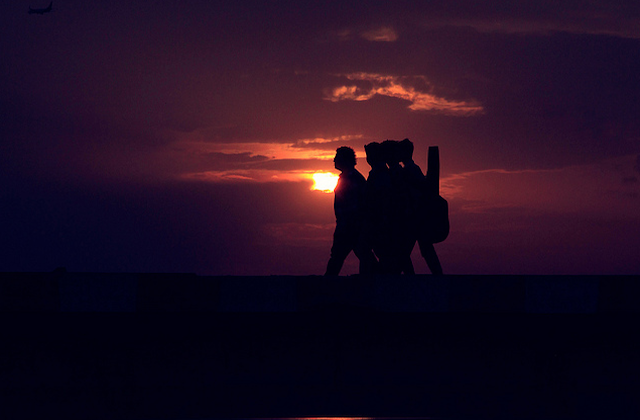
5 Ways to Find Your People (The Ones Who Really Get You)
“Above all, be true to yourself, and if you cannot put your heart in it, take yourself out of it.” ~Unknown
For probably over thirty years—since I was old enough to know I needed them—I’ve been looking for my people.
You know the ones—the people who get you, somehow; who are on the same wavelength. Some might even say the people who share the same brand of quirky, crazy, or oddness that you do. The ones who understand why you do what you do, or if they don’t understand, they either ask or they just accept, and either way is fine.
It’s not that there was anything wrong with my family or my school or the few friends I had, or my neighborhood—not at all. We all had our ups and downs, but we moved on and through it and had good times and bad. But I just felt a deep sense that the people around me were aliens. Or I was.
At one point during childhood I even made up a story in my head about how I had been placed with my family as an experiment to see how someone would grow up with people who barely even shared the same language. I’m sure a lot of kids had similar thoughts.
As I grew up, I continued feeling this odd sense of never being at home, safe, or comfortable.
Sure, I had friends and close family, and ended up successful in my career, but there was a kind of connection I was missing. Something where my particular gifts were treasured, and my particular sort of oddness was accepted and cherished; and where I felt safe enough to cherish and embrace the odd gifts of those around me.
I looked for safety and comfort in lots of ways: in relationships, in books, in short-lived hobbies, in TV, in long nature hikes, in workshops on “finding your purpose” or “finding the love of your life,” in meditation, in yoga, in spontaneous road trips. And there’s nothing inherently wrong with any of those, but it was when I got out of my comfort zone that I finally found what I had been looking for.
It happened when I followed my heart into the places that interested me.
At first, I joined a group of people that I wanted very much to like me. I tried to be likeable, to support them and to do the work that was required to make our projects successful, to help out when I could, and I attended every party and event. But something wasn’t right.
Though we shared a lot of interests, I felt like they never truly accepted me for who I was. There was a sense that they wanted me there to work and to even admire them, but few people seemed to be curious about me or to allow me in to become closer to them when I tried to become friends.
There was an odd sense of people always keeping me at arms’ length. For several years, I decided that there was something wrong with me, which was why they didn’t seem to truly accept me.
But one day, after camping with this group and feeling, again, that sense of not-belonging, I decided that it was neither me nor them. We simply weren’t a good match.
I kept looking, following my heart into another group within the same larger community. This time, they seemed to genuinely accept me, to like me, to respond to me, to open up to me, and to both value me and appreciate that I valued them. And I did value them—I do. They’re a bunch of amazing creative, smart, motivated, fun, and genuine people. And it was like night and day.
It’s not that everything’s perfect and that there are no conflicts or awkwardness, that everyone always gets along or that there aren’t moments of ambivalence where dynamics seem to shift.
But the people I’ve found more recently, after allowing the ones that didn’t seem to click to move out of my life, seem like they’re going to stick around. And I feel like making the effort to make sure that my friendship and support will keep these people in my life for a long time.
Here are some steps to finding those people who will love, support, challenge, and accept you:
1. Do what you like to do.
It doesn’t matter if you do it for work or do it for play, but do what you like to do. Sports, hobbies, hiking alone, travel, reading, collecting cigars, whatever it is, do it. You don’t even have to be super passionate about it, but if you enjoy it, do it.
For years I thought nothing was worth doing if I wasn’t Passionate-with-a-capital-P about it. But just enjoyment is enough. And spend the amount of time doing that thing that feel right to you.
2. Learn how to talk to strangers.
Every stranger is a potential friend, as they say. I’ve always been really shy, but when I focused on doing the things I enjoy, I started to get less shy, at least about those things.
It’s okay if you’re shy or feel like nobody understands you; just practice when you can. Learn that sometimes people don’t respond, and that’s okay. And sometimes you say something weird, and that’s okay. It really is.
3. Find other people who do what you like to do.
These days, with online social media and the Internet, you can pretty much find people who like to do anything you like to do. From knitting hats for cats to collecting particular kinds of rock, from listening to any kind of music to reading the collected works of obscure Romanian poets. If you like it, someone else likes it, I can almost guarantee it.
Find them, and introduce yourself. There is no rule that says “your people” have to live in the same town as you.
4. Participate, even if It’s scary.
Just because some people like what you like doesn’t mean they’re “your people.” You may have to keep exploring your interests for awhile, and keep exploring groups who share those interests. But when you find people who seem like they can handle you, step in and help out.
If it’s a group that meets in real life, volunteer your home for a meeting or offer to help out at an event; if it’s one person, invite him or her out to partake in the interest you share. You may feel awkward, but that’s okay. Awkward just means you’re stretching yourself.
5. Be honest and present.
Once you’ve met people that you feel you want to connect to, practice being brave enough to be open about that with them.
One of the first groups I thought were “my people” actually kind of intimidated me, and I never got up the nerve to be honest with people in the group about that. I ended up finding a related group that didn’t intimidate me as much, but I still wonder, if I had been willing to share my vulnerability with that earlier group, if I could have been able to connect with them more deeply.
Take up space with the people you think might be “your” people. Practice being open, saying what you feel, and being present with them. See how they react. The ones who stay with you in those moments of vulnerability, not judging you or criticizing you, are truly your people.
Photo by Vinoth Chandar
-
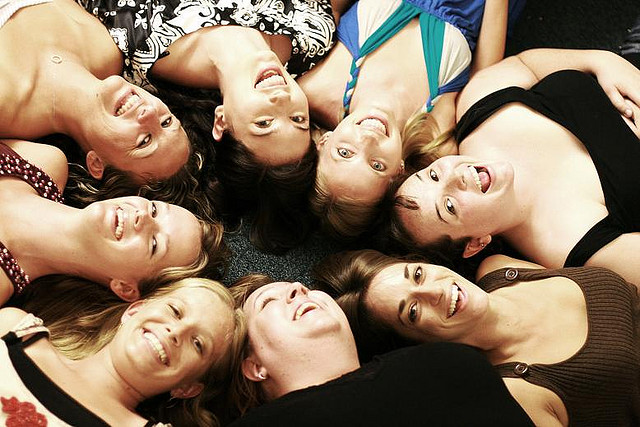
Feeling Gratitude for All the People We Sleep With
“We are all connected in ways we cannot even begin to fathom. Our lives unfold through each other and within each other.” ~David Rhodes
I can’t help myself—I love sleeping with people.
The more the better!
There’s nothing like crawling between the sheets with a lot of people. Female. Male. An armload of ethnicities. It’s all good!
Hey, don’t look at me like I should be ashamed of myself, because I’m not!
Besides, I know you do it, too. And you probably love it just as much as I do.
You think you know what I’m talking about, but I guarantee you’re wrong. (Quick lesson: assumptions are not good!)
See, what I’m talking about is the thousands (yes, thousands) of people it takes to create the beds we sleep in.
There are the people who extract the iron ore from the earth and…
…the people who ship the ore to…
…the mill workers who separate the iron from the slag and then make the angle iron for the bed frame.
There are the people who grow the cotton that will eventually be made into sheets and pillowcases.
There are the people who make dyes, who in turn rely on…
…the people who create the proper chemicals with petroleum or coal which, of course, is the fruit of…
…the labor of people who drill for oil or mine for coal.
There are the loggers who cut the trees that will become headboards and footboards…
I could go on and on and on!
And all those people represent only a few of the bed’s components! (more…)