Source: Power of Positivity

“Happiness is a direction, not a place.” ~Sydney J. Harris
Cars played a big part in my life growing up in Southern California. As a kid, there was a succession of crappy old station wagons that routinely broke down on the highway because we couldn’t afford anything better.
I remember Dad standing helplessly outside in traffic as drivers slowed down to gawk at us, then sped up as they drove on into their lives.
And the rusted green ’42 Chevy pickup truck my grandfather taught me to drive years before it was legal to do so, gears grinding when I missed the shift. My legs weren’t quite long enough to get the pedal all the way to the floor.
In high school, I was enamored with the low-riders cruising up and down the boulevards, “lookin’ for the heart of Saturday night,” as Tom Waits so poignantly wrote in his song.
You know, lots of hairspray holding up very big hair? Black eyeliner with perfectly executed tails? Carefully cultivated coolness? Like that.
Then there was the older boy, already out of high school and working … a grown-up. He drove a ’67 Chevy Impala SuperSport, with baby blue metallic paint that matched my eyes. I ended up marrying him.
Before long, though, I realized I needed my own car, my own life. To have those things, I needed to understand what made me happy.
Believe me, when I was growing up, we did not sit around the kitchen table talking about being happy or fulfilled as we ate tuna casserole mixed with Campbell’s mushroom soup, salty Lay’s potato chips crumbled on top.
Martin Seligman, Ph.D., says that, “Authentic happiness comes from identifying and cultivating your most fundamental strengths and using them every day in work, love, play, and parenting.”
My problem? Way too many of my “strengths” were filtered through lenses that didn’t belong to me. Rather, those strengths had been projected onto me by my parents, teachers, and a culture that molds people-pleasing little girls into supportive, one-step-behind young women.
Things like top-notch people-pleaser, knows how to keep quiet, does her work on time, never complains weren’t going to get me where I wanted to go.
I needed to learn how to draw my own happiness map, and follow it. Here’s what I learned.
Get some objective feedback on your strengths, talents, and gifts, using free tools such as the University of Pennsylvania’s happiness questionnaire and Strengths Finder.
I love writing, sharing my experiences, helping others; it’s part of my happiness map.
You may love something entirely different. Great! It doesn’t matter what it is, as long as you’re reaching for your stars.
There’s a lot of magic and plenty of miracles every day, if we only remember to look for them.
Developing a simple mindful practice helps set the compass point of your personal happiness map in the direction of what matters to you, what you’re willing to work for, who and what you want to love, and why.
Tara Brach has an incredible mindfulness meditation website—lots of free guided meditations and talks.
Find a local writing group that focuses on personal narrative/healing; try Julia Cameron’s famous Morning Pages; do some personal writing work with me.
Sometimes it’s easiest to begin a trip knowing where you don’t want to go. What doesn’t feel good. What (or who) feels like sandpaper against your skin?
The guy with that ’67 Chevy Impala SuperSport? It didn’t work out.
Back then, with no self-awareness or insight, all I knew how to do was blindly grab for what everyone else said I should want. That usually doesn’t work out very well.
All the fantastic neuroscience findings show us how to consciously use our brains to turn thoughts, attention, and choices toward the direction of happiness.
I am not those early messages of shame directed at a poor family with too many kids in beat-up cars.
You are not your thoughts or your emotions. Focusing on what lights you up keeps re-setting your brain for the positive instead of hanging out in its default negativity bias.
Watch this short Youtube video with my favorite neuropsychologist, Dr. Rick Hanson, as he talks about how to re-wire for positive experiences.
That’s the direction of your happiness: not your mother’s, not your friends, not what your ego is telling yourself you’re supposed to be doing.
This is how I end up hosting a popular weekly public radio show. I mean, who knew?! Not me … not ‘till I learned to let myself love what I love.
A terrifically fun way to do this is to take five minutes before you get of bed, every morning, and watch the movie in your mind called “My Perfect Life.”
In your imagination, see what your room looks like. What’s the view from the window? Who’s next to you in bed? When you get up, what does your home look like? Where is it? How does it smell? What sounds do you hear?
What are you doing that day? What are you doing next month? In six months? How do you feel?
Honestly, this one can be pretty hard. Those of us who are perfectionists, or like me, who’ve experienced trauma that caused us to do whatever it took to feel safe in the world, well, we need to re-learn a lot of stuff.
It’s okay that life is messy. It’s okay that we take wrong turns all the time, even get lost once in a while.
It’s okay that we’re still learning how to do it better, or make a different choice. As a beloved friend said recently, “Don’t let perfection get in the way of what’s good.”
You’re the one drawing the map. You’re in the driver’s seat.
I mean, how wonderful is it to be driving down the road, windows down, music turned up, feeling into the peace and freedom of simply being alive?
We all know it isn’t always easy. That sometimes, it’s a lot of work. Is it worth it, though? Oh my goodness, yes!
Yes, it’s important to get where you need to get, to accomplish goals and attain competency. It’s equally important, as well, to enjoy the journey. To be grateful for this amazing ride called life.
And if you change your mind, and decide to take the interstate instead of the dusty dirt road, that’s cool. Why? Because it’s your life, and you’re in charge.
Taking responsibility for your choices is just about the coolest thing ever. (Almost as cool as my hair looked back in the day, cruising with Eddie.)
Using your newfound self-insights, a five-minute daily practice of envisioning your most perfect life ever, and a map (maybe even an actual one), you begin making different choices.
Do you say no to a couple of commitments and/or people? Choose to take the very first thirty minutes of your day to write instead of check emails? Give yourself an hour of no-tube-time after work, and do one thing that feels good, just because it does, like yoga or taking a community college class?
I’ve had my own car for many years now. I’m living my life on my terms, always heading in the direction of happiness. Yes, I’ve had a few flat tires, and took a couple of back roads that went nowhere. Ended up at the edge of a cliff more than once. That’s okay.
Flat tires can be changed. Back roads are lovely. Put the car in reverse, and back up, away from the cliff edges.
Pay attention. Be gentle. From that place, you can begin making better choices. As my son says, “It’s all good.”
If you’re draining your energy and power, giving it away to people/ideas/choices that do not nurture you, just notice that. And start making different choices.
Because, if you’re moving in the direction of happiness, you will absolutely, totally, no doubt about it start feeling more fulfilled, more peaceful, and happier.
Little girls with map image via Shutterstock

“People have a hard time letting go of their suffering. Out of a fear of the unknown, they prefer suffering that is familiar.” ~Thich Nhat Hanh
My unwillingness to accept my anxiety disorder (there, I said it, I have a disorder) results in panic.
It results in waking up at night, heart racing, body tingling and trembling.
It results in driving down the road in a thunderstorm thinking I am having a heart attack—but I just keep driving and talking to my beloved on the phone because “if I can just keep driving away from it, it will be okay.”
Instead of accepting anxiety as a family member of sorts, I resist and resent her visits. She’s always forced into drastic measures to get my attention.
When the panic and physical symptoms of anxiety start, I assign it to something else.
My heart races and I must have a heart condition. I’m dizzy and I must have a neurological condition. If it’s not me I assign it to, it’s my children. My son has a horrible bruise; it must be Leukemia. Life is too good; something awful is going to happen to someone I love.
It always happens just like this, I’ve realized recently.
Anxiety shows up over and over the course of my lifetime, yet my expectation is that it won’t.
Instead, I expect that I will always be happy, stress-free, compassionate toward others (but not myself), kind, thoughtful, smart, successful, fit, skinny, wrinkle-free—the list of things I “should” be goes on for miles. That word, “should,” is something that I need to eliminate from my vocabulary.
I convince myself that anxiety can’t be the cause of these physical symptoms, because that would mean that I am something less than happy.
Ah, there it is. Feelings other than happiness are bad, and I should (there’s that word again) be happy all the time; so therefore, if I’m not happy, I’m not perfect and I’m a failure. See how that works?
Yeah, I see how irrational, uncompassionate, and unforgiving that is when it’s on paper, which is one reason I’m writing this. The other reason is because I realized I’m not being true to who I am without accepting this part of me.
People who know me describe me as an open book. I would have described myself that way until recently.
This is a part of me that I’ve hidden for years. I tuck anxiety away like that black sheep of the family and make sure no one, not even those closest to me, know her.
I’ve been ashamed of my anxiety and I’ve realized that all along that black sheep family member just needed me to accept her.
To sit with her and maybe give her a hug and say, “I see you. I know you’ve visited before. Feeling something other than ‘perfectly happy’ is a normal part of life and I should expect to feel anxious, worried, upset, or even sad sometimes. You’re here to help me figure out what feeling is really behind this anxiety and what actions I can take to feel better.”
Recently, my children went out of state with their father for a week. This was the first time I had been that far away from them for that long.
Every day I would wake with a jolt, heart beating fast, wondering why I felt so anxious. I finally realized that being away from my children and worrying about their safety was causing these feelings of panic.
After recognizing this, I decided to focus on the fun things they were doing every day and how this trip would provide them great memories for many years to come instead of thinking about all of the “what ifs” associated with their trip.
I see this recent epiphany as progress in my lifelong journey of self-acceptance.
I am going to try hard to see anxiety as the gift she is, because every time she leaves, I’m a little more enlightened. I feel more capable of managing my anxiety and I realize that I am in control of my thoughts, not the other way around.
I am able to be more compassionate to others when they are feeling less than “perfectly happy.” I’m able to dig a little deeper into what is causing my anxiety versus denying I have it at all.
When I do that, I can develop a plan, which either addresses any legitimate concerns or dispels any irrational ones. It’s a lot easier than continuing along just being a victim of my own thoughts.
The next time anxiety shows up, I’m going to try to embrace her visit so she doesn’t have to go to such drastic lengths to be seen and heard. I’ll simply say, “Oh, it’s you again. Come on in and sit a spell. We have work to do.”
If you also have a family member named anxiety that’s visiting you more often than you would like, sit with her for a while. Think about why she’s there. What are your anxious thoughts?
Write down any irrational, anxious, or self-defeating thoughts on one side of a piece of paper. On the opposite side, list any actual evidence that the thought is true.
An example for me would be “I’m a weak person because I have anxiety.” To challenge that thought is easy—I can list 100 examples of how I am not weak, and have a hard time coming up with even one that proves my thought is true.
Most of the time writing it down takes away the power of the thought and brings some clarity. If you do have a thought that’s true, figure out some steps you can take to address it. Put yourself back in control. Try it the next time anxiety visits and see if it shortens her stay.
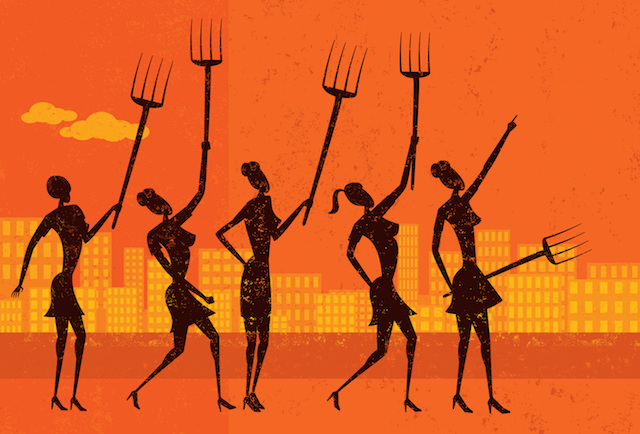
“Anger is an acid that can do more harm to the vessel in which it is stored than to anything on which it is poured.” ~Mark Twain
I am in serious danger, and I think you might be too.
I am in danger of becoming a grumpy old person. I get angry easily. I operate on a short fuse, ready to snap or explode at the littlest thing.
I could blame it on a combination of genetics and environment. My father seems to have only two moods, and one of them is angry.
He is like a volcano and can explode at any moment. And I don’t mean he’s just cranky or that he yells.
No. When he loses it, he really loses it. Emotionally and physically.
He tenses every muscle in his body, clenches his fists, sticks his jaw out, and says things like, “Eeeoourgh!!!”
He is a fireball of white-hot fury. Irrational, unreasonable, and perverse.
As a child, I never knew whether I would be hugged or hit. I desperately wanted his approval and love, but often I incurred his wrath.
As a teenager, I learned to fight back, yell as loudly, and be as demanding as he was. As an adult, I learned two key components that comprise anger.
There’s the emotion that can envelope you in a moment, instantly causing you to become irrational and almost uncontrollable. And there are the situations or environments that have the potential to lead to anger, if we let them.
I could let anger rule my life, but I refuse to do that, damn it! So I employ some simple anger management techniques instead.
I am still in serious danger, but with these tools, I think I’ve found a way out.
Create a process for managing situations that often trigger anger. When someone does something that upsets you, take a deep breath and trust in the process.
One process I use to express my feelings calmly is to describe the behavior and explain my emotional response.
So, I’d say something like, “When you yell at me, I feel hurt and upset,” or, “When you behave this way, I feel really angry.” It helps identify the problem and my emotions. It also helps me feel in control and prevents me from resorting to useless, blaming behavior.
Try a little tapping, or Emotional Freedom Technique (EFT). EFT is a healing tool that helps reduce deep emotional responses so we can manage our lives more calmly.
The whole EFT process includes a tapping routine and a mantra, but I find a simplified version just as effective.
When you feel an intense emotion, just use your first two fingers and tap your collarbone until you feel calmer. If you start tapping quickly and then gradually slow your rhythm, you’ll find yourself calming down.
Sometimes, when I feel like tensing up and yelling, “Eeeoourgh!” myself, I go to the bathroom and tap until I feel calmer. Then I can handle the situation rationally.
Centering is a super-simple technique that even a child can use. All you do is focus your mind on your belly button, or rather, just a smidge below your belly button.
As you focus, tense those muscles and draw your belly button in toward your spine. If you’ve done any Pilates or yoga, you’ll be familiar with these deep abdominal muscles.
Doing this exercise is truly calming and empowering. It puts you in a state of calm control, so you’re less likely to react and lash out. I sometimes close my eyes for a moment and focus on my belly button. When I open my eyes and continue centering, I can operate more calmly and coherently.
Anger appears when we’re frustrated, but if you stand back from the situation a little, you might see it’s quite ludicrous. Not always, but often. Before you blow your stack, stand back and see if you can find something silly about what’s happening.
I remember being frustrated by an organization I worked for when they arranged a breakfast for us to discuss strategies to improve our work-life balance.
They wanted us to get up hours earlier than usual and spend extra time with our colleagues so we could talk about ways we could spend less time with them. How ridiculous!
We can experience anger and frustration almost daily, and the more we experience it, the more it becomes our way of operating.
When you commit to practicing daily calm, you counteract the anger. You practice something much more beneficial to your health and well-being.
This doesn’t have to be hard. Just spend a moment or two doing nothing, whenever you can. Sit quietly and realize that you’re doing nothing, and see how calming it is.
The next time you find your anger rising, divert your energy into curiosity. Get really curious about the other person’s perspective.
Keep asking questions until you fully understand the other person’s opinion. Once you do, you’ll be in a better position to discover a solution that suits everyone.
Recently, my daughter was extremely trying, and I saw red. I drew in my breath, preparing to yell at her. But somehow, in the split second of inhaling, I thought, I just need to follow the process.
Instead of yelling, I reflected her feelings to get to the bottom of why she was behaving so poorly. I got curious about the cause of her behavior, and together we created a solution to the problem.
Instead of an angry interaction that would rip our relationship apart, we had a truly productive, useful talk that brought us together.
If you feel yourself spinning out of control with anger, you can become grounded by literally grounding yourself. Hug a tree, lay on the ground, or sit with your back to a large, solid oak.
Connecting yourself to the ground in this way will make you feel both physically and emotionally supported, calm, and stable.
Grounding strategies help you detach from strong emotions. They help you gain control over your feelings so that you can get back in control.
If you need a more portable strategy than an oak tree, try putting a small stone in your pocket. When you start feeling overwhelmed by emotion, reach into your pocket and focus on the stone—notice its texture, size, and temperature. This action focuses you on reality and stabilizes your emotions.
There’s a Monty Python skit where Michael Palin pays for an argument in the argument room. We often do the equivalent of asking for an argument by starting discussions that go nowhere or pushing our opinions onto people who don’t want them.
We should always ask ourselves if going into the argument room is worth it.
When my father rants, I often let him go. I don’t want to engage with him because I’d be entering the argument room, and for what? I’d end up cranky and frustrated, without achieving anything.
Anger is often a secondary emotion that masks the true feelings beneath it. The next time you feel angry, look inside and see if your anger is masking another deeper emotion.
If you can discover the underlying emotion, you can address the real reason behind your emotional response.
Think about the last time someone cut you off when you were driving. The moment it happens a chill of fear runs through you, and then it’s quickly replaced by frustration and resentment.
Or, consider the last time you were running late and someone seemed to be delaying you. Underneath your anger may be self-loathing regarding how you didn’t prepare better, guilt for making someone wait, or fear of the consequences of your late arrival.
Anger is the secondary emotion.
It’s a powerful, all-encompassing emotion.
Well harnessed, it can drive us to achieve great things. We can use it to fight injustice, increase confidence, and create focus. Think Erin Brockovich, Alanis Morissette, and Steve Jobs.
But it can also ruin our relationships, damage our reputations, and make us hard to love. Think Naomi Campbell, Mel Gibson, and Charlie Sheen.
That grumpy old person we talked about? Their anger is unchecked, and it’s become a front.
A way of interacting with people. A mask to hide behind.
And no one can live a great life if they’re hiding.
It’s far better to have the courage to face the world, and your problems, head on. To discover what’s really under that anger, and address the true problem.
The next time you feel your anger flare up, you can hide behind it, or you can dig deep into self-reflection and deal with what you find.
Which will you choose?
Angry woman image via Shutterstock

“Fear: False Evidence Appearing Real.” ~Unknown
It was an ordinary school morning in a busy European city. I seem to recall it was spring, as my memories store the feeling of awakening after a long winter.
I was seventeen and getting ready to go to school. Following my standard morning routine, which included eating my meticulously assembled breakfast, I walked to the tram station.
The city I lived in at the time was situated in a beautiful valley, and the tram ride offered a trip to the hub of the city. My high school was downtown in the historical part of the town.
I loved walking to the tram and even more, I enjoyed walking from my final tram station to school.
There was something different about walking in the middle of old buildings that always gave me the feel of spaciousness, grace, and often mystery. It was such a striking contrast from the modern and mundane apartment buildings in the newly built subdivision where I lived!
The city transport experienced some chaos that morning, as the typical short wait time between trams turned into almost a half hour.
My tram station was really crowded, and I felt lucky I got in. As I stood in the tram that spring morning, looking outside the windows and barely noticing the grey high-rise buildings, little did I realize what this morning would bring for me.
It seemed like an unusually busy day, and because of the delay, every tram stop had a huge crowd waiting at the platform.
After five or six stops, the tram was packed like a can of sardines. I watched people at the stops nervously looking toward us, “the lucky ones inside,” as they likely contemplated how late they would be for school or work today.
I really wished this ride would be over soon.
The tram started moving toward the downtown area. It is quite a steep hill downward into the valley. This stretch of the ride was the most fascinating for me, as the green area framing my view just zoomed by like a wide line painted by a massive paintbrush.
I felt lucky to be by the window and having breathing space in front of me instead being squeezed in the middle of the crowd.
The green space, however, moved incredibly fast this morning, as if it was just flying by. Then I registered a sudden jolt.
After that, it was very quiet. In the midst of this silence, all of sudden I heard a voice asking for help. It sounded quite frightened as it repeatedly asked, “Please help.” Who is saying this? I wondered.
If you ever experienced no connection to the concept of time, this was it. After I heard the same voice a few more times, I came to a surprising realization. It was mine.
This voice was coming from my body, yet I felt I was a completely peaceful self, compassionately watching someone who was frightened.
Later on I realized the tram derailed and flipped sideways. I was saved and physically unharmed because I was on the “lucky” side of the tram.
I continued the journey called life, but something unlocked inside me. In fact, I was “haunted” for years by the experience of my “peaceful self,” which had listened to my scared physical self.
Needless to say, I continued to live my life for a few decades very often identified with my scared physical self but always wondering about my peaceful self.
Who am I really? Who was the part of me that heard my voice?
Fast forward many years, I encountered the presence of my peaceful self once again. Luckily, this time it wasn’t in an accident.
After years of hard work establishing myself as an immigrant, learning a new language, and creating financial stability, I decided to end my job and step into unknown and uncertainty. I didn’t know how I was going to earn money; I just knew what I did before wasn’t part of my life’s purpose.
My body shriveled with fear. My mind was racing with thoughts about my bleak future and losing everything I had ever worked for. Not only that, but this could have meant I wouldn’t be able to help family members that I had previously helped out financially.
I remember it was a bright sunny day and I was in the office with my boss. The glass windows in the corner of the building surrounded us and lit up the space.
I felt I was bathing in light. I was literally not able to speak. My mind kept saying: You can’t do this! And then it happened again. I heard a shaky voice saying: I decided to quit.
Have you ever felt your chest opening up? In this moment, I felt as if a cave opened inside my heart. A wave of calm spread through my body. My peaceful self was there, watching and observing my scared self. I cried tears of relief.
These days, I don’t even question my peaceful self. I just trust it’s with me everywhere, holding its arm around my shoulders and whispering: Trust. You are going to be okay
And as I embarked on a life time journey of meditation reconnecting with that peaceful part of myself, I repeatedly remind myself that I am simply able to watch my frightened physical self.
And so can you.
Whenever you feel stuck in life and full of fear or desperation, remember that the big, real part of you is simply the peaceful observer that can watch the physical self. It can watch the fear, sadness, or anything that arises inside you. And it will watch it with love and compassion.
We often experience pain when we associate with our thoughts and believe that we are our mind and our emotions.
Do you have a thought that frightens or worries you right now? Simply say to yourself that you are noticing that thought. Say it at least five times until it feels more and more distant. Now you are coming much closer to being your peaceful self.
My reconnection with my peaceful self brought so much more freedom to my life, and I believe it will bring freedom to your life too. Visualize it holding its arm around your shoulders and telling you: Trust. You are going to be okay.
Man with palm tree image via Shutterstock

“In chaos, there is fertility.” ~Anaïs Nin
Are you a calm creature in your yoga class, then you get home and yell at your kids?
Do you ever read a really inspirational book or blog and think, “Yes! That makes total sense, and I’m going to start doing that!” Then life gets busy and it never quite happens?
Do you ever feel like you’re two different people living in the same body? Saying one thing, doing another?
Me too.
For the past fifteen years I’ve been a self-development junkie.
I’ve read tons of books and I’ve attended courses and loads of amazing workshops. These covered everything from parenting to time management, relationships to getting organized, healthy eating to setting up a business, plus anything to do with spirituality and personal growth.
All of these have inspired me with an array of fantastic ideas—but often they remained just ideas, floating around in my head without any action plan behind them.
On the mat at my local yoga center I was the calm, peaceful, positive soul I craved to be. Yet, when I got home and re-entered my chaotic reality, it felt like just a temporary illusion.
I was straight back to my grumpy, irritable, impatient “other self.”
What was wrong with me? How could I be so Jekyll and Hyde?
How could I more consistently be the “me” I loved being around?
I was writing in my journal one day when I began to list the qualities I show when I’m being my best version of me.
I knew what brought out the best in me—yoga, inspiring workshops, running in nature, laughing with friends, dancing my socks off, getting stuck in an amazing book.
Then I listed what the poor version of me looks like.
I asked myself, “What brings out the poor version of me?”
And it occurred to me that, since I know what brings out the worst in me, why not look at each of these things and find ways to make them happen less often?
I realized that I needed to get a handle on the day-to-day “running the show” stuff.
To tackle overwhelm and having too much on my plate, I began to take a deep look at my time management. I learned how to say “no,” to delegate, and to structure my days better.
I began to prepare for success by meal planning, laying clothes out for myself and the kids the night before, and always thinking one step ahead about what I’d need to take with me before going out the door, so I could feel calm and confident that I wasn’t forgetting anything.
I began to feel less rushed. I was on time.
Then I got back into a regular journal writing habit. I also had weekly scheduled brain-dumps to get things out of my head and onto paper so I could figure things. I crafted step-by-step action plans to get organized and on top of everything that needed doing.
Instead of spending my evenings slumped in front of the TV or scrolling mindlessly on my phone, I started having regular candlelit baths and getting into bed earlier, curled up with a good book.
It was the “me” time I always craved but never thought I had space in my day for. And I was consistent with it. I was finally implementing a lot of the great things I’d read about (hurrah!), and I felt the best version of me coming out more often.
Once I got on top of the logistics, I felt less stressed and overwhelmed. It was easier to be more mindful and present. I began a daily practice of checking in with myself, asking, “How am I feeling?” listening to the answers and using them to guide me.
After a lifetime of telling myself “I’m not a morning person,” I began to wake fifteen minutes before the children and used this quiet time to write in a gratitude journal or meditate using an app on my phone.
It’s helped me stop being so cranky at breakfast and send my kids off to school peacefully, and with love.
It took recognizing what brings out the worst in me to turn things around. It didn’t happen overnight, but by taking baby steps in the right direction I got there.
Now I’m able to be my best version of me in my everyday life—not just on the yoga mat.
If you want to be your best version of you more often, write your answers to the following questions:
I feel like my best version of me when…
How I feel about myself when I’m the best version of me…
It’s easier to be my best version of me when…
I’m a poor version of me when…
What can I learn from these insights? What new habits can I create to make it easier to be my best version of me?
Inspired actions I will take this week:
1.
2.
3.
Share in the comments below: What brings out your best and worst you? What can you do to bring out your best self more often?
Happy woman image via Shutterstock

“To ensure good health: eat lightly, breathe deeply, live moderately, cultivate cheerfulness, and maintain an interest in life.” ~William Londen
We often focus on nourishing our bodies, with fitness and nutritious food, and forget that to function at our optimal level and experience overall well-being, it is equally important to nourish our minds.
Years ago I wasn’t doing either, and eventually I got stuck, physically, mentally, and emotionally. Physically, I had low energy; mentally, I was not growing; and emotionally, I was bored, resentful, and lost passion for life.
Life became a monotonous routine. I got lost in playing “safe” and remained in my comfort zone, which started limiting my potential to live the life I wanted to experience.
Things became stagnant and I knew something had to change to feel alive again, so I looked for ways to change my mindset, to help me move past my negative self-talk, and to find the courage to take action.
Once I started choosing activities and thoughts that nourished my mind, it triggered me to turn up the love for myself.
I started seeing my habits shift to eating better, incorporating more physical activities into my life, and being more open to take risks. I was able to live from a more peaceful, fearless, and creative space.
Nourishing your mind is feeding it with positive, compassionate thoughts that support you in taking action to create the life you want.
We often hear people say, you are what you see, you are what you eat, and you are what you think. Our life mirrors back the energy we put out.
Your body and mind work as one.
Nourishing your mind is a critical component of living a healthy, empowering lifestyle. It impacts your body systems, your behaviors, and how successful you are at creating the experiences you want in life, because everything stems from your mind.
When you nourish your mind, the thoughts you create trigger chemical responses in your body that help increase your happiness, lower your stress, and allow your body to function in homeostasis.
By checking in routinely to ensure your mind is aligned with your core values and what it is you want to feel and create in your life, you are able to choose your thoughts from a place of deliberation and clarity. This generates more peace, health, and happiness.
Below you will find the practices I have continually applied to maintain a nourished mindset before the mental weeds start to grow out of control.
Many people underestimate the power of breathing. The act of breathing consciously allows us to inspire vitality and expire what no longer serves us in life. It’s the constant that represents our life force, and it influences all aspects of our body, mind, and spirit.
It is also a tool you can use to “check in” and recalibrate what’s going on in your body and what’s happening in your life. It refreshes your mind and brings you back to the present.
When you slow down and pay attention to your breath, it quiets your mental chatter and creates room for you to tune back into your essence, while your body benefits physiologically. As yogis often say, “Perfect breath equals perfect health.“
Tune into what tugs at your heart and makes you happy. When you follow it and allow yourself to bask in the feelings of happiness and fulfillment that result, your mind will consequently feel lighter and more positive.
Stop searching for happiness and stop trying to conform and meet others’ expectations. You only get lost in the process of trying to please everyone else, when the only constant you can control is you.
Practice being kind to yourself. Give yourself a break. By instilling loving and non-judgmental thoughts in your mind, you allow yourself to experience more pleasure than pain.
I remember a time when I had to host and record a conference call for my coaching group, as it was part of the curriculum requirements. After the call, I realized I didn’t log in properly as a host and failed to record it.
Instead of getting angry with myself for being a careless, forgetful idiot and letting my group down, I asked myself what would I say if it happened to another group member.
I knew I’d say it’s okay, things happen. Look at it as a technical learning experience. We all enjoyed the call and came out with new ideas and perspectives and you did a great job leading it.
Now, doesn’t that sound nicer than if I was to beat myself up?
When we experience conflict in our lives, instead of making assumptions, take responsibility and ask powerful questions. Get the facts. See things from a different angle, and spin it into a positive perspective.
Instead of thinking why is this happening to me again? Ask what do I want to change? What can I learn from this? What has to happen for me to feel good about the outcome?
Our perception creates our reality. Reflect on what can be done and what you can control to influence and create the outcome you seek. When you are willing to take responsibility, you will be freed.
Oftentimes, failure is what stops us from taking action to better our lives, because it has a negative connotation attached to it, which fuels our mind with fearful thoughts.
When you change your beliefs about failure, it can nurture your mind and allow you to take steps to achieve what it is you seek.
Not trying is failure. Exercise your right to live a full and purposeful life.Give yourself the opportunity to create and experience the life you desire.
If you fail, similar to Thomas Edison, you’ve simply learned “10,000 ways that won’t work.” This takes courage and contributes to your learning and growth, which is what feeds our energy and vitality for life.
We are not perfect, so stop trying to be. The sooner you are able to accept your imperfections, the sooner you’ll be able to get out of your head, and the sooner you’ll be able to rock your authentic self.
When I travel, I challenge myself to bust out what I know in the local language when meeting people or asking for help. Most people appreciate the effort, and are often more willing to help out and engage in conversation.
In the process, I am improving my language skills little by little, having a good laugh at times, and if I’m lucky, I may experience and meet some really interesting and fun people.
When we seek to be perfect, our mind tends to be on alert to ensure all the i’s are dotted and the t’s are crossed. Our body gets uptight and our mind gets lost in the worry. It gets exhausting and stops us from allowing lightness and joy to come into our lives.
So, if you are trying to be perfect somewhere in your life, ask yourself, am I already doing the best that I can? Am I trying to be someone else’s perfect vision? If you answer yes to the questions, I encourage you to let it go for your peace of mind.
Remember, when you feed your mind with nourishing thoughts, your body also benefits from it. So find and apply what works for you, and see your life shift in the direction you seek with greater clarity, courage, and confidence.
Woman in garden image via Shutterstock

“I vow to let go of all worries and anxiety in order to be light and free.” ~Thich Nhat Hanh
Our daughter is seeing a counselor to help her deal with anxiety. She’s only ten. Cue mother guilt.
There are a whole lot of (mostly crazy) worries running around her little head, some that even I can’t wrap my head around. So I wrap my arms around her and reassure her that things will be okay.
I give her permission to be anxious, but try to instill resilience so she won’t worry so much. I try to teach her mindfulness and meditation and positive thinking. And I worry, about her and too many things—some role model I am!
Mostly, my daughter worries about something happening to her dad or me.
Separation anxiety is the crux of her problem. She’d been avoiding sleepovers with friends and even her grandparents, and it all came to a head when her school camp loomed large.
The good news is she got through camp, thanks to her resilience, mindfulness, her first counseling session, and our pep talks—and despite my worry, which was wasted, as it always is!
Getting through camp was a big achievement for our daughter in her journey to overcoming anxiety, but she has a road ahead as she deals with her fears about losing us, embedded as they are in processing her feelings about being adopted and the loss of her birthparents in her life.
She has a lot to deal with, yet she is brave, strong, resilient.
She’s only ten, but she’s already demonstrating ways to take worry out of her life. I’m beyond proud.
I gained my own painful insights into the futility of worry through a long journey of infertility and an equally long wait for adoption. Loss of control was the only certainty. Yet, I’ve gained the most clarity through my children’s eyes.
Children teach us lessons every day, if we are open to learning them. And they open our closed minds to lessons we learned as kids but have forgotten.
There was a time when worry didn’t exist, as hard as it is for us adults to imagine. It was all about the present; the future wasn’t to be feared.
The key to taking worry out of life, I think, is to reconnect with that sense of child-like wonder, while bringing to each moment the adult wisdom of knowing that worry will never change what happens. That “this too shall pass.”
Here are five ways to overcome worry that I’ve learned and assimilated from what my daughter has so courageously demonstrated.
This sounds counterintuitive, but if you stop worrying about worrying, it’s a really great place to start!
For starters, you need to have some fear in your life for when you are being chased by a lion and need adrenaline to kick in in order to flee (great idea), or when you are confronted and the only choice is to fight.
A bit of worry is normal—good news for anxious people who worry even more about being abnormal. Some stress about consequences keeps us motivated. It keeps us alert to possibilities and shows that we care.
A little bit of worry is natural, normal, and human. Use it wisely.
Can you imagine dancing and being worried at the same time?
Of course, even a prima donna ballerina will have at least a hint of stage nerves (for adrenaline, and because she cares). But the dancers we admire so much, who hold us in thrall, they go to a place where worry cannot exist.
It’s a magical place where their bodies meld with the music and become one, and there’s no time, only rhythm and movement and wonder that we humans are even capable of such beauty.
I’ve watched my ten-year-old dance like this, and I watch her all the time, flipping, cartwheeling, hand standing and doing walkovers, pirouettes etcetera, over and over. She quite literally moves through her anxiety.
She’s not worried at all about dance (other than a few stage nerves), and she loses all other anxious thoughts when she’s lost in the beauty of it.
Movement—be it dance, yoga, running, walking, swimming, or whatever sport or exercise—provides the opportunity to distract yourself from worry, to be lost in the wonder of being able to move your body for its own sake. Little by little, anxiety fades.
When we stop physical activity, we make room for more thoughts, and that can be scary.
This is when we need mindfulness to simply witness those thoughts—not to judge them, not to feed them so they multiply, but to simply observe them as waves rolling in and out.
If you can separate yourself from your worries and focus on your breath, then you can breathe in fresh air and calm and exhale worry. You create both a physical and mental means of release.
You can open the space for stillness, a place where peace replaces worry.
Anxious thoughts are as persistent as they usually are irrational. When they take over our self-talk, it can feel like we can’t change the script. But they’re just lines in a script we run through our heads—a fiction.
Children, with their abundance of imagination, find it harder to separate fact from fiction, and one of the skills my daughter is learning is to think rationally about her anxieties.
For example, I tell her that it’s no more likely something bad will happen to her father and me when she isn’t with us than when she’s tucked up in bed in the next room. She sees the logic.
She worries about us being older parents and not being around for her, and while I can’t change the facts, I can point out that if she does the math her fears of our imminent deaths are unfounded if you look rationally at the figures (we are not that old).
Anxiety cowers in the face of rationality. Arguing back with forceful reason is a way to change your self-talk over time, literally starving your worries of oxygen.
Resilience, along with empathy, is the key quality we are trying to instill in our children. If they never have to cope with failure or disappointment, today’s mollycoddled generation risks falling apart in the face of a crisis.
Resilience is your armor against anxiety. When you cultivate resilience, you have a ready reminder of what you’ve already survived (and often thrived through) in the past. You are shielded by the strength you’ve built up and safe in the knowledge that you can prevail, that things will get better.
Resilience is so much more powerful than blind faith that things will be okay, because with resilience you will be okay regardless.
Worry can’t triumph against such resolve.
—
I wish I could say that getting over anxiety is easy because even a child can do it, but it’s not. It’s hard for our daughter, but we want to try stop anxiety becoming a painful pattern she takes into adulthood.
For us adults, I think we can only work with and through worry—put it in its place, put ourselves in control. Take the lead in this universal dance through life.

“Once you choose hope, anything is possible.” ~Christopher Reeve
I have suffered from depression since I was a teenager. My experiences have also caused severe post-traumatic stress disorder.
My father has been abandoning me for my whole life. As a teenager, I went to live with him because my relationship with my mother was so difficult. He sexually abused me for the year that I lived with him.
At the age of seventeen, I sought solace by turning to what I thought was God. For the next twenty-eight years I held a set of beliefs that were angry and judgmental and made me feel cut off from others, including my family and those in my own church.
Because of my experiences with my father and the church, I had a hard time living in the moment and enjoying life. I lived with low self-esteem and had trouble establishing healthy boundaries in relationships, which caused me to continue to create painful interactions with others.
When I was forty-five years old, I sought relief from my depression and loneliness through self-help books. I quickly found my way to author and publisher Louise Hay and began my journey of enlightenment and healing.
Over the last couple of years, through therapy and continued reading, I have discovered some tools to help me feel more positive, peaceful, and joyful. I notice when I use them consistently, I recover faster from periods of depression. Perhaps they will help you, too, when you are feeling depressed.
Some ways to do that are: be patient and compassionate with yourself, release perfectionist standards, remind yourself of all your wonderful qualities and talents, and give yourself praise and encouragement.
Doing a self-love meditation is especially comforting and uplifting for me. I talk to myself like I would to someone else that I want to express love to. It feels amazing to give myself what I want and need.
Allow her to feel and express what she is going through and grieve when she needs to. Let him know that you are always there to listen and to love him.
When my inner child feels angry, I validate and soothe her. I let her know that she deserves to have relationships that feel good and have healthy boundaries within them.
As you observe your unpleasant sensations, name them. For instance, I feel heaviness in my chest, I feel like crying, my arms are warm, my head feels like it’s going to explode, my stomach hurts, my muscles are tight.
As you simply allow your sensations to be, you will notice that they start to dissipate on their own. Try it. You will be amazed.
When I do this exercise, I may also notice the thoughts that are causing the troubling sensations. I have learned that in spite of my unpleasant sensations, I can still hold a positive thought or belief and when I do, I feel better.
So, I may say something like this to myself, “In spite of all of these unpleasant sensations, I know that things can work out the way that I want them to.”
One day I was feeling very disconnected from others, so I called a friend of mine and asked if she had time to come by and give me a hug. She said she loves hugs and she came over for a short visit to give me one, which gave me the sense of connection that I needed and wanted to feel.
Here are some examples of things you might ask for: a massage, a favor, someone to listen to you or to help you problem-solve, or a date with your partner or a friend or family member.
Something I do on a regular basis is ask the Universe for a gift. I always get what is perfect for me at that time. Sometimes a wonderful new thought fills my mind and lifts me up or I receive guidance on an important issue, and other times I receive an unexpected monetary gift or an interaction with someone that makes me feel loved or appreciated.
Some things you can do are: meditate, spend time with (or call) a friend or family member, read, do a hobby that you love, listen to music, take a hot bath, watch your favorite television show or a movie, or treat yourself to something you have been wanting.
Spending time in nature helps me to ground myself in the present moment. It gives me an inexplicable peace and joy that surprises and rejuvenates me. I love going to the lake or for a walk or sitting on my porch, which has a beautiful view of the most wonderful trees.
You don’t have to know how you will receive your desires and you don’t have to figure anything out. Just rest, knowing that the possibilities will unfold.
I specifically remind myself that it is possible for me to: feel well physically and emotionally, be fulfilled and prosperous, and have love, joy, and peace in my life. When I do this, I sometimes get excited as I anticipate the changes and miracles to come.
In your mind’s eye, place negative thoughts on leaves and watch them gently float away downstream, or place the troubling words on cars of a freight train and watch them zoom away.
When I do these exercises, I place distance between myself and what is bothering me, and I feel lighter.
Notice when you are not depressed and take the time to be fully present in those moments and appreciate them. Notice how it feels in your body to not be depressed.
Now that I am more aware of when I am feeling good, when depression hits, I know that I am not always depressed. I acknowledge that this too shall pass.
Sometimes what you need to get out of the pit of depression is to be productive. You may get depressed because you are not getting important things done, or you may be depressed and therefore not get important things done. In both of these cases, productivity may make you feel good about yourself and lift your mood significantly.
When I feel depressed, I don’t feel like doing anything. So, I tell myself, “In spite of how I feel in my body and these upsetting thoughts, I am going to wash my dishes (or any other activity) anyway.” Once I get one thing done, I feel a sense of accomplishment and am usually motivated to get other things done.
Surround yourself with positive and loving people and healthy relationships. I remind myself that I deserve to have relationships that feel good and nourishing to me. I may give myself space in certain relationships and release others that are not working for me.
I remember that people do love me, even if they don’t show it the way that I want. I know they are doing the best they can, and if they don’t love themselves, then they are not going to know how to love me. I forgive them for the ways they have hurt me or let me down, and that gives me some peace.
I consistently practice using my tools when I feel depressed and I know that the saying “practice makes perfect” is not true. My human self will never be perfect, and that is okay.
Not all of my tools will work every time to help me move through depression. Sometimes I use just one tool and other times, I use additional ones. I listen to myself so I will know each time what I need. And you can do the same.
*This post represents one person’s personal experience and advice. If you’re struggling with depression and nothing seems to help, you may want to contact a professional.
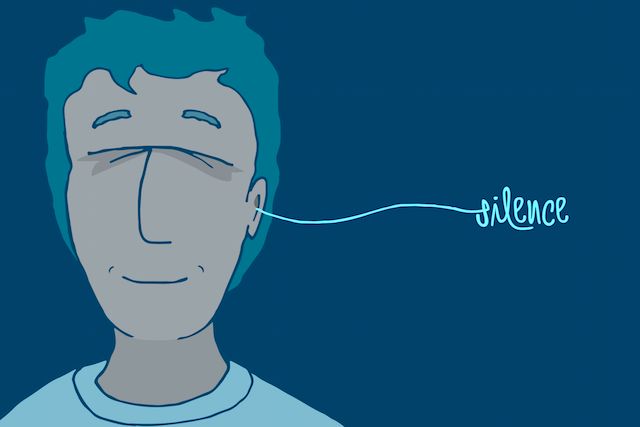
“Silence is a source of great strength.” ~Lao Tzu
For over two years I spent one out of every four weeks in silence. At the time I was living at a Zen Monastery and every month we would have a week-long silent retreat.
During this retreat we sat meditation in silence, ate in silence, worked in silence, and only communicated through hand gestures and written notes.
At first living like this was hard, but over time I learned to grow to appreciate silence. By the time I left I learned that silence was my friend and teacher.
What did silence teach me?
I used to think I needed to watch TV every night. But at monastery I went without and discovered I didn’t need it.
Silence taught me to be happy with less. Pick something that’s weighing you down and let it go. Your life will thank you.
When you can only talk by writing a note, you only say what’s important. Before the monastery I talked a lot but said little.
Silence taught me that a few simple words well spoken have more power than hours of chatter. Think of one simple thing you can say that would help someone feel better and say it.
Being able to speak makes life easy, but when I couldn’t talk I learned how much I relied on others.
Silence taught me to appreciate the value of relating to others. The next time you see your friends or family, try to really listen. Deep listening expresses deep appreciation.
Several times at my first retreat I thought my phone was vibrating. But then I would remember I didn’t have my phone. It showed me how my phone divided my attention.
Silence taught me how important it is to let go of distractions. The next time you are with someone you care about, try turning off your phone and putting it away. It will make paying attention easier.
I once sat a retreat next door to a construction project. What amazed me was how easily my thoughts drowned out the noise. I realized if my thoughts were this loud, I’d better make them as wise as possible.
Silence taught me the importance of shaping my thinking. Take time each day to notice your thoughts and let go of thoughts that don’t serve you.
Because I sat retreat in every season, I know that the sound of wind in fall is different than it is in winter.
Silence taught me to notice nature. Take a short walk outside in silence and you’ll discover the wisdom and peace that nature has to offer.
During retreat I noticed that whenever I got lost in thought, I lost track of my body. And when I focused on my body, my thoughts would calm down.
Silence taught me to be in my body. Close your eyes and ask, “What sensations do I feel in my hand?” Learning to feel your body can calm your troubled mind.
Whenever I went into town after retreat, the world seemed so loud and fast. I came to realize how much our senses have to process most of the time.
Silence taught me the importance of reducing the stimulation. Enjoy some quiet time everyday. The less you see and hear, the more settled your mind can become.
People would come to the monastery and remark how quiet it was. But living at the monastery I knew all the noises, from frogs, to owls, to the sound of sandals on the sidewalk.
Silence taught me that the world is a rich texture of sounds. Sit in front of your house and close your eyes. You’ll be amazed at what you hear if you listen long enough.
During retreat I was surrounded by imperfect people who were doing their best. Some were happy, some were sad, but all were wonderfully human.
Silence taught me that people display great beauty. Find a good spot to people watch with an open heart. What you see may inspire you.
For a long time anytime something difficult came up, I would just distract myself. But retreat taught me that if I avoided something it would never go away.
Silence taught me that space helps me face hard times. The next time you face something difficult, pause and honor whatever’s arising.
I used to think love was this big thing. But in retreat I found that I felt love for so many things.
Silence taught me that love can be simple. Think of someone you haven’t said I love you to recently and tell them.
I used to think courage was about facing danger, but during retreat I realized that real courage is about facing yourself.
Silence taught me the courage it takes to be still. When we stop moving everything we’re running from catches up. The next time you are afraid, stop and wait for it to pass. There is immense courage inside your heart.
Every retreat reminded me that speaking is easy, but staying quiet is hard.
Silence isn’t flashy, but it has an immense power to endure. The next time someone doubts you, instead of disagreeing, silently vow not to give up. Action speaks volumes.
I often ask for reassurance or feedback. But living in silence meant I had to trust my instincts.
Silence taught me to have faith in myself. The next time you begin to feel anxious, sit in silence and see if you can find the space of deep faith that lives in your heart.
I used to lie so I wouldn’t have to explain myself. But when I couldn’t talk I began to notice this impulse and how much it degraded my integrity.
Silence taught me the importance of telling the truth. Notice times where you tell little lies and try telling the truth instead. It isn’t always easy but it’s the first step to trusting ourselves and others.
During retreat I didn’t have a lot of comforts. It helped me see how much I took for granted and how much I had to be grateful for.
At the end of every day sit in silence and ask yourself what am I grateful for. You’ll be amazed at the blessings you discover.
I used to love drama and conflict. But at retreat I found I was happier when I kept it simple.
Silence taught me that simplicity and joy are close companions. Pick one space in your home you could simplify. Keep it simple for one month and enjoy the ease it offers your life.
I used to think I had to talk in order to feel connected. I realized during retreat that I can feel connected just by being near people I care about.
Silence taught me that words can get in the way. Do something in silence with someone you love. It will be awkward at first but eventually you will see what it means just to be in someone’s presence.
I studied philosophy in college and I thought I could read about truth. But retreat taught me that truth is found in silence.
Silence has taught me a deeper truth than words ever could. Sit in silence once a week and feel the truth in your heart. It’s there whether you can express it in words or not.

“The reality is that tomorrow is most certainly uncertain and no matter how many expectations we form, tomorrow will come, tomorrow will go, and it will be what it will be.” ~Lori Deschene
I have never known how to surrender to just about anything. Surrendering is giving up control, and this is something I have never been good at doing.
From an early age I coped with tension and negativity by trying to will things to be different. This caused me a great deal of anxiety because trying to will anything to go your way is not only exhausting, but also impossible.
My efforts always wound up seeming fruitless, and I often felt that many things were out of my control, starting with my home life.
I am the second of five children, so money was always tight. My mom worked two jobs as a nurse, and my dad had his own struggles. The financial strain at home was bad, but the emotional one was much worse.
I wanted so badly for my parents to get along, and yet it seemed to always be out of my control. No matter how much effort I put into not creating waves, nothing helped. I never learned to relax. I felt like if I was constantly on some sort of emotional alert, somehow the blows wouldn’t hurt so much.
That was never the case. Soon it seemed I was anxious even in peaceful moments because I always expected those quiet and happy times to be the calm before the storm.
School did nothing to help my anxiety. I had a close knit group of friends beginning in junior high, most of whom I am still very close to now; however, I never truly felt comfortable in my own skin as an adolescent.
I was a beanpole growing up, but then suddenly my body changed in my early teens, and not in a way that I liked. I noticed how much wider my hips were than my friends’, and how I had to wear a size fourteen when everyone else was wearing a size four.
During this time I made a promise to myself that I would grow up to be much different. One day my life would be mine, and I would be able to control it to be just how I wanted. I would finally surrender to the palpable joy of my wonderful life.
This mindset did nothing to cultivate a healthy young adulthood, though. Instead, it led to bad relationships (the “I can change him” mentality) and an eating disorder (I thought I could control my body, if nothing else).
Time did heal some old wounds, and eventually I stepped away from the bad body image and found myself in a happy, healthy marriage. Yet I found that my anxiety had stuck around. I really thought that once I had a wonderful husband and a great job, all of my worries would be over, that suddenly the anxiety I had growing up would cease to exist.
Why wouldn’t it? Clearly I would have nothing to worry about—except I still find so many things to worry about: My parents getting older, my own finances, my dogs’ health, and even my marriage.
It doesn’t help that I’m a fixer. You have a problem? Give me a few minutes and I can solve it. Can’t find a job? I am your woman. Need psychological help? I will forward you my counselor’s information.
The trouble is, most of the time this is unsolicited, and I find myself trying to fix issues I have absolutely no business fixing. These aren’t my problems and, quite frankly, it is exhausting trying to fix other people’s lives while also finding time for my own issues.
I have a hard time understanding that not involving myself doesn’t mean I don’t care. It means I care enough to believe someone else can solve their problems without me.
I have never enjoyed trying to control things. I truly want nothing more in life than to just let go, let things happen for what they are. I have just never been able to loosen my grasp.
The closest I ever came to surrendering myself, mentally and physically, was when I went skydiving. I put my trust and faith (and life) in both the pilot and tandem jumper. I remember the guy I jumped with giving me instructions as we ascended into the sky.
The instruction I remember the most was that under no circumstance should I try and grab onto any part of the plane on my jump out, especially the wing. If I did, not only would I risk getting hurt, but also would risk the lives of everyone in the plane, including my eventual husband.
For a split second I panicked: “What if my inner control freak rears its ugly head and tries to grab ahold of something during the jump?”
But the more I thought about it, the more I realized I would not grab onto anything. I didn’t want to get hurt, and I certainly didn’t want to be responsible for hurting anyone else.
And so I jumped. I went free falling out of a plane from 10,000 feet in the air, probably plummeting at about 100 miles per hour.
It was amazing. It was freeing. It was surreal. It was eye opening.
There I was, falling from the sky without the ability of manipulating anything in my favor. For once, I had absolutely no control of an outcome. I had to accept that, put my faith in someone else for a brief moment, and just let the chips fall where they may.
It took jumping out of a plane for me to get it, but at that moment I finally felt how freeing it is to let go and surrender control.
I used to hate people telling me things would be okay. At my lowest and saddest points it seemed like things wouldn’t be okay because I was unable to control any outcome.
I once had a boyfriend who told me this, even as I sobbed on his porch about how horrible my life was. I asked him how he knew that things would be okay. He didn’t have an answer. I was angry that he would tell me things would turn out all right when he could make no guarantee that they would.
Looking back on that day, I realize now how unrealistic it is to expect any guarantee you that your future turns out all right. Life makes no promises and is not obligated to guarantee anything. The way things are doesn’t always follow what we want.
I have spent many of my happiest days clouded by anxiety because I’ve been simultaneously waiting for the other shoe to drop. I need to re-learn the simplest things, like how to just enjoy a moment for what it is without worrying about some impending doom.
I need to allow myself to trust more instead of panicking about everything that could go wrong. It won’t be easy, and it will probably make jumping out of a plane seem like a piece of cake. But just like with the wing of the plane, I need to allow myself the freedom from constantly grabbing for safety.
I once sang The Beatles’ “Let it Be” to audition for a high school play. I read that Paul McCartney wrote it after having a dream in which his late mother came to him during a difficult time in his life. She told him to let things be and that they would all turn out okay in the end.
A simple song has helped me scratch the surface and realize profound beauty in just letting things be what they are.
It is through letting go that I can finally bid farewell to my anxiety and learn to see this life in a new light, one that isn’t controlled. It will be a life in which I allow things to happen as they do and land just where they are meant to land. It will be a life in which I finally learn to surrender.
It’s only in surrendering that we can be peaceful and free.
Photo by Lachian Rogers
“I wish I could show you, when you are lonely or in darkness, the astonishing light of your own being.” ~Hafiz of of Shiraz
“What I wouldn’t give for a few moments of silence.”
“I really should start meditating.”
“I know it’s important to take breaks, but I just don’t have time.”
We’ve all heard (or made) comments like these at some point. Implicit in these statements is the idea that resting in stillness is beneficial…for the individual.
But what if such a practice of peace is more than that? What if it’s beneficial for others in your family, your community, in every life you touch?
When I worked as a live-in caregiver for adults with intellectual disabilities at L’Arche, I often rose early to help my housemates with their morning routines. (L’Arche is a non-profit that creates homes wherein people with and without intellectual disabilities share life together in community.)
I came to live there after college, and it was a wonderful challenge for an introvert like me to live and work with fourteen housemates for two years.
When I wasn’t assigned to help my housemates with their morning routines, however, I had a ritual of my own. I’d pad down the staircase in slippers, my journal in hand. I’d assemble some breakfast, and then sit down in a living room chair that faced the house’s front windows.
Morning light would warm my skin and my spirit too. I’d sip my coffee and stare silently, content to take it all in.
My housemates would move through their routines around me; my morning oasis was, after all, right in the midst of a fourteen-person household. I would greet them with a smile, then duck my head and keep silent. (more…)

“Worry never robs tomorrow of its sorrow. It only saps today of its joy.” ~Leo Buscaglia
For as long as I can remember, I’ve been the worrywart extraordinaire.
Worry: verb: To give way to anxiety or unease; allow one’s mind to dwell on difficulty or troubles.
Fret, be anxious, brood, stress, panic.
If worry came with a degree, mine would be a PhD.
As a child I worried about my schoolwork. I worried if other kids would laugh, or not, as the case may be. I worried if I’d pass the test, miss the bus, make the team, or fall on my face.
As I grew, so did my worries. Not only did I worry about myself, I also worried about my friends and family. I even worried about complete strangers.
My worry became paralyzing.
As soon as I decided on a course of action, my worry went to the other extreme. I’d worry that I’d be late to an interview, and when I arrived in plenty of time I worried that I was too early. And when my family and friends began to bring it to my attention, I worried about how much time I spent worrying!
It seemed that nothing was right, that there was no way to stop this endless cycle.
Then one day, as I sat in a little cafe (worrying if I had ordered the right thing), I over heard a snippet of conversation from the next table over.
Two older women were seated there, one obviously of the nervous nature, conservatively dressed, worrying about doing everything right. The other, flamboyantly dressed, seemed as comfortable as if she sat in her own living room. By the ease with which they talked, it was obvious they had been friends for a long time.
“You’re such a worrywart,” flamboyant said. “I’m surprised that you don’t worry about where your next breath of oxygen will come from!” (more…)
“I know but one freedom and that is the freedom of the mind.” ~Antoine de Saint-Exupery
Stress, strain, tension, worry, overwhelm, nerves, feeling wound up, freaking out. Whatever we call it, the effects are universal.
Our adrenals rev up, uneasy thoughts cycle on the brain’s hamster wheel, butterflies flitter in the stomach, our moods swing. There are many different ways that stress manifests, and none of them are particularly enjoyable.
Stress is basically an emotion. It’s the way we feel when things aren’t going our way. “Things” can be as insignificant as feeling annoyed because we woke up two minutes before our alarm goes off; they can also be of the off the chart “I’m getting a divorce/changing jobs/applying to grad school/moving” variety.
Question: Why do we attach importance to certain experiences (and therefore feel stress in regards to them) and not to others?
Certainly there are the categories of events almost everyone would agree feel stressful: dealing with illness, starting a new job, or getting held up in traffic on the way to an important appointment.
However, most of us have had the experience of feeling stressed about something we rationally know is not that important, is not the end of the world, yet, there we are, experiencing those telltale signs that let us know we are tense.
What about the fact that one of us could feel excessive stress because we cannot get the particular brand of insert-favorite-food we want at the supermarket? Or that another one of us may feel a lot of tension because we have to wait in line at the bank?
Others of us may not find these events stressful in any way. However, we all have our own triggers.
What does this imply?
It implies we have more power over “stress” then we may realize. (more…)

“Freedom is instantaneous the moment we accept things as they are.” ~Karen Maezen Miller
The world is filled with people who work hard at being positive, peaceful, and more spiritual and then feel bad when they don’t measure up. I know because I used to be one of them. And I still am from time to time.
That was before I realized something:
1 It doesn’t work.
2. Spirituality isn’t something you do; it’s something you are, and you are this right now. Just as beneath the chatter of your mind you are already positive and peaceful too.
3. You are already as spiritual as you’ll ever be.
There, article done: My views on trying to be more spiritual.
Well, okay, there’s more to it than this. Let’s back up—starting with a confession or two.
Confession 1: It’s after midday, I’m still in bed, and all I’ve eaten today is cheese.
(That was more like a warm-up confession; I mean, who doesn’t stay in bed with half a block of cheese from time to time? And in all fairness to myself, it was a small block.)
Confession 2: I try hard, at everything—or at least most things.
(My husband made me add the last bit because he said I don’t always try hard when we play backgammon.)
But seriously, or at least half seriously, if there were a lecture on How to Relax More and Not Try So Hard, I’d be in the front row, my hand in the air, with half a dozen questions. I might even take notes and record the lecture so I could listen at home.
For me, “trying hard” has been a badge.
We believe that if we’re successful, whatever success looks like in our sphere of influence, we’ll he happy and loved.
We’re all ‘’try hards”—we all do it; it’s a universal condition. Your trying will look different to my trying, but it’s all the same. (more…)
“Uncertainty is the only certainty there is, and knowing how to live with insecurity is the only security.” ~John Allen Paulos
I was in shock for about ten minutes after hearing the news, afraid while lying on the procedure table, and relieved when it was over.
Six months ago I had a mammogram. My checkup was supposed to be for a general mammogram—the one you get when you turn forty—but when I got there and told the technician that two days ago I had discovered a small bump in my right breast, the prescription was changed to a diagnostic one.
After some time waiting, the doctor came back and said that the small bump in my right breast was benign, but she had found calcifications in my left breast, and that another series of mammograms would be needed in six months.
Earlier this month I went for my six-month follow-up. After several uncomfortable mammograms, I was told that I would need to have a biopsy (sampling of tissue removed) to determine whether the calcifications were benign.
It turns out that in 20-30% of the population, calcifications are an indication of cancer.
After the initial shock wore off, I decided I would get a burrito to eat and not worry about it. I knew that this was an opportunity to grow and I was determined not to miss it.
Instead of using the two weeks before my biopsy as time to worry, I chose peace and serenity. I spent the time in reflection while de-cluttering my home and focusing on gratitude.
I was at ease in the space of not knowing whether the calcifications were benign.
I got the biopsy on November 19th. Two days later, at 12:00pm (the day before Thanksgiving), I received a call with the results of a negative report. Not only was I ecstatic about the results, I was also pleased with how I handled the uncertainty of the whole ordeal.
What this experience taught me was: (more…)
“The light is what guides you home, the warmth is what keeps you there.” ~Ellie Rodriguez
One day I came home and just sat in my driveway for a while, wondering why I wasn’t happy about going inside my house. I wasn’t depressed, and I had a loving relationship with my family.
Even though I was married to the love of my life and just had a beautiful baby boy who I couldn’t wait to see every day after a long day of work, something about coming home was simply unpleasant, and it irked me that I wasn’t able to pinpoint it.
Every time I walked in the front door or roamed around my home, I’d find myself picking at little things, like the lighting and the colors on the wall. My gut told me that something was wrong with the interior look of the house, since we hadn’t touched it since we moved in.
“Why is it so dark in this room? Who likes this color anyway?” I’d ask.
I questioned whether that was really the cause, but when a student of mine began talking to me about Feng Shui after class one day, a light bulb went off, and I sought the help of a Feng Shui specialist.
The interior design of my home was affecting my mood.
How do you tell your wife that you feel weird about coming home and then blame it on the decoration? Worried that she might think it was a bigger issue, I sat her down and communicated my feelings.
“Honey, I really don’t know what it is. There’s something about walking through the front door that makes me feel uncomfortable. I think it’s something about the space.”
She said that she felt the same way and proceeded to talk about the discomfort of the living room, while I complained about the hallway and office. I felt much better knowing that I wasn’t crazy!
After that, we splurged on new paint and said goodbye to our ugly bare white walls and awkward furniture placement.
That’s when I started learning about how your physical space can affect your mood and life. (more…)
“We can never obtain peace in the outer world until we make peace with ourselves.” ~Dalai Lama
What comes after peace? Have you ever stopped to think about this?
We spend so much of our time and energy working to attain both inner and global peace, but have we ever stopped to think about what this really means?
What is on the other side of peace?
Twice in my life, I have broken a board with my bare hand.
There is one simple rule to this technique. You must not focus on breaking the board but rather on breaking through the board. This means placing your attention not on breaking the board but on seeing your hand on the other side of the broken board.
Perhaps we need to apply this technique to our quest for peace.
Several years ago, when my son was eight years old, we were discussing the possibility of creating a video game that did not include war and violence.
As the discussion moved into the possibility of world peace, my son in his infinite wisdom said:
“People are not ready for that. Without conflict there would be no plot, and without a plot no one would know what to do.”
I was speechless.
My eight-year-old son had just summed up in one simple sentence why the world has continued this cycle of war and conflict since the beginning of time. I could not get this thought out of my head for weeks. (more…)

“Slow down and everything you are chasing will come around and catch you.” ~John De Paola
My almost three year old, Willow, is obsessed with playing doctor.
She lies on the couch, hands down at her sides. She hands me a small flashlight and a toy frying pan (which I’m told to pretend is a stethoscope) and orders, “Check me out, Doctor Mommy!”
She methodically points out every scratch, scrape, bruise, and freckle on her body. She tells me how much snot she feels in her nose and how many times she coughed, sneezed, and hiccupped that day so that I can give her the most comprehensive treatment possible.
After I go through the doctor motions to her satisfaction, she wants to know how her scratches, bruises, and hiccups will really go away. Since we’re only playing and mommy is not a real doctor, how will her perfect health be restored?
I tell her there is nothing she has to do. Her natural state is perfect health. Her body will tend to return there with no effort on her part.
That’s often, but not always, true of the physical body. Bodies always attempt to heal, but they don’t always return to how they once were. A body is a machine with a roughly 80-year warranty. It is amazing and largely self-correcting, but it’s not foolproof.
Minds, on the other hand, are different. I believe mental health and mental clarity are present in all of us, all of the time.
Sometimes we experience mental health and clarity and sometimes we don’t, just like sometimes we experience sun and sometimes we don’t. The sun is always there behind the clouds. Mental clarity and wisdom are always there, behind our thoughts.
Just like the clouds will always part to reveal the sun, thoughts roll in and thoughts roll out.
Your healthy mind will always return to a state of well-being if you don’t interfere.
As it turns out, not interfering is easier said than done. (more…)