Tag: peaceful
-

How I’m Accepting the Uncertain Future (with Less Worry and More Joy)
“Life moves pretty fast. If you don’t stop and look around once in a while, you could miss it.” ~Ferris Bueller
For as long as I can remember, my life has consisted of change.
I grew up moving around the world. I went from Canada to Pakistan, Egypt to Jamaica, Ghana to Ukraine, and then finally China to Australia.
Moving to new countries and adapting to new cultures is like a cold plunge to your entire system and way of being. I felt I had no choice but to fit in as quickly as possible.
By the age of six or seven years old, I pre-empted every move by being constantly prepared. I thought about every possible scenario and planned in detail how I would survive. This technique served me well as I bounced around the world, saying goodbye to my best friends and immersing myself in a whole new culture, time and time again.
However, when I became an adult and had control over my life, I no longer needed to plan and prepare for my next move. I could live where I wanted. I could stay where I wanted. Yet my overthinking and planning continued.
Even if I had no intention of moving to another country, my body prepared me for it anyway. It served me up a million scenarios; it prepared me for the heartbreaking goodbyes and the awkward hellos.
I became addicted to thinking, and not the kind of thinking that earns you academic achievements. It was the kind of thinking that was built by years of worry. But the thing about worry is that it feels like productivity when in reality it’s a depleting sense of anxiety.
It feels like I’m doing the right thing by planning ahead, and for many years I felt like this was a very good, honest way to spend my time. It seemed very normal to plan every little part of my life in infinite detail and would-be scenarios. I mean, doesn’t everyone do that?
Apparently not. Apparently, some people deal with every situation as it comes. They don’t spend any time preemptively worrying about things before they happen or imagining all the possible scenarios that could unfold.
Instead, these particular people go about their daily life, and once they encounter a challenge, they deal with it in the moment. They just handle the situation and then move on. I can’t even imagine how calm and pleasant it must feel to have a mind like that.
Right now, we are in the middle of a crossroads, yet again. We are expats living in a country far away from any family and raising our young daughter on our own.
We’re debating whether to move closer to my husband’s family or closer to mine. We’re trying to figure out what jobs we could get and how much they could pay and if we need to go back to school. We want to do what’s best for our daughter, but also for us. We want to stick to our values, but we know we can’t have it all. We’re aware we need to compromise and sacrifice something.
My old self is rearing to plan, prepare, and organize my potential new life. It’s constantly on overdrive waiting to pounce and dive down a rabbit hole of overthinking. It hates living in uncertainty. But with this many potential scenarios, my head will explode if I sit down and think about every single one of them. Not to mention the life I will miss out on now by thinking about the life that awaits me.
Right now, it’s summer in Australia. The days are long and warm and humid, just the way I like it. As much as I feel like I need to spend every single waking moment planning and worrying, I also want to enjoy my life now.
The other day I went to the beach with my husband and one-year-old daughter. It was a sunny, hot day, and as we were getting ready to go, I began worrying if we’d ever find parking. “It’s okay. If there’s no parking, then we’ll just go home,” I told myself reassuringly.
We drove to the beach, and miraculously we found parking extremely close to the water. I found a little, tiny spot under a rock with shade to ensure no one would get burned. My husband took my daughter, and off they went in the water.
I stood back under the shade with my long-sleeved shirt and responsible hat, taking photos of them as I always do. A cheerful voice inside of me said, “Go swimming. Let’s enjoy the sun!” For the first time in a long time, I decided to go into the water.
The water was a bit cold; I prefer when it’s very warm, but I paddled around anyway. I disregarded any fear of sharks, any fears of getting burned, and just enjoyed the water.
My husband wanted to do a few laps, so I took my daughter and sat on the shore with her. Gentle waves crashed at our feet, and she looked up at me and smiled.
I grabbed a fistful of wet sand, and my daughter stared in amazement as it formed into intricate blobs on my bare legs. I normally hate the feeling of sand on my body, but in that moment I didn’t even notice. She squealed in delight as I started to build little sandcastles on her legs.
I remembered that I hadn’t put sunscreen on my back, and I’m very pedantic about sunscreen. I wondered if we should move to the little shady spot I found up on dry sand. But we were having so much fun there I didn’t want to leave. I could tell my daughter didn’t either. So we stayed.
The waves came again and again, washing away the sandcastles we built. My husband came out of the water and joined us. I felt so much love and happiness in that moment. I wanted to run to my purse and get a photo of how happy we were. But instead, I sat there continuing to build sandcastles.
When we finally got home, my back was burnt. Normally this would really concern me. I have known people who have died of skin cancer, and I do everything I possibly can to avoid a burn. But on this very day, I let myself be sunburnt. I let it be okay.
I had so much fun at the beach that reflecting on it left me with tears in my eyes. I cannot remember the last time I was so fully present, alive, and engaged.
So often the voice of anxiety is pulling me away from my life and trying to protect me by forcing me to think about all the things that could go wrong and how best to avoid them. For once, I didn’t let that voice win, and it wasn’t a battle. It was a natural feeling of allowing another voice, the one of calm, to take center stage.
I know I can’t plan for everything. But I’m trying to take confident strides in the direction of what feels right, moment by moment. Believing that whatever comes, I can handle it. Life happens fast, and I don’t want to miss these many special moments building castles in the sand with my little family.
-

How to Be Present and Peaceful When You Can’t Stop Thinking
“Rather than being your thoughts and emotions, be the awareness behind them.” ~Eckhart Tolle
When I first started practicing Zen (or presence), I used to believe I could become completely thoughtless. Making my bed, no-thought. Washing my hands, no-thought. Walking around, no-thought. Imagine the spiritual experience!
But it wasn’t like what I thought it would be.
The reality is my mind was on full throttle all the time. No matter what I did, there would be a billion thoughts popping out from my head, preventing me from having even a moment of peace. Then I would yell at myself, “Okay, enough. Get out of your head now! Stop thinking!”
In a panic, I thought about all those concepts I’d learned. “Now which technique do I use?” I’d think to myself, “What would a master do? There must be something I can do to silence my mind…”
The harder I forced myself, the noisier my mind became. I tried so hard, but I just couldn’t do it. In fact, it just made things worse. My thoughts and inner dialogue would run even wilder. I was frustrated and angry with myself.
During my first few years of practicing Zen and meditation, I was never at peace. Not even close. But I didn’t give up.
As I learned more about spirituality, I finally found the answer. I was too hung up on killing my thoughts. I became obsessed with them, even though they were the very things I was trying to get rid of. As soon I realized that, I finally let go, and now I feel free.
Here is what I learned, and how you can do the same.
1. Understand it is impossible to silence your mind.
It’s human to have thoughts. It means you have a healthy and functioning brain. We don’t need to get rid our thoughts at all. Why?
Just like our eyes see, our ears hear, our nose smells, our tongue tastes, and our body feels, our mind thinks. If you want to get rid of a specific function, you will have to destroy the corresponding organ. The underlying message is simple: No one has a mind without thoughts, unless he or she is dead.
When I tried to stop my mind, I was actually doing the impossible. Just as I can’t make my eyes not see and my ears not hear, there is no way I can make my mind not think.
2. Don’t judge yourself.
A quiet mind is not a mind with no thoughts. Rather, it is a decision you make to embrace every emotion and thought within you.
Here’s the irony: When you embrace all your thoughts without judgment, no matter how annoying they are, your mind will calm down.
So don’t resist your thoughts. Don’t beat yourself up for thinking too much. If you do, you are giving yourself unnecessary stress and anxiety. Thinking is the core function of your mind, and you are going to hear mental dialogue whether you like it or not.
If you try to fight it, you resist what is inevitable. The more you fight your thoughts, the more you amplify them. Being non-judgmental is the key to stillness. Be okay with whatever thoughts you have, and true inner peace will come naturally.
3. Separate analysis from action.
I love to hike. When I get to the foot of the mountain, I don’t really think ahead. I focus only on the individual steps that lead me to my destination. With each step I take, in each passing moment, I admire the scenery and I savor the smell of fresh air. It’s a great way to become present.
The reason I can do this is because I know where I want to go, how to get there, and the purpose of my hike beforehand. This way, I clear my mind of all analytical thinking—about the past and future—and I can get into the present more easily.
Whenever you analyze, you are always thinking into the past and future. This takes you away from the beauty of the present moment.
Of course, challenges and unexpected things happen. But as you deal with them with a defined purpose, your thinking stays within the present rather than thinking ahead, worrying, and giving yourself unwanted stress.
Separate analytical thinking from action. Plan beforehand. Know exactly what to do before you start. Have a clear purpose and defined steps you would take.
4. Focus on what you are doing.
Do you meditate?
When you meditate, you need a focus. It could be your breath or a mantra. This restrains your mind from wandering. Like the Buddha said, your mind is a dancing monkey. It is always looking for ways to escape from the present. On the other hand, a focus is like an oak tree that grounds you in the present.
To stop the monkey from breaking away, you tie a rubber band between the two. Whenever the monkey goes too far, the band snaps him back to the trunk of the tree.
How do you do this in your daily life? Unlike meditation, many of our daily tasks are habitual. Things like using the bathroom, taking a shower, eating, and walking are very hard to focus on.
This is because your brain automates these tasks to save energy. This isn’t a bad thing, but now that your mind is freed up, it begins to babble non-sense. It starts wandering to the past and future.
Luckily, you can use these tricks to increase focus and stay present:
Mentally remind yourself of your present action.
Use self-talk to direct your focus back to the present moment. For example, when washing your hands, repeat in your head, “I am washing my hands. I am washing my hands. I am washing my hands.”
Focus on your senses.
Direct your attention back into your body and out of your head. For example, when taking a shower, observe how water trickles down the surface of your skin. Inhale the fragrance of the soap. Enjoy the warmth. Listen to the sounds of flowing water.
Do things differently.
Make things more challenging. A classic technique all Zen masters use is to do everything in slow motion. This may sound easy, but it’s not. You will have a hard time doing things the way you want to. As a result, you are forced to act consciously instead of acting on autopilot.
5. Return to focus whenever you wander away from it.
Let’s go back to the oak tree-monkey analogy.
At the beginning of your practice, your focus may be weak. Instead of an oak tree, it is more like a sprout; a monkey can easily uproot it.
But don’t give up. Plant another tree. Bring your awareness back to your focus whenever your mind wanders away from it.
Yes, that tree will probably be uprooted too. But each tree you plant will have its roots deeper and its trunk stronger than the time before. Likewise, your focus becomes stronger each time you return to the present moment.
In this sense, mental noise is actually a good thing. It is an opportunity for you to become aware and strengthen your presence.
Presence is One Simple Choice
More than likely, all this is hard for you right now. All those concepts, techniques, and teachings you learned are complicating things so much that they don’t help you anymore. Worse, they make you even more stressed.
If you really want a quiet mind, you have to throw all these concepts away, at least for the time being. Instead, start making everything in your life a practice. Learn not to judge yourself. Learn to be okay with whatever happens, and relax.
You may not be able to do this at first, but it will happen. And when it happens, you will feel a click in your brain. On the outside, you will still be you. But on the inside, you will be overflowing with tranquility.
This is not because you have silenced your mind. Not because you have banished all your negative thoughts. Not because you have mastered a lot of techniques.
It is because you are okay with whatever happens. You are okay with negative thoughts. You are okay with a noisy mind. You are okay with interruptions and distractions. And when you are okay with whatever happens, you don’t hang on to them. In other words, you learn to let things go.
Until then? Change the way you see your thoughts, and change the way you deal with them. All it takes is a little commitment and practice. This is your first step. One simple choice.
And soon, you will have the inner peace you have always dreamed of.
**This post was originally published in February, 2017.
-

3 Reasons to Stop Worrying About Your Negative Thoughts
“Whatever you fight, you strengthen, and what you resist, persists.” ~Eckhart Tolle
Do you ever catch yourself being critical, judgmental, or full of fear and worry? And do you ever worry about how many negative thoughts you have? If you do, this post is for you.
We’re taught that negative thoughts are bad, that they’re “toxic,” they “lower your vibration,” keep you stuck, and so on.
We’re taught that in order to feel self-assured and confident, we should banish negative thoughts from our lives. Kind of like, goodbye, negative thoughts; hello, higher vibration, better boyfriend, nicer car, inner peace, and so on.
So what do you do with all that negative junk in your head? How do you make it stop? And is trying to jam a positive thought over a negative one really the best way to manage the situation?
The reason I’m thinking about this today is that it’s 7:30am and for the past three hours I’ve been watching Mad Men. Yep. Instead of setting myself up for the day with a restful sleep, I’ve been watching T.V. for half the night.
To be fair, it’s an unusual thing for me to do, but still, you should hear the rubbish my mind is telling me:
You’re such a lazy little missy.
You’re going to have a bad day.
You’re not going to get anywhere like this.
Yikes.
People often advise you to trade a negative thought for a positive one using techniques like affirmations. Quick, quell those negative thoughts! But is this really the best way forward?
Most people misunderstand this whole negative thinking debacle because they misunderstand what thoughts are in the first place.
Happiness doesn’t depend on how few negative thoughts you have, but on what you do with the ones you have.
This brings me to the first piece of good news: (more…)
-
How 10 Minutes of Daily Meditation Can Calm Your Mind and Relax Your Body
“Peace. It does not mean to be in a place where there is no noise, trouble or hard work. It means to be in the midst of these things and still be calm in your heart.” ~Unknown
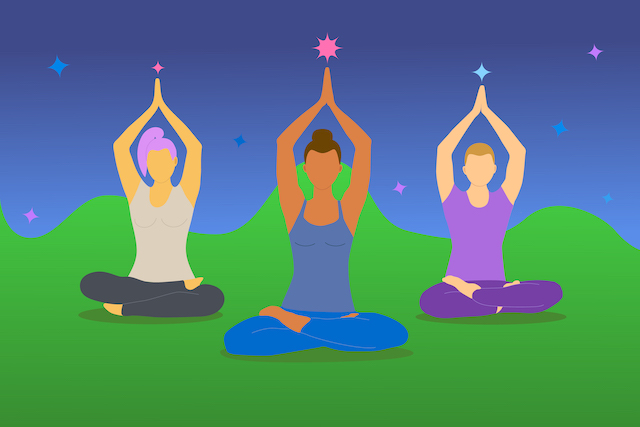
I began the morning with a meditation. After taking my dog out and brewing the coffee, I sat in my sunny living room, my little dog Frankie nestled beside me. I perched cross-legged, a blue pillow on my lap for warmth. I closed my eyes and began to focus on my breath.
When ten minutes passed, I raised my hands in appreciation. “Thank you for this day. Thank you for my family and for our health. Give me strength, wisdom, and love.” Then I extended my hands forward, “So that I may give strength, wisdom, and love.” Finally, I stretched both arms out sideways, wiggling my fingers in my peripheral vision, a reminder to be fully aware. This is how I start every day.
It wasn’t always this way. My older brother Marc tried to get me to meditate when I was fourteen. Although he was a patient teacher, I didn’t understand the point of the exercise.
“Let’s sit together. Close your eyes and concentrate on your breath.”
“Why do I have to do this?
“Just sit, Lise. It’s good for you to learn. We will do it together.”
“OK, but why?”
Marc tried, but I resisted. I stopped meditating as soon as he went back to college.
Years later, as part of my psychology training, I took classes which touted meditation as a stress-reducing technique. During the classes, there were demonstrations which I always enjoyed. I sat back, breathed deeply, and felt a deep flow of relaxation inside me. But, back home, I had no follow-through. Once the classes were over, so was my meditation.
My breakthrough into daily meditation happened in 2020, one of the few good things that arose from that dreadful year. I was home, virtually every minute of my life. I didn’t have to dash from of the house, brave traffic, and arrive at the office by 9:00. Mornings stretched more languidly. It was easier to find those ten minutes to breathe every morning.
Now I sit every day. I scan through my body, noting points of tension, areas of pain and pressure. Simple awareness of the tension shifts any pain, and my body settles.
My mind, free from my constant to-do lists, drifts along, as if floating on the waves of a gentle sea. I hear the sounds of the house around me, the heater outside, working mightily to warm our home; Frankie the dog beside me, sighing. My stomach muscles unclench. I notice thoughts drifting in. I don’t attend to them. The thoughts fade away. Peace.
Of course, that’s when meditation goes well. Sometimes every minute slogs on. My scalps itches. “I forgot to return that phone call,” I think, and my body tenses into high alert. “Oh no, I have to write that woman back!” My throat tightens. “What if that editor doesn’t like my submission?” My stomach jams into a knot. I cannot let these thoughts go. “I suck at meditation. Why can’t I just breathe? When will these ten minutes be over?”
Sometimes meditation goes like this. It isn’t always peaceful, and it doesn’t always feel good. The key, I’m told, is to keep at it. Like any skill, the more we practice, the better we get at it. It is no accident that we say one “practices meditation.” I didn’t get decent at writing in one year either.
If you are like the fourteen-year-old me, you might be asking, why meditate at all? There are so many benefits I don’t even know where to begin; here is a partial list. Meditation…
- Soothes anxiety: When you learn to focus the mind, your thoughts don’t spin off into anxious “what-ifs,” spiraling into anxious ruminations.
- Calms anger: Focusing on breathing calms the mind, stopping our internal tirades over people who have wronged us.
- Improves the immune system: The body is not designed to be in a constant “fight or flight” mode. When we are tense, our immune system works poorly. When we relax, our immune system resumes its work.
- Lowers blood pressure: Meditation is a proven technique for improving hypertension.
- Manages emotional reactivity: This is a big one. It is easy for me, sensitive soul that I am, to feel hurt and wounded by other people. Meditation allows me to detach from the provocations of the moment, and to tap into inner peace. Once I have calmed myself, I find freedom from reacting emotionally. I can bring more thoughtfulness and wisdom to my relationships.
Happily, the benefits of meditation extend past the ten minutes into the whole day.
Now that I practice regularly, I notice when my shoulders leap to attention. With mindfulness, I can lower those shoulders down.
I notice when my stomach tenses up, and I can breathe that tension away.
I notice when my mind anxiously swirls around my to-do list and I can tell my mind to relax.
The awareness that comes from a regular ten-minute mediation follows me throughout my day, helping me stay calmer and more serene.
A while ago, I was getting ready for a radio interview, as part of my recent book promotion. I had an hour to spare, and I thought I’d make a quick phone call to an insurance company.
This “quick” phone call dragged into an infuriating forty minutes. I was on hold, listening to inane music, on some incessant torture loop. Finally, the customer service rep came on, but we had with a terrible connection. I could barely hear her, as she was undoubtedly on another continent, and I couldn’t understand her either.
After a brief exchange, which I barely fathomed, she declared she couldn’t help me. I got off the phone in disgust.
“I’m so aggravated! I just wasted an hour on the phone with this stupid company and now I have an interview in fifteen minutes. What a colossal waste of time! I have this radio interview and I am so upset I can barely think!”
My husband gazed at me. “Why don’t you do your meditation thing?”
I glared at him. I really just wanted to righteously complain. But my husband was right; I was a wreck.
I sat in my bedroom and closed my eyes, focusing on my breath. Immediately I sensed my body’s distress. My heart rate was elevated. I breathed rapidly. My shoulders were raised and my stomach was in spasm.
“My god,” I thought. “My body is completely dysregulated, all from one stupid phone call.”
Quietly, I focused. I felt my muscles relaxing and my heart rate slowing. I ended the meditation, feeling like a different woman, and started the interview with a smile on my face.
That is the power of a regular ten-minute meditation practice.
Let’s be clear. Everyone, no matter how busy, has ten minutes to spare. You can do this, and build yourself a calmer, more peaceful life, in a healthier body.
One final tip: it is best to find a regular time of day for your meditation practice. Do your breathing every morning, or every bedtime, or every evening after work. Otherwise, you will keep putting it off until later. If you are like me, you might even put it off for forty years.
-

20 Powerful Quotes to Help Minimize Conflict and Drama

The holidays can be a lot of fun, but let’s face it, they can sometimes be stressful, particularly if you spend them with family. Surrounded by multiple generations of people, many with different perspectives and beliefs, it’s easy to feel triggered or annoyed.
Then there are the challenges associated with going home, whether that means visiting a physical location or returning to the (possibly unhealthy) mental space you occupied as a kid.
And if you do fall into old landmines, it’s all the more frustrating because holidays come but once a year, and they’re supposed to be joyful, right?
If you anticipate today might be fraught with conflict or drama, take a few minutes to reflect on the following quotes (including a couple of my own). Perhaps something here might help you create a little peace—for yourself and the people around you.
20 Quotes for a Drama-Free Holiday
1. “The people who trigger us to feel negative emotions are messengers. They are messengers for the unhealed parts of ourselves.” ~Teal Swan
2. “No one can make you feel inferior without your consent.” ~Eleanor Roosevelt
3. “Be selective with your battles. Sometimes peace is better than being right.” ~Unknown
4. “Be kind to unkind people. They need it the most.” ~Unknown
5. ““10% conflict is due to difference in opinion and 90% is due to wrong tone of voice.” ~Frank Viscuso
6. “Practice the pause. Pause before judging. Pause before assuming. Pause before accusing. Pause whenever you’re about to react harshly and you’ll avoid doing and saying things you’ll later regret.” ~Lori Deschene
7. “No response is a response. And a powerful one. Remember that.” ~Unknown
8. “When you can’t control what’s happening, challenge yourself to control how you respond to what’s happening. That’s where your power lies.” ~Unknown
9. “Don’t make assumptions. Find the courage to ask questions and to express what you really want. Communicate with others as clearly as you can to avoid misunderstandings, sadness, and drama. With just this one agreement, you can completely transform your life.” ~Don Miguel Ruiz
10. “Give people the benefit of the doubt, over and over again, and do the same for yourself. Believe that you’re trying and that they’re trying. See the good in others, so it brings out the best in you.” ~Liz Newman
11. “We don’t have to agree on everything to be kind to one another.” ~Unknown
12. “Be the person who breaks the cycle. If you were judged, choose understanding. If you were rejected, choose acceptance. If you were shamed, choose compassion. Be the person you needed when you were hurting, not the person who hurt you. Vow to be better than what broke you—to heal instead of becoming bitter so you can act from your heart, not your pain.” ~Lori Deschene
13. “Life becomes easier when you let go of the little things that bother you and focus on what makes you feel good.” ~Unknown
14. “You don’t need anyone’s affection or approval in order to be good enough. When someone rejects or abandons or judges you, it isn’t actually about you. It’s about them and their own insecurities, limitations, and needs, and you don’t have to internalize that.” ~Daniell Koepke
15. “Think before you speak, and don’t say everything you think.” ~Alexander Lebed
16. “Most disagreements are caused by different perceptions that created different realities.” ~Unknown
17. “The true mark of maturity is when someone hurts you and you try to understand their situation instead of hurting them back.” ~Unknown
18. “Never waste your time trying to explain who you are to people who are committed to misunderstanding you.” ~Dream Hampton
19. “There can be disagreement without disrespect.” ~Dean Jackson
20. “Instead of getting defensive, just say thanks for letting me know your thoughts. I’ll consider them.” ~Henry Cloud
—
Which of these quotes speaks to you the most? And do you have any to add to the list?
-
How to Choose Peace When You’re Under Pressure

“Let us fill our hearts with our own compassion.” ~Thich Nhat Hanh
“Mom’s concentrating,” I tell my kids as I clean up after dinner. I suggest a game to keep them occupied. “How many words start with A?”
As I inspect the crumbs under the kickboard, I pay just enough attention to hear them play along.
“Mom. L!” (I must have drifted off.)
“Right. L is for?” And they’re off again. Be more present, be more present, be more present, I think.
M…N…O…I laugh to myself when we reach P. P is for pressure, that’s what, I think as I remind myself that I really need to print off those tax documents tomorrow. And call the doctor. And send off those emails. And register for that training.
The fact that I can share this with you today reflects true progress. I’m learning to notice the pressure now, examine it, and reduce it where I can, trusting that I can still address the valid concerns that are within my control.
But before, pressure just felt normal. Necessary even. I used to tell myself that this is what discipline and motivation looked like, as if I didn’t believe I could do the things that mattered without the stress.
It’s only in the last few years that I’ve dared to be honest with myself about what goes on in my body and mind.
Now, I accept that this is pressure, and it isn’t helping. Now, I know that my thinking patterns and actions can either bring more pressure or more peace. And now, I truly believe that I have the power to choose which way it goes even when nothing else is in my control.
This doesn’t mean I’ve perfected the process. Far from it. But now I have the clear intention to at least try.
Recognizing the pressure was the easy part. The warning signs were clear enough: headache, tension, irritability, worry, fatigue. This doesn’t always stop me denying it or trying to power through.
Recognizing that my thoughts and actions might be intensifying it was a little harder.
There’s always a kernel of truth (or more) in the pressures we feel. Pressure comes from the real, daily things that keep life running smoothly. It also comes from the deeper, scarier problems we face. A serious diagnosis. Unemployment. Divorce. Loss. Trauma. And either way, whether it’s an everyday concern, a traumatic event, or what we’ve learned to label as a “silly” worry, we feel pressure when we care. The pressure we feel tells us so much about our values, priorities, and expectations.
However, in my experience and maybe yours, there’s a special kind of pressure that’s internally generated, or at least internally magnified. It’s not made up or crazy, but it can become disconnected from reality the longer it goes on.
That drone of what if this and what will they think and who will I be is my voice in my head. It echoes a lifetime of internalized messages, but now, as an adult living my own adult life, it’s me sending most of those messages.
Which leads me to the hardest part of choosing a more peaceful way through: the choice.
I’ve held on to so many pressures in my life, waiting for the day I’ve finally earned the right to let them go. The trouble is, there’s no referee or judge, no one’s keeping score. I’m the only one who can grant myself permission to change, and it’s me who chooses peace or pressure.
When life feels secure, the peaceful path is easy to see. It’s right in front of you. You’re standing on it! When I’m there, I can tell myself the most beautiful affirmations, “I decide if I live life in fear of the pain or in devotion to the love. I can choose to let go of that which does not serve me. I love and accept myself fully, completely, deeply.”
But when things get hard or serious, or when something I really care about is on the line, the doubts can creep in.
Is it safe to let go of my pressure-filled thoughts?
What if I need this pressure to succeed?
Can I really let myself slow down and relax when there’s still so much I need to accomplish?
Do I deserve to feel good right now? Have I earned it? I’ll have time for myself when this is all over.
Every day, I grow more aware of this process, and every day, I feel a little braver. Brave enough to find my way back to the peaceful path.
I can still act so surprised about the pressure, though. After the big doctor’s appointment, after the wedding, after the funeral, after the visit with the in-laws, after the annual review, I’ll have a moment of clarity. I’ll see as if for the first time how much pressure I’d been under by its absence.
For a moment, before the space is filled in with something new, I feel peace. And every time, for just a moment, I can talk to myself with true understanding and compassion.
“You were under so much pressure,” I’ll say. “That was really weighing on you. Of course, you felt pressure. It makes sense that you felt confused about that. It makes sense that you felt so stuck. I know, I know. You were scared.”
Then, when I could assert my willingness to change, that familiar critical voice sneaks back in. But I thought you’d be over this by now.
Pressure.
The things we feel pressure about may change on the surface. Move faster, do more, do better. Underneath, they’re always about the same questions:
Who am I?
Am I good enough?
I am worthy of love and connection?
Can I get through this?
And even in the attempt to be compassionate with ourselves, we can easily slip into questioning our worth rather than affirming it. We can intensify the pressure to get over it already. Rather than saying, “I see that I’m feeling pressure and I choose to accept and love myself fully through it” it becomes more, “Really? This again?”
Here, too, I’m learning how to choose the peaceful path through. I’m learning that there’s no purpose in shaming yourself for the pressure, just as there’s no purpose in minimizing it or bottling it up.
I’m learning that taking the peaceful path means changing the whole process to one of compassion, not criticism. So, I’m practicing answering those questions in a more caring way.
You don’t need to hurt yourself like this.
You can decide how you’re going to approach this.
Even here, you can choose to accept yourself.
You can choose the most peaceful path through this.
There will always be pressure. Pressure, pain, stress, tension, friction—they’re a part of living. Life cannot and will not ever be stagnant, and that’s not always comfortable. Still, we can choose a more peaceful path through it.
Maybe now you’re under the pressure to do more and do it faster. Or the pressure to be certain. Or to be strong or perfect. Or maybe even the pressure to release the pressure. The pressure you experience may be internally generated or a reflection of the people and circumstances surrounding you.
No matter how much pressure you’re under or where it stems from, you can find a more peaceful way through it with your own compassion.
Here’s how:
1. Practice being aware without the judgment.
Learn your personal early warning signs and start to label that internal experience as pressure. Practice recognizing it before it boils over or paralyzes you, and be honest with yourself about whether it’s really helping. Even if all you’re able to do is notice its absence when it leaves, start there. Notice the feeling of pressure or relief, call it what it is, and recognize how this process impacts your life.
2. Validate yourself.
When you’re under pressure, validate your feelings with statements like you’re under pressure right now and this feeling makes sense. And move toward validating your own worth. Even statements like I’m learning to accept myself can be enough to ease the pressure.
3. Look beneath the surface.
Once you’ve recognized you’re under pressure and offered yourself validation, you can look beneath the surface at what’s going on. Be honest and compassionate with yourself as you ask the questions that help you understand your situation.
What feels threatened? Who’s influencing you? Could you be magnifying this? What would help you ease the pressure? What’s one thing within your control? What scares you about finding a peaceful way through?
4. Practice new thoughts and actions until they’re your new normal.
Tell yourself the kinds of things you’d tell a dear friend who’s under pressure. Remind yourself of your true priorities, your strengths, and the choices you can make. Tell yourself why you wish to choose a more peaceful path. And do it again and again and again until the words stop sounding foreign.
Then, practice building the courage to act from that place, even if you don’t quite believe it yet. Belief might have to come after the action.
Act like it’s safe to be you, safe to be happy, and safe to choose peace. Take one thing off the agenda. Extend a deadline. Tackle something small and savor crossing it off the list. Take a walk and fill yourself with awe. Whatever you do, remember that the bravest thing isn’t always the biggest or the boldest but the most authentic.
Practice these steps from a place of love and treat every time the pressure returns, because it will, as another moment to renew your commitment to finding the most peaceful way through.
-
Swipe Right on Mindfulness: My Apprehensive Journey into Meditation
“You have to be where you are to get where you need to go.” ~Amy Poehler
I sat there and listened, pretending to be interested.
Did he really just say he meditates every morning? Don’t roll your eyes. At least he’s really attractive. You can just ignore the hippy meditation stuff.
But c’mon. Meditate every morning at 6am? Who does that? How ridiculous.
So I did ignore his hippy meditation stuff; he eventually ignored me.
I have an endless supply of ill-fated dating-by-way-of-phone-app tales. Most of them end in a relatively similar fashion, but that’s for another blog or a cabernet-supported whine-fest with a good friend. This dating experience in particular was quite a bit different.
Although this was the last time I dated a beautiful actor-slash-model-slash-writer, it happened to be the start of something else. Something much bigger than the initial lesson I learned—that sliding my finger across a cracked iPhone screen while waiting in the grocery line behind an adorable elderly lady writing a check for donuts was, sadly, not going to lead me to my soulmate.
However, it would guide me to a discovery far more powerful and impactful.
Not until years later would I look back on this casual swipe right on my handheld device as one of the most profound decisions I had made in my adult life. To say it changed the trajectory of where I was headed wouldn’t be an overstatement.
Thanks, Tinder. I really should go back and award you those four stars. Remind me later.
But back to this awkward date.
Shortly before this guy began to “forget” to respond to my texts, before the “new phone, who’s this?” kick-to-the-gut, before the inevitable self-doubt blame game, there was a brief, almost forgettable moment during this date that I now fondly look back upon.
The Start of Something New
I was super insecure at the time.
How does my hair look? Why did I wear this old sweater? God, he’s a GQ cover model and I look like a rejected 1999 Old Navy performance fleece ad fused with the ‘before’ Proactiv infomercial image that airs at 2am.
My mind never stopped. I was the king of insults, and I was my favorite target.
But somehow, amidst the relentless inner dialogue and self-destructive thought patterns, I noticed a striking presence from this guy. When he spoke, he was so focused. When he listened, he did so intently.
Also, he was so nice. Plain and simple nice.
I suspected he wasn’t worried about what his hair looked like. (Note: It looked perfect. Whatever.) And it seemed like he wasn’t thinking ahead about what to say next, or regretting what he had said prior. He was present. So much so, it made me very uncomfortable.
As for myself, I had a checklist of things in my head to say as well as some predetermined witty lines that I was proud of—for real, some of them were funny. I even prepared some self-deprecating jokes about being a late-twenties directionless bartender, so I could at least claim to insult myself first if that subject came up.
It was exhausting.
Spoiler alert: This dating experience with Perfect Hair was short lived. But I beat myself up about it for a while.
What did I say? Why didn’t I get my haircut? Why didn’t I get a spray tan!? I went on and on. These questions were endless and unnecessary. Except maybe the tanning one. I really should have bronzed up a bit— a little color never hurt a pale person, as my mom always says. But I didn’t. And so there I was, annoyed, bitter, single—and yes, pasty.
At the time, it didn’t make any sense to me. I was bummed. I chalked it up to my continual bad luck and blamed the world for being out to get me. Ya know, the usual.
Little did I know that this one date would be such a turning point in my life.
A Seed Was Planted
My mind was a messy field of weeds and cobwebs, but somewhere among them was perfectly conditioned soil that could harbor some new kind of life. Something about this guy stuck in my mind. And that something grew. I would continue to insult myself for the foreseeable future, but I took a brief respite from the witty yet destructive banter in my head to explore that “silly hippy meditation stuff.”
“I meditate every morning,” I remember him saying.
I still thought this was a ridiculous admission, but I decided to look into it. Maybe for just five minutes. What did I have to lose?
So instead of spending further time mindlessly scrolling through my Instagram feed and wondering how I know so many people with flawless beauty who are perpetually on breathtaking vacations, I pulled up Google.
In addition to a roll of my eyes, the word “meditation” used to elicit a visual of an un-showered, bearded hippy sitting cross-legged, surrounded by a cloud of suffocating incense smoke, chanting unintelligible words.
It’s partly because the term carries with it some dated, preconceived ideas, sure. But I also grew up in a very conservative town a few miles down the road from the not-so-conservative Woodstock, NY, where a drive through would be a sightseeing tour of extreme body hygiene practices of “hippies” with a side of snide judgmental comments.
That was my introduction to this world. That was my initial—and only—understanding of people who participated in silly hippy meditation stuff.
But hold up: Meditation really just means sitting quietly and focusing on what’s going on in the moment? And breathing? That’s basically it? Is it really that simple?
Yah, man, it’s that simple.
There is obviously much more to it than that, of course. There are books upon books, courses and classes upon websites and blogs on meditation. But at its core, it really is so simple: Sitting and breathing.
Why the hell didn’t someone tell me that it wasn’t this weird, silly, far-left liberal belief system? That it didn’t require a robe, facial hair, and skipping a bunch of showers. I don’t have to chant? What about sitting cross-legged? Incense and a beard? No, no, and no?
WHAT. THE. HELL.
It sounded so easy and was also a huge relief, because I look terrible with a beard and I’m not at all flexible.
I had no reason not to give it a try.
I was finally in the perfect place, mentally and physically (no beard!), for my exploration of this topic to begin.
So I started reading. Book after book after book. With an apprehensive perspective and holed up in a coffee shop with my hand covering the title so no one could see what I was reading (Uh, It’s Game Of Thrones, bro,) I immersed myself in this stuff.
I also realize in hindsight that telling someone I’m reading Game Of Thrones is not any “cooler” than revealing I’m exploring meditation. It’s basically a dorky tie.
I started by seeking out authors who had the same skeptical approach that I initially had, as it helped me tread cautiously into something that could scare me away if I dove in too deep, too fast.
Initially, I thought it was a bunch of ridiculousness. I gave up once. Twice. Five times.
But I pushed through. I kept remembering that fleeting moment from that cringe-worthy date. How relaxed, how present, how kind he was.
He meditated every day.
If it worked for Head & Shoulders Model, it would work for me. I should put that on a hat.
Ever so slowly, in the subtlest ways, I began to notice a difference. It was minimal. It was almost unnoticeable.
I just felt… better. Lighter. Happier? Maybe. I couldn’t really pinpoint it, but it was something.
And it was exciting.
Everything Happens—Yes, You Guessed It—For a Reason
At this point, my perception of this ill-fated date started to shift. Maybe, just maybe, there was a purpose of this encounter. Maybe, just maybe, it was exactly what I needed at exactly that time in my life.
The phrase “everything happens for a reason” used to drive me crazy. Mostly because I find it’s something people usually say in lieu of giving actual advice. It’s a cop-out, really. If I tell you I was ghosted by awkward Prius guy, I don’t want you to tell me everything happens for a reason. I want you to confirm my beliefs that Prius drivers are obviously the worst and that it definitely had nothing to do with me.
But I now believe that everything really does happen for a reason. Even the existence of the Prius, though for reasons I have yet to understand.
And yes—even uncomfortable, no-good, very-bad dates.
Sometimes it just takes a little surrender and hindsight to come to this realization. For me, it also took a lot of cheap red wine and years of reflecting on past decisions—and eventually immersing myself in some mindfulness practices—to confidently say I understand this clichéd phrase. There’s always a lesson to be learned.
One of those lessons is that boxed wine gives me a bad headache.
Everything had happened as it should—to bring me to this moment, to this blog post, to this glass of wine (from a bottle), to this place in my life where I can reflect and appreciate. And what a liberating and exhilarating feeling it is to say, “Yup, that happened. Here I am. What’s next?”
I’ve spent most of my life under the impression that I made every wrong decision possible. That had I just gotten one thing right along the way, just one, I wouldn’t be where I am right now.
I would be married to the perfect person. I’d have a perfect career. A perfect kid. A perfect house. A perfectly filtered Instagram feed. A perfect chicken dinner, because clearly my inability to cook a simple meal stems from some bad decision I made somewhere along the way. Everything would be perfect and my chicken wouldn’t be rubbery.
But it’s not.
Or is it? Maybe this is perfection. (Not my chicken, though—I still overcook it every time!)
I’m exactly where I’m supposed to be.
It’s such a freeing feeling to let go of the past, to trust in where I am, to understand that everything I have experienced, whether I can understand it now or will come to a realization at some point down the road, has been leading me to where I am meant to be. My only job is to go with it.
Because, yes, everything is happening as it should, for a reason. Even the dates that don’t turn into what I had initially hoped they would.
Adopting this way of thinking has led to a much more relaxed, stress-free day-to-day life. Instead of wondering why something happened, I look for what I can take from the experience. Dating has led to endless discoveries about myself, other people, the world, and perspectives I was previously unfamiliar with.
Some monumental, some minimal.
Some dating experiences are so profound they lead you to stumble down a path to mindfulness and meditation, while others have more minor impacts, like several years of free HBO because a certain someone forgot to change his cable password after he abruptly and inexplicably stopped talking to you. (Thanks man! Hope you’re well!)
I’d say a more positive, mindful outlook and free weekly dates with VEEP’s President Selena Meyer are both steps in the right direction as well as perfectly fine reasons that these experiences occurred.
I believe all moments in life—big or small, happy or sad—always provide a takeaway. Of course, the harder the journey and the tougher the struggles, the more difficult it may be to find the reason. Maybe the reason will never be apparent. Perhaps we just have to trust that our path took us into—and through—these situations for a reason.
Not much has changed for me these days in terms of circumstances. I still go on the occasional bad date, have unexpected bummer days, and periodically find myself in inexplicable bad moods. But instead of dwelling on these moments or trying to find the reason behind them, I accept them. I trust that what seems “bad” on the surface may be beneficial in some unapparent way.
Plus, if I always tried to find a reason, I would drive myself mad and I would have less time for my aforementioned Instagram scrolling—by the way, I need to do more sit-ups. Oh and for real, am I the only one from my graduating class who isn’t #married?
Eyes closed, deep breath.
It would be misleading and simply unrealistic to say that meditation can lead to a smooth life filled with endless happiness. I don’t believe that to be true, and I think that would be missing the point.
I’m also not officially a psychiatrist—or psychologist? I confuse the two. But whichever one would be professionally informed on this subject, I am not that. Or the other one, for that matter. So I could be totally wrong about everything that I’ve just written.
But for me, this mindfulness exploration has helped me clear out ugly thoughts and acknowledge patterns of behavior that aren’t healthy. I feel like a better person today than I was just a few years ago. I’m not nicer because I just want to be nice, but also because it’s easier.
It’s easier to be patient, kind, understanding, and humble. It takes so much energy to be mad, hold grudges, and judge. Forgiving and letting go is freeing. Holding on to anger? Exhausting and it gives me pimples.
A New(ish) Me
My biggest concern with this new journey was that I would lose my edge. I’m generally a sarcastic wise-ass. I didn’t want to become soft. And I’m not talking about physically soft, because this new journey has not yet made me less vain, as I still care far too much about my physical appearance.
But baby steps, right?
By soft I mean I didn’t want to become an emotionally mushy pushover. I roll my eyes at those people.
Yes, I know, I roll my eyes a lot. Again, one step at a time.
I’m far from perfect and still have many strides to make. I’m finding the careful balance of being a mindful, better person while not changing who I am at heart.
I still unnecessarily curse at traffic despite my most valiant efforts.
If I realize someone isn’t going to acknowledge me holding a door open, I’ll sometimes maybe probably prematurely let it go so it gently bumps them.
I am ridiculously impatient with people who stand on escalators. They aren’t lazy stairs, walk!
And I firmly believe that Arbonne is basically the Crossfit of skincare and I’m not at all interested but I’m certain you’ll breathlessly tell me about it anyway.
I am a work in progress. I’m learning every day.
I’m single. I’m happy. I’m present. And sometimes, every once in a while, yes, I’m still a jerk.
But a mindful jerk at that. And for this, I am grateful.
And I owe it all to a little dating app with the cute cartoon flame.
-

Pre-Order Tiny Buddha’s Worry Journal and Receive 3 Free Bonus Gifts
There was a time when worrying was like breathing to me. It’s estimated that we think between 50,000 and 70,000 thoughts per day and we breathe 23,040 breaths. It would likely be accurate for me to say I once panicked as often as I inhaled.
I worried about what people thought of me. I worried that people weren’t thinking of me at all. I worried about what could go wrong. I worried I might have done something wrong. And I worried about being wrong—just by being me.
All this worry was crippling. It’s hard to enjoy anything when you’re there but not because the deepest part of you is tied up in knots, held hostage by your perpetually panicked brain.
I eventually learned that my body and mind were primed for anxiety in my younger years—meaning I lived in a constant state of fight-or-flight mode, always on edge and on the lookout for threats—and that I’d reinforced this sense of dread through persistently negative, irrational thoughts.
I suspect many of us live like this: with a fearful, racing mind and a sense that at any time, the other shoe could drop—and it might be freakishly large enough to crush us. But we don’t have to stay under this weight.
Over the years, I’ve learned a lot about relaxing my body, calming my mind, and proactively managing anxiety.
I’ve learned to recognize the thoughts that don’t serve me and to actively shift my perspective before I get swept up in a vortex of fear.
I’ve learned to embrace uncertainty and to trust that I can handle whatever comes at me.
And I’ve learned to accept that I will sometimes experience anxiety, no matter how much I heal or grow, so I don’t fight myself so much when it inevitably happens.
This is what compelled me to create Tiny Buddha’s Worry Journal, with the help of my talented friend, illustrator Rose Hwang.
Filled with quotes, prompts, and questions, along with coloring and doodling pages, Tiny Buddha’s Worry Journal provides a number of different activities to help you reframe your worries and minimize anxiety in your daily life.
If you have a hard time detaching from worrisome thoughts, this could be just what you need to learn to let go and ease your troubled mind. It takes a little time and practice, but with just a few mindful minutes each day, and the right tools, anyone can become less anxious.
If you pre-order before the June 26th launch date, you’ll receive three free bonus gifts, including:
A series of four meditations on letting go (led by yours truly), each with an EFT tapping session led by Naomi Jansen and an introductory chat with Naomi and her One Mind Live co-founder Stephen Fearnley
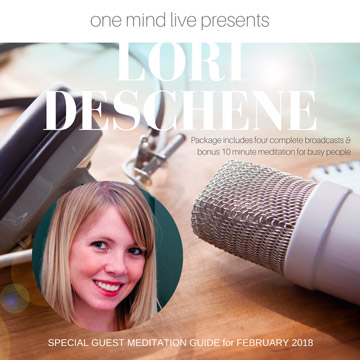
An exclusive audio interview with me and Ehren Prudhel, host of the soon-to-be-launched podcast Next Creator Up, focusing on worries related to pursuing a new dream (more specifically, my first feature screenplay)

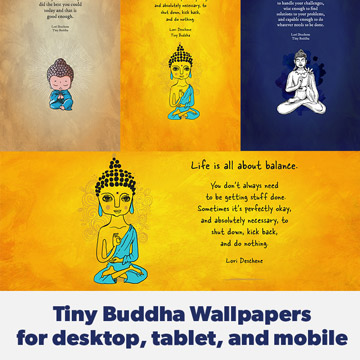
A series of three vibrant desktop wallpapers featuring adorable Buddhas and calming quotes
All you need to do to claim your bonuses is pre-order your copy from any online vendor and then forward your purchase confirmation email to worryjournal@tinybuddha.com.
Worry is a part of life, but it doesn’t have to control us. It’s possible to breathe a lot easier. These days, I do. I hope this journal helps you do the same.
**Though Amazon hasn’t yet discounted the price, it will likely go down soon, as it always does. As part of Amazon’s pre-order price guarantee, you’ll be charged the lowest price offered before the launch date.
-
3 Tools to Help You Calm Your Mind and Let Go of Anxiety
“I vow to let go of all worries and anxiety in order to be light and free.” ~Thich Nhat Hanh
I’ve struggled with anxiety throughout my life. A difficult childhood and my highly sensitive personality meant I grew into an anxious kid—there was just too much pain and emotional overwhelm for my young brain to handle.
My anxiety most often manifested as perfectionism and people pleasing, so from the outside everything seemed great. I excelled in school and I was a good kid who did as she was told. But there was a war inside me.
I felt broken, unable to navigate these huge feelings of fear and uncertainty on my own. Full of negativity and self-criticism, I felt like an outsider, misunderstood by the world, scared and alone.
Over the years, as I stuffed down these feelings of inadequacy and isolation, I internalized the belief that somehow I was not good enough, that there was something inherently wrong with me.
Afraid of being found out, ridiculed, and humiliated, I became invisible. I masked my fears, shame, and feeling rejected with arrogance. I became rigid and controlling. I was super hard on myself. I felt restless, angry, and defective even more.
In denial about all of this until my late thirties, my children finally cracked me open.
Motherhood was full of its own challenges, and my perfectionism shifted into high gear—the image of a wonderful, ever caring, ever patient mother was front and center. Hell bent on giving my children everything I was missing growing up, I put an enormous amount of pressure and responsibility on myself.
The stress was too high and I started breaking down. I began to unravel.
Anxiety happens in the presence of danger you can’t do anything about. Fear is a healthy and helpful response when you’re in an immediate danger. It alerts us and mobilizes us into action. But if you’re safe at home thinking about something that might happen or something that happened long time ago, you’re suffering needlessly.
Anxiety can show up in many ways and on many levels: physically, emotionally, and mentally. For me, it’s being negative and super critical of myself—my anxious voice telling me I’m messed up not good enough, inherently wrong.
I get easily stressed and overwhelmed. I become a perfectionist; I get restless, on edge. I’m unable to relax, sleep, focus. I’m so caught up in my head with worries that I’m not present, I’m not there for people who matter most. My chest is tight, my arms and legs tingly, headache and backache show up unannounced.
And then I reject how it feels, wanting it to do away—my resistance only making things worse. Fear feeds on itself. I feel broken, I feel shame, and so I disconnect from others. Depression kicks in. I get stuck.
3 Steps Toward Healing Anxiety
Anxiety is often embedded deep into the subconscious, especially if there is a history of childhood trauma or neglect. Past events and experiences are stored in the body. Thinking patterns and defense mechanisms become habitual, and we carry them throughout our adult life, unaware of their negative consequences. These are all hard things to deal with.
Fortunately, we have the capacity to change our brain by learning to be present, and becoming more aware of our habitual thoughts and behaviors. The brain is “plastic”; it can adopt new behaviors and learn new ways of looking at the world. This process is slow, but it’s our opening into healing anxiety.
Mindfulness is the foundation of change.
The first step in calming anxiety is mindfulness—becoming aware of the here and now, without judgment or trying to change our experience. The good news is that our physical body is a perfect vehicle for bringing ourselves into present awareness. And we start with out breath.
Anxiety moves us out of the present moment and into our habitual reacting to the perceived threat. It overwhelms our brain and blocks us from seeing things clearly, entangling us in ceaseless fears and worries.
We can’t heal what we don’t know. Mindfulness is the tool that can shed the light on our habitual thinking, feeling, behaving, and holding patterns—that is, where in the body we’re holding onto our fear and pain. Bringing these patterns to light allows us to break the cycle.
When you are triggered (someone says something critical to you, your child comes home from school crying, you argue with a friend or spouse), start by anchoring yourself in your breath.
Take a deep breath in, then slowly and fully exhale. Keep breathing deeply and slowly while allowing your experience to be as is, without judgment. This is truly hard—you may want to have a guided meditation handy for moments like this.
Slowly move your attention to your entire body and start tracking your sensations. This allows us to get out of our head and embody our current experience. We can begin to notice where in our body the fear and anxiety are being stored, where we might feel frozen, afraid, or on fire.
Observe, where is anxiety locked in your body? What does it feel like? What does it look like? What’s the texture, color, temperature?
A lot of tension from anxiety is stored around our eyes, jaw, neck. Notice this and consciously release the grip. Let those points relax.
If we’re able to stay present and open—with breath as our anchor—we will slowly calm the physical part of anxiety. This in turn, slows us down mentally, allowing us to calm down the racing thoughts and emotional reactions.
Observe your mind for a moment and notice any difference from when you began this meditation. Come back to your breath if you notice you’re drifting into your thoughts.
If you feel strong enough, you can notice and acknowledge any feelings and emotions you are now experiencing. You can commit to witnessing the fear, your vulnerability, allow and feel it so you can finally move past it.
Another helpful tactic is visualizing peace flowing into your body with each breath in, and tension leaving your body with each breath out. Breathe in calm, breathe our fear.
Again, if you’re feeling anchored, you can now observe your internal dialog in order to reframe your experience and learn new ways of responding in challenging situations.
You have to be willing to observe your negative thoughts and emotions with openness and clarity. You can then look at what triggered you and why? You can dissect your reactions to figure out better ways of responding next time. This way you learn new ways of coping and responding in the moments that push our sore spots.
Self-compassion is the engine that keeps us going.
Kristin Neff defines self-compassion as “being warm and understanding toward ourselves when we suffer, fail, or feel inadequate, rather than ignoring our pain or flagellating ourselves with self-criticism.”
No positive change can happen in the atmosphere of criticism and self-abuse. We can’t force ourselves to do better. We have to offer ourselves support and encouragement in order to heal and grow.
Negative self-talk is the hallmark of anxiety.
Perhaps, growing up, our caretakers criticized, shamed, or punished us for our mistakes and weaknesses and so we learned to treat ourselves this way. Perhaps we learned to believe that if we’re hard on ourselves, we’ll accomplish more, become a better version of ourselves.
Tune into that inner voice. What is it telling you? Does this voice remind you of someone from your past?
Tapping into self-compassion can help us break our entrenched patterns of self-criticism, while still allowing us to be honest about our fears.
We can remember that no one is perfect, and everyone struggles in one way or another. And we can offer ourselves kindness and understanding. We are not weak or defective. We are human, and all humans go through moments of struggle.
Think of your self-compassionate voice as a supportive and kind friend who’s encouraging you to see things in a clearer, more balanced way. Don’t add to the pain by putting yourself down, judging yourself harshly. Offer yourself understanding, love, and care. This is hard work, and you are doing the best you can with what you’ve got.
This is not about excusing your behavior or bathing yourself in self-pity. It’s about giving yourself love and support so you can do better, be stronger, so you can rise above your past pain and better handle struggles ahead.
Self-expression is the outlet for letting go.
The hardest part of anxiety is learning to let go. Letting go is difficult, even if consciously we understand that our hurt and fears are a heavy burden to carry. This is the stuff that weighs us down, physically and emotionally diminishing our life force.
The enormous energy needed to protect ourselves from pain and anxiety is depleting, and so we must learn to release the fears and unburden our soul.
As Della Hicks-Wilson tells us, we have to “let the truth exist somewhere other than inside your body.”
We have to get it out of our body, remove the stored pain, anxiety, fear, trauma, shock, and shame so we can make room for joy, peace and vitality.
One of the best forms of emotional release is by writing. When we write we give our internal world a voice. We slow down and clear our head, and gradually deepen our understanding of ourselves. We are then able to process and makes sense of what’s happening with us and around us. We gain a new perspective, discover new choices, develop new mindset.
Writing is an act of courage. You show up for yourself, expose your vulnerabilities bringing the ugly parts into the light to look at it up close. But the act of writing is liberating. It gives us permission to release.
By putting our fears and hurts down on paper, we can let them go without judgment or worry. Our journal becomes a safe space for us to free ourselves, get unstuck, move forward. When we write we release, and when we release we heal.
Healing Takes Time and Devotion
I still get anxious sometimes, as does everyone else, but over the years I’ve picked up strategies that allow me to cope and manage my anxiety so it doesn’t control my life. My most reliable tools are daily meditation, yoga, making art, journaling, spending time in nature, surrounding myself with people who love and support me, and being mindful of my internal dialog.
Writing has been the most transformative, however. When done mindfully, writing allows us to step back and shift our mindset, rewiring our brain over time. We can safely process our experience, integrate and heal it, all while staying present and kind to ourselves.
Slowing down is the key to successfully transforming anxiety, and both mindfulness and writing allow us to slow down the rollercoaster of reactions so we can unpack and integrate our experience.
We have a deep capacity to heal and grow, but we can only do with enough self-awareness, a healthy dose of self-compassion, and an empowering belief that we are inherently good.
-

40 Ways to Create Peace of Mind
“Set peace of mind as your highest goal, and organize your life around it.” ~Brian Tracy
There was a time when I thought peace was a destination, in much the same way I imagined I’d eventually arrive at happiness or success.
It seemed like something I needed to chase or find—definitely not something I could experience without dramatically changing my life.
I needed to work less, relax more, and generally revamp my circumstances and relationships in order to be a peaceful person.
Despite seeing peace as an endpoint, I also saw it as something passive; after all, that’s why I was so stressed: I had so much to do.
I’ve since realized that peace is always available, and like any desirable state of mind, it requires effort, even if that effort entails consciously choosing to be still.
Sure, our circumstances affect our mental state, but they don’t have to control them, not if we make tiny choices for our well-being.
Admittedly, it’s not easy to choose peace when we’re going through tough times. I still go through periods when I get caught up in worries and stresses, and it can feel like that’s the only available response to things that have happened.
But it’s not. There are countless things we can do to create peace of mind, both in response to events in our lives, and proactively, everyday.
If you’d also like to develop a greater sense of peace, you may find these suggestions helpful: (more…)
-
5 Easy, Natural Ways to Reduce Stress
“It’s all about finding the calm in the chaos.” ~Donna Karan
Like my grandfather, I have always been a weather geek. I check the weather news daily and, for as long as I can remember, thunderstorms, warm/cold fronts, and clouds have fascinated me.
Close friends of mine will be the first to tell you that I have the bad habit of stopping someone mid-sentence to point out cirrus clouds, or a storm on the horizon.
But it’s more than just a nerdy interest. Looking at thunderstorms and clouds has always had a calming effect on me.
A few years ago I spent a summer in Edmonton, Canada, on my first extended work assignment abroad. It started well, but after a month I began receiving negative feedback from my client on the quality of work that I was submitting. Looking back, I realize there were power struggles going on in the background, and I was the scapegoat stuck in the middle.
But at the time it caused me a lot of stress, and each negative comment made me feel more and more like a failure.
At the end of one rough day in particular, I received another critical email from my client. On the drive home from the office I could feel my heart accelerating and hammers bashing on my forehead, signaling the onset of a stress-induced migraine.
My apartment sat high on a hill, and when I arrived home I happened to catch a glimpse of the outside view from the corner of my eye.
An enormous thunderstorm dominated the horizon; turbulent masses of air and water billowed high into the sky. The sunset was hitting the tops of the clouds at an angle that made the storm look like it was on fire. Hues of orange, red, and deep gray swirled into each other.
I was intrigued and stepped outside on my balcony to take a better look. I sat down on a chair and stayed there for at least an hour, watching churning clouds climb through the atmosphere and streaks of lightning flash through the flaming vapors.
As I sat there, with my eyes fixed on the spectacle before me, my heart rate and breathing slowed down, and the pounding in my head abated.
I knew that everything I was going through would pass and I felt at peace.
We all experience stress at one point. And because we have busy lives, we don’t always have the time to go running, or do yoga, or watch a funny movie to get rid of it.
Practicing mindfulness can be an effective alternative though. This pulls us into the present moment and can reduce our stress with minimal time and effort. Five ways we can use our surroundings to do this are to:
1. Sit quietly by a body of water.
Since mankind first came into existence, humans have used the calming effects of water to find peace. If you are stressed, find a river, a pond, an ocean—any body of water will do the trick. Try sitting next to the water and notice what your five senses are registering.
Listen to the sounds of the waves or the soft gurgles of the streaming water. Watch how the wind dances across the water, changing its surface into different shades of blue. Feel the wind on your face.
You might find that the cool water is able to carry your problems away with it.
2. Surround yourself with plants.
Another option for us is to spend a quiet moment in a green environment, whether it’s a park, a forest, a field, or our own backyard.
Use your senses and concentrate on how the sun feels on your face, or the ground underneath you. Smell the grass and plants. Listen to the birds and watch the various insects and other creatures go about their daily activities.
Surrounding ourselves with trees and grass can have a positive effect on our well-being by removing us from stressful urban environments. This gives us a chance to take deep breaths, reset our attention, and focus on the most important parts of our lives.
3. Look at the sky.
If you don’t have the time to find trees and water, just look up at the sky, wherever you happen to be. I’ve always loved watching thunderstorms, but the sky offers countless opportunities for us to sit back and take our minds off of our problems.
Spotting funny shapes in clouds is useful for expanding our own creativity. A good sunset, on the other hand, with its wide spectrum of colors, helps us appreciate the beauty of the world, even if we’ve had an awful day.
And at night the sky is lit up with the soft glow of the moon and the stars. These remind us that, in the grand scheme of things, our troubles are often a lot smaller than they feel at that particular moment.
4. Observe the people next to you.
Observing the people around us, however, can also be an effective method to take our minds off of a stressful situation.
I often use this technique in airports. It’s hilarious to watch parents try and corral their small children, who are always on a mission to explore every square inch of the terminal.
Or sometimes I pick a person walking by and create a backstory for them in my head. For example, I might imagine who they are, where they are from, and why they are in the airport at that moment.
It sounds strange, and it’s not the same as being in nature, but at least it can be entertaining and help us to think about something else.
5. Focus on the outside world.
When we are stuck in the office though, sometimes the best method for us is to spend a moment quietly observing the world outside of our windows. If you can see water, or trees, these can offer similar benefits as being in nature.
If you are in a high-rise building, and are surrounded by concrete and glass, try observing whatever is outside. Watch the cars driving by, the flashing lights of the billboards, or the people scurrying to and from work. This gives our brains a break and reminds us that we are not alone in our struggles.
—
Stress can come at inconvenient moments when we are unable to devote much time and energy to mitigate it. Using mindfulness to observe the world around us, even if only for a minute or two, can have immediate positive effects. .
It’s simple and free, so why not give it a try?
-
8 Meditation Mistakes to Avoid if You Want to Feel Calm and Peaceful
“Three things you cannot recover in life: the word after it’s said, the moment after it’s missed, and the time after it’s gone.” ~Unknown
Do you meditate?
I do. I come from a Buddhist family, and meditation is like an heirloom to me.
I didn’t start meditating until I was an adult. But when I did, I meditated diligently. From forming a meditation habit to getting the latest meditation app, I’ve done it all.
And one day I got a little worried.
I didn’t feel much difference. I didn’t feel calm and peaceful like I was supposed to feel.
In fact, I didn’t feel anything.
Nothing has changed. I was still the irritable, depressed person that I was. Meditation felt like a waste of time.
Later, I was shocked to discover how many mistakes I was making.
I want you to avoid these mistakes so that you can meditate efficiently without wasting your time as well.
1. You don’t embrace distractions.
I used to hate distraction. I’d use earplugs, lock my door, and yell at everybody to shut up before I meditated.
By all means, minimize distraction. But realize no matter what you do, something’s going to bother you. If you’re like me, you become more irritated each time you get distracted or interrupted. This is counterproductive.
The whole point of meditation is to observe distractions as they occur, and not to be carried away by them. Embracing distraction is part of the practice. When you do, you’ll feel much more laid back, and everything else will fall into place.
2. You only meditate with external aids.
When meditation was popularized, meditation apps, meditation music, and guided meditation also became a fad.
These external aids direct your thoughts and get you relaxed and concentrated. If you have difficulty meditating traditionally, they’re certainly viable alternatives.
However, a big part of meditation is facing your inner thoughts on your own. This cultivates insight and wisdom. If your thoughts are being guided externally, you’ll miss out on an opportunity to self-realization.
If you want your practice to be well-rounded, you should devote some time to meditate with only your mind and body, even if you do enjoy using apps or guided meditations.
3. You seek escape in meditation.
I used to abuse meditation to suppress my strong negative feelings. As long as I concentrated only on my breath, I could stop myself from thinking about my problems.
But then I learned that focus isn’t a hammer of suppression; it’s a ray of light. The light of your meditative awareness will bring up your problems in the form of thoughts. It’s your job to face and neutralize them in the process.
When strong feelings emerge, put your awareness on those feelings before returning to your focus. Otherwise, you would be suppressing your emotions to the detriment of your mental health.
Observe the feeling, let it grow, and it’ll naturally dissolve.
4. You’re doing the wrong meditation for your body type.
If you feel physically or mentally uncomfortable while meditating, you may be doing the wrong meditation.
I have a slight nose condition. Sometimes I wouldn’t be able to breathe comfortably through my nose. At those times, meditation became torturous because I would strain my tracheal muscle badly afterward. I decided to drop breathing meditation soon after.
Meditation is not a battle. Fighting discomfort is neither healthy nor helpful. There’s no reason why meditation shouldn’t be comfortable. Stop doing your current meditation if you’re in a similar situation.
5. You don’t try out other types of meditation.
No one meditation technique is superior to one another. For example, most of us meditate to cultivate mindfulness. Breathing is not the only way to do so. Many meditation techniques can achieve the same purpose.
There are mantra meditations, visualization meditations, walking meditations, contemplation meditations, as well as various schools of Vipassana meditations for you to choose from.
After I dropped breathing meditation, I tried many other techniques and finally settled on mantra meditation. It felt much more natural to me.
Learn different techniques from credible teachers. Try out the ones that appeal to you.
If you’re already content with your current meditation, great. But remember you always have the option to explore different meditations. Maybe you’ll find one that you love even more.
6. You don’t stick with one meditation technique for long enough.
While you should explore different techniques, avoid switching around all the time.
If you do, you wouldn’t be familiar enough with a technique, and there won’t be enough time for its benefits to come to fruition.
Practice a technique until you know it inside out before you determine whether you should move on or not.
The exception here is that if a meditation clearly makes you physically or mentally uncomfortable, you should stop right away.
7. You have unrealistic goals.
I used to meditate to reach “enlightenment.” Needless to say, I didn’t get there.
And I thought it would make me at least a tad calmer, or give me some obvious health benefits. I didn’t get both.
I was expecting too much. And it drove me crazy.
Don’t expect too much, and don’t expect anything too soon. Meditation is not the magic cure that could banish all your stress and turn you into an enlightened being in just a few days, months, or even years.
Remember, the masters meditated day and night for decades to reach where they are.
Unrealistic expectations prevent you from focusing on your practice. When you have high expectations, you focus on results instead of the process. This is counterproductive, as it takes away the present moment awareness that meditation offers.
Whenever I find myself expecting, I remind myself that I’m not trying to get anything from meditation. As I do so, the practice becomes much more enjoyable. And in the end, by releasing my expectations, meditation does make me more peaceful.
8. You never learned how to meditate.
If you don’t study meditation thoroughly, you won’t be able to discover your own mistakes. And if you continue your practice with these mistakes, you’ll waste your precious time at best and injure yourself mentally or physically at worst.
Read a wide variety of books on meditation, watch videos and listen to lectures by different teachers, join a meditation forum online or social group in person. Expand your knowledge constantly. Use that knowledge to improve your practice regularly.
If you can afford it, it’s best to learn from a trustworthy and reputable teacher. A good teacher will not only guide you through advanced meditations safely, they will also help you save a lot of time and avoid most mistakes from the outset.
Guidance from a teacher is necessary if you’re interested in meditations using mantras or visualization. Some of these meditations are potentially dangerous to your mental health.
Until you can get a teacher or become knowledgeable enough, stick with basic meditations. Avoid visualizations, contemplations, and esoteric mantras you don’t understand.
Meditation Has Never Felt So Good
Now that you know what to avoid in meditation, you’ll able to make much more progress than I have in a much shorter time.
With this knowledge in mind, identify your mistakes and correct them.
Then meditation will no longer feel like a chore. You’ll actually want to sit down and meditate. Not because you think you should, but because it feels so good. And you can be assured that no matter what happens during the session, you’ll remain peaceful, calm, and happy.
Yes, it is possible.
So get to work, and let a whole new journey begin.
-

How to Have a Peaceful Mother’s Day with a Difficult Mother
“I’d rather be honest and authentic and disappoint some people than to exhaust myself trying to keep up the facade of perfection.” ~Crystal Paine
“You’re the Best Mom Ever!”
Nope.
“You’ve always listened, loved, and let me lean on you.”
Not really.
For most of my adult life, every year before Mother’s Day I stood in front of a beautiful display of cards fairly bursting with love, and tried to find one that my authentic self would allow me to give my mother, and that my mother would be pleased enough with that the day would be calm and pleasant.
Out of the corner of my eye, I saw other people browsing, smiling, choosing, and leaving, while I stood there desperately trying to find a verse that would honor my personal integrity.
Eventually, I would find one that was close enough—usually one that expressed what a wonderful woman I thought she was. Because I did. Then I’d head to the checkout counter with a knot in my stomach.
My mother was a narcissist, and most likely had borderline personality disorder.
She was extremely intelligent, attractive, sometimes funny, and a real go-getter. Her creative output was truly amazing. But our relationship was fraught with competition from day one—a push/pull of my trying to satisfy her limitless needs while holding on to whatever threads of my inner self that I could.
There wasn’t much room in her life for me, other than as an extension of herself.
Over the years, I investigated and experimented with innumerable maneuvers to try and please her. But either she did not want to be pleased, or she did not care to grant me the satisfaction of having made her happy. I never knew which it was; I only knew that I never pleased her.
Mother’s Day was one of the most difficult holidays in our family, because no matter what happened or how much attention we gave my mother, her bottomless need for attention remained unfulfilled at the end of the day.
I finally learned that the only way to maintain my sense of self was to give what I comfortably could and let the result roll off my back. Of course, it took a few decades of off-and-on therapy before I could separate myself enough from the enmeshment with my mother that I could keep my own point of view in the forefront of my mind while I interacted with her.
I’d like to share some things I learned in the hopes of helping others whose relationships are similarly entangled. This same advice could apply to your father, should you need this come June.
1. Remember that in the real world, your needs are just as important as your mother’s.
It may only look like hers are massively more important because that’s how she behaves. Do something nice for yourself on Mother’s Day if you can—especially if you’re a mother or father yourself.
2. Try to hold on to your own point of view even while you’re interacting with your mother.
For decades, I just dissociated and became the “Good Little Girl” whenever I was with my mother, but in doing that I caused myself several weeks’ worth of plummeting self-esteem after each visit.
Even if you don’t speak your mind, you can hold on to your own beliefs and feelings about the relationship so you don’t totally lose yourself.
3. Choose not to add fuel the fire.
If your mother gets upset or tries to initiate a struggle, say something like, “This is your special day, Mom. Let’s not fight.”
4. If you need space, take it.
Use the bathroom, go for a walk, offer to get her a cup of coffee or a sweater so you can move to another room. If it works for you, ask a friend a few days before the event to give you a call at a certain time, then say, “Sorry, I have to take this,” and move into another room or outside.
5. Photos can defuse a difficult situation.
Have some photos of your kids, pets, friends, or landscapes on your phone, and whip it out if needed: “Hey, did I show you the new photo of Rover?” Also, this tactic turns your attention and hers from each other to a device.
6. Refrain from mentioning any great news you have until a few days after Mother’s Day, unless it includes your mother.
Some mothers are pleased to share the spotlight; some are not.
7. Remember that you’re probably doing a great job of supporting and encouraging your mother, and you’re most likely an intelligent, talented, and worthy person.
Don’t buy into whatever criticisms your mother might throw at you. Some people get a lift from criticizing—even when they’re just making something up.
8. When you leave, leave it behind you.
Move your thoughts to something you’re excited or happy about. Don’t run over the conversations in your head. They’re in the past, and you can accomplish so much more without bad movies replaying over and over in your mind.
—
In spite of my lifelong difficulties with my mother, there were many things I loved about her. You might say I loved her soul—it was her personality that caused the difficulty.
If you can remain aware of what you love about your mother, it may make your time together easier. And since what you focus on expands, it might even bring those qualities out in her behavior over time.
I know on a very deep level how difficult it can be to move forward in life when a parent seems to do everything possible to hold you back. But it’s imperative to keep going, to build a life that fulfills you. One day your mother will be gone, and there will be much more space in your life for you and your needs and desires. Don’t let her “timing” dictate when you get to start living your life.
In fact, I think there should be a “Celebrate Self Day” to go with all the other holidays. It may be what we all most need.
-
How to Stay Calm in a Chaotic, Stressed Out World
“You can’t calm the storm so stop trying. What you can do is calm yourself and the storm will pass.” ~Timber Hawkeye
After another driver pulled out in front of me and narrowly missed a collision, I put on my brakes and waited for the car to stop. As the other driver sailed off ahead of me, my hysterical passenger screamed, “What an idiot! Didn’t you see him? Why didn’t you blast the horn? These people shouldn’t be on the road!”
I realized my reaction, or lack of reaction, was out of the ordinary, and I also noticed that despite the circumstance I had remained equanimous—I hadn’t let it disturb my peace of mind.
I wasn’t angry with the driver, my blood pressure hadn’t increased, and no damage had been done. I was at peace.
It hadn’t always been this way. I inherited a short fuse from my dad (at least, that’s the excuse I used for years).
I was a footballer and with it, competitive and aggressive. Road rage was common, even when I wasn’t in a car, and I’ve been known to throw things across the room in frustration.
The person I am now could not be more different in this respect, and I’m a lot happier as a result, not to mention the improvement in my relationships and my health.
Imagine a day where very little upsets you and in the face of annoyances you just sail through, calm, peaceful, and happy. It may seem like an impossibility, but when I look at where I was and where I am now, I can assure you it’s not.
So how did I become equanimous and how did it change my life?
It started when I began daily meditation.
I took up the habit to try to control stress in a busy life. As I progressed I noticed I was becoming more relaxed, centred, and calm. But there was more to it than that; my brain was changing and I was becoming more self-aware, and also more considerate and compassionate toward others.
I was able to notice my emotions arising and slowly regained control over my moods.
This isn’t the same as supressing anger and emotions; this can be even more damaging. It’s getting to a point where the emotions don’t even arise in the first place.
It’s a long journey, it doesn’t happen overnight, and like with everything it takes practice.
Before I could do anything about controlling them, the first step was just to notice them. I spent a long time at this point prior to progressing! But with awareness comes progress, and just noticing the emotions arise is a huge step in the right direction.
The funny thing is that, as I traveled with a friend recently, I was shocked by how frustrated she got with drivers doing the speed limit but getting in her way.
I watched how her demeanor changed as she got more agitated and how the experience affected her mood after the journey, and I thought, This is crazy, how can people live like this? Then I thought, Well, exactly how you did not so long ago!
It’s become so common we consider it normal, but when I spend time in Thailand and other Buddhist countries it’s refreshing to notice that people don’t really lose their temper or scream, swear, and shout.
I used to think it was an unattainable goal. I’d look at monks and nuns being zen and think, Well surely it’s easy to be zen if you live on a mountain top away from the world. But as one old monk (who looked very young) told me, while they may not have the outside pressures like traffic jams, shopping, and emails to test their equanimity, they still have human internal pressures.
He explained to me about his separation from his mother when he was a young child, living through a war, the death of his brother, and his overcoming cancer. There’s enough there to make any human mind an unpeaceful place!
Our minds are so precious and powerful it makes sense we should keep them as peaceful as possible. Not only does it impact on our mood, our relationships, and our effectiveness, but also our health.
Imagine how different life could be if the ups and downs and little annoyances didn’t affect us anymore, if our brains were trained to not react, not suppressing anger but not having it there to suppress.
It’s not as difficult as we’ve been lead to believe, and it opens up a whole new way of life, one I am experiencing now. Having been both sides of this fence I can tell you which I prefer, and the way to get there—equanimity!
I learned this skill by meditating most days for just ten minutes, and the change was so subtle that sometimes I’m not quite sure when it all changed and how I arrived here. But looking back in hindsight, I can see how far I’ve come and what a difference it’s made to my life and the life of those around me.
My days are not the same if I don’t get some yoga or meditation done first thing. Once I’m up out of bed I like to sit for just ten minutes and focus my awareness on my breathing.
On my more distracted days I might chose a guided meditation to help me focus. Some days if I don’t have time to sit on a cushion I find ways to incorporate stillness into my daily life. It could be a few deep breaths while I wait for the kettle to boil or a mindful walk on the way to work.
There are so many opportunities throughout our day to stop for a second, bring our awareness to our breathing, and notice what is going around us and within us. This is the key to developing equanimity.
The more awareness we have of our thoughts and feelings, the easier it becomes to detach from them, over time, with practice.
Imagine what a different place the world would be if we could all learn equanimity. Well, be the change you want to see and start today! Bringing stillness to our mind also brings peace, and when we are at peace nothing disturbs our equanimity.
Meditating girl image via Shutterstock
-
Who Says We Have To Be Happy All the Time?
“Develop a mind that is vast like the water, where experiences both pleasant and unpleasant can appear and disappear without conflict, struggle, or harm. Rest in a mind like vast water.” ~Buddha
When I think about having to be happy all of the time, I feel a certain kind of pressure. Sure, it’s different now then it was. But that doesn’t mean there aren’t cycles when I question everything.
Sometimes I can catch myself thinking that everything would magically fall into place if I had all the success I want in my career, the happily-ever-after relationship without any issues, or anything else I seemingly need.
Happy enough that I didn’t care, I’d walk around like a beaming light where everyone saw my radiance and adored me.
It’s a noble wish. I can envy those who seem happy all of the time and seemingly have it all together. The problem is, it’s a dream of perfection. On a day when I don’t feel happy or like a dark cloud is passing over my head, I can feel I’ve failed at life.
The pressure to be happy actually makes me unhappy. And when I feel sorrow or pain or depression, I can fear it’ll never go away. I worry the prize of arriving to this Big Beautiful Happy Life isn’t mine to have in the first place.
Here are three things I’ve learned to get through the lows that have helped me change the way I view my life and myself.
1. Moments of real connection often stem from acknowledging our struggles.
Sometimes when I was in the dumps, I wanted to hide and isolate myself. But shared moments of loving connection didn’t always have to happen when I was my happiest self.
When I look at my closest friendships, I realize what helped form them into solid, supportive relationships were through moments of shared vulnerability.
True intimacy came when I revealed what I was feeling or what I was going through, opening up to a deeper emotional honesty.
Not feeling afraid to share truthfully what was going on for me allowed another person in more profoundly. And because of this, others felt safer to be real with me. They didn’t worry I’d judge them for how they felt on any given day and I’d have compassion.
It’s the heart where true connection lies, not just in times of laughter and shared happiness. And forming a loving bond through times of difficulty gave us more appreciation for the shared joys that did arise.
I learned how to do this though without being in a victim mentality. If I shared what I was feeling with a sense of neediness or wanting the other to help me, fix me, save me, it was harder to be around me.
But if I shared with a sense of 100% responsibility for my feelings and issues, others trusted I would take care of myself without having to do anything for me.
I could say, “I’m having a difficult time and this is what I’m learning about myself.”
My intention for self-awareness and an interest to solve my own problems with humility gave people space to be with me without feeling burdened.
And this in return (although not expected) allowed reciprocity.
2. Peaceful acceptance is more important, and more sustainable, than happiness.
I can be hard on myself.
This idea of a perfect life—to not be messy, mixed-up, afraid, and feeling small—makes those days when I’m down much harder.
Now, I just let those dark days be. Or more than that, I know even though those times suck royally, I’m growing.
Now, I focus on what can make me feel peaceful rather than happy. There’s a lot more room then to get stronger and bring back the fire that seems to have left me.
I do grounded, simple things that bring me joy—like knitting, reading a good novel, seeing a play, or taking a long walk in a different neighborhood.
These small moments of taking the day easy and allowing with grace brings me inner-balance, which I discovered is most needed in these kinds of down-and-outs.
Just chilling out and taking the strain off helps me feel more present, alive, and clear. And that is far more sustaining than the elated, euphoric states I can have when something great does happen for me.
Those super-over-the-top kind of happy moments are fleeting and transitory. They pass by quickly as I return to daily life.
Creating peace rather than striving for constant happiness gets me off the hook. Free of drama, stress, and anxiety, I take it easy even if I still feel messed up. Then, I’m even keel and that’s a lovely feeling.
It’s really kind of refreshing. In reality, I don’t have to do anything or get anything to be happy. I just get to be me.
3. Periods of uncertainty do pass, but it’s how we hold them in the present that matters most.
I’ve learned I can feel down when I’m not feeling on purpose or when I’m unsure of what’s next.
Not knowing what’s going to happen, I can fear I’ll be stuck in the muck, unsafe, unlovable, and not enough.
That in-between space is uncomfortable and disquieting. If I don’t feel on point, motivated, or like I’m getting what I want immediately, I can think I’ve failed in life.
As an artist, I can worry my next creative project won’t come or fear I will never fall in love again.
This kind of future thinking is the death to my happiness—because I can think there’s something wrong with me for not having it all figured out.
What I do in these times is . . . nothing big.
I focus on nurturing myself and find the easiest thing I can do. I apply what’s gentle, loving, and kind. I ask my spirit what it needs rather than my ego that’s striving for happiness.
I accept it as a time to go within rather than seek pleasure without—a gentle time to restore and regenerate, giving myself space to prepare inwardly for the new.
Truth is, there are sometimes slow moving streams and still pools, and I can’t force a river no matter how much I want to.
My learning is not to flee from my sense of emptiness but to loosen my grip and relax into the gap. Like a trapeze artist letting go of one bar and reaching for the next, I trust it’s in this very space that the new is discovered.
I try to honor the passages without forcing anything. As I take tender steps toward my endeavors, I allow the beauty of the next to arise according to its own timing.
Somehow I’m freer even if I happen to be unhappy. I know it’s not really the truth of my being. And that’s a very cool thing.
(Kinda’ something that makes me happy . . .)
What gives you a sense of peaceful aliveness? In what ways can you connect more with others? How might you meet transition cultivating a sense of “easy”? And how might all of this give you more permission to be?
Be happy image via Shutterstock