Tag: pattern

  • 9 Things I Would Tell My Younger Self to Help Her Change Her Life

    9 Things I Would Tell My Younger Self to Help Her Change Her Life

    “You are one decision away from a completely different life.” ~Mel Robbins

    At twenty-six years old, I lost my dad to suicide. I was heartbroken and so angry.

    My dad was not the best. Ever since I was little, he would criticize everything I did. I was never good enough for him, and I was a place he discharged his anger through emotional insults.

    It never stopped, and I was always on high alert around him. Right until the moment he took his life.

    He could also be loving, kind, funny, and warm, but my nervous system could never relax around him. He was a Jekyll and Hyde. I never knew what behavior would set him off.

    Then all of a sudden, he was gone.

    I was angry because he had caused me a lot of pain growing up, and now he had left me.

    I was angry that I loved this man so much and felt such deep pain without him. It made no sense to me. Surely my life should be better now that his constant abuse was over.

    But it was just the beginning of my emotional breakdown. Children love their parents unconditionally, no matter how we are treated. But if our parents project their pain on to us, we end up not loving ourselves.

    Now that the abuse had stopped, it was time to deal with all the emotional wounds he’d inflicted over the years.

    But I resisted this and got stuck. I struggled in romantic relationships, unconsciously dating versions of my dad.

    I was full of self-hate. He may have died, but his criticism was very much alive in my head! And I was the one now persecuting myself for everything.

    I may have loved him, but I had no love for myself, as he had taught me that I wasn’t worth that.

    I felt powerless and in so much pain. I numbed this pain with the tools he had given me—wine, TV, food, and caretaking others. I had the busiest diary so I would never have to feel.

    I had no idea how to stop feeling so awful and like I was doomed for life because of this childhood trauma I had suffered. I was in denial that I had even experienced childhood trauma.

    The man who had caused me the pain had gone, so why did I feel the same, if not worse?

    I would lie in bed at night with this huge ache, longing to be loved by someone but looking for it in all the wrong places.

    I felt trapped in my emotions and like there was no way out.

    I sit in my front room now, over fifteen years later, in a life I didn’t think was possible, in a home that feels safe and peaceful. No longer abusing myself. Doing a job that I love and married to the most amazing man.

    I feel like life is a gift and there is no dream I cannot make a reality. That pain that kept me awake at night is no longer there but replaced with love for myself, and even for my dad.

    If I could go back in time, I would tell myself these nine things to get me moving forward to the life I’ve since created. If you also grew up with an abusive parent, my list may help you too.

    1. It was not your fault.

    We put our parents on a pedestal as children because we have no choice. We need them to survive. When my dad persecuted me for not being quiet enough or not pleasing him, I translated that as “I am not good enough” and that everything was my fault.

    We often take all the blame when our parents mistreat us. But what were their stories? How did they grow up? Did someone teach them how to balance their emotions?

    I see now that my dad was struggling. He was grieving the loss of his parents and a difficult childhood. He was not given any tools to manage his emotions. He was shown how to lash out and project them. He was shown how to drink to numb them out.

    He would come home from a job he felt he had to do, feeling tired and stressed, and blame others to help himself calm down.

    Realizing this helped me let myself off the hook. It has also helped me forgive him, which has brought me peace. I started to understand him and his traumas. He was repeating a pattern of survival that his parents had taught him.

    This is generational trauma, and it wasn’t his fault. But it was his responsibility to keep his children safe, which he didn’t fulfill because he had no idea he was traumatizing them!

    2. Reparent the wounded child within.

    The versions of me that still hurt and felt this ache to be loved still lived within me, many years later. The seven-year-old who was shouted at for being too loud, the thirteen-year-old who didn’t study enough, and the twenty-five-year-old that wasn’t there for my dad. All these parts of me had unmet needs and were in pain.

    We can’t change the past, but we can go back in time in our imagination and be the parent we needed.

    I have imagined taking baby-me out of the house where I was born to live with adult me. Telling my parents to get some therapy and sort themselves out before they can have the baby back.

    I’ve imagined holding her and telling her how special she is. Over time, this helped that deeper pain to heal.

    3. Work on self-love.

    I was always seeking love and validation outside of myself.

    I was never taught or shown that self-love and self-care are necessities. You have to be able to fill up your own cup in order to love others.

    I would tell my younger self to take a step back from pleasing others and finding a man. I would tell her to focus on giving herself the love she longed for.

    For example, speaking to myself with love and kindness, having quality alone time, buying myself gifts—these were all things I longed for from a man, but I needed to start doing them for myself.

    I needed to spend time every day giving myself love and listening to my needs, not ignoring them. Do I need rest? Water? A healthy meal? To just breathe? To be in nature to calm my anxiety?

    Learning to listen to my own needs and fulfill them took time. It felt unnatural. It was a new behavior I had to repeat every day, and then soon enough it became second nature.

    4. Get to know your shadow.

    We all have parts of us that are dysfunctional and behaviors that are not serving us.

    For me, it was emotional eating, drinking wine, pursuing emotionally unavailable men, and caretaking my family. The last two made me miserable.

    But I blamed the men and my family for being needy. I didn’t take responsibility for my own behavior.

    I felt powerless over how others treated me. I was trapped in this victim state, and then I would numb with food and booze.

    Getting to know my shadow and recognizing my toxic behaviors were the first two steps to change.

    When a man didn’t treat me well, I stopped trying to prove my worth and changed my behavior to move away from the relationship.

    When it hurt, I learned how to love myself instead of chasing someone else’s love.

    Ask yourself: What am I doing that hurts me? Then work on a step-by-step plan to change the behavior. Baby steps are key in this process, as you can get overwhelmed by trying to do too much at once.

    5. Get support.

    It takes time and work to change toxic behavior and heal. I would give my younger self permission to get help when I was struggling with a change. For example, giving up toxic relationships and booze was a real challenge for me. Finding people who had already been through the transformation I was seeking was so valuable.

    Sometimes this would mean listening to a podcast or reading a book, blogs like this one, or posts on social media, and other times it would be investing in working with someone who had already done the work.

    When you work with someone who’s already made the change you’re seeking, they can outline the steps they took, which saves time and energy and makes you feel less alone.

    6. Get in your body.

    I once was a floating head and very disconnected from my body. It didn’t feel safe to feel fear, so I had to be that way to survive my life!

    I would tell my younger self to slow down and notice how her body feels. That it was safe to do that now.

    For example, certain relationships made my heart race out of fear. This was a sign that they weren’t good for me.

    I would also tell her to find ways to bring the body back into balance by discharging the stress and fear.

    For example, breathwork techniques, movement, and Emotional Freedom Technique (EFT) tapping all help us process our emotions rather than running away from them.

    7. It’s safe to speak your truth.

    I have always been incredibly loyal in relationships. Growing up with a dad who was awful meant I had few boundaries and expectations in relationships. This was the only way I could have some form of a relationship with my dad.

    I would let my younger self know it is okay to step back or walk away from relationships that don’t feel good or safe, even family.

    I would let her know that she can always express her truth in relationships and explain when a boundary has been crossed, but that also it’s okay to walk away. Especially in relationships that feel unsafe and abusive.

    8. Celebrate all your progress.

    A journey of healing and transformation takes time! It’s a marathon, not a sprint. It’s so important to celebrate the smallest of wins daily. For example, “I meditated every day this week,” or “I said no to an invite so I could take care of myself when I used to say yes all the time.” Change starts small and grows big.

    At the beginning especially it is so important to track everything because it feels like such a mountain to climb. It will motivate you to carry on. Seeing the little changes shows your efforts are paying off.

    Younger me didn’t have a family that celebrated small wins and growth. They focused on my imperfections and were highly critical. By celebrating myself, I help that little girl feel enough!

    9. Set intentions and dream big.

    Each month, set little goals to improve your life and keep you moving forward. This could be for your personal growth, relationships, physical health, emotional health, money, love, or work.

    Make the goal super small, for example, “In January, I will not text my ex.”

    You may want to set an intention to take better care of yourself. Break this down into daily tasks to repeat for the month. And if you don’t know what you need to work on, maybe your task for the month is to read a book to help you find out.

    With intention you can create the life you dream of. But often we don’t know what our dreams are. Get still and explore what would bring you happiness.

    I think of younger-me who looked out of her bedroom window wishing for a safe home.  I think of that little girl and the life she deserves. A full, fulfilling life, just like I’d want for my own child. This has helped me to dream bigger to create a life that is not only safe but also makes me happy.

    You too deserve an amazing life! Not a life stuck in patterns of surviving and playing it small, but one where you heal and thrive. Your parents treated you the way they did not because you were not enough but because they were wounded. You were always enough, and now you have the power to take daily steps to change your reality so it is not longer tainted by trauma.

    I have the most incredible life now, and it has and continues to be a journey of healing. I wish I would have done these things sooner, but it’s never too late to take the first steps on a new path! There is hope, and I believe in you.
  • Why Stability Feels Unsettling When You Grew Up Around Chaos

    Why Stability Feels Unsettling When You Grew Up Around Chaos

    “Refuse to inherit dysfunction. Learn new ways of living instead of repeating what you lived through.” ~Thema Davis

    For anybody that experienced a chaotic childhood, stability in adulthood is unfamiliar territory.

    When you grow up in an environment where shouting is the norm, unstable relationships are all you observe, and moods are determined by others in your household, it’s hard to ever feel relaxed.

    As an adult dealing with the long-term effects of childhood instability and chaos, I jump at the slightest sound now.

    And I know I’m not alone when I say instability is all I have experienced.

    I recall one recent occasion when my flatmate asked jokingly, “What’s wrong with you? I live with you!” as she came out of her bedroom, and I was startled again.

    Stability, peace, and quiet are all unfamiliar to me.

    When chaos really is all you know, all that you are familiar with, stability is actually unsettling.

    Sabotaging Stability

    Stability can feel so unsettling to me that I’ll unconsciously sabotage its presence in my life, for example, by overthinking and causing myself anxiety over things being ‘calm.’

    If everything seems to be going well, I’ll subconsciously look to create some sort of problem in my life.

    Perhaps a friend texts me a message that seems less friendly than usual, but we’ve been close and getting on for months. I may choose to cause an issue with them and bring it up, simply because things feel stable.

    My mind is an expert at creating problems that really aren’t there.

    The battle against stability is most prevalent in my relationships. Of course, I’ve done the necessary work (in therapy and beyond) and know that this is largely due to complex trauma and my disorganized attachment style, but it doesn’t make things easier.

    In fact, sometimes knowing all of this can make it even more challenging, as everything seems so complex and difficult to overcome.

    Why Stability Is an Unpleasant Experience

    My therapist told me that in adulthood, we often recreate the family dynamics we experienced as children. For me, this has been very true.

    I have entered relationships where I have had to fight to be loved and accepted. I’ve also recreated the abusive cycle many times by accepting and tolerating emotional and sometimes physical abuse.

    It was only a year or so ago that I realized this. As you can probably imagine, it was quite an epiphany moment.

    For me, it’s taken a lot of courage to move away from drama-fueled relationships and to look instead for stability.

    Since we’re hardwired to expect instability and chaos when we have a turbulent background, stability can often feel boring. More often than not, this is the case for me.

    Without the drama, shouting, and familiar abuse, many adults struggle to function. Simply put, their identity or relationships are threatened when there is stability, as they aren’t sure how to behave or feel when the instability is taken away.

    How I’m Learning to Grow Comfortable with Stability

    It’s a process for sure for many of us, but not an impossible one. Or at least that’s what I remind myself.

    Sometimes I find it totally baffling that I’m more comfortable with instability rather than stability. However, I do know that our brains are powerful enough to be trained, and we can always learn new ways as humans.

    Once we gain greater self-awareness and realize we do not have to engage in abusive or chaotic relationships, we are ready to accept stability.

    It takes a lot of inner work to understand why we often choose emotionally unavailable or abusive partners. There is indeed such a thing as love addiction, which involves seeking out abusive relationships in order to ‘save’ or be a ‘savior.’

    One book I’ve found to be extremely insightful and useful for exploring the concept of love addiction is Women Who Love Too Much, by Robin Norwood. Written for those, like me, who have found themselves repeating toxic patterns in relationships, the book recalls various case studies involving women who enter unhealthy relationships in order to intentionally face chaos and abuse.

    Interestingly, the author also explores why women do this and how they are recreating familiar experiences from childhood, along with affirming their low sense of self-worth. Again, something I can relate to.

    Why Self-Love Is Key to Healing

    When we begin to love ourselves and put in the work to get to know ourselves, we start to recover and heal. In order to accept and attract stability into your life, it must first come from within.

    For me, I’m still not fully healed and try to sabotage stability in many ways. However, I am far healthier and content than I’ve ever been—and all of this has come from revisiting and confronting my childhood to gain an understanding of who I am and what has shaped my life, along with my relational tendencies.

    When you continually pour love into yourself and work to understand how your past has shaped you, you’re in a better position to create a brighter future.

    I’m finally beginning to accept the love I give to myself and the love from others. While I still get urges to sabotage or feel bored without drama, I can see and understand when I’m entering such a state.

    For me, this means I’m able to better prevent the sabotaging behavior, give myself love, and accept the stability that I deserve.

  • The Magic of Rewriting Our Most Painful Stories

    The Magic of Rewriting Our Most Painful Stories

    “When you bring peace to your past, you can move forward to your future.” ~Unknown

    It amazes me how things that happen in our childhood can greatly impact our adult lives. I learned the hard way that I was living my life with a deep wound in my heart.

    My father was a very strict man with a temper when I was little, starting when I was around seven years old.

    He had a way of making me feel like all my efforts were not enough. If I scored an 8 in a math exam, he would say, “Why 8 and not 10?” and then punish me. It was a time when some parents thought that beating their children was a way to “put them in place” and teach them a lesson. All this taught me, though, was that I was a disappointment.

    His favorite phrase was “You will never be better than me.”

    As I got older, his temper cooled down a bit, but one thing didn’t change: his painful remarks. “At your age, I was already married, had a house, a car, two daughters, and a piece of land… what have YOU accomplished? See? You will never surpass me.”

    It was his way of “inspiring me” to do better with my life, but it had the opposite effect on me. It was slowly killing my self-esteem.

    When my father passed away, I was seven-year-old Cerise all over again. At the funeral, I asked him, “Daddy, did I finally make you proud? Did I do good with my life?”

    This was the trigger that made me rethink what I was doing with my life. I had to stop for a moment to look at the past. This can be very difficult to do, but sometimes we need to face those painful events in order to understand the nature of our poor decisions and behavior.

    It helped me realize that, unconsciously, I was looking for my father’s approval in the guys I dated. And you know what? It got me nothing but disappointment and heartache, because I was looking for something that they couldn’t give me.

    Inside, I was still that little girl looking for her father’s love.

    When you are a child, you are considered a victim, but when you are a grown up, it is your duty to heal from what was done to you. You just can’t go through life feeling sorry for yourself and complaining about the hand you were dealt. This just keeps you stuck in a sad, joyless life and jeopardizes your relationships.

    In my case, I had to give that little girl the love she so needed in order to stop feeling lonely and stop making the same mistakes.

    The only approval that I needed was my own! When I realized that, I started learning to love myself—regardless of my accomplishments—and I also developed compassion toward my father because I recognized that he was raised the same way he raised me.

    He probably also felt he needed to be the best at everything he did in order to win his parents’ approval. And maybe he thought if I wasn’t the best at everything I did I would never be valued or loved by anyone else.

    Understanding this enabled me to forgive him, break the cycle, and finally let him go.

    So, what makes us slaves to anger, resentment, and abandonment issues? I think it’s the way we keep telling the story in our heads, and this is something that we can transform.

    Don’t get me wrong, I am not suggesting we sweep things under the rug and pretend like nothing happened. We cannot change the past, and certainly we cannot turn a blind eye to it, but we can modify the way we retell the story to ourselves, and this can be a step toward inner healing.

    I decided to give the difficult parts of my childhood experience another meaning. I edited the way I tell myself the story, and this is how it sounds now:

    “My father was a strict man because he wanted me to succeed in life. He taught me to give my best in every task assigned to me; he didn’t make things easier for me because he wanted me to become strong in character and to find a solution in every situation. Daddy constantly challenged me because he wanted me to develop my potential to the fullest so I could face life and its difficulties.

    I’m certain that when my father departed from this world, he did it in peace knowing that he left behind a strong and brave daughter.”

    This is now the story of my childhood, and you know what? I think I like this version better! It’s helped me close the wound I had in my heart. My childhood left a scar, but it’s not hurting anymore.

    My gift to you today is this: Close your eyes and picture a pencil. Do you know why a pencil has an eraser? To remove the things we don’t like, giving us the freedom to rewrite them into something that we feel more comfortable with.

    You can’t change the facts from your past, but you can change how you interpret them, so feel rewrite as much as you need.

    Your wounds will hurt a lot less when you broaden your perspective, try to understand the people who hurt you, and change the meaning of what you’ve been through.

  • What to Do After a Breakup to End Painful Relationship Patterns

    What to Do After a Breakup to End Painful Relationship Patterns

    couple is walking in the rain under an umbrella, abstract colorful oil painting

    “When writing the story of your life, don’t let anyone else hold the pen.” ~Unknown

    After my kids grew up and I moved to the city from the suburbs, I became somewhat of a professional dater. I was determined to make up for lost time after over a decade as a single mom, and I was optimistic about my future.

    My hopes were dashed almost immediately. Relationship after relationship crashed and burned, rarely lasting more than a few weeks. As soon as they’d walk out the door, sometimes within minutes, I’d fire up whatever dating website I was on at the time and begin again.

    I’ll never forget writing a new profile with a box of Kleenex on my lap and taking breaks to cry. I went out on dates feeling like the walking wounded, thinking that was the best thing to do. Just get back on the horse as soon as possible.

    After hundreds of dates and a long-term relationship, I found a better way to navigate breakups. The next time a relationship ended, I was determined to take the opportunity to build a better life for myself instead of simply running out to see who I could date next.

    Breaking up is tough. It can be one of the most miserable experiences of a person’s life. If you’re going through a breakup, it’s important to give yourself the chance to process it emotionally. If you take the opportunity to understand your part in creating the experience, you stand a much better chance of having a more fulfilling relationship next time around.

    The first thing to do is mourn the relationship. This is not popular advice, but it is good advice. We all want to get to the good part, and this is definitely not it. The thing is, if you don’t do it, you’ll have a mess on your hands that will infect your future if it’s not cleaned up.

    Not taking the time to grieve is like throwing your dirty laundry in the closet and never washing it. It gets it out of the way for the time being, but it’s a poor long-term strategy.

    Ancient cultures honored the practice of mourning. In their wisdom, they understood that mourning is part of life and helps us to heal. We’ve lost that in our day, but I think that mourning can be truly beneficial.

    When your relationship has ended, set aside some time to be alone and sit down. Cry, journal, yell, really let yourself feel what’s going on inside you. Face the fact that your relationship has ended and feel the anger, sadness, loneliness, and hopelessness, whatever comes up. You may be afraid that you’ll never come out of it, but you will.

    Locate the feelings in your body and welcome them as best you can. Lie down and put your hands on the place in your body where you feel intense emotion. It may be your chest, your stomach, or your throat. Practice breathing white light into these places and visualize them healing.

    Plan to spend at least a couple of days on this. Resist the urge to rush out with your friends, go back to dating, or hit the bars right now. There will be plenty of time for that later. See this through so that it doesn’t lurk in your heart, and once you are done, you will be done.

    Please treat yourself with compassion during this time. Take long baths, get plenty of sleep, and be sweet to yourself.

    As tempting as it may be to numb out with drinking, eating, shopping, or whatever your distraction of choice may be, try to minimize this. Waking up with a hangover, a stranger, or a huge credit card bill will only add to your troubles.

    A breakup is the perfect time to do some soul-searching. You’ll have some alone time and your emotions will be front and center. Since breakups are so painful, I hope that you’ll take this opportunity to discover how to make your life better in the future.

    Once you’ve mourned the loss of your relationship, take some time to evaluate all of your most significant relationships. Start by looking at each of your parents or primary caregivers, then your most recent relationship, and finally, your last three relationships before that one, for six relationships total.

    Use a separate sheet of paper for each person and create two columns: “liked” and “didn’t like.” Fill out a sheet for each person. After doing this, write down the traits they all had in common on a fresh sheet of paper. For instance, you may notice that these people didn’t keep their promises or had short tempers.

    After you’ve written about them, make it about you. Write down what you did that you liked and didn’t like. Finally, ask yourself why you continue to participate in behaviors you don’t like. Were you on automatic pilot? Did you know at the time that what you were doing wasn’t a good idea and do it anyway?

    When I did this exercise, I realized that many of the men I’d dated had kept me at a distance, just as my parents had. It seemed to be my default setting in relationships. I was afraid to really let anyone see me and have a chance to possibly disapprove of me, so I remained aloof and chose unavailable partners.

    I also saw that I had remained in relationships long after I knew in my heart that they weren’t going to work. I simply couldn’t bring myself to face what was happening.

    After you’ve had a chance to reflect, pick five things on your list that you’d like to change and write about what you need to do to create a new experience in your next relationship. Do you see a common thread in these relationships? Have you been engaging in behaviors that aren’t working for you?

    As long as you continue to believe that life is happening to you, you’ll continue to get the same results. Ask yourself how you’re contributing to the state of your relationships and determine what things you’ll do differently in the future.

    I decided to be more proactive in my future dating experiences by asking more questions and taking the time to get to know someone new before jumping into a relationship. I also became more vulnerable and honest about what I was looking for on dates instead of just hoping we’d be on the same page.

    Once you’ve done these things, you’ll have a much better idea where you stand and where you’d like to go next. Take the time to do this thoroughly and you’ll bring more clarity and understanding to your next relationship.

    No matter how awful your last relationship was, how wrong the other person was, or how ready you think you are to find someone new, you must look at your part in this relationship or you’ll be very likely to repeat your experience.

    Be willing to accept responsibility for your life, your past and your future. The common denominator in all of your relationships is you. You were there for all of them.

    If you have a pattern of being cheated on, mistreated, or dumped, you owe it to yourself to take a closer look at why these things happened. This doesn’t mean that the other person was blameless, but you’re the only one you can do anything about.

    If you don’t want to keep dating these types of people, take a closer look at what’s been happening. Do you have a pattern of tolerating mistreatment from those you date? Do you overlook red flags early on?

    At what point did you see that things were heading south? What, if anything, did you do about it? Did you speak up, or self-abandon? Did you hang on and try to save a broken relationship? Did you try to change him or her?

    Before you start dating again, sit down with a pen and paper and ask yourself these questions.

    Be willing to examine your actions, but don’t beat up on yourself. You were doing the best you could and it won’t help to judge yourself harshly or rehash every detail of your relationship looking for all your “mistakes.”

    This is a process of self-discovery and finding a better way, much like looking in the mirror and correcting your form at the gym. Treat yourself with tenderness and compassion.

    A breakup is a very real loss and should not be minimized. If you make the effort to learn everything you can, breakups can serve you by providing insight that will help you create a better relationship next time.

    Most of us are encouraged to move on immediately after a breakup, but if you try to do that without laying a good foundation, you’re more likely to get into another relationship that ends up not working. After taking the time to mourn your loss and learn all you can from it, moving on is the best thing to do.

    When the time comes, it helps to get closure, purge any remaining relics of the relationship, and set a course for your future.

    First, write a goodbye letter to your ex (no need to mail it, this can just be for you) or sit in a chair with another chair facing you where you can imagine him or her sitting and have a conversation for closure. Get everything out and don’t hold back. This is for you. You don’t want to carry these thoughts and feelings with you into the future, so deal with them now.

    Next, go through your home and pack up all of your ex’s belongings, gifts he or she gave you, and any reminders of the relationship.

    Set a date on which you resolve to begin dating again. Take photos for an online profile, buy new clothes, new bedding, or get a new hairstyle or a makeover. Do something new, take up a hobby, make new friends.

    Finally, sit down and write a paragraph about what you want your next relationship to be like. How would you like to feel in this relationship? Write about what kind of person you want to be with. Don’t hold back, write down everything you would like to experience.

    Going through a breakup is one of the hardest things we humans face. Making an effort to understand what happened and your part in it will go a long way toward helping you have a better relationship next time around. You’ll be much better off taking the time to reflect than running out and looking for someone else immediately.

    As for me, I forced myself to follow this very process after my last breakup and I was able to have a much better relationship when I got back to dating. I’m convinced I never would have been ready for it if I’d just kept up my gig as a professional dater.

  • The Pain Won’t Go Away Until We Learn the Lesson

    The Pain Won’t Go Away Until We Learn the Lesson

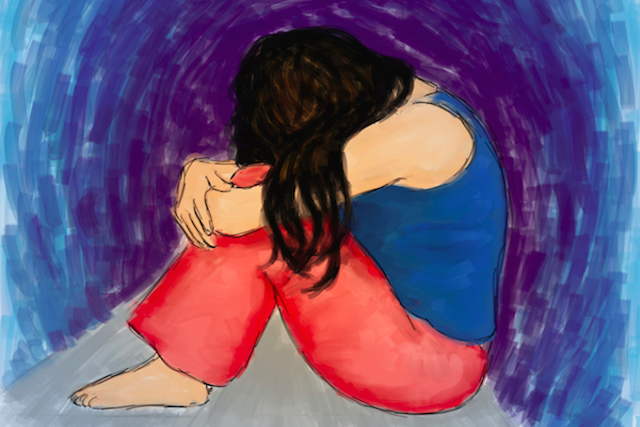
    Sad Girl

    “Nothing ever goes away until it has taught us what we need to know.” ~Pema Chodron

    Wounds I thought were healed began to burst open after a recent breakup. I had obviously not learned the lessons I was meant to years ago.

    As a child I put 100% effort into everything I did, from schoolwork and swimming training to leadership positions. I remember feeling so sure of myself.

    I drew my confidence from many areas of my life. A good student, swimming champion, school captain… I had my life sorted. Although the swimming accolades and A’s on my report card meant nothing once the bullying started.

    I was bullied a number of times throughout my schooling. I moved primary schools in the hope that I could escape the cattiness of insecure girls; however, unfortunately for me, bullies seem to be everywhere. I experienced trouble at my swimming club and during my first years of high school.

    Every time there was trouble my solution was to move elsewhere. I changed swimming clubs and schools, not to mention friendship groups several times.

    Eventually, the bullying came to an end, but I was left with suicidal thoughts and depression. I don’t remember specifics about that time in my life. It is as if my brain blocks out those memories as a defence mechanism.

    Once the bullying stopped and I recovered from my mental illness, I thought I was fine. I mean, anything’s better than having a dark cloud hanging over your head.

    I’ve always been the type of person who has aimed to be the best I could be, the comedian, the agony aunt, the people pleaser. Socializing only left me drained, exhausted from entertaining those around me.

    Fast-forward seven years to now…

    It was only until a recent ex felt that our long-distance relationship wasn’t working that I began to question my self-worth. Wasn’t I enough? What did I do wrong? I thought I made him happy. All the emotions I felt years ago came rushing back. The wounds I thought time had healed burst right open.

    Here’s the thing: Those wounds never healed. I just ran away from my issues at every chance possible. I didn’t do any work on myself after the bullying incidents; I just ran away and tried to forget. You can’t run away from your own insecurities and self-doubt.

    My recent relationship wasn’t right for me. He couldn’t offer me the emotional or intellectual support I wanted, but my need to be liked caused me to ignore the relationship red flags.

    After some self-reflection and reading articles on sites such as Tiny Buddha, I realized that relationships reflect how we see and treat ourselves.

    I didn’t feel good enough, and found myself in relationships where I was constantly proving to them, but mainly to myself, that I was, in fact, good enough. That I was enough.

    The funny thing is that no matter how hard you try, you’ll never convince the wrong person you’re right for them. You’ll spend your whole relationship wishing and wanting them to treat you the way you so desperately want to treat yourself.

    The wounds never healed because I never learned the lessons I was meant to learn. Because I refused to face my childhood trauma, I was put into the same scenarios time and time again—constantly seeking everyone’s approval, wanting to be liked, and trying to prove my own worth.

    I am determined that I will never feel so worthless ever again. I will not see my own worth through the eyes of another.

    I have recently begun the journey of self-acceptance. My daily practices of meditation and writing in my gratitude journal continue to serve me on this journey. My mind is more focused, and by listing what I am blessed with daily, I have started to see the value of my own existence.

    If you can relate to my experience, remember…

    What you resist persists.

    The damage caused by childhood bullying continued to resurface regardless of how many times I tried to push it aside. The same is true for you. Whatever pain from your past you’ve tried to outrun, you can’t avoid it forever. It will follow you until you face it and work through it.

    Once you learn the lessons you need to learn, you can break your patterns.

    By not learning what I needed to learn years ago, I was faced with the same situations over and over. We continue to have the same experiences until we get the lesson, and start applying it.

    Relationships reflect what is going on inside us.

    I didn’t feel worthy and sought out a relationship where I had to continually prove my value. When you completely accept yourself, you won’t settle for a relationship that you know deep down isn’t right for you.

    Be grateful and let go.

    Be thankful for the experiences and subsequent lessons. Painful though they may have been, they can make you stronger, wiser, happier, and better able to love and be loved. Knowing this makes it much easier to let go of what was so you can receive what is to come.

    Sad woman image via Shutterstock

  • Breaking the Pattern of Painful, Unhealthy Relationships

    Breaking the Pattern of Painful, Unhealthy Relationships

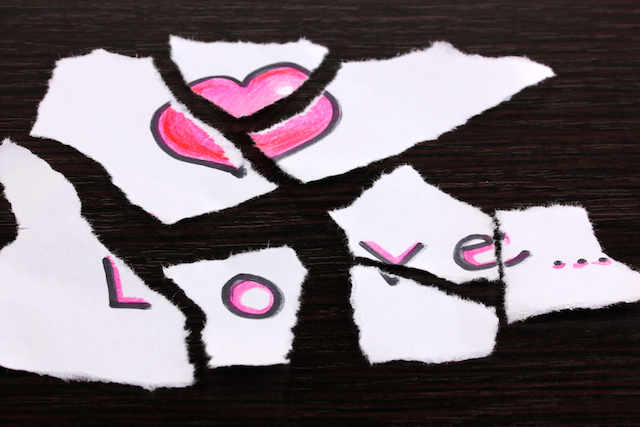
    Torn Paper

    “Do you want to meet the love of your life? Look in the mirror.” ~Byron Katie

    As I was listening to other women talking in my support group for battered women, I had a life changing moment.

    I caught a glimpse of myself and where I was at in life. It was a defining moment that turned around how I felt about myself and changed the cycle of my relationship with men.

    “I played a role in my abusive marriage; my ex-husband was treating me how I was treating myself.”

    His anger and how he showed it belonged to him; we are never responsible for someone else’s behavior and how they treat us, ever. However, we are responsible for how we treat ourselves and how we allow others to treat us. At the time, I didn’t really love myself.

    My confidence was non-existent. And I thought I deserved to be treated this way. I had a belief that life was meant to be suffered. I know, nuts!

    So, as I was sitting there in the support group, I realized how I had given my power away to someone else and that I had to take responsibility for neglecting myself.

    I didn’t put blame on myself to feel guilty. I owned up to my part in this whole situation. I looked in the mirror and got real honest so I could change this crazy pattern.

    If I had stayed in the victim role, I would have continually attracted the same kind of guy, who in reality would just be reflecting back what I felt about myself.

    Not at all what I wanted anymore, that was clear.

    It was time to break the pattern, and break the pattern I did.

    I started to really take care of my needs.

    I gave myself the love that I was looking for, the attention I was craving, and permission to feel happy and have an awesome life.

    It didn’t happen overnight, and it’s been quite the journey, but it amazes me that since I’ve raised the bar, the people that show up in my life are on a much higher level.

    It’s a situation no one should be in. The first step is getting out and getting help. And know the cycle can be broken.

    Breaking The Pattern of Unhealthy Relationships

    1. Practice self-love.

    I can’t say this enough. At the time the concept of self-love was foreign to me. Louise Hay’s book You Can Heal Your Life awakened me.

    I was looking for love in outside places, wanting others to validate that yes, I could be loved. When I started giving myself what I was craving, I gained more confidence, got clearer on what I wanted, and started treating myself with respect.

    Pay attention to your internal dialogue about yourself. Look at yourself in the mirror every day and say “I love you.” Believe it. Really embody how you want to feel right now.

    2. Change your mindset.

    There’s no going around it, what you think will become your reality.

    We all picked up beliefs from well-intentioned people around us while growing up, and they form most of our internal dialogue. Some of these beliefs might serve us, but some might be quite detrimental.

    Take an inventory of the top negative beliefs that you have on repeat in your mind. Then re-write these beliefs in a positive way and create a plan to act on them.

    This is about more than just saying affirmations; it’s about being consistent, setting your intention, and taking action.

    Example: Old belief: I’m not good enough, and I can’t be happy.

    New belief: I am good enough, and happiness is my birthright.

    After flipping your negative belief, say the new belief with emotion, and write it down and display it in places where you’ll see it regularly.

    Next, visualize what being good enough means to you. How does it make you feel? Have a clear image.

    Lastly, take action. How does a person who is good enough act? Act as that person now, and aim to do this consistently.

    3. Look for the lesson in everything so that you can heal and move on.

    We’ve all had experiences where the same thing keeps happening over and over with different people and situations. That’s a message that something needs to be done on our part.

    Once the lesson is learned we can break the pattern.

    4. Know what you want.

    In a nutshell, don’t settle—period! What is it you want? What qualities are you looking for? How do you want to be treated? Want to know what the trick is to actually get it? Be all of those things. Others are mirrors to us.

    5. Own it.

    The best way to make any change is to take responsibility for where your life is right now, owning it so you can improve it on your terms. When we do this, we go from waiting for change to happen to starting with ourselves, because that’s where any real change can ever take place.

    We’re back in the driver’s seat, creating our life, versus reacting to life situations.

    6. Receive.

    I did attract lots of nice guys too, but I would break up with them or find them too boring. Now I see I wasn’t comfortable with someone treating me kindly and with respect. I wasn’t in the right state of mind to receive this kind of love because I couldn’t give it to myself.

    Once you start giving it to yourself, you too will be able to receive it.

    The most important relationship we’ll ever have is the one with ourselves. Making this a priority doesn’t take anything away but just adds more happiness and confidence to our lives.

    Torn paper image via Shutterstock