Tag: Patience

  • Why Slow is the Way to Go: 6 Reasons to Take Your Time

    Why Slow is the Way to Go: 6 Reasons to Take Your Time

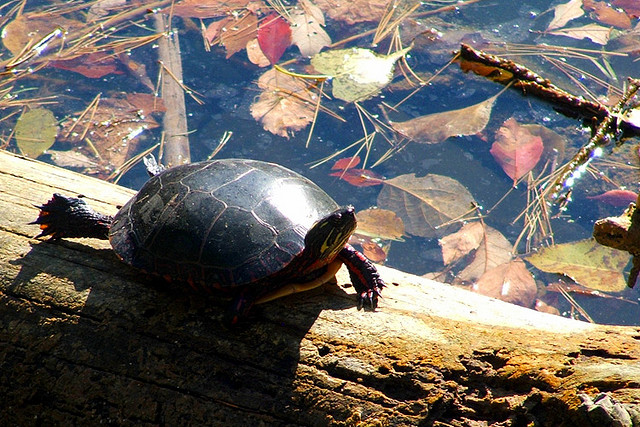
    Slow Tortoise

    “Stop beating yourself up. You are a work in progress, which means you get there a little at a time, not all at once.” ~Unknown

    I’ve been practicing yoga, on and off, for fifteen years.

    It’s helped me through and out the other side of infertility, kept me company on the long and winding road of adoption, and helped walk me out of the shadows of depression.

    It’s a big part of my life, part of who I am—a faithful friend, the kind that welcomes you back with open arms even after you’ve been inattentive.

    In fact, I’d say yoga always gives me what I call an “Alaskan welcome”—the kind my dearly departed dog used to give me whenever I walked into the house, as though I’d been all the way to Alaska instead of around the corner to the shops.

    Yoga is always willing to give but it’s a slow-burning love, and while it has rewarded me richly, I’ve had to wait for its gifts.

    I have just completed yoga teacher training, at forty-six, proving the truth that you are never too old to teach (or learn).

    While I’m pleased with my pace of learning, ironically, despite my age and experience, there is still so much yoga has to teach me.

    And that’s okay, because I am realizing more and more that some of the best things, in yoga and in life, come to us slowly.

    Here’s why I think slow is the way to go and why staying power is the most powerful kind.

    1. Slow teaches us patience.

    And patience is its own gift, especially during times when things are out of our control and we have no choice but to wait it out. When we bring patience to gently moving toward a goal, we have it in reserve for when roadblocks get in the way (as they inevitably will).

    2. Slow hones acceptance and gratitude.

    When we rush headlong into what we want to achieve, we can get easily frustrated with any hurdle or slight delay. (And frustration is unlikely to get us to our goal more quickly.)

    We also miss the opportunity to accept and be grateful for the small steps we take, those incremental achievements, and for where we are right now—for the good and the bad of everyday life.

    3. Slow allows for small mistakes.

    Rush at something and we run the risk of messing up big-time. Take it slow and we get the chance to experiment with small mistakes, helping us to grow so we can hopefully avoid bigger mistakes in the future. We have to earn our lessons, and we don’t learn until we allow things to sink in.

    4. Slow makes room for other stuff.

    When we want something fast we can become obsessed with that thing, as though the goal has taken on a life of its own.

    While it’s great to prioritize what we really want, it doesn’t make sense to create imbalance in our lives with one overwhelming obsession. Who knows what (and who) you might miss out on if you do.

    5. Slow builds resilience.

    The lyrics “It’s better to die on your feet than live on your knees” might ring true, but I’m betting you’d still like to be around for a long life.

    Slow is about building legacy, and along the way, resilience. That can only be won through endurance.

    Fast is great for igniting passion and showing courage, but who do you think is braver and more passionate—the person who sprints out of the starting block or the one who keeps going over the long distance?

    6. Slow is seasonal.

    Taking things slowly recognizes that sometime we need to sit and deliberate (by a fire or by the beach). We need to wait in faith for the universe rather than selfishly expecting our own desires to take precedence.

    We need to look to nature to realize that the seasons cycle at their own pace, and we should always be willing to take things slower (and faster) as required.

    Slow doesn’t have to be timid, or lazy, or less-than-smart. Slow isn’t a marker for fear and procrastination, nor apathy and indecision.

    There’s a yoga asana (posture) that many people find difficult at first. The Sanskrit name is Supta Vijrasana, also known as Reclining Hero pose.

    Unlike the standing Warrior postures, which are strong and forceful, the Hero pose calls for quiet strength as you kneel down and then surrender backward.

    When I first got seriously back into yoga two years ago, after a sporadic year of practice prior, my knees would groan and my ankle joints scream when I tried to just kneel down and sit my bottom back between my heels.

    I certainly couldn’t recline backward onto my back, while keeping my knees bent and touching each other and my feet close by my hips. But now, having taken it slowly, I can feel a little like a yoga hero.

    I can realize the benefits of slow that have snuck up on me in their own sweet time. And I am most grateful.

    Slow isn’t dull and boring, but contemplative and considered. Slow is the yin in a very yang world.

    Slow is the strength of surrender, and surrender can be the most powerful kind of victory.

    Large tortoise image via Shutterstock
  • Some Things Take Time: Slow Down and Stop Pushing

    Some Things Take Time: Slow Down and Stop Pushing

    Silence and Stillness

    “Smile, breathe, and go slowly.” ~Thich Nhat Hanh

    As life speeds up, as we check our phones and Twitter feeds for instant gratification, as we seek out another spiritual practice in the promise of evolving even faster, we have lost sight of something quite fundamental.

    Some things just take time. This can apply to relationships, business, and, in my experience, it especially applies to spiritual awakening.

    Yes, our practices such as meditation, dance, service, and energy work can support us on our soul journey. But rushing our development can even result in us taking one step forward and two steps back.

    And, most importantly, it will likely just happen anyway—if we get out of the way and allow it.

    I know this firsthand.

    When I felt the call to start developing my spiritual practice, the quirks of my overachieving personality took center stage. I quickly found out that there were sankharas to pluck out, energy centers to unblock, past life traumas to heal, and old soul contracts to wrap up.

    And I wanted this all sorted out ASAP, thanks.

    So I went from an occasional meditation practice to spending upward of two hours on the cushion every day, and chanted several times a week.

    I spent every single spare moment practicing and developing my newfound energetic skills. I declined social invitations so that I could concentrate totally on the latest text that had fallen into my hands.

    I don’t regret any of this. I learned a lot and it was my path.

    But after a couple of years, I realized that my approach to my practice was perhaps a bit obsessive; that it could just be another manifestation of the way that I had been living before “waking up,” as I had termed it.

    I thought that if I threw all my might at my spiritual evolution, then I might master this new way of being more quickly, and more effectively. Yet under the guise of spirituality, I was just playing out my old patterns.

    The result? I was increasingly ungrounded. I spent days feeling totally knocked around by major energetic “clearings.”

    I was slowing myself down, or at least not really assisting the flow of what wanted to move through me. And I was just as over-the-top about succeeding as ever, this time, at my practice rather than in my career.

    I eventually realized that spiritual evolution is not like a report or book that you can write faster if you stay up late. You can’t force this type of evolution. It’s not the type of thing that you can control.

    This type of evolution is perfect. It’s like a delicate flower, which unfolds at its own pace, to the rhythm of its own internal clock.

    I came to this gradual realization, surprisingly, while pursuing a doctorate in women’s well-being and justice after violence.

    This involved deconstructing everything I knew—being prepared to ask the hard questions and receive the answers; asking some big questions of myself, too, and being prepared to hear the answers.

    It really involved a deepening of my understanding of myself and my spiritual practice. I started to appreciate which of my old patterns I had been inadvertently repeating, and which of my tendencies were actually not serving me.

    The doctoral process also taught me how to play the long game and how to let go—working alone every day and inching along with my ideas; waiting for months, sometimes, to receive any feedback from my supervisors; spending months and months writing thousands of beautifully edited, referenced words that never made it into the final product.

    Now, there are much less resource-intensive ways to learn this than through pursuing an advanced degree. Just bringing your awareness and being honest about whether you are playing out your existing patterns is the first step.

    And if you notice that you have a tendency to rush your process, make the decision to slow down. Once you realize that the timing of your expansion, or growth, or awareness is perfect, you will relax.

    When you fully internalize that the journey is just as important as the destination, you’ll know that you’re on the right path.

    In relaxing, and in getting out of my own way, I’m much more receptive. I don’t worry about how long things will take. I trust that it will all happen perfectly.

    I don’t push as hard now, and yet more opportunities seem to fall into my lap. My creativity flows. My life is much more fun. And my experiential understanding and my practices continue to deepen.

    It’s actually quite magical.

    Life becomes easier and far more fulfilling when we slow down and let things happen instead of pushing ourselves to make things happen.

    Photo by Lisa Omarali

  • When You’re Frustrated by a Delay: 8 Reasons to Appreciate It

    When You’re Frustrated by a Delay: 8 Reasons to Appreciate It

    Waiting

    “All great achievements require time.” ~Maya Angelou

    We all have a picture of what we want in our heads.

    We get attached to a timeline for achieving it. We fantasize about the results and how it will bring us happiness.

    We begin to work hard to attain it.

    But when we don’t get it right away, we get frustrated. We want things to move as quickly as possible.

    If we want a relationship, we want to find our perfect partner as soon as we can. If we’re building a career or a business, we want success in months. If we want to master a skill, we expect to get good after several weeks.

    Right now, I’m in this in-between stage.

    I’m in between getting my dream off the ground and where I want it to be. Because my dream hasn’t materialized yet, there are days where I lose motivation, because deep down I feel that if it’s not happening yet then maybe it isn’t for me.

    I hate waiting; I hate this grey area zone that I’m in.

    I want the results now. I want the validation. I want to make sure that I’m not wasting time and that what I’m doing means something.

    But I’m learning that it doesn’t work like that.

    When we resist this period of time, it creates a lot of anxiety, but if we look closer we may find that the delay actually contains great lessons for us.

    I’ve been trying to live a more intentional life of happiness and meaning. But the anxiety I’m feeling doesn’t align with what I say I want—and it’s not even getting me closer to it. In fact, I’m creating more delay. I procrastinate, I resist, and I sulk.

    So I’ve made a conscious decision to understand the lessons.

    It was difficult at first, especially since I felt that “must have it now” feeling. The last thing I wanted to hear was that I needed to wait some more. I resisted this because I deluded myself into thinking that if I ignored it, perhaps things would move along at a faster speed.

    But over time, as the lessons got clearer, I got more inner peace and reassurance that things are moving at the right time.

    What can we learn from delays?

    1. A delay is an opportunity to let go of attachment to outcomes.

    When we let go of our attachment to specific outcomes, we’re better able to concentrate on our craft.

    This is something to appreciate, because what happens if the result isn’t what you imagined it to be? Will you stop creating? Will you stop working on your passion?

    2. A delay can help us realize how badly we want it.

    Do you want it badly enough to keep working at it despite not getting the immediate result you want?

    3. A delay can help us build a stronger foundation.

    It prepares us and helps us develop our muscles.

    Get better at your craft. Figure out ways you can better use it to serve others.

    We practice and learn during this waiting period so that when the time comes, we are equipped to handle it better.

    4. A delay can teach us to think outside the box.

    When our way is not working and we’re cornered, it can force us to come up with new ideas and new ways of doing things.

    5. A delay can teach us to accept that anything worthwhile takes time.

    It takes time for things to grow. It takes time to build trust. It takes time to build anything.

    The sooner we get this, the sooner we’ll free ourselves from anxiety, and the faster we’ll focus on doing what we need to do.

    6. A delay can teach us to be productive while waiting.

    When we’re able to accept that some things are out of our control and that things don’t always happen as fast as we’d like them to, we’re better able to be productive, since we’re not overwhelmed and distracted by fear and anxiety.

    7. A delay can teach us to acknowledge and appreciate progress.

    With conscious effort, I am able to see my accomplishments and all the progress I have made so far instead of discounting it just because I’m not yet where I want to be.

    This is important because it’s removed the resistance that kept me from doing the work I needed to do; plus, I feel more fulfilled.

    8. A delay can teach us to be grateful for what we will receive.

    Because I have put in my sweat and tears in starting my dream from the ground up, I will make sure I will do whatever it takes to nurture it and not take it for granted.

    A delay it not a denial. Just because something isn’t happening now, that doesn’t mean it’s not for us.

    I still get impatient but it’s getting easier, because I know that a delay can serve a greater purpose, and our greatest good.

    So, if you’re going through a tough time right now and something isn’t quite materializing yet, hang in there. Find reassurance in knowing that a delay can actually benefit you.

    You may not see it now, but hold on to this faith. This will help you find inner peace and enable you to keep taking action so you can get closer to what it is you want.

    Photo by Luz Adriana Villa

  • When You’re Anxious to Finish: Being Patient with Your Passions

    When You’re Anxious to Finish: Being Patient with Your Passions

    Man and Mountain

    “Patience is passion tamed.”~Lyman Abbott

    It was 2:13am. My skin stuck to the bed sheets as I realized I was lying awake, listening to my belabored heartbeat. This was the first physical anxiety attack I had ever experienced—one that I hope won’t be repeated. And it happened only two nights ago.

    Apparently, the past two years have been more intense than I realized. It’s quite obvious, really, when you see that I’ve failed to write much, for Tiny Buddha or my own blog, in that time.

    I wish I could say that I’ve been too busy accomplishing goals, or have taken the years to learn new skills, but I’m afraid all these symptoms stem from a rather incurable demon. I’m writing, of course, about impatience and its power to delay.

    Impatience is invisible in that it can easily be misinterpreted as ambition, which creates an even greater problem.

    Where, on one hand, I may be more driven to take on more projects, on the other, I am led to a mess wherein very little gets done. Sure, I may have many things that I am passionate about, but this zeal is what in turn creates a false ambition, an impatience to do simply much more than I can handle.

    But what is impatience; or rather, what is patience?

    I’ve always liked the idea that the sense of urgency was passion in action—that it was a good practice to urge myself to write an essay, hustle in freelance video editing, or go off and create my own indie game in an attempt to join a new dimension of storytelling.

    So patience, then, isn’t a matter of doing less but rather the mastery of juggling, right?

    Well, after trying to calm myself in a physical fit of impatience boiled over, I’ve begun to think otherwise.

    Lately, I’ve been listening a lot to Alan Watts’ recorded lectures from his teaching years while based out of San Francisco.

    He spoke a great deal about eastern spirituality, Buddhism, contemporary mysticism, and all those curious, philosophical nonsensities that usually weird out those unfamiliar with the subject matter.

    But what really strikes me is his take on controlled anarchy—the biological organism in which the parts harmoniously create the sum with no boss in charge.

    For instance, in sculpting, it is often understood that the artist imposes his will upon the clay, thus the art of making a sculpture is simply the mastery of manipulation. But, as Watts was found to point out, the most beautiful art comes from the chaos of life itself.

    In fact, there was one such occasion documented publicly in the form of a sculpting contest that Watts mentioned in several of his lectures.

    The contest didn’t award the first prize to the sculpture that was most masterfully willed out of the clay by its creator. First place went to a young woman who took the clay, smashed it on the floor, and kicked it around until she realized what it was “trying to be,” afterward, simply carving out the pieces that she thought weren’t supposed to be there.

    This, in turn, created a wonderfully random, and thus beautiful, piece of modern art. So it is with the rest of life; after all, did you plan on growing your beautiful eyes, or did it just happen?

    Passion, then, is the artistic beast within us all, vying to get into the world in sheer, ferocious eagerness. Patience is the way to let it out calmly and in great mastery.

    If you draw, do you draw the whole drawing at once? If you sing, do you sing all the notes in one breath? And if you dance, do you perform all the steps in one beat?

    Of course not. You let it out one bit at a time.

    So how can one be a patient master of their zealous passions? When faced with impatience, there is only one thing to do: allow it.

    If we remain patient with impatience, we’ll find ourselves in that calm space where amazingly creative things can happen, just like that young woman who sculpted her clay into what it “wanted to be.”

    Ralph Steadman isn’t able to create his popularized depictions of grotesque or bizarre ink drawings when he’s so adamantly trying to come up with his next piece. It is only after he splatters ink for some time that he realizes what is coming forth from the blots, and then he applies the finishing touches.

    This is the greatest level of mastery to reach in our lives, this art of patience. I know more and more each day that I will achieve my goals in due time, and that to push myself may not always be the best way to remain productively creative.

    Pushing yourself can be hard on both the mind and body and will only lead to the opposite effect of urgent production—anxiety-ridden self-destruction.

    I like to relate patience to the stability of a mountain. A mountain does not strain itself to keep from crumbling to the ground; it just happens that it does not fall and thus makes a mountain.

    We are like mountains. Our hearts beat, our cells fade and regrow, and our minds create tides of thoughts and hopes and dreams. But, like a mountain, we happen all at once without our conscious minds telling us to act.

    I mean, is it you who tells your heart, “Beat, beat, beat, or else we’ll die!” Of course not. It just happens. And so it is when you find yourself trying to beat impatience out of your mind that you’ll only grow more impatient.

    Thus, be like mountains, not like your conscious and incessant flow of thoughts and anxieties. Let them go. And before you take another step toward anything, just breathe and let your next action happen as naturally as your breath.

    As I said earlier, impatience is invisible in its cleverness to disguise and deceive, but this is only because we believe we can impose our wills directly upon the world. That’s a stressful way to attempt to work toward our goals.

    If we keep the goal in the back of our mind and focus on the step in front of us, the rest will flow like a river.

    Mastery, then, is the effortless patience that pulls passion into the world naturally like rain falling from a thundercloud. All we need to do is stop fighting ourselves and let it happen.

    Photo by Moyan Brenn

  • How to Hear Your Inner Wisdom When Making Tough Choices

    How to Hear Your Inner Wisdom When Making Tough Choices

    “Everyone who wills can hear their inner voice. It is within everyone.” ~Mahatma Gandhi

    Do you struggle with listening to your inner voice? Do you doubt yourself and every inner signal you get? You’re not alone.

    A decade ago, I didn’t know that I could follow my heart. I’d never heard of the concept of inner wisdom or inner voice.

    I started following my interests and doing what made me feel good, and this is the essence of doing what you love and listening to that subtle voice inside of you.

    The problems start when we listen too much to outside sources.

    We start to think that we’re doing it wrong. I went through one of these periods myself. Looking back, I see that while it was a period of struggle, it also helped me go deeper into what worked for me.

    What is Inner Wisdom, Anyway?

    You may get nudges from your soul by getting inspirational thoughts. It may be an unexplainable feeling that gets you into action. Or you may see an image in your mind.

    My inner wisdom is a blend of all of the above. But more often than not, it communicates through feeling.

    I like to say that it’s like I have cat whiskers all over my body. I feel my way through life.

    I still misinterpret the messages I get. Sometimes I follow fear. Sometimes I give in to resistance. I’ve learned to be okay with that.

    This doesn’t have to be serious. You can play and experiment; see what messages you get.

    How to Listen to Your Inner Wisdom

    With that said, let’s look at how to connect to your inner wisdom.

    1. Calm down.

    When my mind is calm, the connection to my inner wisdom is the strongest.

    When my mind is in turmoil, I try not to make any decisions because I don’t have access to my cat whiskers.

    If I’m in a negative state, I might go for a walk, wash the dishes, or meditate. I don’t necessarily try to get rid of the negativity, but I simply stop what I’m doing and take a break.

    When you take a time out, gradually your calm will return along with the connection to your wisdom.

    2. Stop trying so hard.

    I’m good at bullying life into place. I want to figure it all out. I want to force results, and I want to have achieved my goals last year.

    But I’ve noticed that the more I try to push, the more slowly things go. It’s like getting stuck in quicksand. If I try to dig my way out, I only sink in deeper. Instead, I have to let myself be pulled out.

    This doesn’t mean I become complacent. It means I notice what I have control over and what I don’t.

    And it goes back to calming down. When you’re worried about what might go wrong in life and you’re trying to fix an imaginary problem, the connection to your heart is severed.

    But once you let go and become aware that you don’t know where life is going, you can relax and peace can return.

    3. Be patient.

    My inner wisdom shines through when I’m patient. When my partner and I were looking for a house, we knew approximately what we wanted, but we didn’t try to push it.

    We were patient. We looked at different options and listened to our hearts. I let days pass because I noticed that the more distance I got, the clearer the signal from my inner wisdom.

    The realtor would try to pressure us, but we took our time. We weren’t going to rush into a big decision like buying a house.

    One day, we saw a house come on the market. It didn’t look impressive online. We almost dismissed it. Then we went to have a look, and the moment I stepped in the door, my inner voice said yes.

    We still didn’t jump on it. We waited a few days to see if the feeling would change. It didn’t. We ended up buying the house, and I’m sitting in a room right now writing this article.

    So when you want to get feedback from your inner wisdom, get the feedback over a couple of days or more. Don’t put pressure on yourself to get an answer right now, right here.

    Mistake to Avoid

    The biggest pitfall I fall into over and over is stressing about whether or not I’m on the right path.

    I still worry, but less than before. I’ve come to accept that life will take me where I need to go. I can only do my best with what I have.

    I don’t have to force myself to do anything. All I can do is listen to the quiet voice within me and see where it takes me.

    I don’t know if the struggles I’m going through today are what will help me get to where I need to be.

    When you’re honest with yourself, truly honest, you realize that you don’t know what’s going on in life. You don’t have control over it. All you can do is live life to the best of your ability.

    What You Need to Remember

    When I started reading about living a heart-based life, I thought that if I could just tap into my inner wisdom, my life would be filled with euphoria.

    But I’ve since realized that life is filled with life, which means both ups and downs. We see individual events as bad because we isolate them.

    However, we don’t know where we’re going or what our path looks like.

    I’ve discovered that the more fun I have in life, the smoother the ride goes. I don’t take life too seriously. Meaning, I don’t have to panic when something happens.

    In the end, your inner wisdom is always there, just like the sun is behind the clouds on a rainy day, waiting for you to relax.

    All you have to do is calm down and pay attention.

    Don’t be in a rush. Don’t try too hard.

    But have fun, and notice how your inner voice works.

  • Practice, Persevere, and Trust That You’re Making Progress

    Practice, Persevere, and Trust That You’re Making Progress

    Progress

    “As soon as you trust yourself, you will know how to live.” ~Johann Von Goethe

    I am on a journey of trust. It’s been about trusting my body, knowing that it can take care of itself without the control of my mind.

    For three and a half years, my body and mind have been enemies and I have been trying so hard, and knowingly, too hard, to get back to where I was at seventeen.

    It all began when I had an episode of hyperventilation in January 2010, when I heard that my Granny, who was terminally ill, had just suffered a heart attack.

    She survived it, but I knew she was going to go soon and I had never lost anyone before. It scared me and caused this anxious reaction. I feared the same thing would happen to me. My parents told me otherwise, and I believed them.

    My Granny died that April, and my reaction to it all was very delayed. It took me several weeks to let it all out.

    I was fine then until that August, when my parents and I stayed in a rented apartment that resembled a home of an elderly couple. It reminded me of my Granny, and that was the trigger.

    I hyperventilated again. This time, rather than breathing and relaxing, I thought the best way through was to tense up.

    I didn’t realize that this would be my automatic reaction whenever I got stressed for the next three and a half years.

    It felt like my body had an invisible belt that tightened, no matter how I tried to relax.

    Even if I didn’t feel stressed about anything in particular, this tension polluted events that I had looked forward to because I was trying so hard to enjoy myself, which made it all the more frustrating.

    Over time, it began to worry me. I would wake up, hoping it would disappear, and ask for a day where I could just breathe in a relaxed, normal way again. When I wouldn’t, I thought of the consequences of chronic tension and worry and what it would mean to my health.

    Living away from home in my second year of university, I experienced severe anxiety and mild depression.

    I had been suffering inside alone until January 2013, when I told family and friends, hoping that they would understand and give me some support. Still struggling, I went to my doctor and asked about therapy.

    For four months, starting in June, I did cognitive behavioral therapy to help improve my thought patterns so I could learn to react to stress in a more rational way. I also received modules to help me through hypochondria, which was the key problem.

    Mid-way through my therapy, I had an emergency kidney operation. While recovering in the hospital, I found that my mind trusted my body to breathe, simply as a survival instinct. I knew then that I could do it and hoped that I would be able to continue to breathe easily once I was better.

    I recovered at home for most of the summer and found that, as I got healthier, my mind got busier. Old controlling patterns returned and my anxiety was back.

    I saw improvements, though, as I continued with therapy. When the four months were up, my therapist was pleased with how well I had done, bringing my severe anxiety and mild depression down to the sub-clinical, everyday range.

    She reminded me that I had done all the work myself, and that she had only be there to listen, which I think is something to remember if you want to get counseling.

    After I was discharged I had a couple of wobbly months. I described it as being like a child who has had their training wheels taken off their bike. I wondered, though, when that period would end so I could start living the life I wanted.

    I realized that my therapy work had gone out of the window and that I had to continue practicing what I had learned in those four months for the rest of my life.

    For the last year I have been reading the articles on Tiny Buddha. I have been motivated and inspired by the stories from people who also dealt with anxiety, depression, and loss. Sometimes just reading a post would make me feel better.

    However, just reading their tips only took me so far. I needed to try them out for myself, to see if they worked for me. It’s that word, practice, that I have been struggling with, and patience and perseverance. These are my words that help me through, and now I can add trust.

    Practice, Patience, Perseverance, and Trust

    I find knitting is a great representation of all these things.

    Without practice, you won’t expect those uneven stiches to improve and or the projects to be completed. Without patience, you won’t accept your flaws and will be extremely angry with yourself. Without perseverance, you won’t be able to see your improvements being made, and without trust, you will be deprived of the belief that you can achieve great things.

    I find knitting is a great way to relax, and scientifically proven to slow the heart rate and calm the mind.

    Another thing that helps me is my stress journal. Writing is an effective way of logging of your thoughts, processes, and achievements. It is also scientifically proven that writing relaxes the mind.

    Music, such as instrumental tracks, have also been effective for me. There are plenty on YouTube such as “relaxdaily,” who creates beautiful New Age music. Other types of relaxing music come in meditation form, such as PMR (Progressive Muscle Relaxation), which loosens tense muscles all over the body.

    It can take a long time to see progress when you’re using these kinds of tools, and I often need to remind myself of that. But I now trust that I will get better at this.

    I have been making good progress and I have tense days every so often, but only the other day, when I was having a mild panic attack, did I realize that it’s about perspective.

    I had been so tight inside because I thought I had to be relaxed all the time, and I wasn’t. I felt I had to breathe slower so I wouldn’t be susceptible to high blood pressure and my mind wouldn’t take control, preventing me from just being.

    But I’ve come to realize I don’t need to try so hard. Recently I’ve started trusting my body, telling myself that I am healthy and I am living a healthy lifestyle. I’ve begun to trust that I can breathe freely if I allow myself to.

    We all experience stress, anxiety, and depression in different ways, and we all recover in our own unique ways too. However, it’s not about finding a cure. It’s about taking power back from our thoughts so we don’t allow stress and fear to control us.

    We all want to enjoy our lives, and we can: by being patient with our progress, persevering with our progress, and trusting that we are making progress.  

    Eventually, you will see that progress. Just keep practicing.

    Photo by Hartwig HKD

  • The Power of Patience: Let Go of Anxiety and Let Things Happen

    The Power of Patience: Let Go of Anxiety and Let Things Happen

    “Your mind will answer most questions if you learn to relax and wait for the answer.” ~William S. Burroughs

    Patience can be a struggle.

    I know this firsthand. My experience with impatience used to be confined to overusing the microwave or skipping to the end of a long novel.

    Back then, when waiting at a traffic light for more than two minutes seemed like an eternity, I didn’t know that life would teach me several advanced lessons in patience.

    Shortly after finishing my morning bike ride I started feeling queasy. I wondered what was happening, but tried to ignore the feeling. The queasiness was replaced with severe abdominal pain, and I had to be rushed to the hospital.

    Waiting in the emergency room for hours while in deep physical pain was a first test of patience. I passed the test because I had no other option. I couldn’t wait to be told I had indigestion and to be sent back home.

    When the ER doctor came into my tiny room and announced they would need to perform an appendectomy, I didn’t ask if I would be okay. Instead, I asked, “When will I heal? How long is it going to take?”

    Smiling, the doctor answered, “Two weeks.” I panicked. I could not possibly be in bed for two weeks! But the two weeks turned into four, and by the fourth week, I had finally learned my first advanced lesson: to be humble.

    My experience recovering from surgery taught me to slow down and to listen to my body, and once I allowed myself to relax, the healing happened.

    A few years later I was tested again, and this test would prove itself to be one of the hardest challenges in my life. I lost one of the people closest to me. This was someone who I thought would always be there for me.

    Beyond devastated, I fell into a depression. It wasn’t an immobilizing depression, but it led me to a period of deep grief and sadness.

    Weeks and months went by, but my negative feelings seemed to remain unchanged. Anxiety and fear crept in. I wanted to heal, but it wasn’t happening. The most pressing question in my head was, “When am I finally going to heal?”

    People would tell me, “You’ll be fine,” or “This too shall pass.” I listened to them, acknowledged their good intentions, and understood the message they wanted to convey. And yet, healing still didn’t happen.

    I was not able to heal until I was willing to be patient with myself and my emotions. 

    It was only when I let the feelings be and stopped putting a timeframe to my healing that I created the space my soul needed to receive the answer to my question: When will I heal?

    The first answer I received is that in a universe in which everything is in divine order, things might not happen as quickly as we want them to happen.

    The second answer is that, in order to heal, we need to take down the subconscious wall of anxiety built by our impatience. Once I took down this wall, grief lost its power over me.

    When I became patient, I realized I was in control, and once I gained control, emotional and spiritual healing started to manifest.

    Regardless of how fast I was healing, I wasn’t concerned about how quickly it happened. A Course in Miracles says, “Infinite patience produces immediate results.” The result I achieved by being patient was peace, and peace was automatic healing.

    So, whether you’re trying to lose weight, take on exercise, learn a new skill at work, or adjust to a cross-country move, keep the word patience in your mind.

    Allow yourself to be still, and remember that if you’re aligned with who you really are, all the pieces of the puzzle will fall into place at the right time.

    Spend some time in silence, and listen to the voice of your intuition, which is the voice of your true self. Sometimes you won’t be able to hear that voice, so be patient. Trust that you will receive the answers you seek in time.

    Finally, celebrate the small milestones: a pound lost, a mile ran, a spreadsheet done, a new neighbor met, a happy moment. As Lao Tzu said, “A journey of a thousand miles begins with a single step.”

  • Dealing with Loneliness: Hold onto Patience, Not the Past

    Dealing with Loneliness: Hold onto Patience, Not the Past

    loneliness

    “Patience is not passive; on the contrary, it is active; it is concentrated strength.” ~Edward G. Bulwer-Lytton

    Last night, I discovered the tiniest of creatures in my shower: a minute scorpion, no larger than the average human fingernail.

    I could not for the life of me work out how it had ended up here because I live on the third floor of an apartment building in a busy South African city. Nonetheless, there it was—a little fellow in the corner of the tiles, receiving ricocheted water droplets on his tiny little carapace.

    My main personal learning theme for this year seems to be patience, and, whether initiated by the universe or by my own hand,  I have set out to embrace it in everything I do.

    Starting my first job in January required me to apply patience in many ways: in my interactions with co-workers and clients, in driving in to work every morning in such a bustling city, in waiting for a slot between several adjacent meetings to eat my lunch. Most importantly, it required me to exert patience on myself.

    Patience has never really been a strength of mine, especially with regard to relationships.

    I was a serial monogamist since I was 17, bridging each ending relationship with a romance that I could immediately start. Even small gaps between these adjacent relationships were filled with several casual physical interactions just to ensure that bridge was securely built.

    But somehow, it has been over a year since my last romantic commitment to another human, and I have learned to curb my need for somewhat less committed relationships to a great extent too.

    On the second night since the little being’s arrival, I could not find it anywhere. I bent down to examine every crevice, every dimple, every crack. Nowhere.

    I was concerned it may have ended up under my duvet, but decided to deal with that concept closer to bedtime.

    For now, I could remain blissfully unaware.

    I got into the shower and, after a few moments, the scorpion appeared to me mere centimeters from where it was discovered.

    I picked it up with an ear bud and it reared its tail and claws at me, before promptly turning and marching straight down the hard plastic rod away from me. I decided it would be best to release him outside, where he would hopefully find a decent meal and undergo less stress.

    After a good couple of flicks of the ear bud outside of my window, he let go. I released him to the external world knowing that the large tree ferns below my apartment would cushion his fall.

    I suddenly felt sadness wash over me for a reason I could not instantly grapple. It was such a transient little creature and I had so little to do with its life—nor did it have very much to do with mine. So why did it make me pause to feel and think?

    It became clear that the metaphor had struck my subconscious mind and was allowing me to work through feelings, those that I had previously not fully embraced, in a safer environment.

    The scorpion was akin to many a romantic partner: showing up from seemingly nowhere, planting themselves in the heart of our lives for a moment, and then inevitably vanishing from our existence.

    And sometimes, when a romantic partner gets ripped away, we panic in the void left behind, and make hasty decisions to fill it with something or anything at all.

    When my last relationship ended, I felt so terribly empty, as if part of me had evaporated alongside him as he walked away from me for the last time. He told me that I was not “the one.” I translated this as him saying that I could not be loved by him because I was innately flawed, beyond being lovable.

    So I threw myself into an active social life. I met people while out in bars—people who seemed to see the beauty in me—and established whatever form of connection with them they would allow me to have.

    Again and again, all they allowed me was a material connection based on physical need. I was fooled by them wanting to see me again. All they wanted was a repeat of the night we met. All I needed was to be deemed loveable.

    When they saw this need in me, they ended their connection without contemplation or care, and I didn’t always see it coming. But I was dragging this behaviour out of them. I was the cause and the effect. I was the sole player in the game. They were not to blame.

    Lovers and partners may exit in innumerable ways: they may aggressively march out of your life, they may gently release you, or they may leave you breathless by their abrupt and unjustified departure. They may leave this earth physically altogether. You may do the equivalent to your lovers and partners.

    I wandered into three considerable outcomes, and justifications, of patience.

    • Only patience allows us to fully understand why important people in our lives come and go.
    • Only patience allows us to reap the lessons of a past emotional interaction in its entirety.
    • Only patience from the point of solitude onwards will allow us to wander into a truly constructive circumstance with another human being.

    To liberate others is to liberate oneself. And vice versa.

    I then recognized that I had been holding on to some things (or someones) for a long time. People that I consciously remembered had left my world, but part of whom were still with me.

    I held onto their messages, gifts to me, and belongings they had left at my apartment. I held onto the things they said to me out of sheer gratitude and love for me, and replayed these over and over in my head, out loud. I held onto the smiles that I had caused. I held onto the idea that they would come back.

    These were not the full, whole, and meaningful parts. These were exoskeletons—something left behind that the person no longer needed when they moved on, but that I held tightly in my grasp to reassure myself that I was not alone.

    And in no way will these parts ever be that person. In no way will these elements ever represent the entirety of a being. In fact, they are warped memories that are left by your mind to comfort you and nourish your wounds, but are anything but true.

    My last romantic relationship’s end had been the most peaceful departing that I had ever experienced. He had gently released me. But for a while, I was lost—with the shell of him, and (seemingly) as a shell of myself.

    The fear of not being complete when solitary can be devastating. You are more inclined to stick with people who abuse and degrade you. You are more likely to pass up opportunities that may lead you to fulfilment in your career and personal life if they don’t allow you to stay with the person you’re bound to.

    Your confidence and lust for life diminishes when you are alone, and you may make harmful and self-destructive decisions.

    The time I have spent “alone” has been remarkable. I have embraced my deepest fear: loneliness. I have been afforded the opportunity to see my courage, and my scorpion-like perseverance.

    Now that I hold onto patience and not the past, I am more free. My confidence has been amplified, my sleep and concentration have improved, my moods have stabilized, pursuing my passions has a daily place in my life, I show more love to the people that matter, and I am a more easy-going person. In an interesting way, this all sets me up to meet the right people as a side effect.

     I encourage you to hold onto patience, and not the past, too.

    One of the easiest ways to instantly gain patience is to carry out a kind of on-the-spot meditation. When you are feeling overwhelmed or flustered by guilt, sadness, or regret from your past, stop your thoughts altogether and focus on the tension in your muscles, especially your face, neck and shoulders.

    Blink slowly, and let this tension go with a deep breath. You are not your worst mistakes. You are not the person from yesterday, or last month, or the previous year. You are present in this moment as a full human being. You have the ability and freedom to make new choices.

    Photo by Raj

  • 10 Steps to Create Lasting Change in Your Life

    10 Steps to Create Lasting Change in Your Life

    Free

    “Our greatness lies not so much in being able to remake the world as being able to remake ourselves.” ~Mahatma Gandhi

    From time to time I read my old journals. When the moment strikes me, I choose a journal at random from my bookshelf.

    This time it was the beautiful green and gold one my mom had given me in what must have been September of 2010, because the writing chronicles my life from September 20, 2010 to January 1, 2011.

    Basically, it is my perceptive exactly two years ago.

    I had just started my second year of grad school and I was a month into my internship at an outpatient drug and alcohol rehab facility.

    I loved what I was doing and I was really good at it. With conviction, I had found my passion.

    During these documented months of my life, I was also:

    • Catching myself being “in my head” and too hard on myself
    • Feeling angry with my parents after identifying the residual effects of the parenting I received, and then forgiving my mom for not understanding how to foster my spirit
    • Exploring my birth chart, seeing a psychic (or two), and using meditation and Dan Millman’s ideas to find my life purpose
    • “Practicing” with men and dissecting the happenings of all my past romantic relationships
    • Recognizing self-sabotage and self-deprecating tendencies and making an effort to change my self-talk (what I say and how I converse with myself when alone)
    • Beginning to understand that my thoughts affect my behavior, which impacts the circumstances of my life
    • Learning how to love myself, faults and all, and how to be my own partner so I know how I want a man to treat me
    • Practicing presence—trying to stay in the moment
    • Asking myself the hard-to-answer questions that I had previously been skilled at avoiding. Example: Why is my heart closed-off?
    • Investigating vulnerability, yet still feeling unable to attempt it in any real way
    • Trying to set personal goals
    • Starting to have close, meaningful relationships with intelligent, curious, and motivated women for the first time in my life
    • Acknowledging guilt I felt about making my life what I want it to be
    • Struggling with verbal communication and assertiveness—what I needed to say to people in my life
    • Starting to see what love really means—the action, the verb, instead of a noun             (more…)
  • The True Meaning of Patience: Let Go and Take Your Time

    The True Meaning of Patience: Let Go and Take Your Time

     “Patience is not passive; on the contrary, it is active; it is concentrated strength.” ~Edward G. Bulwer-Lytton

    Patience sucks!

    Well that is what I used to think.

    I was taught growing up that it was a virtue, but I was never taught why.

    In my experience, patience had meant I would miss out on something I desired. So I became the hare in the race and would fast track myself through career choices and opportunities and even relationships for fear that I would be forgotten and miss out again.

    But in the story, it is tortoise that wins the race, because he is constant and sure-footed.

    With all my “hurry up” and haring around I may have seemed to the outside world to be go-getting and achieving great things that seem so valuable in our materialistic world, but because I was so busy rushing to the next big thing, I was actually missing out on my life.

    I’m 36, and I was brought up in an era that has been all about get it, have it, and then throw it away. For a long time, this left me feeling empty.

    What I hadn’t learned was the true meaning and purpose of patience.

    So I took up the piano.

    After many years of wanting to play, and making endless excuses because I was scared of the hard work and the commitment it would involve, a time came when I was ready to face up to my fears.

    I told my piano teacher that if it took me until I was 70, that would be fine, as I believed it was a skill I would like later in life.

    All good words; however, not how I behaved…

    As soon as I sat down on the stool and started to learn my first notes, I felt a building impatience.

    I would get so frustrated with my fingers and hands for not working independently. Every time I took a small step forward and improved, I would barely savor the achievement and would once again get upset at anything I saw as failure. (more…)

  • Help People Feel Better: The Power of Understanding

    Help People Feel Better: The Power of Understanding

    “When you judge another, you do not define them. You define yourself.” ~Wayne Dyer

    I used to be someone who always gave my opinion, or confronted issues in relationships regardless of whether someone was in the mood for what I had to say.

    I always brought up whatever was bothering me or said my opinion, perhaps in not so tactful ways. Needless to say, this led to a lot of emotional confrontations and blowouts with friends and family members, sometimes destroying important relationships.

    I justified my actions by thinking that people deserved to hear the truth, no matter what.

    Despite my strong opinions, loved ones still came to me for advice or help when they were in need. This might have been because I seemed like a well-grounded person with strong convictions—someone who knew what to do.

    When giving my opinion or advice, I would always think to myself, “Well, they are coming to me for the truth, so they deserve to hear it no matter how bad it might sound.”

    While I thought my advice came from a place of caring, it would take years before I realized how selfish and thoughtless I was being.

    Sometimes my sister would talk to me about issues she had with friends, and I’d say, “Why don’t you just tell them what’s bothering you. Why not tell them the truth?”

    It would frustrate me to see my sister upset with such friends, putting on a happy (or, what I thought was, fake) face, and going on with life.

    What I had yet to realize was that by being patient and understanding with her friends, my sister was avoiding confrontations for situations she may eventually let go of with time and understanding.

    My attitude only began to change after a series of big mistakes that I made. These painful events pushed me to take a big look within. I saw that I’d made a lot of judgments or criticisms of my loved ones for things they had done, when meanwhile, I had done the exact same things!

    I thought about how I had moments when loved ones came to me in pain or in need of a friend, and instead of being there for them or listening, I would give my opinion, for better or worse—even if it made them feel worse off.

    After I made my mistakes and sought advice from others, some of the things I heard really hurt me, and I would think to myself, “Wow, is that how I sounded?”

    Around the same time I had these realizations, I was doing a lot of traveling, and meeting people from all walks of life. I really started to appreciate the beauty in people’s stories, including their blunders. (more…)

  • Giveaway and Author Interview: Patience by Allan Lokos

    Giveaway and Author Interview: Patience by Allan Lokos

    Note: The winners for this giveaway have already been chosen. Subscribe to Tiny Buddha for free daily or weekly emails and to learn about future giveaways!

    The Winners:

    Patience is one of those qualities we aspire to possess, but sometimes struggle to embody. We associate patience with goodness—and for good reason, since patience enables us to be loving and supportive to others.

    But patience is also a fundamental building block of happiness. It just plain hurts to feel harried, stressed, rushed, and eager to get there—whether it’s a physical space or a state of being.

    This is something I know all too well, as I’ve often felt pushed by this subconscious internal need to do things quickly and perfectly, which just exacerbates my anxiety, since this translates into a lack of patience with myself.

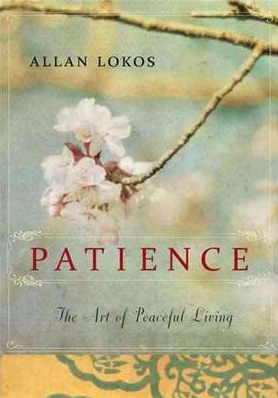
    It’s something I work at, which is why I was excited to read Patience: The Art of Peaceful Living, by Allan Lokos.

    The founder and guiding teacher of The Community Meditation Center in New York City, Allan Lokos has studied and practiced meditation for nearly two decades. In his insightful book, Lokos provides gentle encouragement and practical tools to step back, slow down, and foster a sense of equanimity.

    I highly recommend Patience to anyone who feels easily annoyed, angered, and stressed, and to those who want to deepen their existing mindfulness practice.

    The Giveaway

    To enter to win 1 of 2 free copies of Patience: The Art of Peaceful Living:

    • Leave a comment below
    • Tweet: RT @tinybuddha Book GIVEAWAY & Interview: Patience by Allan Lokos http://bit.ly/KVyQ85

    If you don’t have a Twitter account, you can still enter by completing the first step. You can enter until midnight PST on Friday, July 6th.  (more…)

  • Why We Find It Hard to Do Things That Are Good for Us

    Why We Find It Hard to Do Things That Are Good for Us

    “Have respect for yourself, and patience and compassion. With these, you can handle anything.” ~Jack Kornfield

    I find it hard to do things I know are good for me, harder than anything else in my day-to-day life.

    Yoga, meditation, journaling: these have all been invaluable tools during my personal journey, yet I have to will, sometimes fight myself in order to do them.

    It’s not that the activities themselves are hard (although yoga can be intense). It’s the motivation, the internal debate that starts up every day that I struggle with. Afterward, I feel great, more in touch with myself and far more at peace. But to get there, it’s a psychological mission.

    I used to think it was just me—that everyone else sat down to these activities with an eager mind and an open heart, especially people who write about these things, like I do, and practice them daily, like I want to.

    The fact that I was less skipping joyfully to and from these activities and more dragging myself with gritted teeth left me feeling like a fraud, which meant I wanted to do these things even less.

    Over time, I learned more about self-acceptance. I learned to accept that this was me, the way I am, and that perhaps I will always find it difficult to sit down and do these things, whether it makes sense or not. Yet, I still felt alone with my struggles and, therefore, afraid to really talk about them with anyone else.

    Last week, I was talking to a friend of mine about challenges he was having with a course I run. He was saying he felt resistance, he didn’t know why, and that it seemed like everyone else found sitting down and doing the work a walk in the park. They could just do it, whereas for him it was a daily battle.

    That sounded familiar…

    And as soon as I wasn’t trying to hide the resistance, as soon as I let myself talk about it openly, I could think more clearly about why I felt that way, and what was behind that resistance. And out of all those reasons came the realization: the resistance is on my side; sometimes it’s just misguided. (more…)

  • Being Patient through Transformation: Trust, Change, Believe

    Being Patient through Transformation: Trust, Change, Believe

    “We are all faced with a series of great opportunities brilliantly disguised as impossible situations.” ~Charles R. Swindoll

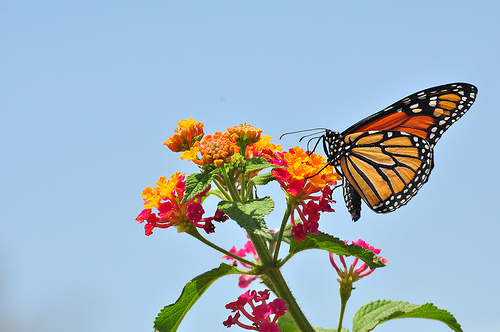
    Ever noticed a chrysalis hidden within its cocoon? The final few moments before it emerges as a butterfly compose what science terms as metamorphosis, a transformation.

    If you have been lucky enough to observe this process, which I highly recommend watching, you’d notice it has to struggle quite a bit before it gets all the attention for being the magnificent creature it is.

    It’s long and painful. However, while watching it, you may be tempted to clip off the outer covering of the chrysalis with a pair of scissors. And you might do it, thinking you’re doing it a favor. But when it finally emerges, you’d be sorely disappointed.

    The chrysalis’ covering holds within its shell vital fluids that are important to its wing formation. But your act of kindness, of clipping that outer shell deprives it of that, and as a result, the butterfly that emerges is crippled, deformed, and nothing like the butterfly it was supposed to be.

    On the other hand, if you can muster up the patience to watch this metamorphosis take place, without any intervention from your side, you’ll see one of the most beautiful miracles of nature, and one of life’s best lessons.

    Our lives are journeys to this same type of metamorphosis, to find a sense of purpose in life. We cannot achieve this without the difficult situations or the pain that life often brings in generous doses.

    Each one of us has had to let go of a dream, compromise, and experience pain and the entire gamut of emotions that an undesirable change can bring. But by no means did it ever spell the end of all dreams.

    I graduated from law school with big dreams to help the world, to fight for justice, and to make a difference with my education, because I considered myself fortunate to have had an academic training— unlike the millions of other kids who haven’t had a chance to study at all.

    I joined the non-profit sector with high hopes and zero expectations of financial rewards, because all I wanted was to make a difference. But life had other plans, as it always does.

    Eight months down the line, I quit my job over the lack of work ethics. I couldn’t stand to compromise my principles, or to allow myself to be manipulated for what I held to be good and true. That was the end of a long cherished dream. It was a difficult decision because it certainly didn’t look good on a resume! (more…)

  • Integrating Mind and Body: Be Present, Reduce Stress

    Integrating Mind and Body: Be Present, Reduce Stress


    “Don’t let your mind bully your body into believing it must carry the burden of its worries.” ~Astrid Alauda

    I don’t believe in the mind/body divide. I can see the gap between them, the one that we put there, but I have little faith in it. In the past month, I’ve learned that in order to live fully, I need to overcome that self-imposed gap.

    We all have different mental, emotional, and physical capacities. You could probably run a 5k race, but I’d struggle to even walk it. I know I can work through some of the most difficult decisions, like knowing when to end my pets’ suffering, but you might find that extremely hard to come to terms with.

    The thing that we have in common, though, is that we all work at different levels, and whether we choose to believe it or not, our minds and bodies sit together, with each of us.

    I took up yoga last month, and I love it. The benefits of getting out for an hour to relax are endless, and I’ve started taking the practice home with me to reap these benefits throughout my week.

    I’m headstrong, so I push myself a bit further than I should. Sometimes I go too far and I exhaust myself, or I stretch beyond what my body can manage and end up with extra painful muscles for days.

    What’s going on here? It’s that gap between my mind and body. (more…)

  • On Perfect Timing: When Things Aren’t Happening Fast Enough

    On Perfect Timing: When Things Aren’t Happening Fast Enough

    “After winter comes the summer. After night comes the dawn. And after every storm, there comes clear, open skies.” ~Samuel Rutherford

    I was talking to someone this week about his feeling that things weren’t happening fast enough. That with all he was doing, intending, and putting out there more should be happening, and faster.

    My question to him was, “Really? Should things really be happening faster? Or are you exactly where you’re supposed to be?”

    We have a tendency to think we have it all figured out. When it should happen, how it should happen, who it should happen with—and before it’s “too late.”

    We are powerful creators in life, but the truth is, we’re not in this alone. There are other forces at play, and for the most part, to our benefit.

    Have you ever had something occur in your life that you had wished for years earlier, only to realize that now was the perfect timing? That in fact, you wouldn’t have been ready for it any earlier? That in retrospect, everything was leading up to the perfect moment of this unfolding? (more…)

  • How to Find Peace of Mind in Under 500 Words

    How to Find Peace of Mind in Under 500 Words

    “All the flowers of all the tomorrows are in the seeds of today.” ~Proverb

    Practice and patience are like inseparable twins that have the capacity to bring us great joy when in harmony, and great angst when they are not.

    Consider the phrase: “Practice and all is coming….”

    I didn’t realize the depth of this statement when I first read it in my Ashtanga yoga manual several years ago.

    Sri K Pattabhi Jois was the Yogi who said it repeatedly to all his students. And it is perfectly reasonable for one to assume he was referring to the daily practice of yoga.

    But one morning during my writing practice (my daily moving meditation), I realized the true essence of his statement.

    For as long as I can remember I have strived to know peace—that is, peace while living in the ‘real’ world and freedom from my cluttered mind. (more…)