Tag: path

  • Sometimes the Safe Path is Not the Right Path

    Sometimes the Safe Path is Not the Right Path

    “As soon as you trust yourself, you will know how to live.” ~Johann Wolfgang von Goethe

    When I was a kid, I wanted to be an artist. I loved to draw, especially, and even took art classes on the weekends when I could. For fun.

    Obviously, being an artist isn’t a viable career (or so everyone in my life told me in subtle and not so subtle ways), so instead of going to college to delve deeper into drawing or painting or sculpture, I went the safe route: art teacher.

    Well, after a few semesters I decided I didn’t want to be an art teacher, so I went another safe route: graphic design. Unfortunately, I didn’t enjoy graphic design that much, most of the technical/pre-press stuff was way over my head (and interest level), and I turned down the one full-time job I was offered after college.

    Since I was only twenty-one, adventure seemed appropriate. I moved to Vermont to work at a ski lodge, I drove cross-country, I lived in a tiny apartment in Montana, and then I lived in a tent for a while. It was awesome.

    After that I went back to the safe stuff. I worked in an office here, I worked as an event coordinator there, then back to another office job.

    I don’t want to make it seem like I’ve always just automatically chosen the thing that felt the safest, the most conventional, since the travels of my early twenties, because I certainly haven’t.

    I quit a “good” job because it made me miserable and I wanted to get trained as a life coach.

    I quit another well-paying job (that made me absolutely batty and went against all of my core beliefs) in order to stay home with my daughter, even though it seemed like there was no way to afford to do so. (We made it work.)

    I started making art again, with real gusto and zeal, even though it doesn’t really make any sense beyond my own deep desire to do so.

    Recently, though, I faced what feels like my biggest What-My-Heart-Wants Vs. Take-the-Safe-Path challenge ever.

    After going in circles and wondering if I should bother trying to make art my main “thing,” I decided that I should apply to graduate school to become a school counselor. Because you can’t make a living as an artist, as you’ll remember.

    Counseling has always interested me, I like kids, and I would have the summers off to do the thing I really like, which is, well, you already know this: art.

    I spent a while researching the career and working on convincing myself I’d be able to find a job and that it would be the right fit for me. I applied about six months before applications were due and then pretty much forgot about it.

    That is, until the deadline rolled around. I knew I’d hear something shortly after February 1st, and then there it was, an email inviting me to a four-hour group interview.

    I can sum up the way I felt about going to this interview with one word: Ugh. I texted a friend and told her if someone else was in my position and felt the sucking feeling I was having, I’d tell them not to go.

    I kept thinking, though, that I should go, “just to keep my options open.” You know, to be safe.

    Before I went, I hooked up with a coach to talk me through some of what was going on in my head. What stands out to me the most about our sixty-minute conversation is that I said going to school felt like the safe option.

    When she asked me what really, truly felt safe to me, in my soul, I said I felt the safest when I was in my living room, art supplies set up, light flowing through the windows, creating something.

    Still, though, I went to the group interview. I was surprised by it; I enjoyed meeting the current students, the professors seemed lovely, and I was impressed with the program.

    I also learned how competitive the program was—of the eighty something people there, only about thirty would get in. I didn’t think I had a chance.

    I was wrong about that. In fact, I was included in the first round of applicants; a top pick. That made me, or at least my ego, feel really good.

    My husband was out of town for work at the time, and we agreed to discuss it when he got back. After a lot of back and forth, I decided to accept.

    I mean, I’d be taking on probably $18,000 in debt, but I’d have an almost guaranteed job when I finished! And I’d have a state pension! And I’d have summers off!

    The other thing? Multiple people who have known me for a very long time told me what a great fit school counseling was for me. I used other people’s excitement about it to continue to believe that this was the right thing to do.

    But then some weird stuff started happening. Conversations with my husband would often end with him saying, completely unprompted, “I wish you didn’t have to go to school.” Spiritual teachers who mean a lot to me started popping up on my Facebook or Podcast feed telling me things that I needed to know, like how to really follow my soul’s calling.

    I felt like the Universe was trying to tell me that going to school was not right for me, despite seeming like the safe option. I understood that if I went, I’d be giving up what I had dreamed for myself and even my family, and that I’d be one step farther away from listening to my true self.

    So I decided to withdraw.

    I knew I wanted out, but every time I went to send that official email, I got scared. I kept thinking about what I’d be giving up (Stability! A pension! A “real” job!).

    Finally, after a month, I did it. I sent the email from my phone while I was sitting on the floor in the living room, light pouring in the windows, a painting I was working on in front of me. I did it before I could think too hard about it.

    Since then I’ve felt a variety of things. Sometimes fear, sometimes joy, sometimes worry, sometimes nothing much.

    I wish I could tell you that in the month since I withdrew I’ve become a beloved artist who makes money constantly. I wish I could tell you that everything is working out perfectly. So far, though, I’m just practicing going toward what feels good and away from what feels bad.

    I have faith now, faith that I’m following the right path for me. That picking something because it looks good on paper is absolutely not a reason to do something, even if other people tell you it is.

    When I look back on this journey, what I see is a woman who wants what’s best for herself and her family, so is following the steps that she thinks will bring her what everyone else will see as success, and I can’t say I blame her. I’m just glad she changed her mind.

    I want everyone to know that the safe path isn’t always safe, and it isn’t always right, and that only you know what’s the next step, but only if you listen closely. Here are some ideas for tuning in.

    1. Listen to your body.

    I just can’t understate the importance of this one. I’ve known for a long time that bodies are way better guides than minds, but sometimes I lose track of it.

    I knew, for sure, that school was wrong for me because every single time I thought about starting in the fall my body, especially my chest, clenched into a tight ball. A message like that is the body saying loud and clear “wrong direction.”

    2. Stop listening to your thoughts.

    Just as you want to start listening to your body, you want to stop listening to your mind and your thoughts.

    I know, it seems weird, because our brains are supposed to be all rational and smart and stuff, but so much of what goes on up there is completely based on fear. We worry about money, we worry what our family will think, we worry about dying alone. Those fears are just words, and if you let them lead you away from what you truly want, you’re going to be in trouble.

    3. Do it a little at a time.

    If you’re enmeshed in a career or relationship or financial situation that’s been going on for years and years and you have tons of people relying on you, it probably doesn’t feel so easy to just say, “Eh, I don’t want to do this anymore.”

    That’s why you do one small thing at a time. If your body is giving you ulcers because you hate your job so much, but it feels like a fluttering butterfly when you think of taking a photography class, take the photography class. Try one small thing at a time, building toward the life that you really want.

    4. Never buy into the idea that the safe way is the right way.

    If you find yourself thinking anything along the lines of, “Well, that’s boring, but it’s a smart career to get into” or “He’s from a prominent family and would be a smart choice,” run! Or at the very least, slow down and check to see what your body and heart are telling you.

    I’ve said it before and I’m sure I’ll say it again: This whole being human thing is hard. I believe that it can be delightful and joyful and wonderful, but it takes work.

    We have to push against societal norms that tell us we should do things a certain way. We have to get clear on what we want and be willing to pivot when that changes. We have to be flexible; we have to be aware.

    My goal is to choose what feels good for me. I hope that you’ll do your best to choose what feels right for you, too, even if it’s not what other people think is safe.

  • Switching Paths: You Can Live an Exciting, Fulfilling Life

    Switching Paths: You Can Live an Exciting, Fulfilling Life

    Excited Man

    “Life begins at the end of your comfort zone.” ~Neale Donald Walsch 

    Lights out. Eyes closed. We biked through an imaginary trail. Our guide shouted the magic word, “switch,” and we knew it was time. We began using our minds to visualize where we wanted to be.

    I imagined biking down my favorite street in a city abroad.

    I enjoyed feeling the bumpy ride on the uneven pavement, looking at the clothes line-drying from beautiful ancient buildings, smelling delicious aromas from local cafés, and listening to the different languages that people were speaking around me.

    My heart felt full. I felt happy.

    The instructor told our group to shout the word “switch” whenever we felt the urge, and each person had the choice to either stay where they were or switch their path.

    I felt every muscle working, my heart pumping, the energy soaring within and around me. Hearing that powerful word pushed me to courageously continue on the path that felt right to me. I did not want to switch back.

    I felt fearless.

    Then the class ended. My eyes opened, the lights turned on, and I was still in the same place. I was left with the idea of that path, and I knew I wanted to be riding down it more than anything.

    Playing this game in my college spinning class reminded me that we all have the ability to create the life we want, but we must be willing to get uncomfortable and embrace change.

    Which Path Would You Choose?

    There’s a path we are taught we “should” follow, a path that we learn about early on from our family, friends, and teachers. There is also a path that is true to our heart, a path that feels right to each of us individually.

    For a long time, I lived as a people pleaser and had difficulty making my own choices without getting approval from others. I wanted to switch paths, but I was afraid I would disappoint the people I loved the most.

    A while back, I realized that I had lost my way to the path that inspired me. I had become too comfortable because I had ignored my heart for so long, and I did not know how to make a change.

    I had recently completed my bachelor’s degree and started teaching. I had a loving family, great friends, a perfect puppy, a motivating job, and many materialistic comforts surrounding me. But deep down inside, I felt like something was missing.

    I had the urge to explore, to travel, and discover the unknown. But I wouldn’t allow myself to follow these urges because the people I cared about and respected perceived them as irrational.

    However, “Switch” reminded me that I am free to choose the path I want to go down, and it ignited the power I have within myself to make it there. So I decided to incorporate “Switch” into my real life.

    My switch was leaving everything that felt familiar to participate in a six-month work/study abroad program.

    Most people in the program were eighteen, and I was twenty-four. Many people questioned why I wanted to do this at my age. But I knew why, and that was all that mattered.

    I was going to live in the Middle East for six months. I would learn a new language, volunteer wherever I was needed, share a room with two eighteen-year-old strangers, and meet ninety people from twenty-six different countries.

    I was bursting with excitement but scared out of my mind, because this would push me out of my comfort zone, and I had no idea what other changes in my life would stem from this big switch.

    The moment I stepped on the plane, there was no turning back. My life was changed forever.

    Incorporating “Switch” into Your Life

    Each one of us has the ability to choose the life we want to live, and to change direction throughout the course of our lives.

    Opportunities for change may become limited after we take on more commitments and responsibilities, and our families grow. But there are still options available to us. If we are willing to get creative and are open to change, we can follow our interests at any stage in our lives.

    Your switch can be minor or more dynamic. Switch is about what you need and what works for you.

    If you feel that you are on a path that is not true to your heart, if you have pushed yourself to pedal along but think you are heading in the wrong direction, if you are afraid of change or are ready to make some changes, employ these five strategies to help you switch and begin living the life you want to live.

    1. Incorporate minor switches into your life.

    Switch the way you drive to work, switch up your schedule, switch your usual restaurant.

    Minor switches prepare you to make larger changes in your life, and enable you to get out of your comfort zone and live the life you want to live.

    2. Visualize what would make you fulfilled.

    Allow yourself to veer off the “should” path and imagine yourself going on a ride to find what’s true to your heart. Focus. Create a picture in your mind and really try to be there.

    What does it look like? Where are you? Who are you with? What are you doing? How are you doing it? How do you feel doing it, and why?

    It’s all too easy to go through life trying to please everyone else, without ever identifying what you value and what interests you. But in order to change paths, you first need to visualize one that excites you.

    3. Identify small switches you can make to work toward your goals.

    There are always possibilities for us to enhance our lives if we are willing to get creative.

    You could take a night class to work toward learning something new; search for free workshops or events (in person or online) that intrigue you; begin a book, debate, or art club with your friends; and/or try something that will make you feel good, such as yoga, dancing, or volunteering, independently or with your family.

    Don’t stress about making a major switch. Not everyone can drop everything and travel abroad (and not everyone wants to). The goal is to identify tiny steps you can take to work toward that life you envisioned.

    4. Don’t attach to your worries. 

    It’s natural to want to please the people we love, but try to let go of any expectations you feel from others, or ones you might have created for yourself.

    If you start worrying about what other people might think of you or fearing their judgment, remind yourself that this is just a story in your head, and you don’t have to attach to it.

    I have learned that the people who truly care about you will be there to support you wherever your path may take you. You might be surprised when you find out who that is, but they will be the ones that set you free, and you’ll both know that it isn’t goodbye forever.

    5. Prepare to be at least a little uncomfortable.

    Whenever we try something new, even if it’s something we’ve always wanted to do, it can feel a little scary and uncomfortable. But that feeling fades over time, as we stretch our comfort zone, and we usually end up feeling glad that we pushed ourselves to grow.

    For example, taking my first spinning class was uncomfortable for me, but over time, challenging myself felt good. It had a meaningful impact on my mind and body. It also ended up leading me to the game “Switch,” and helped me identify the major switch I wanted to make in my life. You never know what you’ll discover about yourself when you get a little uncomfortable.

    It’s never too late to live a life that excites you. Develop a “switch” mindset, and allow yourself to take the first steps toward the life you want to live.

    Excited man image via Shutterstock

  • 7 Simple (and Surprising) Tips to Help You Realize Your Dreams

    7 Simple (and Surprising) Tips to Help You Realize Your Dreams

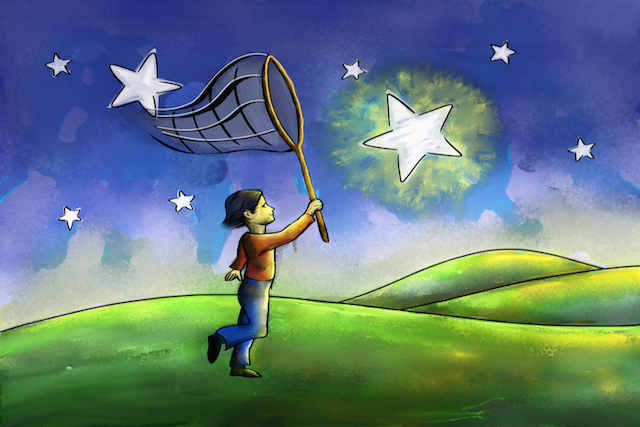
    Kid trying to catch a star with a butterfly net. Digital watercolor.

    “Don’t be pushed by your problems; be led by your dreams.” ~Unknown

    It’s tricky sometimes, isn’t it?

    Trying to find our place on this planet.

    Tapping into our inner desires.

    Sometimes we know what we want but not how to get there. Sometimes we know “this isn’t me,” but we have no clue who “me” is. And sometimes we think we’re already there, then something out of the ordinary happens and we realize, this isn’t me at all.

    At each stage there are pitfalls than can keep us looking in the wrong direction, stuck in fear, or stressed about how to move forward.

    I know, I’ve been back and forth through all of them.

    At twenty-five I had a postgraduate science degree and no wish to use it. At thirty-five I wanted to teach, write, and paint, but no idea what form this would take. And at forty-one, my work is read by thousands and every day I receive emails telling me what I do makes a difference.

    (Keeping it real: People also email me and tell me I suck.)

    Through it all, I’ve learned simple laws to help navigate the ups and downs of discovering and following your dreams.

    1. Don’t think about “your path in life.”

    Sounds contrary, doesn’t it?

    Because isn’t that exactly what we should be thinking about?

    Yes, and no.

    Where it can be detrimental is when we stand at the precipice of making a decision and we worry, “Is this my path in life?”

    A path is a track laid down to walk on. A path implies there’s only one way, a preconceived singular course. It implies that you can make a wrong decision.

    Watch it! Don’t step off the path!

    Yes, our life is wonderfully, marvelously one of a kind. No doubt. And trying to make it look like someone else’s is a first class ticket to unsatisfied-ville. But thinking about our path, now, can put unnecessary pressure on us. It makes us feel nervous.

    There are infinite routes to a satisfying, uplifting, life. Whatever decision you make—and have made before—you’re on the right path. It’s all “the path.”

    2. Forget everything your guidance counselor said.

    Do you remember after high school, tossing around a hodge-podge of career options—trying to decide what to do with your life?

    Should you become a podiatrist (have your own clinic), or an actuary (pays well)?

    You talk to other podiatrists. You find out what an actuary actually does.

    You listen to your parents. You seek advice.

    We live in a world saturated with messages about what we should do. There’s nothing wrong with advice. Sometimes. In moderation. You just gotta push it through your “no one but me knows my dreams and desires” filter.

    It’s not that our guidance counselor/parents/spouse/bus-driver don’t mean well. They do. They just don’t know. They can’t.

    And we might not know either, at first anyway.

    Whatever we hanker for, this gives us the greatest joy. And it’s often not some grand thing—that’s our mind (ego) imposing society’s rules.

    I knew a woman once whose three greatest loves were her children, fishing, and next to that, working on an assembly line—she loved the camaraderie and seeing things get done.

    3. Ask this simple question.

    When I was young, if you’d asked me what job I’d like, assuming I had all the skills necessary, I’d have thought it was a trick question. I thought everyone wanted this.

    I wanted to be a writer and painter.

    If only I had been given those talents! And I surely hadn’t. (Can’t draw, painting even more tragic, messy handwriting.)

    I trained in nutrition science. I was even fairly good at it. But I don’t believe it’s what I’m here to do.

    Pay attention to your desires, even when—no, especially when—they seem ludicrous. Roll the idea around in the back of your mind. 

    What life would you choose if you could wave a wand and have every skill that you needed?

    No pressure. Just notice.

    4. Stop worrying about how to get there—or if “there” is even a good idea.

    Human beings are wired for safety. This is why we want our trajectory mapped out.

    An illusion for sure.

    To get to where we really want to go, there is no pre-drawn map. The good news is that we don’t need one! All we need is the next step. And we always know this.

    For instance, say you have the feeling that you’d like to make shoes. Rather than worry about the fact that almost no-one makes shoes by hand anymore, consider, what do you feel moved to do, right now?

    Maybe it’s a simple as ordering a copy of How to Make a Shoe. Or arranging to meet a friend of a friend who’s a clothes designer.

    Big changes come from a series of incremental decisions. Trust that there is a wise hand guiding you (because there is). Take notice of seemingly small inclinations.

    Sure the shoe thing seems far out, but so would most successful ventures when they started.

    5. Learn the difference between an inner desire and unhelpful mind talk.

    Most of us know the value in listening to our intuition. But it’s confusing sometimes.

    Is the voice telling us to buy snowshoes—even though we live in Texas—our intuition? Or is it our mind (ego) fooling with us.

    Here’s how I tell:

    My mind uses logic and likes to copy others. It sounds like: “Bill moved to Italy and now his life is awesome, so I should go.”

    When my heart (intuition) speaks, it’s more like a deep feeling. I can see myself wandering around Rome, eating pizza.

    (Then, what usually happens is that my mind comes up with reasons not to do it—”You’re gluten free, you’ll starve in Italy.”)

    As author Chetan Parkyn says, some people are guided by strong gut feelings that hold true from start to finish. For others, their gut feeling is less sure, and where they find clarity is by taking a tentative step, then reassessing.

    If you’re not sure, dip your toe in. See how it feels.

    6. Be happily confused!

    What if (after everything) we can’t feel the tug of our inner desires? Or, we’re uncertain about the next step?

    Answer: Don’t worry.

    Don’t worry, because the only way to get where we’re going is through uncertainty (and sometimes turmoil). Feeling discombobulated is part of it.

    It’s not a bad thing. Rejoice!

    You’re on your way!

    You might be drawn to actively search for an answer. Or maybe you feel like sitting back and giving it some time. Or a combination.

    Go easy on yourself. Be lazy. Have fun. Try things. Spend time just sitting and being quiet. Spend less time online. Take a job and don’t worry about how it fits into your plans.

    Allow yourself to be in a state of confusion. It’s not always comfortable, but it’s perfectly normal.

    7. Expect to feel afraid.

    Making a lunge for what’s important to us is scary.

    Always is.

    Every time I’ve followed what was in my heart, most people thought I was loopy. But you know what? The voice of derision you most need to watch out for is your own.

    I’ve found these things helpful:

    • Mentoring
    • Not telling people what I’m doing—I didn’t tell anyone about my blog for six months.
    • Reading books like The War of Art by Stephen Pressfield
    • Reading books about others who followed their dreams (or blogs like Tiny Buddha)

    Finding our way is as much about getting out of our own way. Letting go of ideals that have been imposed on us. Taking leaps. Stumbling and getting up. Trusting our inner guidance.

    And remembering, always, we’re doing fine. Even when it seems like we’re making a mess of it. We’re not.

    Photo by Ingo Schmeritschnig

  • Finding a Path When You Feel Like Two Different People

    Finding a Path When You Feel Like Two Different People

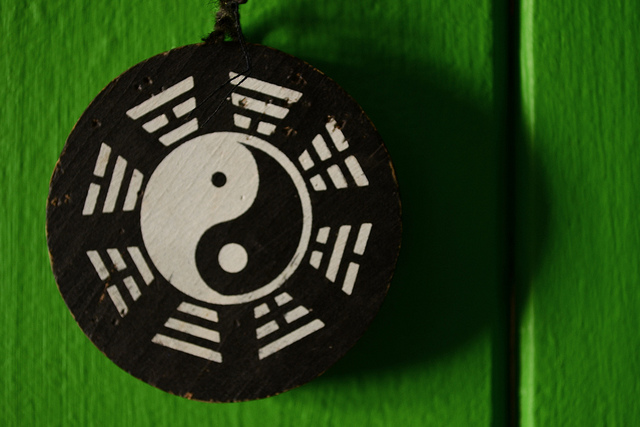
    Yin Yang

    “By accepting yourself and being fully what you are, your presence can make others happy.” ~Jane Roberts

    When I was a little girl, I played a lot of imaginary games and spent a lot of time on my own. I wasn’t particularly popular. I was a complete goodie-two-shoes.

    I had no idea what I wanted to be when I grew up. When people asked me, sometimes I said a vet, sometimes an interior designer, sometimes just to work for my parents who have a fruit importing business. Truth is, I had no idea.

    Why do people think a child would know? Sure, you can know things you like doing, but know what you want to do for a living? That’s a tall order for many adults to answer definitively.

    So, I grew up. I finished school. I got my bachelors degree. I joined the family business. I did everything that was expected of me.

    Here’s the thing about doing what’s expected of you: having those expectations means you don’t really get to figure out what you want to do.

    I started doing yoga in university and during that time started to explore a more spiritual side of myself that I’d not really touched on before. I realized I loved helping people and being in nature. I loved the peace I felt at the end of my yoga classes and I loved listening to people’s problems. Turns out I was pretty good at asking the sort of questions which got them answers too.

    But none of that mattered, because I had a ‘proper’ job. I left the family business and moved to London with my boyfriend at the time to develop my career. I was fast-tracked up the ladder and got to senior management within eighteen months. Everyone was so proud of me. I was proud of me. I’d worked my butt off and I was great at my job.

    The only thing: I felt like I was being torn in two.

    The person I was at work was completely different to my online persona and the one I was at home—the one who counseled people and had studied part time for her diplomas in yoga, hypnotherapy, and counseling.

    At work I was professional and logical, with an eye for detail and seeing the bigger picture. I made tough decisions and managed teams of people with grace and business acumen. (Way to blow your own trumpet, hey?!)

    At home and in my ‘other’ life I was a caring, nurturing, slightly under-confident hippy who loved helping people, standing on my head, and laughing with friends.

    For quite a few years I tried to hide my hippy-self from work and my corporate-self from home and yoga and therapy self, but ultimately, I always felt like I was half a person. I was never quite being myself. Whatever ‘myself’ was.

    There were various times when I thought I had to do one or the other; when I had decided I was going to leave the corporate world and be hippy-me full time, but that never really materialized.

    Funnily enough, the idea of giving up yoga and therapy and concentrating fully on my corporate persona was never an option. I guess I’m more hippy than corporate and, ultimately, I needed hippy instinct to survive the corporate world.

    Why am I telling you about my dalliances with trying to separate my two personas? Because there has to be a balance. For whatever reason, the universe was not ready for me to let my corporate life go.

    A few weeks ago, fresh off the plane from an Ayurvedic and yoga retreat in India and spending time with my family in rural Wales, I eventually summoned the courage to tell my director I wanted to leave. I had to follow my heart, I told her. I want to be closer to my family, I told her. I’m a country girl at heart, I told her.

    Then, she told me something. She said, “People think you can’t have the best of both worlds, but you can.”

    Then she offered me the option of working part time. It was something I’d never really looked at seriously. I hadn’t even considered that I could meld my two personalities and it would be enough for either.

    I’d always felt torn, feeling one was fake and one was real. I never even considered the possibility that my two sides could compliment and help each other; that they could make each other whole.

    I don’t know how my dual roles will work—now I am working part time in a corporate job and part time as a therapist—but I do know that, instead of fighting with myself, I have learned to accept both sides of myself.

    It’s not a terrible thing that I am logical and professional and can work well in a pressurized environment. It doesn’t mean I’ve sold out of my hippy roots. Nor is it a bad thing I believe in energy healing and the power of meditation.

    All sides of my personality are valid. They make me who I am. They will always influence the other parts of me. I am whole. Denying one part would be to lose a part of myself.

    So if you feel like you’ve got two different personas fighting for attention, with one invariably being left in the dark, perhaps try to shift your perspective from them being opposing to complementary. There may be cross-overs you haven’t noticed before which might make things seem a little less black and white or all or nothing.

    Photo by _UNPLUGGED_

  • Knowing What to Do When the Path You’re On Feels Wrong

    Knowing What to Do When the Path You’re On Feels Wrong

    Man on a pier

    “Don’t let yesterday use up too much of today.” ~Cherokee Proverb

    Age is a funny thing, isn’t it? It’s both an internal and external measurement by which many of us, consciously or not, judge our successes and failures, and it’s how others often judge us: “She’s so young to be CEO.” “He’s too old to be a quarterback now.” “Those guys should have stopped touring years ago.” “How old is that woman he’s dating?”

    Measurement is part of our culture.

    Paradoxically, we initially choose our life paths when we are the least prepared to understand the significance of our decisions.

    It took me until I reached mid-life, while simultaneously hitting rock bottom, to finally change the course of my life and, most importantly, to learn how to let go of the “whys,” “what ifs,” and “if onlys” that had been my everyday mantras for as long as I could remember.

    It’s not easy to put your past in perspective and ignore cultural measurements, and it can be unnerving to allow yourself the time and space to evolve. But from my experience, the mistakes, bad choices, and seemingly insurmountable challenges you may now be facing are truly fixable.

    And once you decide you’re ready, you’ll find that it’s cathartic (and yes, a little frightening) to give yourself some time to find your true path, however you define that for yourself.

    My path appeared on March 5, 2010. I was president of my family’s company. Except for a few years out of college when I thought I would be a musician, I had always worked in the business.

    I knew very early on that joining the company was a mistake, but I had made a commitment to my father in my early twenties, worked my way up from intern to president, and had always done the “right thing.”

    In 2010, the world was still recovering from the financial meltdown, and many companies’ sins and weaknesses were exposed. On that Friday morning in March I realized exactly how far down our company had fallen.

    In the space of a few minutes, I discovered that people I trusted deeply had been lying to me for years, 300 employees could lose their jobs (including me), my savings were gone, and my house could go into foreclosure.

    Everything I had worked for and bet my life—and future—on was collapsing around me. I closed the door to my office and cried.

    But wait, it gets worse.

    I soon found I could do very little other than sit in my office and watch TV, occasionally crying for no apparent reason. I only talked to the people I had to. Things I loved to do like playing the guitar or riding my motorcycle were of no interest.

    Most days I closed the door to my office when I got there in the morning and opened the door nine hours later to go home. Some days, I didn’t even get out of bed.

    Having so much time to think, I only focused on my failures (especially as I was desperate to save the company).

    I obsessed about why I trusted so easily, where I thought I should have been by now, and why I made the choices I’d made. Regret, anger, fear, embarrassment, and blame encompassed my every moment.

    For those of you who have never seen a commercial for antidepressants, these are the classic signs of depression, and I was deep in the abyss before I sought professional help.

    Therapy was hugely valuable (and still is), but it was a conscious, meditative exercise an Eastern astrologer friend suggested several months later that gave me the freedom to breathe, gain clarity, and find the courage to change.

    My friend told me to take a break, get on my Harley, and disappear for a few days (which was far more difficult than it seems). He said the problems would certainly be there when I returned. While riding he wanted me to practice what he called ‘the simplest state of awareness.’

    This meant that any negative thoughts about anything—job, money, house, family, fear, failure, regret, crashing, etc.—were to be pushed away by focusing only on the simplest things around me such as the color of the sky, the smell of the flowers (or car exhaust), the sound of the motorcycle, a bird in flight, the weathered wood on a barn.

    If anything negative entered my mind, I was to immediately replace that thought with a simple thought.

    Oddly, I had always felt comfortable being unhappy, so to not allow anything negative in was against my nature back then.

    But when I replaced a stressful thought with a basic observation about the world around me—an observation where there was no judgment—I started to understand what it meant to “clear your mind.”

    This was not about focusing on what I wanted. When I tried to do that and skip the simplest state process, my mind always reverted to what “should” be. I wasn’t ready to start changing my life… yet.

    So, what happened? Even in my depression I had enough sense and commitment to do whatever was necessary to fix the company, and after some drastic and painful changes it was slowly stabilizing, but in my heart I knew that it was time for me to leave the family business.

    After convincing myself all my life that running the company was my destiny, I understood, and accepted, that it wasn’t. I resigned in February 2011.

    My decision did not help my relationship with my father, and I was now left without a job, yet still a mortgage, bills, and a family to support. But for the first time in my life I felt aware. The resentment, shame, and paralyzing fear of change were fading.

    I realized I needed to do what I loved and what I was good at—obvious, I know, but not at the time—which was being a creative entrepreneur and working with music in some way.

    I started a full-service, strategic creative consulting agency; we work with companies, brands, and top-level artists helping them engage differently with their audiences so they achieve their goals and grow.

    From the beginning we landed clients we never thought possible, considering we had no experience, and they’re all still happy today; our reputation has earned us more clients; I have more time to do things for me; apparently I “look” happier; and, financially, I am far better off now doing what I love to do than when I was doing what I had to do.

    I also decided to go back to graduate school part-time, which I was prevented from doing years ago; I start in the spring.

    The quote in the beginning says not to let yesterday take up too much of today, it doesn’t say “don’t ever look back.”

    I believe that while never looking back is a noble goal, it’s very difficult for many people to do, especially me, without the kind of awareness that comes only from distance. So I chose a quote that, for me, was accessible, allowing me the space to safely pause and reflect, and then inspiring me to act when I was ready. You, too, will find the right words for you, if you haven’t already.

    It took many years, a traumatic event, and depression for me to start my life over. And still it was difficult and I was afraid when I made that decision; change is scary regardless of it being “right.”

    The simplest state exercise helped me gain clarity and perspective, and then time gave me the confidence and courage to act. And remember cultural measurement? I measure myself differently now, and I actively learn from people of all ages.

    This is my story so far. I encourage you to find your inspiration and motivation to help you on your journey, and then perhaps you’ll share your story.

    Most importantly, you need to know—not just believe—there is a right time for you to change, no matter how hard, no matter your age, no matter the obstacles. If you feel in your heart that you are not where you want to be, it is never too late. Be your own light; the universe will wait for you.

  • Helping Others Helps Us All: We’re All in This Together

    Helping Others Helps Us All: We’re All in This Together

    breaching

    “Pain is not a sign of weakness, but bearing it alone is a choice to grow weak.” ~Lori Deschene

    I, like many of you I’m guessing, am a wanderer. A student of the soul. At times it can be a bewildering path. Most days I give thanks for the adventure. Many others I wish for clarity and certainty.

    But though I am a wanderer, I am not aimless: I have a path as deep and true as any other. I simply have no map to guide me, only my intuition, and the myriad teachers that cross my path: people, places, books, ideas, synchronicities.

    I have learned to trust my inner senses. When I am on my path, my life feels good and right; off it, I am aware that I am scrambling through the undergrowth and finding my way at the edge of cliffs.

    For a long while I wondered what this path actually was. What was it that defined some actions as “right” for my soul direction, and others “wrong”? Especially when many of them seemed to appear synchronistically, out of the blue, and were counterintuitive.

    The idea of a “path,” or what Lao Tzu calls “the Way,” works for me.

    It’s as though there is a channel through life that is “right” for each of us to take. An invisible highway of least resistance in the midst of white noise, which resonates at the same frequency that we do and seems to draw us forward, exerting some sort of magnetic pull.

    When we are on it everything makes sense, we find flow better, we feel right in ourselves, we have a sense of something larger than our own small ambitions guiding us.

    I have begun to see that the path, this invisible pull to our souls, is in fact our own personal way to wholeness: our own unique healing prescription.

    Our path, I have learned, takes us through the experiences, thoughts, and meetings that will heal every aspect of our selves, even, and especially, those that are hidden from our conscious awareness.

    The words “whole” and “heal” come from the same root. To reach wholeness, we must heal from the wounds and distorted vision that life and our perceptions have wrought on us.

    Therefore, each healing path must be unique, as each of our woundings is unique. And yet they each share many similarities, because in the end we are all humans and our stories cross over.

    This is the part that many of us miss. We are so focused on “finding me,” on healing ourselves, that we walk on our individual paths looking down at our feet. We forget the fellow travellers around us. And this is where our ability to fully heal is lost, because we cannot do it alone.

    The emphasis in Western medicine, the self-help and personal development movements is very much on the individual. “You’re the most important thing in your life” messages have trumped the greater truth, which is that we are tribal creatures and herding mammals.

    We are only as strong as our weakest members. The fate of us all lies in all our hands.

    If you see a group of migrating birds, a shoal of fish, or a herd of wildebeest, there is a constant communication going on between them. They move as one, navigating canyons and predators.

    They listen for the calls of others, and they listen to the instinct within. Both guide and steer them. Both have equal weight. But the overriding aim is to find the path and stay on it together, to find the safe way, the yielding way together—to get through together.

    One day last week, feeling frustrated at myself and the seemingly disparate roles that I could not quite reconcile, I had a realization of immense clarity; I could not let go of any of them because they were all actually different facets of the same thing: healing.

    The internal guidance system that leads my work as a writer, teacher, editor, and artist; my roles as mother, daughter, partner, and friend, are all one big journey of healing myself, and sharing that process with others for their own healing.

    My instinct to heal and to help others heal are equally strong driving forces that determine my whole life.

    This is what I love about all of my heroes: their dedication to healing, and their willingness to reflect on their pain and share what they have learned.

    Then I zoomed out and saw it from a much larger perspective—that this is some human instinct, a basic herd instinctthe need to help to heal the herd, to keep us all together, all moving in the same direction. 

    Like the race that an African tribe does, the aim of which is not who wins or runs longest or fastest, but that everyone finishes together.

    Sue Monk Kidd reflects on this herd healing in her beautiful book, Dance of the Dissident Daughter.

    She recalls watching a nature program about whales and seeing these behemoths throwing themselves out of the water and crashing down on their backs.

    The narrator shared that naturalists believe that breaching, as it is called, might be their way of communicating when the seas get rough. A spectacular way of creating strong vibrations in the water, marking their route so that the others in their group would not get lost.

    She reflects on how women do this too, an example that I feel applies to all humans:

    “Women must have the whale’s instinct. When we set out on a woman’s journey we are often swimming in a high and unruly sea, and we seem to know that the important thing is to swim together—to send out our vibrations, our stories, so that no one gets lost.”

    So here we are, the waters are rising on this precious Earth of ours, the storm waves crashing. Many of our global population are tired, have lost our bearings. But the instinct is strong. Many of us who are aware of the need for healing are calling out, breaching: “This way, this way!” we call.

    We share our stories, show our healing, so that others might find their way onto the path of healing too. So that person by person, community by community, country by country we might find a better way to live. So that we can find healing for our whole herd, and a path, a way through.

    Sometimes I doubt myself. I wonder why I do my work. But now I know. I do it for me just as much as I do it for you.

    I speak or paint or write or dance with One Billion Rising, because I am adding my vibration, which is the most basic thing I can give. Because I yearn to the depths of my soul to be healed. To be free from suffering. To see those I love and those I don’t know free from suffering too.

    So I ask you, every time you feel the instinct rise, like a whale breaching in the center of your soul, with the urge to reach out and share words of love, gratitude, kindness, forgiveness, appreciation, hope, and healing, do it.

    Every time you feel the desire to give a stroke, kiss, hug, gift, or smile, but you think it makes no difference, or that you don’t have time, do it.

    It matters. More than you could ever know.

    In fact, it’s really the only thing that does.

    Photo by Nesbitt Photo