Tag: past

  • The Past May Have Shaped Us, But We Have the Power to Change

    The Past May Have Shaped Us, But We Have the Power to Change

    “If you want to fly, you have to give up the things that weigh you down.” ~Toni Morrison

    Our very first relationship is the one we develop with ourselves. However, even that one is shaped by outside forces.

    You may or may not believe that we choose our family. Regardless of your position regarding how your soul made it to your parents’ household, the truth is that the environment we are born into determines a great deal of the rest of our lives. This is especially true about the way we relate with ourselves and others.

    We learn by observing and experiencing the dynamics in our home. Our brains absorb the discourses. The judgments passed over us and the stories told about us become a part of our personality. The words we hear from the voices around us become embedded into our inner voice.

    We end up with a creation from the hands of Dr. Frankenstein: a patched up combination of voices that we later adopt as our own. That voice plays a huge role in how we develop a relationship with ourselves and, therefore, with those around us.

    The outside world shaped the inner reality that, in turn, will facilitate how we relate to that outer world.

    We learn from the way that our caregivers react to stress, from how they manage their anger, and how they engage in arguments.

    We learn from how they treat themselves, us, and the rest of the world.

    We learn about limitations and about fear.

    We learn to worry and to lie.

    We learn to yell out and to bottle it all in.

    We learn to over-react and to act like leaves at the mercy of the wind.

    We learn to micromanage and to be oblivious to life.

    We can learn the extremes. However, we can also learn balance.

    What is your vision for yourself? I’m talking about a real life vision, not about your annual income goal, or your income-to-debt ratio, or that degree you’ve been meaning to get. I’m not talking about the car you want or the trip you’ve dreamed of. Not that those things are bad or meaningless; they’re simply not a vision, they’re goals.

    What I am asking is: What is your vision? What state of being do you wish to create for yourself? What kind of relationships to you want to nurture? How do you want to feel? 

    My parents did their best to give me the best they had to give. I learned about hard work, being of service in the community, and believing in the divine. However, I did not develop anger management and conflict resolution skills, calming strategies, a healthy self-concept, or effective communication and decision-making skills.

    In other words, I was a typical clueless adult who was able to make money and run the rat race functionally. But I knew very little of myself, or how to develop healthy relationships with myself and others.

    As a matter of fact, I had no idea what healthy relationships looked and felt like. This led to a bumpy road that involved quite a few panic attacks, aggression, toxic relationships, isolation, and a social media and sugar addiction. The details of my journey are truly irrelevant. However, the lessons gained do have value.

    It started with answering questions I had never asked myself. Also, tools such as meditation, counseling, spiritual work, a lot of reading, journaling, praying, and developing a support village assisted me in the journey.

    Being open to the process is quintessential. So, I invite you to address the following questions with an open heart and observe your thoughts about yourself and others.

    Take note of the things you visualize on a daily basis. Do your visualizations match your vision? Or are they hindering it?

    What does a healthy relationship with yourself feel like?

    How about the conversations you have with yourself? How did that voice form?

    Where do these stories about yourself come from? Are you truly that person?

    How is your relationship with yourself? Are you hyper-critical? Do you “bash” on yourself? Or do you make excuses for yourself?

    What type of relationships do you envision for your journey?

    What type of narratives do you create in your mind with those who surround you? Do you imagine arguments? Do you mentally practice “come back phrases”? Do you spend time rehearsing irrelevant hypothetical situations? Do you declare negative labels on the rest of the world?

    Your early caregivers started the work of raising you, but you are the one responsible for continuing it. We are never done growing. You are not done. The universe is not done with you. Now it’s your turn to help yourself create the reality you envision for yourself.
  • What to Do If Your Life Story Depresses You or Holds You Back

    What to Do If Your Life Story Depresses You or Holds You Back

    “The truth you believe and cling to makes you unavailable to hear anything new.” ~Pema Chodron

    Too often we let stories from our past define us. We tell them over and over to ourselves and to others until it becomes our truth. What if, without deviating from actual facts, we choose to tell different stories? What if these new stories could bring us more freedom and strength?

    Below are some true facts about my own life. I’ll follow each one with the stories I could be telling myself about each one, followed by the story I choose to go with.

    Fact Number One

    My father abused my teenage mother when she was pregnant with me and left us when I was just a few days old. I’ve never seen him again.

    The stories I could be telling myself now:

    Men are bad.

    Men can’t be trusted.

    The reason I can’t hold on to a relationship is because my father left me.

    I’m unwanted.

    I’m unlovable.

    The true story I choose to go with:

    They were young. He felt trapped and scared. His fears drove him to behave very badly. He had his own issues from his own childhood.

    It sucks, but it doesn’t define me or shape my views of men or myself.

    If I’d held onto the negative self talk or views about men, it could have prevented me from being the happy, loving, loved person I am today.

    Fact Number Two

    In my tween / teen years my mother worked nights in a factory and I didn’t see her before or after school. There was never a parent attending my school music and sporting events or awards presentations and I found my own way home afterward, often walking back in the dark, freezing cold winters of Minnesota.

    I got myself up and to school on time, oversaw my own homework, dinner, and bedtimes, and often that of my younger brother too.

    The story I could be telling:

    My mother didn’t care about me. She was irresponsible. She put me in danger and neglected my needs.

    I have to fend for myself in this world or nobody else will. I need to look out for number one. This is why I’m lonely. This is why I never succeeded. I was handed a bum deal compared to my friends. I could have made more of my life if I’d felt supported and had good guidance at pivotal stages of my youth.

    The story I choose to go with:

    My mother was doing the best she could with what she had.

    Being very independent from a young age taught me responsibility.

    I’m truly motivated to be present in the lives of my own children, attending their events, encouraging and offering guidance. The past has made me a better mother.

    Fact Number Three

    The boyfriend I fell madly in love with in my twenties verbally and physically abused me until I was finally hospitalized with cracked ribs. I gave up my career and possessions in California to move to London to be with him. I knew nobody except his friends.

    The stories I could be telling myself now:

    History repeats itself. I was abused because my father abused my mother.

    I deserved it for being such an idiot.

    I’m not worthy of proper love and respect.

    Men are all assholes.

    The story I choose:

    I didn’t know my boyfriend well enough before I moved abroad to be with him. I felt unable to move back to the U.S. as I’d given up my job, home, car and life there. I continued to stay with him for too long out of fear and ignorance.

    I’m smarter now. I learned what I don’t want in a relationship and it enabled me to recognize what I do want and to find it. I’m stronger and I know myself now. I love myself. I am worthy.

    Do you know anybody who’s been dealt a crappy deck and now tells the first kinds of stories? Do they blame past circumstances for their present life? Do they begrudge the people who have mistreated them?

    Which stories from your past do you tell yourself and others over and over? Are these stories helping you or holding you back?

    Rewriting the script in your head isn’t easy, especially if you’ve been telling it for a very long time.

    Here are some ways to begin to dump the old stories and replace them with new ones.

    1. Recognize when you’re telling them and press your mental pause button. Stop giving it fuel.

    2. Write down the fact, as I’ve done above, then the story you’re presently telling. Now write a more positive interpretation of it. What good has come out of it? What have you learned? How would it feel if you dropped the old story and told a new one? Explore this on paper and see what it brings up.

    3. Use EFT Tapping. Emotional Freedom Technique is effective for bringing your story to the surface, getting real about your feelings, then changing the narrative about it. For deep rooted stuff, work with a qualified EFT practitioner.

    4. Practice “loving what is.” Have a notebook handy as you read the book Loving What Is by Bryron Katie. Write your answers to her four powerful questions. It only works when you do the work. This book single-handedly healed my relationship with my mother.

    Self-limiting beliefs often stem from stories you’re clinging onto that aren’t serving you. They hold you back from true happiness and success.

    Begin to bring a gentle awareness to these stories and see if you can give them new meaning. It isn’t about forgetting your past and making things up. It’s about choosing to tell the truth in a less victimizing and more empowering way.

  • Leave the Past in the Past: What Matters Most Is Who You Are Now

    Leave the Past in the Past: What Matters Most Is Who You Are Now

    “Focus on what matters and let go of what doesn’t.” ~Unknown

    When I was in rehab for alcohol addiction, one of the most difficult things for any of us to overcome was the fact that we thought we were beyond redemption.

    Why? Because during the depths of our addiction, we had done some things we weren’t too proud of. Unhealthy behaviors that included drinking while driving, calling in sick when we weren’t because we were too hung over to go to work, or neglecting our children for the lure of spending the evening with a bottle of wine instead. None of this sounds like anything you could feel good about it, does it?

    The biggest thing I had to learn through this was that who I am now is what matters most.

    My unhealthy past behaviors don’t make me the person I am now. And the first step in becoming the person you are now—the one where your kindness can shine, your love for your children takes center stage, your choices with others are healthy, your self-abuse is nonexistent (or, at least dormant)—is to leave the past where it is.

    Instead, focus on the future and building the person you want to become. If you are struggling with being stuck in a place where you don’t feel like you’re being your best person, where you might be berating yourself for your behaviors you aren’t proud of, where you might not know how to turn your life into something that more positively reflects the better parts of you, then read on!

    “It doesn’t matter where you are coming from. All that matters is where you are going.” ~Brian Tracy

    First, we need to understand a very fundamental thing: the past does not define us. Often, we believe that the past does define us and, therefore, there is no escaping it. This is simply not true.

    We are the ones that decide whether or not the past holds us hostage. Your past may have shaped you, but it does not define who you are now. What defines you is what you do now, your actions now, and what you have become since the past you left behind.

    The second thing in becoming the person you are now is to stop doing the behaviors you don’t like, those ones that make you feel like shit about yourself. You know the ones. But, changing bad habits or unhealthy behaviors doesn’t happen overnight.
    I couldn’t change everything I disliked about myself all in one night. It was a process. You need to learn that things take time and this is just part of the journey. And, most importantly, that this is okay.

    “Every positive change in your life begins with a clear, unequivocal decision that you are either going to do something or stop doing something.” ~Unknown

    It starts with first changing your behaviors one at a time. If you could slow down just a little and ask a simple question “Will this make me feel lousy about myself if I do it?” and the voice said yes, you might be able to pause long enough to say to I don’t want to do things anymore that make me feel lousy about myself.

    You could then decide I am going to choose to not commit this behavior this time. And, that is precisely what it is—a conscious decision to thwart one unhealthy behavior at a time from coming to fruition and sending you down that ugly road of self-loathing and condemnation.

    “We cannot become what we want to be by remaining what we are.” ~Max de Pree

    If you ask yourself the opposite question “Will I feel good about myself if I do this?” sometimes it is even easier to follow through on the action.

    It was a long road for me to turn my life around from where I was, but I did it. I started by building better and more positive behaviors one at a time, until I started to have more of those than the unhealthy ones. And slowly, but steadily, I built myself into a different person—one I could be proud of and one I liked being.

    For example, if I asked myself, “Will I feel good if I go into work despite being hung over and at least show up?” And the answer was yes, then I did it.

    “Will I feel good if I don’t drink tonight and instead hang out with my children?” And the answer was yes and I did it, I actually did feel better about myself!

    The more actions you can collect that make you feel good about yourself, the further along you get to leaving actions behind that you don’t feel good about. It’s a process of collecting more “I feel good about myself” actions than “I feel bad about myself” actions. This is what you need to do.

    Even more importantly, each time you do an “I good about myself” action, you need to give yourself some credit for it. This is important, even if you slip up and commit an “I feel bad about myself” action the very next minute.

    If you don’t give yourself encouragement for the small victories, then you’re doomed to not have the courage to keep going. So self-reward, recognition, and credit are all very important things to give yourself.

    Every small act in the right direction needs to be recognized as something good and valuable, so give yourself a pat on the back, a verbal good job, a kudos, or a gold star sticker. It doesn’t matter what, as long as it is some kind of recognition that works for you.

    Make sure to give yourself recognition in whatever way makes you feel good about it. These will add up over time until you begin to start feeling good about yourself in general, at least a little bit, then more, then finally much more.

    “No matter how hard the past, you can always begin again.” ~Buddha

    What about the moments when you fail, or commit the “I feel lousy about myself action?”

    You must forgive yourself these, practice some self-compassion, and let it go. Just say to yourself, “I messed up, I forgive myself, I will try again.” Otherwise, you will stay stuck in the “I feel lousy about myself” behavior by beating yourself up for it, making yourself feel bad, and then dangerously looking for a way out of that bad feeling by committing some other unhealthy behavior.

    For example, here’s what usually happened to me. I’d feel bad about drinking, so I’d drink so I could forget about this horrible feeling I couldn’t stand being in.

    Guess what always happened in that scenario? It became a vicious cycle and a whirlpool that just kept sucking me down further and further. And that is exactly, what it is like—a whirlpool.

    Your job is to stay out of the whirlpool, by focusing on doing actions that you feel good about, building your self-confidence that you are a good person, acknowledging your accomplishments, and creating a sense of strength for yourself that you can continue to build on this foundation.

    “Each morning we are born again. What we do today is what matters most.” ~Buddha

    So, when you commit an unhealthy behavior, forgive your wounded self. This does not mean you accept it as okay or that you shouldn’t take accountability for your actions. It simply means you don’t demean yourself over it, or punish yourself for it, or otherwise stay stuck in it. You forgive, move on, and try to focus more on doing actions that make you feel good about yourself.
    By focusing on actions that make you feel good about yourself, you begin to build up a new sense of self. Because, this is exactly what you are doing. You are building a new you. You are creating a new version of you—a stronger version, a version you are proud of, a version that reflects your true values and true self.

  • A Powerful Technique That Can Help Heal the Pain of Regret

    A Powerful Technique That Can Help Heal the Pain of Regret

    “We are products of our past, but we don’t have to be prisoners of it.” ~Rick Warren

    Regret—whether for things that you have done or things that you had no control over—can keep you frozen in the past, unable to move forward. Sadly, there are no magic wands that can turn back the hands of time and change what has happened, but despite this I believe we’re not entirely powerless to affect the past, after all.

    I first began thinking of this subject when my daughter was young and having serious ongoing problems with fear. She wasn’t able to go to school or to be separated from me for any length of time at all.

    I really could sympathize with her. As an adoptee from Korea, I knew that she had been relinquished by her mother at birth, placed in an orphanage, then with a foster mother, and ultimately taken from that woman to make the long journey to America and her “forever” family—but not without a whole lot of emotional baggage onboard.

    I wished with all my heart that I could have been with her through those first months so that she would have known that she was safe and loved. I was sure that was the root of her troubles now, but no amount of safety in the present seemed to make up for the lack of it in her past. It seemed there was nothing I could do about her rocky start in life. Or was there?

    Being a meditator, and someone who is comfortable with visualizations, one day I had the brilliant idea to try simply “re-writing” her past.

    I visualized myself in the birthing room with Lia, taking her tiny body into my arms and telling her how much I loved her, that she was safe, and that I was waiting for her. I also whispered in her birth mother’s ear that I would take good care of her daughter, and that everything was going to be all right.

    The visualization felt wonderful, and I repeated it many times, going on to visualize myself at my daughter’s side through all of the other changes she went through in those scary first months of her life.

    Whether or not I was actually impacting my daughter, I certainly found these visualizations helpful to me! I felt I was somehow able to make up for what she had missed out on and, over time, I really think it did help Lia to overcome her fear (although I’d never be able to prove it).

    Perhaps it was only because my energy had changed, which affected her in turn. At any rate, she gradually seemed to relax and gain the confidence that had eluded us through so many years and so many other attempts to help her feel safe.

    Since then, I’ve used my “time travel” meditation in many other circumstances. For instance, I think every parent has had lapses of control that we deeply regret in hindsight. I vividly remember once losing my temper with Lia as a toddler, for breaking an item that was precious to me. As she grew older and seemed so intent on always being perfect, I wondered sadly how much I had contributed to her fear of “messing up.”

    So again, I went back to that remembered situation in a visualization. Obviously, I couldn’t change the fact that I had yelled at her, but I visualized surrounding her in love and whispering that everything was okay—she hadn’t done anything wrong.

    In my imagination, we watched my earlier self yelling, and I told her, “She’s just tired, poor thing. She’s not really mad at you, she’s mad at herself. Let’s just send her some love.” And we did.

    As before, I have no idea whether my visualization actually had an impact on Lia’s perfectionism (I hope it did), but it certainly helped me feel more compassion and less shame regarding my past actions.

    On yet another occasion, I mentally placed a retroactive bubble of love and protection around Lia when she was facing a scary situation that I hadn’t known about at the time. There are literally endless scenarios for tweaking things in the past, so don’t go too crazy with this! Save it for the situations that really weigh on your heart.

    These techniques work equally well even if you aren’t a parent. You can mentally send the adult version of yourself back into your childhood to provide love and support to your earlier self.

    Children are especially vulnerable, since they have so little understanding of the true context of what is happening. We all remember times when we felt alone and frightened—how wonderful to take that scared child in your arms and let her know it will all be okay, that she isn’t truly alone.

    Although it’s tempting to imagine different outcomes for those painful times, I try to always stay true to what actually happened and simply provide whatever energetic support seems best. For better or worse, we are the product of these experiences; they are a part of who we are. But it may be possible to heal some of the wounds they left behind, even many years down the road.

    Does it really work? We know so little about time, but quantum physics gives us some understanding of how slippery a concept it is. At the very minimum, these techniques bring present comfort and a sense of being able to help what previously seemed beyond help.

    The feeling of powerlessness to change the past is one of the most corrosive aspects of regret. Even if it is only “imaginary,” the sense of efficacy we get from taking some retroactive action is priceless.

    For very traumatic situations, especially ones that you have not already explored in therapy, I would definitely recommend first trying these techniques with a therapist. However, most of us have a long list of more garden-variety regrets we could safely use “time travel” meditation to address.

    To begin, simply relax and breathe deeply, gently allowing the situation to come into your awareness. Let your intuition be the guide, and use any words, color, light or other visualizations that occur to you. (As a general rule, you can never go wrong by simply blanketing the experience with love and compassion.)

    Don’t force yourself to feel forgiveness if that isn’t what you feel—if there is some antagonist involved, you can safely just ignore them and concentrate on providing comfort to the one who needs it. Remember that you are the “wise adult” in this scene, there to provide perspective and support, not justice or retribution.

    Continue to breathe deeply and notice whatever emotions come up. Close the meditation when it feels complete, and return as often as you like! Sometimes once will be enough; sometimes (as with Lia’s birth) it will take many sessions to feel complete. Again, let your intuition be your guide.

    Be respectful if you use the technique on other people or situations that you didn’t personally experience. I felt close enough to Lia to insert myself into that scene, but I would hesitate to do so in most other situations. I also shared with her what I was doing and, even though she was still fairly young at the time, I think she loved the idea that her mommy was there, at least in spirit, at her birth.

    Although it’s true that “what’s passed is past,” it may be possible that we don’t need to leave it at that. I believe we can send our love and our energy through time and, in the process, perhaps heal ourselves of painful regret.

  • Life Is Not a Race: Why We’ll Never Find Happiness in the Future

    Life Is Not a Race: Why We’ll Never Find Happiness in the Future

    “Life is not a race but a pace we need to maintain with reality.” ~Amit Abraham

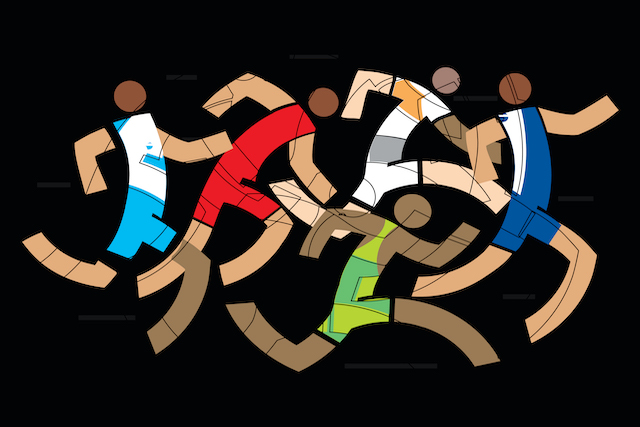
    Almost all of my adult life I’ve competed in the extreme sport of white-water kayaking.

    My life revolved around adrenalin and competition.

    Recently, I had a dream I will never forget:

    I was running in a race and I was out in front, winning.

    I got to a point in the course where there were no signposts showing the next turn. So I asked the race officials, “Where is the course?”

    They replied, “We don’t know.”

    The race officials couldn’t tell me where the course went from there because there was no course.

    All of a sudden I stopped running and thought to myself, “There is no race if the officials don’t even know the course.”

    The feelings that followed were first confusion and then a deep sense of relief.

    I thought, “I don’t have to try so hard. I don’t have to win anything. There is no competition. Just stop. You are enough exactly as you are.”

    And then I woke up.

    This dream has stuck with me for weeks, as it feels like the exact message I need.

    Just stop. You are enough. There is no race.

    What if you already had everything you were asking for? What if this was it, and everything you thought you wanted was just an illusion?

    Two weeks ago I got invited to go scuba diving.

    I did my scuba diving certification course fifteen years ago and thought it was kind of boring. There wasn’t enough adrenalin and no competition involved, so I never went again.

    Upon receiving this recent scuba invitation, I took it as sign and said yes.

    Being a beginner at something is humbling. Not knowing what you’re doing. Not being good. Feeling awkward with the equipment.

    It gives the ego a big check to say, “I don’t know. I’m a beginner. Please show me. Please help me.”

    Listening intently as my instructor reviewed all the details I learned fifteen years ago but had forgotten, I felt vulnerable.

    Most of my life I’ve been at the top of my game as an international white-water kayak competitor, and have been the guide for others.

    What’s it like putting the shoe on the other foot?

    Somehow it was great!

    The realization came that I am an absolute beginner not only in scuba diving but in life.

    This new way of living I’ve embraced requires stopping, being authentic, and learning vulnerability.

    How does this feel?

    Actually, liberating!

    I did my scuba review and absolutely loved it. I was buzzing. The thrill of a new experience and the learning curve of being a beginner was exponential.

    After two real dives in the ocean I was hooked.

    This is what my there is no race dream was showing me!

    The point of scuba diving is to go slowly, see as much as possible, remain calm, breathe, and relax. There is no winner except who has the best time in his or her own experience.

    Under water, it feels like a meditation, no chatting or ego involved. Taking in the beautiful colors, swimming with amazing fish, and experiencing a whole new world was intoxicating.

    Two weeks later I got invited to go again. We did four amazing dives in a world-class dive site in Bali. It was so unbelievably amazing. I asked myself, “How did I get here?”

    I got there by letting everything else go. Embracing an entirely new way of interacting with the world, and with myself. Questioning everything I ever viewed as worthy.

    Three years ago I packed up my life in New Zealand and sold or gave away everything, even my kayaks.

    I decided to say yes to the unknown, landing me in a whole new life in Bali.

    No extreme sports, no adrenalin, no competition; my new life here is about saying yes to everything I never thought I was.

    Going slowly, practicing mindfulness through yoga, meditation, and dance, learning how to speak Indonesian, and now scuba diving, my life looks like something I never in a million years would have guessed it would be.

    I am finding joy in the little things, learning how to be in the moment, and realizing all that I thought was important isn’t.

    There is no race.

    The Western collective consciousness teaches us that when we get to the end of something, then we will be happy, whole, complete, and successful.

    When we graduate from high school or college, when we get married, when we have kids, when we get the dream job, then life will really be rolling.

    We’re constantly chasing a carrot on a stick that’s always just out of reach.

    When we reach the milestone that we thought was our golden key to happiness, the feeling of satisfaction is fleeting.

    So we think, “Okay, well I did that, and it didn’t quite bring me the happiness I was thinking it would, so maybe it was just a stepping stone. Maybe when xyz happens, that will make me happy. That will be the real win.”

    This elusive state of contentment is always around the next corner. We’re racing toward something that will never give us what we’re hoping for.

    The only way to truly win this race of life is to realize there is no race.

    Winning is stopping. Going within. Finding happiness within yourself.
    True satisfaction can only be found inside.

    When we can be alone with ourselves, be at peace, and feel a deeper connection, this is what we have really been racing to find.

    Running toward the next accomplishment will never be able to provide this.

    It will only take us further away from what we’re hoping to feel.

    So what happens when we stop?

    It involves going deeper within, which can be a scary prospect for many.

    Choosing to constantly be on the go is easier. It dulls the pain.

    It means not having to really take a look at yourself. A superficial sense of satisfaction comes from feeling you have accomplished a lot.
    Adrenaline can be a drug, providing a temporary rush.

    Why do you have to accomplish things to be worthy? Are you reliant on completing tasks so that your life can feel some sense of purpose? What if by just being present and showing up consciously you were living your purpose?

    What if instead of feeling constant pressure and anxiety, you could just be with what you were doing in the moment you were doing it?

    Our thoughts are rarely focused on where we are.

    They’re in the past, wishing we could change it, or in the future, creating false outcomes that will never usually come to fruition.

    Both of these thought patterns are actually a form of insanity, and not based in reality.

    The past is over. There is nothing we can do to change it.

    The future will never come. Reality is always the moment we are in right now.

    We can only truly live by stopping the race of the mind to the imagined future—by living in presence. By waking up from the dream that there is something out there that will bring satisfaction, turning inward, and taking responsibility for our lives.

    Realizing there is no race means finding contentment right here and now.

    Quit running and find that what you have been searching for has been right here all along.

    Start by creating small gaps in your schedule. Start small at first. Get places a few minutes early.

    Before getting out of the car or leaving the house, consciously pause.

    Try fitting fewer things into your day. Less is more!

    Do one thing at a time.

    When you eat, be present with your food. Enjoy it, really taste it, see it, smell it, savor it.

    Turn off the TV.

    Take a meditation course.

    Notice and be grateful for the small things.

    Instead of focusing on what you don’t have, focus on the many things you do have.

    Life’s finish line will come one day for us all. Learning how to truly live means we will get to that finish line with a smile in our heart and contentment in our being.

    This is the ultimate win. It requires nothing from outside and everything from inside. There is nowhere to go, nothing to achieve, nothing to prove, and nothing to do.

    All it requires is stopping and refocusing priorities; cultivating awareness by slowing down the race of the mind.

    Creating space to be, and valuing ourselves as enough right here and now, requires an inner commitment and unplugging.

    Contentment is currently available in abundance; we just need to stop long enough to feel it.

  • A Surprising Way to Let Go of Painful Feelings and the Past

    A Surprising Way to Let Go of Painful Feelings and the Past

    “We do not heal the past by dwelling there; we heal the past by living fully in the present.” ~Marianne Williamson

    I’ve struggled with it.

    Letting go, I mean. I’ve struggled with moving on from my past. I’ve struggled with ridding myself of guilt, shame, and grief. I’ve struggled with freeing myself from mistakes, past relationships, and worries about the future.

    It’s not that I haven’t tried. Believe me, I’ve tried really hard. I’ve written goodbye letters, mentally cut the energetic cords, and fiercely gone back into the pain to free myself fully from it. I’ve cried my eyes out, talked about it, and brought it to my meditation pillow.

    What I’ve tried has helped to some extent, but not completely. So, instead of moving on I’ve felt stuck between my past and my future. You know, like in limbo. And that’s not the place to set up camp; both you and I know that.

    It’s frustrating because I’m fully aware of the importance of letting go and moving on. I know that attachment is the reason we suffer. I know that past pain, anger, and resentment holds us back. I know that holding on to the unwanted blocks the wanted from coming in.

    Letting go is essential. But, it’s not always easy to apply theory to practice. If you’ve also struggled with it, here’s another approach that has helped me to truly let go and move on.

    Why Letting Go is Hard

    First of all, everything is energy. Our thoughts and feelings emit a vibration, and what we send out to the world is what we receive back. This isn’t some woo-woo thing—it’s quantum physics (source).

    That means that whatever we give our attention to—wanted or unwanted—grows. If you focus on happiness, joy, and satisfaction, you’ll experience more of that. If you focus on pain, regret, and guilt, you’ll experience more of that.

    Just think about it, have you ever tried to rid yourself of stress, only to have found yourself getting more stressed, especially when you knew you shouldn’t stress? Or have you told yourself to stop worrying, only to have found more things to worry about?

    Mother Theresa knew about this. She said, “I was once asked why I don’t participate in anti-war demonstrations. I said that I will never do that, but as soon as you have a pro-peace rally, I’ll be there.”

    An anti-war demonstration focuses on war, which triggers feelings such as frustration, anger, and hopelessness. A pro-peace rally, on the other hand, focuses on peace.

    The same goes for letting go. Unless you’re able to truly let it go—meaning that you withdraw your attention completely from it—you’re more likely to focus on the unwanted and thus draw more of that into your life.

    Step 1: Say “yes” to what is.

    You cannot reject or push against the unwanted. You cannot focus on a problem and find the solution. Because the solution is never where the problem is. So, you need to shift focus.

    You shift focus by first accepting what is. If you want to let go of shame, start by first accepting that you’re feeling shameful. Don’t argue with your thoughts and feelings. Don’t resist them. Don’t try to push them away. Instead, give them permission to exist.

    As Eckhart Tolle said, “Whatever the present moment contains, accept it as if you had chosen it. Always work with it, not against it.” To reach complete acceptance, spiritual teacher Bentinho Massaro suggests a technique where you agree with your limiting and hurtful thoughts.

    For example, to accept guilt over something that happened, tell yourself, “Yes, I’m guilty.” If you struggle with forgiveness, tell yourself, “Yes, that’s right, I can’t forgive this person.”

    This doesn’t mean that what you’re saying is true. Instead, it’s a tool to control negative thoughts and emotions so they don’t control you. By agreeing with them, the battle between you and them ends. When there’s nothing more to argue about, they lose their power over you. Touché.

    Step 2: Let in instead of letting go.

    Once you’ve reached a place of complete acceptance, you can move on to the second step.

    This is about inviting the new.

    Letting go can easily trigger fear. When you leave something behind and don’t know what to replace it with, you leave space for the unknown. Change is always scary, especially when you don’t know what’s coming next. That’s why you might find yourself clinging to the unwanted because that’s what’s familiar and known to you.

    To make sure that doesn’t happen, consciously decide what’s coming next. Let in instead of letting go. Rather than pushing away the unwanted, invite the wanted.

    When I left my corporate job in search of a higher calling, I battled with shame. Shame for stepping off the beaten path, for making a controversial choice, and for not having a clear path in front of me.

    It was when I finally stopped fighting shame that I was able to see clearly. That’s when I could invite curiosity to join me instead. Curiosity did the exact opposite of shame; it helped me see the opportunities, not pitfalls, of the unknown and taking the road less traveled.

    If you want to let go of anxiety and self-doubt, invite peace and confidence. If you want to let go of a past relationship, invite a new loving relationship. If you want to let go of the lazy and dull version of yourself, invite an active and energetic version of you.

    This can be done step by step. For example, let’s say that you want to move on from an ex-love. Maybe your focus isn’t on attracting a new partner directly, but rather on inviting a happier, healthier, and more loving version of yourself. Then once you feel ready, you can invite in the relationship you long for.
    Focus On What You Desire

    It’s frustrating to replay mistakes over and over in your mind. It’s frustrating to cling to things from the past. It’s frustrating when you try really hard, but are unable to move on. Not only does that taint your future, it also steals the joy from this present moment.

    Instead of trying harder to let go, accept fully where you are. Embrace it completely. Say yes to all worry, shame, and guilt. Confirm all the negative thoughts and feelings so that you can release yourself from their grip. Simply, give up the battle.

    Then, invite what you desire. Imagine, visualize, and fantasize what you’d love to have instead in your life. Tony Robbins said, “Where focus grows, energy flows.” Focus on the wanted, not the unwanted.

    You got this!