Tag: panic

  • When Waiting Gives You Anxiety: How to Find Peace in the Present

    When Waiting Gives You Anxiety: How to Find Peace in the Present

    “The time is now, the place is here. Stay in the present. You can do nothing to change the past, and the future will never come exactly as you plan or hope for.” ~Dan Millman

    Nothing gives me anxiety quite like waiting for things to happen. If I don’t know how long I will be in line, stuck on a delayed NYC subway, or behind someone at the grocery store who is paying in pennies, I get very anxious. Or at least I used to.

    Going to the doctor’s office was the worst. I know that no one likes to be sick or in pain before going to the doctor. People don’t like to be poked at or asked personal, embarrassing questions during the exam either. Those were not the worst parts for me at all. The worst part for me was the waiting.

    I once went to a doctor’s office for a 9:45AM appointment and had to wait in the lobby until 11AM before going to the exam room.

    I waited in that exam room for over an hour before the doctor even showed up. She was in the room for five minutes, and that was that. I wasn’t even sick. It was just for a yearly checkup that I had voluntarily went in for.

    Being in a small room all alone, unable to go anywhere, was one of the most frustrating experiences of my life. I sat and waited. Looked at the clock. Tried to stay warm (it was freezing in that tiny room). Looked at the clock again. Told myself to just get up and leave. Looked at the clock again.

    Then it hit me: My very first anxiety attack.

    When you have been in a lobby waiting and waiting, just to get into an exam room to wait and wait some more, your brain does funny things that work against you. I started to feel like I was going to be there forever, like I was forgotten, and like I didn’t matter.

    I thought about leaving numerous times, but then my brain would convince me that I was sure the doctor would be in in the next five minutes…she just had to be. Then she wasn’t, and I would wait five minutes more.

    This made the cycle of waiting even worse, since I began to do the math in my head about how much time of my life was being wasted at this doctor’s office.

    By the time my doctor came into the room, my palms were sweating, I was probably a bit pale, and my legs were shaking uncontrollably. I was also fighting back tears of frustration, anger, and stress.

    With a smile, she said, “Sorry for the wait. It’s been a busy day.” Trying to be polite I just nodded, and said it was okay, even though my body wanted me to scream, “If you know you’re going to be busy, let me know! I’ve been in here for over an hour!” and run out of the room.

    The next time I went to the doctor’s office I prepared. I had a big meal so I was well fed, I brought a book to pass the time, and I also brought a sweater to combat the cold. These little tweaks helped me to overcome the terrible inconveniences of my waiting environment, but not overcome the anxious feelings brought on by the waiting.

    The only thing that helped my anxiety was staying present.

    When I think about being right here, right now, I also like to think, “There is nowhere else I am meant to be.” If I know that I am meant to be right where I am, I can stay there and not feel like I should be somewhere else or that I am wasting my time waiting for others.

    I like to think that maybe I was meant to stay in that office for over two hours because on the way home I went to get coffee and saw an old friend that I would have otherwise missed.

    Maybe half an hour before I was able to go home, the perfect parking spot was unavailable in front of my apartment building. Perhaps my timing was so great that I got that perfect spot, and one of life’s little victories was mine.

    Maybe somehow the universe had me stay at that doctor’s office for over two hours in order to avoid heartache, pain, or annoyance that I could have been a part of otherwise.

    Maybe I was right there, right then, learning a lesson for future me to live in the moment and control my anxious thoughts.

    Things happen that are out of our control every day. Sometimes the person in front of you at the grocery store pays in pennies. Sometimes you sit alone and are in your own head for two hours feeling forgotten.

    If you can learn to acknowledge that you are right here, right now, for a reason, the thoughts that want to run wild in your head can be tamed, you can gain some control, and you can control your anxiety.
  • How to Beat Panic Attacks: 3 Simple Mindfulness Techniques

    How to Beat Panic Attacks: 3 Simple Mindfulness Techniques

    “By living deeply in the present moment we can understand the past better and we can prepare for a better future.” ~Thich Nhat Hanh

    When I was in high school, a hit-and-run car accident changed my world. My boyfriend at the time lost his nineteen-year-old brother to the accident. I had never met his brother, but it didn’t matter; a dark veil had been cast over my life.

    In the days, weeks, months, and years following the accident, I sank into a deeper and deeper depression. I started to have panic attacks and I cut myself daily, trying to feel anything other than terror and despair. I sought treatment, met with therapists, tried dozens of medications, and routinely turned back to alcohol when nothing worked.

    Before long, I fell in love with a man who was also deeply depressed. Six months after our marriage, I found him collapsed on our living room floor after trying to kill himself by overdosing on his medication.

    I called the authorities, supported him through the ensuing hospital stay, and turned right back to my unhealthy methods of dealing with the pain.

    For years, I muddled through the darkness, thinking I was destined to lead a miserable existence. Over and over, I told myself life would have been so much better if that hit-and-run accident had never occurred. I was convinced it was the one pivotal factor that had destroyed my life.

    Eventually, the stress of living this way caught up with me. In addition to the depression and anxiety, I began to have migraines, uncontrollable nosebleeds, and excruciating muscle pain. I went to doctor after doctor and at one point was taking seven prescription medications every day, with no relief in sight.

    Finally, it was clear I needed to take a different course of action. I decided to look into meditation. Before long, I had accumulated three meditation methods to try.

    The first method was a simple practice of closing my eyes and counting each breath. I tried this until it became evident that I could never get past the number one before my brain started reliving events from my past. Closing my eyes, it seemed, took me too far away from the present moment.

    Instead of closing my eyes, I had more success keeping my eyes open and silently but consciously acknowledging my surroundings. Whether I was at home, on the train, or walking down the street, I could practice mindfulness by saying, “Hello, carpet,” or “Hello, tree,” and I was immediately grounded into the present.

    Perhaps it seems strange to greet inanimate objects, but it helped me maintain a more immediate experience of the present moment, so I went with it.

    After that, I tried body scan meditation, or moment-to-moment awareness of sensations within the body. Taking some time to recognize sensations as they occurred turned out to be a great help in training my mind to accept and acknowledge discomfort until it passed. Seeing that discomfort was a passing experience was a life-changing realization all on its own.

    Throughout my meditation experiments, I continued to have trouble staying present for more than a few seconds at a time, but I could see it was beginning to have some benefits.

    When I returned to counting breaths, I began to reach two or three or sometimes even ten. With growing faith that mindfulness meditation was having a positive effect on my life, I kept meditating until finally one day my meditation was interrupted by the sound of an ambulance siren.

    As I listened to the siren, I felt a panic attack coming on. The siren made me think back to the day of the hit-and-run accident, and when I finally let go of that thought, I thought back to the day of my husband’s suicide attempt.

    I braced myself against the panic attack and desperately tried to remember a mindfulness technique I could employ in that moment.

    During a panic attack, bodily sensations are extreme, so it made sense to me to try and focus on body awareness and how I was relating to my surroundings.

    Despite the inner voice that kept telling me I was going to die, I resolved to experience this panic attack mindfully, from beginning to end. I turned my attention to my breathing and faced that panic attack like it was an ocean wave I was going to allow to wash over me.

    While every muscle in my body began to tighten, I consciously tried to let go of the tension and simply notice what was happening in my body, without judgment or blame.

    Almost instantly, I experienced a massive muscle spasm that made my entire body lurch. Awareness of my surroundings became a feeling that I was falling through the floor, and I worried this really was the panic attack that would kill me.

    But then, the panic, the terror, and all that muscle tension passed through my body in what I can only describe as an enormous wave of energy.

    I felt that wave pass from the top of my head through every last finger and toe, and just as suddenly as it had begun, the panic was gone. As I returned to my breathing, I listened again to the siren and, for the first time, I heard a siren that had nothing to do with me or my past. I heard a siren that was a siren and nothing more.

    In the five years since this experience, I haven’t had a single panic attack. In my case, panic was an extreme expression of resistance to thoughts and memories I didn’t want to experience. When I learned to stop resisting, I learned to beat panic.

    I can’t guarantee that anyone else’s experience will be the same, but perhaps I can share some suggestions based on what worked for me. If you are one of the millions of people in the world who suffer from panic attacks, here are a few methods you can try the next time you feel one approaching.

    Counting Breaths

    Notice your breathing. Is it rapid and shallow? Is it becoming shallower the more you panic? Take a moment to close your eyes and turn your attention to counting breaths.

    If you find you are counting very quickly, see if you can focus on just one or two long inhalations and exhalations. Don’t worry if you can’t get past one or two. If you notice your mind has strayed from counting, congratulations! You have experienced a moment of mindfulness under extremely challenging conditions.

    Acknowledging Your Surroundings

    If, like me, you find that closing your eyes makes you panic more, open your eyes and start acknowledging your surroundings. Say hello to your hands, your feet, the ground, the ceiling, a chair, a tree, or anything at all you spot around you. If you feel like this is ridiculous, it is! Allow yourself to chuckle and have a sense of humor about it.

    Body Awareness

    Turn your attention to what you are feeling in each part if your body. Are your muscles tightening? Can you feel your fingers and toes? What happens if you try to wiggle them? Does the sensation change as you continue to breathe in long inhalations and exhalations? Whatever you are feeling, try to let it happen without resistance.

    What I learned from my experience was a lesson I will not soon forget: I only found my inner strength when I stopped trying to fight.

    Panic gains momentum from the energy we put into fighting it, and the fact is, we don’t always need to fight it. Life happens to you and me as it happens to all people, whether we are ready for it or not, and all we really need to do is be open to experiencing it one moment at a time.

  • 3 Obstacles to Living in the Now (and How to Get Blissfully Present Again)

    3 Obstacles to Living in the Now (and How to Get Blissfully Present Again)

    “Never underestimate the desire to bolt.” ~ Pema Chodron

    I have been trying this present moment awareness thing for a while now, about two years, and I have to say, it’s not going quite like I expected.

    Somehow I got it in to my silly little head that after a while I would stop bolting from reality and I would just be present all the time, with complete effortlessness. Wrong.

    And if there was any lingering doubt as to the flaw in my plan, I then read a number of accounts by people who have been practitioners of present moment awareness for something like twenty or thirty years, and they said they still run away from the present moment sometimes. Damn.

    So clearly my unreasonable expectations have got to be changed.

    I also noticed that since I have been doing this for a while now, the why and how I flee the present moment has changed.

    I used to flee in overt and rather extreme ways, and still do sometimes, like binge eating and excessive TV watching.

    But now that the more extreme behaviors have lessened, bolting from reality happens in much more subtle ways, usually obsessive thought. Here are the three most common ways:

    1. Lack of compassion.

    People do things that tick me off. It’s just a part of life. Anger is a naturally occurring emotion; there’s nothing wrong with that. Where it becomes a problem for me is when I get lost in that mental commentary of “what they did and how awful it was.”

    This track of obsessive thoughts can go on for a long, long time. And when I am stuck in that story of “what they did and how awful it was” I am nowhere near the present moment.

    I don’t have to like everything everyone does. I need to be honest about my anger and feel it. But that story about how stupid and pathetic other people are keeps me in my unhappy mind and not in the present moment.

    Solution? When I remember what I struggle with—my flaws that are most embarrassing to me, that I dearly wish would go away—then I can get in touch with the part of me that needs compassion. And I can feel how painful it is for others to stand in judgment of my flaws.

    The secret is that the part of me that needs compassion is the same part that can give it to others. Remembering specifically how I’m not perfect helps me have compassion on others, and that works to break the spell of the “Unhappy story of what they did.”

    2. Lack of gratitude.

    I recently read that the brain, being a problem-solving machine, has a natural negativity bias for the purpose of identifying problems. That’s great. What’s not great is spending all of your time in your head instead of living in your immediate life experience.

    When I am stuck in my head instead of being in my present moment, my whole life becomes a long stream of obsessive thoughts about “my problems.” I focus on what I don’t like about a situation, what I don’t like about my reaction to that situation—and here is the important part—to the exclusion of everything else.

    Solution? Making the conscious choice to find the good stuff—to identify the things that do work out and what I did get right—makes a huge difference in breaking the spell of “everything sucks.” This helps me see my present moment for what it really is: some stuff I don’t like, but mostly lots of good stuff.

    And there is always good stuff, I promise. Here is a tip: if you cannot think of any good stuff, think of how it could be worse. For example, you could have no limbs or live in a far more dangerous part of the world

    3. Panic.

    When I realize I have been absent from myself, coming back home to my present moment experience can be a struggle. And it can take a long time, because there is panic in me over the idea that I have “done something wrong,” which creates a striving and straining to “do it right.”

    Typically, I over think it, try way too hard, and make it some kind of contest, although I have no idea who I think I am competing with or what exactly is the rush when I tell myself things like, “Hurry up and get back in the present moment!”

    Once the competitor in me is activated, I am back on the treadmill of thought about how to “fix this,” and as with all treadmills, no closer to my destination: the present moment.

    Solution? Relax. Breathe. Impress it upon my mind again and again that strain does not actually help me accomplish. Good enough is good enough. Perfectionism ruins all good things. There is no contest to win and no race to finish. All this kind of panic does is help me to further elude the present moment.

    This process can seem tedious, returning again and again and yet again to the present moment, then doing it all again tomorrow. But as with all things, it’s all about perspective. If I can let go of the competitor, the one who is trying to achieve, win, do it right, staying awake gets much closer to effortless.

    Making present moment awareness something that is achievement based only serves to keep us bound to shame, and make us feel like failures when we inevitably can’t stay present 100% of the time.

    In the crucial moment when I realize I have left the present moment again, instead of rejoicing that I am once again awake by virtue of that knowing, I often times plunge back in to unconsciousness with thoughts like “You failed again to stay present.”

    What a game changer it is, upon coming home to my present moment, instead of hearing “Where have you been?” I say to myself “Welcome back.”

  • Transforming Panic Into Peace: 3 Steps to Relieve Anxiety

    Transforming Panic Into Peace: 3 Steps to Relieve Anxiety

    “No matter how hard the past, you can always begin again.” ~Buddha

    Growing up, I was one of those people much more concerned about what you thought of me than what I thought of me.

    With my focus being on how I was being perceived by those around me, it left me feeling extremely unsettled.

    I was desperate to be liked and accepted.

    “Be who you are and say what you feel, because those who mind don’t matter and those who matter don’t mind” was a nice idea for the fortunate, but certainly not for me.

    I was convinced that Dr. Seuss was living in fantasyland!

    This social anxiety spread to my work life, too. I wondered why I was never truly happy or successful. I wondered why I didn’t enjoy the rich relationships that so many around me seemed to enjoy.

    Then I discovered Zen.

    I read that Zen means awareness, and being with what is, as it is.

    What I loved most about Zen is its utter simplicity in recognizing what is really true. Not what is partially or sometimes true, but what’s always true.

    It didn’t compromise.

    I liked that. I wanted that ability to recognize what was always true. That sounded like real emotional freedom to me.

    Zen kept telling me truth was simple, so simple that it was often overlooked by the mind that loved to judge, condemn, compare, and resist.

    Zen meant to be in alignment with reality as it actually unfolded, not as I wished it would unfold.

    Simple indeed!

    I saw how my mind loved to complicate things. I saw how my mind resisted so much of what was actually happening.

    And I was miserable and stressed out.

    I failed to see the inseparable connection between panic and peace—and how resisting one would never reveal the other.

    However, as I began to incorporate what I was learning, I found that when I met the anxiety symptoms without running from or avoiding them, my experience began to change, too.

    They no longer had control of me.

    I had new life.

    And I wanted more of it.

    Here are the three things that dramatically reduced or eliminated the anxiety and panic I had been experiencing. Consider implementing the following and see if it brings you more peace.

    1. Meet your panic and anxiety head on.

    Zen is essentially about who we’re being in relation to something or someone, and this includes needless anxiety. It also includes this very moment. In fact, especially this very moment, as it shows up, and not as I wish it would show up.

    Inherent in anxiety and panic attacks is the belief that it shouldn’t be happening. But this is never true.

    No amount of wishing a particular moment to be different than it is can ever change that moment. Many actually think it’s a good strategy, but it rarely ever works out.

    Upon closer examination, I saw that whenever I ran from anything, that thing chased me. This included thoughts and feelings.

    I found that whenever I faced and embraced anything, it eventually dissolved and left my experience. I was encouraged because I knew I was onto something significant.

    I walked around with a new mantra: “What I run from must chase me.”

    It served as a great reminder and often snapped me back into being in alignment with what was actually occurring.

    Whatever I met head on lost its power, every time. Resistance would often magically drop away. And it was palpable.

    I learned that I can either live with the laws that govern me (and all of life) or I can resist them and suffer.

    Seeing that I couldn’t escape the consequences of how I met anything, I began to face what was facing me. And that insight, I found, was the difference between living a life of peace versus a living a life of stress.

    I began to consciously choose peace.

    In fact, any challenging situation (or emotion) that arose wanted to be met by my loving attention.

    Stress manifested only if I avoided the negative thoughts and feelings.

    If I shined the light of gentle awareness on what wasn’t at peace within me, it had to come out of hiding and release me—because I met it.

    2. Allow it to be as it is.

    Notice how your mind in its infinite wisdom will tell you that any particular thought, feeling, or experience should or could be different than it presently is.

    Is it ever true? Can it ever be true? As much as the mind will try to use logic and reason, it’s never true.

    Things are often different than they were, but they are never different than they are!

    This may seem counterintuitive, but the reality is we must first accept our present lot if we wish to experience something different in the next moment. We can’t expect to resist our current situation and simultaneously be at peace.

    It won’t happen.

    The essence of Zen is about being with whatever arises without offering any resistance whatsoever. It’s about being neutral emotionally so that we are in a position to respond appropriately.

    Alternatively, resistance is the energy that gives life to what we don’t want.

    If we simply allow our symptoms of anxiety to be as they are, we find that they don’t hang around long enough to torture us.

    By taking the backward step (as they say in Zen) into this present moment, we discover that peace never left us in the first place.

    It just seemed that way.

    Allow your anxiety to be as it is, as you look to overcome it.

    3. Be compassionate with yourself.

    Sure, you’ve heard it before. Be nice to yourself! Get off your back! Stop blaming yourself! The key to effective transformation—turning panic into peace—is to stop beating yourself up and to make yourself the most important person in your life.

    Wouldn’t you treat someone who really needed support with kindness and compassion?

    Why are you any different?

    Perhaps the greatest quality of spirit that the Buddha spoke most about was compassion, not only towards oneself, but to others as well. Compassion is the great neutralizer that has a way of dissolving old wounds, as well as new ones.

    The truth is you’re not to blame for your anxiety, but that doesn’t mean you aren’t responsible for it.

    You aren’t “crazy” or “weak”—and you’re no less worthy a human being for experiencing it, either. Your mind may tell you different, and even sound very convincing, but is it really true?

    No, it isn’t. Not even a little bit.

    Work with yourself, not against yourself, if you truly desire to transform your panic into peace. It’s all in how you relate to your current condition. Self-condemnation only gets you more of what you don’t want.

    The truth is, you are much more than any thought or feeling that arises. Within you is the power to transform your panic into peace.

    As the Buddha said, “Be a light unto yourself.”

    Transcending anything never involves rejection, but it always involves acceptance.

  • When You Feel Terrified: Come Out of the Panic Zone

    When You Feel Terrified: Come Out of the Panic Zone

    Meditation

    “Fear is a natural reaction to moving closer to the truth.” ~Pema Chodron

    Are you as scared as I am?

    I’m terrified.

    I’m not talking horror movie terrified either. This isn’t the kind of scared where you jump, but then realize it’s just your friend who’s surprised you. This isn’t even the kind of scared when you realize you left your iPhone in a public bathroom.

    This is the kind of scared where your gut churns and churns. You feel shaky, hungry, and out of sorts. It’s a visceral, palpable fear.

    Who’s Afraid Of the Big Bad… ?

    You’re probably wondering what it is that I’m so afraid of. Perhaps my house is haunted? It isn’t. Perhaps I have a stalker? No. Zombie apocalypse? Seriously, I wouldn’t be blogging at a time like that.

    I’m scared because I’ve decided to work full time on my own business. It’s a big step to start your own company and even bigger when you decide to do it without a  “back-up job” net.  If you have any doubts, let me assure you it’s mind numbingly scary.

    What if I can’t get clients? What if no one wants to read my blog or my books? What if I fail miserably, pathetically? What if my family and girlfriend abandon me because I have shamed them beyond repair?

    Change is Scary

    A bit too dramatic? Yes, very much so, but whenever we start to transform our lives it’s scary. Risk and vulnerability are essential qualities of transformation.

    Deep and fundamental change requires us to step outside of our comfort zone. The trick is not to step too far out. We need challenge, but we don’t need panic.

    Get In The Zones

    There are 3 zones that can describe most of our experiences.

    1. The Cool Zone. This is where we know the landscape, can predict many outcomes, and function with some sense of ease.

    2. The Change Zone. This is where our edges are being pushed, we might feel slightly uncomfortable, and there’s a bit of pressure, but we can handle it.

    3. The PANIC ZONE! This zone is all like AHHHHHH!! We are freaked out and we tend to react, shut down, or run away. (more…)

  • 4 Ways to Remain Centered Amid All of Life’s Chaos

    4 Ways to Remain Centered Amid All of Life’s Chaos

    Centered woman

    “Every day brings a choice: to practice stress or to practice peace.” ~Joan Borysenko

    Right now I’m in a tight squeeze. I’m in the process of making some big changes, and it’s bringing a lot of chaos, uncertainty, insecurities, and fears into my life, as changes will do.

    One of my deepest desires is to be able to look chaos in any form, of any magnitude, square in the eye, and levitate up to the next level of not letting any of the anarchy affect my inner homeostasis. Whatever the drama—work, family, friends, worldly, financial, school, natural disasters—I don’t want any of it to harsh my mellow.

    My desire is for peace or bust, on the inside and all around me.

    When we recognize that life is our mirror, we begin to understand that the outer chaos merely represents our mental state. If we can quiet our inner chaos, our outer chaos will simmer.

    However, too often we get this process backward, and that is why it takes us so long sometimes to tame all of the ruckus: We don’t take the time to first quiet our mental noise.

    I often say that I desire to be the glowing yogi in a mosh pit, untouched and at ease. My biggest fear is someone knocking me off balance and getting trampled.

    So, my fantasy is to be just kind of floating there in the lotus position in the middle of it all, with pushing and shoving going on all around me, yet I am untouched. I remain at ease and guarded by my peaceful light.

    I crave that kind of serenity in my day to day. When situations arise that aren’t going according to my plan, I want to transcend into the glowing yogi in the mosh pit and remain perfectly centered, unfazed by the drama going on all around me.

    Keeping this vibe of peace is hard to do sometimes when we are faced with the challenges of life.

    Winds of change blow through our lives daily, and unpredictable circumstances happen on the regular that are beyond our control. How do we handle it all?

    Personally, my brain rushes to “fix” everything. If something comes up that doesn’t go according to my plan, I spend sleepless nights trying to figure out what to do.

    I will solicit advice from friends, loved ones, colleagues, my dog. I will scour the Internet for any hints and solutions I can find. I do anything other than assimilate myself as the peaceful yogi who doesn’t worry, and again that is approaching the issue backward. (more…)

  • 3 Simple Steps To Stop Worry In Its Tracks

    3 Simple Steps To Stop Worry In Its Tracks

    Sitting

    “Worry never robs tomorrow of its sorrow.  It only saps today of its joy.” ~Leo Buscaglia

    For as long as I can remember, I’ve been the worrywart extraordinaire.

    Worry: verb: To give way to anxiety or unease; allow one’s mind to dwell on difficulty or troubles.

    Fret, be anxious, brood, stress, panic.

    If worry came with a degree, mine would be a PhD.

    As a child I worried about my schoolwork. I worried if other kids would laugh, or not, as the case may be. I worried if I’d pass the test, miss the bus, make the team, or fall on my face.

    As I grew, so did my worries. Not only did I worry about myself, I also worried about my friends and family. I even worried about complete strangers.

    My worry became paralyzing.

    As soon as I decided on a course of action, my worry went to the other extreme. I’d worry that I’d be late to an interview, and when I arrived in plenty of time I worried that I was too early. And when my family and friends began to bring it to my attention, I worried about how much time I spent worrying!

    It seemed that nothing was right, that there was no way to stop this endless cycle.

    Then one day, as I sat in a little cafe (worrying if I had ordered the right thing), I over heard a snippet of conversation from the next table over.

    Two older women were seated there, one obviously of the nervous nature, conservatively dressed, worrying about doing everything right. The other, flamboyantly dressed, seemed as comfortable as if she sat in her own living room. By the ease with which they talked, it was obvious they had been friends for a long time.

    “You’re such a worrywart,” flamboyant said. “I’m surprised that you don’t worry about where your next breath of oxygen will come from!”  (more…)

  • 4 Tools to Reframe Stress to Feel Less Overwhelmed

    4 Tools to Reframe Stress to Feel Less Overwhelmed

    At Peace

    “I know but one freedom and that is the freedom of the mind.” ~Antoine de Saint-Exupery

    Stress, strain, tension, worry, overwhelm, nerves, feeling wound up, freaking out. Whatever we call it, the effects are universal.

    Our adrenals rev up, uneasy thoughts cycle on the brain’s hamster wheel, butterflies flitter in the stomach, our moods swing. There are many different ways that stress manifests, and none of them are particularly enjoyable.

    Stress is basically an emotion. It’s the way we feel when things aren’t going our way. “Things” can be as insignificant as feeling annoyed because we woke up two minutes before our alarm goes off; they can also be of the off the chart “I’m getting a divorce/changing jobs/applying to grad school/moving” variety.

    Question: Why do we attach importance to certain experiences (and therefore feel stress in regards to them) and not to others?

    Certainly there are the categories of events almost everyone would agree feel stressful: dealing with illness, starting a new job, or getting held up in traffic on the way to an important appointment.

    However, most of us have had the experience of feeling stressed about something we rationally know is not that important, is not the end of the world, yet, there we are, experiencing those telltale signs that let us know we are tense.

    What about the fact that one of us could feel excessive stress because we cannot get the particular brand of insert-favorite-food we want at the supermarket? Or that another one of us may feel a lot of tension because we have to wait in line at the bank?

    Others of us may not find these events stressful in any way. However, we all have our own triggers.

    What does this imply?

    It implies we have more power over “stress” then we may realize. (more…)

  • 3 Things Panic Attacks Don’t Want You To Know

    3 Things Panic Attacks Don’t Want You To Know

    “Whatever you fight, you strengthen, and what you resist, persists.” ~Eckhart Tolle 

    Sunday started out with a panic attack.

    It wasn’t little butterflies in the stomach like right before a first kiss. It wasn’t the feeling of anticipation as a rollercoaster slowly climbs the big hill before the drop.

    This panic attack felt like I was about to jump off a cliff, while being chased by clowns. Not cute clowns—scary ones. The kind of clowns that were in the paintings at my pediatrician’s office when I was a kid. The clowns that smiled at me smugly when I was getting emergency asthma shots, unable to breathe.

    Panic attacks are my suffering at its most profound. Over the years, I’ve become an expert on them.

    I was twenty-nine when I had my first major panic attack. I was sitting in a hotel room in Sunnyvale, California, getting ready to drive to the beach, and I couldn’t decide whether to eat at a local restaurant or wait until I got to Santa Cruz.

    Bang! It hit me out of nowhere.

    That’s how it happens for me. I can handle a major crisis like a medical emergency or aiding in a car accident with unthinking grace. It’s the day-to-day living that sometimes gets me.

    Suffering the break-up of a romantic relationship a few months ago brought the panic attacks back out of hiding. Instead of going through a depression, I felt riddled by anxiety.

    A lot of the anxiety had to do with the fact that I was going to have to deal with my ex in a working situation. It was compounded with the awful things I was telling myself over and over again in my head. It was extremely painful and maddening.

    At least I have some skills and resources for dealing with panic and anxiety, and I’ve gotten a lot better at using them.

    I’ve found meditation and present moment awareness to be effective in dealing with panic attacks. (more…)

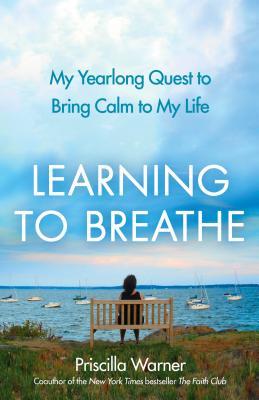
  • Giveaway and Interview: Learning to Breathe by Priscilla Warner

    Giveaway and Interview: Learning to Breathe by Priscilla Warner

    Note: The winners for this giveaway have already been chosen. Subscribe to Tiny Buddha to receive free daily or weekly emails and to learn about future giveaways!

    The Winners:

    In the past decade, I have read more than my fair share of self-help books.

    Though I’ve enjoyed the ones with countless action steps and workbook sheets to change my life, I’ve felt the most moved and inspired by honest, personal stories of overcoming adversity.

    That’s how I felt in reading Priscilla Warner’s brave book, Learning to Breathe—like I was seeing straight into the heart of someone else who’d had her fair share of personal struggles, and receiving the profound gift of her experiences and insights.

    Priscilla Warner struggled with debilitating anxiety for most of her life, and formerly self-medicated with vodka, before a doctor prescribed Klonopin. After four decades of overwhelming panic attacks, Priscilla adopted the mantra, “Neurotic, Heal Thyself.”

    In her memoir, Learning to Breathe, Priscilla chronicles her journey through various healing modalities—including meditation, chanting, and other lesser-known alternative treatments—and offers readers hope for peace and lasting change from the inside out.

    Since I hold the utmost respect and admiration for Priscilla, I’m grateful that she took the time to answer some questions about her book and offered to provide two free copies for a giveaway.

    The Giveaway

    To enter to win 1 of 2 free copies of Learning to Breathe:

    • Leave a comment below
    • Tweet: RT @tinybuddha Book GIVEAWAY & Interview: Learning to Breathe http://bit.ly/LxzDNS

    If you don’t have a Twitter account, you can still enter by completing the first step. You can enter until midnight PST on Friday, June 29th. (more…)

  • 6 Ways to Find Composure When You Feel Panicked

    6 Ways to Find Composure When You Feel Panicked

    “Every day brings a choice: to practice stress or to practice peace.” ~Joan Borysenko

    I had a terrible morning. I needed to make a short YouTube video to promote my therapy practice, and I thought it would take twenty minutes at the most.

    The technology was more complicated than I thought. I struggled on, wanting to do it by myself. Half an hour later, I surrendered and asked my husband Kaspa for help.

    Two hours later, we were still trying to make it work.

    I started thinking about all the other things I was meant to be doing that morning. A tense knot formed in my stomach.I started snapping at Kaspa—if only he knew how to make it work, I’d be finished by now. Grr!

    I finally finished the video (with the help of a very patient husband!), but I was in no state to do any more work. I felt panicky and rushed, and my brain kept talking me through the list of all the things I needed to catch up on, like a stuck record.

    Once I allow myself to get into this kind of state, it takes me a while to “come down” again.

    After some time sitting at my desk and feeling agitated, I decided to go out into the garden.I walked slowly up the path, noticing the bang of my heart. I looked at the baby pink roses, the inner-most petals still holding onto drops of dew. I heard the clear song of a blackbird. I took a deep breath. And another.

    These are the things that help me when I get panicky. (more…)

  • Prescriptions for Peace: How to Combat Anxiety

    Prescriptions for Peace: How to Combat Anxiety

    “When the crowded refugee boats met with storms or pirates, if everyone panicked, all would be lost.  But if even one person on the boat remained calm and centered, it was enough. They showed the way for everyone to survive.” ~Thich Nhat Hanh

    Without realizing it, I spent the majority of my childhood in a constant state of anxiety. In my early twenties, after a break-up with a man I dearly loved (albeit a little obsessively) I tried to medicate my grief with too many cups of coffee, bottles of wine, and many cigarettes.

    I found myself one absurd sunny afternoon with shaky, sweaty hands, palpitations that felt like a heart attack, and an overwhelming sense that I was crazy. I called the emergency room and they informed me I was having a panic attack.

    Although I tended toward depression and struggled with not wanting to get out of bed, I didn’t realize depression and anxiety can go hand in hand.

    At one point, my doctor prescribed anti-anxiety medication, but it numbed me out to such a degree I could barely function. Realizing that this was not the answer for me, I made it a life-responsibility to care for and self-treat my anxiety.

    Back then, if someone suggested that I find “peace,” I would toss it away with a roll of my eyes thinking they were some sort of hippie trying to save the planet, or a born-again with a bumper sticker of a white-winged dove. What was peace anyway? I was just trying to survive my inner turmoil.

    Over time, I discovered more about what peace really meant for me. If I could be at peace, I knew then that I could better understand and have compassion for others. But I had to start small and stay simple in order to face the stressors of my life.

    I began with the basics and slowly built my foundation over the years. My pattern for so long was trying to build my ship out at sea. The realization was to learn how to build my mast on stable ground.

    Once I built a basic foundation, I got a little fancier: I kept journals to have a place to put my rapidly thinking mind. I learned how to meditate, slowly increasing from ten to forty-five minutes a day.

    I studied and read countless spiritual books before going to bed (sometimes an excellent remedy for sleep) and found time each week to be creative. I changed my eating habits, learned how to eat more vegetables, legumes, grains, and olive oil, and juiced delicious concoctions to ground me.

    Over a long period of time, I created a daily structure that would include all of the above and more, which solidly holds me and gives me inner-strength. Then, I could start thinking about the bigger things, like the views of the world and how to help make it a better place.

    Today, inner-peace is tangible and real for me. Even when the going gets tough, even when life slams me with loss and difficulties, I have my tried and true structure to come back to. (more…)