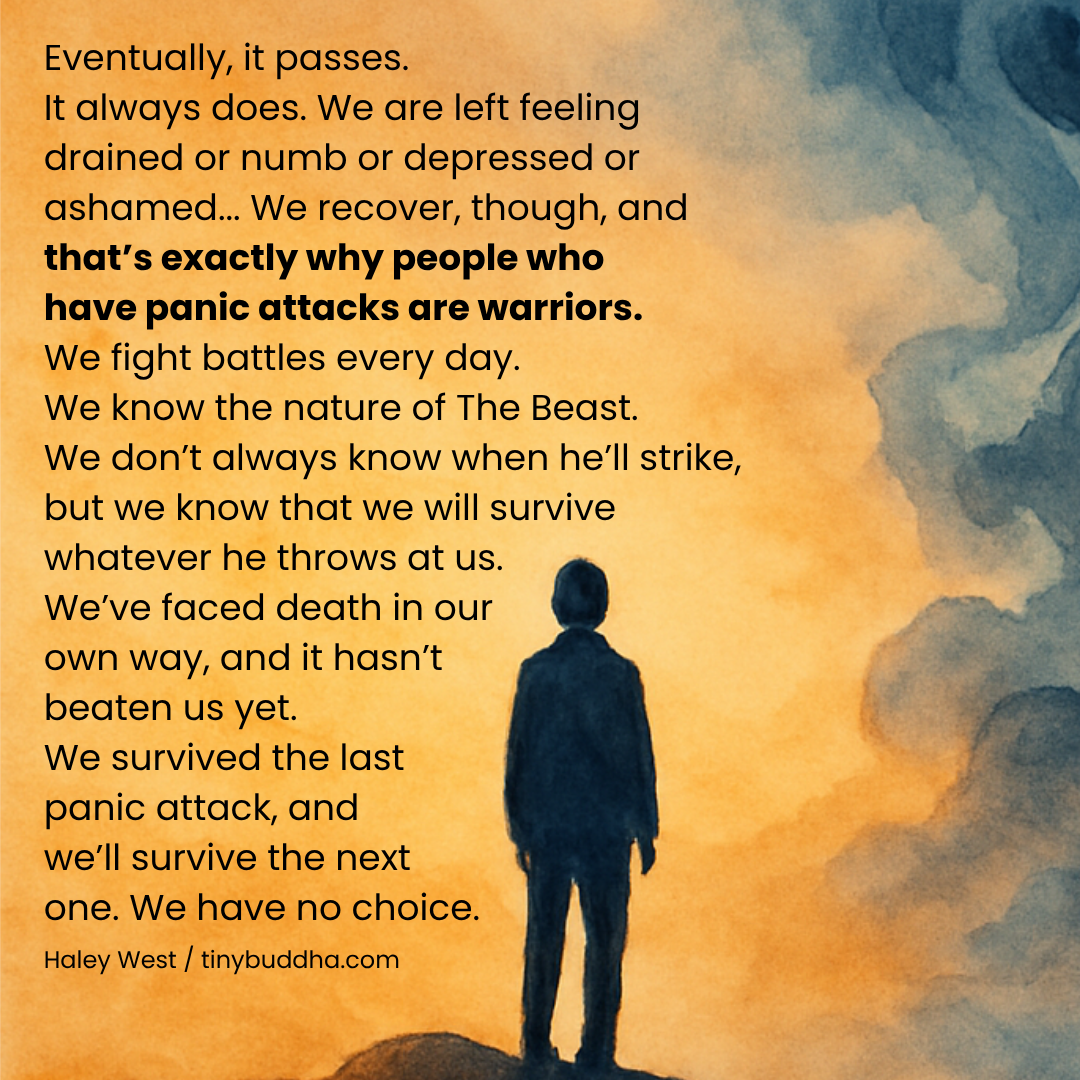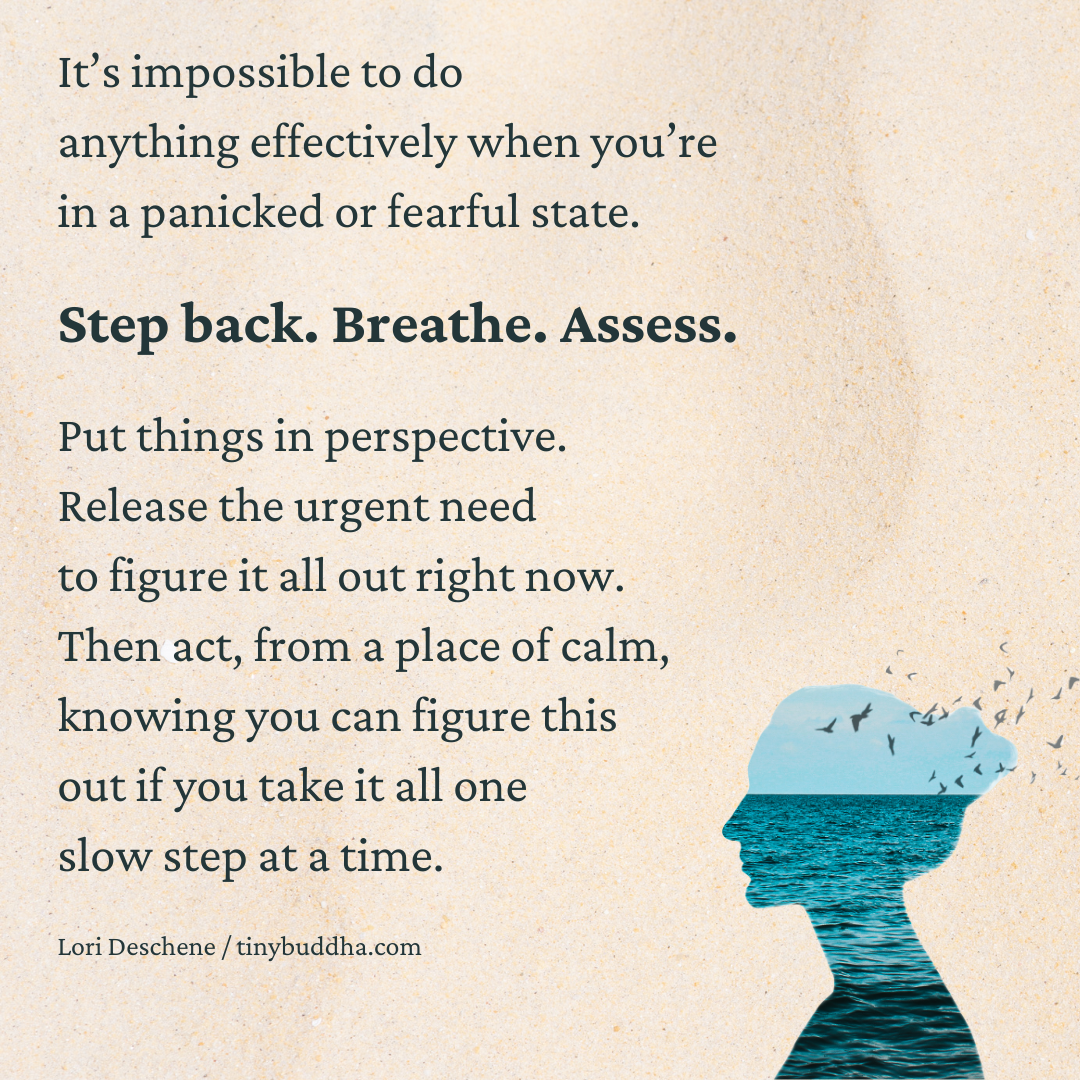
Tag: panic

  • Relief from Relentless Thoughts: Reclaiming My Mind from OCD

    Relief from Relentless Thoughts: Reclaiming My Mind from OCD

    “Don’t believe everything you hear—even in your own mind.” – Daniel G. Amen

    This quote might sound like something you’d read on a coffee mug or an Instagram quote slide. But when your own mind is feeding you a 24/7 stream of terrifying, intrusive thoughts? That little phrase becomes a survival strategy.

    Sure, I have lots of strategies now. But they weren’t born from a gentle spiritual awakening or a peaceful walk in the woods. They were born out of a relentless, knock-down, drag-out fight with obsessive-compulsive disorder (OCD). A fight that started when I was a kid and stole years of my life.

    Let me be blunt: OCD is not quirky or cute. It’s not about liking things tidy or being “a little type A.” It’s a full-body, panic-inducing disorder where your brain screams, “You are in danger!”—even when there’s no actual threat.

    It’s counting in desperate loops. It’s having rituals you don’t understand but can’t stop doing. It’s fear that feels like a gun pointed between your eyes, triggered by nothing more than a thought. I know because I have OCD, or I guess I should say “had” OCD.

    Life with OCD: A War Inside My Head

    From the time I was young, my brain was hijacked by fear. Fears that something terrible would happen. That I’d lose people I loved. That I’d be misunderstood, unworthy, unforgivable. These thoughts didn’t just whisper—they screamed. And my body listened: sweaty palms, racing heart, shallow breath. Over and over, even though nothing was really wrong.

    To cope, I created rituals—compulsions that promised relief but never delivered. I’d roll my neck a certain way, flex my wrists, blink, swallow, count in rapid-fire succession—anything to feel right again. But it never really worked. Four was my magic number for a long time. I could fly through sixty-four sets of four faster than you’d believe. Still, the anxiety roared back every time.

    Want a picture of what this looked like? Here’s one from high school: I’m sitting at the kitchen table. I glance—again—at the round straw basket on the wall. I roll my neck, flex both wrists, blink, swallow. Damn it. Not right. I start the sequence again. One-two-three-four. One-two-three-four. Again. And again. Four sets of four, done four times. Still not right. I’m drowning in invisible urgency while everyone else is just trying to eat dinner.

    I had objects in every room of the house, each one assigned to a ritual. A cherry wood clock. The edge of a curtain rod. A fluorescent light tile. I didn’t choose this. I didn’t even understand it. And I definitely didn’t enjoy it. OCD stole my time, my energy, and my sanity. If I didn’t do the rituals, I was consumed by dread. If I did them, they were never good enough. It was a damned-if-you-do, damned-if-you-don’t existence.

    Thoughts That Terrified Me

    The content of my fears changed over time, but the intensity didn’t. Sometimes the dread was vague. Sometimes it was specific and disturbing—violent images, inappropriate sexual thoughts, blasphemous phrases. I obsessed that I’d pick up a knife and hurt someone. That someone I loved would die because I breathed the wrong way.

    I couldn’t write without rewriting. I couldn’t look in a mirror without fearing I’d become vain. I drew invisible lines on the floor to protect people. I had to sit a certain way, speak a certain way, think a certain way. And God help me if a “bad” thought popped into my head mid-ritual—I had to start all over again.

    At one point in college, while stuck in an endless loop of trying to put a piece of paper in a folder “just right,” I ended up stabbing a pencil into my thigh out of sheer mental exhaustion.

    I truly believed I was broken.

    Finding a Name—and a Way Out

    I didn’t even know it was OCD until I stumbled across a book and then saw a video showing other people’s compulsions. It was a holy shit moment. You mean someone else can’t fold a towel just once either?

    Once I had a name for what was happening, I could begin to untangle it. I learned that my brain was sending false messages—and that I didn’t have to obey them. A psychiatrist once explained it with a triangle: Most people’s thoughts bounce between points and move on. Mine got stuck in the triangle and just spun endlessly.

    Knowing that helped. But what really changed everything was discovering mantras.

    How Mantras Helped Me Rewire My Brain

    My mom—who also struggled with OCD—started making up little phrases with me to cut through the noise. The one that changed everything?

    “That’s a brain glitch. I don’t have to pay attention to that.”

    It sounds simple, but that phrase became a mental lifeline. It helped me step back, call out the OCD lie, and redirect my focus. It was a way to challenge the urgency of the thought without getting pulled into the ritual. And it worked—not overnight, but consistently, over time.

    Then I read Brain Lock by Jeffrey Schwartz, which broke down the exact same strategy: identify the thought, reattribute it, and refocus. I realized—I’d already been doing that with my mantras. They were helping me rewire my mind. That realization was empowering. I wasn’t just surviving anymore. I was retraining my brain.

    Mantras, OCD, and the Messy Middle of Healing

    Slowly, imperfectly, I stopped fighting my thoughts and started getting curious about them. I began to notice how fear hooked me—and how I didn’t have to take the bait.

    My mantras started piling up on sticky notes everywhere. They were grounding. Sometimes funny. Sometimes serious. Sometimes just sarcastic enough to cut through the noise in my head. But they worked. They reminded me of what was true. They gave me just enough space to respond differently.

    Because here’s the thing: OCD doesn’t run my life anymore. Sure, the tendencies still flare up under stress—but I have tools now. I have perspective. And I have mantras.

    Not the fluffy kind that pretends everything is fine. The gritty, scrappy, fiercely compassionate kind that says:

    • Yes, your brain is being loud right now—and you’re still allowed to rest.
    • Uncertainty is uncomfortable, not dangerous.
    • You are not your brain.
    • You can let go. Even if you have to do it a hundred times.

    If you’re someone who struggles with relentless thoughts—whether it’s OCD, anxiety, or just the everyday noise of being human—I hope this inspires you to craft your own phrases, rooted in your values and the kind of life you want to move toward, or mantras that remind you to ignore that harsh inner critic and the fears that lurk in your mind.

    You’re not alone.

    Your thoughts are not always true.

    And you are allowed to let go of thoughts that do not serve you.

    Even if you have to let go over and over and over again. That’s okay. That’s the work.

    Don’t believe everything you think. But start believing that you can heal.

  • How to Escape Cycles of Panic, Overwhelm and Dread

    How to Escape Cycles of Panic, Overwhelm and Dread

    “Neuroscience research shows that the only way we can change the way we feel is by becoming aware of our inner experience and learning to befriend what is going inside ourselves.” ~Bessel A. van der Kolk

    It’s early morning, and I wake with an intense sensation of foreboding. I say wake up, but really, it’s just coming fully into consciousness, as I’ve been semi-conscious all night. Fitfully tossing and turning, a deep anxiety gnawing at my chest.

    My mind has been flipping back and forth—across different subjects, even different times, collecting insurmountable evidence that my life is going terribly, and I’ll always feel like I’m just about hanging on by a thread.

    I drag myself out of bed, exhausted as usual, meeting the day with an intense feeling of disappointment in myself. Why am I always bouncing between anxiety and panic? Why can’t I control myself so that I stop being fed a constant stream of fearful, self-blaming, intrusive thoughts?

    Why can’t these terrible emotions just give me a break once in a while so I could complete some of the things that I’m so anxious about? Why is my life so riddled with overwhelm, and how on earth do I escape this?

    That early morning six years ago was a scenario that had played out on repeat for decades. Different worries plagued me at twenty than at forty. But the texture of my mornings, the texture of my days, was the same. Except that by forty I was more tired—my body exhausted from being in this perpetual state of different flavors of fear. I’d had more than enough. Enough was twenty-five years ago.

    I’d tried lots of different things—did different types of talk therapy, changed my diet, exercised, went on retreats, completed four different types of meditation training, read endless books, removed stressful-feeling friendships, moved several times, left the country… And while so many things gave me some good ideas, took the edge off things for a while, and at times felt really good, I would always return to the same baseline.

    When I missed a meditation, left the retreat, or walked out of the therapy office, I would feel just as alone, just as vulnerable to the forces of the world to take me down into pits of dread and despair. A baseline that was sinking from the weight of so much overwhelm and a life lived in a state of panic.

    I didn’t want to feel like this anymore. This wasn’t a life. This was living in glue and trying to battle my way through my days.

    Over time, I had made my life smaller and smaller so that there were fewer things to be stressed and anxious about. I’d see fewer people who I found difficult. I made my work and home life simpler. But my worries expanded to fit however small I made my life.

    I felt so lost, so alone in my struggles, like I was the only one feeling like this. No one else looked like they would panic if things didn’t go how they needed them to go.

    One day by chance, while researching something online for work, I randomly happened upon a coach and decided to give her a try. Over the next few months of working with her, I noticed a small but significant shift in how I was feeling.

    I felt a lot calmer; I woke up without punishing dread. I started sleeping better and felt less like I needed to carefully manage my life in order to cope.

    I was hooked.

    What had happened?

    My coach explained to me about the survival states of fight, flight, freeze, and fawn—how I’d been bouncing around between freeze and fawn my whole life, and that’s why I felt so terrible.

    Survival is a mode our nervous system goes into when there’s an actual physical threat on the horizon or there’s too much emotional pressure that we don’t know how to deal with.

    Like emotions are flooding us, and our nervous system says, “No! We need to protect against this emotional flood.” So survival mode gets turned on.

    Unfortunately, survival mode doesn’t feel good! It doesn’t help us live in a state where we are thriving, feeling calm, hopeful, productive, and like life is full of possibility.

    Living in survival mode feels awful because it’s a state that we aren’t meant to live in for long stretches of time.

    It’s a state we’re meant to access when there’s an actual threat to our survival, but because of how much emotional pressure so many of us carry, many of us are living there a lot of the time.

    All emotions are natural and valid; we aren’t meant to disconnect from or suppress them. But when we do, emotional pressure builds.

    Emotional pressure can come from an array of sources.

    1. When we had experiences as children that brought up a lot of emotions but were left alone to deal with them, and it was too much for our child selves.

    Experiences like our parents’ divorce, financial struggles, health issues, and alcoholism. Maybe we had an accident or witnessed abuse or experienced bullying or neglect.

    2. Any times when we had natural human emotions like fear, shame, guilt, sadness, and anger but received no emotional support to help us process these emotions as children.

    When we have families that don’t know how to process their own emotions, then they can’t support us in learning how to process ours.

    When we’re left alone to face terror, that terror is never processed, and the memories of it linger in our body, keeping us trapped in cycles of experiencing it without the opportunity for it to release.

    3. Or when our parents and families didn’t allow or tolerate our natural human emotions, like fear, sadness, grief, or anger.

    So we had to suppress our feelings, to numb against them, or release the pressure from them in unhealthy ways. Lashing out at others or engaging in destructive behaviors.

    When we had to be hyper aware of our parents’ emotions more than our own—instead of our parents being aware of our emotions—as is the case with so many people.

    These experiences disconnect us from ourselves, our emotions, and our needs. And when we don’t have the opportunity to process emotions and emotionally activating experiences throughout our lives, the emotional pressure builds over the years until, often late into adulthood, it starts to feel way too much. 

    What I needed—and what so many of us need—was to release the emotional pressure. To allow the emotions that had been building up to slowly and gently release through my body. And to feel safe to do so.

    To show my nervous system how to move out of a state of needing to be in survival mode and into a state of safety.

    To be able to feel emotions like fear, anger, sadness, and grief in a way that felt safe so that I wasn’t being pushed into a survival mode every time fear showed up. Or anger, sadness, or even joy.

    So where do we start if we want to stop living in survival mode?

    Know that it’s not who we are—it’s survival mode. 

    For decades I felt, as many of my clients do when they first come to me—that my reactions of panic and overwhelm, of struggling with dread and resentment, of feeling so often on edge, were somehow something to do with my personality.

    Oh, I am just a panicky person. 

    I am just someone who is very safety conscious and anxious.

    I am just someone who struggles to slow down and not be busy.

    I am a control freak—it’s just who I am.

    None of these things are personality traits. They are merely a reflection of a nervous system that has lived under too much emotional pressure for too long. It has survival mode on speed dial.

    Understanding this can give us some space between us and the reaction or behavior we exhibit in survival mode, which can help us support ourselves more effectively.

    Attune to ourselves and offer compassion.

    When we’ve been encouraged to disconnect from our emotions, or we’ve had too many experiences in our lives that created significant emotional impact that have been dismissed or ignored, one of the first, most powerful steps is to start attuning to our own emotions and needs.

    To know that every emotional reaction and survival response we have has a reason.

    Many situations, people, and experiences created this emotional pressure that we’re still carrying. And if there is emotional pressure and pain still within us, it means there hasn’t been enough emotional healing.

    Period.

    The body does not lie.

    Our emotions do not lie.

    Our feelings of unease, unsafety, and sensitivity do not lie.

    When we judge our reactions and our emotions, it feels like putting a stopper on the jar. It blocks our emotional healing.

    Instead, when we can turn toward ourselves with kindness, understanding, compassion, and curiosity about why we feel how we do, this is an incredibly powerful first step in healing.

    Coming out of long-term survival mode takes time.

    In my experience, there isn’t a quick fix for living through decades of survival in a body that’s been dysregulated by unhealed emotional pain from trauma. Taking a slow, gentle, but consistent approach is what has created the most profound, permanent, and expansive change for me and for my clients.

    The nervous system loves baby steps. And when we think in terms of how long we have lived in this state, taking time to unravel and rewire our reactions over months or years—that’s as long as it took to create these responses, right?

    Our nervous system has been pushing us into a protective state for a long time, so we want to acknowledge this push into survival and be gentle with ourselves as we emerge from it.

    Survival mode is a protective response—it doesn’t feel good, but your nervous system thinks you need to be in this mode because of the emotional pressures from the past.

    So we’re taking the long game here. The nervous system loves slow, gentle change.

    I love what the teacher Deb Dana says, “We want to stretch our nervous system, not stress it.”

    We can start by offering regular cues of safety to our nervous system. 

    We can’t generally talk our way out of survival mode; we need to create the conditions for our nervous system to move out of it.

    What the nervous system needs is to feel safe. That there isn’t an emergency or a threat to our survival on the horizon.

    By regularly doing things that turn on the parasympathetic part of our nervous system, which is the ‘rest and digest’ part, we can start to feel calmer and more grounded. This is the first step in healing. It means that we aren’t always stuck in this urgent state.

    Here are some simple ways we can start sending cues of safety to our nervous system so that we can turn down the dial of survival—that intense stress-overwhelm-hypervigilant state.

    Physiological sigh

    One of the simplest ways we can come out of survival or intense overwhelm is with this breath. Take a short, full inhale through the nose and then an extra inhale on top. And then a long, slow exhale. Often, doing this once or twice is enough, but you can do this for a couple of minutes to get to a deeper state of regulation and relaxation.

    Orienting to safety 

    When we are in survival mode, we get tunnel vision, and our minds loop on one subject. When we notice this tunnel vision or fixations, we can bring a cue of safety to our nervous system by expanding our vision.

    We can start, very slowly, letting our eyes drift around our space, turning our necks and looking above us, below us, and behind us. Take a few minutes to take in all of the space we are in. Going very slowly (slowness is also a cue of safety for the nervous system). Looking out of the window, especially if we can see a horizon line. The nervous system finds the horizon very soothing, and looking toward our exit too.

    This shows our nervous system there are no threats nearby.

    Reconnecting to our body with a body scan

    When we are in survival mode, we disconnect from our bodies. We may not realize this because we feel flooded with challenging, sometimes painful sensations. But when we ask ourselves, “Can I feel my feet? My fingers?” We see that we have disconnected from our body.

    Survival can feel like a very ‘head’ only experience, as we get locked into the terrible/terrifying/looping intrusive thoughts that survival mode creates.

    A simple body scan can help bring us into connection with our body and therefore into a sensation of safety. Gently going through our bodies, noticing each limb or section, wiggling or flexing the area if it feels numb, brings a strong cue of safety to the nervous system so that it can ‘turn off’ from survival mode.

    These simple exercises can be a powerful beginning, creating a gentle shift, one step at a time, toward creating a safe anchor within our body in which to land.

    Validating our emotions 

    This is also an incredibly useful step in this work of healing our survival mode reactions. When we understand that, in fact, all emotions are valid, all emotions are natural, and all emotions are looking to express needs, we can start to change our perceptions of our emotional experiences.

    Of course, we don’t want to throw our emotions at other people—shouting in anger or terrifying our kids because we feel scared. We want to take responsibility for our emotions—always.

    But we need to know that what emotions are yearning for is to be seen, felt, and heard. They want space, and they want to be acknowledged.

    Can we validate our emotions, offering them some compassion and understanding, instead of trying to push them away, suppress them, or argue with them?

    It’s in this brave and courageous act of turning toward and accepting our emotions that we get the chance to allow them enough space to release through our bodies—so we stop keeping them suppressed inside.

    Change—and rewiring our nervous system responses—is always possible.

    What has been the most hopeful and encouraging thing on my journey to release myself from punishing anxiety and persistent survival mode is recognizing that it’s possible for us to reconnect to our natural state of self-healing.

    Our nervous system is built to naturally release stress, overwhelm, and trauma. When we can bring safety to our bodies and start to powerfully attune to ourselves and our emotions, offering ourselves compassion and support, it’s possible to start reconnecting to that natural state. To rewire our patterns of overwhelm—from feeling on edge so often, quick to panic or anxiety to feeling calmer, grounded, and confident in ourselves.

  • How I’ve Found Relief from Panic Attacks

    How I’ve Found Relief from Panic Attacks

    “Don’t assume I’m weak because I have panic attacks. You’ll never know the amount of strength it takes to face the world every day.” ~Unknown

    I was just eighteen when it happened. Sitting in a crowded school assembly, my heart pounded, my chest felt constricted in a vice, and the air seemed to vanish from my lungs. As my surroundings closed in on me, my inner voice muttered, “I think you are dying.”

    That was the day I experienced my first panic attack.

    Terrified, I fled from the hall. “I need to see a doctor now,” I gasped tearfully to the school secretary. “Something is wrong! I can’t breathe properly!”

    The secretary, recognizing what was happening, reassured me that what I was experiencing was a panic attack. Taking my hand in hers, she explained that it would soon pass.

    Her guiding me through a few rounds of slow, deep breathing eased the panic. Drenched in sweat and drained from the experience, I called my mom to fetch me.

    After that first terrifying experience, panic attacks became a regular, unwelcome presence in my life. I lived in constant fear, always on edge, dreading the next one.

    The fear wasn’t just about the physical symptoms; it was also about the overwhelming sense of doom, the fear of collapsing in public, of losing control, or even dying.

    Whenever panic struck, my immediate response was to escape, to flee from wherever I was. I would phone my mom or dad, hoping their voice would anchor me until the terror subsided.

    This pattern cost me countless experiences. Movies, parties, shopping trips—anything that could trigger a panic attack—became something to avoid. My world shrank as the panic attacks took over my life.

    Locked in Panic’s Cycle

    Panic attacks can manifest in various ways. I have experienced them all. Multiple times. Racing heart, shortness of breath, chest pain, dizziness, sweating, tingling in my arms and legs, dizziness, nausea, stomach cramps, sweating or chills, or detachment from reality.

    Even though I knew rationally that these were all panic symptoms, I sometimes found it hard to accept that nothing else was wrong. I know many people share this sentiment.

    In the beginning, panic was a lonely experience for me, as I was ashamed to talk about it to friends. This meant quietly suffering. It was a dark place to be. I ached within and longed for this condition to disappear forever.

    My once colorful world quickly morphed into a choking gray. Thankfully, in time, I chose to share my condition with others.

    In doing so, I created a supportive lifeline. People whose gentle, caring aid helped me to navigate the panic attacks when they felt too overwhelming to manage alone.

    Decoding the Trigger: The Nervous System’s Hidden Role

    I sought the help of a psychologist who helped me to understand the panic attack cycle. I consumed books on panic to understand the condition that had turned my world upside down.

    Panic attacks were foreign words to me when I first experienced them. However, I quickly learned how common they are.

    Through therapy, I realized my panic attacks were not random or a sign of weakness; they were the result of a dysregulated nervous system. Through various life experiences, my body’s natural alarm system—designed to protect me from danger—had gone haywire.

    My nervous system was stuck in a constant state of high alert, responding to threats that didn’t exist. This realization was a turning point in my journey.

    With this new understanding, I began to change how I approached my panic attacks. Instead of fleeing or resisting, I started to face them head-on. I learned to breathe through the discomfort.

    I had always been aware of the delicate interplay between mind and body and realized that my thoughts needed attention. My catastrophic thinking had become my nemesis, flooding my body with increased panic symptoms.

    I worked hard at changing my thoughts, and, over time, the booming negative voice was replaced with a more reassuring, positive one.

    Progress took time. Patience was an important lesson. I learned to be gentle with myself and to celebrate the small victories. When setbacks occurred, I encouraged myself to persevere.

    Panic Tips for Immediate Relief

    Grounding Techniques: I use the “5-4-3-2-1” technique when panic strikes. This entails naming five things I can see, four I can touch, three I can hear, two I can smell, and one I can taste. This is a powerful method, as it helps distract my mind from the panic symptoms.

    Conscious Breathing Rounds: This technique involves breathing in for four counts through my nose, holding for four counts, and then breathing out through my mouth for four counts. I do several rounds of these. The positive effect this has on my nervous system is evident after this exercise.

    Positive affirmations: Memorize a few positive affirmations to repeat to yourself during a panic attack. Affirmations such as “This is just a false alarm” or “I am safe, and these feelings will pass” are very useful. These gentle affirmations invite the nervous system to quieten.

    From Fear to Freedom: A Bold New Journey

    Today, panic attacks no longer rule my life. I’ve learned to manage and understand them. Their occurrence is far less frequent.

    If you suffer from panic attacks, know this: With the right tools and mindset, you can also regain control of your life.

    Find a caring therapist. Allow yourself to be vulnerable. You may temporarily require medication, in which case your therapist will guide you. Most importantly, do the internal work.

    Today, unlike forty years ago, when my struggles first started, panic attacks are widely discussed. And with access to the Internet, information on the topic is merely a click away. I wish I’d had that luxury back then.

    Facebook offers access to many free groups. Join an anxiety support group that resonates with you.

    Connect with your tribe. A shared space of meaningful interaction and empathy offers hope and encouragement.

    What could be more healing than the collective energy of your tribe cheering you on every day?

  • The Power of Finding Hidden Opportunities in Our Problems

    The Power of Finding Hidden Opportunities in Our Problems

    “The solution to every problem is to be found on a level that is slightly, or even greatly, above the conflicting perceptions. As long as you are eye to eye with the difficulty, you will fight the problem rather than resolve it.” ~Glenda Green

    Years ago, my city was in the middle of a heatwave. My home had no air conditioning. It was so hot indoors that I was sticking to my office chair. Even well after 11 p.m. I was still sweating away at the computer.

    Then the office lamp overheated and shut off. Sudden total darkness. Did I get up, take a break, and do something else? Nope.

    Did I relocate to a cooler part of the house? Nope. I wasn’t paying attention.

    Then it got worse.

    Several website pages I had created suddenly vanished into cyberspace. Poof! I was in the middle of a promotion that was directing people to those very sites.

    My frustration level was rising fast—almost to panic levels—which of course, naturally led almost immediately to the next disaster: I locked myself out of the house.

    Now it was serious.

    I had gone into the garage for something and soon discovered that the door back into the house had closed and locked behind me. My hidden spare key was nowhere to be found.

    Fortunately, one of the windows around back was open, so I managed to get into the house by hilariously climbing through the kitchen window like a Cirque du Soleil performance gone wrong. It was just the thing to bring me back to my senses.

    It’s a rare person who, when presented with what looks like a problem, thinks, “Great, how is this amazing? How is this an opportunity?”

    Albert Einstein once said that a problem cannot be solved at the same level of mind that created it. So, it’s helpful to zoom out and look at the issue from a higher and wider perspective. When we do, we can see the hidden opportunities.

    When we take a step back, we often realize those less-than-awesome things were happening for us, not to us.

    During my three-part problem of the heatwave, website crash, and the lockout from my house, there were the obvious lessons of “always know where your spare key is” and “go somewhere else when the office is sweltering.” The bigger opportunity, though, was to be reminded that:

    There is very little in life that is worth panicking over. In fact, little is as bad as our minds would have us believe.

    So what if the web pages vanished? They can be recreated. Big deal if it’s hot in the house and there’s no air conditioning. At least I have a house.

    Someone once said that “life is largely a matter of paying attention.” Had I fully paid attention to the first two events—the rising temperatures and the vanishing web pages—and paused to consider what the message might be, I likely could have avoided the trip through the back window.

    The truth is, opportunities are around us all the time. But we must look for them.

    When I sleep through my alarm, for instance, I end up running late for appointments, and then the whole day feels off. But perhaps arriving late for an appointment is really a gentle nudge from the universe to reassess my expectations of how much I can realistically do in a day. Maybe sleeping through my alarm meant I avoided a car accident that happened during my usual drive time.

    Within every problem is an opportunity, even if it might not seem that way at the time.

    Recently I drove over a nail, only to discover my car needed not one but all four tires replaced. Here was another opportunity to observe my default mode when unfortunate things happen. The natural tendency is to react. “How did this happen?” “What do I do now?” “This is awful. I can’t believe it.”

    For many of us (myself included), our automatic reaction to a setback is fear, worry, and frustration. Although it is important to acknowledge and validate these totally normal feelings and accept that they are there, these automatic reactions do little to find a solution and fix the problem.

    We can train ourselves to meet each perceived problem with the question, “How might this be a good thing?”

    After that initial moment of frustration and sticker shock at the price of the four new tires, I actively searched for the silver lining. Since I was going on a long road trip in a few weeks anyway, it made sense to have the car in top condition now.

    Replacing all four tires also led to discovering a more serious problem with my car—something that would have gone unnoticed had I not driven over that small nail.

    When confronted with what looks like a problem, the mind wants to jump in and run endless doomsday and what-if scenarios. One way to interrupt this tendency is to give your mind a funny name.

    For example, imagine your mind as an annoying neighbor who loves to complain. The next time it starts rattling off how things are terrible, you can tell that mind, “Thanks for sharing, Buzzard.” Seeing your mind as something separate from you allows you to acknowledge its concerns and simultaneously interrupt its negative patterns.

    Another way to release yourself from a downward mental spiral is to grab a slip of paper and write down how that unpleasant event or circumstance might be a good thing.

    Start by sitting quietly and taking some slow, deep breaths to calm your mental Buzzard down. Once you’re in a more neutral, centered place, look for any hidden opportunities. Write down one or two potentially positive things that could come of this.

    Writing them down vs. just thinking about them or typing them on your phone or computer is important, as physically writing something interrupts the conditioning and habits of the mind. Writing them down with your non-dominant hand is even better since it engages the often-underused side of your brain. It’s a great method for receiving creative insights about the perceived problem.

    Our daily activities offer countless opportunities to notice how we react and to practice looking for the hidden opportunities. In fact, a few hours after I started writing this article, my computer suddenly stopped working. It was a chance to practice the very thing I was writing about: awareness and opportunity.

    I noticed how my mind still wanted to frantically imagine a variety of worst-case scenarios if I weren’t able to recover all my files. When I ignored the mind and looked for the opportunity, I decided I was being forced to take a much-needed timeout from my computer. I suddenly had plenty of time to spend on other activities I had been putting aside because the computer work seemed more important and urgent.

    If you have a problem in your life right now, take a step back, grab a piece of paper, and consider it with a wider and brighter lens. Get creative and brainstorm until you find at least two ways that situation might actually be a good thing. Look for the opportunity!

  • 3 Popular Myths Around Having and Healing Anxiety

    3 Popular Myths Around Having and Healing Anxiety

    “Never fear shadows. They simply mean there’s a light shining somewhere nearby.” ~Ruth E. Renkel

    Before I started healing my anxiety, I thought there was something seriously wrong with me. Every panic attack, every morning filled with dread, every social event that I would mentally prepare myself for made me feel like I had some inner deficiency that no one else had.

    I used to work as a cashier at a grocery store and would avoid hanging out with people twenty-four hours before my shift. Yep. That means if I worked on Saturday morning, I wouldn’t hang out with anyone from Friday afternoon to the evening.

    Why? Because I had to “prepare” myself for my entry-level position at the grocery store. I had to “make sure I felt okay,” as if the whole world was watching to see if I didn’t smile for an hour.

    I was extremely critical of myself and felt that if I wasn’t drenched in positivity, I was useless to the world. And that if I wasn’t exuding confidence every moment of my life, people would think I wasn’t good enough.

    When I started on my journey to healing my anxiety, I uncovered a few life events that had had a major effect on my inner world. One of them occurred during a dance competition that I was a part of at a young age. I was maybe ten years old when I was a part of a Bhangra group, which is a style of folk dance that originated in Punjab, India.

    Bhangra is a highly energized style of dance, and when you watch a performance, you’ll see that the dancers are smiling really wide and having the time of their lives. This is an important part of the performance, as you’re meant to bring this high energy to the stage so that the audience has a good time.

    At one of my dance competitions, my group had just finished performing, and the judges were ready to say their piece. All of the judges had great things to say, except for one that decided to point out a flaw in my personal part of the performance. He said, “Everyone did such an amazing job and were smiling so big and having fun, but you” (points to me, younger Raman) “didn’t seem to be smiling so wide. Why was that?”

    As a ten-year-old, my heart dropped as every eyeball in that auditorium looked straight at me. I can’t quite remember what I responded with, but if I’m being honest, I don’t think I said much. I tried to keep it “chill.” I’m pretty sure I just shrugged and said, “I don’t know” while my soul exited my body out of embarrassment, and then eventually walked off the stage with my dance group.

    We were young, and we were just having fun with this dance competition. We weren’t trying to win a national championship, and we weren’t even trying that hard to impress the judges. Even though we did end up winning a prize, the critique from that one judge ended up dampening my spirits.

    Being singled out from the rest of the group really had an impact on me. Though our mind doesn’t understand why we might experience certain anxieties and fears as we get older, the child that experienced that pain still lives within us.

    And the judge from a dance competition becomes an inner judge that critiques us before a work shift as a cashier. “Smile bigger!!!” he says.

    It’s both the small moments and big moments of pain that stick around with us. And as much as our adult mind can dismiss the experience by thinking, “Oh, it was just one thing someone said, that’s not a big deal,” to that little kid, it is. It’s a really big deal!

    And that leads me to the first myth we have about anxiety: that there’s something wrong with us.

    If you have experienced any form of anxiety, there’s nothing wrong with you. Actually, your internal system is working exactly as it was designed! To avoid a possible future “threat” (in this case, the embarrassment from the judge in my story), we create an inner judge to “fix” what was wrong (in this case, not smiling big enough at the dance performance), which will hopefully avoid having someone critique us from the outside (at work).

    It’s a weird way that our inner world works, but it’s doing its job. Because the truth is, yes, if you spend twenty-four hours before a work shift to mentally prepare yourself for smiling big at work, then you’ll most likely smile big at work and no one will critique you for being a downer.

    Now, when it starts to get really difficult is when you stop having the energy to perform for the world. It becomes extra challenging when your inner critic makes you feel like you’re not enough. It’s usually around this time that people start looking for some help, because even though their inner world is doing its job, it becomes exhausting to keep up with it.

    Which leads me to the second myth around having anxiety: that if you have anxiety, you’ll have it forever.

    A lot of people believe that if someone gives you a label, that label has to last forever. Not me, though. For example, when my doctor told me I had moderate generalized anxiety disorder, I decided that it wasn’t going to be like that for the rest of my life and that I would do what I needed to do to heal the anxiety.

    Anxiety isn’t something you need to “cope” with. I recently suggested a tool to a client, a young woman, and she said, “Oh, yay another coping mechanism!” As excited as she was to try something new, I had to be authentic and let her know that her anxiety wasn’t something she merely had to cope with; it was something that could be transformed.

    The first step to transforming your anxiety is getting aware of what your dominant thoughts are. Oftentimes, it’s the hypercritical thoughts that are causing the anxiety. When we can become aware of these thoughts, we can then ask where they originated from.

    Just like how I have an origin story for my anxiety, you do too! Oftentimes, there’s more than one origin story—a culmination of origin stories—but it helps to start with one.

    The more open you are to healing through your story, and the more willing you are to transform, the more you’ll shift. Your anxiety doesn’t have to be in the driver’s seat of your life forever. It’s even allowed to be a passenger.

    And that leads us to the third and final myth around anxiety: that to heal, you must be completely anxiety-free and completely at peace at all times.

    The truth is, in my six years of healing, anxiety has popped its head up from time to time. The first time I offered workshops, I was a nervous wreck for weeks.

    I’ll still feel anxious if I’m trying something new, but the way I respond is different.

    When we start to heal, it creates a strength within us that allows us to show up differently in our life. Even though I felt really nervous to put myself out there in my career, I had the inner strength to go for it! That’s because anxiety was no longer steering the vehicle of my life.

    It became a welcome passenger.

    The truth is, if anxiety comes from that inner kid and her experiences, then I don’t want to kick her out of the car. That little girl deserves a safe space in my life.

    When anxiety pops her head up, I say hello. I journal from her voice, I talk to her, and I let her know it’s going to be okay.

    I remind her that I’m the opposite of that judge from that day, and that I will be the one to uplift and empower her. That she is welcome on my journey to show up whenever she wants to. And that I’d love to have her join me for the ride.

    I’m here to show her all of the magic that’s inside of her. And I’m here to remind her of her gifts and talents—the ones that no one can take away from her. She is a welcome passenger, and I will be driving the car to our greatest good.

    My experience with anxiety and the healing that came along with it has taught me to be kinder to myself, to see the human behind their mask, and to be a walking example of inner peace.

    Perhaps the more difficult moments of our life are also the ones that shape us into more of who we’re meant to become.

  • Why I Sense Threats Everywhere and Panic All the Time

    Why I Sense Threats Everywhere and Panic All the Time

    “Traumatized people chronically feel unsafe inside their bodies: The past is alive in the form of gnawing interior discomfort. Their bodies are constantly bombarded by visceral warning signs, and, in an attempt to control these processes, they often become expert at ignoring their gut feelings and in numbing awareness of what is played out inside. They learn to hide from their selves.” ~Bessel A. van der Kolk

    I have a prescription for Lorazepam.

    After coming home from picking up my first ever bottle from the pharmacy several years ago, I threw the bottle at the wall and cried.

    I used to find those orange bottles of medication in my mom’s bathroom and tucked away in kitchen cabinets. Zoloft, Ambien, Xanax. It was how I figured out what was “wrong” with my mom—by looking up what a particular medicine was used to treat it.

    But instead of helping her, her cocktail of pills caused side effects that seemed to make things worse. Was she suicidal because of her mental state or because of her medication?

    Seeing that orange bottle holding an anti-anxiety medication labeled with my name felt like a death sentence. I was doomed to go down the same path.

    I didn’t grow up afraid of going to the dentist. Or maybe I did; I just didn’t know or feel it. Feigning okayness was how I moved through the world. Maybe I was doing it at the dentist too. Maybe I always dissociated.

    About a year and a half after having my first child, I was at a routine dental cleaning when a panic attack hit. I remember the way it felt like time was stuck, like I was stuck, trapped. I remember acting casual as I put up my hand, laughed, and told the dentist that I really needed the bathroom.

    In the bathroom, I stared at myself in the mirror, berating myself for being embarrassing and ridiculous. “Pull yourself together! You’re fine!”

    Months later, I went to an endodontist for a root canal. As soon as I sat down, I knew I wouldn’t be able to do it. This time, I was honest with the doctor, who very kindly listened, told me a lot of people fear dental treatments, and suggested I speak to my GP about medication.

    I had never taken any sort of anti-anxiety medication before. I barely take ibuprofen for cramps and, when I do, one pill feels like more than enough. I saw what medication did to my mother—the way she became dependent and addicted and how her medication seemed to intensify her madness. Also, with my yoga background, I couldn’t possibly willingly ingest toxins and chemicals!

    But I needed the root canal, and I knew that it would get worse the longer I put it off. I asked my therapist, and he agreed with the endodontist that using medication to help me get through this specific stress-inducing situation was the right choice.

    I returned for my root canal appointment with a dose of Lorazepam in my system and I got through it. I haven’t taken another dose since.

    I avoided the dentist for five years before finally making an appointment with a new dentist, hoping for a fresh start. I spoke to him about how scared I was, and he suggested a slow and gentle plan, which put me at ease. An appointment just to talk about my dental goals, an appointment just for X-rays, never too much at once. I arrived each time with my support system: a member of my family, my kids’ security blankets, and Friends playing in my AirPods.

    The dentist told me that the first thing he recommended was fixing a broken crown and filling the beginnings of a cavity. It would take two hours, and he recommended that I book it reasonably soon. I felt confident I could get through the appointment. I had built trust with the doctor; I felt safe at the clinic. I didn’t have to pretend I wasn’t scared when I was, and that had to count for something.

    I ended up rescheduling the appointment six times. Each time, there was some sort of moderate conflict, but the real reason, of course, was fear.

    The day before the appointment I would ultimately keep, I considered the Lorazepam. Despite never having taken it since that first time, I always have an updated bottle on hand. There’s something about knowing that it is there that helps.

    I gave myself a pep talk that I hadn’t had a panic attack in years now and that I could do this! My husband was coming with me, and I would have my kids’ blankies. It would be fine.

    On the morning of the appointment, I woke up in dread. I had butterflies in my stomach. I kept having to go to the bathroom. I felt shaky, a nervous energy. But I showed up. I told myself how good I would feel on the other side.

    As I was being prepped in the chair, I told the dental assistant that I was scared. She assured me that the doctor was the best—so good, so fast. I asked for a breakdown of the two hours. I breathed deeply. I could do this.

    Within seconds of the treatment beginning, I was sitting up, taking the protective—claustrophobic—glasses off saying, “I’m sorry. I’m so scared. I don’t know if I can do this. I need to get up. Can I get up? Can I walk around? I’m sorry.”

    The doctor said, “Of course. It’s no problem. We have plenty of time.”

    My body shaking, I got up and paced the hallway. I exhaled through fluttered lips. I thought about my dog shaking her whole body after a stressful encounter, and I shook out my arms and hands.

    I returned to the room and repeated my apologies and my confessions of fear.

    “You’ve done the most painful part already—the numbing shot,” the doctor said encouragingly.

    “I know, but I’m not afraid of pain. I’m afraid of having a panic attack again,” I said, clarifying to everyone, including myself, the exact source of my fear.

    It was an important, necessary distinction to make. My fear of the dentist was not actually of dental procedures. No, this fear was rooted in repressed childhood trauma that exploded into uncontrollable symptoms that severed me from who I thought I was.

    I apologized again, and the dental assistant said something I really needed to hear: “There’s nothing to be sorry about. You can’t control how your body reacts.”

    What she said alleviated me from blaming and shaming myself. Logically, I understood that I was fine, safe even. But my body—where trauma is stored—was not present. It was back at that dental cleaning where panic overtook it, and further, it was back in my childhood when life truly was scary, shocking, unpredictable, unsafe.

    I wanted to get through the appointment. The main thing I needed to feel was that I was not going to be trapped. What if I needed to sit up? Was it okay if I swallowed? Went to the bathroom? Got a drink of water? Just had a break? I was assured that all of those things were possible; there would be no point where we would not be able to stop.

    I felt the support of the dentist and dental assistant and, most of all, my husband, who sat at the end of my chair and held my foot through the entire treatment. I felt my breath. I clutched my kids’ security blankets. I focused on the lighthearted banter and cheesy jokes of Friends.

    I got through it.

    And I was elated.

    I felt emotionally and mentally drained for the rest of the day, but I expected that would be the case. Mostly, I felt relieved and happy.

    The next day, carrying my toddler down four flights of steep stairs in an old Tribeca walkup, I was suddenly hit with a feeling of unsteadiness. It was a humid and rainy day, and my glasses had been falling off my face, something I recently learned is contributing to dizziness as my eyes struggle to focus outside the center of my lenses, where the prescription is most accurate.

    As logical as it was to feel unsteady in that moment, fight-or-flight mode was triggered, and I felt off for the rest of the day.

    The grooves of something-is-wrong are so deeply worn that my mind and body effortlessly magnetize toward and embed within them.

    I sense threat everywhere: Is my kid going to get hurt at camp? Is a mass shooter around the corner? Why am I so dizzy? Is it my brain? And why does it feel hard to take a deep breath? Is it my heart? For a while, I’m caught in an oppressive whirlpool of fear until something snaps me back to reality, to the present.

    I think it helped that I did a cardio-heavy workout in the middle of that day—energy got moved around. And then a thought saved me: This is all the residue of anxiety from the dentist appointment yesterday.

    As quickly as I had that thought, my physical symptoms eased. It’s like my body had been searching for and straining itself to find something to fear. And as no answers arose, it was trying harder, fighting harder.

    I relayed all of this to my therapist.

    “How are you feeling right now?” he asked.

    “I’m fine!” I reflexively answered, perhaps a pitch too high.

    “Fine doesn’t really give us much information. Close your eyes. What do you feel?”

    I closed my eyes and realized my body felt lighter than I expected. “This is kind of strange, but I can’t really feel the seat underneath me.”

    “What does your skin feel like?”

    I patted my arms and noticed I couldn’t really feel any sensation. “Wow, I almost feel numb,” I said.

    I was not in my body.

    My therapist explained that dissociation is a common trauma response. It’s an emergency action taken during actual danger, a mental escape when physical escape is not possible. However, it’s not effective when there is no danger and counterintuitively preserves the fear you so desperately are trying to avoid.

    Dissociating tells the body we are back in danger, and the body responds appropriately to danger. Except there is no danger.

    Dissociating disconnects the body from the present moment so that instead of protecting yourself from a perceived yet false fear, you’re ultimately depriving yourself from a sense of safety.

    The wiring of the trauma brain can feel impossibly tangled, even irrevocably damaged, like Christmas lights that were improperly stored. Trauma alters neural pathways so that we experience the world through a lens of fear.

    But our brains are malleable—neuroplastic. For me, therapy is like a mental and emotional Botox to smooth out the trenches of my trauma and anxiety. I crave the intellectual understanding of what is happening in my body and mind and how they infinitely inform and impact each other.

    When my mind thinks about the past, my body thinks we have gone back in time, and it reacts accordingly. My body is desperate to keep me safe, so it reverts to various trauma responses and coping mechanisms. The mind then detects a disparity between the circumstances of the present and the physiological reaction of the body and, to put it bluntly, freaks out.

    But I recognize a potential re-centering in this trauma pattern. If a sudden feeling of physical unsteadiness can untether my mind from reality and send my body into a spiral of fear, it is logical to assume that the opposite can also be effected—that a conscious grounding of my body in physical space and in present time can coax my mind away from fear of the past.

    This isn’t to say that freedom from symptoms is as simple as intellectually understanding that you are no longer a child or moving your body through exercise. Those are simply pieces of a much more layered puzzle of each of our psyches. But for me, it’s a helpful reminder that there are always anchor points I can return to: breath, the present moment, and people who are looking out for me, like my husband holding my foot.

    Because as much as healing is inner work, we don’t have to do it alone.

  • Hungry and Panicked? The Link Between Food and Anxiety

    Hungry and Panicked? The Link Between Food and Anxiety

    “Take care of your mind, your body will thank you. Take care of your body, your mind will thank you.” ~Debbie Hampton

    4:00 p.m. I am suddenly aware of my heartbeat. It feels more insistent than normal. Is it faster? Is it jagged? Am I out of breath?

    I try to reason with myself: I’ve just done a brisk walk pushing the stroller over some hills.

    My anxiety responds: Those hills were awhile back… you wouldn’t be out of breath from that.

    Anxiety sufferers have a heightened sense of, well, a lot of things. For me, I am acutely aware of shifts in sensation in my body.

    Having practiced and taught yoga for most of my life contributes to this, and in many ways, it’s a great skill. I instinctively check in with my shoulders—are they up around my ears? Then my jaw—are my top teeth away from my bottom teeth? And perhaps the most important of all—am I holding my breath? I can’t help but observe when people walk with an imbalanced gait or sit with their spines slouched.

    But the heightened awareness is also pathological. A slight tingling in my hand instantly makes me think heart attack. Dizziness, which I ended up learning was caused by my vision changing, made me run to get screened for a brain tumor.

    4:30 p.m. I’m at the library with my two-year-old daughter. I still feel weird—“off.” I periodically place my hand on my chest—is my heart beating more intensely than normal? It seems normal. But what if it’s not normal?

    I press my hand into myself harder, searching for something to panic about. I find comfort in the two librarians a few feet away. I think, “If I have a heart attack, they’ll keep my daughter safe. They’ll call 911.” 

    I check in with my breath. It feels reassuring that I can take deep, unencumbered breaths.

    5:00 p.m. My eight-year-old son offers to look after his little sister. I feel like I need to lie down, to calm the strange rhythm of my heart. Something reminds me that I have leftovers from last night’s dinner.

    I made a really delicious Thai larb gai. It is a “safe” meal of ground turkey, vegetables, and rice. I hope my family didn’t notice that I avoided eating the rice last night.

    I reheat the leftovers, including a spoonful of rice. I am careful to avoid eating any rice—starch is bad, my disordered thinking will never let me forget. I take my first bite and burst into tears.

    A few months ago, this pattern of crying started when I would finally eat after going too many hours without food. It would catch me by surprise because I hadn’t intentionally been avoiding food. I hadn’t intentionally been punishing myself. It would just happen.

    I’d miss breakfast because mornings are busy. A coffee would usually follow, masking my body’s ability to communicate its hunger—my hunger.

    I typically only have three hours to myself without any kids, three hours to do way more than is possible during that timeframe. I can’t possibly waste that time eating. And then once I reunite with my kids, my own needs all but get completely forgotten.

    On these types of days, when I would finally take a bite of something, almost always around 5:00 p.m., the tears would rush up and out.

    Why was I crying over a bite of chicken breast?

    Eating my leftover larb gai, I wonder, when did I last eat? 9:00 a.m. with a friend. It is 5:00 p.m. now. An eight-hour window.

    “But I ate my daughter’s leftover applesauce!” I hear myself say. I instantly recognize this rationalization. The voice of the disorder.

    I realize I am once again inside the well-worn grooves of avoiding eating. I cry because my body is relieved it is getting sustenance. I cry because I am angry that I am still beholden.

    I try to work out what happened. It has been a busy day. But when is it not a busy day? This is not an excuse.

    At breakfast, I noticed that the person next to me was eating avocado toast, but she had scraped the avocado off the bread. Because bread is bad, my disordered thinking affirmed.

    I scanned the menu and noticed that the calories were listed next to each item. I don’t normally count calories. I try to focus on the description of each menu item and decide that Papa’s Breakfast Bowl sounds great: roasted potatoes, bourbon bacon jam, a sunny-side-up egg, and sliced avocado served with chipotle aioli. I would ask for no jam or aioli, obviously, but otherwise, this is a meal I would easily make myself.

    And then I saw the calories: 1100. 1100?! I panic.

    My friend arrived and asked what I was going to have. I casually said, “I’ll probably just have an omelet.”

    This friend is one of those women who pops out babies and bounces back. I don’t know how she does it—maybe it’s just genetic—but her body holds no visible remnants of having made babies. She was wearing skinny jeans and a fitted sweater; there are no rolls, her arms are firm and slender.

    I held my arms across my stubbornly squishy stomach. I calculated that her baby is younger than mine, but she is in much better shape. I didn’t know that I was doing it, but I chastised myself for being bigger than I used to be, than I should be. I deserved some sort of punishment for this failing, my evident gluttony and certain laziness. 

    I didn’t register when she told me, “You look amazing. What workouts are you doing these days?” My disordered, dysmorphic brain told me, “She’s just saying that to be nice because she feels sorry for how horrible you actually look.”

    Another friend has unwittingly become my eating disorder sponsor. I send her a confessional text: “Dang it. I ate at 9 a.m. And then I didn’t eat for eight hours. I didn’t even realize how long it had been until I took my first bite and teared up.”

    We’ve talked about what the crying signifies. We both know it’s meaningful, pointing to some lesson.

    It is in talking to her that I put it all together. The 1100 calories. The scraped avocado toast. My slender friend.

    I also realize I had been triggered by another friend who had recently stayed with us. She does intermittent fasting, and she is an example that it works because she is an enviable (to me) size 0. My ED brain is so eager to jump on any restrictive, rule-based eating regimen. “See? She avoids eating and look at the result! Don’t you want to be a size 0 again?”

    But I also have an inner voice of wisdom. This is the voice that reminded me that nourishing myself so I could breastfeed was more important than losing the baby weight quickly. This is also the voice that instantaneously gets silenced when my eating disorder asserts itself.

    My visiting friend touted the benefits of intermittent fasting, “Our bodies aren’t meant to eat constantly. When we were cavemen, we didn’t have refrigerators and pantries.” She claimed, “My organs function better when they are free from having to digest food.” (Sounds ideal, but how does she know this is true?) She reasoned, “And when I do eat, I eat anything! Of course I always eat healthy foods, but I don’t avoid bread, as long as it’s good, artisanal bread, and I’ll have a pudding if I feel like it.”

    My eating disorder: You need to do this too.

    My inner wisdom: Any controlled eating is a slippery slope to starvation for you. Focus on three meals of day, that’s it. That’s your work. 

    After I connect the dots of all these triggers and finish my leftovers, I promptly pass out on the couch, still sitting upright. I am relieved I (probably) am not having a heart attack and I need a minute to absorb it all.

    They say that you never recover from an eating disorder. You are in recovery. It is an active state that requires your conscious awareness and participation.

    In that sense, it seems no different to being an alcoholic. An alcoholic can’t just have one drink. They may struggle if they’re around people who are drinking. It may feel like an invisible force is pulling them to that ice cold beer or elegant glass of wine.

    I feel this invisible force, too. Except for me, it is pulling me toward starvation, deprivation, urging me to shrink into nothingness, to zero.

    But the cost is simply too high. I do not want to forgo my mental steadiness and inner ease for a smaller number on the scale or on my clothes. I’ve been there before, and it was not worth it.

    And for me, there is a clear correlation between starving myself and anxiety. I’ve learned that anxiety is actually the voice of wisdom, my inner child, piping up to grab my attention, reminding me to take care of myself.

    No, it’s not a heart attack, it’s not even a panic attack, it’s just—you’re hungry! You forgot about you. You’ve been criticizing yourself for being too big, for looking different to how you looked pre-motherhood or when you were eighteen. You’re not eighteen! And what a gift that is, to be given this opportunity to live, to age. To have children. 

    And they, my children, really are a huge motivation for me. I see how they take everything in, especially from us, their parents. I know how much I unconsciously absorbed from my mother. Babies are not born hating their thighs; you learn to hate your thighs.

    I know I cannot control everything in my children’s lives and psyches but my actions, my behavior, the way I talk about myself—these things I can control.

    I want my children to experience joy and gratefulness in the food we are all lucky enough to eat. I want them to get to know flavors, to have fun cooking, and to revel in shared meals with loved ones. I love when I make something that they love that they know their mommy made for them. Even if it’s just mac and cheese out of a box; I’ll take it when my son exclaims that nobody makes better mac and cheese than his mom does. (I do sometimes add toppings!)

    I do not want to be at the whim of my weight. I do not want to fear food. I most certainly do not want to pass any of this on to my children.

    So I will keep fighting for freedom. Freedom to eat—and enjoy!—three meals a day. Freedom to eat the damn bread (I ate the rice that was with my leftovers, by the way). Freedom, even, to make mistakes because these habits are deeply embedded, and the freedom to then celebrate the remembering, realizing, and resetting.

    I don’t know if this is the case for other people with anxiety, but I would invite you to take a look at any possible connections between your eating habits and symptoms of anxiety, particularly if you are prone to dieting.

    If you restrict your eating by skipping meals or by enforcing a tight eating window and you happen to find yourself experiencing symptoms of anxiety or depletion, zoom out and consider the bigger picture. Are you truly taking care of yourself?

    We are complex, layered beings and all the different facets of who we are intermingle and influence each other. It’s not just segregated compartments of well-being. Physical health and mental health are inextricably linked.

    Anxiety makes me feel untethered, shaky, uncertain, and afraid. Having that on empty exacerbates it all. I have no body or brain fuel to process it.

    Those tears that erupt with that first bite of food after denying myself—they ground me in relief, offer release, and ultimately, are a practice of compassion for myself. I wish good health and food freedom for us all. Because we are worth being fed, nourished, and sustained.

  • 3 Lifestyle Changes I Made to Overcome Dissociative Panic Attacks

    3 Lifestyle Changes I Made to Overcome Dissociative Panic Attacks

    “There is no greater wealth in this world than peace of mind.” ~Unknown

    A few years ago, I had what could safely be deemed a “bad year.” My live-in partner left me out of the blue, I became un(der)employed and racked with debt, I got in a car accident that totaled my car, and then…my dog died.

    After the year that I’d had, the death of that dog, my most treasured friend, was the final straw. It was the final straw for believing that things might turn around soon, and it was the final straw for my mental health.

    Shortly after her death, I started experiencing what I now know were dissociative panic attacks. At the time, however, I thought that I was going crazy, dying, and that my spirit was detached from my body. A feeling you can probably only understand if you, too, experience panic attacks and have felt derealization before.

    For a long time, I suffered. And wallowed. And gave up. But after about six months of living in this nightmarish state of near-constant dissociation and depersonalization, I had a moment of clarity. I knew that I had to give it my all to get better, no matter how long it took, because the alternative was bad.

    A panic attack is the ultimate manifestation of feeling a lack of control—feeling like you’re going to die, like you’re going crazy, like you’re disembodied… and there’s nothing you can do about it.

    So I started my healing process by looking for ways to take back dribs and drabs of control in my life.

    It didn’t happen overnight, but I am extremely grateful to say that it’s been over two years since I’ve had a panic attack. Something I never thought I’d be able to say when I was in the throes of the disorder. So how did I do it? I would love to share that with you here.

    These are the three tools that I believe had the biggest impact on healing my dissociative panic disorder.

    Adopting an Anti-Inflammation Diet

    Inflammation is the response our bodies have to foods that irritate our digestive system, and the amount of inflammation in your body has a direct impact on brain-functioning. According to Psychology Today, there is an undeniable correlation between inflammation in the gut and mental health disorders like anxiety, bi-polar disorder, and depression.

    I cut out gluten and alcohol completely (both notoriously inflammatory) and would have cut out dairy too except that I’d already done that a few years earlier for other reasons.

    Looking back, I think adopting this new diet was effective in more than one way… Cutting out alcohol was not only helpful in soothing inflammation, but it also allowed me to become much more clear-headed right out of the gate. I was never a huge drinker, but eliminating the ten to twelve weekly drinks I did have was enough to notice an instant improvement in the evenness of my emotional state throughout the day.

    Another surprise benefit was that making an intentional choice about the guidelines of my diet gave me back a sense of agency in my life because with every meal, I knew I was making an intentional choice about what would go in my body and why.

    Progressive-Overload Weight Training

    Unfortunately, weight training still seems to feel “off-limits” to many of us. There’s a rampant gym culture in our society, and it feels like either you’re in or you’re out. However, I learned during this journey to mental health that once you get “in,” it becomes clear that nothing and no one was ever really keeping you out!

    But why did I decide it was important to find my way “in” in the first place? To be honest, this one was a happy accident. I knew that it was important to start moving my body again, but it was January 2021, which meant it was too cold to exercise outside, and group fitness was still not an option thanks to the pandemic. Going to the gym, however, wearing a mask, was.

    What I discovered from my religious gym routine, and my dedication to learning how to weight train as a means to overcome feeling so awkward and uncomfortable during every workout, is that weight training has the powerful effect of connecting your mind to your body. Something I didn’t realize had been lacking for me.

    It’s impossible to lift heavy weights without becoming deeply aware of the connection between your mental cues, your breath, and your muscles.

    Dissociative panic disorder is a nasty feedback loop of feeling dissociated and disconnected, which is scary, and leads to our body trying to overcome that fear by dissociating and disconnecting. Developing a weightlifting routine created an interruption in that debilitating cycle and, over time, reminded me that I am firmly rooted in my body and that I have control over my physical reality.

    Meditation 

    When I first started experiencing dissociation, depersonalization, and derealization, meditation was absolutely not the right answer for me. In fact, attempting to meditate only made me feel worse—like I was on the brink of leaving my physical body behind entirely.

    However, once I regained a little bit of trust with my mind and body through other practices and knew that I would, in fact, not float away, I started using meditation to further the work I was doing in other places.

    Since I had discovered through weightlifting the importance of strengthening my connection to my body, the first meditations I employed were for deepening that body-awareness (also called somatic awareness or interoceptive awareness.) My entire goal was to become more familiar and friendly with my body so that I could remain grounded in my physical self throughout the day.

    Later, once I was feeling healthier and more optimistic about a panic attack-free future, I also began to employ meditations for future-visualization. I would tune into and sit with the feelings of connection, safety, and purpose as I allowed my mind to create pictures of my future life. In this way, I began to rewire my brain to understand, look for, and create positive emotions again.

    Now, more than two years after I made the life-changing decision to do anything it took to heal my panic disorder, I still fall back on all three of these tools to keep me healthy. I avoid inflammatory foods, I hit the gym regularly (and move my body in other ways), and I try to meditate every single morning.

    I know it can feel overwhelming to start a new routine, but none of these lifestyle changes will do anything but enhance your life. It’s worth it to try. I hope that a few months from now you, too, can look back at your panic attack days as just a difficult, but closed chapter in your life.

  • 6 Things to Remember When You Feel Anxious in Your Relationships

    6 Things to Remember When You Feel Anxious in Your Relationships

    “Our anxiety does not come from thinking about the future, but from wanting to control it.” ~Kahlil Gibran

    Relationships have always been anxiety-inducing for me, and I know it stems from my childhood.

    As a kid I would often silently mouth words I’d just said, hearing them in my mind and evaluating whether I’d said something stupid or wrong. I was always afraid of saying something that might make someone upset.

    Junior high was a particularly rough time in my life. I was insecure and had low self-esteem, and I was desperate for approval from other kids, which made me an easy target for bullying.

    To make matters worse, an authority figure in my life told me, “If I was your age, I wouldn’t be your friend.”

    I had always believed there was something wrong with me, but at that point I was certain that no one would like me, let alone love me, if they really knew me. But I also felt deeply lonely in my little bubble of self-loathing and envied the popular kids. The likable kids. The kids who didn’t seem so clingy and awkward, who seemed to easily fit in.

    Thus began an internal battle I’m guessing many of you know all too well: the deep desire to feel seen and secure juxtaposed with the feared being judged and rejected.

    As I got older, I found myself in all kinds of unhealthy relationships, making friends with other emotionally damaged, self-destructive women, thinking they’d be less likely to judge me, and dating emotionally unavailable men, whose behavior reinforced that I didn’t deserve love.

    I was always afraid they were mad at me. That I did something wrong. That they might realize I was too needy and eventually walk away.

    And it wasn’t just in my closest relationships that I felt insecure. I also felt a deep sense of unease around their friends—when we all went to a party or bar, for example. It all felt like a performance or a test, and I was afraid of failing.

    Constantly in fight-or-flight mode, I tried to numb my anxiety in social situations with alcohol. Far more times than I care to admit, I ended a night black-out drunk, only to wake up the next morning to mortifying stories of things I’d done that I didn’t recall.

    The irony is that this jeopardized my relationships—because people had to babysit and take care of me—when I was binge-drinking mainly because I was scared of being rejected.

    Maybe you can relate to the extreme anxiety I felt in relationships. Or maybe for you, it’s less debilitating, but you worry, nonetheless.

    Whatever your personal experience, perhaps it will help to read these six things—things I wish I understood sooner.

    1. Your anxiety is likely about more than just this one relationship.

    Even if the other person has said or done things that have left you feeling insecure, odds are, your anxiety stems from your past, as was true for me.

    We all form attachment styles as children; many of us become anxiously attached as a result of growing up with abusive, neglectful, or unreliable caregivers who aren’t responsive to our needs. If you often feel anxious in relationships, you might be stuck in a pattern you formed as a kid.

    2. If the other person is emotionally unavailable, it’s not your fault, and not within your power to change them.

    It’s tempting to think that your behavior is responsible for theirs, and if you do everything right, they’ll give you the love you crave. On the flipside, you might constantly blame yourself when they withdraw. You said something wrong. Or did something wrong. Or it’s just you being you—because you are wrong.

    But emotionally unavailable people have their own painful pasts that make them act the way they do. It started way before you, and it will likely continue when your relationship inevitably breaks under the strain of too much tension.

    Instead of trying to earn their love and prove you’re worthy, remind yourself that you deserve love you don’t have to work for. And that it’s worth the wait to find someone who is willing and able to give you their all.

    3. Things might not be as they seem.

    While some people truly are pulling away and looking for an easy exit, other times we just think they are.

    When we fear abandonment, we often read into little things and assume the worst. We over-analyze text messages, worry about a change in tone or facial expressions, and generally look for signs that we might have upset someone. But there’s a good chance that thing you’re worrying about has nothing to do with you.

    Maybe they’re not texting back right away because they’re afraid of writing the ‘wrong’ thing to you. Maybe they haven’t called recently because they’re going through something hard. Whatever you’re interpreting as proof of imminent rejection, consider that you might have it all wrong.

    4. Sometimes anxious behavior creates a self-fulfilling prophecy.

    When you’re feeling anxious, you might cling, act controlling, or argue over minor issues that make you feel neglected or rejected—all behaviors that can cause someone to withdraw. I can’t even count the number of times I caused unnecessary drama because I assumed that because I felt insecure, someone else had done something to make me feel that way.

    Everything changed when I recognized I could pause, recognize how I was feeling (and why), and then choose to respond from a place of calm awareness.

    If you can learn to recognize when you’re feeling triggered, you can practice regulating your own nervous system—through deep breathing, for example—instead of inadvertently pushing the other person away.

    5. Often, the best thing you can do is sit with your anxiety.

    This one has been hard for me. When I feel anxious, my instinct is often to seek reassurance from someone else to make it go away. But that means my peace is dependent on what someone else says or does.

    Ultimately, we need to believe that our relationships are strong enough to handle a little conflict if there truly is a problem–and that if our relationship isn’t strong enough to last, we’re strong enough to handle that.

    6. Sometimes when someone is pulling away, it’s actually in your best interest.

    People with an anxious attachment style will often try to do everything in their power to hold onto a relationship, even if someone isn’t good for them.

    In my twenties I spent many nights crying over emotionally abusive men, some of them friends with benefits who I hoped would eventually want more; others, men I was dating who thought even less of me than I thought of myself.

    The wrong men always left me because I didn’t see my worth and wasn’t strong enough to leave them first. And the pain was always unbearable because it reinforced that I wasn’t lovable—just as I’d feared all along.

    Though it can be agonizing when someone triggers an old abandonment wound, letting the wrong person walk away is the first step to believing you deserve more.

    As someone with deep core wounds, I still struggle with relationship anxiety at times. I don’t know if it will ever go away completely. But I know I’ve come a long way and that I’m a lot stronger now.

    I also know that when I inevitably feel that familiar fear—the racing heart, the sense of dread, the triggered shame coursing through my trembling veins—I will love myself through it. I won’t judge myself or put myself down or tell myself I deserve to be hurt. I may fear that someone might abandon me, but no matter what happens, I won’t abandon myself.

  • How Yoga Helped Heal My Anxiety and Quiet My Overactive Mind

    How Yoga Helped Heal My Anxiety and Quiet My Overactive Mind

    “The privilege of a lifetime is to become who you really are” ~Carl Jung

    Yoga is often celebrated for its physical benefits: greater flexibility, increased strength, improved circulation, and so on. But nothing could have prepared me for the transformational effect that yoga has had on my mental health and well-being.

    I was diagnosed with anxiety and depression when I was fourteen, and I have struggled with both for most of my life. My mind was my worst enemy, constantly worrying and criticizing to the point where it became hard to do anything. Even the things I really wanted to do became too overwhelming.

    I knew about the positive impact of exercise and healthy living on mental health, and I had dabbled in yoga classes at the gym for years in an attempt to drag myself out of this hole I was in.

    I did notice some small changes in my mood and energy levels. I couldn’t explain it, but I would always feel a certain buzz after a great yoga class.

    So, in 2022, I decided to take this yoga thing seriously. I began practicing daily and even studied for a yoga teacher training qualification.

    Since then, I have noticed significant changes in not only my physical body and well-being but in my mental health too. Most notably, my anxiety levels have significantly decreased. Of course, I still have moments of anxiety, but I feel better equipped to cope with them and less likely to allow them to pull me into a downward spiral.

    Disclaimer: This is not medical health advice; it is simply my own experience. If you are struggling with your mental health, please seek a medical health professional.

    How Yoga Can Help with Anxiety

    Yoga helps you recognize your emotions and triggers.

    The first thing to know about yoga is that it is not a series of complicated poses used to make you look a certain way or increase your flexibility.

    Instead, it is an inner practice where we unite our body, mind, and spirit and become one with the universal life force energy that sustains all of life.

    Meditation and breathwork are just as important parts of yoga as the poses (known as asana).

    With this knowledge, yoga has the power to transform your mental state from a place of stress and anxiety to complete peace with yourself and the world around you.

    It allows you to notice how you’re feeling and what you’re thinking without judging yourself. It allows you to understand your body, how it works, and what messages it’s trying to communicate to you about your health and your needs.

    By learning to recognize when I felt anxious and why, yoga provided a safe space to release those triggers and emotions that I would ordinarily suppress.

    Yoga regulates your nervous system.

    When we experience high levels of anxiety, we are constantly living in fight-or-flight mode. The fight-or-flight response is designed to switch on in moments of danger and stress to protect you and then return to homeostasis once the threat has gone.

    However, in this day and age, many people are experiencing an overactive fight-or-flight response due to an increasingly stressful lifestyle. And many live in a constant state of hypervigilance as a result of trauma or abuse.

    Living in fight-or-flight mode takes up an enormous amount of energy, and our bodies cannot keep up with the demands long term. Over time, the body and mind begin to shut down and we get illness and disease as a result.

    This is what happened to me. My body could not cope with the pressure I was putting it under daily, so my mental health suffered.

    Practicing yoga allows you to calm your nervous system and creates a space where the mind and body feel safe to exit fight-or-flight mode and actually relax.

    One way to do this is through practicing breathwork, also known as pranayama.

    Yogic philosophy believes that the breath is how we can harness our energy and the energy of the universe. We can alter our emotions, energy levels, and even physiological responses, such as the fight-or-flight response, with just the breath.

    When I notice I am starting to feel anxious, I breathe deeply into my stomach for the count of four, hold it for four, and then slowly exhale for the count of four, also known as belly breathing.

    While this may sound trivial, it really helps me to feel calm in moments of stress and anxiety.

    Breathing slowly and deeply activates our parasympathetic nervous system. This sends signals to the brain that there is no danger here and the fight-or-flight response does not need to be activated.

    Yoga teaches you new coping mechanisms.

    Yoga taught me different techniques to cope with my anxiety and panic attacks.

    Firstly, yoga teaches that you are not your mind. You are not your thoughts, your beliefs, or even your body.

    When we study the five koshas (layers of the self) we can see our physical being is just a vehicle to navigate this world in; it is not who we are as a whole. For example, the koshas teach us that our essence cannot be entirely in our physical body because physical bodies are subject to change, yet who we are remains.

    This mindset applies to our thoughts too. Once I started acknowledging that my thoughts did not always come from me, they began to hold less weight. Most of our thoughts are just ‘re-runs’ of things we are told as a child or things we repeatedly hear from society that get internalized. They are not necessarily representative of who we truly are.

    This knowledge allowed me to distance myself from my anxious thoughts instead of letting them consume me.

    Secondly, through pranayama and meditation, both essential aspects of yoga, I learned to recognize how I was feeling and allow those feelings to exist within me, without trying to change them or distract myself from them.

    When we don’t allow our emotions space to be there, we are instead rejecting that aspect of ourselves. We push these feelings deeper and deeper down as a way to avoid dealing with them, without realizing we are actually ingraining them deeper into our psyche.
    By giving our emotions space to be felt, we can release them from our mind and body so we don’t have to carry them with us through our life.

    Yoga helps you be more present.

    To practice yoga, you need to be focused and in the present moment. To hold balance poses like tree pose or to get into the correct alignment of warrior 1, you need to be paying attention to what is happening around you right now.

    If your mind drifts while you’re holding a balance pose, you can bet your body will lose all balance too.

    Yoga forces you to be in the present moment, to be fully engaged in what you are doing, and doesn’t allow room to think about anything else.

    For me, this is exactly what I needed to get out of my anxiety-ridden head. One of my main struggles with anxiety was that I could not stop myself from thinking. The incessant noise of my own mind was exhausting to live with.

    However, when I am in a yoga flow, the noise stops. The mind chatter about future scenarios that will probably never happen is no longer there, as I am using all my focus to get into the proper alignment of the pose.

    The more you practice focusing, the easier it is to apply this in your daily life. I can now notice when my mind is overactive and instead re-direct it to the task at hand. By giving our full attention to the thing we are doing, we can quieten that anxious voice within and begin to enjoy the present moment.

    Yoga has so many incredible benefits physically, mentally, and spiritually. Since sticking to a consistent yoga practice, I have noticed my anxiety decrease dramatically and I am able to live a full and happy life without my mind controlling me.

  • 8 Things Not to Say to Someone Who’s Struggling with Anxiety

    8 Things Not to Say to Someone Who’s Struggling with Anxiety

    Anxiety

    “Sometimes just being there is enough.” ~Unknown

    It felt like I couldn’t breathe. Like someone was holding me by the neck, against a wall, and the floor might drop beneath us at any moment.

    I’m describing a panic attack, but this has actually happened to me before—being held by the neck against a wall, that is, not the other part. Growing up I experienced many moments like that, moments when I felt unsafe, physically and emotionally.

    There were countless experiences that reinforced to me, over the years, that I couldn’t let my guard down, because at any moment I could be hurt.

    So I learned to be constantly anxious, eternally on guard, ever ready for a threat. I learned to be tightly wound, my fight-or-flight response permanently triggered.

    And I learned to see minor threats as major problems, because that’s another thing I learned as a kid: Sometimes seemingly small things could make other people snap.

    Unsurprisingly, I grew into an adult who snapped over small things all the time.

    Got bleach on my interview outfit? No one will ever hire me now!

    She doesn’t want to be my friend? Why doesn’t anyone love me?

    Found a suspicious lump? I’m going to die!

    Okay, so that last one isn’t actually a “small thing,” but the point is I was constantly scared. Life was a string of lions to tame, and I lived in a land without chairs.

    I believe my early experiences, being mistreated in varied environments, led to my years of depression and anxiety. For you or your loved one, there may be other causes.

    Some people are genetically predisposed to anxiety, some struggle because of stressful circumstances, and for some, physical conditions play a role.

    But this isn’t a post about what causes anxiety. This is a post about what not to say when someone’s panicking.

    Anxiety can completely overwhelm your mind and body, and we often exacerbate our pain by being cruel to ourselves in our head.

    “Get it together!” we scream at ourselves. “What’s wrong with you? Why are you such a mess?”
    But none of these thoughts are helpful. Though the people who love us are generally not as cruel, they sometimes say less than helpful things, as well, solely because they don’t know any better.

    Even as someone who has experienced anxiety, I have said some of the things below to others because it feels powerless to see someone struggling. And when you feel powerless, it’s hard to think straight.

    All you know is that you want to fix it for them. You want to have answers. But sometimes when we’re in fix-it mode, despite our best intentions, we inadvertently add fuel to the fire.

    So, as someone who’s been on both sides of the coin, I’d like to share some phrases to avoid when someone is dealing with anxiety, and offer a little insight into what actually helps.

    Things Not to Say to Someone Who’s Struggling with Anxiety

    1. What you’re stressing about won’t even matter in a year.

    In many cases, this is true. If someone’s worrying about a minor car accident, it’s entirely likely what they’re stressing about won’t really matter in the grand scheme of things. But this isn’t a universally true statement.

    A minor accident could lead to major car trouble, which could lead to missing work, which could lead to lost pay, which could lead to getting evicted. And that could very well matter in a year. Is this chain of events likely? No, but it’s still possible.

    It’s not reassuring to tell someone the worst-case scenario won’t happen because sometimes, it does. But more importantly, in that moment when someone is in the midst of anxiety, it feels catastrophic, and you can’t rationalize those feelings away—at least not immediately.

    When someone is panicking, they don’t need logic; they need validation. They need validation that yes, life is uncertain and “bad” things do happen, and validation that it’s okay to feel scared.

    They also need a reminder that in this moment, they are safe. And that’s all they need to think about right now: breathing and grounding themselves in this moment in time.

    2. Life’s too short to worry. 

    All this does is create more anxiety, because in addition to whatever that person was initially stressing about, they now have to worry that they’re missing out on life because of an emotional response that feels beyond their control.

    Yes, life is short. And we all naturally want to make the most of it. But you wouldn’t tell a diabetic “Life is too short to have too much sugar in your blood.” Sure, you’d encourage them to make healthy food choices, but you’d realize this phrasing would vastly oversimplify the effort required from them to manage their condition and maintain healthy habits.

    The same is true of anxiety. Anyone who’s struggled with it understands there are far better ways to live, and this knowledge pains them. What they may not know is how to help themselves.
    3. Calm down.

    “Calm down” is the goal, not the action step. It’s what we all want to do when we’re panicking. It’s the shore in the distance, and it can feel miles away as we gasp for air in the undertow of emotion and struggle to stay afloat.

    If you know any good methods that help you calm yourself—deep breathing exercises, for example—by all means, share them. But it’s probably best not to get into much detail in the moment when someone is panicking.

    Imagine someone hanging off a cliff, about to fall into a pit full of tigers. That’s what anxiety can feel like.

    If you were to stand at the edge and scream, “COME TO YOGA WITH ME TOMORROW! DID YOU KNOW THAT YOGA CAN HELP YOU…” that person would likely be too consumed by their terror to hear you your convincing argument.

    What they need to hear in that moment is “Take my hand!” And the same is true of anxiety. Hold their hand. Help them breathe. Help them come back into the moment. Then, when they feel safe, that’s a good time to tell them what’s helped you.

    That’s another important thing to remember: We all want to hear what’s helped other people deal, not what someone who’s never experienced our struggles has read about. Share your experience, not your expertise. None of us need a guru; we need friends who aren’t afraid to be vulnerable.

    4. It’s no big deal. 

    This comes back to the first point: In that moment, it feels like a big deal. A very big deal. It feels like the biggest, scariest, worst thing that could happen, and you can’t turn that fear off like a switch.

    When someone says, “It’s not a big deal,” the anxious mind translates this as “You’re overreacting—which is further proof that you’re broken.”

    Instead, try, “I know it’s hard. And scary. But you’re not alone. I’m here to help you get through this.”

    It’s amazing how much it helps when someone reinforces that it’s okay to be scared—it’s human, even—but we don’t have to face it alone.

    5. It’s all in your head. 

    Yes, thoughts and fears all originate in our head, but that doesn’t make our feelings any less real. The anxious mind translates “It’s all in your head” as “Your head is defective,” because knowing that thoughts fuel anxiety doesn’t make it any easier to stop thinking anxious thoughts.

    When we’re thinking anxious thoughts, what we need is a reminder that they often arise naturally—for all of us. We don’t need to worry about changing them. We just need to practice accepting them when they arise and disengaging from them.

    So try this instead: “I can understand why you’re thinking those thoughts. I’d probably think some of the same things if I were in your shoes. If you want, you can tell me all your anxious thoughts. They’re trying to protect you in their own way, so maybe they just need to be heard and then they’ll quiet a bit.”
    6. Let it go.
    I have, over the years, written many posts with advice on letting go. I believe it’s healthy to strive to let go of anger, resentment, fears, the past, and anything else that compromises our ability to be happy and loving in the present.

    I think, though, letting go is something we may need to do repeatedly. It’s a practice, not a one-time decision, and certainly not something we’re well equipped to do in a moment when we’re gripped by fear.

    Jon Kabat-Zinn wrote, “It’s not a matter of letting go—you would if you could. Instead of ‘Let it go’ we should probably say ‘Let it be’.”

    That’s what we need in the moment when we’re panicking: We need to give those feelings permission to exist. We need to give ourselves permissions to be a human being experiencing those feelings. And we need to know the people around us love us enough to accept us as we are—even if it might make them feel more comfortable if we were better able to just “let it go.”

    7. Things could be so much worse.

    Yes, things could always be worse, we all know this. Like many statements on this list, this phrase does little other than evoke guilt. And for the anxious mind, guilt can lead to more anxiety.

    Now, on top of their initial fears, they’re worrying that they’re not a good person because they can’t rationalize their anxiety away with gratitude.

    I’m not suggesting that it never helps to put things in perspective, but coming from someone else, this almost always sounds condescending. Condescension leads most of us to feel inferior, and it’s even worse when we’re already feeling ashamed because of our struggle, as many of us do.

    8. Be positive. 

    Anxiety isn’t just about negativity. For many of us, like me, it’s a learned response from a traumatic past in which we felt persistently unsafe. You can train your brain to be more optimistic, and in doing so, minimize anxious thoughts. But this involves far more time, effort, and support than the phrase “be positive” conveys.

    Also, “be positive” suggests that “positive” is something one can become—permanently—which ignores the reality that lows are inevitable in life. No one is positive all the time, and often the people who seem to be are actually being passive-aggressive.

    Phrases like “Look on the bright side” and “See the glass as half full” can seem incredibly patronizing when you’re hurting. They minimize just how hard it can be to see the world optimistically, especially when you’ve experienced trauma.

    So instead, show them what it looks like to be positive. Be loving and open and calm and accepting and supportive and present. This probably won’t heal them of their struggle or banish their anxiety in the moment when they’re panicking, but it’s amazing how you can affect someone for the better by being a healthy mirror.

    After reading this list, you might think I’m suggesting there is no way to heal from anxiety; we just need to help people accept it and get through it. But that’s not actually my point.

    There are tools out there to help people. You can find some of them here. (I personally recommend therapy, yoga, and meditation, as these three tools combined have helped me learn to better regulate my emotions.)

    My point is that even when someone is making the efforts to help themselves, it takes time, they may still struggle, and in those moments, they simply need love, acceptance, and, support.

    We all do—even you, loved one who tries your best and has only the best intentions.

    If you’ve said some of these things in the past, know that we recognize you’re imperfect, just like us, but we still appreciate all that you do. We also appreciate that you read articles like this to better understand and support us.

    The world can be a scary place, but knowing that people, like you, care enough to help us makes it feel a whole lot safer.

  • I Thought Meditation Would Fix My Anxiety – Here’s Why It Wasn’t Enough

    I Thought Meditation Would Fix My Anxiety – Here’s Why It Wasn’t Enough

    “Your mind, emotions, and body are instruments and the way you align and tune them determines how well you play life.” ~Harbhajan Singh Yogi

    The earliest memory of my anxiety was at ten years old in fifth grade.

    I remember it so vividly because in middle school the bus came at 6:22am exactly in the morning.

    Each night I would look at my Garfield clock and think, “If I fall asleep now, I’ll get five hours of sleep…. If I fall asleep now, I’ll get four hours of sleep… If I fall asleep now, I’ll get three hours of sleep…”

    And without fail, my sister would slam my door open at 6:15 because my alarm didn’t wake me, yelling that we’re going to miss the bus, and this is the last time she’s going to wake me up.

    I didn’t know I had anxiety.

    When my doctor asked my mother, “How is she sleeping?” the answer was always “She’s never been much of a sleeper.” And that was that.

    Or when I couldn’t concentrate in school and do my homework, the “answer” was ADHD and I was given medication, which helped a little but didn’t solve the problem.

    In high school, the anxiety about going to school was worse. I couldn’t eat breakfast because I was too nauseous in the morning from stress.

    By college, my TMJ was so bad that there were months when I could barely open my mouth because my jaw was so tight. I had started scraping at my knuckles with a dull butter knife as a physical distraction from the angry swirl of anxiety in my stomach.

    More of this as the years went on.

    In my late twenties, after panic attacks that sent me to the emergency room, codependent relationships driven by the fear of rejection, and a wreck of a body with daily tension headaches, stomach issues, and a barely existent immune system… I finally figured out that this was all anxiety.

    It was starting to make sense why my pursuit of symptom relief for all my physical ailments was not working—I wasn’t getting to the root of the problem.

    In came meditation into my life.

    And it helped—a lot!

    It helped calm me. It taught me how to breathe properly. It gave me time every day to care for myself.

    And because I was also practicing yoga, eating a healthy, vegetarian diet, going to the gym, smoking pot, and taking medication, my anxiety symptoms improved. But my anxiety didn’t go away… yet.

    Without really understanding what anxiety is and why meditation helps (and what is missing from the equation), I was stuck from progressing further in my recovery.

    What is Anxiety, Really?

    We often confuse stress and anxiety.

    Stress is an important bodily system.

    Stress happens when a triggering event (like a bear or a tight deadline) activates our sympathetic nervous system to send cortisol and adrenaline through our body so that we can fight or flee our situation in order to keep ourselves safe.

    It diverts energy and resources from “non-essential” systems like digestion and reproductive and immune systems so that it can divert it to our heart, lungs, and large muscles.

    This is a reaction that lasts give or take twenty minutes (or until the immediate danger is no longer present).

    Anxiety is when our thoughts continually activate our stress response.

    While our bodies are built to recover from acute stress, they were not built for prolonged stress.

    And that’s why we end up with symptoms like:

    • Exhaustion
    • Muscle tension
    • Gastro-intestinal disorders
    • Immune suppression
    • Fertility and menstrual disorders
    • Headaches
    • (and like a hundred other things)

    How Meditation Can Help with Anxiety

    Like I said, I was definitely seeing the benefits of meditation, but I wasn’t seeing more progress with my anxiety.

    That’s when I realized I had to change how I meditated and learned how to “practice” even when I wasn’t meditating.

    Meditation is more than just focusing on your breath. It is a training exercise for your mind.

    The goal isn’t to relax (though that is often a wonderful side effect), it is to change your relationship with the thoughts that come into your head.

    That was the first lesson that made a world of difference in my practice, learning that “you are not your thoughts.” It blew my mind at first, but then it made sense. I have thoughts. I have ideas, stories, and sentences constructed by my brain to try to explain a situation. They are not me or the truth, just neurons firing off ideas.

    A focused-attention meditation, like mindfulness meditation, teaches us three main things: notice, acknowledge, and redirect.

    When we meditate, we notice when our attention has been taken away from our focal point (like our breath).

    Then we acknowledge this without judgment, maybe even label what we were thinking about like “planning” or “worrying.”

    And then we gently release our hold on that thought and redirect our attention back to where we want it—our breath.

    This process of noticing, acknowledging, and redirecting teaches us how to:

    • Be in the present moment
    • Become consciously aware of our thoughts
    • Choose curiosity over judgment
    • Practice self-compassion and patience
    • Let go of control

    These are all skills essential to learning how to relate differently to the thoughts that cause our anxiety.

    Once I started thinking of meditation as practice—like football practice—I began to realize that each two, five, or twenty-minute session of meditation was really preparing my mind to handle the real-world stressors off of my meditation cushion.

    So, when I texted a friend and she didn’t text back (an old trigger of mine), I was learning how to:

    • Notice: “Ah, I’m feeling anxious because I am thinking the reason she hasn’t replied is because she doesn’t like me as much as I like her, and I’m believing that her reply would prove that I am good enough and likable.”
    • Acknowledge: “This is an uncomfortable feeling, but I will allow it to be here until it has passed. Even though she hasn’t replied, I choose to love and accept myself.”
    • Redirect: “I open to the possibility that her lack of reply could have another explanation—she may be busy or sick or forgot to reply. I can wait or I can message her again. Even if she is angry with me, I can make amends because I am a good person.”

    Instead of swirling down the rabbit hole of “what is wrong with me?”, I was learning to recognize these thoughts as just ideas that my brain served up based on a habit I’d cultivated after years of believing I wasn’t good enough.

    While this understanding didn’t stop me from having those thoughts, it reduced them, and it taught me to change my relationship with them. Instead of believing them as truth, I was now able to see them for what they are—a defense mechanism to try and keep me safe.

    But even after I understood that meditation is really a training practice, I was still missing an important piece of how it can help with anxiety.

    Even though I had made huge strides with my anxiety, I still kept feeling some of the physical symptoms that went along with it like tightness in my chest and a constriction in my throat.

    This is when I learned that meditation engages our parasympathetic nervous system—our rest and digest mode.

    We have a sympathetic nervous system to engage our defenses, and a parasympathetic nervous system to disengage that defense system.

    That’s why we often find meditation relaxing. Anxiety keeps our fight-or-flight mode engaged, so by slowing down, focusing on the breath, and relaxing our body, we’re able to tell our nervous system that we’re safe and it’s okay to chill out.

    Our Emotions Get Stored in our Bodies

    Even though I’d made huge progress in disengaging from anxious thoughts, and I was able to stop believing the ideas that “I’m not good enough and no one likes me,” I still felt that physical anxiety tension in my body.

    That’s the piece that was missing for me for many years—the knowledge that our emotions get stored in our physical body. By that I mean we carry a muscle memory of how our body responded to our stress triggers in the past.

    Have you ever had a meeting coming up that you know you are ready for, yet still you feel nervous? Or you try to relax, and you have nothing to be stressed about, yet your body is still tense? That’s what I’m talking about.

    While meditation helped me reduce these physical symptoms, I still held that tension. I came to realize that we each need find the right tools for us—beyond meditation—to continually and regularly engage our calming systems.

    There are lots of ways to do that. Practicing yoga, walking or dancing, laughing, singing, petting a cute puppy… all of which helped me some.

    There are other embodiment practices as well that can send sensory information directly to our vagus nerve (a huge part of our parasympathetic system) that we are safe and we can relax

    I found it fascinating to learn that it is our nervous system that creates our muscle tension. For example, if you were put under anesthesia, your muscles would go limp. Once you woke up, your nervous system would remember where it was tense and tighten back up.

    This feeling of physical tension sends a signal back up to our brains that we are not completely safe, and that’s why it’s hard to shake that feeling of anxiety even when all is well.

    The practices in addition to meditation that helped me personally to release that lingering tension were things like:

    • Acupuncture (I had a huge physical release after a session once that blew my mind!)
    • Tapping (EFT)
    • Reiki
    • Kundalini breathwork
    • And a few simple vagal nerve stimulation practices that send sensory information directly to the nervous system

    One example of vagal nerve activation is to lie on the floor with your nose pointed toward the ceiling. Using just your eyes, look to the right and hold the gaze until you notice a shift in your energy, a need to swallow, a sigh, or a deep breath. Then relax back at neutral and repeat by looking off to the left.

    If you’ve practiced meditation to help with your anxiety and it didn’t work, or didn’t completely work, try the notice, acknowledge, and redirect technique I mentioned above to take power back from anxious thoughts. And if you still feel the emotions trapped in your body, perhaps trying new embodiment practices can help you release that stored tension.

  • What Creates Anxiety and How We Can Heal and Ease Our Pain

    What Creates Anxiety and How We Can Heal and Ease Our Pain

    “Beneath every behavior there is a feeling. And beneath each feeling is a need. And when we meet that need, rather than focus on the behavior, we begin to deal with the cause, not the symptom.” ~Ashleigh Warner

    Do you ever wonder what creates anxiety and why so many people are anxious?

    Anxiety doesn’t just come from a thought we’re thinking, it comes from inside our body—from our internal patterning, where unresolved trauma, deep shame, and painful experiences are still “running.”

    It often comes from false underlying beliefs that say, “Something’s wrong with me, I’m flawed, I’m bad, I’m wrong, I don’t belong.”

    Anxiety can be highly misunderstood because it’s not just a symptom, it often stems from what’s going on subconsciously as a result of past experiences, mostly from when we were little beings. And yes, the body does keep score and remembers even if the mind doesn’t.

    Anxiety is often a signal/experience that happens automatically from our nervous system. It’s emotions/sensations letting us know that we don’t feel safe with ourselves, life, or the person we’re with or situation we’re in. It’s our inner child saying, “Hey, I need some love and attention.”

    Maybe, instead of blaming, shaming, or making ourselves feel bad or wrong for experiencing anxiety, we can be more compassionate and caring, knowing it often comes from deep unresolved pain.

    Just taking a medication or doing symptom relief may help ease the anxiety, but are we really healing the “root” cause? Are we taking time to understand what the anxiety is conveying? Where it’s actually coming from and what it’s showing us about what we need?

    Many people are living with anxiety but aren’t even aware it’s happening. Our minds and bodies aren’t at ease, and we may try to soothe them by being busy, over-eating, drinking alcohol, scrolling through the internet, smoking, compulsive shopping, over-achieving, or constantly working.

    From my earliest memory I felt anxious. I didn’t feel safe at home or at school. I felt different than the other kids; in a sense I was an outcast.

    I was alone a lot, and food became my companion and coping mechanism. When I was eating, I felt like I was being soothed. It gave me a way to focus on something else to avoid my painful feelings, and it also helped me cope with being screamed at or ignored by my family.

    At age eight I started experiencing dizziness, which was another form of anxiety showing up in my body. My parents took me to the doctor, and they checked my ears and did other tests but couldn’t find anything wrong with me physically.

    That’s because the dizziness wasn’t caused by something physically wrong with my body, it was stemming from the fear and anxiety I was experiencing. I was afraid of everyone and everything—I was afraid of living and being.

    I was experiencing extreme panic. I didn’t know how to be, and no one comforted me when I was afraid; instead, my father called me a “big baby.”

    When I was ten my parents started leaving me at home alone, sometimes at night, where it was very scary for me, and I cried and sat at the door waiting for them to walk in. When they did, there was no acknowledgment. They just said, “Go to bed.”

    They didn’t meet my needs for connection; my needs to be heard, loved, seen, and accepted; or my needs for safety and comfort when I was hurting and afraid. Because of that, I experienced severe panic and anxiety. I didn’t know how to be with myself when those feelings were happening, which was constantly.

    Then, when I was thirteen, my doctor told me to go on a diet. I became afraid of food and started using exercise to soothe my anxiousness. Little did I know I would exercise compulsively, to the point of exhaustion, daily, for the next twenty-three years of my life.

    I couldn’t sit still for a minute. If I did, my heart would race, and my body would sweat and shake. My trauma was surfacing, and I didn’t know how to be. The only way I felt okay was if I was constantly moving and being busy. 

    I was also self-harming and limiting my food intake, so at age fifteen I entered my first hospital for anorexia, depression, cutting/being suicidal, and anxiety.

    Was there really something wrong with me? No, I was just a frightened human being trying desperately to feel loved, accepted, and at peace with who I was. I just wanted to feel safe in some way.

    I didn’t realize what was going on at the time, and the people who were “treating me” didn’t understand true healing. They were just doing symptom relief, which never took care of my inner pain, the trauma my mind/body was stuck in.

    Deep down I was living with the idea that there was something wrong with me, that I wasn’t a good enough human being, I didn’t fit into society. I had a shame-based identity, and I was trying to suppress my hurt and pain.

    I was stuck in fear and worried about the future and what would happen to me. I was trying to make the “right” decisions, but no matter what I did my father called me a failure. No wonder I was so anxious all the time. I couldn’t meet the standards on how I should be according to my family and society, and I never felt safe.

    When I was old enough, I started working and found that when I made money, I finally felt worthy, which temporarily eased my anxiety.

    This became an obsession, and I became a workaholic, basing my identity on my income and trying to prove myself through my earnings.

    I also hid my thoughts, feelings, and needs because I never knew, when I was a kid, if I would be punished for doing, saying, or asking for anything. This left me with many unmet needs and continuous anxious feelings. 

    How can someone live that way? We can’t. It’s not living, it’s running. It’s trying to just get through the day, but then the next day comes and the panic sets in, and the routine starts all over again. Living in proving, self-preserving, and trying to find a way to feel safe—what a life, eh?

    I also had to deal with the anger my family projected onto me for “being a sick puppy.” They said I was ruining the family, not to mention all the money my parents spent on treatment that never helped me get better. That really upset my father and made me feel guilty.

    All that panic, fear, guilt, shame, pain—feeling not good enough, unlovable, and unworthy—was going on unconsciously, and because I was trying to suppress how I was truly feeling I experienced the symptom of anxiety, as well as depression, eating disorders, cutting, and other ways of self-harming.

    Many people have these feelings but do a great job of covering them up through physical means. Internally, they’re at war.

    That’s why I share my story: I know there are other people out there who feel this too. If this is you, please be kind and gentle with yourself.

    Please know that whatever your survival/coping mechanisms, you’re not bad or wrong; in fact, you’re pretty damn smart, you found a way to help yourself feel safe.

    And, if you’re experiencing anxiety, please know it’s not your fault; it’s how your nervous system is responding to what’s happening internally and externally. 

    Sometimes anxiety can mean that we care deeply and we’re in a situation or with a person who means a lot to us. We want to be loved and accepted, so we get anxious about trying to do and say the right things, which makes it hard to express ourselves authentically.

    Anxiety can also be a response from our nervous system letting us know we’re in dangerous situations or our needs for belonging, safety, and love aren’t being met. However, there’s a difference between a real threat and a perceived threat based on outdated neuro patterning stemming from traumatic past experiences.

    Here’s the simple truth: We all have some anxiety—it’s part of being human—but when anxiety shows up in our daily living and it’s extreme like it was for me, it can be helpful to notice it with compassion and loving so we can do some inner healing.

    I started feeling at ease by embracing the part of me that was experiencing anxiety, listening to why it was feeling how it was feeling, and giving it what it needed; this is called inner child healing, loving re-parenting.

    I started feeling at ease when I made anxiety my friend and I saw it as a messenger from within. By taking the time to listen, I saw how anxiety was serving me; sometimes I really needed protection or a shift in perception, or to speak up or leave a situation, and I only knew this by listening.

    When I started loving and accepting myself unconditionally—my insecurities, my imperfections, my wild ways of being, my free, authentic, and crazy expression, the ways I love and care deeply and the things that frightened me—I became truly free.

    We’ve all been conditioned to be a certain way in order to be loved and accepted, and this often creates a disconnection from our soul’s loving essence and can cause us to be anxious with the false ideas that we’re not good enough and there’s something wrong with us. 

    For those of us who experienced trauma too—the trauma of not being heard, seen, or comforted when we were frightened or hurting, or not having our needs met as a little being, or being beaten physically or emotionally—well, it’s understandable that we would feel unsafe and anxious.

    When we’re in situations that trigger our anxiety, we need to take a deep breath and ask ourselves:

    What am I afraid of?

    What is this experience bringing up for me?

    What am I feeling and what am I believing to be true about myself, the other, and/or what’s happening?

    Is that really true?

    What do I need? How can I give this to myself?

    One thing that has really helped me is the idea that it’s not really about the issue or the other person, it’s about how I’m feeling, what I think it means, and what’s going on internally, as we all see the world through our own filters, beliefs, and perceptions.

    We find ease with anxiety when we make it our friend, relate with it, and respond to it instead of from it, and offer ourselves compassion instead of judgment. 

    We find ease with anxiety when we forgive ourselves for betraying ourselves to get love and approval and/or forgive ourselves for past mistakes, seeing what we can learn from them and how we can change.

    We find ease with anxiety by taking risks and making small promises to ourselves daily, which helps us learn how to trust ourselves and our decisions, so we don’t feel anxious when there’s no one around to help us.

    We find ease with anxiety when we realize there’s nothing wrong with us, and we take time to find out what unrealistic expectations we’re trying to meet in order to be a “good enough human being.”

    We find ease with anxiety when we have a safe place to share our fears, shame, and insecurities so we no longer have to suppress that energy.

    We find ease with anxiety when we notice the “war” between our mind and our heart—our conditioning and our true being.

    We also find ease with anxiety when we see it as a positive thing. Because of my anxiety, I’m empathetic and sensitive to my own and other people’s feelings and needs. This helps me understand what I need, as well as what my friends, clients, and other people need and what they’re experiencing internally.

    We find ease with anxiety when we understand what’s causing it internally; express, process, and resolve our anger, hurt, shame and pain; and offer those parts of ourselves compassion, love, and a new understanding.

    We find ease with anxiety when we pause, take a deep breath, put our hands on our heart, and say, “I am safe, I am loved.” This calms our nervous system and brings us back to the present moment.

    We find ease with anxiety when we experience a re-connection with our soul’s loving essence; this is where we experience a true homecoming, a loving integrating.

    If you’re someone who has experienced trauma, please don’t force yourself to sit with your feelings alone. Find someone who can lovingly support you in your healing, someone who can assist you in working with those parts of you that are hurting to feel safe, loved, heard, and seen.

    Oh, and one more thing, please be kind and gentle with yourself. You’re a precious and beautiful soul, and you’re worth being held in compassion and love.

  • 6 Mistakes We Make When Depressed or Having a Panic Attack

    6 Mistakes We Make When Depressed or Having a Panic Attack

    “You are today where your thoughts have brought you; you will be tomorrow where your thoughts take you.” ~James Allen

    When I was eighteen I went through a very stressful period, which led to the onset of panic attacks. I often remember how in bed one night I was suddenly overwhelmed by a feeling of terror. I’d never experienced such fear before. Sure, I was scared of lots of things, but this new feeling was unique.

    The most accurate way I can describe it is a kind of animal-like horror. It seemed to have come from the deepest, darkest recesses of my subconscious mind, caused by primeval, bestial mechanisms.

    The feeling was so deep and all encompassing that it was as if nothing else existed, just this fear coursing through my body as I writhed about, sweaty and tense.

    The most unfamiliar and therefore terrifying aspect of the fear was that it didn’t have an object: it wasn’t clear what I was actually afraid of. From the very start, it was simply fear—unconnected to any tangible thing.

    That night marked the beginning of my period of panic attacks. Over time, depression, anxiety, sleep problems, and general health issues augmented these.

    At the age of twenty-four, I started to fight back; with the help of meditation I managed to get over my depression and panic, and now they no longer torment me.

    During my struggle I came to realize that I was hindering myself with mistakes I was making, and it was only when I overcame these that I started to make real progress.

    I often talk with people who have been or are going through the same kinds of problems, and I notice just how many of them also come up against these mistakes. So what are they?

    1. Resisting.

    When we feel a bad mood, depression, or panic coming on, our first wish is to get rid of it as quickly as possible, to change the “bad” mood into a “good” one. This is natural; it’s how we’re made. But all too often our attempts just make everything worse.

    Resistance forces us to think constantly about our condition, to focus all of our attention on it, to feel bad because it won’t go away, to wait tensely for relief.

    The simple truth is that you can’t control everything. Attempting to get your condition “under control” often leads to extra stress and unwanted bad feelings. It’s sometimes best just to let go and cease resistance.

    If we relax and let our depression or panic come, without trying to control anything, accepting that they’re only temporary feelings that will pass in due course, things become much easier.

    2. Feeling bad about feeling bad.

    We start to have thoughts such as “I’m going to die or go crazy,” “This’ll never end,” and “I hate that I can’t enjoy life like other people; I feel utterly miserable.”

    Our mind starts to add new fears and negative emotions to the depression we already have. And, as I saw for myself, these fears and feelings end up constituting the main part of our condition.

    It’s actually your mind, not the depression and panic themselves, which makes each episode so unbearable.

    If you don’t believe me, try this experiment: The next time you’re overwhelmed by an attack, try to simply observe it without getting caught up in or assessing it in any way. Just watch it in its pure form, without any thoughts. Try to notice which parts of your body you feel it in and how it comes and goes.

    In this way, you’ll remove your mind from the formula of your distress. You’ll notice how much weaker the attacks become when they’re no longer supported by your thought processes. Give it a try, making notes of the results if you like. Would it be true to say that it’s not all as terrifying and dreadful as it seemed at first?

    When you stop feeding your depression with fears and thoughts it becomes much easier to shake off.

    3. Comparing.

    “Everything was so good when I wasn’t depressed! What an amazing time it was, and how awful it is now. Why can’t I go back?!” These are the kinds of things many people think, me included, but such thoughts bring nothing but harm.

    If you want to beat depression or panic, you have to stop comparing. Forget that there’s a past and future. What’s happened has happened. Don’t dwell on it, and instead live in the here and now.

    Start with what you have, and don’t think about how it all was before. Learning how to live in the present moment will make your depression or panic much more bearable.

    4. Asking pointless questions.

    Many people spend hours asking themselves all kinds of questions: “When will this end?” “Why me?” and “What have I done to deserve this?”

    To make use of a well-known Buddhist parable, these questions are as much use as trying to figure out the source of the arrow which blinded you: it’s just not that important. What you need to know is how to pull the arrow out.

    Questions of the “Why me?” ilk just make your condition worse, forcing you as they do to complain and be upset about something that’s already happened. Focus on what will help you get past your depression and don’t bother with questions which don’t serve this purpose.

    5. Believing your fears.

    We think that because we experience such fear at the idea of going outside, meeting people, or going on the underground, it means that something bad is going to happen. There’s nothing surprising in this, because nature has made fear in order to warn us of danger. We’re made in such a way that we instinctively believe this fear and respond to it.

    But our fear hardly ever arises due to a real threat. For example, the fear of losing your mind or suffocating during a panic attack is simply fallacious. Stop believing this fear. Whatever it is you’re afraid of at these times isn’t going to happen.

    Fear is nothing more than a feeling, a chemical reaction in your head. If you’re overcome with terror when you go down into the underground, it doesn’t mean that something horrific is laying in wait there. It’s like a malfunctioning fire alarm—just because it’s going off doesn’t mean there’s actually a fire.

    So stop listening to your “inner alarm” every time it goes off. Don’t pay it any heed: go out, meet your friends, get on a plane, and let the alarm keep ringing. Nor should you try to “switch it off,” as this doesn’t always work. Just ignore it. In other words, stop taking your fear as something real.

    6. Seeking reasons for your depression in the outside world.

    This is another mistake I made myself. I thought that my malaise was linked solely to the way my life and work were going. I believed that if I could just change that, I’d be happy.

    But then, with meditation, I realized that everything I needed to be happy was inside me, and likewise what was causing me to suffer!

    I was so edgy, anxious, feeble, caught up in bad habits, undisciplined, and irresponsible that even if I’d succeeded in changing the external circumstances of my life, the traits that had given rise to my depression would still be there.

    In order to get rid of my depression, I had to get rid of the internal reasons that had caused it.

    So don’t keep telling yourself, “If I get a new job, everything’ll be smooth sailing,” or “If I get rid of everything I’m scared of, there won’t be anything to be afraid of any more.” Your depression and fears reside inside you, so wherever you are, they will be too, projected onto the outside world.

    Of course, this doesn’t mean that you shouldn’t strive to improve your life. First of all, though, you need to direct your efforts inwards.

    Conclusion: Acting Against What Feels Like Common Sense

    Now, when I look at these mistakes and remember making them myself, I can see the one thing that unites them.

    The reason we make them is that when depression or panic pounces on us, we start to think and act in the way our instincts and gut feelings tell to us. “Be afraid, run away, resist, danger awaits you everywhere, you’re trapped,” they whisper.

    Tuning in to this during a bout of depression aggravates our situation. This is because our mind, emotions, and instincts are strongly conditioned by depression, so listening to them is like listening to the voice of a malicious, invisible demon intent on leading you to ruin.

    To free yourself from depression once and for all you have to drop all your notions of common sense; abandoning your sense of reason, you must act against them.

    Don’t resist your depression, accept your fears and allow them to simply pass; don’t get caught up in them and don’t believe them; don’t compare your current situation to how it was before—all things that feel illogical when you’re in a state of terror or intense depression.

    What I’m advising may seem to be the polar opposite of what your gut encourages you to do. But it’s precisely because people continue to give credence to and obey these feelings that depression is such a widespread complaint. You need to act somewhat paradoxically to get rid of it.

    My own experience has convinced me of this. The understanding I reached allowed me to come through my difficult situation and continues to help me cope with challenges I encounter on my journey.

  • The Relief of Letting Go and Living Fully Despite My Anxiety

    The Relief of Letting Go and Living Fully Despite My Anxiety

    “We only live once, Snoopy.” ~Charlie Brown

    “Wrong. We only die once. We live every day.” ~Snoopy

    I am an anxious person. I haven’t always been though. When I had my first child, fourteen years ago, it was the week after my father died. My son was born and went right to the NICU where he spent the first fourteen days of his life. In that moment, I changed. I’d already had one miscarriage. I couldn’t lose anyone else.

    Man, life is fragile. I spent the next decade making sure he played on the swings at the park, but not too high since he could fall and break his neck. We always took him to the river or the lake, but no swimming. There are amoebas in the water. (Funny and crazy, I know.)

    I now have two children who are fourteen and nine. Just a couple weeks ago, we went to the zoo. I had to talk about not leaning on the railings; you could fall in an enclosure. I am exhausted. The worry never ends.

    I am a mom, a wife, a daughter, anxious, neurotic, controlling, and scared. I never meant to be that helicopter mom. I had great ideas about how I would parent my kids. My husband and I always talked about how we would raise teenagers and what their curfews would be, but being in the middle of it, I’m terrified. I live in a constant state of panic and fear.

    I constantly worry I’m having a heart attack or a stroke. I worry my kids will die. I worry I will die.

    During the early months of the Covid-19 lockdown, we completely shut off from the world. Guess what? We all got Covid-19, except my nine-year-old. My elderly mother (who lives with us) got it too. I even sanitized groceries. We have no clue how we got it. We are all fine. Thank goodness. I know not everyone is as lucky.

    Every pain or sniffle is a worst-case scenario. Have you ever seen the movie My Girl? I am totally Veda Sultenfuss.

    It took several years, trips to the emergency room, shaky relationships, and a whole lot of self-discovery to figure it out. My lack of confidence, yet another sad part of anxiety, made me think I wasn’t enough. It caused my divorce. Thankfully, we are remarried. He sees me, he sees the moments I am fun and carefree, and he helps me work through my anxiety. Old Bob Ross reruns help too.

    So, what is the lesson here? I am not in control of a single thing. (Mind blown, I know.) Life is full of terrible things, wonderful things, heartache, tears, laughter, death of parents, even children. It’s all those moments in between that make life worth living.

    If we hide because of fear, we miss out on those moments. We miss out on a chance to save a memory we could pull out of our little brain file when we’re seventy-three and watching the snowfall on Christmas morning when all our kids are grown up.

    It’s really scary, letting go. It’s like walking on a tightrope. You see what could happen, but you just walk, because you know you’re not fully living if you sit out, and at the end of that walk, you realize how fast it went by. Either way, it will go by. It’s up to you how you spend that walk. Frank Sinatra says it best, that’s life.

  • Easing Anxiety: How Painting Helps Me Stop Worrying

    Easing Anxiety: How Painting Helps Me Stop Worrying

    “Our anxiety does not come from thinking about the future, but from wanting to control it.” ~Kahlil Gibran

    Anxiety has followed me around like a lost dog looking for a bone for years now.

    I feel it the most acutely when I’m worried about my health or my daughter’s health. I notice a strange rash or feel an unusual sensation and all of a sudden: panic!

    My worries are not limited to health concerns though, and my ruminations go in the direction of dread about the future of the world, worries about my finances, and fears that I’m not good enough.

    Is my anxiety warranted? My mind tells me it is.

    “Remember how you had that bad reaction to a medication? It could happen again!”

    “You know how your daughter had that febrile seizure two years ago? You never know what could happen next!”

    “Think back to that time you and your family had a slow winter and were extremely worried about money. That could be just around the corner!”

    And on and on my mind goes. I know I shouldn’t believe what it tells me, but sometimes I get sucked under and can’t help it.

    I don’t think I was anxious like this when I was a kid. I think these underpinnings of nervousness started when I was older, probably my late twenties. I suppose by then I’d lived enough life to know that things can and do go wrong.

    I don’t like feeling anxious. I don’t like the way my body feels jangly and my mind races. I don’t like it when I can’t focus on the thing I’m supposed to be doing.

    But this is not a sad story, it’s a story of tiny improvements and little steps forward. It’s a journey of finding peace in the middle of a storm.

    For me that peace began with painting.

    Let me go back a few decades, back to when anxiety wasn’t part of my life. When I was a child, I loved art. I drew, I colored, I took extra art classes on the weekends because that’s what I enjoyed.

    I went to college to become an art teacher, switching to a graphic design track later. When I finished school in May of 2001, I had a part-time design job, and after the events of September 2001, I knew I needed to travel, to get out of the safe life I was living in my hometown.

    That’s when my creative practices fell by the wayside. I would never give up those years of travel and camping and working random jobs, but when I look back, I see this is where I stopped making art.

    Luckily, after the birth of my daughter in 2014, the desire to create came roaring back. At first, I was using a tiny corner of a bedroom in our small mountaintop rental house to paint. Eventually we bought a house, and I had the space to spread out, to keep my supplies on top of my desk, ready to paint whenever the urge struck.

    That’s when I started noticing something important: Painting stilled me in a way that nothing else did. It eased my fears and anxieties in a way other practices (deep breathing, meditating) did not, at least not as consistently.

    Painting is my peaceful place. Painting brings me directly into the moment, quickly and easily. You know how you’re supposed to stay mindful and present? That’s what painting does for me, no tips or tricks or timers or mantras needed.

    Yes, I use other methods to quell my anxiety, but painting is my absolute favorite. I get to bring forth something new. I get to flow with wherever the brush takes me. I get to be still inside while the rest of the world drops away, all while allowing something beautiful to emerge.

    When anxious thoughts start to swirl, I know what to do. I head into my studio, grab some materials, and start creating. Soon enough, the spiraling worries are gone and instead my mind is quiet.

    Even if you aren’t artistic, even if you don’t have a creative bone in your body, I still think you can achieve the stillness I achieve when painting. You might not have a brush in your hand, though!

    First things first: If you struggle with anxiety, you should seek the help of a licensed professional. As helpful as painting is, I also see a counselor, and the tools she’s given me are absolutely priceless.

    Now that we’ve gotten that out of the way, here are the other ways I think stillness and peace can be found, even if you’re not meditating or breathing deeply while counting to ten.

    Think back to what brought you joy and the feeling of flow when you were a child. Maybe for you it was playing sports or a musical instrument; writing your own sketches or training your dog to roll over. Whatever it was, look for ways to add more of it back into your life now.

    Start paying attention to your life as an adult and what activities make you forget about the time. When are you fully immersed? When do you fully let go? Maybe it’s during a yoga or meditation class, but maybe it’s when you’re preparing a meal for your family or writing up a budget for work.

    Still your mind any time you remember. I do this now, especially when I’m not painting. I know that a still mind releases my anxiety, and I also know I can’t paint all hours of the day. Simply noticing the feeling of my body on the chair below me or listening to the sounds in the room around me helps my mind to quiet.

    I think the reason painting is so helpful for my anxiety is that, in order for me to be anxious, I have to be worrying about the future and what it holds. When I’m doing an activity that requires my full concentration, I have to be in the moment; there is no other choice.

    All of the practices that we can use to find calm, whether it’s changing our thoughts, following our breath, repeating a prayer or mantra, they all rely on the same thing: bringing our presence to the now.

    What activity brings you into the now? What makes you feel fully alive and entwined with the moment? It doesn’t matter if you’re artistic. It doesn’t matter if you like making things. The only thing that matters is finding a way to be here, in the now, instead of in the unknowable future.

    **Artwork by the author, Jen Picicci

  • 3 Ways My Anxiety Has Helped Me Love Better

    3 Ways My Anxiety Has Helped Me Love Better

    “Quiet people have the loudest minds.” ~Dr. Stephen Hawking

    I have wonderful family and friends and have always hoped that I would pass along a helpful legacy. Lessons for them to remember, memories to smile about, and love to lean into during hard times. For years, though, it seemed like the biggest thing I was passing down to my exhausted wife, flustered and at times terrified kids, and friends was my struggles with anxiety.

    As my anxiety grew and the panic attacks came, I grew apart from those I needed the most. Hard for a son and wife to connect to a dad that acts like a bear coming out of hibernation. Grumpy and pissed off. Looking for a fight. Friends being ignored because the alcohol was effortless and it made no demands.

    My home was not what it should have been, but unfortunately it was what I made it. Expecting the teen to be an adult just like my parents expected of me. Home to a wife who feels she can barely hold the family together and walks on eggshells when she really needs comfort. Friends cut out because they refused to be an on-call counselor.

    But things changed. As I healed myself through intense counseling and self-care practices, I started to close that gap in family relationships and build a bridge. A bridge built on self-care and self-love. I started to reconnect with friends and be a better listener. I learned that I could give love only after I loved myself.

    The struggles with alcohol and bullying that I once cursed became a blessing. I discovered they gave me plenty to share and a potentially wonderful legacy of strength and love. My struggles made me a better dad, a better husband, and ultimately a better friend and person.

    These three reasons are why I am grateful for my anxiety.

    More coping skills to share

    Like a master carpenter passes along his woodworking tools, I now have lots of self-care skills to pass along to my son for his anxious times or my wife for her high-stress job. I can teach them how to meditate or suggest daily journaling. I can instill a love of Mother Nature.

    Perhaps the biggest thing I can now show those I care about is how to ask for help. I was terrible at this and often used alcohol to try and avoid the feelings of being totally overwhelmed and dull the anger. Through my journey, I have learned to ask for help, with the first step being going to a counselor.

    Share your skills and experiences with your family and friends. You did not go through this anxiety-driven hell to not make a difference.

    Greater awareness of stressful triggers

    Many of my youngest son’s triggers are like mine. Neither one of us are big on schedule changes and get overwhelmed when things get extremely busy. Because I see these triggers in me, I can now see them in him.

    I can offer my wife a proactive hug or a warm “love you” before the tears and dig into the self-care toolbox that we have created. I am there for her more than ever because I am now more aware. Growing up, no one saw my struggles and I wish they had.

    My anxiety brought me in greater attunement with the emotions of my family and friends. Pay attention and be there when they need you and the triggers are there.

    Greater compassion

    Growing up my parents constantly told me to “just relax.” This advice makes me sick to my stomach because it simplified something they did not understand. A token phrase unattainable in the midst of the emotional storm.

    I know my wife and kids and just about everyone would love to be stress-free. But “just relax” is a meaningless phrase when our bodies are trembling. Understanding anxiety is a runaway locomotive, I can be more compassionate and understanding.

    I learned to just listen instead of freaking out hell bent on firing off nasty emails. I don’t have the answers to fix everything that goes wrong for those I love, but I have the love to support them in everything they do. I discovered I may not be able to solve the issue, but I can stop myself from adding to the emotional turmoil with threats and gaslighting moments.

    I never wished to be nearly incapable of functioning at times because of anxiety, but it happened. I always wanted to be the best husband and family man possible. The one who didn’t make the angry Grinch seem like Mother Theresa on the holidays. I ruined many a festive occasion with my lashing out.

    Now I believe my legacy is of change. Change not in the ability to love but to show love. Thankfully, my family and friends never stopped showing theirs.

  • Autoimmune & Coronavirus: Beating the Panic & Fear in All of Us

    Autoimmune & Coronavirus: Beating the Panic & Fear in All of Us

    EDITOR’S NOTE: You can find a number of helpful coronavirus resources and all related Tiny Buddha articles here.

    “The problem is not the existence of stressors, which cannot be avoided; stress is simply the brain’s way of signaling that something is important. The problem—or perhaps the opportunity—is how we respond to this stress.” ~The Book of Joy

    For the past few weeks, I took pride in being able to keep fear at a distance.

    My motto was “Don’t let the fear in. The fear makes you a vulnerable host to coronavirus.”

    Since I have Crohn’s disease, an autoimmune condition, I know about stress and how it harms my immune system. Stress steals energy from the necessary functions my body performs to keep me alive. Fear adds stress to the body.

    As I drove up to the parking lot of my favorite grocery store, people were gathered outside—and the store wasn’t open, yet. My sensitive nervous system scanned the environment and registered that something was wrong.

    This wasn’t normal. I came here daily, and I had never seen this before.

    People weren’t talking, they weren’t smiling, and they gripped the handles of shopping carts like they were ready to claim a Black Friday deal.

    Approaching the store, I squeezed my way through to the last remaining shopping carts. People frowned at me as if I was trying to cut in line. I smiled from behind my face mask, hoping my eyes communicated that “I am here with you—not in competition with you.”

    As the door opened to the store, people stampeded in. It was like a race: ready, on your mark, get set—GO! People scattered across the store to retrieve items like their lives depended on them.

    Standing at the entrance in shock, I barely noticed the nice employee standing there. Smiling, he offered me a disinfectant wipe as if to say, “It is okay. We will keep you safe.” For a moment, his smile calmed my senses.

    As I made my way to the meat aisle, I felt my adrenaline surge. Will they have my ground meat? What if they don’t have my gluten-free staples? What will I eat with my restricted diet if they are out of my life sustaining products? What about prunes?

    In a brief second, I went from smiling at a kind man to fearing I would be unable to go to the bathroom and eventually starve to death. In the moment, this situation seemed more life-threatening than the Crohn’s disease I battled daily.

    My motto, “Don’t let the fear in,” was submerged in the chaos around me.

    After securing my groceries, minus some of my favorite items, I took a deep breath and made my way outside and to my car. Sitting in the car for a few minutes, I noticed my heart pounding and my hands were shaking.

    The fear and stress were already registering in my body as physical symptoms.

    “Oh no,” I said to myself. “My immune system is already compromised, and now I am stressing it even more. This is placing me at greater risk for illness!”

    Thump thump, my heart rate called for my attention.

    Noticing my heart rate, I felt warm and sweaty as I panicked about the panic.

    I was stressing about the stress.

    When I got home, as I opened my front door, I was greeted by my new kittens, Pawso and Samba. Just weeks ago, I was their foster mama and now I am their forever family. These kittens weren’t “my plan,” but they are teaching me to accept that life can have a plan of its own.

    I watched them pounce and tumble together. I could hear their purrs. Relaxing my tight grip on the front door, I observed them playing and acting as they normally do.

    My house was normal; it was safe. I had nothing to fear in this present moment.

    There are many times in my life I adapted to changes that didn’t go according to my plan.

    Coronavirus certainly isn’t to be compared to kitten adoption, but how I adapt to changes in my routine and monitor my stress levels are the same. Change always brings some degree of stress.

    I wouldn’t be human if fear didn’t affect me. As soon as I entered the grocery store, it filled my senses like the overflowing shopping carts.

    Just like coronavirus, fear is contagious too. But there is a difference. Only a percentage of us will contract coronavirus. Nearly everyone seems afflicted with fear.

    My history of trauma makes me primed for fear and stress. My body’s warning system is primed to react to any indication of danger in my environment. It doesn’t know the difference between a traumatic event that happened twenty years ago and a present trigger.

    Simple things like people gathered outside the grocery store, a deviation from the normal routine, triggered my body’s familiar response to trauma. To me, this was a traumatic event.

    As I settled back into my routine at home, I realized that even though fear and stress were around me, in the space of my own home and in the respite of my own body, I was in total control.

    The days that followed I developed a plan to feel empowered over coronavirus and fear.

    1. Make my priorities clear

    My plan is changing minute by minute, so I need to be flexible, but I am clear about my priorities.

    My health comes first, and during times of crisis, stress reduction is critical. Normal day-to-day stress can strain my immune system, but now stress levels are at their peak, so I must be more vigilant than ever with my self-care.

    Life as I know it is going to change.

    Today I must find my new normal and trust that I have adapted to a broad range of changes in my life—from new kittens to the potentially life-threatening diagnosis of Crohn’s disease.

    I am still here and alive to share about it.

    I have to forego some of my passions—ballroom dancing at the studio—but I can and will replace this with other passions.

    Maybe now is the time to rekindle some of my past passions, such as playing my piano.

    I need to make a plan. This includes taking extra supplements to boost my immune system and monitoring my overall health in conjunction with my healthcare team.

    2. Orient to my present surroundings

    When I returned from the grocery store, my stress level was elevated. As soon as I saw Pawso and Samba, I was reminded that I was not at the grocery store. I was home.

    Pawso and Samba instinctively know when there is danger. When I got home, they were playful and content.

    When I oriented myself to their clear demonstration that “It is safe, let’s play,” it brought me into the present moment. I, too, was safe.

    I learned at a young age to view my environment as unsafe

    My history of trauma naturally alerts me to the potentially scary things in my surroundings.

    My history of trauma doesn’t draw my attention to the safe cues around me.

    Knowing this, I have to be mindful and identify the things in my environment that are safe because this calms my body’s stress response.

    What we focus on changes how we feel.

    During my trip to the grocery store, I recalled only one indication of safety—the employee’s warm smile. There were other indicators of safety, but I was too stressed to notice. Instead I became a part of the shopping cart frenzy. In reality, all of us went home with enough food.

    Realigning with signs of safety is essential because when I focus on danger, this elevates my body’s stress response. This is not healthy for my already compromised immune system.

    3. Remember my resiliency

    Many of us with histories of autoimmune disease and trauma have already survived a lot. Our complex histories have taught us how to prioritize and adapt.

    These universal life skills can help us cope with change whether it is adjusting to two furry friends in the home or developing a plan to reduce coronavirus risks.

    Health crises like coronavirus are traumatic not only because of the real present threats but because they remind us of what we have already endured with past health crises.

    I don’t want to “go back there,” and cannot imagine having more symptoms “stacked” on my preexisting ones.

    The mere thought of hospitalization terrifies me, and I don’t want to die.

    I check in with my thoughts regularly.

    I try not to describe myself as “high-risk,” because I want to feel strong.

    I want mental immunity in addition to physical immunity.

    My thoughts have significant influence over my health.

    For some people, coronavirus has introduced new lifestyle restrictions. Living with autoimmune disease, I feel like my routine is mostly the same.

    I am always hypervigilant about washing my hands, wear a mask in crowded public places, and restrict my travel and social engagements during busy times like holidays. I have a balance of working from home and in the field.

    Taking precautions feels normal to me.  I don’t want any virus, regardless of origin.

    The biggest obstacle is my mind and my perceptions of what is going on around me. The fears I carry about the “what ifs” and the events I imagine might take place in the future can wreak havoc on my well-being—far worse than any day-to-day adjustments.

    My mind is my greatest inconvenience right now.

    4. Adhere to restrictions beyond sheltering at home

    I have to restrict my intake of the news and social media, because I am sensitive to the fear and stress. This is good self-care—a balance of being informed without getting overly focused on content that weakens my mental immunity.

    For me, just one hour of late-night television is enough exposure, because at the bottom of the screen I can see the scrolling updates about coronavirus.

    One to three social media check-ins per day and I get my dosage of updates on current events.

    Sometimes I have to tell my friends I don’t want to talk about the coronavirus and instead suggest we share memories and laugh. “Laughter is the best medicine” might be cliché, but laughing increases happy chemicals that result in a positive mood and greater well-being.

    5. Remember that social distancing doesn’t mean social isolation

    “No doctor can write a prescription for friendship and love.” ~Bessel van der Kolk, M.D.

    Our society has become increasingly disconnected as face-to-face communication is replaced with screens. We need human contact. It is necessary for survival. Right now, we need our social connections more than anything.

    Yesterday I walked outside and had a delightful conversation with my neighbor across the street. We may have been yelling, but there was no question we respected social distancing. It felt great to have human connection.

    I hold in my heart how much better I felt when I noticed the man smiling at me in the grocery store. It calmed me instantly.

    This is my focus—the healing power of relationships—the greatest boost we can offer to our immune systems.

    6. Be kind

    When we remember that we are all in this together, suddenly we focus our attention on the positive events taking place around us. This orients our brain and body to safety and calms our stress response.

    Making a difference is empowering. It reminds us how much influence we still have over our lives even when scary things are happening around us. Helping others has a positive effect on our immune systems.

    Now is the time to find creative ways to give back to our communities. For example, consider fostering for your local animal rescue organizations. Not only do animals offer stress relief, companionship, and the healing power of relationship, but they are one way to give back while sheltering at home.

    When I smile at the people in my community providing services to those of us sheltering at home and I say, “Thank you for your services,” I feel at peace because kindness reminds my body and mind what is most important.

    7. Find the sparkle in every situation

    Even though I have been mandated to stay home, I can see a sparkle of light that is always there if I open my eyes. Sitting at my desk, I look around…

    Among the confines of these walls from which I am told I should not venture far, is the home that I helped build. This home is a reflection of my values, my beliefs, and is abundant with intangibles to comfort me.

    My home is abundant with love from my family and pets and offers me a sanctuary to be my true and uninhibited self. In my home, I have the space to truly be with me.

    This is the only moment in my lifetime where I have been given permission to stay home, take care of myself, and am not asked to give reasons why. This is the only moment in my life where my health and safety have been deemed most important by the entire world.

    Maybe I needed a mandate to stay home and notice that I am exactly where I always wished I could be—and here I am.