Tag: painful

  • The Magic of Rewriting Our Most Painful Stories

    The Magic of Rewriting Our Most Painful Stories

    “When you bring peace to your past, you can move forward to your future.” ~Unknown

    It amazes me how things that happen in our childhood can greatly impact our adult lives. I learned the hard way that I was living my life with a deep wound in my heart.

    My father was a very strict man with a temper when I was little, starting when I was around seven years old.

    He had a way of making me feel like all my efforts were not enough. If I scored an 8 in a math exam, he would say, “Why 8 and not 10?” and then punish me. It was a time when some parents thought that beating their children was a way to “put them in place” and teach them a lesson. All this taught me, though, was that I was a disappointment.

    His favorite phrase was “You will never be better than me.”

    As I got older, his temper cooled down a bit, but one thing didn’t change: his painful remarks. “At your age, I was already married, had a house, a car, two daughters, and a piece of land… what have YOU accomplished? See? You will never surpass me.”

    It was his way of “inspiring me” to do better with my life, but it had the opposite effect on me. It was slowly killing my self-esteem.

    When my father passed away, I was seven-year-old Cerise all over again. At the funeral, I asked him, “Daddy, did I finally make you proud? Did I do good with my life?”

    This was the trigger that made me rethink what I was doing with my life. I had to stop for a moment to look at the past. This can be very difficult to do, but sometimes we need to face those painful events in order to understand the nature of our poor decisions and behavior.

    It helped me realize that, unconsciously, I was looking for my father’s approval in the guys I dated. And you know what? It got me nothing but disappointment and heartache, because I was looking for something that they couldn’t give me.

    Inside, I was still that little girl looking for her father’s love.

    When you are a child, you are considered a victim, but when you are a grown up, it is your duty to heal from what was done to you. You just can’t go through life feeling sorry for yourself and complaining about the hand you were dealt. This just keeps you stuck in a sad, joyless life and jeopardizes your relationships.

    In my case, I had to give that little girl the love she so needed in order to stop feeling lonely and stop making the same mistakes.

    The only approval that I needed was my own! When I realized that, I started learning to love myself—regardless of my accomplishments—and I also developed compassion toward my father because I recognized that he was raised the same way he raised me.

    He probably also felt he needed to be the best at everything he did in order to win his parents’ approval. And maybe he thought if I wasn’t the best at everything I did I would never be valued or loved by anyone else.

    Understanding this enabled me to forgive him, break the cycle, and finally let him go.

    So, what makes us slaves to anger, resentment, and abandonment issues? I think it’s the way we keep telling the story in our heads, and this is something that we can transform.

    Don’t get me wrong, I am not suggesting we sweep things under the rug and pretend like nothing happened. We cannot change the past, and certainly we cannot turn a blind eye to it, but we can modify the way we retell the story to ourselves, and this can be a step toward inner healing.

    I decided to give the difficult parts of my childhood experience another meaning. I edited the way I tell myself the story, and this is how it sounds now:

    “My father was a strict man because he wanted me to succeed in life. He taught me to give my best in every task assigned to me; he didn’t make things easier for me because he wanted me to become strong in character and to find a solution in every situation. Daddy constantly challenged me because he wanted me to develop my potential to the fullest so I could face life and its difficulties.

    I’m certain that when my father departed from this world, he did it in peace knowing that he left behind a strong and brave daughter.”

    This is now the story of my childhood, and you know what? I think I like this version better! It’s helped me close the wound I had in my heart. My childhood left a scar, but it’s not hurting anymore.

    My gift to you today is this: Close your eyes and picture a pencil. Do you know why a pencil has an eraser? To remove the things we don’t like, giving us the freedom to rewrite them into something that we feel more comfortable with.

    You can’t change the facts from your past, but you can change how you interpret them, so feel rewrite as much as you need.

    Your wounds will hurt a lot less when you broaden your perspective, try to understand the people who hurt you, and change the meaning of what you’ve been through.
  • 3 Practices That Help Ease the Pain of Being Highly Empathetic

    3 Practices That Help Ease the Pain of Being Highly Empathetic

    “I do not ask the wounded person how he feels, I myself become the wounded person.” ~Walt Whitman

    Empathy is the ability to put yourself in another’s experience and understand with depth the gravity of their situation. In general, I believe the world needs more empathy.

    But I’ve learned over the course of my twenty-nine years that sometimes being a highly empathetic person is incredibly painful. And sometimes too much of a good thing is a bad thing.

    Hearing stories of the pain that people experience can be extra painful when your mind tries to carry their pain around with you. Empathy is healthy when it’s useful and helps a wounded person feel understood and validated and release their pain. But it’s unhealthy when you carry it with you as if it is your own.

    Feeling sorrow for someone who is suffering is part of our humanity and connection to each other. Carrying the sorrow as if it belongs to you ends up feeling traumatizing and can cause you to disconnect from others.

    I’ve always struggled with holding on to the pain of others. From the stories of suffering I hear on the news to the people I run across in my everyday life, I’ve found it difficult not to get lost in their pain and end up holding on to it. When that problem hit even closer to home, I reached a breaking point that ended up teaching me how to stop it.

    My sister is a nurse who was working on a trauma unit floor the day she was assaulted by a patient. Seeing the bruises covering her face and her eyes swollen shut was a gut wrenching experience. For months after that my mind turned over and over again how she must have felt.

    I’d see the surprise and fear on her face in my mind’s eye. I’d feel the terror and the pain. And the overwhelming relief when he was finally off of her. Followed by the sense of humiliation and vulnerability at being alone on the floor.

    She was wounded. My overly empathetic brain created me as the second wounded one.

    I am a highly sensitive woman who struggles with both ADHD and Anxiety. These three challenges come together into the perfect storm to torture me with too much empathy sometimes.

    High sensitivity makes me more attuned to others. ADHD makes it extra difficult to control my runaway thoughts. Anxiety creates a sense of ongoing vulnerability that keeps the wound open. This perfect storm has required a strong internal set of resources to combat it. In the traumatic aftermath of my sister’s assault, I finally found the recipe for that resource.

    These three things have helped me reduce the internal wounding of being too empathetic.

    Mindful Attention to Words without Pictures

    I was on the phone with my mom as she was processing what happened to my sister, and I noticed that the most painful part of it all was the movie reel playing in my head as my mind interpreted her story in pictures.

    I couldn’t bear the emotional onslaught that I could feel coming and somewhat intuitively picked up on a mindfulness tool that I now swear by. As she continued, I made a conscious effort to hear only her words. To only focus on her words.

    When my mind started to create the overwhelming pictures, I would return my focus to the sound of the words themselves. I tried to hear the words and only understand them to the extent of their definition—devoid of the extra meaning and emotional context I had been attaching to them.

    Even though this practice was difficult to do, I was able to leave that conversation without feeling re-wounded. And that was a first.

    A Mindful Mantra

    It wasn’t just the conversations and specific triggers that created the wounded feeling. My anxious ADHD brain would recreate the story on its own. It would play that movie of what my sister experienced start to finish. In those moments, there were no words to attend to. There was only me and my sometimes-torturous brain.

    It was out of that experience that I developed what I’ll call my mindful mantra. It starts with the recognition that my thoughts have run away from me. When I see that, I imagine that it was all playing out on a picture book that I can see myself firmly shut. I even imagine the sound of a book being forcefully shut.

    Then the mantra. Every time I catch myself in this place I use the same mantra, and over time it has become helpful in its own right. This could be anything, but for me, my mantra goes like this:

    “Nothing good goes down this path.”

    It serves as a reminder that there is nothing useful to me or to the wounded person (in this case my sister) in fixating on their painful (now past) experience. It’s also a subtle reminder that choosing to stop the internal battle isn’t hurtful to the person who’s been wounded.

    With that, I find that I can practice the next skill before re-engaging myself in something else.

    A New Visual for Letting Go

    Sometimes the mind tries to hold on as if it’s not quite ready to let go. My ADHD mind has extra trouble with this. It’s in those moments that I practice this mindful visual exercise. I sometimes need to practice it several times before my brain is ready to transition on to something more helpful.

    But like any mindfulness practice, I find that the more I bring my mind back to the exercise, the better it gets at using the exercise for letting go.

    I see my thoughts (or sometimes the book in which I closed them up) floating down a river. I grew up in an area with a ton of amazing waterfalls that debut in this visual exercise. I visualize a powerful, tall waterfall like the ones I grew up with and I see my thoughts fall over the edge.

    Then I stand and watch them flow on the river beneath until they are completely out of my sight.

    After this, I’ve found that it can be helpful to engage myself in another activity to help my brain transition. Sometimes that looks like a good movie or a walk with my husband. Other times, it’s a hobby or project I’m interested in that helps grab my attention.

    If the movie reel starts to play again, I send it back over the waterfall.

    With these strategies, I’ve been able to finally find some peace with my mind. Even though they are challenging strategies that sometimes take practice, I’ve found them to be well worth the effort.

  • 5 Things You Need to Tell Yourself After a Painful Breakup

    5 Things You Need to Tell Yourself After a Painful Breakup

    Girl on a swing

    Have you ever experienced a breakup or divorce but still loved the other person you were saying goodbye to?

    I met my ex-girlfriend on a rooftop in Istanbul. I had just sold everything I owned to travel the world, and she was a tour leader in Asia.

    She was everything I had been searching for: beautiful, confident, and funny. I followed her to India and China. She followed me to Australia. When the money and visas ran out, we moved back to Canada, found an apartment, got a cat, and shared a strong, healthy relationship for over five years.

    And then, just like that, it was over.

    There was no huge fight, yelling, or name-calling. It was just an honest discussion about the direction we saw ourselves going into the future. Unfortunately, our visions didn’t align. So we had to ask the tough questions:

    Do we stick it out and hope that things fall into place?

    Or do we part ways?

    We chose the latter, and it was one of the hardest decisions either of us had ever made.

    What followed was a month of living in the same apartment until we settled logistics like finding a new place to live, selling the car, and deciding who would keep the cat. We slept in separate beds. We talked, cooked, and went out to our favorite restaurants. We still loved each other but that only served to make our decision even tougher.

    I struggled a lot. I couldn’t bring myself to write or work on my business. I shut down. I drank and smoked too much. I cried in the shower. I second-guessed our decision constantly.

    But we stuck with it. I figured I had two choices: stay sad and depressed or put my head down and start moving forward. I chose to move forward. And here’s what I told myself to help get me going in the right direction.

    Time Doesn’t Heal

    “I realized, it is not the time that heals, but what we do within that time that creates positive change.” ~Diane Dettman

    During my breakup, friends and family loved to throw out the often used cliche “Don’t worry, time heals.”

    But guess what? Time doesn’t heal. It’s only an excuse people use to justify sitting around in their pajamas watching Netflix and eating ice cream out of the bucket with a side of red wine.

    Sure, if you wait long enough, perhaps time will heal. But how much of your life are you willing to sacrifice to get there? Six months? A year? Ten years?

    We have one precious life on this little blue planet, with no guarantees of an afterlife. It’s a waste to believe that time will magically heal our sorrows.

    It’s easy to stay stuck in sadness and depression; it’s hard to move on from someone we still love. But you have to do it. You have to take action because life isn’t going to wait for you.

    Get rid of the notion that time will heal because it’s not going to help you get where you need to go. Instead, do something. Get out of your house and meet new people. Take up a hobby you’ve been putting off. Train for a marathon. Start doing yoga. Do anything. Just don’t wait for time to heal your pain.

    Love Isn’t Always Enough

    Friends and family couldn’t wrap their heads around my breakup. “If you still love each other, can’t you make it work?” they would ask.

    We grow up with a belief that love can overcome any obstacle. I blame the likes of Harry and Sally, Edward and Vivian, and Sam and Annie. Romantic movies always end happily because love conquers all.

    But real life isn’t so simple.

    My ex and I still love each other, but we both understand it’s not enough. There were fundamental things about our visions of the future that didn’t line up. Take having children, for example. If one person wants kids and the other doesn’t, that is a fundamental difference that cannot be changed. Sure, nobody knows how the future will pan out, but it’s not fair to “settle” for the sake of love. Otherwise, there will be regret and resentment later on in the relationship.

    Things like the decision of having children, the city you want to live in, or your core values are fundamental parts of a relationship. If the fundamentals don’t align the relationship could be doomed, and you could be delaying the inevitable until one day you really do have a yelling match and break up in anger.

    My ex and I decided that we didn’t want to get to that point even though we still loved each other. We ended our relationship amiably before resentment and regret reared their ugly heads.

    So remember: love is wonderful, beautiful, and fulfilling. But it’s not always enough.

    Grieve, But Not Too Much

    It’s important to grieve our losses. Whether it’s the loss of a relationship, loved one, job, or whatever, we need to take time to be sad. We need to get in touch with our feelings and understand what we’re feeling. Labeling and being aware of our feelings is imperative in every area of life. So when you’re sad, be sad.

    Like I said earlier, I grieved in an unhealthy way. But at the time it felt good to numb the pain. I recognized what I was doing. I knew it wasn’t the best way. Still, I did it.

    And I’m happy I did. After a month of unhealthy grieving I was done with it. My productivity hit rock-bottom and I couldn’t stand it anymore.

    There are many ways to deal with grief.

    For me, I needed to start creating and writing again. I needed to travel, explore, and have adventures. I needed to connect with other people who had similar experiences to help me realize that I wasn’t alone in my pain.

    So go ahead. Grieve.

    Just don’t do it for too long or you might find yourself grieving for a long, long time.

    Don’t Do It All On Your Own

    A friend of mine sent me a blunt text message:

    “Stop drinking wine, sobbing with your ex, and move on with your life. You have a goal. Now get off your ass and make it happen.”

    Bang! We all need friends like that from time to time. We can’t do it all on our own, no matter who we are or who we’ve been in the past.

    My friend reminded me of the importance of keeping my friends and family close. Sometimes in relationships we become so enamored in our romantic partners that we neglect our relationships with friends and family.

    But when a relationship with a lover ends, who is going to be there to catch you when you fall? Who’s going to give you a listening ear, shoulder to cry on, or tough love?

    We can’t get through loss by ourselves. We need others to prop us up and push us forward.

    Keep your friends and family close, all the time, because some day you will need their love.

    No Matter What, It Was Not a Waste of Time

    It’s too easy to look back on a “failed” relationship as a waste. “Well, there goes five years of my life!” If you’re getting out of a long-term relationship it’s something that crosses your mind.

    But think back on the person you were when you first got into your relationship compared to the person you are today. Chances are you’re a different person, for the better. You’ve lived, loved, and most importantly, learned.

    Don’t look at it with the mindset that you have to start over again. You’re not starting over because you’ve grown, matured, and become a better person during your relationship.

    For me, I learned how to communicate better—skills that will continue to serve me moving forward. I learned to speak French, lived in a new city, and made a career transition. I met awesome people. I took swing dancing lessons and learned about French Canadian culture. All these things happened because of my ex-girlfriend.

    It’s easy to look back on a broken relationship as a waste of time, but when you really start to think about it you’ll realize that it’s anything but a waste.

    If you’ve recently experienced a painful breakup or divorce, I’m sorry. I feel your pain. I know what you’re going through isn’t easy.

    Spend time reflecting and getting in touch with your feelings. Grieve. Be sad. Cry. Talk about it. Cry some more.

    Then move on.

    Sounds over-simplified, I know. But ultimately, being stuck in a rut is a choice.

    If your choice is to move forward I hope you do so with more confidence, purpose, and authenticity. I hope you’re able to tell yourself some of the things I’ve mentioned above.

    Live. Thrive. Life is short so make the best of it.

  • The Key to Breaking Painful, Unhealthy Relationship Patterns

    The Key to Breaking Painful, Unhealthy Relationship Patterns

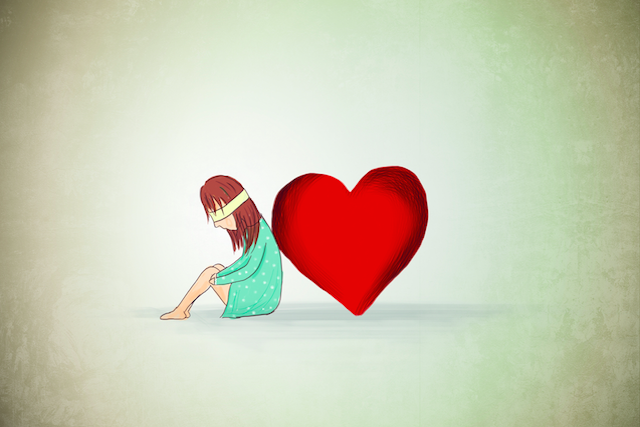
    Sad girl with heart

    “Forgiveness is just another name for freedom.” ~Byron Katie

    Aside from the fact that I was born on Groundhog Day, I didn’t know why I kept falling into the same relationship patterns, which inevitably led to heart-crushing breakups.

    I knew that I had a deep capacity to love, or so I thought, but it somehow wasn’t enough. I always ended up either feeling taken for granted or fighting desperately for my partner’s attention after the initial attraction phase wore off.

    I couldn’t help becoming someone else, someone I thought I needed to be in order to avoid being abandoned. This, of course, backfired, because it further lowered my self-esteem and caused me become even clingier and more neurotic.

    It was hard to not get down on myself for who I became in relationships. I didn’t know how to process the end of a relationship or how to separate what was my partner’s emotional stuff and what was mine, so I walked into the next relationship with accumulated anger, resentments, and taller walls around my heart.

    It was easier to blame the guy for being emotionally unavailable, withdrawn, selfish, and all the other names I called him. This went on for over a decade.

    Still, somehow my divorce was peaceful, and at times I even called my ex-husband in despair after a breakup, crying, “He doesn’t want me anymore.”

    He’d jokingly say, “Well, you shouldn’t have divorced me.”

    I knew what he meant. And I knew why I called him. It was the only relationship that didn’t blow up in my face at the end. I needed to see that I wasn’t a complete and utter mess and that I had something good to offer in a relationship, even if it didn’t last forever. We were able to remain friends who talked a few times a year.

    After my third heartbreak, I knew that something had to give. I became very depressed and lost hope for being able to have a happy relationship that didn’t end in divorce or a dramatic breakup.

    I kept asking the Universe, “Why am I not healing? What is wrong with me? Why do I end up falling in love with unavailable men and then clinging onto them for dear life?”

    I prayed all day, every day. My hope was eroding fast and my self-rejection was growing by leaps and bounds.

    The answer came in the form of one word: forgiveness.

    To be honest, I was not interested in forgiving anything or anyone. I wouldn’t even know where to begin or who to forgive. Instead, I just added more toxicity to my pain by letting resentments turn to hate. This gave me a false sense of power and the illusion of protection from further pain, disappointment, deception, and betrayal. I felt like I’d had enough of all of these.

    In my mind, forgiveness meant that I would die without receiving compensation for the ways I’d been wronged. That was just not okay.

    I sat on my throne of righteous indignation for a few more weeks. In the meantime, I was twisted up in knots over the guilt I felt from having hurt all my partners, which I didn’t know what to do with either.

    I wrote an email to my last boyfriend, which he didn’t respond to. That hurt even more. I got to feel what it’s like to not be forgiven for the mistakes you’ve made.

    Non-forgiveness may feel like power and protection, but it ends up becoming a lonely, self-made prison cell. At that point, I knew that I was creating more unhappiness and loneliness for myself.

    I finally gave in. Even though it took weeks for my ego to calm down and open to the idea of looking at who and what I needed to forgive, the thought alone started to make me feel lighter.

    Since my biggest pain revolved around men, I started with my father.

    In my last three relationships, I had relived the trauma I’d experienced with my dad.

    My father loved his younger sister more than any of us and was never shy about expressing it. As a little girl, I watched my father adore my aunt in ways I longed to be adored by him. She was a grown woman, only eight years younger than him, but he treated her like his beloved little girl he would bend over backward to please.

    What I got was mostly scolding, angry, disapproving eyes from him. I knew that he was capable of offering love to someone, but that someone was not me. My aunt had already filled that spot before I was born (not her fault) and there was nothing I could do to be daddy’s little girl.

    I felt helpless. He was the only father I had, and I was too young to seek other solutions.

    Of course, the men I fell in love with played this part really well: They all had a former lover they couldn’t get over, they had a wandering eye that left me feeling as if I weren’t enough for them, or they were burned out from showering their former partners with adoration and getting hurt in the end.

    They were wounded by those partners (and possibly their own mothers), so they either didn’t know how to connect intimately with a woman and commit to her, or they were too burned to risk going there again. Regardless, I was getting the short end of the stick despite how much I loved them.

    As I wrote my story, I started seeing the threads. I prayed for this pattern to be healed and lifted up from my consciousness, burned the pages along with it, and let go of the outcome.

    I waited for the process to start working and watched for signs. Nothing seemed different for a while. I was still grieving and feeling remorse for my own mistakes.

    Then I realized that I had to process my “love story” from the vantage point of my former lovers and forgive myself as well. The other side of the non-forgiveness medal was guilt. Both were toxic and blocks to my happiness.

    So I wrote about my mistakes and again asked the Universe to give me a clean slate. At this point, knowing that there was nothing I could do, I put all my focus on caring for myself and making plans to achieve my goals. I wasn’t in charge of the Universe and couldn’t dictate when the healing was supposed to come.

    A few days later my last partner called and said that he wanted to have a heart-to-heart conversation with me. I didn’t know whether he wanted to yell at me or talk about patching things up, but I agreed to meet. I had nothing to lose.

    I called a good friend and told him what had happened and all about my forgiveness process. As I was telling him the story, it felt as if the person who was talking was not me. My words were softer; there wasn’t a trace of anger or blame left in them.

    I heard myself say, “It’s no one’s fault, you know. We are all trying to find healing. Even my father. He didn’t know how to be with his daughter. His relationship with my aunt was safe. For some reason it was in the cards for me to experience that neglect so I could use it for something greater.”

    In that moment I felt my heart open. I saw the walls around my heart melt away in my mind’s eye. He was quiet for the longest minute. Then he said, “Banu, this is the most loving thing I have ever heard you say. I am speechless.”

    I can’t explain what a miracle is, but I now know they exist.

    My former partner and I had our talk, and I was able to hear his side without getting defensive or attacking back. I was no longer looking at him and seeing my dad. I could just see Jim as Jim, as the man I love and as someone whose healing I could contribute to by giving him the gift of seeing who he truly is.

    After our talk, as we started spending time together, I found myself actually seeing him for the first time. He was freed from the role he had to play for me in order to get to this place of forgiveness. He was free to be himself.

    The future of us? Who knows? We decided to take it one day at a time and rebuild trust. I no longer feel the need to make him do or be anything.

    My heart is at peace knowing that I now have something more to offer in a relationship than my projections and resentments from the past, which have nothing to do with the person I am relating to. I have to tell you, I feel like a new person.

    Your pain served a purpose and brought you to this place where you can also recognize your own patterns, if you’re willing to look for them. In a way, those unhealthy relationships were gifts because they provided clues as to what needs healing in your life. So give forgiveness a chance. That is the only way to wipe your slate clean.

    Recognize that we are all perfectly imperfect—we’re all working through our own patterns and trying to heal our pain—and that forgiveness is the biggest gift you can give yourself and anyone. I hope that you can have this. You are worth it.

    Sad girl with heart image via Shutterstock

  • 9 Things to Tell Yourself When You’re Afraid to End a Relationship

    9 Things to Tell Yourself When You’re Afraid to End a Relationship

    “F-E-A-R has two meanings: ‘Forget Everything And Run’ or ‘Face Everything And Rise.’ The choice is yours.” ~Zig Ziglar

    No matter how old I get, no matter how experienced I become, ending a relationship is agonizing.

    It represents a loss, and losses hurt.

    Deep down, I know if I go through with it, I’ll feel freer—well, not right away, but in a little while anyway—but I’d rather crawl under a rock and ignore the whole thing.

    When I was a teen, I went out with a guy who had a major crush on me, although I wasn’t attracted to him. After four months I wanted out, so I completely disappeared! I ignored all of his phone calls, and that was the end of it.

    Another time, I hoped that my boyfriend would cheat on me and get caught so I could find a good enough reason to end things, which eventually happened. And in my twenties, since I lived with my boyfriends, I would just keep quiet, letting things drag on. Cowardly thing to do, huh? Yeah, I know.

    Later, I realized that I disliked conflict. I was afraid of it. I was afraid of the disappointment it would cause in them and in myself. And most of all, I was afraid of failure.

    Today, I’m no breakup wizard. Trust me. It’ll always be hard. But with time, I developed a few thoughts to give me strength to truly voice my unhappiness in my relationships, and they should help you too.

    1. One day these painful moments will be a distant memory.

    Think about your past relationships—the one you had fifteen years ago, the one you had ten years ago, or the one you had five years ago. They aren’t your current reality.

    Whatever current reality you’re living in will also become a memory five, ten, or fifteen years down the road. Thinking this way helped me lessen the importance of constantly keeping them in my mind.

    2. We’ll both be thankful I took action instead of regretful I didn’t.

    When I projected myself into the future without the other person, I imagined an alternate life where both of us were with the right person. I imagined us being happy. And then I’d think: How could we hate each other for meeting the real loves of our lives?

    Of course in the present moment, we’d be regretful, but in a different time of our lives, we surely would be thankful that someone decided to end things so we could be happier. Why not let that someone be you?

    3. Losing someone who makes me unhappy is actually not a loss; it’s a gain.

    Losing someone might make you feel like a loser. But if you think of the action of losing someone who makes you unhappy and wonder what it would feel like, it changes your perspective on things.

    When I did this, I felt strong. Because I then had the willingness to move, correct, and change the course of my life.

    And that’s an achievement in itself. Getting away from someone who brings you torment is the biggest relief. It makes you regain your freedom, your energy, and your life.

    4. Maybe we were meant to cross paths with each other, not meant to walk our paths together.

    Don Miguel Ruiz, the author of The Four Agreements, teaches us that we’re all messengers. We receive messages, or teachings, from people all around us.

    And we receive them at certain moments in our lives. Just as teachers came and went in school, other people will also come and go as life, or the school of life, goes on.

    And if you have nothing else to learn from someone, it’s simply time to take the other person’s lessons gratefully and continue to walk your path.

    5. A relationship is a chapter in my life, not my life’s entire story.

    Imagine being the author of your own adventure book. Picture yourself reading it and finishing a chapter. Then ask yourself: What will happen in the next chapter?

    And since you’re the writer of your own book, you can add as many chapters as you want. This approach really helped me get excited for my next adventure—which I admit, might be a little scary too.

    6. The moments we shared aren’t destroyed; they’re my opportunity to grow.

    We always think that when we break up, we kill everything else that was created from it. You can learn so many things about yourself from your previous relationships. In my case, I learned to be more present, more attentive, and more thoughtful. I learned that I had to give myself emotionally if I wanted to have a stronger relationship.

    Meditating on your past relationships makes you grow, and learning from them improves future relationships.

    7. A relationship isn’t real if I’m not real with myself.

    A relationship is about true communication and intimacy. Whenever you’re not honest with yourself, whenever you’re not true to your feelings, you can’t strengthen your bond with your loved one.

    Having an honest relationship with yourself might be difficult, but it’s critical.

    8. Leaving will hurt, but staying will hurt even more.

    If you can’t stop thinking that you’d destroy your loved one if you left, think about how you’d destroy yourself if you stayed. Bring the focus back to yourself and picture yourself in a distant future being in this exact situation. Do you like what you see?

    This vision made me see a dark portrait of my life. So I understood that I should only worry about how I feel about myself in the present and that I needed to stop worrying about others so much.

    9. I can break free because I trust myself.

    You possess a profound inner voice—an all-encompassing, nurturing, and loving voice. Its purpose isn’t to bring you down, but to elevate you and make you accomplish things that are so great and unimaginable that you can feel gratified beyond belief.

    Your inner voice will never lie to you. It will always express your deepest truth and guide you with the most precise discernment of what will serve your highest good—even if that means getting out of your comfort zone and taking risks.

    It has never let me down, and it won’t let you down either.

    Find the Courage to Break Free

    Sure, it takes courage to break the news to your soon-to-be-ex that you no longer want to go on. I can attest that you’ll doubt yourself. I can attest that you’ll procrastinate. I can attest that you’ll over-think things, wondering if you’ll make a horrible mistake.

    But you’ll feel invigorated once you free your mind and use your intuition as your guide. Know that:

    You are able.

    You are amazing.

    You are strong.

    And you deserve happiness. Whenever you feel stuck and unable to break free, bring up one of the above thoughts to give you strength.

    Then imagine your new course, as if you were walking on air.

  • Accepting, Feeling, and Releasing Painful Emotions

    Accepting, Feeling, and Releasing Painful Emotions

    “Eventually you will come to realize that love heals everything, and love is all there is.” ~Gary Zukav

    Last year I developed some unexplained symptoms that could be likened to IBS, Chron’s disease, or even morning sickness (although I wasn’t pregnant, so there was no promise of a baby to make it all worth it).

    I had no idea what caused it, why it was there, or what to do about it.

    This shook me because I’d always had a strong intuitive connection with my body and I had always been healthy, but now when I asked my body a question, there was just silence.

    It was as if a thick fog had parked right between my inner wisdom and me, blocking my channel of intuitive guidance about what to eat, what to avoid, and what was really going on underneath it all. It was so quiet—there weren’t even any crickets!

    With my intuition evading me, I was stuck in the surface level “real” world to manage it. I was dealing with debilitating symptoms every day that were, bit by bit, wearing down my strength and self-control, until one day I crumbled in a heap.

    I had decided to practice what I preach and do something nourishing, despite how terrible I felt. So I got my yoga mat with the intention of pushing through my discomfort to do something that would probably make me feel better. As soon as I felt that mat underneath my feet, I felt safe, I felt nurtured, I felt held.

    I had entered a place where I could go deep and be real. I wasn’t expecting my yoga mat to hold me like the compassionate embrace of a lifelong friend, but that’s exactly what it did, and I surrendered to it.

    Once the flow of tears began, there was no way I could stop it. The pain of the everyday struggle, the expectations I had of myself as a mother, the disappointment I felt from not being capable of living my life to the fullest, and the resentment I had toward “everyone else,” who could eat what they wanted without suffering the way that I was… it all came out.

    And underneath it was frustration, then anger, then self-hatred, then rage, then emptiness, silence, and peace.

    I didn’t have any revelations as to what this was all about or how to fix it, but I simply allowed myself to release everything that had been building up inside of me. And just when I thought the tears were done, more would flow. I screamed, I pounded the mat, and I breathed deeply until only peace remained.

    Here’s what I took away from that experience.

    1. Trust is essential.

    Because my intuition went quiet, I stopped trusting myself. I had forgotten that my body was communicating with me in the only way that it could. I didn’t think to look for the lesson or meaning in it all.

    Once I had released all my tears and pain, my sense of self-trust returned and I was able to bring myself back to a space of gratitude and openness.

    Trusting that there is something to gain from your experience will help you to remain open to it rather than feeling bad about it.

    2. It’s okay to cry.

    Crying is not a sign of weakness but rather a sign of strength, self-respect, and love.

    You need to honor your urges to cry. Not only does it clear and release anything that you’ve been holding in, crying also connects you with the present and allows you to be your most authentic self, even if you’re alone like I was.

    3. Self-compassion is a game-changer.

    Once I let out all of the self-hatred that I had been holding onto, I made space for self-compassion.

    I spoke lovingly to myself, I acknowledged the challenges that I had been facing, and I offered myself the nurturing and love that I had previously been searching for outside of myself.

    Being your own friend is a powerful skill that can keep you strong and grounded in the face of adversity.

    4. There’s no need to fear what’s inside of you.

    It might seem dark and terrifying when you look at what you’re hiding inside of you, but there is not a single part of you that won’t benefit from being loved, accepted, and respected.

    Shed some light onto the darkness; give each part of you a voice to express its needs, its pain, and its story. Once you realize that your inner demons cannot hurt you, you take away the power they once held over you and can start loving yourself unconditionally.

    5. We all need a sacred space to be vulnerable.

    We all need a space where we can explore, accept, heal, and (learn to) love ourselves.

    For me it was the yoga mat, but for you it may be your meditation cushion, your local park or beach, or even in your bed.

    Find or create a loving and unconditional space where you can be raw, honest, and vulnerable. Visit it whenever you get a sense that something within is ready to shift and release.

    Surrender into the strong support of your sacred space, and remember that it’s safe to let your feelings flow. It may even be the best thing for you.

  • Releasing Painful Memories to Live More Fully in the Present

    Releasing Painful Memories to Live More Fully in the Present

    Zen Man

    “The primary cause of unhappiness is never the situation but thought about it. Be aware of the thoughts you are thinking.” ~Eckhart Tolle

    For thirteen years I’ve lived a high-risk lifestyle that focuses very much on the here and now, because I’m an entrepreneur, and that means making lots of fast decisions that affect the future.

    It took a while for me to develop confidence in myself, as we tend to doubt ourselves much more than other people might doubt us. Our thoughts form our doubts, so I knew I had to do something to move forward from the thoughts that weren’t serving me.

    I identified that many of these thoughts weren’t even my own. They were instilled into me through society, parenting, environment, and the media.

    In fact, until I left my last job, my life was one big predetermined path of ideas, set up by everyone else but myself.

    Becoming aware of a problem is always the first step toward healing. Now that I entered into the realm of self-awareness, I realized that new thoughts were rapidly reconfiguring my past experiences to teach me new lessons.

    As I dove into the rabbit hole and asked myself some tough questions, rather than getting clarity on my thoughts, I got more confused. There was just so much information around me, largely due to the Internet, that I had no way of getting to the important life lessons I knew were within me.

    All this extra information became chaotic and useless until I could make sense and organize it in my mind. So, I took to journaling to begin this process of managing my thoughts, and in this process I learned some valuable ideas that have helped me to form the basis of the three tips below.

    A major moment of clarity happened through writing when I learned that our thoughts and memories are never the truth; they are just our interpretation of them. Our own interpretations of reality are open to debate because, ultimately, our perceptions are not the truth.

    Mind Blown

    That single idea that my truth was open to debate led me to question everything, and when I questioned all the painful memories from the past that were there haunting me, I knew I was onto something.

    Those past memories act like a rubber band pulling tighter on unresolved thoughts as time goes by. By letting go of all those memories, the tension on that band is released, and that means you can be more present.

    Living in the present has allowed me to love my family more, to pick and choose the right friends to have in my life, and to look forward into the future.

    I’d like to share three things I learned that have helped me let go of painful memories and become more present.

    Change the meaning you’ve given to painful memories.

    I’ve mentioned that thoughts are never really purged from your mind; they are just suppressed or pushed down into the unconscious mind.

    The trouble is that, although you might not be actively thinking about them, the meaning you have ascribed to them will linger in your unconscious mind and serve to move you in a particular direction. (The movie Inception handles this concept beautifully.)

    As a child, my parents used to “teach me a lesson” a lot. I wasn’t particularly naughty but my parents, coming from a strict Chinese upbringing, brought that style of parenting with them to the UK when they immigrated.

    A lot of the painful memories I had as a kid taught me to hate them because I did not understand why they would be so mean to me. Different cultures teach in different ways, just as differently educated people teach in different ways.

    Here I was, being brought up in a very conservative country with British ideals fighting with Eastern culture on thoughts about how to teach values to children. I spent a lot of years not understanding why they were the way they were, until I discovered psychology and NLP in my later years.

    I took many courses to understand human communication and subsequently learned about changing past memories. That’s when I looked back and slowly began to unravel the reasons why they behaved in such a way. I changed my perception of these painful memories.

    You see, they were doing the best they could with the physical and mental resources they had available to them. They did a good job really, but it took revaluating those thoughts to realize this. Inevitably, my respect for them only grew, as more understanding meant more compassion.

    You have to deal with these painful past memories and ascribe new meaning to them in order to move on. Talk to someone about it or spend some time contemplating it for yourself, but never leave it alone to gestate, as this will not serve you.

    Documenting your thoughts provides clarity.

    However you choose to document your thoughts and ideas, make sure you don’t just meditate on them. Although I am a fan of meditation, I do think that getting the thought out of your head and onto paper/audio/video (whatever you works for you) allows you to detach from that painful memory and look at it more constructively.

    Our emotions often cloud our judgment in the heat of the moment, so you’re likely to record past experiences that were charged full of negative emotion with a strong untruthful bias in your mind.

    The documentation process helps to separate the facts from the emotion and allows you to reflect on that past thought more accurately.

    I also learned that all our senses help make up our memories, and when we write in a diary we are only making use of two of those senses. But with a video diary I was making use of four of those senses. It just accelerated the whole learning process.

    There is always a positive lesson to learn from every memory.

    No matter how terrible one’s past experiences might have been, there is always something positive we can learn from those memories. In the worst cases, our emotions get in the way of the lesson, but often if we can detach from the experience and look again, we can find it.

    My sister was a right little spy when we were growing up. She would always be telling mother about the bad things I did, and I hated her for it.

    I felt like she was betraying me, possibly just to get more attention from our parents, and this was the beginning of a difficult relationship that would grow between us. We hardly talk now, and she would never offer up information about her life willingly.

    Only recently did I learn that perhaps I was responsible for this. I realize that I wasn’t a sharer as a child, and maybe this was her way of trying to get me to share. Learning this, I decided to change the way we communicate. I now share a lot of information about my life with her when we do chat, and I’ve noticed slowly that she is also doing the same.

    This relationship might take a while to repair, but that positive lesson from the past has meant that we can begin to take small steps forward now in developing a new sibling relationship.

    By being a fly on the wall of your past experiences, you can look objectively at the situation and figure out what you can gain from it.

    An Ongoing Promise

    The thing about living in the present is that it quickly becomes the past. As evolving human beings we learn new things and experience new thoughts all the time, and that means there’s always an opportunity for painful memories to occur.

    It’s not possible to live sheltered from pain, which is why we need to commit to reflection and learning so we won’t be held back by our negative experiences.

    It’s a promise we must all make for ourselves: to learn, reflect, and be present.

    Meditating man image via Shutterstock

  • How Painful Relationships Can Be The Best Teachers

    How Painful Relationships Can Be The Best Teachers

    “Sometimes the wrong choices bring us to the right places.” ~Unknown

    “This is it,” I thought. I finally found the man I had been waiting for.

    Of course, it had taken me thirty-nine years and a painful divorce from my husband of ten years. But that was all worth it, I told myself, because it had led me to the man who seemed to see, understand, and love me the way I had always hoped someone would.

    Things were blissful in beginning. We made breakfasts together, took romantic vacations to exotic locations, we fantasized about buying vacation houses. Our developing story read like a fairy tale.

    But this fairy tale did not have a happy ending. The once-sweet Prince Charming eventually became cold, distant, and abusive—a man in constant pursuit of new “shiny objects” to distract him from the remnants of his troubled past.

    I was that shiny object…until I wasn’t shiny anymore.

    The clock struck midnight, and I was left with a broken heart.

    There was a firestorm of mixed emotions after the breakup: betrayal, rage, sadness, and disappointment. I wanted someone to wake me up and tell me it was all just a bad dream. I wanted Prince Charming to return so I could feel those loving feelings again!

    I spent countless hours mentally rehashing the details of the story, torturing myself, trying to see precisely why things went wrong.

    This fruitless nonsense only made me angrier and sadder. Then, one day, amidst the noise of the fruitless nonsense, I heard a gentler voice inside me whisper, “Be patient. The most painful relationships can be the best teachers.”

    After I heard that voice, I began to let myself consider that, just maybe, this heinous experience was serving a benevolent purpose I had yet to discover. And that’s when the learning began.

    I recognized that I had been so willing to make someone else the focal point of my life because, deep down, outside of a romantic relationship, I had no idea who I was, let alone how to love myself.

    I had spent so much time after the breakup focusing on my ex-boyfriend’s shortcomings because I was not ready to see that, in some ways, I was just like him.

    I spent the majority of my adult life bouncing from one relationship to another because I told myself that “happiness” was just around the corner; all I needed was the right partner.

    The pursuit of Mr. Right kept me at a safe distance from pain I spent a lifetime avoiding: the acrimonious divorce of my parents at age thirteen and subsequent abandonment by a mother, who left an emotionally unavailable father to raise my sister and me.

    It turns out that betrayal, rage, sadness, and disappointment were actually remnants of my own past; feelings I thought romantic love would magically erase.

    The harder we work to escape unwanted parts of ourselves, the greater the likelihood we will choose relationships that help us find these unwanted parts.

    I thought a relationship with Prince Charming meant I would never have to feel the pain of grief, but what I really needed was to learn how to welcome grief. The feelings associated with grief are our body’s way of inviting us to honor and grow from loss.

    When I decided to stop running away from my feelings, it didn’t take long to discover that avoiding psychic pain is like running in front of an avalanche: When we stop running, all of the once-forbidden feelings cascade over us with such a great force, it can feel as if we will be crushed by their weight.

    At first, it felt like I was dying. I cried with such intensity and regularity that I began to refer to these daily crying spells as “taking out the trash.” The only problem was, there was so much trash that I feared this chore would never be finished.

    I attended weekly therapy sessions, furiously wrote in my journal, and confided in trustworthy friends.

    Through this, I slowly (and I mean slowly) started to see that the life I once thought of as empty was actually quite full. I had my health, two healthy children, a successful therapy practice, the ability to play and sing music, and a village of supportive friends.

    I was so busy searching for happiness outside of myself that I couldn’t see that the makings of happiness were already there, waiting for my own recognition.

    Looking back, what initially felt like a death was actually a rebirth. All of my feelings, even the ones I feared were too destructive, deserve to be acknowledged and felt.

    When we welcome our feelings into awareness, we are taking the first brave step toward accepting all of who we are. This acceptance is the beginning of unconditional self-love.

    Working through grief eventually yielded a life of creativity and abundance that my once fearful heart never knew was possible!

    Bonds with old friends became stronger, I started writing more, and I began to discover activities and interests, both new and old, that brought me joy. Eighteen months after the breakup, I noticed I wasn’t just surviving each day any more; I was actually living a pretty decent life—by myself.

    None of this would have been possible had it not been for the blistering heartache of betrayal and loss.

    So, if you are in the shadowy aftermath of loss and it feels as if you are dying, perhaps you are really in the process of being reborn. It is your own inner wisdom that has led you to where you are, so trust it.

    Though you may feel awful now, remember this is how you feel, it is not who you are. Feelings are temporary energy states that, when given permission to exist, like the weather, move in and out of our conscious field.

    There is no point in fighting your feelings because they will only scream louder until you hear them. Why make them work that hard?

    As you progress through your own journey, gently remind yourself that everything you seek, you already have. You may feel broken right now, and that’s okay. It is important to remember that all of the pieces are there, waiting to be put back together in the form of a stronger, wiser you.

    You might stumble along the path, and that is also okay. Life isn’t like the Olympics—we don’t have to perfect the routine or stick the landing—we just have to keep showing up, trying our best every day to travel our own path at our own pace.

    So, I invite you to ask yourself, “How could this pain be an invitation to grow?” If you are patient and listen closely, the answer will find you. It might be slow and subtle at first, but it will come.

  • The Power of Silence: How to Free Yourself from Painful Thoughts

    The Power of Silence: How to Free Yourself from Painful Thoughts

    “Within you there is a stillness and a sanctuary to which you can retreat at anytime and be yourself.” ~Hermann Hesse

    As a child, I hated when someone told me to sit still and be quiet, and rightly so. I was young and full of energy; every minute of being still and silent was a minute of missing out on this magnificent life.

    Then, as I grew older and entered into teenage and young adult years, it grew into a fear with a capital “F” of being still and silent; for as soon as I was quiet and still, the noise in my head got increasingly louder and more powerful.

    If the chatters of my head were beautiful, joyful, and empowering, that would have been uplifting. But they were voices of judgment, negativity, and self-loathing, nothing else.

    To me, those chatters, voices, and thoughts were me. My head would chatter day and night, even in my sleep. Noise, heaviness, thinking, and more thinking, sometimes my head felt like it was about to explode.

    I wasn’t even aware I was thinking. I was just on autopilot. I would act and react and get triggered into waves of emotions and feelings, which churned into more turbulence, heaviness, and weariness.

    Everything became dysfunctional because I couldn’t interact effectively with people or life. My whole reality, both inside and outside, was warped.

    I was a paranoid, fearful, self-loathing, neurotic human being, so my life and world were full of fear, anger, and depression. Life was an endless battle, as everyone and everything was always against me.

    I got to the point of total exhaustion. I eventually lost all coherence and overdosed on pharmaceutical codeine painkillers, just so I could have peace, silence, and rest. I was totally depleted, and I felt I had lost my battle with life.

    Lying in the hospital, slipping in and out of consciousness, I deprived someone else who was probably critically injured and in need of the bed. But I had a moment of peace and silence because I left my body and head.

    As I stood and looked at my weary body and still very heavy head, I was in the silence. At that moment, the question arose, “If I can see and look at the ‘me’ lying on the bed, then I must not be ‘me,’ so who am I?”

    Of course, I never spoke about this or they would have said I was having hallucinations and sent me straight to the loony bin.

    Amazingly, I survived and took off far away where I couldn’t be found, nor forced to take medication. It was inevitable; I had started on the quest. I had to find that silence again, for it was real.

    What was that silence and stillness that I glimpsed? I knew from that day on there was something more. Over the course of the following years, I rediscovered and nourished that silence, and it grew to be my anchor, healer, and guide. Here’s what I learned.

    Nature’s core is silence.

    Make time for yourself every day to connect in some way with nature. Walk barefoot on the grass, swim in the ocean, watch the sunset, stroke an animal, or even weed the garden. Submerge yourself in nature, and you will experience silent, unconditional, utter bliss and peace from your core.

    Every time I’m in nature, I find that time literally stops and thoughts quiet. All that’s left is the beautiful sounds of birds chirping, water trickling, winds howling, and all the gaps of nature’s silence in between.

    Feed and grow that silence.

    Reading spiritual books or articles, listening to enlightened masters, practicing yoga or qigong, listening to music that you resonate with, dancing and moving your body will feed and nourish your silent core within.

    Meditation is the ultimate channel and food for inner silence. However, unlike nature, which is effortless silence, meditation may be slightly more challenging. Sitting or lying there unmoving and in quietude, the brain may seem anything but silent or still.

    I used to find that whenever there was drama in my life, my brain would get louder. The thoughts were more controlling and dominating, the emotions more intense, and my energy zapped. It was almost like my thinking brain was sucking up all the energy from my entire body.

    But I continued to feed and grow that silence by persisting and holding in quiet meditation, or nourishing it through active meditative activities that anchored it.

    Trust the silence.

    Even if the silence was minuscule, I always chose to stay in it. The less attention I paid to the thinking mind, the softer and dimmer the thoughts became, and the more the silence and stillness grew.

    Instead of resisting or fearing your thoughts, simply be aware. Allow them to be, but don’t attach to them. You have a body that feels and a brain that thinks. They are a part of you, but they are not you.

    In silence, you become aware that you have the freedom and power to choose the types of thoughts you wish to entertain and empower, and the thoughts you wish to ignore and diffuse.

    Silence and stillness came hand in hand. Together, they were my best friends. I loved my early mornings and nights just before bed, for when I shut my lids in meditation I disappeared into the void of peace, stillness, and silence, my essence.

    Silence and stillness are teachers.

    In silence, my head was lighter and clarity emerged on its own accord. Unfathomable strength revealed itself, which helped me let go of my painful past, forgive those who had hurt me, release pent-up emotions, and unfold into compassion and my true nature of unconditional love. Through the healing, my silence is now infused with deep wisdom.

    Sometimes, like myself, you may find yourself careless and allow this connection with your silence to lapse. Perhaps your excuse might be, “No time, too hard, later, tomorrow, next week, after I finish this project, after I solve that issue. Life’s too good right now, I’m fine so I don’t need it.” Then bang!

    A big wave inevitably comes along, catches you off guard, and dumps you straight into the mouth of the controlling mind again. The silence may shrink and disappear. That’s only human.

    Hold yourself in the space of compassion and return to the voice in the heart. That will lead you back into silence and stillness. The voice in my heart is the silent voice, no words, simply a knowing.

    The more I listen and follow, the stronger it becomes. It has about it an air of strength, love, wisdom, and joy. It works magic, it leads me to meet people I am meant to meet, go to places I am meant to go, and do things I am meant to do.

    With devotion and commitment, the work of maintaining and sustaining your silence will naturally become a joyful routine and not a chore.

    There will also come a day when there is only silence and stillness, and that is all. All else arises out of that silence. And flow emerges. The result: Reverence, unconditional peace and love, and infinite possibilities.

    What does this mean? You transcend your limited physical reality, know the true bigger picture, and now integrate your wisdom and truth into manifesting your soul purpose in life.

  • Why Bad Things Happen to Good People: How Is This Supporting You?

    Why Bad Things Happen to Good People: How Is This Supporting You?

    Mourning Woman

    “This being human is a guest house. Every morning a new arrival… Be grateful for whatever comes. Because each has been sent
 as a guide from beyond.” ~Rumi

    Yesterday my boyfriend’s father told me that he doesn’t believe that everything happens for a reason. He explained, “Where I can’t get on board is, if that’s true, then why do bad things happen to good people?”

    It touches close to home for their entire family because not only does one of their sons’ girlfriends have a rare and terminal form of cancer, she met their son because he successfully removed a melanoma (a fast acting, lethal cancer).

    His girlfriend is in her late twenties, and she’s one of the sweetest young women I know. While she beat it into remission last year, it’s just come back. She’s living with constant fatigue, a broken rib that won’t heal, and the harsh reality is that she could die.

    His father and I began to connect over this age-old conundrum: Why do “bad” things happen to anyone—especially the kind-hearted, ourselves, or the ones we love?

    Hundreds of thousands of years of religion, philosophy, and artistic expression have sought to grasp: why are we truly here and why is there suffering?

    Certain chapters of my own life have seemed ruthless or even tragic as they were happening.

    As a child, I was often disappointed by my father, a person in my life who I loved dearly and who disappeared on my birthdays and holidays. sometimes without so much as a call.

    As a young adult, I learned that he battled his own demons with drugs, alcohol, and a traumatic past, which helped comfort me for why he wasn’t around when I was a child, but it broke my heart in a different way. I have often asked myself, “Why is there so much pain in the world?”

    Asking this question led me to realize it was more about my own pain within. My suffering drove me to search for happiness and freedom within myself. In fact, it’s been through the most challenging and darkest experiences that I’ve cultivated the greatest connection with the light of my heart.

    Have you ever heard how when someone has a near-death experience, they begin to realize what’s truly important to them in their lives? It’s said they often begin spending time with the ones they love, and ticking off items from their bucket list to do what they love.

    A really dark experience can be like a metaphorical near-death experience. Through the most painful life circumstances, I’ve discovered what’s most important to me.

    I’ve realized what’s most important for me is feeling free to do what I love, write, speak what is true from my heart, and cultivate a deep connection with love inside and outside myself.

    With love as my intention, I’ve overcome circumstantial challenges to realize that connection, authenticity, and freedom doesn’t depend on what happens in your life as much as how you respond to what happens.

    But how do you overcome challenging life-circumstances rather than falling victim to them?

    The question I ask myself in times of resistance is:

    “How is this supporting me?”

    Not everyone believes that certain things are “meant to be,” but opening yourself to how a negatively perceived experience could be supporting you is a powerful way to stop resisting what is and create space for acceptance.

    When you fall into a state of acceptance, you naturally connect with your being-ness: the now.

    When you are truly in the now, this present moment, is there ever anything actually wrong?

    Rumi must have known this about non-resistance, as his words remind the world to embrace everything that happens as a gift, a gift to support you.

    If you want an end to pain, resist nothing you feel in the present moment. When you open your heart to feeling, rather than responding with “why” or “why me?” you have a great opportunity to transform your circumstances into your destiny.

    Difficulty and challenge aren’t inherently bad. The difficulty of running that marathon, working to chase your dreams, or overcoming challenges—including the failures and disappointments—aren’t they part of the stuff that makes our lives meaningful?

    While it may be easier to say this about marathons and dreams than to say it to the little girl who felt more and more betrayed by life with each birthday missed by a father who seemed to cause a hole in her heart, or to the young woman who perceives to be losing her dreams because of a debilitating illness, it doesn’t mean there isn’t a purpose in what is being experienced.

    It’s not for me to understand why she is facing this twist in her life story, or what’s true about circumstances that have touched the lives of your family, friends, or those who you feel connected with during tragedies that may hit another part of the world.

    I can only say that by embracing every emotion caused by my own life stories, every perceived tragedy, and asking life with an open heart, “How is this supporting me?” I’ve reached acceptance and neutralized my own judgments time and time again.

    I have spent a lot of time reminding myself, “This is how I’ve asked it to be, so what is it trying to teach me?”

    Sometimes the answer was just to feel helpless, to let go of control, cultivate patience, know a deeper compassion, or just realize that no matter what, I love my father, despite the role that he has played in my life.

    I love life, despite the challenges I face.

    I’ve learned to keep my heart open to feel. And now I’m not so afraid of feeling. It is through feeling the depth of all my pain that I’ve created more space for love—and now I just feel more alive.

    So why do “bad” things happen to “good” people?

    When you stop resisting, start feeling, and ask how life is supporting you, you get out of your own way. This is what it means to surrender. And from seeing life that way, bad things stop happening; or rather, it’s not that “bad” things stop happening, you just stop seeing them as such.

    For example, if I hadn’t experienced so much pain and suffering in my life, I would have never gone on a journey to connect with my heart at such a deep level.

    How can I label pain and suffering as “bad” after realizing it’s what has supported me to expand, to experience more intimacy and love, and become more authentic? True acceptance subtly transforms “bad” into “meant to be” and slowly life naturally becomes less painful and more fun.

    The truth is, life doesn’t always give you what you think you want; life gives you what’s perfect. But perfection only becomes your experience depending on how you choose to respond to what happens.

    Did Nelson Mandela stop believing in a vision of freedom in jail? No. Do you think Mandela would have felt free stifling what he felt so strongly on the inside even if it kept him outside of jail? In fact, do you feel it’s possible Mandela felt freer even within the confines of that prison cell? Why would that be true? Because he was free in his heart.

    He transformed his circumstances into his destiny, and he transformed the world. He was just a man; he is no different from you or me. He chose to transform his circumstances into his destiny.

    Freedom and happiness have nothing to do with your circumstances, and everything to do with your level of connection with the truth that you feel in your soul and express to the world.

    As my boyfriends’ father and I sat there, he said in an afterthought, “I suppose if that kind of disease happened to me, I would just do my best to stand up as a living example to my children of how to face such an experience with ease and grace, so they would also know that it’s possible.”

    And isn’t that all anyone can do, face our own individual challenges with as much ease and grace to discover what we’re meant to do: be our selves, follow our destiny, and realize what’s truly important—love.

    For when you transform what happens “to you” into your life destiny, you become the change you wish to see in the world.

    Photo by Mitya Ku

  • Dealing with Painful Memories to Find Peace in the Present

    Dealing with Painful Memories to Find Peace in the Present

    Peaceful

    “The practice of forgiveness is our most important contribution to the healing of the world.” ~Marianne Williamson

    I awoke early one morning, the cries and pleas of my dreams slowly dissipating, and though I could no longer hear or see what was happening, it stayed with me as I drifted back to the real world. I knew this story; I had dreamed a memory, and the remains of it stayed with me in my body.

    Like a dark cloud it made me pull my knees into my chest, and it forced salty tears from my closed eyes.  I had dreamed of a day almost two years ago.

    I had dreamed of the day I was raped.

    I was fifteen, and though at first I consented, I revoked that consent, but it happened anyway. That was the dream I had awoken from. The cries were mine; that voice that was begging him to stop was mine. 

    It was like reliving it again, and again and again.

    Memory is a funny thing. Since that day I have gone to many therapy sessions, I have made many changes in my life, I have even come as far as being able to forgive him for what he did, and myself for the choices I’d made to put me in that situation, but the memory remains.

    When that emotion hits me, I feel like I did the day it happened. I revert back to the little girl I once was, and all of the progress I’ve made is somehow washed away with the tears.

    I awake and I don’t feel like I’m living in this body, in this world. I am stuck somehow somewhere else, in the foggy place of memory. And it’s very hard to get out. I feel like it was my fault, like I am not worthy of a good life. 

    I feel broken, and all I want is to be alone.

    I don’t always dream of him. The memories come and go, and I have learned ways to deal with it when the wall of emotion and trauma hits me. I have learned that sometimes it doesn’t get easier with time and that sometimes we have to succumb to the feelings we have in order to release them.  (more…)

  • Waking Up and Forgetting a Bad Day

    Waking Up and Forgetting a Bad Day

    “Life is inherently risky. There is only one big risk you should avoid at all costs, and that is the risk of doing nothing.” ~Denis Waitley

    Yesterday was a bad day.

    My husband and I got really close to buying a car before we walked away—again. This time it was because it was above our budget (with taxes), because the current owners didn’t have the title (their bank did), and because our own car broke down on the way to trying to buy the new car (didn’t see that one coming).

    I was fine about the ordeal yesterday, seeing the whole thing as one big adventure toward the right car in the end. But this morning I woke up angry and fearful. Angry about the time we’ve invested so far without results and fearful that another almost there deal might fall through again.

    After three days negotiating on the last fall-through deal, it felt like the failure of failures and just wanted to stay in bed so I could avoid more of them.

    Of course I knew rationally that my feelings didn’t reflect reality, that yesterday’s annoyances are small change in the scheme of things, and that I’m fortunate to be even looking for a (second) car let alone have so many choices for which one to buy.

    The real problem was that my feelings weren’t staying within the boundaries of the car-shopping situation. They were infecting how I felt about everything from my business to my past choices, to my body image, to my mental health image.

    I was flooded within minutes of being awake, and I didn’t know how I was going to coax my mental strength back from cowering in the corner.

    So I did what every procrastinating person does these days: I went on Facebook. And after seeing a bunch of uninteresting stuff, my eye caught on the most courageous thing I’ve seen in a long time: a picture of my five-year-old nephew Caleb leaving home for his very first day of school. (more…)

  • Living in the Now When It’s Stressful: 4 Mindfulness Tips

    Living in the Now When It’s Stressful: 4 Mindfulness Tips

    “If you worry about what might be, and wonder what might have been, you will ignore what is.” ~Unknown

    A few weeks ago, I learned that my beloved dog, Bella, had become ill with kidney disease—a condition that will most likely not allow her to live longer than a year. I was devastated when I heard this news.

    At only eight years old, Bella didn’t seem old enough to be so sick, let alone be a year (or less) away from dying. Coping with her condition and the impending loss has been incredibly difficult—nearly impossible at times—but amid all of the pain and anxiety, I’ve come to one powerful conclusion: Life is too unpredictable not to enjoy the moment.

    The number of moments I have left with Bella—or with anyone, for that matter—are unknown. For the past three years (ever since I launched my blog, Positively Present), I’ve tried to focus on living in the now, but nothing has made that goal clearer than Bella’s recent diagnosis. Realizing my time with her is limited makes every minute even more important.

    That being said, staying present is still a daily battle. In the throes of my constantly racing thoughts—How long will she live? Is she feeling okay? Why isn’t she eating? What does the vet’s tone really mean?—it’s been incredibly difficult to enjoy the time I have with Bella.

    And, unfortunately, more often than not I find myself living not in the moment, but in the future, worrying about what will become of Bella and my life without her.

    Worrying about the future has been severely hindering my ability to live fully in the present moment, which is what I need to do most in this limited time I have left with my precious pup.

    Knowing the importance of living in the moment is one thing; taking action is another. It can be challenging to live in the now when then now is tough, but I’ve discovered a few tactics and tips to help me stay focused on the moment—and enjoy every minute I have with Bella. (more…)