Tag: pace

  • Stay in the Right Lane: Let Yourself Slow Down and Enjoy Life

    Stay in the Right Lane: Let Yourself Slow Down and Enjoy Life

    “I don’t want to get to the end of my life and find that I lived just the length of it. I want to have lived the width of it as well.” ~Diane Ackerman

    Wow! My last weeks of my career. Though many days and weeks over the last thirty-four years have seemed to last forever, it truly is astonishing how fast time goes. And don’t we often try to make it go even faster?

    Our jobs are stressful. We are often under tight time constraints and deadlines. We have clients and associates who want and need things yesterday.

    We work in jobs we have very little control over. Add that to our daily responsibilities as parents, spouses, partners, friends, children to aging parents and—not to be forgotten—ourselves. It’s a lot.

    Maybe you are like me. When I was younger, I too often:

    • wanted to fast-forward to a new day, a new week, or a new season of life
    • wished time away
    • focused on that vacation that was months away
    • couldn’t wait until my kids were older
    • had my eye on that next job
    • sought to get through tough circumstances I was facing, or
    • desired to be where someone else was in life

    What did it cost me? Memories and opportunities. I don’t remember many details of when my kids were growing up because I was always thinking ahead. I was not in the moment.

    I missed opportunities to learn and grow because I was always focused on that next thing instead of learning what could help me in that next thing.

    I missed all the beauty this earth has to offer because I was driving too fast.

    It cost me time. I wished away something I can never get back. It cost me the fun of simply living life, my life.

    It has taken me sixty-five years on earth to figure out how to make every moment count. And, if I’m honest, it’s something I must work at every day.

    “Don’t focus on making each moment perfect, focus on the perfection each moment provides, be it a good one, or not so good one.” ~Jenna Kutcher

    Notice that I didn’t say “make every moment happy, productive, or memorable.” Just make it count. Be in it. Live it.

    There are many moments that aren’t happy. In fact, they can be downright sorrowful or exhausting. But, at the same time, they help shape you and enable you to grow.

    I missed many good moments in my life because I was too focused on making the ending happy or perfect to enjoy what was happening right before my eyes.

    A few years ago, my son and I met up with a good friend of mine. We started talking about our kids and what fun it was to go to all of their events when they were younger. I was pounding my chest by bragging about being at all of their events.

    My son, to his credit, challenged me. He said I was there physically, but I wasn’t really there. He told my friend I was always on my phone, or otherwise preoccupied. He was right. I was there but I can’t tell you about the goals they scored, the amazing moves they made, or the songs they sang. It was like a dagger went through my heart. But it was true.

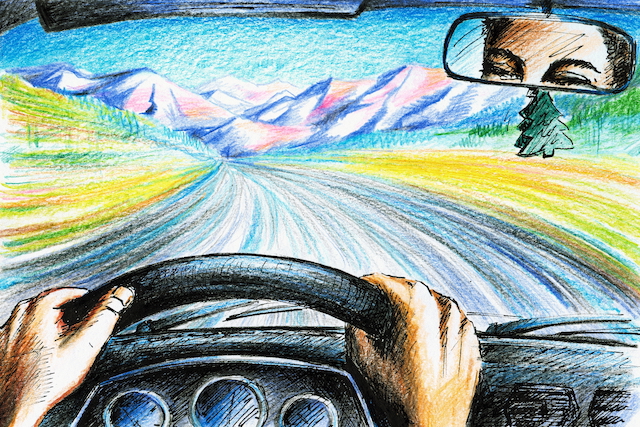
    My dear friend Doug told me a great way he is trying to live right now. He said, “stay in the right lane.” I love that. We often want to get somewhere fast, so we pull into the left lane and zoom past everything to get to the destination. 

    I did that most of my life, in all areas of my life. As I start to live in the right lane, I am having an easier time being more in the moment. I am being intentional.

    I start my day with a routine of praying, journaling, exercising, and setting my focus to not be on one or two things, but to be awed by the wonder of what I might encounter. I intentionally set aside days where I do not have a set schedule.

    As I am more in the moment, I am experiencing all sorts of beauty, joy, amazement, clarity, purposefulness, happiness, and opportunity.

    When you look at my photo library, you will see mostly pictures of bugs, birds, flowers, and trees from my walks. My mind has space to be creative and I am finding clarity on the things I want to do in this season of life, for me. My relationships are flourishing because I am actually there, truly experiencing another person.

    Being present has also allowed me to see myself for more of who I am. I have often said I never felt I was good enough. I felt I had to do more in order to be enough. Now that I have more clarity on who I am, I want to do more, because I am enough. I realize that no matter what I do from here on out, I am good enough. Because of who I am, not what I do.

    Many have asked what I will do in retirement. Like, retirement is the end, so how will you live to the end? I am looking at it more as a transition into the next leg of my journey.

    I am going to continue to live in the right lane, enjoy every moment, create and experience new moments, and focus on the journey itself, not the destination. I plan to live as Laurie Santos puts it, “be happy in my life, and with my life.”

    “The most dangerous risk of all…is the risk of spending your life not doing what you want, on the bet you can buy yourself the freedom to do it later.” ~Randy Komisar

    So how do you do that? It isn’t always easy.

    Have good self-awareness (know yourself and trust yourself). Be intentional. Make time for the people and things that matter. Make the time to think about what you really want in life.

    And slow yourself down.
  • Pacing Yourself When You Want the Pain to Stop

    Pacing Yourself When You Want the Pain to Stop

    Pace Yourself

    “The intensity of the pain depends on the degree of resistance to the present moment.” ~Eckhart Tolle

    I was in pain.

    My legs hurt, I felt nauseated, my heart thumped hard and fast, and I labored for every breath.

    I was halfway up a steep, three-mile hill, and I was so exhausted I could barely keep my bike upright.

    My mind tried desperately to solve this problem: “Should I stop? I should stop. No! I’ve done this hill in the past without stopping—what’s the problem this time? I hate this! Why is this so painful?”

    I glanced over at my riding buddy, Keila. She was pedaling slowly and methodically. I couldn’t hear her breathing at all. Of course, it was hard to hear over my loud gasps.

    I uttered an expletive.

    I kept going. The road stayed the same, but I suffered more and more.

    After twenty more minutes of cardiovascular hell, we reached the top of the hill.

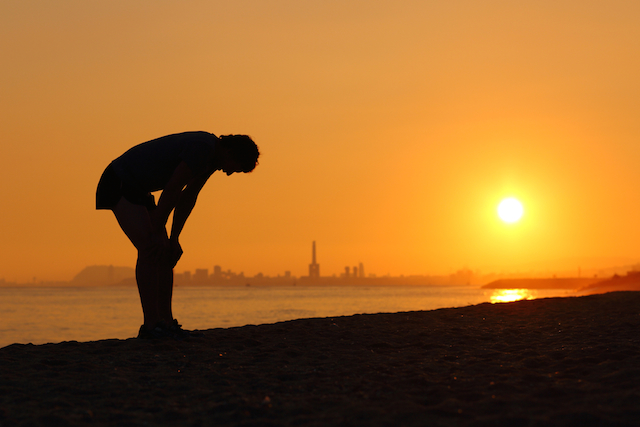
    I unclipped from my pedals and stood over my bike, elbows on the handlebar, head hanging as I tried to regain my breath.

    In the middle of a wheeze I looked over at Keila. She was standing over her bike, too. But she was on her phone texting someone. No sign of struggle there.

    After a few minutes, I was able to stand upright and Keila was done texting. We had climbed this hill together many times. Today had been a bad, bad day for me.

    Still panting, I said to Keila, “That was awful. I wonder why it was so hard this time?”

    A wise and observant young woman, Keila softly replied, “It’s because when you start to suffer, you speed up. And then you get mad.”

    I looked at her for a moment and then, despite my still thudding heart, I laughed.

    She was right.

    An experienced cyclist, Keila acted as my coach when I first started riding. One of the things she always had a hard time getting me to understand was how to pace myself, especially going uphill.

    I had actually become fairly good at it, but today I had forgotten the lesson. Today, when I came to a very steep section of the challenging hill, I tried to speed up to make the pain stop.

    But then I didn’t have enough energy for the rest of the climb and really struggled.

    Out of fuel and suffering, I got angry and swore at the pain and myself.

    After I recovered from the ride, I started thinking about what Keila said:

    When you start to suffer, you speed up. And then you get mad.”

    I began to wonder if this manifested itself in my life off the bike, too.

    It didn’t take long to see the pattern.

    • Averse to being in conflict with anyone, I often sped up during disagreements, either acquiescing to the other person or abruptly cutting them out of my life.
    • Times of confusion or indecision also caused me to speed up such that I would make impulsive choices just so I wouldn’t have to suffer any longer with being unsettled.
    • At the beginning of a long period of deep and heavy grief, I quickly latched onto someone I thought would help me get past the pain only to have that person bring me more heartache and sadness.
    • And, during some of these times of indecision, confusion, conflict, or sadness, I used anger as a motivator to propel me into action, but again, usually in a rash, compulsive manner.

    Inevitably, these “speed up maneuvers” backfired on me. I ended up regretting choices I made, cut off people I would have enjoyed keeping in my life, and lost myself in the process of getting the pain to stop.

    But I also noticed that as I’ve aged and become more conscious of my speed up maneuvers, I’ve learned to pace myself more. To move more slowly and with greater awareness of my actions and their outcomes.

    And I’ve learned that pacing myself doesn’t mean that it doesn’t hurt.

    When I’m on my bike and climbing a hill, I still get to a point that I’m suffering no matter what I do.

    But when I pace myself rather than try to outrace the pain, I have confidence that I can both tolerate the suffering and make it to the top of the hill.

    So now, when I pace myself during life’s struggles, I don’t hold on to illusions that it’s not going to hurt in some way.

    I have confidence in the knowledge that slowing down and moving forward with awareness will allow me to manage the suffering so that I can make it to the top of whatever emotional hill lies in front of me.

    I encourage you to identify your speed up maneuvers.

    What do you do when you’re suffering?

    What are the ways you try to get the pain to stop that only drain your energy and cause you to struggle even more?

    How can you pace yourself so that, even though moving forward may still hurt, you can make it to the top of the hill?

    On our next ride, I told Keila about my insights that sprang from her quiet observation of my cycling struggles.

    She laughed gently and said, “Everything that happens on the bike relates to what happens off the bike, Bobbi.”

    Amen to that, Keila.

    Amen to that.

    Tired man image via Shutterstock