Tag: overwhelmed

  • How a Simple Object Helped Me Slow Down and Breathe

    How a Simple Object Helped Me Slow Down and Breathe

    “Sometimes the smallest things take up the most room in your heart.” ~A.A. Milne

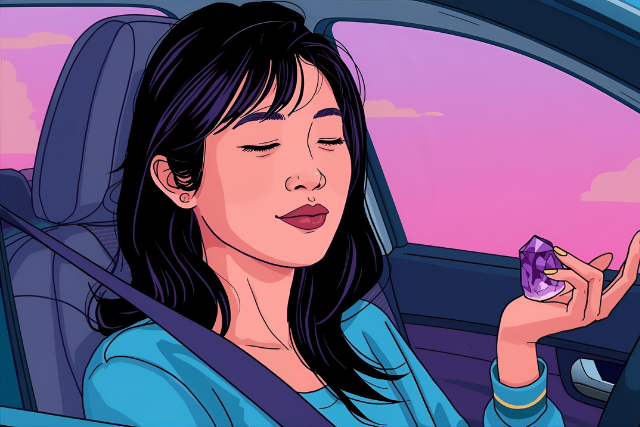
    It was a Wednesday afternoon, and I was sitting in my car, too overwhelmed to turn the key in the ignition. My phone had been buzzing all day with work notifications, and the mental list of things I needed to do was growing faster than I could breathe.

    Somewhere in the middle of my swirling thoughts, I reached into my coat pocket and felt something smooth and cool. It was a tiny amethyst I’d tucked there weeks ago, almost as an afterthought.

    I held it in my palm, noticing its weight, its texture, the faint warmth it picked up from my skin. Slowly, my breath deepened. My shoulders relaxed. For the first time that day, I felt just enough space between myself and the chaos to think clearly.

    That moment taught me something I hadn’t realized before: big changes don’t always come from big actions. Sometimes, the smallest things—the ones you can hold in the palm of your hand—can pull you back to yourself.

    Why the Small Things Matter

    For most of my life, I believed that fixing problems required a full reset—a new job, a big trip, a total life overhaul. If I was stressed, I thought I needed to clear my schedule completely. If I was sad, I thought I had to “solve” the sadness before I could feel better.

    But that afternoon in my car changed my perspective. It wasn’t the crystal itself that “fixed” me. It was the way that small, tangible object interrupted my spiral long enough for me to breathe.

    That was the first day I started carrying a stone in my pocket—not for magic, but for mindfulness. It became a reminder that no matter where I was or what was happening, I could pause. I could choose a different response.

    Over the weeks that followed, I started noticing how these tiny moments of pause changed the course of my days. Holding that stone at my desk before a meeting. Resting it in my hand before bed instead of scrolling my phone. Each time, I felt more grounded, more present, more myself.

    I realized it wasn’t just about the crystal. It was about creating a bridge—something physical that pulled me out of my head and into the moment. For someone else, it might be a smooth pebble from the beach, a favorite coin, or even a small piece of fabric.

    The power wasn’t in the object itself. The power was in what it represented: a conscious choice to stop, breathe, and reconnect.

    Looking back, I can see how much I underestimated the small things. I used to believe they were insignificant compared to “real change.” Now I know they’re the foundation for it.

    Because when you can find peace in the smallest of moments—sitting in your car, holding a stone, breathing deeply—you’re not just surviving. You’re building the capacity to handle life with more grace.

    A Simple Invitation

    If you’re feeling overwhelmed, you don’t have to change everything at once. Start small. Find one object that feels comforting in your hand. Carry it for a week, and whenever your mind starts to race, hold it and take three deep breaths. Notice what shifts.

    It may seem too simple to matter, but that’s the point. The smallest things are often the ones we return to again and again. Sometimes, they don’t just take up space in your heart—they help you find your way back to it.

  • 6 Simple Things I Do When Life Feels Completely Overwhelming

    6 Simple Things I Do When Life Feels Completely Overwhelming

    “You can’t calm the storm, so stop trying. What you can do is calm yourself. The storm will pass.” ~Timber Hawkeye

    Overwhelm doesn’t always knock politely. Sometimes it crashes into my day like an unexpected storm—suddenly I can’t think straight, and everything feels urgent, impossible, and too loud. One minute I’m fine, the next I’m spiraling in my head, convinced I’m falling behind on everything and failing everyone.

    If you’ve ever sat frozen in your car in the grocery store parking lot, staring blankly at a to-do list that now feels like a personal attack, you’re not alone.

    Here are six things I turn to when I feel completely overwhelmed—none of them fix everything, but they all help me find my footing again.

    1. I stop trying to “figure it all out” right now.

    When I’m overwhelmed, my brain turns into a malfunctioning computer with eighty-seven tabs open and nothing loading. I immediately try to solve everything at once, like I can outthink the chaos if I just try hard enough.

    But thinking harder doesn’t fix it. It just fries my system.

    I’ve learned to pause and remind myself: I don’t need to fix my whole life in this exact moment. When I feel myself spiraling into “fix all the things” mode (shoutout to ADHD), I write down whatever I’m trying to remember or control. That way I’m not ignoring it—I’m just parking it somewhere so I can get through the thing I actually need to do right now.

    2. I pick one tiny thing I can do.

    Sometimes I stare at the mountain and forget I can just take one step. My brain immediately goes into “do it all right now or you’re failing” mode. And that’s when I end up doing absolutely nothing except overthinking and hating myself for not being productive.

    So I stop and ask: What’s the next five-minute task I can do without using my last brain cell?

    Not the whole kitchen—just get the dishes out of the sink. Not the whole inbox—just respond to the one email that’s been haunting me for days. One drawer. One phone call. One bill.

    It doesn’t feel glamorous, but it’s how I trick my brain into motion. Because five minutes of action beats two hours of beating myself up for not doing anything. Tiny progress is still progress. And sometimes, it’s the only kind that’s available.

    3. I ground myself in something sensory.

    When anxiety hits, it’s like my brain hijacks my whole body. Suddenly, I’m not just stressed and overwhelmed. No amount of logic works in that moment because my nervous system doesn’t care that everything’s technically fine.

    So instead of trying to think my way out of it (which never works), I shift focus to anything physical. I take a cool shower, drink a cold glass of water, light a candle, or put on my favorite scented lotion. I’ve held ice cubes before just to shock my brain back into my body.

    Sometimes I just sit with my cat and focus on the feel of his fur under my hand, like, “Okay, this is real. This is here. I’m not being chased by a bear.”

    Sensory grounding actually helps. It’s not deep or profound, but it’s basic anxiety relief. And honestly, that’s the vibe I’m going for when I’m spiraling: survive first, analyze later.

    4. I do a ten-minute reset (phone-free).

    I set a timer and do something quiet and simple—no phone, no news, no notifications. Just ten minutes without input. That alone feels like a luxury.

    I sit outside and zone out to whatever the wind is doing. Or I color like a bored kindergartener. Sometimes I wash the dishes really slowly, like I’m doing a meditative art form instead of basic hygiene. And occasionally, I just lie on the floor and stare at the ceiling like I’m rebooting my entire existence.

    It’s not about being productive or using the time well. It’s about giving my brain a break from having to be on all the time. Ten minutes of stillness doesn’t fix everything, but it gives me just enough space to breathe again—and sometimes, that’s all I need to keep going.

    5. I check my self-talk for cruelty.

    Overwhelm brings out the absolute worst inner dialogue. My brain turns into a mean girl with a megaphone. She says things like:

    “Why can’t you handle this?”

    “You’re behind—again.”

    “Everyone else is doing just fine. What’s your excuse?”

    It’s not helpful. It’s just self-bullying, dressed up as motivation.

    When I catch that voice spiraling, I try to pause and respond the way I would if a friend came to me in the same state—exhausted, anxious, and trying their best. I’d never say, “Wow, you’re really bad at life.” I’d say something like:

    You’re not failing. You’re overwhelmed. Let’s figure out what would actually help right now.

    That shift—from shame to support, from blame to curiosity—changes everything. It doesn’t magically make the stress disappear, but it keeps me from mentally kicking myself while I’m already down. And honestly, that’s a win.

    6. I let it be a “low power mode” day.

    Phones go into low power mode when they’re drained—and so do I. And on those days, I stop expecting myself to function like I’m fully charged.

    I do the bare minimum. I eat something simple (whatever takes zero brain power and maybe comes in a wrapper). I wear the comfiest clothes I can find, even if they don’t match and have questionable stains. I don’t force motivation to show up or try to “push through.” I let it be enough that I exist and made it out of bed.

    And I stop treating rest like something I must earn. I don’t need to check off five tasks or prove I’m productive before I’m allowed to take a breath. Sometimes, the most responsible thing I can do is shut everything down and reboot.

    Because being human is hard. Being sensitive, overstimulated, exhausted, or just done is part of it. And it’s okay to have days when I’m not okay. I don’t have to explain or justify it. Low power mode is still functioning—it just means I’m protecting my energy until I have enough to show up fully again.

    Final Thoughts

    Overwhelm doesn’t mean I’m broken. It usually means I’ve been running on empty for too long while trying to hold everything together without enough rest, support, or room to fall apart safely. It’s not weakness. It’s a warning light.

    These six things don’t magically fix the mess. They’re not a makeover or a glow-up. They’re a ladder. A gentle, scrappy, wobbly little ladder I’ve built over time that helps me climb out of the mental spiral one small rung at a time.

    If you’re feeling buried right now—under expectations, emotions, responsibilities, or just life in general—I hope something in this list reminds you:

    You don’t have to do it all. You don’t have to be productive to be worthy. You don’t have to perform your pain or prove how hard things are.

    You just have to come back to yourself. One breath. One step. One tiny act of care at a time.

    You’ve got this. And even if today, this just means brushing your teeth, replying to one text, or microwaving some sad leftovers—that still counts.

    You still count.

  • How I Found the Good Within the Difficult

    How I Found the Good Within the Difficult

    “Inner strengths are the supplies you’ve got in your pack as you make your way down the twisting and often hard road of life.” ~Rick Hanson

    “I had a rough day. Can we talk?” I asked my husband in 2015 after coming home from work. He nodded, and we sat down on the couch.

    I continued: “I got really challenging performance feedback from my manager today. It was hard to hear because I know it’s true.”

    It was the most significant critical feedback I had received at once. All afternoon, I’d ruminated on the conversation. I had sat in the meeting speechless, with my heart pounding, as my manager, kind as he could, gave examples of ineffective ways I had been showing up.

    While we discussed what I was doing well too, I couldn’t stop thinking about the opportunities to improve. All I remember being able to say at the end is: “I need time to process what you’ve shared.”

    I hadn’t realized until that conversation how much what I was feeling on the inside translated to how I behaved.

    Inside, I constantly felt frustrated, stressed out, and overwhelmed. And that was the basis for how I interacted with others. I often reacted poorly when things didn’t go smoothly. I repeatedly interrupted others, not fully listening in the first place. I complained a lot in and outside of work. It felt so far from what I knew I was capable of.

    Underneath, I was in pain, and I had just become aware that I was taking it out on myself and others.

    I had recently been diagnosed with “unexplained infertility” and was preparing to start fertility treatment.

    I was having a difficult time coping: I blamed everyone and everything, including myself; I was so self-critical and beat myself up; I felt deeply ashamed; I tried to resist my painful feelings.

    When I look back, I have a lot of self-compassion for my past self throughout this experience. I didn’t yet know how I could cope better, and it was incredibly hard.

    I shared the feedback I received with him and went onto say, “What happened to me? I used to show up better: calmer, kinder, more approachable. I know I’m capable of showing up like that again. I want to try to improve. I want to learn how to meditate. I think it will help.”

    This was my moment of noticing.

    In the noticing, I had a choice. I could choose to take responsibility for my behavior. I could choose to try to improve.

    I had tried meditating previously and thought I was a “bad meditator.” My husband, on the other hand, meditated daily and taught meditation workshops. He had exposed it to me for years. I had seen how he had benefited from it. However, I had thought meditation wasn’t for me. Until now. I was at a point where I knew I couldn’t keep operating the same way. So I figured, why not try again?

    In the few months prior, we had started listening to podcasts and Dharma talks focused on mindfulness that resonated with me. It helped me realize mediation could benefit me.

    Taking in the Good

    One of the first things I did was to look at psychologist and best-selling author Rick Hanson’s book Hardwiring Happiness. I learned about what Hanson calls the brain’s red and green zones.

    The red zone, Hanson explains, is the brain’s reactive mode, where you go into fight, flight, or freeze. It’s when your mind focuses on fear, frustration, and heartache. It serves an important function when there is a threat, but it’s supposed to come in brief spurts.

    Unfortunately, Hanson shares, in modern life, the reactive mode has become a new normal for many people. I suddenly realized: it had become too common for me. I felt like my brain was in the red zone much of the day.

    The green zone, in contrast, is the home base of the brain, according to Hanson. The brain’s responsive mode. Your mind in this mode experiences peace, contentment, and love. When you are in this state, you can respond to life’s challenges without getting overwhelmed by the stress of them.

    Through Hanson, I discovered there is a lot we can do to strengthen our responsive mode by taking in the good, no matter what is going on in our lives.

    And that’s what I wanted to start doing. I would need to be intentional to take in the good, I learned, since the brain has a negativity bias.

    I wanted to take in more contentment—the antidote to frustration. I started with committing to thirty-day daily lovingkindness and gratitude practices.

    In the morning, I did a ten-minute lovingkindness meditation. In the evening, my husband and I would say three things we were grateful for, really soaking them in.

    At the end of the thirty days, I did feel more contentment toward myself and others. I felt less frustrated. I became more aware of when I was getting triggered. And sometimes, I would remember to pause and give myself space before responding. Other times, I would catch myself after reacting negatively and apologize. It was a start.

    I was surprised that there was so much I could do to change internally without changing my circumstances. Did I suddenly become monk-like, where nothing fazed me? No. And that was not my aim nor is it realistic.

    Dan Harris, a former ABC News anchor and prior meditation skeptic turned advocate, asserts in his book 10% Happier that practicing mindfulness and meditation will make you at least 10% happier. That was something I could attain.

    Perhaps I was 20% less frustrated after a month. Perhaps I had 10% more awareness of my triggers and reacted that much less.

    Whatever the exact amount, the changes made a noticeable difference to me. And, over time, I heard positive feedback at work that I was “showing up better.”

    The thing with practices is once you start them, to maintain the benefits, you need to keep them a part of your life. In my case, I kept taking action to build upon what I was learning.

    Next, I began a daily mindfulness meditation practice, which I continue today. Jon Kabat-Zinn, the founder of Mindfulness-Based Stress Reduction, defines mindfulness as: “awareness that arises through paying attention, on purpose, in the present moment, non-judgmentally… in the service of self-understanding and wisdom.”

    Three months later, I attended the “Search Inside Yourself” mindfulness and emotional intelligence two-day program. As the name suggests, I learned tools and did exercises to grow inner resources for accessing my own self-awareness, empathy, wisdom, and resilience—the me in the green zone. It was the spark that catalyzed more deeply nurturing my well-being.

    That was the start of me taking ownership of my experience to improve my well-being. What began as wanting to show up better became so much more than that.

    Reflections on the Noticing

    Those examples of actions, along with many others over time, transformed my relationship with myself and my life.

    They were the first steps for me to develop a more nourishing relationship to myself—one that was more self-compassionate, kind, and loving; one where I could be present enough to take in and enjoy the good; one where I allowed myself to experience the difficult emotions I was facing without judgment.

    It was from this place that I could then show up more whole, responsive, and kind.

    Within a year period, I grew more than I had in the previous five years combined. This experience of profound growth gave me something positive and exciting to focus on. Something I did have agency over, during an incredibly challenging time in my life. Where much felt out of my control. And it gave me greater skills to get through the hardships that I would continue to face, including burnout and fertility challenges.

    I’ve reflected on this time as one that woke me up. It was when I stopped acting like a victim to my circumstances, became more aware, and started doing inner work to grow. Choosing this path was a gift I gave myself.

    While my experience with career burnout was complicated and would continue to have ups and downs, it became more manageable after the noticing. It was another two years before I became pregnant naturally, after choosing to stop fertility treatments when it no longer felt right following failed IUIs.

    I don’t want to know what those years would have looked like without my focus on inner work. It taught me how to cope. It enabled me to focus on what I could control, which made it all the more endurable. It showed me how to experience goodness—peace, contentment, and love—daily, no matter what was going on. Most of all, it gave me something meaningful to focus on.

    I did not wait until I had a child for the next phase of my life to begin, my original mindset when we started trying to get pregnant. I lived more fully than before the noticing. I learned how to experience the beauty along with the brokenness.

    It was the moment of noticing that started me on a path that would significantly transform my life. And it would set me up for creating a life and career more on my terms, with well-being at the center, in the next phase of my life.

  • How Your Worst Days Can Shape Your Best Self

    How Your Worst Days Can Shape Your Best Self

    “It is often those moments you feel least connected that you are actually making your greatest progress. The chaos around you is an invitation to pause, reflect, and grow. You are more than equipped to deal with this. If you weren’t, you wouldn’t be here.” ~Benjamin P Hardy

    It’s 1 a.m., and the silence is broken by a cough that can only be described as sounding like someone who has smoked two packs daily for the last thirty years. There’s no way to predict when I’ll be woken again, but if the past week is any indication, this won’t be the last.

    Unbeknownst to me, I’ve been dropped into the notoriously rigorous training program known as “Hell Week” that Navy SEAL candidates must endure. It’s a gruelling, continuous training exercise lasting several days with little to no sleep, intense physical challenges, and mental stress. Hell Week aims to test candidates’ physical and mental resilience and their ability to work effectively as a team under extreme conditions.

    Here’s the problem: My hell is a twenty-month-old with a nasty cough that she can’t shake. She’s obviously not torturing us on purpose, but it doesn’t make the experience any less exhausting.

    When I finally fall back asleep and am once again awakened by a foghorn for the sixth night in a row, the tears start welling up in my eyes, as I have no idea how the hell I’m going to make it through another day of calls and projects that are relying on me.

    Bipolar and sleep deprivation go together as well as a clown juggling chainsaws in a hurricane—a disaster waiting to happen, with a side of chaos and potential accidental amputations.

    So, if I’m going to be perfectly honest, and to borrow another military term, the team is experiencing a clusterf*ckunder these extreme conditions.

    How else would you describe the frustration and disorder that arises when things do not go according to plan?

    Our team is hanging on by a thread. The fights between my wife and I are wearing us down, the outbursts of anger are cringe-worthy, and the feeling that this will never end is causing enough friction to leave our skin raw.

    These are the moments when I catch myself being a victim of my life.

    Then I realize my expectations are out of whack. Things won’t always go smoothly, and sometimes I need to accept that I can’t do everything I’d like to accomplish, or do anything as well as I can when I’m at my best.

    These are not the moments to thrive.

    These are the moments to survive.

    It’s a reminder that life rarely goes according to plan.

    And that’s the whole point of Hell Week.

    Anyone can crush it on a good day, but how do you handle the inevitable hell you will face as a parent, someone who gets crippled by their mental health, or experiencing any number of painful challenges we all face?

    That question has improved my mental health, business success, and life quality more than anything else I’ve encountered in the last six years.

    Why?

    Because it changed my approach.

    Your choices on your toughest days shape your path more than those made on your brightest.

    When I struggled, I found that having an all-or-nothing approach rarely allowed me to progress on the essential things. Instead, it often felt like I was starting from scratch again. I would go off the deep end and find myself drowning in a negative thinking pattern, saying, “Of course I’m back here! Shit like this always happens when I’m making progress.”

    But as author James Clear said, “You do not rise to the level of your goals. You fall to the level of your systems.”

    It taught me the importance of establishing a solid foundation and that sticking to a routine can provide stability and a sense of control (regardless of what’s happening around me).

    I am nothing without hydration, elevation, meditation, and contemplation.

    This can feel high-level when you’re starting out. Don’t overthink the “perfect” way to implement these power-ups.

    • I’ll crush another coffee 👉 I’ll drink a liter of water.
    • I’ll catch up on emails 👉 I’m taking the dog out for a walk and getting some sun.
    • I’ll get ahead on a few of my projects 👉 I’ll sit down and throw on a twenty-minute guided meditation.
    • I’ll watch a few lessons for a marketing course 👉 I’ll sit on the front porch and read something light and fun.

    These small trades can make a big difference to your physical and mental health when you’re struggling.

    It’s easy to feel overwhelmed in the world of self-growth and personal development. Especially when you’re shamed for not having a clear answer to questions like, “Wait, you don’t have a three-hour morning routine carved out to put yourself in a peak state of abundance?”

    I’m going to categorize that as a “nice to have.”

    It’s similar to my intention of cooking gourmet meals for my daughter every night, yet I often resort to buttered noodles and broccoli because they’re a crowd-pleaser.

    There’s substance, and I’m not adding to an already stressed-out day.

    Meaning she gets a better dad who is enjoyable to be around.

    Winning the day comes back to being far more intentional about what you can stick to on your day from hell than what you can accomplish on your dream day of sunshine, lollipops, and prepping Michelin star meals.

    In the midst of our personal Hell Weeks, it’s the small, intentional actions that become our lifeline. It’s not about mastering every challenge but about grounding ourselves in the routines and habits that offer solace and stability.

    So, when the nights seem endless and the challenges insurmountable, remember: your power lies in your tiny, consistent choices. Harness them and watch as they transform your toughest days into stepping stones toward a brighter tomorrow.

  • How to Stop Feeling Overwhelmed by Other People’s Strong Emotions

    How to Stop Feeling Overwhelmed by Other People’s Strong Emotions

    “It is not your responsibility to figure out what someone else is feeling and why. Let go of the illusion that ‘fixing’ their bad mood will make you feel better.” ~Sarah Crosby

    Some years ago, I was talking to my husband on the phone. He sounded annoyed about something to do with his work, but I noticed an intense emotional reaction in myself. Immediately, my heart contracted and my stomach lurched. I could feel a runaway train of emotions activate within me.

    My whole body was awash with nausea, and I felt so very uncomfortable. 

    This was a familiar and old pattern for me. My husband had some feelings and expressed them, and I felt totally overwhelmed by them. It then created a loop of reactivity where he would say something in this annoyance, I would respond with fear that he was annoyed, and it would all become a big mess of emotions being thrown all over the place.

    But what felt worse than that moment, when I experienced his feelings as though they were the end of the world, is what came after. I would sink into a familiar space of despair about my husband and how he was feeling. I would try and think of ways to fix the situation, or feel aggrieved by how he’d reacted.

    This response is something that I experienced not just with my husband, but with most people in my life to a greater or lesser degree. My real or imagined noticing of someone having feelings, and how horrible that felt for me, in my body.

    It was totally instinctive, that someone would seem upset and I would jump in and try to fix, reassure, help, or soothe. And in that process, I would totally subjugate my needs and feelings because of how much I didn’t like how it felt to be around people and their emotions. 

    Sometimes it would feel that people close to me were trying to upset me with their emotions on purpose. When a family member got angry it would totally overwhelm me, and I would end up resenting them for days or weeks. It felt like they were punishing me with their anger.

    When my kids felt disappointment or sadness, I found it unbearable to see them feeling so bad, and I would endeavor to help them by changing their plans, getting them a cookie, or trying to talk them out of how they were feeling.

    The problem here is that, of course, when we are human beings around other human beings, we are going to encounter people having feelings—about us or themselves, or anything else we humans have feelings about.

    When we find other people’s feelings challenging, we aren’t giving them the space they need to have feelings. There is an element of Your feelings are making me uncomfortable! Can you please shut them down because I don’t like them.

    Which is understandable when we don’t know how to deal with our own emotions. If we don’t feel okay around our feelings, of course we struggle with other people’s.

    So how do we learn how to not get intertwined with other people and their emotions? How do we stop having such intense reactions to people having feelings, regardless of what they are about?

    How can we stop letting other people’s emotional responses completely distract us, and throw us off our day—consuming vast amounts of time and activating intensely uncomfortable feelings of our own?

    For me, the first step was learning how to identify what was happening. I felt like other people’s feelings were happening to me, but really, they were having feelings and I was having feelings.

    My feelings are separate from your feelings. 

    One of the reasons why it feels that we get so intertwined and things get so messy in relationships is that we don’t recognize that we all have separate feelings. In so many relationships we don’t give each other space to have feelings, because of the patterns of how we respond to emotions.

    We often think it’s like this:

    Stop being scared! It’s making me scared!

    Stop being irritable! It’s making me anxious!

    But really no one is making us have feelings. Our emotions arise on their own, as do someone else’s. But we can learn how to stop reacting to their emotions as our own.

    If we can see Oh, I am having my own feelings here! we can then use this awareness to create some space and start to pay attention to ourselves and our emotions instead.

    Recognize that no one is having feelings on purpose.  

    Once I had been coaching for a few years and had radically changed how I worked with both my own emotions and how I responded to those of the other people around me, I asked my husband what he loved the most about my work. He said that now he no longer feels tortured by my feelings. And I thought, Wow! That is so fascinating.

    I was so used to feeling overwhelmed by his feelings that I never considered that he was feeling the same way.

    Because my emotional reactions are so different from his, it didn’t occur to me that he was also uncomfortable around my feelings. And it’s the difference in our responses that can provide so much confusion in relationships.

    My go-to strategy when overwhelmed by my husband’s emotions was to chase him down and try to discuss and fix everything straight away. His strategy was to try to disconnect from me and run away.

    Essentially, we both felt challenged by the other’s emotions, and by working to create some space to support ourselves in our own emotions, we created such a big shift in how we now respond to each other.

    People can’t be truly empathetic when they are emotionally activated. 

    What I now know about emotions is that we can’t truly access empathy when we are emotionally activated, so if I am with someone who is having feelings, I don’t expect empathy and understanding from them.

    In order to gain full access to our empathy, we need to move through the emotions, so part of working with other people is letting them move through the anger/fear/sadness or whatever it is they are feeling.

    I don’t engage them in things I am not happy about or talk about their behavior or what they’ve said—until after they have moved through that feeling.

    When we feel any emotion, we see the whole world through the lens of that emotion. Anger sees upsetting things everywhere. Fear sees scary things everywhere. So it doesn’t benefit us to get too involved in what someone might say when they are in the thick of emotional activation.

    Knowing this helps us work on not reacting to what they are saying, doing, or feeling.

    Feelings activate feelings.  

    If we are feeling super calm and someone comes along and is expressing a lot of anger, it can easily activate our own feelings. That’s natural. Maybe we feel fear around anger, or maybe we feel anger at their anger. It’s natural for our feelings to activate around others.

    With all emotions, we want to work on supporting ourselves through emotional activation. When we can do this, when we can sit with ourselves and provide support, we can move through the emotions with more ease and confidence, and not get stuck in the loop of that emotion.

    By noticing and naming your experience, you are offering yourself some support.

    We can say to ourselves, The best thing I can do right now is support myself in feeling my feelings, and not engage in their feelings. 

    We can acknowledge how challenging this is for us. We can offer ourselves the gift of understanding, and that can help us move with the discomfort of the emotions that have activated.

    Offer yourself some empathy, understanding, and validation.

    Empathy is a very powerful resource when we are in the thick of emotions. Giving ourselves some tender, kind, loving support is a real gift to ourselves when we feel activated.

    Maybe we say to ourselves:

    This is hard for me because…

    I understand why this is so challenging.

    It makes sense that this is tough for me since…

    It’s hard seeing someone feel so disappointed or angry. It’s hard to hold these feelings. 

    If it feels good, offer yourself some physical support.

    Put your hand on your heart, or stroke your arms, giving yourself a hug, while you stay with yourself in this experience of sitting with your feelings.

    Of course, this isn’t always easy! When we have spent a lifetime responding to people’s emotions in a certain way, it takes some effort and focus to start responding differently.

    Other people’s emotional activations are some of the hardest things we deal with, but with awareness and intention, we can learn to see these experiences differently, and then learn to respond differently.

    Now when I hear disappointment or irritation from my husband, or sadness or despair from my kids, or anger or shame from my family, I can recognize that these are their feelings! I don’t need to jump into their pool of emotions and get immersed in their experiences. 

    I can instead stand back and support myself, which in turn supports them because I am not adding to the emotional load they are experiencing.

    I can help by being responsible for my feelings so we aren’t creating a big chaotic mix of messy emotions.

    This is how anyone can create some space and peace in the emotional experiences around them.

  • How to Release the Fear That Holds You Back and Keeps You Small

    How to Release the Fear That Holds You Back and Keeps You Small

    “The purpose of fear is to raise your awareness, not to stop your progress.” ~Steve Maraboli

    I used to hate my fear because it scared me. It terrified me that when fear arose, it often felt like it was driving me at full speed toward the edge of a cliff.

    And if I were driven off a cliff, I would lose all control, all function, perhaps I would collapse, perhaps I would shatter into a million pieces. I was never totally clear on the details of what would happen if I let the fear get out of control. That’s because I spent most of my life trying to control it.

    It’s why, when things don’t go according to plan, when I am running late or things change at the last minute, I can get snappy and sound angry. I feel rage when people come along and do things that seem to amplify my fear—like my husband using the bathroom three minutes before the train is leaving, or not locking the front door at night with all its three locks.

    Oh, I had so much judgment around this fear. I hated it, but I hated even more that I seemed to be an overly fearful person. I felt disgusted and full of shame for not wanting to do things that other people seemed to find easy, like flying, or for freaking out when I was sick, thinking I was dying.

    I carried the shame of fear around with me, hoping I didn’t have to reveal it, and if I did, if I had to show people how terrified life made me, I would be horribly self-deprecating.

    Because I had this sense that I shouldn’t be like this. It wasn’t normal. So I blamed it on myself as a character default.

    That’s why I wouldn’t want to walk toward scary things. That’s why I avoided things that brought up the fear because if I didn’t, it would have driven me off the cliff so freaking quickly, and I’d think, how stupid could I have been to allow it?

    I see now that my fear lived at such a low-level frequency in my body that I didn’t notice it was there. It was on a low buzz all the time, like a refrigerator noise—not really in my awareness but controlling how I made decisions.

    I know this because, when I was really paying attention, I realized I was always trying to pick the least scary option. But when I kept choosing the least scary option, the least challenging to me, my life got smaller and smaller.

    I was not even really aware that I was doing this. It just felt like I was being sensible.

    But sometimes I would get this glimmer of another world where I did the most interesting and exciting things, like exploring alone somewhere new or taking a belly dancing class. Where I lived unleashed and unbounded by fear. I said what I meant, I did what I wanted, and I didn’t worry all the time about terrible things happening to my loved ones.

    Living a life immersed in fear felt like being bound with invisible rope that no one could see. And because people couldn’t see this rope, they would ask me to do things that I couldn’t possibly say yes to.

    Things started to change when I didn’t just ask how I could get the fear to stop, but I started to learn why there was so much fear in my body, where it came from, and how it was affecting how I experience life. So much of my fear came from a lack of emotional safety, and sometimes physical safety, as a child and young woman.

    When I learned to start being curious about the fear that confined me and not judge it as a character defect, I started unraveling it. This, along with some powerful emotional processing and nervous system regulation, transformed how I now experienced fear in my life.

    Here’s the thing: We don’t intentionally create bodies that can’t handle emotions like fear. We don’t intentionally create nervous systems that are jumpy and hyper-vigilant. We don’t create sensations of immense doom for pleasure.

    How we were taught to be with emotions, how we were taught to allow or not allow them, how we were cared for when we were in the midst of emotions—this all informs how we now deal with fear.

    It makes sense that fear feels too much for our bodies to handle when we have lived with too much fear; when we haven’t had enough emotional support of someone helping us hold that fear; when we’ve had experiences that have terrified us down to our very bones, that have stayed trapped in our bodies; when our lives have been rocked by tragedy; when sudden life-changing events shake any sense of stability from us; when fear has just been too much for too long.

    We need to learn how to provide deep emotional support, a sense of safety, love, empathy, and validation, to our bodies that have held so much pain and discomfort. We need to learn how to tend to and meet our needs.

    Emotions need to be seen, felt, and heard. When we haven’t learned how to do that, how to hold emotions and really be with them, we get pushed into a part of our brains where things feel deeply overwhelming and urgent—our survival reactions.

    It’s a part of our brain that uses primal methods for dealing with emotion—meant to be utilized in emergencies and when our survival is under threat, but too commonly used to discharge uncomfortable emotions. And none of these survival reactions feel good.

    When we are in our survival reactivity, we can feel doomed and trapped; we can feel like there are no options; we can feel the red mists of rage or a deep-freezing panic. We can go into overdrive doing too much, or sometimes we just slow down and shut off. Everything feels like too much.

    That’s why we feel we could go over the edge. That’s why we don’t feel safe. That’s why we desperately try to stay in control. Because we have this sense of an unknown, dark, and terrifying force in our bodies that feels like something beyond what we can handle.

    We don’t know how to deal with this part of our brain, these survival reactions, so we spend our lives attempting to control our fear, hoping that it won’t rear up and push us over the cliff edge.

    But there is another way. And it’s not by feeling the fear and doing it anyway. I couldn’t dislike that piece of advice more because of how wildly misunderstood it is. You can only feel the fear and do it anyway if you have a comfortable relationship with fear and it doesn’t push your nervous system into overwhelm and survival reactivity—where you feel like you are actually fearing for your life.

    If you are in survival mode, you don’t want to be pushing through anything.

    In fact, quite the opposite.

    You want to be doing everything to reassure yourself that you are physically safe, that there is no emergency, that all is well.

    And that is step number one. That’s the first place I go to when I feel the escalating sensations of fear.

    It’s learning to look after yourself and meet your needs in ways that maybe you have never done before. You learn to build your own safety, and to repair all the damage that has been done to that solid feeling of protection that others seem to have but you sense you deeply lack.

    There are several things you can do for this..

    1. Stop the overwhelm.

    My first suggestion is an exercise you can do when you feel you have entered that survival mode of things feeling like way too much—when you are overwhelmed, feeling doomed or trapped. This is an exercise called regulating breath. The aim is to activate your parasympathetic nervous system, which is where you are “resting and digesting.”

    It’s super simple—short, quick inhale, long exhale. Then repeat this until you are moving away from that deep overwhelm. It’s a signal to the brain that you aren’t unsafe; this isn’t an emergency; you are safe to move out of survival mode and back into your body. I use this breath daily to keep my nervous system regulated and feel a sense of physical safety.

    2. Be curious about why the fear is here.

    The fear didn’t just show up unannounced today. If the fear feels like too much, there is definitely a history that you can trace back. And when you know your history, it can help you drop a lot of the judgment that you feel about it.

    Ask your fear: Where have you been showing up in my life, and how far does this go back?

    3. Ask your fear what it needs.

    Uncomfortable emotions like fear are expressions of needs that have been unmet perhaps for all of your life. Needs like clarity, structure, peace, or consistency. When you can learn to really connect with your emotions and hear what they have to tell you, you can then start meeting those needs.

    I love to talk to my fear. I ask it questions on a regular basis. I ask my fear: What do you need? Why are you here? What are you trying to tell me?

    When I am able to really sit with the fear and hold it in my body, it will tell me things like: I’m just trying to keep you safe. I just want you to be protected. I don’t want you to do unsafe things!

    When I know that the fear just wants to keep me safe, I can then reassure it, and myself, that I can provide the safety that I need. That I know how to make good choices; I know, as an adult, how to look after myself.

    4. Offer empathy and validation.

    Give yourself the deeply nourishing support of validation and empathy. Fear is a normal emotion that manifests as physical reactions in the body because of how we’ve learned to be with emotion, or due to the limited support we have received around big, challenging experiences.

    When you recognize this, you can start to not judge your reactions. You can say to yourself: It makes sense that you feel like this. It’s okay, I’ll stay with you. I will support you through this. 

    You can give yourself the tender validation and empathy you would offer to someone you deeply love—your child, a friend, your partner. You can treat yourself as someone deserving of being wrapped in beautiful, loving empathy.

    When you do things like double-check the locks at night or keep checking your phone to see if your teenager has messaged, when you are asked to take a trip to a place you haven’t been to before, instead of getting lost in the fear or loading yourself down with shame about it, offer empathy and validation instead.

    “You know what? This is bringing up a lot of fear. And it’s understandable that I have fear around this; it’s completely okay. So I am going to support myself through this feeling. I am going to tend to my needs around this feeling. And I am only going to do what feels best for me. What feels right for my body right now.”

    By meeting the needs your emotions are expressing we start to change our relationship with the emotions we find most uncomfortable. When we try to white-knuckle through, we often end up more rattled, more exhausted, more overwhelmed, and sometimes with more trauma than if we had actually taken tender, gentle care of ourselves.

    And by taking loving care of ourselves, by showing up and giving our feelings—and our sense of overwhelm—attention, we can end up naturally starting to want to do those things that maybe we were too scared to do before.

    By giving ourselves the empathy that our emotions so yearn for, we create a much deeper, more loving and trusting connection with ourselves. When we know how to emotionally support ourselves then we can learn how to emotionally support other people.

    My relationship with fear is a work in progress. Sometimes it slips out of my grasp and escalates before I have the chance to process it. But I know now that I can always bring myself back from that edge. I can always bring my nervous system back into regulation, even when it feels a bit messy.

    When we know that we can handle any emotion that comes our way, we have so much more freedom in our lives to make the choices we want to make instead of just choosing the least scary thing.

    Fear is a normal part of life. It’s there to help us stay safe and protected and make good choices. But sometimes, when we have had experiences that have intensified our fear, we can end up keeping ourselves small. Changing how we take care of ourselves to support ourselves in these big emotions is a great first step to living a more exciting, fulfilling life. I hope these tips have been helpful.
  • How to Stop Procrastinating When Things Feel Hard or Scary

    How to Stop Procrastinating When Things Feel Hard or Scary

    “You’ve been criticizing yourself for years and it hasn’t worked. Try approving of yourself and see what happens.” ~Louise L. Hay

    I dreamed of starting my own business for years. Ten years, exactly.

    While there are a few reasons it took so long to take the plunge, procrastination is at the top of the list.

    It’s hard work to change careers, uncomfortable to leave a steady paycheck, and nerve-wracking to think of failure.

    Even after spending months and years learning, studying, and getting certified, when it was no longer a matter of having the skills, the uncertainty of success was enough for me to keep kicking the can down the road to start marketing myself.

    I was afraid of failing. I was afraid of not being perfect. I was afraid that people would think I was a joke. And I was afraid that I wasn’t going to be capable of all the work it entailed.

    So I dragged my feet and kept passing my work off to “Future Me.”

    I did this for everything, though.

    “Tomorrow Sandy” can do the dishes. She’ll take care of scheduling that doctor’s appointment. Oh, and sign her up for that tough conversation I need to have with my mom too.

    At one point I recognized that I often procrastinated because I needed everything to be perfect.

    • I wouldn’t work on a craft project or cook a new recipe unless I knew it would come out flawless.
    • Or I would keep tweaking projects at work up to the last second and beyond, at the sacrifice of getting more work done.
    • Or I would agonize over every text and email I sent, often opting not to send any message unless I knew exactly what to say.

    But, as you can see, I’ve come a long way from that version of me.

    I’ve since started my own business (and I’m loving it!), and I’ve pulled my best tools together on paper for how to stop procrastinating—even though I actually procrastinated on writing this post (ironic, I know!).

    Today, I didn’t let my fear of “good enough” hold me back from sharing actual, helpful advice and mindset shifts to get moving and stop staying stuck.

    Because when we’re stuck, we start telling ourselves stories. So that’s where we’ll start, with this story we tell ourselves about why we procrastinate.

    What We Think Procrastination Is

    We have this misconception that procrastination is laziness.

    But procrastination is an active process. You choose to do something else instead of the task that you know you should be doing.

    In contrast, laziness is not caring. It’s apathy, inactivity, and an unwillingness to act. It’s an “I could, I just don’t wanna” kind of attitude.

    But when you’re procrastinating, you feel even more stressed because you do care about getting the task done. You’re just avoiding stress and having difficulty with motivation.

    Because that is why we procrastinate.

    What Procrastination Really Is and Why We Do It

    Procrastination is a stress-avoidance technique. It is an active process to temporarily avoid discomfort.

    We subconsciously are saying, “Present Me is not willing to experience this discomfort, so I will pass it on to Future Me.”

    (We do this as though we’re asking a stranger to do the work for us. Researchers have seen on fMRI that when we think about our future selves, it lights up the same part of the brain as when we think about strangers.)

    The really cool news is that by working toward overcoming your procrastination habit, you’re building your overall resilience to distress.

    That is how I define resilience: a willingness to experience discomfort.

    Examples of Procrastination

    Procrastination is tricky. Sometimes it’s obvious that we’re doing it. Sometimes we don’t quite realize it (like when I had to water the plants right then and there instead of writing this blog post).

    So here are some examples:

    • Scrolling through Instagram instead of getting started on important tasks
    • Putting off work assignments until the last minute
    • Wanting to start a new positive habit (dieting, exercising, or saving money), but repeatedly delaying it while telling yourself that “I’ll start soon
    • Wanting to start a business but wasting time in “research mode” instead of taking action
    • Doing an easy, less important task that “needs to be done” before getting started
    • Waiting until you’re “in the mood” to do the task

    5 Steps to Stop Procrastinating

    Now that we know what it is and why we do it, let’s look at how to stop.

    1. Motivate yourself with kindness instead of criticism.

    What really holds us back from moving forward is the language we use when talking to ourselves.

    Thoughts like:

    • I don’t want to.
    • It will be hard.
    • I don’t know how to do it.
    • It might not come out as good as I want it to.
    • I’ll probably fail.
    • This will be so boring.

    This is what we think that drives us to procrastinate. I mean, really, when you read those thoughts, they just feel so demotivating, right?

    This negative self-talk has a good intent. It is trying to save us from discomfort.

    Unfortunately, it’s achieving the opposite because it adds to the stress by making us feel bad.

    If you speak to yourself with kindness, just as you would a friend, it will feel so much more motivating.

    So think about what you would say to that friend. It might sound like:

    • I get it, it will be uncomfortable, but you’ll be done soon and then you can relax.
    • Once you get started, it will be easier.
    • You can do it!!
    • If it doesn’t come out perfect, at least you’ll have practiced more.
    • If you fail, you’ll have learned so much.

    2. Create a pattern interrupter.

    That negative self-talk has simply become part of your procrastination habit.

    Because that is what procrastination becomes—a habit—and habits are comprised of a cue, a routine, and a reward.

    • The cue is thinking about a task that needs to be done.
    • The routine is to speak that negative self-talk that leads to procrastination.
    • The reward is less stress. (Not no stress, because avoiding the task is still somewhat stressful because we know it eventually needs to be done.)

    In order to break the habit and create a new one, you need to introduce a pattern interrupter.

    Mel Robbins has a great one she calls the 5 Second Rule. When you think “I should do this,” before the negative self-talk starts in, count backwards, “5-4-3-2-1-GO” and move.

    I find this helpful when I’m having a hard time getting out of bed in the morning.

    If I’m having trouble getting motivated to do something difficult like write a post about procrastination, my pattern interrupter is “I can do hard things.” Not only am I interrupting the pattern, I’m motivating myself positively as well.

    If I’m having trouble doing a boring and tedious task like my taxes, I use something like “I’m willing to be uncomfortable now so that Future Me can be at peace.”

    3. Break down the task.

    One of the big drivers of procrastination is overwhelm. Overwhelm happens when we’re looking at a project in full scope, either not knowing where to start or feeling like all the work involved will be too much.

    If the next task at hand is too big, or if you don’t know where to start, your first task really is to either 1) make a list, or 2) figure out the smallest thing you can do first.

    The whole house is a mess? I bet you know where that one sock goes!

    Another example, I had social anxiety and going to the gym was overwhelming to me.

    So I broke it down into:

    • I just need to put gym clothes in my car, that’s it.
    • I just need to drive to the gym. I can turn around if I want once I get there.
    • I just need to walk in the door. I can always leave.
    • I just need to get changed in the locker room I can do that.

    Honestly, I never turned around and went home. Because once I’d taken the small, easy step, the next small easy step was doable.

    Which leads me to the next step…

    4. Just commit to five minutes.

    Studies show that if we commit to five minutes only, 80% of us are likely to continue with the task.

    Five minutes is nothing. You can do anything for five minutes.

    There is an 80% chance you’ll continue working once you put in those five minutes, but even if you don’t, you’re still five minutes closer to your goal.

    And, you’ve taken one more step to breaking the old habit of not starting.

    It’s a big win-win!

    5. Reward yourself or make the task more enjoyable.

    Another problem with looking at a big task in scope instead of the next five minutes is that the reward is too far away or not satisfying enough.

    When you’re trying to lose weight, twenty pounds is weeks and months away.

    Or, when you’re putting off your taxes, if you aren’t expecting a return then the reward is “not going to jail.”

    So bringing in more rewards sooner will fast track creating the new habit of getting started.

    But also, making the task itself more pleasant will make it a less monotonous task.

    • To write this post, I put on my softest bathrobe and grabbed my baby’s tub from when he was an infant to make an Epsom salt foot bath under my desk while I write.
    • I’ll be starting my taxes in the next few weeks, and I already plan to have a glass of wine and super fancy cheese and crackers while I sit down to do them.
    • I save listening to super nostalgic nineties music for when I’m exercising just so that it makes that time extra special and fun.

    What Would Open Up for You If You Stopped Procrastinating?

    We spend so much more time avoiding the discomfort of a task than we do stepping into what it will be like once the task is complete.

    If you were to stop procrastinating, what would open up in your life?

    • Would you start your business because you’re no longer afraid of experiencing any discomfort if you “fail”?
    • Would you simply enjoy life more if you weren’t in a perpetual state of stress because there is a list of things you’re putting off?
    • Would you finally lose weight or get in shape and feel good once you push through being able to get started?

    The Bottom Line

    Procrastination is an active process to temporarily avoid discomfort (it is not laziness!)

    By overcoming your procrastination habit, you are building your emotional resilience.

    Notice the negative, demotivating self-talk and motivate yourself with kindness over criticism.

    Create a pattern interrupter before the negative self-talk starts weighing you down.

    Commit to just five minutes and you’ll either keep going to do more, or you’ll at least be five minutes closer to done.

    Reward yourself or make the task more enjoyable so there is less discomfort to avoid.

  • When Life Feels Too Hard: How to Mindfully Get Through the Day

    When Life Feels Too Hard: How to Mindfully Get Through the Day

    NOTE: This post contains a giveaway – details at the bottom of the post!

    “If today gets difficult, remember the smell of coffee, the way sunlight bounces off a window, the sound of your favorite person’s laugh, the feeling when a song you love comes on, the color of the sky at dusk, and that we are here to take care of each other.” ~Nanea Hoffman

    I am currently exhausted. Absolutely beat. I’ve taken on more work than I can comfortably accomplish in my available time, I’ve been feeling under the weather for a while, and my eighteen-month-old son is in yet another sleep regression.

    Whether I’m caring for him or working, I am almost always doing something, seven days a week. And like many of us, I feel I have very few outlets for fun and relaxation, even if I do find the time, given the limitations of the pandemic.

    I know I have little to complain about. I am relatively healthy, and so are the people I love. I have all my basic needs met. And I have a lot to appreciate. But still, my days feel overwhelming and hard.

    Maybe you can relate—and maybe for you it’s even worse.

    Maybe you’re struggling with mental health issues from months of isolation. Or you’re trying to figure out how to pay your bills because you’ve lost your job or some of your hours. Or you’re dealing with a sick loved one, and the responsibility feels like far too much to bear.

    If you’re in that overwhelmed place right now—if you’re frustrated and burnt out or at the end of your rope—I get it. I really do. And I don’t have any simple answers for those very real, and perhaps seemingly insurmountable problems.

    I can say, though, that things aren’t always what they seem. And no matter what’s coming down the road, there are a few things we can all do to help ourselves get through this day. Our sanity intact. So we’re less harried, more grounded, and better able to handle whatever the future may bring.

    Here are a few mindful ways I approach the day when everything feels like too much:

    1. Only do what you can accomplish by single tasking.

    I find it incredibly hard to be present when I have to do multiple things at once because I feel like I’m failing at all of them, and inevitably get caught in my head, judging myself and my efforts.

    I also don’t enjoy anything when I’m overlapping tasks—even if some of them could otherwise be enjoyable, like spending time with my son or writing. It’s like having twenty tabs open in my mind, with music and video clips and Netflix shows playing simultaneously. All good things, but not all at once!

    Even in normal times, parents in particular have to multitask—there’s just so much to do between childcare, housework, and actual work. But still, I’ve realized I can ask for help with a lot and simply let some things go. I can wash the dishes later. Or make a non-cook lunch. Or not do some of the little things I’d like to do but don’t actually have to do for this site.

    This isn’t easy for perfectionists. We want to think we can do it all—and do it all well. And if we can’t, we’re hard on ourselves. But I’ve begun to tell myself, at the end of the day, if I can’t reasonably accomplish everything on my to-do list, the problem isn’t me, it’s my workload.

    So do one thing at a time, and if you feel you simply can’t, ask yourself if that’s really true, or if you’re just attached to your busyness—because you feel productive, or it gives you a sense of control, or it allows you to avoid emotions you maybe don’t want to face.

    2. Allow yourself to enjoy the little things.

    It sounds cliché, and I know it is, but this really is a lifesaver. When your days feel overwhelming, those little moments can go a long way toward creating a feeling of balance, even if life isn’t so balanced right now.

    Take the five minutes to savor your tea or coffee instead of scrolling and swiping your way through it. Dance to your favorite song and belt out the lyrics, really feeling them in your heart. Take a few minutes to look at the moon and stars at night and get lost for a minute in the evening’s beauty and the vastness of the universe.

    The other night, after a particularly taxing experience with my son, I noticed that the moon looked like someone had painted it. It was truly stunning—full and far more orange than usual—and I can’t remember having seen it quite so beautiful ever before.

    So I stared. I didn’t try to stop thinking, I just did because it was so spectacular. And after a few minutes I felt calmer. I had meditated without even trying simply by appreciating something I may otherwise have missed—despite it being massive and right up in the sky for me to see.

    Take a little time to be amazed by something you won’t enjoy unless you consciously choose to focus on it. See the things you can’t see when you’re rushing. Hear the things you can’t hear when you’re stressing. Get so caught up in your senses that everything else seems to stop for a moment—because things don’t actually stop. So we have to be the ones to do it.

    3. If you start worrying about the future or regretting the past, make an inventory of your current strengths.

    Hard days are infinitely more difficult when we relive hard days past or worry about potential hard days coming. But our minds are like magnets to negative things when we start indulging defeatist thoughts. It’s like we put on a grey filter and then look back and forth through time with a dark, depressing spotlight.

    So instead of rehashing the past or worrying about the future, focus on all the strengths you have right now that will prevent you from making the same mistakes and help you handle whatever is coming.

    Think about all you’ve overcome and how that’s shaped you. Maybe you’re resourceful, or adaptable, or open-minded. Maybe you’re determined, or disciplined, or empathetic in a way that helps you connect with people and create strong support systems.

    Instead of worrying about what the world can do to you, find strength in who you’ve become because of what you’ve been through—and trust, in this moment, that you can rely on those strengths to serve you well, no matter what the future holds.

    And then, even better: Find a way to use one of those strengths right now.

    The other day I started worrying about my plans for early next year because a lot is up in the air right now and—as always—there’s a lot I can’t control.

    Then I remembered that, because I have put myself in many new situations throughout my life, I am always adaptable and resourceful. I find a way to make things work and make the best of things, even if I don’t always trust I will be able to do it in the future.
    So right in that moment, when I was feeling overwhelmed and spread too thin, I chose to make the best of my situation by putting on music I enjoy and taking a break from work to watch my son dance. The day wasn’t perfect, but that moment was, because I made it so.

    4. Practice tiny acts of self-care.

    There was a time when I had abundant opportunities for self-care. Pre-baby, I could easily do an hour-and-a-half yoga class and also fit in a walk on the beach and maybe even a bath.

    These days I am more likely to do ten minutes of stretching or five minutes of deep breathing to ocean sounds (since I no longer live near the beach) or take a mindful shower.

    There was a time when I thought those things weren’t worth the effort. I’m an all-or-nothing person! But a day with twenty-five minutes of self-care, spaced out, feels far better than a day with no self-care at all.

    Here are a few more of my favorite tiny acts of self-care:

    • Reading one chapter or a few pages of a book for pleasure
    • Doing a facial mask to feel cleaner and rejuvenated
    • Doing absolutely nothing for five minutes—just sitting and letting myself be
    • Calling someone I love to catch up
    • Lying with my legs up a wall to soothe my muscles and relax my mind
    • Applying lotion to my hands and massaging it in to relieve tension
    • Eating something healthy or drinking a green juice instead of having a processed snack
    • Doodling for a few minutes and reconnecting with my creative brain
    • Checking in with myself and asking, “What do I need right now?” Then giving it to myself, whether it’s a break, a glass of water, or a walk around the room.
    • Doing something I enjoyed a kid, like making up a stupid dance to a song I love

    5. Practice radical self-appreciation.

    I find that hard days are a lot easier when I’m easier on myself. Not always easy to do when the day feels hard because I often find a way to blame myself for the difficulty. Like I’m just not good enough or strong enough. Or I didn’t make the right choices, and that’s why things feel so hard now.

    To counter this, I try to imagine I’m watching someone I love living my life and think of what I’d tell them if they felt overwhelmed or down on themselves.

    I have even gotten into the habit of mentally calling myself “sister” sometimes—kind of weird, I know—because I am always highly empathetic toward my sister.

    So when I’m struggling, I might say, “Sister, you’re doing great! No one I know can do as much as you, or as well!”

    And then as a more preemptive act of self-appreciation, I try to check in with myself throughout the day to note things I’m doing well. And sometimes it’s not about doing, but about being.

    Great job being understanding when you really wanted to judge.

    Good on you for being thoughtful when you could have been swept up in your own stuff.

    Way to go on cutting yourself some slack—right now—even though you feel like you sucked at life today!

    I know from personal experience that hard days feel even more draining when we beat ourselves up every step of the way. It’s like walking through a storm carrying your own flailing, screaming twin on your back.

    The storm won’t be any less ferocious because we’re kinder to ourselves, but the journey is much less taxing when we consciously choose to love ourselves through it.

    **This was post was edited to remove a giveaway that has since ended.

  • What You Need to Do If You Feel Overwhelmed

    What You Need to Do If You Feel Overwhelmed

    “You are worth the quiet moment, you are worth the deeper breath. You are worth the time it takes to slow down, be still, and rest.” ~ Morgan Harper Nichols

    I want to talk about overwhelm, which is something I suspect I’m not alone in dealing with, especially given our current global situation.

    Even before the pandemic struck, I was on the edge of overwhelm. I live with two autoimmune conditions—rheumatoid arthritis and fibromyalgia—both of which cause me to have health issues when I’m stressed out.

    I started the year completely stressed out, thanks to a new health condition that reared its head: some irregular tissue was growing inside my duodenum, affecting my digestion. On my first visit to a specialist to try to remove it in February, it turned out to be far more extensive than expected, and I had to be rescheduled for a far more involved procedure.

    Then COVID hit, and I was deferred for a bit. To say that I was struggling is an understatement: we were isolating at home, my health was in jeopardy, and while we believed that the tissue wasn’t malignant yet, it was definitely the sort of tissue that was trying to become cancer.

    I found it difficult to do my usual tasks, and I was decidedly fatigued and somewhat short-tempered from adding all this additional stress and uncertainty into what was already a fraught situation.

    Not knowing what else to do, I fell back on some serious self-care practices. I’m not talking about face masks and bubble baths, though I did increase the number of baths I took using Epsom salts, since they soothed the aches and pains that came with my increased stress levels.

    I spent far less time than usual on social media, in order to avoid “doomscrolling”: that’s where you keep scrolling through social media to find the latest, most upsetting information on whatever catastrophes are occurring. To my husband’s consternation, it also meant that I stopped watching the nightly news with him; instead, I would read a book, or watch something light and happy on my laptop.

    I made sure to get outside every day as long as the weather permitted, in order to allow nature to do its thing and make me feel better. I set and met a goal to exercise at least five days a week for twenty minutes or more, and I made sure to drink a lot of water and not skip meals.

    I also returned to my meditation practice, which had lapsed in prior months, as it sometimes does, and established a bedtime routine to set me on a path to successful sleep

    Here are my takeaways from that time period.

    If you need time away from it all, take it.

    If you need to establish boundaries with those around you in order to protect yourself, your emotions, your mental health, and/or your energy, it’s fine for you to do so. You cannot pour from an empty cup, so it’s important to take care of yourself.

    Give yourself permission to step away from the noise of the world.

    Specifically, you have permission to:

    • Turn off the news, or reduce your intake
    • Reduce your time on social media if it stresses you out
    • Unfollow social media accounts that are too negative for you
    • Reduce your contact with negative individuals in your life by setting boundaries
    • Put yourself on time out if you need it
    • Take a mental health day
    • Say no to things you don’t want to do (even if you already said yes)

    It is 100% okay for you to take a break. It is okay for you to need time out, or time off. It is okay for you to prioritize your self-care.

    Prioritizing your mental health and your self-care are two of the best things you can do for yourself and the people around you, as I learned again this spring. With things the way they are in the world right now, many of us are shaken up and need to boost our physiological needs and shore up our feeling of security.

    While I’m not a psychologist, I am familiar with Maslow’s hierarchy of needs, which is usually shown as a pyramid. At the base of the pyramid are basic human needs such as shelter, sleep, food, water, and exercise. The next tier, which is also pretty large, is safety and security, and it includes things like employment and health.

    The pandemic has rocked our worlds in ways that have shaken that pyramid. It’s hard to work on any of the higher-tier stuff, like romance, dreams, and plans, and spiritual matters, when the foundation of our personal pyramids need shoring up.

    That’s one of the reasons I returned to basic self-care for myself. Exercise, hydration, nutrition, and sleep were on my list. Those are all from the base level of the pyramid.

    Turning down the noise from the outside world, while remaining informed in small snippets, allowed me to remain connected to what was going on without spinning myself into a stress ball.

    Being on a more even keel allowed me to move through that time period without completely losing myself to stress and anxiety.

    And as for that adenoma? I was operated on the day before my birthday, and though it turned out to be a bigger procedure than anticipated, the biopsies came back clear. One less worry to move forward with.

  • What to Do When You’re Stressed, Distressed, or Overwhelmed

    What to Do When You’re Stressed, Distressed, or Overwhelmed

    “Picture a pattern of upright dominoes that have been positioned just far enough away from one other to highlight the gap between them, but just close enough to hit each other if one of them tips over. Hit a single domino and it sets off a chain reaction. Oftentimes, our own actions, reactions and counter-reactions, criticisms and defensive responses function like dominoes. When we’re not able to access our mindfulness, reactivity takes over.” ~Alicia Muñoz

    Before my husband and I were married, he lived in New Zealand and I lived in the States. One way we coped with the distance was by making cassette tapes for each other, which we would send via snail mail.

    Sometimes we shared news of the day, personal information, and future dreams. Occasionally, in the middle of the night, the messages were passionate and deeply private—as only 3 am messages in the grip of longing and limerence can be.

    One day, I had a client who was interested in the teachings of a meditation instructor with whom I was acquainted, so I offered to make her a tape of a session from the instructor’s workshop. I grabbed a blank tape from a nearby basket, used my recorder to dub one of the sessions, and passed the tape on to her.

    A few days later, she asked if she could come by my office for a moment. When she arrived, she was uncomfortable and flustered as she handed the tape back to me.

    “Uh, I—I don’t think you meant this for me,” she stammered. Then she abruptly left my office.

    My heart seized. I knew which tape it was before I even listened to it. It was a recording so steamy I hadn’t even sent it to Tim. Somehow, instead of getting thoroughly erased or tossed in the garbage, the tape had found its way into the blank-tape basket.

    I can’t find the words to describe my feelings. Crushing embarrassment surged through my body. When I made it home, I flung myself onto the couch and lay there for ten minutes, paralyzed with shock.

    “How could you have been so careless?” I berated myself. It felt like the end of my career. As my shame and self-castigation mounted, my ability to discern my options plummeted. I began to consider moving to another town.

    Suddenly I remembered a training session on stress management I’d recently attended. It had advocated pausing long enough to take a slow, deep breath whenever we feel overwhelmed and then doing something different.

    I forced my leaden legs to stand and set the goal of touching an oak tree in the backyard before heading back to the couch. With effort, I got up and walked outside. When I reached my goal and gently touched it, I noticed a heron perched in a nearby tree, eyeing my fishpond with sinister interest. I moved into action, scaring it away by yelling at it.

    By the time I returned to the couch, I was breathing normally. Although I was still embarrassed, the magnitude of my emotions had moved from a ten to a three. I’d begun to see I would not die of embarrassment, and my client would also recover from her shock. Pausing long enough to do something different stopped the chain reaction of the domino effect.

    This is the biology of what happened. We each have a nervous system that operates outside of our conscious awareness called the parasympathetic nervous system. It’s activated when we are at rest and not in distress.

    Essentially, in our normal conscious life the lights are on at the front of our brain, where the frontal lobe resides, and we make decisions that are reasonable, responsible, and rational. Our heart beats normally, and we generally eat when we are hungry and rest when we are tired.

    When we are distressed, as I was when my client returned the tape to me, our brain switches gears and mobilizes the sympathetic nervous system, which causes the “lights to go out” in the frontal lobe and the “lights to go on” in the back of our brain where the amygdala (the brain’s 9-1-1 center) resides. So we react from another center, the system that tells us we are in danger, are embarrassed, or are under some other kind of threat.

    Our heart beats faster, our blood circulation slows down, and our body reacts as though we are under attack—even if the attack is coming from our own thoughts, as it was for me. Some of us don’t eat, others eat more than they need, some people collapse into sleep, and others stay awake with tingling limbs and racing thoughts.

    None of that is fun for anyone. The good news is, it’s totally fixable if we can remember to take a moment to pause. Working with our breath and moving our body—touching a tree as I did, for example—reassures the body that the danger is gone, and the lights can come back on at the front of the brain.

    My story is a reminder of how important it is to manage our own internal reactions before we can respond to a situation in a healthy, productive, reasonable way. Taking a moment, a breath, or a stretch helps us rebalance in the face of distressing interactions; we can think wisely about what to do next rather than act from panic and reactivity. I call this skill the pause.

    Four Small Steps to Help You Pause and Rebalance

    1. Notice when your body is tense and stressed. Accept your reaction without judging it as wrong. Take a few deep breaths to slow yourself down. Tense and relax the muscles in your limbs.

    2. Do something to get back to your body. Go for a walk, run, or do some other kind of exercise. Touch a tree and scare away a heron, as I did. Take a shower, chew on an ice cube, or smell some lavender.

    3. Do something that quiets the mind. Listen to a soothing piece of music. Say a prayer, practice a mantra, or recite a poem.

    4. Notice again what is going on in your body. It will probably feel different now.

    You might have picked up on this already, but practicing the pause is inextricably intertwined with practicing mindfulness. Pausing involves observing your emotions and noticing your mind’s desire to react from its fear center, and it also involves redirecting the mind’s attention to more soothing, physical rituals like breathing and moving.

    At spiritual retreats, it’s a common practice to ring a bell at unexpected times throughout the day. People are asked to stop what they are doing for a moment when the bell rings—they must stop folding clothes, put down their forks, or take a break from their conversations—and turn inward. This develops the practice of becoming still enough to take a breath and check in with our wise and centered selves rather than giving in to our first reaction to what is going on in the outer world.

    Adapted from the book Love Skills. Copyright ©2020 by Linda Carroll. Printed with permission from New World Library

  • How to Choose Peace When You’re Under Pressure

    How to Choose Peace When You’re Under Pressure

    “Let us fill our hearts with our own compassion.” ~Thich Nhat Hanh

    “Mom’s concentrating,” I tell my kids as I clean up after dinner. I suggest a game to keep them occupied. “How many words start with A?”

    As I inspect the crumbs under the kickboard, I pay just enough attention to hear them play along.

    Mom. L!” (I must have drifted off.)

    “Right. L is for?” And they’re off again. Be more present, be more present, be more present, I think.

    M…N…O…I laugh to myself when we reach P. P is for pressure, that’s what, I think as I remind myself that I really need to print off those tax documents tomorrow. And call the doctor. And send off those emails. And register for that training.

    The fact that I can share this with you today reflects true progress. I’m learning to notice the pressure now, examine it, and reduce it where I can, trusting that I can still address the valid concerns that are within my control.

    But before, pressure just felt normal. Necessary even. I used to tell myself that this is what discipline and motivation looked like, as if I didn’t believe I could do the things that mattered without the stress.

    It’s only in the last few years that I’ve dared to be honest with myself about what goes on in my body and mind.

    Now, I accept that this is pressure, and it isn’t helping. Now, I know that my thinking patterns and actions can either bring more pressure or more peace. And now, I truly believe that I have the power to choose which way it goes even when nothing else is in my control.

    This doesn’t mean I’ve perfected the process. Far from it. But now I have the clear intention to at least try.

    Recognizing the pressure was the easy part. The warning signs were clear enough: headache, tension, irritability, worry, fatigue. This doesn’t always stop me denying it or trying to power through.

    Recognizing that my thoughts and actions might be intensifying it was a little harder.

    There’s always a kernel of truth (or more) in the pressures we feel. Pressure comes from the real, daily things that keep life running smoothly. It also comes from the deeper, scarier problems we face. A serious diagnosis. Unemployment. Divorce. Loss. Trauma. And either way, whether it’s an everyday concern, a traumatic event, or what we’ve learned to label as a “silly” worry, we feel pressure when we care. The pressure we feel tells us so much about our values, priorities, and expectations.

    However, in my experience and maybe yours, there’s a special kind of pressure that’s internally generated, or at least internally magnified. It’s not made up or crazy, but it can become disconnected from reality the longer it goes on.

    That drone of what if this and what will they think and who will I be is my voice in my head. It echoes a lifetime of internalized messages, but now, as an adult living my own adult life, it’s me sending most of those messages.

    Which leads me to the hardest part of choosing a more peaceful way through: the choice.

    I’ve held on to so many pressures in my life, waiting for the day I’ve finally earned the right to let them go. The trouble is, there’s no referee or judge, no one’s keeping score. I’m the only one who can grant myself permission to change, and it’s me who chooses peace or pressure.

    When life feels secure, the peaceful path is easy to see. It’s right in front of you. You’re standing on it! When I’m there, I can tell myself the most beautiful affirmations, “I decide if I live life in fear of the pain or in devotion to the love. I can choose to let go of that which does not serve me. I love and accept myself fully, completely, deeply.”

    But when things get hard or serious, or when something I really care about is on the line, the doubts can creep in.

    Is it safe to let go of my pressure-filled thoughts? 

    What if I need this pressure to succeed?

    Can I really let myself slow down and relax when there’s still so much I need to accomplish?

    Do I deserve to feel good right now? Have I earned it? I’ll have time for myself when this is all over.

    Every day, I grow more aware of this process, and every day, I feel a little braver. Brave enough to find my way back to the peaceful path.

    I can still act so surprised about the pressure, though. After the big doctor’s appointment, after the wedding, after the funeral, after the visit with the in-laws, after the annual review, I’ll have a moment of clarity. I’ll see as if for the first time how much pressure I’d been under by its absence.

    For a moment, before the space is filled in with something new, I feel peace. And every time, for just a moment, I can talk to myself with true understanding and compassion.

    “You were under so much pressure,” I’ll say. “That was really weighing on you. Of course, you felt pressure. It makes sense that you felt confused about that. It makes sense that you felt so stuck. I know, I know. You were scared.”

    Then, when I could assert my willingness to change, that familiar critical voice sneaks back in. But I thought you’d be over this by now.

    Pressure.

    The things we feel pressure about may change on the surface. Move faster, do more, do better. Underneath, they’re always about the same questions:

    Who am I?

    Am I good enough?

    I am worthy of love and connection?

    Can I get through this?

    And even in the attempt to be compassionate with ourselves, we can easily slip into questioning our worth rather than affirming it. We can intensify the pressure to get over it already. Rather than saying, “I see that I’m feeling pressure and I choose to accept and love myself fully through it” it becomes more, “Really? This again?”

    Here, too, I’m learning how to choose the peaceful path through. I’m learning that there’s no purpose in shaming yourself for the pressure, just as there’s no purpose in minimizing it or bottling it up.

    I’m learning that taking the peaceful path means changing the whole process to one of compassion, not criticism. So, I’m practicing answering those questions in a more caring way.

    You don’t need to hurt yourself like this.

    You can decide how you’re going to approach this.

    Even here, you can choose to accept yourself.

    You can choose the most peaceful path through this.

    There will always be pressure. Pressure, pain, stress, tension, friction—they’re a part of living. Life cannot and will not ever be stagnant, and that’s not always comfortable. Still, we can choose a more peaceful path through it.

    Maybe now you’re under the pressure to do more and do it faster. Or the pressure to be certain. Or to be strong or perfect. Or maybe even the pressure to release the pressure. The pressure you experience may be internally generated or a reflection of the people and circumstances surrounding you.

    No matter how much pressure you’re under or where it stems from, you can find a more peaceful way through it with your own compassion.

    Here’s how:

    1. Practice being aware without the judgment.

    Learn your personal early warning signs and start to label that internal experience as pressure. Practice recognizing it before it boils over or paralyzes you, and be honest with yourself about whether it’s really helping. Even if all you’re able to do is notice its absence when it leaves, start there. Notice the feeling of pressure or relief, call it what it is, and recognize how this process impacts your life.

    2. Validate yourself.

    When you’re under pressure, validate your feelings with statements like you’re under pressure right now and this feeling makes sense. And move toward validating your own worth. Even statements like I’m learning to accept myself can be enough to ease the pressure.

    3. Look beneath the surface.

    Once you’ve recognized you’re under pressure and offered yourself validation, you can look beneath the surface at what’s going on. Be honest and compassionate with yourself as you ask the questions that help you understand your situation.

    What feels threatened? Who’s influencing you? Could you be magnifying this? What would help you ease the pressure? What’s one thing within your control? What scares you about finding a peaceful way through?

    4. Practice new thoughts and actions until they’re your new normal.

    Tell yourself the kinds of things you’d tell a dear friend who’s under pressure. Remind yourself of your true priorities, your strengths, and the choices you can make. Tell yourself why you wish to choose a more peaceful path. And do it again and again and again until the words stop sounding foreign.

    Then, practice building the courage to act from that place, even if you don’t quite believe it yet. Belief might have to come after the action.

    Act like it’s safe to be you, safe to be happy, and safe to choose peace. Take one thing off the agenda. Extend a deadline. Tackle something small and savor crossing it off the list. Take a walk and fill yourself with awe. Whatever you do, remember that the bravest thing isn’t always the biggest or the boldest but the most authentic.

    Practice these steps from a place of love and treat every time the pressure returns, because it will, as another moment to renew your commitment to finding the most peaceful way through.

  • How to Embrace Your Sensitive Superpower and Stop Feeling Overwhelmed

    How to Embrace Your Sensitive Superpower and Stop Feeling Overwhelmed

    “With realization of one’s own potential and self-confidence in one’s ability, one can build a better world.” – Dalai Lama

    Sensitivity can feel like a gift or a burden, depending on our relationship to it.

    If you often feel completely overwhelmed by an overload of stimulation, then your sensitivity probably doesn’t feel like an asset. Maybe more like a liability. But it doesn’t have to be this way.

    As an introvert and sensitive person, I’ve navigated these waters my whole life, and I’ve come to realize that sensitivity is more than a gift—it’s a superpower! But first we need to understand what sensitivity is and what it’s not.

    What is Sensitivity (the Superpower)?

    To keep it fairly simple, sensitivity is essentially the ability to feel. The more sensitive we are, the more we feel.

    Sensitivity allows us to be more aware of what’s happening around us—people, conversations, traffic, nature, how a place feels. It also makes us more aware of and in touch with what’s happening inside us—our thoughts, emotions, sensations, and how we react to external things.

    I see sensitivity as a foundation for self-awareness. Without the ability to feel, we could never discern what’s really happening and break through the limits of our personality and fears.

    Sensitivity is also an aspect of empathy. Because we can feel what others are feeling, it allows us to understand them and connect with them more deeply. Without some degree of sensitivity, we’d be disconnected from people.

    On the other side, it can be extremely overwhelming. Too much sensory information coming in all at once can leave us feeling agitated, overwhelmed, and drained. When sensitivity becomes overwhelming, we often pull away from people and retreat to time on our own—a typical trait of an introvert or HSP.

    When I was young, wherever my parents took me, I’d be very aware of the spaces around me and how they made me feel. I either liked a place because I felt good there, or I didn’t like it because I felt uncomfortable.

    At that time, I didn’t comprehend much more than that—I didn’t know how to—and it’s very clear to me now that I didn’t have a context for it back then. There was too much sensory information passing through me, so when a place felt unpleasant it was just an overwhelming sense of feeling unsettled and unsafe.

    I was also very sensitive to people. I would instantly have a sense of the state, or mood, of them as soon as I met them, or even just saw them. When I was young, I didn’t understand what they were feeling, but whatever it was, I’d feel it in myself. Depending on their emotion, this could be very uncomfortable.

    I’d find myself feeling frustrated and emotional for no reason when around certain people, but it wasn’t my emotion. Again, at that time, I couldn’t tell the difference because I’d feel it in me and assume it was me, but I didn’t understand why I felt like that. Very confusing.

    Later I learned to know the difference between my own emotions and someone else’s, as I was much clearer on what was happening inside me.

    This is when I started recognizing the gift, or superpower, that sensitivity brought into my life. In sensing what others were feeling, I experienced a sense of connection to them, which helped me understand them.

    This awakened a sense of caring in me. I could feel when people were upset, sad, or hurt, and I found myself wanting to help. If someone was angry, I started to feel beyond the anger and to understand why they felt that way. Diffusing an argument or conflict was easy because I could feel where they were coming from.

    It’s so easy to judge people, retaliate, or disconnect when we don’t understand them. The moment we understand, there is opening, heart, and compassion.

    Sensitivity, our ability to feel, is a superpower that allows us to understand, connect, and have deep insights about ourselves and the nature of humanity. And the world needs more of this.

    What’s Not a Superpower

    If we say someone is emotionally sensitive, it could mean they’re sensitive to their own emotions, or it could mean they react emotionally to others’ words, actions, and emotions.

    Being sensitive to what’s happening inside ourselves is the basis for self-awareness, and an essential ingredient if we want to grow. A superpower.

    If someone says something and we’re hurt by it, we might call it being sensitive, but it’s more an emotional reaction than a superpower. Yes, we may feel the intention behind their words, but feeling it and being hurt by it are not the same thing. If their words have triggered something in us, then it’s more about the stability of our sense of self.

    Another example: You’re in a crowded room and you become overwhelmed and drained by the noise and stimulation.

    Here your sensitivity gives you the ability to feel everything that’s happening around you. I think this is an amazing gift. It may be a lot of stimulation, but I’d still call this a superpower.

    However, when we feel overwhelmed or drained, it’s not solely because we’re sensitive. It’s because we don’t feel grounded or stable internally, as I mentioned in my previous post about how I preserve my energy in groups as an introvert. The good news is, we can proactively foster internal stability.

    When we feel overwhelmed and drained in crowds, we often just want to remove ourselves from the situation and be alone. There’s no right or wrong, what we should or shouldn’t do, but when we acknowledge what’s happening inside us, then we have a choice.

    Learning Not to Let Sensitivity Control Us

    When I was young my sensitivity was too much for me. I would feel the good, the bad, and everything in between. It felt like the world around me was not around me but passing through me; and because I didn’t have a context for what was happening, the world felt unsafe, so the only way for me to function was to shut down.

    It wasn’t something I did consciously, as I didn’t understand what was happening. It was something I did on a subconscious level.

    It wasn’t until many years later, after doing a lot of work on myself, that I was able to realize what I’d done. I’m now able to reconnect with my sensitivity and wield it while feeling safe.

    Sensitivity is a gift, but if we don’t have a stable center within us, then our ability to feel becomes stressful and overwhelming, and ultimately begins to control us. In a sense, we become a victim to the power of our own sensitivity, as if it’s wielding us.

    To embrace our superpower—to be able to feel for and connect with others deeply without feeling overwhelmed or easily hurt and reacting emotionally—we need to find stillness inside ourselves. A stable center.

    If we can’t find stillness and quiet amidst the noise of our own mind, we’ll never be able to find peace and quiet amidst the noise of the world.

    Our thoughts amplify how we react to the overstimulation of our sensitivity. We pick up on what’s happening around us, it creates a space inside us—a landscape of emotions and feelings—and this triggers thoughts. The thoughts then reinforce the emotions, anchoring them further. The emotions continue triggering more thoughts, in a vicious cycle that goes on and on.

    For example, if we’re in a loud, crowded room we may feel anxious as a result of all the sensory input—the noise, people’s energy, and the energy of the place. We may start thinking thoughts like “Why did I come here? I knew this would be a bad idea.” Then we start feeling trapped and overwhelmed, triggering more thoughts of perhaps how you blame your friend for inviting you, or “How am I going to just disappear?” This all amplifies the anxiety.

    Or, if someone says something that triggers us emotionally, we may feel insecure, then start thinking about how we always say the wrong things, and then feel more insecure.

    After starting a meditation practice, I realized that when I’m more still and quiet inside myself, I react less and less to external stimulation. I’m no longer at the mercy of my superpower. In fact, the stiller I become, the more I feel, but without it becoming chaotic or overwhelming.

    The Problem Isn’t Our Sensitivity; It’s Our Lack of Stability

    I still value time on my own. I always have and always will. But I now have a more stable center, so I’m able to use my sensitivity as a superpower.

    You can do the same by prioritizing activities that help you create a sense of internal stability, such as:

    After meditation, I particularly like spending time in nature. We can walk outside and let our mind run, and there will still be a calming effect. But when we consciously tune into our surroundings as we walk—using the superpower of our sensitivity to feel nature’s stillness—our own stillness becomes more tangible and stable.

    When we feel stable inside ourselves, we have a solid foundation to feel deeply, so the outside world has less power to control us. The stillness inside is unwavering, regardless of what’s happening outside of us.

    Our sensitivity is a gift in that it opens the door to a more connected world, but we need to proactively foster internal stability so we’re not at the mercy of the chaos around us. The more we embrace our superpower and live in it from a space of stillness and stability, the more at peace we will be inside ourselves—creating a greater capacity to help others, and in turn creating a more connected humanity.

    Find stillness. Find your superpower.

  • The Art of Saying No: Lessons from a Caregiver

    The Art of Saying No: Lessons from a Caregiver

    “When you say yes to others, make sure you are not saying no to yourself.” ~Paulo Coelho

    There it is again. Another person asks me for help. There’s a sharp pull inside of me to stop what I am doing and give.

    And the internal struggle comes up.

    I should just say yes and help them. What’s it take to write out a few text lines? An extra phone call? It’s not so bad, I tell myself. You are, after all, a caregiver.

    My internal voice is so strong. It has been with me for a long time, this voice.

    Then I feel my shoulders tense. I feel my breath begin to shorten. And a lightheaded feeling takes over. These are my early warning signs that I am taking on too much.

    It has taken me some time to realize that this is what happens when I take on a lot and say yes—and that there is a significant cost to me. It stops me from getting my work done. I am not engaged and present when I am playing with my children. I am short with my husband. It derails my priorities. And it stops me from looking after myself.

    If the above sounds familiar, then you can probably relate to being a natural caregiver. Perhaps you are someone who seeks approval from other people. Maybe you are a people pleaser. You might even describe yourself as a “do-er.” You do for others, but sometimes, or maybe always, you forget to just be.

    You put the needs of others ahead of your own at the cost of yourself. You thrive on caring for others. You love to give. In fact, you probably hold yourself to high standards, and one of those standards is that you give to others.

    Before my first child was born, and even in the first year or so of his life, I continued to give and say yes to others. I was the person that would tell others, “What do you need? I’ll make it happen!” or “Tell me what you have in mind for that day, I’ll be there.” Or if someone needed something, help with anything, I would quickly say yes. I would give up my own thoughts, feelings, and needs in hopes of ensuring the other person was happy. To ensure that “we” were happy, and “we” were “good.”

    And then it started to hit me in the fall days of long walks with my newborn child—the second child to join our family. With the wind swirling around me, the crunch of the leaves beneath my feet and stroller wheels, and the brightness of the leaf colors, I realized that I was giving so much to others to fill up my self-worth. I was defining who I am, and what I am worth, by what I give to others and what I can do for others.

    Give more. Be more present for others. Be there for them. This was my mantra.

    It’s not an unfamiliar role. I’m a clinical psychologist, after all. It is what I spend my day doing—caring for others.

    My older sister recalls me being this way since my early formative years. She will tell the story of coming to me with her problems, and I would explore ways to solve them or cope. I loved watching others and trying to understand their thoughts and feelings, and their behaviors behind them.

    It didn’t take much to find my “calling”—my sharp perception for relationships, how I use my sensitivity and empathy. I find it meaningful to spend my days helping others change, process hard and difficult experiences, and live a life that is filled with meaning and authenticity.

    But I’ve noticed the impact of caring for others all the time. It’s a cost. And it was a cost to my own self-worth. I held myself to rigid standards—“If I don’t give then I’m not a good friend.” And yet I spend hours working with clients to help them develop more adaptive ways of viewing themselves. I wasn’t upholding this to myself. Would I think this of my friends? Absolutely not. They are “good,” just as they are, but not me.

    I know I am not alone in this challenge. Most of us struggle with communicating our needs and setting healthy boundaries. And many of us need to explore the role of caregiving, what it does for us, and how we can find other ways to build our sense of self.

    So, here’s the thing. Gaining insight into this pattern, this behavior, this desire to be in this role, is the first step. I had to understand what it was that I was doing, and what it was providing me. If you are reading this post, you likely identified with the challenge of saying no, and being a caregiver. So here are my eight tips to help you say no.

    1. Tune in to when you are feeling overwhelmed.

    These signs might be like mine where you experience increased physiological arousal. Or maybe they are emotional (feelings of being frustrated, anxious, hurt), cognitive (holding rigid thoughts; telling yourself you’re not enough), or even changes in your relationship (decreased sex; increased arguing). Identifying your emotional experience will help you identify when you need to change.

    2. Acknowledge that you have different thoughts, feelings, and opinions from other people.

    You have your own internal experience. And your partner/friend/parent/coworker has their separate internal experience. You are a separate individual from the other person in your relationship. It is not for you to change their internal world, and it is not for them to change your thoughts or feelings, or desires and wishes.

    You are responsible, however, for communicating your needs to the other person. If you need to take space for yourself because you have too much on your plate, or perhaps you simply do not want to do a requested task, it is your job to communicate this, with respect, to the other person. More on how to do this in the next step.

    3. Start saying no.

    You have the right to say no. You do not have the right to be aggressive to someone or to criticize them. “How could you ask me to do that when you know I have so much going on?” That’s critical. You have the right to say no—and you do not have to explain your no.

    You can provide empathy for the difficulties that the other person is in. “I see you’re having a hard time right now.” You can also express what can happen next time. “Next time, perhaps we can find a way through this together.” And you can express your feelings. “I’m feeling overwhelmed and I am not able to do that.”

    Note that sharing feelings starts with “I.” But remember, saying, “I feel like you don’t understand” is not a feeling. Feelings are sad, happy, mad, fearful.
    4. If saying no is difficult, try giving yourself the twenty-four-hour rule.

    So often we respond with emotion, and this leads us to taking on too much. If saying no in the moment is really hard, let the other person know that you will get back to them in twenty-four hours. Or, if the request comes through an email and it’s not urgent, allow yourself a day to reflect on what it is that the request entails and how this would impact you professionally and personally. Remember, we often overestimate what we can get done in a day, or even a year.

    5. Maintain your boundary.

    If you start to assert yourself and begin to say no and then you change your mind, others learn to not take your no seriously. This isn’t anyone’s fault. We all do this at times—we all have our own motivation for asking for help.

    A boss asking you to stay overtime to help with a project? Or asking you to take on more work? A partner wanting you to complete a task in the home? Helping a friend? Saying no and being a broken record, “Unfortunately I am not able to at this time,” over and over again can help you hold that boundary.

    6. Challenge the internal dialogue or bring acceptance to it.

    If you hold yourself to a standard that you need to help others, try finding other ways of viewing your no. Does being a good friend mean that you have to always give? This would be what cognitive therapists view as all or nothing thinking. Can you try living in the grey?

    Shift perspectives—what would you tell a friend if they were struggling to say no? Or maybe you are using emotional reasoning—you feel bad, so you tell yourself you are bad. What other ways do you show up as a significant other?

    Challenge that old dialogue. And if you continue to struggle, perhaps try bringing a stance of acceptance to this old internal dialogue. I bet it has been with you for a long time. And I challenge you to ask others if they have the same dialogue!

    7. Give yourself permission to struggle.

    This will not change overnight. You will feel guilty. And it will be hard.

    The best way to address guilt is to do exactly what it is that you feel guilty about. Feeling guilty for saying no? Say no! If you continue to avoid feeling guilty, guilt will continue to knock on your door. And the way others respond to your new stance of saying no will not change overnight. In fact, I can predict that if you have been in this role for quite some time, the other person will not know what to do at first, and will try to revert back to old patterns.

    8. Ask for help.

    This is a tough one, especially for someone who always keeps helping others. Often, we are so busy giving help and responding to others that we minimize our needs, and they are not aware that we, too, need help in some way.

    Help might come in all forms. Perhaps you start by setting thirty-minutes of you time during the week away from the family. Or you share a task with someone. You could also try letting others know how you are feeling.

    Learning to say no has helped me re-focus my priorities. It doesn’t mean that I always say no, but rather I allow myself to be flexible.

    There are times when I can give and times when I cannot. Instead of feeling tied to giving as a symbol of self-worth, I shifted my focus to living a life that is connected to what is important to me and to being my authentic self. And when we can be authentic with ourselves and those around us, we feel the most connected between our mind and body.

  • How to Feel More in Control When Life Gets Overwhelming

    How to Feel More in Control When Life Gets Overwhelming

    “When it is obvious that the goals cannot be reached, don’t adjust the goals, adjust the action steps.” ~Confucius

    I’m in the middle of a career transition and it hasn’t been easy. For the first few months after quitting my job—a job which I thought should have been perfect, where I thought I would stay for years—I was paralyzed into inaction regarding anything career-related. I had lost confidence in my own judgment; after all, I had thought that job would be the one and it wasn’t, so did I even really know what I wanted?

    This kind of self-doubt makes me second-guess myself to the extreme—my goals, my desires, and even the validity of my feelings. This often means I start doing something, question what I’m doing and how I’m doing it, feel stressed and overwhelmed, and then end up doing nothing.

    I’m still in this transition, but where once the self-doubt and overwhelm paralyzed me every day, I’m now taking back control and beginning to shape my life how I want it.

    First, let me present you with a story. Jessica is a high school student in the middle of taking the SAT. She really wants to do well because she knows that getting a higher score improves her chances of getting into her dream school and qualifying for scholarships.

    Everyone has told her how important the SAT is, how hard it is to do well, and (unfortunately) how unlikely she is to get her goal score. On the test, she reaches a tough question and has no clue how to answer it. Here are two of her choices:

    -Option A: Jessica racks her brain, her mind filled with thoughts of her dream school slipping away; she tries a few different methods but only manages to eliminate one incorrect choice; she second-guesses herself and then realizes that time has slipped away from her and, feeling anxious and flustered, she rushes through the rest of the test.

    -Option B: She skips the question, continuing with the rest of the test and answering all the questions she feels confident about. When she returns to the difficult question, she finds that it is not as hard as it first seemed and is able to solve it with confidence. She remains in control of her test experience and finishes the test with confidence.

    What does this example have to do with those of us who aren’t high school teenagers and are going through stressful times? A lot in fact.

    When Jessica encounters an obstacle in an already-stressful time, she can try to force her way through it, as in Option A, or skip the question and come back to it, as in Option B.

    As a test prep instructor, I teach my students to do the second option through a guided exercise, and the students are surprised to find how much easier the “hard” questions are after answering the easier ones. The second approach builds up confidence, while the first approach increases test anxiety.

    I wondered if I might be able to apply this test-taking strategy to life or if it was too ridiculous to work. As it turns out, by temporarily turning my attention to something else—’skipping’ the problem with the intention to return to it later—I was able to minimize my feelings of overwhelm and take steps that I was once paralyzed to take, steps like learning new skills.

    When faced with overwhelm, the best way to handle it is to stop and do something else. This holds true whether we are taking a test or facing a more complex source of stress.

    We rarely do this because it is counterintuitive. When we feel overwhelmed, we often feel that there’s too much to do, there’s not enough time or resources, we don’t know where to start, and in general our goals feel unattainable. If there’s so much to do and so little time, how can we justify “wasting” time doing something else? Won’t that just delay our goals further?

    However, by seeing how ineffective Option A is for Jessica, I realized there might be a parallel to other aspects of life. In the same amount of time that Jessica could spend being frustrated or anxious, she can choose to say “not yet” or “not right now” and move on to something else, knowing that the problem will be sitting right where it was.

    Now, whenever I notice the constricting sensation of overwhelm, I know that my next step is to stop whatever I’m doing and switch gears. I could be ruminating, folding laundry, or writing, but no matter what I must stop and do something else.

    An amazing thing happens when I do this: I regain control over the shape of my life.

    I may not have control over all my life circumstances or even my emotions, but I do control how I react. When I choose to react in ways that nourish my sense of well-being and provide me with a sense of accomplishment, I am able to face challenges for what they are.

    If sitting down to write a blog post seems especially daunting right now, then I’ll do some chores. If the chores seem difficult, I’ll go for a walk. If a walk seems like too much, I’ll journal stream-of-consciousness.

    The specific task that overwhelms us and the task we choose to do instead aren’t what matters most for this method. It’s the inherent power of choice that allows us to brush off societal definitions of success and pursue our own ever-evolving sense of success.

    While it’s not possible to provide specific alternative actions for every scenario, here are some general ideas of things to do when you’re feeling overwhelmed:

    -Go somewhere. It could be as simple as going to another room or going somewhere across town. The change of scenery can bring a fresh perspective to a prior problem.

    -Make something. You could draw, cook, or fold a paper airplane. When we engage our creativity, we have fun and build confidence through effort rather than results.

    -I often feel energized but directionless when I am overwhelmed, and maybe you do too. Enjoying your favorite type of exercise can improve your mood and release pent-up energy.

    -Whether you connect with loved ones or with a spiritual/religious practice, connecting with others helps us feel supported when we try something new.

    While overwhelm is bound to happen in our lives, we can choose to react in ways that enable us to feel confident and in control. It’s not the same as running away from your problems; it’s finding a circuitous route that has an immediate benefit of improving your sense of well-being and long-term benefit of helping you take action and find solutions.

    By taking charge of the content of our lives, we can find that even when overwhelm happens, we have the tools to work with it and the power to shape our lives through our choices and actions.

  • What to Ask Yourself When You Feel Overwhelmed, Stressed, or Anxious

    What to Ask Yourself When You Feel Overwhelmed, Stressed, or Anxious

    “Clear your mind. Your heart is trying to tell you something.” ~Unknown

    Words have incredible power. I’d like to share three little words that can unlock your inner magic. They can help you cut through the layers that stand in the way of your inner truth and help you get in touch with your highest self. The peaceful, compassionate, loving self that knows what you need in any given moment and wants to bring goodness to the world.

    But I better tell you now that they are simple words that may not seem earth shattering at first.

    These words have become part of my life in the last few months. When I am feeling tired, stressed, anxious, or overwhelmed I ask myself this simple question. It forces me to stop and listen to myself. Then I can take action from a calm and peaceful state.

    What Are These Three Words that Can Unlock Your Inner Magic?

    So what are the simple words I have found that help me to stop in the middle of stressful situations? How can I tune into the reality at the heart of every circumstance? With three little words, which form a simple question:

    What is so?

    Isn’t it often the simplest things that have the most profound impact? Allow me to share why these words have been so powerful for me.

    I am the mom of one high-energy and very curious four-year-old boy. We also happen to live in Japan, where I am a foreigner. Japan can be a stressful place for a foreign mom. I get overwhelmed. I misunderstand things. I feel out of control.

    I am a writer, but procrastination and the struggle to find the time to write kick my butt over and over again.

    Maybe you have those feeling too, whatever your circumstances.

    Learning to Make Choices to Respond Wisely

    There are key moments in the day when I have decisions to make. To be honest there was a time, not long ago, when I didn’t believe I could make those choices.

    There are moments when I would give in to procrastination when I should be taking action. Or moments when I would force myself to push through and do things when I need to sit and rest.

    Moments when I would get angry with my son when he needs me to be calm and help him process his own difficult emotions. Or moments when I would get stressed out by overcrowded places when I have no choice but to take my place among the crowds.

    There are voices that run through my head in those moments. They tell me things I should be doing or things other people shouldn’t be doing. I have a litany of judgments about how things should be different to what they are in the moments of my day.

    In those moments when I’m struggling, those voices come from somewhere other than my own inner wisdom. When I react poorly, it is often because I am more worried about what other people will think. My mind gets caught up in a million thoughts that do not serve me.

    I snap. I react. I get mad at people pushing me on a crowded escalator and push back. I become the thing I hate and judge myself along with everyone else.

    So I am learning to stop and take a deep breath and ask myself “What is so?”

    What Is So?

    These three words cause me to slow down long enough to listen to what’s going on with me. I may just be hungry or tired or distracted by something I read online that continues to run through my mind.

    If I am procrastinating on a writing project, for example, I need to listen through the fear and the doubt to the voice underneath. The voice that says, “You’ve got this. You are good enough. You are safe. Everything is okay. You have everything you need right here and now.”

    If I’m getting mad at how other people are behaving, perhaps it is because, as my husband always says, it’s their first time being human. Hell, maybe it’s my first time being human. We are all still practicing this humanity thing.

    Finding the Voice of Compassion

    And we all need to find the voice inside of us that is kind and compassionate. The voice that allows us to respond wisely to what life throws at us and not react out of our fear or worry.

    Few of us ever slow down enough to find that voice. We believe that the fear and doubt are the only emotions we are feeling; we are too afraid to dig beneath them. We find it hard to believe that the deeper reality, what is true and what is so, is always peace and love and goodness. We just need to sit with our feelings and listen to our highest self.

    We are experts at avoiding the unpleasant emotions. We never sit with the negative thoughts long enough to let them melt away. Facebook will happily offer up endless distractions. There’ll always be one more cup of coffee and another box of cookies.

    But if we always avoid the unpleasant feelings, we can never find our way through them.

    Acknowledging What’s Underneath the Fear and Negative Thoughts

    This simple question, “What is so?” frees me to acknowledge what is happening inside me. Invariably, I procrastinate when those ugly little words “I am not good enough” are raging unacknowledged within me.

    If I keep going and keep digging there might be a physical reason why I am not feeling in control and my best. I probably need to eat or drink or sleep or exercise. Maybe I need to sit down and journal through the feelings and find my equilibrium again.

    I’m still working on being the mom who responds calmly to whatever my son gets himself into instead of being the mom who screams “Don’t do that. Don’t touch that. WHAT DID YOU DO THAT FOR?!” Because what is so is that he is a healthy, happy four-year-old, and the light of my world.

    It takes practice to know that you have the power to act from love and not fear. It takes practice to strip away the anxious thoughts and find what is most deeply true in every moment.

    Will you join me and try it the next time you are feeling overwhelmed or stressed out?

    Stop, slow your breathing, and focus your attention inside your chest. What is so? What is so? What is so?

    You are alive. You are safe. You know what you need.

  • “You’re Too Sensitive” Is a Lie

    “You’re Too Sensitive” Is a Lie

    “I used to dislike being sensitive. I thought it made me weak. But take away that single trait, and you take away the very essence of who I am. You take away my conscience, my ability to empathize, my intuition, my creativity, my deep appreciation of the little things, my vivid inner life, my keen awareness of others pain and my passion for it all. ~Unknown

    My phone rang and it was my boyfriend. I slipped out into the hall. “Hey you,” I answered. We’d been texting about getting together that night.

    “Why don’t you just come over to my place and I’ll cook?”

    “Hey there,” he replied. “I’d really rather go out. What about the Swan? I can meet you there at 7pm.”

    “Okay…” I hesitated, “That will work. I should probably get back to work, but see you tonight.”

    I didn’t really want to meet at the Swan, a pub near my house. I just wanted a quiet evening at home, but it felt stupid to argue about it.

    What’s wrong with me?” I thought. “Why can’t I enjoy going out for dinner like a regular person?”

    I arrived at 7:03 pm and he was already there. We found a table in a quiet-ish area and sat down.

    The music was loud and there were what seemed like 100 different conversations happening at once. I was having a hard time concentrating on what my boyfriend was saying.

    He got up to go to the washroom.

    “My boyfriend’s taking me out for a nice meal,” I thought. “I should be grateful.”

    But the chair felt hard and my back felt sore.

    “Seriously, what’s wrong with me??” I thought. “I somehow find a way to complain about everything. Why can’t I just have a good time? Why can’t I focus on my boyfriend and the yummy food and enjoy myself? I really am spoiled…”

    My boyfriend returned and I ordered a second drink to numb the overwhelm I was feeling and the voices in my head.

    Whether to go out or stay in was a constant point of tension between us. He ran his own law office and so worked from home most days. He wanted to get out of the house in the evenings. I worked in an office and was introverted and sensitive, so at the end of the day I really just wanted a quiet evening at home.

    It wasn’t until months later when I found a Facebook group for highly sensitive people (HSPs) that I realized I wasn’t the only one who felt like this.

    As I scrolled through the posts I found a whole community of people who get overwhelmed by loud noises, fluorescent lighting, and more than one conversation happening at once.

    A whole community who can’t watch scary movies, who are very sensitive to other people’s emotions, and notice when others are upset even when they’re pretending to be fine.

    I realized that I wasn’t the only one who felt things deeply and who gets overwhelmed by cocktail parties and grocery stores.

    As I read through the posts I felt relief flood through my body. I finally understood that I wasn’t stupid or ungrateful or spoiled. I was just built differently. I was just highly sensitive, and so my needs are different than other people’s need.

    Like most HSPs, I like quiet. I like warm and soft lighting. I like hiding under the covers. I often can’t wait to get home to the quiet oasis that is my house at the end of the day.

    Now with the help of the HSP community and my therapist I’m learning to stop trying to get rid of my sensitivity and how to embrace it.

    If you think you might be highly sensitive, here are a few things you can do that might help:

    1. Take the HSP test.

    Taking the test and getting confirmation that I was highly sensitive helped me accept my sensitivity. If you’re highly sensitive that’s simply a fact and there’s nothing wrong with you.

    You can take the test here.

    2. Join an HSP community.

    Joining the Highly Sensitive People FB group was a real turning point for me in accepting my sensitivity. I didn’t post in the group for over a year but reading other people’s posts gave me confirmation that I wasn’t crazy.

    There’s nothing like knowing you’re not alone and others share the same struggles. Joining this group or another HSP community will bring you a sense of peace and acceptance of who you are.

    3. Embrace your sensitivity and protect yourself.

    I live alone in a quiet neighborhood. I only invite a couple of people over to my house at a time. I politely decline invitations to loud or overwhelming parties.

    If you’re highly sensitive you have to be insanely protective of your energy. HSPs are often amazing creatives or healers, but if you’re drained because you aren’t protecting your energy you won’t have much to give back.

    I know it can sometimes feel stupid to walk around the city with giant headphones playing white noise or declining an invitation to a friend’s party, but I guarantee you’ll be happier and healthier if you protect yourself.

    That boyfriend and I ended up breaking up for a number of reasons, but one of them was that he couldn’t accept my sensitivities.

    4. Ask for help from the people you trust.

    This might be the hardest one to do. Well, this and protecting yourself are both really difficult!!

    I sometimes dissociate if there’s loud music or even something as simple as a very intellectual conversation. The hardest but also best thing to do if this is starting is to tell the person I’m with what’s happening to me.

    I might say something like, “I want to stay in this conversation, but I’m starting to feel overwhelmed and am having a hard time connecting. Can we slow things down for a minute?”

    The more you can explain to the people you’re close to what’s happening, the more they can help you. I’m learning that most people actually want to help me when I’m overwhelmed but just don’t understand what it’s like or what they can do.

    The more you can say things like “I’m feeling overwhelmed. Can we just walk in silence for a minute?” or “Will you just hold my hand for a minute?” or “Can we just turn off the music for a little while?” the more the people who care about you can help.

    You’d be surprised, your non-HSP friends want to help you; they just have no idea what it’s like or how they can help.

    5. Do things that make you feel happy, safe, and protected.

    Figure out what you love and what makes you feel safe and prioritize those activities.

    This might include:

    • baths with candle light
    • hiding under the covers for as long as possible
    • walks alone in nature
    • canceling a coffee date and staying in
    • telling a friend you trust what it’s like to be highly sensitive
    • hanging out with other HSPs who totally get it!

    I’ve come along way from the days when I would say yes to invitations just to fit in, and my life has transformed into something more beautiful than I could have ever imagined.

    I quit my office job with bright lights and lots of other people’s emotions swirling around and went out on my own. I designed my business where I walk outside in nature while helping people out on the phone.

    Just yesterday I was out beside Lake Ontario watching a flock of swallows dip and dive and play. And I had this moment where I thought, “Is this really my life? Is this really what I get to do?”

    I’ve realized that the more I protect my energy, the more I can really give to the people I work with, and so I am more protective than ever.

    As a highly sensitive person, you have a special gift to share. As you learn to accept your sensitivity and protect your energy your life will change. You’ll become happier and healthier and have more to contribute.

    By protecting yourself you’re not being selfish or greedy or difficult; you’re actually being generous. The world needs your gifts and when you take care of yourself, you’ll be able to give more and make the impact on the world you were meant to make.

  • How to Deal When You’re Overwhelmed: 5 Ways to Turn Stress into Joy

    How to Deal When You’re Overwhelmed: 5 Ways to Turn Stress into Joy

    Stress

    “When we meet real tragedy in life, we can react in two ways—either by losing hope and falling into self-destructive habits, or by using the challenge to find our inner strength.” ~Dalai Lama

    You’re overwhelmed and stressed by all the things that need to be done. All your best-laid plans for becoming a better version of yourself are feeling very tenuous at the moment.

    You still want to be healthier, more present in your relationships, and able to appreciate and express gratitude for all the things you have instead of worrying about the things you don’t. But, you are strongly considering putting off the work it takes to create those things in your life until things slow down.

    If you do that, you will be missing an opportunity to bulletproof your changes and make the joy that will come along with them inevitable.

    My wife recently had our second child. It has been great, and in a lot of ways easier than when we had our first. However, there is no doubt that between having a newborn in the house and an energetic toddler running around, overwhelmed is an accurate description of my life.

    At first I felt that at any moment the stress would be too much and I would say something I didn’t mean, use a tone I shouldn’t, or forget that showing patience and love to my family is the most important thing to me.

    But then I realized, each moment is practice for all the moments that will follow. And, if I maintain my composure, continue to show up for my loved ones, and be a positive example for my oldest kiddo, then this time of overwhelm can be a time of incredible growth.

    As life normalizes, and things are more predictable, it will be easier to be the person I want to be because I will have done it in much more difficult circumstances. It is just like training for anything else. If you train in harder conditions than you expect to compete in, once the competition gets there, it feels like a breeze.

    I haven’t been 100% all of the time, but I am definitely building a resilience that will make sticking to my habits and values that much easier going forward.

    Here are the five ways you can turn overwhelm into a practice and guarantee your future will be full the joy living an intentional life brings.

    1. Take mental breaks.

    If you are in the middle of a stressful situation, it can be very difficult to see the big picture of what you want for your life and act in accordance with it. You are just trying to triage your way out of the moment because it seems like survival is the best you can hope for.

    But despite what it feels like at the time, you can do much better with the situation than just surviving it. You can turn it to your advantage.

    To do that, when you feel blinded to your big picture by a desperate need to just survive the moment you are in, take a beat. Literally, take fifteen seconds, two deep breathes, then ask yourself what your next action would be if you were going to act in line with the vision you have for yourself in the future. Then do that.

    The other day, as I was corralling my three-year old son to go to school so I could make an appointment, disaster struck. A stick that he was saving (because certain sticks are a treasure to him at the moment) got chomped by our dog.

    My son lost it. It was very much like the worst thing in the entire world just happened.

    Between my dog chopping a stick to bits in the house, my three-year old howling uncontrollably with tears streaming down his face, our new baby joining in because all the noise woke her up, I was very much ready to follow my son’s lead and lose it.

    Then I stopped and took a beat.

    Instead of escalating the situation, yelling at the dog, and dragging my wailing three-year old out the front door, I hugged him and waited.

    Eventually he calmed down. I asked him if he wanted to go see if there was a new stick outside on the way to the car to go to school. He said yes. We gathered our things, he found a suitable replacement, and the day went on.

    Those few seconds allowed me to see that the most important thing in that moment was taking the opportunity to help my son learn to get control back over his emotions, and to let him know that I will be there for him when they are a little out of control.

    Just putting a little bit of room between my reaction and the stressful situation gave me a chance to reflect.

    Try it next time you are feeling overwhelmed and like you are just reacting. It will make a world of difference in how you react to stress.

    2. Smile.

    You know how it is when you get stressed; it seems like the world piles on. Yet another thing comes up that you have to deal with on top of everything else you already had on your list.

    You weren’t sure you were going to get everything done as it was. Now you can’t even imagine how it is possible that you could finish.

    And there’s no way you are going to be able to workout, or meditate, or journal, or whatever other good habit you are trying to start for yourself.

    Smile.

    Just smile.

    Know that time will pass, you will do as much as you can with it, and you can either have a furrowed brow and be short with everyone around you as you go, or you can smile and pleasantly do as much as you can.

    You will get whatever you can get done either way. But the chances that you do whatever you do in a way that aligns with who you want to be go way up if you are smiling while you are doing it.

    3. Remember this will pass.

    Life is going to continue. Things will change. Things always change. You are overwhelmed now. You won’t be at some point. Then you will be again. That’s just how it works.

    View the time you feel overwhelmed as just a season of life. Not something you’ve been cursed to experience in perpetuity.

    Whatever is causing it will pass.

    It may sound trite. But try it. It is amazing how much easier it is to deal with stressful situations while sticking to your habits and your values when you don’t view it as something that you will always have to deal with, but instead as just a period you have to get through.

    4. When In doubt, don’t.

    When you are overwhelmed, you are very likely to make a bad decision, to act in a way you regret, and generally derail a lot of the good stuff you have going.

    So, when you are really stressed, don’t follow your gut. That’s right, your gut is probably leading you astray.

    When you know you are overwhelmed, be on the lookout for those quick, off-the-cuff reactions. If it makes sense in the moment to eat the whole bag of potato chips (your gut literally leading you astray) or fire off a heated rebuke in an email, you probably need to tell your gut to take a break. So when you feel yourself wanting to react like that, stop.

    I was driving my son to school recently (not the same day that the Great-Stick-Chomping Incident occurred), and the car in front of me kept slowing down, then speeding up, then slowing down, then swerving, and at one point just stopped in the middle of the road.

    We were late, I had somewhere I needed to be after dropping my son off, and, as I mentioned, life in general is a tad more stressful these days than normal.

    So when that car stopped, my gut very strongly told me to lay on the horn, roll down my window, and string together quite a few explicit terms. This guy was being completely disrespectful to everyone else on the road, and was the direct cause of me being even later than I already was.

    But, instead of following my gut, I gave a short honk to let him know there was someone behind him and said nothing. He looked up in his rear view, waved apologetically, and scooted on, driving like a reasonable person.

    If I had followed my gut, I would have not only chastised what seemed like a nice person who just didn’t know where he was going, but I would also have modeled for my son that when you are annoyed, you should lash out to deal with it, which is obviously not something I want him to learn from me.

    So when you are in a place that you know makes your gut more likely to lead you astray, be very intentional about whether you listen to it. Take a second to consider if what it is telling you aligns with how you want to behave and portray yourself. If it does, great, but if not, ignore it and do nothing.

    5. Practice, practice, practice.

    If you believe in the habits you are trying to create or the values you are trying to exhibit with your life, then you can override the reflex to let stress derail you by reminding yourself that now is the time to practice being the version of yourself you want to become.

    While it will never be something you seek out, when you view stress and overwhelm this way, they become the vehicle to ensure your long-term success.

    You will turn negative situations into positive ones and, as a result, you will be far more likely to come out the other end stronger and better for it.

    No one wants to be overwhelmed or stressed out. But that doesn’t change the fact that all of us will be at some point.

    We can plod through those times only to come through them needing to re-establish the good habits and way of life we had started before the challenging time came, or we can cement the person we want to be during those times.

    You can use the five techniques above to choose the latter, and guarantee that you will be the joyous person you want to be, no matter what season of life you are in.

    Reducing stress image via Shutterstock

  • Why Stress and Pressure Can Actually Be Good for Us

    Why Stress and Pressure Can Actually Be Good for Us

    Stressed

    “A diamond doesn’t start out polished and shining. It once was nothing special, but with enough pressure and time, becomes spectacular.” ~Solange Nicole

    It’s one of the last days of summer, and I wake up to my mother screaming.

    I’m ten, and I pull off the covers and sneak to my door. Opening it slowly, I peek out and look down the stairs.

    Men have stormed into our house. Ignoring my mom, they head into the living room, pick up the sofa, and throw it out on the lawn. They do the same with the dinner table and the rest of our furniture. But they’re not thieves; they’re not here to rob us.

    They’re here to evict us.

    There was no notice mailed to inform us that they’d be coming, no note plastered on the door.

    Our first notice was the ding dong of the evictors ringing the doorbell.

    As a kid, I had no idea what to do. The amount of stress was overwhelming. I didn’t cry. I just sat down on the stairs, held my knees to my chest, and watched, numb.

    All our rent had been paid on time, but the landlord pocketed the cash instead of paying the mortgage. We spent the next six months homeless, living in a motel.

    It was one of the best things to ever happen to me.

    It took me twenty years to realize it, and when I did, I grieved. I had forgotten about it for a long time, but when I remembered the details and how the eviction had shaped me, the tears came.

    When you’re evicted like that as a kid, it changes you in a funny way. It creates a lot of stress, and a lot of fear.

    For a long time I lived in fear that people might come in at any moment and take everything from me… but I didn’t know it. I just stopped trying at a lot of things.

    Teachers at school would tell my mom I needed to “apply myself.” I didn’t work toward much; why bother when all your progress might be snatched up the next day?

    Fear can hold us back without us realizing it. We might not call it fear, but maybe we say we’re “tense,” “feeling nervous,” or “stressed.” They’re often the same thing. It’s just a shadow hanging behind us, following us through life.

    But what if it doesn’t have to?

    When we were evicted, I didn’t know what to do and sat on the stairs. I froze.

    But what about my mom? The source of the stress was the same for both of us, so did it make her sit down and give up?

    After the initial shock, my mother went to work. She was a single mom taking care of her brain-injured brother and me. She had no time for a breakdown.

    She picked up the phone and called friends and relatives for help. Out on the lawn she boxed up what she could and organized what we needed to get through the next few months in our motel room. Movers came and took the rest into storage.

    The stress and fear my mother felt didn’t paralyze her. It motivated her to action.

    The Power of Stress

    For a long, long time after, I avoided stress as much as I could. I avoided it through school, and in college always took light class loads so I would never feel any pressure.

    Like those movers had done to us, I evicted my stress.

    But my life, empty of stress, was also empty of meaning. The two go hand in hand. If you want to life a meaningful life, stress is going to come with it.

    We only feel stress toward the things we care about. As Dr. Kelly McGonigal, a health psychologist at Stanford, says, “Stress only arises when something we care about is at stake.”

    In college, living a stress-free life, I started to feel worthless. For six months, I hated myself.

    Whenever I had class, I rode a train to and from campus. The train tempted me. All I had to do was step in front of it. Easy.

    I held myself back, and I don’t really know why. The self-destructive feelings didn’t go away until I started putting myself under pressure. For me, it was writing. At the time I wanted to be a novelist, but wasn’t writing.

    Starting to write put pressure on me. That gave me stress I needed. The depression lifted, and I started feeling happy again.

    Give Your Stress a Home

    Stress and fear are often the same response, and we can’t truly get rid of them (as much as we might like to). Being human, they’re always going to be there.

    Being evicted was one of the best things to happen to me, even if I didn’t realize it for years.

    On one level, living in a motel room for six months brought us closer as a family.

    But on the other, it taught me how to work with my stress and fear (even if it took twenty years to learn it). It taught me to give my stress and fear a home.

    We can run from our stress and fear all we want. It’ll chase after us, never letting us escape.

    We don’t break free by getting away. We break free by turning around and seeing the stress and fear for what they really are.

    They’re not there to hold you back; they’re there to point the way you have to grow.

    I started looking at my stress and fear differently. Whenever I felt anxiety, stressed, or afraid, instead of seeing those feelings as warning signs to run away, I saw them as signs pointing me in the direction I needed to go to grow as a person.

    Become like Diamond

    Diamonds are one of the hardest materials we know of. They don’t get that way by sitting out in the sun.

    Diamonds are formed under intense heat and thousands of pounds of pressure.

    Your diamond self is waiting for you. Your stress, your fears, they don’t stand between you and what you want. As uncomfortable as they may feel, they’re the lanterns lighting your path.

    You don’t have to leap down that road; you don’t even have to take a running start. You just have to start walking that path, one small step at a time.

    Stressed woman image via Shutterstock

  • A Simple Sentence That Helps When You Feel  Overwhelmed

    A Simple Sentence That Helps When You Feel Overwhelmed

    Woman Hiding Under Pillow

    “Realize deeply that the present moment is all you have.” ~Eckhart Tolle

    Days after the initial divorce from my ex-partner, I wanted to meet two very close friends in the city. I knew they would be loving and supportive and that the experience would be good for me. But I was so grief stricken and overwhelmed with emotion that even leaving the house felt like a monumental effort.

    Sitting on the edge of my bed, picturing all the steps it would take me from where I was now to where they were seemed insurmountable. Normally, I would have jumped in my car and traveled to them with ease. But I wasn’t at home; I was staying with my family and I didn’t have a car.

    Being in unfamiliar territory, there was the challenge of working out the public transport timetable (not one of my strongest traits even at the best of times), the fear of breaking down on the bus, and a general air of vulnerability and shame.

    Weeping silently, I considered simply staying at home. But the idea of being alone brought a fresh wave of pain. The thought of spending the morning by myself in an empty house was too much to bear.

    I was caught between two painful ideas: stay at home alone with my grief or face the anxiety of traveling in a fragile state.

    Thankfully, my years of meditation practice came to the rescue and I heard an inner voice say, “Focus on the very next step.”

    A sigh of relief escaped my lips as I realized that I didn’t have to travel all the way to the city to meet my friends. I just needed to do the very next thing.

    I gave myself permission to only focus on what was in front of me. I didn’t have to go anywhere I didn’t want to. I didn’t have to do anything I didn’t want.

    All I had to take was the very next step, without thought for what came after or commitment to a particular outcome.

    First up, get dressed. I didn’t think about the fashionable choice; I simply focused on the process of dressing. One leg in the pants, second leg in. Pop the t-shirt over my head. Breathing deeply each time and moving slowly but surely.

    This simple act was enough to undo me. A fresh flood of tears ran down my face, as the pain and shame hit me. I couldn’t do this. I should be handling this better. Why couldn’t I just go and meet my friends like a “normal person”?!

    Drawing deep on all my training, I put one hand over my heart and one on my belly. I felt my breath moving in and out, my belly rise and fall. Sinking into this feeling of presence, I practiced a little self-compassion.

    Recognizing that I was experiencing a moment of suffering, just like a “normal person,” I was able to send some kindness to my tender heart. Just as I would have comforted a hurting friend, I soothed my nervous system with gentle thoughts and deep breaths.

    Once again, I heard the voice: “Focus on the very next step.”

    So I did. I walked to the bathroom to brush my teeth. Not so I could go and meet my friends all the way in the city, but simply to experience the sensation of brushing my teeth.

    Next, I placed each object into a bag that I may need if I was leaving the house. Not that I was necessarily leaving the house. It was simply a task of placing objects, one by one, into a bag. Keys, wallet, phone…

    Then, a short investigation. What bus would take me from the house to the city? A simple act of curiosity. Information gathering. Just a little research.

    I repeated each task in this same fashion. Slow, deliberate, present. Without focusing on the reason or the end result of each exercise, I was able to complete each one with full attention. This presence helped me feel calm and secure throughout the entire journey.

    Breathe, walk out the front door. Breathe, wait at the bus stop. Breathe, watch the suburbs roll past the window. Breathe, walk step by step to the meeting place.

    I made it all the way to the city and fell into the arms of my friends. There were tears of relief as I realized I’d completed the “insurmountable journey” by taking it one step at a time. The time we spent together was nourishing and healing. The sense of quiet pride at making it this far was restorative.

    When I focused on the very next step, I was able to overcome the devastating emotions and inertia. And in the weeks to come, although I faced many difficult days, this mantra went on to help me overcome overwhelm each time.

    If you’re facing a challenging transition, it’s easy to feel swamped by a tidal wave of emotions and thoughts. So when you’re feeling overwhelmed, let go of the myriad of decisions and actions that you need to take. Simply focus on the step that’s right in front of you.

    You may not know all the steps you need to take—and that’s okay. You don’t need to know the end before you start. You simply need to take the immediate action that is required right now and that will lead you further down the path.

    If you focus on the very next step, you’ll be able to release overwhelm and get through any transition you face.

    Woman hiding under pillow image via Shutterstock