Tag: optimistic

  • The Power of Reframing: 3 Ways to Feel Better About Life

    The Power of Reframing: 3 Ways to Feel Better About Life

    “Some people could be given an entire field of roses and only see the thorns in it. Others could be given a single weed and only see the wildflower in it. Perception is a key component to gratitude. And gratitude a key component to joy.” ~Amy Weatherly

    I grew up in a deeply negative environment. My parents separated acrimoniously when I was seven, and they were a grim example of how not to do divorce.

    They brought out the worst in each other, and sadly, over time, they also brought out the worst in me. I was depressed as a teen, and had been conditioned to believe that my problems were an unfortunate family trait—one that I had simply to accept and live with.

    And I did, for many years. But of course, I was not happy. And yet I didn’t know enough about the world to understand that my environment and upbringing were very largely to blame.

    I now know that while genetics can account for up to around 40% of the happiness we experience, the rest is within our control.

    I’m aware of this because studies have shown it to be the case. But I know it because I’ve also lived it.

    Deciding to Change My Life

    Over the last ten years, I’ve dramatically changed my life, and I’m the most at peace I’ve ever been.

    When my eldest daughter was a baby, I finally had an important enough reason to want better. I was determined that she would grow up in a fun and positive home. And if I was going to make that a reality, I had to put in the work to make it happen.

    Plus, it had become especially vital at that time since my daughter’s difficult delivery had been traumatic and left me with extreme postnatal anxiety. I was in a very bad place, and I needed to get out of it; I needed, in fact, to get out of my own head. And I didn’t want to rely on medication for that.

    While my husband had already saved me in many ways, the rest was my responsibility—my state of mind, my outlook.

    Desperate but determined, I began an activity that, over time, changed my life.

    While I appreciate that sounds like an exaggeration, it’s really not. Because my life truly has changed. Although it also hasn’t. Allow me to explain…

    The Power of Reframing

    I inadvertently learned how to reframe, and it’s possibly the most profound skill there is for increasing happiness.

    It’s so incredibly powerful because it can change your experience of life—without changing your actual circumstances.

    Here are a few examples of how reframing helped me to feel more positive about my own life…

    A few weeks ago my dad moved, and I planned to visit with my girls during half term to take him a plant.

    We live in the UK, and while the weather is changeable, it’s usually fairly mild. But on the day it so happened to be spectacularly windy. I told my dad we’d make our way and I’d let him know if we couldn’t get there.

    We made it! And after dropping off my dad’s plant, we drove a short way to a restaurant.

    Before we’d even ordered drinks, the winds brought down a pylon and there was a power cut. The kitchen closed, and my young daughters ate crisps for lunch, and I still had to get us safely home.

    But, instead of being mad that the entire day turned into a farce (we encountered fallen trees on the way home!), I was glad I’d made the effort. Most importantly, we were safe, but also it reinforced to my dad that we cared enough to get there despite the challenges.

    Another example is that since Christmas we’ve had one illness after another in our home. First was COVID, and since then we’ve had viruses and two bouts of chicken pox.

    When my eldest succumbed to COVID, I was worried about her, but also on a practical level how I’d get my youngest daughter to school (until my husband also tested positive, at which point I was able to leave the house). The fear that had been silently there for two years had finally caught up with us, and it had the potential to be an enormous source of stress.

    But during the COVID episode—and later with chicken pox too—school mums stepped up without me even asking. I’d never really felt like I’d integrated with the school mum crowd, but as it turned out, I was wrong:

    They totally had my back.

    I felt and continue to feel so incredibly grateful not only for them, but also knowing that I have a support network I did not even realize was there.

    These are just a couple of recent examples which spring to mind, of situations that previously I probably would have experienced negatively and complained about—but I’m now able to reframe to find the silver living.

    So you see, my life is different in terms of how I experience the world, and yet it’s really the very same as it always was. But I feel vastly different.

    I feel at peace.

    And now I want to share my process so others can also learn how to do this for themselves, because it’s basically free therapy, available to everyone, that we can implement alone, and without guidance.

    But how did I do it, without professional help—and without medication?

    How to Tap Into the Benefits of Reframing

    For me, there were really three steps to my journey, which happen to work together in perfect harmony.

    1. Practicing gratitude

    First, I began writing gratitude lists.

    With no comprehension of their value—but with a deep desire to start appreciating the good things in my life, and a desperate hope it was a good starting point. Good enough to help me do better for my daughter.

    I started writing a list of the positive things that had happened each week. Not realizing that this is actually an effective therapeutic exercise, I wasn’t expecting very much to happen.

    But I knew that the fundamental change I wanted to see in my life was more positivity. So I figured the “fake it till you make it” approach might just be beneficial.

    Incredibly, it didn’t just help—it was the turning point of my life to such a degree that it now feels like before and after.

    Writing gratitude lists isn’t difficult. It can be as simple as jotting down three, or five, or ten things you’re thankful for. This can be done when you wake up, to start the day on a positive note, or at the end of each day if you prefer.

    If you have a hectic schedule and can’t find time to do this daily, just be sure to do it regularly.

    And if writing it down seems like too much effort at the end of the day, you could try saying your list of things for the day quietly and privately in your own mind.

    It doesn’t need to a formal practice; it just needs to something you do practice. Because over time, something magical happens…

    2. Positivity

    As time goes by and you continue to acknowledge the good in your life, your default mindset will begin to switch over to a more positive one.

    For me, it was like a spiritual awakening, and I like to use an analogy to describe my experience.

    The idea of rose-tinted glasses is a familiar one for most people. But sometimes they’re actually a blessing. After spending several months practicing gratitude regularly, I felt like I’d removed the only pair of glasses I’d ever known, and the world suddenly looked brighter.

    I also began to appreciate that positivity is often a self-fulfilling prophecy: the harder you look for it, the more you will find.

    And your mood tends to be reflected back to you by others, too. Just as negativity is draining, positive people energize those around them!

    I was recently waxing lyrical to somebody about the positive impacts of gratitude and reframing, but they insisted that offloading onto friends or family is necessary sometimes. I didn’t completely disagree, but I had something important to add:

    By default, increased positivity leads to a decrease in negative experiences, which in turn leads to less often feeling a need to offload. And that’s the magic of this whole concept.

    There’s one final step in my toolkit…

    3. Journaling

    Unfortunately, when you’ve grown up in a negative environment, it can be all too easy to slide back into ingrained behaviors—old habits die hard.

    For that reason, even though I feel very mentally robust these days, I know that if I stop practicing these new skills, it’s almost inevitable that I’ll return to the mindset I developed as a child. (I’ve learned this the hard way.)

    Journaling is my favorite way to stay on track and accountable, because it can easily incorporate each of the above ideas, plus so many more.

    Depending on my mood, I love journaling for its mindfulness, or state of flow, or as a creative outlet. Or all of the above!

    Essentially, these skills each feed into and reinforce one another. And together, they really are life-changing.
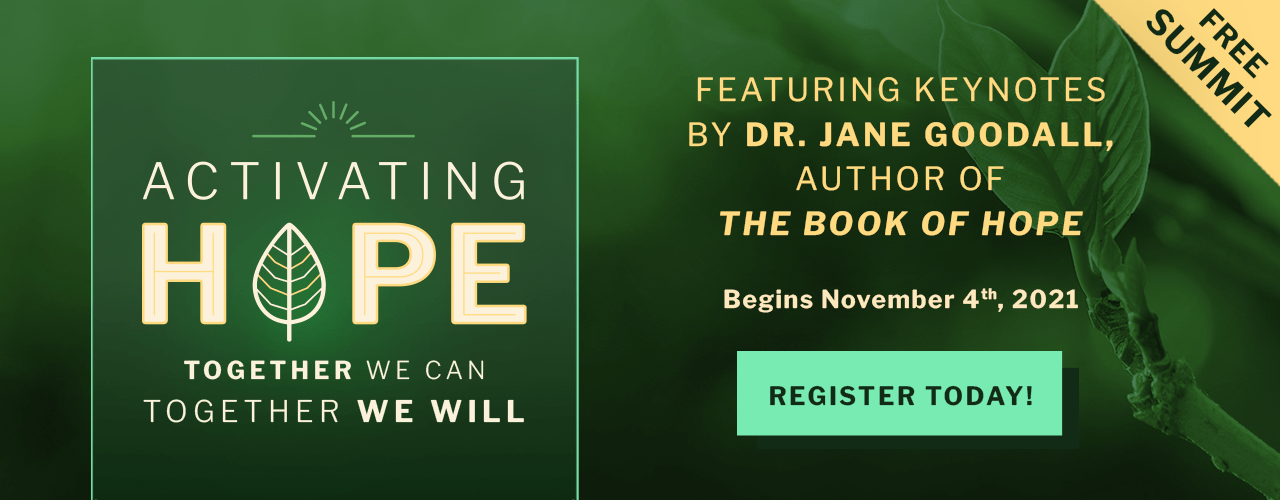


  • FREE Online Summit, Activating Hope, Starts on Thursday!

    FREE Online Summit, Activating Hope, Starts on Thursday!

    “Hope is what enables us to keep going in the face of adversity.” ~Jane Goodall

    Hi friends! As you may know, I’m always on the lookout for free events that can help us be our best selves and create a better world. With this in mind, I’m excited to invite you to a FREE online summit, starting this week—Activating Hope: Together We Can, Together We Will.

    Considering the division and chaos in the world today, it’s not easy to hold onto a sense of optimism, and it may seem pointless to do so. Hope alone won’t solve the problems we face as a collective—the impacts of climate change, the uncertainty of the pandemic, the challenge of racial injustice.

    But hope isn’t naivete or magical thinking. Hope can be a powerful force for positive change, igniting our inner strength and propelling us into action. That’s what inspired Jane Goodall—a beacon of hope and kindness in the world for decades—to lead this transformative event.

    This FREE four-day online summit starts this Thursday, November 4th. You’ll hear from a once-in-a-generation gathering of celebrated speakers and luminaries, including:

    • Jane Goodall, PhD, DBE, with an opening keynote and closing remarks
    • Craig Foster and Ross Frylinck of Academy Award–winning documentary My Octopus Teacher
    • Zolani Mahola, actress, storyteller, and lead singer of internationally acclaimed South African music group Freshlyground
    • Silvia Vasquez-Lavado, the first openly gay woman to complete the Seven Summits
    • Edith Eger, PhD, Holocaust survivor, bestselling author, and specialist in the treatment of post-traumatic stress disorder
    • Jack Kornfield, PhD, author, Buddhist practitioner, and Spirit Rock Meditation Center founding teacher
    • Tara Brach, PhD, psychologist, author, and teacher of meditation, emotional healing, and spiritual awakening
    • Bonnie Wan, partner and head of brand strategy at Goodby, Silverstein & Partners
    • Corrina Gould, chair and spokesperson for the Confederated Villages of Lisjan

    Through inspiring stories and teachings, hands-on workshops, and illuminating conversations, you’ll learn how to hold onto hope when all seems hopeless, cultivate hope in your children, and face the challenges of your everyday life with strength and optimism.

    Register here for free to reserve your spot and receive the full daily schedule. I hope you enjoy the lineup!

  • Why Your Positive Attitude Might Be Hurting You

    Why Your Positive Attitude Might Be Hurting You

    “Positivity is a dogmatic insistence on turning away from what is painful.” ~Susan Piver, Wisdom of a Broken Heart

    What if I told you there may be a flaw in positive thinking?

    How could being positive possibly be unhelpful?

    To some extent, positivity can be beneficial. In my life I’ve found optimism to be quite wonderful, crucial even.

    Being around people who are generally positive is just far more pleasant than being around people who are constantly negative. Life seems a little bit more manageable when you can practice gratitude. Smiles are had and spirits are lifted with simple platitudes like c’est la vie and it is what it is! Not only is it helpful, but optimism can actually provide a number of benefits.

    There was a study done by the University of Kentucky where nuns were rated on a positivity scale based on their diaries in the 1930’s. Sixty years later researchers found that some of these ladies, aged seventy-five to ninety, were still alive. The survivors were mostly the women who scored high on the positivity test, insinuating that happiness leads to a longer life.

    Happiness expert and psychologist Michael F. Scheier says that optimists do better in life than pessimists because they’re problem solvers and have better coping mechanisms. Dealing with trauma from earlier in my life has been made much easier by having these two things at my disposal.

    In her Broaden and Build Theory, psychologist Barbara Fredrickson has discovered a model of how positivity interacts with resilience. She states that people who are more positive have more physical, psychological, and social resources. They may be better able to exercise, more able to keep away from rumination, and they have the best of buds to cry to.

    When my grandmother died, I was devastated. How could I possibly draw positivity from death? Well, it turns out that I can and I did. My coping mechanism was to gain life lessons. In fact, her passing was the catalyst for me to get sober. I began to cope in a healthier way, without the crutch of substances. I had to adapt to see the sunlight, and optimism brought me there.

    I now have great positive coping mechanisms like meditation, playing hockey, and the ability to discuss emotional matters with others. I regularly practice gratitude; I even write a daily gratitude list and send it to a friend. I express my appreciation for things like my job (which isn’t always perfect), being able-bodied, and having financial security.

    Don’t get me wrong here, I love optimism; I just can’t help but look at where it fails us.

    I used to be the “fine” queen. When someone asked me how I was doing I was always “fine.” Whenever something happened, maybe someone did something to wrong me, like the guy I was dating being a real jerk, it was “fine.” I was the girl who kept the smile on her face.

    I was bubbly and eternally positive, no matter what the situation. While on the surface this may seem like a wonderful trait in a person, in practice it meant that my needs weren’t being met, I was letting people treat me poorly, and I wasn’t always listening to my mind, body, or spirit.

    To grow from this has been a long journey of realizing that it’s okay (even important) to slow down and take a look at what’s going on. It’s necessary to give my feelings space and let them come out to play. I learned this through heartache after heartache. Breakups, dreams crushed, and death—all of these things helped me to discover that I deserved my own presence.

    Heartbreak shook me to the core, leaving me feeling like I’d never be okay again. The feelings I had at that time demanded to be felt; there was no getting around it. In order to move past the suffering, I needed to feel it. I couldn’t tell myself I was fine or that everything was going to be okay. I just needed to sit with the hurt.

    Sure, there were good things that came from heartbreak like lessons learned and new opportunities, but there were also times when I just needed to feel, heal, and deal. I needed to look my heartache squarely in the face, cry, and let my facing it begin to repair the damage done.

    My dreams were crushed when I got into an Ivy League university and realized that I couldn’t attend for financial and personal reasons. I was totally devastated. Through this, though, I realized that it was okay to hold my sadness. I was allowed to hold joy for being admitted in the first place while I could also leave space for my tears.

    Man did I spill tears when my grandmother died. It felt like my heart had been put through a meat grinder, and the pieces were never going to fit back together again. I cried in the grocery store and at the mall, I couldn’t mask what I was feeling. I couldn’t plaster that fake smile on, and when someone asked me how I was doing, the answer was often “not so good.”

    Little did I know that these experiences were gifts, moving me closer to being with myself. They encouraged me (with much force sometimes) to be with my truth, to be with the heart of the matter without turning away.

    Allowing and visiting feelings may take the form of letting myself cry without redirecting my attention anywhere else. Just giving myself the space to cry without judgment. Letting myself cry until there are no more tears to spill, or even telling myself that it’s okay if I don’t stop crying when I’d like to.

    It’s also leaning in, asking myself, “What’s going on, darling?” and listening to the answer, however difficult. It’s being able to sit with that raw feeling of vulnerability in my chest.

    Instead of being with what’s in your heart, many people put up a wall. Susan Piver puts it beautifully in her book Wisdom of a Broken Heart, “Positive thought is a method of stepping away from what ails you rather than toward it.” You’re often stepping away with avoidance, because who wants to feel the tough stuff?

    Leaning into that takes work and courage. It’s a societal norm to avoid feeling pain. We hate it; we’ll avoid it at all costs. That’s just what we do: mask our struggles. At work, in life, even in relationships with loved ones.

    There’s a pressure to be okay and put a game face on. This pressure comes from the idea that you should always aim for positivity, in all cases. This is what Susan Piver coined the “Cult of Positivity,” continually turning away from what is uncomfortable and painful. I have two big bones to pick with “positivity:”

    1. I don’t believe the bad in the world has happened because you were too negative.

    2. I don’t believe that looking at the bright side of things is always the answer to solving life’s problems.

    There are those who believe that positive thinking undoubtedly makes their lives much better. In many ways this is true. However, not so much when it comes to what happens to you in the world. No matter how positive you think, the outcome of your cancer is going to be the same.

    Alternatively, you can have wonderfully positive thoughts and still end up homeless or jobless. I dislike the idea of a “positive mind, positive life.” It ends up victim-blaming because people may feel at fault for something they had no control over.

    I’ve experienced this as someone who deals with mental health issues. I’ve had people tell me to just suck it up and think more positively. Don’t you think if it was that easy there wouldn’t be mental illness? No one wants to be depressed. It’s just not that simple.

    Optimism doesn’t cure crippling bipolar or bring you out of a depressive funk. Telling someone that they can control the outcome of their illness is just placing blame when there’s no blame to be had.

    The idea that someone has control over all outcomes in their life baffles me. For example, the book The Secret is about the Law of Attraction. What you put out in the world is what comes back to you, according to author Rhonda Byrne. If you put out those positive vibes you’ll reap the rewards, like a good seat at the movie theater or a gorgeous partner.

    This insinuates that you deserve it when bad things happen to you just as you deserve it when good things happen. It’s similar to some sort of merit system. I don’t believe a tragic accident happens because someone didn’t practice enough positivity. On the same token, even something like hitting the lottery is pure luck rather than an expression of a manifestation.

    Next, always looking on the bright side to answer life’s problems is just a way to avoid feeling. It’s superficial. It’s okay, important even, to be sunny, but it becomes problematic when your feelings are lying untouched below the surface. There’s nothing to be gained by lying to the world and saying that everything is fine when it’s not.

    Sometimes I feel like I need to “practice gratitude” when I’m sharing my struggles with a friend. I’ll tell them all about what’s ailing me, then I’ll quickly bookend my concerns with something I’m grateful for.

    While gratitude is a magnificently powerful practice, I may be selling myself short here, missing out on digging just a little deeper into what’s going on. Instead of turning away from my suffering, I could turn toward it to take a peek and to let it be felt.

    So, what to do with all of this? Next time a close friend says “good” when you ask them how they’re doing, try asking them how they’re really doing. You’ll likely take them off-guard, but it’ll worth it to help them open up. Listen to their answer.

    In yourself, watch for those moments where you’re quick to shut a feeling down. Look out for “buts,” like when you say, “I had a crummy weekend but it’s totally fine.” Practice just letting the tough stuff hang there. Don’t try to make it better for a moment.

    Of course, eventually, you do want to move on, and positivity can come in here. Once you’ve looked squarely at your stuff, then is the time to find something to be grateful for. It’s the time to make a joke or spew a platitude. Then you’ve really honored yourself, allowed yourself to be seen. Because only when you’re seen can the real healing begin.

  • 50 Questions That Will Help You Feel Grateful and Good About Life

    50 Questions That Will Help You Feel Grateful and Good About Life

    “Gratitude makes sense of our past, brings peace for today, and creates a vision for tomorrow.” ~Melody Beattie

    There’s very little that upsets me like feeling stuck and out of control. That’s exactly how I felt at the beginning of this year.

    Things were going well in many areas of my life, but I was unhappy living in my boyfriend’s childhood home in a Bay Area suburb, after we’d spent years living in LA and traveling. Though I knew this was ideal for him, it just didn’t feel right for me,

    And even if I could wrap my brain around asking him to leave his hometown when he was just settling back in and reconnecting with old friends, I wasn’t entirely sure what would make sense for us both long term, given that we have family on opposite coasts.

    Some days I’d start crying out of nowhere, while eating breakfast, working, or watching TV. I’d feel fear, anxiety, and confusion, and then more guilt for being so emotional and unable to identify and own my desires.

    One day I realized I’d fallen into a trap I’d fallen into many times before, and an ironic one, at that: because I’d felt trapped in my circumstances, I’d gotten trapped in my emotions.

    I was dwelling, overanalyzing, and worrying about worst-case scenarios. No wonder I was so blocked. I was trying to solve a problem from a place of desperation and fear. Always a recipe for disaster.

    So I decided to do something I’d done before, but hadn’t in quite a while: I started a gratitude journal.

    I knew I needed to nurture more positive emotions on a daily basis, and that everything would get clearer and easier from there.

    At first it was a little difficult. I’d write something down—“catching up with my brother,” for example—but it didn’t necessarily change how I felt.

    That’s when I remembered that knowing you should be grateful and truly feeling gratitude are two very different things.

    In order to actually feel gratitude, I had to dig deeper and reflect upon just how fortunate I was.

    People have always seen me as fortunate, even when I was secretly struggling with depression and bulimia, as I’ve always appeared to have a lot going for me.

    But I realize I am more fortunate than ever at this point in my life. I just needed a little more to help me access my gratitude, buried as it was beneath layers of fear and anxiety.

    Throughout this year, I’ve been building a list of questions that help me identify what I most appreciate about my life and the people in it.

    If you too could benefit from nurturing more positive emotions—and let’s face it, we all could—try asking yourself one of these questions and see where they take you.

    1. What’s one kind or thoughtful thing someone did for you recently?

    2. Who is always there for you, and how do you feel about them?

    3. Who has helped you become the person you are today, and what’s the top thing you’d thank them for?

    4. Who’s someone who always really listens when you talk, and how does that affect you?

    5. How have your spiritual beliefs or practices fulfilled you recently?

    6. What’s the best thing that happened today so far?

    7. What’s something that inspired or touched you recently?

    8. Has anyone done anything recently that made your job easier?

    9. What’s one thing you enjoyed about doing your job recently?

    10. Can you think of any non-physical gifts you’ve received recently—someone’s time, attention, understanding, or support?

    11. What about today has been better than yesterday?

    12. Who have you enjoyed being around recently, and why?

    13. How have you used your talents and abilities recently, and what have you enjoyed about doing that?

    14. What have you learned recently that will help you in the future?

    15. What made you laugh or smile today?

    16. What’s the last song you heard that you enjoyed? How did it make you feel, and why?

    17. Have you experienced any blessings in disguise lately—things that didn’t turn out as you’d hoped and yet turned out for the best?

    18. What’s the weather like today, and what’s one good thing about that?

    19. How has technology enhanced your life and your connections recently?

    20. Have you had an opportunity to help someone recently, and how did you feel about that?

    21. What’s one thing you experienced recently that made you feel a sense of wonder or awe?

    22. What’s the best thing about your home, and have you taken time to enjoy it recently?

    23. If you didn’t get what you wanted today, can you identify something in what you got that’s worth having?

    24. What’s improved about your life from this time last year?

    25. What choices have you made in the last five years that you’d thank yourself for making?

    26. What’s something you did well recently, and what qualities or skills enabled you to do this?

    27. Who made a positive difference in your life recently?

    28. What’s something you’re looking forward to in the future?

    29. What did you learn from the most difficult part of your day yesterday, and how will this lesson benefit you going forward?

    30. What’s something you witnessed recently that reminded you that life is good?

    31. What’s something you witnessed recently that reminded you that people are good?

    32. How many of your basic needs do you not need to worry about meeting today?

    33. What event or interaction made you feel good about yourself recently?

    34. How have you made personal or professional progress lately?

    35. What simple pleasures did you enjoy—or can you enjoy—today?

    36. What modern conveniences (i.e.: electronics and appliances) do you enjoy that make your life easier?

    37. What’s the most beautiful thing you saw today?

    38. What’s something enjoyable you get to experience every day that you’ve come to take for granted?

    39. What are three things your arms or legs allow you to do that you enjoy?

    40. What’s the kindest thing someone has done for you lately?

    41. How do your friends and/or family members show they care about you?

    42. What’s the last thing you enjoyed with your senses—a good meal, a song you love, or aromatherapy—and how amazing is it that you were able to experience that?

    43. What movie, book, blog, or article affected your life for the better recently?

    44. What have you seen in nature recently that made you feel happy, peaceful, or free?

    45. How has modern medicine improved your life, recently or overall?

    46. How does electricity simplify and improve your life—and can you imagine what life would like be like without it?

    47. What’s your favorite thing about your bed, and how often does it enable you to get restful sleep?

    48. What’s something you have easy access to that always improves your mood, and how has it improved your life?

    49. Who in your life has survived something difficult, and how do you feel when you think about the fact that they’re still here?

    50. Have you recently imagined a worst-case scenario that didn’t actually happen?

    This last one was crucial for me. Not only did this help me appreciate things that turned out better than I’d anticipated, it reminded me how often this happens—if only I’m willing to act.

    And act I did. A couple of months ago my fiancé and I moved back to LA, still far from my family, but in an area I love, near an industry we both love. And we’re now planning to start working on short films together.

    We’re also prioritizing visits with our loved ones, together and separately, so we can both still nurture our relationships.

    It’s a compromise we can both not only live with, but hopefully one that will enable us to thrive.

    I am far happier for having made this choice (and grateful that my fiancé was open to it). And I know I found clarity and the strength to act on this, in large part, because I made the effort to change my mental state.

    It’s funny how that happens. We can sit around and stress about our problems all we want, trying to force a solution. But sometimes the best way to fix what isn’t working is to first focus on what is.

    Everything gets easier when we move past fear and desperation and nurture a grateful, hopeful heart.

    UPDATE: Tiny Buddha’s Gratitude Journal is now available for purchase! You can grab your copy here.

  • Interview and Book Giveaway: 10 Habits of Truly Optimistic People

    Interview and Book Giveaway: 10 Habits of Truly Optimistic People

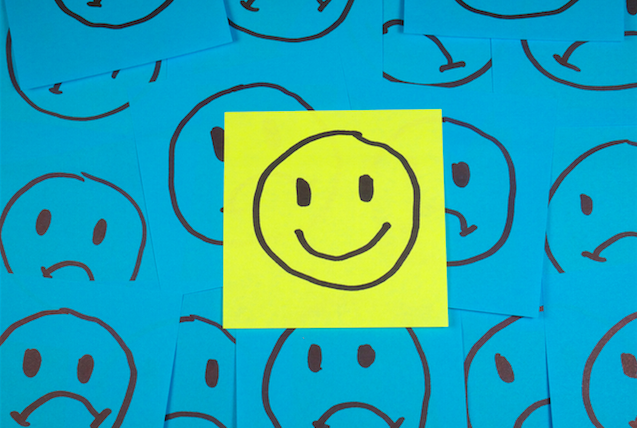
    Smiley

    Update: The winners for this giveaway are:

    I have a confession to make—I sometimes cringe when someone tells me to “just be positive.” I’ve often assumed this really means, “Your sadness is making me uncomfortable, so please stop talking about it.”

    To be fair, I wouldn’t classify myself as a negative person—not now, anyways—though I have my moments. I do, however, feel for anyone who might be classified that way, as I know from experience that deep negativity often comes from deep pain.

    We all face our own battles in life, some more overwhelming than others. And sometimes it seems nearly impossible to nurture a positive attitude.

    But it is possible. And sometimes, it’s the only thing that keeps us going when it seems unlikely we’ll find our way through the darkness.

    Optimism is a powerful thing. When you’re optimistic, you don’t deny that you’re going through a hard time. You don’t suppress your feelings or pretend you’re happy. You simply believe that something good could come from your struggles—even if you can’t yet fathom what that might be.

    You believe that life is happening for you, not to you, and that you’re not a victim but rather someone with immense potential to overcome your odds and thrive.

    Because you believe, you’re able to keep moving forward—learning, growing, and making the best of your circumstances—when it would be easier to give up.

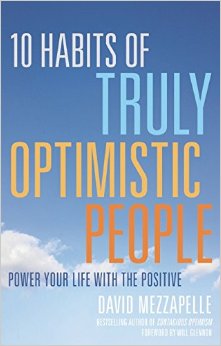
    I’m always inspired to read stories from people who’ve found silver linings in tragedy because it reminds me that we have immense power to shape our lives through our perceptions and responses. This is what brought me to Dave Mezzapelle’s new book 10 Habits of Truly Optimistic People.

    Dave’s on a mission to get people to “power their lives with the positive.”

    In this follow-up to his bestselling book Contagious Optimism, he’s collected more than 100 stories from amazingly resilient individuals, and compiled them into 10 chapters based on—you guessed it—the habits of optimistic people.

    I’m grateful that Dave took the time to answer some questions about himself and his book, and that he’s provided two copies for Tiny Buddha readers.

    10 Habits of Truly Optimistic PeopleThe Giveaway

    To enter to win one of two free copies of 10 Habits of Truly Optimistic People:

    • Leave a comment below.
    • For an extra entry, tweet: Enter the @tinybuddha giveaway to win a free copy of 10 Habits of Truly Optimistic People http://bit.ly/1DEk1RR

    You can enter until midnight PST on Wednesday, April 8th.  Two winners will be chosen at random on April 9th.

    The Interview

    1. Tell us a little bit about yourself and what inspired you to create this series.

    I have always been a positive, upbeat person and very optimistic. And, I always made it a point to find the bright side of a problem, which I found made it easier to surmount. In addition, I have always loved people’s stories.

    Over the course of the past twenty years, my alma mater, Fairfield University in Connecticut, had suggested that I write a book on optimism in business. This was based on the way I ran my company for seventeen years.

    I didn’t have an interest in writing something like this until 2010. I literally woke up one day and said, “I will do it. But let’s not just make it about me. Let’s make it about lots of people. And let’s not just make it about business. Instead, let’s make it about many of life’s themes including business.”

     2. What have you learned about the benefits of optimism?

    After spending years collecting silver lining stories from around the globe, one of the most powerful facts I learned is that being a positive, optimistic person not only allows people to achieve greatness, but it has numerous mental and physical benefits as well.

    From a biological standpoint, we benefit from the release of neurotransmitters such as serotonin, oxytocin, and dopamine when we are happy, positive, and optimistic.

    Mentally, we find ourselves in a good place that makes everything else seem easier (or at least less difficult for those that are going through tough times).

    People have nothing to lose from being positive versus the stress they definitely gain from being negative. Don’t run away from obstacles and adversity but be positive in your ability to address and surmount them.

    And when we are feeling good about ourselves and optimistic about our future, we tend to look better as well. Our skin tone, our posture, and our confidence all shine. And, even our physique improves when we combine optimism with a workout or exercise schedule.

    3. The book features more than 100 true stories from people who’ve learned the power of optimism. I’m sure you found all of them inspiring in different ways, but is there one that really stuck with you—and why?

    They all have affected me. In addition to the 100 stories you referenced in this book, we have thousands in our essay bank for future volumes. It has been nothing shy of awesome being able to read these stories and learn about these people.

    What sticks with me is not one particular story but the fact that everyone has a silver lining story to share. However, I will share an amazing story about Yvette Pegues.

    Yvette was an employee of IBM in their global patent office. She traveled the world and knew many languages. She also has two young boys and a terrific husband.

    One day Yvette had terrible headaches and was rushed to the hospital to find that she had a genetic brain malformation. They performed emergency surgery, which caused a brain stem stroke that left her in a wheelchair for life.

    Instead of letting this bring her down, she was a first responder to the earthquake in Haiti (the same year of her stroke—2010). She also competed in and won Miss Wheelchair Georgia and, in 2014, Miss Wheelchair USA where I was the keynote speaker.

    Today, Yvette has devoted her life to helping children worldwide improve their literacy skills.

    4. In one of your previous interviews, you talked about the steps you believe people should follow to help them embrace optimism when facing hurdles, with the acronym “GSM.” Can you tell us more about those three steps?

    GSM stands for Gratitude, Stories, and Magnet.

    Gratitude—you need to be grateful for even the smallest things in life. This can be something simple like the sunrise, a glass of water, your pet, or the smell of the ocean. Simple gratitude makes everything feel special, big or small.

    Stories—When people are going through tough times, they tend to think that they’re alone. However, when they hear or read stories of how others have persevered, it gives them hope. And, hope is that important foundation of optimism.

    Magnet—“Optimism is a happiness magnet.” ~Mary Lou Retton. I love this quote. You want to surround yourself with good, uplifting people. Their happiness and positive attitude is certainly contagious. It brings you up and adds light to your day.

    But, conversely, sometimes it’s difficult to avoid the negative people, the naysayers, and the cynics. Unfortunately, their negativity is contagious as well. They may be in your office, your classroom, or your apartment.

    In those cases, just ignore their chatter and simply tolerate them. It doesn’t mean you need to absorb their energy. Don’t take their negative opinions to heart and don’t let them influence you.

    5. Conventional wisdom about becoming more positive suggests we should avoid “negative people,” but in my experience, “negative people” often need our love and support the most. Have you learned anything that can help us find a middle ground so that we’re minimizing the negative effects of spending time with pessimists, but not just writing them off so that we may actually be able to help them?

    Yes. We never suggest ignoring or isolating pessimists. We just assert that what others do or say is a reflection of their own reality, so don’t take it personally and don’t let it bring you down.

    Some people are just naturally pessimistic and it is not our job to change them but at least being a ray of sunshine around them can bring them light without allowing their nature to pull us down.

    I believe that true success in everything comes from combining effort, reality, and positive thinking. Optimism alone will keep you in the clouds. And oftentimes reality alone will prevent you from getting passed first base.

    However, when you combine all three, things happen in a big way! And this is based on our extensive experience of interviewing people and capturing their silver lining stories.

    6. What do you believe is the biggest obstacle to optimism, and what’s one thing we can do to overcome it?

    Outside influences are the #1 obstacle. This can be a negative friend, family member, coworker or boss, or even the media. An outside influence can reduce or eliminate optimism.

    The best way to overcome it is to make it a point to minimize your exposure to the naysayers and cynics. In addition to watching or reading the news, try to follow positive stories and positive programming as well.

    Look in the mirror and remember that what others do or say is a reflection of their own self, not a reflection of you.

    Don Miguel Ruiz, in his book The Four Agreements, asserts, “Don’t take anything personally. Nothing others do is because of you. What others say and do is a projection of their own reality, their own dream. When you are immune to the opinions and actions of others, you won’t be the victim of needless suffering.”

    Conversely, appreciating those around you that appreciate who you are and what you stand for is tantamount for your own optimism and for making it contagious for others.

    7. Of the ten habits shared in the book, which do you think is the most difficult to form, and what’s one simple practice anyone can use to begin cultivating it today?

    Everyone is different so this is a difficult question. For example, some people struggle with embracing change (chapter one).

    Others have a difficult time appreciating those around them (chapter two).

    And, I have also noticed that many people do not believe in themselves and the value they possess (chapter five).

    So, in my opinion, the one simple practice is to take a deep breath and concentrate on the fact that others have had it so much worse and have made it through. And, the best way to prove that to yourself is to either read books like Contagious Optimism and Chicken Soup For the Soul and/or connect with others that have been in the same boat.

    It is very powerful to learn about the patience, persistence, and perseverance of others.

    8. What’s the main message that you hope readers take from this book?

    We all have stories. What you think may be boring or uneventful is actually inspirational and motivational to others around the globe. So, considering sharing your stories and remember, we are all naturally mentors just by the sheer impression of our footsteps.

    You can learn more about 10 Habits of Truly Optimistic People here.

    FTC Disclosure: I receive complimentary books for reviews and interviews on tinybuddha.com, but I am not compensated for writing or obligated to write anything specific. I am an Amazon affiliate, meaning I earn a percentage of all books purchased through the links I provide on this site. 

    Smiley face image via Shutterstock

  • Why We Should Look Forward to More of Each Day

    Why We Should Look Forward to More of Each Day

    Excited for the day

    “Use your smile to change the world; don’t let the world change your smile.” ~Unknown

    For most of us the average day includes a mix of things we both look forward to and things we don’t look forward to. We look forward to coffee in the morning, we regret that we have to go to work; we look forward to coming home at the end of the day, we dislike that we have to do laundry.

    But how much of your life are you giving up if you dread, dislike, regret and don’t look forward to, say, 50% of your average day? Logical reasoning says that, based on this estimate, you’re giving up half of your entire life. And you’re giving it up simply because you aren’t looking at your life from a healthy perspective.

    When we don’t look forward to something—when we don’t enjoy it—we aren’t very present in that current moment. It’s like life is just passing by, and we’re just waiting for it to pass so we can get on with the more fun or interesting parts of each day.

    When we get caught up in this waiting-for-better-moments routine, we aren’t actively living, are we?

    We end up passive, joyless, unhappy, and unfulfilled. All because we’re waiting for the good things in life to happen for us.

    Stop waiting.

    You can have crazy amounts of joy and excitement in life if you just change the perspective from which you view things. And you can do it by following this one simple rule:

    Look forward to each day.

    A Life of Looking Forward

    Looking forward to even the smallest parts of your day can not only make that day more enjoyable, but it can also improve your outlook on life, help you appreciate the things you have, keep you from getting stressed out, and help you have better relationships.

    Look forward to each day and you’ll realize the millions of silver linings you’ve been ignoring, if only because you weren’t looking for them.

    Maybe the first time you actively decide to look forward to going to work, you’ll realize how lucky you are to simply have a job. The next day you look forward to work, you might remember a kind act that someone at the office did for you the previous day and look forward to repaying that action.

    Once you start looking forward to things more often, you’ll find more and more reasons to appreciate and be excited for everything that comes your way.

    Look forward to paying your bills. You’re buying a roof over your head—something that other people in the world might never have the luxury to afford.

    Look forward to sitting in traffic during rush hour; think of it as down time to reflect on the events of your day.

    I might sound a little crazy to you right about now if you’re used to hating all of these things. Bills and traffic, after all, are never something to look forward to, right?

    Only if you choose to have that perspective about them.

    How I Started Looking Forward to Every Day

    I won’t say that I’m a naturally negative person. I no longer believe that anyone is “naturally” anything. You can change anything about yourself if you really, really want to. I’ve learned that now.

    I will say, though, that I am a pretty stressed out person most days. At least I was. Between you and me, I still am sometimes.

    But I’ve chosen to stop being negative and to stop being stressed. I only try to enjoy everything. Each day I look forward to all the potential good things that could happen. I don’t lie to myself. I just look at everything in a positive light.

    I used to dislike how I looked. I regretted the things I wasn’t born with. I regretted the opportunities I had never had. I disliked having to work when I didn’t feel like it. Many days I just waited for “this day” to be over, hoping that maybe tomorrow would be better.

    I wish I could say that some life-changing realization struck me suddenly on a windy, mysterious night and that said realization allowed me to live my life positively from that day forward.

    But that would be a lie.

    The truth is, it took many years of me feeling bad about myself and searching for ways to feel better.

    It took many sincere conversations for me to realize how negative I was being, and it took many, many attempts to correct my perspective and my behavior for me to finally, genuinely be positive.

    You know, it’s kind of frustrating the first time that you realize you had the power to make your life drastically more enjoyable just by changing your perspective.

    As soon as I started looking forward to just being me, my life became much happier. Every day is a good day now, because I’ve chosen to see it that way.

    Don’t get me wrong; I still get sad, angry, and stressed. But I experience negative emotions like these much less often because I don’t wake up each day thinking about all the possible ways my day could go wrong.

    Instead, I wake up and focus on all the great opportunities just waiting for me.

    I’m telling you this because I’m hoping that you won’t spend years trying to be happier, and that you’ll simply start looking forward to each new day and feel all the joy that you’ve been missing out on.

    I do understand, though, that it’s kind of hard to just suddenly start looking forward to everything, so here are a few tricks that work for me. Maybe they will help you start to view each day in an optimistic light.

    1. Keep good feelings with you all the time.

    If I watch an inspiring movie, witness a random act of kindness, or even just feel especially happy on a given day, I choose to remember those feelings and keep them in the forefront of my mind as I do whatever I’m doing. It’s like having an extra blanket of positivity in addition to me looking forward to my day.

    Focus on retaining positive feelings and you’ll be a lot stronger when negative things come your way.

    2. Just live.

    If I find that my mind is wandering and that I’m stressing out about things I have to do today or that I’m trying to plan out my day too aggressively, I remind myself that I need to live in the present moment.

    I stop thinking about everything. I just live. If I’m writing, I hone in on how good it feels to be typing. If I’m driving, I make sure to appreciate the scenery with extra attention to detail. I stop trying to control everything, and I just live in the moment.

    3. Think of everything you are grateful for.

    Another trick I’ve learned for suppressing negative thoughts and feelings is to think of everything I have. I think of all the things in that current moment that I can be grateful for, and I swear I find more and more each time.

    I’ll tell you one thing: It’s really hard to be angry about a late rent check when you’re simultaneously grateful for the comfortable home in which you live.

    4. Forgive everything.

    I have to say, I’m still working on this one. But it does help me tremendously when I’m able to do it. My temper can be pretty off-the-handle, and someone cutting me off in traffic is definitely enough to spark it.

    But I’ve gotten a lot better at remembering that I’ve probably done that same thing before, and I get over the issue and move on with my day.

    It’s a lot easier to look forward to everything when you don’t let baggage from the past weigh you down.

    If you take anything away from this today, let it be this: You are you. And that’s all you need to make today awesome. Look forward to it.

    Happy jogger image via Shutterstock

  • Is Optimism Hard-Wired? 6 Ways to See the Glass as Half Full

    Is Optimism Hard-Wired? 6 Ways to See the Glass as Half Full

    Glass Half Full

    “If you don’t like something change it; if you can’t change it, change the way you think about it.” ~Mary Engelbreit

    My best friend called me on the phone last night. Of course, it’s not unusual to get a call from your best friend. But this call was one that really got me thinking about myself and the way I view life.

    Kent has been my best friend since we were eleven years old. We met during summer camp the year after his dad died. We didn’t even like each other at first, as he was a tall, gangly geek and I was a short, muscular athlete. Somehow, though, we became friends and the relationship has lasted for almost forty years.

    Kent hasn’t had an easy life. After his dad died, his mother had to work as a maid in the local hotels. While that’s an honorable profession, it kept her working during holidays and weekends.

    He hung out with my family on most holidays.  In fact, we jokingly refer to him as the “fourth McKinney son.”

    When we were in our twenties, Kent contracted a (usually) fatal virus.

    He’s been living with it all this time, and has been told to “get your affairs in order” more than once. I’ll never forget the time he called me crying because the doctor had said he only had three months to live.

    “Tim! I have a one-year-old son. What am I going to do? He won’t even remember me.”

    I promised my best friend that I would share all of Kent’s embarrassing stories with his son. And, when I hung up the phone, I cried too.

    Kent didn’t die that year, or any of the other years since. That son grew up to join the Army and is now on active duty.

    Last night we were talking, and Kent mentioned that he was going a get-together with a family who’d lost a son in the Iraqi war. I said, “Oh, that must be so difficult. Those poor people!” My friend simply replied, “I came away from it with a tremendous respect and appreciation for the sacrifice these people made.”

    What? Kent has a son who is in the military! How can he handle being around someone who lost their son? While I was thinking about how hard it would be to be around someone who’d lost a child, my friend was focusing on being grateful.

    And then it hit me. Kent is always like that.

    Even though Kent has lived his entire life with the cloud of mortality over his head, he became a person who ceaselessly volunteers time, money, energy, and everything for those who are less fortunate than him.

    In contrast, my wife and I have a running joke about my pessimism. We joke that we could both walk into a room that has a giant window overlooking the ocean. Upon seeing the window she would exclaim, “Oh my! Look at that gorgeous sunset.” And I would say, “That window is filthy. And what’s with that crack up at the corner?”

    I don’t mean to see the negative side of life first. I’m just hard-wired to do so.

    How can someone like me overcome my natural tendency to be pessimistic? I did some brainstorming and came up with six ways you to see the glass as half full.

    1. Stop comparing yourself to others.

    When a friend of yours gets a raise, a new car, or loses a bunch of weight, don’t reflect it back on yourself. It’s not about you! Just because you didn’t get a raise, are driving an old Volkswagen, and have a spare tire around your middle doesn’t mean that you never will improve. When we compare ourselves to others, we usually fare poorly.

    2. Change your focus.

    Optimism and pessimism are nothing more than feelings. If you sit around dwelling on why your life sucks, you’re going to feel pessimistic. If you shift those thoughts to ones of gratitude, you’ll feel more optimistic.

    3. Look for positive signs everywhere.

    I have another friend who, whenever she sees a penny on the ground, picks it up and thinks of one thing she is grateful for. It doesn’t have to be a penny. You can do this when you see an airplane overhead, a white cat, or some other trigger that will remind you to stop and feel grateful.

    4. Listen to uplifting music.

    It’s almost impossible to be pessimistic when you’re listening to Josh Groban’s “You Raise Me Up.” If you find yourself in a pessimistic frame of mind, put on something that will shift those feelings from negative to positive.

    5. Detach from outcomes.

    The key in being optimistic is to develop the attitude that if one opportunity passes, another one will be along soon. Don’t believe me? Take a look at your life and identify a couple of things that you really wanted and didn’t get. Chances are you can look back at it now and feel glad that you didn’t get it.

    6. Stop saying you are a pessimist.

    Words are powerful. If you start to think of yourself as an optimist, start telling people that you’re an optimist, then it will soon become true. How do I know? Because I’m an optimist, too.

    Photo by Bailey Weaver