Tag: optimism

  • Looking Back: The Silver Linings of the Pandemic and Why I’m Grateful

    Looking Back: The Silver Linings of the Pandemic and Why I’m Grateful

    “You gotta look for the good in the bad, the happy in the sad, the gain in your pain, and what makes you grateful, not hateful.” ~Karen Salmansohn

    The 2010 decade was difficult for me. Hardly a year went by without someone close to me passing away.

    When the tragic decade started, I was in the midst of my residency training and free time was a luxury I did not have. When I graduated and became an attending physician, I was too busy caring for patients on my own to take a break.

    In 2018, my world was shattered when one of my best friends died unexpectedly. The sudden shock of it left me feeling helpless. To counter my feeling of despair, I worked even harder to take care of patients in need.

    Shortly afterward, my father-in-law was diagnosed with a recurrence of his cancer. Over the next year, my husband and I spent whatever free time we had flying across the country to see him. We watched as he slowly deteriorated until he took his last breath in 2019.

    Instead of slowing down, I kept on. It seemed like the more I needed a mental health break to grieve, the harder I worked to suppress my grief.

    When the world stopped due to COVID-19, I too was forced to take a pause. With the whole world quarantined, I finally had the time to heal my broken heart.

    With more time at home, my husband and I found ourselves taking more walks, cooking more meals, and openly talking about our feelings. We visited with family over FaceTime and Zoom and shared stories about those who were now gone.

    We found joy in the small things: a sunrise, a bird’s song, and even just a cup of tea. With the past vastly different from what we were living through and the future feeling so uncertain, we were finally living in the present.

    Though the pandemic brought with it so much suffering and sadness, I found unexpected gratitude in the midst of it:

    Gratitude for the time that we had with our lost loved ones before COVID-19.

    Gratitude for the extra time to spend with one another now.

    Gratitude for the technology that allowed us to stay connected with our family and friends.

    Gratitude for the reminder that life is fragile and that “taking it slow” is sometimes necessary.

    Gratitude for the chance to take a step back and reflect on the important things in life.

    Surprisingly, I realized that I felt gratitude for COVID-19.

    It’s been the darkest of times. I’m devastated by all the lives lost and all the other losses people have experienced. The course of humanity has changed, and likely not for the better.

    But I’ve found solace in the silver linings that have emerged from the pandemic—things that will stay with me long after the virus has passed. I am far more grateful today than I have ever been and with it comes a sense of peace and a newfound strength to carry on.

    My father-in-law, for instance, died peacefully at home surrounded by his loved ones. For a year, we were able to join him at his medical appointments and also create new memories. We arranged for a family trip to Mexico so he could enjoy warmth in the wintertime with his sons and brothers.

    These otherwise normal events would not have been possible during the beginning of the pandemic. If he had passed away a year later, we wouldn’t have been able to say goodbye the way we did. I’m grateful for the quality time we had.

    During the pandemic, I finally grieved my best friend’s death. Instead of keeping myself busy to distract from it as I had done before, I now had time to truly process and feel his loss through the five stages of grief. I think about him at least once a day but instead of feeling sorrow, I’m usually thinking about how he would guide me through this new normal.

    While the pandemic is not something to celebrate, it has certainly opened my mind. I never would have thought that something so awful could bring about so much healing and hope.

    COVID-19 made it very clear that life is too short to worry about the little things. Life is too precious not to enjoy every moment, especially with our loved ones. When we choose to be grateful for all that we have, we open ourselves up to more joy, peace, and connection.

    While we may not be able to control our circumstances, we can control how we react to them. We can choose kindness, understanding, and empathy for ourselves and others.

    Did someone just cut me off in traffic? It’s okay, maybe they’re rushing to the hospital to see a loved one. I hope they make it there safely!

    Is the Wifi connection poor again? No worries, I can use this time to read a book.

    Did I make the wrong decision? It’s okay, I’ll learn from it and make a better choice next time.

    Reframing our thoughts to focus on the good, no matter how small, can have a powerful effect on our mood and outlook. Things that would otherwise be frustrating or upsetting are suddenly not so bad.

    For all of us, COVID-19 has taken away so much. But if we can find a way to look for the positive and cultivate gratitude then we can find happiness amid hardship. We can come out of this stronger, kinder, and more connected to the people and things that matter most.

    I’ve developed several good habits during the pandemic. I now journal every day writing about all the things that made me happy. Whenever I spend time with friends and family, I give them my undivided attention. I enjoy my work—I treat my patients as I would my family and consider it a privilege to be part of their care. I’ve also been taking more time for self-care and nurturing my creative pursuits.

    The world has changed and so have I. I am grateful for the life lessons and growth.
  • How to Make Things Better When It Seems Like Everything Is Going Wrong

    How to Make Things Better When It Seems Like Everything Is Going Wrong

    “You can never be happy if you’re trapped in the past and fearful of the future. Living in the present is the only way to be happy.” ~Unknown

    Have you found that the local and world events of the last couple of years have taken their toll on you and your family and friends? With fires, floods, shortages of food, fuel, and medicine, illnesses, job losses, and more, all occurring in a short space of time, it can be hard to find anyone who has not been affected in some way.

    Many people are experiencing feelings of hopelessness and living in constant fear about the future. And unfortunately, if not managed, over time these feelings can lead to depression, anxiety, and numerous other health conditions.

    We’ve all heard that a build-up of stress hormones in our body contributes to illness, but how can we possibly improve our health when we are living in survival mode and feel like the situation is hopeless?

    I lived this way for most of my life, wishing I could clone myself a million times so I could get on with changing the world, but feeling sad and frustrated knowing that I could not, no matter how hard I tried.

    I was also in my own little bubble of survival, working way too many hours to prove to myself I could be a mum and have a career and save the world, all while my health was deteriorating.

    From time to time I found myself thinking, why is it that no matter how hard I try to make things better for myself and my family, something else always comes along and makes everything worse? I was always striving, not even for perfection, but to make things better.

    I really wanted a different way, to live a life without the stress, struggle, fear, and health issues.

    Fortunately, a friend introduced me to the benefits of guided meditation and how to shift your mindset, and once I understood how powerful these practices could be in helping me to improve my quality of life, I didn’t look back.

    Even though it was a struggle for a while, as I made the changes I needed to make—which included restructuring my business, moving three times in twelve months, managing my chronic health issues, and working through the trauma—I have now found a place where I can notice and find joy in the small things, and I have hope for the future.

    I learned that, if we can keep a positive outlook and focus on ourselves and how we respond in any situation, we can change how we feel about everything. But how can we do this when we are feeling stuck?

    The first thing to realize is that you can’t change others. You can only change yourself and the way that you respond or react.

    You can only alter the choices you make in your life and how you can make the world a better place. And the good news is you don’t need to do anything big to do that.

    What if you can find small ways to improve:

    • Your relationships with family and friends. (For example, by being more present and listening to their interests and needs.)
    • Your kindness and care in relating to people you meet. (For example, by questioning your judgements rather than reacting immediately.)
    • The way you feel about yourself. (For example, by expressing gratitude for everything you’re doing right.)

    What if you can change the way that you look after your environment in your home and community?

    What if doing these things has a flow-on effect to everyone else you meet?

    What if you say or do something, even a seemingly small thing, that makes others feel more love and joy?

    What if they then go on to change something about themselves that gives them more joy and happiness in their lives?

    What if each person pays it forward a little more?

    We are so much more powerful than we think. Just by changing our perceptions and our actions we have an exponential effect on the people around us.

    Did you know that your thoughts and memories are just perceptions of your reality, based on your own life experiences, with some unconscious conditioning thrown in? Every single person in this world experiences life in a different way based on their past, as well as patterns of behavior that developed from a need to feel loved, nurtured, or a sense of belonging as a young child.

    Studies have even shown that people who witness an event, e.g., a crime, will always have a different interpretation of what happened compared with anyone else, because we all have our own biases. Often, our memories, when compared with actual video footage of the crime, will be completely inaccurate.

    How does this relate to you and lowering your stress and anxiety?

    It means that in any given moment you can choose how to perceive the events going in your life, in the community, and world around you.

    You can choose to wallow in fear and frustration about things that are outside of your control, or you can choose to empower yourself by focusing on the good and all the things within your control. Like the things that make you feel better. Because when you feel better, you do better, for everyone and everything around you.

    Ask yourself, what do I need to do to feel more joy and happiness and hope?

    Be consciously aware of your thoughts and notice what comes to you. What do you want to keep and what does not serve your own happiness and joy?

    For me, I decided to stop spending as much time looking at news feeds and social media. Most of it is not positive or just made me feel like I was inadequate, so I cut it right back.

    I actively sought to change conversations with family and friends that were fear-driven, by changing the subject. Unless the person really wanted help or advice that was going to support them in moving forward.

    I also made the decision to stop working so hard and enjoy whatever time I have left on this earth. I decided to focus on things that bring me health and happiness.

    Here are some of the things I like to do to feel happier, healthier, and more hopeful. Feel free to take what works for you and leave the rest. If none of these resonate, then take some time to sit and ask yourself, what can you do differently? What makes you feel good?

    • Take a bath.
    • Call a friend.
    • Play a musical instrument or create some art.
    • Listen to music.
    • Find a space on your own, even for just a few minutes, and use some gentle background music to soothe your mind and help you gather your thoughts. Doing this can often help us release the tension, even just a little, and give us some space to work out what is important to us.
    • Spend some time creating a dream board, a bucket list, or even a list of things you’d love to have or do in your life. Even though it might seem like some of those things are impossible to achieve, writing down our dreams and desires can lift our mood and gives us hope and something to look forward to.
    • Plan a treat for yourself or your family—go out for ice cream and sit by a river, lake, or beach; find a recipe that you and your family would love and work together to make it; or take a bike ride.
    • Find a spot to sit outside and observe nature and the world around you. Notice something you’ve never looked at properly before. Observe and appreciate its beauty. Look at it like a child might, with wonder and curiosity.
    • Don’t be afraid to ask someone to support you or to help out, whether it’s for a chat or some physical assistance. Most often, people are more than willing and enjoy helping. You just need to ask.

    Choose just one thing that you can do differently to improve your mood and outlook and commit to making it happen. Trust the ripple effect will happen and be proud that you are making a difference for yourself and others.

  • How I’ve Redefined Success Since ‘Failing’ by Traditional Standards

    How I’ve Redefined Success Since ‘Failing’ by Traditional Standards

    “Once you choose hope, anything is possible.” ~Christopher Reeve

    When I was a child, I wanted to save the world. My mom found me crying in my bedroom one day. She asked what was wrong, and I said, “I haven’t done anything yet!” I couldn’t wait to grow up so I could try to make a difference.

    At fourteen, I joined a youth group that supported adults with disabilities. We hosted dances and ran a buddy program. I helped with projects at state institutions and left saddened by the conditions for the residents. I planned to work at a state institution.

    As a senior in high school, I was voted most likely to succeed. It was unexpected, like so many things in my life. I hoped to find meaningful work that helped others.

    My first year at Ohio State, I fell head over heels in love and married the boy next door. A month after my wedding, newly nineteen, I started my first full-time job as manager of a group home for men with developmental disabilities. I never finished college.

    At twenty-three, I was officially diagnosed with depression after my first baby, but the doctor didn’t tell me. I read the diagnosis in my medical record a few years later. I grew up in the sixties with negative stereotypes of mental illness. I didn’t understand it, and I thought depression meant being weak and ungrateful. I loved being a new mom, and I wanted the doctor to be wrong.

    I was a stay-at-home mom with three young children at the time of my ten-year high school reunion. The event booklet included bios. For mine, I wrote something a bit defensive about the value of being a mom since I didn’t feel successful in any traditional way.

    At thirty, I experienced daily headaches for the first time. I tried natural cures and refused all medication, even over-the-counter ones, while the headaches progressed to a constant mild level. I kept up with three busy kids, taught literacy to residents with multiple disabilities at a state institution, and barreled on. I thought I understood challenges.

    At forty, I went to a pain clinic at Ohio State and received another depression diagnosis. This time it made sense. The diagnosis still made me feel vaguely ashamed, weak. Still, I rationalized it away.

    Which came first, the depression or the headache? Maybe it was the headache’s fault. Anti-depressants were diagnosed for the first time, which managed my depression. Until…

    When I was forty-two, I fell asleep at the wheel with my youngest daughter Beth in the passenger seat. She sustained a spinal cord injury that left her paralyzed from the chest down. I quit my job at the institution to be her round-the-clock caregiver.

    Beth was only fourteen when she was injured. However, she carried me forward, since between the two of us, she was the emotionally stable one. She focused on regaining her independence, despite her quadriplegia. I let her make the decisions about her care and her future. Sometimes we need someone strong to lead the way.

    Every day, every hour, every minute of our new life felt impossibly uncertain. New guilt and anxiety merged with my old issues of chronic pain and depression. Increased doses of my anti-depressants did not prevent me from spiraling down. There was no light at the end of the tunnel. No hope of light.

    I put a tight lid on my feelings, which was a challenge by itself. I didn’t want to give the people I loved more to worry about. I also felt that if I gave in to my emotions, I wouldn’t be able to function. And I desperately needed to help Beth. That’s what mattered the most.

    I started counseling several months after the car accident. At the first session, I thought I would find a little peace, with more ahead. It wasn’t that simple. I felt like a failure, and thought I failed at counseling, too, since I didn’t improve for some time. I should have reached out for help right after Beth’s injury.

    Weekly counseling helped me, along with my husband always being there for me. However, Beth was the one who showed me how to choose hope. I watched her succeed after failing again and again, over and over, on her quest to be independent.

    Beth and I shared unexpected adventures, from our small town in Ohio to Harvard and around the world. She has had the most exciting life of anyone I know. She’s also the happiest person I know because she finds joy in ordinary life, and that’s the best kind of success.

    Since I was voted most likely to succeed in 1976, I learned that success encompasses so much more than I originally thought. Things like being married for forty-five years to my best friend. Raising three great kids. Working meaningful jobs and helping others. Volunteering and mentoring. And learning meditation to better cope with chronic pain.

    Today, my depression is mostly managed with prescriptions, which also feels like a kind of success. I’m no longer ashamed of my depression. It’s part of who I am, and I know for a fact that I’m not weak or ungrateful. There’s light at the end of the tunnel, a bright light.

    Hope is an incredibly powerful thing. And if you never give up? Hope wins.

  • The Power of Reframing: 3 Ways to Feel Better About Life

    The Power of Reframing: 3 Ways to Feel Better About Life

    “Some people could be given an entire field of roses and only see the thorns in it. Others could be given a single weed and only see the wildflower in it. Perception is a key component to gratitude. And gratitude a key component to joy.” ~Amy Weatherly

    I grew up in a deeply negative environment. My parents separated acrimoniously when I was seven, and they were a grim example of how not to do divorce.

    They brought out the worst in each other, and sadly, over time, they also brought out the worst in me. I was depressed as a teen, and had been conditioned to believe that my problems were an unfortunate family trait—one that I had simply to accept and live with.

    And I did, for many years. But of course, I was not happy. And yet I didn’t know enough about the world to understand that my environment and upbringing were very largely to blame.

    I now know that while genetics can account for up to around 40% of the happiness we experience, the rest is within our control.

    I’m aware of this because studies have shown it to be the case. But I know it because I’ve also lived it.

    Deciding to Change My Life

    Over the last ten years, I’ve dramatically changed my life, and I’m the most at peace I’ve ever been.

    When my eldest daughter was a baby, I finally had an important enough reason to want better. I was determined that she would grow up in a fun and positive home. And if I was going to make that a reality, I had to put in the work to make it happen.

    Plus, it had become especially vital at that time since my daughter’s difficult delivery had been traumatic and left me with extreme postnatal anxiety. I was in a very bad place, and I needed to get out of it; I needed, in fact, to get out of my own head. And I didn’t want to rely on medication for that.

    While my husband had already saved me in many ways, the rest was my responsibility—my state of mind, my outlook.

    Desperate but determined, I began an activity that, over time, changed my life.

    While I appreciate that sounds like an exaggeration, it’s really not. Because my life truly has changed. Although it also hasn’t. Allow me to explain…

    The Power of Reframing

    I inadvertently learned how to reframe, and it’s possibly the most profound skill there is for increasing happiness.

    It’s so incredibly powerful because it can change your experience of life—without changing your actual circumstances.

    Here are a few examples of how reframing helped me to feel more positive about my own life…

    A few weeks ago my dad moved, and I planned to visit with my girls during half term to take him a plant.

    We live in the UK, and while the weather is changeable, it’s usually fairly mild. But on the day it so happened to be spectacularly windy. I told my dad we’d make our way and I’d let him know if we couldn’t get there.

    We made it! And after dropping off my dad’s plant, we drove a short way to a restaurant.

    Before we’d even ordered drinks, the winds brought down a pylon and there was a power cut. The kitchen closed, and my young daughters ate crisps for lunch, and I still had to get us safely home.

    But, instead of being mad that the entire day turned into a farce (we encountered fallen trees on the way home!), I was glad I’d made the effort. Most importantly, we were safe, but also it reinforced to my dad that we cared enough to get there despite the challenges.

    Another example is that since Christmas we’ve had one illness after another in our home. First was COVID, and since then we’ve had viruses and two bouts of chicken pox.

    When my eldest succumbed to COVID, I was worried about her, but also on a practical level how I’d get my youngest daughter to school (until my husband also tested positive, at which point I was able to leave the house). The fear that had been silently there for two years had finally caught up with us, and it had the potential to be an enormous source of stress.

    But during the COVID episode—and later with chicken pox too—school mums stepped up without me even asking. I’d never really felt like I’d integrated with the school mum crowd, but as it turned out, I was wrong:

    They totally had my back.

    I felt and continue to feel so incredibly grateful not only for them, but also knowing that I have a support network I did not even realize was there.

    These are just a couple of recent examples which spring to mind, of situations that previously I probably would have experienced negatively and complained about—but I’m now able to reframe to find the silver living.

    So you see, my life is different in terms of how I experience the world, and yet it’s really the very same as it always was. But I feel vastly different.

    I feel at peace.

    And now I want to share my process so others can also learn how to do this for themselves, because it’s basically free therapy, available to everyone, that we can implement alone, and without guidance.

    But how did I do it, without professional help—and without medication?

    How to Tap Into the Benefits of Reframing

    For me, there were really three steps to my journey, which happen to work together in perfect harmony.

    1. Practicing gratitude

    First, I began writing gratitude lists.

    With no comprehension of their value—but with a deep desire to start appreciating the good things in my life, and a desperate hope it was a good starting point. Good enough to help me do better for my daughter.

    I started writing a list of the positive things that had happened each week. Not realizing that this is actually an effective therapeutic exercise, I wasn’t expecting very much to happen.

    But I knew that the fundamental change I wanted to see in my life was more positivity. So I figured the “fake it till you make it” approach might just be beneficial.

    Incredibly, it didn’t just help—it was the turning point of my life to such a degree that it now feels like before and after.

    Writing gratitude lists isn’t difficult. It can be as simple as jotting down three, or five, or ten things you’re thankful for. This can be done when you wake up, to start the day on a positive note, or at the end of each day if you prefer.

    If you have a hectic schedule and can’t find time to do this daily, just be sure to do it regularly.

    And if writing it down seems like too much effort at the end of the day, you could try saying your list of things for the day quietly and privately in your own mind.

    It doesn’t need to a formal practice; it just needs to something you do practice. Because over time, something magical happens…

    2. Positivity

    As time goes by and you continue to acknowledge the good in your life, your default mindset will begin to switch over to a more positive one.

    For me, it was like a spiritual awakening, and I like to use an analogy to describe my experience.

    The idea of rose-tinted glasses is a familiar one for most people. But sometimes they’re actually a blessing. After spending several months practicing gratitude regularly, I felt like I’d removed the only pair of glasses I’d ever known, and the world suddenly looked brighter.

    I also began to appreciate that positivity is often a self-fulfilling prophecy: the harder you look for it, the more you will find.

    And your mood tends to be reflected back to you by others, too. Just as negativity is draining, positive people energize those around them!

    I was recently waxing lyrical to somebody about the positive impacts of gratitude and reframing, but they insisted that offloading onto friends or family is necessary sometimes. I didn’t completely disagree, but I had something important to add:

    By default, increased positivity leads to a decrease in negative experiences, which in turn leads to less often feeling a need to offload. And that’s the magic of this whole concept.

    There’s one final step in my toolkit…

    3. Journaling

    Unfortunately, when you’ve grown up in a negative environment, it can be all too easy to slide back into ingrained behaviors—old habits die hard.

    For that reason, even though I feel very mentally robust these days, I know that if I stop practicing these new skills, it’s almost inevitable that I’ll return to the mindset I developed as a child. (I’ve learned this the hard way.)

    Journaling is my favorite way to stay on track and accountable, because it can easily incorporate each of the above ideas, plus so many more.

    Depending on my mood, I love journaling for its mindfulness, or state of flow, or as a creative outlet. Or all of the above!

    Essentially, these skills each feed into and reinforce one another. And together, they really are life-changing.


  • FREE Online Summit, Activating Hope, Starts on Thursday!

    FREE Online Summit, Activating Hope, Starts on Thursday!

    “Hope is what enables us to keep going in the face of adversity.” ~Jane Goodall

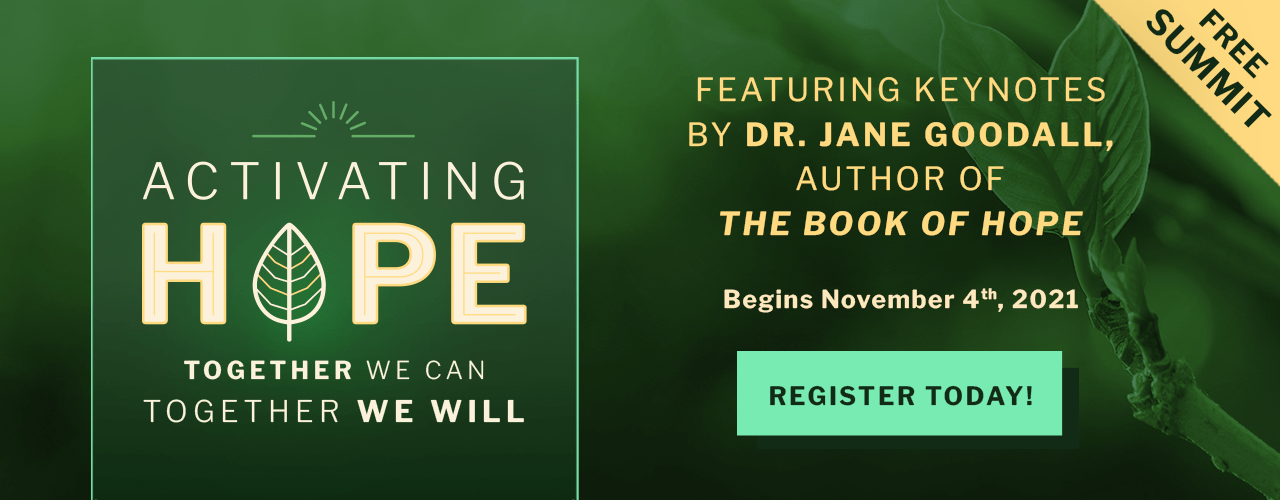
    Hi friends! As you may know, I’m always on the lookout for free events that can help us be our best selves and create a better world. With this in mind, I’m excited to invite you to a FREE online summit, starting this week—Activating Hope: Together We Can, Together We Will.

    Considering the division and chaos in the world today, it’s not easy to hold onto a sense of optimism, and it may seem pointless to do so. Hope alone won’t solve the problems we face as a collective—the impacts of climate change, the uncertainty of the pandemic, the challenge of racial injustice.

    But hope isn’t naivete or magical thinking. Hope can be a powerful force for positive change, igniting our inner strength and propelling us into action. That’s what inspired Jane Goodall—a beacon of hope and kindness in the world for decades—to lead this transformative event.

    This FREE four-day online summit starts this Thursday, November 4th. You’ll hear from a once-in-a-generation gathering of celebrated speakers and luminaries, including:

    • Jane Goodall, PhD, DBE, with an opening keynote and closing remarks
    • Craig Foster and Ross Frylinck of Academy Award–winning documentary My Octopus Teacher
    • Zolani Mahola, actress, storyteller, and lead singer of internationally acclaimed South African music group Freshlyground
    • Silvia Vasquez-Lavado, the first openly gay woman to complete the Seven Summits
    • Edith Eger, PhD, Holocaust survivor, bestselling author, and specialist in the treatment of post-traumatic stress disorder
    • Jack Kornfield, PhD, author, Buddhist practitioner, and Spirit Rock Meditation Center founding teacher
    • Tara Brach, PhD, psychologist, author, and teacher of meditation, emotional healing, and spiritual awakening
    • Bonnie Wan, partner and head of brand strategy at Goodby, Silverstein & Partners
    • Corrina Gould, chair and spokesperson for the Confederated Villages of Lisjan

    Through inspiring stories and teachings, hands-on workshops, and illuminating conversations, you’ll learn how to hold onto hope when all seems hopeless, cultivate hope in your children, and face the challenges of your everyday life with strength and optimism.

    Register here for free to reserve your spot and receive the full daily schedule. I hope you enjoy the lineup!

  • Why Your Positive Attitude Might Be Hurting You

    Why Your Positive Attitude Might Be Hurting You

    “Positivity is a dogmatic insistence on turning away from what is painful.” ~Susan Piver, Wisdom of a Broken Heart

    What if I told you there may be a flaw in positive thinking?

    How could being positive possibly be unhelpful?

    To some extent, positivity can be beneficial. In my life I’ve found optimism to be quite wonderful, crucial even.

    Being around people who are generally positive is just far more pleasant than being around people who are constantly negative. Life seems a little bit more manageable when you can practice gratitude. Smiles are had and spirits are lifted with simple platitudes like c’est la vie and it is what it is! Not only is it helpful, but optimism can actually provide a number of benefits.

    There was a study done by the University of Kentucky where nuns were rated on a positivity scale based on their diaries in the 1930’s. Sixty years later researchers found that some of these ladies, aged seventy-five to ninety, were still alive. The survivors were mostly the women who scored high on the positivity test, insinuating that happiness leads to a longer life.

    Happiness expert and psychologist Michael F. Scheier says that optimists do better in life than pessimists because they’re problem solvers and have better coping mechanisms. Dealing with trauma from earlier in my life has been made much easier by having these two things at my disposal.

    In her Broaden and Build Theory, psychologist Barbara Fredrickson has discovered a model of how positivity interacts with resilience. She states that people who are more positive have more physical, psychological, and social resources. They may be better able to exercise, more able to keep away from rumination, and they have the best of buds to cry to.

    When my grandmother died, I was devastated. How could I possibly draw positivity from death? Well, it turns out that I can and I did. My coping mechanism was to gain life lessons. In fact, her passing was the catalyst for me to get sober. I began to cope in a healthier way, without the crutch of substances. I had to adapt to see the sunlight, and optimism brought me there.

    I now have great positive coping mechanisms like meditation, playing hockey, and the ability to discuss emotional matters with others. I regularly practice gratitude; I even write a daily gratitude list and send it to a friend. I express my appreciation for things like my job (which isn’t always perfect), being able-bodied, and having financial security.

    Don’t get me wrong here, I love optimism; I just can’t help but look at where it fails us.

    I used to be the “fine” queen. When someone asked me how I was doing I was always “fine.” Whenever something happened, maybe someone did something to wrong me, like the guy I was dating being a real jerk, it was “fine.” I was the girl who kept the smile on her face.

    I was bubbly and eternally positive, no matter what the situation. While on the surface this may seem like a wonderful trait in a person, in practice it meant that my needs weren’t being met, I was letting people treat me poorly, and I wasn’t always listening to my mind, body, or spirit.

    To grow from this has been a long journey of realizing that it’s okay (even important) to slow down and take a look at what’s going on. It’s necessary to give my feelings space and let them come out to play. I learned this through heartache after heartache. Breakups, dreams crushed, and death—all of these things helped me to discover that I deserved my own presence.

    Heartbreak shook me to the core, leaving me feeling like I’d never be okay again. The feelings I had at that time demanded to be felt; there was no getting around it. In order to move past the suffering, I needed to feel it. I couldn’t tell myself I was fine or that everything was going to be okay. I just needed to sit with the hurt.

    Sure, there were good things that came from heartbreak like lessons learned and new opportunities, but there were also times when I just needed to feel, heal, and deal. I needed to look my heartache squarely in the face, cry, and let my facing it begin to repair the damage done.

    My dreams were crushed when I got into an Ivy League university and realized that I couldn’t attend for financial and personal reasons. I was totally devastated. Through this, though, I realized that it was okay to hold my sadness. I was allowed to hold joy for being admitted in the first place while I could also leave space for my tears.

    Man did I spill tears when my grandmother died. It felt like my heart had been put through a meat grinder, and the pieces were never going to fit back together again. I cried in the grocery store and at the mall, I couldn’t mask what I was feeling. I couldn’t plaster that fake smile on, and when someone asked me how I was doing, the answer was often “not so good.”

    Little did I know that these experiences were gifts, moving me closer to being with myself. They encouraged me (with much force sometimes) to be with my truth, to be with the heart of the matter without turning away.

    Allowing and visiting feelings may take the form of letting myself cry without redirecting my attention anywhere else. Just giving myself the space to cry without judgment. Letting myself cry until there are no more tears to spill, or even telling myself that it’s okay if I don’t stop crying when I’d like to.

    It’s also leaning in, asking myself, “What’s going on, darling?” and listening to the answer, however difficult. It’s being able to sit with that raw feeling of vulnerability in my chest.

    Instead of being with what’s in your heart, many people put up a wall. Susan Piver puts it beautifully in her book Wisdom of a Broken Heart, “Positive thought is a method of stepping away from what ails you rather than toward it.” You’re often stepping away with avoidance, because who wants to feel the tough stuff?

    Leaning into that takes work and courage. It’s a societal norm to avoid feeling pain. We hate it; we’ll avoid it at all costs. That’s just what we do: mask our struggles. At work, in life, even in relationships with loved ones.

    There’s a pressure to be okay and put a game face on. This pressure comes from the idea that you should always aim for positivity, in all cases. This is what Susan Piver coined the “Cult of Positivity,” continually turning away from what is uncomfortable and painful. I have two big bones to pick with “positivity:”

    1. I don’t believe the bad in the world has happened because you were too negative.

    2. I don’t believe that looking at the bright side of things is always the answer to solving life’s problems.

    There are those who believe that positive thinking undoubtedly makes their lives much better. In many ways this is true. However, not so much when it comes to what happens to you in the world. No matter how positive you think, the outcome of your cancer is going to be the same.

    Alternatively, you can have wonderfully positive thoughts and still end up homeless or jobless. I dislike the idea of a “positive mind, positive life.” It ends up victim-blaming because people may feel at fault for something they had no control over.

    I’ve experienced this as someone who deals with mental health issues. I’ve had people tell me to just suck it up and think more positively. Don’t you think if it was that easy there wouldn’t be mental illness? No one wants to be depressed. It’s just not that simple.

    Optimism doesn’t cure crippling bipolar or bring you out of a depressive funk. Telling someone that they can control the outcome of their illness is just placing blame when there’s no blame to be had.

    The idea that someone has control over all outcomes in their life baffles me. For example, the book The Secret is about the Law of Attraction. What you put out in the world is what comes back to you, according to author Rhonda Byrne. If you put out those positive vibes you’ll reap the rewards, like a good seat at the movie theater or a gorgeous partner.

    This insinuates that you deserve it when bad things happen to you just as you deserve it when good things happen. It’s similar to some sort of merit system. I don’t believe a tragic accident happens because someone didn’t practice enough positivity. On the same token, even something like hitting the lottery is pure luck rather than an expression of a manifestation.

    Next, always looking on the bright side to answer life’s problems is just a way to avoid feeling. It’s superficial. It’s okay, important even, to be sunny, but it becomes problematic when your feelings are lying untouched below the surface. There’s nothing to be gained by lying to the world and saying that everything is fine when it’s not.

    Sometimes I feel like I need to “practice gratitude” when I’m sharing my struggles with a friend. I’ll tell them all about what’s ailing me, then I’ll quickly bookend my concerns with something I’m grateful for.

    While gratitude is a magnificently powerful practice, I may be selling myself short here, missing out on digging just a little deeper into what’s going on. Instead of turning away from my suffering, I could turn toward it to take a peek and to let it be felt.

    So, what to do with all of this? Next time a close friend says “good” when you ask them how they’re doing, try asking them how they’re really doing. You’ll likely take them off-guard, but it’ll worth it to help them open up. Listen to their answer.

    In yourself, watch for those moments where you’re quick to shut a feeling down. Look out for “buts,” like when you say, “I had a crummy weekend but it’s totally fine.” Practice just letting the tough stuff hang there. Don’t try to make it better for a moment.

    Of course, eventually, you do want to move on, and positivity can come in here. Once you’ve looked squarely at your stuff, then is the time to find something to be grateful for. It’s the time to make a joke or spew a platitude. Then you’ve really honored yourself, allowed yourself to be seen. Because only when you’re seen can the real healing begin.

  • Life’s Greatest Miracles Often Come Disguised as Hardship

    Life’s Greatest Miracles Often Come Disguised as Hardship

    Colorful Umbrella in the Rain

    “Out of difficulties grow miracles.” ~Jean dela Bruyere

    The image in my mind is vivid, like an old photograph etched into my brain, where every facet is clearly discernible.

    It was a frigid, blustery December night, right before my son’s seventh birthday. The heating unit had gone on the blitz, and the house was so freezing it seemed as though ice crystals would form on the inside of our windows.

    Grabbing as many blankets as possible, I wanted to envelope my son with covers, hoping he would feel safe and warm in the cocoon. Time for bed, I reassured him that all would be fine despite the bitter cold, and to have sweet dreams of sweltering, sunny summer.

    He then uttered a sound that I’ll never forget: “Da-ye.”

    I screamed for my wife, needing a witness to convince me that the frosty air had not played tricks on my brain or ears. She ran upstairs in great haste, anticipating some dire emergency that required her immediate attention.

    I relayed what had just transpired. One minute later, my son uttered the sweet sound again, “Da-ye.”

    My wife started crying—and not because she wanted his first word to be “Mom” or some close variation.

    Tears cascaded down her face because we were told our son would never speak. And at this moment, it was difficult for me to even speak as I was overwhelmed by the unbridled joy that overflowed my heart.

    My wonderful son, Scott, had just given us a gift, a blessing and miracle that was never supposed to be. He’d just uttered his first word, and we anticipated more words to come.

    At about two and a half years old, Scott was diagnosed on the autism spectrum.

    The diagnosis was so grim that we were told that our son would never be able to be functionally independent. Worse, according to the neurodevelopmental specialist, he would not be able to perform even the most rudimentary tasks, or achieve any milestones, like the ability to speak.

    The dire prognosis was unfathomable, and devoid of the slightest compassion: “You better get him ready for an institution because that’s where he is going.”

    Hurt, bewildered, fearful, and especially defensive, I told the doctor that we’re not buying into his bleak fortuneteller’s reading.

    I explained he does not know our son’s innate abilities, the incredible amount of effort and sacrifice we were prepared to exercise to help our son maximize his potential, or what special treatments or breakthroughs are on the horizon.

    “It’s good you still believe in miracles,” the specialist responded. He had the last word … well, if you don’t count my blasphemous retort, said under my breath.

    That car ride home felt like one of the longest rides we had ever taken. We felt hopeless and aimless, uncertain what direction to take.

    But while I was unsure what protocols to begin, I knew that we had to first have a shift of mindset.

    I reminded my wife (and myself) that Scott was no different now than he was before the doctor’s visit. In addition, I told her that we would use this physician’s words to propel us toward meaningful action, and sustain our efforts even though the road ahead seemed endless.

    We would be thoroughly involved moment to moment, choose to be present-oriented, and let the future take care of itself.

    This, in and of itself, could be deemed a miracle. I had always looked at the glass half-empty, consumed with the outcome of a given endeavor, but always expecting an unfavorable result.

    Now, for my own sanity’s sake, and for Scott’s best interests, I had to transform myself into a much more positive person, believing in limitless possibilities.

    I was not going to be weighed down with what if’s and concerns about tomorrow. Each day would present another opportunity to make the proverbial difference in our son’s life.

    Miraculous observation: Life’s challenges and hardships can actually help us evolve.

    We not only have to think of creative solutions, but we have to cultivate a mindset conducive to overcome barriers. We all have the miraculous capacity to change, and obstacles almost demand a change in perspective and mindset if negativity has been the dominating influence in our lives.

    So for the next four and a half years after that life-changing doctor’s visit, I spoke incessantly to Scott as if he understood me. I remember those early years picking Scott up from school, and engaging in marathon monologues.

    Sure, there were dark days. Pessimism and hopelessness would creep in, and I lost some of these emotional battles at times, but I never stopped fighting to control my own thoughts. (As spiritual writer, Louise Hay, points out: “Change the thoughts and the feelings must go.”)

    But overall, you would not recognize me because of my new uncompromising will, determination, and perseverance. I knew my son would speak one day!

    And years later, my prognostication came true, damned the torpedoes and that neurodevelopmental specialist.

    Whatever you’re going through now, see this as an opportunity to transform your state of mind and develop greater optimism and perseverance. Your challenge can make you bitter or better—the choice is yours.

    Miraculous observation: Small changes can lead to big improvement over time.

    Yes, we were blessed that Scott finally started speaking, but even if that never occurred, we saw other miracles. A boy who had colic exponential one million, and who screamed most of the day, transformed into a very affectionate, happy-go-lucky child—even before gaining the capacity to speak.

    You may be facing trials and tribulations right now. Perhaps the outcome that you desire has not materialized yet. However, can you see any small incremental changes helping the pendulum swing in your favor? Can you envision a happy ending but still focus on the here and now?

    Try to see those tiny miracles as they manifest in your own life, and express gratitude when they surface. By appreciating the small shifts, you’ll be better able to maintain an optimistic mindset, which will help you continually move forward.

    Realize you’re a walking and talking miracle, too, and what you can accomplish can transcend anyone else’s limiting beliefs about you. But the first step to opening your eyes to life’s miracles is to free yourself of your own limiting beliefs. You can stronger than you know, and you can do more than you think.

    Miraculous observation: Challenges give us the opportunity for deep connection.

    We often concentrate our energy and attention on those who have hurt us or disappoint us. We tend to overlook those souls who have been instrumental in guiding and leading us toward our best selves.

    While we were reveling in Scott’s progression, it dawned on me that we were blessed to know people who had made tremendous sacrifices to ensure his optimal growth and development.

    We were surrounded and supported by miraculous angels: We had two devoted, creative, and nurturing therapists who worked with Scott, day in and day out, for years. A preschool director had provided a first-rate education to him, and still, years later, spends an inordinate amount of time offering her healing methodologies.

    In addition, one or two teachers at the public school have differentiated themselves from their colleagues by vesting so much energy to see Scott advance. My mom has also been unwavering in her dedication and support of our family.

    The miracle is that there are people in our lives who care deeply about us, and even make sacrifices to try to help us.

    And the miracle of synchronicity occurs: Such people often come into our lives when we need them most. Everything is timing, and our angels came to the forefront at the perfect moments—almost through divine intervention.

    If you feel alone now and can’t think of anyone who can touch your life in a positive way, please be open to widening your social circle. When you’re ready and open to it, the right people will come into your life.

    Lori Deschene, Founder of Tiny Buddha asserts, “The only way to connect with people is to be willing to remove the distance.” All my life I had distanced myself from others. But after Scott’s diagnosis, I had to form meaningful connections—with therapists, teachers, members of the autism community, etc.

    See the miracle of connection, especially when times get tough.

    Final lesson: We can all handle adversity.

    For me, I see adversity as a hard stone—but one that is penetrable. I see myself blasting right through it.

    Others may envision adversity in a different way, or approach it in a different manner. Regardless of perspective, I realize that adversity does not have to overwhelm us if we keep our wits about us. If we choose not to ruminate on how hard it is, we can instead focus on doing whatever is necessary to free ourselves of its hold.

    My son’s so-called disability has changed me immeasurably.

    I’ve learned the miracles of exceeding others’ limiting beliefs, breaking bad habits, adopting a new and improved mindset and disposition, seeing rainbows when it pours, appreciating distinct moments and the synergy of connection with others, all at the right time, and I’ve developed a never-giving-up spirit come what may.

    I owe so much to my beloved son and the miracles I’ve observed since his birth. It is my fervent hope that you see the miracles that are often camouflaged in hardship.

    Colorful umbrella image via Shutterstock

  • Interview and Book Giveaway: 10 Habits of Truly Optimistic People

    Interview and Book Giveaway: 10 Habits of Truly Optimistic People

    Smiley

    Update: The winners for this giveaway are:

    I have a confession to make—I sometimes cringe when someone tells me to “just be positive.” I’ve often assumed this really means, “Your sadness is making me uncomfortable, so please stop talking about it.”

    To be fair, I wouldn’t classify myself as a negative person—not now, anyways—though I have my moments. I do, however, feel for anyone who might be classified that way, as I know from experience that deep negativity often comes from deep pain.

    We all face our own battles in life, some more overwhelming than others. And sometimes it seems nearly impossible to nurture a positive attitude.

    But it is possible. And sometimes, it’s the only thing that keeps us going when it seems unlikely we’ll find our way through the darkness.

    Optimism is a powerful thing. When you’re optimistic, you don’t deny that you’re going through a hard time. You don’t suppress your feelings or pretend you’re happy. You simply believe that something good could come from your struggles—even if you can’t yet fathom what that might be.

    You believe that life is happening for you, not to you, and that you’re not a victim but rather someone with immense potential to overcome your odds and thrive.

    Because you believe, you’re able to keep moving forward—learning, growing, and making the best of your circumstances—when it would be easier to give up.

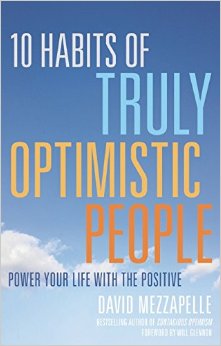
    I’m always inspired to read stories from people who’ve found silver linings in tragedy because it reminds me that we have immense power to shape our lives through our perceptions and responses. This is what brought me to Dave Mezzapelle’s new book 10 Habits of Truly Optimistic People.

    Dave’s on a mission to get people to “power their lives with the positive.”

    In this follow-up to his bestselling book Contagious Optimism, he’s collected more than 100 stories from amazingly resilient individuals, and compiled them into 10 chapters based on—you guessed it—the habits of optimistic people.

    I’m grateful that Dave took the time to answer some questions about himself and his book, and that he’s provided two copies for Tiny Buddha readers.

    10 Habits of Truly Optimistic PeopleThe Giveaway

    To enter to win one of two free copies of 10 Habits of Truly Optimistic People:

    • Leave a comment below.
    • For an extra entry, tweet: Enter the @tinybuddha giveaway to win a free copy of 10 Habits of Truly Optimistic People http://bit.ly/1DEk1RR

    You can enter until midnight PST on Wednesday, April 8th.  Two winners will be chosen at random on April 9th.

    The Interview

    1. Tell us a little bit about yourself and what inspired you to create this series.

    I have always been a positive, upbeat person and very optimistic. And, I always made it a point to find the bright side of a problem, which I found made it easier to surmount. In addition, I have always loved people’s stories.

    Over the course of the past twenty years, my alma mater, Fairfield University in Connecticut, had suggested that I write a book on optimism in business. This was based on the way I ran my company for seventeen years.

    I didn’t have an interest in writing something like this until 2010. I literally woke up one day and said, “I will do it. But let’s not just make it about me. Let’s make it about lots of people. And let’s not just make it about business. Instead, let’s make it about many of life’s themes including business.”

     2. What have you learned about the benefits of optimism?

    After spending years collecting silver lining stories from around the globe, one of the most powerful facts I learned is that being a positive, optimistic person not only allows people to achieve greatness, but it has numerous mental and physical benefits as well.

    From a biological standpoint, we benefit from the release of neurotransmitters such as serotonin, oxytocin, and dopamine when we are happy, positive, and optimistic.

    Mentally, we find ourselves in a good place that makes everything else seem easier (or at least less difficult for those that are going through tough times).

    People have nothing to lose from being positive versus the stress they definitely gain from being negative. Don’t run away from obstacles and adversity but be positive in your ability to address and surmount them.

    And when we are feeling good about ourselves and optimistic about our future, we tend to look better as well. Our skin tone, our posture, and our confidence all shine. And, even our physique improves when we combine optimism with a workout or exercise schedule.

    3. The book features more than 100 true stories from people who’ve learned the power of optimism. I’m sure you found all of them inspiring in different ways, but is there one that really stuck with you—and why?

    They all have affected me. In addition to the 100 stories you referenced in this book, we have thousands in our essay bank for future volumes. It has been nothing shy of awesome being able to read these stories and learn about these people.

    What sticks with me is not one particular story but the fact that everyone has a silver lining story to share. However, I will share an amazing story about Yvette Pegues.

    Yvette was an employee of IBM in their global patent office. She traveled the world and knew many languages. She also has two young boys and a terrific husband.

    One day Yvette had terrible headaches and was rushed to the hospital to find that she had a genetic brain malformation. They performed emergency surgery, which caused a brain stem stroke that left her in a wheelchair for life.

    Instead of letting this bring her down, she was a first responder to the earthquake in Haiti (the same year of her stroke—2010). She also competed in and won Miss Wheelchair Georgia and, in 2014, Miss Wheelchair USA where I was the keynote speaker.

    Today, Yvette has devoted her life to helping children worldwide improve their literacy skills.

    4. In one of your previous interviews, you talked about the steps you believe people should follow to help them embrace optimism when facing hurdles, with the acronym “GSM.” Can you tell us more about those three steps?

    GSM stands for Gratitude, Stories, and Magnet.

    Gratitude—you need to be grateful for even the smallest things in life. This can be something simple like the sunrise, a glass of water, your pet, or the smell of the ocean. Simple gratitude makes everything feel special, big or small.

    Stories—When people are going through tough times, they tend to think that they’re alone. However, when they hear or read stories of how others have persevered, it gives them hope. And, hope is that important foundation of optimism.

    Magnet—“Optimism is a happiness magnet.” ~Mary Lou Retton. I love this quote. You want to surround yourself with good, uplifting people. Their happiness and positive attitude is certainly contagious. It brings you up and adds light to your day.

    But, conversely, sometimes it’s difficult to avoid the negative people, the naysayers, and the cynics. Unfortunately, their negativity is contagious as well. They may be in your office, your classroom, or your apartment.

    In those cases, just ignore their chatter and simply tolerate them. It doesn’t mean you need to absorb their energy. Don’t take their negative opinions to heart and don’t let them influence you.

    5. Conventional wisdom about becoming more positive suggests we should avoid “negative people,” but in my experience, “negative people” often need our love and support the most. Have you learned anything that can help us find a middle ground so that we’re minimizing the negative effects of spending time with pessimists, but not just writing them off so that we may actually be able to help them?

    Yes. We never suggest ignoring or isolating pessimists. We just assert that what others do or say is a reflection of their own reality, so don’t take it personally and don’t let it bring you down.

    Some people are just naturally pessimistic and it is not our job to change them but at least being a ray of sunshine around them can bring them light without allowing their nature to pull us down.

    I believe that true success in everything comes from combining effort, reality, and positive thinking. Optimism alone will keep you in the clouds. And oftentimes reality alone will prevent you from getting passed first base.

    However, when you combine all three, things happen in a big way! And this is based on our extensive experience of interviewing people and capturing their silver lining stories.

    6. What do you believe is the biggest obstacle to optimism, and what’s one thing we can do to overcome it?

    Outside influences are the #1 obstacle. This can be a negative friend, family member, coworker or boss, or even the media. An outside influence can reduce or eliminate optimism.

    The best way to overcome it is to make it a point to minimize your exposure to the naysayers and cynics. In addition to watching or reading the news, try to follow positive stories and positive programming as well.

    Look in the mirror and remember that what others do or say is a reflection of their own self, not a reflection of you.

    Don Miguel Ruiz, in his book The Four Agreements, asserts, “Don’t take anything personally. Nothing others do is because of you. What others say and do is a projection of their own reality, their own dream. When you are immune to the opinions and actions of others, you won’t be the victim of needless suffering.”

    Conversely, appreciating those around you that appreciate who you are and what you stand for is tantamount for your own optimism and for making it contagious for others.

    7. Of the ten habits shared in the book, which do you think is the most difficult to form, and what’s one simple practice anyone can use to begin cultivating it today?

    Everyone is different so this is a difficult question. For example, some people struggle with embracing change (chapter one).

    Others have a difficult time appreciating those around them (chapter two).

    And, I have also noticed that many people do not believe in themselves and the value they possess (chapter five).

    So, in my opinion, the one simple practice is to take a deep breath and concentrate on the fact that others have had it so much worse and have made it through. And, the best way to prove that to yourself is to either read books like Contagious Optimism and Chicken Soup For the Soul and/or connect with others that have been in the same boat.

    It is very powerful to learn about the patience, persistence, and perseverance of others.

    8. What’s the main message that you hope readers take from this book?

    We all have stories. What you think may be boring or uneventful is actually inspirational and motivational to others around the globe. So, considering sharing your stories and remember, we are all naturally mentors just by the sheer impression of our footsteps.

    You can learn more about 10 Habits of Truly Optimistic People here.

    FTC Disclosure: I receive complimentary books for reviews and interviews on tinybuddha.com, but I am not compensated for writing or obligated to write anything specific. I am an Amazon affiliate, meaning I earn a percentage of all books purchased through the links I provide on this site. 

    Smiley face image via Shutterstock

  • Why We Should Look Forward to More of Each Day

    Why We Should Look Forward to More of Each Day

    Excited for the day

    “Use your smile to change the world; don’t let the world change your smile.” ~Unknown

    For most of us the average day includes a mix of things we both look forward to and things we don’t look forward to. We look forward to coffee in the morning, we regret that we have to go to work; we look forward to coming home at the end of the day, we dislike that we have to do laundry.

    But how much of your life are you giving up if you dread, dislike, regret and don’t look forward to, say, 50% of your average day? Logical reasoning says that, based on this estimate, you’re giving up half of your entire life. And you’re giving it up simply because you aren’t looking at your life from a healthy perspective.

    When we don’t look forward to something—when we don’t enjoy it—we aren’t very present in that current moment. It’s like life is just passing by, and we’re just waiting for it to pass so we can get on with the more fun or interesting parts of each day.

    When we get caught up in this waiting-for-better-moments routine, we aren’t actively living, are we?

    We end up passive, joyless, unhappy, and unfulfilled. All because we’re waiting for the good things in life to happen for us.

    Stop waiting.

    You can have crazy amounts of joy and excitement in life if you just change the perspective from which you view things. And you can do it by following this one simple rule:

    Look forward to each day.

    A Life of Looking Forward

    Looking forward to even the smallest parts of your day can not only make that day more enjoyable, but it can also improve your outlook on life, help you appreciate the things you have, keep you from getting stressed out, and help you have better relationships.

    Look forward to each day and you’ll realize the millions of silver linings you’ve been ignoring, if only because you weren’t looking for them.

    Maybe the first time you actively decide to look forward to going to work, you’ll realize how lucky you are to simply have a job. The next day you look forward to work, you might remember a kind act that someone at the office did for you the previous day and look forward to repaying that action.

    Once you start looking forward to things more often, you’ll find more and more reasons to appreciate and be excited for everything that comes your way.

    Look forward to paying your bills. You’re buying a roof over your head—something that other people in the world might never have the luxury to afford.

    Look forward to sitting in traffic during rush hour; think of it as down time to reflect on the events of your day.

    I might sound a little crazy to you right about now if you’re used to hating all of these things. Bills and traffic, after all, are never something to look forward to, right?

    Only if you choose to have that perspective about them.

    How I Started Looking Forward to Every Day

    I won’t say that I’m a naturally negative person. I no longer believe that anyone is “naturally” anything. You can change anything about yourself if you really, really want to. I’ve learned that now.

    I will say, though, that I am a pretty stressed out person most days. At least I was. Between you and me, I still am sometimes.

    But I’ve chosen to stop being negative and to stop being stressed. I only try to enjoy everything. Each day I look forward to all the potential good things that could happen. I don’t lie to myself. I just look at everything in a positive light.

    I used to dislike how I looked. I regretted the things I wasn’t born with. I regretted the opportunities I had never had. I disliked having to work when I didn’t feel like it. Many days I just waited for “this day” to be over, hoping that maybe tomorrow would be better.

    I wish I could say that some life-changing realization struck me suddenly on a windy, mysterious night and that said realization allowed me to live my life positively from that day forward.

    But that would be a lie.

    The truth is, it took many years of me feeling bad about myself and searching for ways to feel better.

    It took many sincere conversations for me to realize how negative I was being, and it took many, many attempts to correct my perspective and my behavior for me to finally, genuinely be positive.

    You know, it’s kind of frustrating the first time that you realize you had the power to make your life drastically more enjoyable just by changing your perspective.

    As soon as I started looking forward to just being me, my life became much happier. Every day is a good day now, because I’ve chosen to see it that way.

    Don’t get me wrong; I still get sad, angry, and stressed. But I experience negative emotions like these much less often because I don’t wake up each day thinking about all the possible ways my day could go wrong.

    Instead, I wake up and focus on all the great opportunities just waiting for me.

    I’m telling you this because I’m hoping that you won’t spend years trying to be happier, and that you’ll simply start looking forward to each new day and feel all the joy that you’ve been missing out on.

    I do understand, though, that it’s kind of hard to just suddenly start looking forward to everything, so here are a few tricks that work for me. Maybe they will help you start to view each day in an optimistic light.

    1. Keep good feelings with you all the time.

    If I watch an inspiring movie, witness a random act of kindness, or even just feel especially happy on a given day, I choose to remember those feelings and keep them in the forefront of my mind as I do whatever I’m doing. It’s like having an extra blanket of positivity in addition to me looking forward to my day.

    Focus on retaining positive feelings and you’ll be a lot stronger when negative things come your way.

    2. Just live.

    If I find that my mind is wandering and that I’m stressing out about things I have to do today or that I’m trying to plan out my day too aggressively, I remind myself that I need to live in the present moment.

    I stop thinking about everything. I just live. If I’m writing, I hone in on how good it feels to be typing. If I’m driving, I make sure to appreciate the scenery with extra attention to detail. I stop trying to control everything, and I just live in the moment.

    3. Think of everything you are grateful for.

    Another trick I’ve learned for suppressing negative thoughts and feelings is to think of everything I have. I think of all the things in that current moment that I can be grateful for, and I swear I find more and more each time.

    I’ll tell you one thing: It’s really hard to be angry about a late rent check when you’re simultaneously grateful for the comfortable home in which you live.

    4. Forgive everything.

    I have to say, I’m still working on this one. But it does help me tremendously when I’m able to do it. My temper can be pretty off-the-handle, and someone cutting me off in traffic is definitely enough to spark it.

    But I’ve gotten a lot better at remembering that I’ve probably done that same thing before, and I get over the issue and move on with my day.

    It’s a lot easier to look forward to everything when you don’t let baggage from the past weigh you down.

    If you take anything away from this today, let it be this: You are you. And that’s all you need to make today awesome. Look forward to it.

    Happy jogger image via Shutterstock

  • We Can Be Happy Despite Pain from Our Past

    We Can Be Happy Despite Pain from Our Past

    Grateful

    “Think of all the beauty that is still left in and around you and be happy.” ~Anne Frank

    At first glance, the happiest person I’ve ever met appeared to be a simple man. There didn’t seem to be anything particularly sophisticated or spiritual about him.

    Srulik was five-feet tall, with a big round belly and a wide smile permanently plastered on his face. He enjoyed the small things in life: a good joke, a familiar television show, a wholesome meal. He radiated such joy, and was so unassuming in his demeanor that one would assume he was blessed with an equally simple and joyful life.

    Many years ago, when I was only ten years old, I remember coming home one day particularly distraught.

    My class had just learned about the Nazi Holocaust. At the sink, my mother was washing dishes. I started telling her about what I’d learned in school, when she gently cut me off and, in a matter-of-fact kind of way, said, “Oh, your grandfather is a survivor. You should talk to him about it.”

    “Wait, which one?” I asked.

    “Grandpa Srulik,” she answered as she continued scrubbing a pot.

    I was flabbergasted. What? Him of all people? How could that be? He is always so happy. It just didn’t make any sense.

    I was only a child, and yet I could feel that something out of the ordinary was happening here.

    Later I learned that, indeed, volumes of psychological research confirms that a difficult past leads to a difficult future.

    No need to go as far as the Holocaust. Common problems we suffer in times of peace and plenty, such as bullying and poor attachment to our parents, can have serious psychological consequences, preventing us from enjoying our lives many years after the problems go away.

    Veterans often suffer from severe post-traumatic stress, and Holocaust survivors in particular are known to suffer from a wide array of emotional problems after the unspeakable horrors that they suffered. Who would expect anything else?

    And yet, there was my grandfather, happy as ever—smiling, telling jokes, and laughing his heart out. I had to know what enabled him to survive so wholly.

    “How do you manage to stay so happy?” I said during one of our conversations.

    “You need to learn to be happy from any success,” he told me. “Any success at all. When some misfortune happens, we need to view it with humor and think of it as temporary. Think of something else.”

    “I view everything with optimism, it’s very important,” he added later.

    His secrets boiled down to gratitude, the power of positive thinking, and optimism. I must admit, I have heard it all before. But, suddenly I saw it in a whole new way. Can things such as gratitude and optimism help us overcome even the most tragic of traumas? How powerful are these principles?

    When Grandpa Srulik was ten years old, the Nazis came into the Polish town of Nowosiolki, and gathered up his family—the only Jewish family in town.

    With the entire town watching, a Nazi pushed Srulik’s father against the brick wall of his house. Then, the Nazi grabbed hold of his mother and pushed her hard against the wall. Next, he did the same to his brother.

    Realizing that he was next, Srulik picked up his heals and ran as fast as he could through the thick crowd surrounding his house. Behind the river across from his house, he suddenly realized that he was alone. He had escaped the Nazis. He decided to hide in the bushed until morning before returning home.

    The next morning, Srulik overheard three women doing laundry in the river. This is when he learned that, the previous night, his mother, father, and brother were shot dead into a hole in the ground. Devastated, utterly alone, and on the run from a powerful enemy, he tearfully mourned their loss.

    Yet through this pain, he never lost hope. He shared with me that even in that terrible moment, he believed with all of his heart that he would find a way through this challenge, monumental as it was.

    But, things got worse before they got better. Several weeks later, Srulik was discovered and imprisoned in a Nazi ghetto.

    There, he saw Nazis throwing live infants against walls and witnessed the murder of thousands of innocent people every day. He nearly died from starvation and disease, and narrowly escaped the Nazis’ bullets on numerous occasions.

    Against all odds, optimism carried Srulik through this unimaginable horror. Every day, he told himself that the Nazis would be defeated and he would be free.

    Through the years he spent running and hiding from the Nazis, Srulik never forgot to be grateful for the small rays of light that lit his path.

    He recalled with delight the wonderful homemade pickles that a young Polish woman gave with him when he had nothing. He never forgot the kindness of a German cook, who, instead of reporting him to the authorities, shared his delicious soup.

    Srulik held onto his positive attitude for years after the war. He was grateful for all the kind people he had met along the way, the orphanage that took him in, and the opportunities he had to earn an education.

    Until his last day, Grandpa was able to find something positive in every situation. “Even good weather counts,” he taught me.

    Despite an incredibly difficult past, Srulik grew up to be a joyful, contagiously positive man. Having had the most difficult past of anyone I’d ever known, my grandpa was, and still is, without a shred of doubt, the happiest person I’ve ever met.

    If gratitude, positive thinking, and optimism helped him lead a happy life, then imagine what these principles can do for the rest of us. Surely, there is hope for all of us, no matter what lies in our past.

    Man with raised hands image via Shutterstock 

  • 20 Ways to Let Go of Regrets

    20 Ways to Let Go of Regrets

    “Every new day is another chance to change your life.” ~Unknown

    You know the moment. It happens right after you realize you did something you wish you didn’t do. Maybe you broke someone’s trust and now the guilt is overwhelming you. Maybe you compromised your job in some way and now you’re terrified your world will come crashing down.

    Regardless of what you did, you can feel your anxiety like a stack of red hot bowling balls surgically implanted in your stomach. (Dramatic? Yes. Regret is rarely reasonable!)

    It’s that dreaded “Good God! Oh no! What was I thinking? Why me?” moment when you think one of two things:

    • I did something I shouldn’t have and I might not be able to fix it.
    • I did something I shouldn’t have, so I’m going to lose something important.

    Both of those things might be true. In fact, they often are. Actions do have consequences. We do lose things—all through life. Nothing is permanent, not even the most secure relationship. But none of this has to be catastrophic.

    Sometimes losing one thing opens you up to something else. It might be a lesson that helps you be more effective and happier in the future, or it could be a new possibility you never even thought to seek (like that dream you put off to work the job you just lost).

    Or maybe it won’t benefit you in any discernible way right away. Let’s call a spade a spade—maybe you’ll wish you went a different way, grieve what you lost, and then eventually let it go and move on.

    The point is you will eventually let go and move on.

    And because you’re a strong, smart, capable person, you’ll find ways to make this new direction meaningful for you. To make up for what you lost by gaining something equally important in the aftermath, whether it’s a new understanding of your strengths, a new idea of who you want to be, or a new opportunity to try again a little wiser. (more…)