Tag: opinion

  • 3 Ways to Decide Whose Opinion of You Matters

    3 Ways to Decide Whose Opinion of You Matters

    “The most courageous act is still to think for yourself. Aloud.” ~Coco Chanel

    “You know, Joui, I really like how you look tonight. I always thought your style before was… just a little wacky,” smiled Harry, a man I’d met during a forced networking meeting. He then smirked knowingly, like he was doing me a great favor.

    Inside I screamed.

    As a stylist one of the biggest fears my clients mention when we discuss any big change is feedback, judgment, and shame from their peers. And they are right to be fearful.

    People will have commentary, trust me. But while everyone has an opinion, not everyone has a clue.

    So we must be extremely careful who we let give us feedback.

    I have made this mistake many times in the past. I let another person’s opinion cloud my own vision without first asking myself whether I even respect that opinion.

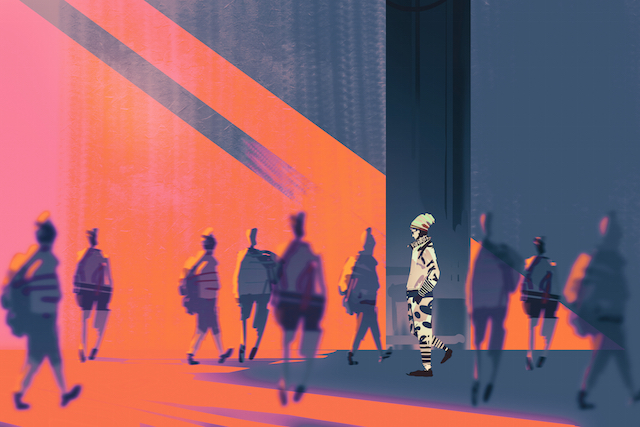
    Like Harry, somehow just because they are a person with eyes I allow their remark to dig deep into my psyche and contort my energetic field. It feels like watching too many moving images at once.

    Yes, I am sensitive. One unchecked opinion can cause me to feel ungrounded and unable to think clearly for myself.

    But ultimately, this is my life. I’m the only one living behind my eyes, so I am the only one who can and should take ownership of my decisions.

    So in cleansing my life recently I decided to create a set of requisites to better decide whose opinions I will let in.

    I first came upon the idea in Brené Brown’s book Daring Greatly. She says that the work that scares us makes us most alive. But the more public and vocal you get, the more vulnerable you can become to outside input.

    And so she created criteria for her own feedback “force field,” so to speak. Brown says “If you are not in the arena and also getting your arse kicked, I am not interested in your feedback.”

    Let’s get back to Harry, for example. He made this comment during the annual BNI (Business Networking International) holiday party.

    I was dropping by the BNI holiday party about a year after I ended my membership, mainly for old times sake. It was during a period of my style where I was intentionally letting go of originality and flamboyance to explore different ways of expressing my identity.

    The night of the party I was in full-blown “mainstream sexy,” a pair of fitted black leggings, a classic pair of black heels, a white sweater, simple earrings. It was part identity experiment and part research project to understand women who enjoy looking this way so I could better support a broader range of style choices.

    Now it was Harry’s turn to tell me how the flat-ironed, mainstream version of me was so much better than the wacky side he’d seen a year before. And let me just say, from one angle he was right.

    I looked great. But sometimes looking “great” isn’t the point.

    In a world of endless options, it’s more important to look like me.

    This is why getting your criteria straight for whose input you let in is vital. Otherwise, it is very easy to find yourself waking up one day and not recognizing yourself because you fell into other people’s ideas of who you are instead of your own.

    If you are going to allow someone to be a competent mirror for you, here are a few factors I suggest considering.

    1. Is this person someone whose life’s work you admire? Is this someone with a promising, positive vision of themselves in the world? Essentially, do you love what they are up to?

    2. Do you love the way this individual sees you and who you aspire to be? Are they someone who supports you and inspires you to rise to every opportunity for personal growth?

    3. If this person is commenting on style, image, or branding do they have good taste? Do they have taste you admire? Have they mastered aesthetics? According to Brené Brown, are they “in the arena”?

    Most importantly, trust most those people that hold you in a warm, accepting light, and have your best interests at heart.

    So let’s take a moment to reflect on Harry and his opinion of my look.

    1. Was Harry the epitome of style? Answer: No.

    2. Was Harry the type of person I respected in work, career, life? Answer: No.

    3. Was Harry the kind of person I wanted more of in my world? Answer: Once again no.

    So how did I interpret Harry’s comment? Well, it did influence me in so far as I had been looking for a moment to stop experimenting in this style. His response to “Mainstream Joui” reminded me I was off.

    I needed more flair. I needed to bring back a little Wacky Joui, and fast. I guess this is an example of a reverse influence.

    You must carefully and consciously select the people who you actively allow to influence you, and whose judgments you take to heart.

    And remember, if you are a creative, empath, artist, or any type of deeply sensitive being, be on high alert. You may be extremely vulnerable to molding yourself to those around you and what they need.

    Choosing who you hang around with has the power to make or break you. You are the company you keep.

    You are the opinion of those closest to you.

    Chose wisely.

  • Watch Me Dance: Why I Stopped Playing Small and Hiding from Life

    Watch Me Dance: Why I Stopped Playing Small and Hiding from Life

    “There is no passion to be found in playing small—in settling for a life that is less than the one you are capable of living.” ~Nelson Mandela

    When I was a kid I’d get up early on Saturday mornings to start my routine, which ended with a few hours in front of the television watching my favorite shows. After the cartoons came dance shows featuring the popular musical acts of the time. I’m in love with music and I have been all of my life, so these shows in particular excited me and made me feel like dancing with joy—and I did!

    I always had a great deal of energy. I loved riding my bicycle, playing hide-and-go-seek with my friends, and dancing. Despite always being overweight (since weighing in at eleven pounds at birth), I still managed to keep up rather well with my smaller, super active peers.

    Warm weather meant lots of outdoor activities, and I even looked forward to physical education class, particularly when we could exercise outside.

    School provided a new, tougher atmosphere for me, though. There were always “those other kids” who would remind me of my weight in the midst of my fun times on the slide or running around the school yard.

    I thought they were mean and hurtful just because they didn’t know me. If they knew how I loved to laugh and sing and dance and play, they’d surely be my friends too, right? Maybe not.

    I remember the first time words from one of “those other kids“ changed how I felt inside. It was the first time I knew the power of words—unfortunately, at the time, being used for harm.

    The feeling confused me at that age and was the first crack in my inner mirror. Being teased back then changed my energy and altered the bliss that I felt when I was ignorant about how much someone’s words could hurt. “Those other kids” wanted me to feel bad and I didn’t understand that. Even worse, I changed how I viewed myself.

    That crack remained as I absorbed those words and brought them home with me. It became a full break when some of those words hit home for me there.

    On this particular Saturday, I was watching my shows and I proceeded to dance as if I was in the studio with the others. I turned up the volume and shimmied and shook as if the camera was headed my way next.

    My oldest sister came in and said a few things that I wasn’t paying much attention to because I was focused on my performance. Then she blurted out, “…and sit down! You’re too big to be dancing around like that!”

    Her words tore through me like a knife. I loved my big sister. She was mean sometimes and I didn’t like when she didn’t want me around, of course, but when she was nice, she was really nice, and when I could be around her I loved it. But now she sounded like “those other kids.” And she knew me. She was my friend already.

    I remember slowly finishing my dance and then turning off the television.

    I haven’t danced so freely in the forty years since.

    That message remained as I grew but took on a different voice—mine. I would quietly analyze all of the experiences that I felt I was “too big for” and find clever ways to avoid fully engaging and participating.

    In junior high, I was a girls’ basketball team manager who filled water bottles and recorded stats instead of trying out to play for the team.

    I was in my high school band, but learned to play a different instrument when competition became too stiff in my section.

    At work, I was always the one who worked harder, faster, better, but remained passive when I wasn’t promoted or considered for salary increases.

    Even socially, I usually sought the company of those with larger, louder personalities that were easier to hide behind. Many opportunities to step on life’s stage culminated in paralyzing stage fright fueled by negative self-talk and overall feelings of inadequacy.

    I minimized the rest of myself because my body wasn’t minimal.

    Many years had passed before I realized that repeating negative messages to myself drastically lessened my effect. My own cruel inner voice did much more damage than anyone else’s words ever could.

    As an adult, my weight struggles continue. But I now have a greater understanding of the life-altering power of words heard from others, and also those I speak to myself. There is no other voice as important as my own. I had to go back to the basics to get that, though, and on that journey found even more.

    Along with “doing unto others as I’d have them do unto me,” I also strive to do and speak unto myself what I want done and spoken by others. I know now that the “selfs”—self-esteem, self-confidence, and self-worth, along with self-acceptance—truly are inside jobs. Cracked or broken mirrors still show you a beautiful reflection when you stand in the right position of self-awareness.

    Self-awareness came to me through a great deal of self-assessment. I’d mistakenly taken on the opinions of others as my own, but as I matured emotionally and spiritually, I knew I didn’t need to see myself through their lens. And I knew I didn’t want to, because in hiding to avoid showcasing my flaws, I ended up concealing my gifts.

    I also realized we’re all quite similar. We all have things we’d rather hide, and we’ve all been on the receiving end of unfair judgment at some point in time, if not for our bodies, for something else.

    I no longer compared myself to others when I realized that each one of us is human, fallible, and flawed. With that realization, I stopped punishing myself for my imperfections and mistakes and decided not to hold myself back because of them. Maintaining perspective helped me stop being overly affected by condemnation or praise from others and highly critical of myself.

    I found it most important that I spoke well of and felt good about who I was becoming.

    Though quite simplistic, the full grasp of this awareness allowed me to see myself and others differently. It began my path to self-acceptance and “those others” became people in need of acceptance, as well.

    I’d spent decades spackling and caulking my ego after being hurt both intentionally and not, by others and myself. It has been a steady chore to find just the spot that enables me to see clearly my own image, but, through acceptance, I finally do.

    I’m excited about who stares back at me now with the same simple joys as that free-spirited girl on a Saturday morning.

    Now, I make sure having great energy is my goal. I try to put it in my words to live harmoniously with myself and others.

    I take steps to speak from love and remain aware of my intention.

    I’m a devoted relative, thoughtful friend, and compassionate, respectful person. I love hard, smile continually in gratitude, and have joy in my spirit so my very soul tends to dance. It’s too big not to.

  • Why No One Needs “Fixing” or Wants Unsolicited Advice

    Why No One Needs “Fixing” or Wants Unsolicited Advice

    Woman chatting

    “People take different roads seeking fulfillment and happiness. Just because they’re not on your road doesn’t mean they’re lost.” ~Dalai Lama

    Have you ever felt the urge to fix someone? And by fix I mean observe their circumstances and tell them what you think they’re doing wrong and exactly how you think they should fix it?

    We’ve all done it. We’re all guilty.

    Especially with close friends or family.

    “If he would only listen to me and do what I say then everything would work out just fine!”

    Sound familiar?

    I was having tea with a good friend the other week (let’s call her Sally), and she was relating with much exasperation the story of how her sister was wasting her life in her corporate job when she was SO creative and should be working for herself in a creative role. And then she would be happy (according to Sally). Which apparently she’s not (according to Sally).

    Sally went on further to say (with as much exasperation) that she had called her and conveyed this opinion to her sister. Because Sally felt she was right and that her sister needed saving. Not surprisingly, it was not very well received. In fact, Sally’s sister was pretty miffed. And didn’t take the advice. Or speak to her for ages.

    I’m willing to bet Sally’s sister didn’t even consider the advice. Not for a minute. And not because she disagrees but more likely because she’s offended at being told what to do. After all, she didn’t ask Sally for an opinion.

    And there’s the first problem.

    If someone doesn’t ask for your opinion, they’re likely not open to it hearing it.

    It’s quite simple really.

    When you ask a question it’s because you’re interested in hearing the answer.

    Which means you’re interested in the topic being discussed.

    Which further means you’re going to consider the answer with interest and (hopefully) decide from an unemotional stance as to whether you agree with it or not.

    The opposite applies when an opinion—however well intended—is provided without your consent.

    Had Sally’s sister called and asked for advice, the outcome may have been quite different.

    In my early twenties I remember having tea with my mom and enthusing excitedly about a new business idea I’d had. Now, my mom was from the “old school” where job security was your first priority, and in her world it was safest to find a “nice” job in a “nice” company and stay there until you retire or die (whichever comes first).

    Unsurprisingly, her response to my idea was one of complete skepticism and doubt. Which she verbalized immediately. Very loudly. And critically.

    In those days I didn’t have the awareness I have now. I didn’t see that this was simply her own fears being transferred onto me and had absolutely nothing to do with me. Nope, I reacted. Badly. And took it personally.

    After all, I hadn’t asked her for her opinion. I was just sharing an idea.

    I had expected her to be enthusiastic about my enthusiasm. To be supportive. To trust my judgment.

    Instead, I felt incredibly crushed. And I started doubting myself.

    And I felt a lot of anger toward her.

    But most importantly, I stopped sharing my dreams with her. And over the years I told her less and less. Because I knew she’d give me her (fearful) opinion. For which I had never asked.

    The second problem is, you’re assuming the person needs fixing, that what they’re doing is “wrong.”

    Our journey in this lifetime is our own. We’re the only ones who know what is best for us. And only we have a full perspective of all the elements of our lives and how they serve us.

    Even when we’re facing challenges, they are ours to face down. Our way. And when we see fit.

    Yes, we need to take responsibility for any fall-out, but isn’t that where our growth lies? Making choices and then dealing with the consequences? Good or bad?

    Maybe Sally’s sister is comfortable in her current corporate position. Maybe she feels secure with her stable income. And maybe she uses her creativity in a different way within her current position.

    Maybe from her perspective she doesn’t have a problem.

    My parents had a terrible relationship. At least that’s what I always told myself.

    They argued. Constantly.

    There was little or no affection. Ever.

    I always wondered why they stayed together. Surely they would both be happier apart? This relationship was simply wrong.

    In my view it epitomized the very essence of all the things you shouldn’t do or be in any relationship. And I told my mom this. Even though she hadn’t asked.

    Shortly after they both retired they moved to the coast to be closer to their grandchild. My dad had always been a workaholic and in his career he had travelled a lot. Not surprisingly, this really suited my mom. She loved her own company. Now in retirement he was home. All the time. And followed her around like a puppy.

    She was unhappy. Incredibly so. And would vent this to me at any opportunity.

    From my perspective, the answer was obvious. It was time to end this sham of a union. And I told her just that. With abundant justification and a healthy dose of righteousness.

    It was simple. If she would just Do. As. I. Say.

    But she didn’t. I don’t even think she really heard me. She did what we all do when we get uninvited “solutions” to our perceived problems: She got defensive. Really defensive. About her marriage and my dad.

    And we argued quite aggressively and loudly. And then we didn’t speak for many weeks as we both simmered in quiet indignation. I absolutely believed I was right.

    And yet, now that I’m older and wiser, I can look back and see that in my parents’ world it was right.

    For them.

    It worked.

    For her. And him.

    We can never know how someone else’s circumstances (however bad they seem) will serve them in the bigger picture of their life’s journey.

    We can never know what someone else’s perspective is around an event that we may judge as bad. Or wrong.

    Maybe in their world it’s right. Or good.

    It’s hard (really hard) to watch people we love go through hardship. Our instinct is to help. Or fix.

    But remember.

    In any relationship our only obligation is to show up and bear witness. Unconditionally. That’s all. We only ever want to fix someone because ultimately it’ll make us feel better.

    Why do we feel uncomfortable when someone close is facing challenges? Maybe that’s the question we need to ask ourselves.

    Sometimes feeling discomfort is what provides the momentum that’s needed for that person to make some changes. In their own time. Not ours.

    Trust that their judgment will serve them irrespective of whether we agree with it or not.

    Respect their journey.

    Try it next time you feel the urge to fix.

    That’s your growth right there.

  • Your Story Matters More Than You Think

    Your Story Matters More Than You Think

    Sharing Story

    “I now see how owning our story and loving ourselves through that process is the bravest thing that we will ever do.” ~Brené Brown

    When it comes to taking on a creative endeavor—or even just putting ourselves out there in ways large and small—one of the (many) ways we get ourselves stuck is by saying we don’t have anything new to offer.

    What am I adding to the conversation that hasn’t already been said, we ask. This has been done to death, we worry.

    Such a disservice to our own unique voices, I say. Not to mention the people who need to hear them.

    I was the type of student who rarely spoke in class. I was engaged and excited by the material, but when it came to discussion or asking questions, I was so afraid of looking stupid that I typically clammed up—so much that a high school classmate of mine, a good friend, once yell-whispered “Say something!!” to me during a heated class debate in which I was anxiously silent. (That didn’t make things better.)

    What I came to notice, though, through high school and beyond, was that people would often ask questions or make observations that I’d been thinking of, but that hadn’t occurred to me to say. And then I’d get annoyed that I hadn’t!

    There, again, was the belief that I had nothing new or interesting to say. The fear went deeper, though: in all the ways I felt different, I worried that no one could relate to me. By remaining silent, I believed, I could avoid the pain of feeling rejected, or conversely, avoid the anxiety of having to discuss life circumstances that felt overwhelming.

    Whether from others or within myself, the threat of rejection was everywhere. And so for years I unconsciously dismissed my opinions before they fully surfaced in my mind; but they were validated whenever someone echoed them.

    Your experience matters more than you know, and sharing it could create the permission someone else needs to do the same.

    It’s true: there’s a whole lot of similar content out there. We want to learn something new, be inspired, feel something special, be moved—and so we judge, because we feel cheated when we don’t get that.

    We have all sorts of ways of writing off “derivative” work. And if we happen to have already started telling our stories publicly (as I have recently, finally!), the internal pressure to keep it fresh can threaten to stifle us further.

    Gradually, I’ve learned that what we’re really seeking is integrity—the spark that comes from getting fired up about something and letting people see us there.

    No one’s gotten your perspective on a topic yet. No one’s heard it the way you’d say it.

    Even the most done-to-death idea might be waiting for you to breathe new life into it, because you approach a subject with your one-of-a-kind combination of life experience, personality traits, and philosophical leanings.

    Your worldview, and your work, is yours alone. But your vitality is contagious, as is the courage you demonstrate when you bring it.

    In reality, you don’t know what others have seen or heard or experienced. Your audience is largely unknown—particularly if your goal is to connect beyond your immediate circles.

    If you’re bored by your work, that’s one thing; if you stall because you’re concerned about others’ judgment, understand that judging yourself first doesn’t serve you (as protective as this may feel).

    Yes, we want a positive response; but releasing your honest work into the world is gratifying for its own sake. If your inner critic prevents you from doing even that, you’ll never get to know the positive impact you might make.

    You’ll never feel the joy of hearing how your work has led someone to think of something in a new way; the warmth of learning that your work has come into someone’s life at just the right time; or the thrill of seeing how your ideas have inspired people to do something similar!

    Creating, self-promoting, or speaking up might take time, but it’s worth it.

    So, shy folks, if you feel moved to comment on something, go for it, because the passion that’s prompted your voice—and the vulnerability it takes to offer it—is what people want to feel.

    Speaking your heartfelt truth is deeply satisfying, both to do and to witness. And, paradoxically, it’s that sharing of yourself that lets us all feel more connected.

    Man speaking image via Shutterstock

  • When People See the Worst in You: Perceptions Aren’t Always Accurate

    When People See the Worst in You: Perceptions Aren’t Always Accurate

    “If you do not tell the truth about yourself you cannot tell it about other people.” ~Virginia Woolf

    If you’ve ever listened to someone’s description or opinion of you and it sounded completely alien, you probably found yourself wondering where on earth they were coming from.

    We are told that on a universal, spiritual level, the way you perceive someone is more than just an opinion; it’s actually a reflection of you being projected onto that person.

    So if someone tells you that you’re beautiful, kind, or have a good heart, they can only do so because those qualities are present within them. Conversely, if you see someone as dishonest, unkind, or manipulative, that’s because you, yourself, are projecting those parts of you onto the other person.

    When I was going through the depths of healing from adultery and my marriage breakup, I recalled a lot of things my ex-husband told me about myself—some of which I accepted, a lot of which I did not.

    It was very important to me to use forgiveness, self-love, and a sense of perspective as my tools to move on. I worked hard on my own issues, and accepted responsibility for the things within me that had brought me that harsh experience.

    But I have always struggled with this concept that “you can only see in others what you have within you.”

    It’s not because I only want to believe the good things people say about me, or because I think I have no bad traits.

    It’s because when dealing with unacceptable or in some cases abusive behavior in life, it is very difficult to hear and accept that the negative conduct you have received from someone else is simply your own darkness being brought into the open, and nothing to do with the other person.

    This was how I had always interpreted such teachings, and doing so made me feel worse about myself instead of better.

    I now understand that it is possible to witness or observe a behavior objectively, for what it is, without necessarily being that yourself.

    This is true of both positive and negative interactions. For example, I can acknowledge and deeply admire those who can speak publicly with great confidence, but I don’t possess this ability.

    This is not a defeatist attitude or low self-esteem talking; it’s simply an observation. Likewise, I can see someone’s behavior toward me as negative or destructive, but know I’m not like that. I no longer feel the guilt of believing that in order to have observed it, I must be like that too.

    What I believe is that we all have is the potential for the behaviors we are being shown.

    I know that I have the potential for great public speaking, and I know I have the potential for manipulative or intolerant behavior. But though can I recognize these traits in others, it’s not who I choose to be right now.

    This is not intended as way to avoid responsibility for your own behavior, or an opportunity to judge others while saying “but I’m not like that.” But it is important to know, especially when we are feeling emotionally vulnerable, that sometimes it isn’t about us; it’s about them.

    Here are three ways of working out whether what a person says about you is really a reflection of themselves. It’s also useful and healthy to use this exercise from the opposite perspective to see if you are ever projecting your own issues onto another:

    1. Is their opinion about me something I’ve felt about myself?

    We have a deep knowledge of our own psyche—our fears, our dreams, our abilities, and our strengths and faults.

    Does what the other person is saying ring true on any level? If they are saying great things but the words sound hollow to you, it won’t really be about you. But if your heart lifts when someone calls you generous, it’s because you know you are, and they have struck a lovely chord.

    2. Is their opinion about me something I’ve been shown by other people?

    Although trusting your own inner knowing is vital, we are interactive creatures with varied experiences of each other.

    Unless you have a real Jekyll and Hyde personality, other people’s perceptions of you will be largely similar. So, if one person is telling you that you are arrogant and stubborn, while everyone else sees you as kind, patient, and tolerant, then it’s most likely that this one person is bringing their own issues into what they are saying about you.

    3. Do they have another agenda?

    Does the person telling you about yourself want something from you emotionally or physically? Are they speaking to you, or about you, from a place of love, or fear?

    If they have an agenda, then what you are being told about yourself, whether good or bad, is likely to be manipulation on their part and no reflection on you.

    So why are we being told and shown things by others’ behavior if it’s not actually about us?

    I believe that the actual message, whether it’s “you are selfish” or “you should be a professional dancer,” is not the end purpose of the exchange.

    It’s what we learn about ourselves from our response that really matters. Is the comment something we need to pursue or let go of? Does it require a reply or acknowledgement? What does it say about us if we accept what they say, or don’t?

    The things being presented to us through other people’s actions or words simply show us what we are capable of, not necessarily what we are.

    For me, encounters and interactions with others are ripe learning opportunities for growth. We learn to use discernment, tolerance, compassion, and gratitude. We are shown the potential to be strong inspiring and happy; we are also shown the potential to be fearful, negative and unloving.

    What we choose to be is up to us.

  • Undecide

    Undecide

    Open Door

    “Open minds lead to open doors.” ~Unknown

    We start forming opinions at an early age and continue all through life.

    We decide what we think is right and wrong, what’s good and what’s bad—not just on a larger scale (religion, politics, ethics) but also in every-day interactions.

    How people should act. What people should think in certain situations. What it’s okay to feel and express, and when it’s smart or polite to do so.

    We develop ideas about how the world should be to support our beliefs and views—things we learned from our environment and experiences—and inevitably feel a sense of internal conflict when a person or situation doesn’t fall in line.

    They won’t always. In fact, they won’t more often than they will.

    Sometimes our opinions have nothing to do with fact, logic, or common sense. It’s just a matter of what feels right, what our gut tells us, because our gut’s always right. Isn’t that what we’ve been told? To trust our instincts against all odds? We don’t often stop to consider what educated our gut; when we learned what to trust and what to fear.

    That’s usually what it comes down to. What’s familiar and safe and supports our sense of order versus what’s unknown and unpredictable and reminds us of how little we can control. (more…)