Tag: one sided

  • When Friendship Is One-Sided: Letting Go of Someone Who Was Never Really There

    When Friendship Is One-Sided: Letting Go of Someone Who Was Never Really There

    “Finally, I realized that I was never asking too much. I was just asking the wrong person.” ~Unknown

    Friendship should nourish the soul. And in my life, for the most part, it has. I have a small, longstanding circle of friends steeped in a long-shared history. We’re basically a real-life, thirty-five-year-long John Hughes film.

    However, every now and then, a hornet in disguise has buzzed into my life and stung.

    He was one of them. A bad sting.

    Love Bombing

    Right off the bat, knowing him felt amazing.

    I was still reeling from the aftereffects of living with an abusive man who died a few months after I finally got away. Emotionally raw, my nervous system felt like it was covered in third-degree burns being scrubbed with a Brillo pad.

    But this new friend? He felt safe. Quiet. Peaceful.

    He wanted to see me multiple times a week. He introduced me to his child. We spent time watching TV, going out for drinks and dinner, living in what felt like a comforting routine. His good morning texts became a comfort for my sleepy eyes.

    It felt good. Really good.

    Until it didn’t.

    A Bouquet of Red Flags? For Me?

    Small things began happening that just didn’t sit well.

    He began to speak ill of others in our mutual friend group. If he’s talking about them like this, what is he saying about me? Then I’d dismiss it. No, Jennifer. He’s a good friend.

    Once, when I asked him to repay money he owed me, I received a semi-scathing text accusing me of not being a “real friend,” because “real friends” don’t expect repayment. Am I here to subsidize your income?

    You’d think I walked away entirely at that point. No, not quite.

    When There’s No Communication, There’s No Friendship

    Instead, I drank too much one night and made out with him. (Stop judging me.)

    I felt uncomfortable and needed to talk about it. I asked if I could come over for a quick chat. He declined. He was “too busy gardening.”

    Right. Gardening. Okay.

    The good morning texts stopped. The invitations to hang out vanished.

    Days later, I texted, “Are you upset with me? We usually see each other all the time, and I haven’t heard from you.”

    His reply: “I’m not upset.” No explanation. No elaboration.

    Five weeks passed. Silence. Crickets.

    And it hurt—more than I expected. I had let someone in after a traumatic experience. I was vulnerable, open, willing to trust again. But the friendship only existed on his terms. Everything was fine—until I asked for emotional accountability.

    Inner Work and Uncomfortable Truths

    After doing a lot of inner work, I realized something painful: I have a pattern of projecting qualities onto people that they simply don’t possess. I want people to be kind, emotionally intelligent, and loyal. So, I make them that way in my mind.

    But people are who they are—not who I wish them to be.

    And for my own well-being, that pattern had to end.

    Not everyone is ready to do the work. And that’s fine. I can only be responsible for my healing, my boundaries, my growth.

    In any relationship—be it romantic, familial, professional, or platonic—every individual has a right to be seen, heard, and valued. To be acknowledged as a complete person with thoughts, feelings, and needs.

    Our voices and wants should be respected and celebrated. Without this foundation of trust, emotional safety, and genuine connection, we begin to feel invisible, diminished, or invalidated.

    And sometimes the most loving thing we can do for ourselves is to leave a space that no longer aligns with who we are.

    It’s not about giving up on people too quickly but recognizing when staying becomes a quiet betrayal of our own needs.

    Self-Respect and Goodbye

    So how did I move forward?

    After acknowledging a deeper truth—that I had lived in a place of unworthiness for far too long, repeatedly allowing myself to be manipulated and emotionally abandoned—I decided to no longer chase breadcrumbs and worked hard on setting clear boundaries. And if those aren’t respected, I give myself permission to walk away.

    And I walked away from him. I declined invites where I knew he’d be present and performed a digital detox: the phone number, the photos, the threads—all deleted. Unfollow. Unfollow. Unfollow.

    And none of it happened out of anger or malice, but from a place of peace. A place of self-respect.

    In the end, we teach others how to treat us by what we allow, and leaving is sometimes the most powerful way to be seen and heard—by ourselves most of all.

    I was whole before I met him. And I remained whole after saying goodbye.

    A Final Note

    Not every friend is meant to stay. Not every connection nourishes the soul.

    Some buzz in for a bit, give a quick sting, and buzz right back out.

    The lesson? To stop letting ourselves be stung over and over again.

  • The Allure of Unhealthy, One-Sided Friendships and How I’ve Let Them Go

    The Allure of Unhealthy, One-Sided Friendships and How I’ve Let Them Go

    “The real test of friendship is can you literally do nothing with the other person? Can you enjoy those moments of life that are utterly simple?” ~Eugene Kennedy 

    I could not. When I was with them, we had to be doing something. That is why I didn’t see it. I kept myself too busy to see or feel what was happening.

    It was the panic attack during a long-distance drive home that should have been the sign that something was very wrong.

    I didn’t see or expect that my choice of friendships was ruining my mental health and, in turn, my business.

    It was so much fun, you see. To be with them both.

    We’d stay up late into the early hours drinking, eating yummy food, or watching our favorite TV series. In the thick of a global pandemic, when you could only meet with limited people and had nowhere to go, this felt like the perfect escape. We also did healthy things like yoga and meditations together.

    How lucky I was.

    Or was I?

    I’ve since come to learn about trauma bonds through inner child work, and I’ve recognized there was something seriously wrong with my seemingly perfect and fun life.

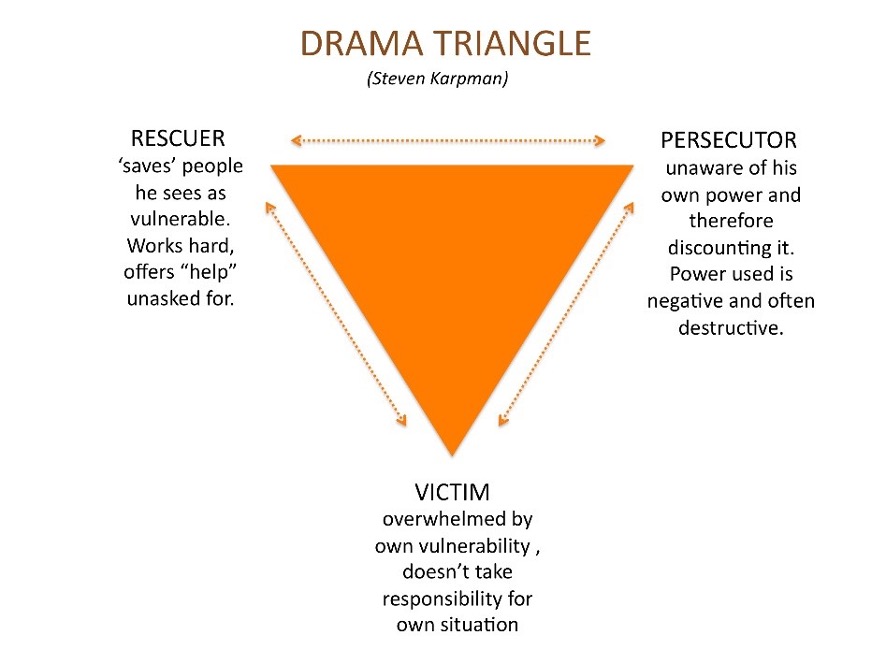
    The Drama Triangle

    From a young age I took on the role of rescuer within my family. My mother suffered from severe depression following my birth, and she needed her children’s love and care.

    Fast forward to 2020, during a global lockdown, I was playing the role of rescuer with my friends, completely unaware of the inauthenticity I was creating within myself and how I was neglecting my own needs.

    What does the rescuer look like?

    Warning Sign Number 1: People-Pleasing

    I was constantly people-pleasing and offering solutions to anyone around me, even though they never asked for help.

    I never considered how my friendships would be if I were not ‘useful’ or ‘fun.’

    I could see the red flags—for example, not speaking up when I felt something wasn’t right and instead working even harder to justify or understand one of my friend’s behaviors, and trying to help and save her even more by doing household chores.

    When we’re people-pleasing to gain someone else’s approval, we chose behaviors that are not true to ourselves. And we act in ways that negatively impair ourselves because in rescuing others, we’re neglecting ourselves.

    Warning Sign Number 2: Numbing Through Binge-Drinking and/or Eating  

    I was constantly binge-drinking with my friends, and it was damaging to my health. As a result, I experienced:

    • Sleep deprivation from the late nights
    • A dysregulated nervous system due to hangovers
    • Weight gain due to eating junk food

    And like a catch-22, the bad feelings I had after these episodes made me want to do it all over again to feel better, leaving me in a vicious cycle.

    I wanted to be with these women, like an obsession or craving, but I was using substances to numb the fact I didn’t feel safe with them. Eventually, this set off my internal radar telling me this wasn’t right.

    If you are in a cycle of unhealthy behavior with certain people and you’re developing self-destructive habits, it could very well be a way to cope/numb deeper feelings that you don’t want to face.

    Warning Sign Number 3: They Are Unavailable

    I began seeing our meet-ups as booty calls, enjoying the thrill and drama of rushing to meet them.

    I would drop everything to be in one friend’s last-minute plan, or I would try to make future plans if I saw her and I didn’t want it to end.

    These friendships felt like a drug—I felt addicted to seeing them, despite knowing it wasn’t good for me or my health. I would eagerly wait for one of my friends to tell me when she was available.

    The thing is, she wasn’t available. She didn’t want to make plans in advance or prioritize us on weekends when she had other plans. So I made myself more available. I’d drop things if she was free and wanted to meet.

    Being someone’s last resort and being okay with that are clear signs that a relationship isn’t healthy.

    I’ve come to realize that I’ve carried a mother/daughter wound my whole life—because my mother wasn’t available due to her mental health challenges—and I was desperate to be seen, wanted, and accepted by people who weren’t available as a result. It was all I knew. It’s how I became programmed.

    I was seeking out women who replicated the relationship I had with my mother as a child. I was befriending those who seemed confident, unattached, and unavailable.

    However, the issue wasn’t what they were doing. The real work was asking myself why I was making the choice to be around people who made me feel unsafe. So unsafe that I was numbing myself with food and alcohol when I was around them.

    Due to my mother’s depression when I was growing up, I didn’t know what it felt like to be in a safe relationship. Since drama and dysfunction were all I knew, that’s all I was seeking out.

    Through trauma coaching I learned how to listen to my physical body and then connect to my inner child. To find and heal that little Rav who was looking for love by people-pleasing.

    Here’s how I connect to my younger self:

    1. I take a moment to pause and feel. I close my eyes and breathe calmly. I scan my body for any aches/tension or obvious pains. After locating the pain, I ask myself when I felt like this as a child, and I explore that.

    2. I FEEL the feeling in all its depth. This might mean crying, shouting into a pillow, or even punching a pillow for the hurt I felt as a child during a specific incident, or for the pain I’m feeling now.

    3. I journal it all out of my mind and ‘re-parent’ my inner Rav: “It’s okay—I got you. That wasn’t very nice. You’re safe now. You don’t need to speak to mum right now. You can play with your toys or cuddle your teddy. Let’s help you feel better.” It can be in the form of an imagined conversation or even acting it out in the now after writing it out.

    The power of this process and being able to recognize those wounds is immense. You really start to understand and sense your own sense of self and your worth. And your current patterns and issues become so much clearer to see.

    The questions I went on to ask myself:

    • Were my friends asking me to rescue them?
    • Did they know I was withholding my honest feelings, too scared to tell them how I really felt?
    • Was it my choice to stay with them when I felt unsafe or to drink and stay up late?

    After I took an honest look at what was really going on, those friendships came to an end, and I still find myself grieving them but far less than when it first happened. It’s not easy. It hurts. However, I now have the tools to feel safe and to come back to my true self.

    Throughout the day I take my right palm to my heart, close my eyes, and remind myself “you are safe.” I repeat this as many times as necessary as I slow my breathing and connect to the present moment.

    It is so worth the struggle and the commitment to healing in order to break free. It’s actually created space for me to welcome more aligned friends into my life.

    It’s a process to adjust to a less dramatic, chaotic life than I had with them, but I am much more content within myself. I don’t need to hustle or the drama. It’s okay to be safe.

  • Why I Attracted One-Sided Relationships and Gave More Than I Got

    Why I Attracted One-Sided Relationships and Gave More Than I Got

    “I was once afraid of people saying, ‘Who does she think she is?’ Now I have the courage to stand and say, ‘This is who I am.’” ~Oprah Winfrey 

    In May of this year, I decided to take a personal development course, hoping to resolve some of my limiting beliefs and raise my confidence to pursue my professional goals.

    The course turned out to be far different from what I thought it would be, and it blew my mind. In just three days, I transformed the way I functioned in most of my relationships.

    A week before the course, I began analyzing my friendships, and one in particular came to my attention. I was becoming aware of the triggers that led me to doubt our connection and how healthy this relationship had been. The resentment that had built up in me was slowly being revealed, and I wanted to make a change.

    At first, I became very standoffish about the situation. I shut down and stopped reaching out. I reasoned with my ego that it’s not my job to make people aware of what they are supposed to do, or what I think they should be doing to make me feel worthy and valued. What can I say? Self-righteousness is a funny friend.

    I had no plans to approach the situation between us, believing that she was at fault since she wasn’t investing in our friendship and I was the only one doing the work. 

    On the first day of the course, the leader challenged us to make amends with people who we weren’t authentic with. Suddenly, my reasoning started to crumble. I had to confront the situation, no matter the outcome. It terrified me.

    As much as I resented the truth of neglecting myself and therefore creating relationships where I wasn’t appreciated and valued, it took me about three hours to let that go and reach for humbleness instead.

    It was 7:15 pm when I dialed the number. I was nervous, my voice was shaking, and I kept reminding myself not to sound blameful. As we started the conversation, I told her that there was something I needed to talk about.

    I went on to say that I didn’t feel our friendship was a balance of give and take and that there was a fair amount of negativity taking place.

    After I expressed my concerns, she said she didn’t quite understand. She asked for specific examples of what I didn’t like about our relationship, and I cited several instances where I felt dismissed and unappreciated.

    She went on the defensive and, after listening to me for a while, said, “I don’t think I can give you what you’re asking for.”

    Ouch. Suddenly, I felt a familiar pit in my stomach that often occurred when someone rejected me. My worth was threatened, and I could feel it with every ounce of my being.

    I wish I could tell you that this conversation ended with us resolving the issue and strengthening our friendship. Unfortunately, this wasn’t the case. I continued with the course for another three days while proudly sitting in my self-righteous state of mind.

    When we don’t address our struggles concerning our worth, we tend to neglect our needs to gain validation, love, and attention from others. Although, deep down, we know our needs aren’t met and we are abandoning ourselves, we feed our egos by finding significance in being the bigger person. 

    Putting things into perspective, here are questions I pondered: Who plays the bigger role in an unhealthy relationship? Is it a person who feels that everything is about them, or a person who gives them space to be this way in order to feel valued and needed? I am concluding that both are equally responsible. Lack of self-worth can present itself in many forms, and this was mine.

    Two days after the course was over, I spoke with one of my other friends, sharing what had happened and how hurt I felt by the whole situation.

    She challenged my story by asking me, “Have you ever told her that you need help? Have you ever shown her that you’re struggling and need her?” Her questions triggered me because, deep down, I was fully aware that I often don’t express my needs or struggles to others.

    Some of my favorite lines are “I got this” or “It is what it is.” Knowing what I know now, this may only work as a T-shirt slogan. But in all seriousness, I rarely communicated my needs since I didn’t consider them as important as the needs of other people.

    She went on to ask me, “Considering that you’re never open and vulnerable enough to allow others to be there for you, would you say you might have been a fake friend?” 

    Another ouch. Suddenly, I was faced with how inauthentic I was. Leading people to believe that I was Wonder Woman without any need for help was a double-edged sword. It meant that I denied my needs while secretly becoming resentful and angry.

    I realized that acting from an unhealthy place of unworthiness, while trying to maintain the role of a bigger person, was never about helping others. I was trying to fulfill some emptiness in my soul that I hadn’t healed.

    If we believe, for whatever reason, that we aren’t worthy or enough, we will constantly look for validation from the outside world and use self-destructive behaviors to prove ourselves since our souls are starving.

    Unless we heal our childhood wounds and stop seeking validation from our accomplishments or other people, we will spiral into a toxic circle of lack and inadequacy. 

    After a very honest and painful conversation with my friend, during which I sobbed like a four-year-old losing their most precious toy, I decided to reach out to her again. I was too scared to make an actual phone call, so I decided to send her a voice message instead.

    The purpose of the conversation was to be authentic about having been inauthentic. I expressed the hurt I felt and how fake I’d been in our friendship. I expressed my resentment and that my ego was still standing in the way, but at least I was aware of it. Also, I told her that she wasn’t the only negative person in our friendship, and that my resentment created an equal amount of negativity and toxicity for both of us.

    She replied by saying that she was acknowledging my message but needed to reflect on it. Since then, I haven’t heard from her.

    Although this may sound like a sad ending, I don’t see it that way. For the first time in my life, I stood up for myself and for what’s important to me. Instead of denying my needs, I voiced them. I was aware of the boundaries that were missing and made them important. I was acting from a place of worthiness and self-love. Although it meant that I was losing the friendship, at least I wasn’t losing myself, as I often have.

    While working on our healing and addressing our traumas, we often overlook the importance of others in our healing process. If we want to recover from past pains caused by difficult relationships, we must create bonds with people based on love, compassion, and mutual support. 

    Although our recovery is personal, even isolating at times, a big part of our healing happens within partnerships with others.

    For example, let’s consider a scenario where our trust was broken, and we were traumatized to trust again. It’s difficult to heal this problem on our own. We must nurture new relationships or fix old ones since trust is the essential foundation of a relationship. This is how we heal and gain confidence in trusting others again.

    Moving forward, I know I will face the challenge of helping others or being there for them from a codependent state of mind again. However, this time, I will be able to recognize it, pause, and reevaluate the actions and investments I make in other people.

    Although breaking the limiting belief about my worth has been a tough task for me, I am getting a glimpse of what it feels like to stand in my power and value who I am. Knowing that I have the potential to feel worthy in relationships, I can say, with confidence, that I am certainly not stopping now.

  • Toxic Help: 3 Signs Your Support Is Doing More Harm Than Good

    Toxic Help: 3 Signs Your Support Is Doing More Harm Than Good

    “There is no exercise better for the heart than reaching down and lifting people up.” ~John Holmes

    As someone who people often come to seeking help or advice, I recently encountered a new situation for me: one in which I chose to stop helping someone and walk away entirely because I determined it wasn’t good—for the other person or myself.

    It felt like the wrong thing to do, but once I had some distance, I knew I had made the right decision. Throughout the helping, I soldiered on and helped and helped and helped until it no longer felt good, and sometime after that I determined it was no longer help at all—it was enablement.

    My good friend—let’s call him Jack—has had a series of extremely toxic relationships. Infidelity, dramatic and very public confrontations, drug abuse, police involvement…. Jack has always played the role of victim in these cases, and in the three relationships I saw him in during the time of our friendship, he was cheated on, dumped, thrown out of the house, and physically abused. He can’t seem to help himself in this regard.

    Last year, he entered a relationship that was problematic before it even began. The very first official date with Henry, the guy who later became his partner, Henry stormed out of a dinner with a group of people, got extremely intoxicated, and got into a fist fight (with a legally blind person no less) and thrown out of another establishment later. This was all on the first date mind you!

    In a sense, this was very lucky. When someone shows you their worst selves, that is often after years together, a shared home, or maybe even a marriage. At that point, it’s usually emotionally and perhaps even logistically very difficult to walk away. On date #1, not so much!

    And yet, Jack persisted.

    Over the course of the next few weeks, Henry, who was already living paycheck to paycheck, was fired from his new job (for which he relocated internationally) for having a shouting match with the boss, and had a dramatic fight with his older sister, who was his only acquaintance in this new country and perhaps his only source of financial support.

    It also became clear the guy was an alcoholic and drug addict. Without a job or the help of his sister, who do you think he immediately turned to for money? Yup, Jack.

    Before too long, Henry’s temper tantrums were directed at Jack’s friends, including myself. The first day I met him, Henry screamed and yelled at me over dinner. In short order, the temper tantrums were turned on Jack, and soon the words became closed fists. He beat up Jack a few times—once leaving Jack with a pair of black eyes—and yet, it was Henry who dumped Jack. Jack kept coming back for more!

    This all unfolded over the course of about six months. During this time, Jack frequently sought my advice. Whenever we talked, I of course let him know how unacceptable Henry’s behavior was, but also tried to get Jack to accept the deeper reality of the situation—that no one who was okay with themselves would tolerate this type of behavior from someone else and that Jack needed to really work on himself.

    As the situation became more threatening and then violent, I counseled Jack in no uncertain terms that it was time to get the hell out of there. Had I been aware shortly after the physically violent episodes (Jack only told me weeks after the fact), I very likely would have become directly involved and called the police.

    After each of these conversations, Jack’s mood brightened from despondent to anywhere from determined to energized. He was going to take action. He was going to see a therapist. He was going to stop giving Henry money and leave him. He was going to make sure not to speak with him alone. And each time… nothing. Same story each time. Each time I saw Jack, Henry was there, often belligerent, and always intoxicated with something.

    However, as incomprehensible as Jack’s behavior and decision-making seemed, it’s not uncommon for victims of abuse, who often suffer from past traumas and therefore have underlying emotional and psychological issues that require professional attention. In fact, it has a name: trauma bonding. I was aware of that, so beyond trying to help protect Jack’s physical safety, I was patient in nudging him toward seeing someone.

    What finally did it for me—the last straw—was after the second or third incident of physical abuse. Jack’s friends, some of whom I knew, were very happy to gossip and complain about the situation behind Jack’s back, especially insofar as it affected their social plans. However, they didn’t intervene or offer him help in any way that I could see.

    Likewise, Jack lived at home with his parents and siblings. Even after coming home black and blue and bleeding, they took no action and never discussed the situation.

    A week later, there were social media postings of Jack and Henry back together again, all smiles. The friends who knew of the abuse? They awarded those posts with smiley faces, hearts, and thumbs up.

    At that point, I realized that I just couldn’t fight this battle alone. It’s difficult enough to try and help someone who is not able to help themselves and indeed seems intent on hurting themselves, but when such a person’s self-destructive behavior is supported and enabled by a whole community of people surrounding them? That is an impossible situation, so I took myself out of it and broke contact. I was out of the country at the time, so it was easier to do this at that point.

    I thought about why I did this. It wasn’t because Jack was so intent on his self-destructive behavior—that just made it difficult, and it’s hardly a unique circumstance. It wasn’t because it was unpleasant—helping someone who really needs it often isn’t pleasant or glamorous, however good it might feel after the fact. And it also wasn’t that I felt in danger from Henry—he was a classic bully, beating up on people weaker than he was, but I didn’t have to see him.

    No, this was something else entirely. This was “toxic help,” and I thought about it and figured out three ways to identify it as such. With these conditions, it’s difficult for me to imagine any help actually being helpful, in which case it’s better for you and indeed everyone else if you extricate yourself.

    3 Ways to Identify Toxic Help

    1. You check yourself and don’t like what you find.

    Whenever you help someone, you should always check yourself first to ensure that this help is coming from a good place, from the standpoint of both your mind and emotions.

    The ego often plays a critical role in instances of toxic help. If you delve deep, you may find that you are actually pushing some agenda or subconscious ulterior motive on the other person.

    For example, you may be helping in part because you are re-enacting some past trauma or mistake you made and trying to fix your past self. Or, you may be trying to impress the person or make yourself feel superior. There are a lot of ways your ego could be manipulating the situation.

    In my case, I didn’t find any evidence of a subconscious ulterior motive. However, what I did find was that I had developed a lot of negative emotions around the whole situation.

    I was frustrated with Jack for making the same error over and over and over again. I was angry with Jack for constantly disregarding my advice—my advice… and that is where my ego started showing through.

    I was furious with his friends and family for allowing and even encouraging the situation to continue and tired of seemingly being the lone voice of care, concern, and sanity. If I was at a more evolved state, that negativity would not have arisen, so that’s probably something I should work on myself. But that was the best I could do at that time.

    Help can never come from a place of anger, any more than it can frustration, resentment, or greed. Negative emotions are part of life, but acting on them pollutes the world with that negativity. I realized that my efforts to “help” were becoming increasingly hostile in nature, and at that point nothing I would do was likely to be successful, because it was no longer coming from a place of love.

    Moreover, negativity transfers, as life is not compartmentalized. My anger, frustration, and other negative emotions were surely spilling over into other facets of my life—my work, friendships, and causal interactions. At that point, even if I was still in a position to help Jack, I’m not sure if it would have been a net positive for the world if, while doing that, I was not honoring the other people and responsibilities in my life.

    2. Your help is causing the other person to stagnate.

    Jack, as I mentioned, normally seemed to brighten a bit after each of our little talks. He would come away feeling more determined, agreeing with my analysis, and sure he was going to do something about it. Walking away from each of those interactions, his back seemed a little straighter and his head held higher. And yet, nothing changed in the situation.

    However, that’s normal with intractable problems and deep-seated behavioral patterns—they’re difficult to change! I realized that my help was not merely failing to have a positive impact, it was making things worse.

    It became clear that each time Jack spoke to me, he mentally tagged that as “doing something.” He felt better that he’d talked through the issues, apparently made some decisions, and probably because he got a lot off his chest—all healthy things. Yet, in his mind, that represented action and progress. When he spoke to me after the fact about what concrete decisions and steps he’d taken, he would offer up our last talk as an example.

    In this way, our talks became like a drug—a little pick-me-up that provided a brief high but did nothing to actually move Jack forward.

    Our talks were counter-productive in this way because they made him feel better, when in fact it is discomfort that typically spurs people to take difficult action. Our talks made him feel more comfortable, when what he needed was to feel less comfortable with the situation. The result was that Jack was avoiding taking the positive steps he needed, such as seeking professional help.

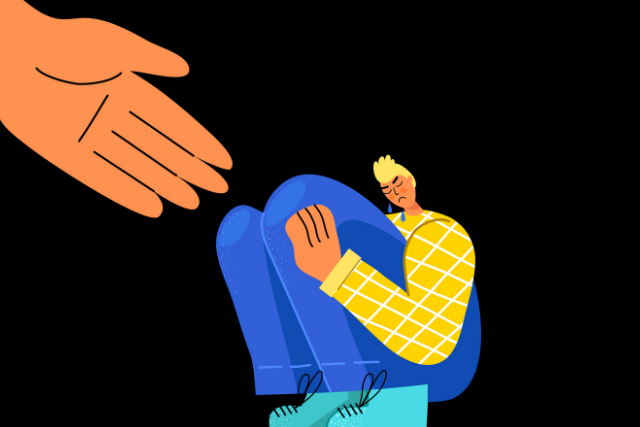
    3. You start role playing “savior” and “person in distress.”

    Any truly close relationship with someone must be authentic. It doesn’t involve role-playing or people doing what they’re “supposed to do” just because it’s something they’re “supposed to do.” It is an exchange, a give-and-take, an open dialogue, and a two-way street.

    Surely, in a long-term relationship, there will inevitably be periods in which one party is the needy one and the other is the helper. Yet, when those roles calcify into giver and taker, and every interaction is one of helping and being helped, that’s no longer a friendship—it’s a co-dependence.

    In my case, Jack had become stagnant. He was not moving forward. If ever he was looking for just some social interaction or “chill time,” he would call Henry or one of his other friends, and this often involved substance abuse. My role just became the helper and advisor, and in truth, our “sessions” had just morphed into pick-me-ups for Jack, so it was no longer even helpful for him.

    So, our relationship became boxed in this way with no clear way forward. Jack got fulfilment of his complex and unhealthy emotional needs from Henry, he got his social needs fulfilled by his enabling friends, and he got his help from me. We all had our parts to play, and indeed the other parties in his life encouraged this system to continue by enabling his behavior.

    The only way I saw to break the mold was for me to change the dynamic, and so I did.

    Not surprisingly, after Henry left the picture, Jack stopped calling for help. He didn’t notice that I wasn’t at his birthday party because I was out of the country, but then again, he didn’t even know that I was out of the country. He hadn’t needed help for a few weeks, so the calls stopped. as my role was temporarily written out of the script… until his next toxic relationship, when he’ll need to find a new helper.

    None of this was easy for me, and it didn’t feel good or natural. I am not one to turn my back on anyone in need, especially not a friend. But I learned and came to accept that I can’t do everything and should not take responsibility to fix what is beyond my ability.

    I really wish the best for Jack, and it would be nice to one day re-establish a relationship, but I needed to create distance in order to restore my own well-being, break the co-dependence that had developed, and banish the helper/person in distress roles that had hardened. In this way, I could be my best self, which ultimately is what’s most helpful to the world.
  • How to Spot Abusive People and Stop Getting into Toxic Relationships

    How to Spot Abusive People and Stop Getting into Toxic Relationships

    “No one can make you feel inferior without your consent.” ~Eleanor Roosevelt

    When it comes to dating, I have always been drawn to people who made me work for their love and validation. Despite the fact that I, like anyone else, wish to be with somebody that loves and supports me, I have always somehow managed to attract the opposite.

    My relationship history has been fraught with rejection, feeling unworthy, and trying harder to win love and approval. Every time I felt criticized or undervalued, I would look inward and ask myself what I could do to make my partner love me more. I always felt as if it was my fault, and when in doubt, I would blame myself.

    I’m an overthinker and would spend a lot of time in self-reflection. I came to understand that the trauma I had experienced as a child played a large part in my relationship choices.

    Experiencing trauma as a young child leaves a faulty wiring imprint on your nervous system. Instead of developing a secure attachment, the trauma/abuse/neglect causes the brain to develop differently.

    I grew up with very little love and affection and never felt valued by my parents.

    Children who grow up without consistent care and love learn to cope in various ways. They become hypervigilant of people’s moods around them (so that they can stay out of the way of an angry/moody parent, for example), and they can also learn to disassociate from their feelings because they cannot escape the situation.

    Trauma as a child often leads to an anxious attachment style or an ambivalent attachment style, and this affects adult attachment styles too.

    I know for sure that I have an anxious attachment style, and I also have low self-belief and self-confidence. This makes me a prime target for toxic partners such as narcissists or other abusive individuals.

    It is commonly known that narcissistic types attract co-dependent, insecure types. The root cause of co-dependency is the fear of being abandoned. Co-dependents work hard in relationships to avoid the threat of abandonment. Toxic people, however, don’t respond to more love and attention; it just fuels their abuse.

    I knew I needed to break this pattern, or I would never be happy in love. I am now quite adept at recognizing the signs of a toxic person.

    Here are the common signs that you’re in a toxic relationship:

    They tend to lack empathy (although they know how to fake it for at least the first three to six months) and the world revolves around them, not you.

    Of course, people on the autistic spectrum can seem to lack empathy, so this isn’t a guaranteed science, but it is still a sign to consider. My ex found it virtually impossible to put himself in my shoes. He would sometimes say the right things, but his words never really came from the heart.

    My ex abandoned me at Heathrow airport because there was an unexpected issue with my passport. Instead of considering how I might feel, he swore loudly and kicked the baggage around and then said he had to go without me because he didn’t want his birthday ruined.

    We had planned to fly via Singapore to Sydney. I should have known then that this was the start of many awful episodes to come. Thankfully, I joined him twenty-four hours later after hastily getting a new passport issued, but he dumped me (for the first time) four weeks later.

    They will always be at the center of everything they do, and your needs will be unimportant.

    Their time and needs take priority over yours. Relationships are all about compromise and consideration for each other. When the give-get ratio is imbalanced it is often a sign that the relationship will not be equal.

    If you confront them about this one-sided dynamic, they will either dismiss what you say, ignore you, or turn the conversation around and begin to play the victim.

    When I would confront my ex about his selfishness, he would sometimes breakdown and cry and say, “I know I am a terrible boyfriend,” but then he would soon stop crying and life would carry on as it did before.

    They will justify cheating on you and lie about it.

    A friend told me over lunch one day that she had seen my ex on Match.com for the previous nine months. I felt sick, and when I confronted him, he said that it was only ”light window shopping.” I was an idiot and I stayed. I only had myself to blame for allowing this to continue.

    Toxic individuals regard others as objects to be used. I felt replaceable and never felt fully secure in the relationship. Ironically, the one thing that attracted me to my ex in the very beginning was how keen he was on me. I love the way he chased me and the very next day after our first date he called and said, “At the risk of seeming too keen, I was wondering if you’d like to join me again tonight?”

    I was flattered, but of course this is a common sign of a toxic individual. They move in fast; they gain your affection and trust very quickly. Once you’re hooked the manipulation and the control begins.

    Another thing to look out for is subtle or overt criticism.

    My ex would comment on my posture at the dinner table, the way I spoke to friends, the way I cooked, as well as the tidiness of my house. He didn’t like it if I watched television too much and would treat me like a child. He was very controlling, but he never saw that in himself.

    Once, on a journey in the car, I saw the funny side (thank goodness I had humor to help get me through) when he said, “I am not controlling, but don’t ever use the word ‘controlling’ to describe me.”

    A friend of mine remarked at a later date, “That’s like saying ‘I don’t f#%@ing swear’.” Utter madness!

    Emotional abuse can also occur in the absence of criticism, selfishness, and controlling behavior.

    Being ignored can be just as painful. When I was stone-walled or felt neglected, it triggered my childhood trauma and transported me back to the feeling that nothing I did was good enough.

    In fact, my ex triggered me a lot and made me realize how dysfunctional the relationship was. It’s an interesting cycle that I have come across numerous times: childhood trauma and subsequent toxic adult relationships.

    This is what I have learned since finally moving on from my toxic ex-partner:

    If someone is too smooth in the very beginning and tries to fast-forward the relationship, I am wary. I would far rather be with someone who was slightly clumsy and forgetful than someone who is super slick.

    If they lack friends, that can be a red flag.

    Again, this doesn’t happen in every situation, but it can be a sign of trouble to come. My ex-partner had very few friends. He didn’t seem to understand the value of connection and keeping in touch with people unless he needed something from them.

    Underneath all of the bravado was someone who was quite insecure and had high standards for himself. I’m not sure that he actually even really liked himself. He would act extremely confident around others and was able to charm others especially when he wanted something from them. Toxic people often boast about their achievements and seem to think they are more entitled to things than others.

    What I Have Learned from My Past Relationships

    All of my failures in relationships have taught me that the old cliché of loving yourself first is actually true. Instead of planning my life around somebody else’s, I made choices about where I wanted to be and what was important to me going forward.

    I have built a strong foundation from which to explore the world. My strong foundation is built on self-awareness of my strengths and weaknesses. I understand why I sought out toxic individuals and have worked on my self-belief and self-esteem. The inner bully (the negative voice inside) is still there trying to tell me what I can’t do and why I need to be fearful on my own but I’m learning to tune it out.

    I have made more time for people and experiences that uplift and inspire me as well as focusing on inspirational podcasts and videos. What you focus on becomes your reality, and it ultimately affects your quality of life. I’ve become less accommodating to people who make me feel bad about myself.

    Feeling bad about myself is familiar, and I am convinced that previous childhood trauma altered my way of thinking and behaving, and over time it became a habit. The good news is that habits can be changed. We can’t change the past, but we can certainly update our beliefs about what happened and how we wish to see ourselves now.

    When you like and value yourself you will be far less likely to take abuse from others. You will also be more inclined to have healthy boundaries and ensure that there are consequences for those that violate them.

    Know what you will and won’t accept from others and let others know when they have overstepped the mark. If they are decent, they will be upset that they have hurt you and will make an effort to consider your needs. If, however, they dismiss your needs and feelings, that should tell you all you need to know.