Tag: obstacles

  • How Life’s Daily Challenges Can Actually Be Gifts in Disguise

    How Life’s Daily Challenges Can Actually Be Gifts in Disguise

    “Smile at your patterns.” ~Tsoknyi Rinpoche

    Partway through Eckhart Tolle’s Conscious Manifestation course, I furiously jotted down his teachings about challenges and obstacles to remind myself that they’re not only a normal part of the human experience but necessary for spiritual growth. “Yes!!!!” I wrote in agreement.

    When faced with difficulty, the human tendency is to react and resist, and when we do this, we add suffering to an already difficult situation. This tendency is reflexive within me, and my mindfulness practice has enabled me to either observe the cascading habit pattern as it unfolds, which disentangles me from its snare, or to gently accept what is happening and proceed with calm action and a quiet mind.

    When we can practice acceptance and equanimity, when we can say, “Okay, this is my present moment experience, and I can allow it because it’s already here,” we soften and open in the most tender way. And with this opening, we can receive a bounty of lessons and wisdom that our obstinance so often obscures.

    A few days after listening to Eckhart’s talk, I had to see several doctors and get lab work done to address symptoms I’d been experiencing. The entire week was pockmarked with small difficulties.

    First, the doctor’s office lost my lab sample, so I had to go back and give another one. Then the lab work process got delayed, and in an attempt to access my results, I spent two hours getting transferred between multiple staff members who ultimately said they couldn’t help me.

    At the end of the week, I confronted my last hurdle: I arrived for a follow-up appointment, only to be told that the automated system had canceled it and that the doctor was not available.

    After I explained my situation and expressed my discontent, the medical assistant managed to rebook me with another doctor. I softened, thanked her, and sat down, acutely aware that I’d lost my (spiritual) way.

    With each setback, I was upset and resistant. Like a snake releasing venom, I texted my husband flurries of frustrations, spoke exasperatingly to hospital staff, and felt my body tighten with stress.

    I realized that I only softened to the medical assistant because she told me what I wanted to hear, and within moments, this insight allowed me to look back on the entire series of events with a compassionate and non-judgmental eye. 

    I saw with clarity that in cloying for ease, I only created more difficulty. I saw that I had been behaving as if everything were a threat—like the healthcare system was out to get me—and that the real predator was my own mind. Immediately, I felt an internal release, like a nearly bursting balloon slowly deflating with the prick of a pin. I realized I could stop fighting. I realized that I could choose to surrender.

    After my appointment, I had to go to the lab, and I arrived at what felt like a crowded DMV: people everywhere, red ticket numbers glaring overhead, and a wait that seemed unending. I took a deep breath, pulled a number, and decided that I was going to use the wait—which I now perceived as an opportunity, not a threat—for mindfulness, presence, and spiritual practice.

    I looked around me at all the people. I watched as children caringly pushed their elderly parents in wheelchairs, as a pregnant woman patiently engaged her three children, and as a person laboringly limped to the ticket machine, burdened by a massive leg brace.

    I thought: Everyone is here because they are experiencing some difficulty; everyone has health scares; everyone is taking time out of their days to be here; everyone is waiting.

    I was so touched by the kindness and patience I witnessed. Suddenly, my story became enveloped in everyone’s story. I was them and they were me. I felt a deep kinship—a tenderness that made me feel enveloped in, rather than targeted by, the human experience. 

    As my awareness expanded further and further outside myself, I began connecting with those around me. I told the pregnant woman sitting beside me that I admired her patience, and when she shared that she was fasting for a half day of pregnancy-related lab work, I became even more aware that mindset is a choice.

    I made eye contact with a man whose gentleness I perceived underneath his masked face. We didn’t say anything, but we said everything.

    I kept scanning the room, and I noticed it had transformed from a chaotic, undesirable place, to somewhere I wanted to stay, somewhere I felt deep meaning and connection. Then I noticed that the space did not transform; I simply changed my relationship to it.

    When I left the lab, I was buoyant. I felt energized, connected, and light. I was overwhelmed with the experiential realization that the entire week was a skillfully designed lesson on challenges. I saw what happens when I fight to make them go away, and then I saw what happens when I invite them in, with an open heart and an open mind.

    “Challenges as gifts” left the theoretical world of quotes and concepts and burrowed into my lived experience. It stays there, and reminds me of itself, when I allow it to shine its light.

  • How We Can Overcome Our Obstacles When We Don’t Believe It’s Possible

    How We Can Overcome Our Obstacles When We Don’t Believe It’s Possible

    “If we can see past perceived limitations, then the possibilities are endless.” ~Amy Purdy

    Nature inspires me. There are hidden messages consistently on display. On my daily walks, I find myself interpreting these messages in relation to my life.

    One day, near the end of my walk, I was paying attention to the trees. A giant one caught my eye. Its magnificence was portrayed as morning sunlight peeked through the branches and bright green leaves.

    I noticed the enormity of its trunk, and then I saw the crooked fence.

    The giant tree trunk had grown so big that it pushed a section of the fence up off the ground. The fence barely had any balance left and looked as if it could topple over at any moment.

    As I watched all of this, I remembered another tree I had seen on one of my walks. The tree’s branches had grown so long and so thick, they struck through the slats on a metal fence. Big brown wooden knobs stuck out, encapsulating the thin wires. I was in such awe, I reached out and touched the chunky parts of the tree, thinking I could unwrap it from the fence. Not a chance. The fence had become a part of the tree.

    In seeing this tree, I thought, “Trees just do what they do. They continue to grow despite any objects that happen to be next to them.”

    These objects could appear as obstacles, but that does not stop the tree from growing. The tree adapts to its surroundings and keeps on keeping on. Depending on the barrier, the tree either continues to grow around it, or the tree ends up wiping out whatever is in its way.

    How is this symbolic in the life of a human?

    The nature of our true essence is to grow. Life seems to contain many events that are beyond our control. We find ourselves in situations where it seems we are being tested. Obstacles show up on our path, and we are faced with the question, “What do I do now?”

    But it really isn’t the obstacle that is in our way. It’s our beliefs about the obstacle that can stop us in our tracks. The tree doesn’t come up against the fence and stop growing. It just keeps doing what it’s supposed to do.

    Here is how this relates to an experience I went through in my early twenties. It was a true test of following my inner guidance instead of listening to the doubts of others around me, as well as my own uncertainties.

    At the age of twenty-two, I found myself pregnant, single, and living back at home with my mother. I was working an office job forty hours a week, making ten dollars an hour. Luckily, I had good health insurance, but what I didn’t have was a lot of self-confidence. I carried around shame.

    This was in the year 2001. Times had changed, right? Why was I so ashamed of being a young, pregnant, unwed girl?

    Because even in current times, that stigma was carried around deep in the trenches of society. And my own mother and older sisters had been through it, too. You could say the feeling of shame was passed down in many generations.

    After my son was born, I knew I had to do something different with my life. I received government help for food and baby formula, and my son was on government health insurance. Again, this only added to my shame because of the looks I would get at the checkout counter in the stores.

    But I knew I wanted to provide a better life for my son, and I knew there was something inside of me that wanted to grow beyond what I thought my potential was.

    I felt an inner calling to go into the medical field. So I decided to go back to college. Many obstacles showed up on my path once I decided to go for it.

    I hadn’t even enrolled in college yet, but when I began speaking aloud about my plan, fear set in, and people’s opinions fueled that fear.

    How would I attend college full-time with a four-month-old baby, work to provide for us, and find childcare in the meantime? Could I do it?

    Some people didn’t think so. They told me it would be too hard. They told me my son was too little, that I should wait until he was older.

    Attending college and raising my son would be too stressful. How did I plan to pay for tuition? Could I even get accepted into the highly competitive program, especially since I was already on academic probation?

    Right out of high school, I proved to lack ambition, and along with poor grades, I ended up dropping out of college after just two years of study. Now, how in the world was I going to get the university to accept me back, especially as a newly single parent?

    The obstacles kept appearing, left and right. A university advisor even told me that the program I wanted into was extremely challenging. He asked me, “Do you have family who can help you with your son? Because this program is rigorous and requires a lot of time.”

    Imagine, all of these stumbling blocks could have made me believe that I was not capable of pulling it off. I could have chosen to believe what I was hearing.

    I could have formed beliefs telling me my plan wouldn’t work. I had the choice to follow my inner guidance, my true essence, which pushed me ahead to grow, or I could believe my thoughts about it all being too hard. I could buy into the shame and the collective idea that I had no future.

    But there was something deep inside of me that knew I was meant to do this. I was meant to challenge all of the belief systems put in place that could hold me back.

    Back then, I did not know the power of positive thinking. I had never heard of manifestation. There were no tools in my toolbox to help push through any doubts. All I had was my inner guidance system and the strong desire to grow and show myself that I could do something really challenging.

    Four years later, after a lot of hard work, I graduated from college with a bachelor’s degree in respiratory therapy and was already employed at a local trauma hospital. I was living out on my own with my son and supporting us with my single income. I had found my passion for life, too. I was helping people who were sick.

    Our lives are a reflection of what we believe is true and possible. The belief systems we have in place guide our thoughts, desires, and the actions we take or do not take to make things happen.

    Instead of letting your beliefs hold you back, use this process to grow around them.

    How To See Through Your Belief System

    1. Choose a specific goal you would like to meet or choose a current situation you would like to change.

    2. Write down every belief you have about that goal or situation, specifically, any beliefs you sense are holding you back.

    These beliefs include:

    “I don’t have enough time.”

    “I’m not smart enough.”

    “I’m too old.”

    “I don’t have enough experience yet.”

    “My family would never approve.”

    3. Take some quiet time to engage with these beliefs. Sometimes I find it helpful to think about these during walks, while driving, or while I’m out in nature.

    4. Question where these beliefs came from. Usually, you will see the restrictive beliefs come from somewhere outside of you. They are ingrained from childhood, simply adopted from your parents and caregivers. You will even see a lot of beliefs come from society on a collective level.

    5. Once you can see where the beliefs come from, you have a choice whether to keep believing in them. What worked for me was not to try to change my beliefs into the opposite but to keep identifying that the belief was outside myself. The belief was not a part of my inner guidance. And then I would choose to move past it, not allowing it to hold me back.

    Forward Movement

    Seeing through your belief system is not an overnight process. More than likely, the systems have been with you for a long time. It can take discipline and effort to recognize them when they arise.

    Recognition of your inner guidance during this process is vital. It will not fail you.

    Keep listening to your inner guidance, your true essence. It will take you beyond your wildest dreams. It will be the tree that grows through fences.

  • We Can’t Do Everything, But We Can Do More Than We Think

    We Can’t Do Everything, But We Can Do More Than We Think

    “There are plenty of obstacles in your path. Don’t allow yourself to become one of them.” ~Ralph Marston

    I was sitting in a self-improvement course listening to the facilitator’s instructions. “I want you to come up with a Big, Hairy, Audacious Goal,” she announced. “This needs to be a stretch, something where you really put skin in the game. You have seven weeks to reach this goal.”

    The rest of her instructions trailed off as I thought about which area of my life I wanted to improve. I overheard a few of my classmates talking to each other about their lofty physical goals. My body contracted when I heard them talking. I shrunk into my shame.

    I couldn’t even run a 5k, I thought. I had lost my leg in a car accident thirty years previous and while there were many things I could do, running was not one of them. These days just walking was hard.

    During our break, I found a place to be alone and take counsel with myself. I felt myself resisting the obvious goal. I sat down and shut my eyes. Can I do it? Can I walk a mile?

    As I sat there, I thought about the first time I went backpacking after I lost my leg and how proud I was. I thought of the other physical adventures I’d had in my twenties: skiing, rock climbing, scuba diving, and skydiving.

    But those experiences were so long ago. Not only had two pregnancies and aging changed my body, but I had just spent the past two years getting a new prosthetic leg made. Since I wasn’t able to walk much during the two-year fitting process, I had lost a lot of muscle and stamina; walking had become painful and difficult. I had walked out of my prosthetist’s office on my new state-of the-art leg just a month ago. Yes, I thought, it is time to regain my walking feet.

    Back at the conference room, we each stood up in front of the group and pronounced our goal. They say, “When we compare we fall into despair” and that was certainly true for me when I heard other people declare their goals; I fell further and further into self-judgment.

    Listen to her, she’s going to run a half-marathon. You’re just going to walk a mile. Big deal. You’re such a loser.  

    But a wiser voice inside of me spoke up, Wait a second. She has two legs; you only have one. Just focus on where you are right now.

    When it was time for me to declare my goal, I went to the front of the room, took a deep breath, and said, “I am going to walk every day. I’ll start by walking down the street. Every day I’ll walk a little farther. My goal is to walk one mile.” I felt both excited and scared.

    The next day I took my first walk. I walked down the block and back again. A burning ache filled my stump, forcing me stop and rest halfway through. The next day I walked two blocks and back.

    Buoyed by my small success, I walked all the way around the block on the third day. The constrictive pain in my stump was intense and deep. With each consecutive walk, I learned how to deal with the pain, either by stopping to rest or by relaxing into it.

    By the end of the third week I had achieved my goal: I had walked one mile! I continued to walk a mile a day for the rest of the course. At the end of the sixth week, I took a hike in the woods—four miles round trip. I was overjoyed, not only to walk so far, but to be back in the woods on a dirt path amidst the evergreen trees and the dappled sun.

    After the course was finished, I wanted to keep walking but I knew I needed incentive and accountability. I also wanted my walking to mean something.

    I found an organization that helps amputees in developing countries have access to prosthetic legs. That was it. I pitched my idea—a walking campaign to walk 100 miles in 100 days for 100 legs—and they loved it! A few weeks later I started my walking campaign. I walked a mile a day for one hundred days and raised $14,000, almost half of my goal.

    After all these years of being an amputee, I still struggle with many of the same issues two-legged folks struggle with: motivation, attitude, gumption. When I remember to adopt these four attitudes and, believe me, I don’t always remember, then I find my life is much happier.

    First, I’m curious about my inner dialogue.

    Am I critical and judgmental, or am I my own best cheerleader? I’ve learned to chat with both my Inner Gremlin and my Inner Guide. They both have something to teach me. My Inner Gremlin talks first and then my Inner Guide chimes in. They sound something like this: 

    Inner Gremlin: It takes you twice as long as normal people to hike up this trail. You’re such a loser. You should just give up and go home. Who wants to hike with you when you’re so slow?  

    Inner Guide: Just because you’re slow doesn’t make you a loser. You are actually quite persistent and tenacious. Good for you!

    Until I met my Inner Guide I can say, unequivocally, that my negative self-talk, my Inner Gremlin, was a far bigger limitation for me than my amputation.

    Second, I focus on what I can do instead of what I can’t do.

    When I was in college I had a lot of friends who excelled at physical activities. I had one friend who canoed the Arctic every other summer, another who was a white water rafting guide. Other friends climbed local mountains just for fun on the weekends. When I looked to them as mirrors for what I could be they were both inspiring and I felt defeated before I began.

    No, I couldn’t heli-ski in fresh powder, but I did learn to ski on one leg. I couldn’t scale a mountain, but I discovered that I could backpack five miles.

    I had to determine what I wanted from these experiences and then find ways to get that. I had to discover what value I received from these activities and find new, altered, or accommodated ways to get that value. If I can’t climb a mountain, how can I find adventure in another way?

    Honoring my limitations taught me how to find the value in my activities.

    Third, I try to be honest with myself.

    When I was in my mid-twenties, I met a fifty-year-old amputee who had crutched to the top of Mt. Rainier. When I asked him how he did it, his recipe included a healthy dollop of weight lifting, a big cup of practice (which meant crutching around local parks with as many hills as possible), and a huge amount of grit.

    I tried crutching around my neighborhood for a week and discovered something. For as badly as I wanted to be at the top of Mt. Rainier, for as much as I wanted to say I had climbed Mt. Rainier, I didn’t want to train to climb Mt. Rainier. I had to stare that reality in the face for what it was.

    My limitation had nothing to do with my disability and everything to do with my mind. I didn’t want to put the time, energy and sweat into a training program that would get me to the top of the mountain. Once I saw this for what it was: a lack of desire for the whole package, I was okay with not climbing Mt. Rainier.

    That doesn’t make me a loser. It makes me a woman who doesn’t like to sweat.

    Fourth, I embrace the paradox.

    I can accept and accommodate my limitations and still have moments of anger or sadness about them. I can feel motivated and be frustrated that it takes me so much effort to walk. We deny ourselves true access to our hearts when we deny our feelings.

    It’s okay to feel frustrated, angry, or sad, but there’s always that extra step that leads us to the path of acceptance: choice. I have learned how to give my frustration, sadness, or anger a little time and then I move on.

    We all have limitations. Even a rocket scientist probably isn’t going to make the best kindergarten teacher. Someone who’s tone-deaf will never be an opera singer. Whether our limitations are inflicted upon us from the outside or come from within, they force us to discover and embrace our strengths.

  • 5 Lessons from a Dog on Overcoming Life’s Hardest Challenges

    5 Lessons from a Dog on Overcoming Life’s Hardest Challenges

    Golden Retriever

    “A challenge only becomes an obstacle when you bow to it.” ~Ray Davis

    I remember very clearly the first moment I saw our dog, Carmichael, or Carmy, as we called her for short.

    One tiny pup in a litter of eight Golden Retrievers, it was love at first sight, and I knew she was “the one.” As the years progressed, she became my best friend, confidante, and companion. We were inseparable.

    Opening the front door when returning from school, she would be there waiting, wagging her tail, with the biggest grin on her face.

    She would patiently wait for me to finish my homework, and then we would head out for her turn to play. At night I even wanted her to sleep in my bed; however, Carmy had other ideas and liked sleeping on the floor. It was clear for all to see that we had a bond that could never be broken.

    Our lives together were filled with fun, frolic, and sharing; and as I grew older, so did she.

    As she entered her early senior years, she began to develop hip problems and started to go blind. But devastating as this may have been to us humans, Carmy handled it with grace and love.

    She refused to let the situation bother her, and instead, always insisted on living each moment to the fullest, residing completely in the here and now, with me.

    We enjoyed thirteen precious years together. Through it all, Carmy was my hero and my champion. She overcame every obstacle thrown her way, and always met challenge with a big smile.

    5 Life Lessons Courtesy of Carmy

    1. Always find something to be happy about.

    As Carmy got older, we discovered that she had diabetes, which meant we had to give her two shots each day. However, she always showed determination to be positive.

    Instead of getting depressed after the painful jabs, she simply romped off, as only a Golden Retriever can, looking for food and living for the moment once more.

    Indeed, dinner was one of her favorite events of the day, and she was always the first at the table with an exalted expression of delight if she discovered a fallen crumb.

    When I lost my career and livelihood due to a series of self-inflicted crises, I became depressed and went through the grieving process. When I fell into those moments of feeling sorry for myself, I looked to Carmy as inspiration and tried to find something that brought me joy. In my case, it turned out to be cooking.

    My sister and I made a pact. We agreed to get together every weekend to rustle up a new dish. For those few fantastic hours, we would craft, create, slice, and dice. During those times I experienced complete happiness.

    I realized now how Carmy had felt and appreciated the sheer wonder of living completely in the moment.

    Whatever you’re going through, you can find something that will bring you joy. You just have to be open to it.

    2. Enjoy the ride.

    As you already know, diabetes required us to give Carmy two shots every day. Her partial blindness made it difficult for her to see, and toward the end of her life, her joints started to bother her. Yet you would never find Carmy worried about the future, or depressed about the loss of her youth or mobility.

    She just continued to reside firmly in the present, relishing every scratch of her ears. She thrived on wagging her tail whenever visitors arrived, and made it her purpose in life to be “master-cleaner,” licking every floor in the house!

    When I discovered that my dad had been diagnosed with terminal cancer, I thought my world would end.

    My mind was a flurry of “what ifs” and “whys.” During that time, I found great inspiration in thinking of Carmy. It reminded me to focus on what was in front of me—my dad. We had fourteen spectacular months together, and I am very grateful that I was with him during that time.

    It may seem like your world is ending, but you’re still here—and there are still things to appreciate and enjoy.

    3. Adapt to change.

    Carmy and I had always lived out lives inseparably, and as a result, she always used to travel with me in the car. However, when her joints made hopping into the car too painful, I found a portable step stool, which enabled her to clamber in carefully and gently.

    It was all that she needed. She continued to sit in the back, and I could see her usual grin from the rear view mirror.

    After my dad passed away, I knew my life would never be the same again. That painful period could have easily sent me into spiraling depression. However, the thought of Carmy and her incredible ability to adapt led me to understand that, although there’s not one day that I don’t miss my dad, my relationship with him did not have to stop.

    I learned to develop a new one, based on spirituality, and focused on carrying on his legacy. Carmy taught me that when we are patient, we can adapt to new life changes.

    4. Same routine, different methods.

    Even when Carmy was suffering badly with her illnesses, she tried to stick to her usual routines. She continued to go outside, though of course, couldn’t walk as far. On those walks, she still focused on sniffing the grass, examining the trees, and occasionally bringing her favorite stick inside.

    Her life was based on a specific regime, and she even took her naps around the same time. Carmy didn’t allow any of her challenges to overtake her life.

    It took me a long time to emerge from the violent storm of emotion that submerged me when my dad passed away. And again, remembering Carmy, I continued my routines until I began to appreciate how they offered me renewed stability and comfort while navigating my new reality.

    Your life may be changing, but you can create some consistency, and that can bring you great comfort.

    5. Live the moment, and make the most of it.

    You already know that Carmy was something of a foodie. Her favorite food was her weekend bagel.

    Every weekend, we would buy bagels; and every weekend, Carmy would seize hers, then rush out to the backyard to bury it. She would take the time to find the perfect spot to hide it, then proceed with her particular burying process.

    As she grew older, her beloved habit of romping off into the yard with her bagel also changed. Her age brought about something quite curious, because although she couldn’t run off and bury them, she did develop a new habit.

    She would take her bagels and bury them inside. I would discover bagels under rugs, in the trashcan, and even under the carpet.

    It was during the time that I had made bad decisions in my career that I felt myself on the brink of falling apart. Once again, I found myself looking at the lessons Carmy had taught me.

    When a friend suggested a job that I wasn’t really interested in, I decided to take it, in order to give me the chance to re-examine my life, focus on my passion, and figure out how I might contribute in the world.

    Be open to different possibilities. Trying new things just may enable you to make the best of your new reality.

    Carmy, in her inimitable ways, provided a wonderful example of how I wanted to approach life. She taught me lessons about bravery and helped me understand how to overcome challenges. Those lessons will stay with me forever. I hope they’ll stick with you too.

    Golden retriever image via Shutterstock

  • Blake Leeper: Inspiring Double Amputee Runner

    Blake Leeper: Inspiring Double Amputee Runner

    A double amputee since he was nine years old, Blake Leeper has an inspiring message to share about facing challenges, giving it your all, and getting up after you fall.

    “A true champion is that person that when they do fall down, when they get back up they come back stronger. And they show the world that this is not the end of me. And that I have so much more left.”

  • 10 Habits of Unhappy People (And How to Fix Them)

    10 Habits of Unhappy People (And How to Fix Them)

    “Ego says, ‘Once everything falls into place, I’ll feel peace.’ Spirit says, ‘Find your peace, and then everything will fall into place.’” ~Marianne Williamson

    Have you ever felt that something was missing in your life?

    Who am I kidding, everyone has.

    I used to be unhappy. But not just unhappy—miserable.

    I’d look at other people and wonder what they had that I didn’t. I was sick of living my life. And being sick of it was the tipping point that changed it all. It’s what got me moving in the direction of what made my heart sing.

    As I moved forward, I discovered that what was making me miserable wasn’t outside of me, but the habits I had built up over the years.

    I’d like to share with you what those habits were, and how I overcame them.

    1. Waiting for clarity.

    I thought that in order to do what I loved and be happy, I had to know where I was going.

    Turns out that wasn’t. It was just a thought that I believed.

    When I took action despite feeling confused, and simply did my best, I discovered that I could always take one step forward, clarity or no clarity.

    It was like walking in a heavy fog. As long as I kept moving forward, more of my path revealed itself. But if I stood still, nothing would happen.

    Fix: Don’t wait for clarity. Listen to your heart and take one tiny step forward. It doesn’t have to be perfect.

    2. Seeking permission from others.

    I wanted others to tell me I was on the right track. The more I did this, the emptier I felt inside.

    Why? Because I was giving my power away. Instead of listening to my own guidance system, I was relying on someone else.

    It was confusing and disempowering.

    I’ve never had an easy time trusting life. I worry a lot. But over the years I’ve realized that trusting myself is the only way toward living a fulfilling life.

    Once I stopped trying to seek permission, or figure things out, my inner wisdom grew stronger, because it was no longer clouded by thoughts.

    Fix: Don’t look to someone else for validation for your dreams. Go after what makes you come alive. That’s enough.

    3. Hoping for future salvation.

    Another unhelpful habit I have is living in the future, thinking that reaching my goals will make me happier.

    However, I’ve noticed that once again, this is just a thought that I give power to.

    I’ve also noticed that I’ve reached plenty of goals that I thought would make me happy, but didn’t.

    Like me, you’ve probably heard the following phrase over and over again: “Happiness comes from the inside. It’s available right here, right now.”

    For a long time, I wondered, “That’s all fine and good, but how do I use that in my life?”

    The answer was to witness my thoughts and let them pass by. I don’t have to believe every thought that tells me that the future holds the key to my happiness.

    Once I let those thoughts pass, I noticed that there’s a source of joy within, always available to me.

    Fix: When you find yourself living in the future, just notice what you’re doing. Let go of the tendency and observe what’s going on. This is a practice, so don’t worry if you don’t get it perfect.

    4. Wanting to take big leaps.

    When I get caught up in thinking that the future will save me, I want to take big leaps. I want to hurry to my goal.

    Yet this behavior makes reaching my goal less likely. It introduces sloppiness into my work. It produces an aroma of selfishness.

    But, if I let things take their time, and if I let those thoughts pass, there’s a sense of peace.

    As I write this, I’m not in a hurry. I sense the wanting to finish, but I witness it. I don’t get involved. Then I return my focus to writing and letting the words flow on paper.

    And my soul smiles. My heart nods. My breath deepens.

    I remember: “This is it. This is life.”

    Fix: Big leaps assume that happiness is in the future. Take a deep breath. Notice how much happiness is available right now. No big leaps needed, just a remembering of who you are.

    5. Having faulty expectations.

    For a long time, I believed that I could eliminate negativity from my life.

    But every day does not have to be a happy day.

    Life is sometimes difficult. The problem isn’t the difficulty, but how I relate to it. If I think it shouldn’t be there, I suffer.

    Again, it comes down to my thinking. Life is as it is; my thinking creates my experience of life.

    When I notice my expectations, I can let them be. This doesn’t mean I don’t feel the sting of something I label as bad; it simply means that I don’t have to pour more gasoline on the fire.

    I can’t control life, but I can control how I use my attention.

    I don’t have to change my thoughts; just notice what’s going on and how I’m creating my experience of the present moment.

    Fix: Notice how your expectations make you unhappy. Bring your attention to this moment. Do the best you can with what you have.

    6. Taking your thoughts seriously.

    “You’re not good enough.”

    “You’ll end up homeless if you follow your heart.”

    “What will people think of you?”

    We all have thoughts that freak us out. Yet I have days when I don’t care about those thoughts.

    So what’s different between the good days and the bad days? Simply my state of being. When I feel good, my emotional immune system is more stable.

    I remember that my feelings are simply an indication of how trustworthy my thinking is. When I feel bad, it’s a sign that I need to take my thinking less seriously.

    When I feel good, that’s when I can solve problems. But often I find that problems solve themselves, if I’m willing to get out of the way.

    So what I’m repeating over and over again is the fact that it’s our thinking that makes us unhappy, not our circumstances.

    Fix: Experiment with taking your thinking less seriously for sixty seconds at a time. See what happens and how you feel.

    7. Playing things safe.

    When I push the boundaries of my comfort zone, I tend to get anxious, afraid, and worried.

    But after a while the discomfort becomes comfortable. It becomes familiar.

    What changed? My thinking.

    When I let anxious thoughts pass, eventually my thinking returns to normal. But if I try to figure things out, I prolong the “healing” process.

    I’ve realized that to be fulfilled in life, I have to grow and challenge myself. To do that, I need to step outside my comfort zone. I have to stop playing things safe.

    There are no guarantees in this world.

    All I can do is follow my heart and be aware of my thinking. That’s it. I’ll have scary thoughts, but that’s okay. I can still take one tiny step forward.

    Fix: Become aware of the fact that being outside of your comfort zone is simply believing a different set of thoughts. You can always listen to your heart, and take the next step.

    8. Focusing on lack.

    I can have wonderful relationships, do work I love, and have life go swimmingly.

    But if one thing goes wrong, and I focus on it, I make myself miserable.

    And the thing about life is that there will always be something “wrong.”

    The key to happiness isn’t to get rid of your problems, but to learn to live with them. To notice how your thinking gets you in trouble.

    This doesn’t mean I neglect problems. It means that I don’t stress over them. I solve them as well as I can, but I don’t try to force solutions.

    I’ve noticed that when I stop thinking, I allow my inner wisdom to help me. I often get solutions to problems when I’m not thinking, such as when I’m on a walk, washing dishes, meditating, or in the shower.

    I do my best and then I let go.

    Fix: Notice your tendency to focus on the thoughts that tell you something is wrong. Rest your attention in the witness of those thoughts. You are not them. You can observe them, and breathe.

    9. Resisting obstacles.

    For years, I ran away from challenges because I saw them as obstacles to getting what I want.

    And I thought getting what I wanted would make me happy.

    But then something changed: I saw that these obstacles weren’t obstacles, but stepping stones helping me follow my calling.

    Instead of remaining in the habit of resisting obstacles, I get curious. I ask myself: What can I learn from this?

    Everything seems to have a purpose.

    The more I surrender to life, the more powerful I become. And to me, this surrender simply means not trying to figure everything out, or trying to control life.

    Fix: Don’t fight life. Embrace life. Become curious about the problems in your life. Don’t rush to fix them. Let them be for a while and notice the results.

    10. Neglecting your calling.

    Perhaps the biggest obstacle to happiness is neglecting your calling.

    When I neglect my heart, my purpose, my inner wisdom, I become miserable.

    And the way I neglect my calling is through thinking too much. Thinking that something is wrong, or that I’m on the wrong track.

    When I notice this mental habit, I let it be, and I take a deep breath.

    To follow my calling, I have to let go of what I think my path looks like.

    I can’t figure out where my life is going, I can only live it one moment at a time. That’s scary to my mind, but that’s okay. I can let thoughts pass, and I can rest my attention in my heart.

    Fix: Let go of what you think your life should be, and let it become what it was meant to be. Live life one moment at a time. It’s all you can do anyway.

    Happiness is not something you get, but something you are. What’s stopping you from being happy is taking your thoughts too seriously.

    You have wisdom within you, waiting to guide you. All you have to do is let go and observe how you stop yourself from accessing it.

    It’s not easy. It’s a practice. Sometimes it takes time.

    But notice that even the rush to get it right is a thought. Let it be.

    Do your best.

    Follow your heart.

    And remember to breathe.

  • 4 Lessons from the Forest on Dealing with Difficult Times

    4 Lessons from the Forest on Dealing with Difficult Times

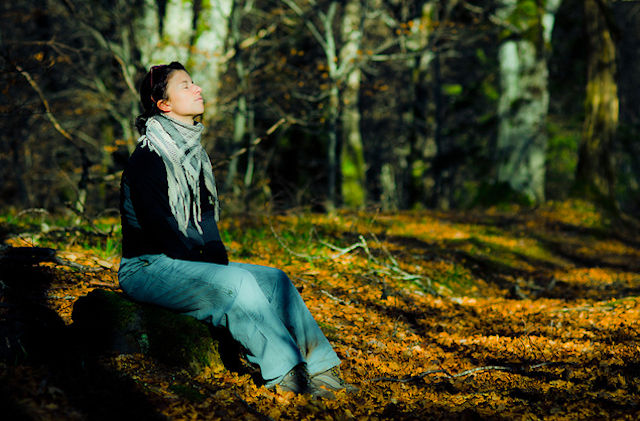
    Woman in a Forest

    “Change your opinions, keep to your principles; change your leaves, keep intact your roots.” ~Victor Hugo

    This week I revisited a favorite national park, some fourteen years after my last visit. Despite the long hiatus, the reason for both trips was the same.

    When I last visited in 2000, my goal was to seek out the solitude and beauty of the rainforest, the creeks rushing headlong through shade-dappled gorges, and the vast rocky cliffs overlooking the distant ocean.

    I had suffered a recent breakup and wanted to spend some time in nature, in solitude, in a place where I could find and heal my emotional scars.

    This time I returned to the same place to spend hours in walking meditation in the forest, trying to understand what had gone wrong with my latest, and longest lasting, relationship.

    After the first trip, I then went to spend a week at music festival, where I met a wonderful man, on New Year’s Eve of all times. We shared thirteen years of friendship, love, and companionship, and enjoyed similar activities, such as hiking, camping, and travelling.

    We also shared similar values and a similar outlook on life. He’s a hard-working, wise man, and together we raised a blended family of four boys and one girl. We loved nothing better than to sit around a campfire in some national park, sharing a glass of wine and resting after a long hike over a mountain.

    But something happened in the last year, and he changed. We went from the couple that everyone thought had the perfect relationship to two people who could not spend five minutes together without arguing.

    To this day, I cannot understand what happened. Why had the man I loved gone away and been replaced by this stranger?

    It’s been a long and difficult twelve months, and I’ve learned a lot of hard lessons. Perhaps he never did change. Perhaps I was the one who changed him, and he had just gone back to how he was before he met me. Perhaps I will never know.

    I don’t know what is going to happen in our future, whether we will ever end up back together again, even though I desperately hope we can rekindle our friendship and love. And of course, most relationship breakdowns cannot be blamed on only one person, and everyone can try and improve themselves, if not to fix their past, then to fix their future.

    These are some of the valuable lessons I learned in the forest. I hope they can help others deal with difficult times in their lives.

    1. Slow down. Life is not a race.

    Despite the fourteen years that had passed, the forest looked exactly the same. Of course it had changed, but imperceptibly, slowly, and incrementally.

    On my first walk, I found myself hurrying to get to my destination, getting impatient when I caught up with slower walkers. I would mumble “excuse me” and hurry past with a quick hello, then walk on at an even faster pace so that I would not hear them talking.

    I kept looking at my mobile phone, worried that I had no reception and couldn’t check my email or upload a picture to my Facebook page.

    After an hour of this, I said to myself, “Stop it!” I was in the forest to learn, to experience, to think. I had no destination and no deadline. I was there for the journey, and for the lesson.

    I turned off my mobile phone and slowed down. I stopped whenever I wanted to, whenever I need to rest. I looked at tiny, beautiful flowers and watched a brilliant blue spiny lobster wave his claws at me, furious that I wanted to walk past his territory.

    I saw fungi of all shapes and colors, breathed deep the leaf-mold compost fresh-rain smell, and listened to the call of the whip-bird echoing amongst the trees. I walked eight hours a day and was never tired.

    I realized that I had spent much of my life planning for some deadline or other, never enjoying the moment, always looking to the finish line. No wonder we had drifted apart. We were both Type A personalities, always impatient, always rushing, always stressed, and always tired.

    2. Have a strong foundation.

    In the forest the trees grow so tall and wide, some over 50 feet wide and 300 feet tall. But the forest soil is thin and has few nutrients, especially in mountainous areas. How can such huge trees grow so tall?

    They grow so huge because they have built strong foundations, vast thick trunks, networks of stilt roots, and wide buttressed roots. They are also part of a system, of the forest itself. In the suburbs, carved out from where forests once grew wild, solitary trees often fall, toppled by the smallest wind, for they have no support from other trees, and their foundation has gone.

    If you are going through troubled times, for whatever reason, you need to have a strong foundation. This foundation could be a network of trusted friends and family, a valued work colleague and confidante, a counselor or spiritual teacher, a strong faith in a higher power, a supportive local community, even a loyal pet.

    Just as in the forest, we are all part of one human community, and we depend on one another. If you have a strong foundation, you can weather the strongest storms. Branches might break and fall, fires might rage, but you will survive.

    3. Disturbance is not bad.

    But the forest also needs disturbances. In the forest, disturbances are an integral part of the system, to bring in new life. In a mature forest, the taller trees absorb nearly all the sunlight, so the forest floor is permanently shaded.

    Nothing new can grow until something happens, perhaps a lightning strike, or a flash flood, and then one tree falls or drops branches. This creates a gap where the sunlight can pierce the darkness.

    Within days, new life takes root; pioneer species make way for the forest giants of the future. And the giant felled tree will rot and provide food and habit and shelter for other species. The forest is not static, and it needs disturbance to bring new life.

    Perhaps the problems that you are facing will disturb you and force you to change and to grow, to bring new light into your life.

    4. If you can’t get over it, grow around it.

    Many of the giant trees have grown around enormous rocks, their roots piercing the very stone, breaking down the rock into new soil. The trees cannot move the rocks, so they just grow around them.

    If you have a problem or are suffering a relationship breakdown, grow around it. Do things to break down the problem into new fertile soil.

    For example, you might find yourself separated and unemployed, in which case you could go back to school and get some qualifications so that you are no longer dependent on anyone.

    Or, through self-analysis or counselling, you might discover some unyielding rock within yourself, such as an unresolved issue from your childhood, which might have contributed to your relationship breakdown; then you can address that problem, and grow around it, so it is no longer the huge obstacle of the past.

    In time, even the deepest wounds heal, and the hardest rocks break down; and new life, and a new forest, can grow from the smallest shoot.

    Photo by Gregory Tonon

  • 7 Tips for Pursuing Your Passion, Even If You Feel Behind

    7 Tips for Pursuing Your Passion, Even If You Feel Behind

    SONY DSC

    “Don’t worry about what the world needs.  Ask what makes you come alive and do that, because what the world needs is people who have come alive.” ~Howard Thurman

    From center stage I looked out into the crowd as the stage lights warmed my face and did their best to obscure my vision.

    In the half-light of the seating area I spotted the faces of family, friends, many other members of the local jazz community, and other people who had come out to support me. Smiling. Clapping. Congratulating.

    I didn’t feel happy. Not exactly. The situation was too surreal to do much except just notice it. Nor did I feel relief that the event had more or less gone off without a hitch.

    It was the final concert that every jazz performance student at my university has to put on at the end of their third year. For me, it was particularly special because of all the obstacles I’d overcome to get there.

    I’d been accepted into the school having played guitar for two years, when most of the other students had been playing since the beginning of junior high at the very latest.

    And I’d only been accepted because the guitar instructor, who I’d taken a couple lessons with, told the judges panel during my entrance performance that I’d made the most week-to-week progress he’d seen in thirty years of teaching.

    At that time, I could barely even read music. But I knew my instrument well and was ridiculously driven.

    I also had chronic tendonitis.

    That year, I had only picked up my guitar for classes and performances. Otherwise it was too painful to touch. To practice, I would visualize the instrument and play in my head.

    Naturally, my outlet for my frustration over the situation was the very thing I couldn’t do.

    It had been the most challenging year of my life. In third year the gloves came off and we were expected to become true professionals.

    My friends would pull the occasional all-nighter to write an essay or finish a project. For me, practicing until five in the morning had become routine. I would have to laugh to myself when people told me I had it good—that I got to play for work.

    Yet, for that one night, on stage with some of the best musicians in the city—leading them even—I felt like I was truly one of them. The long days and longer nights spent practicing had been validated.

    It would be my final concert. My injuries were too much to continue playing. In hindsight, the growing problem had been incredibly obvious. But at the time, I wanted it so badly I pushed through the pain and threw out the long-term repercussions.

    When I finally stepped off the stage my friend LadyBird ran over and engulfed me with a huge hug, gasping “You did it.” She had been the one who convinced me to pursue music when I was in my last year of high school, and we’d spent countless nights together practicing over the last few years.

    Even three and a half years later, thinking of that night makes my eyes misty. A mélange of joy and sadness.

    The whole experience in the jazz program and the aftermath taught me an incredible amount about myself, life, passion, and persistence. Here are 7 of the main lessons I learned along the way:

    1. Only you can decide whether you’re “good enough” to do something.

    Everyone was a beginner once, and it’s better to start late than never.

    2. Be patient.

    Life will do funny things to throw you off course, but you have your entire life ahead of you to pursue your passion. Things don’t have to happen right away. Take care of the current situation, keep moving forward each day, and you’ll be happy where you end up.

    3. Don’t get so caught up in your passion that you neglect the other important areas of your life.

    I neglected my health and to a lesser extent, my relationships when I was pursuing my passion for music.

    Passion, that fire that burns brightly inside us, can push us to incredible heights. But it can also consume and destroy.

    Leading a well rounded life will make it easier to appreciate your passion and share it with the world than locking yourself away to pursue a narrow, single purpose.

    4. Ask for help from people have gone through what you are.

    Often we feel like asking questions is a sign of weakness, like we’re admitting our own ignorance. Nothing could be further from the truth. We’re admitting a willingness to learn and displaying humility.

    5. When you’re at your lowest moment, you’re near a huge breakthrough—even if it’s not the one you expected.

    It’s how we handle the worst moments that ultimately determine our success.

    6. Appreciate how amazing it is that you even have an opportunity to pursue a passion.

    That puts you in a minority of all the people who have ever lived. You don’t have to hunt/gather food, farm the land, or otherwise spend every moment focusing on your survival.

    You get to do something for the pure and simple fact that you enjoy it.

    And that’s amazing.

    7. Never, ever give up.

    I lied earlier. It wasn’t actually my last concert. Only the last one until the next one.

    Photo by Shan Sheehan

  • The Sole to Persevere: Lessons from the World’s First Armless Pilot

    The Sole to Persevere: Lessons from the World’s First Armless Pilot

    She was born without arms, but she’s never seen herself as a victim—and she’s beyond inspiring. In this short video, Jessica Cox shares a little about the mindset that has helped her overcome obstacles to live a bold, empowered life.

  • Make the Difference: An Inspiring Video about Overcoming Obstacles

    Make the Difference: An Inspiring Video about Overcoming Obstacles

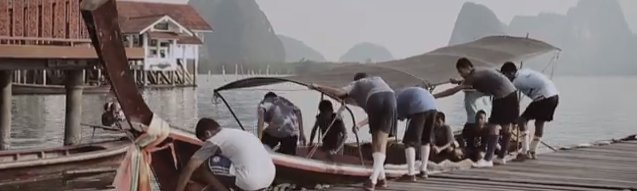
    This is the true story of a group of boys in Thailand who formed a football team in a small floating village without even a tiny bit of dry land. Even though they had nowhere to practice, they found a way to make it happen and became an inspiration to everyone around them.

    What’s the dry land you’ve been looking for, and how can you make the difference you want to make now, whether you find it or not?

  • Stay Motivated To Make Lasting Changes With These 5 Simple Steps

    Stay Motivated To Make Lasting Changes With These 5 Simple Steps

    I see the light

    “The obstacles of your past can become the gateways that lead to new beginnings.” ~Ralph Blum

    We all face obstacles. Maybe you’re unhappy in your career, but don’t know what else you’d like to do with your life. Maybe you’re unfulfilled in your relationship, but don’t know how to communicate this to your partner. Or maybe you’re struggling to make ends meet financially, and don’t know how to get out of debt.

    A few years ago, my life was in complete shambles. My marriage had fallen apart, I was unfulfilled at work, I felt disconnected and misunderstood by family and friends, and I was in an all out battle with my physical body as I suffered through the aftermath of a decade’s worth of dysfunctional eating habits.

    My entire life felt like one big obstacle, and unfortunately, when we feel like this it’s easy to lose track of who we really are and what we really want in life.

    Whether it’s family, friends, career, finances, or a combination of all the above, if left ignored these obstacles can quickly grow to feel insurmountable.

    We begin to feel overwhelmed, stuck, and anxious, which manifests itself as lack of motivation, procrastination, and a slew of behaviors and symptoms that represent our avoidance of facing these obstacles head on.

    Well, with every day that passed, more and more pieces of my life began crumbling around me. I knew something needed to change, but what? Where would I start? What did I want?

    I knew I couldn’t fight the entire war at once, so I spent many hours asking myself these questions and trying to figure out which battlefield to walk onto first, if any. Eventually, I decided to tackle the obstacle I’d been battling the longest: I decided to focus on building a better relationship with my physical body.

    We all have that one hurdle that rears its ugly head over and over again, and for me, that hurdle was my diet.

    At the time, if you’d asked me “Why do you want to build a better relationship with your physical body?” I would have responded with something like this:

    “Because I’m in physical pain.”

    While this was a good enough reason to choose this as the first obstacle to tackle, it didn’t hold weight for very long. Pretty soon, I found myself losing motivation, and asking myself the question, “But why?”

    “But why is it important to overcome this physical pain?”

    Since all the dysfunctional behaviors surrounding my eating issues were familiar, and I’d been dealing with the physical pain for so long, I actually found comfort in it.

    So I knew this lack of clarity was a recipe for disaster, and a surefire way to quickly lose motivation. I needed to go deeper to uncover the real reason why I desired to change this area of my life.

    Eventually, I came up with this:

    “Because my eating habits are affecting all aspects of my life: My career, my physical health, my relationships and social life.”

    This answer was definitely more honest, but once again, it still wasn’t good enough to warrant the hard work and dedication I knew it would take to overcome this obstacle. The people in my external environment had grown to expect these strange behaviors from me, and even aspects of my career had been based around some of my dysfunction.

    So once again, I found myself asking the question: “But why?”

    “But why does it matter that your eating issues are affecting your career, your physical health, your relationships, and social life?”

    And that’s when it hit me; that’s when the real motivation behind my desire to change rose to the surface: “I’m lonely, unfulfilled, scared, and I have no clue who I am anymore.”

    Bingo. Just like that, I uncovered the real source of pain surrounding this obstacle in my life. All of a sudden, there was a new fire fueling my motivation and desire to change.

    With this new clarity, I was able to craft a clear picture of what I actually wanted in my life: I wanted to feel connected to the people and situations around me. I wanted to feel connected to myself. And I wanted to stop living in fear.

    Once I uncovered the real motivation behind my desire to change, I slowly started to realize that each and every obstacle I was facing in my life stemmed from the exact same pain! I somehow knew that by attacking this pain at its roots, I’d be able to overcome all these obstacles at once.

    And this new clarity about what I didn’t want was the motivation I needed to help me finally develop a clear and honest vision of what I actually did want in my life.

    So now it’s your turn. Here are 5 steps to gain more clarity about why you want to change, and what you want in life:

    Step 1:

    Pull out a piece of paper and a pen.

    Step 2: 

    Ask yourself the question, “What’s one area of my life that I’d like to change?” Write this answer on the top of the page.

    Step 3:

    Look at your answer. Now ask yourself, “But why is this important?” Write this new answer below your previous answer.

    Step 4: 

    Repeat step 3 until you uncover the real reasons motivating you to change. Keep going deeper. You’ll know when you’ve gotten to the root cause of your pain.

    Step 5:

    Based on what you uncover, develop a clear vision of what you want in your life. Use this new awareness and motivation to help you remain committed to this new path.

    Remember: Saying “I’m unhappy at work” or “I feel unfulfilled in my relationship” isn’t deep enough. Keep going!

    We all face obstacles in our lives, but if we’re willing to do the tough work of asking ourselves “why?” these obstacles can truly become the gateways that lead to greater clarity and new beginnings. We can use this clarity to gain a deeper understanding of what we really want in life, and to motivate us to make lasting changes.

    Photo by Lel4nd

  • The Power of Focus: Directing Your Life with Intention

    The Power of Focus: Directing Your Life with Intention

    “Turn your face toward the sun and the shadows will fall behind you.” ~Māori Proverb

    Life is about lessons, would you not agree? If we’re not learning every day, all the time, then what on earth are we doing? Often, the universe speaks to us in gentle metaphor, and if we’re completely present in the moment, we can recognize lessons, delivered in poetic images.

    One of the clearest lessons of my life was a number of years ago, when I was living in a crumbling house in the White Mountains of New Hampshire. At the time, I was a single mother, raising my two children by working as a bartender at the Eastern Slope Inn. During my time there, I met and became friends with a wonderful woman, named Katy.

    Katy is one of the best people on earth. She’s smart, funny, generous, and extremely kind. She also has an evil streak, which delights me. During my time in New Hampshire, one of my favorite ways to spend a summer day off was to kayak with her down the Saco River.

    I’m not an outdoorsy type, but somehow or other Katy managed to talk me into kayaking. After my first experience, I was hooked. There’s something magical about observing life from the middle of a river.

    One of the best things about kayaking for me was that very little effort or skill was required. It was a truly relaxing experience. The most difficult part was loading the kayaks onto the top of Katy’s car!

    The plan for the day was always simple: We would take sandwiches, drinks, and towels, and pack them into “dry bags” to protect them from the water. We’d wade into the river and each one of us would climb into a kayak and set off downstream.

    For the most part, the current would carry our kayaks along.

    Sometimes, if things slowed down, we’d paddle a little. I’d angle my paddle this way and that, experimenting with different depths and strokes, practicing turning, and slowing down. I quickly developed a measure of confidence, piloting my little boat.

    We’d navigate downriver for an hour or two and, when we got hungry, start scanning the shore for places to picnic. When we agreed on a spot, we’d hop out of our kayaks and wade onto the beach, drawing our boats high up on the sand, to make sure we didn’t lose them.   (more…)

  • Are Things Happening For You or Against You?

    Are Things Happening For You or Against You?

    “We are what we think. All that we are arises with our thoughts. With our thoughts, we make our world.” ~Buddha

    Your life is much like a radio.

    If you’re in control of it, then you can actually tune in and make sense. Then you can set your dial on the talk-back radio show, listen to that, and learn some things, or you can set your dial onto music and have an enjoyable time.

    If you feel that you are not in control, or you do not realize that you are in control, then you may just hear a lot of static and annoying sounds that might even drive you crazy.

    The process of “Flick your Rich Switch Transformation” (FYRST) is about taking control of your life, taking control of all of the things that you merely think you are not actually in control of (but you are, or you can be).

    Some people don’t think that they control their mood, their lives, their blood flow, their breathing, their heart rate, their body language—and that’s why they often get some outcomes that they’re not happy about.

    Someone else can control all of those things by telling you some bad news or some exciting news; for example, “The winning lottery numbers are 4, 23, 16, 19 & 30.”

    It is the subconscious process occurring in your own head that will make your blood flow to your face or to your feet; it is your own thought process that will make your heart pump slower or faster; your own thoughts that will make your body stand straighter with excitement or slump lower with dread.

    Yes, dread. For some people, winning millions may represent an increase in responsibility, stress, and anxiety. (more…)

  • Get Started on Your Dream: Clear the 5 Most Daunting Hurdles

    Get Started on Your Dream: Clear the 5 Most Daunting Hurdles

    Man Jumping Over a Hurdle

    “There are only two mistakes one can make along the road to truth; not going all the way, and not starting.” ~Buddha

    A decade or so ago, when I was twenty, I was supposed to settle into an “arranged marriage,” a common concept in India. I would never have known what it means to be financially independent, to go after my passions, and to be true to myself.

    Until then, I had only wished to have a career—to go to a big city, live independently, and explore my identity. But those were merely daydreams. I had accepted that in my community, girls are married off after graduation, and whatever they want to make of their lives, they do it after marriage.

    Though I had accepted that reality, I wasn’t at peace with it. I still dreamed of pursuing higher studies in a field that was my passion and forte: Mass Communication. The institute I aspired to attend would take no more than forty students per subject and no less than the crème de la crème of the country.

    It was only prudent that I brush the dream under the carpet, because, even if I tried, it seemed unlikely. Also, I didn’t have any time to prepare for an exam like this, which was a month away, and I couldn’t take the exam the following year. My family wouldn’t wait “that long” to see me married.

    I realized this might have been my only chance to shape my life as I visualized it. I had a month to prepare for this high-profile exam. Those thirty days could determine the next thirty years of my life.

    I wondered, “What would happen if I put every single grain of my brain, my heart, my soul, my blood, and my bones into this one dream?” And then I found out!

    My fears gave way to determination, a sense of purpose replaced my complacency, and my day dreams faded as I adopted a “now or never” sense of urgency.

    Today, I am so proud of myself that I dared to make that attempt, against all odds. I did not resign to my fate, and as a result, I made it into the top forty league of students at my dream school, where I pursued my passion. Those thirty days changed my life forever. (more…)

  • 25 Questions to Help Solve Problems That Seem Insurmountable

    25 Questions to Help Solve Problems That Seem Insurmountable

    Frustrated

    “No problem is insurmountable. With a little courage, teamwork, and determination, a person can do anything.” ~Unknown

    Some problems seem far too overwhelming to solve. When you’re buried in debt or trying to bounce back from a huge error in judgment, it can feel like there’s no way out.

    I remember when I first learned about my fibroids last year. Since I didn’t have health insurance at the time, I feared I wouldn’t be able to afford treatment, and I was tempted to beat myself up for allowing myself to be uninsured.

    On top of that, I worried about my health. I wondered: Why did I develop those growths in the first place? What if they grew uncomfortably large before I was able to remove them? And what if I had other undiagnosed conditions?

    Overpowered as I was with fears and regrets, it felt nearly impossible to identify a solution. But there was one—and it was far simpler than I realized at first.

    As soon as I focused and stopped getting caught up in “should haves” and “what ifs,” I started researching insurance plans and found one for people with pre-existing conditions.

    Of course, that was only the first step. I needed to find a good doctor, pick the best treatment, and find the money to pay for my part of the surgery. But it was all doable.

    It may have taken several months, but eventually, I made my way to the other side of that challenge.

    Now, three months post-surgery, I’m healthier and more energized. And though I know my fibroids can grow back at any time, regardless of what I do, I’m prepared to handle that if and when it happens.

    I know that if the problem comes back, I can overcome it.

    When we’re knee-deep in the messiness of an obstacle, it can feel like there’s no way around it. There isn’t—if we aren’t open to discovering it. We can only create and follow a plan if we believe it’s possible.

    If your current challenge seems insurmountable, it might help you to step back and try to see things differently.

    These questions may help you change your thinking about this problem and discover the action steps to solve it. (more…)

  • 6 Timeless Principles to Deal with Resistance and Excel in Life

    6 Timeless Principles to Deal with Resistance and Excel in Life

    Jumping for Joy

    “People who say it cannot be done should not interrupt those who are doing it.” ~Chinese Proverb

    I wasn’t the best student in college. I skipped classes, didn’t do my assignments, and barely studied for my tests. Needless to say, I flunked those exams.

    I realized after a few months that I didn’t want to continue on like this. If I wanted to make the most out of my life, I had to first be responsible for my studies.

    So I buckled down and set out to achieve the best results. It wasn’t easy, and I’m not talking about the studying part. There was resistance all around me.

    First, my schoolmates weren’t the most positive people in the world.

    My college was one of the poorer performing schools then. Many students weren’t happy studying there as it wasn’t their first choice. They often degraded themselves, saying “we’re doomed for failure.”

    If that wasn’t enough, my teachers were discouraging; too because many were disgruntled about working there. They kept comparing us with the students from schools they taught in before—the better schools—saying we’d never get anywhere.

    I decided to ignore the negativity and spend my energy working on my goals. (more…)