Tag: obsession

  • The Epiphany That Freed Me from My Body Obsession

    The Epiphany That Freed Me from My Body Obsession

    “Your body is precious. It is your vehicle for awakening. Treat it with care.” ~Buddha

    What is the first thing that comes to mind when you hear or see the word fitness? Do you think of an Olympic power lifting athlete, gymnast, or swimmer? The way we interpret and respond to the word fitness is a driver of physical health, but also our mental health.

    From a young age I associated health with fitness, which, to me, meant fitter is better. Society fed me the image of perfection. And so the chase of fitness became a moving target that could never be achieved.

    “I am strong, I am healthy,” I thought. I saw my physique as evidence of my ever-improving health. My fatigue and sore muscles were the price to pay for optimal health, or so I believed.

    Friends, family, folks at the gym, even strangers reaffirmed me by complimenting me on my body. This fueled my desire to continue “improving” my fitness.

    Like a house, foundation cracks take time to become problematic. For a while the cracks may go unnoticed. But then one day, leaks from a heavy rain begin to appear.

    Swapping nutrition for calorie-dense meals. Chugging shakes void of any enjoyment. Eating was becoming a chore and was no longer guided by my hunger, but instead by the precisely calculated macro nutrients needed to ensure I was meeting my calorie requirements to grow my muscles.

    Physically, I looked good, but I didn’t feel good. “What is wrong with me?” I wondered. I began to search for answers.

    Did I have low testosterone? Were there chemical imbalances that could be blamed for my insomnia, low mood, irritability, and anxiety?

    We hear these things all the time: Exercise your way to a better mood! Exercise helps you sleep! A fit body equals a fit mind!

    I ignored the cracks in the foundation for a while. It was easy given all the positive feedback I was receiving. I kept lying to myself: “This is happiness. I am happy!”

    I travel a lot. I enjoy seeing other cultures and meeting people. However, travel previously presented a problem: deviation from my exercise routine, thus derailing my goal of improved fitness.

    Even preparing for a trip became problematic. I’d find gyms at my destination and ensure the schedule or itinerary could accommodate.

    I never considered that I had an underlying issue as it related to my exercise, fitness, and physique because, again, society and everyone around me were telling me I was healthy in spoken and unspoken ways.

    The Cracks Begin to Worsen

    Fitness is not exponential. In fact, it is quite the opposite. “Gains” are more easily acquired when starting out and have diminishing returns as time passes. Despite knowing this concept from a biological perspective, logic didn’t win the day.

    Eventually, my time and energy yielded fewer tangible results. Maintaining what I had built took diligent planning in terms of nutrition and other activities. Simply stated, my physique started to rule my every move.

    Still naïve to the reality of what was going on, I decided my hormones must have been out of whack. While my testosterone was on the low end, it wasn’t terribly out of range. Even still, I decided to leap into the world of TRT (testosterone replacement therapy) in hopes that this would give me the boost I needed. (Note: This was under the supervision of a physician.)

    Again, the external affirmations began to flow. But something else happened, something more serious. I began paying the price for this new boost in the form of side effects.

    Insight: The Side Effect I Needed

    By now my life was entirely run by my desire for more “fitness.” But I began to wonder, “Do I really want to do this for the rest of my life?” I then experienced somewhat of an epiphany.

    The side effects and challenges with TRT served as a desperately needed wakeup call. I began to scrutinize my goals. I asked, “Are these goals serving me as a whole person? How could I have gotten so far off course? How did my passion for fitness and my desire for self-improvement lead me here? What am I doing to my body?”

    I realized with crystal clarity that I had conflated fitness for health and wellness. And more importantly, I started to understand that “fitness” should not be achieved at the expense of emotional and mental wellness. Fitness does not equal health.

    For some this might sound like a no-brainer. I knew that anxiety disorders and obsessive/compulsive disorders exist. What I didn’t know is that the phenomenon I was experiencing is far more prevalent than one can imagine.

    Blurred Lines

    We are fed from a very young age that fitness means strong, fast, and powerful, and that fitness is something you can see. My goodness, this couldn’t be farther from the truth.

    We are told to exercise and that exercise is good. And exercise is good, in moderation. However, unhealthy exercise is increasingly becoming problematic for a significant number of people worldwide. The obsession of supranormal musculature has gone from nonexistent to shockingly prevalent over the past half century.

    The line between healthy exercise and too much is often blurry because, on the surface, fitness looks healthy. We look at someone with a six-pack and think, “Oh, they’re healthy,” when in reality we have absolutely no way to holistically determine someone’s health just by looking at them.

    As I mentioned before, the calorie-stuffing and arguably obsessive-compulsive behaviors around eating take place at alarming levels in the “fitness” world.

    Body dysmorphia comes in many shades and is defined as a mental health condition where a person spends an excessive amount of time worrying about their appearance (Mayo Clinic).

    Accepting that I suffered from body dysmorphia was both freeing and disappointing. Freeing because I was no longer blind to the true source of my difficulties. Disappointing because I felt powerless on so many levels.

    Somewhere along the line the fruits of my exercise had become a source of validation for my worth and existence. Sure, being strong and fit is good, but at some point, that goal was 100 miles behind me.

    My New Perspective

    The side effects served as my awakening, and it was time to get to work. I know first-hand, from my work, that changing one’s perspective, though difficult, is doable. So I made it my mission.

    This process was slow. Relearning is as much biological as it is emotional in that creating new neurocircuitry doesn’t happen overnight.

    I started to conceptualize fitness as more than the summation of strength or speed. What if I include what I can’t see: how I feel, physically and emotionally?

    I reassessed my values and started making sure my goals were in sync with them.

    This new way of thinking demanded that I approach fitness and self-improvement from the inside out, not the outside in. The driving goal became a desire to feel whole, content, and enough.

    Before, I felt physically drained and fatigued. Emotionally, I felt empty, shallow, and lost. My motivation was external. My relationship with my body was one of disrespect.

    It took time, but I am now able to see physical activity in a new light—as a way to keep my body operating optimally. My relationship with food is driven by my desire to fuel my temple, to connect with nature as a sustaining source of life, and to replenish and nourish my life.

    Where I am Today

    I push myself physically, but not in the same way as before. Today, my body is my temple. I exercise several times a week, but I listen closely to my body’s whispers. Soreness and fatigue are signals that it is time for rest.

    I believe fitness is the byproduct of health, not the driving force. To me, fitness is not the reflection in the mirror. Fitness is how I feel physically and emotionally. Fitness is feeling whole.

    The improved relationship I have with myself is proving to be worth it many times over. My relationships with those close to me have improved. I feel at ease in the company of others because I’m not waiting for their affirmation to boost my self-worth.

    I know there will be good days, weeks, and months along with bad. But now that I have had a taste of stillness and peace, I am confident the good will outweigh the bad.

    My body is my best friend. I now treat it as such.
  • Dealing with Unrequited Love: How I Started to Let Go and Love Myself

    Dealing with Unrequited Love: How I Started to Let Go and Love Myself

    “If you don’t love yourself, you’ll always be looking for someone else to fill the void inside you, but no one will ever be able to do it.” ~Lori Deschene

    I was a simple girl who met a complicated boy and fell in love. It was unrequited. I loved him with all my heart for six months, and acted like a teenager with her first crush. It was humiliating. I did things that I should never have done—the incessant texting, calling, arranging meetups, and what not.

    Embarrassment doesn’t even cover the emotions I feel now. There is also a lot of guilt and pain.

    When I was kid, I learned by watching my parents to sacrifice myself and show up for others before myself.

    Gradually, my sense of self become entwined with others. I only felt worthy when I served a purpose in someone’s life, and otherwise, I didn’t think I mattered much.

    Every little thing became focused on other people—how I behaved, how I dressed, how I worked. I would mindread, try to control how people perceived me, and stretch beyond my limits to show up for people who probably never even cared about me.

    That is exactly what happened with the boy I loved. My life became all about him—what he said, what he never said. I was waiting for a proposal that was never going to happen. My mind had created all these stories about a fantasy relationship that would never be and was constantly lost in a daydream.

    Instead of loving myself, I was pouring all my time and energy into someone else. My family and friends knew what was happening, and they told me I needed to accept that he didn’t love me back, but I didn’t listen to them. I was on a high, addicted to the dopamine rush of seeing him and talking to him.

    One day, I suffered a nervous breakdown and cried. The boy I loved would never love me back. It was emotionally traumatizing, both for me and my family. The heart of it was my need for validation from someone else.

    It was hard for me to accept the fact that he would never love me. I wanted him. I loved him so much. Why couldn’t he see my love for him and love me back?

    It’s been one year since I’ve talked to him. My heart still beats a little faster when I think about him or see him.

    For a long time, I was ashamed of how I’d obsessed over him and pursued him. Sometimes I wish that I hadn’t met him. He was the beginning of a dark and depressing change in my personality. I was so sad. I couldn’t eat properly, sleep properly, think properly.

    I blamed it all on myself. It triggered a sense of worthlessness. I wasn’t good enough for his love, for him. I cried a lot. More than I should have.

    It felt silly. To cry over someone who doesn’t even know what you’re going through.

    For a long time, I didn’t forgive myself. I would wallow; I was in pain. I’d always struggled with low self-worth and self-esteem, and the pain of a broken heart was too much for my already broken self to handle.

    I had placed my worth in someone else’s hands instead of my own. I was cruel to myself, constantly criticizing myself and putting myself down, all because of a boy. I had been abandoning myself and treating myself far worse than I treated others. My mind was suffering; it felt rejected.

    But thankfully, support from the right people and therapy slowly helped me figure out what was going wrong and forgive myself.

    Therapy helped me rediscover myself. I was no longer the girl who placed her self-worth in someone’s hands.

    It also helped me recognize that my obsession was more about me and my issues than him. I already didn’t feel good enough; his rejection just magnified it.

    It was a gradual process, and at first, it was a little scary. I was fundamentally changing myself and rewiring my personality, learning to treat myself with kindness and compassion. Letting go of my old self wasn’t easy, as I had been so used to the pain and heartbreak.

    But I was patient with myself, and it paid off. I conquered my demons, and slowly, gradually, fell in love with myself.

    All of this happened last December and one year later, I can finally say that I’m letting go.

    It hasn’t been an easy journey. There are days when I don’t treat myself kindly. There are days when I still place my worth in someone else’s hands and expect them to ease my self-hatred and guilt and make me feel good enough. There are days when I end up sacrificing myself for people, but those are outnumbered by the days when I look at myself with loving kindness.

    There are far more days when I take care of myself instead of focusing on someone else who probably doesn’t care about what I’m going through.

    I have finally forgiven myself for all that happened. I look at the past and I wonder how I survived. I am far stronger and more resilient than I thought myself to be before, and now I can show up for myself, hold myself together, and be there for myself.

    I look at myself in the mirror and feel proud of coming so far. I love myself, and I’m not ashamed of what happened. Unrequited love teaches you a lot: It teaches you what you’re looking for and what you don’t want in someone.

    I know my worth, and I know that the right person will love me the way I deserve to be loved.

    But most of all, I know that I will love myself the way I want to be loved. I no longer look at myself with hatred. The pain of my heartbreak comes and goes, but I know I’m strong enough to handle whatever life gives me.

    I’m happy after a long time, and I want to hold on to this happiness and cherish all the good memories I’ve made.

    I have collected all my broken pieces and created art, writing down my thoughts and emotions, and also, appreciating all I’ve gained through my struggles has helped me work toward forgiveness and acceptance.

    Unrequited love can be a blessing because it gives us an opportunity to practice loving ourselves.

    Loving someone is hard but unloving someone and pouring all your love into yourself is even harder. It doesn’t happen overnight. Self-love is a journey, and it has its highs and lows, but it is worth it.

  • Obsessed with Healthy Eating? 9 Things I’ve Learned Since Recovering from Orthorexia

    Obsessed with Healthy Eating? 9 Things I’ve Learned Since Recovering from Orthorexia

    “Sending love to everyone who’s doing their best to heal from things they don’t discuss.” ~Unknown

    I used to obsess over healthy eating, and I mean OB-SESSSSS. I spent virtually every waking moment thinking about food. What should I eat today? Is there too much sugar in that? What will I eat when we go out next week? Should I claim that I’m allergic to gluten?

    Although I didn’t know it at the time, I was suffering from orthorexia (that is, an unhealthy obsession with healthy eating). Yes, I fully agree that eating nutritious food is good for you—there’s few who would deny that—but when you are thinking about food non-stop, something has definitely gone awry.

    It all started innocently enough. My daughter (who’s my youngest) was about a year old, and I was ready to “get back in shape” and reclaim my pre-pregnancy weight. However, since I was against the idea of fad diets, I was looking for something else.

    That “something else” turned out to be wellness culture, and I absorbed it all. I followed several influencers who said we must eat in a certain way for ideal health, which often meant organic, gluten-free, dairy-free, and absolutely no sugar. The influencers also used a lot of pseudoscience to support their ideas, and I totally fell for it.

    With the idea of eating in a certain way for optimum health swirling round my brain, I decided to follow a thirty-day kick-starter healthy eating plan. It was all about focusing on health (and not weight loss). Easy enough, hey?

    There was no counting calories, macros, or weighing food. No points. It was just about eating nutritious, wholesome food and having a protein shake for breakfast. What could be the harm in that?

    Well, it was probably the long list of “not allowed” foods that you cut for thirty days (such as sugar, dairy, gluten, and soy)—essentially an elimination diet. The idea being that after thirty days you reintroduce the foods to help you identify your food intolerances. See? It’s all for health! Or so I thought…

    And, as my “clean eating” regime was underway, I started to get a lot of positive feedback.

    You’re so disciplined! How do you eat so healthy? Wow, you look really well.

    It was alluring.

    This was my slippery slope and the beginning of an unhealthy obsession with food.

    Three years in, my life looked something like this: I claimed a gluten and dairy intolerance and was experimenting with being vegan, all for the sake of my health. Unfortunately, there’s not much food left to eat on this kind of restrictive diet.

    Every few months I would follow an elimination diet (again) and would cut out all sugar, alcohol, caffeine, and soy (alongside the dairy and gluten that I was no longer eating). I started avoiding social events because the list of “safe foods” was getting so complicated; it often seemed easier to stay home.

    All of this in the name of “health.” Except that it wasn’t healthy.

    I was missing social events and avoided spending time with friends, my mental health was suffering, and I was developing an extremely disordered relationship with food.

    While orthorexia isn’t classified as an eating disorder according to the Diagnostic and Statistical Manual of Mental Disorders, some healthcare professionals believe that it should be. And, personally speaking, my relationship with food was starting to remind me of the time when I’d suffered from an eating disorder back in my twenties.

    I had a series of aha moments that finally woke me up to the fact that my behavior was not at all healthy and my extreme approach to food was doing me more harm than good.

    It was when I started feeling embarrassed going to someone’s house for dinner and sending a long list of foods I couldn’t eat.

    It was when I started to notice bingeing behavior: I’d binge on five sweet potato brownies because they were supposedly “healthy.” I’m sure that if I’d just had access to a chocolate brownie, I might have only eaten one

    It was when I was doing my elimination diet so frequently, I had to make lots of excuses about why I couldn’t join evenings out.

    Eventually I realized that my old eating disorder had morphed into orthorexia.

    Thankfully, I had the resources to make a quick recovery, and my relationship with food has done a full 180 turn… In hindsight I can see clearly how very disordered my thinking, feelings, and behavior were.

    With that in mind, here are nine lessons I learnt from my brush with orthorexia. My hope is that if you question some of your own food behaviors, you seek help before too much damage is done.

    #1 There is no need to restrict food groups from your diet.

    Unless you have a medical reason to do so (like coeliac disease), restricting food groups from your diet is unnecessary. Nope, you don’t need to be carb free; in fact, research shows that in the long term, a low-carb diet is actually bad for you.

    #2 A flexible approach to eating is best.

    You just don’t need overly rigid food rules. My food rules were too rigid, and I tried to eat perfectly all the time. Perfectly to me was organic, gluten-free, dairy-free, and absolutely no processed sugar. Alongside that, I stopped eating fruit because it has sugar in it. So, for a while, the only fruits I would eat were berries. Bananas, red apples, grapes, and tropical fruits were totally out of the question.

    The problem with rigid rules is that all the fun things in life become stressful, like holidays, eating out, and going to a friend’s house, so flexibility is key.

    #3 If you get overly upset when food rules are broken, something’s wrong.

    I felt compelled to stick to my food rules, and I would feel emotional, distraught, and upset if I broke them. Like I had failed. I remember once crying in a French supermarket on holiday because I couldn’t buy the organic and gluten-free versions of food I wanted. It’s kind of missing the point of a holiday, isn’t it?

    #4 Food is NOT just fuel.

    Have you heard the quote “food is fuel”? It’s bandied around everywhere in the wellness and fitness spheres. But food isn’t just fuel. It’s about so much more, and this kind of thinking limits our potential to enjoy food to its fullest potential.

    Food can be comforting; it can be a time to connect with friends and family. It’s nourishing for our bodies, and also nourishing for our souls; it can be nostalgic or related to our culture. A cup of tea and a biscuit can remind you of your granny, while a single meal can take you back to your childhood.

    #5 All foods can fit in a balanced diet.

    Yes, even sweets, chocolate, and pastries. It’s totally unsustainable to cut out “bad” foods for the rest of your life. I’ve also found that you’re more likely to crave these “bad” foods if you tell yourself you can never eat them again. When all foods fit, the ice cream comes off the pedestal and you can keep it in the house without bingeing. It’s a total revelation.

    #6 It’s worse for your health to stress about sugar in food than to actually eat a damn cookie.

    I used to stress about the sugar in food constantly. I would read every food label when shopping; I would calculate grams of sugar in things like raisins; I would only eat a green apple and not a red apple (too much sugar, apparently). Yup, I was one of those mums who cooked gluten-free, dairy-free, and sugar-free cakes for the kids’ birthdays. Yuk! Poor kids.

    I’ve learned the stress of worrying about food is way worse than just eating the food itself. So relax, and enjoy that cookie.

    #7 “Health” is more than just the food we eat.

    Health is not just about what we eat; it’s way more than that. It’s about your genetics and your access to nutritious food and decent healthcare, which means it’s associated with your income level.

    Also, what you consider “healthy” is different to what I consider “healthy.” Maybe my “health” is about being able to run around after my kids without feeling breathless, or improving my flexibility to keep my body feeling supple.

    Your health might be about improving stamina and strength to run a marathon, or about sleeping seven to eight hours a night.

    #8 Social events shouldn’t be awkward.

    Quite the opposite. Social events should be fun, or relaxing and enjoyable. Not fraught and stressful. I had many an awkward conversation with hosts about things that I couldn’t eat.

    I would avoid events when doing my cleanse, or re-arrange things around these months. And if I did venture out, I would endlessly worry about what I’d eat, sometimes calling the restaurant ahead to see what they had on the menu to fit my rigid rules. Or I would claim allergies so I could work out what was gluten-free and dairy-free. #awkward

    And finally, if you are a parent…

    #9 Your kids are watching you.

    You might not say anything to your kids, but they are watching you. They notice what you do, reading those labels, and how you talk about food. They see when you skip the fun meals or cook something separate for yourself. They see when you are down on yourself and your body.

    They are watching. Everything.

    If I’m truly honest, this was the biggest driver for me to heal my relationship with food. The last thing I wanted to do was pass my disordered eating down to my kids.

    Finding food freedom was the best thing that happened to me. I no longer fall to pieces in a restaurant or on holiday. Eating is no longer a stressful experience. I love food for all the things the eating experience gives us—connection, chats, family, and friends. I hope you can too.

  • How Body-Obsession Made Me Sick and How I Got Better

    How Body-Obsession Made Me Sick and How I Got Better

    “You are not a mistake. You are not a problem to be solved. But you won’t discover this until you are willing to stop banging your head against the wall of shaming and caging and fearing yourself.” ~Geneen Roth

    I’ve spent so much time on the dieting hamster wheel that I am almost too ashamed to admit it. Throughout my teen years I went from one crash diet to the next. When this proved more than unfruitful and disappointing, I changed strategies.

    The next twelve years I spent searching for the “right lifestyle” for me, which would allow me to shrink to an acceptable size, be happy and healthy, and make peace with my body.

    You can probably guess that I never found such a lifestyle. And I’m sure that it doesn’t exist for me. I’m still making peace with my body, but now I know this is internal work. No diet or size can bring me to this place.

    How This All Began

    I first became aware that I was fat when I was four. We had this kindergarten recital, and regrettably, my costume didn’t fit, so I was the only one with a different dress. It was horrible. It didn’t help that my mother was very disappointed in me.

    Years later, I started dieting at the ripe age of ten.

    In my teenage years my focus was mainly on losing as much weight as possible, as quickly as possible. It was exhilarating to get praise from my mother and grandmothers. They were so happy that I was taking charge of my weight and that I could show such restraint and will power.

    I sometimes went months on almost nothing eaten. Eventually, I’d start to get dizzy and nauseous, and I’d get severe stomach aches. I was hospitalized multiple times for gastritis. But no one made the connection between my eating and these conditions.

    When the pains were severe, I knew I needed to get back to eating more regularly, and then the weight would return. You wouldn’t believe the disappointment this elicited in the ones closest to me. If only I could eat like a normal person, but not be fat.

    I was told hundreds upon hundreds of times that if I didn’t find a way to lose the weight, I’d be lonely, no one would like me, I’d have trouble finding a boyfriend, and I’d have almost no chance of getting married. This was so heartbreaking. And I believed every word of it.

    It became a major focus of my life to get my body in order, so I could be a ‘real’ girl.

    When I turned twenty, I learned that my weight was all my fault. That I wasn’t doing enough. That I just wanted results, without doing the work. And that “there’s no permanent result without permanent effort.” So, I decided to find the sustainable lifestyle change that would lead me to my thin and better self. This was just another wild goose chase.

    No matter what I did, the pattern was the same: I would lose ten to thirty-five pounds in about six months. And then—even if I doubled my efforts in terms of eating less and training more—I would start gaining weight and return to close to where I started.

    Even though it was soul crushing, I didn’t give up. Not even for a day.

    I was convinced that I just didn’t know enough, or hadn’t found the right diet for me, the right exercise, or the right combination. Or that maybe I was just doing things wrong, for some reason.

    I hired trainers, dieticians, the whole shebang. It didn’t help.

    This lasted more than ten years and took a lot of money that could have been spent better.

    I was convinced that I was missing something. Obviously, the professionals knew what they were doing, and there was something wrong with me.

    How Things Got Even Worse

    When I got married, even though my husband and I were planning to wait a couple of years before having children, the pressure to prepare for pregnancy was on.

    I went into crazy researcher mode and read every book on the best diet for pregnancy and ensuring healthy offspring.

    It was 2016 and keto was in (as it still is now). I was convinced that keto was the way to go.

    This was a turning point for me. First, because I was so determined to succeed at this point, and second, because keto is one of the most restrictive diets in existence.

    I became super obsessed, and for two years. I couldn’t see that things were going wrong. Very wrong.

    There were both physical and psychological signs. I just didn’t have the mental capacity to notice them. And regrettably, there wasn’t anyone around to point out that something was amiss. My environment was, and still is to some extent, more conducive to disordered eating behavior than to recovery.

    On the physical side:

    • My nails were brittle.
    • My hair was falling out.
    • My heart rate was slow.
    • I lost the ability to sweat, despite the vigorous exercise I did.
    • I was often tired.
    • I was getting dizzy a lot.
    • I was shivering cold all the time.

    On the psychological side:

    • I was irritable.
    • I felt I needed to deserve my food, so I exercised compulsively, at least two hours and up to five hours a day.
    • I had forgotten how hunger feels. I was eating on a schedule, and that was that. Not feeling hunger was even reassuring.
    • But despite the latter, when I got to the bakery or the supermarket, I felt intense cravings. My stomach was tight, but I would start salivating strongly. And I would think about food for the rest of the day, weighing the pros and cons of ice cream and my rights to a little pleasure and indulgence in life. My solution was to order just the ‘right’ food online and go out as little as possible.
    • I started avoiding my friends and family and any outings with food. I couldn’t risk eating anything if it wasn’t prepared by me.
    • On the other hand, I was keeping some sense of normalcy, while cooking normal food and desserts for my husband. I don’t know why, but the pleasure of cooking was somehow enough, and I didn’t get cravings from this.
    • I was also obsessed with food and thinking about what to cook for myself and my husband, and what great things we had eaten, but I could never have again.

    It was a torturous time. And even though my focus was on being my healthiest self, I had never been sicker in my life. I was suffering deeply.

    How I Got Better

    I can’t tell you I had a sudden realization about the errors of my ways. As I said, my whole environment supports the dieting mentality, and I had much more support in my dieting efforts than I do now in recovery. But still, I am managing.

    I started seeing a therapist because I was lashing out at my husband, and I wanted to control my emotions better. By digging deeper into the issues underlying my anger I found a deep sense of inadequacy and not being enough. In the process of unravelling, I was able to make the connection that my problems with food stem from the same place, and I started working on them.

    There are a few things that helped me most.

    The first is meditation. Meditating has made a huge difference in my life because it’s enabled me to distance myself from my thoughts, and stop believing everything I think. This was huge.

    It was important for me to observe this nasty, critical voice and to realize that it’s not mine. It sounded more like my mother. To distance myself from the voice and the emotionally charged image of my mother, I started seeing it like a mean, old witch. By associating a funny image with this chatter in my head, I was able to acknowledge it was there but go about my life, without engaging too much with it.

    This has helped me treat myself much more kindly. And by being kinder to myself I started to accept myself more. I am human and not perfect. In some situations, I still start berating myself. But I catch myself quickly and don’t fall into the rabbit hole.

    Second, I reached out for support from some trusted friends and started to go out more and observe other people. To my surprise, most people were not on the brink of death just because they ate pizza a couple times a month or because they enjoyed a drink or two.

    Also, I started reading more books written by fat activists, and they have been of great help. They are full of humor, compassion, love, and understanding. They have helped me feel less alone, and I’ve benefitted immensely from their recommendation to normalize your view of your body by looking at images of other fat people.

    For me, seeing other women of my size and finding them gorgeous and beautiful helped me accept myself more. Taking more pictures of myself, and getting used to how I look, was also huge for me. Because it’s very different from looking in the mirror. In the mirror you can look at just certain parts of your body and not pay attention to others. In a photo, you don’t have much choice.

    This can be really hard at first. But it gets so much better.

    Also, I found new ways to move my body and enjoy myself, and rekindled my passions for types of exercise I used to enjoy. This has made it so much easier for me to appreciate my wonderful body. I feel grateful for all I am able to do, every single day.

    Choosing what to eat is still a battle sometimes. The disordered voices in my head are not abolished, as I said. But now, I can choose not to pay attention to them or believe them.

    So now, when I am debating between pizza and fish with salad, I do a couple of things differently than before.

    First, I ask myself what do I really want, and why. If I see that I am leaning toward the fish, but only because it’s “better for me,” I remember the sad person I was before. I remember how bad I felt when my life was ruled by rules. And then I clear the rules from my head and imagine what will taste better for me in this moment. And choose that option.

    Of course, I don’t always eat pizza. I strive for balance and make healthy choices on the whole. The point is I don’t constantly deprive myself.

    What helps me not fall into my old patterns is remembering the way I feel now. I know that despite being heavier, I haven’t felt happier and freer in my life. Not having that constant anxiety is my motivation.

    It’s very hard, but I couldn’t be happier that I am going through this journey. I am connecting to myself, my body, and my wishes in a way I was never able to before. And I feel this is the most valuable experience.

    I hope that if you’re battling with the same demons, you’ll win. I am rooting for you. And yes, it is possible.

  • Why Love Addiction Deprives Us of Love, and How to Let It In

    Why Love Addiction Deprives Us of Love, and How to Let It In

    Love

    “What we seek in love is finding someone with whom we feel safe to reveal our true self.” ~Karen Salmansohn

    I wasn’t always in a relationship, but I was almost always in love.

    I even had crushes in kindergarten. I hated school because my grade school teacher didn’t like me. Maybe my crushes helped me avoid feeling the void, the loneliness, and the sense that I was not of this world, an outcast.

    Being in love let me ignore those uncomfortable feelings. Of course, I did not understand any of this at age six. Now I do.

    As an adult, I wanted a lover because I wanted someone to treat me better than I treated myself. I wanted him to fall in love and stay in love with me. I wanted this because I needed something as desperately as the desert needs water: to feel good about myself.

    I wanted someone to mirror back to me the good he saw in me—my beauty, intelligence, and worth.

    I wanted someone to accept and appreciate my quirks, even when I didn’t. I wanted someone to see me for once. I wanted to be okay in the eyes of one person, at least. It never occurred to me that that “one person” needed to be me.

    I also waited for a life partner to enjoy life. His love would protect me. I had no guarantee that I would not hurt again, but if there was one person guaranteed to love me, then I could endure other disappointments that life would throw at me.

    I wouldn’t go camping, to concerts, or even to the Sunday market unless I had someone with me who was “the one.” I missed out on so much while I waited for the love blanket to protect me so I could feel safe enough to discover myself.

    I was a love addict. And I didn’t know it.

    Society pushes this notion on us. Vacation ads feature happy couples. Valentine’s Day comes and people post pictures from their night of love on Facebook. Meanwhile, we lonely love addicts make do with heart-shaped chocolates purchased on sale one day too late.

    How much of life I allowed myself to miss! Instead of drowning in regret, I faced the truth and noted the signs of my love addiction. Maybe these symptoms will seem familiar to you:

    • You’re preoccupied with your love objects—checking their Facebook page, Googling them (many times), daydreaming about them. They become our dreams!
    • An email, text, or smile from your love object, it all sends you into ecstasy. But the next day, the void and the longing come back. The fix has lost its effect.
    • You listen to your love object’s voicemail repeatedly and save them… forever.
    • You gush about your love object any chance you get. And you project qualities you can’t own in yourself, shadow or light, onto them, because it is safer. (For example, you may detest your partner for arrogance, a quality that you deny in yourself, or idolize them for their talent, which you’ve never allowed yourself to express.)

    I am thirty-nine years old. This awareness is relatively new for me. When my last addictive relationship ended, for the first time I experienced what a heartache is.

    After we broke up, he went off to date the woman we had the biggest fights over. That broke my heart. But it also showed me that I did the right thing by leaving him. At that point, I realized he was more wounded than I was. That did give me some relief but didn’t really take the pain of self-betrayal away.

    I lost thirteen pounds in three weeks and had to drive myself to the ER.

    At ninety-seven pounds, I couldn’t eat. I knew my life was in danger and even wondered if my heart was bleeding. With compassion, the ER doctor said, “You will heal, I know, because you were strong enough to drive yourself here.”

    Yes! Right then, I began the excruciating but necessary journey into Self.

    I discovered and felt in my body how much I was depriving myself of life by getting addicted to the crumbs of love—when I actually wanted the whole loaf. I realized that I had never really believed I deserved that much.

    Then, I fell in love again. Just when I thought I was done, for a while at least. He had a similar past, so we immediately bonded.

    During our six-week relationship, I recovered from my love addiction. We used the relationship as a love lab and processed all the feelings and thoughts that came up. We swore to radical honesty and kept our word. With full transparency, we found out what happens when we just show up as ourselves—addictions and all.

    We made passionate love, shared breakfast in bed, went to the farmer’s market on Sundays, did grocery shopping, and kissed at the most beautiful spots on the island.

    He rubbed my feet as I fell asleep, and I lathered sunblock lotion on his body before we took off to the beach. I went snorkeling with him, and we swam naked in secret, secluded beaches with only turtles for discreet company.

    I understood he would move back to New York and it would end, and I appreciated this gift from the Universe, as he helped me be okay with loving someone. Period. No desperate attachment. I knew he didn’t owe it to me to stay with me forever.

    I discovered that my feelings were my own. I, not the other, was the source of my feelings.

    I wasn’t born with my feelings for him. I had created them. I had allowed them. And I was going to love Jim, Mike, Darren, and Chris in the future the same way. I realized they were the objects of my love, but they were not the bearer of it. I was.

    Oh, what a relief! What a blessing to overcome love addiction in the thick of an intense, beautiful connection. I was sad when he left, but I was not left with nothing. I had a happy life and fulfilling work. This was all new for me and I felt so light and free.

    The truth is, when you are a love addict, you have way less love in your life than you were aiming for.

    Ironic, isn’t it? The reason is simple: Making one person the only source of love does not work because love is in everything and everyone. When we miss that, we miss the point of life. Really.

    I now see love in all forms—in the guy bagging my groceries so diligently, in the blissful expression on my best friend’s face as she comes out of her massage session, or in the way the 7/11 guy jokes about my glasses that are too big for my face. Witnessing these things is love. So is painting my toenails while watching an Eckhart Tolle video on YouTube.

    I missed all this while I was hooked on someone. I missed life. I missed myself.

    I hope I live long enough to pass this onto my kids when I have them. If I have a daughter, I will teach her about real love so that she does not end up experiencing what I did. I will teach her that even if I am her mother and love her to death, she owes me nothing because she deserves it by just being her.

    We all do.

  • Confessions of a Love Junkie: Recovering from Love Addiction

    Confessions of a Love Junkie: Recovering from Love Addiction

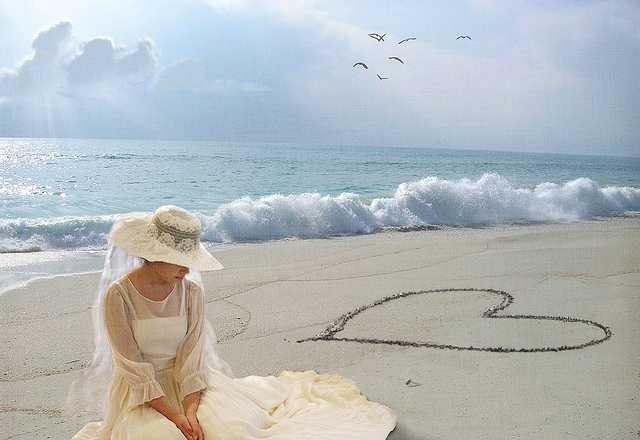
    Heart in the Sand

    “The way you treat yourself sets the standard for others” ~Sonya Friedman

    Love is a funny thing. According to modern day psychologists and cognitive neuroscientists alike, the consensus is that it is just as easy to become addicted to falling in love as it is to get hooked on street drugs. But I think maybe my favorite drug is love. I guess they’d call it my drug of choice.

    The irony in that statement is beyond comprehension. Any one of us who has fallen in love, or struggled with addiction on some level, knows damn well that choice seems to have very little to do with it.

    About seven months ago I came to a breaking point. I made a decision to leave my spiritual community, to seek other ways to grow and develop. I was drained from giving so much of myself, as a result of not placing healthy boundaries with others and was suffering physically, mentally, and emotionally.

    I began to find it hard to breathe. I forgot what it was like to breathe deep into me.

    I didn’t realize I had become obsessed with loving everyone, but never allowed myself to receive love. When you are a love junkie, you think you know how to love well. You give your love to everyone and everything but yourself.

    It becomes an external solution to an internal problem. The saying goes that which we cling to, we end up losing. As a result I experienced a great deal of loss, because suffocation repels rather than invites.

    Addiction comes in many forms. You can smoke pain away. Drink the sadness away. Shop, gamble, or have sex until you think you have released your pain. It always returns because it never really left in the first place.

    So I tried love. It seemed like such a safe and noble way to escape the throes of my mind. And yet time after time I was left feeling empty. When you try to fill a bottomless cup from the outside, it never gets full.

    It was when I stopped loving myself at the expense of loving you that I lost sight of the truth. It was all the time I spent worrying about you when I could have been working on myself. I had started my process of healing, but I got lazy along the way.

    That’s the thing about addiction or escapist behavior of any form. It becomes comfortable. The slipping, sliding, and easing back into negative and unhealthy narratives. Those voices inside our heads which feed our deepest insecurities.

    It can sound like this:

    You aren’t good enough.

    You don’t deserve someone or something like this.

    You’re a bad person.

    You should have done this or could have done that.

    You aren’t worth the effort.

    You are going crazy.

    You aren’t trying hard enough.

    You aren’t doing enough.

    You aren’t giving enough.

    Do you see a pattern here?

    At the root of all junkies is the core belief that “we are not enough.”

    It was easy to slip back into these thought patterns because they had been a part of my personal narrative for so long. Thinking, acting, and being healthy was very uncomfortable for someone like me. Once I allowed this negative voice to become my internal dictator, my “love junkie” was awakened.

    Where I was misled was through this internal belief that things would be better if I only loved more—and this “love” was demonstrated by giving all of myself, not listening to my personal needs for space or voicing my desires, or speaking my truth in most of my closest and personal relationships, including my marriage.

    I felt that if I only loved more, then maybe I would be okay. Then I would feel whole.

    “Loving more,” really, was my codependency playing out, and it often took the form of:

    • Feeling guilty when I asked for things or wanted to make time for myself, out of fear of being seen as “selfish.”
    • Putting up with abusive behavior such as neglect, inconsideration, blaming, and shaming from friends, family, or lovers.
    • Feeling that if I distanced myself from these individuals or created boundaries within my relationships, it meant that I was “abandoning” them. As an individual who has experienced childhood abandonment and neglect, this meant I would be disloyal and undeserving.

    Until I was able to adopt certain practices and healthier boundaries, I could not respect myself. When I began building up that self-respect and deconstructing the self-denial I had become clouded in, I could then demonstrate authenticity in all areas of my life.

    As I began to understand myself better and treat myself with compassion and kindness I began to experience self-love rather than conceptualize it mentally.

    Real intimacy and connection begins internally. If we seek our happiness, acceptance, and contentment outside ourselves, we will never be satisfied. The journey starts with the first step of moving toward ourselves.

    I took stock of all the energy I was expending on people around me and realized my intention to love was actually blocked by my ego’s need to seek validation. In the quiet and the stillness I closed my eyes and began on the journey to find the greatest gift of all—myself.

    Today I experience self-love as a process that begins with a shift from recognizing when I am heart-centered as opposed to being centered in the mind. It is a process where one actualizes acceptance and release from the ego.

    When I returned to my spiritual community, it was from a place of great humility and personal grace. I was able to see it with a new pair of glasses. I returned with nothing to prove, only a deep desire to trust in a new way of loving myself and opening up to those capable of returning that love.

    Love is not an obsession. Love is not a possession or the pursuit of possessing any one person or people. True love fuels a sense of freedom and joy. It is a process of intimate liberation.

    Photo by GettysGirl4260