Tag: nostalgia

  • The Unexpected Therapy I Found on My Phone

    The Unexpected Therapy I Found on My Phone

    “Sometimes you will never know the value of a moment until it becomes a memory.” ~Dr. Seuss

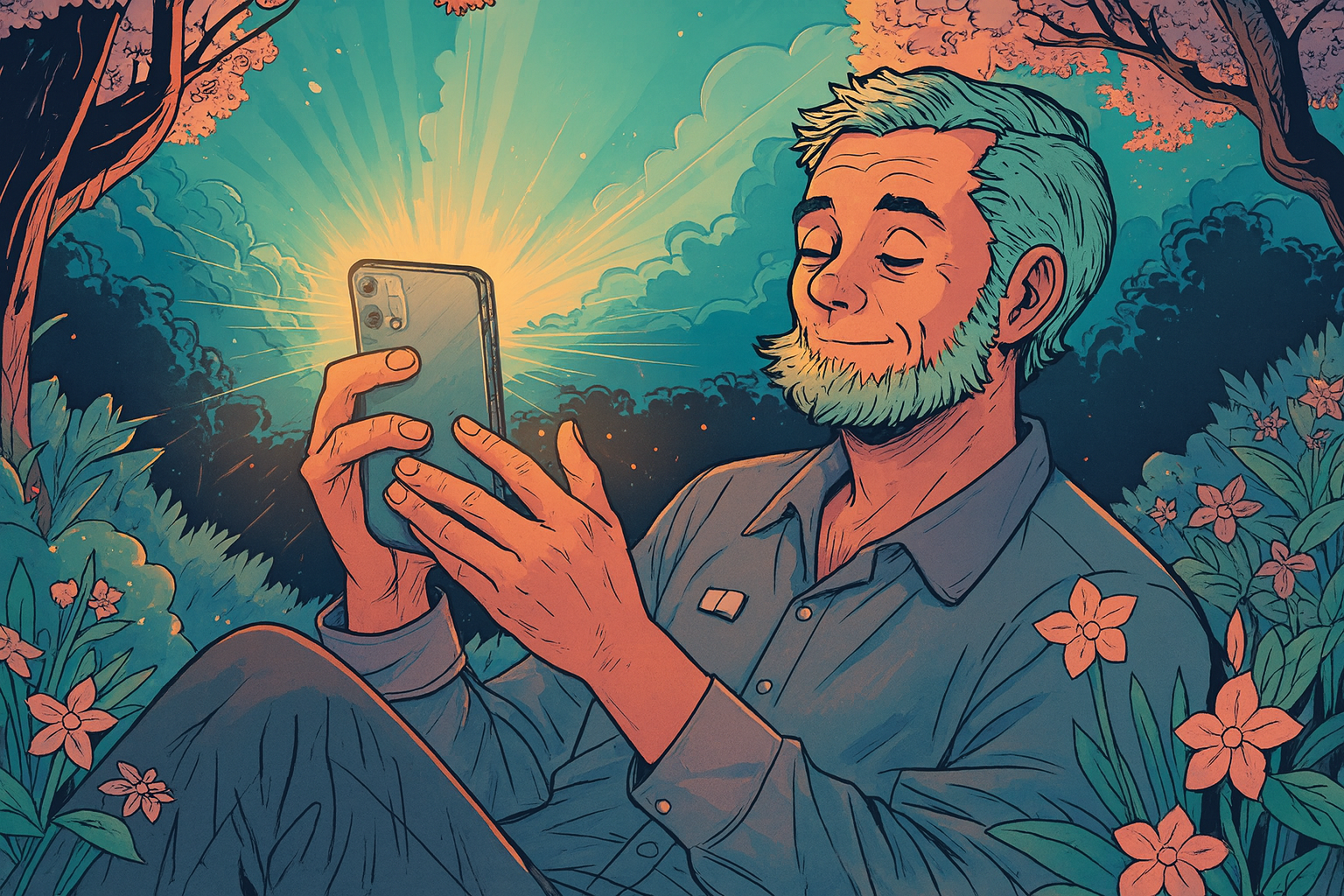
    The notification pops up on my phone: “Jason, we made a new memory reel for you.” I pause whatever I’m doing, probably something stressful involving deadlines or dishes, and feel that familiar flutter of excitement. What chapter of my life has Google decided to surprise me with today?

    I tap the notification, and suddenly I’m watching years of Father’s Day adventures unfold. It started accidentally—one Father’s Day trip to the Buffalo Zoo that somehow became our tradition. Instead of buying me something I didn’t really need, we chose experiences. Year after year, we’d visit a new aquarium or zoo.

    There’s my son at age three at the Erie Zoo, barely tall enough to see over the penguin exhibit barrier. The same kid at five at the Baltimore Aquarium, tentative but overjoyed as he touched a stingray for the first time. Then six at the Philadelphia Zoo, taking in the fact that there is a tube system where some of the big cats can walk overhead.

    Buffalo, Erie, Philadelphia, Baltimore, Charleston. We’d mapped Father’s Days across the Eastern Seaboard without ever planning it. So much time has passed since we started. My son has grown taller, lost teeth, found his voice. I’ve gotten balder, maybe a little softer around the edges. But there we are, year after year, choosing moments over things.

    We tell ourselves to create experiences instead of accumulating stuff, but just how important that choice is never really hits until you play it back. Here was the proof: a memory bank I didn’t even realize we were building, one Father’s Day adventure at a time.

    The emotions hit in waves. Pure joy at his excitement over feeding the stingrays, happy sadness watching his younger self discover jellyfish for the first time, overwhelming gratitude for every single trip we took. This ninety-second reel has become medicine for whatever current stress I’m carrying.

    And that’s when it hits me. My phone accidentally became my therapist.

    When Technology Gets It Right

    I never intended for Google Photos to become part of my self-care practice. Like most people, my wife and I take hundreds of photos without much thought, letting them pile up in digital storage. The idea of actually organizing or regularly looking through them feels overwhelming. Iƒt feels like thousands of images scattered across years of living.

    But then technology stepped in with an unexpected gift. These automated memory reels started appearing, curating my own life back to me in perfectly sized emotional portions. Not the entire overwhelming archive, just a gentle serving of “Remember this?”

    At first, I was skeptical. Another way for a tech company to keep me glued to my screen when I routinely looked for ways to escape. But as these memory notifications became part of my routine, I realized something profound was happening. Google’s algorithm had accidentally created something I never knew I needed: regular reminders of how blessed my life has been.

    The beauty is in the surprise element. I’m not seeking out specific photos when I’m feeling down. That can sometimes backfire, making me feel more nostalgic or sad. Instead, these curated moments arrive when I least expect them, like getting a text from an old friend who you haven’t heard from it a while.

    The Science of Digital Reminiscence

    Research shows that positive reminiscence (deliberately recalling happy memories) can significantly improve mood and reduce stress. When we engage with positive memories, our brains release dopamine and activate the same neural pathways associated with the original experience. We literally get to relive moments of joy.

    Visual memories are particularly powerful. Studies in cognitive psychology reveal that images trigger stronger emotional responses and more vivid recall than other types of memory cues. When we see a photo from a happy time, we don’t just remember the moment. We can almost feel ourselves back there.

    Nostalgia, once thought to be a purely melancholy emotion, is now understood to be a powerful mood regulator. Research from the University of Southampton shows that nostalgic reflection increases feelings of social connectedness, boosts self-esteem, and provides a sense of meaning and continuity in our lives.

    But what makes these digital memory reels especially effective is that they’re unexpected and brief. Unlike deliberately scrolling through old photos (which can sometimes lead to rumination or sadness), these automated highlights arrive as pleasant surprises and end before we get overwhelmed.

    The timing is often perfect too. These notifications tend to pop up during mundane moments, like waiting in line, taking a work break, sitting in traffic. Exactly when we need a little perspective on what really matters.

    The Emotional Range of Remembering

    Not every memory reel hits the same way. Some make me laugh out loud, like the diversity of my son’s increasingly elaborate Halloween costumes or the series of failed attempts to get a decent group photo at our destination wedding. Others bring that “happy sadness” I’ve come to appreciate… seeing my grandmother in photos from a few years back, her smile bright even when her health was declining.

    Then there are the reels that just make me feel deeply grateful. The random afternoon when we decided to try goat yoga. The collection of action shots over the years: chasing my son around the house in a homemade superhero costume, his skateboarding phase, catching up with friends we haven’t seen in some time. These aren’t momentous occasions, just evidence of a life filled with small adventures and genuine connection.

    What strikes me most is how these photos capture joy I might have forgotten. In the daily grind of parenting, working, and managing life, it’s easy to remember the stress and overlook the sweetness. But here’s photographic proof: we’ve actually had a lot of fun together.

    The reels remind me that while life hasn’t been all butterflies and rainbows, the good has consistently outweighed the tough times. The visual evidence is overwhelming. We’ve been blessed, again and again, in ways both big and small.

    Embracing Digital Self-Care

    I’ve learned to treat these memory notifications as legitimate self-care appointments. When that notification pops up, I pause whatever I’m doing and give it my full attention. No multitasking, no rushing through. I let myself feel whatever comes up. The giggles, the happy sadness, the overwhelming gratitude.

    Sometimes the timing feels almost magical. The day my social anxiety took over because I had to present during three different meetings, a reel appeared featuring peaceful moments from the trip my wife and I took to Newport, Rhode Island (mostly so I could try a lobster roll). When I was worried about whether I was doing enough as a parent, I was served a compilation of my son’s biggest smiles over the years.

    It’s become a form of mindfulness I never planned. These brief interruptions that pull me out of current anxiety and remind me of the bigger picture. They’re proof that I’ve been present for beautiful moments, that I’ve prioritized what matters, that love has been the consistent thread running through our ordinary days.

    The Memory Bank We Don’t Realize We’re Building

    Those Father’s Day zoo trips felt routine at the time. Just something we did because that’s what families do on special days. I wasn’t thinking about creating lasting memories or building traditions. I was just trying to make sure my son had a good day.

    But now I see what we were doing, and that was making deposits in a memory bank that would pay dividends years later. Every photo was evidence of intention, of showing up, of choosing joy even when life felt overwhelming.

    The beauty of these digital memory reels is that they reveal patterns we might not see in real time. They show us that we’ve been more intentional than we realized, more present than we felt, more blessed than our current mood might suggest.

    The Gift of Automated Gratitude

    In a world where technology often leaves us feeling more anxious and disconnected, these memory reels offer something different: automated gratitude practice. They’re gentle reminders to pause and appreciate not just where we are, but where we’ve been.

    They don’t require apps to download or habits to build. They just arrive, like grace, when we need them most.

    So, the next time you get one of those memory notifications, pause. Let yourself be surprised by your own joy. Look at the evidence of love in your life. The big moments and especially the small ones. Notice how much good has happened, even during life’s inevitable challenges.

    Your phone is holding more than photos. It’s holding proof of how blessed your life has been.

    And sometimes, that’s exactly the reminder we need to keep building that memory bank, one ordinary, beautiful day at a time.
  • How to Return to Emotional Safety, One Sensory Anchor at a Time

    How to Return to Emotional Safety, One Sensory Anchor at a Time

    “In a sense, we are all time travelers drifting through our memories, returning to the places where we once lived.” ~Vladimir Nabokov

    I found it by accident, a grainy image of my childhood bedroom wallpaper.

    It was tucked in the blurry background of a photo in an old family album, a detail I’d never noticed until that day.

    White background. Tiny pastel hearts and flowers. A border of ragdoll girls in dresses the color of mint candies and pink lemonade.

    My body tingled with recognition.

    It was like finding a piece of myself I didn’t remember existed. Not the grown-up me, but the girl I used to be before a career, a mortgage, and the heavy quiet of adult responsibility.

    The Pull of the Past

    When I was small, the world felt bigger in a softer way.

    Colors seemed brighter, objects more alive, and the smallest things—the feel of my favorite stuffed animal companion in my hand, the scent of my mother’s bathwater—carried entire worlds of meaning.

    These aren’t just memories; they’re sensory anchors.

    I could forget a conversation from last week, but I can still picture the exact shade of the mint-green dress my wallpaper girl wore. I can still feel the gentle indentation of her printed outline, as if the wallpaper itself had texture.

    These details, it turns out, were never gone. They were simply waiting for me to come back.

    Nostalgia as a Regulation Tool

    I didn’t realize until recently that revisiting those sensory anchors could calm my nervous system.

    Of course, I know not everyone remembers childhood as safe or sweet. For many, those early years carried pain or fear. Some people find their sensory anchors in different chapters of life—a first apartment, a quiet library corner, or a beloved chair in adulthood. Wherever they come from, anchors can be powerful.

    For me, nostalgia isn’t about wanting to live in the past. It’s about finding small pockets of safety I can carry into the present.

    Touching the soft yarn hair of a Cabbage Patch Kid isn’t just cute, it’s grounding. Seeing those pastel hearts reminds my body what peace once felt like, and in that moment, I can feel it again.

    A few months ago, one of my children was in the hospital for a week. Those days blurred together: the beeping machines, the too-bright lights, the smell of antiseptic in the air.

    One afternoon, while she slept beside me in that cold plastic hospital chair, I scrolled on my phone and stumbled upon an online image of a toy I used to have. That single memory opened a door. I looked for another, and another. Each one reminded me of something else I had loved.

    Before I knew it, I was mentally compiling a list of toys I’d like to find again, and how I might track them down.

    That feeling—the rush of familiarity, the gentle spark of recognition—was more than just pleasant. It was regulating. In those moments of quiet, I felt a warmth that had been nearly forgotten.

    When she woke and the noise and decisions returned, I carried that warmth in my belly like a hidden ember.

    The Practice of Returning

    Since then, I’ve begun weaving these cues into my home.

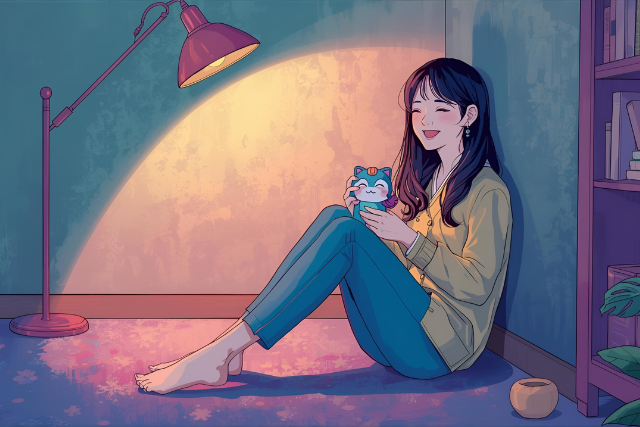
    My shelf holds a cheerful line of 1980s toys in the exact colors I remember. At night, the soft glow of the wooden childhood lamp I sought out warms my space with a light that feels like safety.

    These touches aren’t just décor; they’re part of my emotional toolkit.

    When I feel overwhelmed, I step into that corner, touch the toys, take a slow breath, and remember who I was before life got so loud.

    Some of my collection lives in my walk-in closet, tucked away just for me. I choose when and how to share it. Sometimes I don’t share it at all. That privacy feels important, like holding a small, sacred key that unlocks a door only I am meant to open.

    This practice can look different for others. A friend of mine grew up with an entirely different story. His childhood was full of absence and stress, and he never had the GI Joes he longed for. Now, as an adult, he collects them one by one. For him, this is not nostalgia but repair, a way to heal by finally holding what once felt out of reach.

    How You Can Try It

    If you’d like to create your own version of a ritual of return, here’s how to begin:

    1. Identify your sensory anchors.

    Think about colors, textures, scents, or sounds from your happiest memories. If childhood feels heavy, look to other times. What do you remember most vividly? A kitchen smell? A favorite song? The feel of a well-loved blanket?

    2. Find small ways to bring them back.

    This doesn’t have to mean collecting big, expensive items. It could be a thrifted mug, a playlist of songs you loved at age eight, or a single scent that transports you.

    3. Use them intentionally.

    Place these cues where you’ll see or touch them often. Incorporate them into a morning or evening routine. Let them be part of how you calm yourself, not just pretty objects but companions in your present life.

    Why It Matters

    We can’t go back, and we don’t need to.

    But we can return, in small ways, to the places inside us where we first felt safe, joyful, or whole.

    For some, that means reclaiming the sweetness of childhood. For others, like my friend with his GI Joes, it means rewriting the story and creating what was once missing. Still others may anchor themselves in completely different seasons of life.

    What matters is the act of returning to something steady, something that belongs to us now.

    Each time we do, we carry a little more of that peace forward into the lives we are living now.

    I’m still searching for that childhood wallpaper—online, in vintage shops, in the corners of the internet where people post long-forgotten designs. The search brings almost as much joy as the finding.

    Because every time I search, I’m not just looking for wallpaper. I’m putting my hand on the door handle of memory. And when that door opens, I meet myself.

  • How to Access Your Intuition by Listening to Your Favorite Music

    How to Access Your Intuition by Listening to Your Favorite Music

    “Sometimes music is the only thing that takes your mind off everything else.” ~Unknown

    All major art forms can be a way to experience a deeper part of ourselves, but there is something unique about music. Perhaps it’s because music is a frequency with no physical form, so it can easily become a pathway to the formless realms of intuition and our higher selves or soul. We may never know for sure, but it is clear that music has a powerful effect.

    I have had experiences of feeling whole, connected, and complete when listening to music. However, I was not consciously aware of these experiences for a long time.

    I can remember driving my car, listening to my favorite songs, and being “transported” someplace. It was an experience of complete euphoria and wholeness. At the time, these were mainly subconscious experiences, and all I was aware of while listening was that I felt good.

    As I started to develop and use my intuitive abilities, I began to have many conscious experiences of my higher self. Only with this reference point did I become aware of how many times I connected with my higher self while listening to music. It was the same experience!

    Not all music will feel like a spiritual experience, and the pieces that do will be specific to the person listening, as we’re all unique. You may have said, without thinking much about it, that a particular song “speaks to your soul.” It does, and you will want to listen for its helpful guidance.

    Have you ever heard a song and then put it on repeat for the whole day or even a week? I sure have, many times. It seems like each time I play a favorite tune, it opens my heart a bit more to reveal hidden emotions and desires. These are the types of moments and songs you will want to observe to see what your inner wisdom is showing you.

    Over the past four months, I have been atypically listening to some of my favorite music from the 1980s; “Time After Time” by Cyndi Lauper, “Hazy Shade of Winter” by The Bangles, “Cherish” by Madonna, to name a few. Even current songs with an ’80’s feel find themselves first on my playlists.

    I began to internally investigate why the sudden ’80s music craze in my life when I received a knowing from my higher self that I was homesick and needed to talk more with family. I then started to recall childhood scenes of me playing with the family and neighborhood friends.

    I was in my formative years during this decade, and my siblings were still living at home. The ’80s was the only decade my entire family lived in the house before my older siblings moved away. It was a fun and joyful time in my life.

    My whole family now lives all over the country, and I live in Hawaii. We usually travel several times a year to see each other, but not this year because of the pandemic. I have been suppressing sadness about not being able to travel easily and safely to see my loved ones for many months without realizing it.

    The ’80s binge I’ve been experiencing these past few months was a way for me to emote this sadness and experience the childhood nostalgia associated with this music genre. Once my higher self revealed the deeper feelings around my recent propensity towards ’80 music, I began to reach out to my family more, which has helped with my feelings of isolation.

    Next time while listening to this music, take some time to reflect internally on what is happening and if any high levels of intuitive information are coming through. What I mean by high levels is direct guidance coming from your higher self or soul.

    There are ways to tell if you are getting intuitive guidance from your higher self while listening to music. You can observe specific characteristics right away that indicate you are receiving soul-level information.

    For example, intuitive information from your higher self is always accepting and loving. This loving feeling is inclusive and leaves none of you feeling left out or unworthy. Soul-level guidance will not come with harsh judgments and guilt trips.

    Another characteristic of soul-level information is that it will often come in very quietly. You may have heard phrases like “whispers of the soul” or “the still inner voice.” This is often the case when your soul is speaking. Music naturally stills your mind, which creates a quieter internal environment for higher guidance to come through.

    Guidance from your higher self is enveloped in peace. I notice that this peace is often present when listening to music I love. Even if a song’s message is heartbreaking, it still rides on a wave of peace if it’s speaking to my soul.

    Being in motion while listening to music, like on a bike ride or dancing, can heighten this experience of connecting to soul-level intuitive information. Movement helps “loosen” your spiritual body so you can become more open and receptive. Intuitive information will often become conscious when the physical body moves, especially if you are relaxed.

    If you’ve ever had an epiphany with your earbuds in, on a jog or an elliptical—with your mind clear, blood pumping, and heart open—you know what I mean.

    A relaxed nervous system is vital for hearing high levels of intuitive information. If the nervous system is on high alert, your internal environment will be very noisy. Information coming from the higher self is gentle and quiet, so having a relaxed nervous system will foster a space within you to hear your soul’s guidance.

    Listening to music while exercising outdoors is a great combo for hearing your intuition. We are intimately connected to the natural environment, and exercising outside in beautiful areas will naturally quiet and relax your body’s nervous system.

    I’m guessing you may have already experienced this as well. You’re at the beach, or in a park, your earbuds creating a perfect soundtrack to the beautiful, peaceful scenery, and suddenly life becomes clearer.

    If you don’t live in a place with a lot of natural outdoor beauty, put on some relaxing or heart-opening music in headphones and go for a walk. Do what you can to create a peaceful inner environment as you move around.

    Additionally, if moving around is something you can’t do, try taking a long bath or sit next to a body of water. Make the environment pleasant by lighting a candle or putting on your favorite soothing music. Water is a strong current for intuitive information. You may be surprised how much intuitive guidance will come through in these therapeutic settings.

    I have had many revelations in the tub or after a dip in the ocean. I often will get into a body of water when I’m feeling scattered, anxious, or confused. After soaking for a while, my nerves and mind will relax, and the next step I am looking for will appear.

    Whether you listen to music while exercising, at a concert, or just lounging around the house, I encourage you to think about the kinds of intuitive messages you get while listening. Is your higher self calling you to hold a different perspective, forgive, or acknowledge your true feelings about something?

    If you love lyrics, pay attention to words you’re drawn to and note what is happening in your life at that moment. Do the two relate? I tend to gravitate toward listening to instrumental songs. I feel they give me a blank canvas to interpret soul-level guidance more clearly. You may find that too.

    You will want to write down the soul-level information you receive while listening to music, apply it to your life, and then see if it has value for you. You can measure value by whether something is uplifting, useful, and helps you grow in character.

    Remember that if you closely observe your internal environment while listening to your favorite songs, you can intuitively reveal what your soul is saying to you. And then you can act on it and change your life.

  • More Peace and Connection: Recreating a Simpler Time

    More Peace and Connection: Recreating a Simpler Time

    “Enjoy the little things, for one day you may look back and realize they were the big things.” ~Robert Brault

    Yesterday, as my boyfriend and I were driving home from a quick trip to Vegas, we saw a sign for a ghost town and decided to do some exploring.

    I’ve always loved the idea of a ghost town—a place left untouched for years, still reflecting the people who once inhabited it, as if they’d just picked up and left mere moments ago.

    Though aged with cobwebs, marred by neglect, and long since deprived of life and laughter, it would seem like time had stood still. I imagined it would feel a lot like Thoreau’s cabin in the woods: minimal, modest, and quaint.

    In our high-tech, fast-paced world, very little feels simple. And while I love my home and environment in Los Angeles, I often long to find places that feel charming and uncomplicated.

    We quickly found it wasn’t a village left untouched for exploring, though much of it looked how it once did; it was a small slice of the land commercialized with little tiny shops, as is the American way.

    Still, I enjoyed roaming through the surrounding mountains and seeing nostalgic pieces within and outside the cottages—a few wooden carriages, an oil burning stove, and a deep claw foot tub.

    While walking around, I asked my boyfriend if he’d ever fantasized about living in a small village, with a self-contained community of people who all knew and supported each other.

    It’s something I’ve always romanticized. Instead of living in the hustle and bustle of our modern world, always consuming and pushing for the next big thing, we’d create with our hands and spend more time enjoying life’s simple pleasures together.

    We’d have access to everything we need within close proximity, and the vast world made seemingly larger through the web would shrink in feel and yet expand in possibilities.

    Not possibilities for earning money and succeeding professionally; possibilities for childlike joy and meaningful connection—the human wealth our tribal ancestors once enjoyed, before everything got bigger, faster, and automated. (more…)