Tag: new

  • How Grieving a Dream’s Loss Built Hope for a New Life

    How Grieving a Dream’s Loss Built Hope for a New Life

    “Our painful experiences aren’t a liability—they’re a gift. They give us perspective and meaning, an opportunity to find our unique purpose and our strength.” –Dr. Edith Eger, The Choice: Embrace the Possible

    The loss of an unrealized dream sent me spiraling down, down into the darkness. A darkness filled with a despair and hopelessness that I had not known before.

    It was safer and more comfortable for me to attribute all my grief to losing a loving mother-in-law suddenly in the beginning of 2023. Her abrupt absence not only in my life but also in my husband’s and daughter’s lives was incredibly hard.

    Though the loss opened the portal of grief, there was more I hid. When I was still in a tender place, intangible losses and a health scare came.

    The loss that completely broke my heart was when my husband and I made the joint decision to end our dream of trying to have a second child. A shared dream since early on in our relationship and a dream of mine since long before.

    Neither of us could have anticipated my unexplained infertility diagnosis and the four-year-long, beautiful, broken, and growth-filled road to parenthood. Throughout the entire journey, I still held onto hope that we would one day have two children.

    The visceral, raw grief that came after we made the decision shocked me. When we had first honestly discussed this idea, I felt excited to build our life as a family of three. I deeply knew our family was complete.

    But once we made the decision, grief I did not want or know how to feel consumed me. Grief for all that had been lost. For all that wouldn’t come into being in the future. Invisible to the outside world.

    At first, my negative, self-critical talk took over, giving me a hard time for what I was going through. Full of self-judgment, regret, anger, and shame. Overcome with grief, I had forgotten I didn’t have to believe that voice and could be kinder to myself.

    Mornings were the toughest. Each day, I would wake up with the weight of unshed tears under my eyes. Though I had slept well, my whole body was heavy and weary. My mind felt foggy. I’d forget small things, which wasn’t like me. Seemingly simple tasks took so much energy.

    After dropping off my daughter at preschool, I would sit in my living room alone. I had no motivation to do anything. If I didn’t have a work meeting to prepare for or immediate deliverables to complete, I’d distract myself on my phone, numbing. This unhealthy morning cycle would continue for a while.

    Once I started working, I would get in a rhythm and focus on the projects in front of me, which I did enjoy.

    My body and psyche knew what had happened was significant. It would take time for my rational mind to catch up. I would need to allow myself to have my full experience of grief.

    An Expanded View of Grief

    Developing an expanded view of grief and processing my experience with a grief therapist began to help.

    One of the first concepts I learned is that there are different types of grief. Through Atlas of the Heart, a book by research professor, author, and podcaster Brené Brown, I understood I was dealing with both acute and disenfranchised grief.

    Acute grief is the intense grief that occurs during the initial period after a loss. I was not familiar with disenfranchised grief.

    Brown writes, “Disenfranchised grief is a less-studied form of grief: grief that ‘is not openly acknowledged or publicly supported through mourning practices or rituals because the experience is not valued or counted [by others] as a loss.’ The grief can also be invisible or hard to see by others.”

    My grief not only felt invisible to the outside, but also, I hadn’t valued the end of an unfulfilled dream as a loss at first.

    A second concept was to focus on integrating grief into my life. My therapist shared that it’s not about moving on after experiencing a loss; it’s about moving forward, integrating our losses with how we live our lives.

    A third concept came from psychologist and Holocaust survivor Dr. Edith Eger’s book The Choice: Embrace the Possible. Though she had been through unimaginable suffering, she gave a message of hope and healing.

    She shared, “When we grieve, it’s not just over what happened—we grieve for what didn’t happen… You can’t change what happened; you can’t change what you did or what was done to you. But you can choose how you live now.” We could choose freedom, joy, and love over suffering.

    What Helped Me Cope and Rebuild

    I began to shift my experience from resistance to instead supporting myself during this period of grief. I started to accept that simply getting through my day was enough. These approaches can be beneficial to anyone experiencing grief, especially if it feels invisible.

    1. Support myself and be supported

    Once I remembered that I could support myself, my entire grief experience became more manageable. I already had tools to be kind and compassionate to myself. It was a matter of intentionally using them.

    I began a practice of noticing and bringing in. Noticing my self-critical voice and, instead of getting caught up in it, bringing in self-compassion and kindness. I would say statements to myself like: It’s okay to feel this way. This is really hard. May I be kind to myself. Sometimes, I visualized wrapping myself in love.

    I began to turn toward myself with kindness and love. To be there for myself. To process my experience through writing.

    I opened up in close relationships and with my therapist, where I did feel listened to and accepted to share my struggles.

    2. Feel my difficult feelings and bring in the light

    One day, when I was meditating, I noticed what was happening in my body. I opened to the intense sensations. Before I knew it, I’d gone through a shorter version of Tara Brach’s RAIN practice. This had been a fundamental practice of mine when dealing with infertility, but I likely hadn’t done the full practice in years. The practice remembered me.

    This framework means:

    • Recognize what is happening.
    • Allow the experience to be there just as it is.
    • Investigate with interest and care.
    • Nurture with self-compassion.

    Once the exercise came back to my consciousness, I spent time each morning feeling my painful feelings.

    One morning, at the end of the RAIN practice, I intuitively brought in light and love. Another time, I started saying a lovingkindness meditation to myself. I began to incorporate bringing in aspects of positivity after feeling my difficult feelings.

    3. Go on awe walks

    My grief was the heaviest in the darkness of the winter in Colorado. Toward the beginning of spring, still overcome with grief, I started going on awe walks. Awe walks, a term from Dacher Keltner, are walks where you shift your attention outward. Your task is to encounter something that amazes and transcends. Every day, I looked for new signs of spring at the trail near my house.

    I would have missed most of the early signs if I hadn’t been seeking them: flower buds, tiny green leaves forming on branches, the first yellow wildflower blooms that peeked out from behind tangled branches. Then one day, I looked up and saw a canopy of green covering the trees overlooking the trail. Spring had fully arrived.

    I discovered that growth starts small; it’s barely noticeable at first. Pay attention to changes happening, to what’s building slowly. It’s the foundation for what wants to come forth. And the bigger message is that winter comes first; only after going through winter is spring possible.

    4. Embrace fallow time

    Toward the end of the spring, I was getting tired of the heaviness of continued grief. I journaled frantically that I wanted a project. Something new to give my attention to. I longed to experience the energy of summer.

    Grief still had more to teach me, though. The next day, my deepest wisdom instead shared with me to embrace “fallow time.” The term is from farming. Allowing the land to lie fallow is a technique where nothing is planted for a period of time. The goal is for the land to rest and regenerate.

    Fallow time was asking me to continue to honor the nothingness where dreams once were. To rest in the space before building the next beginning.

    I opened to allowing the vastness of where there once was something linger without trying to rush to the next thing.

    I discovered that this clearing is where the potential for what’s next would emerge.

    5. Reconnect with hope

    I had attached so much hope to the outcome of having two children. While hope for a realistic outcome is important and kept me going, I found out its limitations when I let go of the dream.

    But hope is so much vaster than that.

    One day, I unexpectedly felt the energy of expansive hope. Called transcendent hope, it is broad hopefulness that something good can happen. This form of hope reignited a light deep within me.

    Hope to build the beautiful life in front of me that I had once longed for, honoring the dreams, losses and imperfectness.

    6. Rebuild possibilities and dream again

    Grieving and dreaming felt at odds with each other initially. It turns out, grief would create an opening and space for what wanted to emerge next. Grief was my winter season, my fallow time. It was like planting flower seeds in the fall that won’t bloom until the next spring.

    I would first need to accept the past and close this chapter of my life. Then, I could connect with the potential of dreaming again.

    The dreams I most wanted to nurture in 2023 were coaching and writing. In the first half of the year, the dreams moved ever so slowly or seemingly not at all.

    During this time, I was taking the Playing Big Facilitator’s Training coaching program but had no energy or motivation to start building coaching as I intended.

    I also kept trying to write a personal essay about aspects of my infertility journey but felt blocked. I started but kept getting stuck. So instead, I journaled, with writing prompts such as a few things I don’t know how to write about.

    Something profoundly shifted within me in September 2023. I became drawn to rebuilding what could be possible in my life.

    The personal essay I had attempted to write for months flowed. A story about choosing to focus on personal growth and well-being amid the challenges of burnout and infertility. The final piece would later be published in Tiny Buddha in 2024: How I Found the Good in the Difficult.

    As Dr. Egar shared in her book, it was about an experience where I had choice.

    September was also the month I started a positive psychology coaching certification program. One reason I selected this coaching program is because positive psychology and mindfulness had been so impactful to me while facing infertility and burnout. Simultaneously, I began offering career, life, and well-being coaching.

    I had to go all the way through the intensity of the grief to understand Dr. Egar’s wisdom: “Our painful experiences aren’t a liability—they’re a gift. They give us perspective and meaning, an opportunity to find our unique purpose and our strength.”

    I received so many gifts when facing infertility and burnout. Transforming my relationship with myself and my life was the most wondrous. This painful time period was the gateway, on so many levels, for me to connect with a greater sense of meaning and overall well-being. To shift to work that felt more fulfilling. To rediscover my creative self-expression, especially writing, which surprisingly impacted my personal life and work. To uncover a dream to coach others in creating change that matters to them.

    My experience in a grief cocoon profoundly changed me. On the other side, I have felt more at home in myself. More at peace with my past challenges. I have sensed wholeness. With a deeper appreciation of integrating it all—the grief, pain, gifts, gratitude, and joy. I am choosing to move forward with renewed hope for fully living my life and honoring my dreams.

  • 3 Questions to Ask Yourself Before Trying Something New

    3 Questions to Ask Yourself Before Trying Something New

    “New beginnings are often disguised as painful endings.” ~Lao Tzu

    During the Great Recession I lost my business. And I was devastated.

    My business partner and I built the company from an idea we were kicking around over wine into a thriving brand strategy agency. We had twenty employees. We had a cool studio office. We were winning creative awards competing against agencies many, many times our size. And then—slowly at first and then so, so fast—it was over.

    I remember when I called time of death. We had yet another client come in and say they couldn’t pay us anymore. Not because they were going to a competitor, but because they were in financial trouble themselves.

    We had already laid off all our employees except for our office manager. We had already reduced our own paychecks. We had one or two clients left, but it just wasn’t fun anymore. I couldn’t see the way forward. And I was exhausted.

    I told my business partner that I needed to stop, and that we needed to shut it down. I was beyond sad. I was numb.

    I would have looked for a job, but it was the Great Recession. No one was hiring. Luckily, my husband still had a job, so we were in better shape than many.

    I tried to focus on my health by taking up tennis and playing golf. But I wasn’t motivated.

    I tried getting more involved in the kid’s school. But I didn’t feel fulfilled.

    I felt like I had no identity. I was embarrassed and ashamed even though every other agency I knew about had either closed or was struggling. 

    I graduated from Duke University. I had an MBA. I was supposed to do great things. And yet, here I was with nothing to say when someone asked, “What do you do?”.

    We spent a few weeks in California with my in-laws. The change of scenery helped a little. (My mother-in-law did not.)

    I finally got around to taking the Meditation for Stress Relief program. That helped a little too.

    Finally, about nine long months later I was playing golf with a friend who was an executive-in-residence at a nearby university, and her phone rang. It was her department chair wanting to know if she knew anyone who could teach entrepreneurship. She handed the phone to me, and a few meetings later, the job was mine—if I wanted it.

    Now, I knew I knew lots about entrepreneurship. But teaching? Nada. Nothing.

    And that wasn’t the career I had planned.

    And, because it was an adjunct position, the pay wasn’t nearly enough to make it interesting.

    I went round and round. Do I do it? Do I not do it? It’s not in the right direction. It doesn’t pay enough. That doesn’t move me forward. What if I don’t like it…… 

    I was making my family and friends nuts with the indecision, and I had to work quickly because the new semester was only a month away.

    What should I do. What should I do.

    But the universe (and my golf buddy) had opened a door for me. So I took a deep breath, gathered all my courage, put my money concerns aside, and walked through.

    Today I consider myself an educator first. Walking through that door connected me with my life’s purpose. I am a teacher.

    But before this all happened, the thought had never crossed my mind.

    Becoming a professor (they brought me on full time after one semester) and figuring out how to TEACH entrepreneurship completely reframed the way I think about business. I couldn’t just tell my students “that’s how it works because I did it and it worked for me.” I had to be able to explain WHY. And find examples of each step working for other people.

    Taking advantage of an opportunity I had never even considered opened up door after door and shaped the business I have today. Even though it initially looked like it was a complete detour from my career goals and the money in no way justified the decision.

    If you find yourself at a crossroads—a career crossroads, a relationship crossroads, a financial crossroads—look around and see if there are any doors that might be open that you’re ignoring. Laser focus on a singular outcome can be a powerful motivator, but it also drastically reduces your options and can obscure other routes to success. It can be useful to remember that career/relationship/financial growth is almost never a straight line.

    How will you know a door when you see one?

    Someone asking you if you know someone who can do X. Maybe that person is you?

    Maybe an organization you belong to is looking for workshop facilitators or volunteers? Maybe that person is you?

    Maybe you hear about an opportunity to do something that scares you a little bit—an open mic night, a writer’s retreat, a community gathering on a local initiative. Maybe you go and say hello to the person sitting next to you?

    And once you find that open door, here are a few things you might consider before you walk through:

    Does the opportunity appeal to you other than it’s not in line with your stated goals?

    In my case, I was absolutely intrigued about the opportunity to teach. It was scary because I wasn’t sure I’d be good at it. It was challenging because I hadn’t done it before. But I felt like it might be really fun. And fun counts.

    Will you learn something and connect with new people?

    As a lecturer in entrepreneurship, I would be developing an entirely new skill set. Additionally, I would have a chance to work with a large group of colleagues that would significantly expand my network.

    What is the next best alternative?

    For me, it was continuing to mope around and send resumes into the ether at a time when no one was hiring. Engaging in something, even if it wasn’t financially rewarding, gave me new energy and a much more positive perspective. And it led to the next opportunity to join the faculty full time and be compensated accordingly.

    Sometimes the most transformative opportunities come disguised as detours or distractions. But when there’s a door that’s sitting open, consider walking through it and seeing what’s on the other side. It’s rarely irreversible, you will always learn something, and it might be EXACTLY what you were looking for all along.

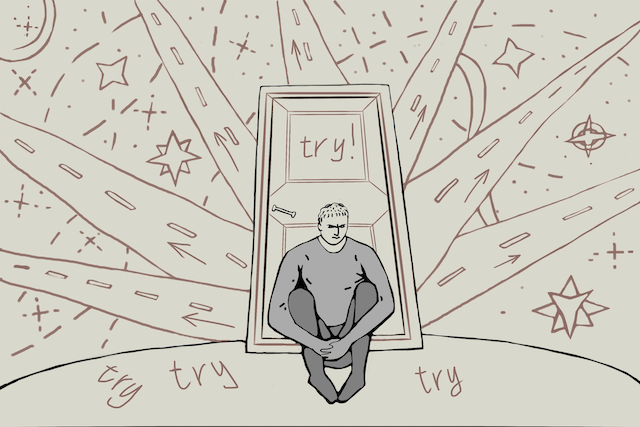
  • 5 Reasons to Try Something New Before You Feel Ready

    5 Reasons to Try Something New Before You Feel Ready

    “Great people do things before they’re ready. They do things before they know they can do it. And by doing it, they’re proven right.” ~Amy Poehler

    Ready isn’t a state of being, it’s a state of mind. Or maybe I should say we don’t have to be anything to qualify for the label of being ready for something; rather, it’s a mindset in which we choose to embrace the unknown. My story starts like this…

    A few months into my soul-searching, I realized I had to move. Away from my unfulfilling job, away from my unhealthy habits perpetuated by my city lifestyle, away from my complete and utter stagnancy. But this also meant moving away from friends I’ve come to know so well, family I love, and a sense of security that you can’t really put a price on.

    I knew I had to create a big enough change for myself for it to feel like I was starting over. I wanted to live somewhere where no one knew my name or, better yet, where no one knew anyone who knew my name. Notice I said I knew I needed that change, not that maybe I would move, or I was considering it. Did it scare me? Yes. But did I know it was what I craved and needed on a soul level? Also yes. A bigger yes.

    I started looking into some towns out west. The mountains were calling, but it was the polar opposite of the east coast city life. I had no idea what it would take to live in weather like that, let alone which towns I would be happy in.

    After some research, I found an apartment complex I liked and added myself to the waitlist. This was in January, and my current lease wouldn’t be up until October. I definitely wasn’t ready to pay triple the monthly rent amount to break my lease.

    Well, fast-forward to September, and it was time to give my notice of whether I would be moving out. Would I stay or would I go? Everything inside me was screaming at me to take the chance and go. But I didn’t feel ready. All the “what ifs” started flooding in… What if I put my notice in and then change my mind? What if I don’t put my notice in and then change my mind?

    Eventually, I silenced everything except my gut, my intuition, and it said ever so calmly and confidently, “Go.” So I put in my notice and ended my lease before I knew where I would be going next.

    This would be the first step of many that I decided to take before I felt ready. The thing is our heart knows what’s right before our mind does.

    And you know what? After I put my notice in, I got an email from the apartment out west that I had applied to almost a year prior. They had a unit available two weeks after my lease would end. I was shocked. I don’t think it could have worked out any better than that.

    This first step was the best decision I’ve ever made because it’s opened me up to so many amazing experiences and relationships that I wouldn’t have had otherwise. I got to know a place that was completely different than any home I had ever known, I truly felt the most independent I ever had, and I met some beautiful souls who I know I’ll get to call lifelong friends.

    That first step showed me that the unknown can be intimidating as hell, but if you choose to embrace it, it can open you up to so much growth.

    Here’s what I’ve learned from doing more things before I felt ready.

    It helps you grow your faith in yourself.

    It allows you to see things about yourself that maybe you wouldn’t normally see just doing the typical day-to-day things. By putting yourself in new (and hard) situations, you’re able to see yourself navigate the unfamiliar, and do so successfully. You not only learn how to do new things, but also see firsthand that you’re capable of so much more than you previously thought. This allows for greater trust in your feelings and intuition.

    You create a new baseline of bravery.

    When you start to build up this confidence in your ability to handle a variety of new situations, it creates this new sort of baseline. A new standard to which you hold yourself. In knowing you can handle more than you could before, you tend to then, in turn, expect more of yourself and function from a raised baseline of what you consider to be brave. Or in other words, it takes more to intimidate you. Less scares you. Which means you can do more.

    You find new ways to do things.

    It’s interesting how your mind can adapt. Sometimes when we get stuck on a certain plan, it hinders the outcome. For example, if we’re so focused on thinking we need to research art history for a year before we take up painting, that takes away a lot of our time and fun, doesn’t it?

    When you decide that you’re capable enough to get something done, the “how” somehow becomes less important. You become open to more possibilities and new ways of getting things done. In the painting example, maybe you open yourself up to the possibility that you’re too hard on yourself or that you don’t have to know all the history to enjoy the activity. Or maybe you realize you enjoy painting with your fingers even though all the artists you’ve read about used paintbrushes.

    You find more fulfillment.

    This openness created throughout the process of intentionally and repeatedly trusting yourself encourages you to try things that you wouldn’t typically delve into. You find it easier to follow your own curiosity, and things that once seemed silly suddenly seem intriguing.

    For me, this looked like following a spiritual nudge to sign up for Reiki training even though I knew nothing about it. This ended up leading to a mediumship practice that’s helped me and other people heal. When you build on things that make you happy, it only leads to more happiness.

    You become unstoppable.

    You start to see this confidence weaving into all aspects of your life. When you trust yourself over anyone and anything else, you’re not as easily shaken by what life throws at you. That’s not to say it’s always easy. Sometimes you need to make decisions you know are right for you, even though they’re difficult. And sometimes you know you need to take steps to start feeling happy before you’ll stop feeling sad.

    Emotions are complicated, but if you get to a point where you can hold space for them, you allow yourself to learn from them and work with them, and that is truly powerful.

  • How to Gently Coax Yourself Out of Your Comfort Zone

    How to Gently Coax Yourself Out of Your Comfort Zone

    “Everything you ever wanted is one step outside your comfort zone.” ~Unknown

    We’ve all seen this quote or similar ones. All the magic, growth, and transformation seem to happen there. Not everything that happens outside the comfort zone is magical, though. So, when we go wandering, leaving the safe shores, we also need to be realistic and aware that mixed in with the good, there’s also potential pain and discomfort waiting for us.

    Being aware of this, how can we still motivate ourselves to try something new and to step outside our comfort zone?

    On the one hand, I love variety and I easily get bored. On the other hand, I am also risk-averse and easily scared. The latter doesn’t exactly lend itself to living the great adventures of life, whereas the former often acts as a motivating kick up my backside.

    I am also a very rational, analytical person. I can quickly see the benefits of doing something. But I also deeply dislike feeling uncomfortable. Thus, while I can see that it makes sense to do something, I prefer to avoid voluntarily putting myself in a position that I KNOW will make me feel uncomfortable.

    With this in mind, let me give you a few examples from my life of where I left my comfort zone.

    I used to be very shy. My mum would tell me that in kindergarten, I didn’t speak to anyone. While I did start speaking to others, my shyness continued all throughout school—and still, somehow, I ended up studying abroad.

    I will always remember sitting on the plane, crying my eyes out, wondering why on earth I was doing this to myself. How was I ever going to make friends? How would I pass my exams in a foreign language? It honestly was completely out of character for me, and it ended up being the best decision ever.

    For my third year at uni, I chose to spend the year in France. And that decision came so much more easily based on my previous decision to come to the UK.

    A decade later, I was offered a promotion at work. To a job I literally had no relevant experience for. I knew that it included a lot of tasks that I despised, and just the thought of them made me very uncomfortable (sales and networking, to name just two).

    As you may guess, I said yes. And again, it proved to be an excellent move for me. I learned so much, and while it was challenging, I remember thinking that I had never before enjoyed a job this much.

    By now I have lost count of how many times I quit a job without having had another one to start straightaway. In fact, often, I didn’t even have the faintest idea what I wanted to do next.

    Growing up, I was taught how important it was to be financially independent. I’ve had many different jobs since my early teens and saved most of that money. Giving up a secure financial income was a huge step for me. Especially since it wasn’t that I was mobbed or close to a burnout or that anything else horrible had happened. I simply had come to the conclusion that I no longer wanted to do the job in question.

    I am using these examples to demonstrate how change is always possible, and how pushing yourself out of your comfort zone can often prove to be the best decision you’ll ever make.

    One option is to jump in at the deep end. But I appreciate that this can feel impossible at times. I want to share some tricks that have helped me over the years and that enabled me with all of the above examples. I believe they can help make that transition in a gentler way.

    1. No comparison and no judgment

    From the moment we are born the comparison starts, and it continues all throughout school (school reports) and into work (appraisals).

    Social media does its bit to remind us of other people’s achievements, and we might feel like we are not measuring up to what society expects from us. This might lead us to either a) set unrealistic goals for ourselves or b) give up before we even started.

    Please remind yourself that everyone’s comfort zone looks different. What is easy for you might be a challenge for somebody else, and vice versa.

    Be honest with yourself and figure out what it is you want to work toward, and not what you think others expect of you.

    What really matters to you? Setting an objective that feels worthwhile to you will make all the difference and will keep you motivated even throughout the lows that are often inevitable.

    2. Baby steps

    We all know that every journey begins with a first step. How about you make that a teeny, tiny baby step? Cause that isn’t so scary, is it? Seriously, start small. Even tiny baby steps, taken one after the other (and feel free to rest in between), will eventually lead you to your goal.

    Not only are baby steps considerably less scary, they will also help you to keep going. If you are trying to make huge leaps, it is more likely that you will run out of steam quickly and/or get frustrated because it’s so hard.

    Break it down. And then break it down some more. Remind yourself that you are making progress. It might not be visible to others yet, but you can see it.

    3. Say yes now and figure out the rest later.

    This is probably the tactic I use the most. When I first started in event management, I got invited to speak at a conference. It terrified me. But rationally I knew it made a lot of sense to say yes to this opportunity. For myself as well as the company I worked for at the time.

    It was a no-brainer really—if it wasn’t for my fear of embarrassing myself on a stage. It was still four months or so to go until the event took place. So, I said yes. My reasoning was that I would either have it figured out by then or, in the worst case, pull out (I didn’t, and it went well despite me still being pretty terrified and hardly getting any sleep the night before.).

    If something excites you but also terrifies you, how about you say yes to it right now? Trust that you will work out the details over time. That you can ask for help and support. Or indeed that you can always change your mind. But don’t let the opportunity slip away.

    4. Worst-case scenario planning

    Let’s be honest: You are indulging in worst-case scenario planning anyway. You might as well do it deliberately and mindfully. What really is the worst that could possibly happen? Chances are, it’s not all that bad.

    Doing this will help you realize that even if things don’t go as hoped, you will be okay. And it also helps with putting measures in place to avoid some of the more likely scenarios you are trying to avoid. So many wins in that one!

    5. Can you feel it?

    Now that you’ve indulged your pessimistic side, it’s time to refocus on the positive. Stepping outside your comfort zone is not something you do just for the sake of it, but because you long for something that is out there. Your famous WHY.

    Why is this even your objective? What’s your motivation? Who are you striving to become? What are you hoping to achieve? And once you get there, how is it going to make you feel?

    Go all in and visualize the hell out of this! Close your eyes and imagine having already achieved it. Really feel it with all its glorious consequences. It’s that feeling and that fire that will help you make the next step. Remind yourself regularly of what it is you are after.

    6. Getting others on board

    I accepted promotions in the past partly because my superiors offered me help in the transition. You don’t have to go it all alone. You are not getting brownie points for NOT asking for help.

    Check in with yourself: Is your pride in the way? Is there a part of you that thinks the achievement will be better, more valuable if you do it all by yourself?

    There are certainly times when you will benefit from doing things yourself. But if it’s a question of not doing it at all or doing it with the help of others, surely the choice is clear?

    Surround yourself with people who inspire you. And make use of the wisdom they have to share. Chances are, people have done what you are trying to do now, in some form. There’s no need to reinvent the wheel.

    7. Be your own role model.

    In an attempt not to be labeled as arrogant, it seems that we have gone too far the other way. We often practice self-deprecation instead of shining a light on our strengths and achievements. But let’s face it; you can’t have made it this far without having learned, grown, and stretched yourself.

    Can you name your strengths? Do you have a list of your achievements? What are you proud of?

    If you are finding these questions difficult to answer, I strongly recommend taking some time to think about them. And as highlighted above: this is YOUR list. No judgment, no comparison, no diminishing of what you perceive as your achievements just because you think society, your family, or friends don’t value them.

    With all of that present, can you now see how you can be your own role model? What are the strengths that helped you reach those goals in the past? How can you harness them for your current project?

    8. Expectations and acceptance

    It goes without saying that leaving your comfort zone is unlikely to be plain sailing. We might experience setbacks, frustrations, and stress, and ultimately, we might not even reach our goal. All of that is human. Don’t let this deter you from trying.

    Redefine what success and failure look like. The outcome might be different from your expectations, but you will have learned something along the way. At the very least you will have gained resilience.

    Accept the discomfort. Be realistic about what the journey looks like and expect some detours. It’s all part of it, and I believe that the biggest disappointment arises from things not going as planned.

    So, what changes when you are detaching from the outcome, when you practice acceptance of whatever happens, all the while knowing that you can handle whatever comes your way?

    9. Reward yourself

    This is my favorite part! Reward yourself for reaching milestones, which can be as small or big as you like. Do whatever you need to motivate yourself on this journey. Take a break, get some rest, adjust the plan, get more help. But most of all, acknowledge what you have already achieved. Congratulate yourself even just on the decision to make a change.

    10. Practice makes perfect.

    This is not a myth but a fact: It really gets easier over time. At the very least, with every experience, you will have more on your list of achievements to celebrate (step 7), right?

    While it gets easier, it doesn’t mean that the experience itself will be pain-free or more comfortable. Trust me, any speaking engagement still makes me really nervous! But having done it once, I know I can do it again. Your self-confidence will make all the difference. Your belief that you will be able to handle it will grow.

    Life is short. It’s my belief that we are put on this earth to make a wide range of experiences. You are limiting yourself if you aren’t prepared to step outside your comfort zone. And I really do believe that you are missing out.

    I also believe that it helps not to take ourselves too seriously. Very often, the consequence we fear the most is embarrassing ourselves should our plans not work out. When you think about this more deeply, though, are you really going to let potential gossip stop you from going after your dreams? And as I like a good, cheesy quote, let me end with this one:

    “What if I fall? Oh, but my darling what if you fly?” ~Erin Hanson

  • How to Keep Going When You’re Not Good at Something New

    How to Keep Going When You’re Not Good at Something New

    I believe the people who are the most satisfied in life are those who feel the most alive.

    We generally feel most alive when we propel ourselves out of our comfort zone and seize new possibilities for meaning, excitement, and passion. But unfortunately, we’re wired to do what feels easy and safe, and it rarely feels easy or safe to be a beginner.

    No one wants to feel like Bambi taking his first wobbly first steps—weak, inept, like he could fall over at any time.

    And no one wants to feel as vulnerably exposed as Napoleon Dynamite during his awkward “Vote for Pedro” dance, an audience of underwhelmed peers staring blankly back at him, possibly judging in their heads.

    We want to feel competent, confident, and proud. Like we know what we’re doing and we’re doing it well. But that’s not usually how it works when we’re just starting out.

    Recently I’ve been helping produce a new podcast called Next Creator Up, a show that helps people get out of their own way and create what they want to create. In the first episode, Ehren Prudhel, my partner in many things, interviewed singer/songwriter Kelley McRae.

    After spending years touring, Kelley wanted to focus more on connection, community, and giving back, and ultimately started Song Rise Arts—a non-profit through which she helps underprivileged youth share their stories through song.

    Though her interview was full of aha moments for me, one thing that really stuck out for me was a discussion about getting a win quickly.

    She shared how she helps her kids complete something on day one so that they feel proud of themselves and motivated to continue.

    It’s such a simple idea, and yet incredibly powerful.

    Think about it: How many times have you tried something new and hard, felt overwhelmed, and then decided it wasn’t for you?

    I remember when I was really into step aerobics in my twenties. I liked to stand in the front row in class so I could see my form in the mirror.

    Since I’d been taking classes for months, I never felt insecure being front and center. In fact, I felt confident and proud of myself for hopping around up there with such precision of movement—so much so that it blinded me to the potential consequences of stationing my newby friend right beside me in the spotlight.

    Looking back, I can’t believe it didn’t occur to me that she likely wouldn’t appreciate being quite so visible while learning something new.

    Sure enough, she struggled throughout the entire class, every misstep reflected back to the whole group in the mirror; she felt discouraged and embarrassed; and she never again came back.

    I’ve had many similar experiences like this myself.

    Like the time I decided to learn to cook. One would think, after my aerobics experience, I would have recognized the importance of starting small and safe. But no.

    I didn’t try an easy recipe for one simple dish. I tried a four-course gourmet meal, burned most of it, then decided to go back to sandwiches and frozen food. Because I just wasn’t meant to cook.

    Then there was the time when I first tried painting. It would have made sense to find a class for beginners or a YouTube tutorial for something basic. But instead I overspent on art supplies, including a massive canvas, and quickly felt discouraged when I realized my piece looked like something I’d painted blindfolded. And drunk.

    In both situations, I expected instant perfection and set myself up for failure—not just in the moment but also in the long-term. I went from someone who could learn to cook and paint, in time, to someone who was afraid to try. Because I sucked at both… or so I thought.

    I now understand the importance of creating an early win, and continuing to create small wins over time, which I’ve learned requires me to do the following:

    • Adopt a growth mindset
    • Start small
    • Hold reasonable expectations
    • Avoid comparisons
    • Give myself credit

    If you want to feel more alive, and have identified a way to stretch into new territory, this is the path to seeing it through.

    Adopt a growth mindset.

    This is a crucial first step because you have to believe in your capacity to grow and improve, or you likely won’t allow yourself to keep going after your first imperfect attempt.

    Psychology professor Carol Dweck coined the terms “fixed mindset” and “growth mindset” over thirty years ago after studying thousands of kids and recognizing two opposing belief systems that influenced their efforts and their outcomes.

    People with a “fixed mindset” believe that success is based on innate ability—meaning you either have it or you don’t, and if you fail, it’s confirmation of the latter. It means you’re not talented enough, smart enough, or good enough, so there’s no point in trying any further because you’ll just make yourself look bad.

    People with a “growth mindset” believe that failures are part of learning, and if they keep trying, they can get better over time. Because they believe this, they keep showing up and eventually confirm their own belief. They may feel embarrassed when starting out, but they understand this is just part of the process.

    It turns out growth truly is possible for anyone. Research in brain plasticity has shown that through repeated practice—at anything—we can build new pathways in our brain, enabling continued progress.

    I remember when I was in Amsterdam, where more people ride bikes than drive cars. I had never ridden a bike in a street before, or ridden a bike at all since childhood, and I struggled to start up again whenever a red light turned green.

    On my first day, I was holding up bike traffic at an intersection as I tried to get myself going, so I turned my head and told the biker behind me, “Sorry, I’m not really good at this!” With a huge grin, he responded, “Not yet!”

    And he was right. By the end of my month there, I was stopping and starting like a pro, something that couldn’t have happened if I kicked my bike to the curb in resignation on day one.

    So before you go into this new thing, whatever it is, no matter how hard, recognize that ineptitude is just a starting point, and if you put in the time, even just a little every day, you will eventually see results. 

    Start small.

    When we feel a sense of accomplishment, it activates the reward center of our brain, releasing the neurochemical dopamine. Because we feel good, we’re then driven to do more.

    And the thing is, we don’t actually need to achieve massive success to feel a sense of accomplishment. Even a small win—like writing one section of a blog post or signing up for a class—can motivate us to keep moving forward.

    This isn’t relevant only when pursuing passions and professional goals; the same principle applies with everything you might want to improve in your life.

    If you’re struggling with depression or anxiety, applying one lesson or tool from therapy or personal research can help you feel encouraged and inspire more healthy choices.

    If you’d like to improve your financial situation, unsubscribing from one store newsletter or bringing lunch instead of buying it can empower you to make more smart money decisions.

    Or, if you’re trying to improve your health, walking ten minutes on a treadmill or smoking one fewer cigarette today could help you find the motivation to keep taking tiny steps forward.

    This was actually the most helpful approach I used when recovering from bulimia. The treatment centers preached abstinence, and for good reason, I know—setbacks can have fatal consequences when you’re putting such strain on your heart.

    But I was too far in to simply stop, and every slipup created massive shame, which then led to more slipups. So instead of expecting perfection, I told myself to do one fewer disordered behavior today, and to do at least the same tomorrow, or one fewer than that if I could.

    Sure enough, I eventually started to feel proud of myself, my pride built momentum, and through that momentum (along with continued therapy to address trauma from my past), I slowly healed.

    Hold reasonable expectations.

    In order to start small, you have to be willing to let go of any unrealistic expectations about what you should be able to accomplish.

    This isn’t always easy to do. We live in a culture that promotes extraordinary natural talent as an indicator of worth, and celebrates “overnight success” as the ultimate sign of accomplishment.

    But the truth is, even people with natural talent need to work hard to excel at their craft, and “overnight success” usually happens after months and years of work that no one knew to recognize, because it wasn’t public.

    So let go of the idea that you should be anywhere other than where you are. Release yourself from the burden of believing your current skill level says anything about who you are as a person, or what’s possible for you.

    If you’re going to expect anything as you start doing something new, expect that:

    • You may not be very good at it.
    • You may feel embarrassed if other people are watching.
    • You may follow every small win with (what feels like) a small failure.
    • You may feel frustrated and wish you could do more than you can do.
    • You may not be able to live up to your own taste level (another insight from Kelley’s interview).
    • You may want to give up because it feels too hard.
    • You may make slower progress than you’d like.
    • But if you accept all of the above and keep showing up anyways, you will eventually see results.

    Avoid comparisons.

    There’s a quote I love that reads, “Don’t compare your chapter one to someone else’s chapter twenty.” I’d extend this further to include, “Or someone else’s chapter one.”

    It’s tempting to judge ourselves based on someone else’s capabilities or accomplishments, especially since they’re in our face all day, every day, on social media. But all this does is feed into our insecurities and doubts and leave us feeling inadequate and discouraged.

    We’re all starting from different places, with different backgrounds, strengths, and skill levels. And we all have different wants, priorities, and values. Maybe you value balance, so you’re moving more slowly than someone else who works around the clock and deprioritizes family time and sleep.

    You could compare yourself to that person, but would it really be a fair comparison?

    And even if you are making a fair comparison, does it actually serve you in any way?

    I’m not going to lie; knowing this doesn’t always make it easy for me to stop comparing myself to other people.

    I sometimes see people who seem to be doing better, question if maybe they’re just fundamentally better—not just at whatever they’re doing, but also as people—and then get stuck in a cycle of shame and self-judgment. And sometimes this all happens so quickly I don’t even realize I’m doing it.

    If you find it hard to avoid comparisons, then maybe a better goal, for now, is to avoid comparison triggers.

    If you know you get down on yourself when you look at a specific person’s Facebook updates, unfollow them. If you can’t read about the greats in your niche without feeling like a failure, don’t read about them.

    Keep your eyes on your own path so you’re less apt to convince yourself your small wins are insignificant.

    Give yourself credit.

     A small win only has value if you acknowledge it, so stop and create some self-satisfaction by asking yourself the following questions:

    • What did I do right or well?
    • Why was this impressive or noteworthy for me specifically, based on my unique personality, past, and challenges?
    • What fears did I have to push through to do this?
    • In what way did this push me out of my comfort zone?
    • Why is this small win actually a big win?
    • What would I say to a friend or my child if they had a small win like this?

    Proactively choose to build yourself up for doing whatever you did, no matter how small, and you’ll be more likely to do the same, or even more, tomorrow. Then you’ll give yourself more credit, feel even more motivated, and slowly, over time, become the person you want to be and do the things you want to do.

    If you’re interested in hearing the podcast episode I mentioned at the start of this post, you can find it here, along with detailed show notes.

    I’m incredibly proud of Ehren, the show’s host, who’s pushed himself outside of his comfort zone with this new venture, and has been collecting small wins over the last several months leading up to this launch.

    And I’m beyond inspired by Kelley McRae, a talented musician and brilliant teacher who’s making a tremendous difference for low-income kids by enabling them to tell their stories through song.

  • A Beginner’s Guide To Trying New Things

    A Beginner’s Guide To Trying New Things

    Yoga

    “To be fully alive, fully human, and completely awake is to be continually thrown out of the nest.” ~Pema Chodron

    I have a confession: I was really scared of trying yoga for the first time.

    I know, I know, it’s not exactly bungee jumping or skydiving, activities that warrant a certain amount of fear. In fact, yoga seems downright tame by comparison. But I was still scared nonetheless.

    Someone recommended the age-old practice to me to stretch out my perpetually tight hamstrings and strengthen my bad knee. But instead of jumping at the chance to heal my body through gentle, non-invasive movements, I just felt breathless resistance.

    I was worried about pushing my body to its limits; folding it into all those limb-defying, uncomfortable-looking positions.

    I was scared to rock up in my dark-and-sensible workout outfit, entirely unfashionable next to the skimpy neon ensembles I imagined on everyone else.

    But most of all, I dreaded the idea of not being good at it. Of being a beginner, a novice, an amateur.

    But where does such thinking get us?

    If we’re not prepared to start out as a beginner, we are limiting ourselves to a very small selection of things that we have a natural affinity for. We are closing ourselves off from a boat-load of new experiences. We may think we are protecting ourselves, yet it’s really just keeping us small and stifled.

    Dan John, a famed weight lifting coach, has an expression which he often uses on his students: “You’re not good enough to be disappointed.”

    At first, this might seem like a harsh statement, a “get over yourself, you’re no good anyway” statement.

    But it’s actually an extremely liberating concept. When we start out trying something new and unknown, it’s normal to be bad at it. In fact, it’s normal to be utterly terrible at it. That’s what beginning is all about.

    And Mr John’s insightful statement tells us that as beginners, we have no need to be angry or frustrated at ourselves for our lack of ability. In fact, we have no right to—we are exactly where we need to be, doing exactly what we should be doing, at the level that is perfect for us in that moment.

    We are beginning. And it is a raw and uncomfortable and difficult phase to navigate.

    As children we did it boldly, with ease. In fact, we were applauded loudly for making such attempts—faltering steps and crash landings were considered cause for celebration.

    Now though, as adults, we are so scared to fall down—to look foolish or downright stupid—that we restrain ourselves from venturing into the unknown. And we are the poorer for it.

    Buddha says that we should be cultivating a “beginner’s mind”—that glorious state where we see fresh perspectives with kind eyes and a compassionate spirit.

    So, in the spirit of the beginner’s mind, and with the firm knowledge that I had no right to be disappointed, I ventured forth into the mysterious, unknown world of yoga.

    And of course, I struggled and I wobbled and I fell over at one point. I got sweaty and frustrated and absolutely wanted to walk out. But I kept up a constant stream of whispering in my own ear: be kind, be gentle, keep going.

    And I did.

    One class turned into two, then three, then four, until suddenly, a weekly habit was born. A weekly habit that now fills me with such incredible peace and stillness, taking my raucous, monkey mind and allowing it incredibly long moments of peace at a stretch (seriously, like twenty whole seconds of unadulterated bliss at a time!).

    And all of this borne off the back of my Buddhist and weightlifting-inspired mantra: Be kind, be gentle, keep going.

    What can the mantra of the beginner do for you?

    Yoga image via Shutterstock

  • Embracing Change When It Challenges Your Identity

    Embracing Change When It Challenges Your Identity

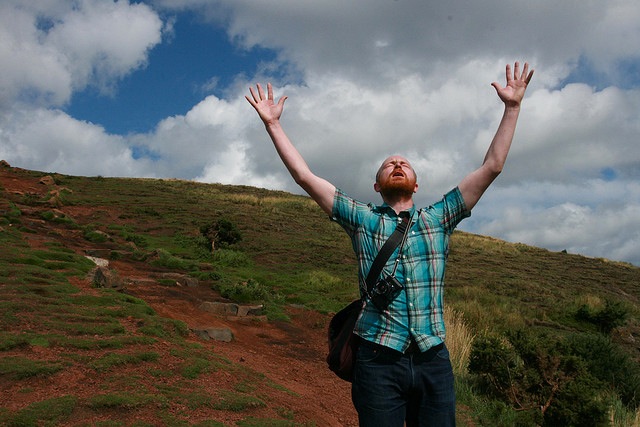
    Arms Up

    “The obstacles of your past can become the gateways that lead to new beginnings.” ~Ralph Blum

    During the worst years of my life, yoga saved me.

    My life was a wreck. I was working seventy to eighty hours a week at a job that took everything from me and made me a monster. My relationship was disintegrating. I was hopped up on espresso shots and sugar. I paraded myself as the self-appointed queen of happy hour.

    But the hour a week I spent on my mat put it all into perspective.

    That single hour turned into several, and somewhere, somehow, I found myself again. I learned to quiet my mind and really listen to what I wanted and needed. I connected with my body in a way I never had before. I learned to slow down and identify what was truly important to me.

    My yoga practice gave me the strength to quit not just a job, but a career that was destroying my life. I felt strong and powerful—like nothing could stand in my way.

    I enrolled in a year-long yoga teacher training program, with the intention of sharing the gift of yoga and everything it had taught me with others.

    That year I learned about asanas, pranayama, and the history of the eight-fold path, but more importantly, I learned about myself.

    For the next three years, I stayed fiercely dedicated to my practice. I taught here and there, but mostly, I was a student. That just felt right.

    But something in me started to change.

    I began to feel disconnected from my practice. I was bored, just going through the motions. There was no heart, no fire, no excitement.

    Yoga had been a good counterbalance for my Type-A go-getter attitude, but perhaps it was just too much of a good thing or maybe I just needed to shake things up.

    My yoga practice had left me passive and stagnant, with a little too much of that “go with the flow” energy and not quite enough of that “get up and go” stuff.

    At the same time, I was feeling stagnant in my life. I’d recently made (another) career change; I took a gap job, one I’d intended to be in for six months, max. But seven months in, I was no closer to leaving than the day I started. I needed passion, purpose, and drive. I needed a real change.

    A yoga studio where I was a sub was looking to partner with the Crossfit gym across the street to offer yoga classes.

    Crossfit? I’d never heard of it, but a quick Google search revealed that these Crossfit people were clearly insane. Totally not my bag. I was a calm, collected yogi, but…

    My interest was piqued. I started paying attention to what went in on the “box” across the street. I’d walk by on my way to yoga and hear grunting, yelling, and the clang of metal hitting the ground. I’d parade by with my husband, “Look at this—isn’t this nuts?”

    I was fascinated, excited, and terrified.

    It took six months, but we signed up for our first class. I conveniently masked it as wanting to do something to support my husband in getting back in shape, but when he went out with an injury, it was clear that I was in it with or without him.

    On the surface, Crossfit is nothing like yoga. It’s brutally physical and it has a reputation for being competitive.

    But in other ways, my yoga experience prepared me well for the transition. Sure, I wasn’t “strong” and I wasn’t particularly fast, but I had awesome body awareness, I was able to focus on my breath when lifting, and each day I learned to focus on just that: how I’d do today.

    Crossfit provided a new outlet for me. For so long, I’d felt like pushing myself was bad, but Crossfit showed me that pushing myself could be good and healthy, if done with awareness and control.

    I’m still learning all the lessons Crossfit has to teach me and I’m sure I’ll never be done learning all the lessons yoga has for me, but here’s what leaning in and letting go of yoga has taught me so far:

    1. It’s okay to focus on yourself.

    As a woman, I was always taught that focusing on myself was bad. But I’ve learned there is nothing wrong with taking time to nourish myself, however that looks. In fact, it has made me a better woman, wife, coach, and friend.

    When I graduated from my yoga teacher training program, I had grown so attached to my own practice that it was hard to share it. I tried teaching classes, but it pulled me away from myself. So I decided to focus on me.

    It was hard for other people to understand, but it really didn’t matter what they thought. I quickly learned to disregard the comments and do what I needed to do for me.

    It’s okay if no one agrees with you. If it feels good to you and it doesn’t harm others, it’s okay to do it.

    2. Be open to the person you’ll become.

    If you’d asked me two years ago if I’d be a crossfitter, my answer would have been an emphatic “No!” But, life has changed in ways I could never have imagined and my needs changed, too. I’m grateful that yoga taught me to embrace changes.

    It’s important to be open to the possibilities that exist for us, whether it’s yoga or Crossfit, vegan or cheeseburger, corporate exec or stay-at-home mom. There’s no right or wrong answer to where our paths will lead us; the important thing is to make the right choice for ourselves right now.

    3. Act on the signals for change.

    I’ve come to recognize there are two types of people: the ones who wait for change to happen to them and the ones who seek change. In my experience, seeking change is where the real growth happens and where true happiness starts.

    Yoga taught me to laser in on how I was feeling and how it manifested in my body. When my practice didn’t feel right, I was prepared to find something to fill the gap, something that gave me exactly what I needed.

    4. Yoga is a way of life.

    When I say I quit my yoga practice, that’s not really true. I stopped attending classes and I stopped practicing poses (asana), but through my years of studying yoga, it was ingrained in me as a way of life.

    For me, yoga is about opening my heart fully to each new experience, wholeheartedly embracing change, connecting to nature, to people, to a higher power, and to my true self, and slowing down to listen and appreciate everything around me.

    Without yoga, I wouldn’t be the person I am today. Above all, yoga has taught me to embrace all that I am—the expected and the unexpected—and all that I might be.

    What change do you need to embrace in your life?

    Photo by Nikola F

  • 10 Ways to Enjoy More: What’s Your Guilty Pleasure?

    10 Ways to Enjoy More: What’s Your Guilty Pleasure?

    “Happiness consists of living each day as if it were the first day of your honeymoon and the last day of your vacation.” ~Leo Tolstoy

    For as long as I can remember, I’ve had an epic list of guilty pleasures.

    As a young girl, my top three guilty pleasures included dressing up and dancing in my living room to Madonna (“Annnnd…VOGUE!”), watching over-the-top nighttime dramas with my mom over bowls of Breyer’s vanilla ice cream (“Kevin…I’m pregnant! And you’re not the father!”), and penning addictive, soap-opera-worthy novellas about the kids in my fifth grade class (they’d line up and beg for the next chapter).

    I found so much joy and fulfillment in those activities. And while I jokingly call them “guilty pleasures,” I never felt a single pang of remorse.

    As a grown-up girl, my guilty pleasures follow a similar strain: booty-shaking hip-hop classes, binge-watching Game of Thrones, and eating anything with the words “chocolate” and “peanut butter” (or both).

    Oh, and I’m penning a screenplay that’s one-part erotic paranormal romance, and one-part political thriller. (Obviously.)

    Clearly, I’ve got a lifelong passion for guilty pleasures—and I’m fascinated by how our bodies respond to our favorite ones.

    How our boundaries dissolve. How our curiosity ignites. How we find ourselves with an insatiable need to indulge (NOW!) before we explode with anticipation. (If you’re hopelessly addicted to any juicy TV series, you know what I’m talking about.)

    Guilty pleasures are exhilarating, and there’s no denying that they bring oodles of fun to our lives.

    So, why don’t we indulge in these pleasures more often?

    I believe the word “guilty” may be the culprit. For some of us, it’s hard to even say the phrase “guilty pleasure” without feeling a prickle of shame.

    And that semantic buzz kill needs a definition makeover.

    I’ve decided to re-define the term “guilty pleasure” as something that ignites and electrifies you in a way that should be totally illegal, but isn’t. It’s something you should enjoy every day, with wild abandon. It doesn’t (necessarily) have to be unhealthy or calorie-laden, but it’s got to feel decadent.

    Now that you have complete permission to pursue your most electrifying passions, here’s a peek at 10 ways you can make your whole life feel like one big guilty pleasure.

    Go ahead—indulge.

    1. Schedule daily guilty pleasure breaks.

    No more guilt means no more excuses to avoid partaking in your favorite pleasures.

    You now have full permission to take a break from work and read that enticing gossip blog, catch up on the latest season of your favorite show, or revel in a romance novel (or audio-book—who’s gonna know?) and savor it while pumping away on the elliptical machine.

    2. Spice up boring to-dos.

    Loathe folding laundry? Detest doing the dishes? Crying into Quicken? Crank up the music that makes you grin like a goofball (classic Justin Timberlake, anyone?) and shimmy while doing your chores. Even Gwyneth Paltrow rocks 90s hip hop while cooking her uber-healthy, organic meals.

    3.  Create guilty pleasure play dates.

    Stuck in an “activity rut” with your significant other, family, and friends? Instead of dinner at “the usual place,” infuse your favorite guilty pleasures into your play dates. Get creative: host an at-home triathlon (video game competition, quickie card game, or a cupcake-eating contest!) or take a guided ghost tour of haunted historical buildings in your city. Spooky!

    4. Just giggle.

    Nothing lowers stress like a good chuckle. Create a giggle bank of hilarious YouTube videos (the boys from Saturday Night Live + T-Pain = win!), Awkward Family Photos, and hilarious blog posts (The Bloggess never fails). Get yourself in stitches, daily.

    5. Try something brand new.

    For an instant boost of pleasure and adrenaline, try something you’ve never done before, but always fantasized about. Channel your inner Gustav Klimt at a nude figure-drawing class (Dr. Sketchy’s Anti-Art School is always a delight!), find your local Ultimate Frisbee League, or try an aerial yoga class.

    Give yourself permission, and enjoy every clumsy attempt. You may spark a new lifelong hobby!

    6.  Do a tedium detox.

    This kind of “detox” isn’t about gulping kale-infused liquids. It’s about clearing out everything that’s tired, tedious, and boring.

    Rummage through your closet and get rid of anything that doesn’t make you feel like a million bucks. Donate old books you’re never going to read, toss stale ingredients that hog your cabinets, and chuck dusty relics that make your home feel like a cluttered mess.

    Once you cleanse the un-pleasurable, fill those spaces with items that delight and inspire. (Or, just leave some empty space. Ahhhh.)

    7. Try on a new character.

    Ever wish you were a Sherlock Holmes-worthy super spy? Or an adorkable hipster like Zooey Deschanel? A head-turning hunk, or traffic-stopping bombshell?

    Instead of throwing on your usual “uniform” in the morning, try dressing like your alter-ago—and live out your day as this new character. This could mean a little harmless flirting with the local barista, strolling through the city in a bright sundress with a parasol, or jotting down secret notes as you observe passersby, at an outdoor cafe.

    8. Make pampering a priority.

    Ladies, remember how much fun it was to play with scented lotions, glittery nail polish, and cake-batter-flavored lip gloss when you were a tween?

    Primping and pampering yourself is (still) absolutely essential. Bring back the joy with a quickie 10-minute scalp massage, a mini-pedicure, or a pre-bedtime back rub from your partner. To keep it simple, just take a few extra moments in the shower to lather up and let your mind wander. Completely cathartic.

    9. Keep conversations centered on pleasure.

    I once read—in a glossy magazine, of course—that the French find it rude to discuss work, religion, or politics at dinner parties, and focus their banter on movies, art, and music. Infuse every conversation with joie de vivre by asking, “So, what are your favorite guilty pleasures?”

    You can enjoy a conversation with anyone if you shift the conversation to pleasure.

    10. Build a guilty pleasure emergency kit.

    If you suffer from excruciating headaches, you probably tote a mini-emergency kit around in your handbag or briefcase. Why not build a Guilty Pleasure Emergency Kit for a mood-boosting pick-me-up?

    Put together a bundle of scintillating magazines, juicy novels, caramel-laced chocolate (or whatever floats your pleasure-boat) and label it “For Emergency Use Only.”

    Of course, you may find yourself “inventing” a dire emergency (“What?! The post office is closed on Sundays?!”) just to give yourself a reason to indulge. And that’s just fine.

    It’ll be our delicious little secret.

  • What to Do When You’re New: In School, Work, or Your City

    What to Do When You’re New: In School, Work, or Your City

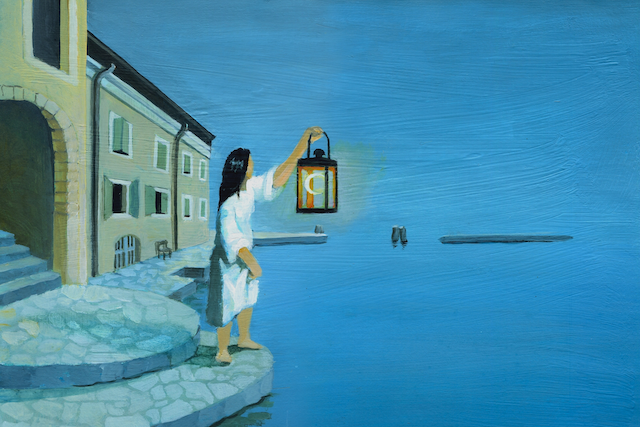
    “If you light a lamp for somebody, it will also brighten your path.” ~Buddhist saying

    Moving to a new country as a kid can be traumatizing because of the challenges of fitting into a new culture and new social customs.

    When I arrived in Northern California at the age of ten with my parents and younger two brothers, we were excited about being in America (home of Disneyland) but apprehensive about our how our classmates would react to us and how we would fit into the social environment of a school in a new country.

    My earliest memories of starting school in the 4th grade were not having to wear uniforms like we did in Malaysia, not having to stand up when speaking in class, and not having a regular morning assembly every morning prior to school starting.

    I welcomed the slightly relaxed curriculum, reading fun fiction titles in class and not having semester finals in elementary school.

    The challenges I found were as expected—not understanding the cultural context of what was happening in the classroom or references to American sports, entertainment, history and even holidays.

    It was also difficult fitting in and making friends initially in a close-knit school, where kids had grown up together since pre-school.

    Most of my classmates ignored me in the beginning. I found it difficult to engage in team sports activities or find lunchtime friends to visit with. Yes, there was some bullying, as well, about my mismatched, out-of-fashion clothes, my military-ready haircut, and even my accent, but I tried to take that all with good humor!

    While I recall eating lunch in solitude for several weeks and attending English as a Second Language classes trying to get accustomed to my new life in America, I did manage to make friends over the course of the school year and fit in.  I even started getting invitations to birthday parties by the end of the year. (more…)

  • Take a Chance:  Seize That Opportunity in 4 Steps

    Take a Chance: Seize That Opportunity in 4 Steps

    “It’s not who you are that holds you back, it’s who you think you’re not.” ~Unknown

    Have you ever paused at a podium, feeling your hands shake as you speak to the senators before you? Have you ever laced your skates, shuddering as you heard your name announced as the next skater to compete? Have you ever found out about an amazing opportunity (say, a chance to post on Tiny Buddha), only to realize that you’re terrified to try?

    I’ve been in all these risky scenarios, so I know how intimidating they can be. By definition, risk-taking doesn’t guarantee that you’ll attain your desired result. However, there are a few things you can do to optimize your chances of succeeding when an opportunity comes your way.

    1. Get yourself prepared (and keep your eyes open).

    Malcolm Gladwell said it in Outliers, and I’ll say it again:  It takes time to achieve expertise. To be precise, it takes about 10,000 hours of practice to become a true proficient. This is no small investment of your life energy.

    As such, it pays to spend time thinking about the kinds of opportunities you want to prepare yourself for.

    If you’re an advocate, what do you want to say to those senators? Start saying it now, even if you’re speaking to an empty room at first. If you’re a figure skater, what elements do you want in your Olympic program? Start practicing those elements every day.

    Once you have seriously invested yourself, and have discerned what kind of opportunity you’re looking for, keep your eyes open, because opportunity has a strange way of showing up once you’ve prepared. Said opportunity may be unexpected (the best ones are), but if you’ve put in the time beforehand, you can seize the opportunity when it arises.

    Nevertheless, it’s also essential to… (more…)

  • Baby Steps: A Simple Guide to Doing Something New

    Baby Steps: A Simple Guide to Doing Something New

    “It is better to take many small steps in the right direction than to make a great leap forward only to stumble backward.” ~Proverb

    Two years ago, after hearing Gretchen Rubin of The Happiness Project, talk about setting up one’s own blog, I went home and did just that. It had been something I had thought of doing, one day, when I would get over my “fear” of technology and decide I can do this.

    Her talk made it sound so easy that I sat down and went for it. And I did it; I set up my own blog on blogpost. I was quite proud of myself. Within the next couple of weeks I wrote a couple of posts. And then I got stuck. I didn’t know where to go from there, what to focus on, what direction to take.

    Month after month went by and I didn’t post. I had only done three postings in total. It actually felt burdensome having it up there but feeling paralyzed about continuing to post.

    After about a year, I decided to get it taken down. I felt relieved that it was off. My leap into the blogging world had sent me springing backwards. I was not ready for this. It required a commitment of writing consistently and with a focus, neither of which I had at the time.

    But it was definitely something I wanted to come back to again, one day. I didn’t feel like I was barking up the wrong tree but rather I needed to backtrack and take more preliminary steps towards this goal. So I started reading lots of other blogs and posting comments on them, Tiny Buddha being one of them.

    I’d even get comments on my comments, which was exciting to me. That gave me a boost. I wrote a couple of online pieces for newsletters. That was a win for me. And then I noticed the submissions statement on Tiny Buddha and figured I’d give that a try. (more…)