Tag: negative thinking

  • Beyond the Inner Critic: Choosing a New Reality

    Beyond the Inner Critic: Choosing a New Reality

    “To think new thoughts, you have to break the bones in your head.” ~Jean-Paul Sartre

    Respectfully, Mr. Sartre, I disagree. This is that story, and it’s not for the faint of heart.

    Today Was a Bad Day

    Oh no, not again!

    The walls were closing in on me, and I could see their faces all flustered and red.

    Why are they yelling at me? I mean, are they yelling at me?

    I could feel the tension in the room; I just couldn’t hear anything. Well, actually, yeah, I could.

    I could hear her.

    I could hear Annabelle.

    I knew it was my turn to say something. But what if my voice shook? What if they laughed at me? What if I opened my mouth but the words wouldn’t come?

    Seriously?! You’re quoting Eminem now? What the hell… What’s wrong with you? Say something, anything, goddamn it!

    Meet Annabelle, the charming voice of my inner critic. Unlike my parents, she is always… well, there. Unwelcome, but there.

    I could tell it was happening all over again. And I just froze.

    Why can’t you get anything right? You’re such a mistake. No wonder you don’t have any real friends!

    At this point, my thoughts were beyond saving. Annabelle was leading them. And between us? This twenty-something-year-old just wanted a break!

    You better believe that on the ride home, Annabelle kept drilling my mind over and over, like a relentless woodpecker.

    Congratulations! You are now the laughing stock of your cute little debate club. Lol, don’t even bother showing up next time!

    I hurried to my room and slammed the door shut. Maybe that would drown Annabelle out.

    “Okay, okay, start saying your affirmations quick! Maybe that’ll do the trick,” I said to myself, anxiously pacing back and forth around my desk.

    I am confident. I am strong. My life has meaning…

    But nothing worked. No amount of positive thinking did anything for me. So, I did what anyone in my shoes would do. I gave in to Annabelle and wallowed!

    It’s funny how I can almost see her smug face smiling down on me. Good on her. She got what she wanted—a broken plaything.

    Self-pity, check.

    Self-hate, double-check.

    A crushed spirit with no will to carry on? Checks through the roof.

    I had hit rock bottom again. And my once-vibrant eyes turned cold, staring into the void.

    Before I tell you how I moved past this, let me tell you what really went down with me.

    I Was Visited by a Familiar Friend

    … dear ol’ anxiety!

    I like to think of anxiety as this beast with two heads.

    One head always wants to manage other people’s perceptions of us. It craves their thumbs up or nods of approval because it cannot survive without them.

    The other is always in a place of no trust—no trust in ourselves, others, or the process of life. It believes that nothing has ever worked out for us or ever will.

    Maybe that’s what Annabelle was doing to me that day—jumping to the worst-case scenarios, dramatizing the whole thing in my head.

    That’s anxiety for ya.

    My Door Went Knocking a Second Time

    Of course, it’s not a party without depression.

    Depression is like that uninvited guest with a gloom and doom sign stamped on its forehead.

    When I trapped myself in my room for hours after coming home from the club, I felt horrible.

    There was no light at the end of the tunnel for me. This was it. I couldn’t see the point in anything anymore, and I was convinced that the world would be better off without me.

    That’s what depression does.

    Actually, Louise Hay got it right when she defined depression as “anger you feel you do not have the right to have.”

    It is anger stuffed down in the body somewhere—suppressed anger that seeks an outlet for release.

    That’s why, in the middle of my meltdown, saying affirmations didn’t work for me. It was too soon for that.

    I guess the best way I can describe my two companions to you is this: If depression were a person, it would be someone who waves the white flag—someone who feels defeated and all given up. Anxiety, on the other hand, would be someone who tightly holds on to the flag and refuses to let go.

    Now, if you saw glimpses of yourself in my experience, please know these feelings are very real in the body. Chemically speaking, the body would be in a state of imbalance, running on low levels of the happy hormones like serotonin and dopamine and high levels of the stress chemicals.

    These conditions will give anyone the impression that they won’t survive this storm. But that cannot be any further from the truth.

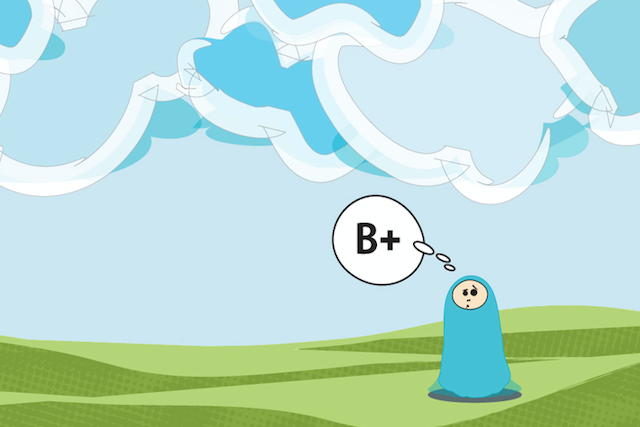
    So, how did I make it to greener pastures?

    #1: I gave myself permission to feel anger.

    Why am I angry?

    When was the last time I felt robbed of a right? The right to feel, the right to mess up, the right to express, the right to make mistakes?

    Is it possible that I am angry with myself for feeling angry because I learned growing up that it was wrong to feel that way?

    Thinking about these things was enough to get me to scream. It was like every part of my soul begged to reconnect with my throat chakra and get my voice back, or at least some of it.

    Within the first minute or so, I felt my lungs give in. Who knew that screaming into a pillow could be this exhausting?

    But I needed to scream. It felt good. Really, really good.

    #2: I accepted my emotions.

    There was no fuel left in me to go against the grain anymore. I couldn’t keep denying what I was feeling. I had to name it to tame it.

    So I looked in the mirror and unburdened: I feel anxious. And I feel depressed. Okay? There.

    But that’s not all I did.

    I reminded myself that depression and anxiety are my body’s way of letting me know that there is a dis-ease within me.

    Dis-ease means a lack of ease or an absence of harmony. It’s how the body signals to a person that they are far from optimal health. Great!

    With that in mind, I accepted these feelings and thanked my body for communicating them to me.

    Even though our feelings are always valid, our assessment of the situation—the thoughts behind those feelings—may not be.

    This led me to my third strategy.

    #3: I observed my thoughts.

    Like I said before, this wasn’t my first rodeo.

    Thanks to my journal, I went over The List—my list of unshakeable truths I had outlined in times of emergency. And this was definitely an emergency.

    That’s when I stumbled upon a quote from Eckhart Tolle:

    “Observe your thoughts, don’t believe them.”

    Eureka!

    It’s very likely that when someone feels depressed or anxious, they will be bombarded with a sea of negative thoughts that ring true for them. Garbage thoughts, really.

    But should they believe their every thought?

    This is also at the heart of Dr. Joe Dispenza’s work. He advocates that not every thought we think is necessarily true.

    “Most thoughts,” he says,are just old circuits in your brain that have become hardwired by your repetitive volition.”

    And so, I didn’t fight Annabelle. I didn’t try to reason with the negative thoughts she was feeding my brain.

    I didn’t even justify them or resist them.

    Like passing clouds, I observed them without judgment. And when I felt ready, I saw them fade into the background.

    It’s common knowledge that when we’re calm and relaxed, we make room for magic and healing. It is the quickest and easiest way to build better habits and restructure our minds.

    #4: I chose better thoughts.

    Thoughts are the mental movies we play in our minds. And the mental movie I was running up there was less than ideal.

    Did Annabelle’s useless chatter help me or hurt me? Did her thoughts empower me or keep me small? Did they breathe life into me or slowly lay me on my deathbed?

    If I really wanted to change this circumstance, I had to change the thought patterns that made me perceive it in the first place.

    Instead of saying affirmations that were lifeless to me, I chose phrases that felt good to say aloud—phrases I had little to no resistance to.

    These are some of my favorites!

    • Divine love in me casts out all discord. I am at peace now.
    • I am guided by the divine presence within me. It created me and is restoring me to perfection now.
    • Infinite intelligence reveals the perfect solution to my problem.
    • I breathe deeply and fully. As I take in the breath of life, I am nourished.

    These affirmations remind me that I am always whole, loved, and supported, even in a moment where I might feel embarrassed or inferior.

    This was my rule of thumb: If a thought doesn’t empower you or fill you with love, question it.

    #5: I made a promise to myself to stay consistent with my new story.

    Consistency is the name of the game.

    Once I decided on my new thoughts, I wanted to repeat them daily.

    I didn’t force myself to immediately accept these new thoughts. I knew Annabelle would fight me on them tooth and nail.

    So the effort was gradual and accumulative. Easy does it!

    As always, a relaxed body and a calm mind are much more susceptible to change than a stressful body and mind.

    I promised myself that whenever depression or anxiety crept in, and boy, how they did, especially in the beginning, I would feel them without entertaining the thoughts associated with them.

    Those were the moments when I’d tell myself: I am capable of change. I can learn new ways of thinking. I am teachable. 

    Bit by bit, through consistent repetition, the old, tired thoughts got replaced with new, vibrant ones.

    Final Thoughts

    Notice how I didn’t say “my” anxiety or “my” depression? How I said, “I felt anxious or depressed,” and not “I am anxious or depressed?”

    That’s because you and I are NOT the depression or the anxiety. We are the beings experiencing these conditions.

    So no, Mr. Sartre. You don’t have to break the bones in your head to think new thoughts.

    You just have to move forward with loving awareness. And the rest will fall into place.
  • How Our Self-Talk and Language Can Sabotage or Support Us

    How Our Self-Talk and Language Can Sabotage or Support Us

    “Today I want you to think about all that you are instead of all that you are not.” ~Unknown

    “Love the pinecones!”

    This was a comment from a friend on one of my Facebook photos from a beautiful seaside hike filled with wildflowers and other natural wonders.

    When I responded with “It was a puzzle figuring out how to best photograph them” (not what I originally planned to write), she wrote, “Gregg, that’s such a fun part, isn’t it?” That comment was the brightening of a bulb that had already been going off in my head. It led to deeper self-reflection and awareness around my own self-talk patterns.

    We’ve all heard that how we speak to ourselves has a huge impact on our life. If your self-talk is largely negative, it lowers your self-confidence, drive, creativity, spirit, and enthusiasm for life. In short, it limits your self-expression and access to joy. If your self-talk is compassionate, understanding, and loving, it helps you to move through your life with much greater flow and ease.

    There are the more obvious ways negative language patterns show up, and then there are more hidden, subtle, or unconscious ways. Amongst the more obvious are the habitual ways we berate ourselves or call ourselves names.

    For example, if you are making dinner and just as you finish you knock the whole thing on the floor, how might you respond? It makes total sense to be upset or disappointed, but how does that upset manifest within you?

    Perhaps you think, “Geez, I’m such an idiot!” or “I’m so stupid!” If so, rather than simply expressing your disappointment over the action or result, you are taking one moment in your life and using that to malign yourself at your core.

    Even calling yourself clumsy can become a self-fulfilling prophecy. Maybe you feel it’s actually true. Perhaps others have told you that as well. The thing is, whatever we choose to tell ourselves, whether unkind or gracious, our brain looks for ways to prove those thoughts are true.

    You can acknowledge a mistake, express frustration over an experience, or even decide you want to be more careful in the future, all without casting aspersions on yourself. Name-calling or harsh language directed at ourselves is an example of the more readily visible forms of self-talk. But what about those hidden or unconscious patterns?

    That kind of negative self-talk can be far more insidious and more prevalent than you may suspect. I know it was for me. It’s something I’ve been internally exploring lately and why I was struck with my friend’s comment on my post. Discovering the hidden ways I hold myself small has led to developing more empowering language that serves me on a daily basis.

    Though I was affected by ADD (attention deficit disorder) my whole life, it was not until I was in my forties that I was diagnosed. The first book I read on the topic and perhaps my favorite is called You Mean I’m Not Lazy, Stupid, or Crazy?

    I loved the lessons I got from the book and all that I learned about the workings of my brain. For several years, though, I felt at odds with the title. After all, I reasoned, I never spoke of myself in those pejorative terms. At least not that I was consciously aware of anyway.

    Over time, though, I realized there is a part of my brain that has been actively trying to prove I’m not those things. And if part of my brain is trying to prove I’m not that, then another part must in some way be telling me that I am lazy, crazy, or stupid. That’s when I decided it would be helpful to start consciously examining my unconscious patterns for the voice in my head.

    I’ve noticed my persistent stories of “I don’t know how” or “it will be too hard,” which have been a mantra in my head since childhood. I’ve long been mired in those stories, though they can show up in sneaky ways.  For example, if I see a picture of a place I’ve never been, I have a habit of thinking with melancholy “I’ve never been there” or even feeling jealousy or envy for the photographer.

    While it’s not wrong to have such thoughts, and it makes sense for them to come up from time to time, I noticed I was letting a beautiful photograph put me in a state of dissatisfaction, or even feeling sorry for myself. I was perpetuating limiting patterns of victim stories instead of empowering myself. I decided when I recognized that pattern to play with new thoughts.

    That might involve using that beautiful photograph of a place I’ve never been to remind myself of all the amazing places I have been. Or it might be feeling a sense of joy that such places exist or gratitude that others get to enjoy them.

    Or it could be as simple as thinking, “Oh that looks so interesting.” Or even “How do I get there?” That last one could be said with an air of resignation as a way of holding myself small and complaining, or it could be excitement over the possibility, all depending on how I choose to hold that thought.

    It’s not just the specific words we use but what meanings we ascribe to them that give them their energy and power. I’ve found it invaluable to notice my energy as well as the words I choose.

    With the Facebook exchange about my picture and the puzzle of figuring out how to best photograph the pinecones, my first thought was to write, “I was struggling to figure out how to photograph them.”

    But then I thought, “Why am I saying it that way?” I did not feel in struggle. Why would I want to frame it that way to myself or anyone else? So I altered the wording. That change definitely felt more empowered and certainly less stuck in victim mode. But again, it’s not just the words, but noticing the energy as well.

    Because depending on how I choose to hold it, “a puzzle” could be a game or it could be a chore. I was already leaning toward the more positive aspect but with residue from my initial thought of “struggle.”

    So when my friend chimed in with “Gregg, that’s such a fun part, isn’t it?”, I felt light, happy, and energized. And in all honesty, I initially felt a little bit of embarrassment too. Because it really highlighted for me the heavier energy I had been unconsciously creating over an experience I had thoroughly enjoyed.

    That awareness brought excitement for the deepening realization over the ways I can allow my word patterns to create disappointment and sadness or excitement and joy in my nervous system.

    It’s not just about whether we overtly beat ourselves up but what patterns we use. I’ve had a lot of unconscious patterns that have kept me in the mode of victim of the world rather than the creator of my life.

    It’s an awareness that I am continuing to deepen. As I do, I notice I feel more resilient, get stuck in negative emotions for shorter periods of time, and have more access to joy and aliveness. In an instant I can change how I feel just by the way I speak to and about myself.

    You can create that for yourself as well. Here are a few steps to do so. Outside of step one, they are not in chronological order and may even happen simultaneously.

    1. Start simply by slowing down and noticing your patterns.

    Do you berate yourself? Do you use words that feel untrue or create some kind of internal discord or discomfort that would not otherwise exist, as I had when I was going to use the word “struggle”? If so, explore how you can change those patterns and choose more empowering phrasing.

    This is not about denying that sometimes we do struggle or feel sad or have hard things happen. But you might find that your language actually influences your perception and your feelings about your circumstances. You can view the same situation as an obligation or an opportunity; it all depends on how you choose to see it and talk about it.

    2. Revise your word choice.

    On my journey of monitoring my patterns, I noticed that I’d write things like “I can’t figure out xyz” when, for example, I wrote to a company asking for technical support. The word “can’t” has such a disempowering connotation. So I started changing my word choice to things like, “I would like your help to figure out…” or “I would like to understand how to xyz.” This difference can seem subtle, but the impact on my psyche was immense.

    With the word “can’t” I was literally stating I’m incapable of something, whereas in the other two examples, I’m simply acknowledging information that I lack. Which of those feels more empowering to you?

    The language can seem new and uncomfortable or foreign at first. Perhaps you don’t feel sure how to make the shift. Again, the first step is simply to notice. The more awareness you create, the more your brain will automatically start looking for ways to shift toward your desired outcome.

    In the meantime, if you feel comfortable sharing your journey, you can ask a trusted friend, family member, or coach to point out disempowering language when you use it.

    3. Notice how your word choice affects your energy.

    In the example above about asking for technical support, I noticed how my habit of saying “I can’t figure out how to xyz” was subtly chipping away at my self-confidence. It kept me in a state of frustration and my energy small and insecure.

    Making the change to “I would like to understand how to xyz” felt more expansive. I was declaring a desire to make a change rather than declaring what I was not capable of. That feels more empowering in my nervous system, but still not with the aliveness I’d most desire. Now I’d say something more akin to “I’m learning your system” or “I’m gaining clarity around your system. Please explain to me how to xyz.”

    Sharing in that way, I’m speaking to my growth instead of declaring a deficit. In my body, that last one feels powerful and assertive while still asking for the support I need. What feels most powerful for you?

    4. Be kind and compassionate with yourself.

    Don’t expect perfection. Be compassionate with yourself. If you notice you’re reverting to old patterns, rather than berate yourself, use it as an opportunity to be excited. Because it means you are noticing. As in meditation, the idea is to notice your wandering thoughts and come back. Each time you notice you are creating an opportunity for new and more empowering patterns to flow.

    It can be like learning a foreign language. Because in a sense you are. And just like learning any new language can open up whole new avenues of possibility, this one will as well, releasing shame and self-judgment while brightening and uplifting your world.

    For myself, changing my hidden patterns has helped mitigate the impact of historical victim stories that I’ve held. I feel more empowered, with greater energy to achieve my goals. If you give it a try, I’d love to hear what you are noticing.

  • How I’m Winning Over My Inner Critic by Letting It Exist

    How I’m Winning Over My Inner Critic by Letting It Exist

    “Winning the war of words inside your soul means learning to defy your inner critic.” ~Steven Furtick

    We all have that voice in our head, the voice that’s always negative about ourselves. Our inner voice.  Our inner critic.

    The one that tells us we’re not good enough, not smart enough, not attractive enough. That voice that continuously compares us to other people, so we come up lacking and feeling less than.

    Sometimes that voice is our own. Other times, and for some people, maybe those of us who have felt unloved or disliked by a significant person in our lives, that voice belongs to them.

    Then there are times when that inner critic will take on the voice of multiple people. A parent, a past lover who jilted us, and an abusive boss, for example. It can be quite the party in our heads, and not always a good one!

    For a while, the voice in my head belonged to my mom.

    It became a lot more frequent after she passed away. And a lot more persistent. Her best times to chat with me were always during my morning and evening routines. 

    Why? I haven’t quite figured that out yet. Maybe it was because, during those times, especially with my morning ritual, I was prepping to present my best self to my world, doing my makeup and fixing up my hair. What better time to be critical, right?

    In the mornings as I prepared for the day, I heard how my skin care routine didn’t matter, I was going to get old anyway, and look old. The makeup I applied didn’t make me look any better. The affirmations I wrote on the bathroom mirror were stupid and useless.

    Anything I did to make myself better and healthier didn’t matter. I could never change, and I could never improve myself. Regardless of how much I tried, or how much effort I put in, I would never be good enough. Never enough period.

    At times, I think there was an undercurrent of jealousy. Maybe because I wanted to improve my life, that I wanted so much more from life. More than what she wanted for herself and for me.

    When she was alive, I definitely felt this was why she found so many faults with me and pointed out all my shortcomings. It would make sense, then, that any critical thoughts I had about myself could so easily be transferred to her image, and in her voice.

    I can understand those feelings and see why her feelings came out the way they did. Fears held her back from becoming more, from wanting more. And just possibly, those were my fears too, but now being heard via her voice. Fears of never really becoming who I want to be, of never being enough.

    Sometimes it’s easier to deal with our negative thoughts if we can make someone else responsible for them. Have someone else own them. It takes the burden off of me to change my thinking if I can tell myself these negative thoughts are coming from my mom.

    For a long time, during those morning and evening chats, I argued back. I got very defensive. And I felt like everything I was doing was useless and worthless. During those times it felt like she was right. That my inner critic was spot-on.

    Then one day I got quiet. Maybe I was exhausted with this daily dialogue. I don’t know. But I got quiet. I decided to just let her talk without reacting to what she said. No more arguing. I just smiled, a gentle unconcerned smile, and continued with my routine.

    I let everything that was being said just sit in the space around us. I heard it but didn’t take it in.

    My intention now was to observe. I wasn’t belittling her feelings by ignoring her, I just simply observed and let her talk, giving her voice the space to speak and to be heard. Periodically, I responded with something like, “Yeah, I can see why you think that.”

    For a while this became the style of our regular chats. The new dialogue that the voice in my head was speaking. The negative remarks, the catty remarks, and the put-downs, all drawing a quiet and unconcerned smile, with no negative response from me.

    Before long it changed again. My mom-in-my-head, instead of chastising me for wasting my efforts, became inquisitive. The voice started making positive remarks about the products I used and the affirmations I wrote on the mirror. She became curious. That voice started asking positive questions, empowering questions. Questions that were now on my side—with me, not against me.

    It’s very possible that the reason my inner voice, my inner critic, has taken on the voice of my mom is that I still very much want the approval from her that I felt I never received while she was alive. I will never actually get it now that she is gone, and that’s something I have to accept. But this may be another way that I can maybe feel like I get it, even just a little.

    Perhaps it’s how I can get the approval from myself that I’m seeking too. The belief that I am indeed becoming the person I want to be. That I am indeed enough.

    I’m reminded of this saying, “We can’t control how other people act; we can only control our own reaction.”

    Sure, this inner voice is mine, maybe sounding like someone I know. And one would think we can control our inner voices. But if it were only as easy as that, no one would ever struggle with self-doubt, and at times self-loathing.

    Learning to control that inner voice is like controlling a temper-tantrum-filled two-year-old. Eventually do-able, but it takes herculean effort!

    The method that’s currently working for me is to let that voice speak. Meeting it with a gentle smile and letting it flow around me, without landing on me. Being observant but unconcerned. 

    Over and over, as long as it takes. Because soon that inner voice will be curious about what’s happening with me, what’s working for me, what it is that is bringing me such peace.

    Perhaps the same is true for you. Maybe instead of trying to make your inner critic go away, you just need to let it exist. When you observe your self-critical thoughts without fighting or attaching to them, you take a little of their power away. And maybe as you take your power back your inner voice will slowly transform into something softer, gentler, and on your side, because it can finally see it’s a good place to be.

  • Why Positive Thinking Didn’t Work for Me

    Why Positive Thinking Didn’t Work for Me

    Yoga

    “See the positive side, the potential, and make an effort.” ~Dalai Lama

    I was a perfectionist growing up, always trying to bang my flawed round-shaped self into a perfect square hole that couldn’t possibly contain me.

    In my early twenties, I decided to focus on personal development—a positive thing, I assumed.

    I figured if I worked on improving a little every day and nurturing a positive mindset, I’d feel a lot better about myself than I did when I got down on myself for my flaws. 

    I didn’t take into consideration that I might become a perfectionist about positivity.

    That I might catch negative thinking and feel guilty about it instead of letting it go and moving into a more positive space.

    That I might muster every piece of my will to avoid negative feelings and end up over-thinking them instead of simply feeling them and letting them pass.

    For most of my life, I’ve fought reality. I didn’t like the way people responded to me, so I tried to manipulate their perception. I didn’t like the world around me, so I tried to control it. I didn’t like the world within me, so I tried to escape it. (more…)

  • Does Life Just Happen to You?

    Does Life Just Happen to You?

    “The more light you allow within you, the brighter the world you live in will be.” ~Shakti

    Does life just happen to you?

    Would it be safe to suggest that a lot of people wake up each morning, shower, get dressed, eat breakfast, go to work, come home, eat dinner, watch television, go to bed, and repeat the same course of events Monday through Friday, without ever being fully conscious of what they’re doing?

    The events listed above may differ for some people, but the point is still the same. Does life just happen to you, or do you consciously plan your days ahead?

    Do you live your life on automatic pilot for the most part?

    Take an inventory of your daily routines and ask yourself if you are in the same situation emotionally and physically as you were last month, year, or even decade.

    It’s very easy to dismiss the notion of being on autopilot for a large portion of your life. But if you don’t consciously create your desired outcome for a prosperous, successful, and happy life, then you are not living up to your true potential.

    I know we all have certain responsibilities we must attend to on a daily basis, and I am certainly not suggesting we ignore these and go chasing our dreams without attending to them first. What I am saying, though, is that you also have a responsibility to yourself.

    The question you need to ask is whether or not you’ll respect the decisions you have made in life if nothing has changed when you look back ten, twenty, or thirty years from now. No doubt, your life will be different in thirty years; but will it be from you taking control, or because life just changed (as it does) and you coasted along with it?

    I have met many people who are not even close to living up what they are capable of. The worst thing is that they don’t make any effort whatsoever to change their circumstances. They obviously want to have a better life, but it’s as if they’re hoping things will magically get better for them further down the line.

    There are also a lot of people who convince themselves that life is too hard, and that good things only happen to a select group of people, or that some people are just lucky, and life favors some and not others. Fortunately, this is not the case at all.

    We are all the masters of our own destiny, and if you put the work in you will undoubtedly see positive results. (more…)

  • How to Have More Fun in Life: Keep Your Thoughts from Pulling You Down

    How to Have More Fun in Life: Keep Your Thoughts from Pulling You Down

    “If it’s not fun, you’re not doing it right.” ~Bob Basso

    A couple weeks back, my boyfriend and I went to our local county fair. I love—love—fairs.

    Forget for a minute that adult-me now gets vertigo just looking at a roller coaster; and that my thirty-year-old digestive track nearly explodes when I catch a whiff of carnie food. When you factor in my increasing interest in crafts and farm animals, it somewhat evens out.

    If you’re the fly-by-the-seat-of-your-pants, thrill-seeker type, that might sound as exciting as watching paint dry. But I really do love petting furry little creatures and thinking about things I can make.

    Standing in the petting zoo, surrounded by llamas, sheep, goats, and even a wallaby, I felt like a kid on Christmas morning. I hopped around to spend equal time with everyone; didn’t want the donkey to feel slighted. I played, I frolicked, I may even have skipped a little.

    Truthfully, I would have been equally psyched just to sit back and be a farm voyeur. Just watching the animals scamper and seeing kids’ faces light up as they fed them, I felt happy and peaceful. I didn’t even mind when the goat bit my pant leg. He could have gnawed a hole into my favorite Seven jeans and I still would have found it charming.

    Sunny little giggles, that rustic barn smell, the feeling of disconnection from chaotic urban life—everything about that moment appealed to me. I was having fun. (more…)

  • 10 Tips to Overcome Negative Thoughts: Positive Thinking Made Easy

    10 Tips to Overcome Negative Thoughts: Positive Thinking Made Easy

    “See the positive side, the potential, and make an effort.” ~Dalai Lama

    Even though I’m a yoga teacher, I still find it’s easy to fall prey to negative thinking. Having negative thoughts play out like a movie can only bring you pain, something that I’ve experienced many times throughout my life.

    Negative thoughts drain you of energy and keep you from being in the present moment. The more you give in to your negative thoughts, the stronger they become. I like the imagery of a small ball rolling along the ground, and as it rolls, it becomes bigger and faster.

    That’s what one small negative thought can turn into: a huge, speeding ball of ugliness. On the contrary, a small positive thought can have the same effect blossoming into a beautiful outcome.

    I’d like to share with you an example of how one small thought can turn into a very negative experience.

    I have lived on my own for the last ten years. Obviously, during this time I’ve grown accustomed to living in a particular way; I have my routines with cooking, cleaning, and living happily in my place.

    My boyfriend of two years, who I have had a long distance relationship with, will soon be moving here and we will be living together. Lately I’ve had negative thoughts of moving in with him knowing that my living routine will have to change and we will have to create a new routine together.

    Unfortunately, I’ve already jumped into the future and have had thoughts that we will not be able to come up with a living arrangement that will make us both happy. In my mind I have seen myself already getting angry about our cooking and cleaning situation.

    He came for a surprise visit this past weekend, and boy, was it a surprise for him. We had a miserable weekend together.

    I did not enjoy his company because I was already angry with him, and he was confused and equally frustrated with me. What could have been a really fabulous weekend ended up being a painful and heavy weekend. (more…)